
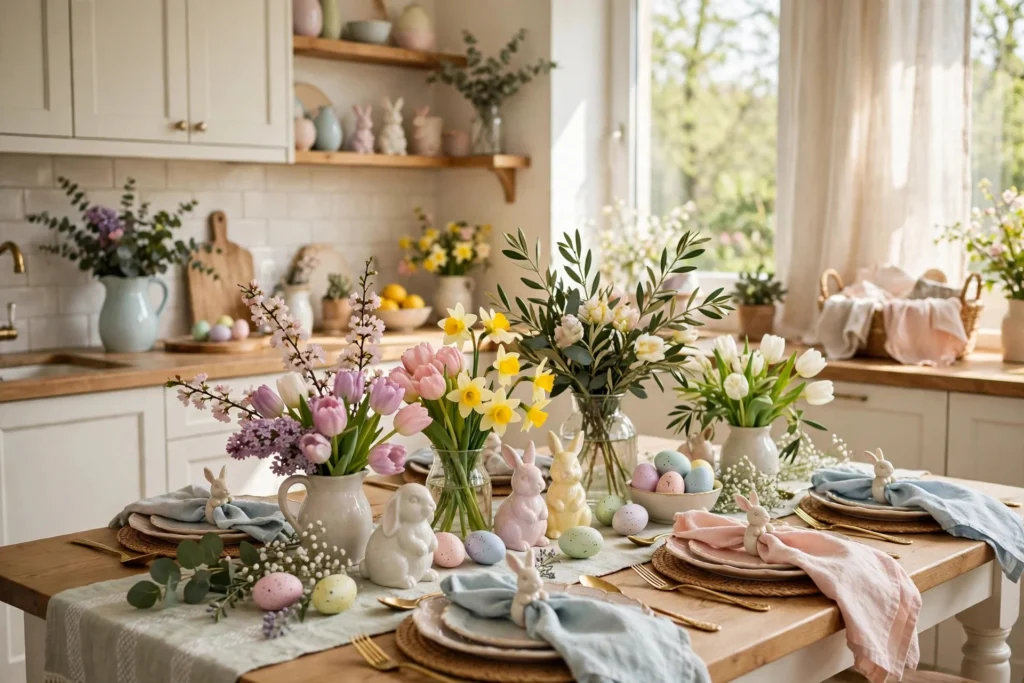
Every spring, my kitchen is the first room in the house that starts feeling like Easter. Long before I put anything up in the living room, I find myself reaching for the pastel bowls, the little bunny salt shaker, and the basket of painted eggs — because this is where everyone actually gathers. If you are looking for Easter kitchen decor ideas that feel sweet and festive without turning your cooking space into a craft store explosion, you are in the right place.
I have learned over the years that the best Easter kitchen decor is the kind you can live with. The fourteen ideas below are all things I have tried in my own kitchen, in a mix of small budgets and simple swaps, and each one is easy to put up in an afternoon and take down just as fast after the holiday.
1. Pastel Egg Tree on the Kitchen Counter
A pastel egg tree is the easiest way to get instant Easter feeling on a countertop. I use a small bare branch in a jar, or a little tabletop tree from the dollar store, and hang lightweight painted eggs from it with ribbon loops. Keep it away from the stove and the sink splash zone, and it becomes a sweet focal point that guests notice the second they walk in.
I tried this for the first time two Easters ago with eggs my kids painted, and I have kept the tradition since. The mistake I made that first year was hanging heavy ceramic eggs on thin twigs, and half of them slid off by lunchtime.
Try this: Fill the jar with pastel jelly beans or dried beans to hold the branch steady and add a pop of color at the base.

2. Bunny Ear Napkin Rings for the Breakfast Table
Bunny ear napkin rings turn an ordinary weekday breakfast table into something special, and they take about ten minutes to make. Fold a cloth napkin into a tall roll, slip a ring around the middle, and tuck two small felt or fabric ears behind it. Set one at each place with a speckled chocolate egg on top, and suddenly even toast and eggs feel like a celebration.
I tried this last Easter morning and my family genuinely loved it — the kids kept their bunnies at their places all day. Do not make the mistake I made the first time, which was using stiff card ears that flopped forward into the food.
Try this: Make a spare set in advance so a bent ear or a juice spill does not leave one place setting bare.

3. Spring Flower Centerpiece in a Mason Jar
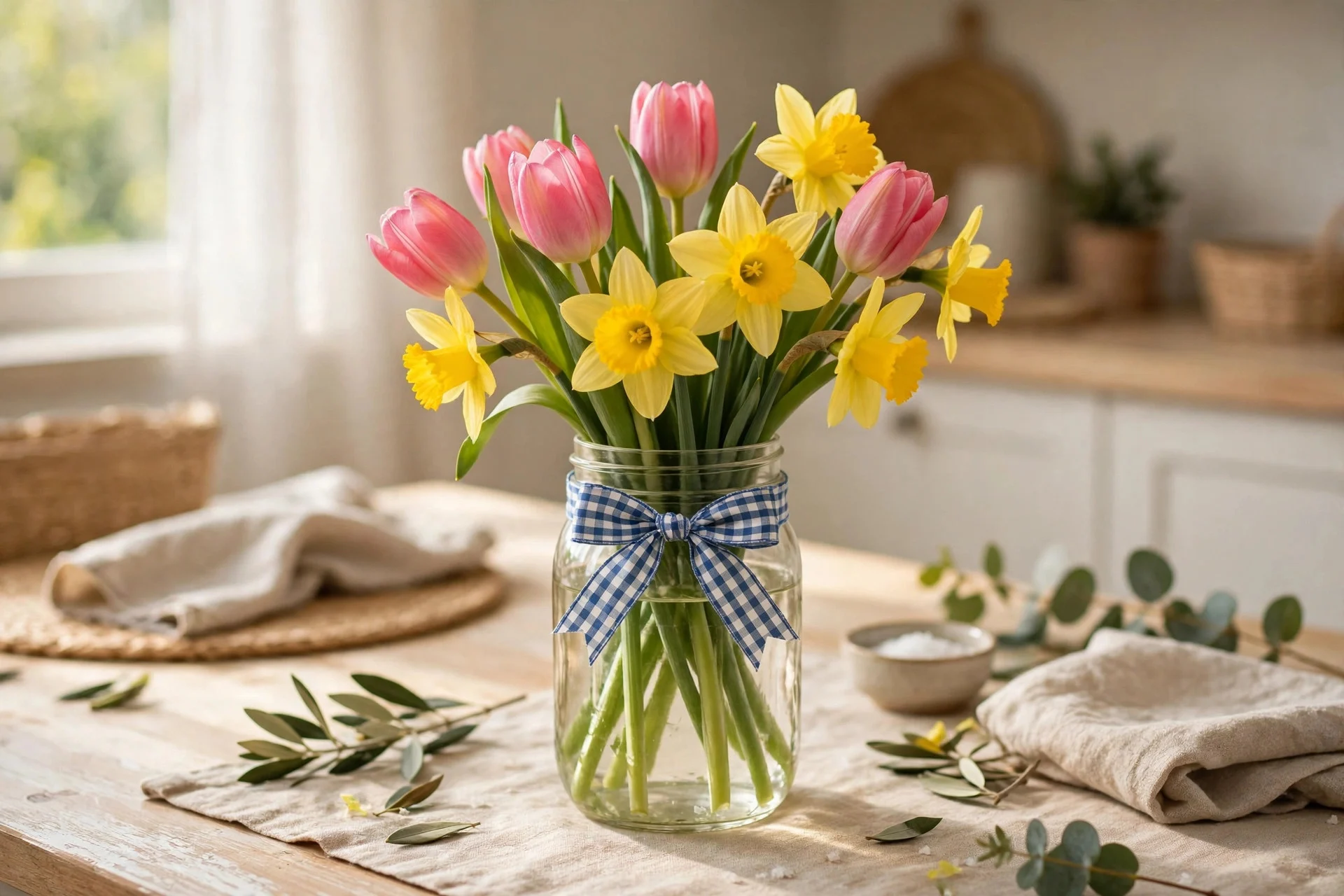
Nothing says spring in a kitchen like fresh flowers, and a mason jar keeps the whole thing casual and kitchen-friendly. I fill a wide-mouth jar with tulips, daffodils, or whatever is cheapest at the grocery store that week, tie a gingham ribbon around the neck, and set it in the middle of the table or on a windowsill.
I tried this with grocery store tulips that were still closed, and by Easter morning they had opened into the prettiest display. The mistake to avoid is putting the jar right next to the fruit bowl — ripening fruit gives off gas that makes cut flowers fade faster.
Try this: Add a few sprigs of greenery or pussy willow to stretch a small bunch of flowers into a fuller arrangement.
4. Easter Egg Garland Across Open Shelving
If you have open shelves, a garland is the fastest way to dress them for Easter without rearranging everything you own. I string pastel eggs, small wooden bunnies, and a few felt flowers onto twine and drape it along the front edge of one shelf. It frames your everyday dishes beautifully and takes the shelves from everyday to holiday in about five minutes.
I tried this on my longest shelf and loved how it looked in photos, but I learned to hang it with tiny clear hooks instead of tape. Tape peeled paint off the shelf edge the first year, and I spent longer fixing that than hanging the garland.
Try this: Drape the garland in a gentle swag with a dip in the middle rather than pulling it tight — it looks softer and more natural.

5. Carrot Patch Table Runner
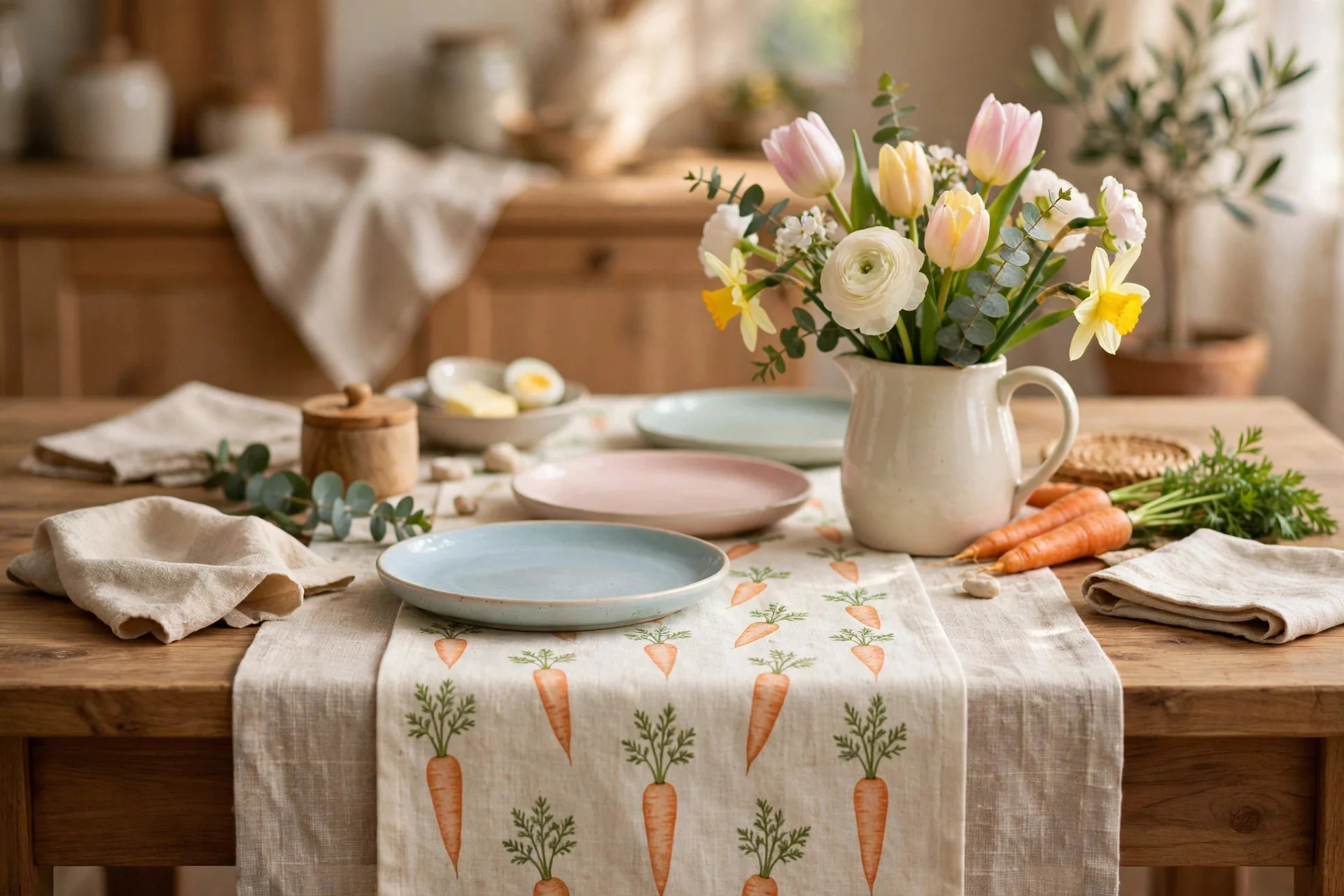
A carrot-themed table runner is playful without being childish, and it anchors the whole Easter table. I use a simple runner in cream or natural linen with a carrot print, or a plain runner with a row of small fabric carrots laid down the center. Either way, it gives the table a clear Easter story and makes everything else — the plates, the eggs, the flowers — sit together instead of floating separately.
I tried this with a runner I sewed from a tea towel, and it has held up for three Easters now. Do not make the mistake I made the first time and choose a white runner for a meal with kids and chocolate — it will not survive brunch.
Try this: Layer the runner over a plain tablecloth in a soft color so the pattern stands out without clashing.
6. Easter Breakfast Serving Board
An Easter breakfast board is decor you can eat, which is my favorite kind. I load a big wooden board with hot cross buns, mini pancakes, berries, cheese cubes, and chocolate eggs arranged in little groups, then tuck in a few sprigs of mint and a small bunny figure at one end. It sits in the middle of the table as the centerpiece until everyone digs in, and it photographs beautifully before the first serving.
I tried this on Easter morning when we had family staying over, and it saved me from plating six separate breakfasts. The mistake I made was building it too early — the pancakes went cold and the berries sweated.
Try this: Use small ramekins for jam, honey, and yogurt so the board stays tidy and nothing runs into anything else.

7. Painted Egg Wreath on the Pantry Door
A wreath is not just for the front door, and the pantry door is the perfect spot for one in the kitchen. I hang a small wreath made of painted eggs, faux greenery, and a gingham bow on the pantry door at eye level. It greets you every time you reach for ingredients, and because it is inside, it stays safe from wind and rain. A grapevine base with eggs glued around it is sturdy and lasts for years.
I tried this with a wreath I made from a foam ring and plastic eggs, and it has become one of my favorite pieces. Do not make the mistake I made the first year and hang it with a nail that left a hole in the door — a removable adhesive hook holds it just fine and comes off after Easter without a mark.
Try this: Match the bow to your kitchen towels so the wreath feels like part of the room, not a random add-on.

8. Pastel Tiered Tray Display
A tiered tray is a small-space decorator’s best friend at Easter. I fill a two- or three-tier stand with a mini bunny, a few speckled eggs, a tiny potted plant, and a small sign, then set it beside the coffee maker or on a corner of the counter. It holds a whole Easter scene in about one square foot, and you can move it in one hand when you need the counter back for cooking.
I tried this in my tiny apartment kitchen years ago, and it is still the first thing I put out each spring. The mistake I made early on was overfilling every tier until it looked like a cluttered shelf.
Try this: Swap just two or three items on the tray each week through spring to keep it feeling fresh without starting over.

9. Bunny Towels and Oven Mitts Swap
Swapping your everyday kitchen towels and oven mitts for Easter ones is the lowest-effort decor change there is. I keep one set with bunnies, carrots, or pastel checks, and I hang the towel over the oven handle and drape a second one over a chair back. It costs almost nothing if you buy the set after Easter for next year, and it changes the feel of the whole room because towels are at eye level everywhere you look.
I tried this the year I was too busy to decorate anything else, and honestly, guests still commented on how festive the kitchen felt. Do not make the mistake I made and buy thin decorative towels that cannot actually dry a dish — you will end up reaching for the old ones anyway.
Try this: Fold a third towel into a basket by the sink so the pattern repeats and the set looks intentional.

10. Egg Basket as a Kitchen Island Centerpiece
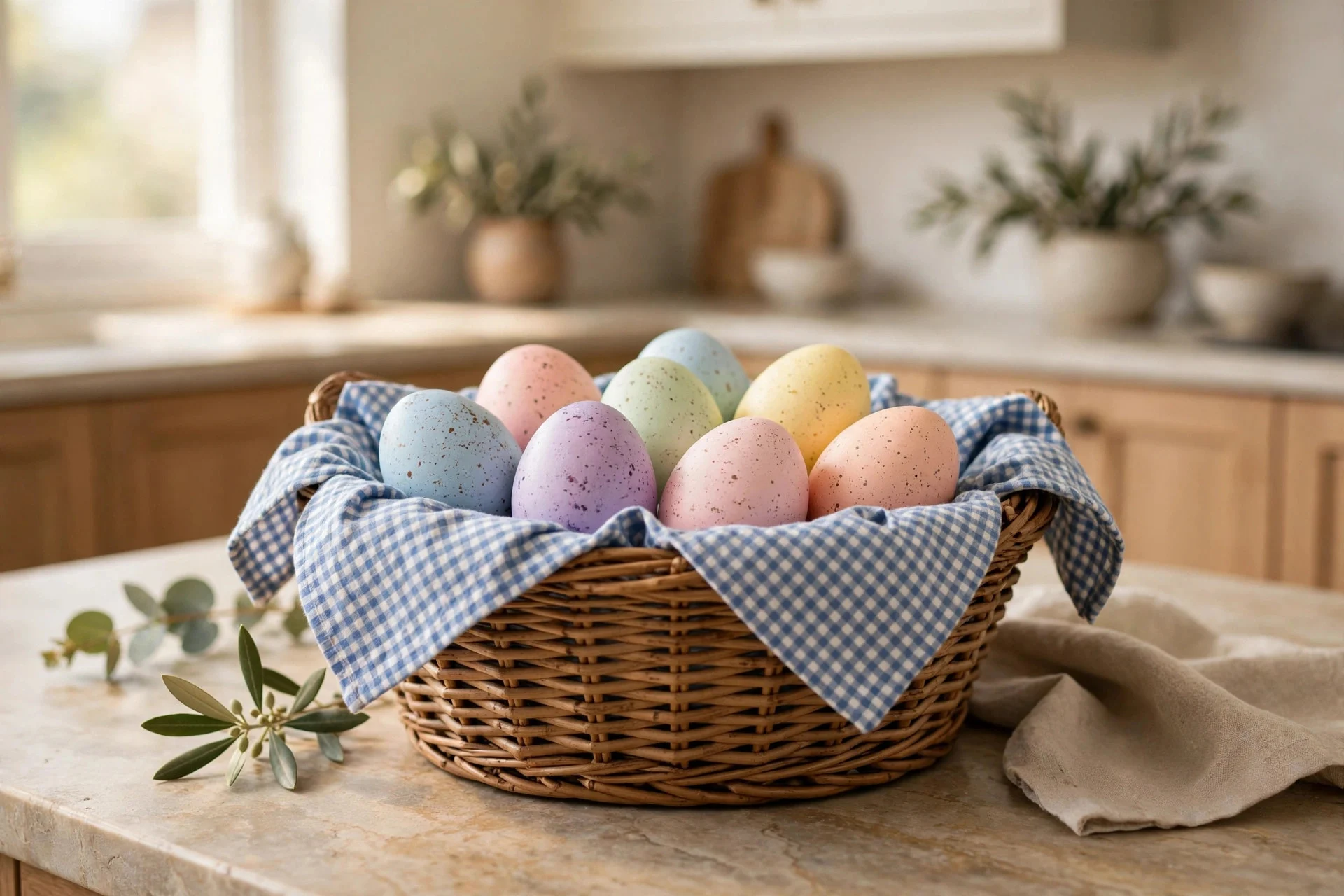
A basket of eggs on the kitchen island is simple, classic, and always works. I use a shallow woven basket lined with a gingham cloth, fill it with pastel and speckled eggs — real decorated ones, or good faux ones if you want it to last all month — and set it in the center of the island with a few sprigs of greenery tucked in. It reads as Easter from across the room without blocking conversation or getting in the way of prep work.
I tried this with real dyed eggs one year and learned to keep the basket out of direct sunlight, or the colors fade and the eggs warm up. Faux eggs are honestly the easier choice for a display that sits out for weeks, and nobody can tell from a normal distance.
Try this: Nestle one larger decorative bunny or a small potted hyacinth beside the basket to give the display a focal point.
11. Spring Window Sill Herb Garden with Easter Touches
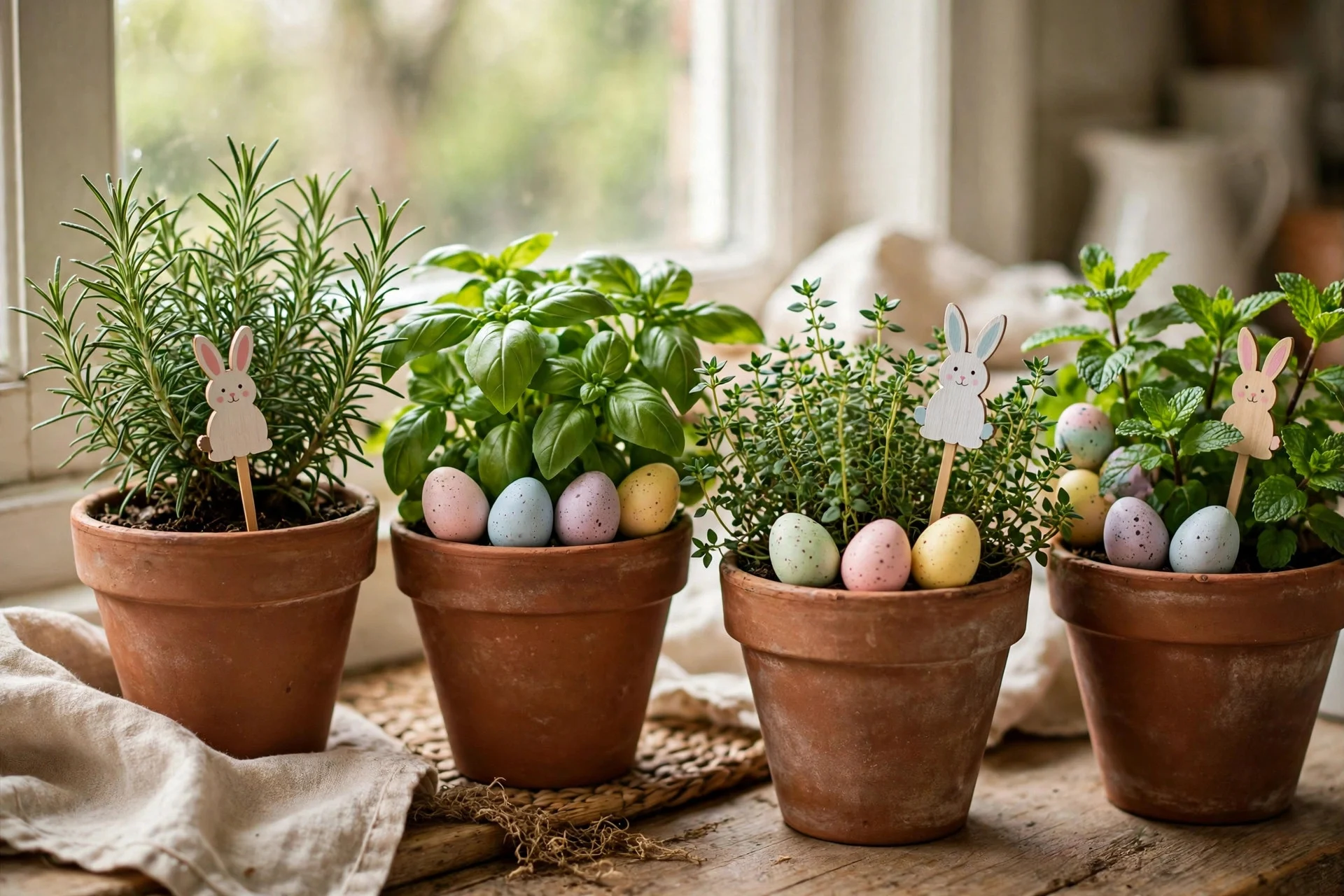
Your windowsill herb garden is already halfway to Easter decor — it just needs a few festive touches. I keep my basil, parsley, and chives in their pots, then tuck a tiny bunny pick, a couple of mini eggs, and a pastel ribbon around one pot. The green herbs look like spring grass, the eggs look like they belong there, and you still get to snip fresh herbs for cooking all through the holiday week.
I tried this last spring and it became my favorite spot in the kitchen, especially in morning light. Do not make the mistake I made and water the herbs right over the decorations — soggy felt bunnies and paper eggs fall apart fast.
Try this: Plant a small pot of wheatgrass or chives to use as the “grass” for a mini egg nest on the sill.
12. Pastel Canister and Jar Labels
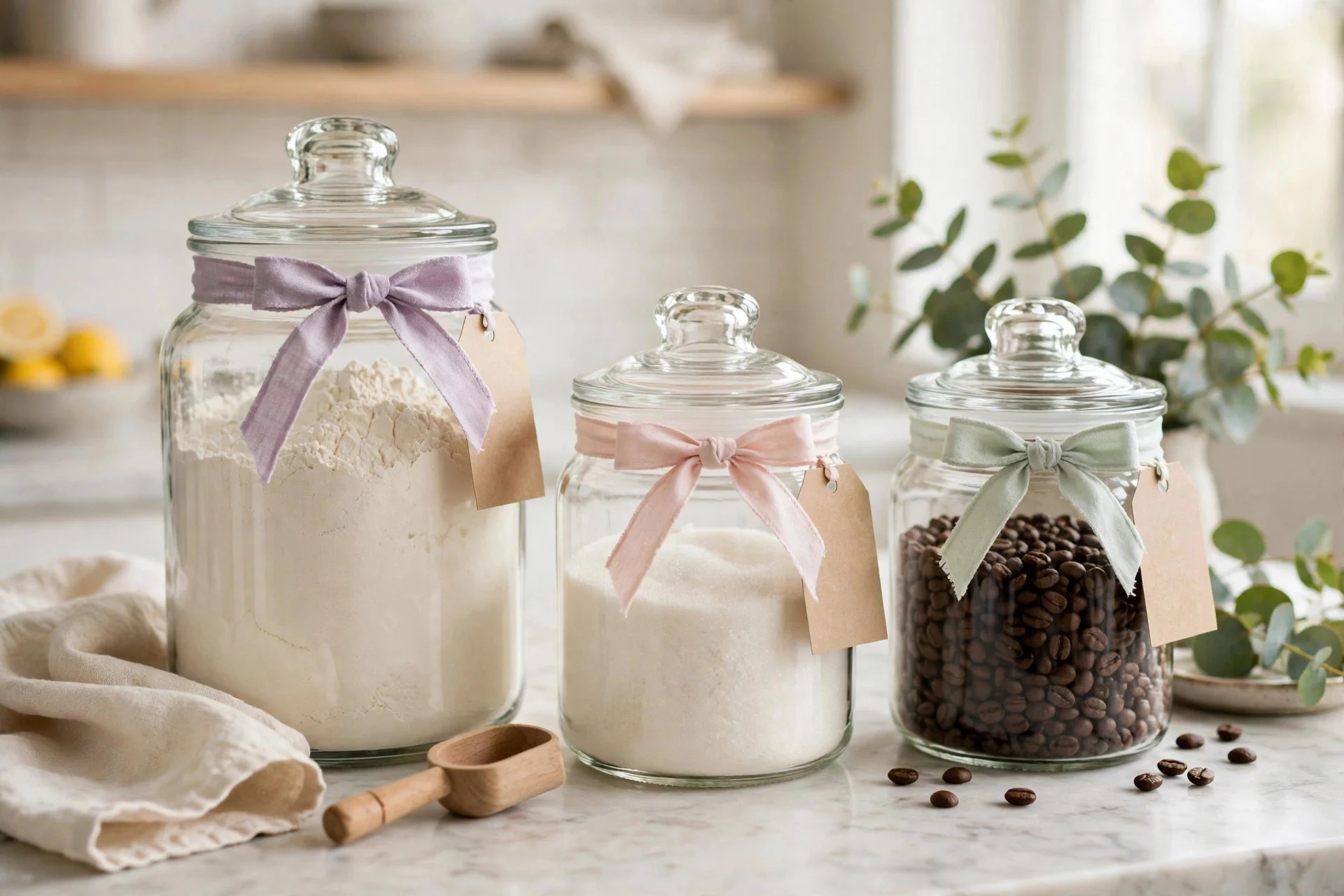
Relabelling your everyday canisters and jars in pastel tones is a subtle Easter touch that stays useful long after the holiday. I tie pastel ribbon around the necks of my flour, sugar, and coffee jars, or swap in simple kraft labels written in soft colors. The jars sit out on the counter anyway, so dressing them up costs nothing and makes the whole counter feel coordinated with the rest of your Easter decor.
I tried this with chalkboard labels first, and while they looked great, the chalk smudged every time I grabbed a jar. Paper labels with a ribbon tie hold up better in a working kitchen, and you can write the contents clearly so nobody pours salt into the cake batter by mistake.
Try this: Use the same ribbon color on every jar for a pulled-together look, even if the jars themselves do not match.
13. Easter Brunch Table Setting with Speckled Eggs
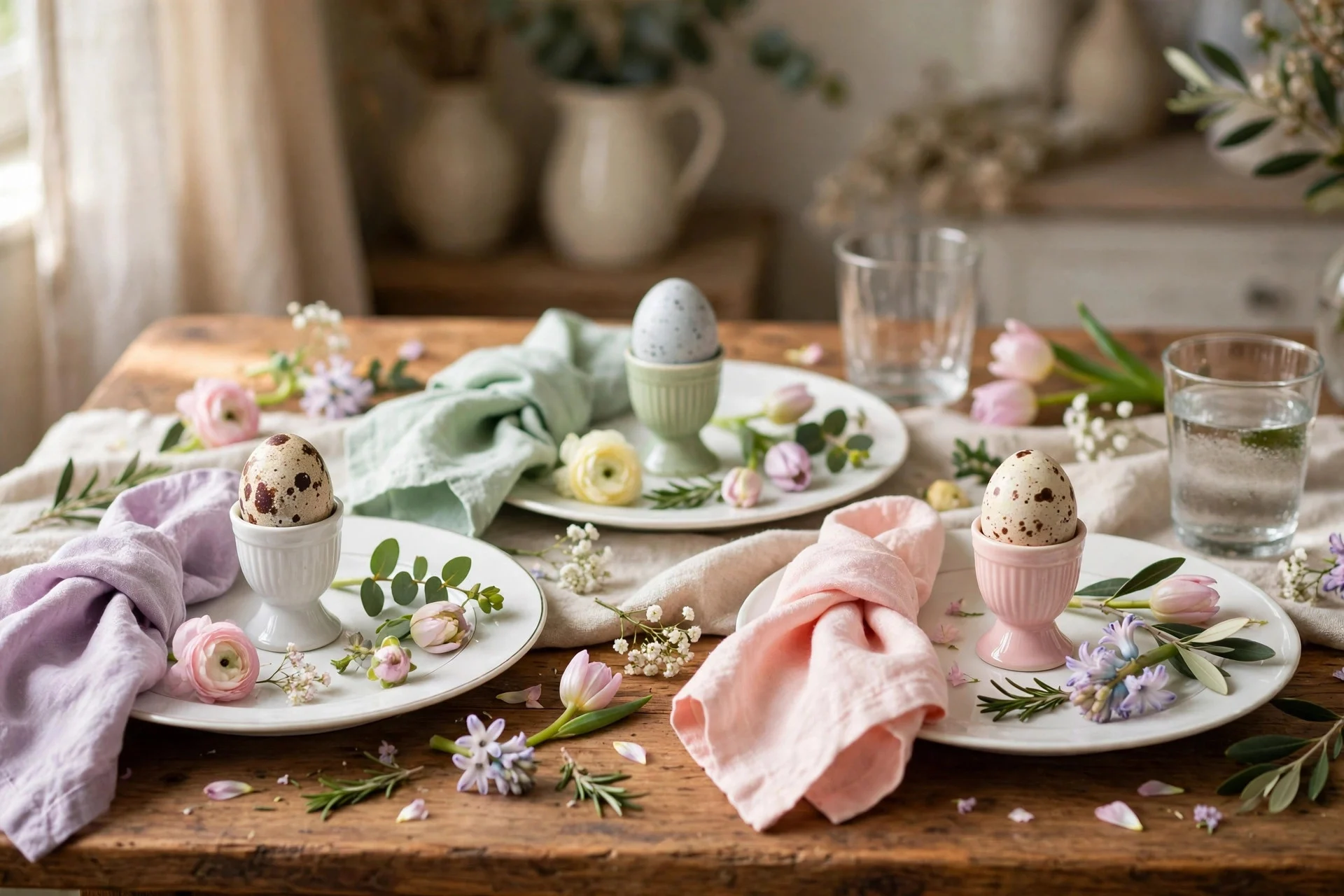
For the actual Easter brunch, a full table setting is where all the small ideas come together. I use white or cream plates, pastel napkins, simple gold or wooden cutlery, and one speckled egg in a tiny egg cup at each place. Add a sprig of greenery or a small flower on each plate, and the table looks considered without needing a single expensive piece. The egg cups do most of the decorating for you.
I tried this for a family brunch of ten, and the egg cups were the detail everyone asked about — they cost very little at a thrift store. The mistake I made was setting the table the night before with real flowers, which wilted by morning in a warm house.
Try this: Write each guest’s name on a small kraft tag tied to their egg cup for a place card that doubles as a keepsake.
14. Bunny Garland and Egg Bunting Over the Sink Window
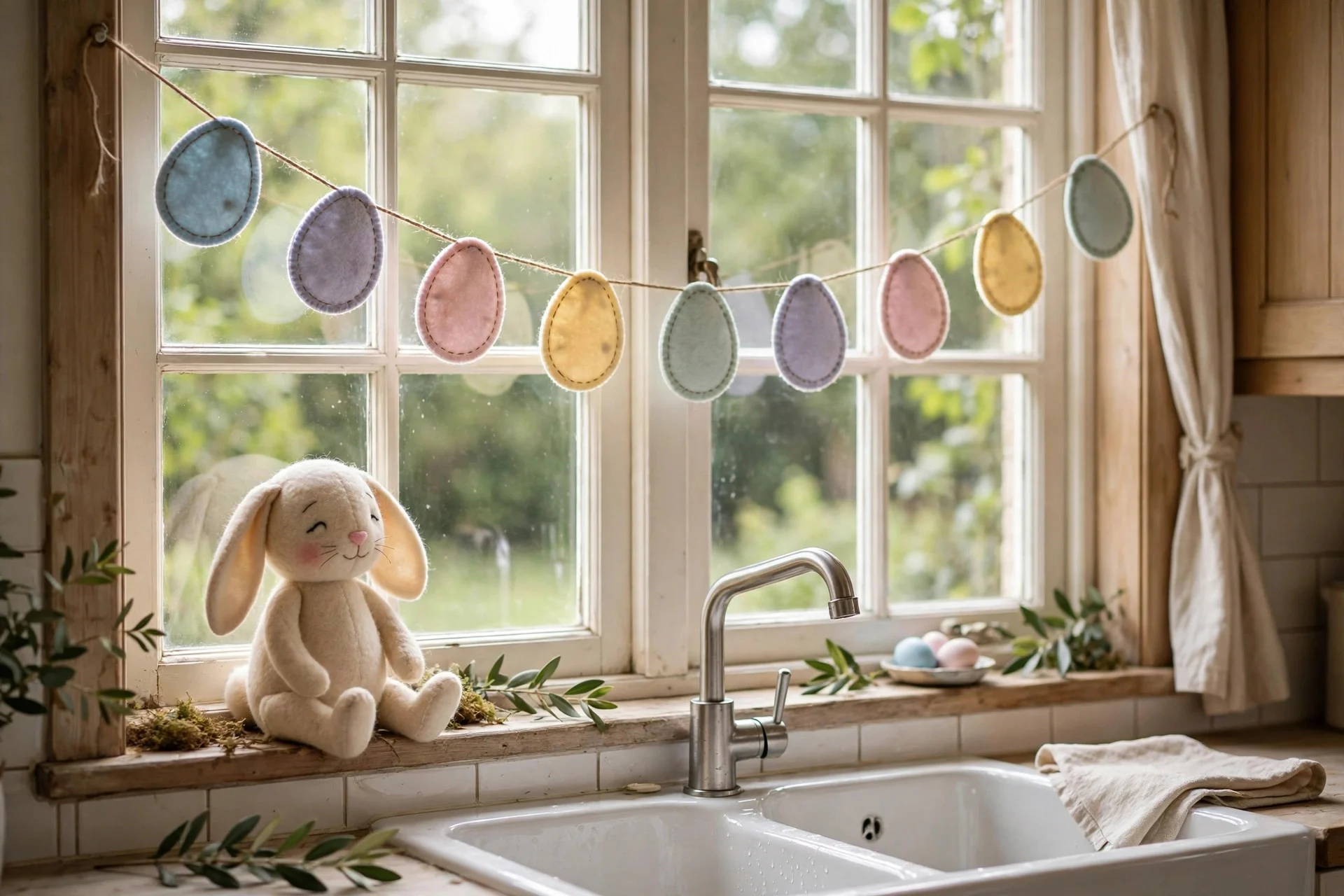
The window over the sink is often the most overlooked spot in the kitchen, and it is the perfect place for a light garland. I hang a string of felt bunnies or paper eggs across the top of the window frame, where it catches the light and frames the view without blocking it. It is the first thing you see when you stand at the sink, which, let us be honest, is where a lot of Easter cooking happens.
I tried this with a paper bunting one year and it curled in the steam from the dishwasher below. Felt or wooden shapes hold up much better near a sink, and a thin wire or sturdy twine keeps the line from sagging.
Try this: Hang the bunting slightly inside the frame rather than across the glass so you can still open the window for fresh air.
What is the easiest Easter kitchen decor idea for a small kitchen?
A tiered tray or a basket of pastel eggs is the easiest choice for a small kitchen. Choose one display per surface so a small kitchen stays calm instead of crowded, and a single basket or tray does that job well.
How early should I decorate my kitchen for Easter?
Two to three weeks before Easter is plenty for most kitchens. Put out sturdy decor like garlands, wreaths, and faux egg displays early, and save fresh flowers and real dyed eggs for Easter week so they still look their best on the day.
How do I decorate a kitchen for Easter without it looking cluttered?
Pick one focal point per surface — one display on the island, one on the table, one on a shelf — and leave the rest clear. Keep to one pastel palette across the room so everything looks planned rather than piled up.
Can I reuse Easter kitchen decor next year?
Yes, most of it stores very well. Faux eggs, felt garlands, wreaths, and fabric runners pack flat in a labelled box, and towels and table linens just need a wash before they go back in the cupboard. Only fresh flowers and real dyed eggs need replacing each year.
Final Thoughts
Easter kitchen decor does not need to be big or expensive to feel special — it just needs to fit the way you actually use your kitchen. The best Easter kitchens I have seen are the ones where the decor feels like part of everyday life, not a display you are afraid to touch, so start small, keep it sweet, and enjoy the holiday right where the cooking happens.