
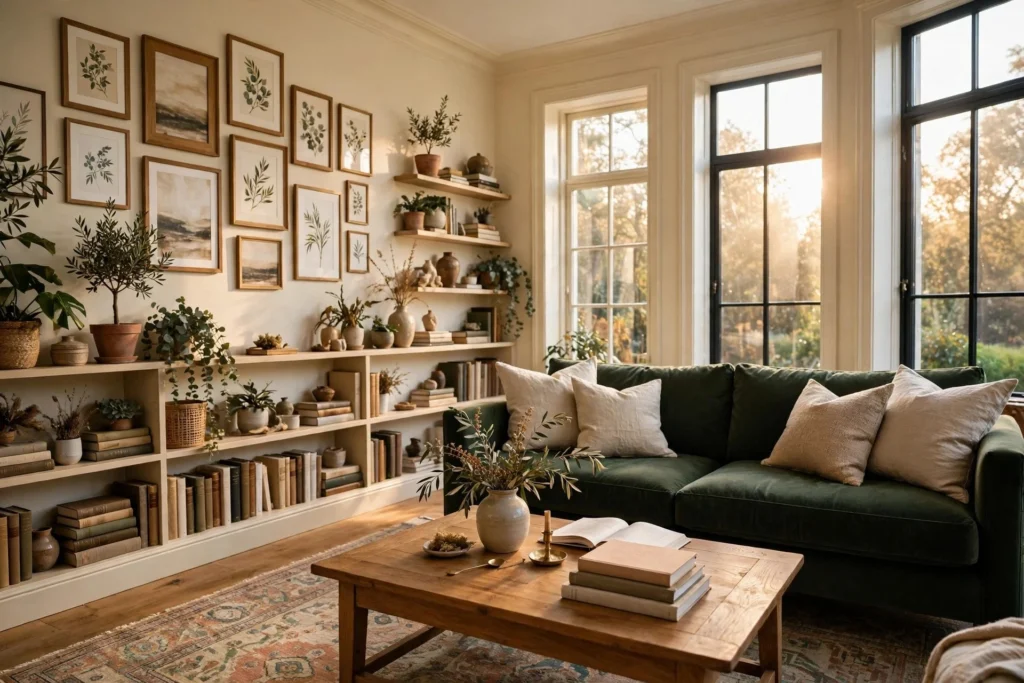
Your living room is the one room in the house that has to do it all. It hosts movie nights, quiet mornings with coffee, homework, guests, and the odd afternoon nap, so it deserves more thought than a sofa pushed against a wall and a TV on top of a stand. The best living room decor ideas are not about buying everything new or copying a showroom. They are about small, honest choices that make the room work for the way you actually live in it.
Below you will find 25 living room decor ideas that suit just about every style, from cosy farmhouse to clean modern and everything in between. Some cost almost nothing, some are weekend projects, and a few are worth saving up for. Pick the ones that fit your room, your budget, and your life, and leave the rest. A good living room grows slowly, one thoughtful change at a time.
1. A Gallery Wall That Tells Your Story
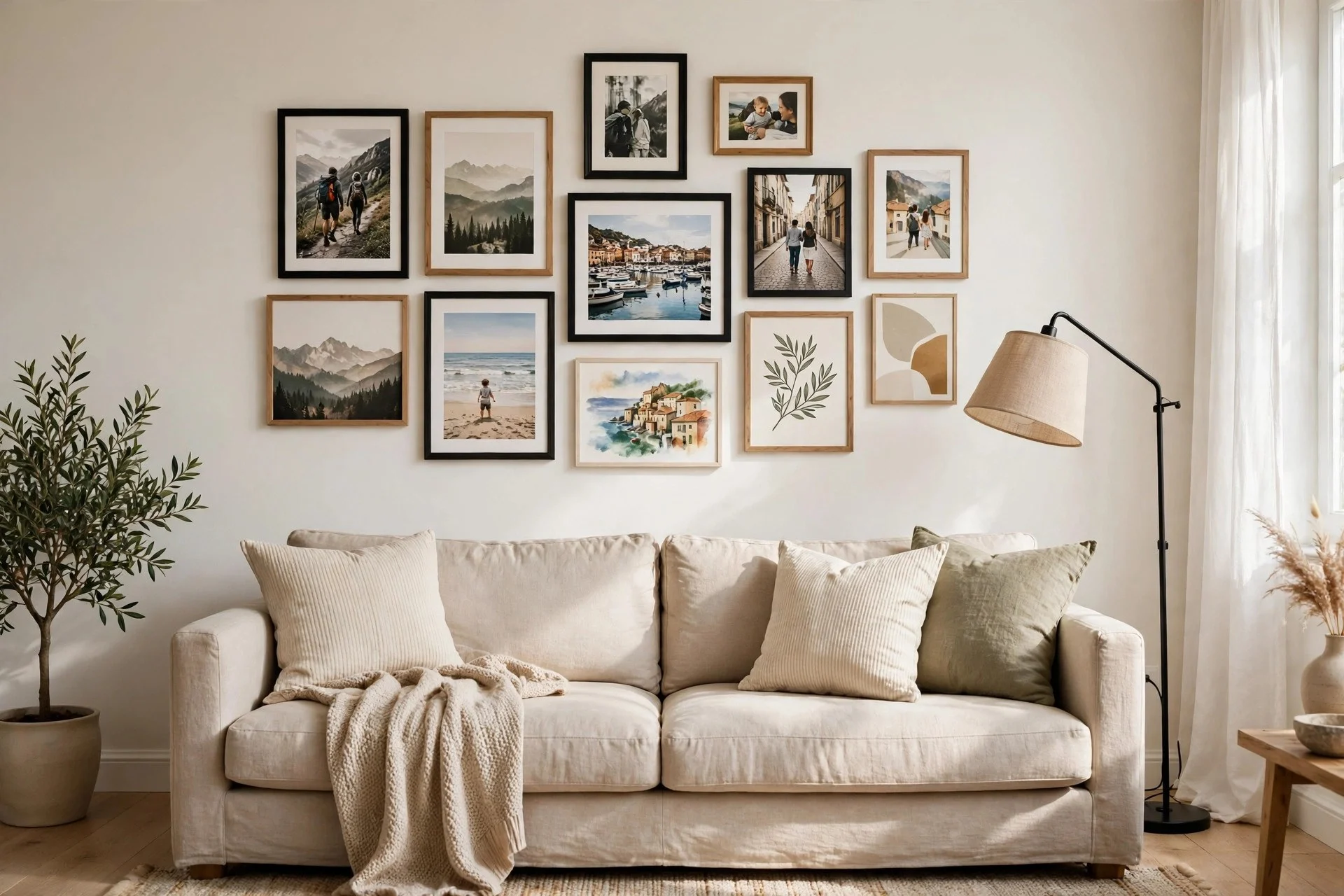
A gallery wall works best when it looks collected over time rather than bought in one afternoon. Start with the pieces you already own: family photos, a print from a trip, a child’s drawing, a postcard that makes you smile. Lay them out on the floor first and play with the arrangement until it feels balanced, then hang the biggest piece at eye level and build around it. Mix frame sizes and finishes, but keep one thing consistent, like all black frames or all warm wood, so the wall feels pulled together. Leave a little breathing room between frames. I tried this in my own living room and my first mistake was hanging everything too high, which made the whole wall feel disconnected from the sofa below it.
Try this: Trace each frame onto paper, tape the paper to the wall, and live with the layout for a day before you hammer a single nail.
2. A Statement Sofa in a Bold Colour
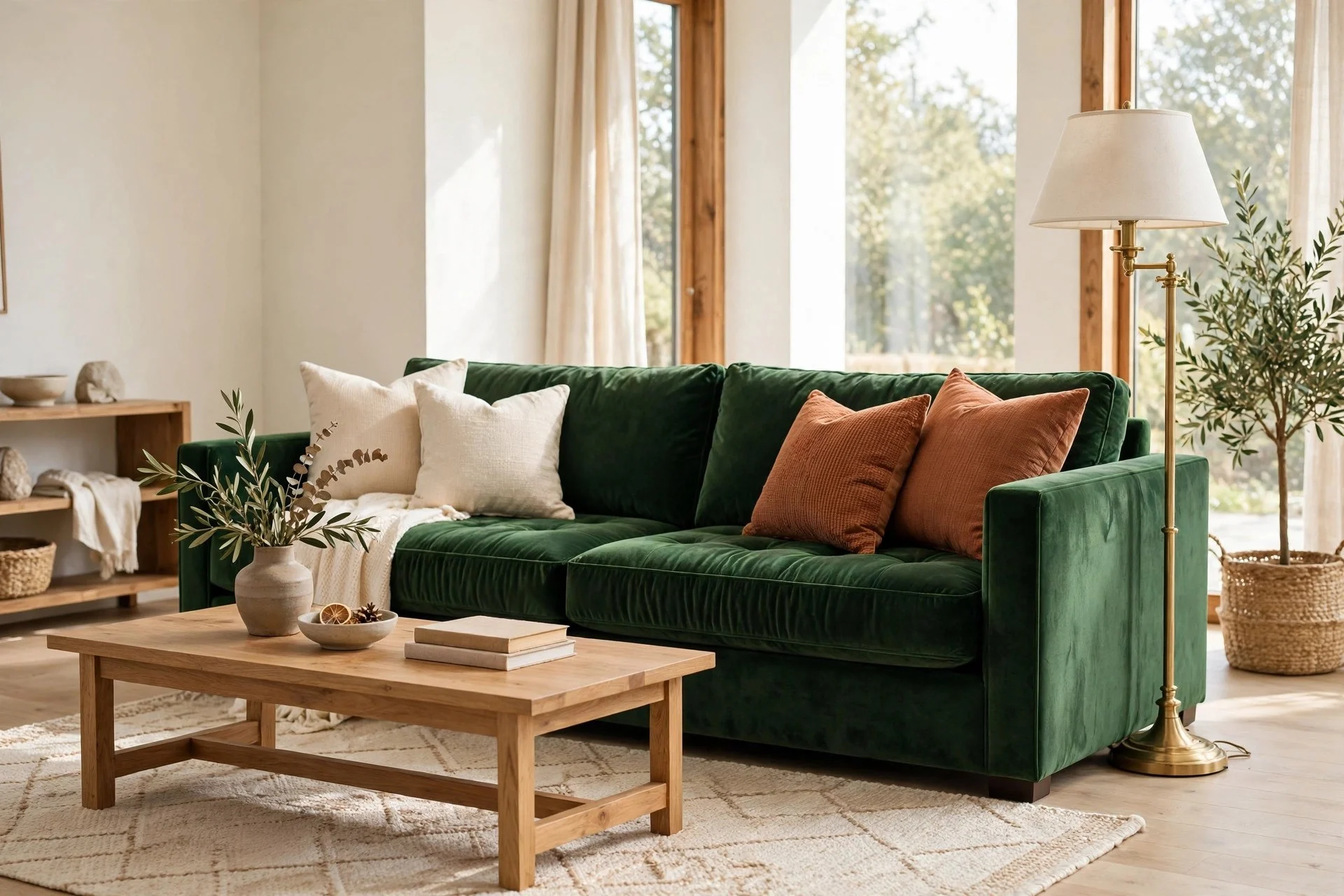
A sofa in a bold colour can carry a whole room, and it is often cheaper than redecorating everything around it. Deep green, navy, rust, or mustard all work well, and they hide everyday marks far better than pale grey. Before you commit, check the fabric in your own light, because a colour that looks rich in a shop can turn flat or loud at home. Keep the walls and rug calm so the sofa stays the star, then pull one cushion or throw in the same colour family to tie it in. Measure your doorways too, since a beautiful sofa that will not fit through the front door is a headache nobody needs. I learned that one the hard way with a three-seater that spent a week on the porch.
Try this: Order a fabric swatch first and tape it to the sofa spot for a week to see it in morning and evening light.
3. Layered Lighting for Every Mood
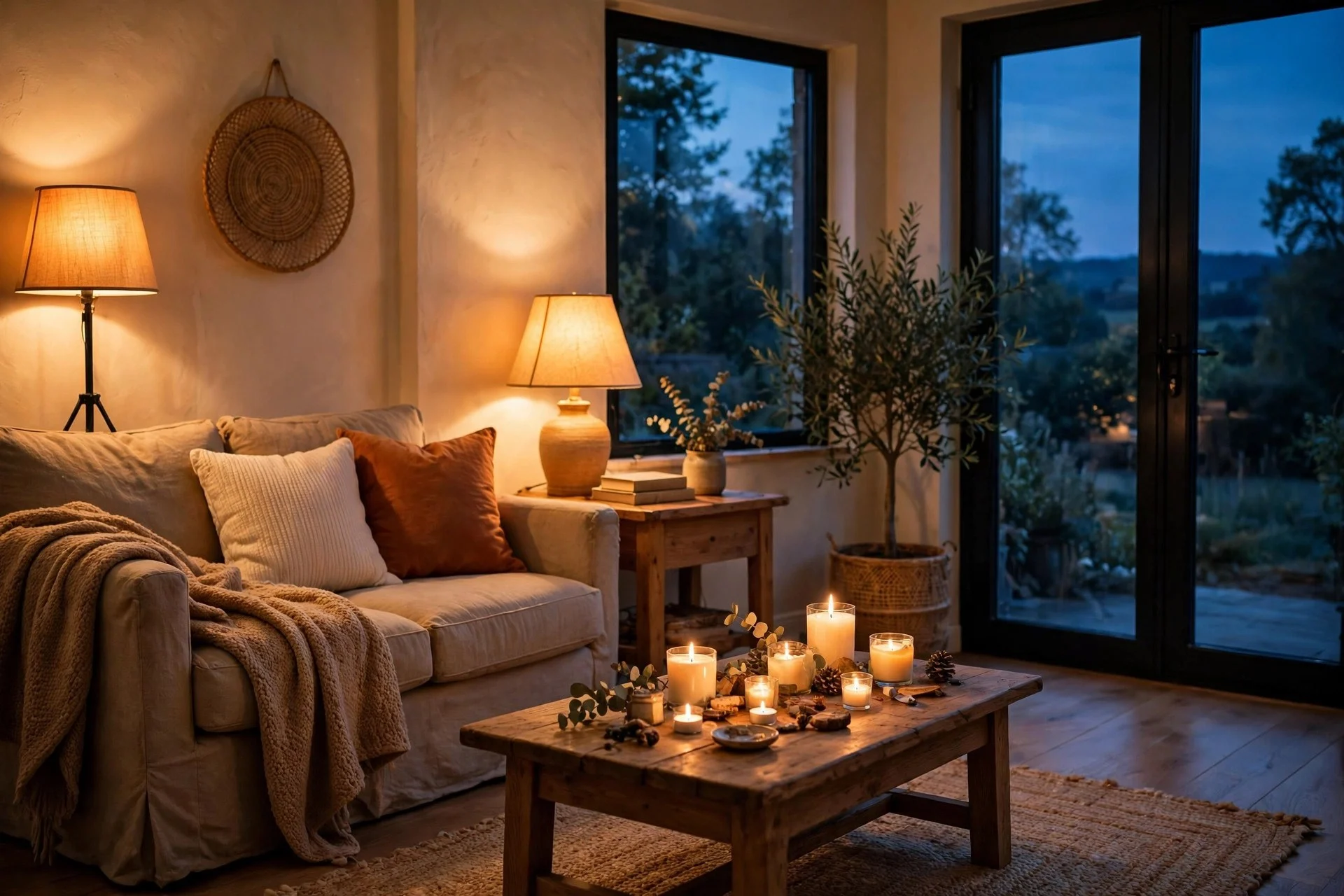
One ceiling light cannot do every job in a living room, and that is why layered lighting makes such a difference. Aim for three kinds of light: something overhead for general brightness, a floor or table lamp for reading and softer evenings, and a small accent like a candle or a picture light for warmth. Put the lamps on dimmers if you can, because the ability to turn the light down changes the whole feel of a room at night. Warm bulbs, around 2700K, keep things cosy rather than clinical. I tried this by adding just one floor lamp beside the sofa, and suddenly the evenings felt calm instead of washed out, so I never went back to the single bright ceiling light.
Try this: Swap one cool white bulb for a warm one tonight and see how much softer the room feels.
4. A Big Rug That Anchors the Room
A rug that is too small is one of the most common living room mistakes, and it makes even good furniture look lost. The front legs of your sofa and chairs should sit on the rug, which usually means going bigger than you first think. A rug pulls the seating group together and gives the room a clear centre, especially in open-plan spaces where the living area can drift into the dining area. Choose a pattern or colour that can handle real life, and if you have kids or pets, pick something washable or low pile. I once bought a rug I loved that was a foot too short on each side, and the room never felt settled until I replaced it with the right size.
Try this: Tape the rug size out on the floor with painter’s tape and live with the outline for a day before you buy.
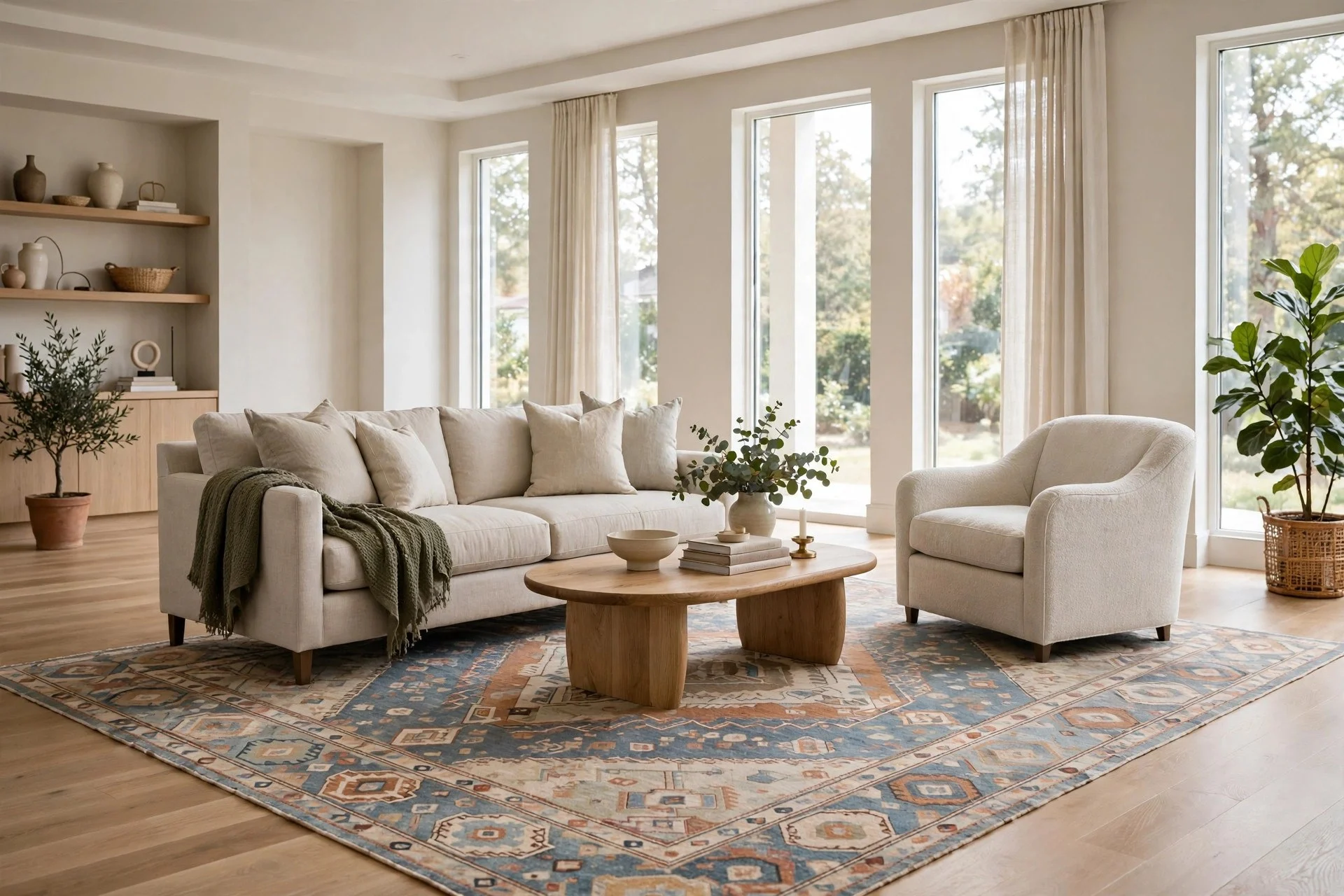
5. Plants That Bring the Room to Life
Plants are the cheapest way to make a living room feel alive, and they soften hard edges like TV screens and sharp furniture corners. Start with one or two easy ones, like a snake plant or a pothos, and put them where you will actually see them, not hidden in a dark corner. A tall plant in an empty corner fills space better than another piece of furniture, while a trailing plant on a shelf adds movement at eye level. Match the pot to your room’s style so the plant looks intentional rather than an afterthought. I tried this with a fiddle leaf fig I placed too far from the window, and it sulked for months until I moved it closer to the light, so check what each plant needs before you buy.
Try this: Buy one plant and one good-looking pot this week, and add more only once the first one is thriving.
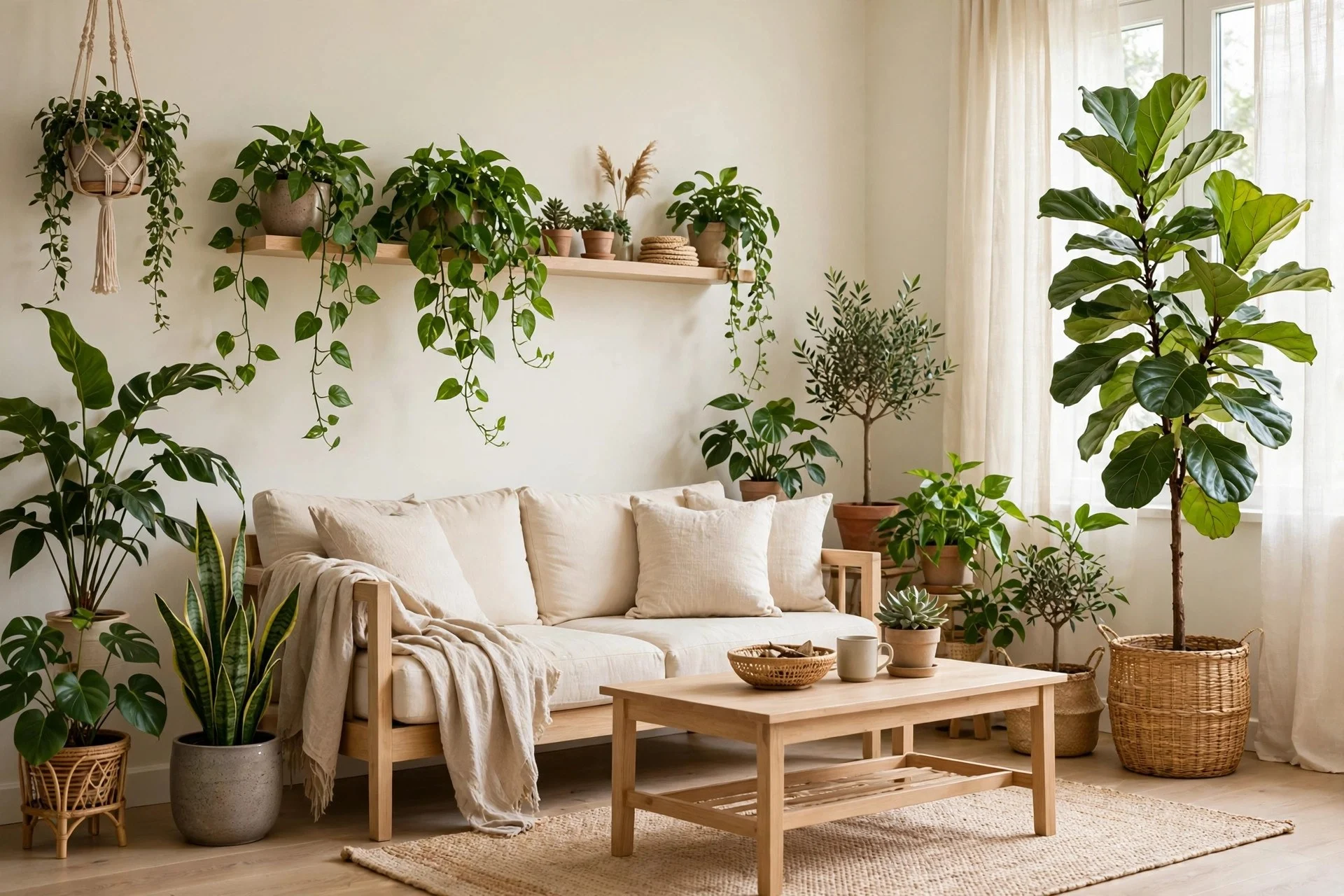
6. A Reading Nook by the Window
A reading nook does not need a whole spare room, just a chair, a light, and a reason to sit there. Pick the brightest corner of your living room, ideally by a window, and place a comfortable armchair at a slight angle so it feels tucked in rather than lined up with the rest of the furniture. Add a small side table for a cup of tea and a book, a floor lamp or wall light for evenings, and a soft throw for colder days. A basket for books or magazines keeps the corner tidy without much effort. I tried this with an old armchair I almost gave away, and once it had a lamp and a cushion, it became the most fought-over seat in the house.
Try this: Move a chair you already own to the window today and see if anyone sits in it before you buy anything new.
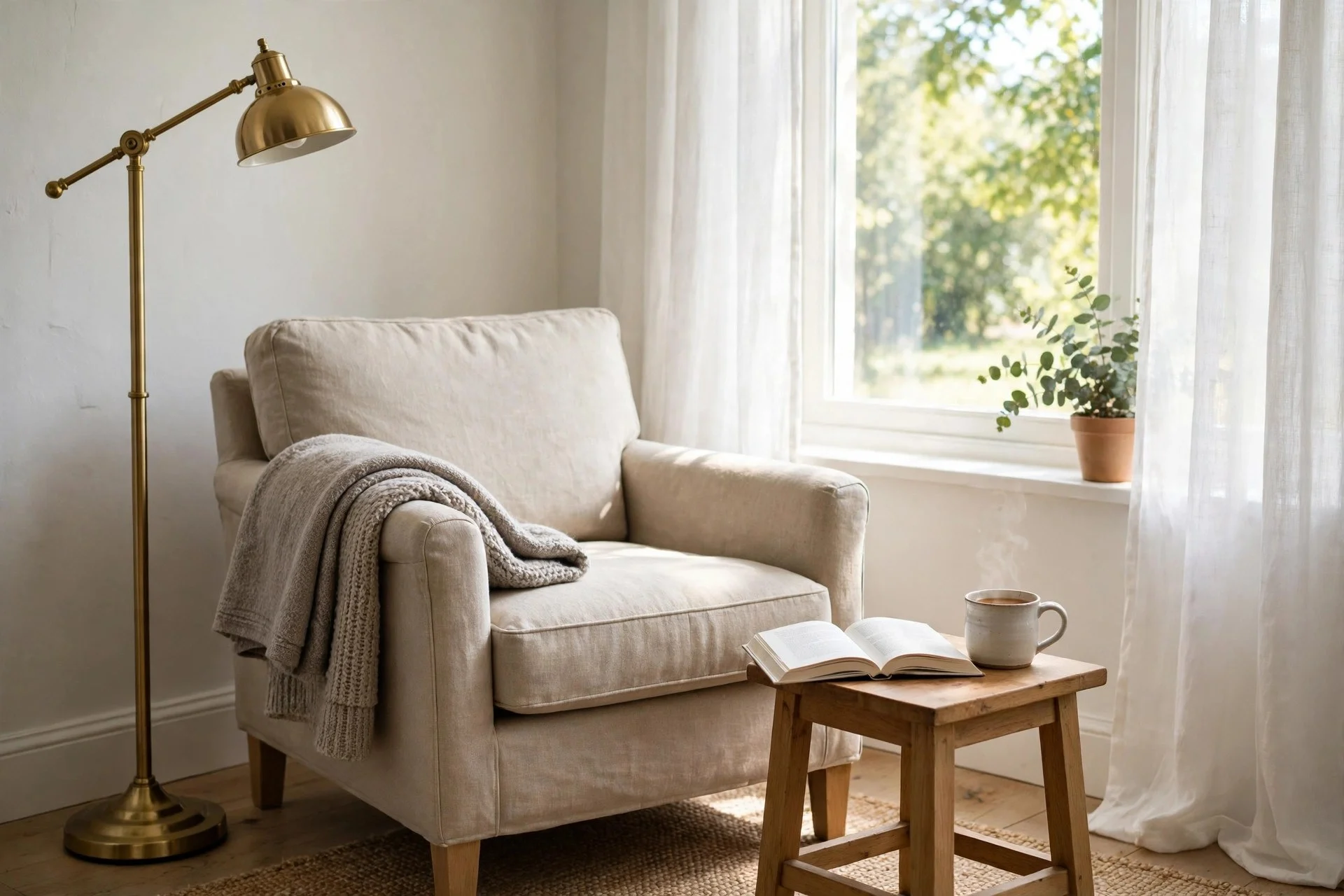
7. Mix Old and New Furniture
A room full of brand-new matching furniture can feel like a shop floor, while mixing old and new gives it character and history. Pair a modern sofa with a vintage coffee table, or place an antique chair beside a clean-lined bookshelf, and the contrast makes both pieces look better. The trick is to repeat one element, like wood tone or colour, so the mix feels deliberate rather than random. Secondhand shops, family hand-me-downs, and flea markets are great sources, and a little sanding or a fresh coat of paint can bring an old piece back to life. I tried this with my grandmother’s wooden side table next to a new sofa, and guests ask about that table more than anything else in the room.
Try this: Bring one old or secondhand piece into the room this month and see how it changes the feel before buying anything new.
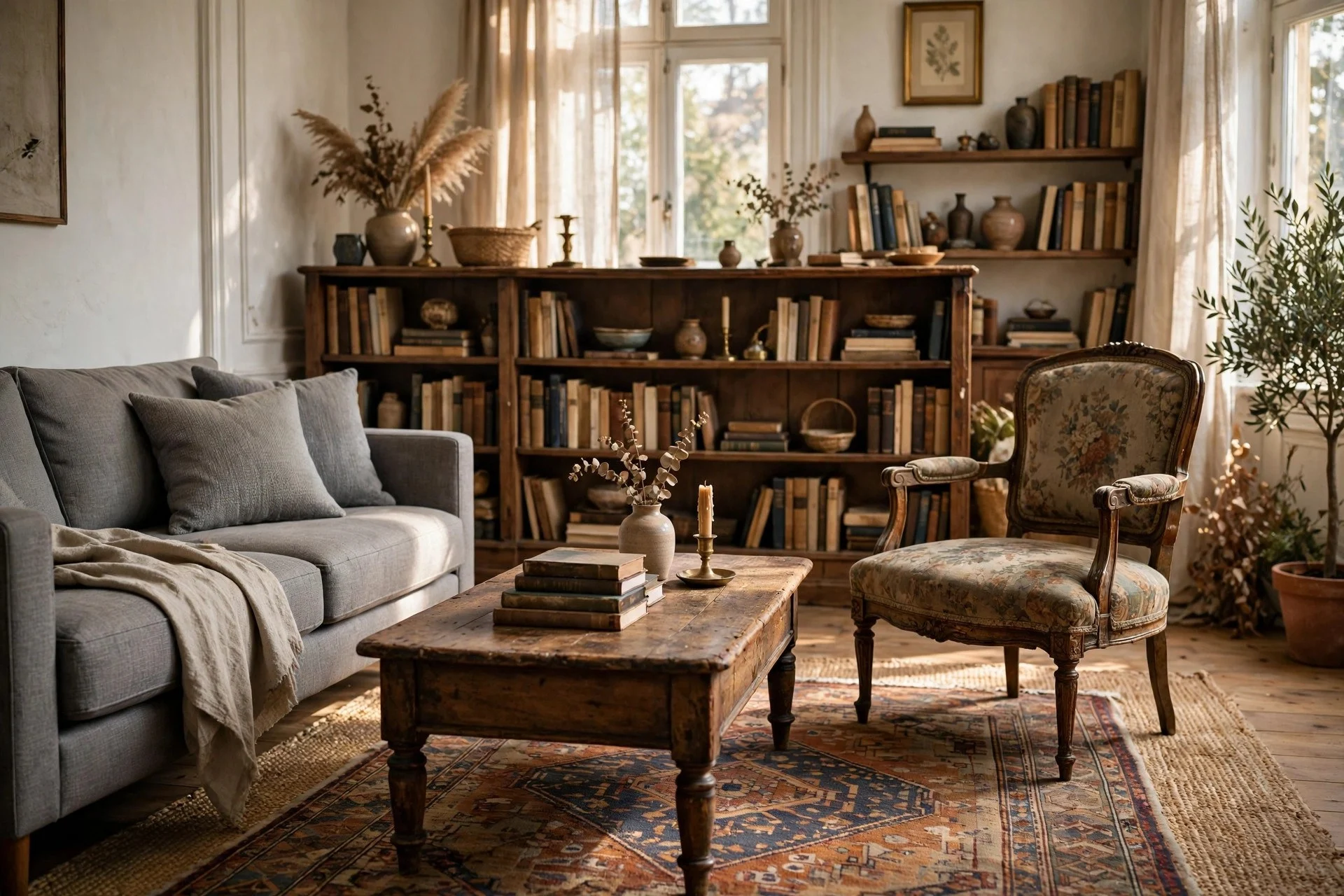
8. Built-In Shelves Full of Books and Objects
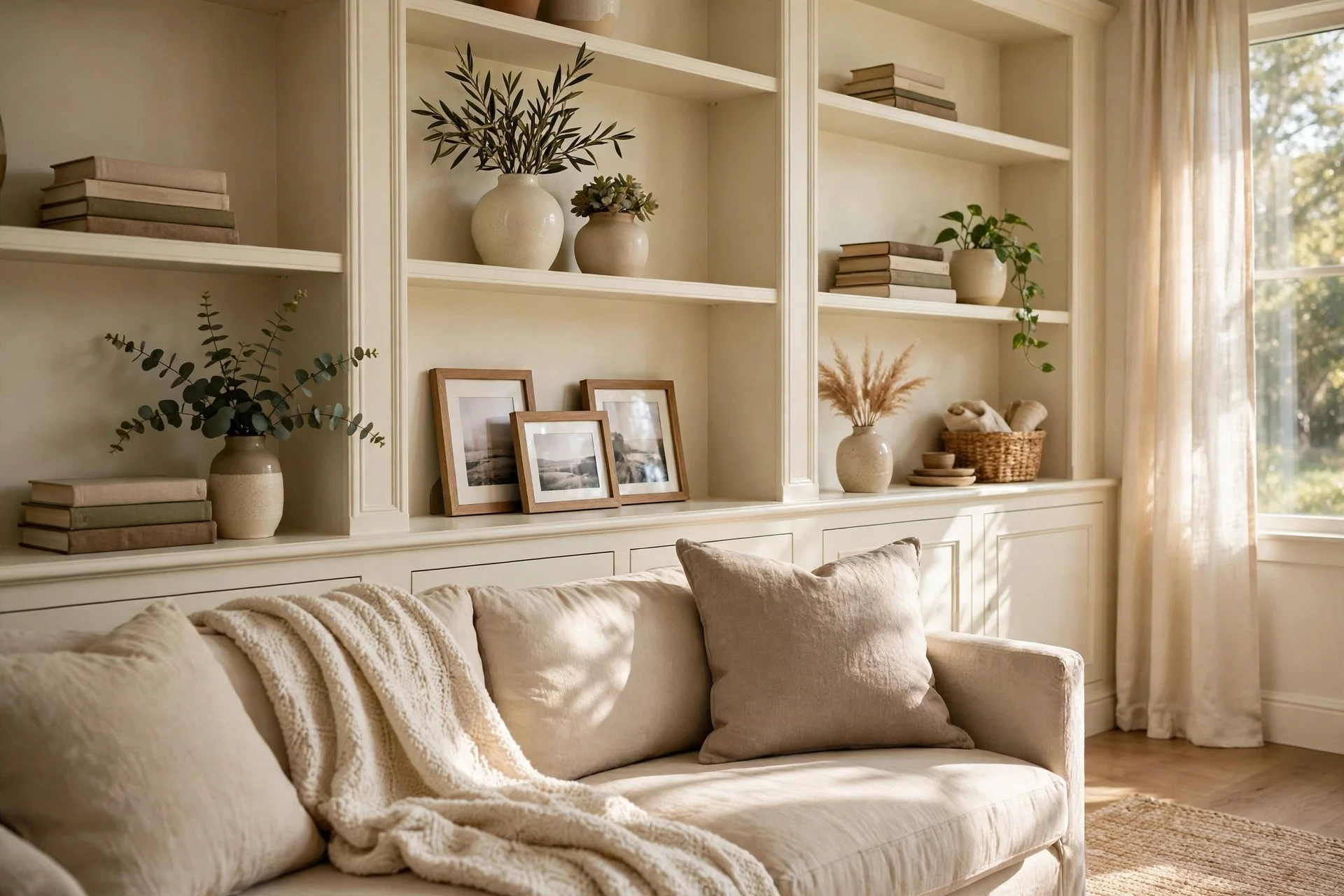
Built-in shelves turn a plain wall into the most interesting part of a living room, and they give books and objects a proper home instead of letting them pile up on surfaces. If full built-ins are out of budget, a pair of tall bookcases pushed together and painted the wall colour gives a similar look for much less. Style the shelves in groups: stack books horizontally, leave some open space, and add a vase, a framed photo, or a small plant for variety. Do not fill every inch, because the empty spaces are what make the full ones stand out. I tried this and packed my shelves tight on the first go, and the whole wall looked cluttered until I took a third of it off.
Try this: Remove one item from every shelf, step back, and notice how much calmer the wall looks.
9. A Coffee Table That Starts Conversations
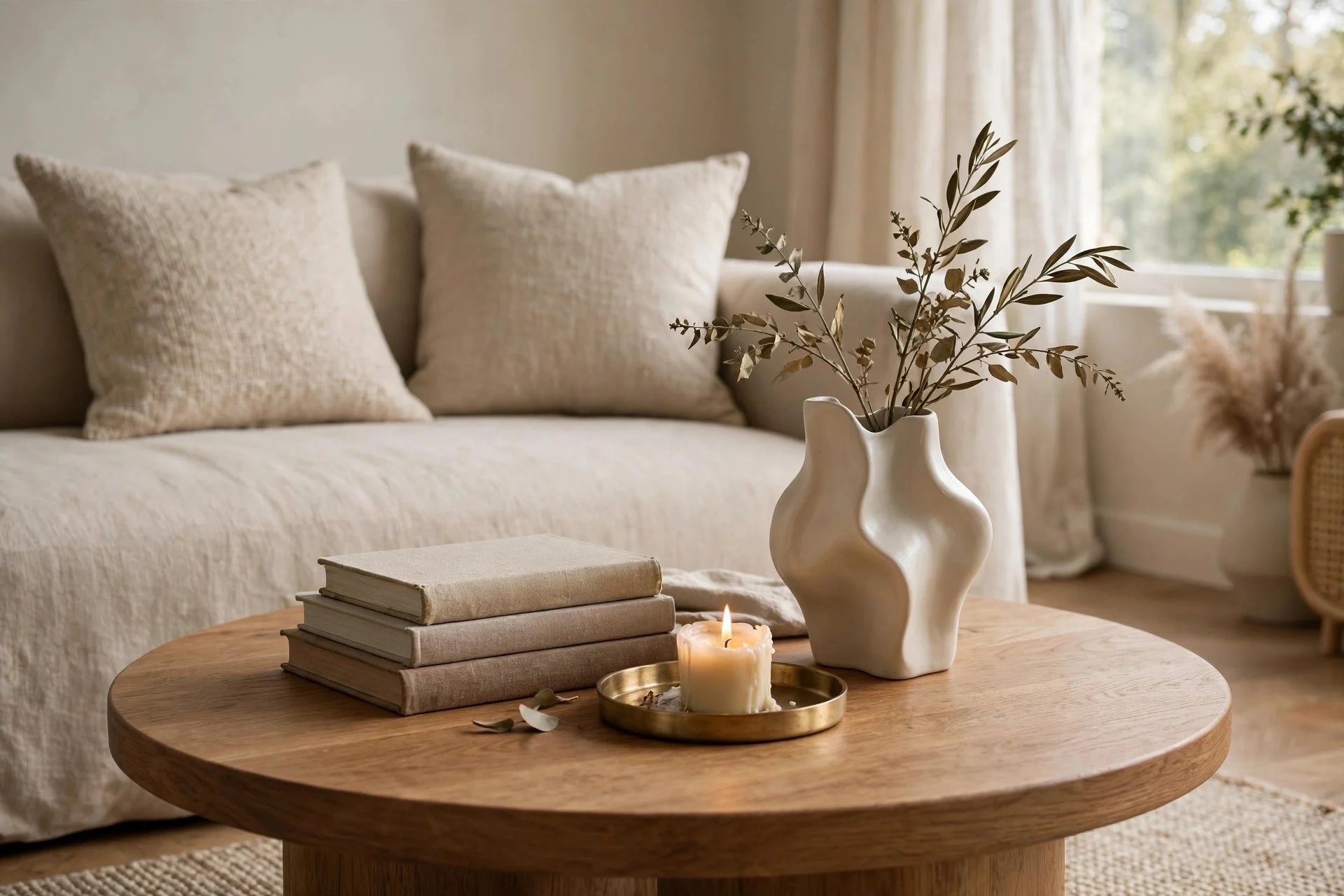
A coffee table gets used every single day, so it is worth choosing one that earns its place. Look for a shape that suits the room: round tables soften a square seating area and are kinder to small children, while a long rectangular table fits a long sofa. The surface should be easy to clean and sturdy enough for feet, books, and the occasional board game. Style it lightly with a stack of two or three books, a small tray to gather loose bits, and one object you enjoy looking at, like a candle or a sculptural vase. I tried this with a glass table once and spent more time wiping fingerprints than enjoying it, so now I pick surfaces that forgive real life.
Try this: Clear your coffee table completely, then put back only three things you actually use or love.
10. Throw Pillows You Can Swap With the Seasons
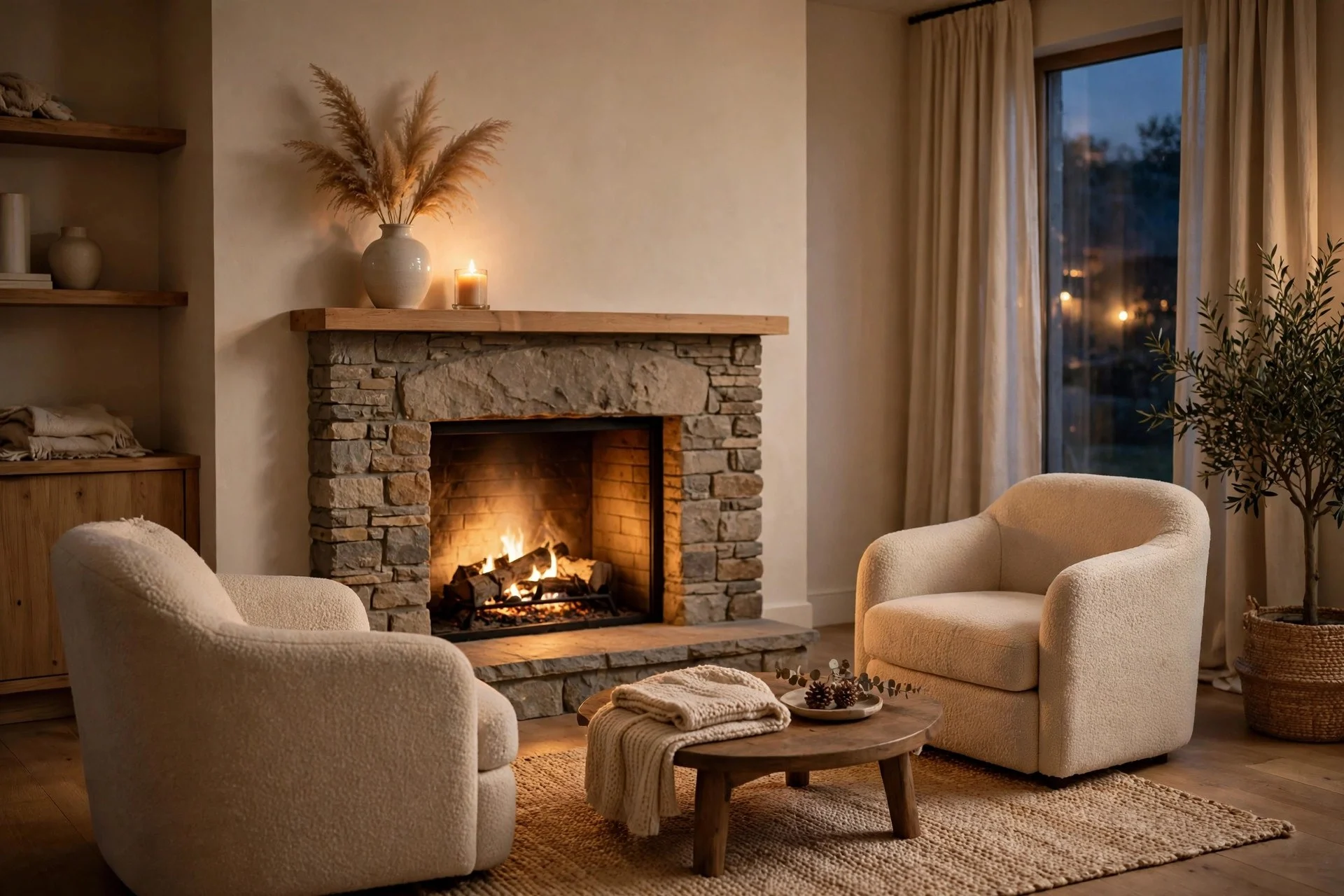
Throw pillows are the easiest way to refresh a living room without spending much or moving heavy furniture. Keep the sofa itself neutral and change the pillows with the seasons: warm rusts and deep greens in autumn, light linen and soft blues in summer, and a touch of sparkle around the holidays. Mix sizes and textures rather than buying a matching set, and use a simple rule of odd numbers, like three or five pillows, so the sofa looks relaxed rather than staged. Washable covers are worth the small extra cost. I tried this by swapping just the pillow covers one October, and the whole room felt new for the price of a takeaway dinner, so now I keep a small basket of spare covers in the cupboard.
Try this: Buy two new pillow covers in a seasonal colour and rotate them in this weekend.

11. A Fireplace as the Natural Focal Point
If your living room has a fireplace, let it be the centre of the room instead of fighting it for attention. Arrange the seating to face it, keep the mantel simple with one or two pieces you love, and resist the urge to hang the TV directly above it, which usually puts the screen too high to watch comfortably. If the fireplace does not work, a row of candles or a stack of logs in the opening still gives it warmth and purpose. A fresh coat of paint on the surround or a new mantel shelf can change the whole look for very little money. I tried this by clearing years of clutter off our mantel, and the room suddenly had a calm centre point it had been missing.
Try this: Take everything off the mantel, then put back only your single favourite piece and one candle.
12. Curtains That Hang High and Wide
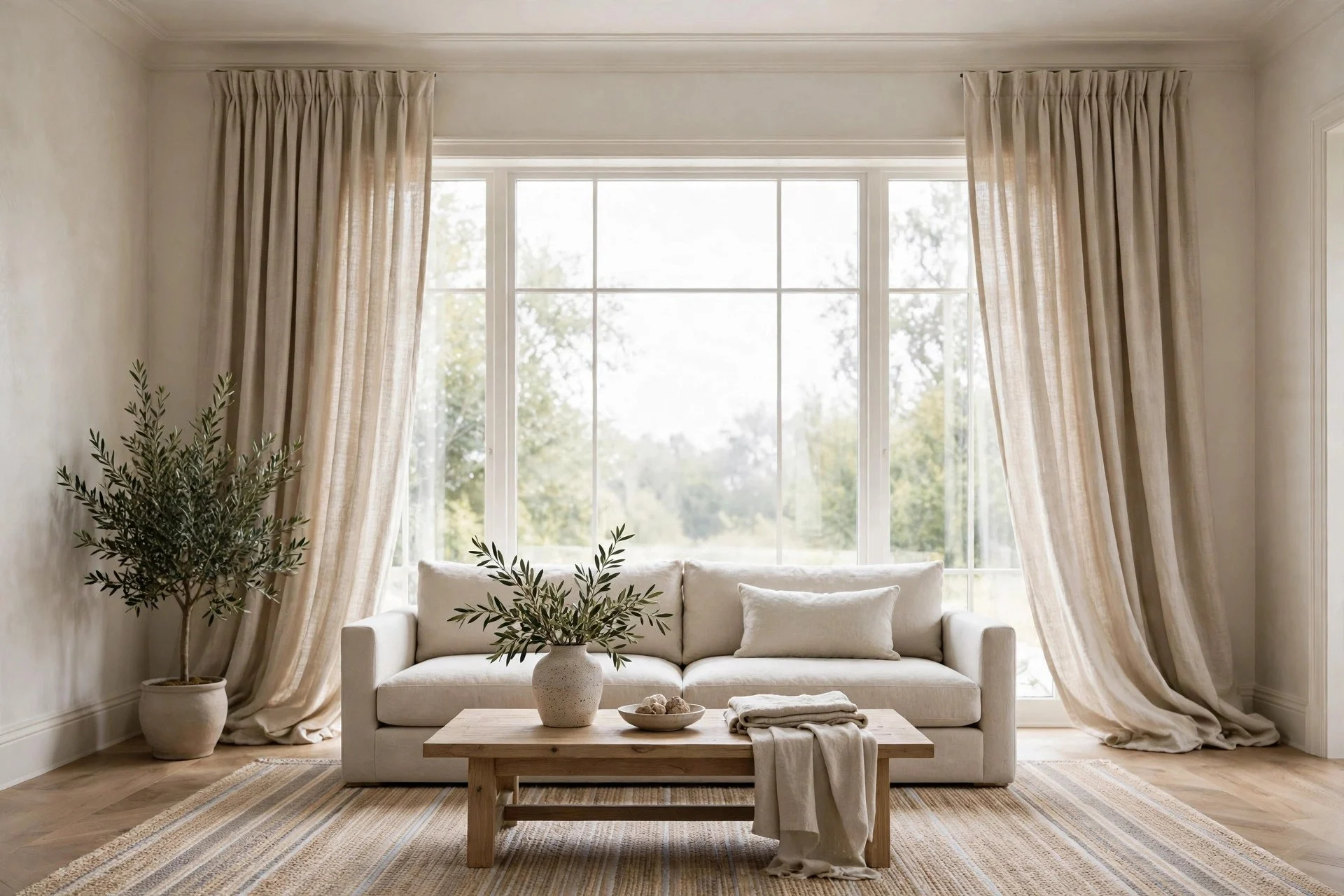
Curtains hung the wrong way can shrink a room, while the right hang makes windows look taller and the whole space feel grander. Mount the rod close to the ceiling and extend it well past the window frame on each side, so the curtains frame the window instead of covering it when open. Let the fabric just kiss the floor rather than pooling or hanging short. Linen and cotton blends filter light nicely, while heavier fabrics add cosiness in winter. I tried this in a room with low windows and hung the rod just above the frame at first, and the windows looked small and squat until I raised the rod six inches and the whole wall seemed to grow.
Try this: Move one curtain rod up and out this weekend and compare the window before and after.
13. A Mirror That Makes the Room Feel Bigger
A well-placed mirror is one of the oldest tricks for making a small living room feel bigger and brighter, and it still works. Hang it opposite or beside a window so it bounces daylight around the room, or above a console table where it catches the glow of a lamp in the evening. A large mirror makes more impact than several small ones, and a simple frame keeps the focus on the reflection rather than the mirror itself. Just check what the mirror reflects before you hang it, because a view of a cluttered shelf doubles the mess. I tried this with a mirror facing a blank wall and wondered why nothing changed, until I moved it across from the window and the room lit up.
Try this: Hold a mirror up in different spots for a minute each and pick the place where it catches the most light.
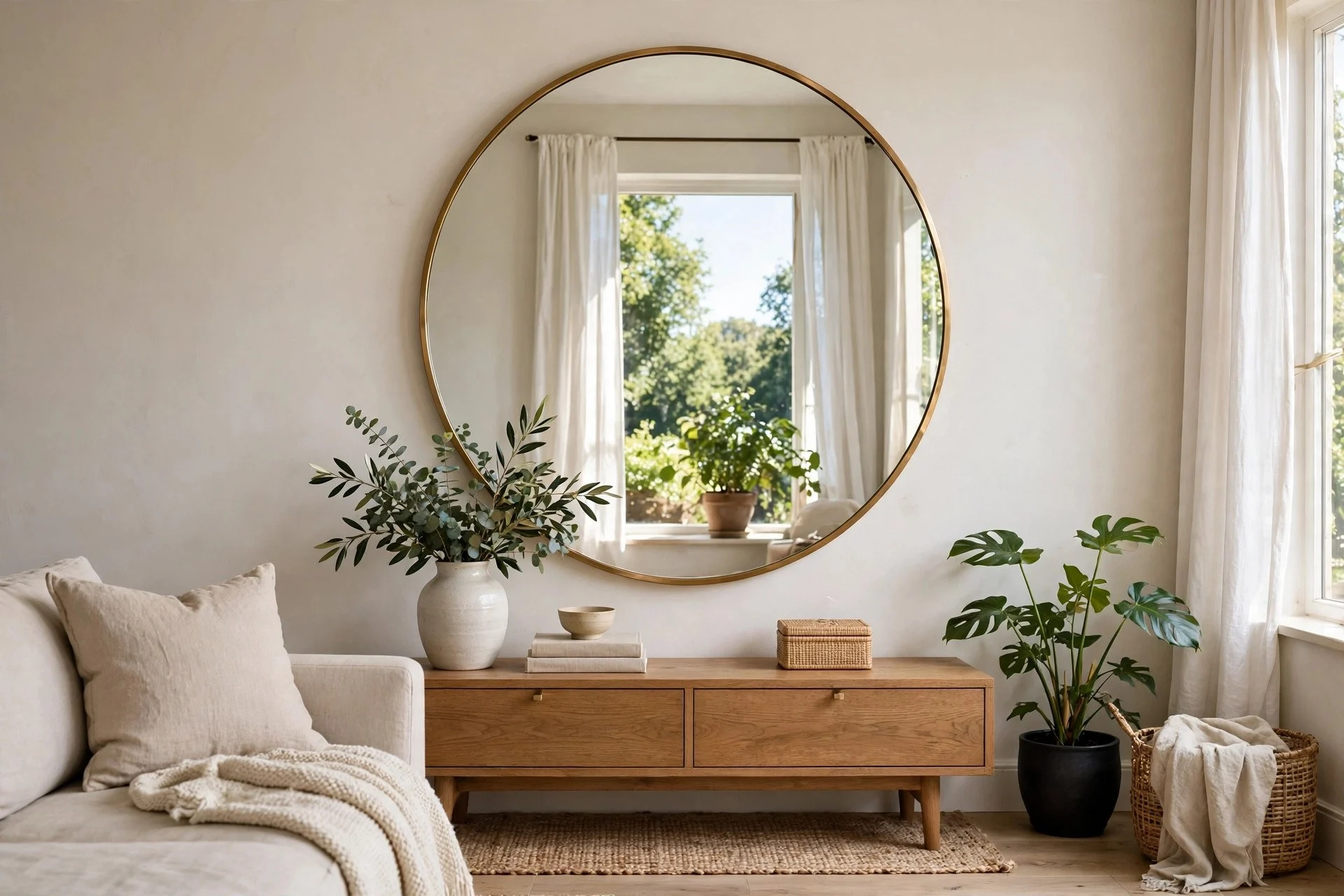
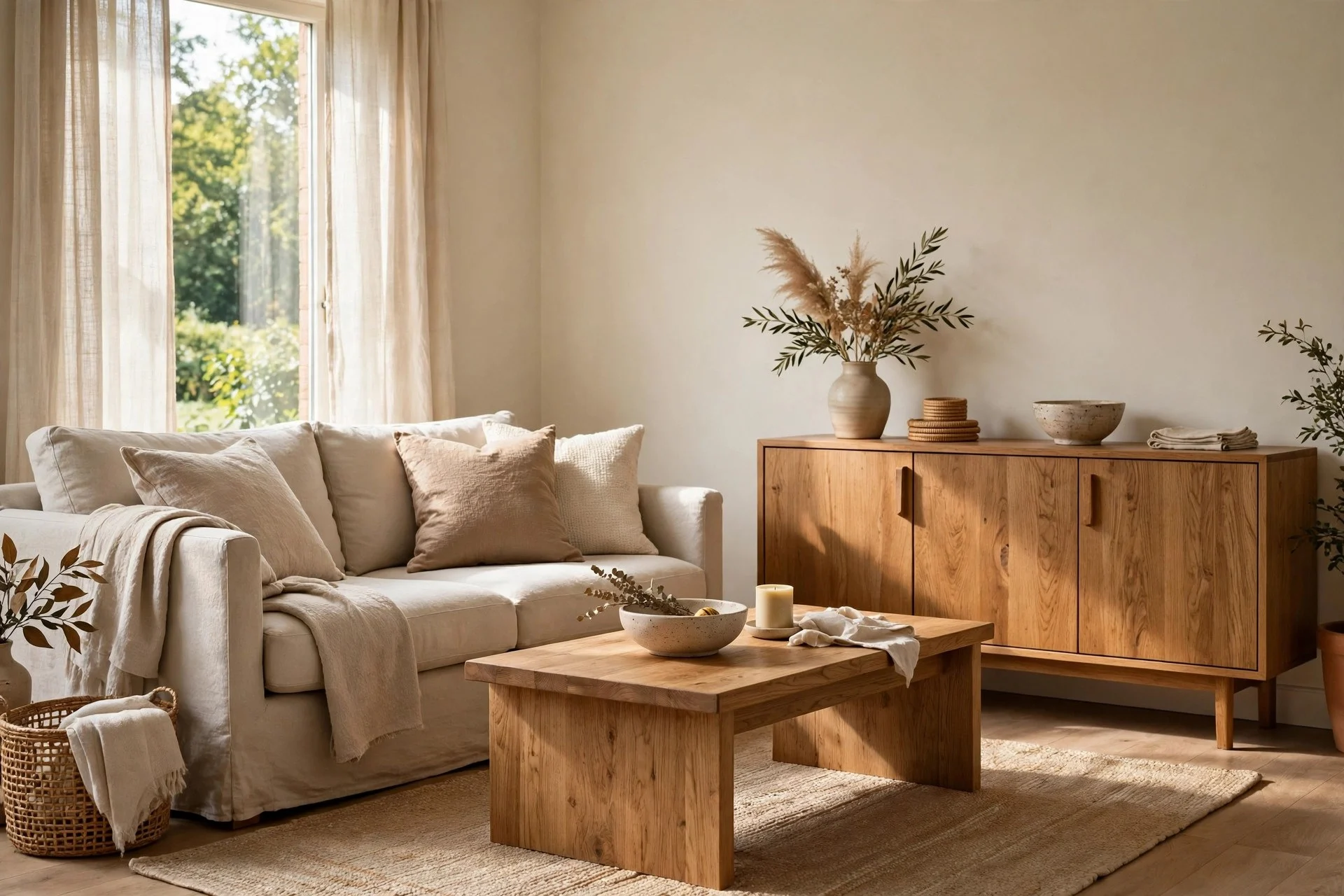
14. Warm Wood Tones Against Soft Neutrals
Warm wood tones keep a neutral living room from feeling cold or flat, and they suit almost every style from modern to farmhouse. A wooden coffee table, sideboard, or picture frames add warmth that pale walls and grey sofas cannot manage on their own. The trick is to vary the wood tones slightly rather than matching everything exactly, so the room feels collected and natural. Mix in soft neutrals like cream, beige, and warm white on the walls and upholstery, and let the wood provide the contrast. I tried this by adding one oak side table to a very grey room, and that single warm piece made the whole space feel softer and more welcoming.
Try this: Add one warm wood piece, like a tray or a side table, and see how it warms up a cool-toned room.
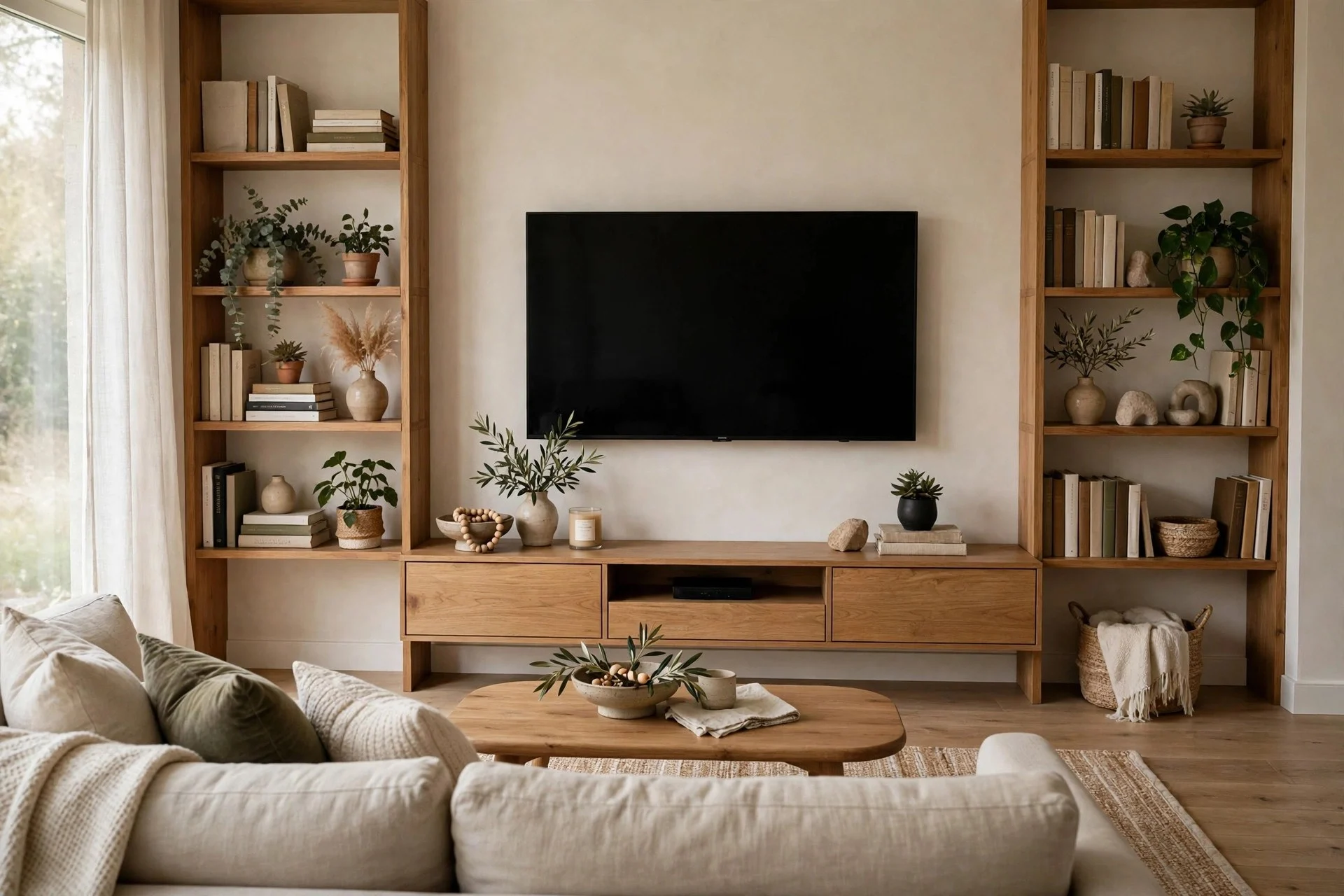
15. A TV Wall That Doesn’t Look Like a TV Wall
A big black TV screen can dominate a living room, but a few simple choices keep it from taking over. Mount it at eye level when seated, not high above a fireplace, and frame it with shelves, art, or a low media unit so it reads as part of the wall rather than a blank hole. A gallery wall around the TV works well, as does a slim console underneath with books and a plant to soften the edges. When the TV is off, a piece of art on screen or a simple frame around it helps it blend in. I tried this by mounting our TV on a bare wall first, and it looked like a black hole until I added shelves and a console that made the whole wall feel finished.
Try this: Add a low console and one plant under the TV this week and notice how much less it dominates.
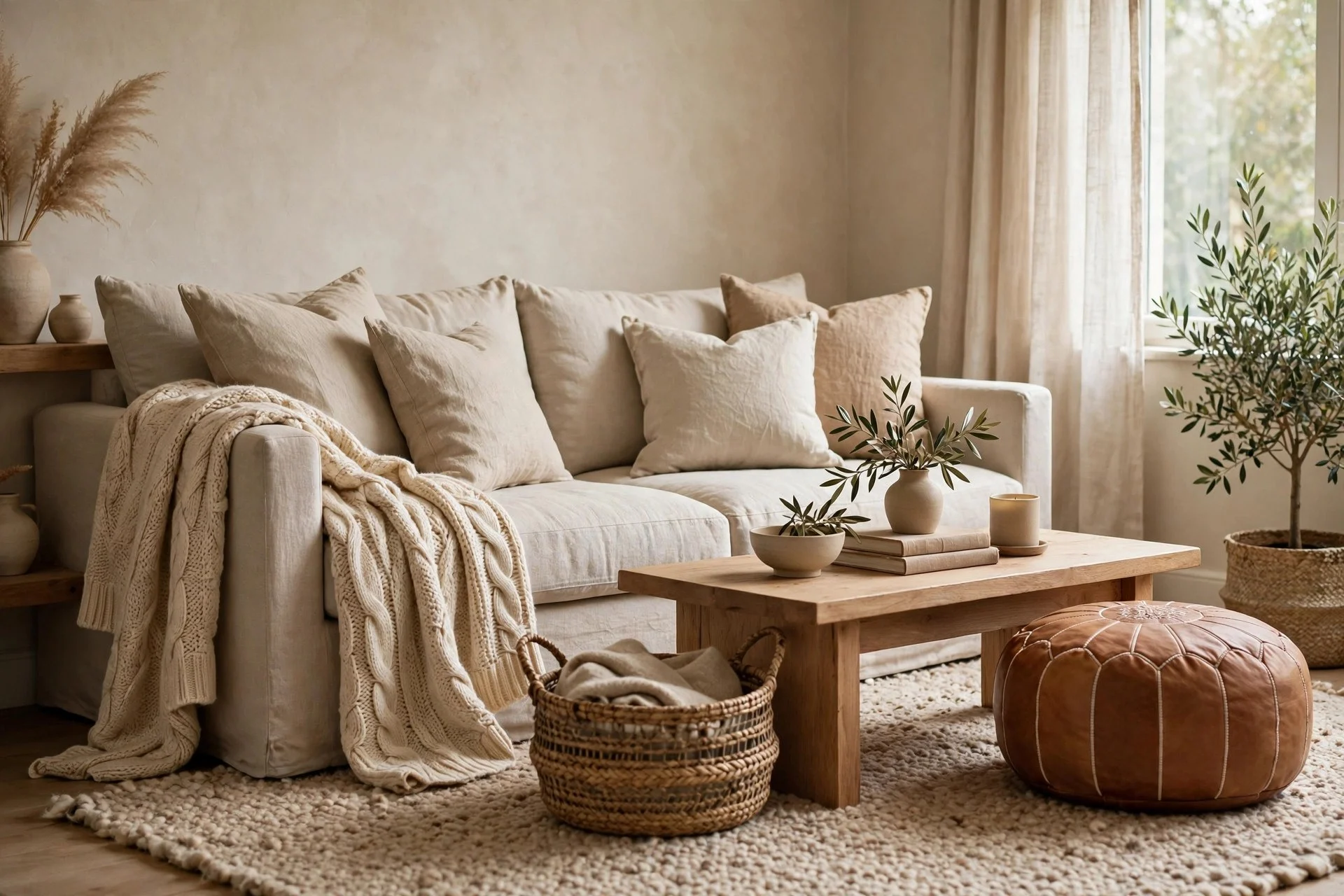
16. Texture Everywhere: Knits, Leather, and Linen
Texture is what makes a living room feel inviting instead of just looking tidy, and it costs far less than new furniture. Layer a chunky knit throw over the arm of the sofa, add linen cushions, a leather pouf, or a woven basket, and the room gains depth you can actually feel. The trick is to mix rough and smooth: soft wool against sleek leather, or a nubby rug under a smooth wooden table. Stick to a calm colour palette so the textures do the talking rather than competing colours. I tried this by adding just a knit throw and a woven basket to a plain room, and guests started commenting on how cosy it felt even though nothing big had changed.
Try this: Drape one textured throw over the sofa arm and add a woven basket beside it today.
17. A Bar Cart for Easy Entertaining
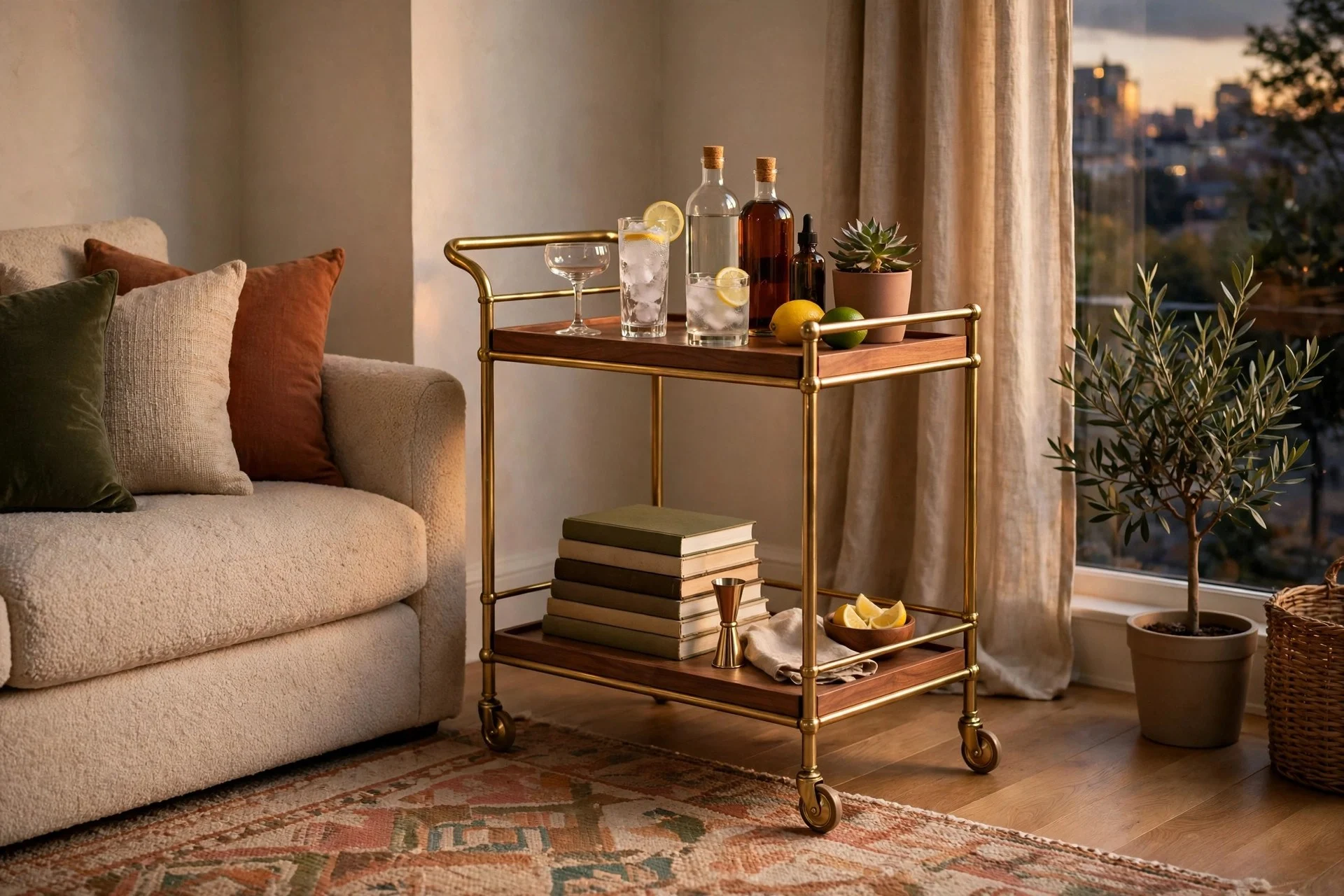
A bar cart is a small piece of furniture that does a surprising amount of work in a living room. It holds glasses, a bottle or two, and a few pretty extras, and it rolls out of the way when you need the space back. Style it with a mix of useful and decorative pieces: a small plant, a couple of books, and one nice bottle on display, rather than a crowded row of everything you own. A tray on top keeps things tidy and makes the cart look finished. I tried this with a secondhand cart I found for next to nothing, and it quickly became the spot guests drift towards when they arrive, even on nights when nobody pours a drink.
Try this: Set up a small drinks tray on a side table first and see if you use it before buying a cart.
18. Art You Actually Love, Not Just Fillers
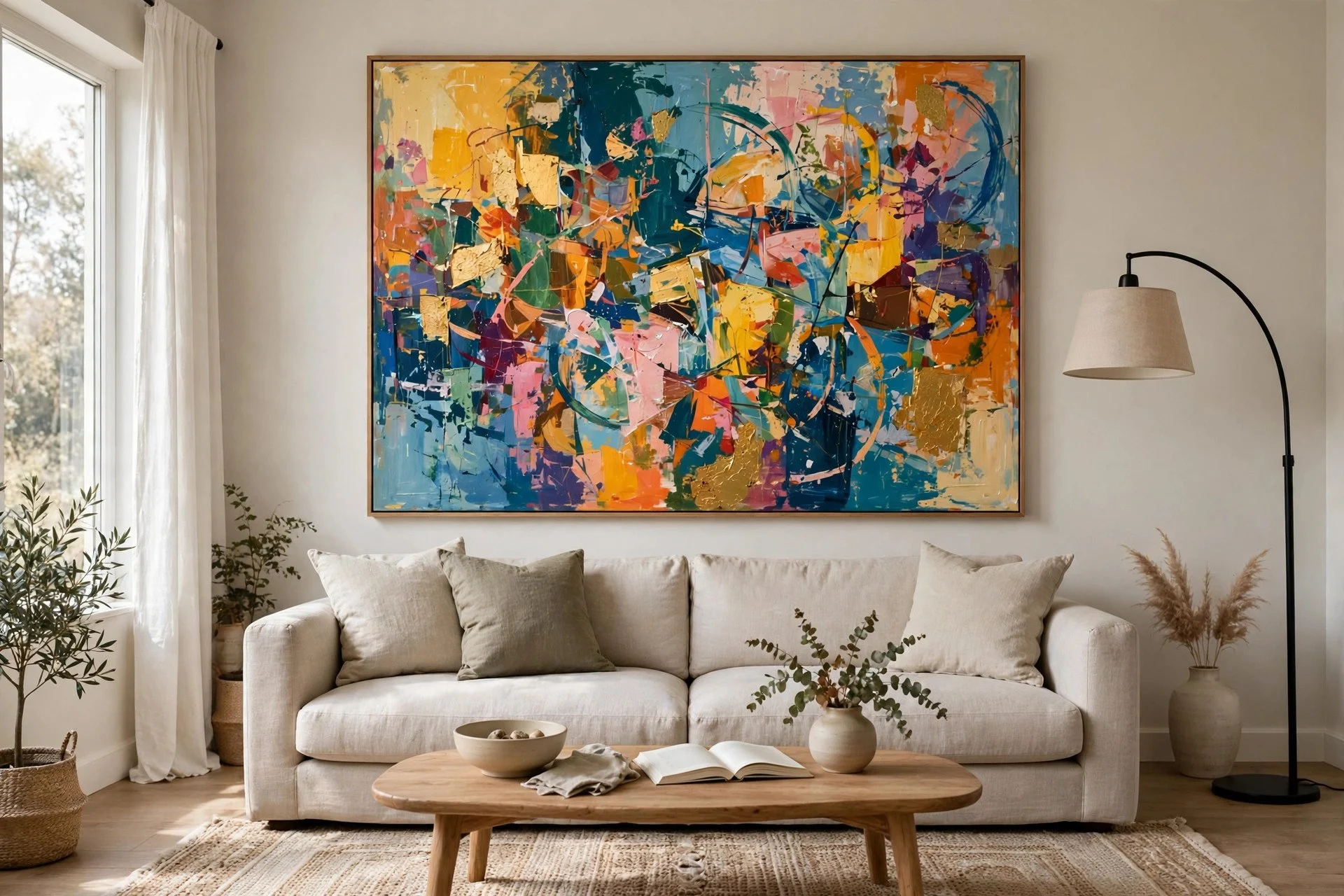
Art that you genuinely love changes a living room far more than a generic print chosen just to fill a blank wall. Pick pieces that mean something to you, whether that is a local artist’s work, a print from a place you visited, or a painting a friend made. One large piece above the sofa usually has more impact than a row of small ones, and it gives the room a clear focal point. Do not worry about matching the art to the cushions; a room looks better when the art leads and the soft furnishings follow. I tried this by replacing a filler print with a painting I had kept in a cupboard for years, and the room finally felt like ours instead of a rental.
Try this: Hang one piece of art you love in the most visible spot and take down the filler print.
19. Open Shelving in a Small Living Room
Open shelving can make a small living room feel airy where a bulky cabinet would crowd it, but it only works if you keep it edited. Use one or two shelves for the things you reach for often, like books, a speaker, or a few favourite objects, and leave plenty of breathing room around them. Group items in threes, mix heights, and repeat one colour so the shelves look planned rather than random. The honest truth is that open shelves show dust and clutter, so they suit people who enjoy tidying more than people who hide things in cupboards. I tried this with a single shelf above the sofa and learned quickly that five well-chosen pieces look far better than fifteen crowded ones.
Try this: Put up one shelf, style it with three items, and live with it for a week before adding more.

20. A Monochrome Palette With One Pop of Colour
A monochrome palette sounds plain, but it is one of the easiest ways to make a living room look calm and pulled together. Pick one base colour, like warm grey or soft beige, and use it across the walls, sofa, and rug in different shades. Then add a single pop of colour, like mustard cushions, a teal vase, or a rust throw, and repeat that accent two or three times around the room so it feels intentional. The pop is easy to change later, which means the room can shift with the seasons for the price of a cushion or two. I tried this with an all-grey room and one deep blue throw, and that single note of colour made the whole space feel designed rather than accidental.
Try this: Pick one accent colour, add it in a cushion and a vase, and see how the room wakes up.

21. Floor Cushions and Poufs for Extra Seats
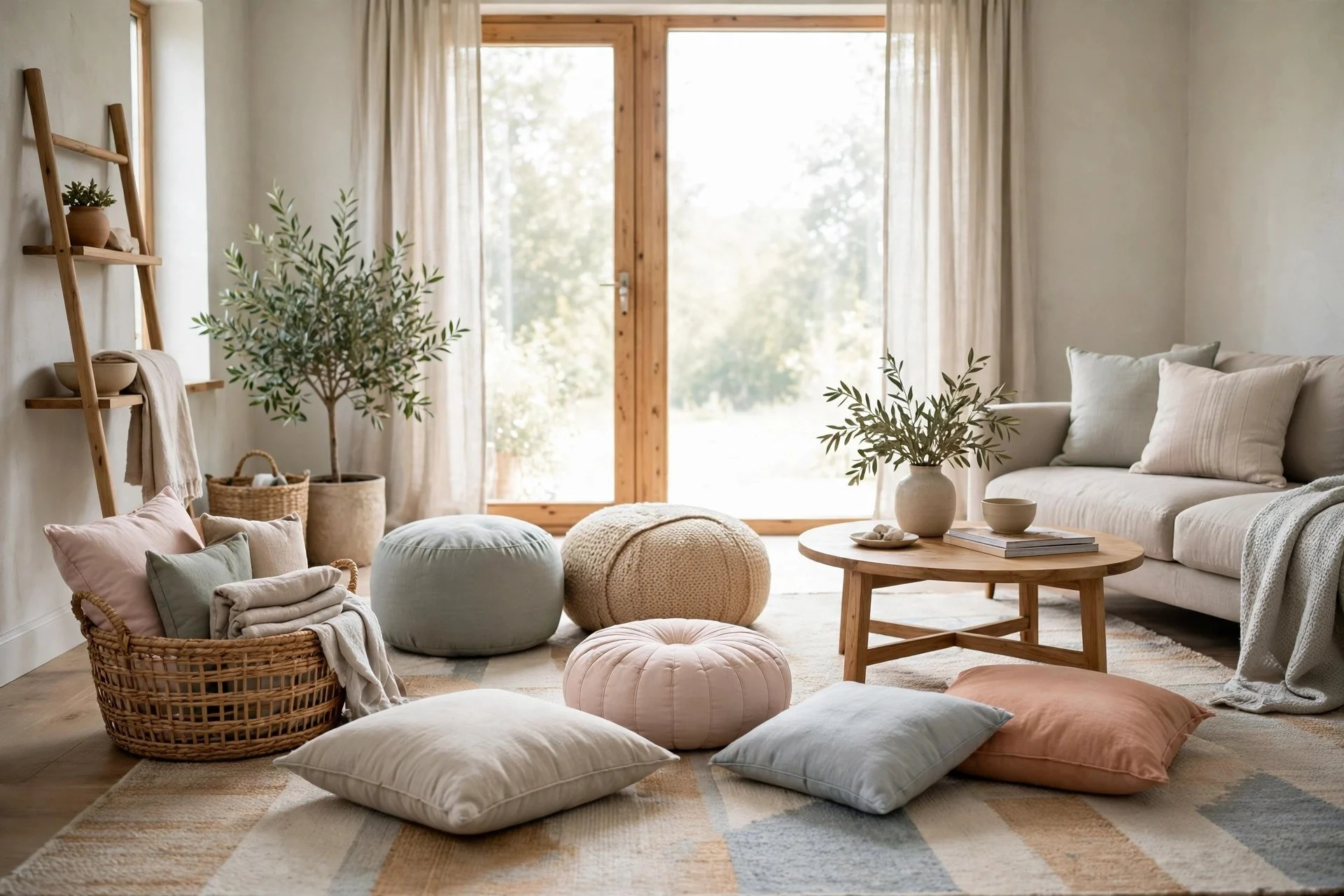
Floor cushions and poufs are the simplest answer to the question of where everyone sits when friends drop by. They tuck under a console or beside the sofa when not in use, and they pull out in seconds when the room fills up. Kids love them, guests do not mind them, and they add a soft, casual layer to the room that stiff extra chairs never manage. Choose covers you can wash and fillings that hold their shape, and pick colours that match the room so they look like part of the plan. I tried this before a family gathering by buying two poufs instead of another armchair, and they got used every single time while the spare chair used to sit empty.
Try this: Buy one pouf in a colour that matches your rug and keep it by the sofa for a week.
22. A Console Table Behind the Sofa
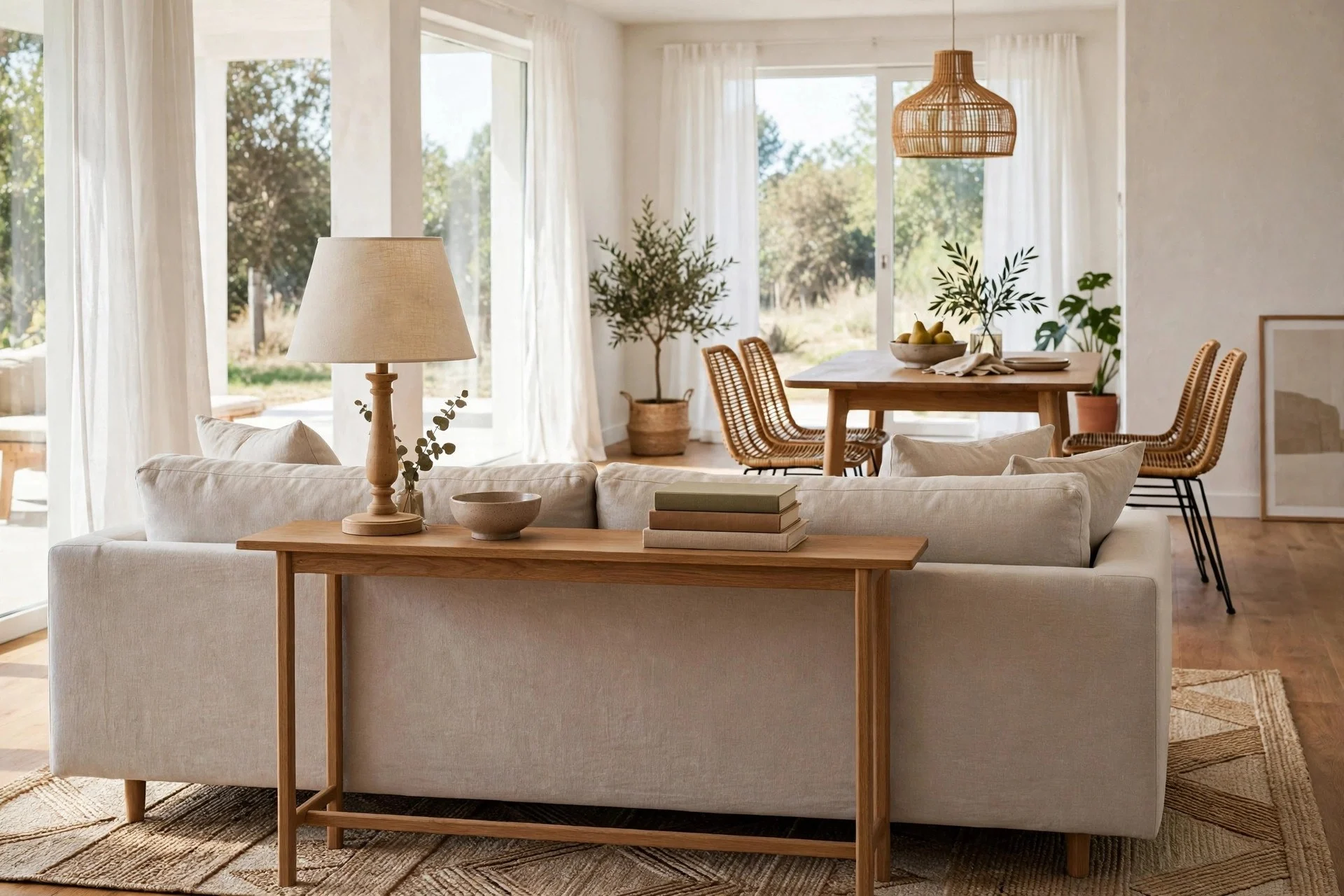
A console table behind the sofa is a quiet fix for a common problem: a sofa floating in the middle of an open-plan room with nothing behind it. A slim table fills that gap, gives you a place for a lamp, books, or a vase, and marks the edge of the living area without blocking the view. Keep it narrow so it does not eat into the walkway, and style the top lightly, since it is seen from both sides. A pair of stools tucked underneath can double as extra seats. I tried this after years of a bare gap behind our sofa, and the room finally felt finished, like the seating area had a proper back wall.
Try this: Measure the gap behind your sofa and look for a slim console that leaves a clear walkway.
23. Seasonal Living Room Decor Ideas That Keep Things Fresh
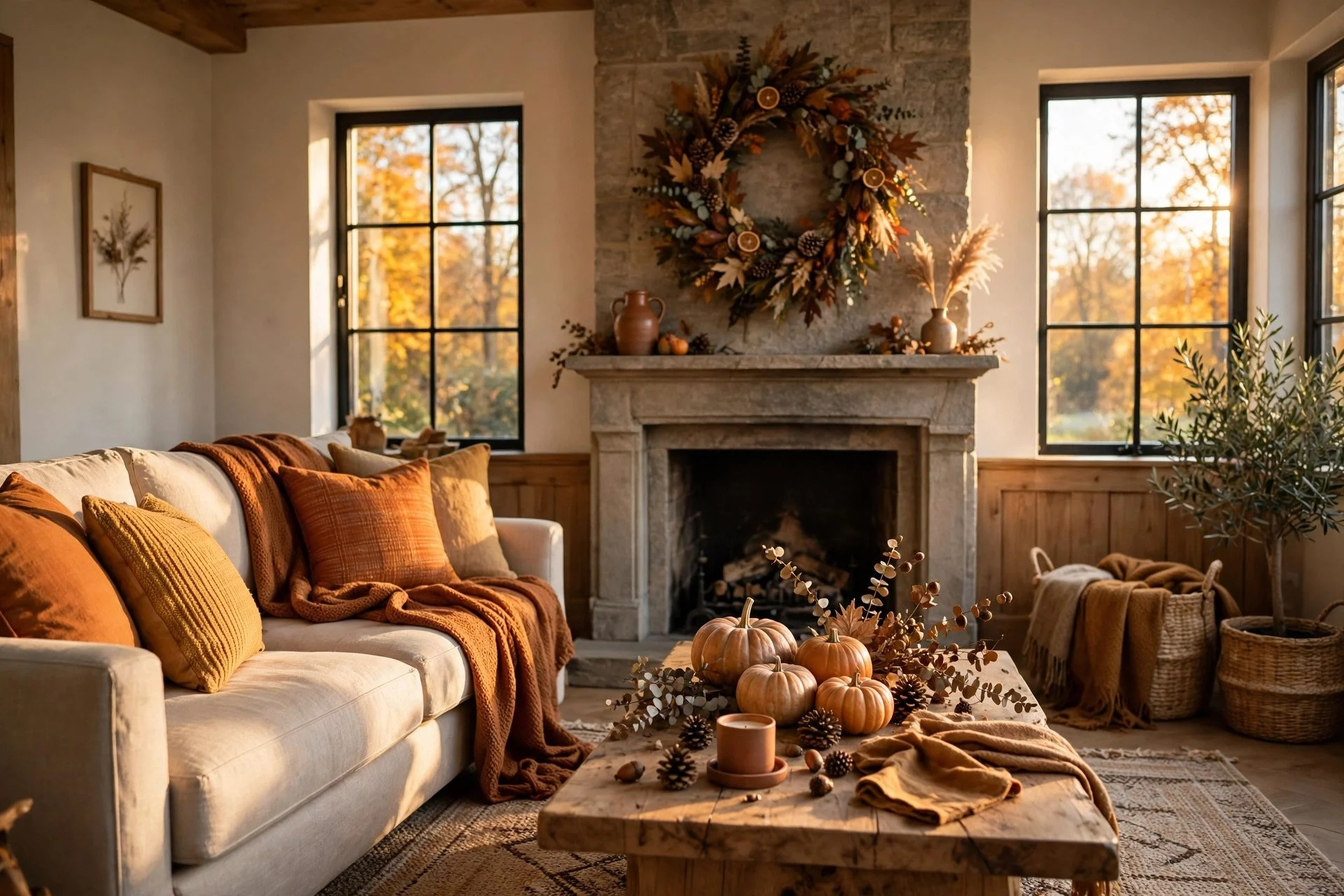
Seasonal swaps keep a living room feeling fresh without a full redecoration every few months. The trick is to change only the small, easy layers: cushion covers, a throw, the coffee table styling, and a wreath or garland on the mantel. Keep the big pieces the same all year and let the accessories do the seasonal work. A bowl of pinecones in winter, fresh flowers in spring, and warm-toned throws in autumn are enough to mark the season. I tried this by storing each season’s small pieces in one labelled box, and swapping the room over now takes twenty minutes instead of a whole weekend of shopping.
Try this: Pack one box per season with cushion covers, a throw, and mantel pieces, ready to swap in.
24. A Kids-Friendly Corner That Still Looks Grown-Up
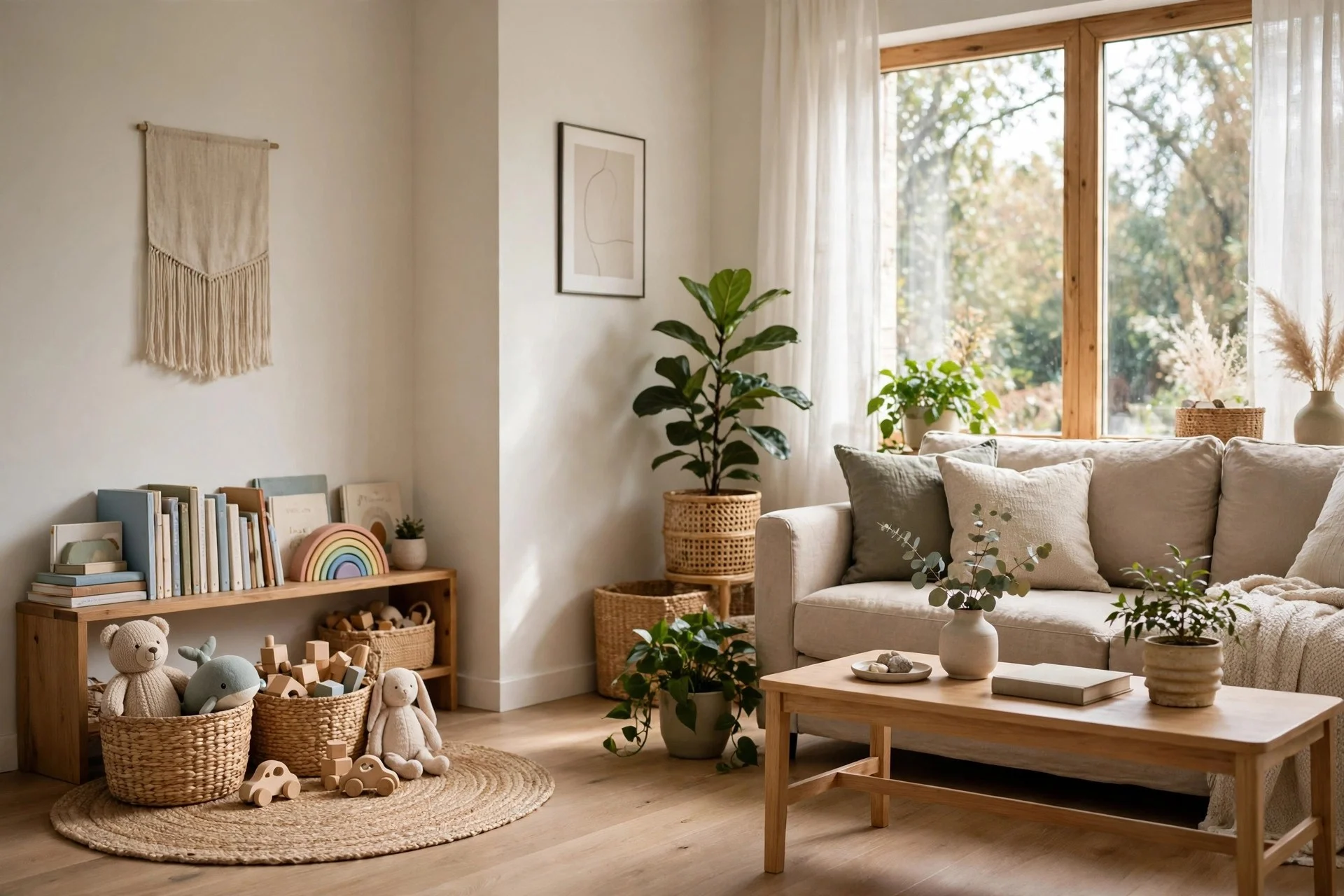
A living room shared with kids does not have to look like a playroom, and a small dedicated corner keeps toys from taking over the whole space. Choose one corner for a low basket or two, a small rug, and a few favourite toys, and let the rest of the room stay yours. Pick storage that looks good, like woven baskets or a wooden crate, so the corner blends in rather than shouting. Washable fabrics and sturdy surfaces matter more than perfect styling when little hands are around. I tried this after years of toys spread across every surface, and giving the kids their own corner meant the rest of the room finally stayed tidy for more than an hour.
Try this: Set up one basket and a small rug in a corner this weekend and agree that toys live there.
25. Personal Touches on Every Surface
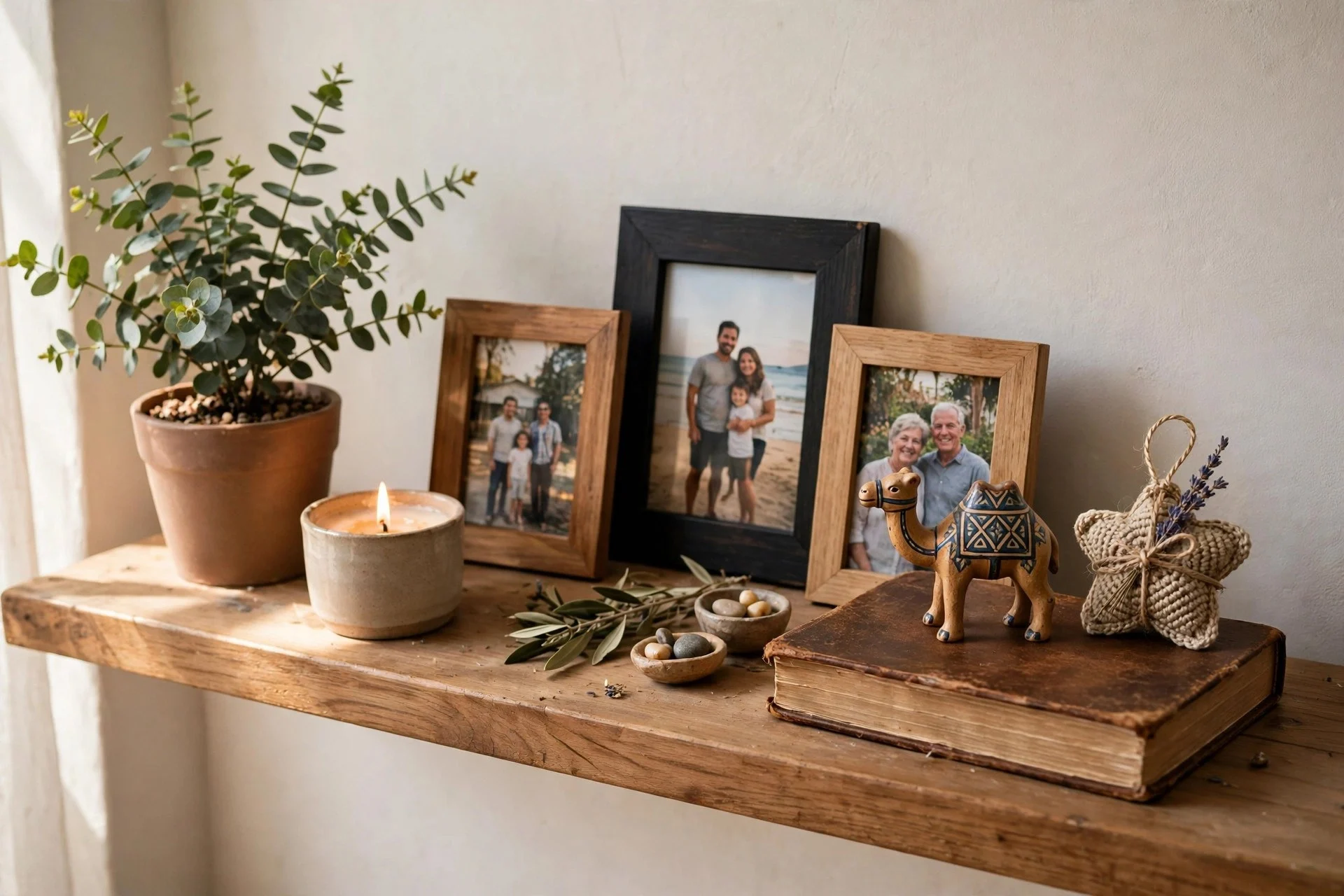
The difference between a showroom and a home is the personal touches, and they cost nothing at all. A photo of a good day, a souvenir from a trip, a book you have actually read, or a handmade gift on a shelf tells visitors who lives here. Spread these touches around the room rather than grouping them all in one spot, and let them sit beside the prettier objects so the room feels lived in. Rotate them now and then so the room keeps telling your story as life changes. I tried this by putting a small framed photo from our first home on the bookshelf, and it is the one thing in the room I would grab first if I ever had to leave in a hurry.
Try this: Place one personal item on each main surface in the room and notice how much warmer it feels.
How do I decorate a living room on a small budget?
Start with what costs nothing: rearrange the furniture, clear the clutter, and move things you already own into better spots. Then spend small amounts on the pieces with the biggest impact, like cushion covers, a rug, or a plant. Secondhand shops and sales are your friends, and one good change at a time beats a big shopping trip that leaves the room feeling random.
What colour works best for a living room?
There is no single best colour, because it depends on your light and your taste. Warm neutrals like cream and beige suit most rooms and most styles, while a soft sage or dusty blue adds calm without feeling bold. If your room gets little natural light, lean towards warmer shades, and test paint samples on the wall before you commit to a whole tin.
How do I make a small living room look bigger?
Use a large mirror opposite a window, keep the furniture low and slim, and choose a rug that is big enough for the front legs of the sofa. Pale walls, sheer curtains, and legs on the furniture all help the eye see more floor, which makes the room feel larger. Avoid filling every corner, because a little empty space makes a small room breathe.
How often should I change my living room decor?
The big pieces, like the sofa and rug, can last for years, while the small layers can change with the seasons or whenever you fancy a refresh. Swapping cushion covers, throws, and coffee table pieces four times a year is plenty for most people. Change things when the room stops feeling like you, not because a trend tells you to.
Final Thoughts
A good living room is not finished in a weekend, and it does not need to look like anyone else’s. The best rooms grow from small, honest choices: a rug that fits, a chair by the window, a wall full of things you love, and a few plants that forgive the odd forgotten watering. Pick one or two ideas from this list and start there, then let the room change slowly as you live in it. That is how a house starts to feel like home.