
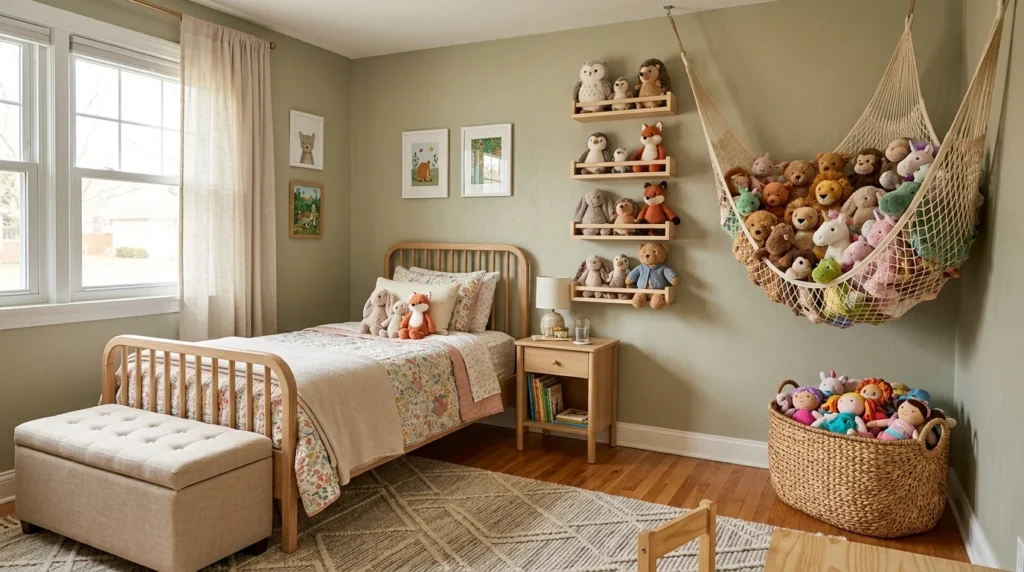
My daughter’s stuffed animal collection reached what I can only describe as critical mass sometime around her sixth birthday, when a single well-meaning relative’s gift tipped an already precarious pile on her bedroom floor into genuine chaos. Overnight, it seemed, there were plushies on the bed, plushies migrating into the hallway, plushies I’d occasionally step on barefoot at two in the morning with a very specific kind of yelp. I tried the obvious solution first, a single toy bin, and within a week it was overflowing again, mostly because a toy bin treats every stuffed animal as equally disposable clutter rather than acknowledging that some of these were genuinely beloved and others hadn’t been touched since the day they arrived. It took a proper rethink of the whole system before the plushie population actually became manageable rather than something we were constantly, halfheartedly shoving back into a closet before guests arrived.
If your own household is dealing with a similar stuffed animal takeover, here are 18 storage solutions, each explained in detail, based on what actually worked in our house and what I’ve seen work well for other families since. I’ll also answer some of the questions parents ask me most often about this exact problem, since a few practical concerns tend to come up again and again.
1. Install a Hanging Mesh Toy Hammock
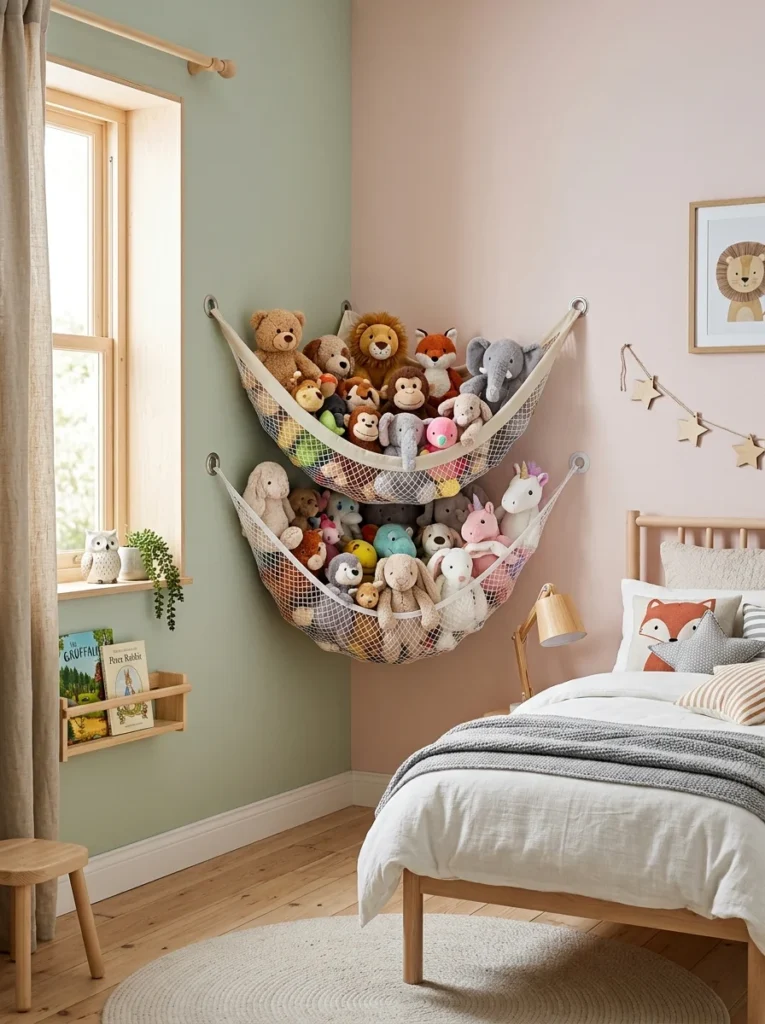
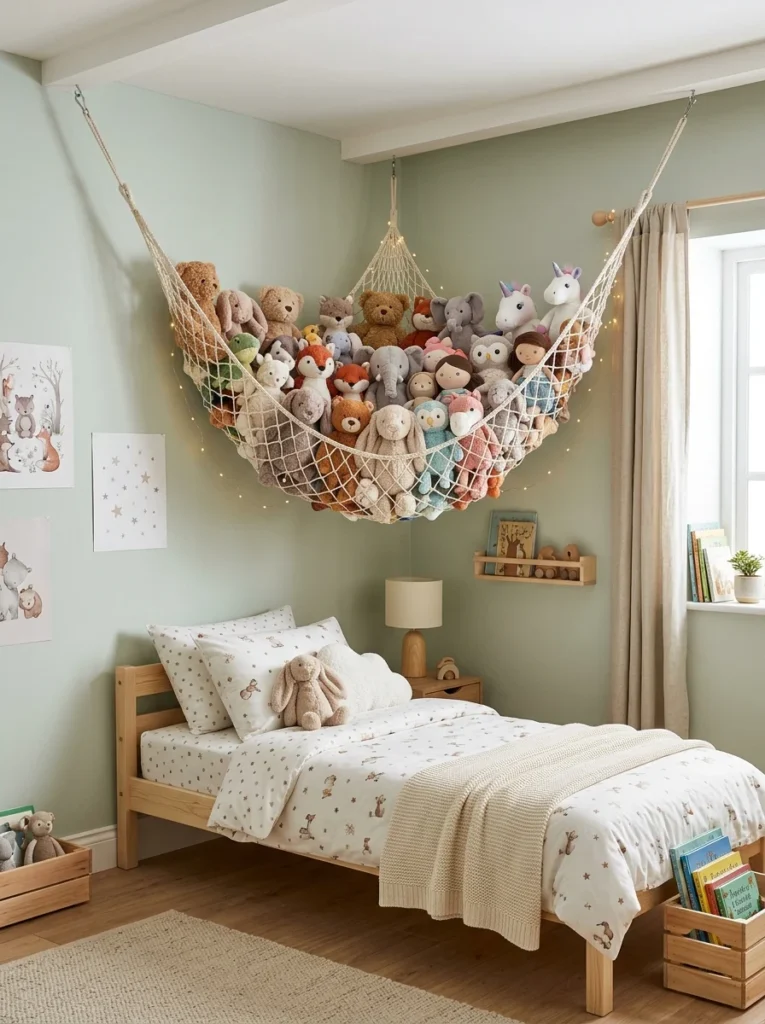
A mesh hammock strung across a bedroom corner, secured to the wall on two adjacent sides, creates a genuinely playful, contained display for stuffed animals while using corner space that would otherwise sit completely empty and unused. We installed one of these in my daughter’s room specifically, and beyond solving the storage problem, it’s become something she genuinely enjoys looking at, watching her collection bulge gently overhead rather than being hidden away in a closet somewhere. A question I hear often is whether these hammocks can hold a genuinely large collection without sagging or pulling loose from the wall, and I’d recommend checking the specific weight rating before installing, since a smaller hammock rated for a modest collection will genuinely strain or detach if you try to stuff an oversized collection into it regardless of how carefully you’ve mounted the anchor points. I’d recommend this specifically for kids who like seeing their collection displayed rather than hidden, since a hammock puts everything on show in a way that some of the more concealed storage options on this list intentionally avoid.
2. Use a Zippered Storage Bean Bag
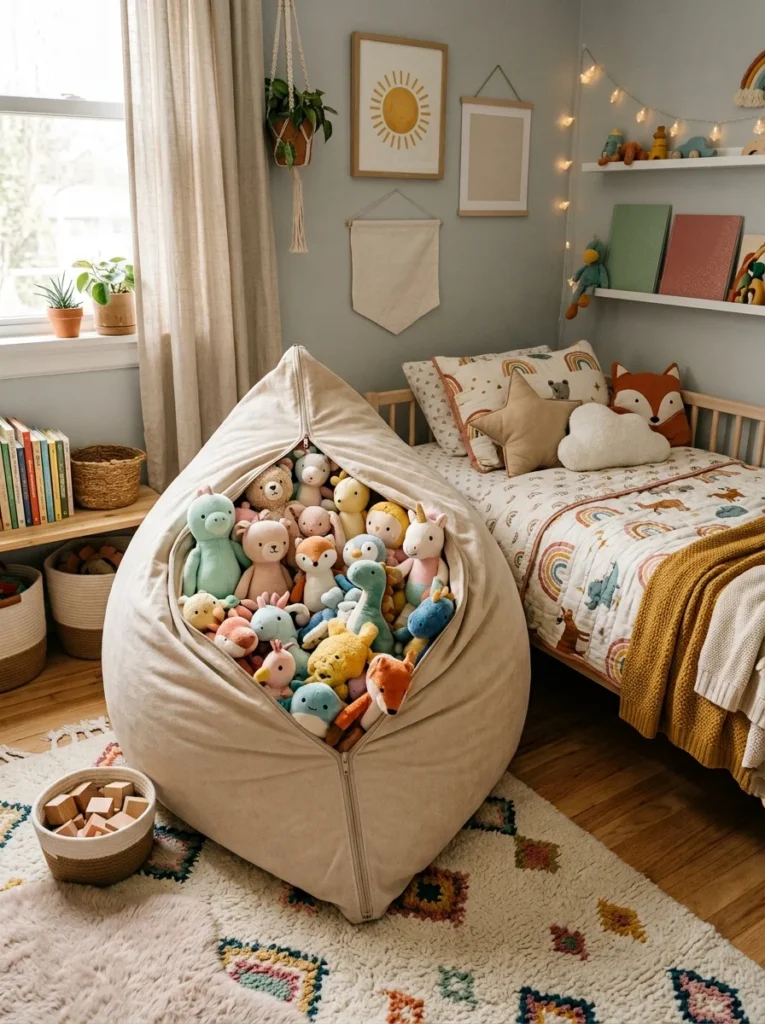
A specifically designed bean bag chair with a zippered opening lets you stuff loose plushies inside as the actual filling, transforming storage into genuinely functional seating rather than treating these two needs as separate problems requiring separate solutions. We switched to exactly this solution for our overflow collection, and my daughter now has a soft, oversized chair to sit in that’s actually filled with stuffed animals rather than standard bean bag pellets, solving both the storage and the extra-seating problem in her room at once. A common question is whether this actually works comfortably as a chair once filled with plushies rather than traditional filling, and honestly, the comfort level depends somewhat on how firmly you pack it and how consistently sized the stuffed animals are, since a bag with a few oddly shaped larger toys mixed among smaller ones can create some lumpiness compared to uniform bean bag filling. I’d recommend this specifically as a genuinely dual-purpose solution rather than pure storage, since the actual seating function is part of what makes this option appealing beyond simply hiding the collection away.
3. Add a Wall-Mounted Display Shelf System
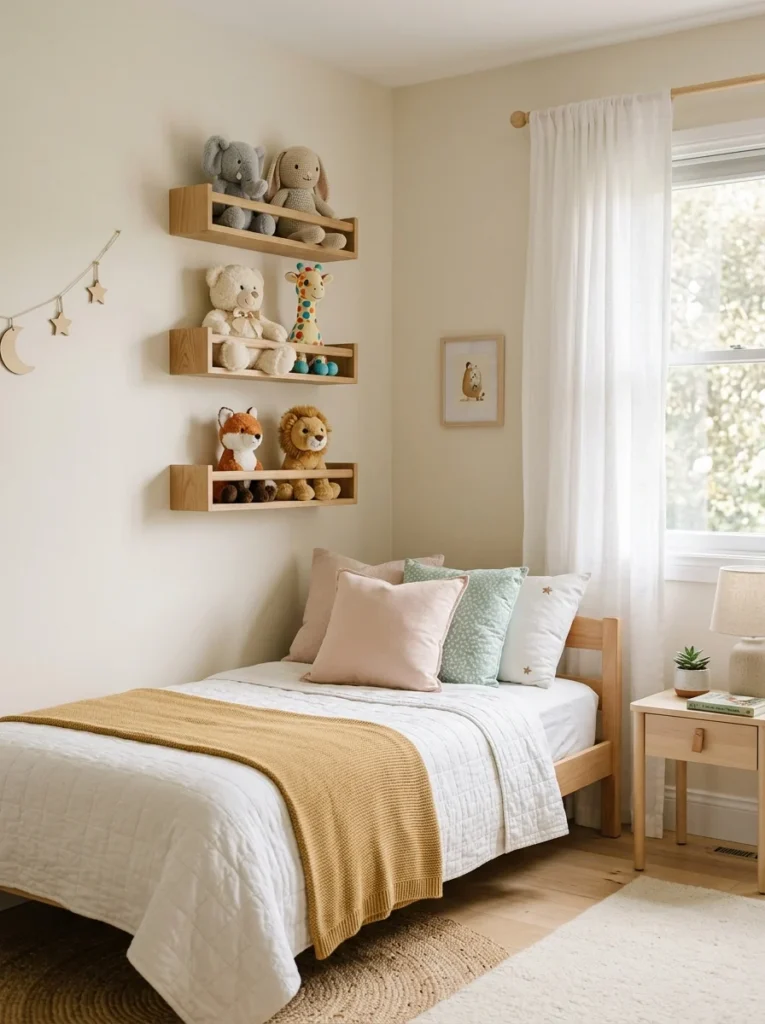
Narrow, deep wall-mounted shelves specifically positioned to display favorite stuffed animals turn the most-loved pieces of the collection into genuine decor, while signaling clearly that these particular items have earned a place of honor compared to the rest of the collection stored elsewhere. We installed a simple row of shelves specifically for my daughter’s five or six genuine favorites, and having those particular animals visibly displayed rather than mixed anonymously into a larger bin has made this small selection feel special in a way the whole undifferentiated collection never quite achieved. A question parents ask often is how to help a child actually choose which animals earn this display spot without turning it into a source of guilt about the rest, and I’d recommend framing it positively, as a rotating “favorites of the month” system rather than a permanent, final decision, which takes the pressure off any single choice feeling too consequential. This solution works particularly well combined with one of the more concealed bulk storage options elsewhere on this list, since the display shelf handles the emotional, sentimental favorites while a larger bin handles genuine volume.
4. Use an Over-the-Door Clear Pocket Organizer
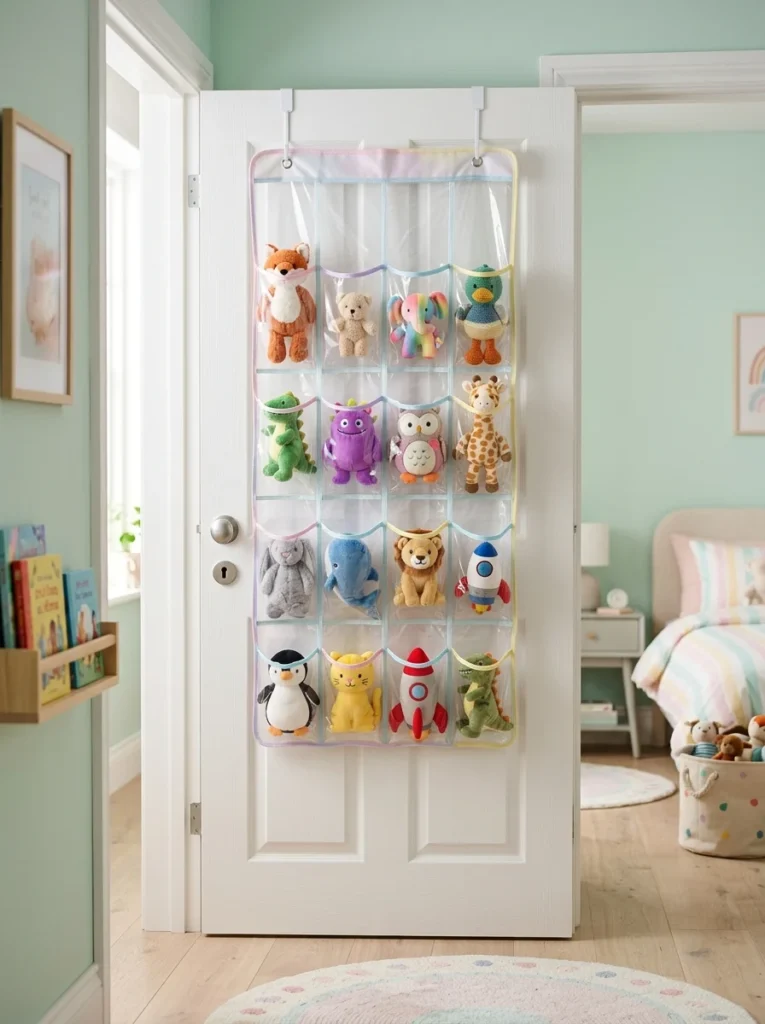
A clear, multi-pocket organizer hung over a bedroom or closet door provides individual slots for smaller stuffed animals, keeping each one visible and easy to retrieve without requiring floor or shelf space, all while taking advantage of a door’s typically unused vertical real estate. We use this specifically for my daughter’s smaller collection of beanie-style animals, and being able to see every single one through the clear pockets rather than digging through a bin has genuinely made it easier for her to find a specific favorite without needing help. A frequent question is whether this style of storage holds up to a genuinely enthusiastic child regularly pulling animals in and out throughout the day, and I’d recommend choosing a canvas-backed rather than purely mesh organizer specifically for durability, since the reinforced backing holds up considerably better to repeated daily use compared to a flimsier, purely mesh construction that tends to stretch and sag over time.
5. Build a Themed Display Shelf for Special Collections
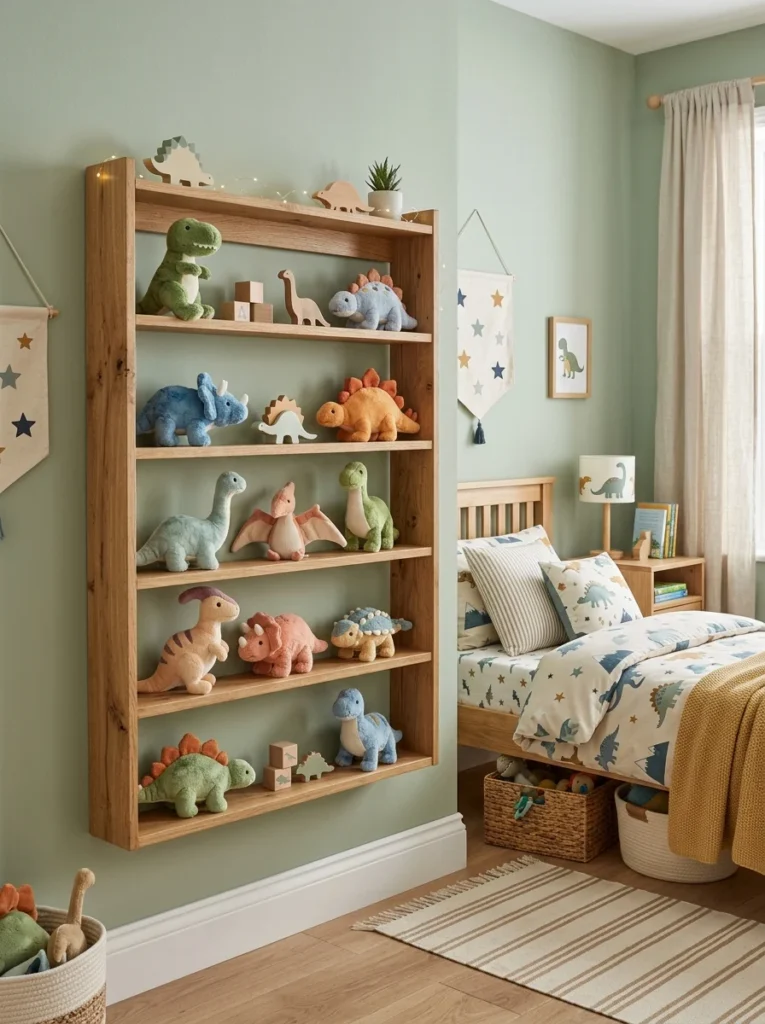
For kids with a specific themed sub-collection within their broader stuffed animal population, dinosaurs, farm animals, a particular movie’s characters, a dedicated shelf specifically for that themed group creates a mini display that feels curated and intentional rather than simply another undifferentiated storage spot. My daughter has a small dinosaur collection specifically, and giving those particular animals their own dedicated shelf has made that specific group feel genuinely special, distinct from her broader, larger collection stored elsewhere in the room. A question I hear is whether this approach eventually leads to needing a separate shelf for every conceivable sub-theme as a collection grows, and honestly, I’d recommend limiting this specific display treatment to just one or two truly distinct, beloved sub-collections rather than trying to give every possible category this same individual treatment, since spreading this special display approach too thin across too many categories dilutes what makes it feel meaningful for the one or two groups that genuinely deserve it.
6. Add a Large Woven Basket for Rotating Storage
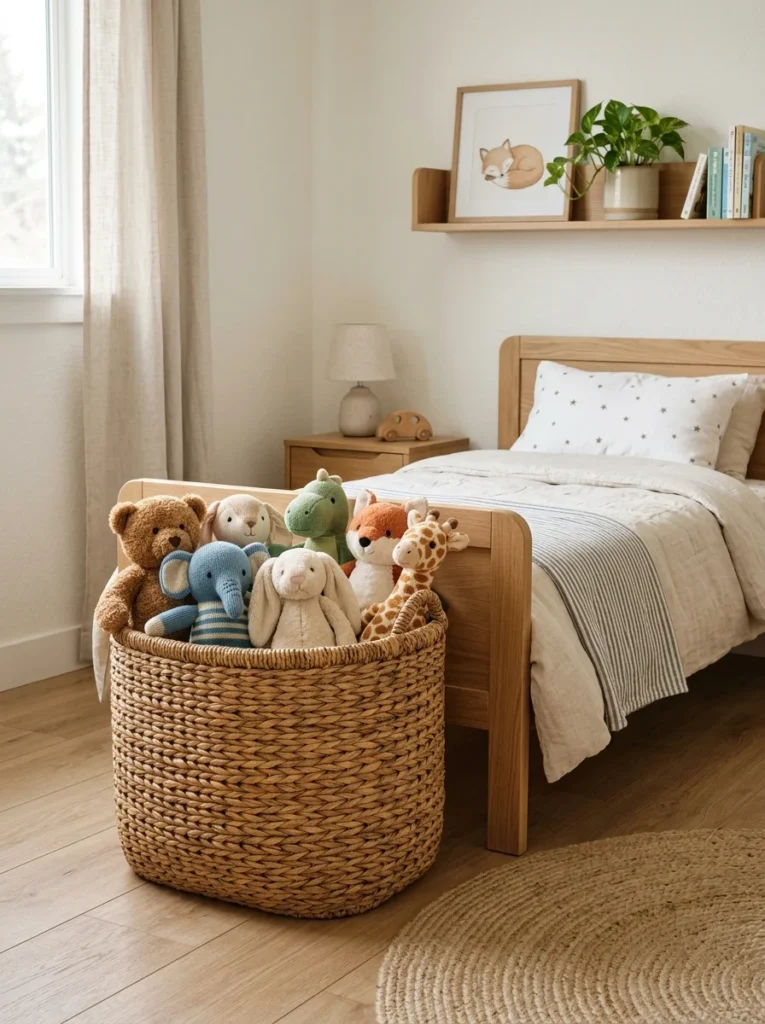
A large, sturdy woven basket positioned in a corner or beside a bed provides simple, accessible bulk storage for the majority of a stuffed animal collection, functioning as a genuine catch-all that’s still considerably more organized and visually appealing than a random pile accumulating on the floor. We use a large basket specifically for the bulk of my daughter’s collection beyond her displayed favorites, and having one clear, defined spot for “everything else” has made cleanup considerably faster since there’s no ambiguity about where a stray plushie found on the floor actually belongs. A common question here is how to prevent this basket from simply becoming an overflowing, chaotic dumping ground itself, and I’d recommend setting a genuine capacity limit, when the basket is full, something has to be rotated out to secondary storage or donated, rather than allowing the basket’s contents to keep expanding indefinitely without any actual boundary in place.
7. Use a Hanging Shoe Organizer for Small Plushies
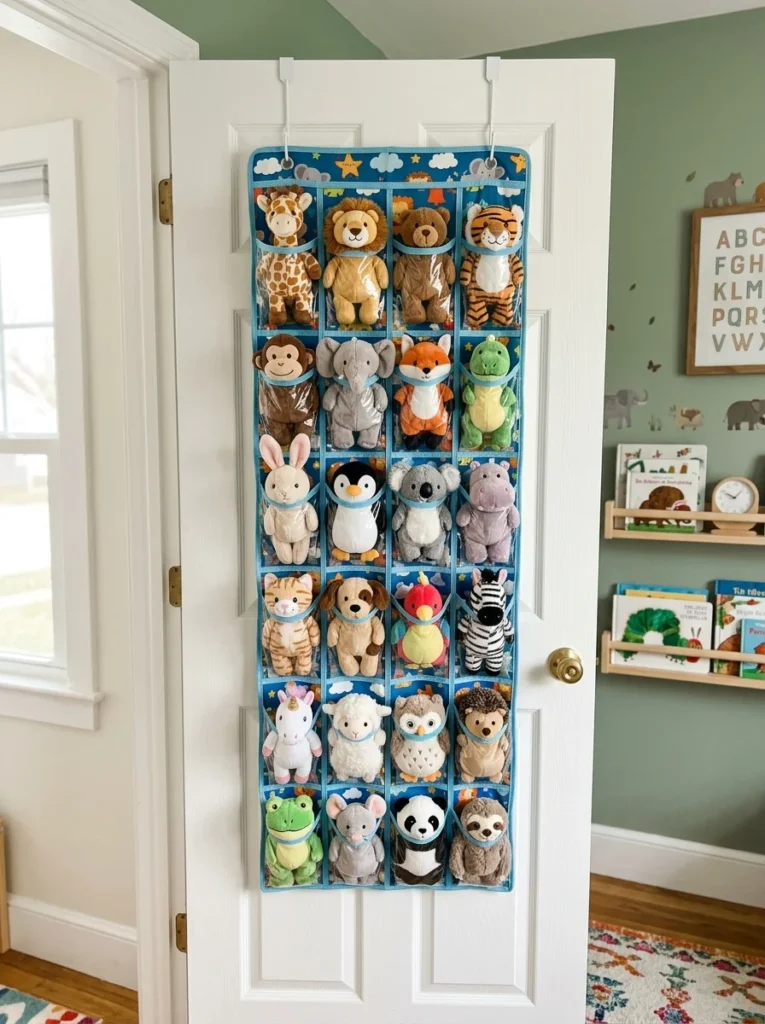
A fabric shoe organizer with individual pockets, mounted on a closet door or wall, works surprisingly well for smaller stuffed animals, each pocket holding one plushie in its own defined, visible slot rather than a jumbled pile competing for the same space. We repurposed exactly this kind of organizer specifically for my daughter’s smallest beanie-style animals, and the individual pocket system means she can see and retrieve a specific one without disturbing all the others around it. A question I hear often is whether this specific storage type works for larger, more traditional stuffed animals or only the smaller beanie variety, and I’d say it’s really best suited to smaller plushies specifically, since standard shoe organizer pockets simply aren’t sized to accommodate a large, oversized teddy bear or similar bigger stuffed animal without stretching or tearing the pocket fabric well beyond its intended capacity.
8. Create a Rotating Storage System With Seasonal Swaps
Rather than keeping every single stuffed animal accessible at all times, rotating a portion of the collection into less accessible storage, then swapping it back out periodically, keeps the actively displayed and accessible collection at a more manageable size while ensuring no toy is genuinely gone forever. We do this specifically with about a third of my daughter’s collection, storing it in labeled bins in a closet and rotating those animals back into circulation every few months, which has the added benefit of making previously forgotten favorites feel excitingly new again when they reappear. A frequent question is whether kids actually respond well to this system or whether they notice and object to certain toys being temporarily unavailable, and in my own experience, kids generally adapt to this rotation quite well, especially when you frame the reappearing toys as a fun surprise rather than emphasizing that anything was ever technically removed from their immediate reach in the first place.
9. Add a Long Bench With Storage Beneath
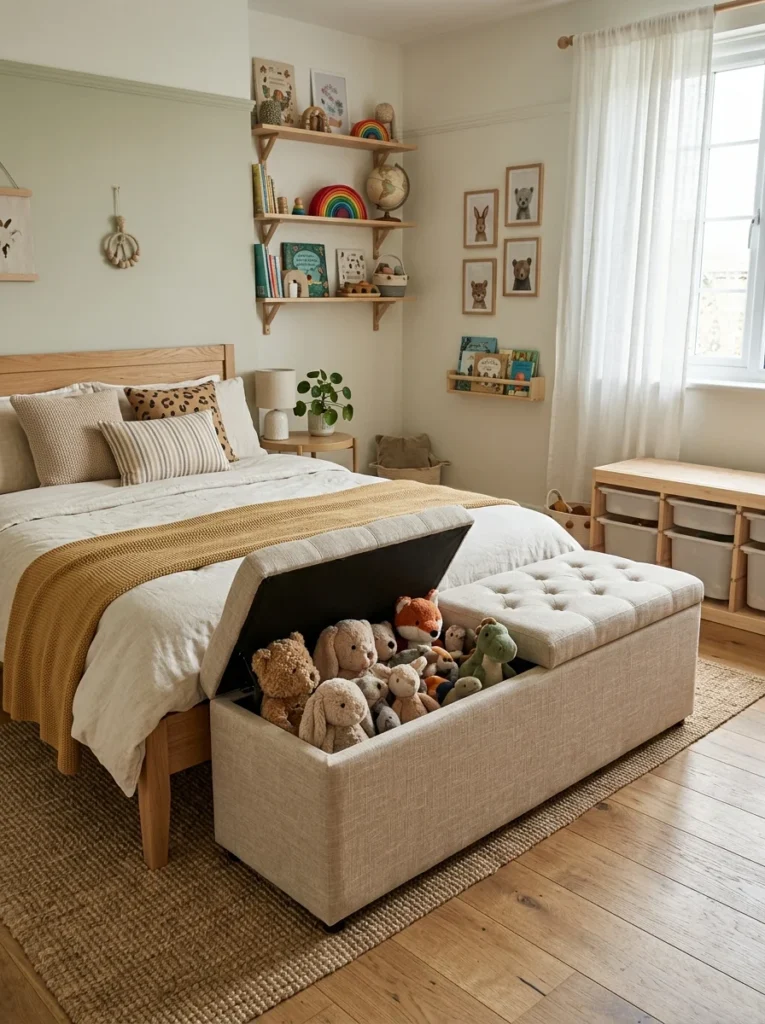
A storage bench positioned at the foot of a bed or along a wall provides both practical seating and a hidden storage compartment underneath specifically sized for bulkier stuffed animals that don’t fit neatly into smaller bins or hanging organizers. We added exactly this to my daughter’s room, and the bench itself gets used daily for putting on shoes, while the storage compartment beneath handles her larger stuffed animals that don’t tuck neatly into any of our smaller storage solutions elsewhere in the room. A question parents often ask is whether this style of storage bench holds up well to a child regularly opening and closing the lid throughout the day, and I’d recommend choosing a bench with sturdy, properly rated hinges specifically for this reason, since a cheaper, lighter-duty hinge mechanism tends to loosen or fail considerably faster under the genuine daily wear a child’s frequent access typically involves.
10. Use Clear Stackable Bins for Bulk Storage
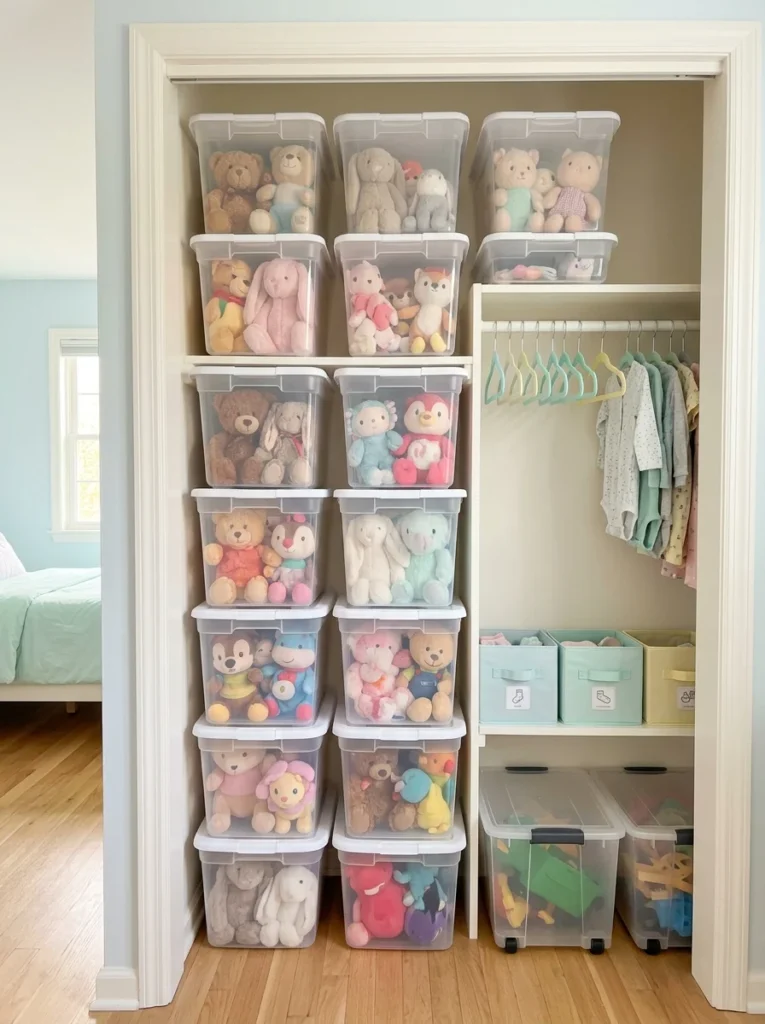
For a genuinely large collection requiring significant bulk storage capacity, clear stackable bins let you see general contents at a glance while making efficient use of vertical closet space, stacking multiple bins in the same footprint a single large container would otherwise require. We use this specifically for our rotational storage collection, and being able to see roughly what’s in each bin without opening every single one has made the periodic rotation swap considerably faster than it would be with opaque containers requiring a full search each time. A common question is how many stuffed animals reasonably fit in a single standard bin before it becomes overly difficult to actually close or lift, and I’d recommend erring toward filling bins to roughly seventy percent capacity rather than packing them completely full, both for ease of closing the lid properly and to prevent the bin from becoming too heavy or unwieldy for a child to help with during cleanup.
11. Build a Custom Reading Nook With Integrated Storage
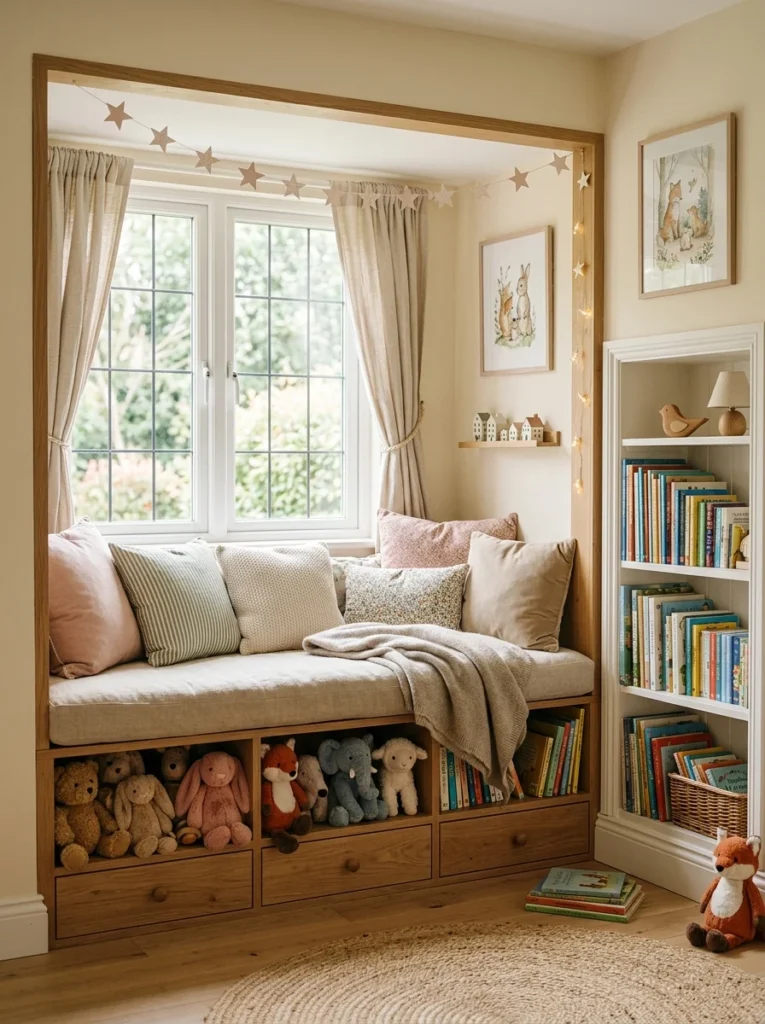
For families willing to take on a slightly larger project, building or purchasing a small readingnook with integrated cubbies or drawers specifically designed to double as stuffed animal storage combines a genuinely lovely play space with a functional storage solution built directly into the furniture itself. A friend did exactly this in her daughter’s room, and the integrated storage beneath the nook’s window seat now holds a significant portion of the stuffed animal collection while the seat itself has become one of the room’s most-used spots for actual reading and quiet time. This represents a considerably larger investment and project scope compared to most other ideas on this list, and I’d recommend this specifically for families already planning a bedroom renovation or furniture update anyway, rather than as a standalone project undertaken purely to solve the stuffed animal storage question on its own.
12. Add a Rotating Carousel Display
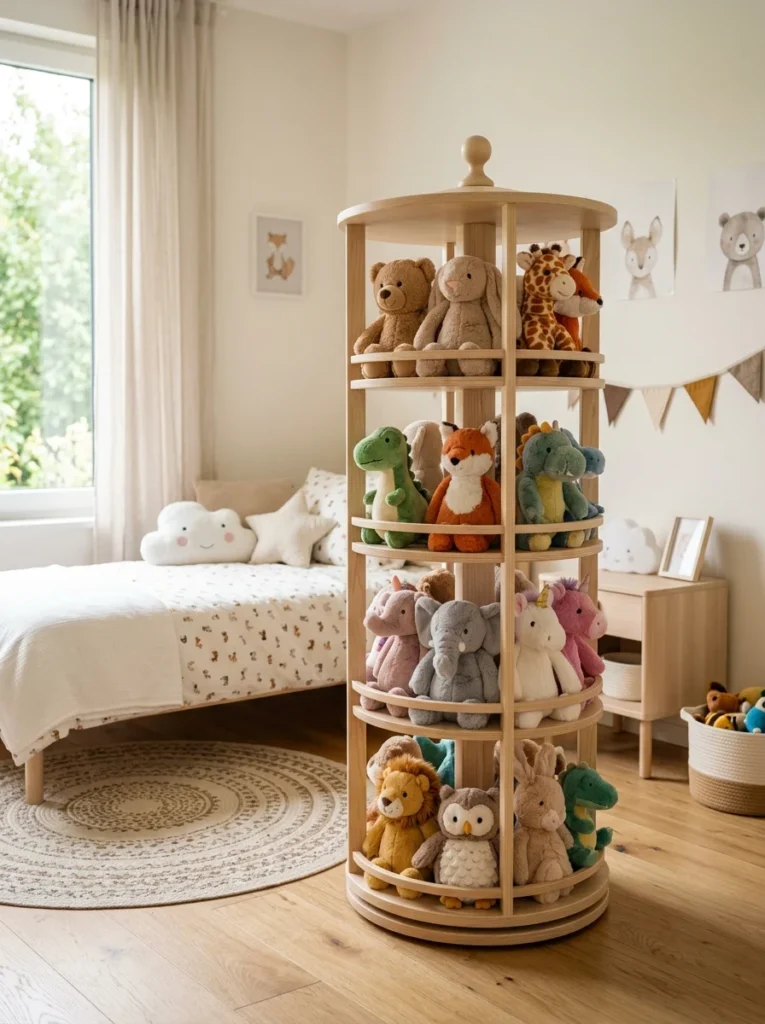
A rotating carousel-style shelf unit, similar in concept to a spice rack lazy Susan but scaled up, lets a child spin through their collection to find a specific favorite, adding an element of genuine fun to what might otherwise be a purely functional storage task. A friend uses this specifically for her son’s collection, and the rotating, almost game-like quality of spinning to find a specific animal has made retrieval something he genuinely enjoys rather than a chore. A question I hear about this option is whether it holds a genuinely large collection or works better for a more curated, smaller selection, and I’d say this style tends to work best for a moderate, curated collection rather than an enormous one, since overloading a rotating mechanism can affect how smoothly it actually spins and may exceed the unit’s structural weight capacity over time.
13. Use a Large Clear Storage Cube Organizer
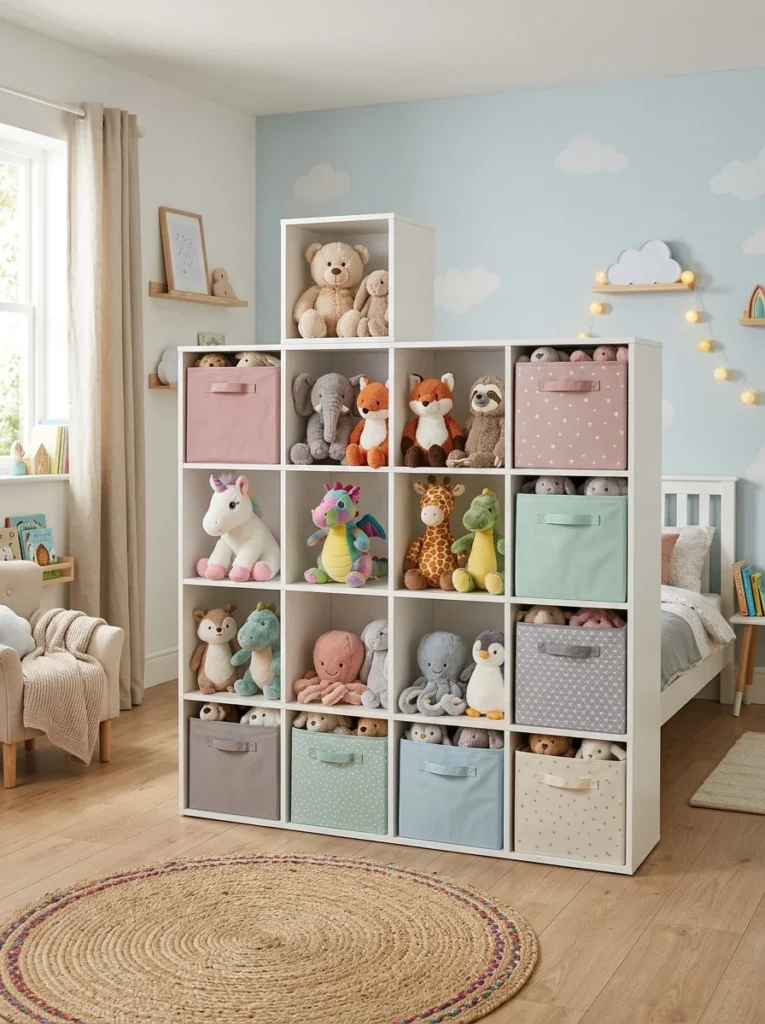
A modular cube storage system, with some cubes left open for display and others fitted with fabric bin inserts for more concealed storage, offers genuine flexibility to mix visible display with contained bulk storage within a single cohesive furniture piece. We use exactly this combination approach in my daughter’s room, with a few open cubes displaying favorites and several fabric-lined cubes handling the bulk of the remaining collection, giving us both display and concealment within one unified system rather than needing entirely separate pieces of furniture for each function. A frequent question is whether this cube system genuinely scales well as a collection continues growing over time, and I’d say yes, since additional cube units can typically be added to an existing modular system, letting the storage solution expand alongside a growing collection rather than requiring a complete replacement once the original capacity is exceeded.
14. Create a “Stuffed Animal Zoo” Wall Display
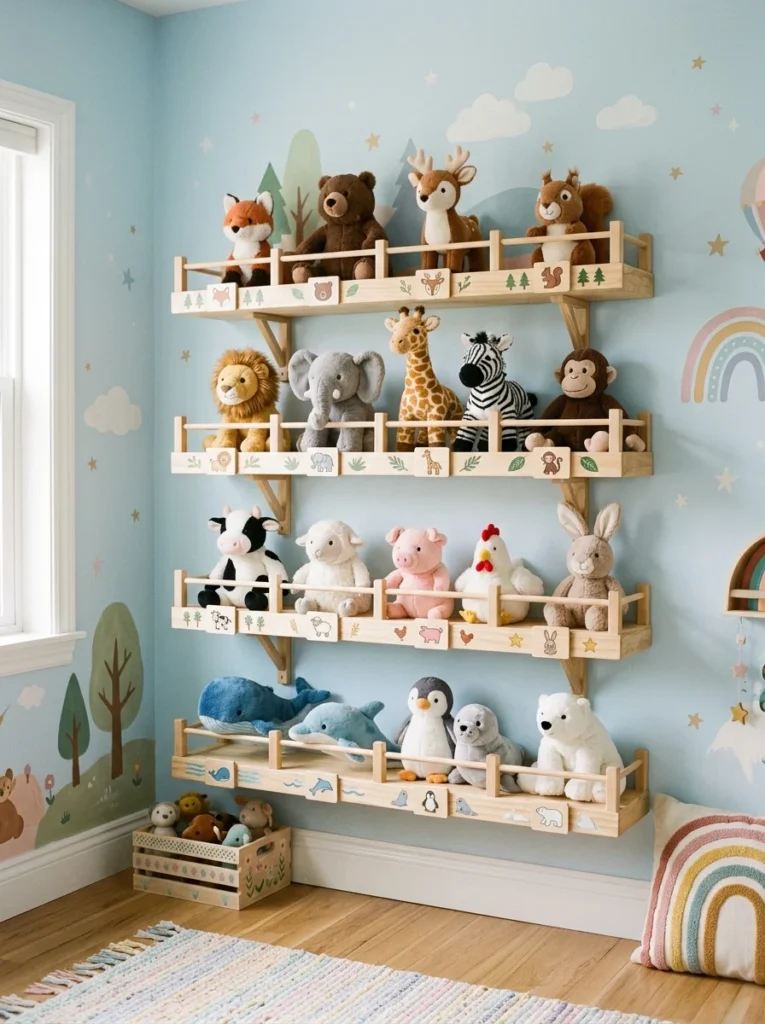
For a genuinely playful, kid-approved display option, arranging stuffed animals on a dedicated wall shelf specifically styled and presented as a “zoo,” complete with simple handmade labels identifying each animal, turns storage into an interactive, imaginative element of the room rather than a purely practical afterthought. My daughter genuinely loves this specific approach for her favorites, and the small labeling project itself became a fun activity we did together, giving her some ownership over how her own collection gets displayed and organized. A question parents ask about this idea is whether kids maintain interest in this kind of themed display over time or whether it eventually just becomes background clutter like anything else, and honestly, refreshing the “zoo” periodically, rotating in different animals or updating the labels occasionally, genuinely helps maintain a child’s engagement with the display rather than letting it fade into unnoticed background scenery.
15. Add a Hanging Net Across the Ceiling
Similar in concept to the corner hammock but scaled up considerably, a hanging net installed across a larger section of ceiling, typically above a bed, provides genuinely substantial storage capacity for a large collection while creating a distinctive, almost whimsical visual feature in the room. A friend installed exactly this for her daughter’s genuinely extensive collection, and the net now holds dozens of stuffed animals suspended overhead, out of the way entirely while still remaining visually present and part of the room’s overall character. This requires more substantial ceiling mounting hardware than the smaller corner hammock option, and I’d recommend professional installation specifically for this larger version, ensuring the mounting points are genuinely rated for the weight of a full, large collection suspended overhead where a mounting failure would pose an actual safety concern rather than just an inconvenience.
16. Use Decorative Baskets Sorted by Animal Type
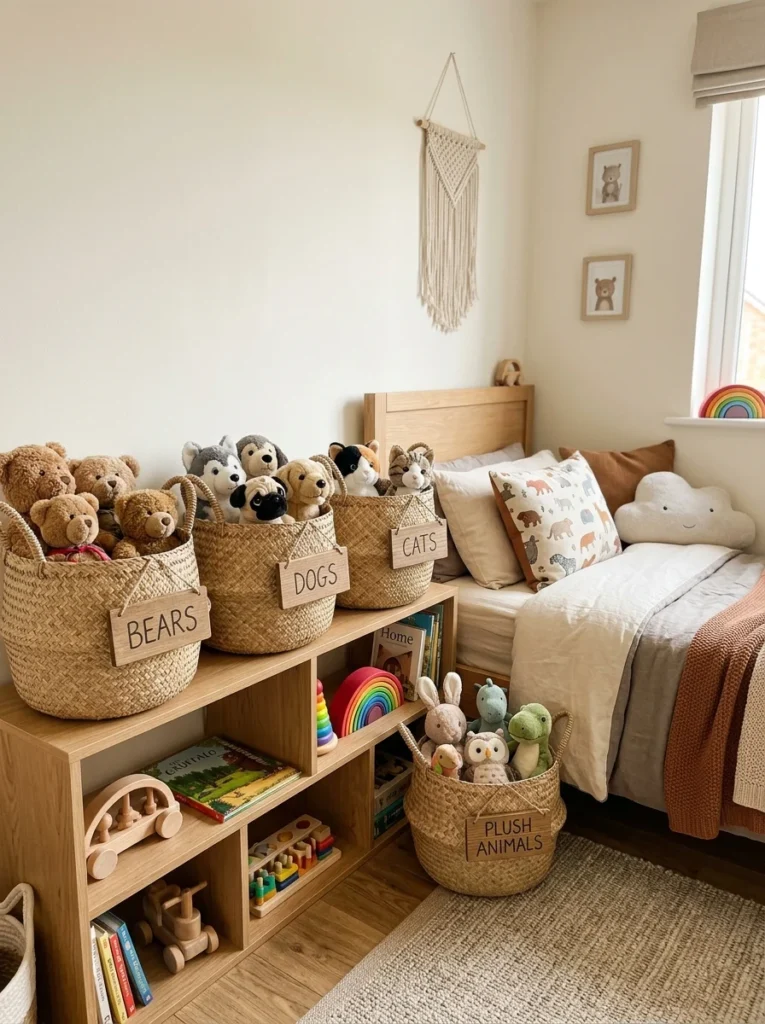
Rather than one large undifferentiated basket, using several smaller decorative baskets each sorted by animal type, all the bears together, all the dogs together, adds a layer of genuine organization that makes locating a specific type of animal considerably faster while still keeping the overall storage relatively simple and low-maintenance. We tried this system for a period specifically, and while it did require slightly more ongoing maintenance to keep animals sorted correctly compared to one single basket, my daughter genuinely enjoyed the more organized system and found it easier to locate specific favorites within her broader collection. A common question is whether young kids actually maintain this kind of sorted system themselves during cleanup, and honestly, this depends considerably on the child’s age and interest in the sorting itself, younger kids often need help maintaining this system consistently, while older kids who enjoy categorizing tend to genuinely embrace and maintain it with less ongoing parental involvement required.
17. Rotate Excess Collection Into Donation
Beyond any storage solution, periodically reviewing the collection specifically to identify animals genuinely ready for donation addresses the root cause of an overwhelming collection more directly than any storage system alone can fully solve, since even the best organizational solution eventually reaches its limits if the collection itself keeps growing without any corresponding reduction. We do this specifically every six months or so, going through the collection together and identifying animals my daughter has genuinely outgrown her interest in, donating those to a local shelter or charity rather than letting them silently accumulate in storage indefinitely. A frequent question is how to handle this process without a child feeling genuinely upset about parting with toys, and I’d recommend framing donation specifically as giving a beloved toy to another child who needs a friend, a framing that’s generally helped my own daughter feel good about the process rather than experiencing it as a loss, though every child’s specific temperament around this topic will vary somewhat.
18. Involve Your Child in Choosing the System
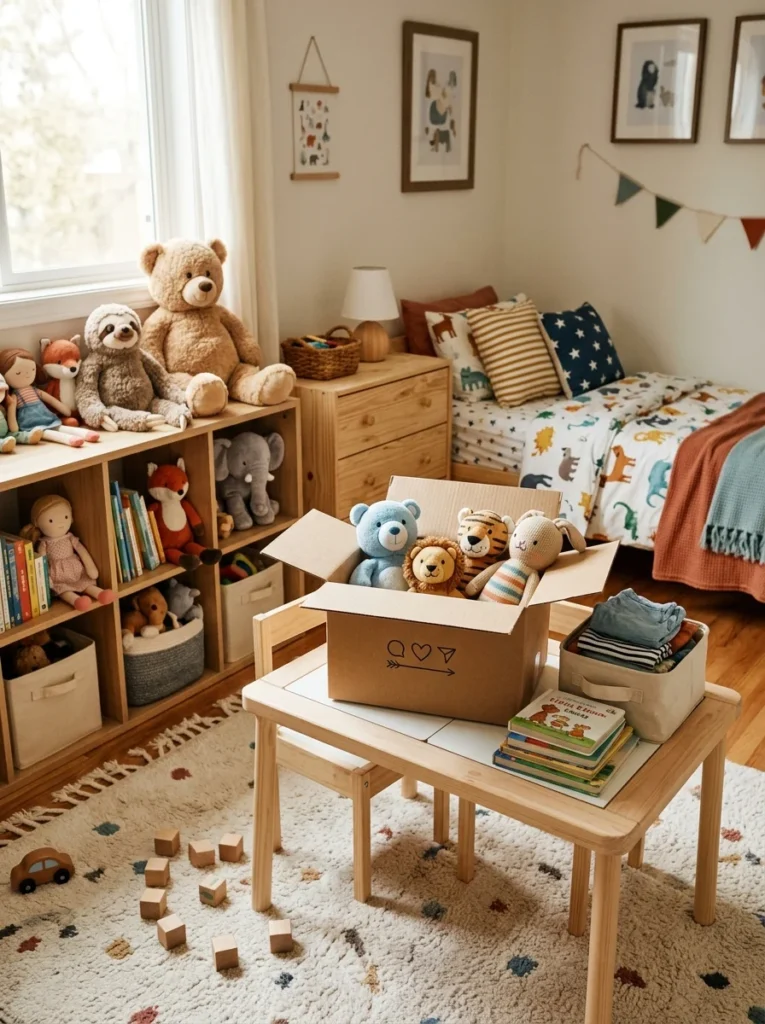
The final and genuinely most important piece of advice is involving your child directly in choosing and setting up whatever storage system you ultimately land on, since a system a child had genuine input into is considerably more likely to actually get used and maintained compared to one imposed entirely by a parent without any of the child’s own preferences or buy-in factored into the decision. We let my daughter choose between a few different options specifically during our own reorganization, and her genuine enthusiasm for the hammock she ultimately picked has made her considerably more willing to actually put stuffed animals back where they belong compared to previous systems I’d simply set up and expected her to follow without much say in the matter. A common question is how young is too young for this kind of involvement, and honestly, even fairly young kids can meaningfully participate by choosing between two or three parent-preselected options, giving them genuine ownership over the final decision without needing to navigate the full complexity of researching and comparing every possible storage solution entirely on their own.
Final Thoughts
Looking back at that overwhelming pile that used to spill from my daughter’s bed into the hallway, genuinely creating a barefoot hazard I stepped on more than once during a middle-of-the-night trip to check on her, it’s remarkable how much a real system, rather than a single overflowing bin, changed our household’s daily relationship with that ever-growing collection. Between all 18 of these ideas, the underlying theme is really that stuffed animal storage benefits from acknowledging that these aren’t just generic clutter, some genuinely matter more to a child than others, and a good system makes room for both the beloved favorites deserving display and the broader collection needing simple, practical bulk storage.
If your own home is dealing with a similar plushie takeover, I’d suggest starting with a simple display solution for genuine favorites alongside one larger bulk storage option for everything else, rather than trying to implement every single idea on this list simultaneously. From there, involve your child directly in refining the system over time, the same collaborative approach that eventually turned our own chaotic pile into something genuinely manageable, and considerably safer for late-night barefoot trips down the hallway.