
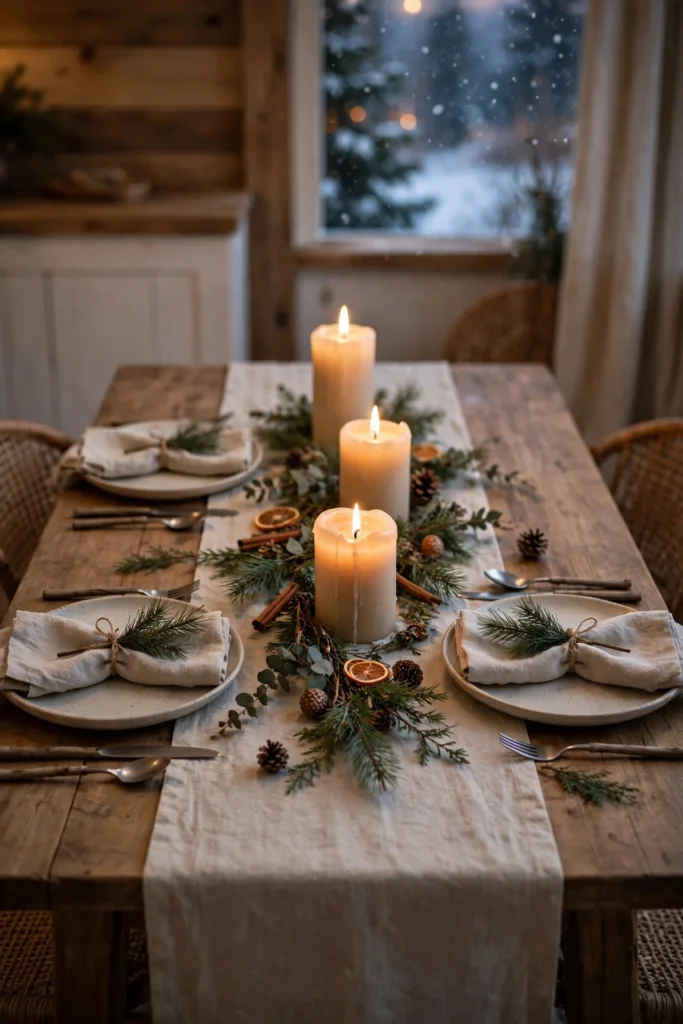
The dining table in winter is where everything happens — long dinners, game nights, soup weather, friends who stay too late because it’s too cold to leave. It deserves more than a bare surface and a fruit bowl. Winter tablescaping isn’t about formality; it’s about making the table feel like the warmest place in the house.
These 14 winter table decor ideas work for everyday dinners as well as gatherings. Most use things you already own plus one or two seasonal additions, and every idea keeps the table usable — because a beautiful table you can’t eat on is just a shelf.
1. A Linen Runner in a Winter Tone
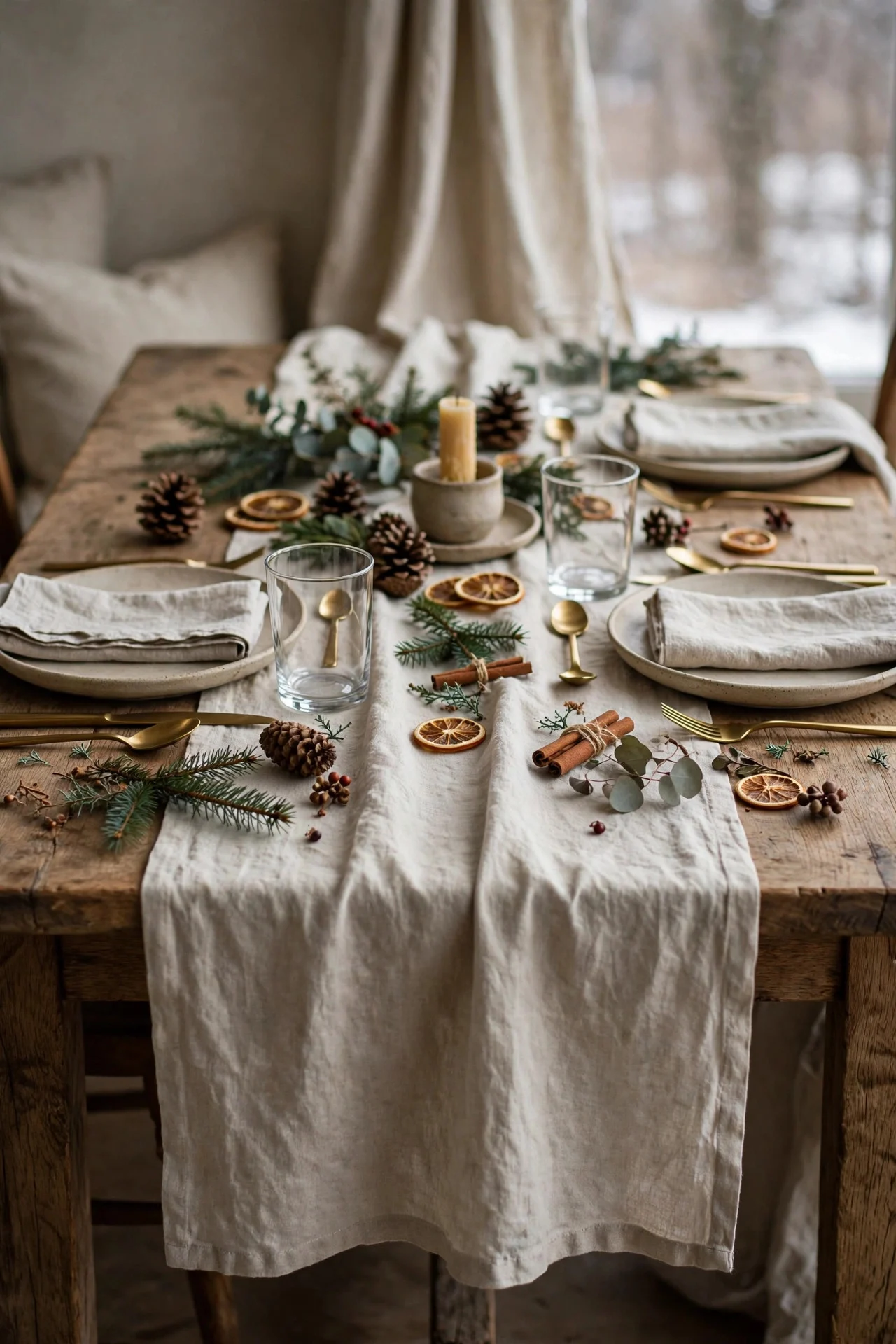
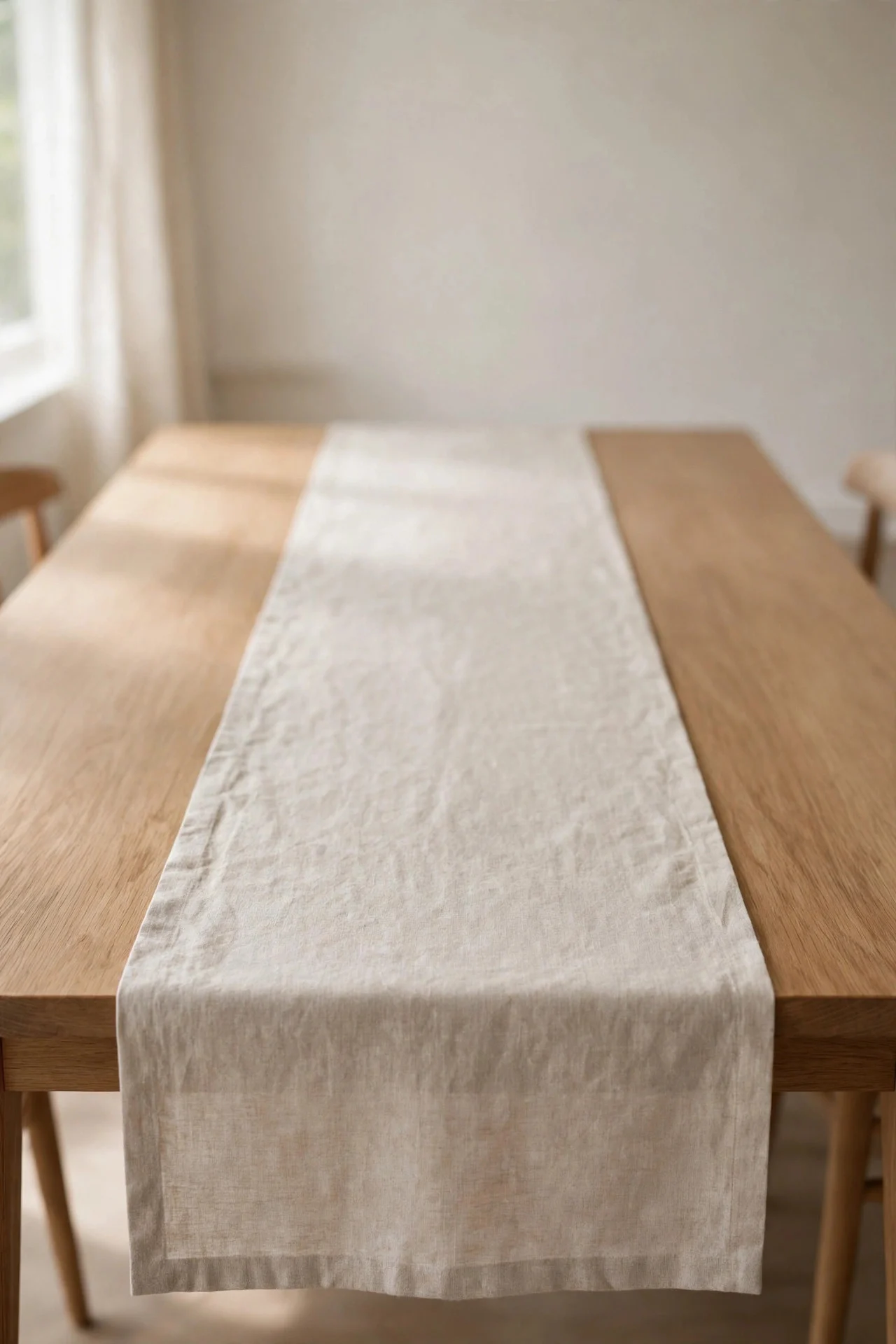
Start every winter tablescape with a runner — it defines the center of the table and protects the wood. Choose washed linen or a cotton-linen blend in oatmeal, charcoal, or deep forest green. A 14″ x 72″ runner fits most dining tables; let 6–8 inches hang over each end.
Skip the iron — linen is supposed to look rumpled. The wrinkles are the texture, and they read as relaxed rather than sloppy.
Try this: Layer a narrow burlap or jute runner over the linen for two-tone texture — farmhouse winter in thirty seconds.
2. Pine Sprig Place Settings
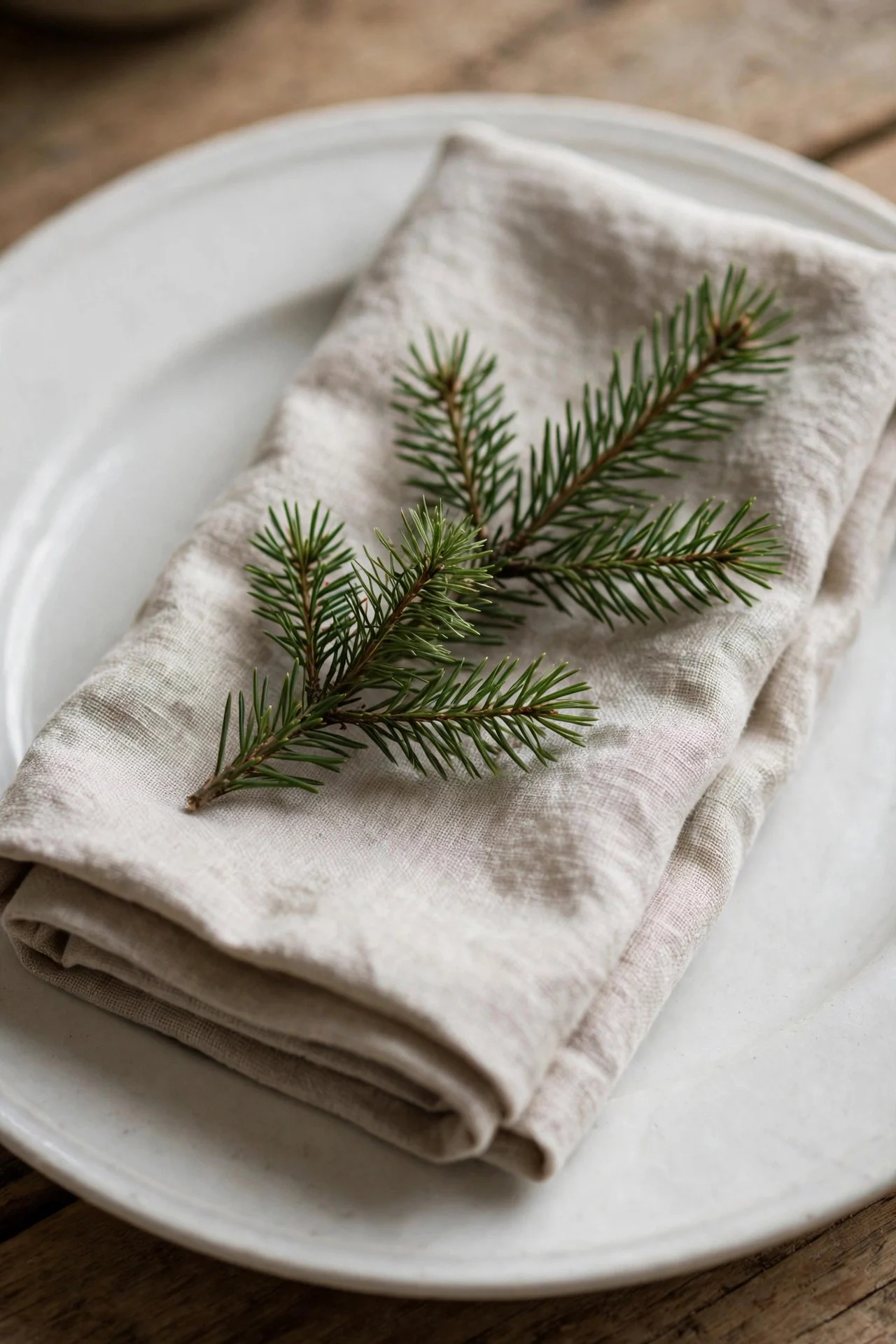
Lay a single fresh pine or cedar sprig across each napkin — it costs nothing, smells like winter, and makes a plain white place setting look styled. Trim sprigs to about 6 inches so they sit neatly without shedding into anyone’s lap.
Tie the sprig to the napkin with twine for dinners, or just lay it loose for weeknights. Either way, it takes ten seconds per place.
Try this: Tuck a handwritten name tag into the sprig for guests — the cheapest place card there is.
3. Candle Clusters Down the Center
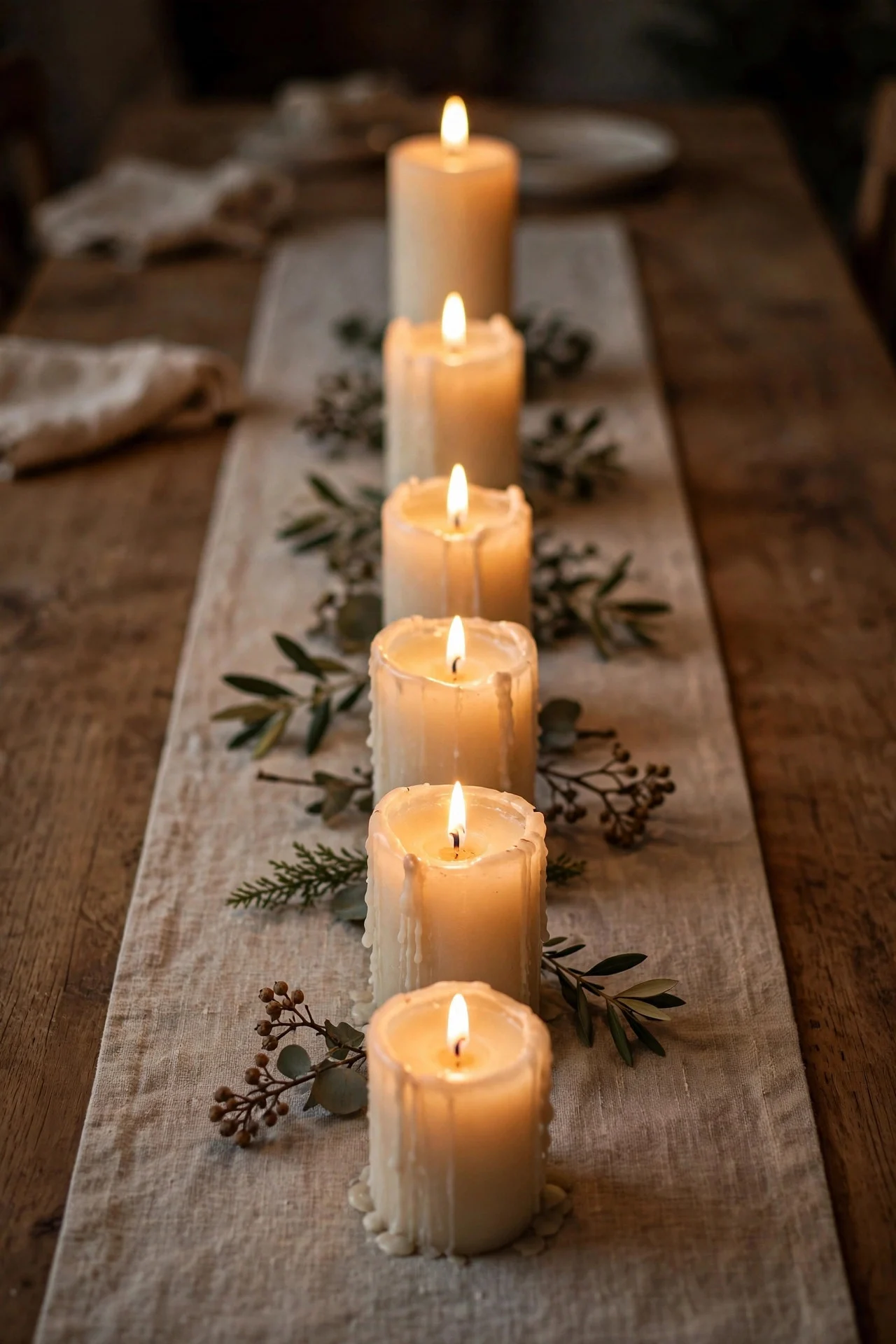
Line the center of the table with pillar candles in mixed heights — 3″, 4″, and 6″ — spaced about 8 inches apart down the runner. Odd numbers look best: five or seven candles for a 6-foot table.
Keep flames below eye level so guests can see each other. LED pillars work for weeknights; save the real wax for weekends when someone’s watching them.
Try this: Set the candles on a long wooden board or tray — one move clears the whole centerpiece when you need the space.
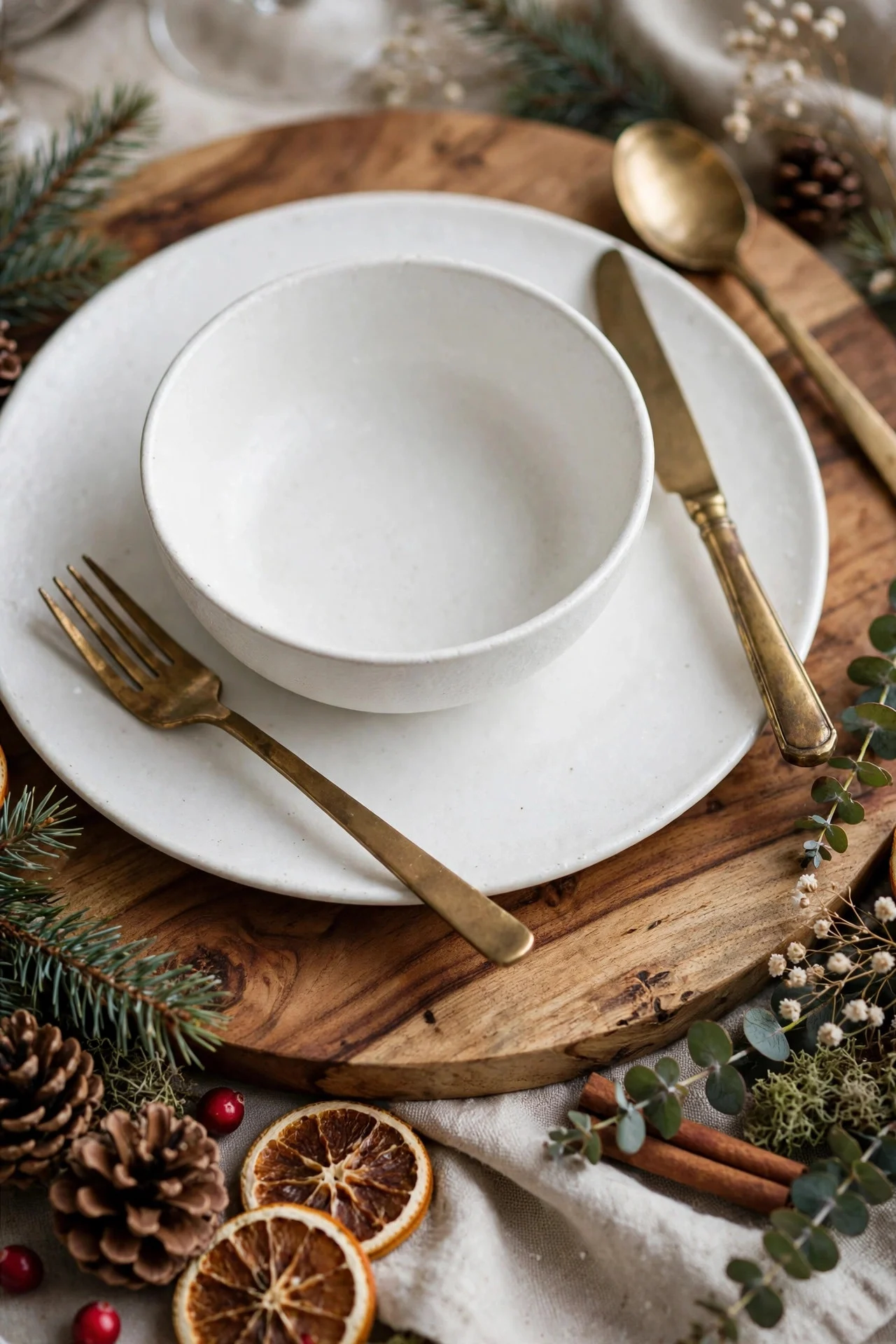
4. Wood Chargers Under Everyday Dishes
Wood chargers — acacia or mango wood rounds at about $6–8 each — instantly warm up white dinnerware. They add a natural, rustic layer that says winter without any seasonal motif, so they work from December through March.
They also protect the table from hot plates, which means they earn their keep functionally too. Wipe with a damp cloth; never soak them.
Try this: Mix wood chargers with brass flatware — the warm metals and wood together look quietly luxurious.
5. A Low Evergreen Centerpiece
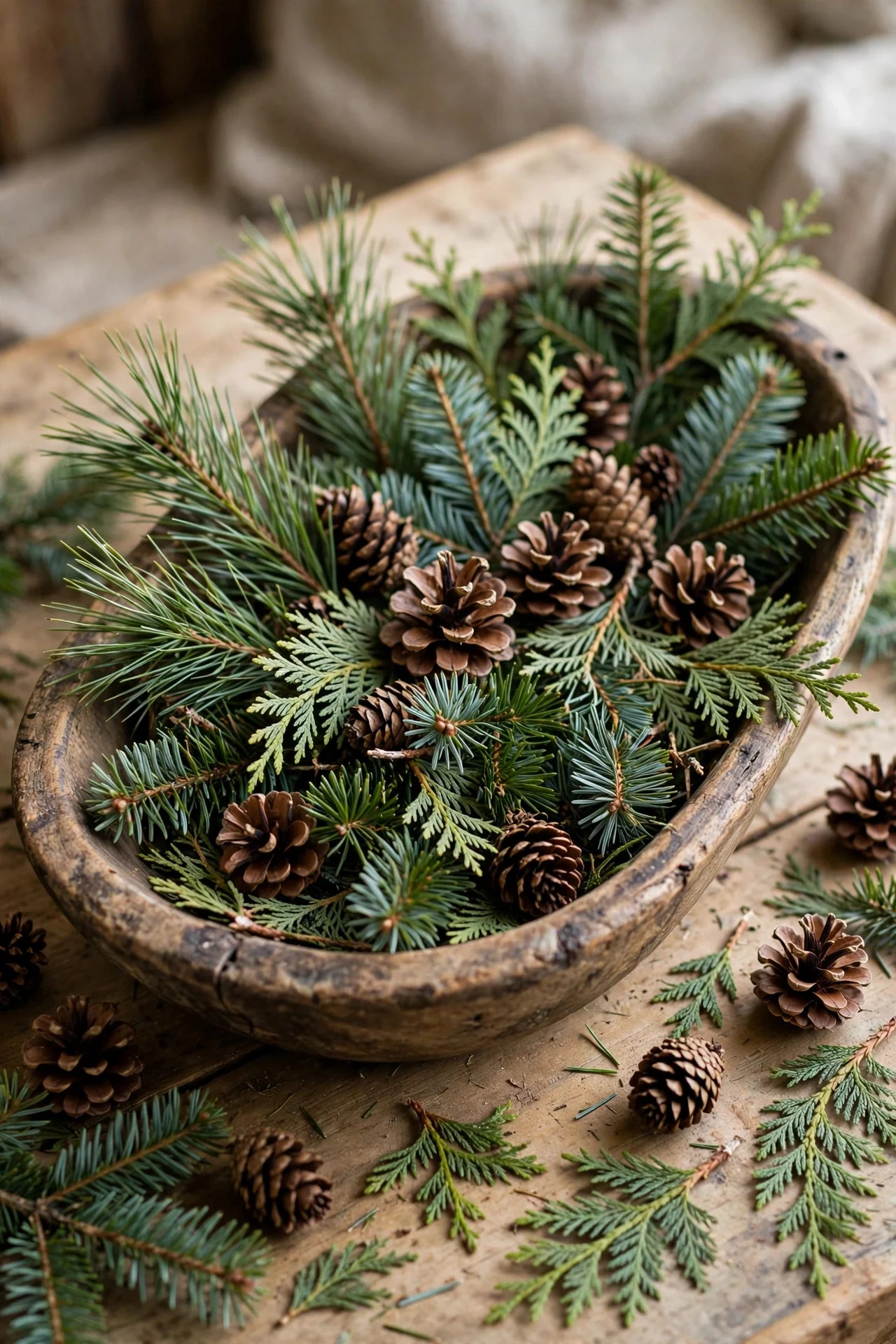
Build a centerpiece you can see over: a low wooden box or dough bowl filled with pine, cedar, and fir clippings, dotted with pinecones. Keep it under 10 inches tall so conversation flows across it.
Fresh clippings last two to three weeks indoors; mist them lightly every few days. When they dry out, they still look fine — just more rustic.
Try this: Nestle three small LED tea lights into the greenery — the glow through the branches is beautiful at dinner.
6. Citrus and Clove Pomanders
Stud whole oranges or clementines with whole cloves in a simple pattern — it takes about 20 minutes per fruit while you watch TV — and pile them in a wooden bowl as a centerpiece. They smell incredible and look like old-world winter.
They’ll last two to three weeks before drying out, and dried ones still look good. Roll the fruit in a mix of cinnamon and orris root powder first to preserve them longer.
Try this: Tie a ribbon around one pomander and hang it in a window — a traditional touch that costs pennies.

7. Layered Placemats for Texture
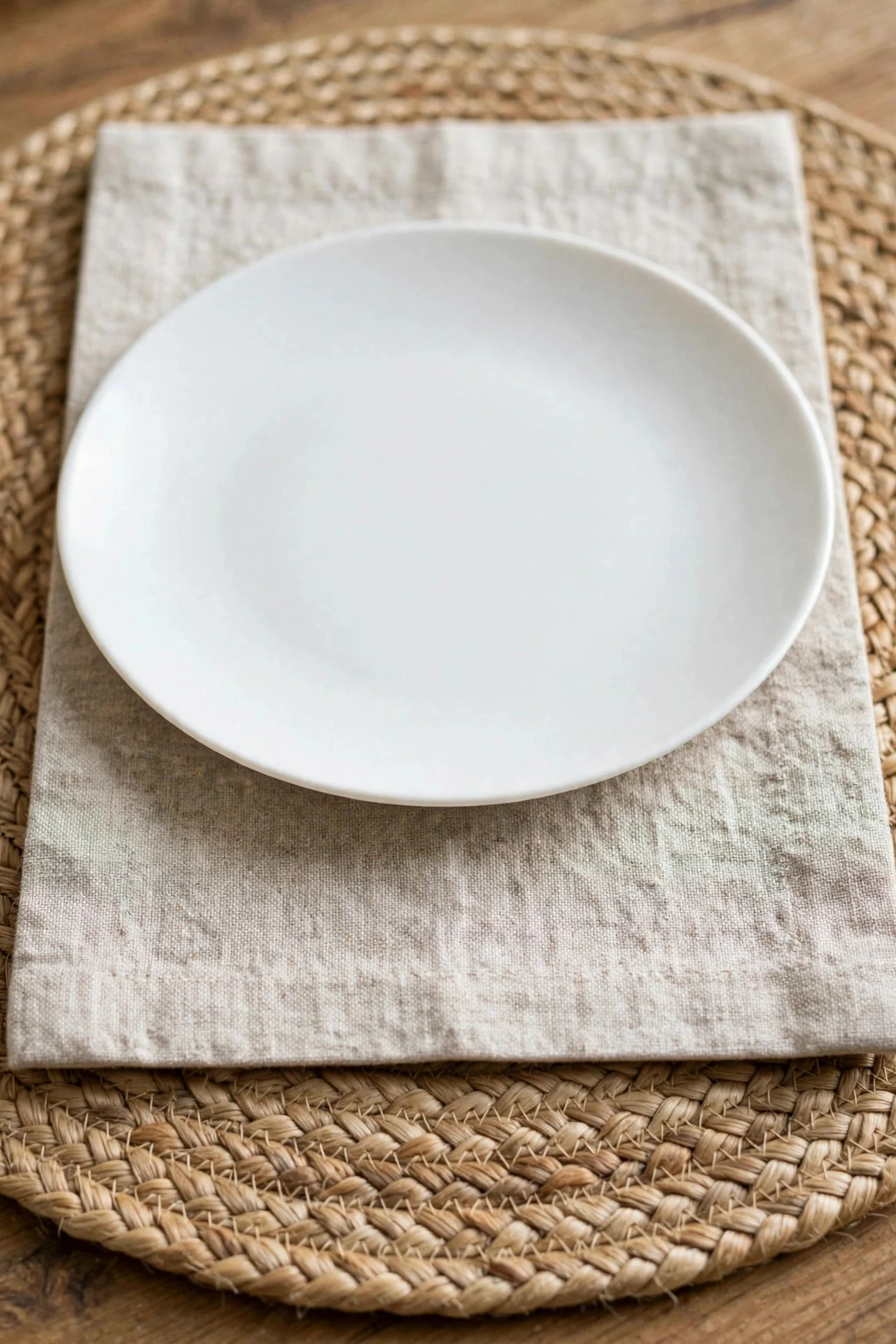
Layer a round jute placemat under a rectangular linen one — the shape contrast adds instant visual interest to each place setting. The jute brings rustic texture; the linen keeps it refined.
This works with dishes you already own. The placemats do the styling, so plain white plates look intentional instead of basic.
Try this: Buy placemats in sets of 4 and mix two sets — coordinated but not matchy-matchy.
8. Brass and Gold Accents
Winter light is cool, so warm metals balance it: brass candlesticks, a gold-rimmed carafe, antique brass napkin rings. You don’t need a full set — three brass pieces on a table read as a collection.
Thrift stores are full of brass candlesticks for $2–4 each. Polish half and leave half with patina for a collected, not decorated, feel.
Try this: A single brass tray as the centerpiece base ties all the metal accents together.

9. The Soup Tureen Centerpiece
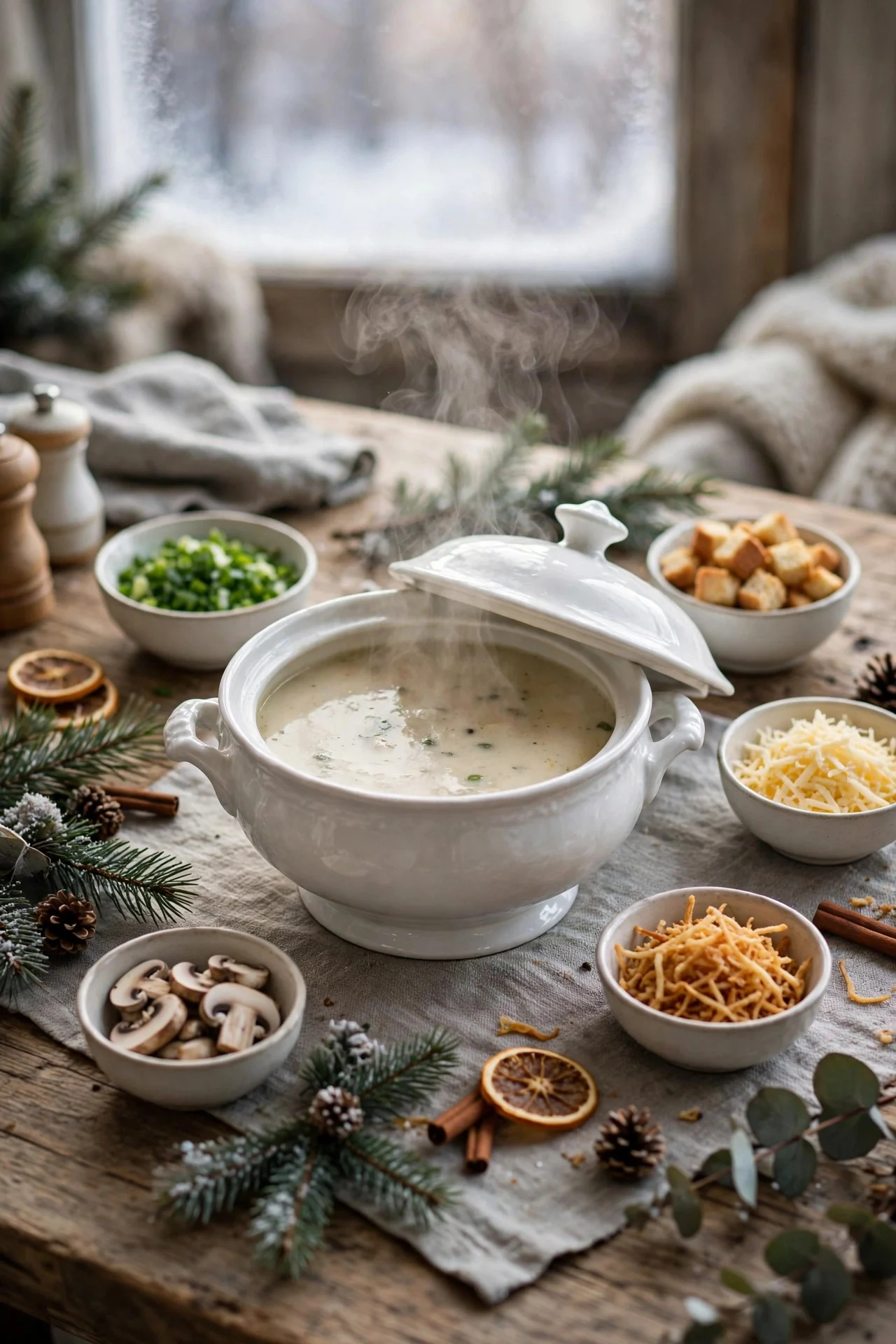
In deep winter, make the tureen the centerpiece: a white or cream soup tureen (thrifted for $8–15) filled and steaming in the middle of the table. It’s decor you can eat — the most honest kind of tablescaping.
Surround it with small bowls of toppings — croutons, herbs, grated cheese — and the table styles itself. Function first, beauty follows.
Try this: Keep a folded linen napkin under the tureen — it protects the table and looks deliberate.
10. Napkin Rings From Nature
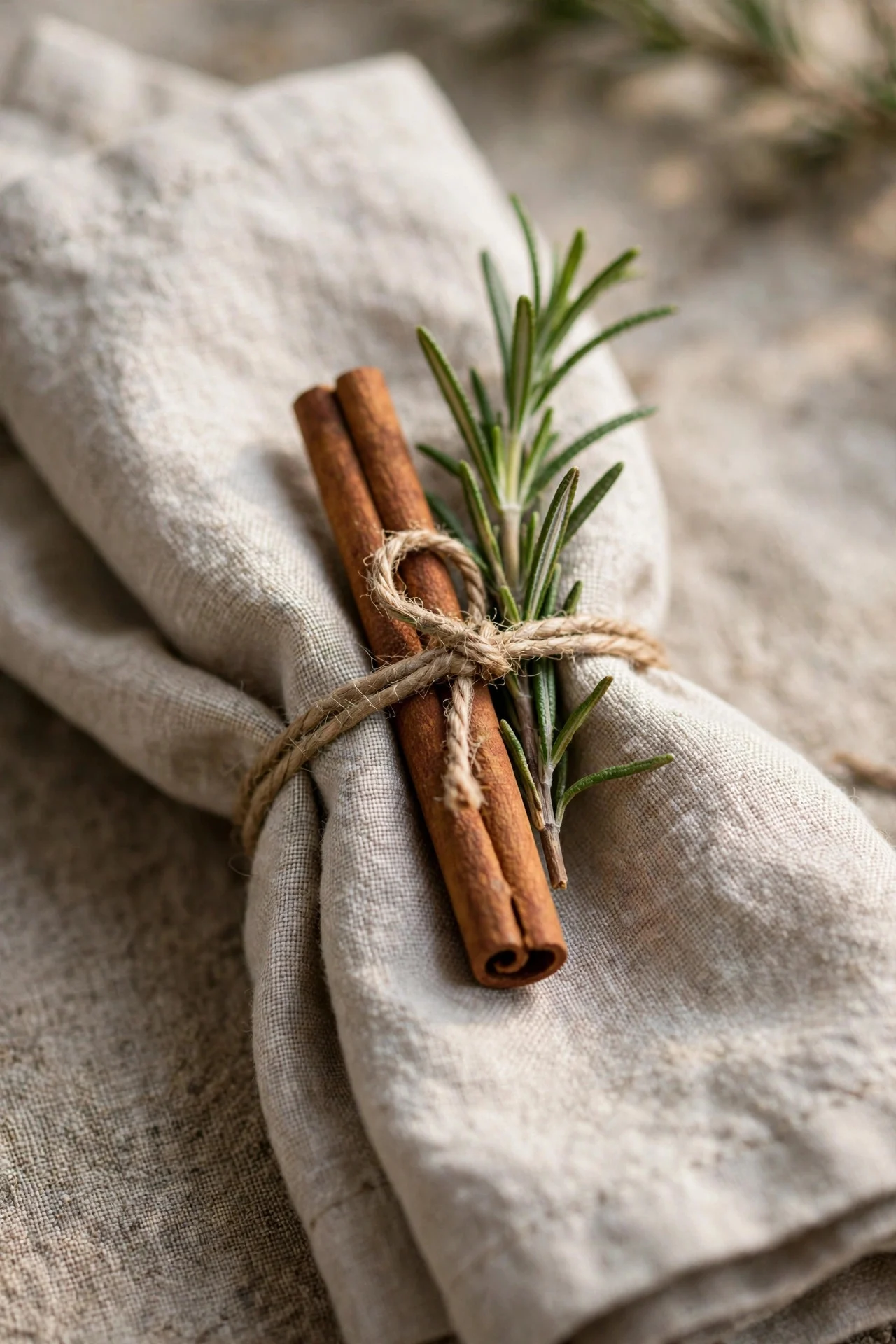
Skip store-bought napkin rings: thread a cinnamon stick, a sprig of rosemary, or a small pinecone through a loop of twine around each napkin. It takes a minute per setting and smells like the season.
Cinnamon sticks in bulk run about $8 for a bag that covers dozens of dinners. Guests can take them home — a favor built into the place setting.
Try this: Use the same natural element at every setting for cohesion — all rosemary, or all cinnamon, never a mix.
11. A Dessert Display as Decor
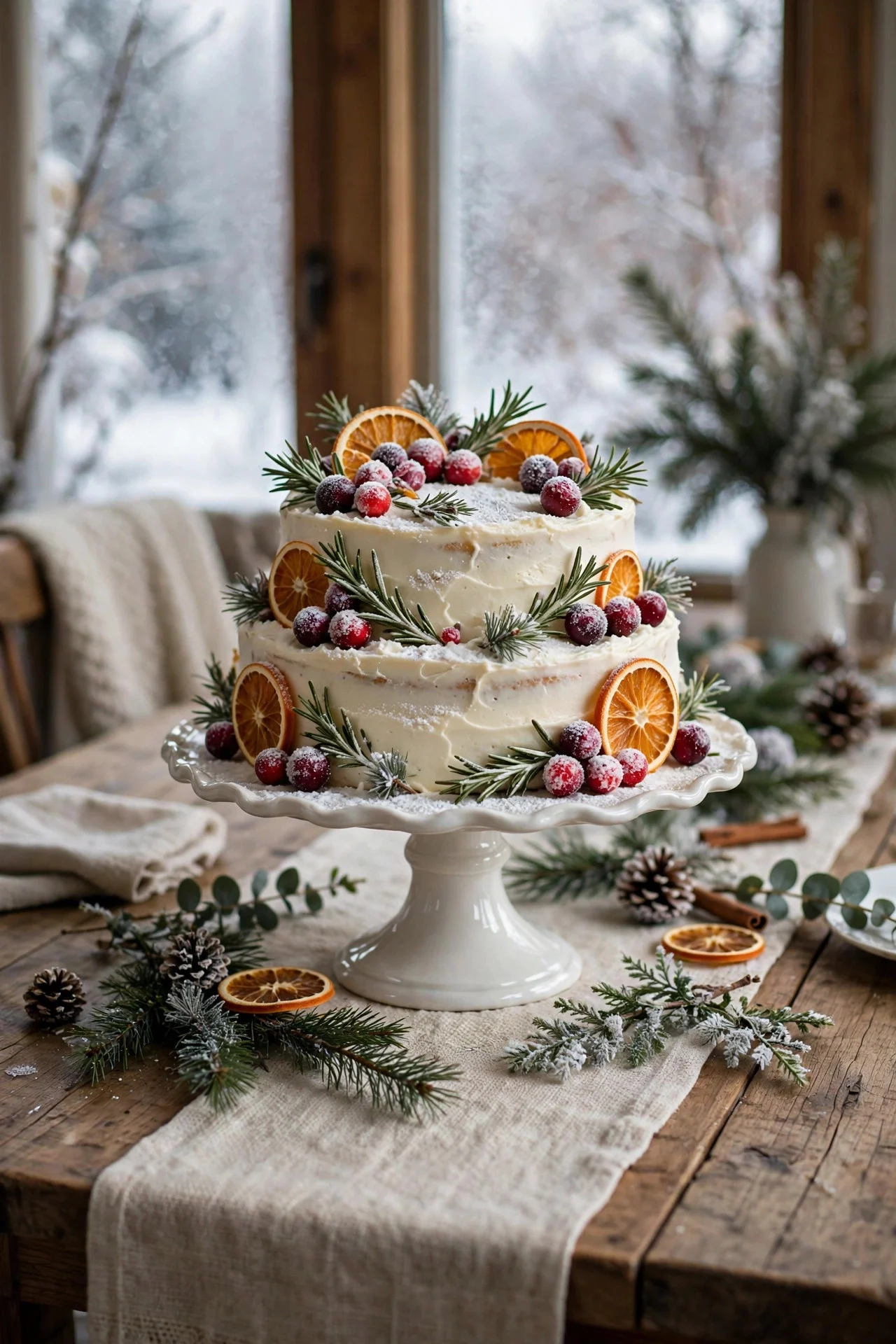
Let dessert do double duty: arrange a cake on a pedestal stand, or a pile of cookies on a wooden board, in the center of the table from the start of the meal. It builds anticipation and you don’t need a separate centerpiece.
A $15 cake stand is one of the best table investments there is — it makes anything, even store-bought brownies, look like an event.
Try this: Dust the dessert lightly with powdered sugar just before serving — a snowy finish for zero effort.
12. Mismatched Vintage Glassware
Collect amber, green, and smoke-gray vintage glasses from thrift stores ($1–3 each) and mix them at every place setting. The colored glass catches candlelight beautifully and makes water look like an occasion.
They don’t need to match — that’s the point. A table of varied vintage glass looks curated in a way a matching set never will.
Try this: Use the colored glasses for water and keep wine in clear stems — the color frames the table without confusing the pour.

13. A Breakfast Table Version
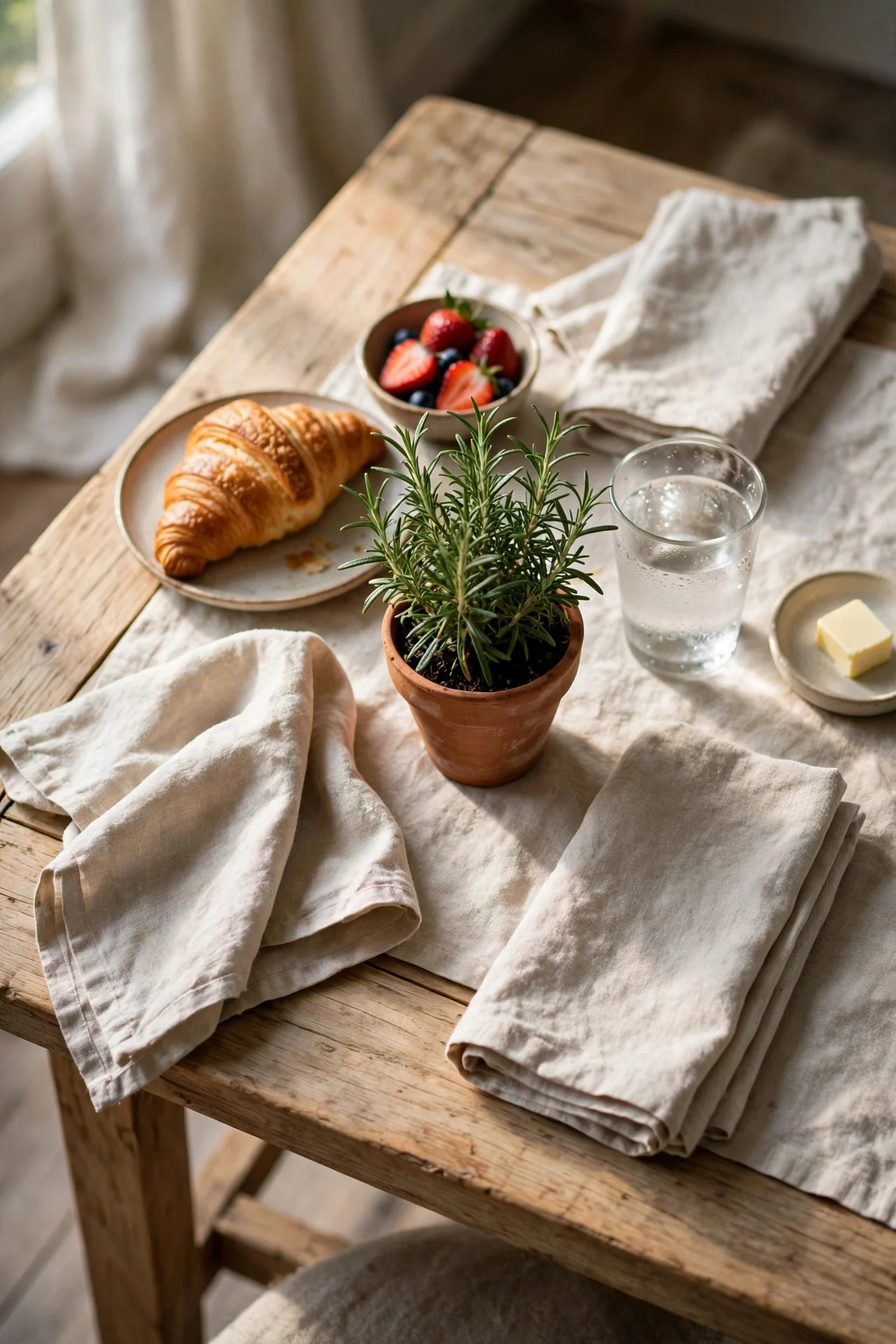
Winter tables aren’t just for dinner. Style the breakfast table simply: a small potted rosemary plant as the centerpiece, linen napkins (not paper — it’s winter, be a little fancy), and a carafe of juice. Ten minutes on a Sunday morning changes the whole day.
The rosemary plant doubles as a cooking herb — snip what you need and it keeps growing on the windowsill.
Try this: Warm the plates in the oven for two minutes before serving — a restaurant trick that costs nothing.
14. The “Clear It Completely” Reset
Once a week, clear the table completely — every object off, surface wiped, runner straightened — and rebuild from scratch. Tables accumulate clutter invisibly: mail, keys, the candle that migrated from the living room.
The reset takes five minutes and it’s the difference between a table that looks styled and one that looks stored-on. Do it Sunday evening to start the week right.
Try this: Keep a small basket nearby as the table’s “inbox” — stray items go in the basket, not back on the table.
Frequently Asked Questions
How do I decorate a dining table for winter without it looking like Christmas?
Stick to winter’s natural palette — greens, browns, creams, warm metals — and avoid red, Santa motifs, and ornaments. Pine, candles, linen, and wood read as winter; add the holiday pieces only in December.
What is a good winter centerpiece that doesn’t block conversation?
Keep it under 10 inches tall: a low dough bowl of greenery, a row of pillar candles, or a wooden board with tea lights. If you can’t see the person across the table, it’s too tall.
How do I make my everyday table look nice without a full tablescape?
A runner, one low centerpiece, and cloth napkins — that’s the whole formula. Three elements take five minutes and make Tuesday dinner feel considered.
Can I use fresh greenery on the table safely around food?
Yes — pine, cedar, and fir are fine as decor near food, just keep clippings off the plates themselves. Rinse anything that touches serving dishes, and keep candles in holders so wax never reaches the food.
Final Thoughts
Winter table decor isn’t about impressing anyone — it’s about making the table the place everyone gravitates to when it’s dark and cold outside. A runner, some candlelight, something green in the middle: that’s genuinely enough. The best tablescape is the one that gets used every night, not the one that photographs well once.