
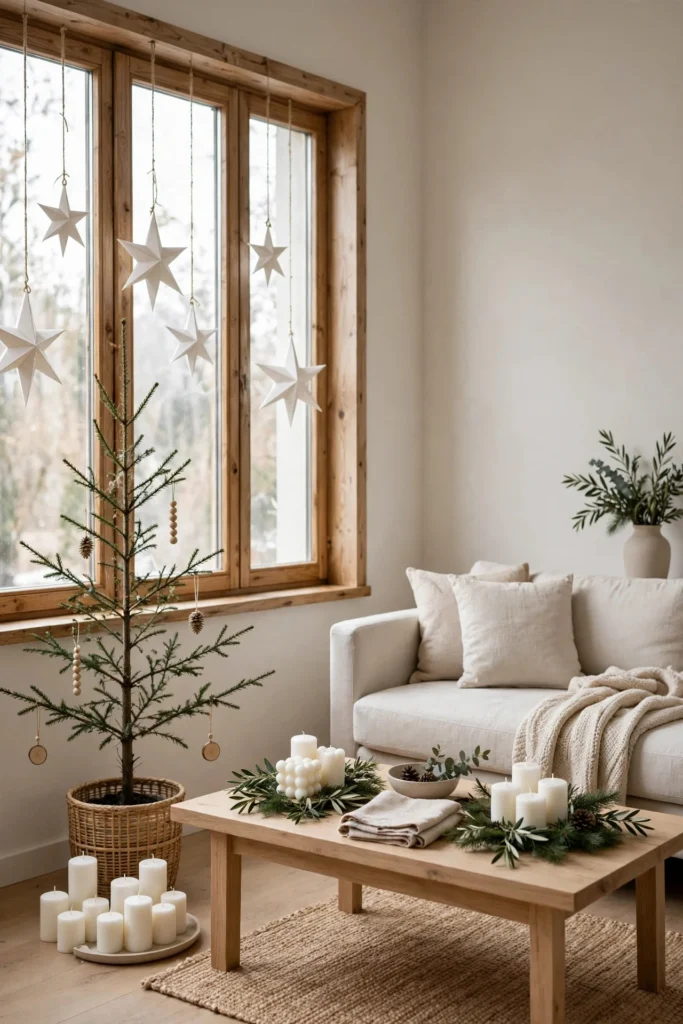
Minimalist Christmas isn’t about skipping the holiday — it’s about celebrating it quietly. While the rest of the street goes full Griswold, there’s a particular elegance in a home that does Christmas with ten thoughtful objects instead of a hundred. Less noise, more meaning, and honestly? Less to pack up in January.
These 13 ideas follow minimalist principles without feeling cold or empty: natural materials, a tight neutral palette, real light, and generous negative space. Your home will still feel unmistakably like Christmas — just the calm, candlelit version.
1. A Sparse Tree With Breathing Room
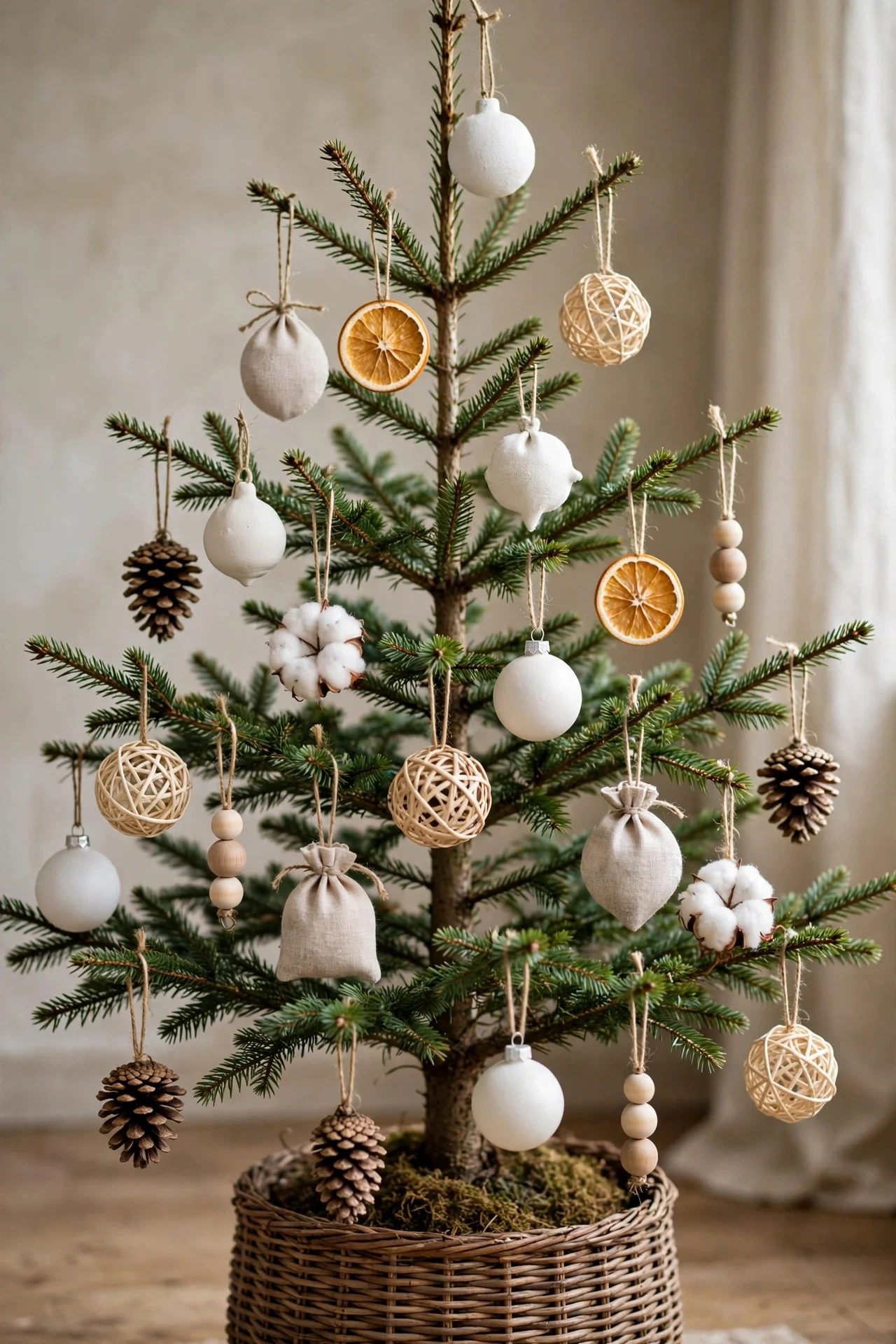
The minimalist tree isn’t bare — it’s curated. Choose a tree with naturally spaced branches (a Nordmann fir works beautifully) and hang 20 to 30 ornaments instead of 100, leaving visible green between each one. Every ornament gets to be seen; nothing competes.
Stick to one material family — all glass, all wood, all paper — in whites, creams, and natural tones. No tinsel, no garland, no tree skirt chaos: a simple woven basket or a plain linen cloth at the base. The restraint is the decoration.
Try this: Step back every ten ornaments and ask “does it need more?” — stop one step before you think it’s done.
2. Commit to White, Wood, and Green
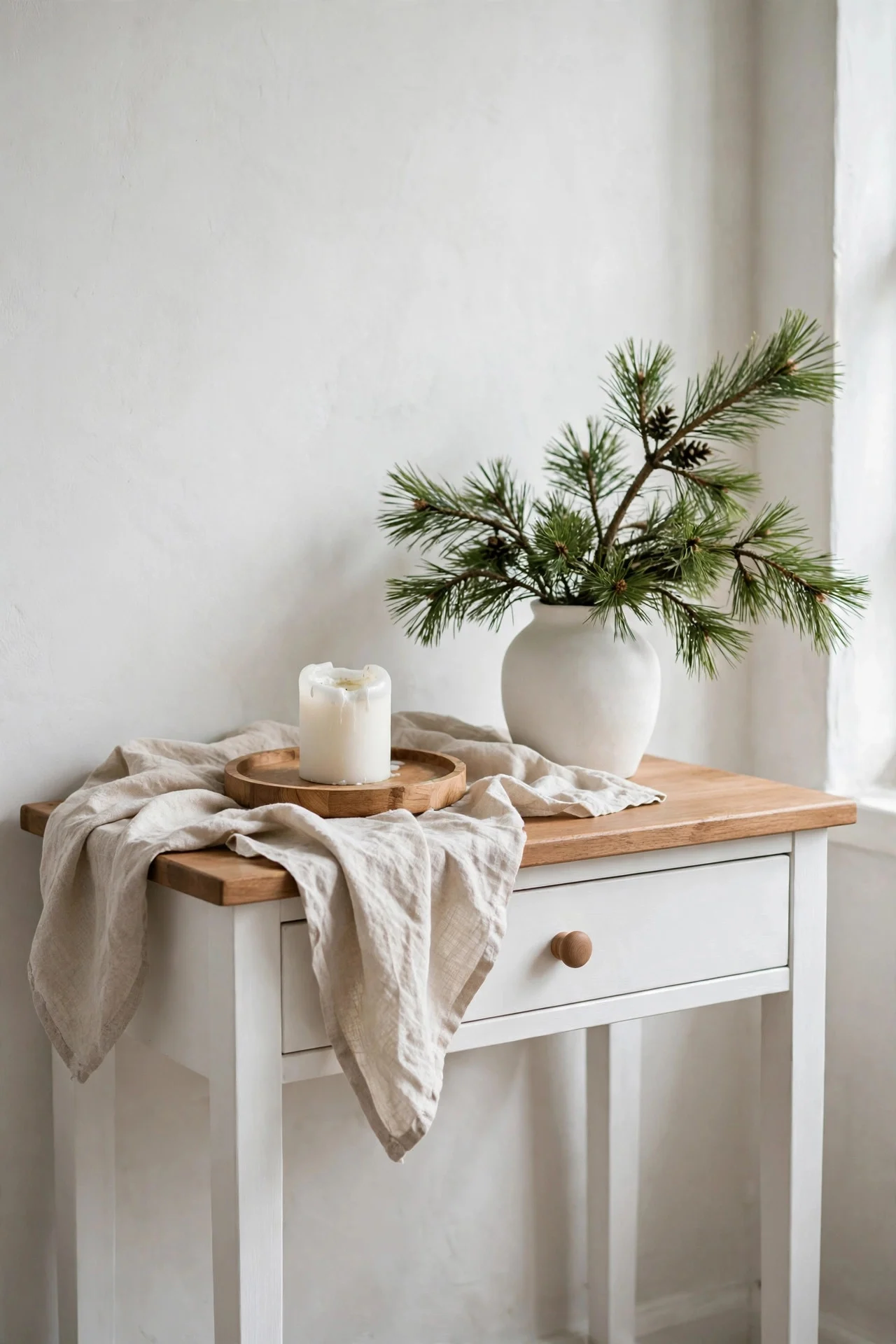
Minimalist Christmas lives in a three-color world: warm white, natural wood, and living green. That’s it. No red, no gold, no silver competing for attention. When the palette is this tight, even simple objects — a pine branch in a ceramic vase, a white candle on a wooden tray — look intentional and complete.
Apply the palette to every room so the house feels coherent. The green comes from real plants and branches; the white from candles, paper, and textiles; the wood from furniture and natural accessories you already own. Nothing needs to be purchased in a “Christmas” aisle.
Try this: Remove every decoration that isn’t white, wood, or green — what’s left is your minimalist Christmas.
3. Paper Stars and Nothing Else
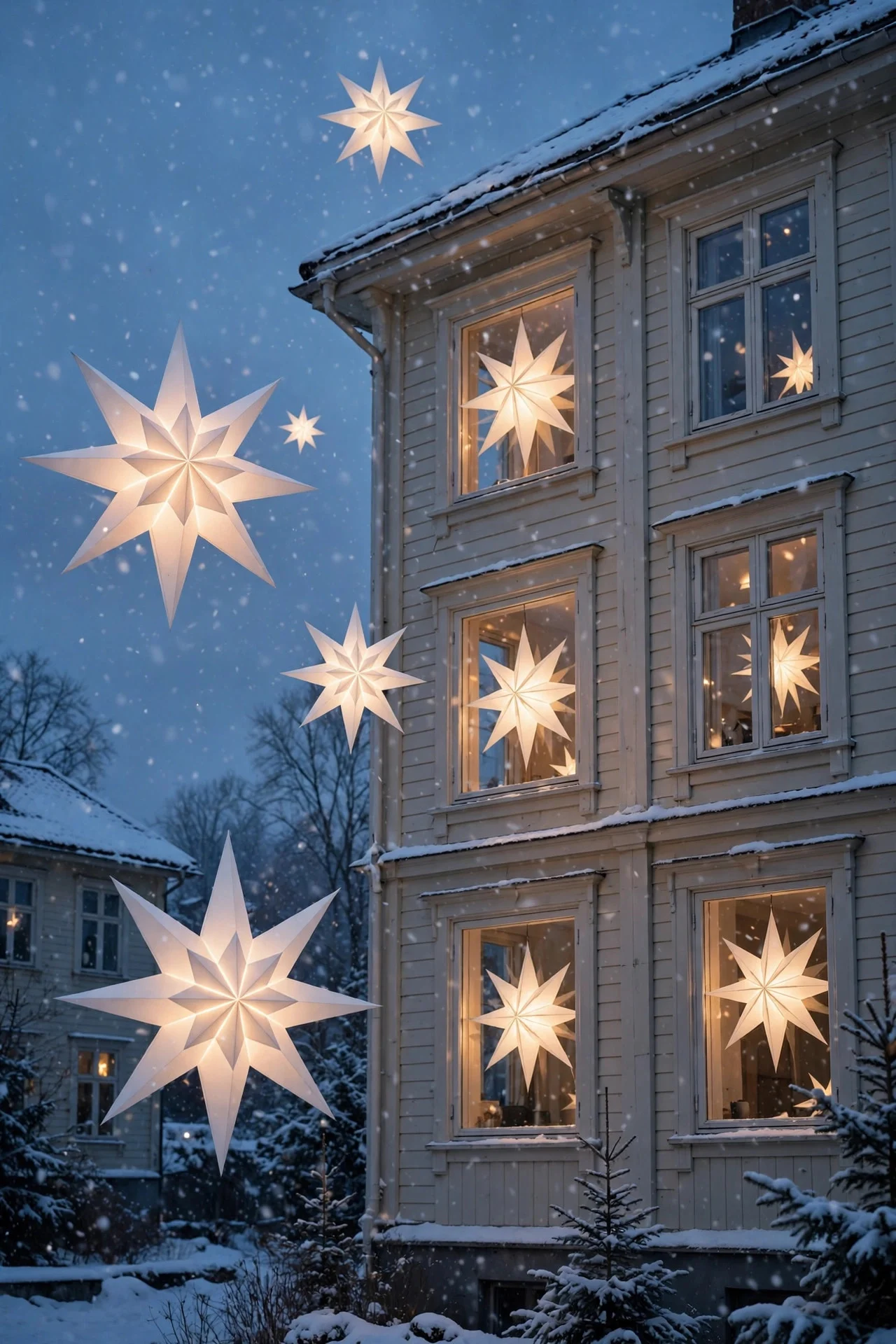
One decoration type, done beautifully, beats a dozen types done halfway. Hang large white paper stars — the fold-flat Scandinavian kind — in your windows and let them be the entire Christmas statement. Lit from within with a single warm bulb, they’re sculptural, serene, and unmistakably seasonal.
Use odd numbers and vary the sizes: a 24-inch star flanked by two 16-inch ones in a large window, or a single 28-inch star as the whole show in a small one. They store flat, cost under $15 each, and never look dated.
Try this: Hang stars at different heights with clear fishing line so they appear to float in the window.
4. One Real Wreath, Perfectly Placed
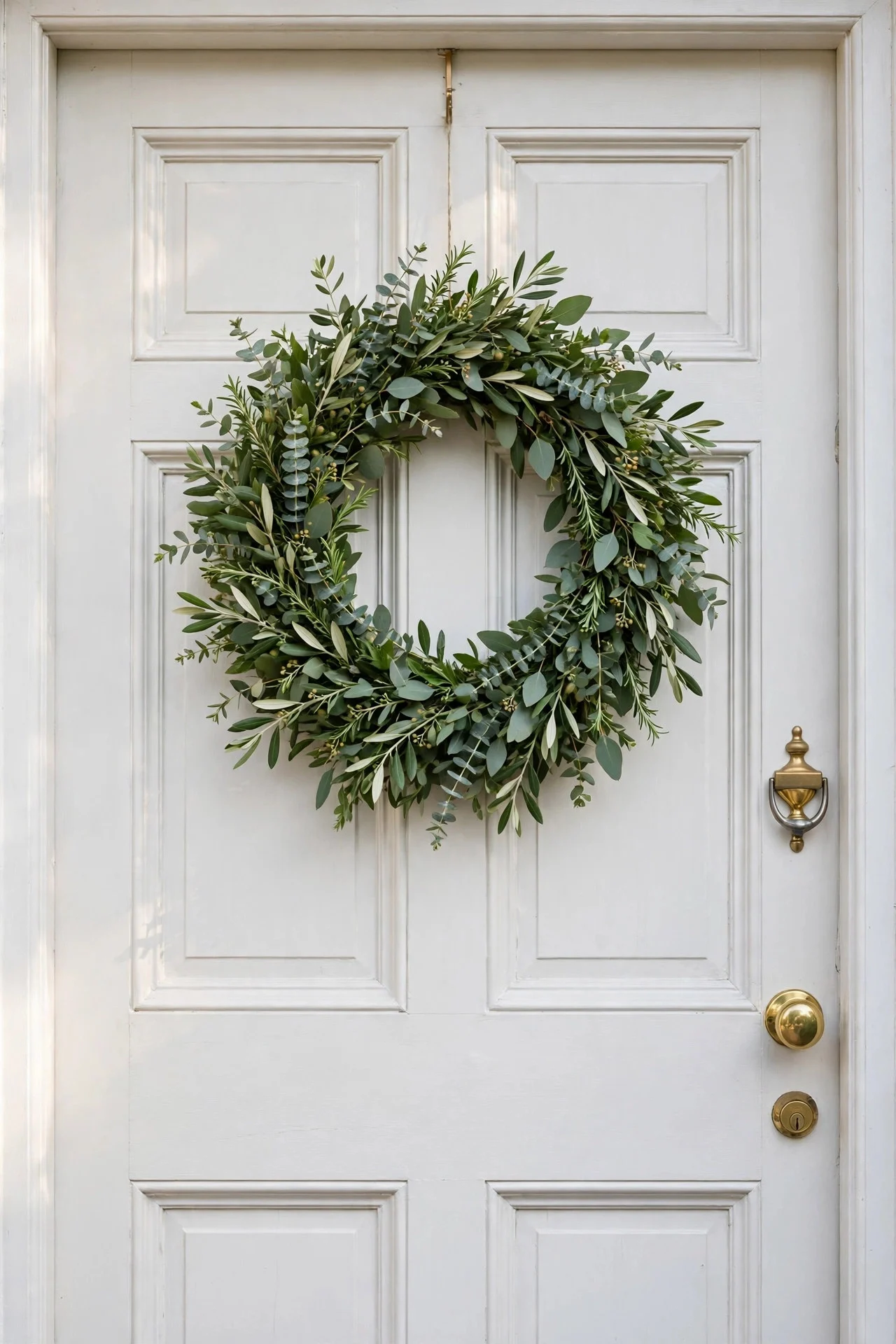
Instead of wreaths on every door and window, hang one — a real one, simple greenery, no bow, no berries — in the single most visible spot: the front door or above the mantel. One perfect wreath makes a stronger statement than five mediocre ones.
Choose an unstructured style: loose branches rather than a tight formal ring, in a 24- to 28-inch size. Hang it on a simple nail or a single ribbon loop. The slight wildness keeps it from feeling stiff, and the singularity keeps it feeling special.
Try this: Mist it every few days — a fresh wreath in late December smells like you just brought it home.
5. Let Candlelight Be the Main Decor
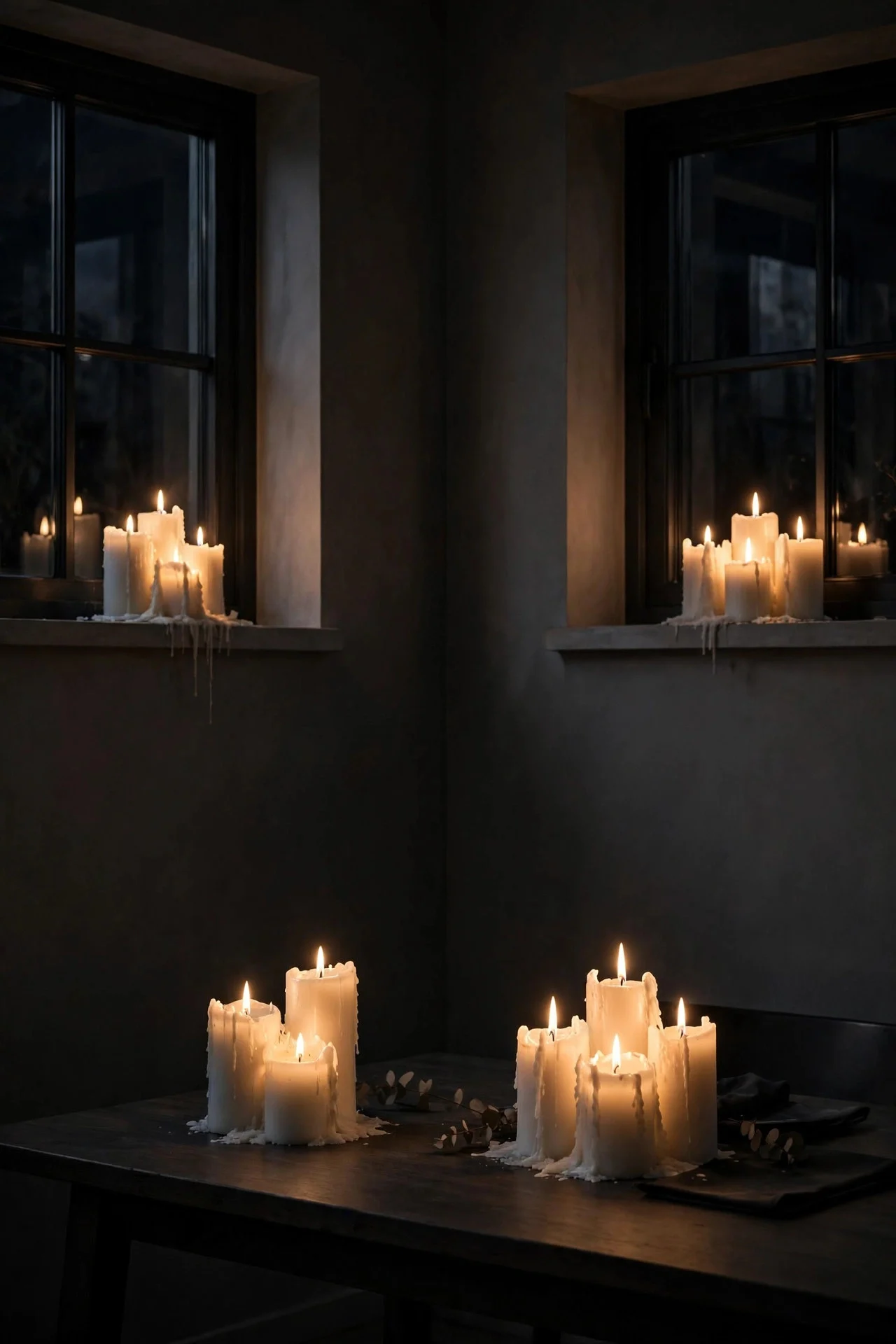
In a minimalist home, light does the decorating. Cluster white pillar candles in groups of three and five — on the dining table, the windowsills, the bathroom counter — and let their glow be the warmth that other homes get from piles of decor. Flame is the oldest decoration there is.
Use unscented white pillars so the look stays clean (scented candles in every corner compete with each other). Vary heights within each group but keep the candles themselves identical — uniformity reads as calm. Battery pillars with timers work if real flames make you nervous.
Try this: Place one candle group where it’s reflected in a window or mirror — the doubling effect costs nothing.
6. Bare Branches in a Beautiful Vase
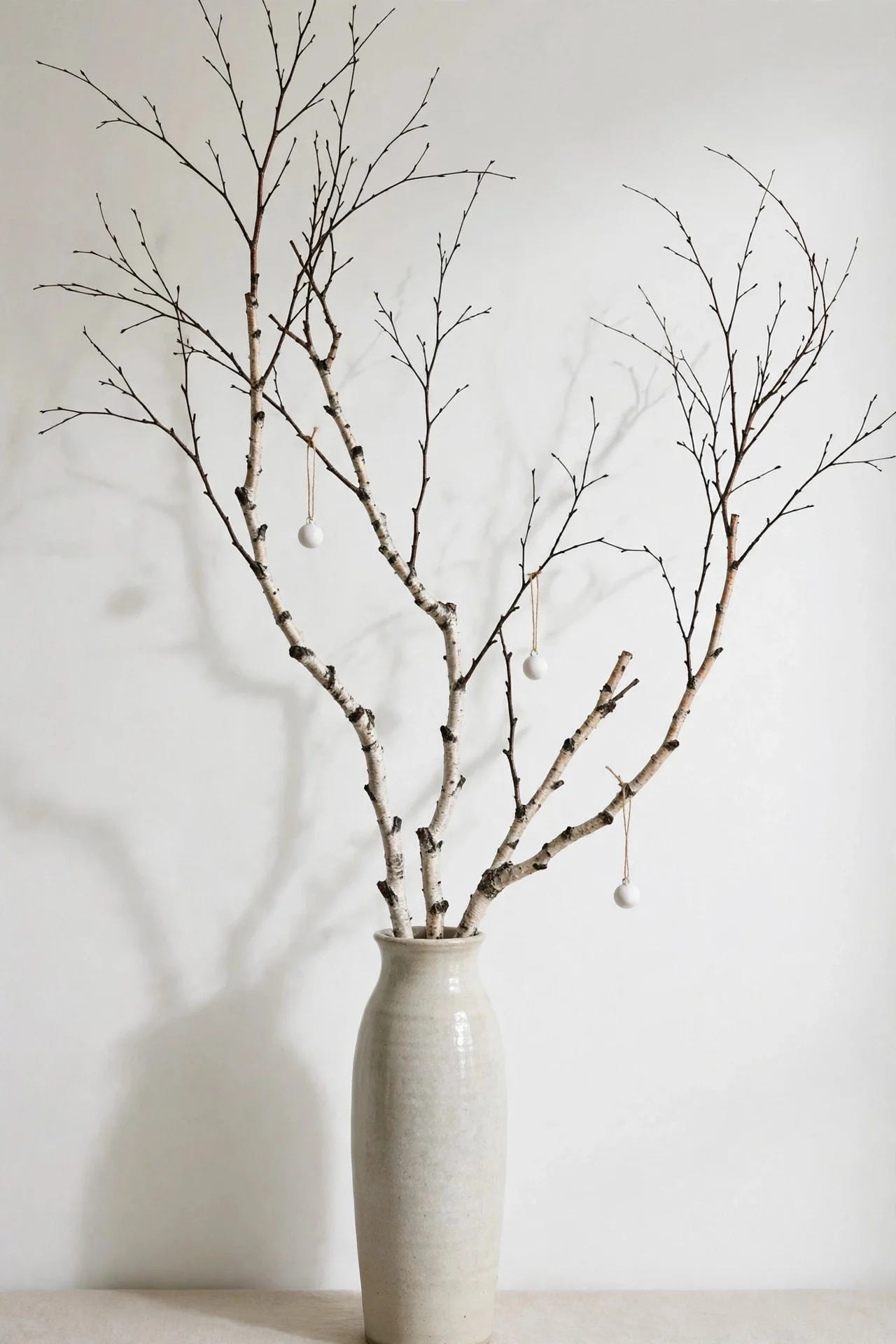
Cut three to five bare branches — birch, dogwood, anything with interesting structure — and stand them in a tall ceramic or glass vase. That’s the whole decoration. Against a white wall, the branching silhouettes are genuinely beautiful, like a line drawing in three dimensions.
Choose branches 2 to 3 feet taller than the vase for proper proportion. Strip any dead leaves but leave the small twigs — the fine branching is the detail that makes it art instead of yard waste. Hang three or four tiny white ornaments from the twigs if you want a whisper of Christmas.
Try this: Spray the branches matte white for a frosted winter look that lasts all season.
7. Wrap Gifts in Plain Paper With String
Minimalist wrapping: plain white or kraft paper, natural twine, and a single sprig of greenery. No bows, no ribbons, no gift tags dangling everywhere — write names directly on the paper in simple handwriting. Under the tree, a pile of these looks like a still life.
The uniformity is the luxury. When every gift matches, the tree looks styled rather than stocked. Buy one big roll of paper and one spool of twine in November and you’re set for every gift on your list.
Try this: Stamp a single small star or tree on each package with a black ink pad — one mark, perfectly placed.

8. The One Statement Piece Rule
Minimalist decorating allows exactly one showpiece per home — one. A dramatic 4-foot wreath, an antique sled by the door, a single oversized paper star, a beautiful vintage nativity. Everything else stays quiet so the statement piece can actually make its statement.
Choose the piece for the room you live in most, and give it space — at least 2 feet of clear wall or floor around it. A statement piece crowded by small decor isn’t a statement anymore; it’s just the biggest item in a cluttered room.
Try this: Photograph the room with the piece in place, then remove everything within arm’s reach of it — compare and keep the emptier version.
9. Design the Negative Space First
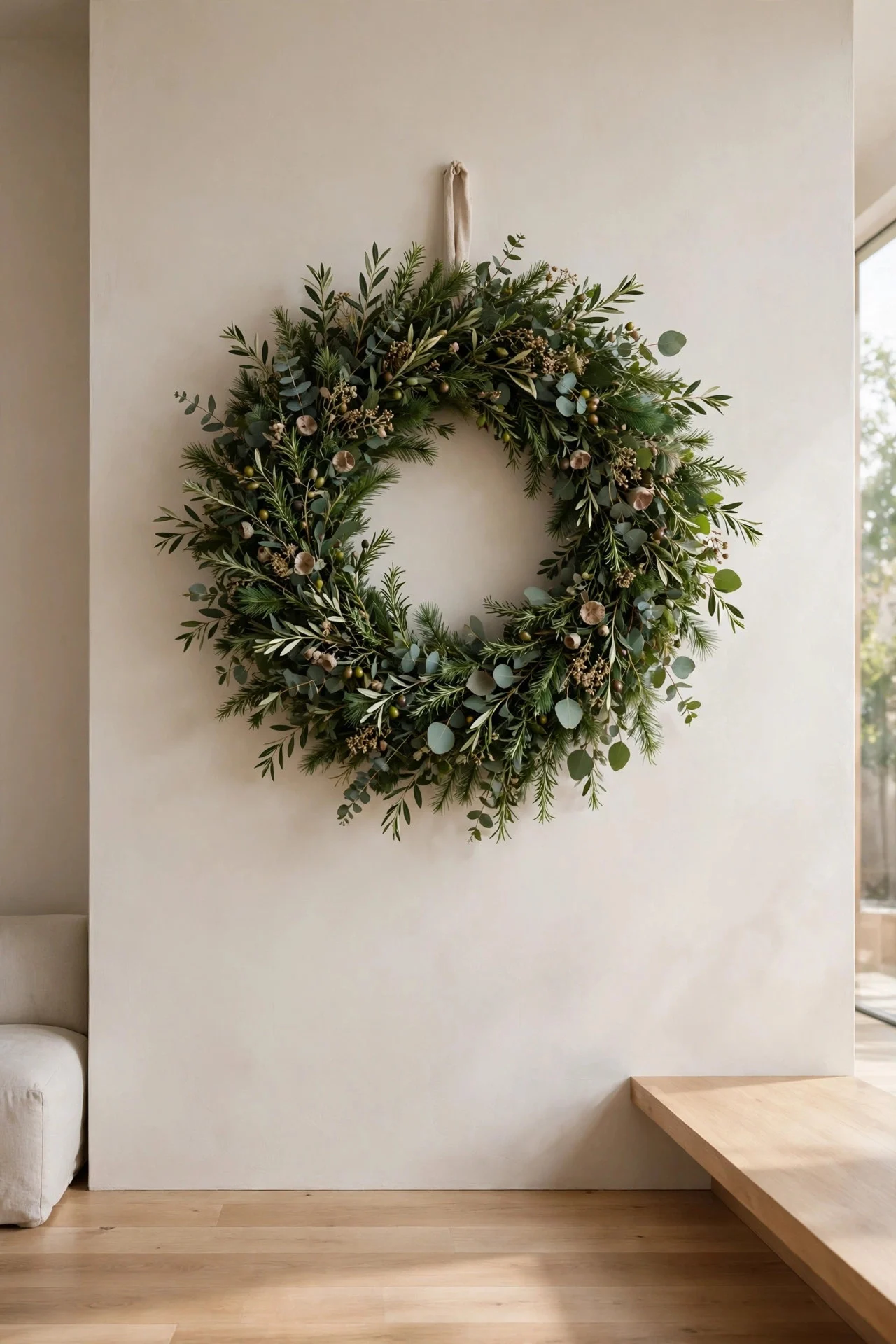
Here’s the minimalist mindset shift: plan what stays empty before you plan what gets decorated. The clear coffee table, the undecorated bookshelf, the bare windowsill — these aren’t failures to decorate, they’re the calm background that makes your few decorations meaningful.
Walk through each room and choose one surface to decorate and two to leave completely clear. The decorated surface gets your full attention and best pieces; the clear ones get dusted and left alone. This ratio — roughly one-third decorated — is what makes minimalism feel serene instead of sparse.
Try this: If a surface already holds everyday objects you love, leave it alone — minimalism means not displacing your real life.
10. Natural Materials Only
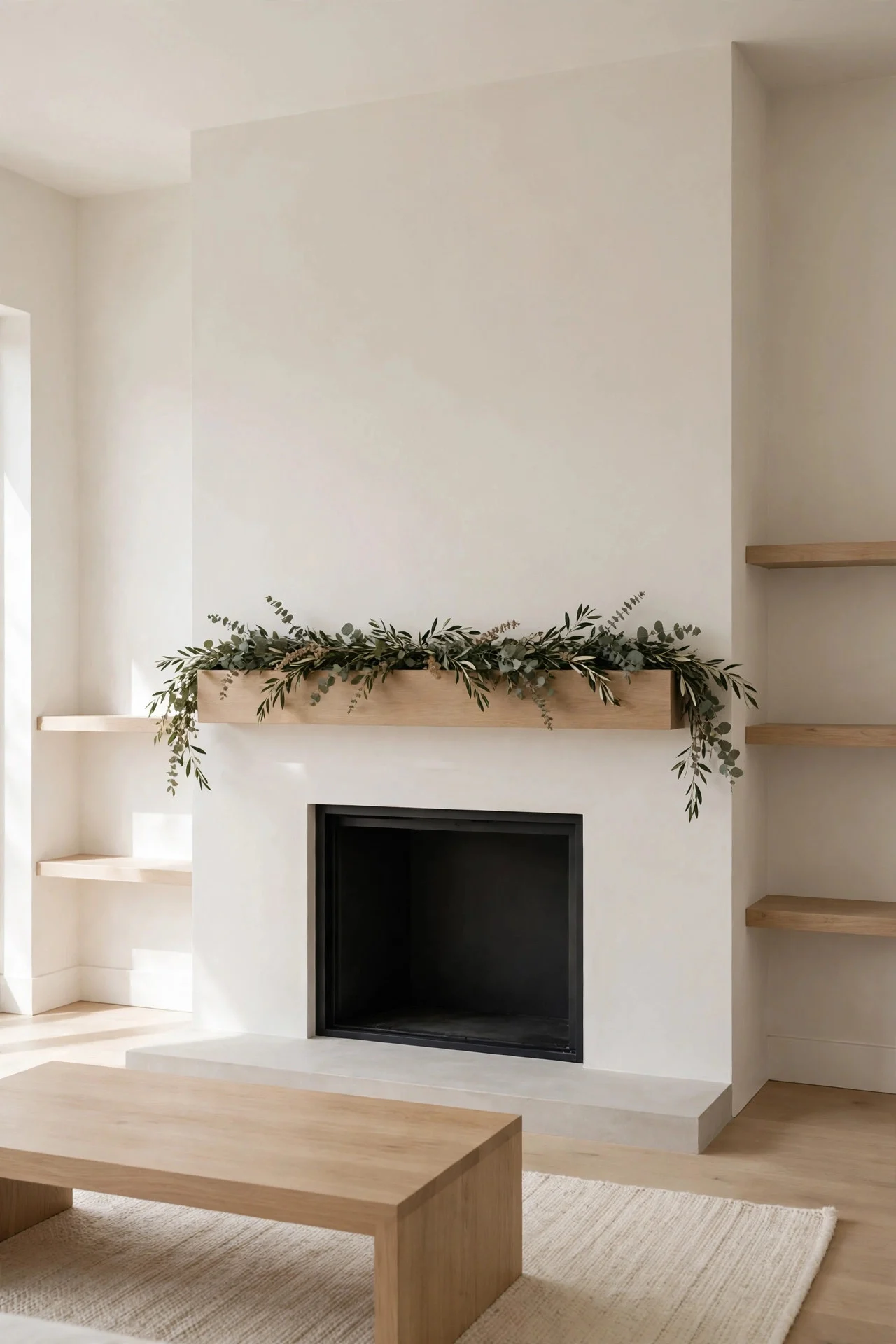
Set a material rule and watch your decor instantly cohere: only things that grew — wood, pine, cedar, cotton, linen, paper, beeswax, dried botanicals. No plastic, no glitter, no tinsel, no “shatterproof.” The constraint eliminates 90 percent of cheap-looking decor automatically.
This rule also simplifies shopping to almost nothing: a bundle of cedar from the grocery store, white beeswax candles, linen ribbon, paper stars. Everything ages gracefully, everything composts or stores flat, and nothing ever looks dated in photos.
Try this: Replace one plastic decoration with its natural equivalent each year — the transition is painless and permanent.
11. A Single Garland, Hung With Intention
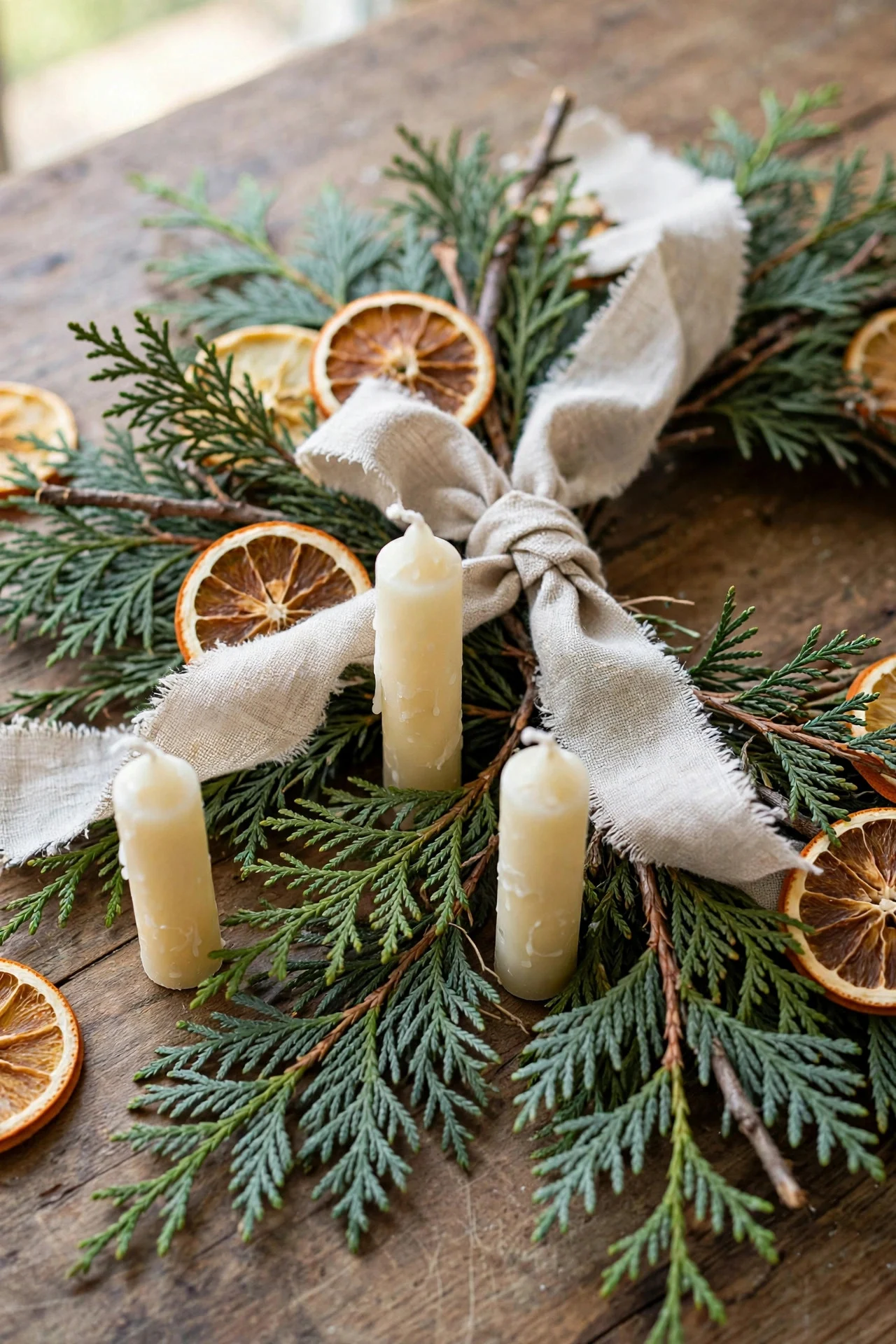
One garland — real cedar or pine, six to nine feet — hung in exactly one place: across the mantel, along the stair rail, or over a doorway. Not all three. When there’s only one garland in the house, people actually notice it, and you can afford to make it a good one.
Let it drape naturally with a gentle swag in the middle rather than pulling it taut. Fresh garland is worth the $25 here since it’s your only one; mist it every few days and it’ll last the month. Add nothing to it — no lights, no ornaments, no bow. The greenery is enough.
Try this: Choose the garland’s location based on where you sit in the evening — decorate your own view first.
12. The Scandinavian Windowsill Vignette
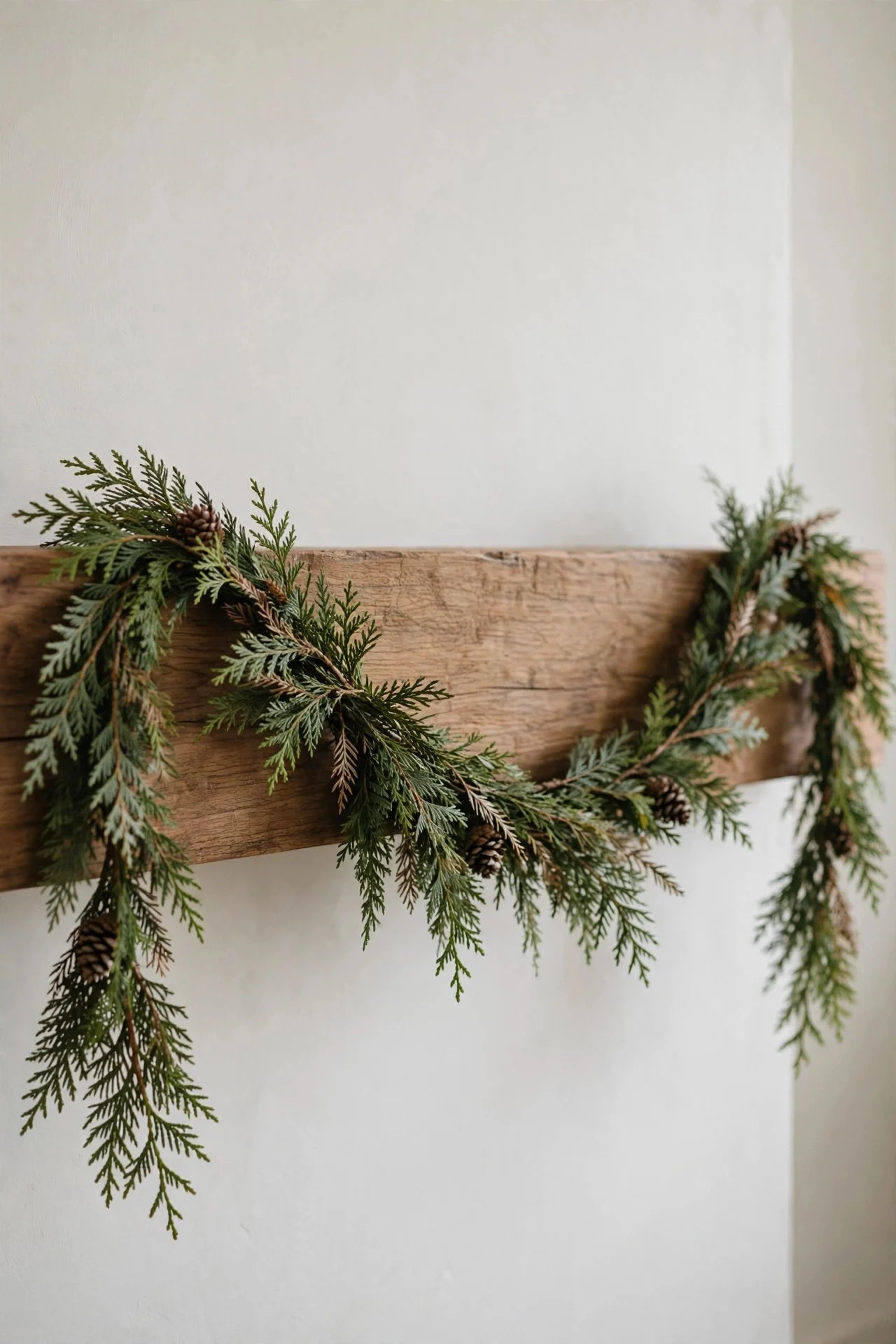
Copy the Nordic approach: a deep windowsill styled with exactly three objects — a white candle house (those little ceramic houses with a tea light inside), a small sprig of greenery in a bud vase, and one paper star or wooden figure. Lit at dusk, it’s the coziest square foot in the house.
Candle houses cost $10 to $20 and last forever; the glow through their tiny windows is disproportionately charming. Keep the sill otherwise clear — the vignette needs its empty frame. Repeat the formula on one or two sills maximum, not every window in the house.
Try this: Use a battery tea light inside the candle house so it can glow all evening safely.
13. Pack It All in One Small Box
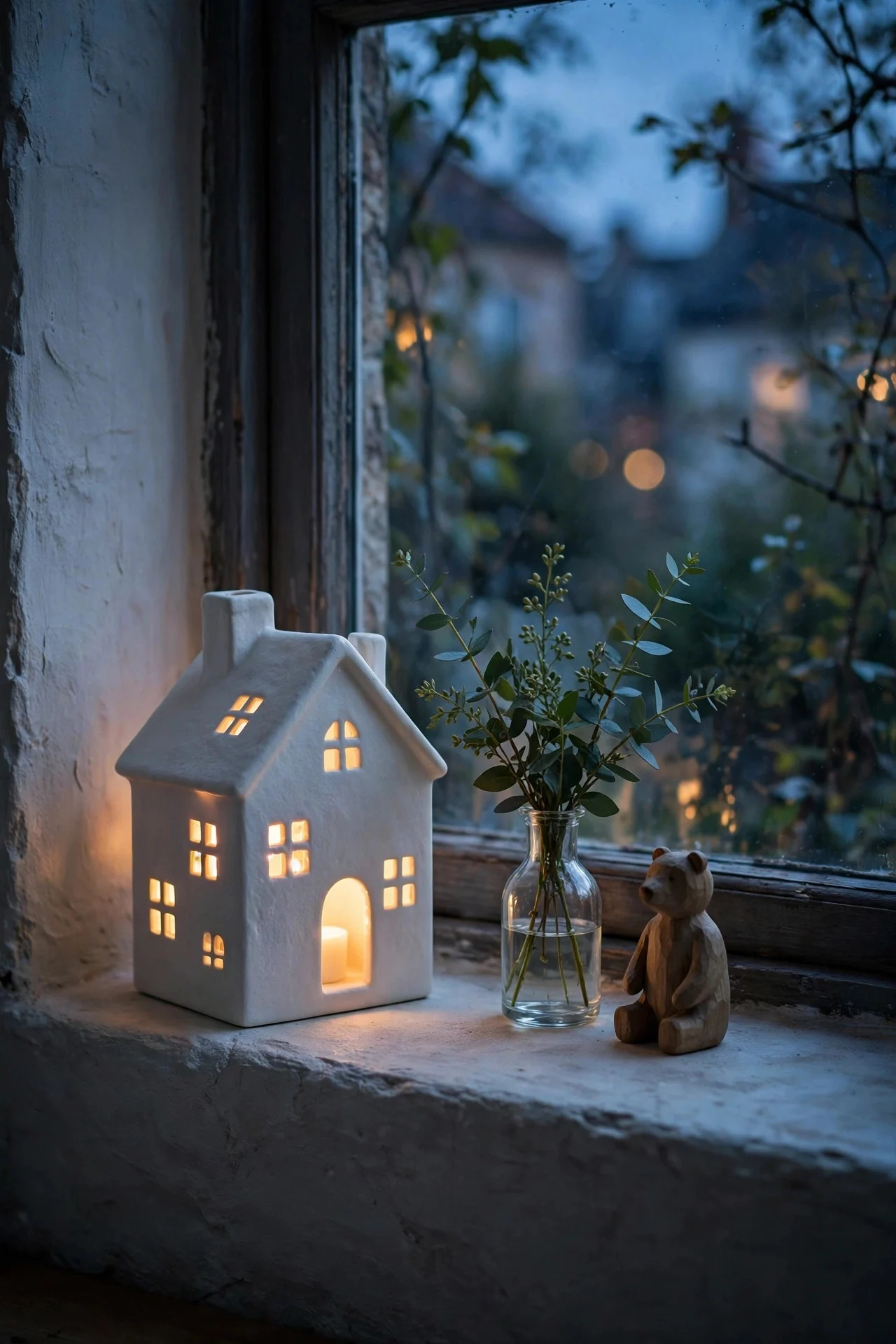
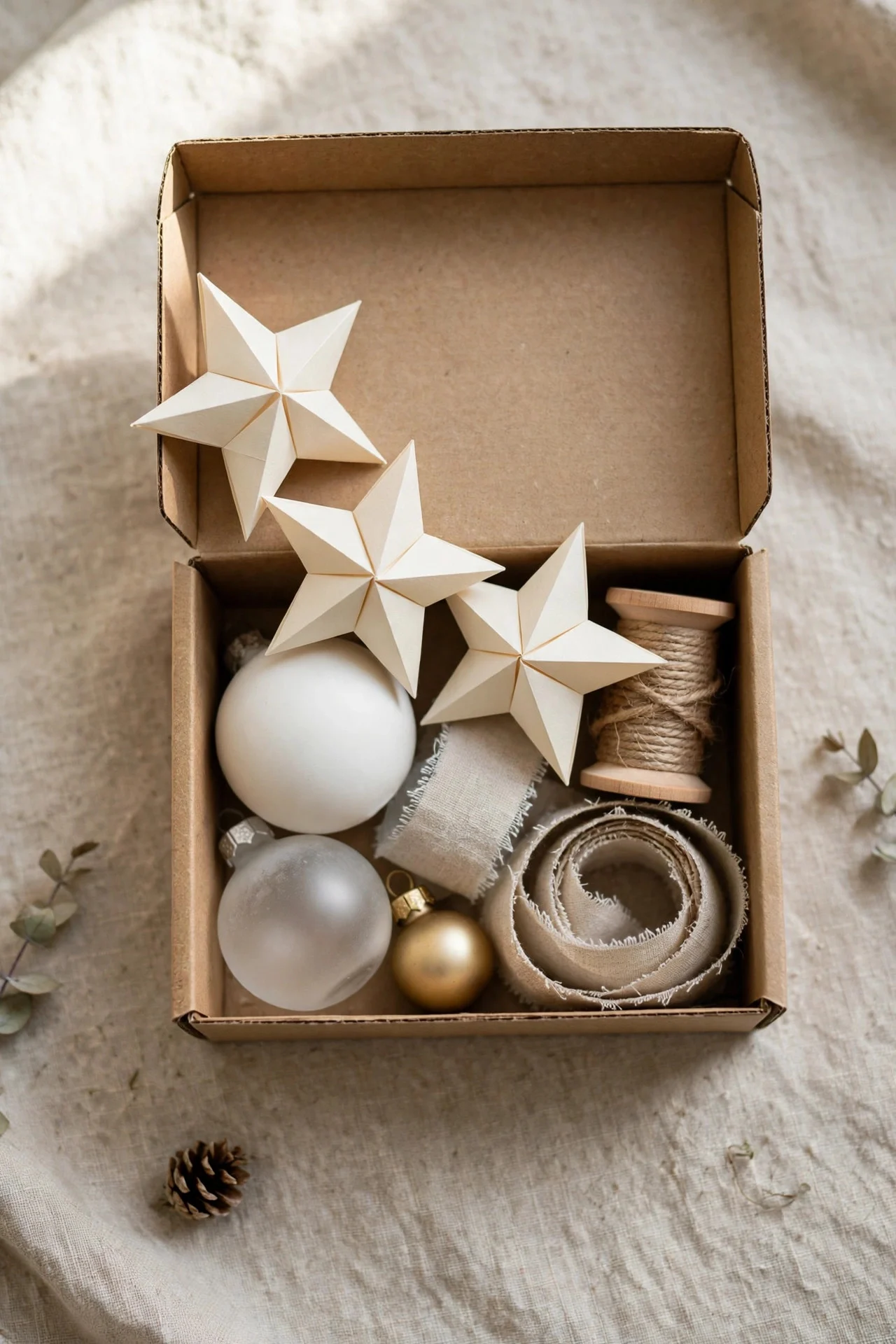
The ultimate minimalist test: your entire Christmas collection fits in one small box — say, 18 by 12 inches. Paper stars fold flat, candles get used up, greenery composts, and what’s left is a handful of ornaments, a spool of twine, and linen ribbon. That’s a complete minimalist Christmas.
This isn’t deprivation; it’s freedom. Decorating takes twenty minutes, undecorating takes ten, and there’s nothing to dread in January. Every piece in the box earned its place, which means every piece gets used and loved.
Try this: If it doesn’t fit in the box, it doesn’t come out next year — let the box be the boss.
Frequently Asked Questions
How do I do minimalist Christmas without it looking bare?
Minimalist isn’t empty — it’s edited. Use natural materials, warm candlelight, and one statement piece per home. The key is quality over quantity: ten thoughtful objects beat a hundred filler ones, and negative space is part of the design.
What colors work for minimalist Christmas decor?
Warm white, natural wood tones, and living green cover almost everything. If you want one accent, choose muted tones like soft gray, oatmeal, or pale gold — never brights. The tight palette is what makes minimalism feel calm.
Can minimalist Christmas still feel cozy?
Absolutely — coziness comes from light and texture, not quantity. Candlelight, wool throws, natural wood, and fresh greenery create more warmth than a room full of plastic decor. Keep lighting low and warm in the evenings.
How do I store minimalist Christmas decor?
That’s the best part: it barely needs storage. Paper stars fold flat, candles get used, greenery composts. What remains — a few ornaments, ribbon, candle houses — fits in one small box on a closet shelf.
Final Thoughts
Minimalist Christmas is really about trust — trusting that a single wreath, a few candles, and some branches are enough. They are. The holiday doesn’t need your house to prove anything; it just needs a little light, a little green, and the people you love in it. Everything else is optional, and that’s the most freeing thing about it.