
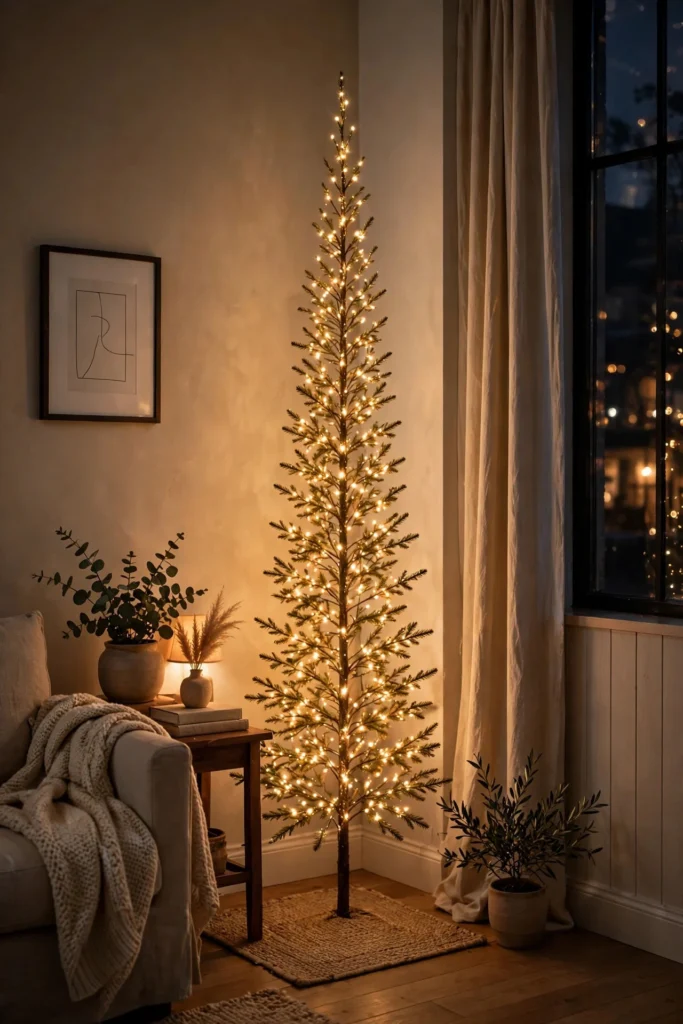
Not every home has room for a wide, sprawling tree — and that’s exactly what pencil trees are for. Tall, narrow, and unapologetic about it, a 6.5-foot pencil tree delivers full Christmas height in about 24 inches of floor space. It’s the format for tight corners, narrow rooms, and anyone who’s ever measured a tree against their living room and sighed.
These 13 ideas cover where pencil trees shine and how to style them — because narrow trees have their own rules. Decorate a pencil like a full tree and it looks sparse; decorate it like a pencil and it looks intentional. Here’s the difference.
1. The Pencil Tree Format, Explained
A pencil tree is typically 6 to 7.5 feet tall but only 20 to 30 inches wide — roughly half the footprint of a standard tree. You get the towering presence and the full decorating height while the base fits in a corner that would otherwise hold a floor lamp.
Expect to pay $80–$120 for a decent pre-lit pencil tree; the slim profile actually costs slightly more to manufacture than a basic full tree. Check the tip count — 800+ tips on a 6.5-foot pencil means believable fullness; under 500 looks gappy. Unbox and fluff a pencil tree in the room where it’ll live — carrying a fluffed pencil through doorways bends the top.
Try this: Tape out the tree’s footprint on your floor with painter’s tape before buying — 24 inches is smaller than most people picture.
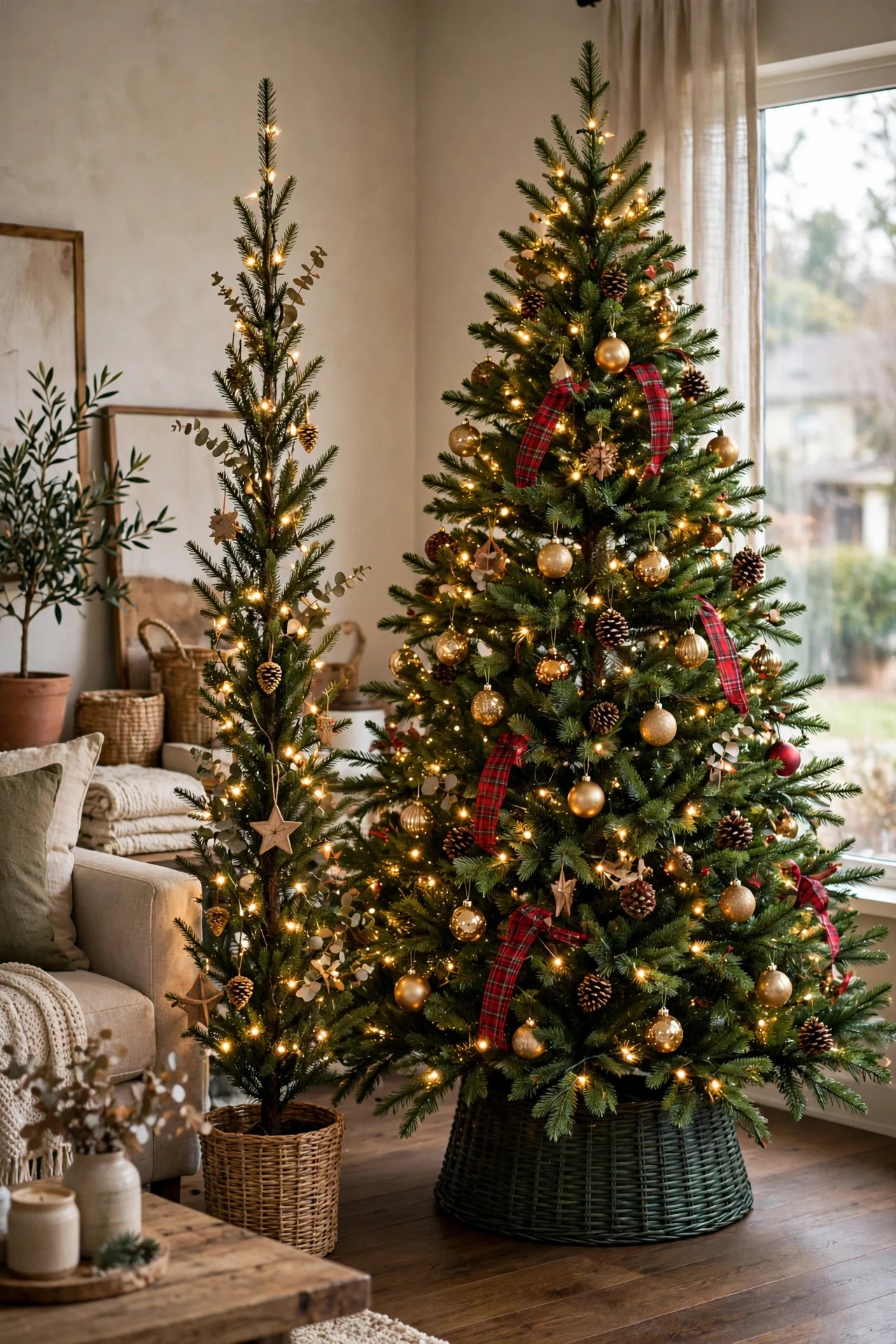
2. A Flanking Pair at the Front Door
Two pencil trees framing the front door — inside the entry or on the porch — is the grandest look in this list. The symmetry reads as intentional design, and two slim trees take up less visual space than one wide one.
Keep the pair identical: same height, same lights, same simple decor. Mismatched pairs look like you couldn’t decide. Outdoors, choose weatherproof ornaments and weigh the bases; a pencil tree catches wind like a sail. Buy the pair in one order from one seller — dye lots vary, and mismatched greens ruin the symmetry.
Try this: Decorate the pair minimally — lights, ribbon, and one ornament style — so the symmetry, not the clutter, is the statement.
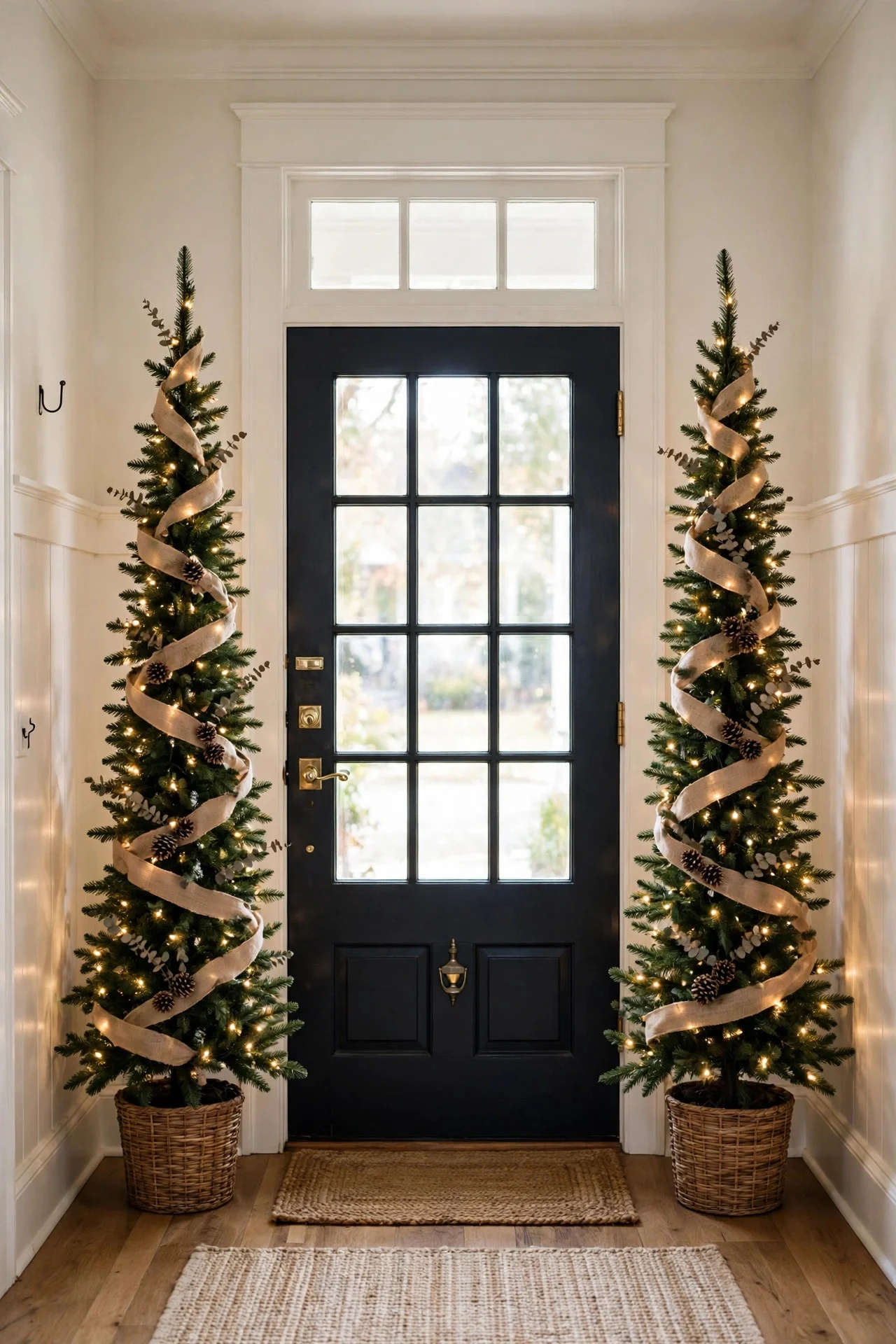
3. The Behind-the-Door Corner
The 18 inches behind an open door is dead space in every home — and a perfect pencil-tree slot. The tree fills the gap, the door hides its narrow back, and you gain a decorated corner without losing a square foot of usable room.
Measure the door’s swing arc first; the tree must clear it by at least 2 inches. A 6-foot pencil works in most standard rooms. This spot suits a simply decorated tree — it’s glimpsed, not studied. Stick a felt pad on the door where it meets the tree — the pad silences bumps and protects branches.
Try this: Put a draft stopper or door stop behind the tree — one enthusiastic door swing shouldn’t topple Christmas.
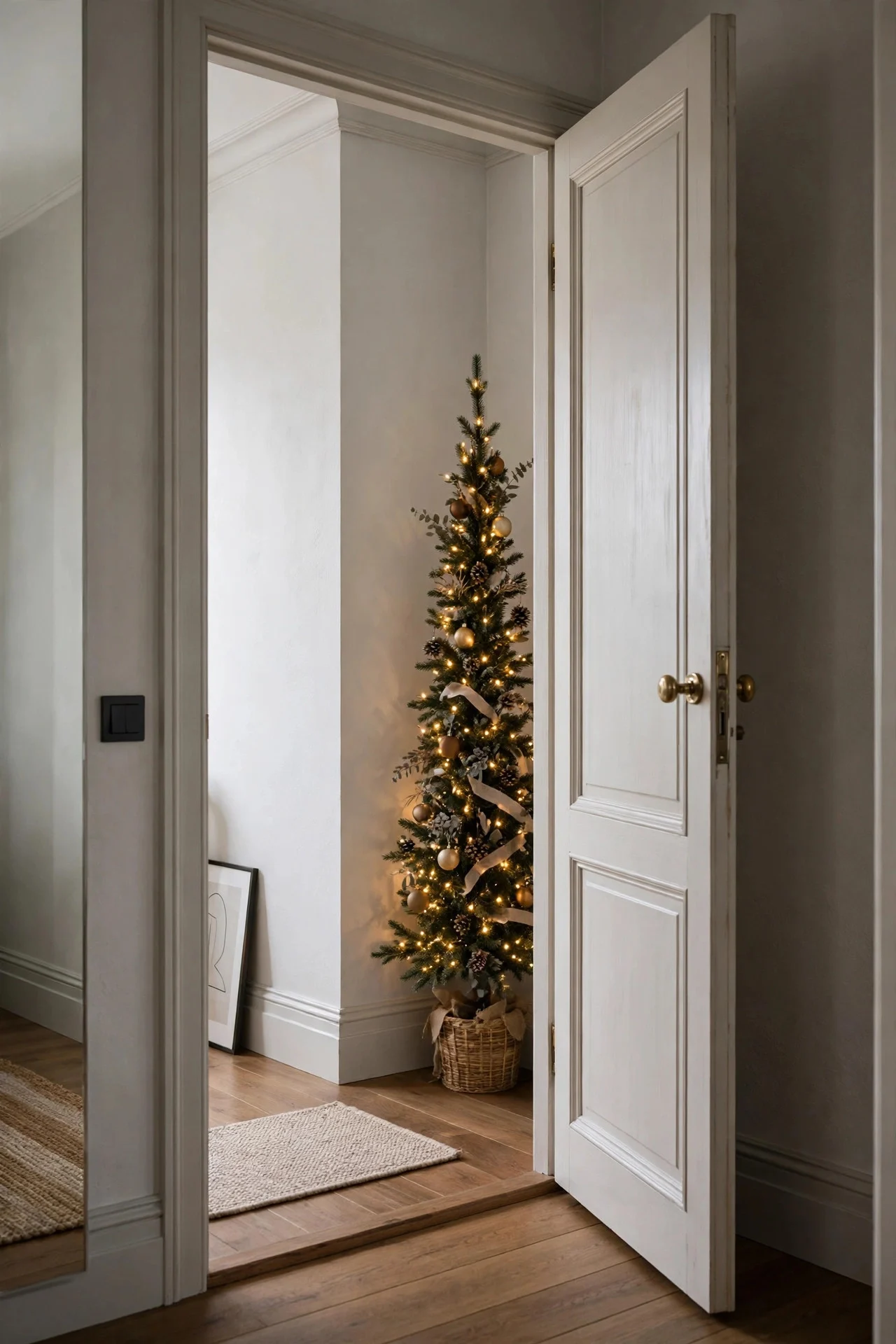
4. A Bedroom Corner That Glows
A pencil tree in the bedroom corner turns December nights genuinely magical — soft light, no living-room chaos. The narrow profile fits beside a dresser or in the corner by the window without crowding the bed.
Decorate for calm: warm white lights, a tight palette of two colors, no jingling ornaments near where you sleep. A 5- to 6-foot pencil suits most bedrooms; anything taller overwhelms a standard 8-foot ceiling visually. Choose a pencil tree with a slim, dark stand — bulky light-colored stands draw the eye in a small bedroom.
Try this: Run the tree’s lights on a plug-in timer set to switch off at midnight — falling asleep to it, not sleeping under it.

5. The Dining Room Holiday Corner
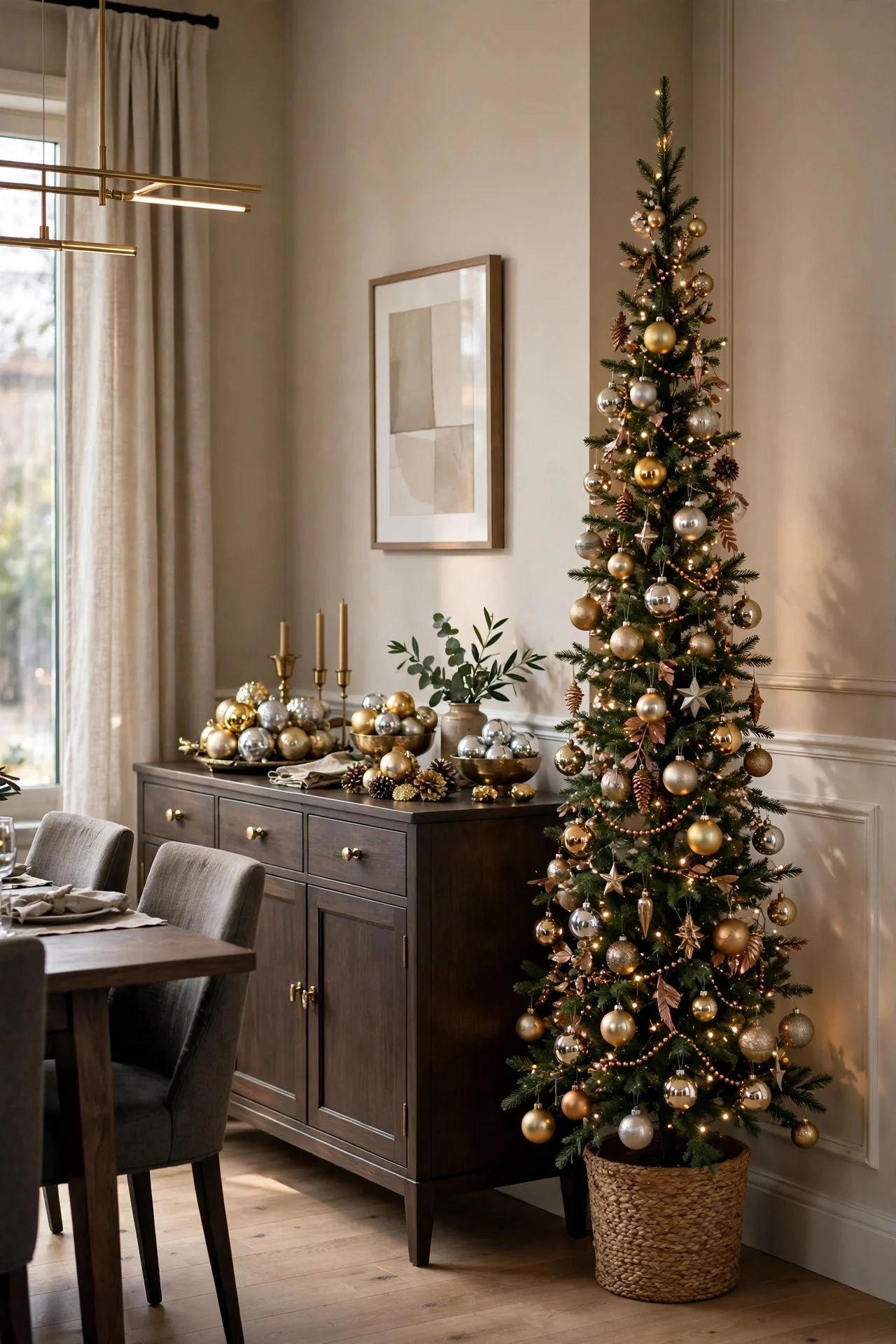
Dining rooms host the actual holiday meals, yet the tree usually lives elsewhere. A pencil tree in the dining room corner fixes that — it fits beside the sideboard or in the corner behind the host’s chair without blocking serving space.
Keep dining-room trees food-friendly: no shedding glitter, no scented ornaments competing with dinner, nothing that drops onto the table. A simple, elegant decorate — lights, metallic ornaments, ribbon — suits the formal setting. Keep the dining tree’s lowest branches above chair-back height — ornaments and elbows don’t mix.
Try this: Match the tree’s ribbon to your table runner — the room ties together like a styled shoot.
6. A Hallway Tree That Stops Traffic
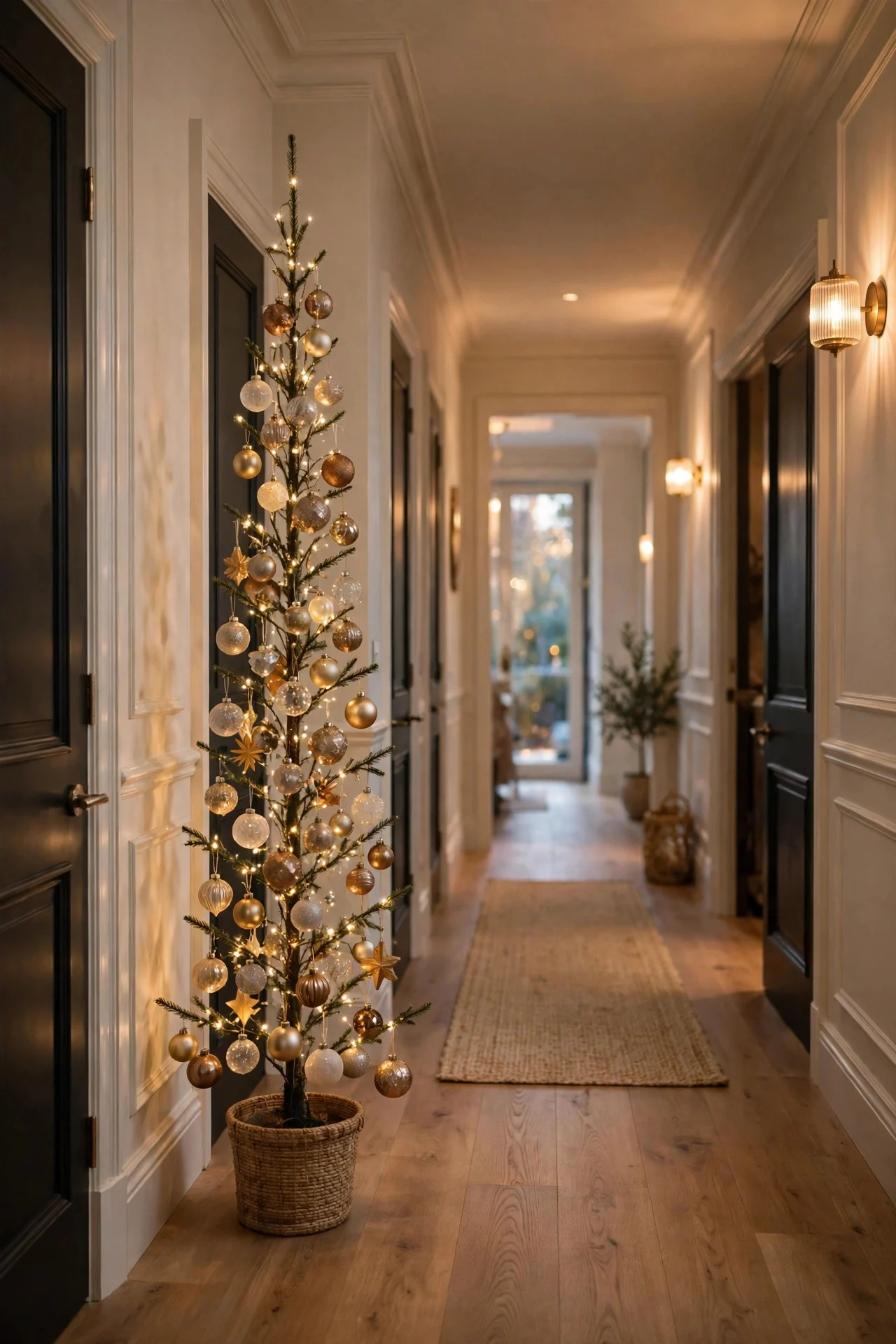
A pencil tree in a wide hallway turns a pass-through space into a destination. It needs a hallway at least 4 feet wide — the tree takes 2 feet, leaving comfortable walking room past it.
Hallway trees get bumped, so anchor the base well and use shatterproof ornaments on the walkway side. Lights do most of the work here; keep ornamenting simple since people see it in motion, not up close. Run a cord cover along the baseboard to the hallway tree — hallway cords are a trip hazard by definition.
Try this: Place the tree where the hallway turns or ends — a glowing focal point at the end of a hall looks incredible.
7. The Home-Office Corner Upgrade
A pencil tree fits the corner behind your desk — the one visible on video calls — and instantly upgrades every December meeting. It’s professional enough for work, festive enough for morale.
Keep it tidy and simple: colleagues see it on camera, so avoid novelty ornaments and go for a clean two-color scheme. A 5-foot pencil is plenty; anything bigger dominates the frame. Battery lights avoid cable clutter on calls. Mute the light strand’s blink function permanently — a blinking tree behind you is distracting on video calls.
Try this: Position the tree slightly to one side of your camera frame, not centered — off-center looks styled, centered looks like a backdrop.

8. The Spiral Ribbon Wrap
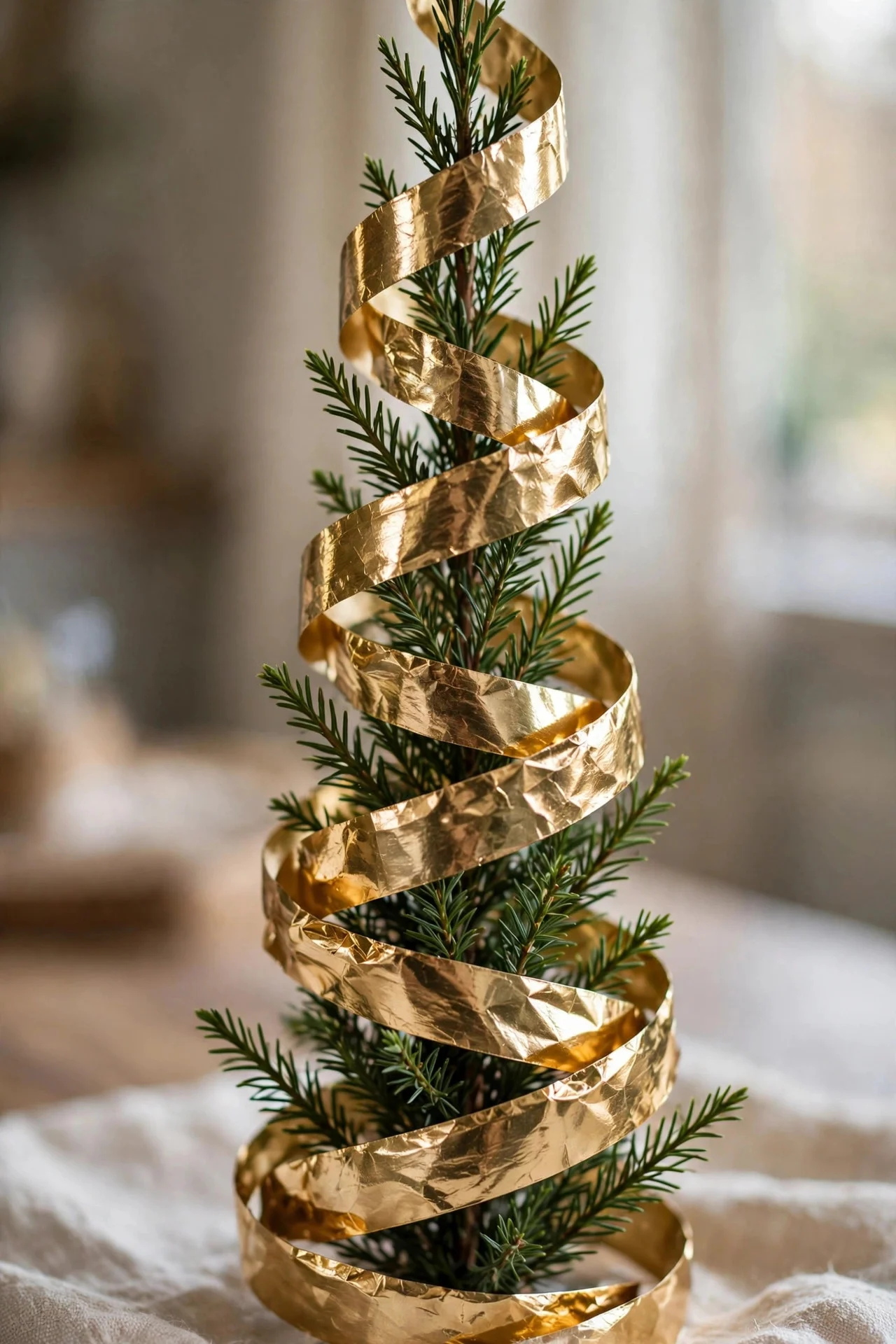
On a full tree, ribbon waterfalls work best — but on a pencil tree, a spiral wrap wins. Wind 1.5-inch wired ribbon in a loose spiral from top to bottom, tucking every 8 inches. The spiral emphasizes the pencil’s elegant height instead of fighting its narrowness.
One 30-foot roll usually covers a 6.5-foot pencil tree. Thinner ribbon suits the scale; wide 2.5-inch ribbon overwhelms narrow branches. Metallic or velvet both work — just keep it to one ribbon, not two. Pin the ribbon’s starting end with a floral pin, not a tuck — the top of a pencil tree is too narrow for tucking.
Try this: Start the spiral at the top and work down — gravity helps the ribbon settle, and you use less tucking.
9. Small Ornaments, Hung Dense
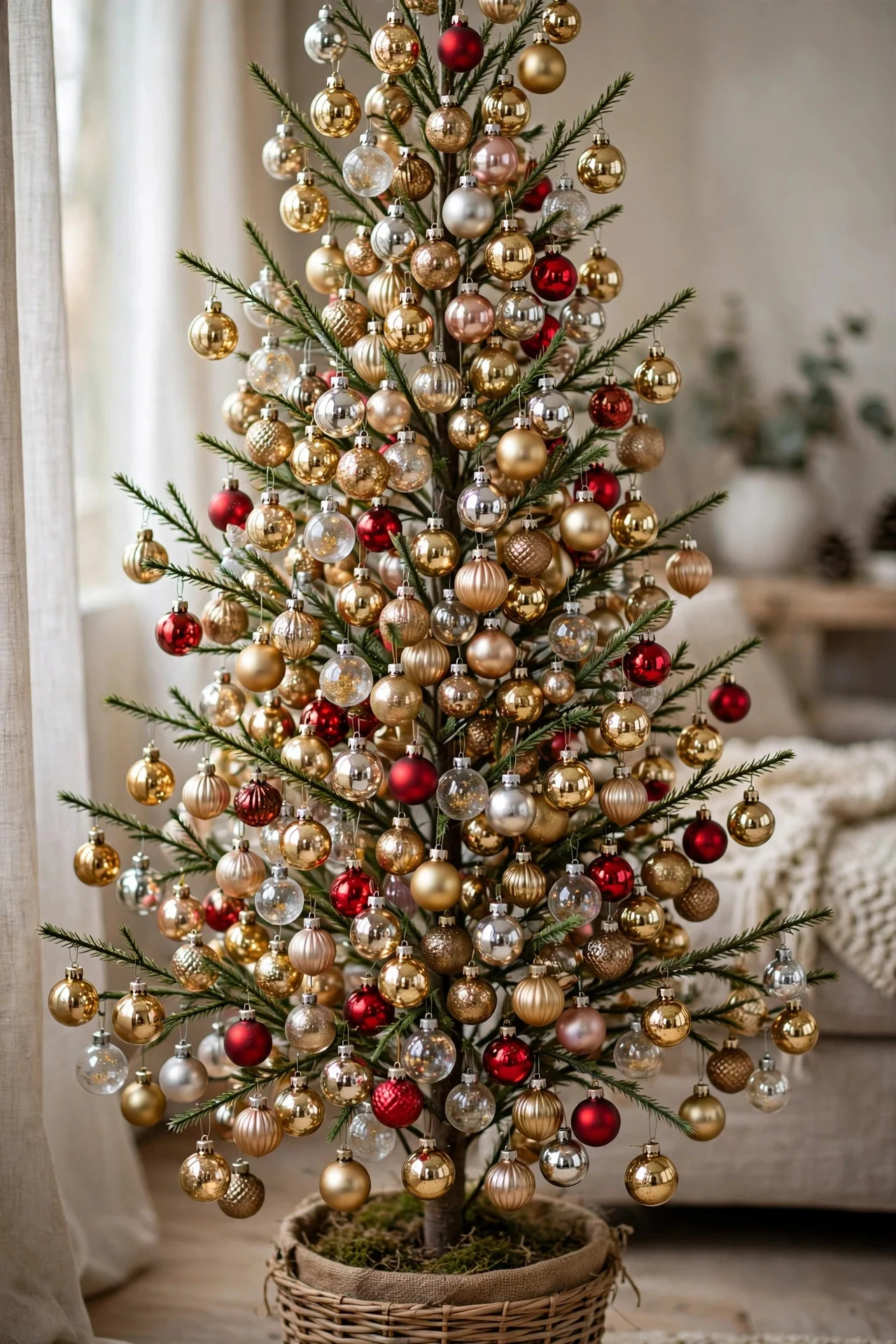
Pencil trees need smaller ornaments hung closer together — 2-inch baubles rather than 3-inch, spaced 4 inches apart rather than 6. Standard-size ornaments stick out past narrow branches and make the tree look like it’s wearing someone else’s clothes.
Plan on 50–60 ornaments for a 6.5-foot pencil: fewer than a full tree, but denser relative to its size. Lightweight ornaments matter — heavy glass pulls slim branches downward and ruins the pencil silhouette. Sort ornaments by size before hanging — on a pencil tree, one oversized bauble throws off the whole silhouette.
Try this: Hang ornaments slightly inside the branch tips, not at the very ends — it keeps the tree’s sleek profile intact.
10. The Tight-Wrap Lighting Method
Pencil trees need fewer lights but closer wrapping: 50 lights per foot instead of 100, wound tightly around the narrow profile. Loose, deep lighting (the full-tree technique) wastes lights inside a pencil where nobody sees them.
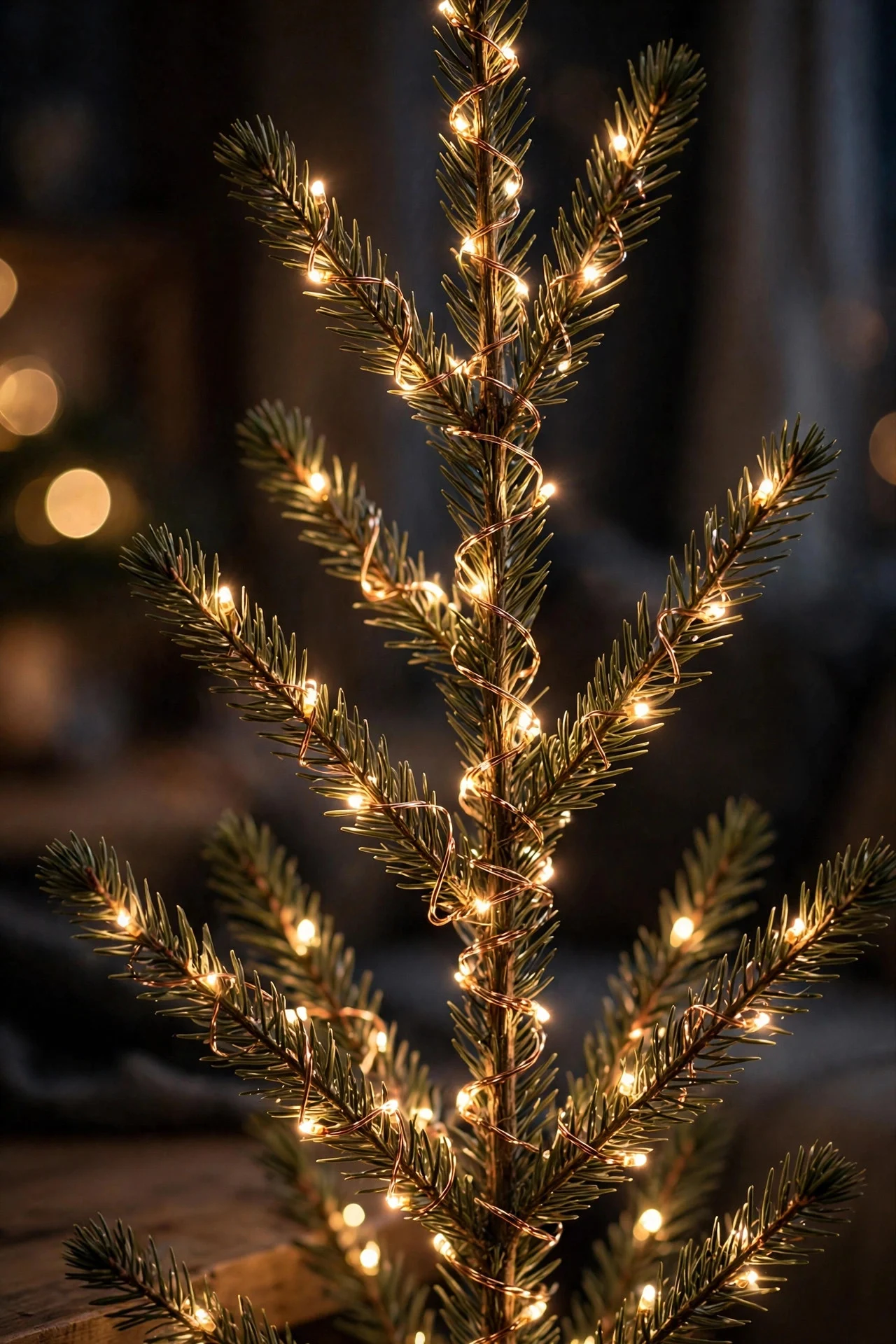
Wrap each branch tier individually rather than spiraling one long strand — the even coverage flatters the slim shape. For a 6.5-foot pencil, two 100-light strands usually suffice. Warm white keeps the narrow tree cozy rather than stark. Use green-wire lights on a pencil tree — white wire shows against the slim profile like a scar.
Try this: Wrap lights before fluffing on a pencil tree — the slim branches are easier to light when compressed, then fluff around the strands.
11. A Kid’s Room Pencil Tree
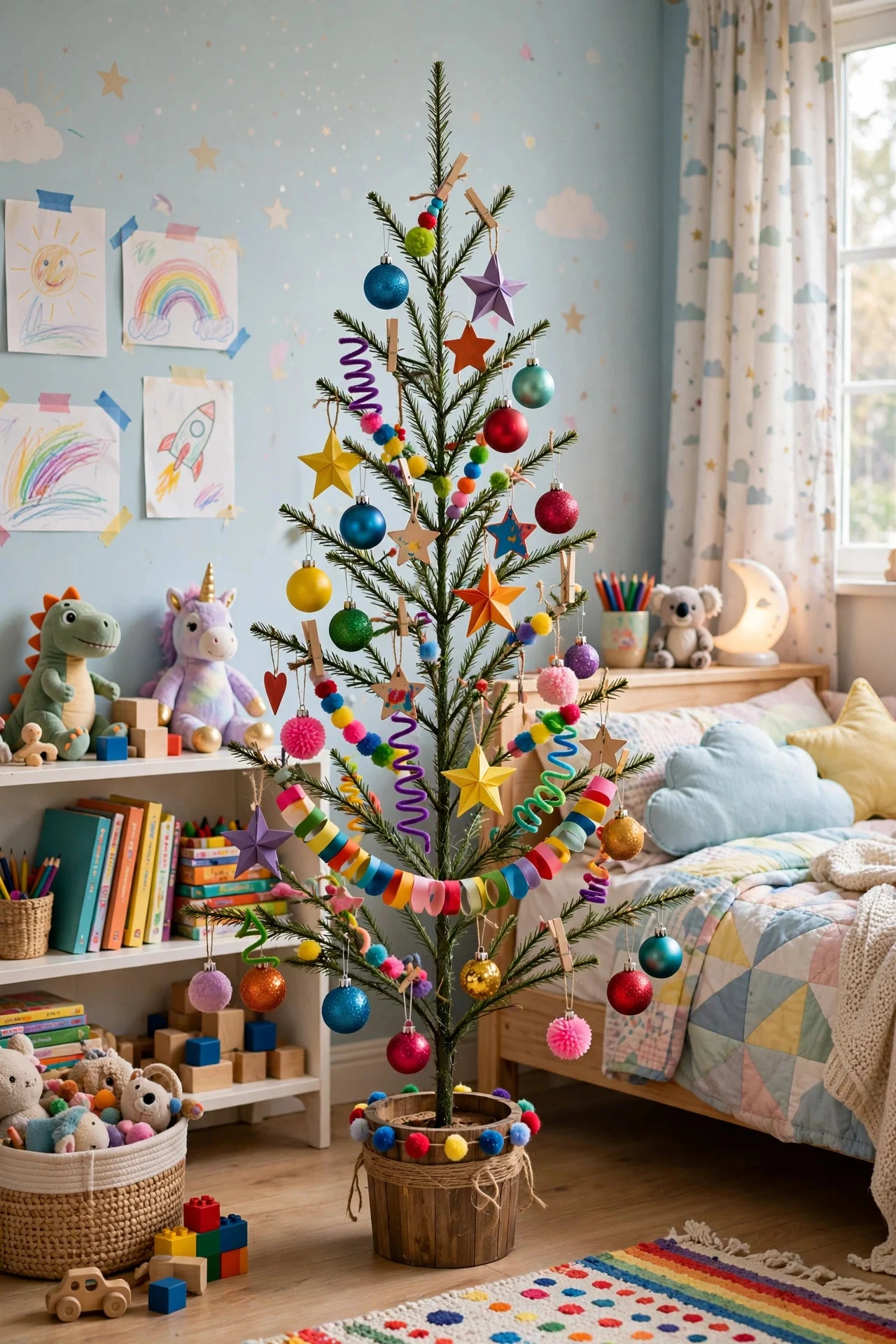
A pencil tree is the ideal kid’s-room tree: tall enough to feel real, narrow enough to fit beside the bed or dresser, and — crucially — harder to pull over than a wide tree. Let kids decorate it entirely themselves with their own ornament collection.
Give them shatterproof ornaments and a step stool, then step back. A kid-decorated tree with clumped ornaments and bare patches is the point — it’s theirs. A 4- to 5-foot pencil suits most kids’ rooms. Let kids hang ornaments with pipe-cleaner hooks instead of metal — safer fingers, and they grip slim branches tighter.
Try this: Let them choose one new ornament each year for “their” tree — by high school it’s a childhood museum.
12. The Stair Landing Statement
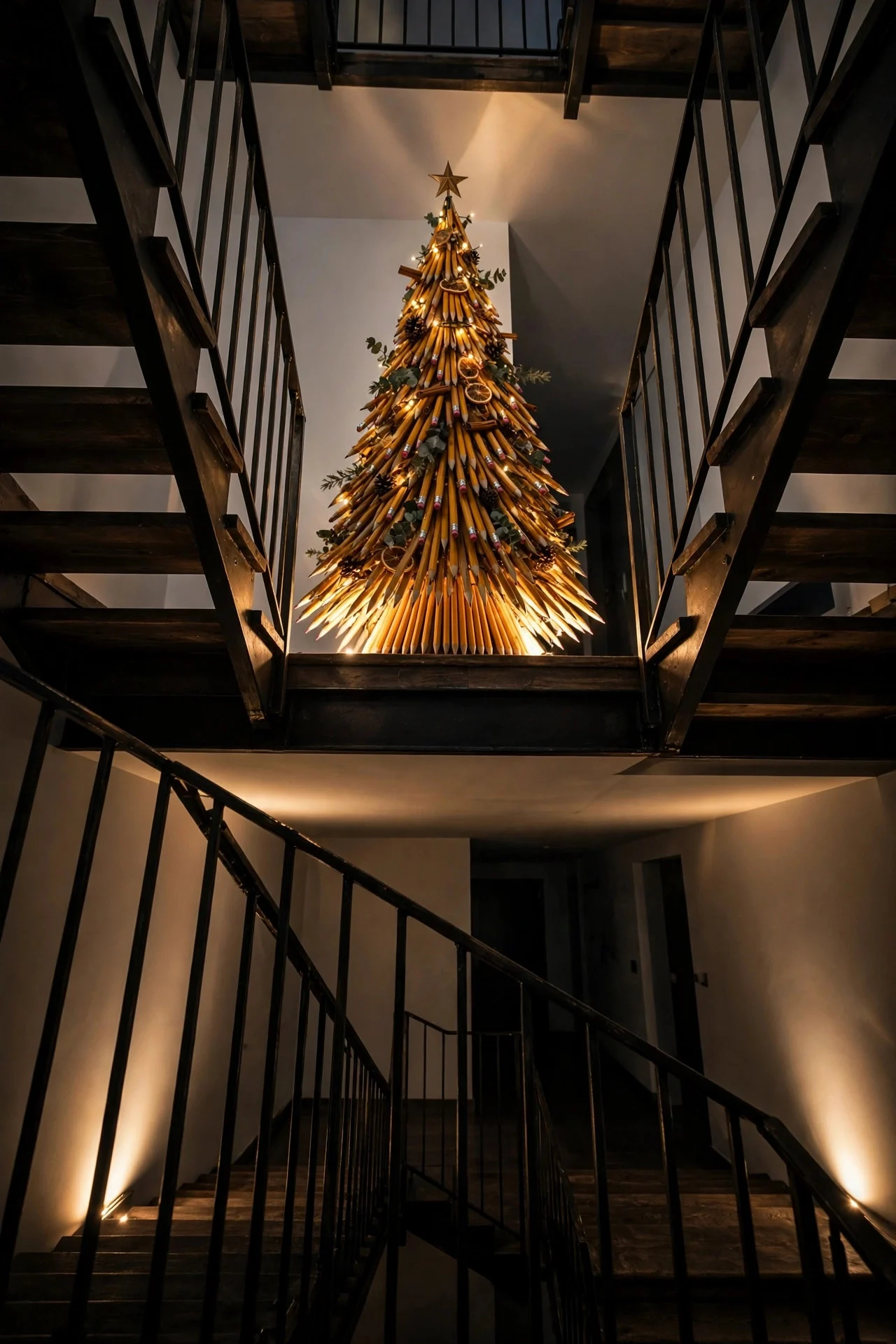
Stair landings are wasted space with great visibility — a pencil tree there gets admired from two floors. The narrow profile fits landings as small as 3×3 feet, and the height fills the vertical void landings always have.
Secure it seriously: a landing tree near stairs must not wobble. Use a wide, weighted stand even if it looks oversized — safety beats aesthetics here. Keep the decorating simple; it’s viewed from above and below, so silhouette matters most. Test the landing’s floor outlet before decorating — extension cords on stairs are a hard no.
Try this: Add a spotlight or picture light aimed at the landing tree — dramatic uplighting makes it a genuine focal point.
13. The Slim Storage Win
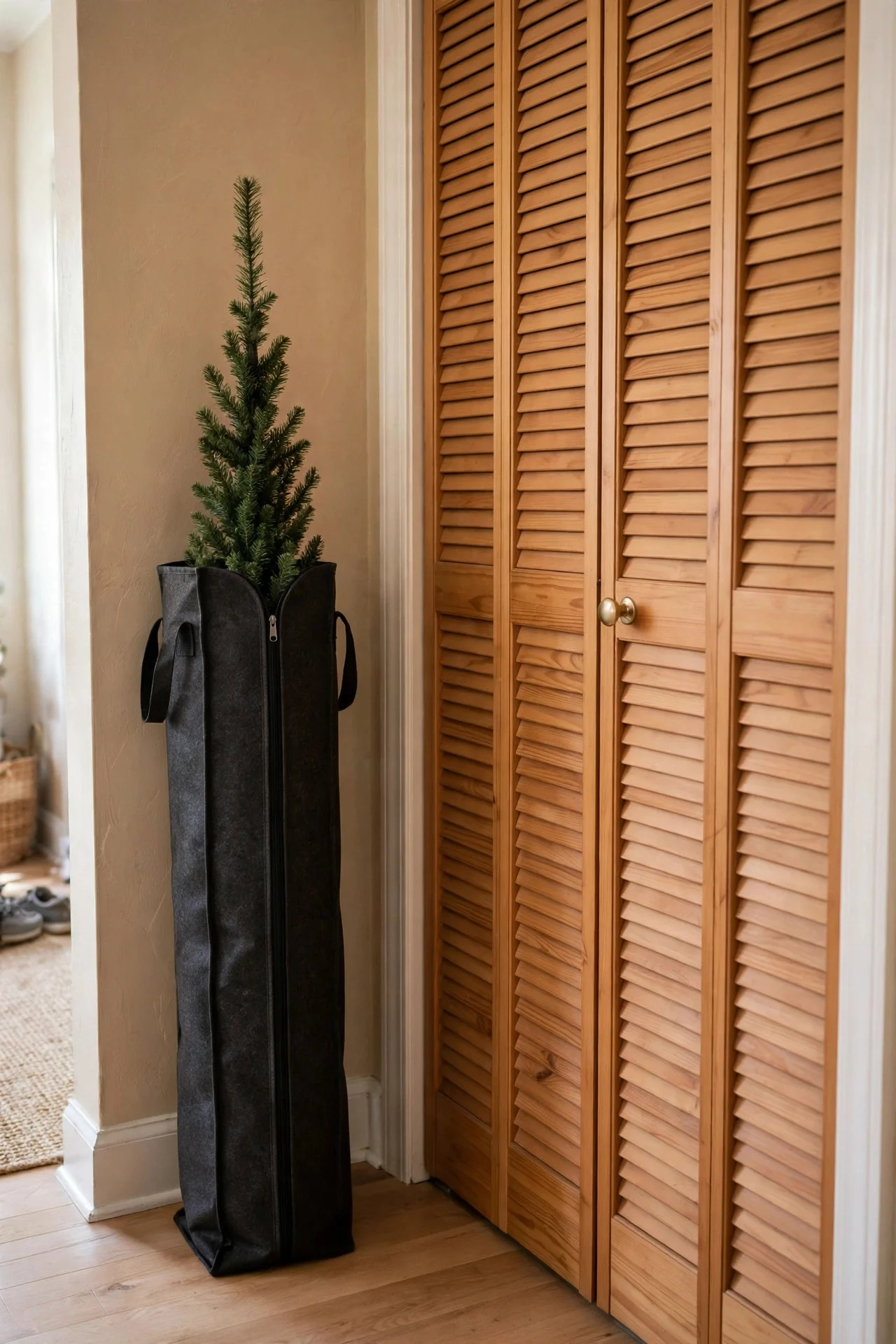
Here’s the pencil tree’s secret superpower: it stores in a box half the size of a standard tree’s. A 6.5-foot pencil breaks down into a carton roughly 48x12x12 inches — it slides under beds, behind wardrobes, into closets that reject every other tree.
Buy the matching slim storage bag ($20–$25) when you buy the tree; the original box disintegrates by year three. Store ornaments separately in a divided box so the slim carton stays slim. Slide a dryer sheet into the storage bag — it keeps the packed tree smelling fresh for eleven months.
Try this: Label the storage bag with the tree’s height and light count — future you, shopping for a replacement, will be grateful.
Frequently Asked Questions
What is a pencil Christmas tree?
A pencil tree is a tall, narrow artificial tree — typically 6 to 7.5 feet tall but only 20 to 30 inches wide. It gives full Christmas height in about half the floor space of a standard tree, making it ideal for corners, small rooms, and apartments.
How many ornaments does a pencil tree need?
About 50–60 for a 6.5-foot pencil tree — fewer than a full tree, but hung denser. Use 2-inch ornaments rather than standard 3-inch ones, and choose lightweight pieces so slim branches don’t droop.
Do pencil trees look cheap or sparse?
Only when decorated like full trees. Styled correctly — tight lighting, spiral ribbon, dense small ornaments — a pencil tree looks sleek and intentional. Check the tip count before buying: 800+ tips on a 6.5-foot tree reads as full, not sparse.
Where’s the best place for a skinny tree?
Anywhere a standard tree can’t go: behind doors, in hallways, on stair landings, in bedroom and office corners, flanking entryways. If the spot is 2 feet wide with vertical clearance, a pencil tree fits.
Final Thoughts
Pencil trees aren’t a compromise — they’re a format with their own logic. Once you stop trying to make a narrow tree behave like a wide one and start styling for its strengths — height, sleekness, corner-fitting — it becomes the smartest tree in the house.
Measure your tightest corner, pick your spot, and let the pencil do what it does best: bring full-height Christmas to places a regular tree could never go.