
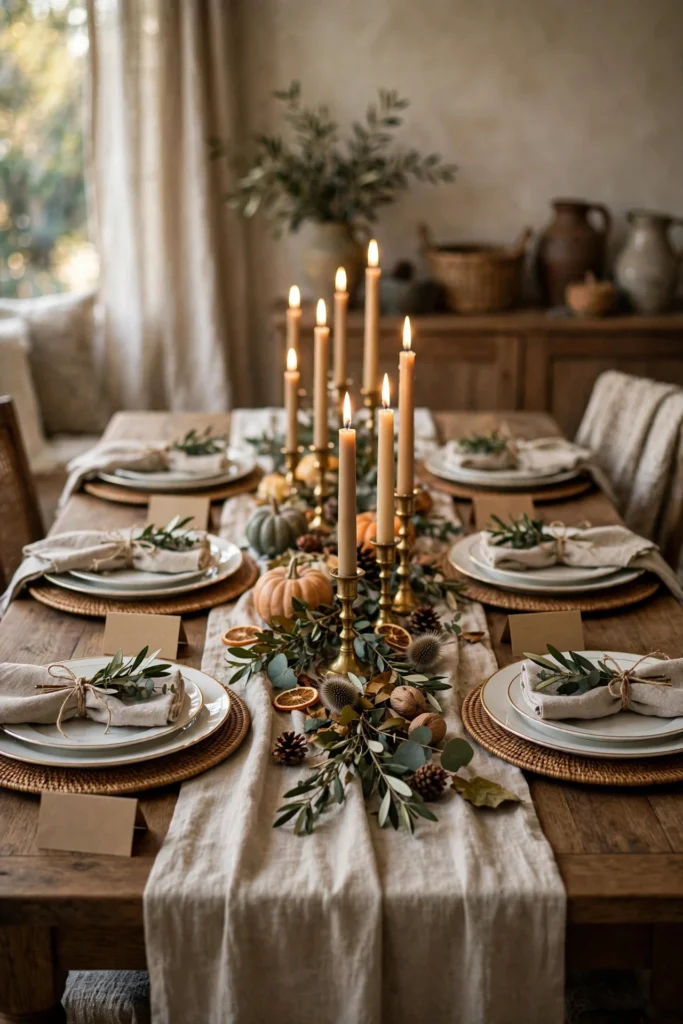
The Thanksgiving table is where the whole day lands — literally. And while the food gets the glory, the table setting is what makes people pull out their phones before anyone says grace. A beautiful table doesn’t require matching china or a big budget. It requires layers, a little planning, and restraint in the right places.
These 16 ideas cover every layer of the table: the foundation, the plates, the glasses, the personal touches. Mix and match based on what you own — the best Thanksgiving tables are built from pieces with history, not a single shopping trip.
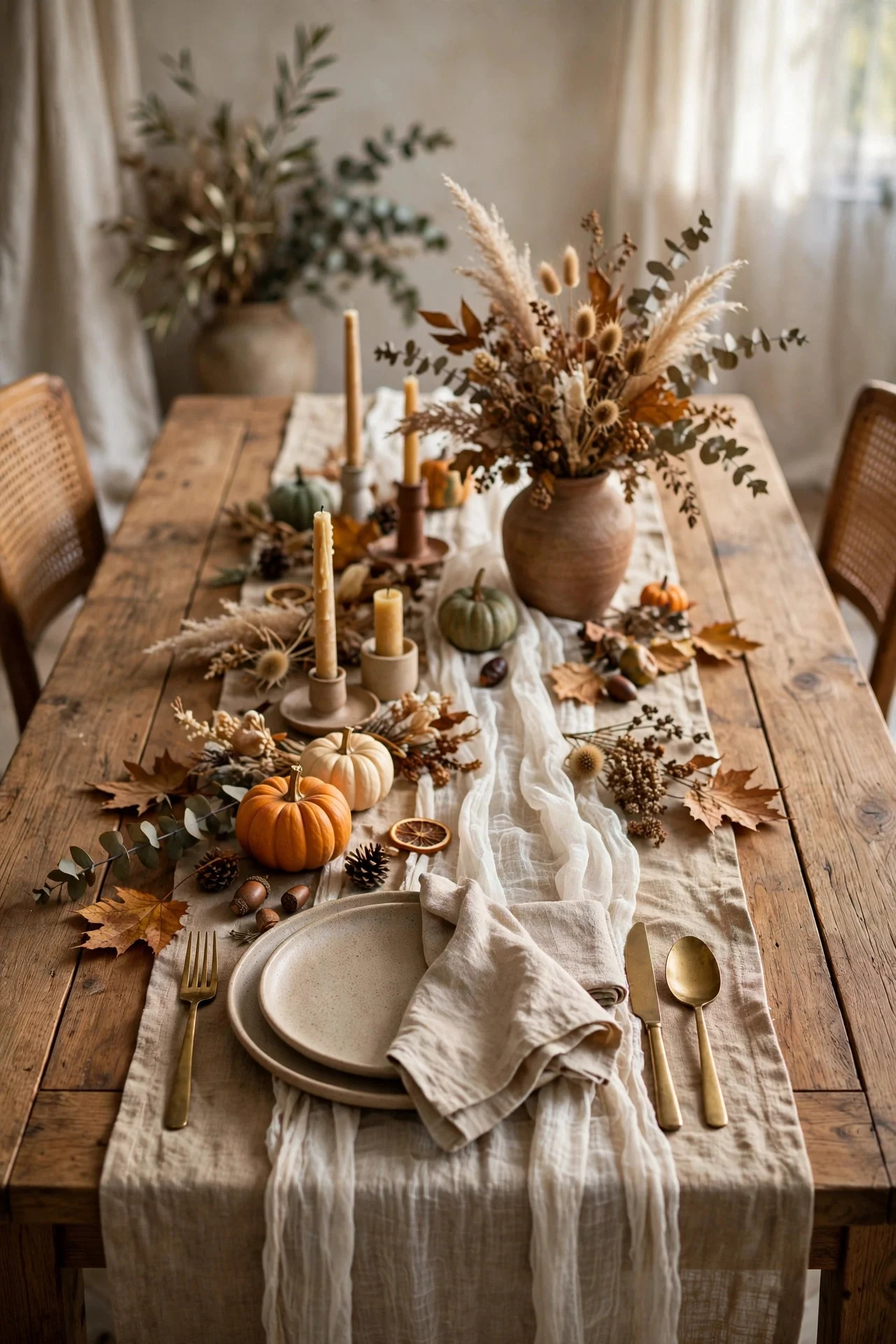
1. Start With a Textured Linen Runner
A runner does what a full tablecloth can’t: it shows off a beautiful wood table while still defining the center. Choose natural linen or cotton in oatmeal, rust, or olive — texture matters more than pattern here. It should hang 6–10 inches over each end of the table.
Iron or steam it the day before; wrinkles on a runner read as sloppy, not rustic. If your table is round, use a square cloth turned diamond-style instead.
Try this: Layer a narrower gauze runner over the linen one — the double texture looks professionally styled.
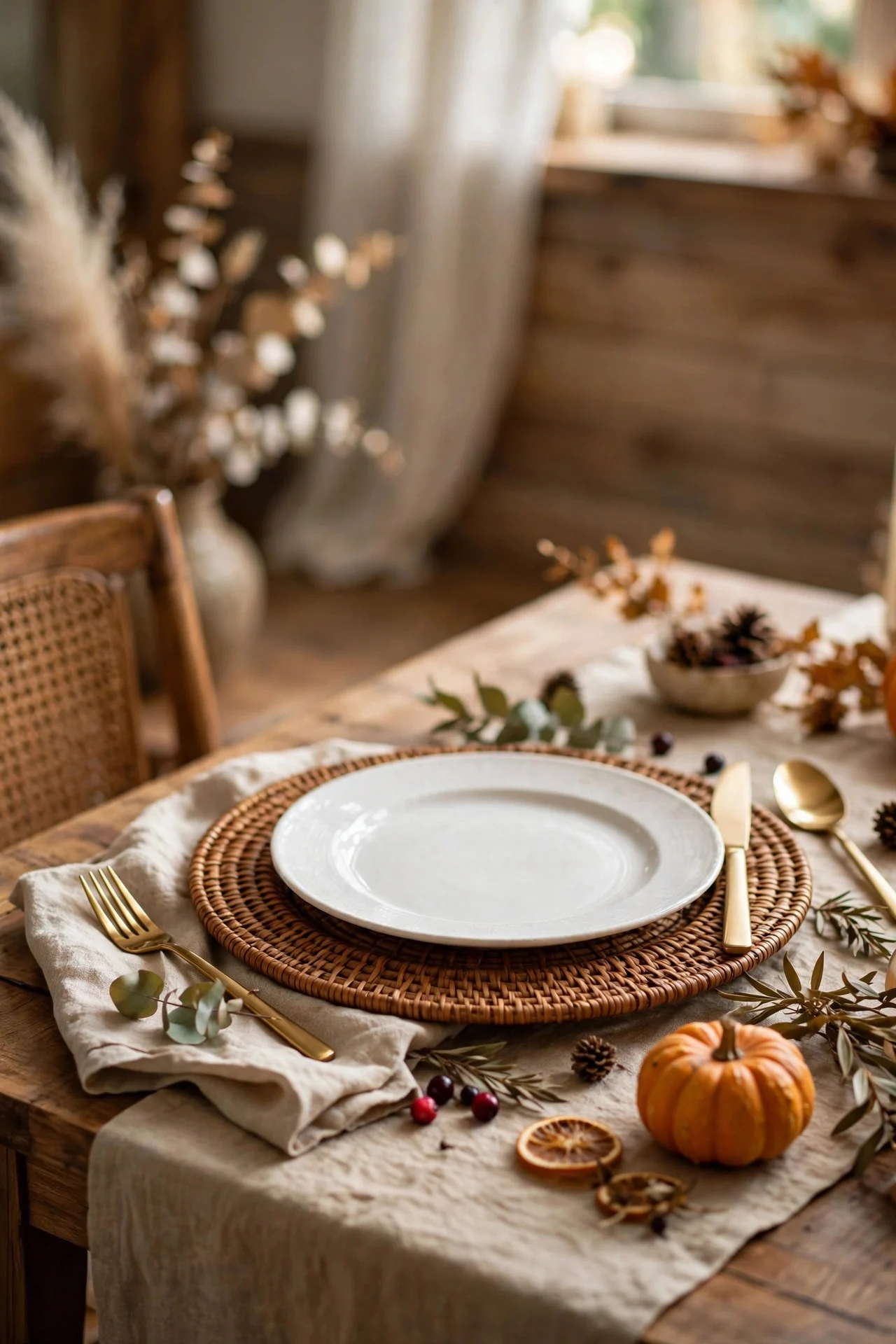
2. Layer Chargers Under Every Plate
Chargers — those large decorative plates under the dinner plate — are the single fastest way to make a table look formal. You don’t need expensive ones: woven rattan, hammered gold-tone, or dark wood chargers run $3–6 each and work for every fall holiday.
Keep chargers on the table through the main course and clear them with the dinner plates. They should be 12–13 inches across — big enough to frame the plate with a visible border.
Try this: No chargers? Use a large dinner plate from a second set, or a 13-inch wood slice.
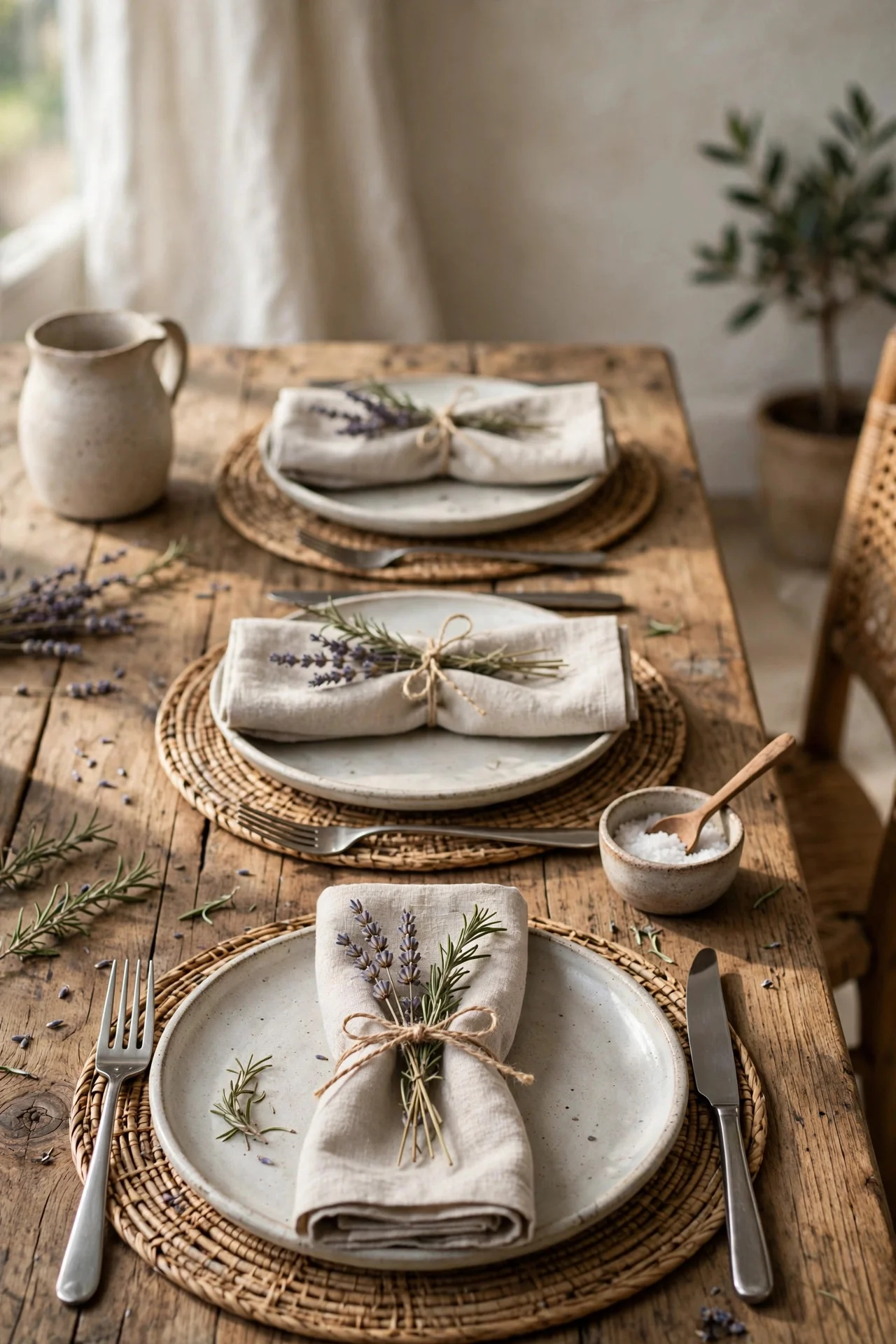
3. Tie Napkins With Something From Nature
Cloth napkins instantly outclass paper, and the tie is where personality lives. Fold napkins simply — rectangle or loose roll — and tie with twine, then tuck in a sprig of dried lavender, rosemary, or wheat. It costs pennies and looks like a stylist did it.
Buy napkins in a solid that matches your palette; the natural tie provides the interest. Iron them — crisp napkins signal occasion.
Try this: Tuck a single dried orange slice into the twine for color and scent.
4. Handwrite the Place Cards
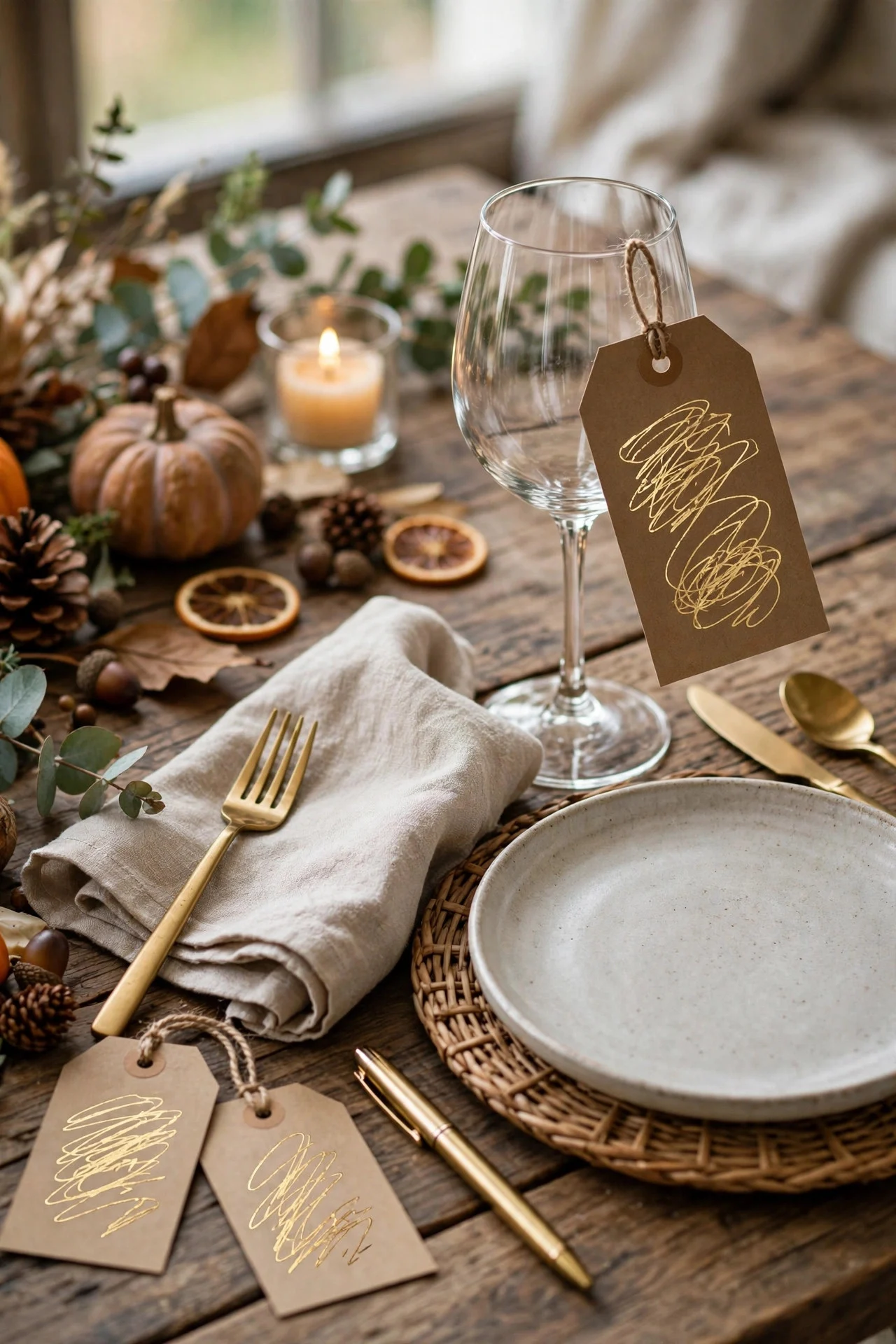
Place cards aren’t fussy — they’re practical at a big table, and handwritten ones feel personal in a way printed never does. Write names on kraft tags, mini pumpkins, dried leaves, or folded cardstock with your best pen. A metallic gel pen on dark cardstock looks especially sharp.
Place them on the plate or leaning against a glass. Beyond directing traffic, they tell each guest: you were expected, and we’re glad you’re here.
Try this: Add one word under each name — “storyteller,” “pie critic” — for a laugh when guests sit.
5. Keep the Centerpiece Low and Narrow
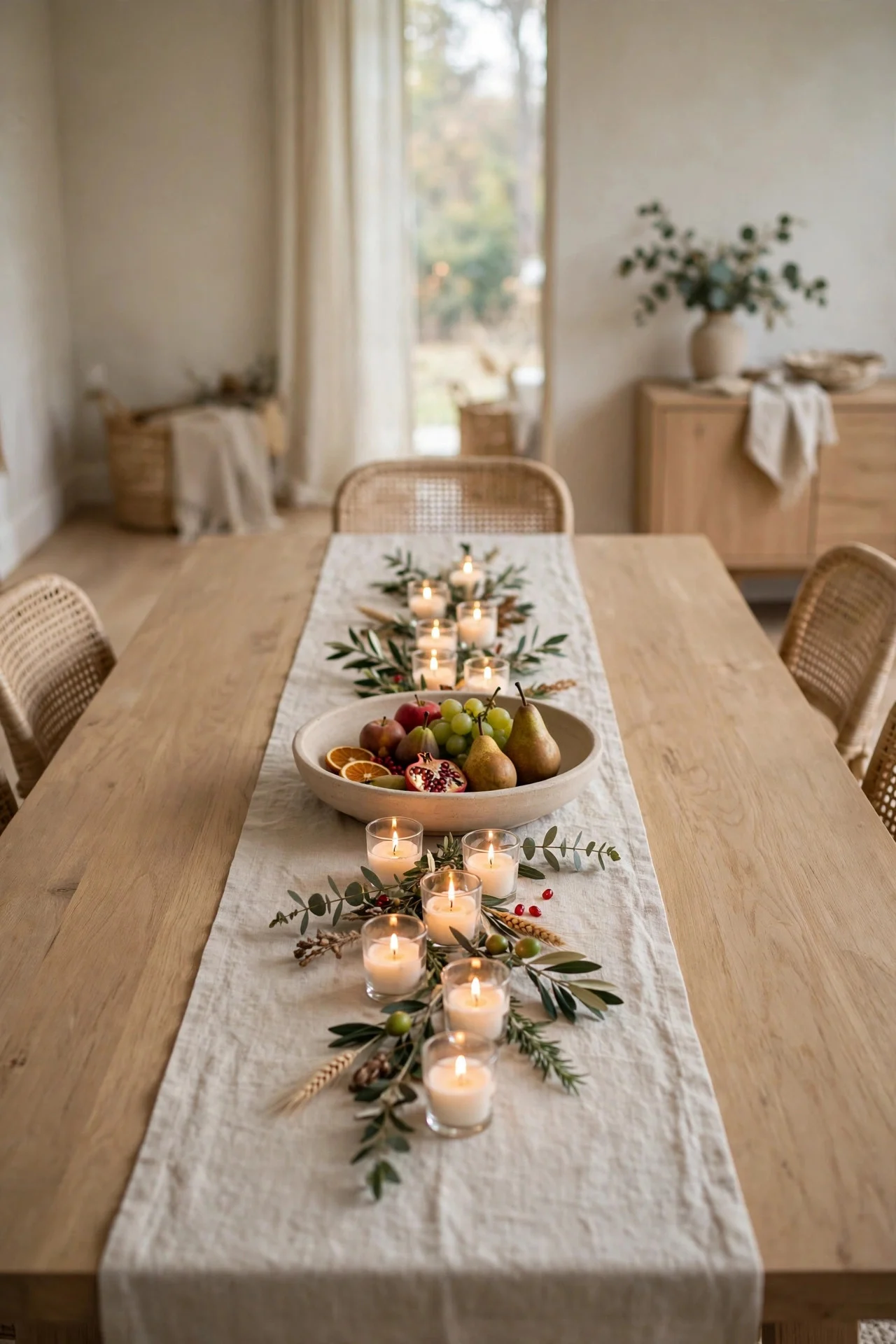
The golden rule of table settings: guests must see each other. Keep your centerpiece under 10 inches tall and within the center third of the table’s width. A low garland, a row of votives, or a shallow bowl of fruit all work — anything that doesn’t create a wall.
If you love tall drama, put one tall element at each end of the table rather than the middle. Conversation flows; photos still look great.
Try this: Set a water glass at each place and sight across the table — if the centerpiece blocks it, lower it.
6. Mix Your Glassware (Deliberately)
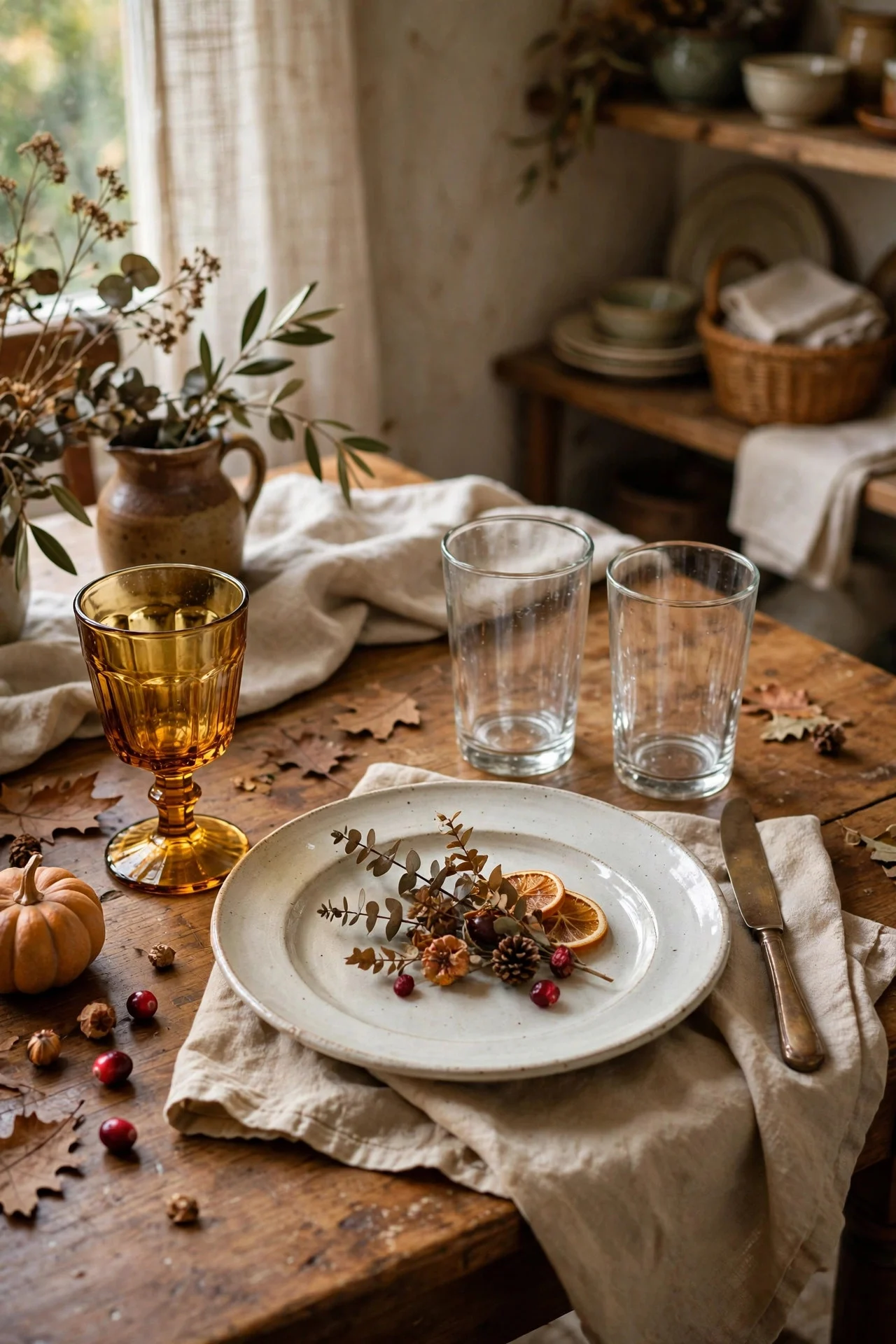
Perfectly matched glasses are for restaurants. At home, mix two styles — say, your everyday tumblers plus thrifted amber goblets — and it looks collected and warm. Keep to one color family (all clear, or clear plus amber) so the mix reads as intentional.
Give each guest a water glass and a wine glass; that’s plenty. Polish them with a microfiber cloth before setting — spots show in candlelight.
Try this: Tie a tiny sprig of thyme around one stem per guest to mark the wine glass — pretty and prevents mix-ups.
7. Add a Printed or Handwritten Menu Card
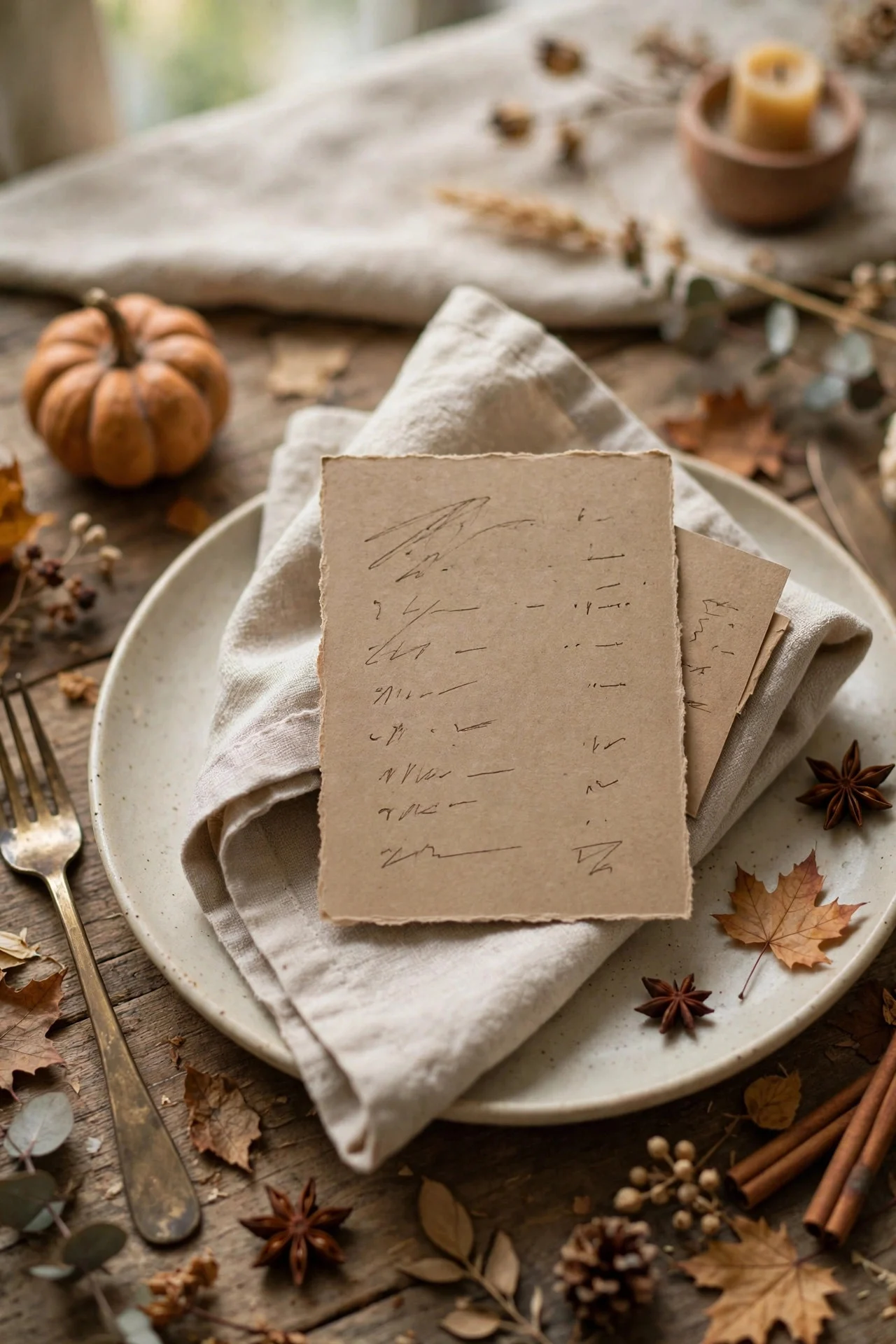
A menu card at each place — or one large one framed at the table’s end — turns dinner into an event. List the dishes with the cook’s name in parentheses; it honors the effort and builds anticipation. Print on cardstock or handwrite on kraft paper for a rustic feel.
Keep the design simple: dish names, that’s it. Tuck it under the napkin or lean it against the water glass.
Try this: Add a tiny note at the bottom — “pie at 7, stretchy pants encouraged.”
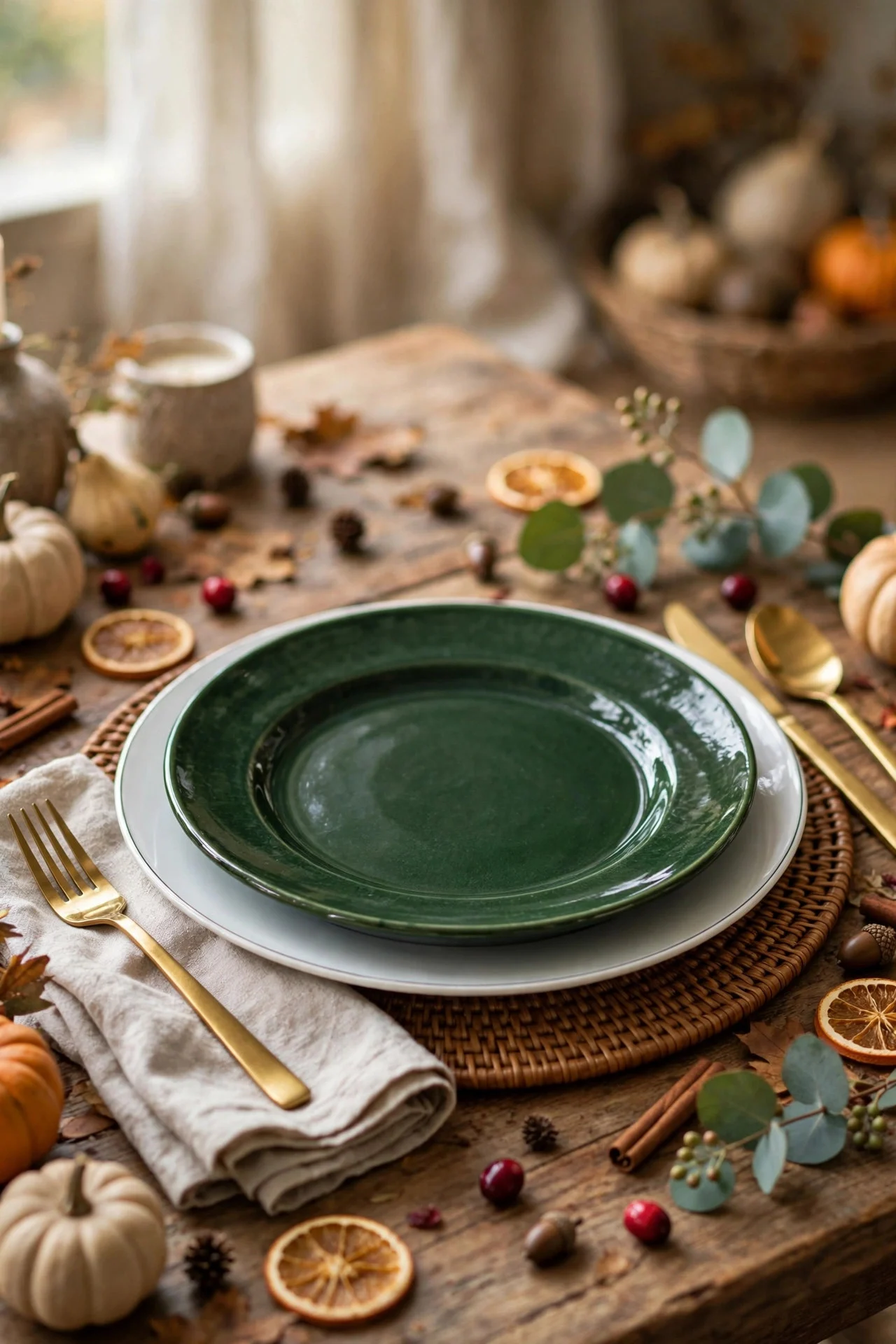
8. Use Salad Plates in a Contrast Color
Here’s a stylist trick: put a salad or appetizer plate in a contrasting color on top of your white dinner plate. Deep green, rust, or black salad plates over white dinners create a layered, collected look from pieces you may already own.
The contrast plate gets cleared with the salad course, revealing the clean dinner plate beneath — a little tableside theater. Thrift stores are full of single-color salad plates for a dollar each.
Try this: If all your plates are white, use a folded colored napkin between plate layers instead.
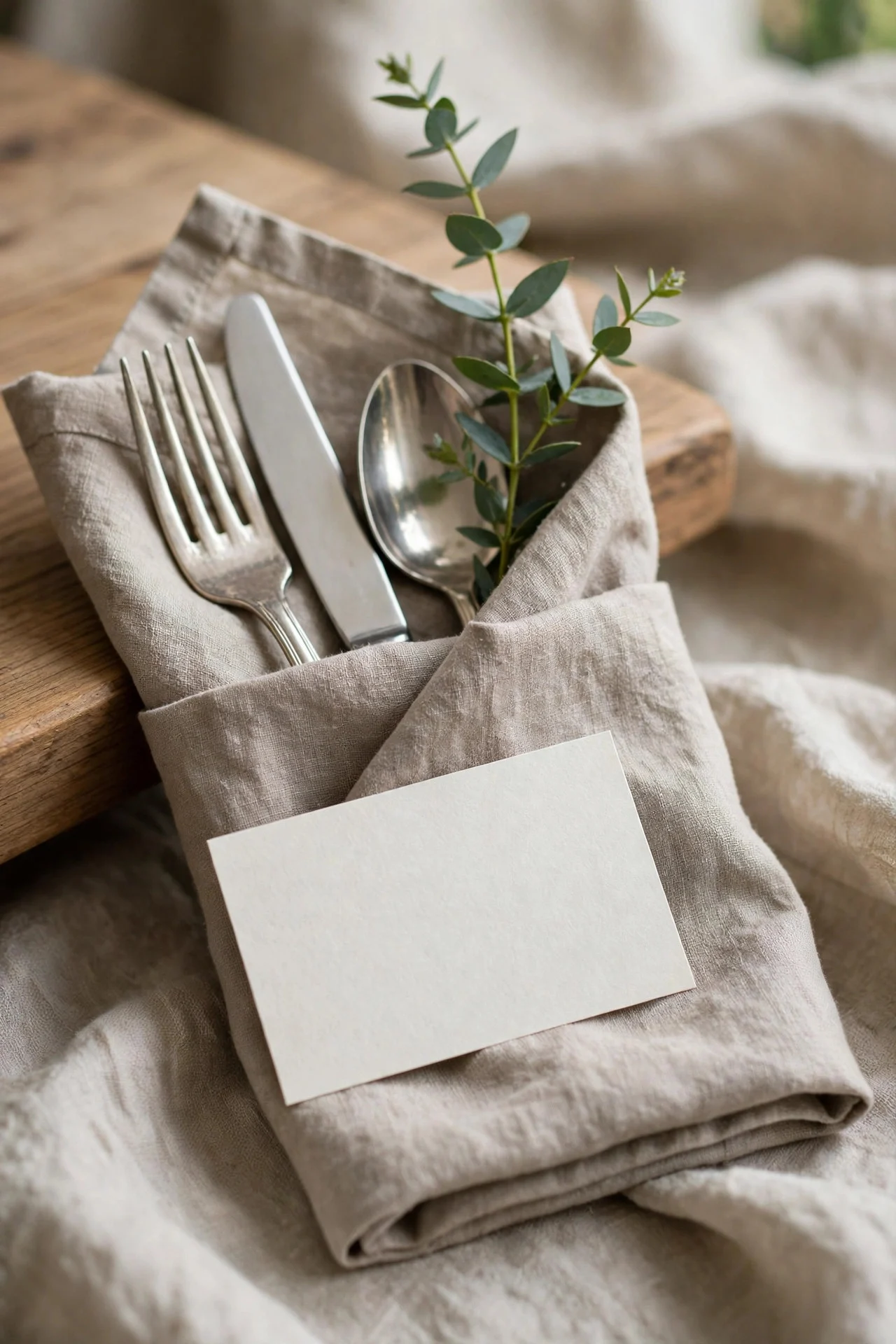
9. Fold Napkins Into a Simple Pocket
A napkin pocket fold holds the silverware, the place card, and a sprig of greenery in one tidy package — and it looks far fancier than it is. Fold the napkin into thirds, then fold the bottom up to make a pocket. Ten seconds per napkin after one practice run.
This works best with medium-weight cotton or linen napkins; flimsy ones won’t hold shape. It’s also the neatest way to set a crowded table — everything contained.
Try this: Tuck the menu card into the pocket too — one less thing on the table.
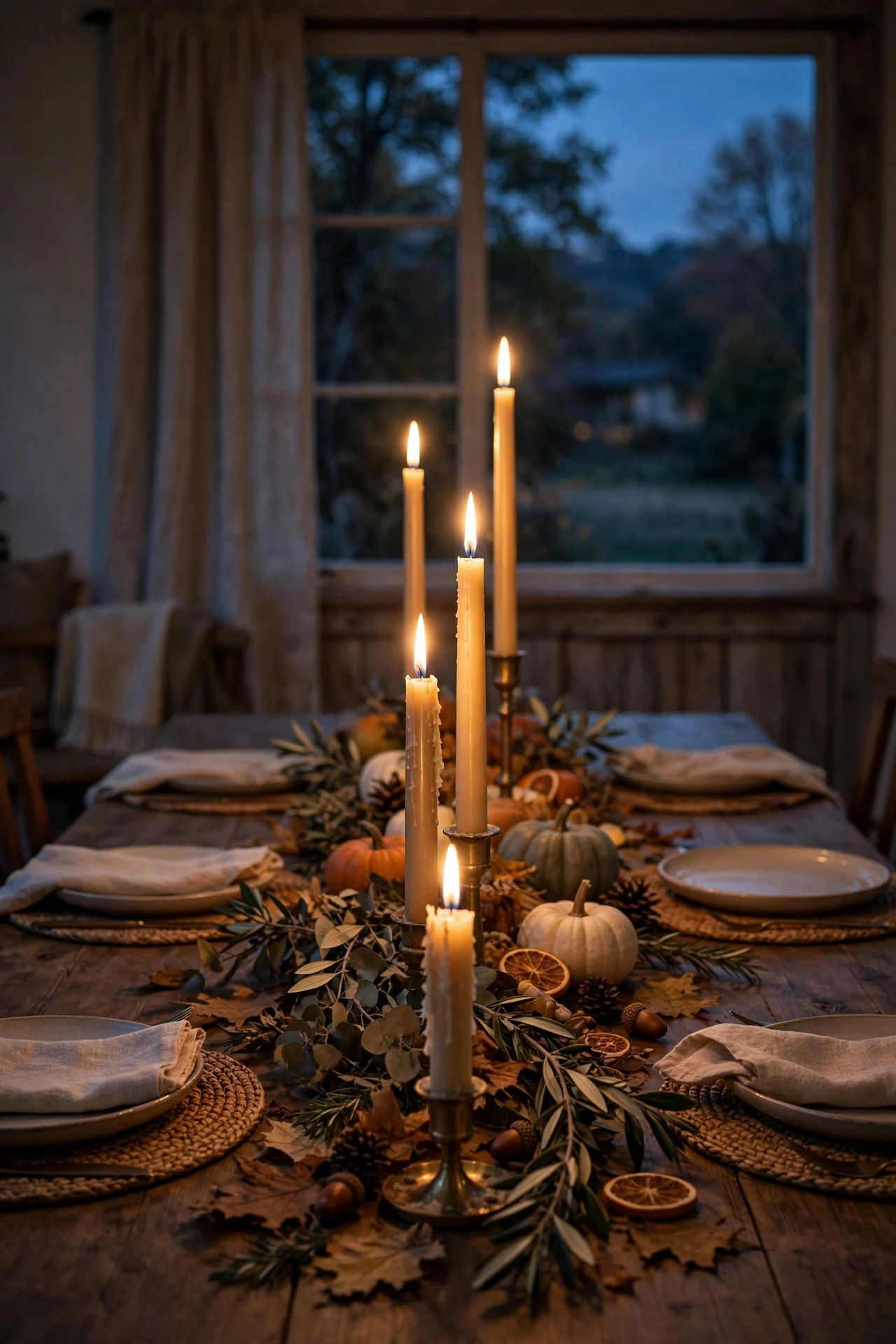
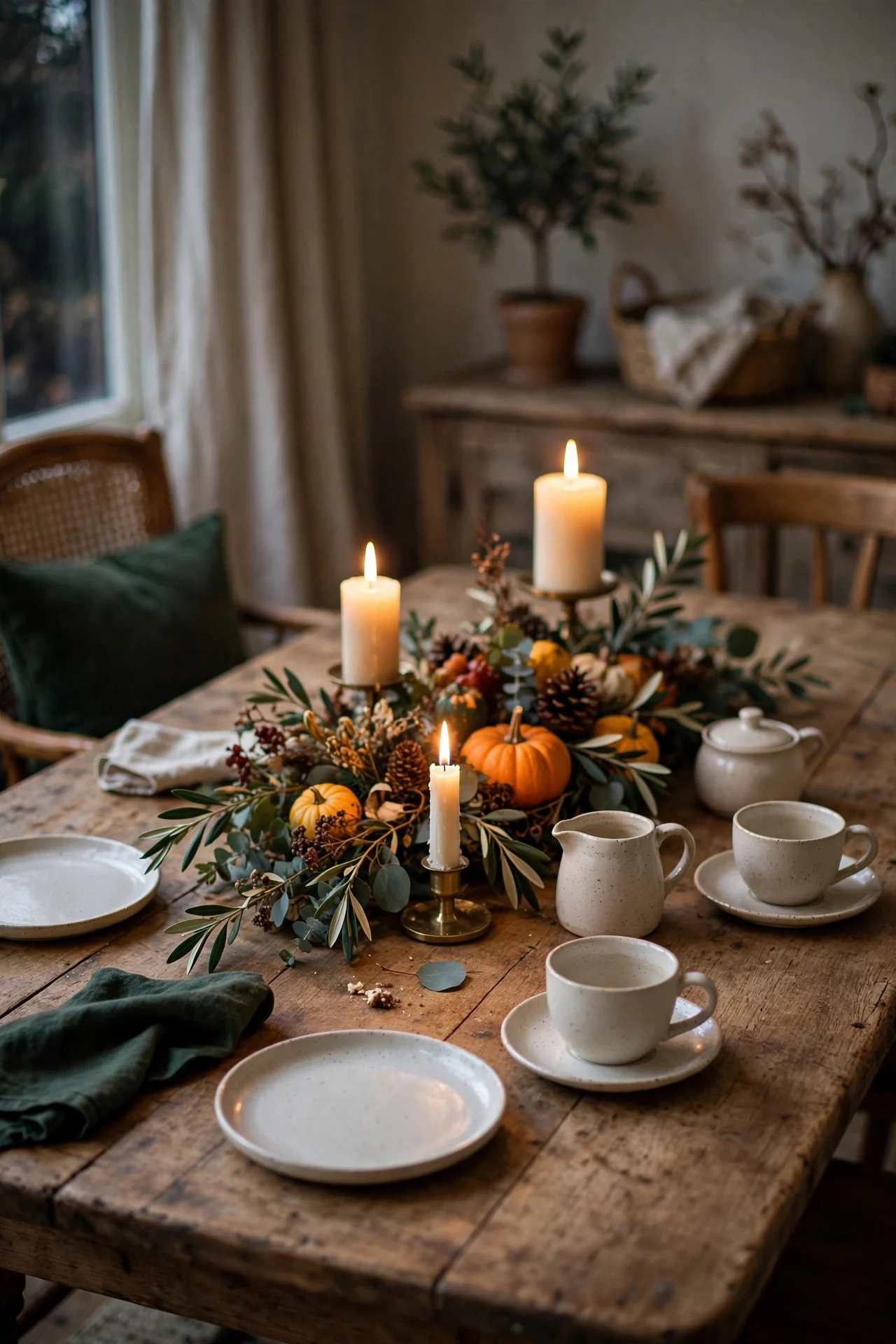
10. Light Tapers Down the Center
A row of taper candles down the table’s center is the most romantic Thanksgiving move there is. Use an odd number in mixed heights — 5, 7, or 9 depending on table length — in simple holders, all in one candle color. Light them just before guests sit down.
Keep tapers clear of the centerpiece greenery and at least 4 inches from any plate. Dripless candles save your runner; LED tapers save your sanity with kids around.
Try this: Twist two thin tapers together for a barley-twist effect — a $2 upgrade that looks custom.
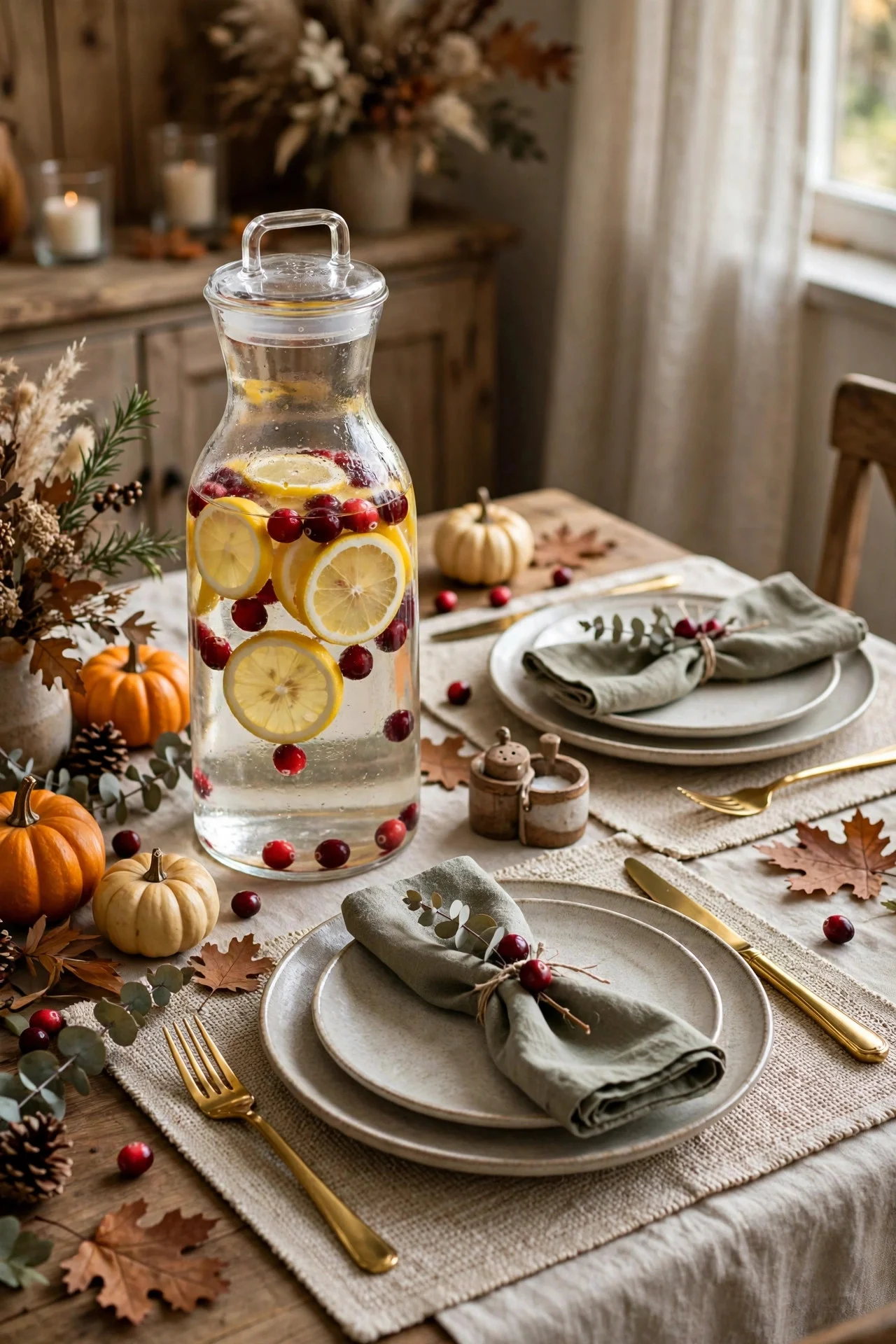
11. Set Out Water Carafes (Not Just a Pitcher in the Kitchen)
Put a glass carafe of water on the table itself — one per four guests — instead of making people ask. It looks generous, keeps the meal flowing, and a pretty carafe with lemon slices or cranberries floating in it doubles as decor.
Refill before dessert. This small hospitality gesture gets noticed more than almost any decoration.
Try this: Freeze cranberries into the ice you put in the carafe — festive and functional.
12. Give Each Guest a Take-Home Favor
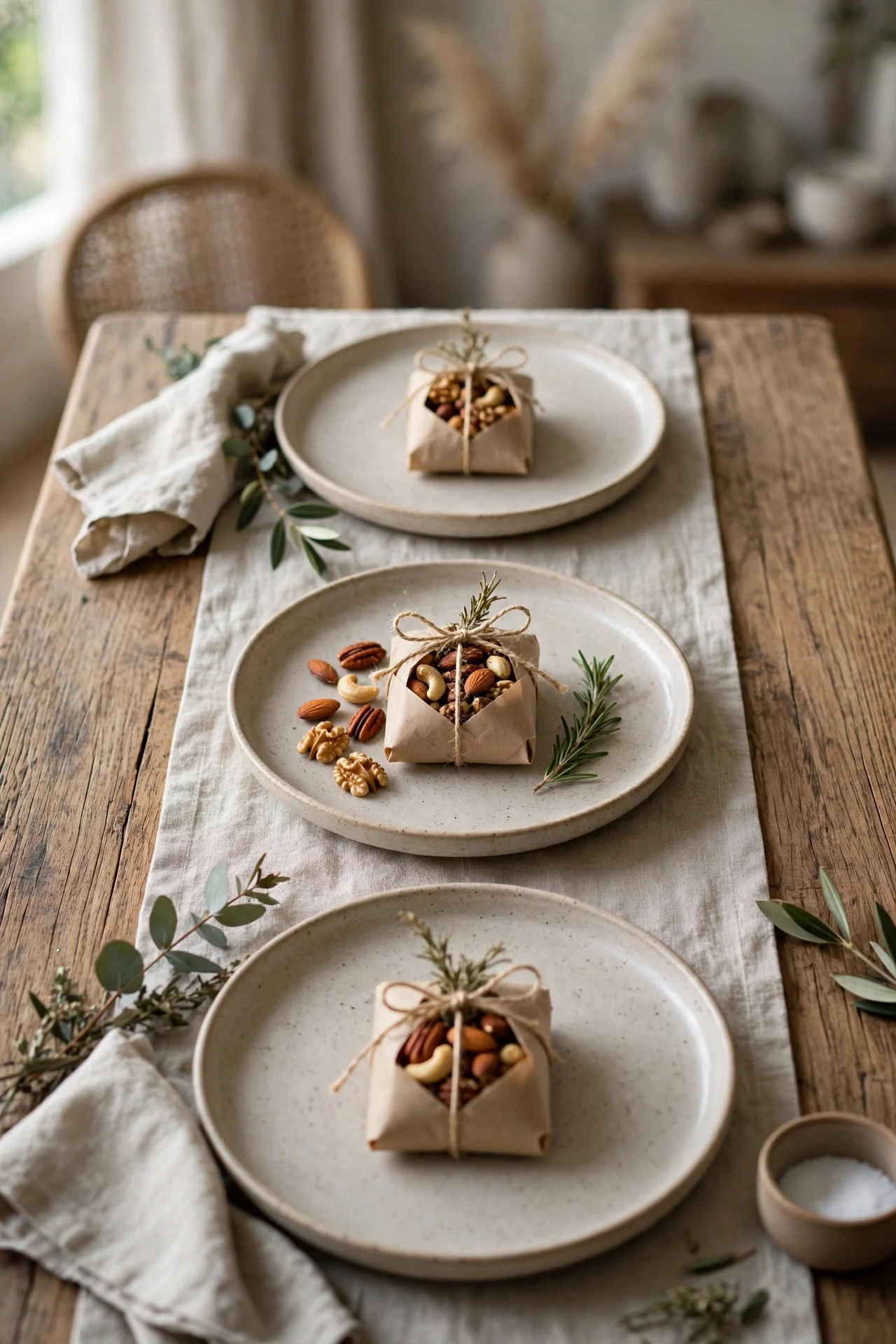
A small favor at each place setting — a mini pumpkin with their name on it, a bag of spiced nuts, a tiny jar of cranberry sauce — ends the meal on a generous note. Keep it small enough to sit on the plate without crowding: think 3 inches or less.
Favors pull double duty as decor before they’re taken home. Wrap in kraft paper and twine for a cohesive look across different items.
Try this: Attach the place card to the favor — one object, two jobs.
13. Mix Metals: Brass, Copper, and Pewter Together
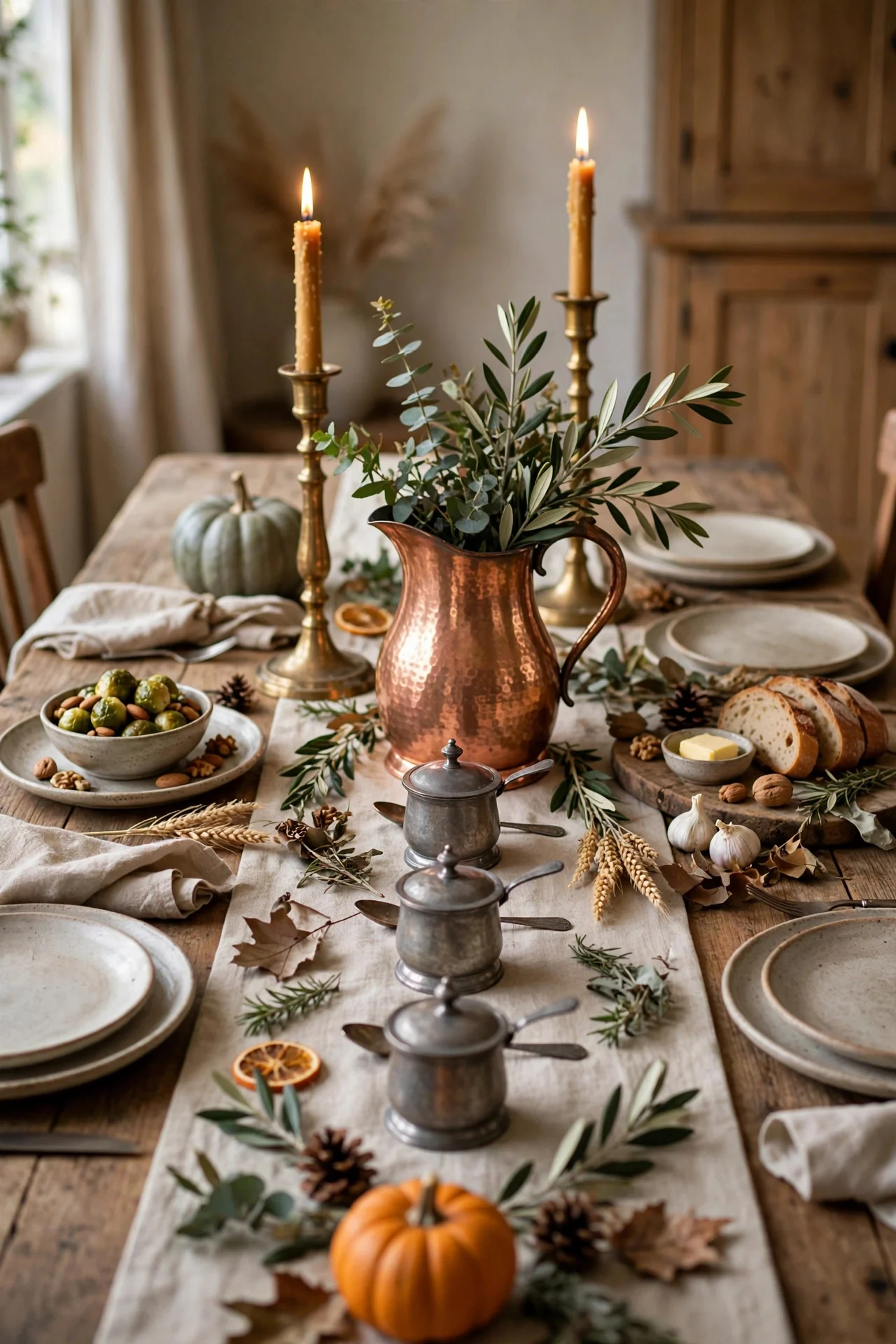
The old rule said match your metals; the new rule says mix them with confidence. Brass candlesticks, a copper pitcher, pewter salt cellars — warm metals in different finishes create depth that all-one-metal can’t. Keep them in the same warmth family (all warm, not warm plus chrome).
Three metals is the sweet spot; more gets chaotic. Distribute them down the table so no single place setting hogs all the shine.
Try this: Polish just one piece per metal — the contrast of shine and patina looks collected.
14. Dress the Kids’ Table Like It Matters
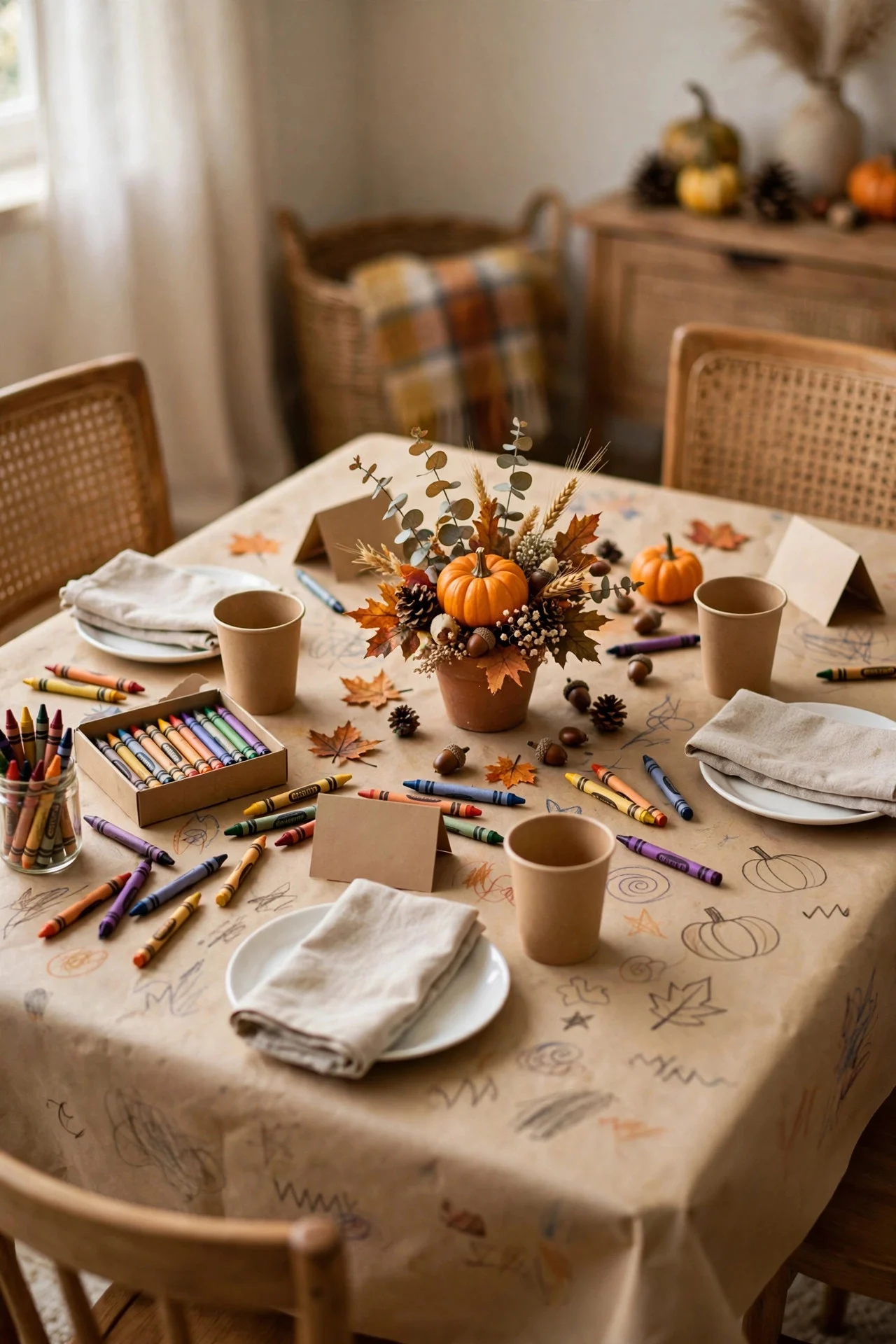
If the kids get their own table, decorate it with the same care: kraft paper cover they can draw on, their own mini centerpiece, real (unbreakable) plates, and place cards with their names spelled right. Kids who feel included behave better — and they remember it.
Use LED candles only, skip glass, and put the dessert plates out early as a bribe. A small activity — coloring pages, a simple craft — buys the adults an extra twenty peaceful minutes.
Try this: Give the kids’ table its own tiny “menu” — they’ll feel like VIPs.
15. Add One Unexpected Color
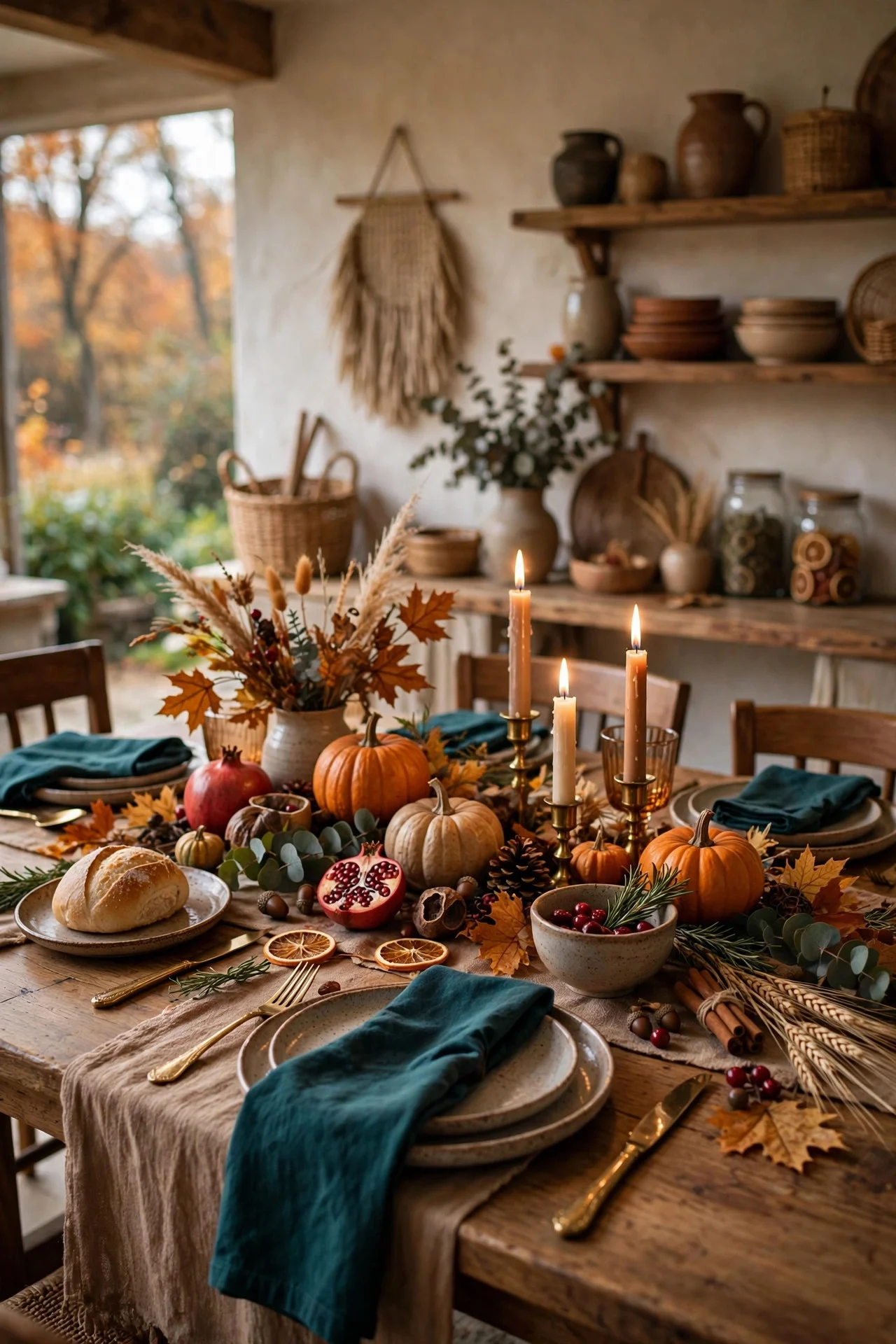
A table in all-autumn tones is safe; one unexpected color makes it memorable. Deep teal napkins, plum candles, or forest-green glassware against rust and cream creates the kind of contrast designers love. Just one element — the surprise only works in isolation.
Pick the rebel color from nature (plum, teal, deep blueberry all appear in fall produce) so it still harmonizes. If it clashes, you used too much.
Try this: Test with napkins first — the cheapest place to experiment.
16. Clear a Landing Zone Before Dessert
The most overlooked part of table setting is the reset: before pie, clear everything except glasses, candles, and the centerpiece. Stack plates efficiently, wipe the runner’s crumbs with a damp cloth, and bring out fresh dessert plates and forks. A cleared table makes dessert feel like a second event.
Enlist two helpers with a bus tub — five minutes, done. Light any unlit candles during the reset for the evening’s second glow.
Try this: Set out the coffee cups during the reset so dessert service flows without a second trip.
Frequently Asked Questions
How far in advance can I set the Thanksgiving table?
Set everything except fresh flowers, food, and lit candles the night before — plates, glasses, napkins, place cards, and the unlit centerpiece. Cover it all with a clean sheet to keep dust off, then add perishables and light candles an hour before guests arrive.
What’s the proper place setting order for Thanksgiving?
Charger (optional), dinner plate on top, salad plate above that if using. Forks left, knife and spoon right (blade facing the plate), napkin on the plate or left of forks, water glass upper right, wine glass to its right. Don’t stress perfection — warmth beats protocol.
How do I set a beautiful table on a budget?
Thrifted chargers and contrast plates, kraft paper place cards, cloth napkins from a discount store, and candlelight. The most expensive-looking tables are usually layered basics, not pricey pieces — texture and candlelight do the heavy lifting.
Should I use a tablecloth or a runner?
A runner if your table is beautiful wood you want to show; a full cloth if the table is worn or mismatched (or if you’re combining two tables). Either way, add placemats or chargers to protect the surface under each plate.
Final Thoughts
A memorable Thanksgiving table isn’t about perfection — it’s about layers that invite people in: texture under the plates, candlelight down the middle, a name at every seat. Set it the night before, light the candles at the last minute, and then forget about it. The table did its job the moment everyone sat down smiling.