

I used to walk into my bedroom at night and feel wide awake, even though I was exhausted. The room was bright, cluttered, and cold in the wrong way, and my brain treated it like any other room in the house. That changed when I started treating the bedroom like a place with one job: helping me sleep. These cozy bedroom decor ideas for better sleep are the small changes that made the biggest difference for me.
Most of these took an evening or a weekend afternoon. Start with the two or three that sound easiest, live with them for a week, and then add more.
1. Layer Soft, Breathable Bedding: Cozy Bedroom Decor Ideas for Better Sleep
Good bedding is the biggest sleep upgrade I have made. I use a light cotton sheet, a thin blanket, and a soft duvet, so I can adjust through the night. First, pick cotton or linen sheets, not shiny polyester, because natural fibers breathe. Next, wash new sheets twice before the first night, because they soften up. I once bought a heavy comforter that trapped heat all night, and I woke up at 3 a.m. every night until I gave it away.
Try this: Choose bedding in white, cream, or soft grey.

2. Switch to Warm, Low Lighting
Bright white light at night tells your brain it is still daytime. I swapped every bulb in my bedroom for warm white ones, around 2700K, and the room felt softer the same evening. First, replace any daylight or cool white bulbs in your lamps and ceiling light. Next, use a dimmer or a low-wattage bulb so the light stays gentle after sunset. I used to read under a bright ceiling light until midnight and wonder why I could not fall asleep. The warm lamps changed that within a week.
Try this: Try a warm amber bulb in one bedside lamp.

3. Hang Blackout Curtains That Actually Fit
Street light sneaking through thin curtains used to wake me up at 2 a.m. more times than I can count. Real blackout curtains fixed it, but only when I hung them right. First, buy curtains at least six inches wider on each side, because gaps at the edges let light leak in. Next, hang the rod a few inches above the frame and let the curtains fall to the floor. I tried sheer curtains once, and I spent a month waking up with the sunrise.
Try this: Pick curtains in a soft color that matches your bedding.
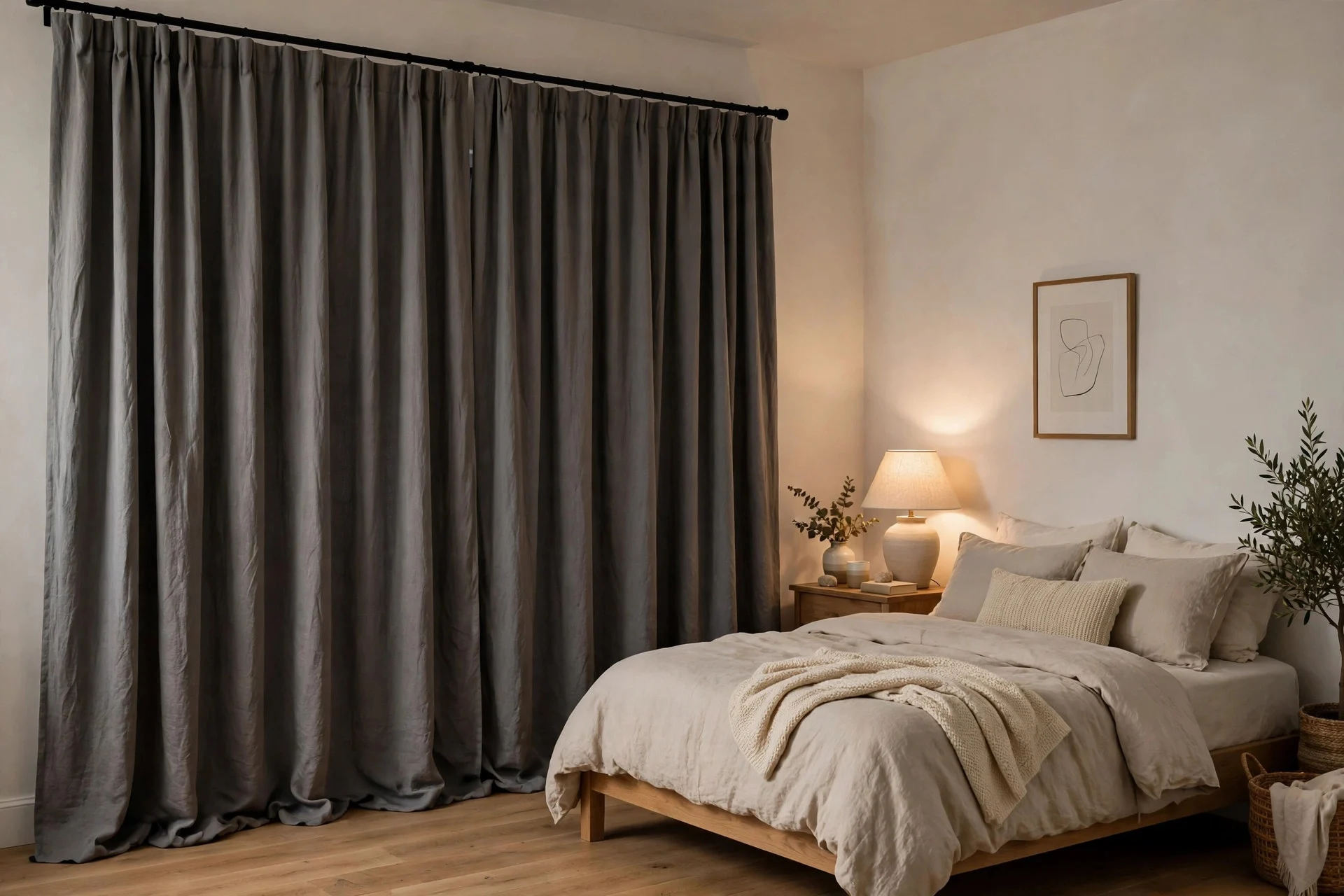
4. Paint the Walls a Calm, Soft Color
The color on your walls changes how a room feels more than almost anything else. I painted mine a pale sage green, and the room felt cooler and calmer the moment the paint dried. First, pick a color that feels restful to you, like soft sage, dusty blue, warm cream, or pale lavender. Next, test a small patch first, because paint looks different at night. I once painted a bedroom bright red because it looked bold in the store. I could not sleep in it for a month.
Try this: If you rent, try peel-and-stick panels behind the bed instead of paint.

5. Keep the Room Cool at Night
A cool bedroom helps you fall asleep faster. Most sleep experts point to the same range, around 65 to 68 degrees. First, turn the thermostat down an hour before bed. Next, crack a window for a few minutes in the evening for fresh air. I used to keep my room warm and cozy at night, and I tossed and turned for hours. My mistake was a heavy duvet in a warm room, which left me sweating and kicking the covers off. A cool room with a soft blanket on top is the sweet spot.
Try this: Point a small fan at the wall, not at your face.
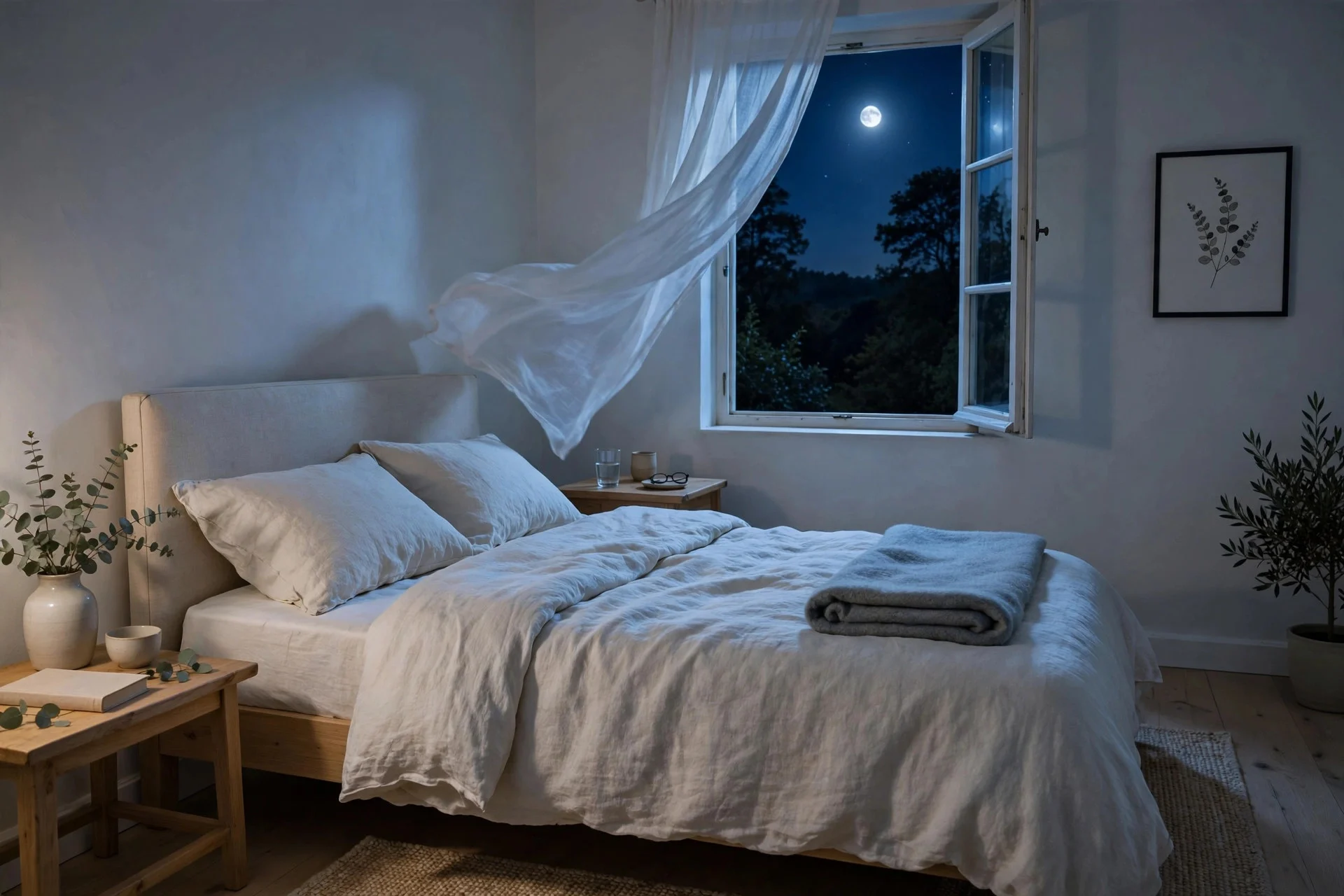
6. Add a Weighted Blanket for Deeper Sleep
A weighted blanket feels like a gentle hug. For me it stopped the restless tossing that used to keep me half awake. First, pick a blanket about ten percent of your body weight, because too heavy feels trapping and too light does nothing. Next, try it for a few nights, because the first night can feel strange. I bought one far too heavy the first time and woke up feeling pinned down, so I swapped it for a lighter one. Now I reach for it every night.
Try this: Choose a weighted blanket with a washable cover.

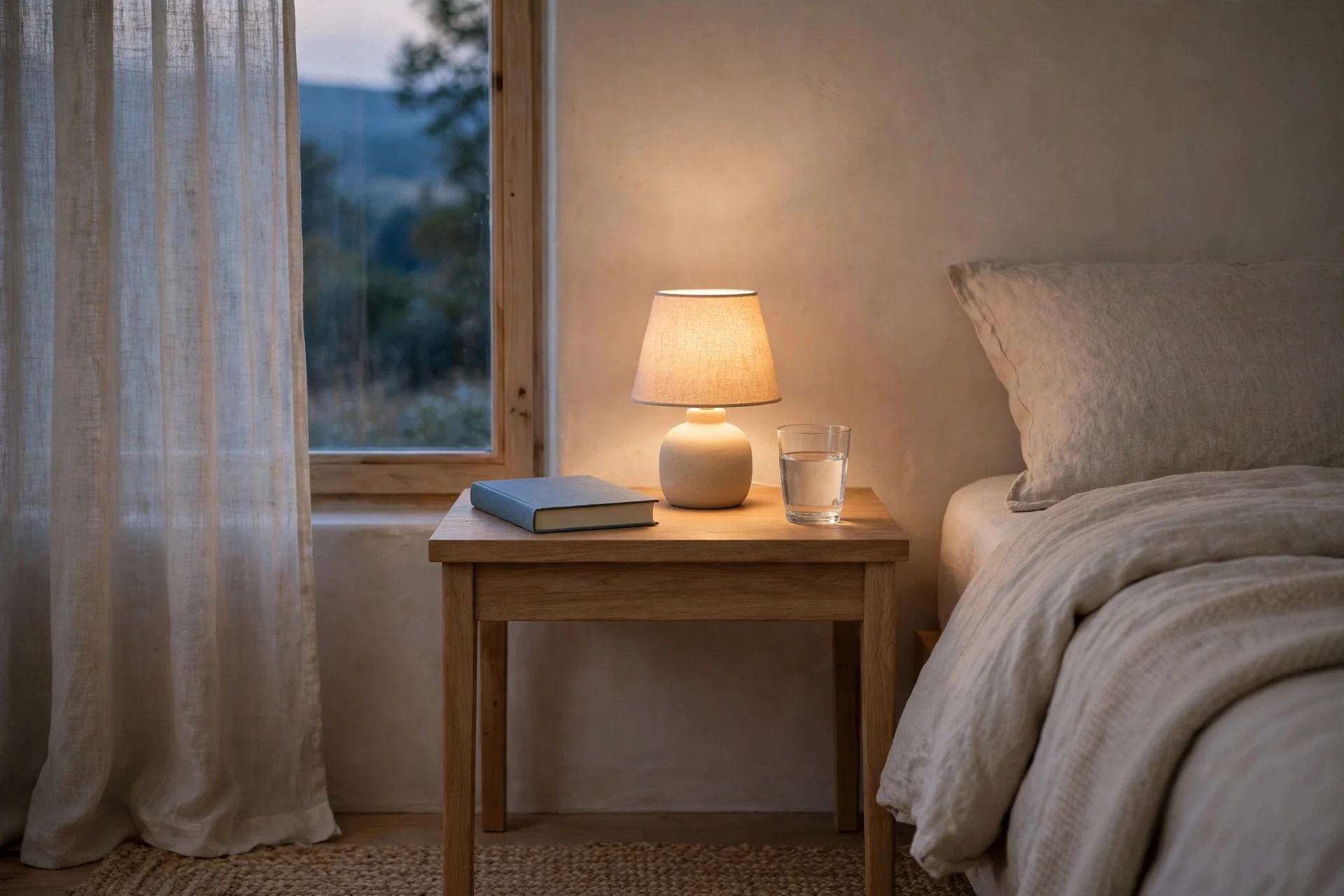
7. Clear the Nightstand Down to Three Things
A nightstand piled with books, chargers, cups, and clutter makes your brain feel busy right when you want it to slow down. I cleared mine down to three things, and the whole room felt calmer. First, take everything off the nightstand and only put back what you truly use at night. Next, give the rest a home in a drawer or a small basket. I used to keep five half-read books, a tangle of cables, and three mugs on mine. Three calm things on a clear surface is all you need.
Try this: Use a small tray on the nightstand to keep things tidy.
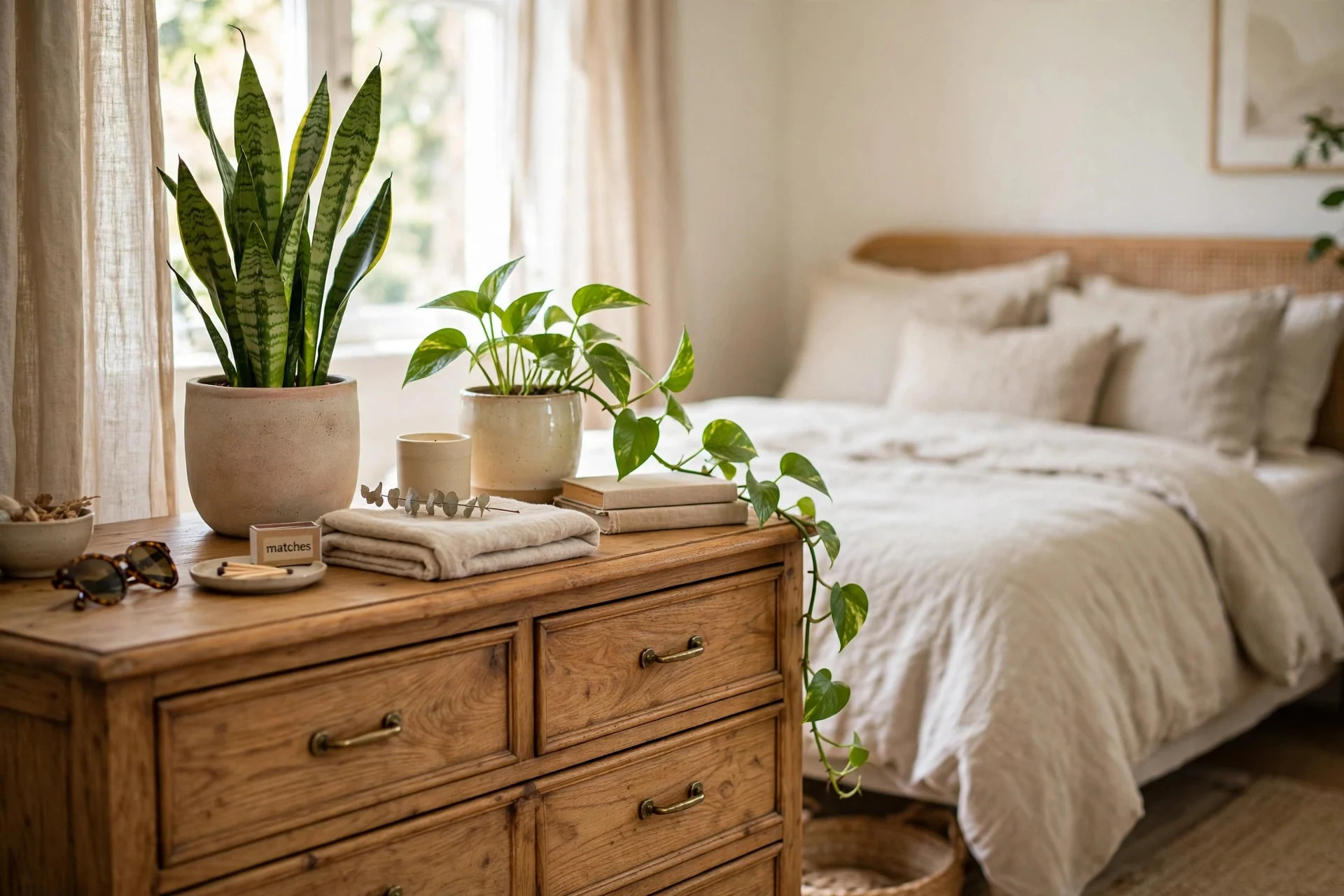
8. Bring in One or Two Real Plants
A living plant in the bedroom makes the room feel fresh and alive. I keep a snake plant and a small pothos on my dresser, and they are almost impossible to kill. First, pick low-light plants like snake plants, pothos, or peace lilies, because bedrooms do not always get much sun. Next, put them where you can see them from the bed. I once filled a windowsill with six plants and half of them died within a month. One or two healthy plants look better than a crowded shelf of struggling ones.
Try this: Put your plant in a ceramic pot that matches your bedding.
9. Use a White Noise Machine or a Small Fan
Random noises at night, a car door, a dog barking, the pipes, used to wake me up just as I was drifting off. A steady background sound covers them up, and I sleep through the night now. First, try a white noise machine or a small fan on low, and pick a steady sound, like rain or a fan hum. Next, keep the volume low, just loud enough to blur outside noises. I made the mistake of playing ocean sounds too loudly the first week, and the waves kept pulling me awake. Low and steady is the trick.
Try this: Try the rain sound first.

10. Drape a Soft Throw at the Foot of the Bed
A soft throw folded across the foot of the bed makes the whole room look finished. I keep a chunky knit throw in cream on my bed all year. First, pick a throw in a texture you love touching, like knit, fleece, or soft cotton. Next, fold it in thirds and lay it across the foot of the bed. I used to fold the throw too neatly, like a hotel, and it looked stiff. A slightly loose fold looks lived in, and pulling it over my feet on a cold night is one of my favorite small comforts.
Try this: Keep a second throw in a basket beside the bed.
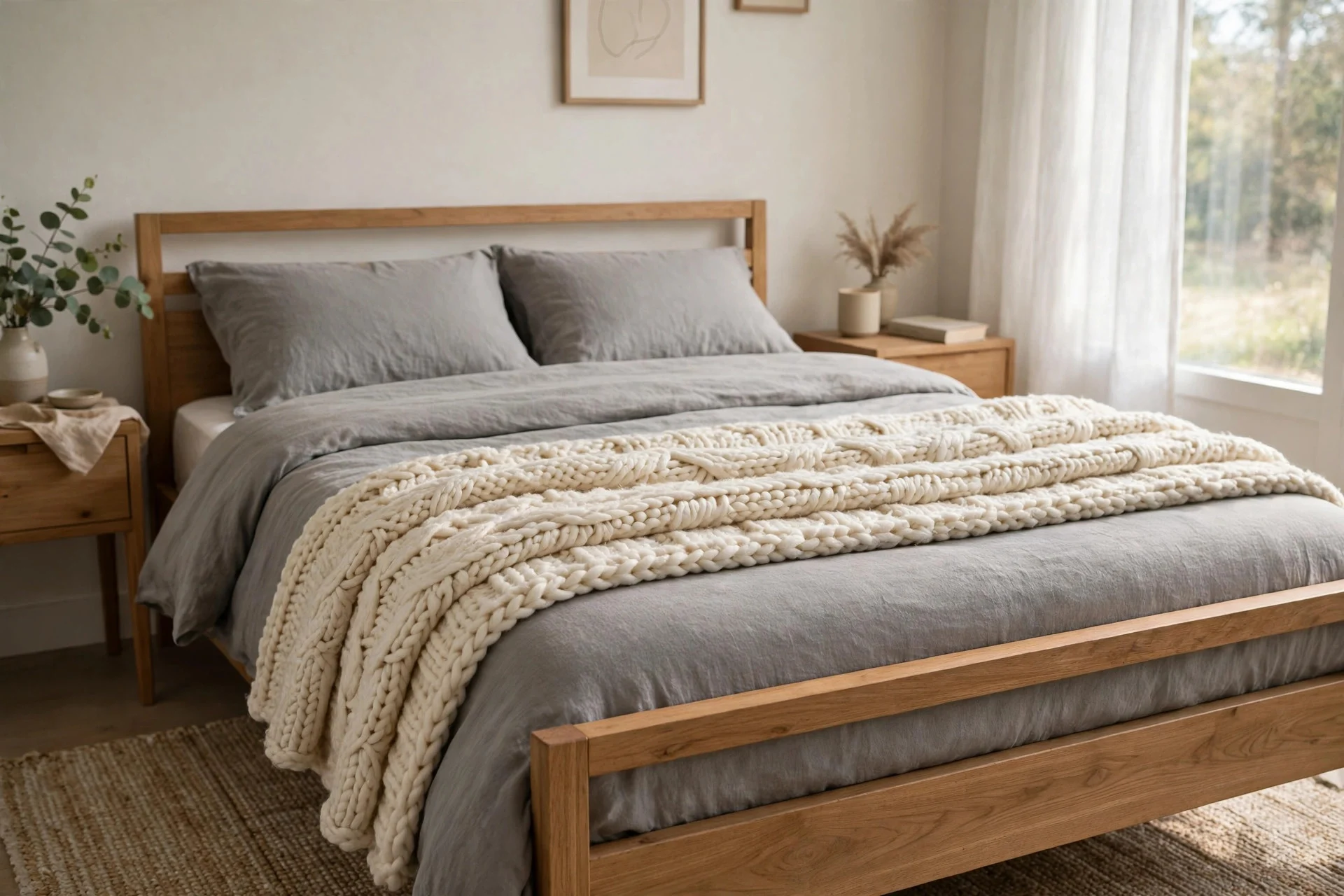
11. Swap the Harsh Ceiling Light for Bedside Lamps
One bright ceiling light makes a bedroom feel like an office. Two bedside lamps give you soft pools of light exactly where you need them, and it is the first thing I turn off every evening. First, put a lamp on each side of the bed, even if only one side gets used, because the balance looks calm. Next, pick lamps with fabric shades, which soften the light. I lived for years with only a ceiling light and wondered why my bedroom never felt restful. The night I added two small lamps, the whole room changed.
Try this: Use lamps with a three-way switch for the dimmest setting.
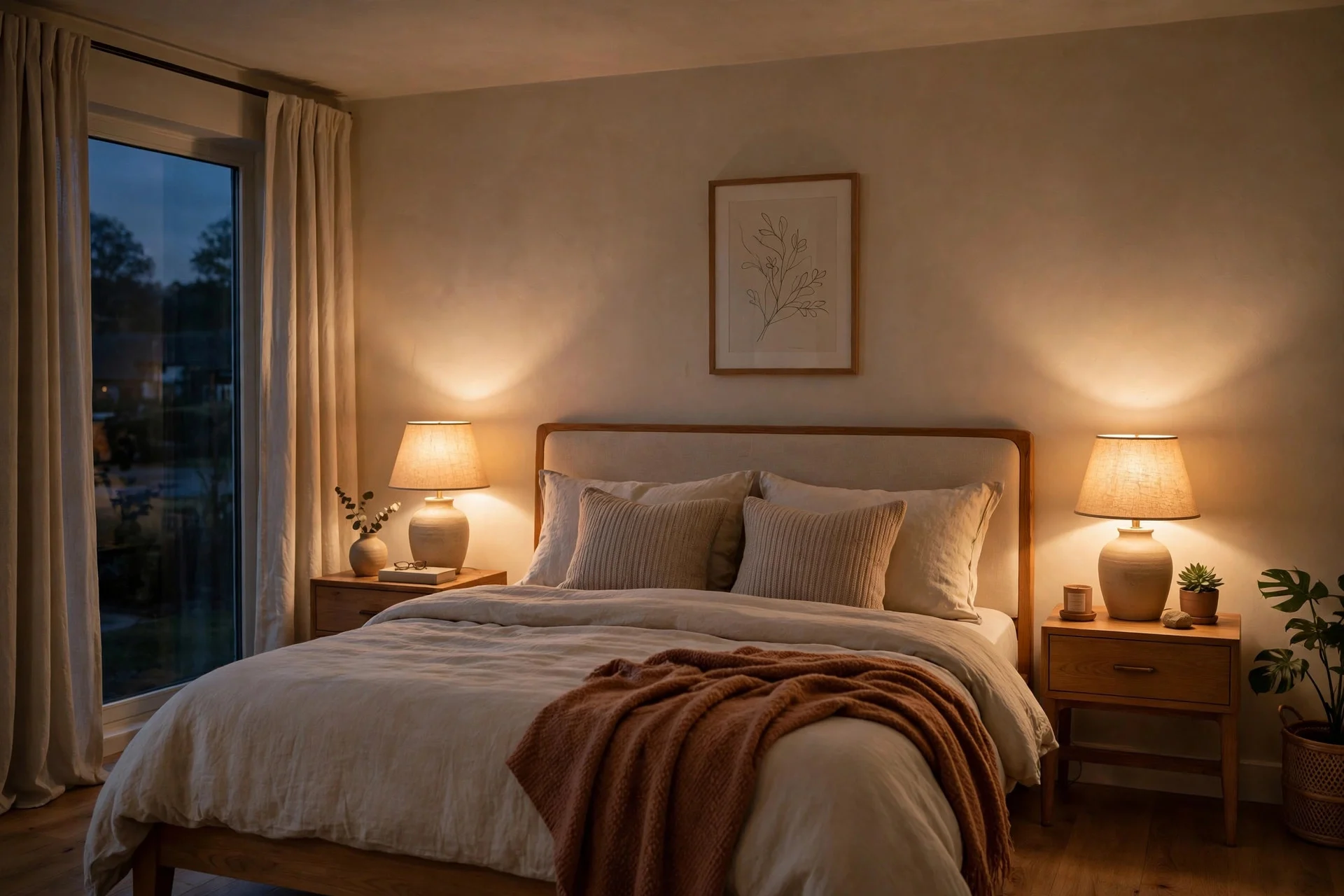
12. Add a Plush Rug Beside the Bed
Stepping onto a cold, hard floor first thing in the morning is a bad way to start the day. I have a thick, plush rug in warm cream that runs along both sides of the bed. First, measure the space and pick a rug big enough for your feet to land on. Next, choose a rug you can vacuum easily, because bedroom rugs collect dust fast. I bought a rug that was too small the first time, and it slid around and bunched up every morning. A proper-sized rug stays put, feels wonderful under bare feet, and makes the room feel warmer.
Try this: Layer a smaller patterned rug over a big plain one for a cozy, collected look.

13. Choose a Pillow That Actually Supports You
The wrong pillow gave me a stiff neck for years. I kept blaming the mattress when the pillow was the problem. First, think about how you sleep, because side sleepers need a thicker, firmer pillow and back sleepers need something flatter. Next, try the pillow in the store if you can, lying on it for a few minutes instead of just squeezing it. I kept a lumpy pillow far too long because it felt familiar, and my neck paid for it every morning. A fresh, supportive pillow was the cheapest fix I ever made.
Try this: Fold your pillow in half. If it stays folded, replace it.

14. Add a Headboard That Feels Like a Hug
A padded headboard turns the bed into the coziest spot in the house. I added a simple upholstered headboard in soft beige linen, and the bed suddenly looked finished. First, pick a fabric that feels soft to lean against, like linen, velvet, or cotton. Next, choose a headboard the same width as your bed, not wider, so it looks balanced. I tried a hard wooden headboard first, and leaning against it felt like sitting on a bench. The padded one feels like a hug, and it softens the sound in the room too.
Try this: Pick a headboard in a light, neutral fabric.

15. Keep Phones and Screens Out of the Bedroom
Scrolling in bed was my worst sleep habit, and it took me years to admit it. The blue light and the endless feed kept my brain buzzing long after I put the phone down. First, set up a charging station outside the bedroom, in the hallway or the living room. Next, use a simple alarm clock instead, so you have no excuse to bring the phone in. I used to check just one message, and an hour later I was still scrolling. The first week felt strange, but I fell asleep faster, and my mornings feel calmer now.
Try this: Keep a small notebook by the bed instead of your phone.
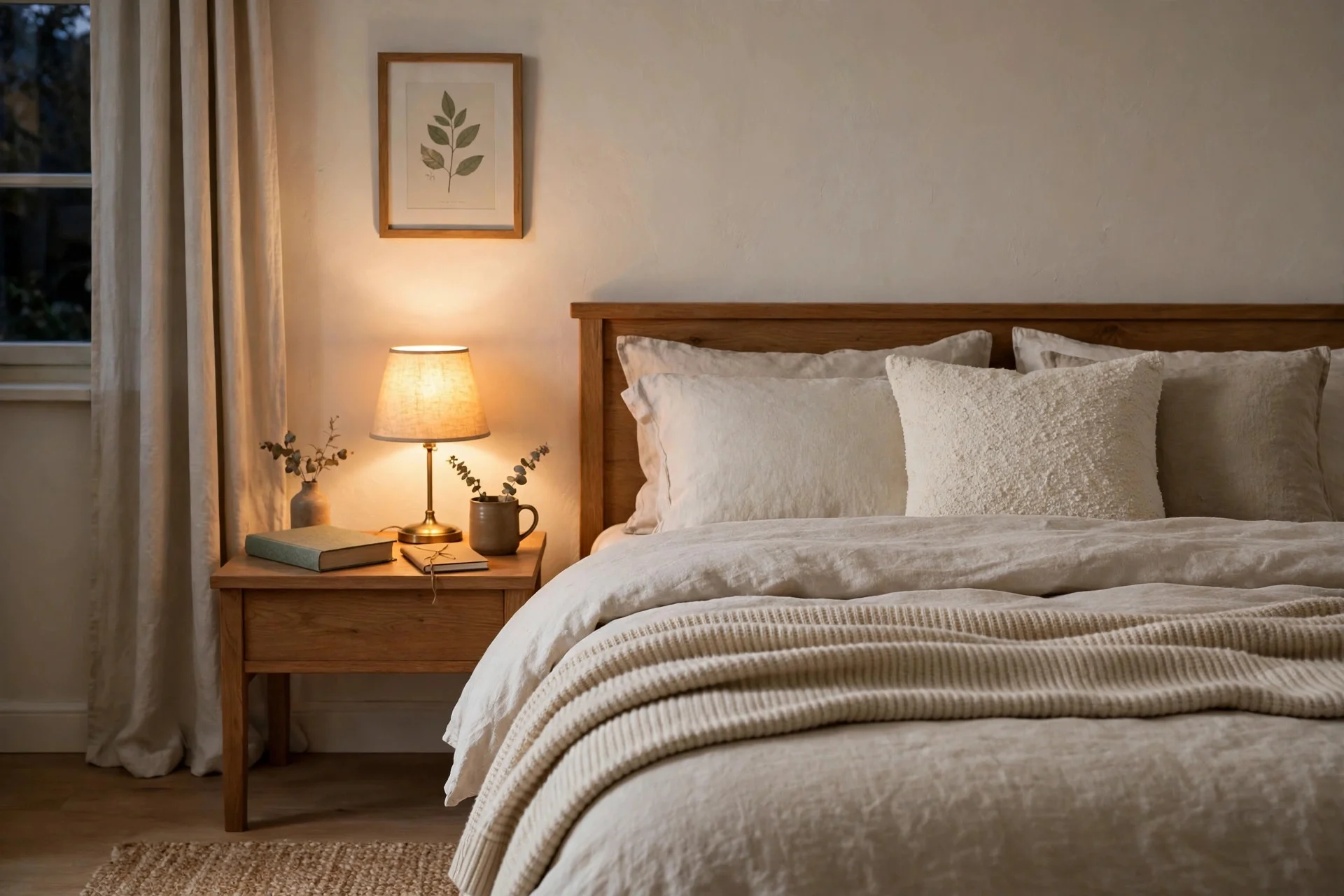
16. Dab Lavender on Your Pillow Before Bed
Lavender has been my little bedtime ritual for years. The scent alone now tells my brain it is time to wind down. First, buy a small bottle of lavender essential oil or a ready-made linen spray, and keep it on your nightstand. Next, put one drop on a cotton ball inside your pillowcase, or mist the pillow lightly. I once sprayed far too much and the smell was so strong I could not sleep, so a little goes a long way. One soft hint of lavender is enough.
Try this: Try a lavender sachet in your pillowcase instead of oil.

17. Make a Small Reading Corner by the Window
A reading corner gives you a reason to slow down in the evening instead of flopping straight into bed with your phone. I put a small armchair, a floor lamp, and a basket of books by my bedroom window. First, pick a corner with some daylight that feels quiet at night. Next, add a chair you actually like sitting in. I used to read in bed and fall asleep with the light on, which wrecked my sleep. Reading in the chair for twenty minutes, then moving to bed, feels like a proper wind-down.
Try this: Add a small cushion and a folded throw to the chair.
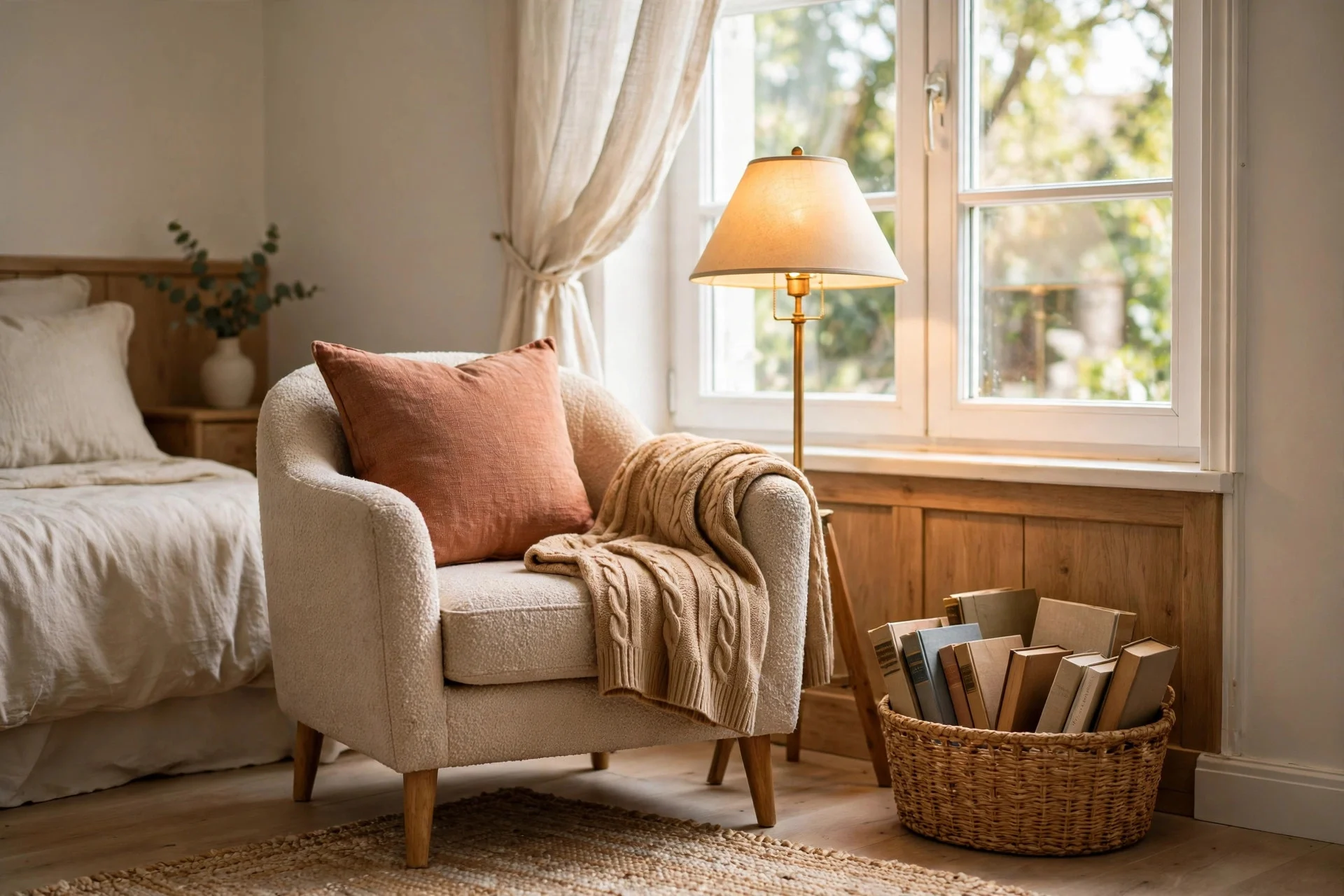
18. Hang Soft, Calm Wall Art Above the Bed
Bare walls above the bed can make a bedroom feel unfinished. I hung one large, calm landscape print above my bed, and it anchors the whole room. First, pick art with soft colors and simple shapes, like a misty landscape or gentle waves. Next, hang it at eye level beside the bed, not too high, so it feels connected to the bed. I once hung a bright, chaotic poster above the bed and stared at it every night while trying to fall asleep. Soft, quiet art gives your eyes somewhere peaceful to rest.
Try this: Try a canvas print instead of a framed poster.

19. Make the Bed Every Morning
Making the bed takes two minutes, and it changes how the whole room feels for the rest of the day. First, shake out the duvet and let it fall flat. Next, place the pillows upright against the headboard. I used to leave the bed unmade because I thought nobody saw it, but walking into a messy bedroom at night made it harder to relax. A made bed feels like a small win, and climbing into a neat bed at night feels like the room was waiting for you.
Try this: Make the bed right after you get up, before you check your phone.

20. Keep a Bedside Carafe and Glass
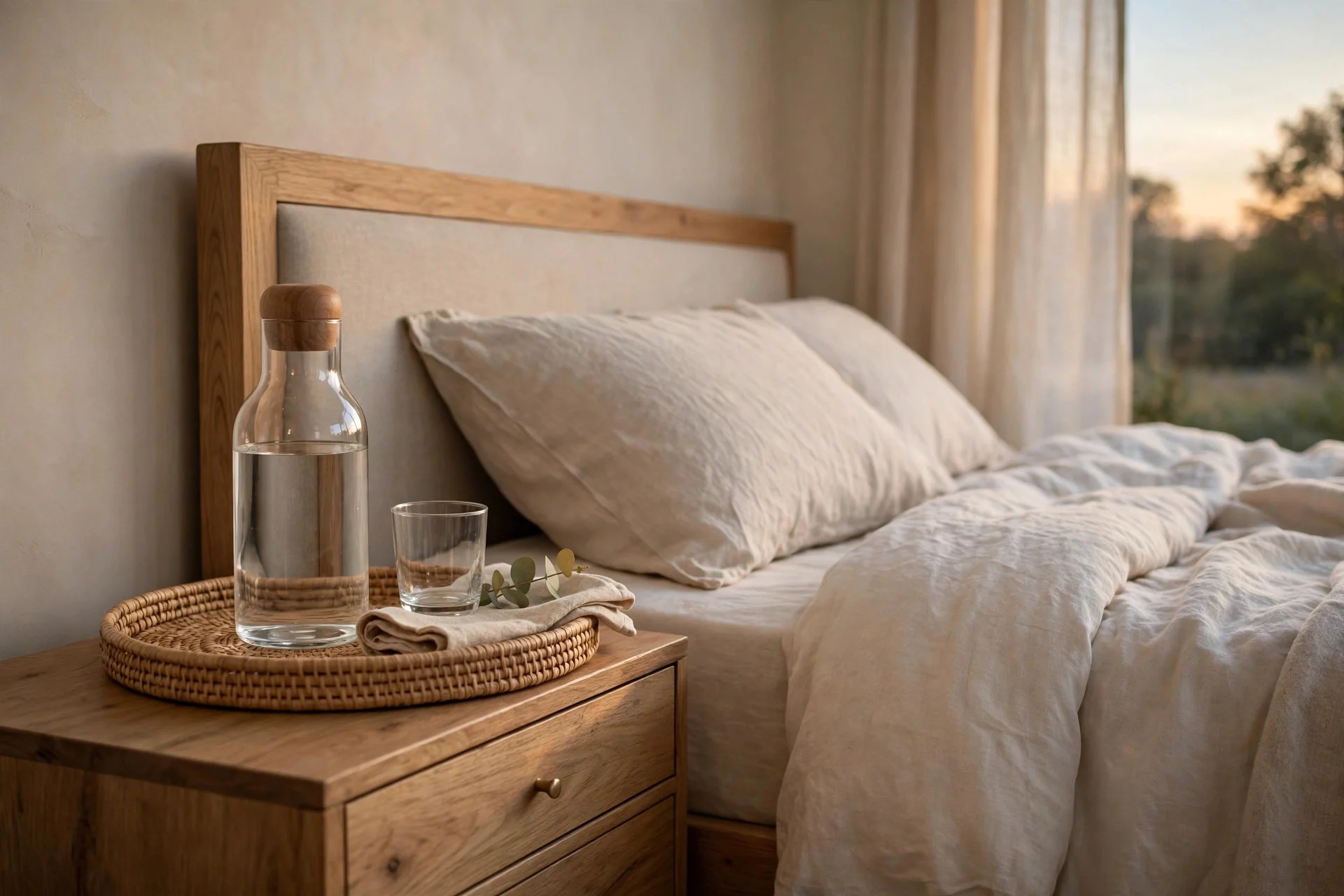
Waking up thirsty at 2 a.m. and having to walk to the kitchen is a sure way to wake yourself up fully. A small carafe and glass on the nightstand solves it quietly. First, pick a small glass carafe with a lid or a stopper, so the water stays clean overnight. Next, fill it with fresh water each evening. I used to keep a big open glass that got dusty and tipped over twice, soaking my books. A lidded carafe looks prettier and feels like a small luxury.
Try this: Choose a carafe in clear glass with a wooden stopper.
21. Use a Gentle Wake-Up Alarm Clock
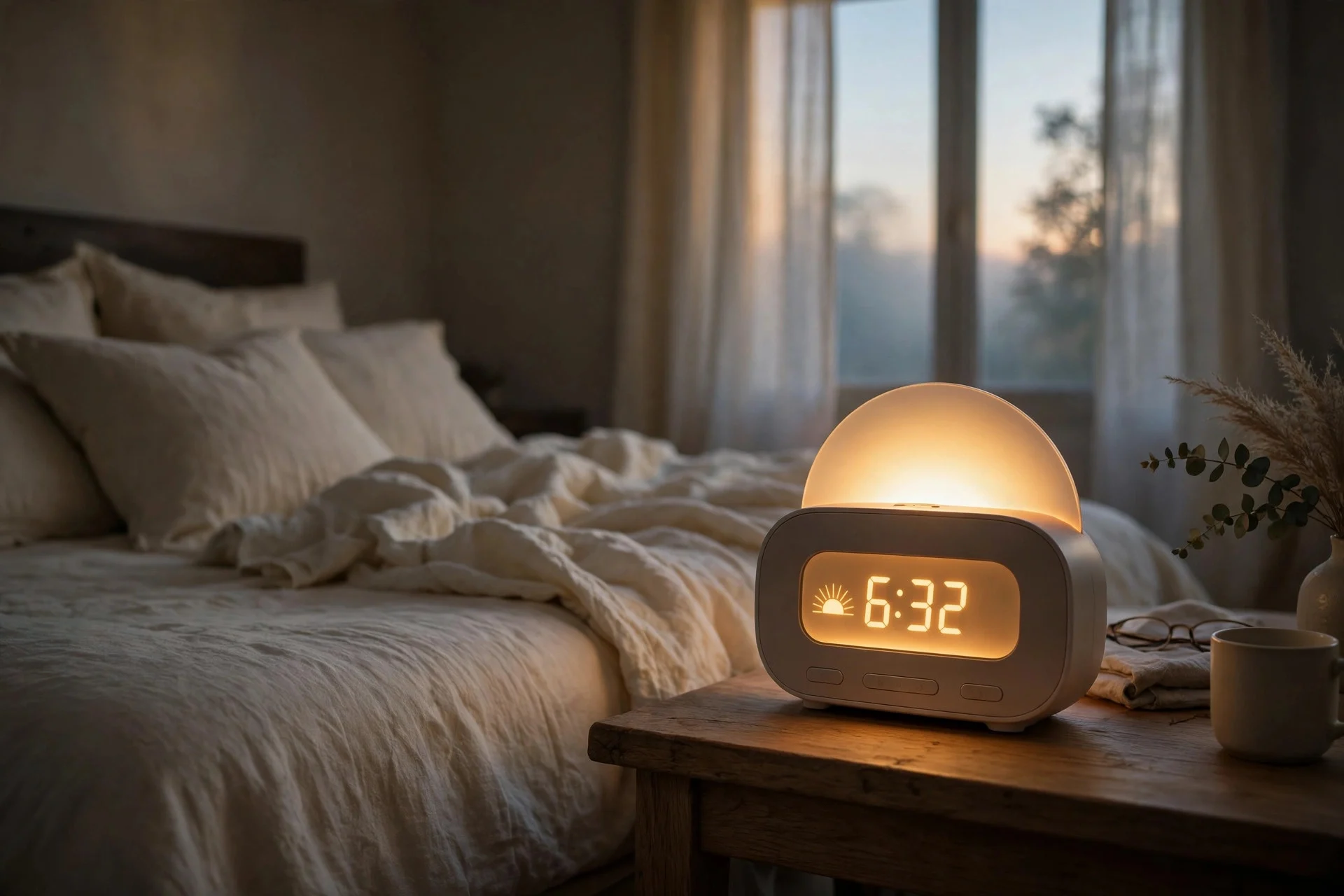
Being jolted awake by a harsh alarm sets a stressful tone for the whole day. A gentle wake-up light changed my mornings completely. First, look for a sunrise clock that slowly brightens the room before the sound starts. Next, place it where the light can reach your face. I used to wake up to a blaring phone alarm and feel my heart race before my feet hit the floor. The sunrise light wakes me slowly, and I open my eyes feeling rested instead of startled.
Try this: Set the alarm fifteen minutes earlier than you need.
22. Add Soft Curtains to Frame the Bed
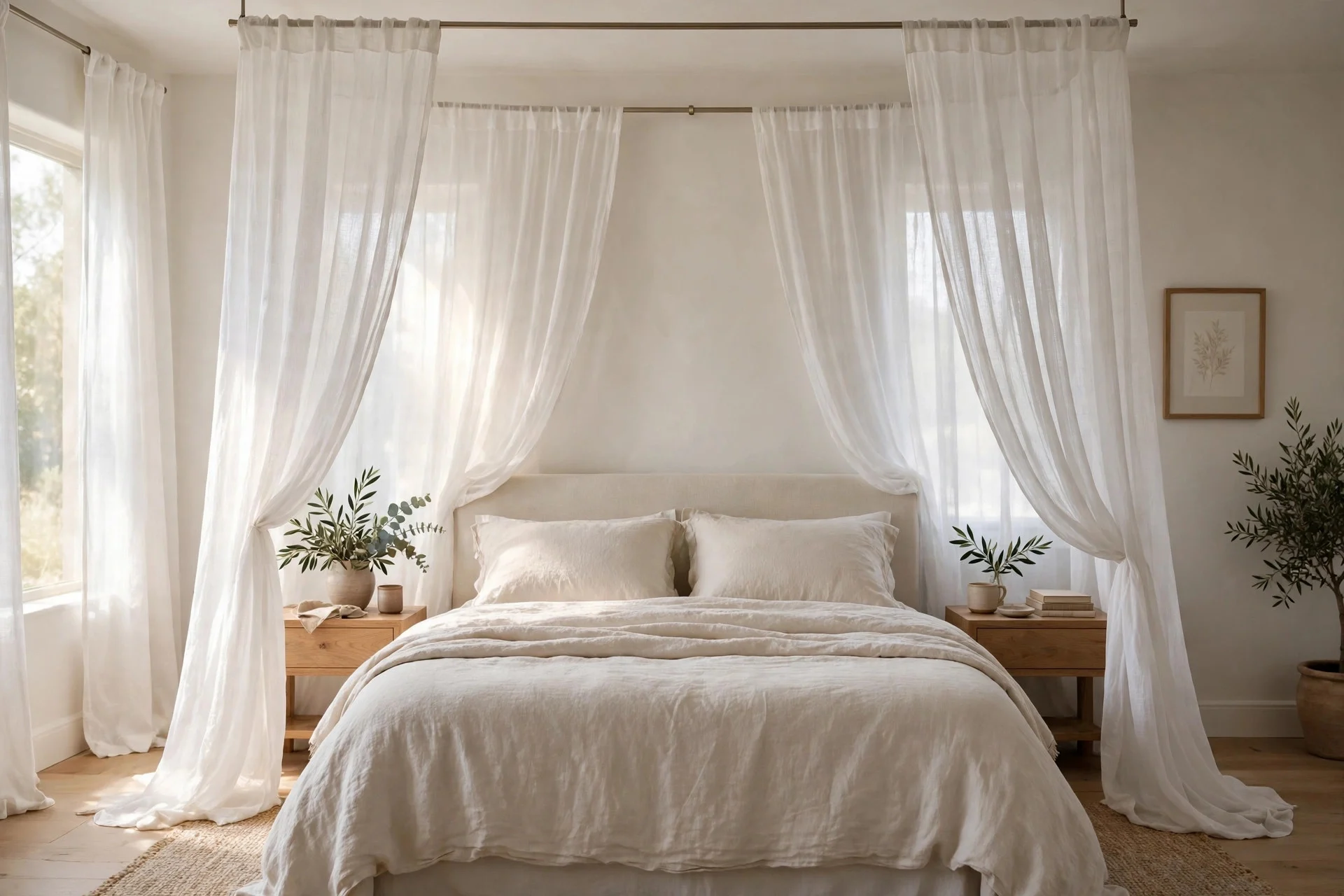
A simple canopy or a pair of soft curtains framing the bed makes the whole room feel like a quiet nest. I hung sheer linen panels from a ceiling rod around the head of my bed, and the effect was instant. First, mount a slim rod or a ceiling track above the head of the bed. Next, choose lightweight fabric in white or cream, so air still moves freely. I worried it would feel heavy, but the sheer fabric feels airy, and at night it blocks the last bit of light from the hallway. It turns the bed into its own little room.
Try this: Use sheer linen or voile panels.
23. Create a Simple Nighttime Routine Corner
A tiny corner set aside for your evening routine makes winding down feel intentional instead of random. I set up a small tray on my dresser with my book, a candle, and a cup of herbal tea. First, pick one small spot, a dresser corner or a nightstand tray, and keep only your wind-down things there. Next, choose a routine you can repeat, like tea and ten pages of a book. I used to wander around the house at night and never felt ready for bed. Having one little corner tells my brain the day is done.
Try this: Light a small candle in your routine corner each night.

What is the best color for a bedroom for better sleep?
Soft, muted colors work best, like pale sage green, dusty blue, warm cream, or soft grey. They feel calm and quiet, and they help your brain slow down at night.
How dark should a bedroom be for sleep?
As dark as you can make it. Blackout curtains and no glowing screens help a lot. Even small lights from chargers can disturb sleep, so cover them or move them away.
What temperature is best for sleeping?
Most people sleep best in a room between 65 and 68 degrees Fahrenheit. A cool room with a soft blanket on top works better than a warm room with heavy covers, because your body cools down naturally as you fall asleep.
Do plants in the bedroom really help you sleep?
Plants will not fix bad sleep on their own, but they make the room feel fresher and calmer. Low-light plants like snake plants and pothos are easy to care for.
Final Thoughts
A bedroom that helps you sleep is not about buying everything at once. It is about a few small choices that work together: soft light, a cool room, a clear nightstand, and a bed that feels like the best place in the house. Pick the two or three ideas that speak to you, try them for a week, and see how you sleep. Your body will tell you what works.