
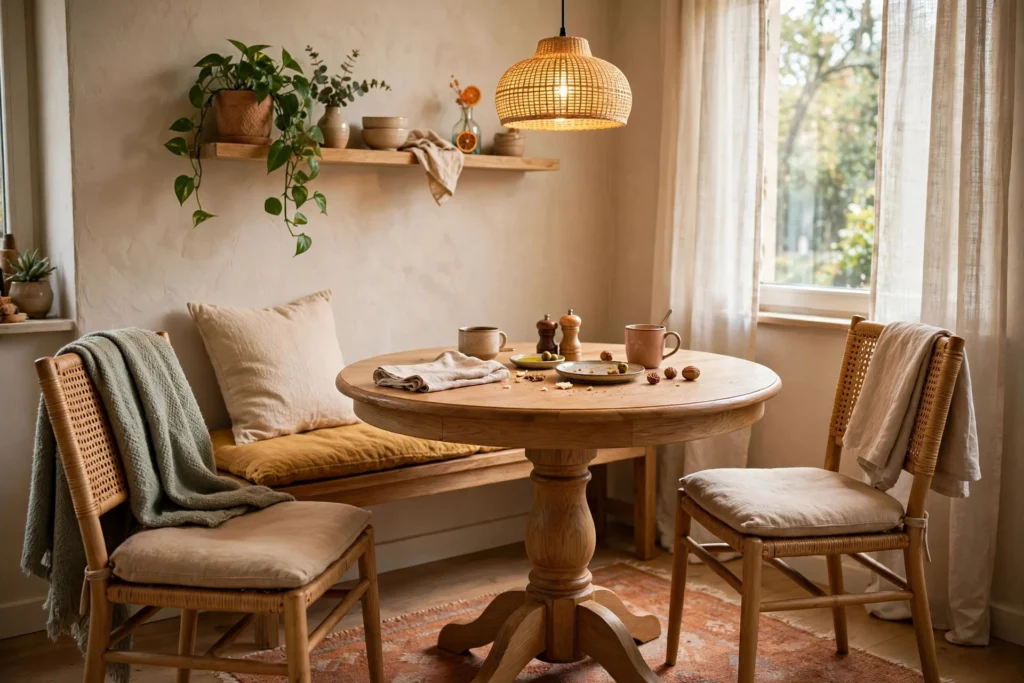
Our first apartment had a dining area the size of a doormat — a bare corner between the kitchen and the sofa, and for months we ate standing up or balancing plates on our laps. If that sounds familiar, these small dining room ideas for apartments are the ones that actually worked for us, in a real rented flat with a real small budget and no spare room to waste.
I am not going to pretend a tiny corner can become a grand dining room. It can’t, and it doesn’t need to. What it can become is a spot you actually want to sit in, morning coffee and all. Every idea below is something I have tried, borrowed from a friend, or wished I had known before buying the wrong table first.
1. Small Dining Room Ideas for Apartments That Start with the Table
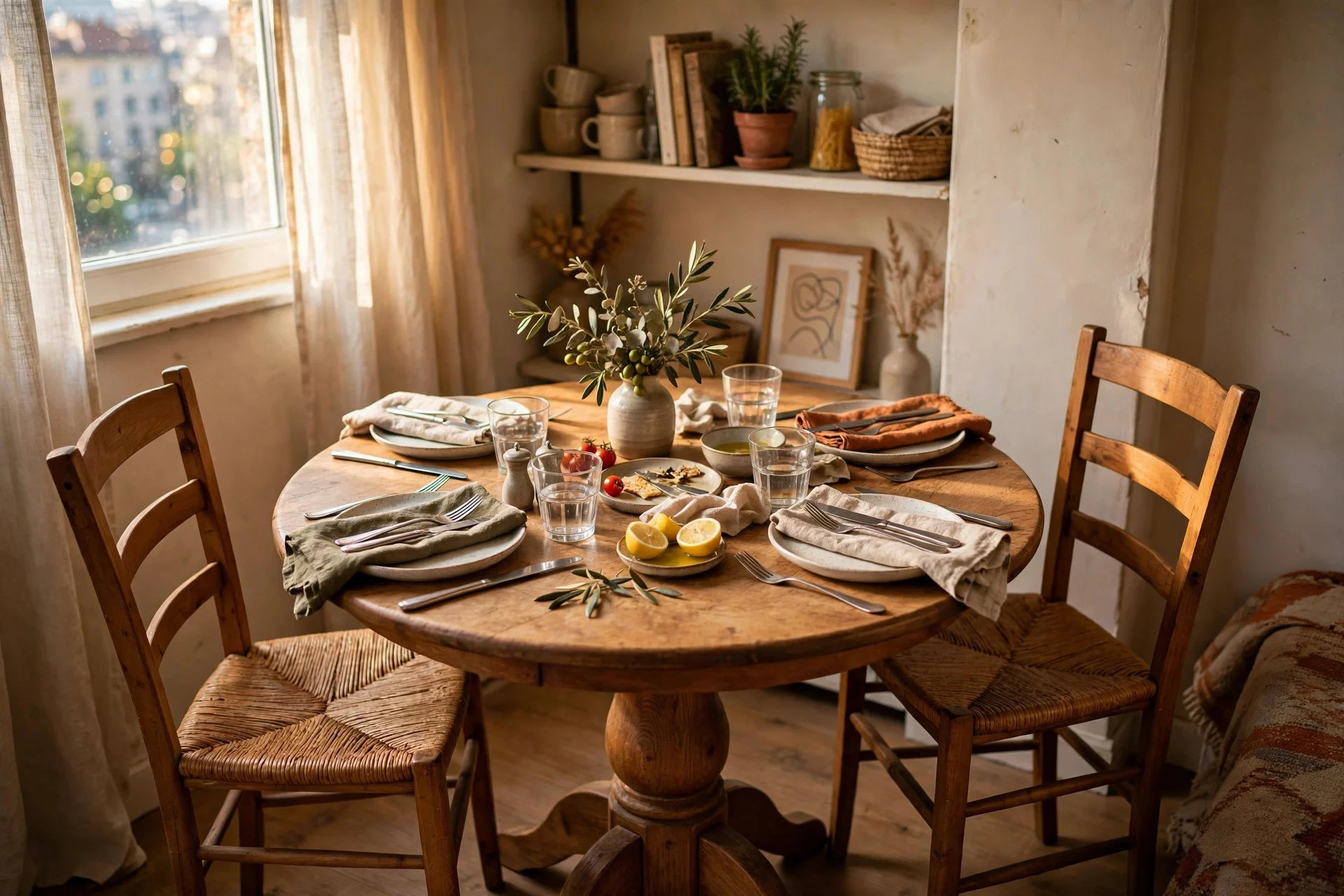
A round table with one centre leg changed everything for us. No sharp corners to bruise your hip on the way to the kitchen, and four people can squeeze in where a square table only fits two comfortably. We found a 90 cm oak top second-hand and paired it with two chairs and a stool. Measure your corner first and leave at least 60 cm behind each chair so nobody has to climb over the sofa to sit down. I made the mistake of buying a 120 cm table first, and it swallowed the whole room until we sold it on. A pedestal base also means no table legs fighting your knees underneath, which matters more than you think at breakfast.
Try this: tape the table’s outline on the floor with painter’s tape and live with it for two days before you buy anything.
2. A Fold-Down Table That Disappears After Dinner
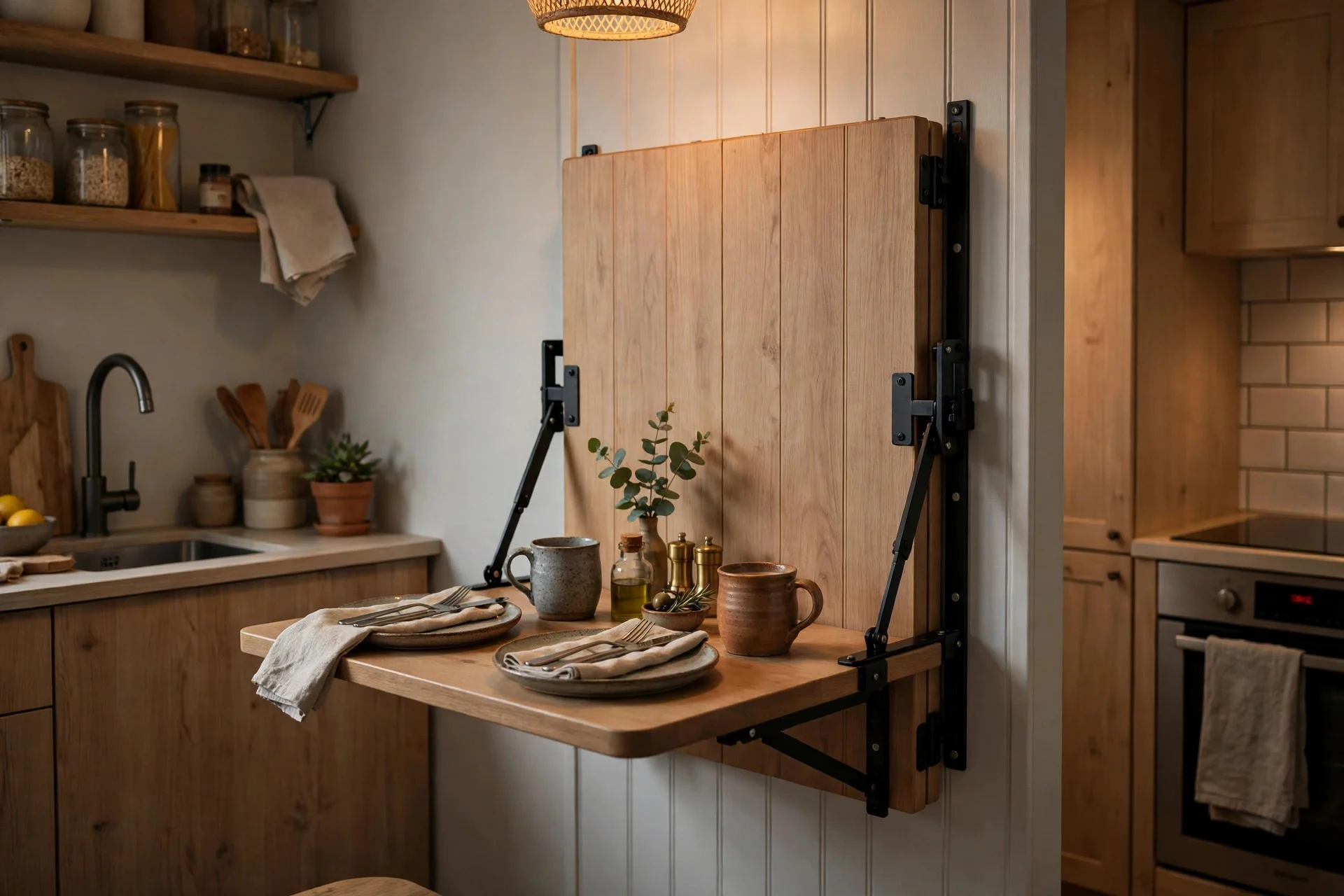
A wall-mounted fold-down table is the closest thing to a magic trick a small flat can offer. Fold it up for dinner, fold it down and your dining room turns back into floor space for the kids, the dog, or your yoga mat. We put ours on the wall between the kitchen door and the window, at normal table height, with a small bracket that locks flat. It holds two plates, two mugs and a salad bowl without wobbling, which is all a weeknight dinner really needs. The trick is picking a solid wall and proper fixings, because plasterboard alone will not hold a table full of food. Ask your landlord first if you rent, and keep the tabletop light so one person can lift it with one hand.
Try this: mount a slim shelf right above it for salt, pepper and a small vase, so the table stays clear.
3. A Bench Along the Wall Doubles Your Seats
Push a simple bench against the wall and suddenly your table seats four instead of two, without a single extra chair leg taking up floor space. I tried this after one too many dinners with a friend perched on a kitchen stool, and it was the best ten pounds I spent on the flat. A bench slides under the table when you are done, and the kids love sitting on it because there is no chair to fall off backwards. If you can find one with storage inside, even better — ours holds placemats, candles and the board games nobody admits to owning. Add two cushions so nobody complains after twenty minutes, and pick a bench the same length as the table so it looks like it belongs there.
Try this: use a bench with a lift-up lid and keep table linen inside, out of sight but close by.

4. Folding Chairs You Can Hang on a Hook
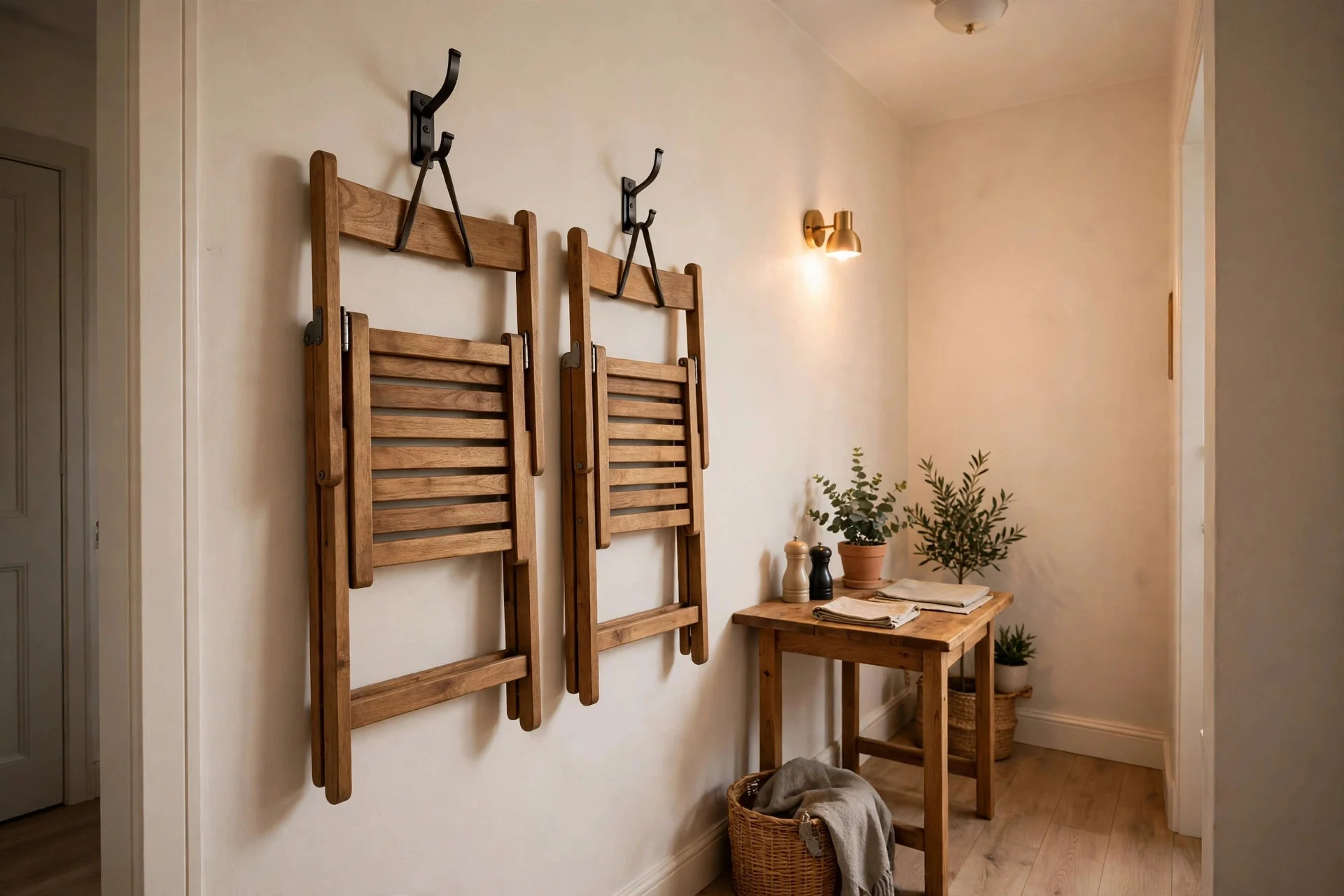
Four proper dining chairs will eat a small apartment alive, but two folding chairs hung on hooks behind the door cost you nothing at all. Ours live on the back of the bedroom door, and honestly, guests never guess they were flat-packed until they sit on one. Look for wooden folding chairs rather than the flimsy metal kind — they look like real furniture at the table and they last. I bought cheap plastic ones first and they wobbled so badly my mother-in-law refused to sit down, which tells you everything. Keep a couple of seat pads nearby and the chairs feel just as good as the everyday ones, and when the evening ends they fold away in seconds.
Try this: hang two matching folding chairs on sturdy wall hooks in the hallway, ready to grab.
5. A Narrow Console That Works as a Table
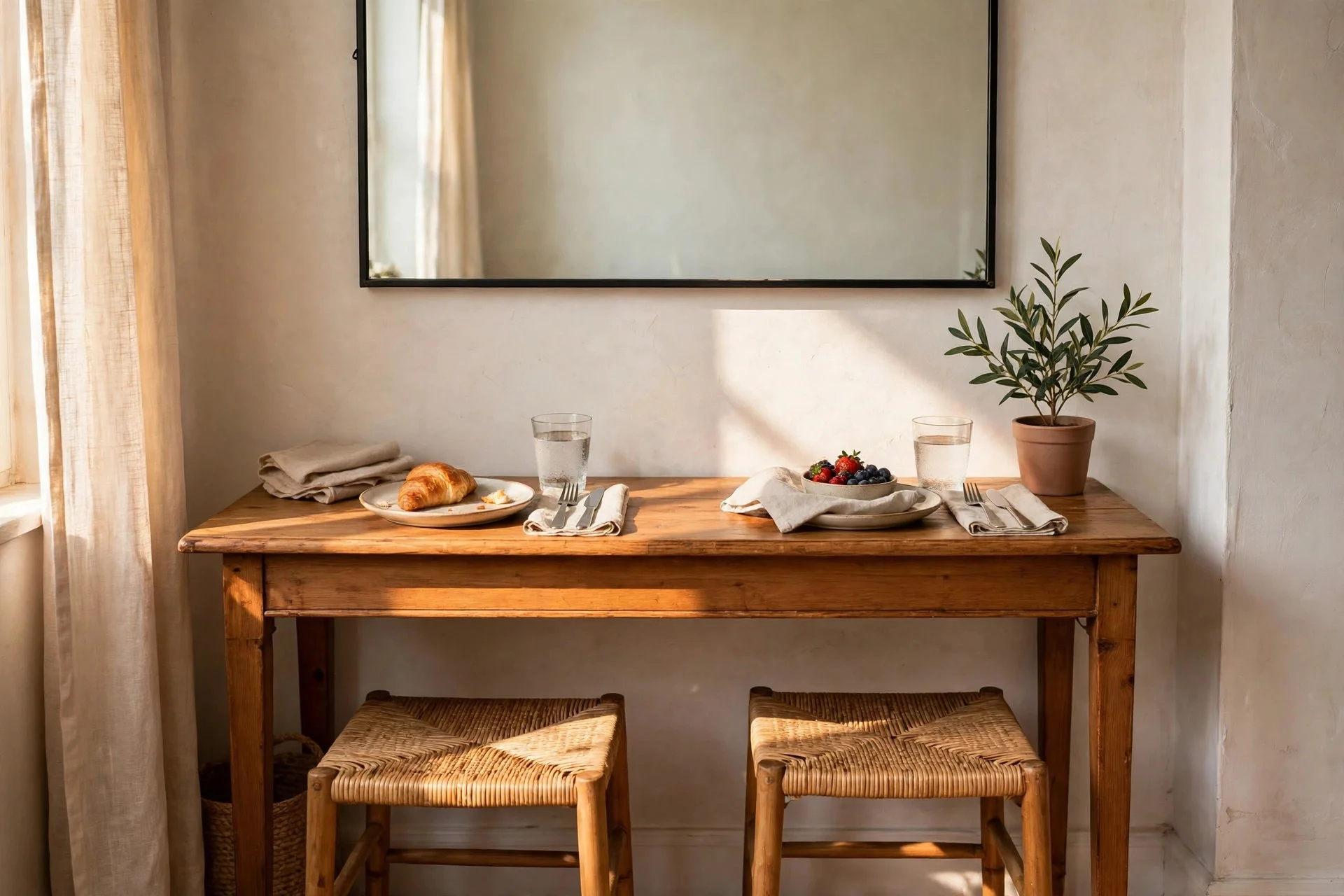
A narrow console table can be a dining table, a desk and a hallway shelf all in one week, which is exactly the kind of overtime a small flat demands. Ours is only 40 cm deep, pushed against the wall under a mirror, and it seats two comfortably for breakfast with a stool each. At dinner it holds the serving dishes while we eat at the main table, and on workdays my laptop lives on it. The mistake I made was buying one with a thick top that stuck out too far, so measure your walkway and keep at least 75 cm clear behind the stools. Pick one with a lower shelf and you gain a home for cookbooks and the fruit bowl too.
Try this: pair the console with two backless stools that tuck fully underneath when you are done.
6. Bar Stools at the Kitchen Counter
If your kitchen has even a small stretch of counter, two bar stools can be your whole dining room, no table needed. We ate at our kitchen counter for a year and it worked better than any table we tried, because the food was right there and the washing up was one step away. Pick stools with a footrest and a low back if you can, because backless stools get old fast over a long Sunday breakfast. I learned the hard way that stools without a footrest leave your legs dangling like a child at a grown-up table. Keep the stools tucked under the counter when you are not eating, and the kitchen stays clear for cooking.
Try this: add a small tray on the counter for salt, oil and napkins so every meal feels set up.

7. A Rug That Draws the Dining Zone
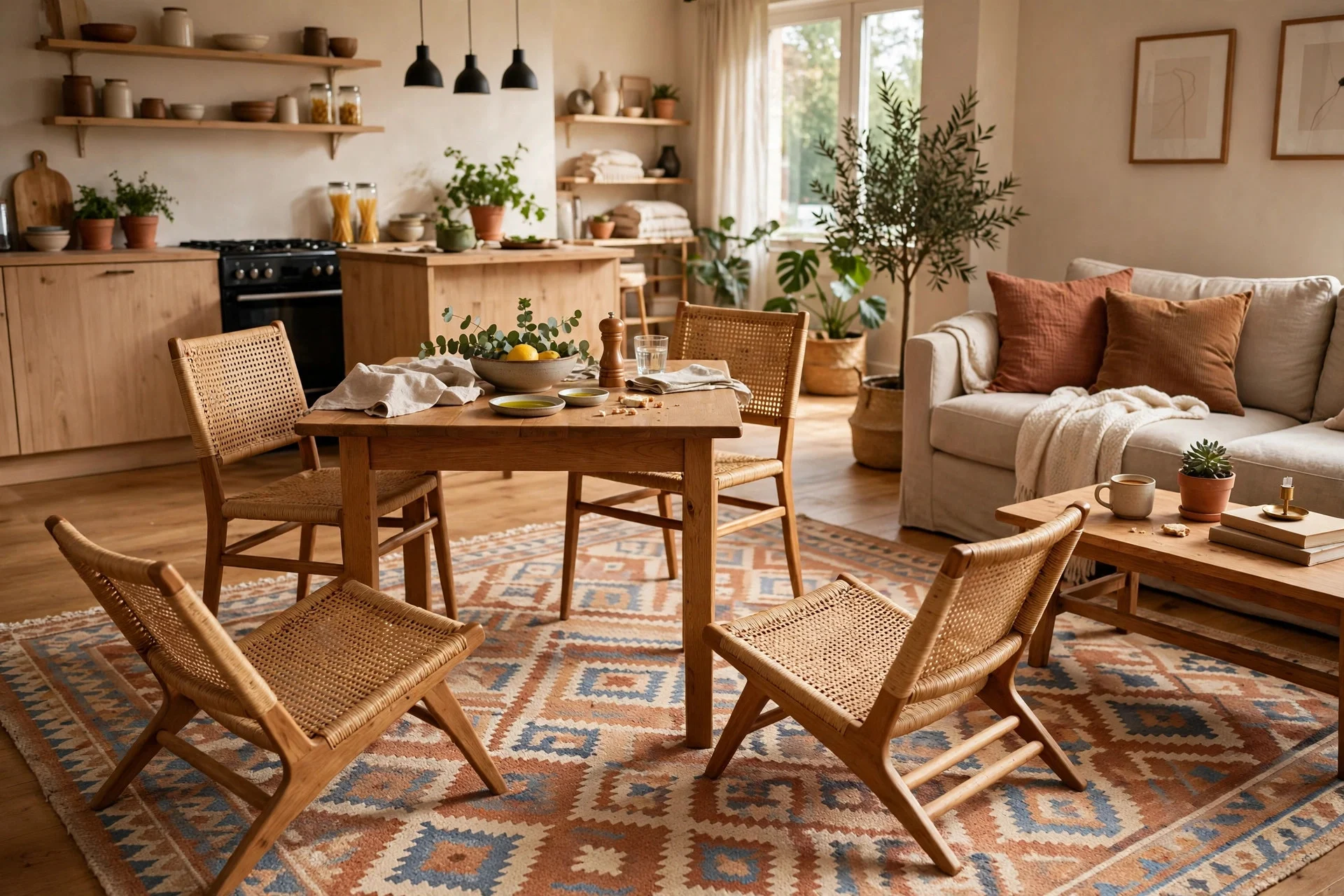
A rug is the cheapest way to tell your brain that this corner is the dining room, even when it is really just the end of the living room. We laid a flat-weave rug under our table and suddenly the whole flat felt organised, like every area had a job. Pick a rug big enough that the chairs stay on it when you pull them out, and go for a low pile you can actually clean, because food will land on it — I promise you that on day one. Dark patterns hide crumbs and red wine far better than pale cream, and I say that from sad experience. A washable rug is worth every penny in a home where people actually eat.
Try this: choose a rug at least 60 cm wider than the table on every side so chairs never catch the edge.
8. One Low Pendant Light Over the Table
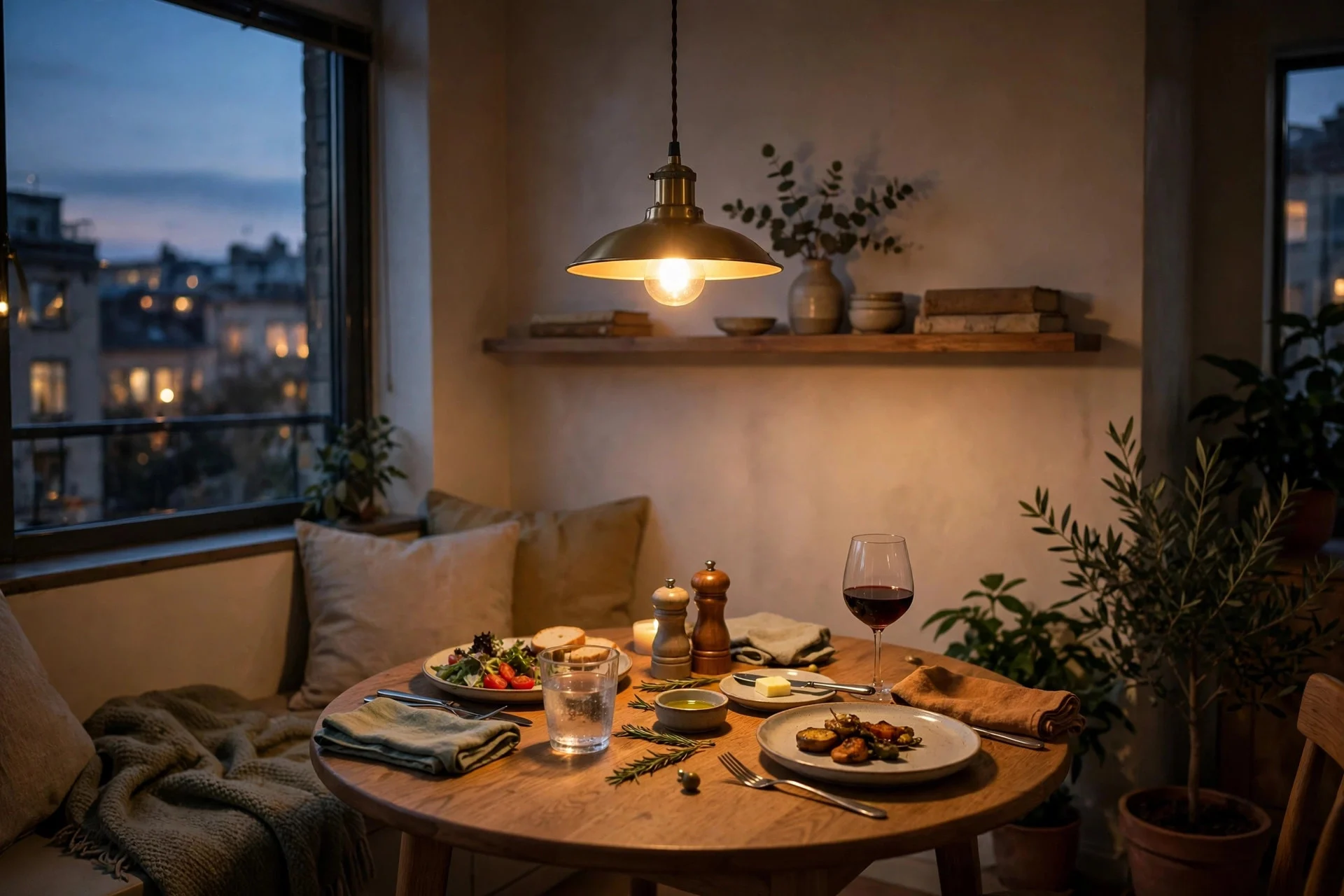
One pendant light hung low over the table does more for a small dining corner than any piece of furniture I own. It pulls your eyes down to the food, makes the corner feel like a room of its own, and turns a plain Tuesday dinner into something that feels a little bit special. Hang it about 75 cm above the tabletop so it lights the plates without blinding anyone across the table. I hung ours too high at first and it lit the ceiling instead of the food, which was useless and looked odd. A warm bulb matters more than a fancy fitting, and a plug-in pendant with a hook works fine if you cannot wire one in.
Try this: fit a dimmer switch or a warm smart bulb so the same light works for dinner and homework.
9. A Mirror That Makes the Corner Feel Bigger
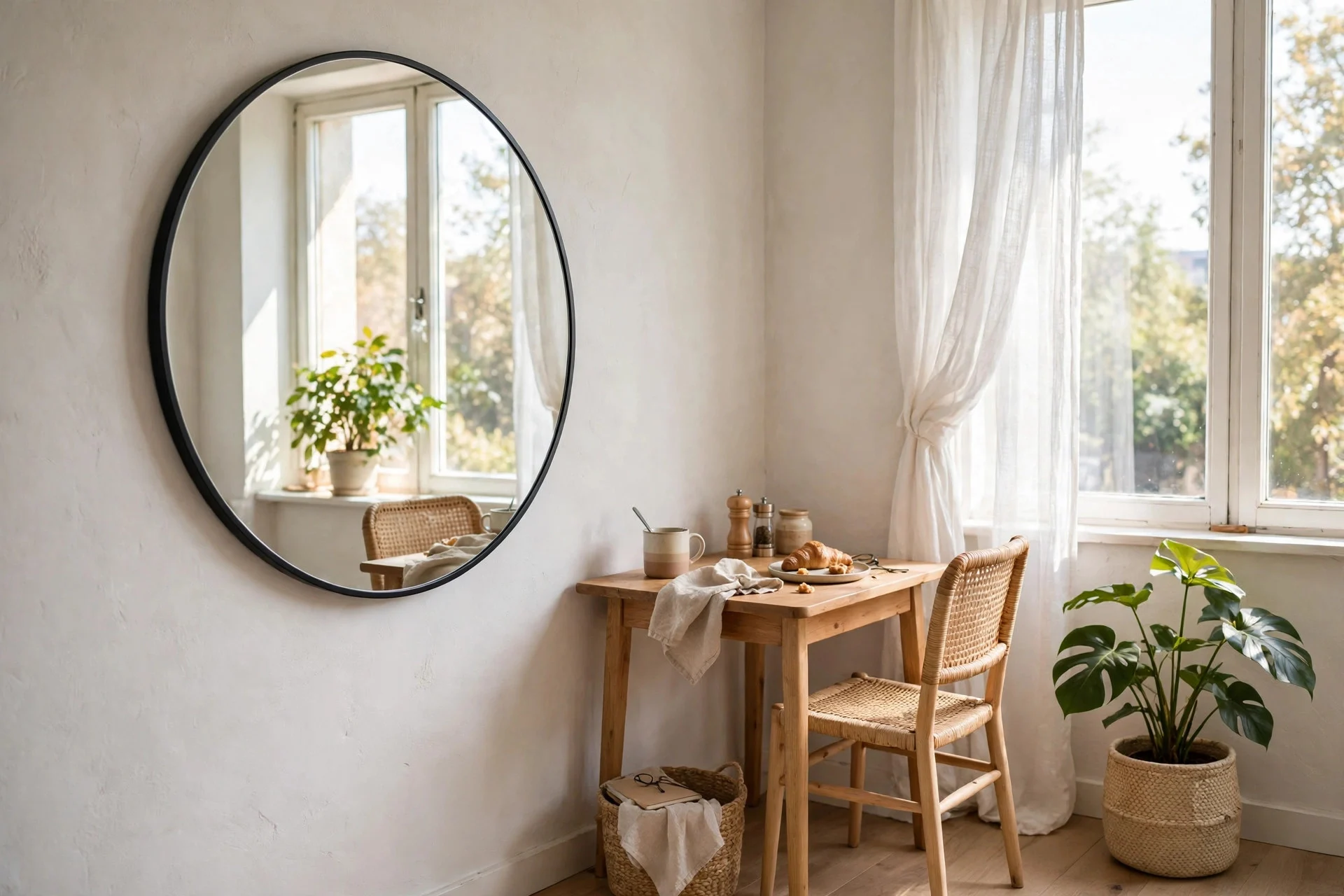
A big mirror on the wall beside the dining table is the oldest small-space trick there is, and it works because it genuinely does make the corner feel twice as wide. Ours hangs opposite the window, so it bounces daylight across the table and the whole flat feels brighter at breakfast. Hang it at eye level when you are seated, not standing, because that is when you actually see it. I first hung ours too high and all it reflected was the ceiling fan, which nobody needs. A round mirror softens a corner full of straight lines, and a thin frame keeps it from looking heavy on a small wall.
Try this: place the mirror where it reflects the window or a plant, never a blank wall or clutter.
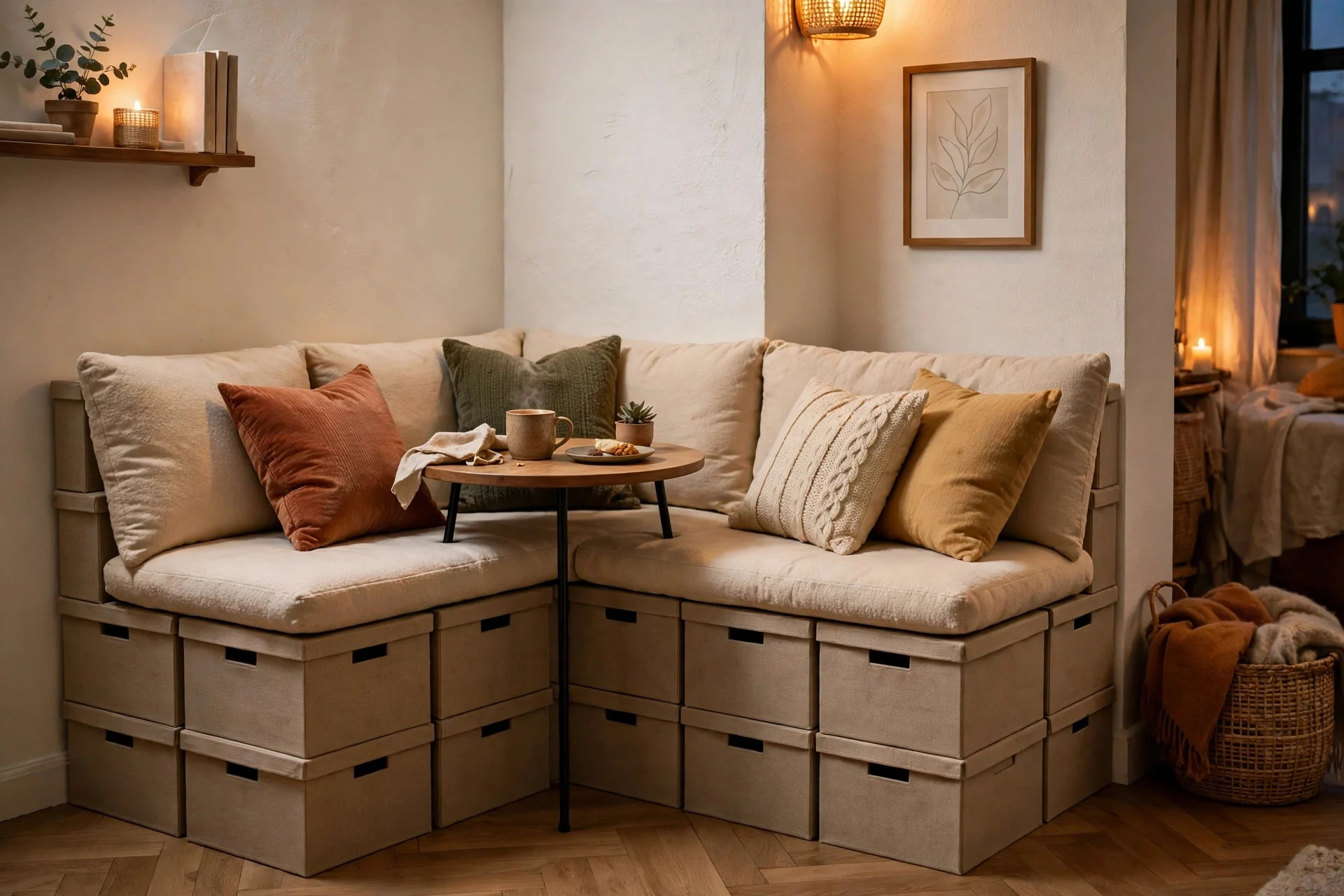
10. A Corner Banquette Built from Storage Boxes
A corner banquette sounds grand, but ours is just two sturdy storage boxes pushed into the corner with cushions on top, and it is the comfiest seat in the flat. The boxes hold winter blankets and board games, the cushions make it a proper seat, and the table tucks right up against it so three people fit where two chairs used to struggle. Measure the corner and the table height before you buy anything, because a seat that is too high makes eating feel like sitting on a bar stool. I got the cushion thickness wrong the first time and we ate like giants at a doll’s table for a week. Add a couple of throw pillows and the corner stops looking like storage and starts looking like a plan.
Try this: use matching storage boxes with lids strong enough to sit on, and test them before you commit.
11. A Drop-Leaf Table for Guests
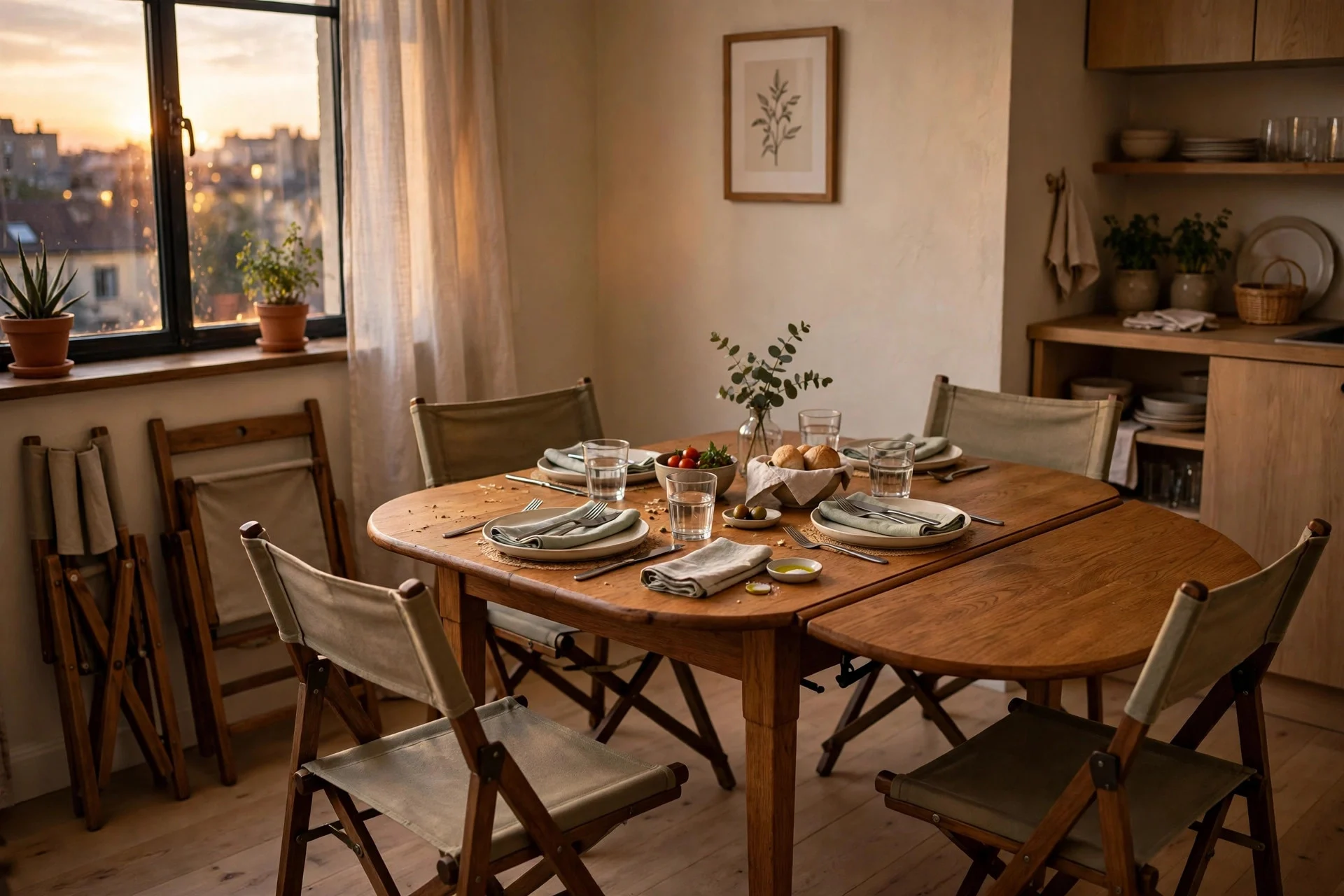
A drop-leaf table is the honest answer to the guest problem: small every day, big when friends come over, and never in the way in between. Ours sits against the wall with both leaves down most of the week, holding a vase and the post, and on Friday nights one leaf goes up and it seats four. The trick is choosing a table whose leaves lift easily with one hand, because you will be doing it while holding a tray. I bought a stiff one first and needed my husband’s help every single time, which defeated the whole point. Keep two folding chairs nearby and a four-person dinner appears in about two minutes, then vanishes again by Sunday.
Try this: keep the table leaves waxed or oiled so they lift smoothly and never stick halfway.
12. Light Colours and One Plant to Finish It
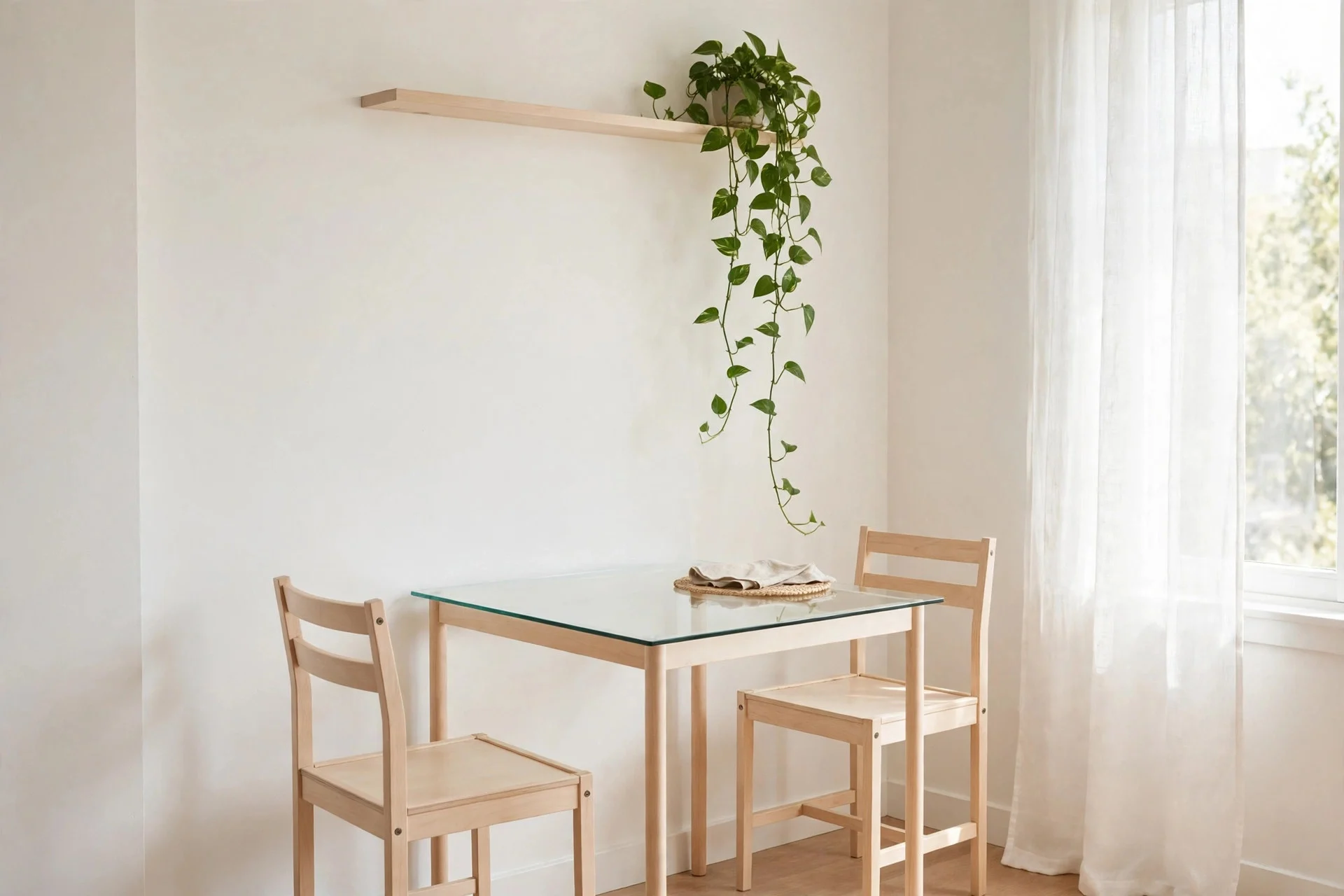
Light colours and a single plant are the finishing touch that stops a small dining corner feeling cramped and makes it feel calm instead. We painted our corner a soft warm white, kept the chairs pale wood, and put one trailing plant on a shelf above the table. That is it — no gallery wall, no clutter, just breathing room. Dark furniture in a small corner swallows light, and I learned that after living with a near-black sideboard for a year that made the whole room feel smaller. One plant is enough; five plants turn a dining corner into a greenhouse you have to water. Keep the table clear between meals and the corner will look bigger every single day.
Try this: pick one easy trailing plant for a high shelf and let it soften the whole corner.
Frequently Asked Questions
What size table fits a small apartment dining room?
A round table around 90 cm across, or a rectangular table no wider than 75 cm, suits most small flats. Leave at least 60 cm behind each chair so people can sit down without shuffling furniture.
Can I fit a dining table in a studio apartment?
Yes. A fold-down wall table, a drop-leaf table or two stools at the kitchen counter all work in a studio. Pick the option that folds or tucks away, so the space stays open when you are not eating.
How do I make a small dining area feel bigger?
Use light colours, a mirror opposite the window, and one low pendant light over the table. Keep the table clear between meals and avoid bulky chairs that block the view across the room.
Is a bench better than chairs for a small dining room?
A bench usually wins in a tight space because it seats more people and slides under the table. Add cushions for comfort, and keep one or two chairs for guests who prefer a backrest.
Final Thoughts
A small dining corner will never be a grand dining room, and that is fine. What matters is a table that fits, a chair you actually want to sit in, and light that makes dinner feel like an occasion instead of a chore. Start with the table, add one idea at a time, and let the corner grow into the spot where your flat finally feels like home.