
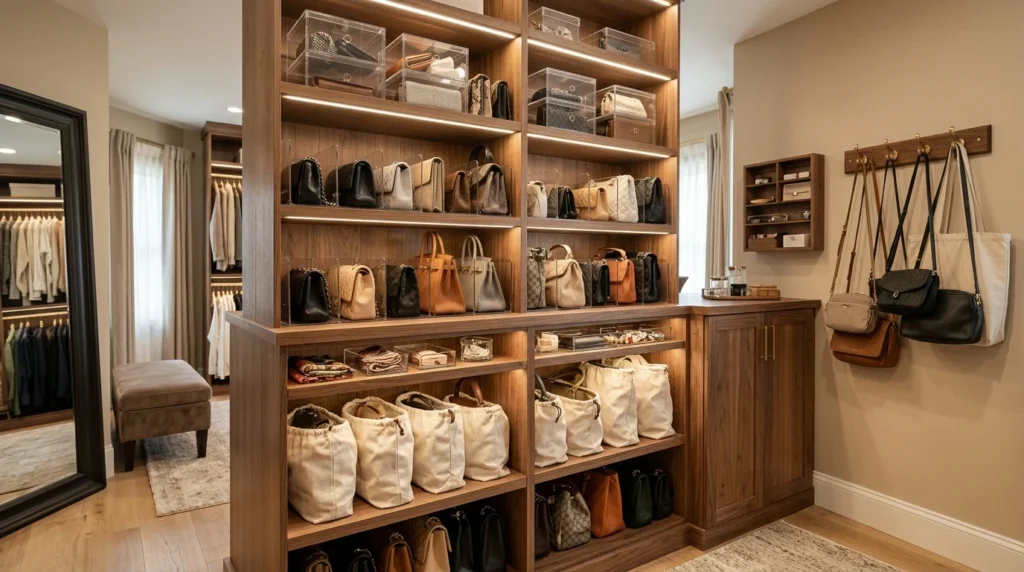
I didn’t consider myself someone with a genuine purse collection until I actually counted them one day while looking for a specific bag I hadn’t used in months, and realized I owned considerably more than I’d been giving myself credit for, most of them slumped against each other on my closet floor in a pile that was slowly deforming their shape and burying the ones on the bottom completely out of sight. I’d been treating my bags the way I treated shoes I didn’t think much about, just tossed wherever there was floor space, without really registering that some of these were genuinely nice pieces I’d spent real money on and was now quietly letting get crushed and forgotten. That realization prompted an actual reorganization, and the difference between a pile on the floor and a genuine storage system turned out to matter considerably more than I expected, both for how easy it became to actually find and use my bags and for how well they’ve held up since.
If your own purse collection is living in that same forgotten floor pile, here are 14 storage ideas, each explained in detail, based on what I ultimately implemented and what I’ve seen work well for other collections since. I’ll also answer some of the specific questions people ask most often about protecting and organizing bags, since a few practical concerns come up again and again regardless of collection size.
1. Use Shelf Dividers to Keep Bags Upright
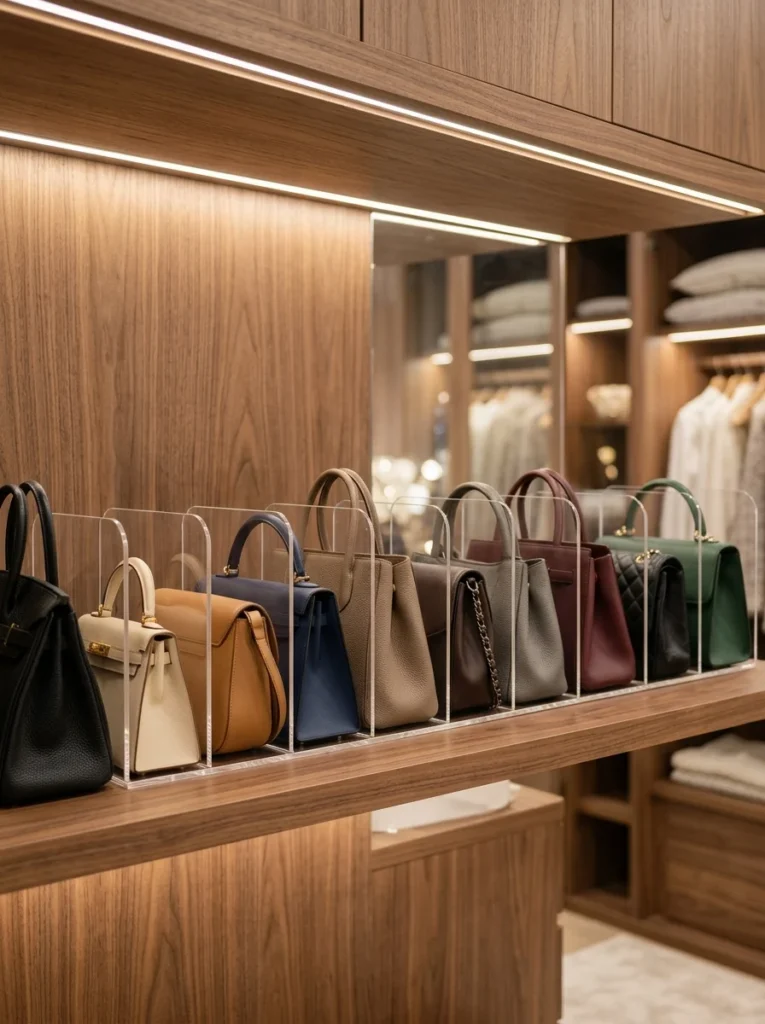
Vertical shelf dividers installed on a closet shelf prevent bags from slumping sideways against each other, keeping each one standing upright in its own defined section rather than leaning and losing its shape over time under the weight of neighboring bags. I added simple acrylic dividers to my own closet shelving specifically for this reason, and my bags have genuinely stopped developing that slumped, misshapen look that used to happen when they were left leaning against each other for months at a stretch. A question I hear often is whether this solution works for every bag shape, and I’d say it works best specifically for structured bags with a defined base, while genuinely slouchy, unstructured styles may still lean somewhat even with dividers in place, though they’ll still benefit from having a defined section rather than sliding freely across an entire undivided shelf.
2. Stuff Bags to Maintain Their Shape
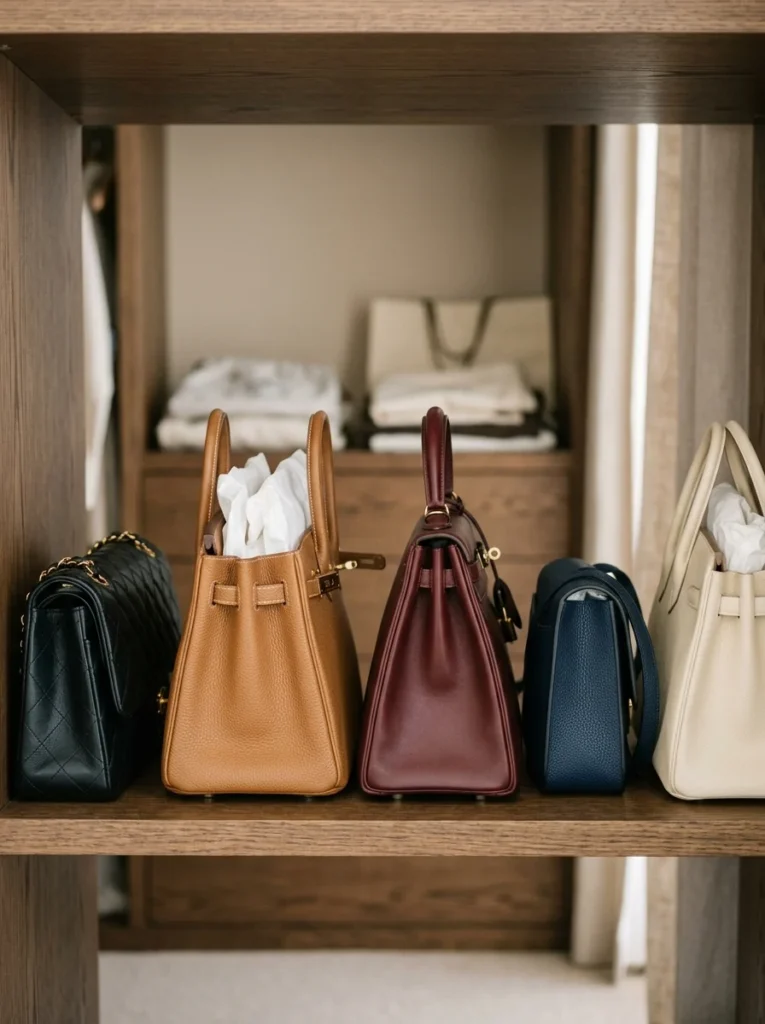
Filling each bag with tissue paper, bubble wrap, or a purpose-made pillow insert before storing it helps the bag hold its intended shape rather than collapsing and creasing over time, a genuinely simple habit that makes a considerable difference in how well a bag looks when you eventually pull it back out for actual use. I stuff every bag in my collection specifically before returning it to storage, and the difference between a properly stuffed bag and one left empty and collapsed for months is immediately obvious the moment you compare the two side by side. A frequent question is whether newspaper works as an acceptable substitute for tissue paper, and I’d genuinely recommend avoiding newspaper specifically, since the ink can transfer onto lighter-colored interior linings, particularly in humid conditions, making acid-free tissue paper or a dedicated bag pillow a safer choice despite the slightly higher cost involved.
3. Store Structured Bags in Individual Dust Bags
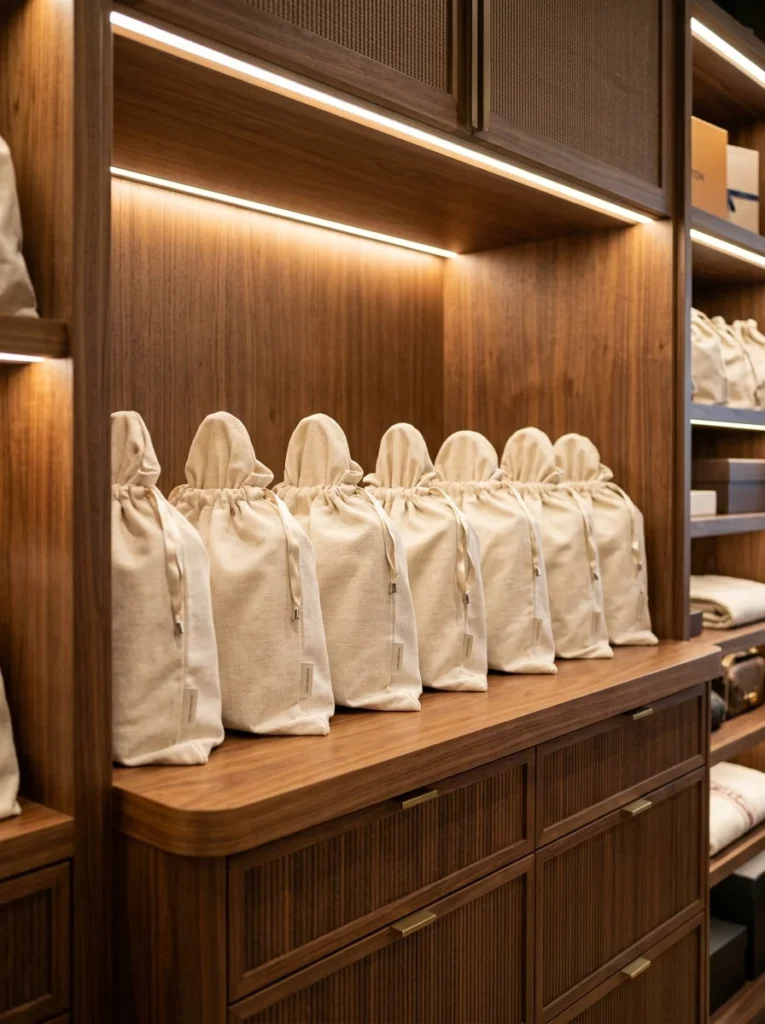
Keeping each structured or leather bag in its own breathable dust bag, whether the original one it came with or a purchased replacement, protects the surface from dust accumulation and light scratching while still allowing the material to breathe, unlike a fully sealed plastic bag that can trap moisture and contribute to mildew over time. I use individual dust bags for my nicer leather pieces specifically, and this simple habit has genuinely kept them looking considerably newer than they would have sitting exposed on an open shelf accumulating dust and light surface scuffs from other nearby items. A common question is whether dust bags are necessary for every single bag in a collection or just the higher-value pieces, and I’d say this genuinely depends on the bag’s material and how much you’re prioritizing long-term protection, since a casual canvas tote likely doesn’t need the same protective treatment as a genuine leather investment piece you’re hoping will last for years.
4. Use Clear Storage Boxes for Visibility
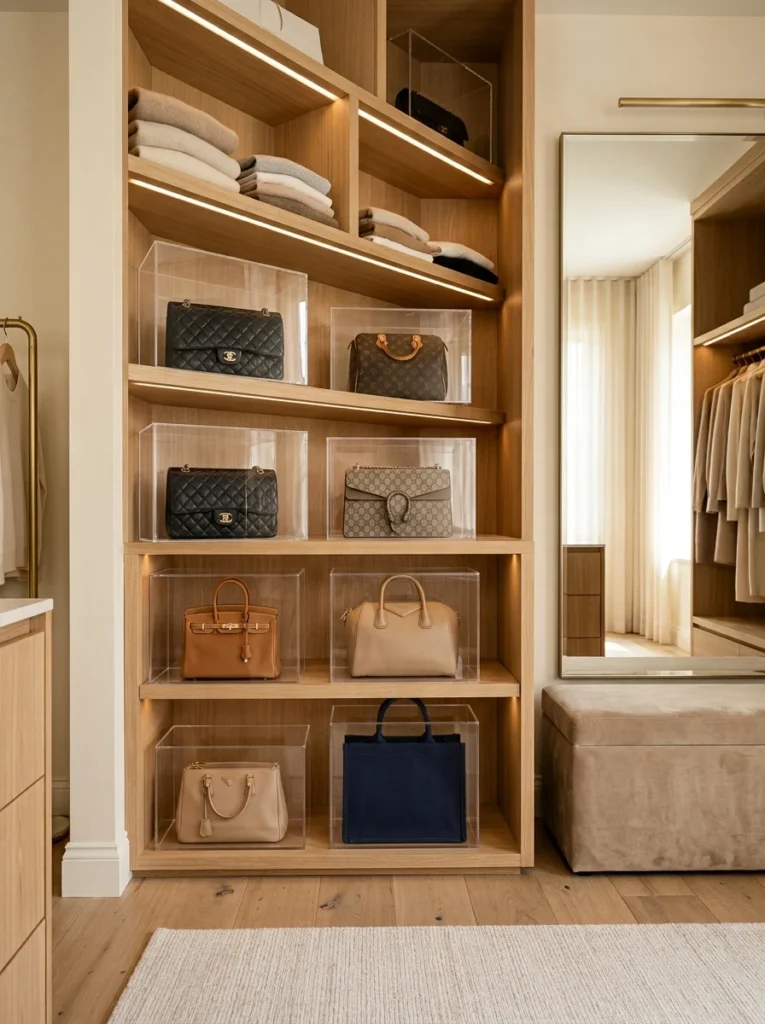
Clear, purpose-made bag storage boxes let you see exactly which bag is inside each container without needing to open several before finding the right one, addressing the same identification challenge that clear shoe boxes solve for footwear collections. I switched several of my structured bags to this system specifically, and being able to glance across a shelf and immediately identify which box holds which bag has genuinely sped up my process of choosing an outfit’s accessories each morning. A question I hear often is whether clear plastic causes any damage to bags over extended storage, and I’d recommend choosing boxes specifically labeled as acid-free and archival quality if you’re storing genuinely valuable pieces long-term, since lower-quality plastic can occasionally interact poorly with certain leather finishes over many months of continuous, sealed storage.
5. Install a Dedicated Purse Rack With Hooks
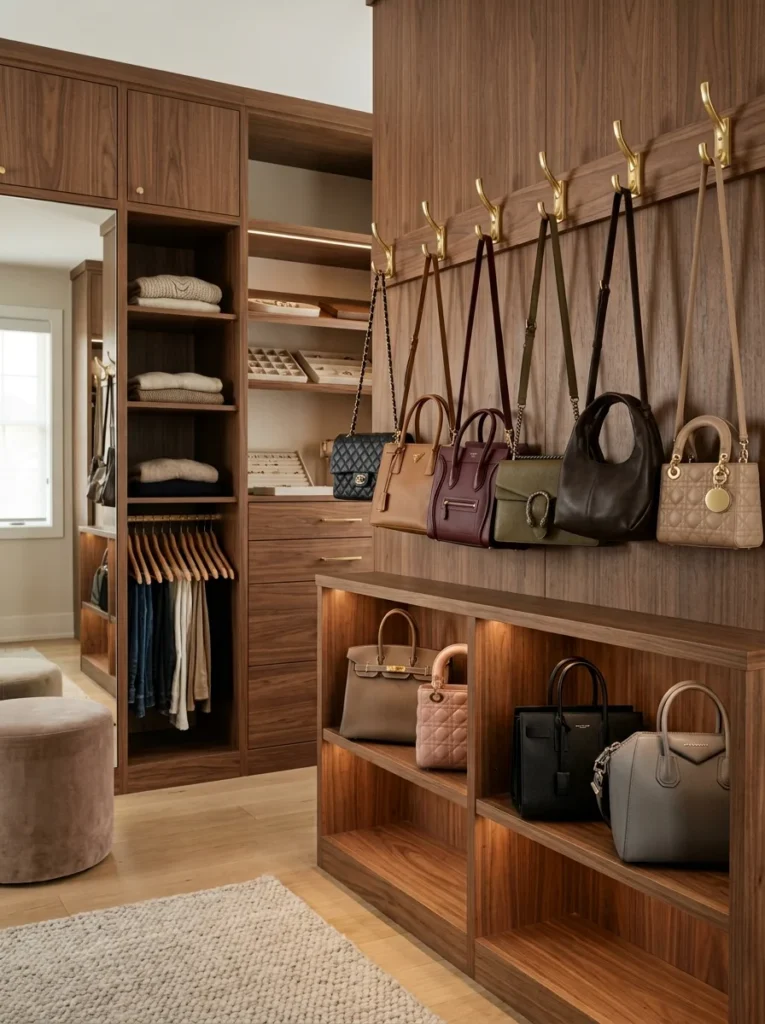
A wall-mounted or closet-mounted rack with multiple hooks specifically designed for bag storage lets you hang your most frequently used pieces where they’re immediately visible and accessible, rather than needing to search through boxes or shelves for your regular daily bag. I installed exactly this for my everyday rotation specifically, keeping my four or five most-used bags hanging in plain view while my more occasional pieces live in the more protective boxed storage elsewhere. A frequent question is whether hanging bags by their handles causes long-term stretching or damage to the straps, and I’d say this is a genuine consideration specifically for bags with delicate or thin straps, so I’d recommend reserving hook storage for pieces with genuinely sturdy handles, while more delicate strap designs are probably better suited to flat or upright shelf storage instead.
6. Use a Closet Door Organizer for Smaller Bags
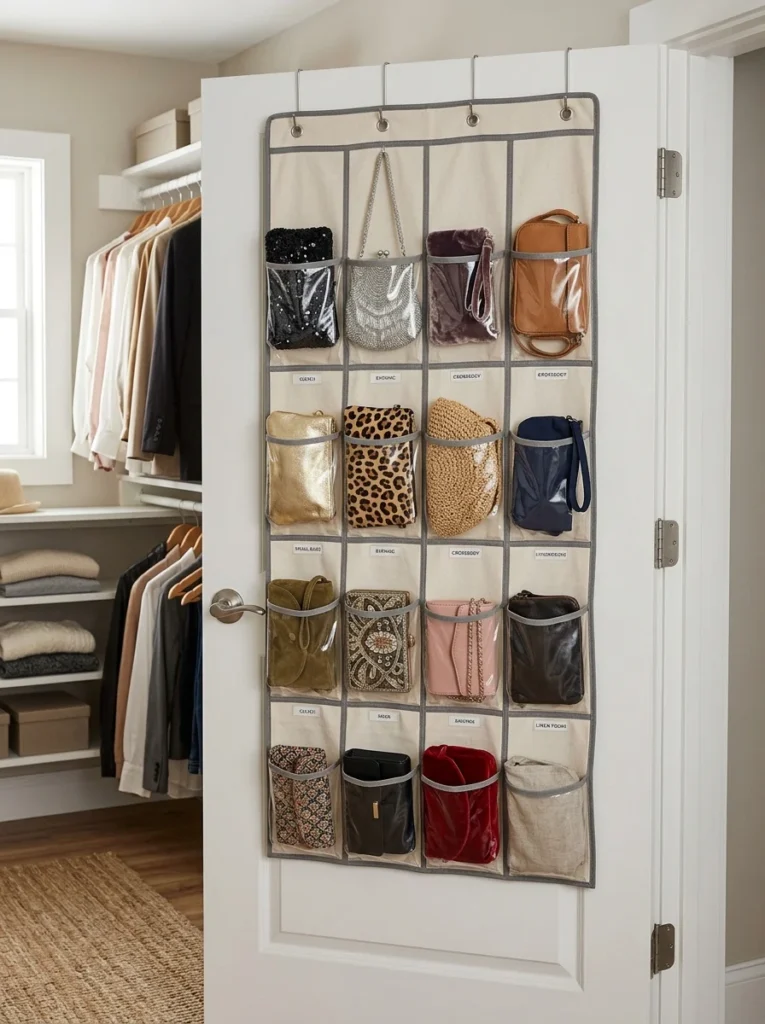
An over-the-door organizer with individual pockets, similar to the shoe organizer concept, works well specifically for smaller clutches, crossbody bags, and evening bags that don’t require the more substantial structural support a larger tote or structured handbag might need. I use exactly this solution for my smaller occasion bags specifically, and having each one in its own visible pocket has made choosing the right small bag for a specific outfit considerably faster than digging through a drawer or box. A question I hear is whether this style of storage works for larger bags too, and I’d say it’s genuinely best suited to smaller, lighter pieces specifically, since standard door organizer pockets typically aren’t deep or sturdy enough to comfortably accommodate a larger structured handbag without straining the pocket fabric or door mounting hardware.
7. Add Cedar Blocks for Natural Odor and Moisture Control
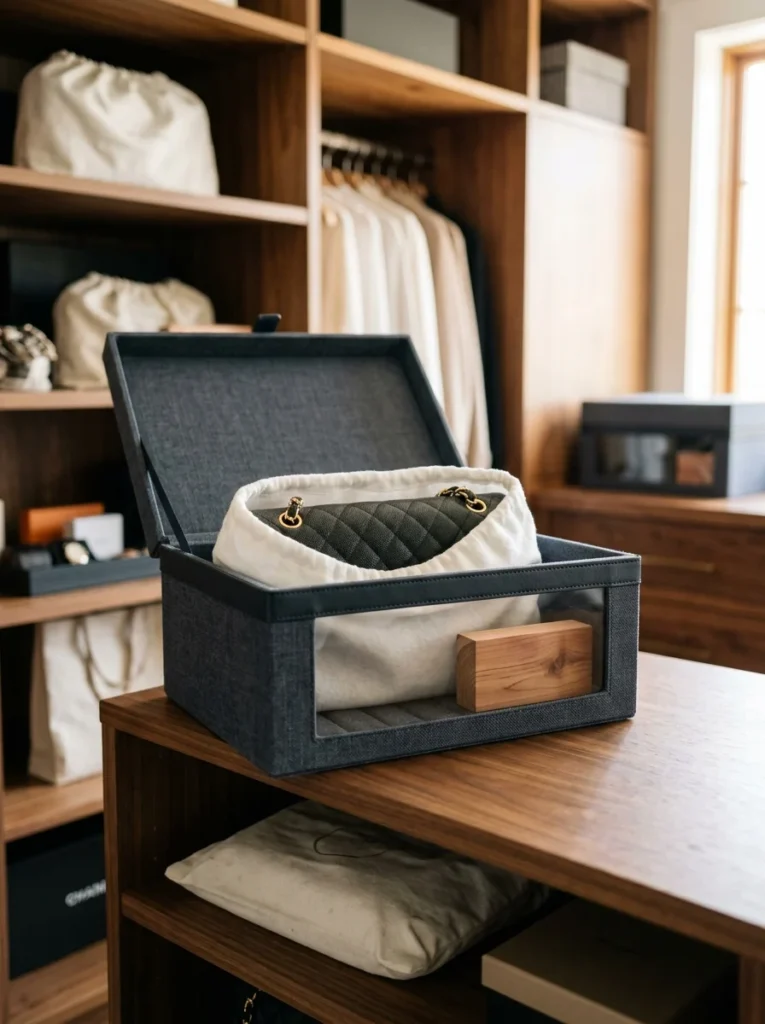
Placing small cedar blocks or sachets within your storage boxes or dust bags helps control both moisture and any lingering odor, particularly valuable for leather bags stored in a closet without much natural airflow. I added cedar blocks to my own storage system specifically for this reason, and the natural, subtle scent has genuinely kept my stored bags smelling fresh rather than developing that slightly musty quality closed storage sometimes produces over extended periods. A common question is whether cedar can affect a bag’s leather in any negative way through direct contact, and I’d recommend keeping the cedar block itself from touching the bag’s actual surface directly, positioning it nearby within the same storage space rather than resting directly against the leather, since prolonged direct contact with any wood, even cedar, isn’t ideal for long-term leather care.
8. Use Adjustable Shelving to Accommodate Different Bag Heights
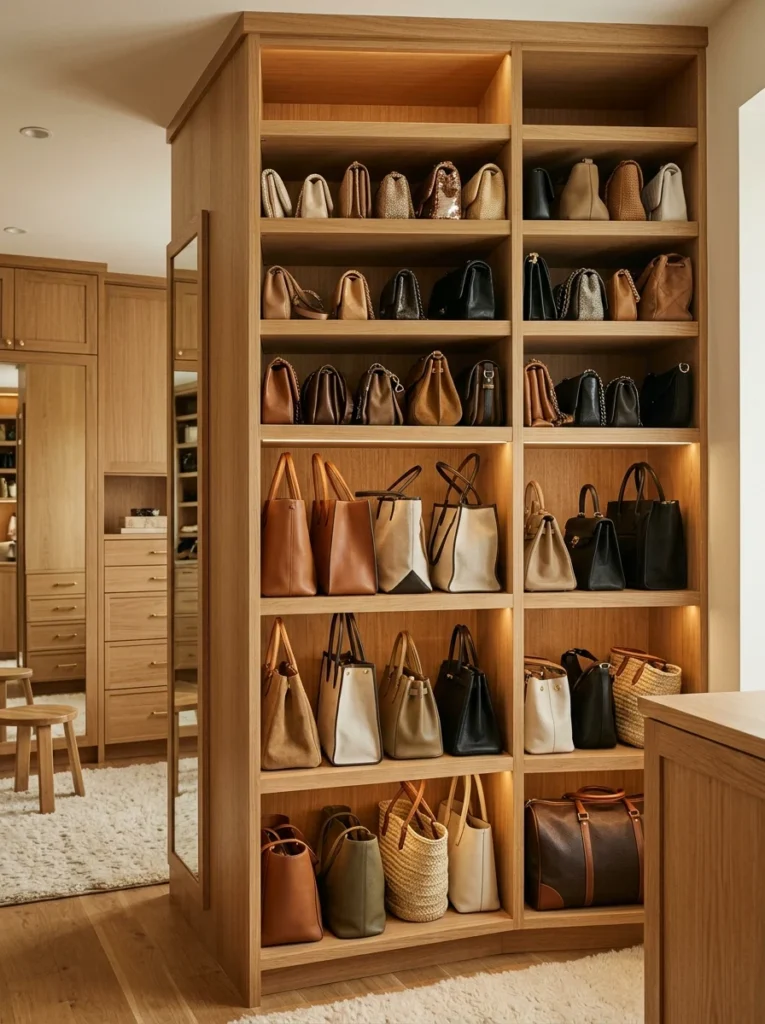
Rather than fixed shelf spacing, adjustable shelving lets you customize the vertical gap between shelves specifically to accommodate your particular collection’s range of bag heights, from a slim clutch to a taller structured tote, without wasting excess vertical space on shorter items or cramming taller ones into insufficient clearance. I had adjustable shelving installed specifically for my bag storage section, and being able to fine-tune the spacing to my actual collection’s specific heights has made considerably more efficient use of my available closet space than the fixed, generic shelving I had previously. A question I hear often is whether this is worth the installation effort for a smaller collection, and I’d say the benefit scales with collection size and variety, a handful of similarly sized bags might not need this level of customization, while a more varied collection genuinely benefits from being able to adjust spacing to match each specific bag’s actual dimensions.
9. Rotate Seasonal Bags to Free Up Prime Storage
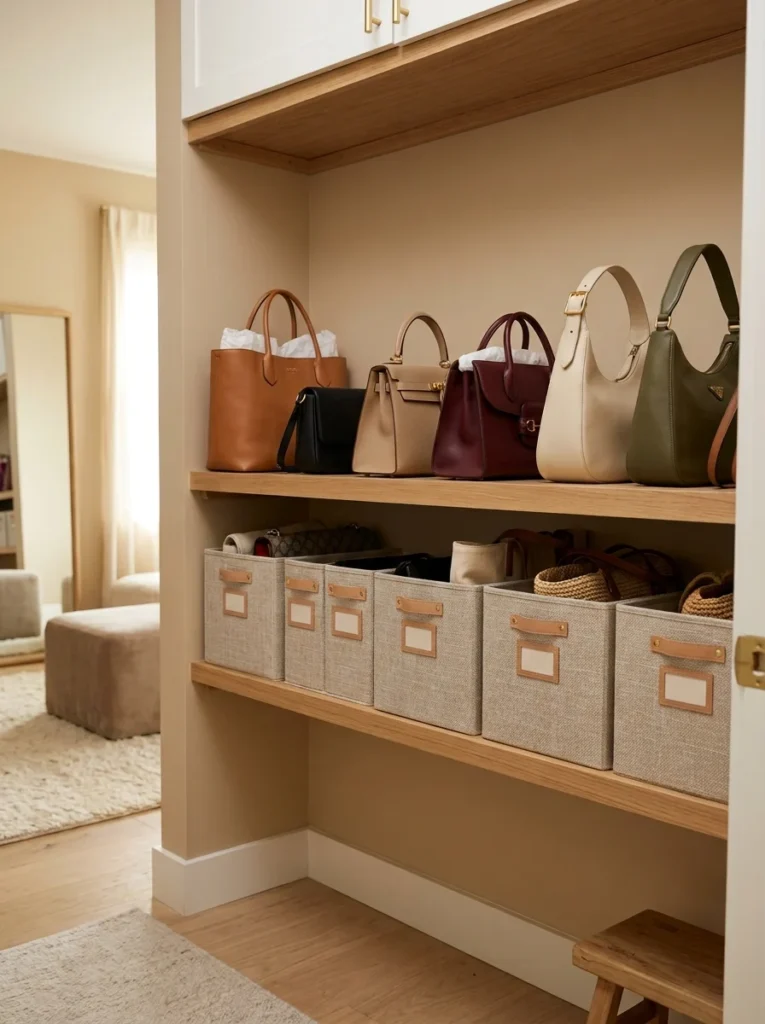
Similar to seasonal clothing rotation, moving bags you’re not currently using, perhaps a woven summer tote during winter months, into secondary storage while keeping your current season’s bags in prime, easily accessible space ensures your best storage real estate is always working for what you’re actually reaching for right now. I rotate my own collection seasonally for exactly this reason, and having only genuinely relevant, current-season bags in my main closet space keeps that area from feeling overcrowded with pieces I won’t touch again for months. A frequent question is how to decide where seasonal bags should actually go during their off-season, and I’d recommend a properly protected box or dust bag specifically, stored in a spare closet or under-bed space, rather than simply shoving them into a less visible corner without any actual protection, since even off-season storage should maintain the same shape and dust protection principles as your everyday rotation.
10. Use a Bag Insert for Structured Storage and Daily Use
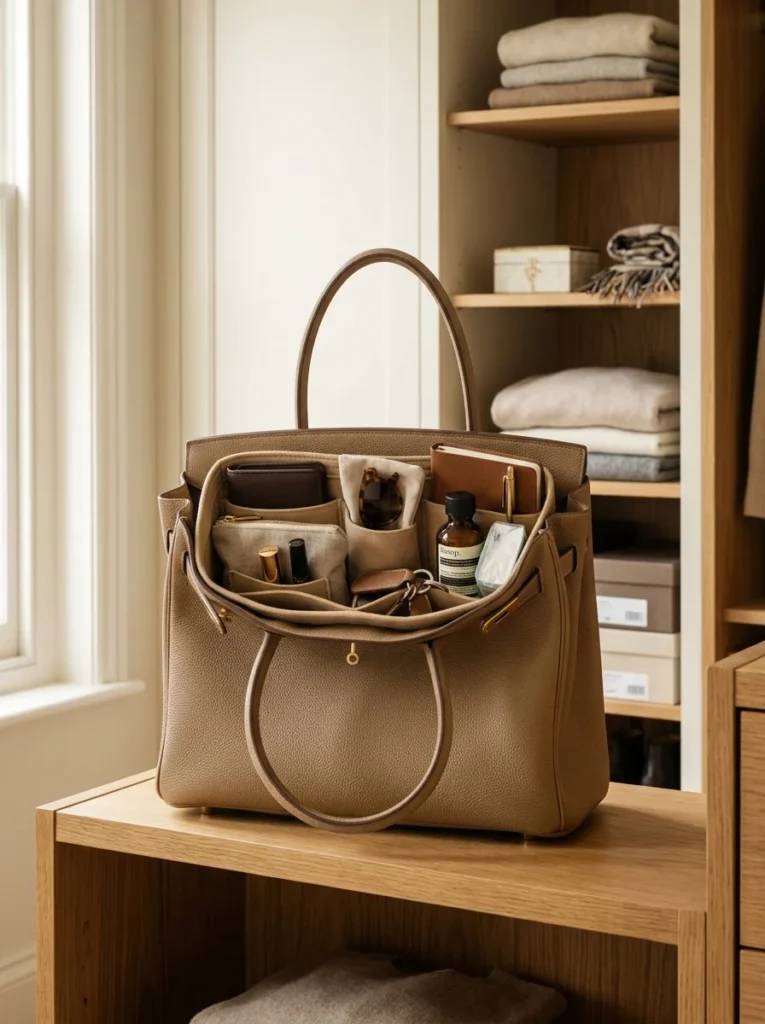
A purpose-made bag insert, essentially a rigid or semi-rigid organizer that sits inside your purse itself, helps maintain the bag’s shape both during storage and daily use while also keeping your actual belongings more organized within the bag’s interior. I use inserts specifically in my structured totes, and beyond the organizational benefit for my daily items, the insert genuinely helps the bag hold its shape even when it’s not stuffed with tissue paper during active daily use. A common question is whether inserts work for every bag style, and I’d say they’re most effective specifically for structured totes and larger bags with enough interior volume to accommodate an insert without feeling overly rigid or restrictive, while smaller clutches or very soft, slouchy styles typically don’t have enough room or appropriate structure for this particular solution to make sense.
11. Add a Small Repair Kit Near Your Storage
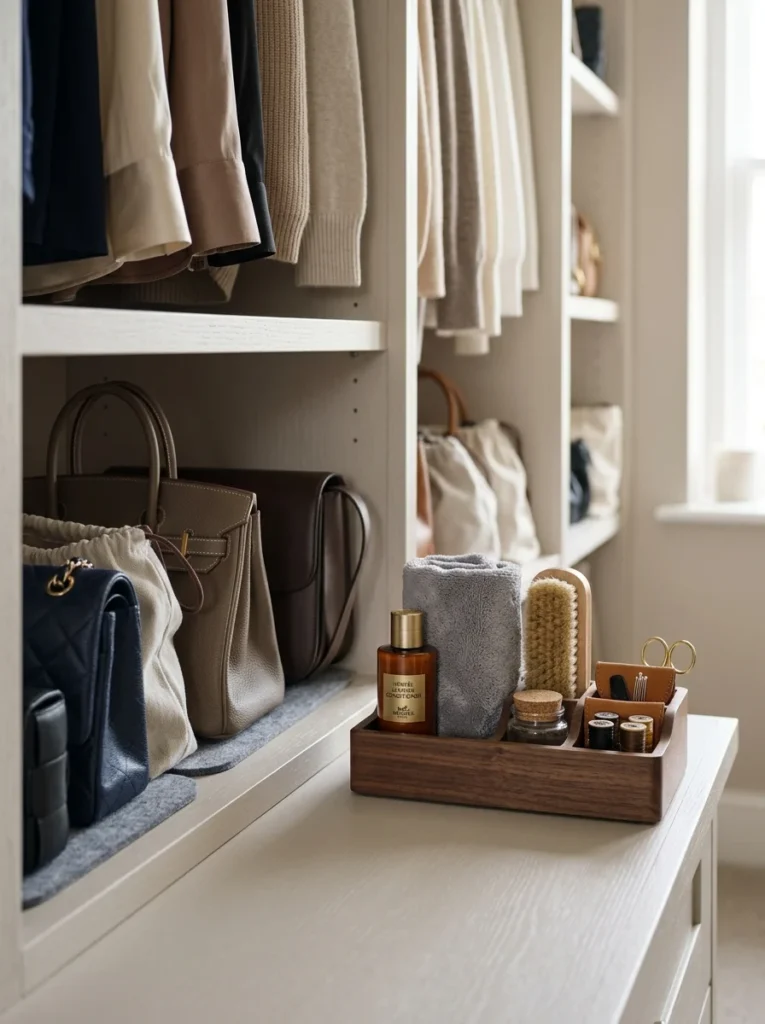
Keeping a small kit with leather conditioner, a soft cloth, and basic touch-up supplies near your bag storage area encourages regular, easy maintenance, since having the supplies genuinely within reach makes you considerably more likely to actually address minor scuffs or dryness promptly rather than letting small issues accumulate into bigger problems over time. I keep exactly this kind of small kit on my closet shelf specifically, and having it immediately accessible has genuinely made me more consistent about periodic leather conditioning than I was when the supplies were stored somewhere less convenient elsewhere in the house. A question I hear is how often leather bags genuinely need this kind of conditioning treatment, and I’d recommend roughly every three to six months for regularly used leather pieces, though this can vary somewhat depending on your specific climate’s humidity levels and how frequently a given bag is actually being used and exposed to the elements.
12. Use Labeled Bins for Long-Term Storage of Rarely Used Bags
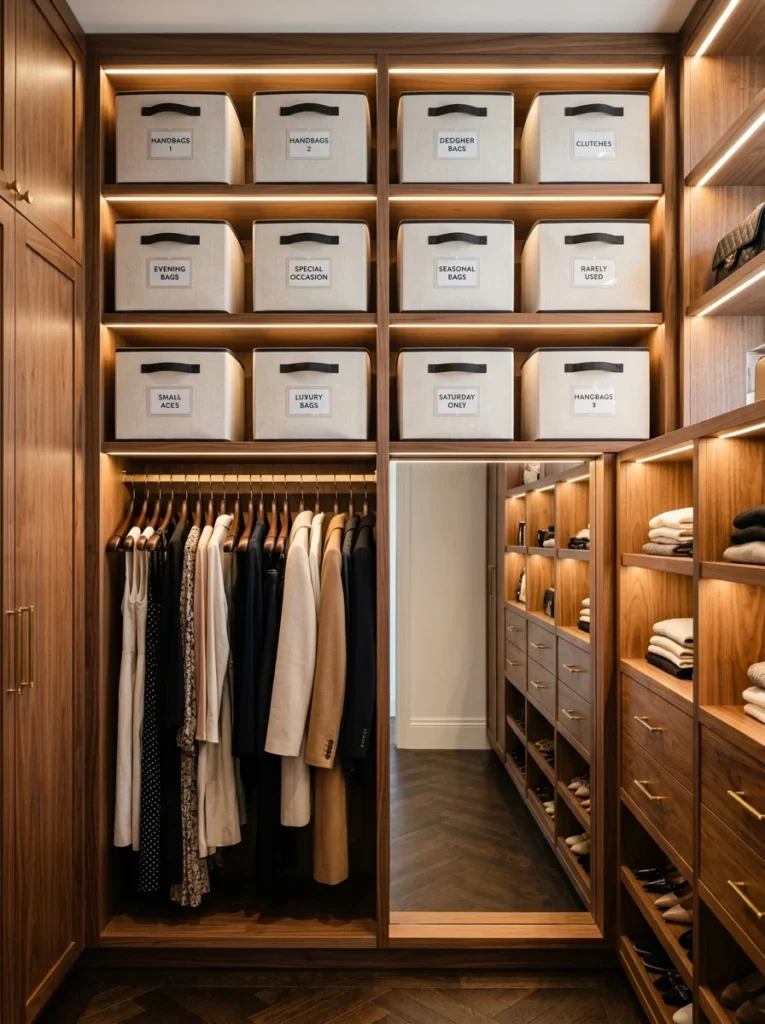
For bags you’re keeping for sentimental reasons or genuine occasional use but don’t need in your regular rotation, clearly labeled storage bins in a closet or under-bed space keep these pieces protected and organized without occupying your prime, everyday storage real estate. I keep several bags in exactly this kind of longer-term labeled storage, pieces I’m not ready to part with but also don’t reach for often enough to justify prime closet space, and the clear labeling means I can still locate a specific one relatively quickly whenever the rare occasion calls for it. A frequent question is how to decide which bags belong in this longer-term category versus active rotation, and I’d recommend being honest about actual usage over the past year specifically, similar to the general closet organization principle, since bags genuinely used only once or twice annually are reasonable candidates for this more protected, less immediately accessible storage tier.
13. Photograph Your Collection for Easy Reference
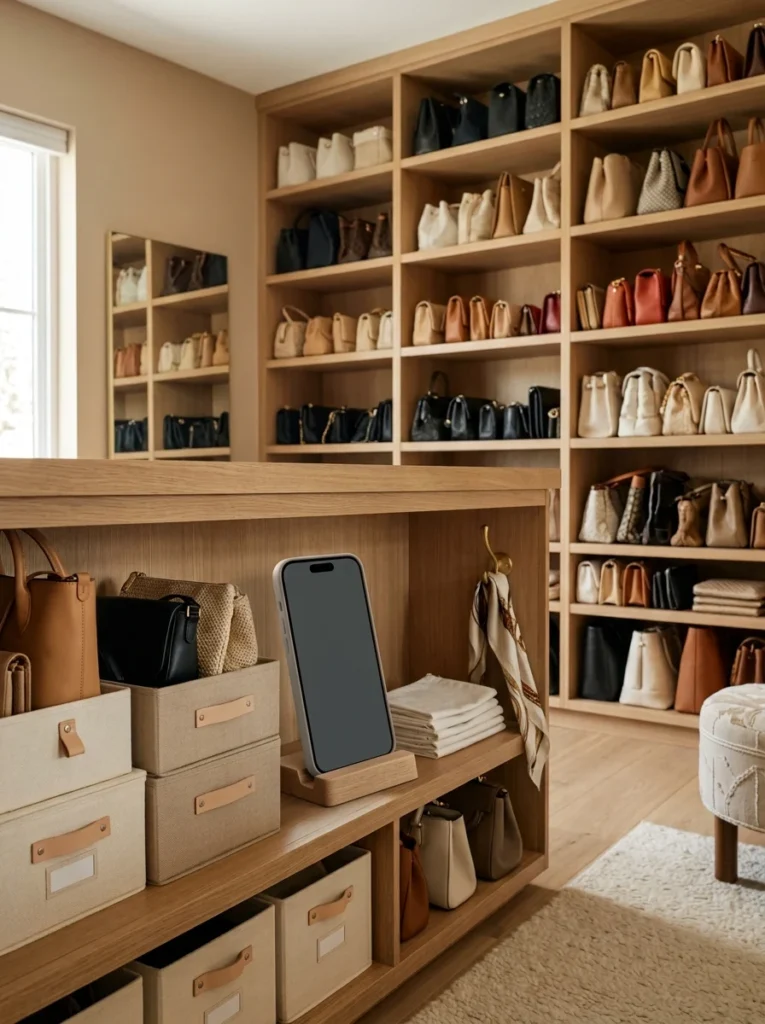
Taking a simple photo of each bag, whether stored on your phone or printed and attached to its storage box, creates a quick visual reference that lets you remember what you own and where it’s stored without needing to physically open every box or dig through a closet each time you’re trying to decide what to wear. I did exactly this during my own reorganization, and having a simple photo reference on my phone has genuinely helped me remember bags I own but don’t use often enough to keep top of mind, occasionally prompting me to actually pull out and use a piece I’d otherwise forgotten about entirely. A common question is whether this feels like excessive effort for a moderate-sized collection, and I’d say it’s genuinely most valuable for larger collections specifically, where remembering every single piece from memory alone becomes considerably harder, while a smaller collection of just a handful of bags might not need this additional documentation step at all.
14. Reassess Your Collection and Storage System Annually
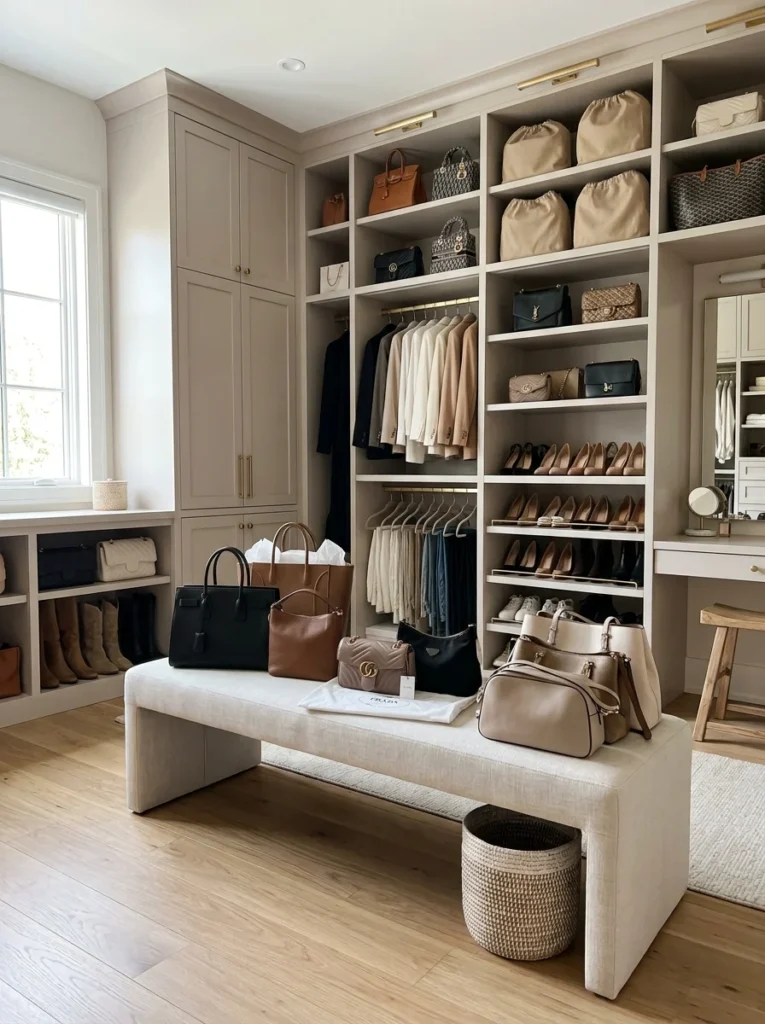
The final piece of advice is committing to an honest annual review of your entire bag collection and its storage system, evaluating which pieces you’ve genuinely used over the past year, which storage solutions are actually working well, and which bags might be better suited for donation or resale rather than continuing to occupy space in your ongoing storage rotation. I do exactly this kind of review once a year specifically, and it consistently surfaces a bag or two I’ve genuinely stopped reaching for, prompting me to either donate it or, for higher-value pieces, consider reselling it to someone who’ll actually use it rather than letting it sit indefinitely in my own storage. A frequent question is how to handle bags with genuine sentimental value that you’re not actually using but don’t want to part with either, and I’d say it’s completely reasonable to keep a small, deliberately limited number of purely sentimental pieces in your longer-term storage specifically, as long as you’re being honest that this is a conscious choice rather than simply avoiding a harder decision about a collection that’s quietly grown beyond what your storage system can actually support well.
Final Thoughts
Looking back at that pile of slumped, slowly deforming bags on my closet floor, genuinely forgotten simply because I’d never treated them as a real collection worth organizing properly, it’s remarkable how much a genuine storage system changed both how often I actually use my bags and how well they’ve held up since. Between all 14 of these ideas, the underlying theme is really that purses, much like shoes or any other collected accessory, hold their value and usability considerably better with a small amount of intentional protection and organization, rather than being treated as an afterthought simply tossed wherever floor space happens to be available.
If your own bag collection is living in that same forgotten pile, I’d suggest starting with basic shape maintenance, shelf dividers and stuffing your bags before storage, before investing in more elaborate boxes or racks, since those foundational habits protect your existing collection immediately regardless of whatever storage furniture you eventually choose. From there, build out the rest of the system gradually, the same way mine eventually came together, until a closet floor that once quietly deformed my nicest bags becomes a genuinely organized collection you’re excited to actually use.