
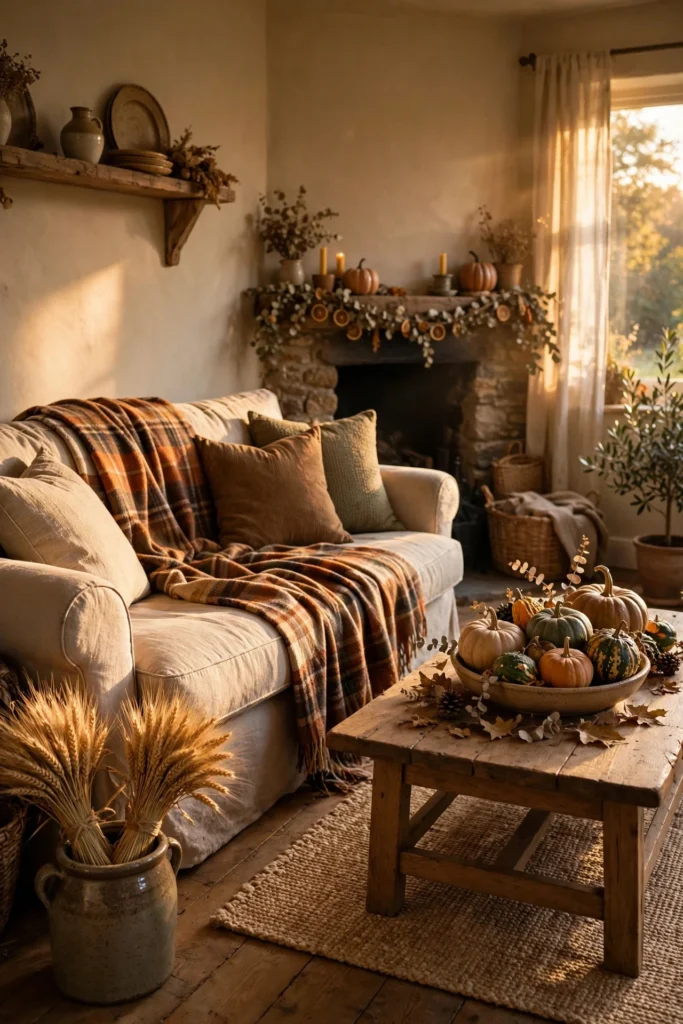
Halloween hogs all the October attention, but the harvest season deserves a look of its own — one that starts in September, ignores the spooky aisle entirely, and carries straight through Thanksgiving dinner. Fall harvest decor is about abundance: wheat, gourds, apples, dried leaves, and the warm, gathered-in feeling of the season.
These 18 ideas lean natural and timeless, so nothing here screams “put me away November 1st.” Most cost under $25 and take less than an hour. Whether you live on a farm or in a fourth-floor walkup, there’s a harvest look in here that fits your rooms — and your weekend.
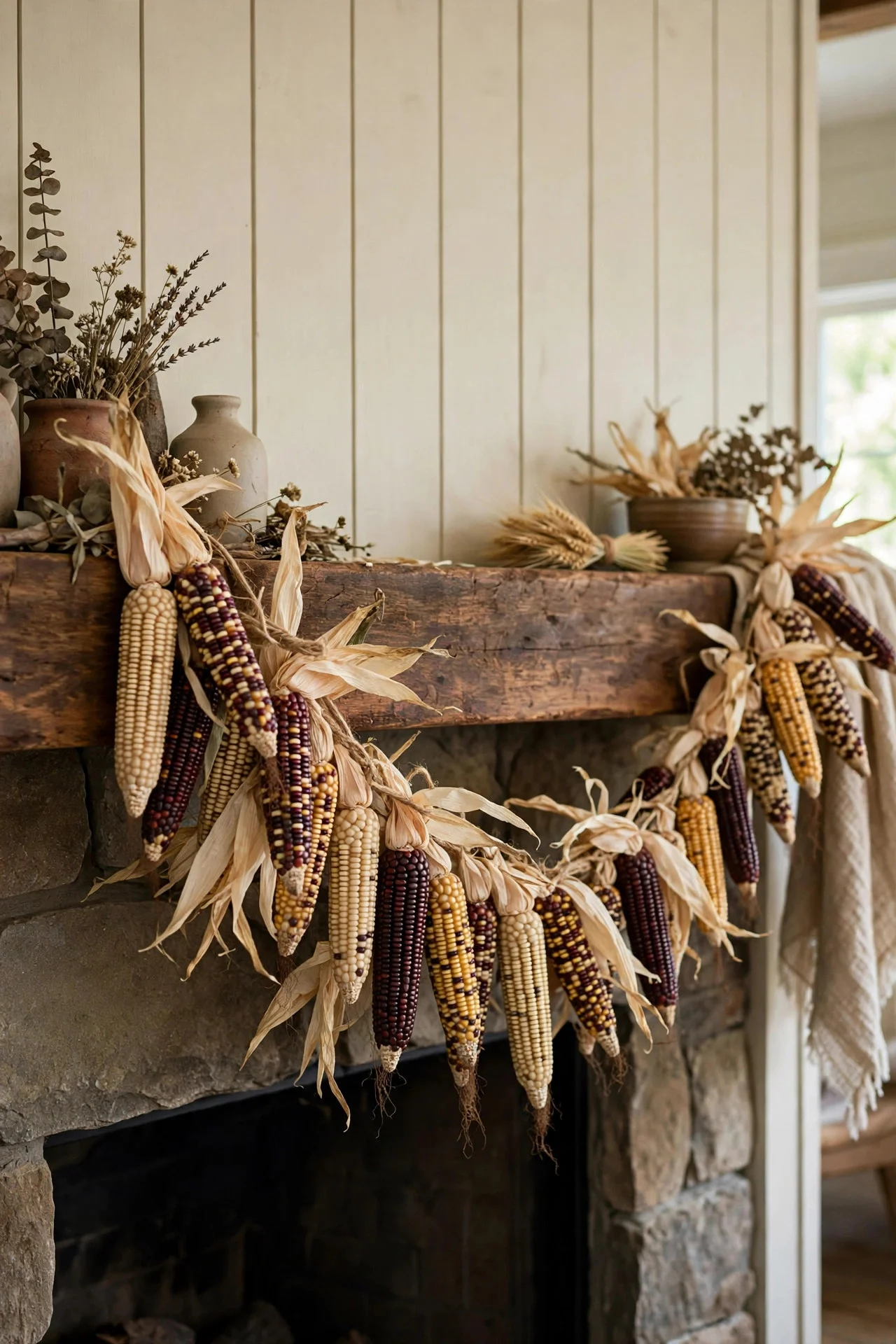
1. A Dried Indian Corn Garland
Nothing says harvest faster than a garland of dried Indian corn — those cream, burgundy, and gold kernels are nature’s own color story. Drape one across the mantel, over a doorway, or along a stair rail, letting the husks hang loose for texture.
Real dried corn lasts the whole season indoors. Buy a pre-made 6-foot garland for about $20 at a craft store, or DIY with three bundles of decorative corn and twine. Keep it out of direct sun so the colors don’t fade. Mist the garland lightly with water once a month — real dried corn turns brittle in heated indoor air.
Try this: Tuck a few dried corn ears into a tall floor vase as a backup display — same harvest feel, zero hanging required.
2. A Wooden Dough Bowl of Mixed Gourds
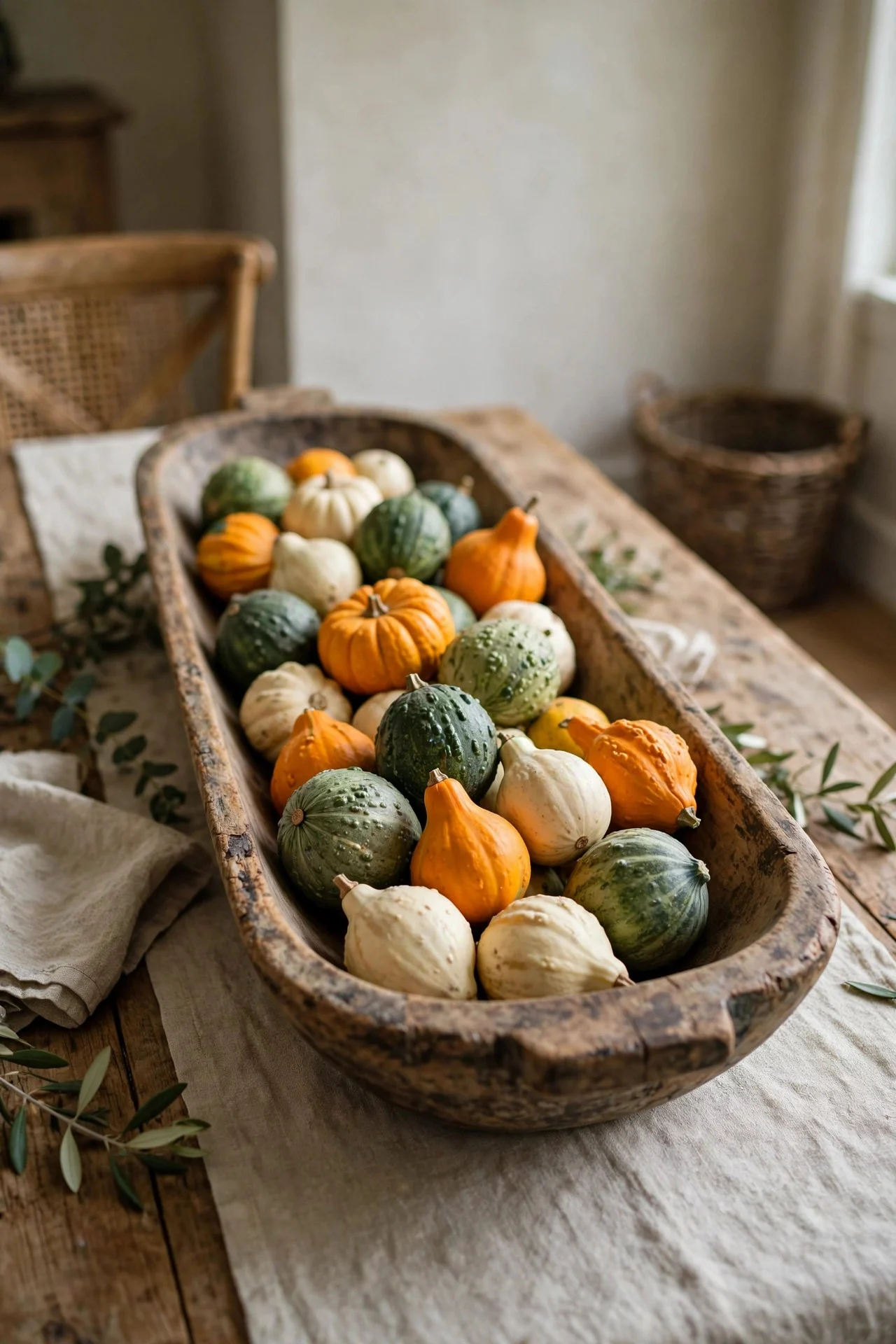
Mini gourds are the unsung heroes of fall: bumpy, striped, and weirdly shaped in the best way. Fill a long wooden dough bowl — the kind with handles, about 20 inches across — with a tumble of mixed minis in green, orange, and cream.
Real gourds last 6–8 weeks indoors before softening, which is exactly the September-to-Thanksgiving window. When one goes soft, compost it and shift the rest. Set the bowl on a dining table, coffee table, or kitchen island. Rotate the bowl a quarter turn every week so the same gourds aren’t always on display — it keeps the arrangement looking fresh.
Try this: Nestle a small LED tea light among the gourds for a harvest centerpiece that glows after dark.
3. Wheat Sheaves in a Stoneware Crock
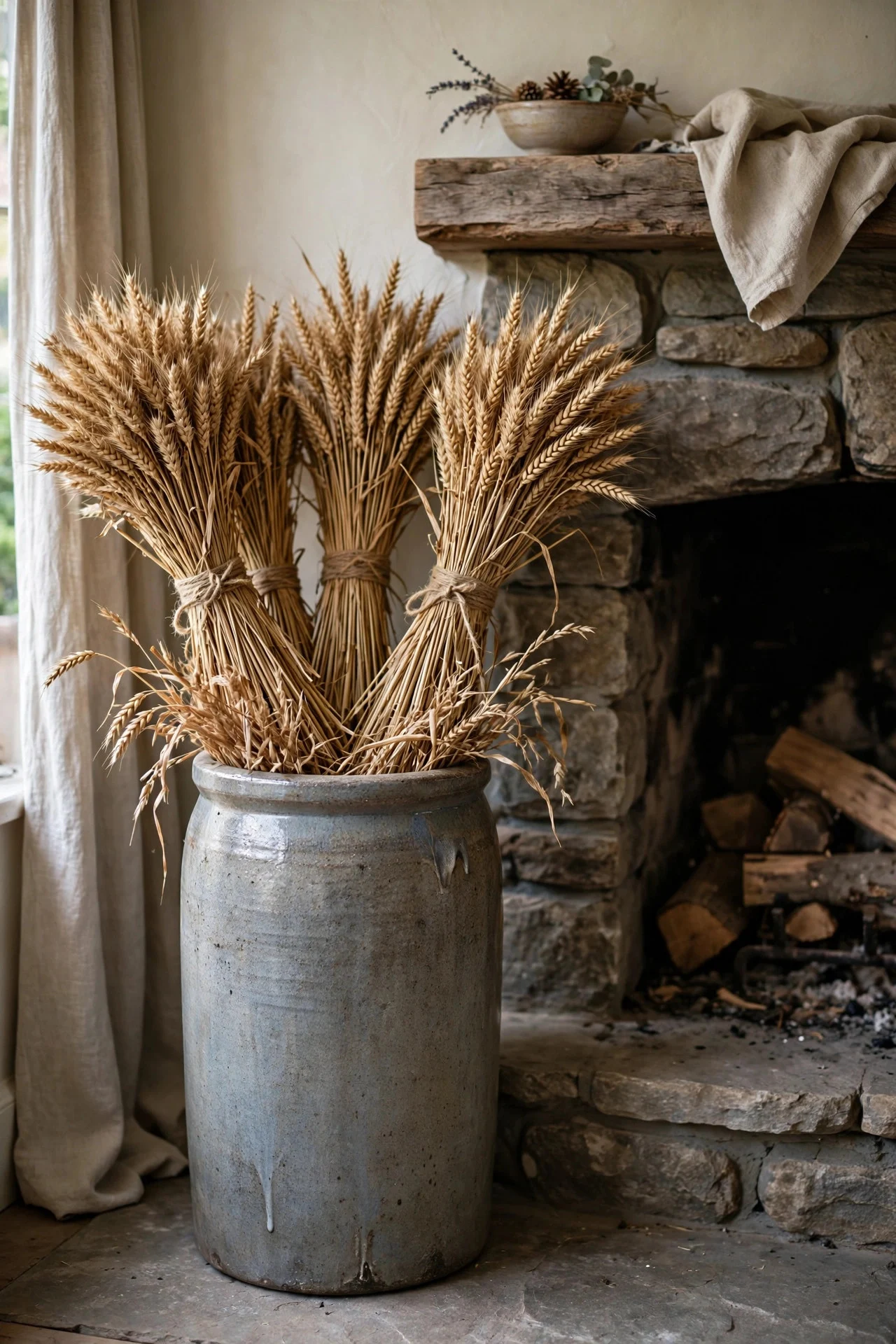
A bundle of dried wheat in a tall stoneware crock is pure harvest symbolism — and it couldn’t be easier. Tie 20–30 stems with jute twine, fan them out, and drop the bundle into a 12-inch crock by the front door or beside the fireplace.
Dried wheat lasts for years if you keep it dry, making this a genuine one-time purchase of around $15. Shake the bundle outside first; loose chaff gets everywhere on day one. Stand the crock on a felt pad if it’s on hardwood — stoneware can leave faint rings over a whole season.
Try this: Add three dried lunaria stems — those papery silver “money plant” discs catch the light beautifully against the gold wheat.
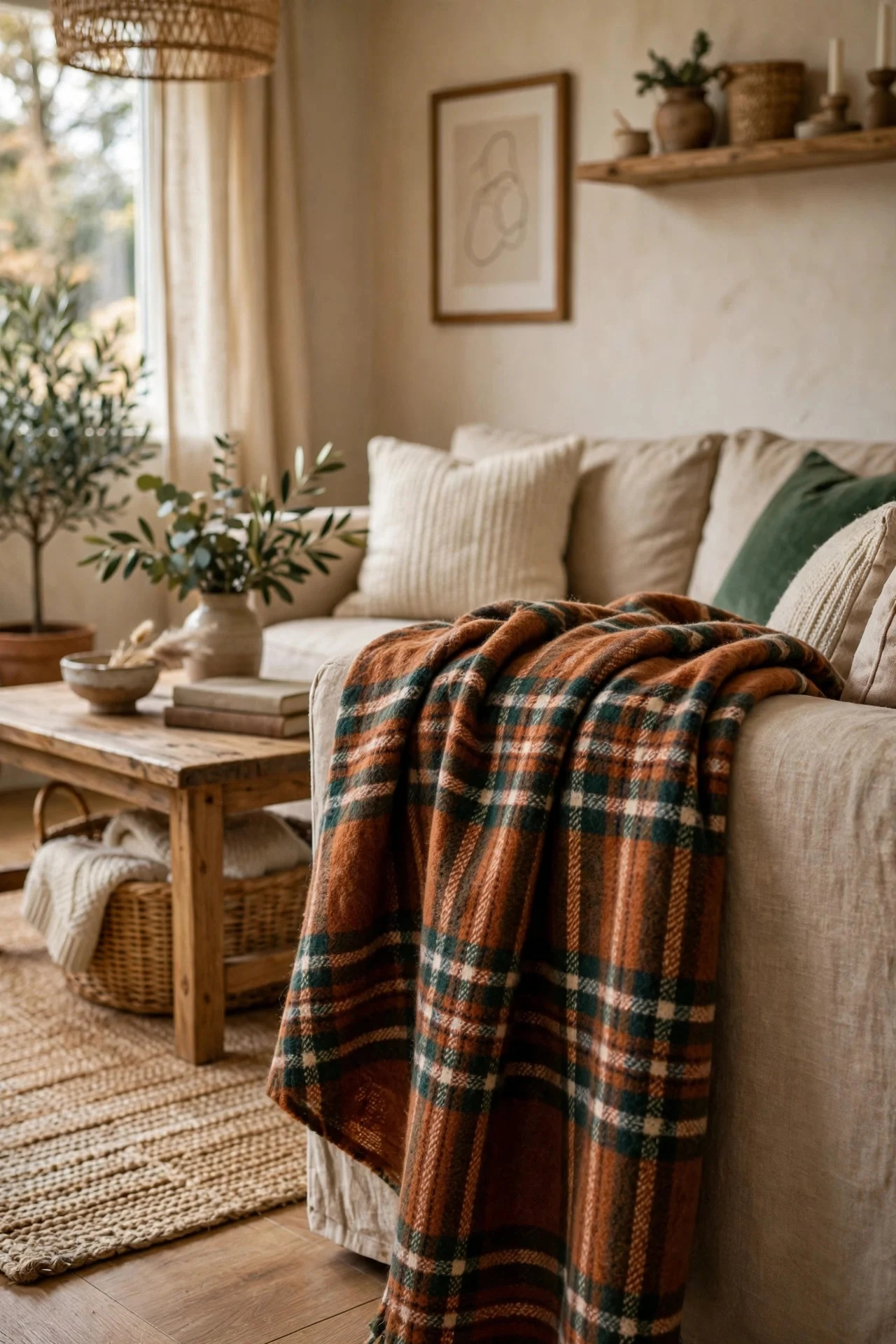
4. A Plaid Wool Throw on the Sofa Arm
Harvest season is textile season. Drape one plaid wool throw — in rust, forest, and cream — over the arm of your sofa or the back of a reading chair. It instantly says autumn the way nothing in a box can.
Fold it in thirds lengthwise so it hangs neatly instead of sliding off. Real wool throws run $40–$60 and last decades; a wool-blend from a home store gets you the look for half that and still feels substantial. Wash the throw once before first use; new wool throws shed fibers for the first few weeks.
Try this: Match the throw’s dominant color to one cushion you already own — the room will look planned instead of piled.
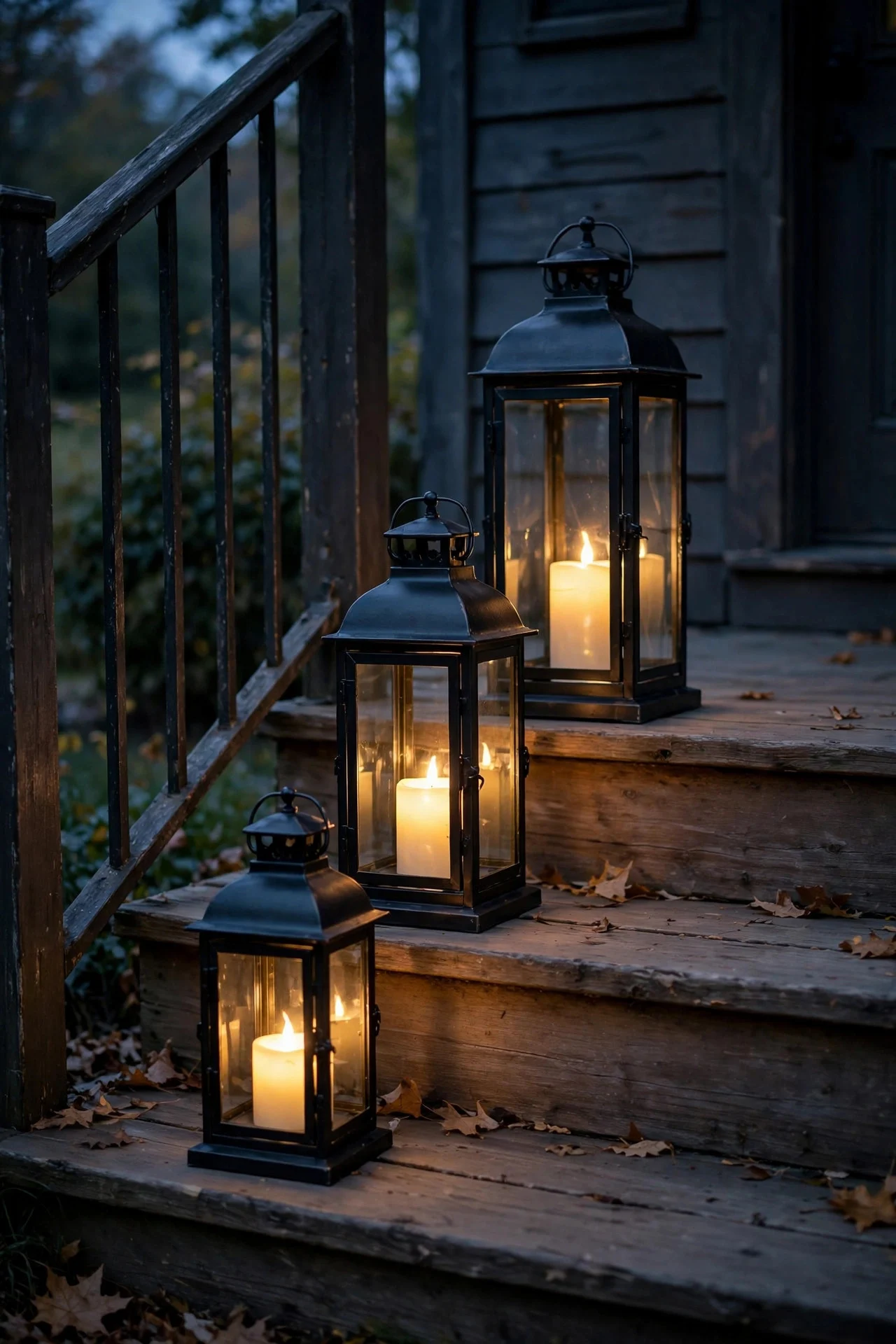
5. A Cluster of Lanterns With LED Candles
As evenings get dark earlier, lanterns bring the harvest glow indoors and out. Group three lanterns — tall, medium, short — on a porch step, hearth, or entry table, each with a battery LED pillar candle inside.
Look for lanterns with glass panels rather than open frames; they throw prettier light and keep the faux flame looking real. A set of three costs around $35, and the candles run on a timer you set once. Set all three timers to the same on-off schedule in one sitting — mismatched lantern timing looks accidental.
Try this: Fill the bottom of each lantern with dried lentils or wheat berries — a harvest-season filler that hides the candle base.
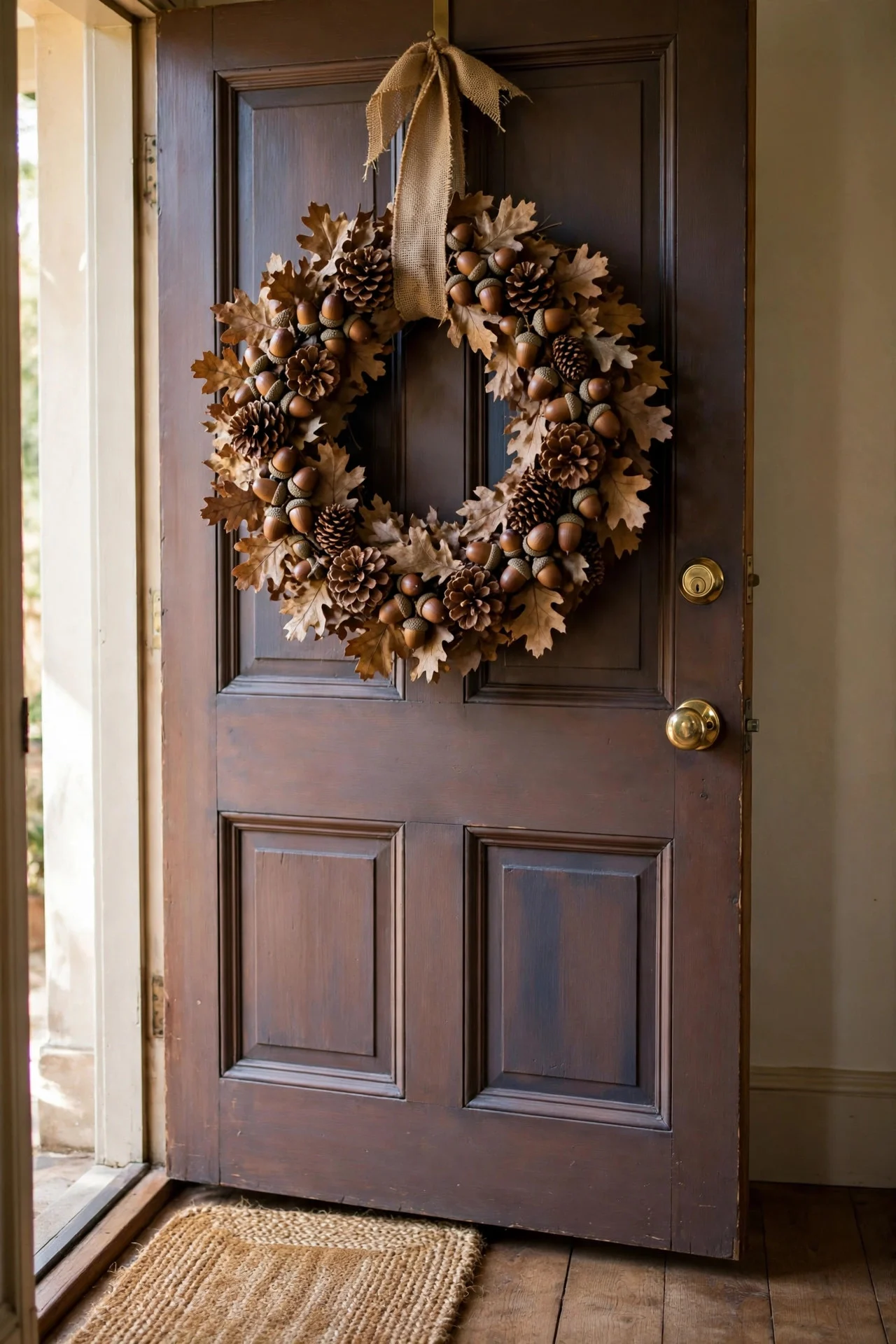
6. An Acorn-and-Pinecone Wreath
Skip the silk-leaf wreath everyone owns. A 22-inch wreath built from real acorns, pinecones, and dried oak leaves looks gathered rather than manufactured — and it works from September straight through November.
DIY it on a grapevine base with a hot-glue gun in about an hour, or buy one premade for $30–$40. Hang it with a wide burlap ribbon instead of a wire hanger; the ribbon becomes part of the design. Hang the wreath on an over-the-door hook rated for 5+ pounds — natural-material wreaths are heavier than they look.
Try this: Spray the pinecones with a light matte sealer before gluing — it stops sap from sticking to your door and keeps them from crumbling.
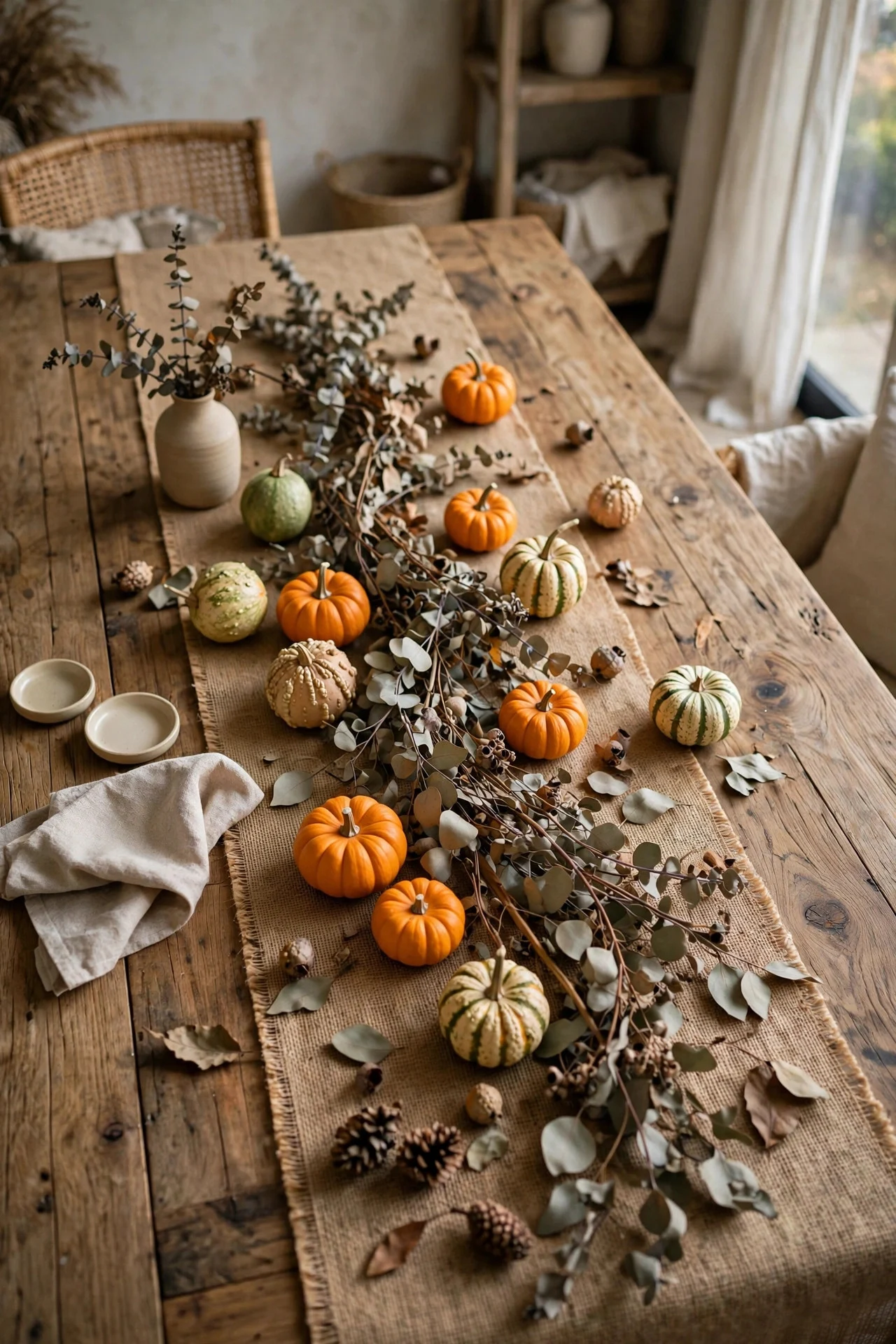
7. A Burlap Runner Harvest Tablescape
For the dining table, start with a 14-inch-wide burlap runner down the center — it’s the harvest table’s blank canvas. Layer a trail of dried eucalyptus down the middle, then dot mini pumpkins and gourds along it in odd numbers.
The whole thing assembles in fifteen minutes and costs maybe $20 if you buy the runner and forage the rest. Low profile matters: guests need to see each other across the table, so keep everything under 8 inches tall. Shake the runner outside after each dinner party — burlap sheds fibers that migrate straight onto dark clothing.
Try this: Scatter dried apple slices among the gourds — they smell faintly sweet and look like little amber jewels.
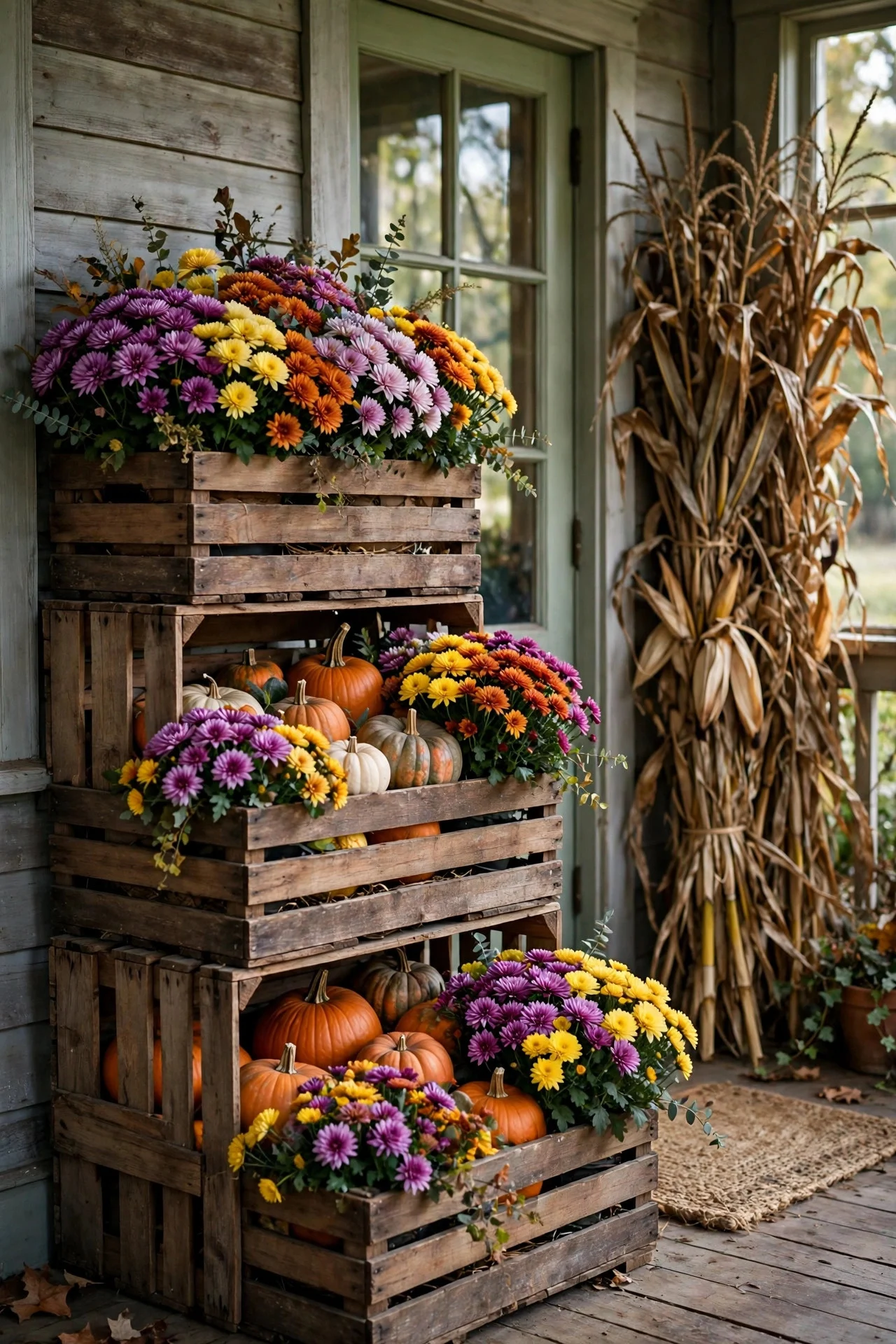
8. Wooden Crates on the Porch
Two or three wooden crates stacked by the front door make the porch feel like a farm stand. Fill them with mums in harvest colors, small pumpkins, and a bundle of dried cornstalks tied to the porch post beside them.
Old crates run $8–$12 at flea markets; new ones from a craft store cost about the same. Mums in 8-inch pots are the best fall porch deal — around $6 each and they bloom for weeks if you water them. Line crate bottoms with landscape fabric before adding mums — it keeps soil from staining the wood.
Try this: Turn one crate on its side as a shelf — it doubles your display space and adds height to the arrangement.
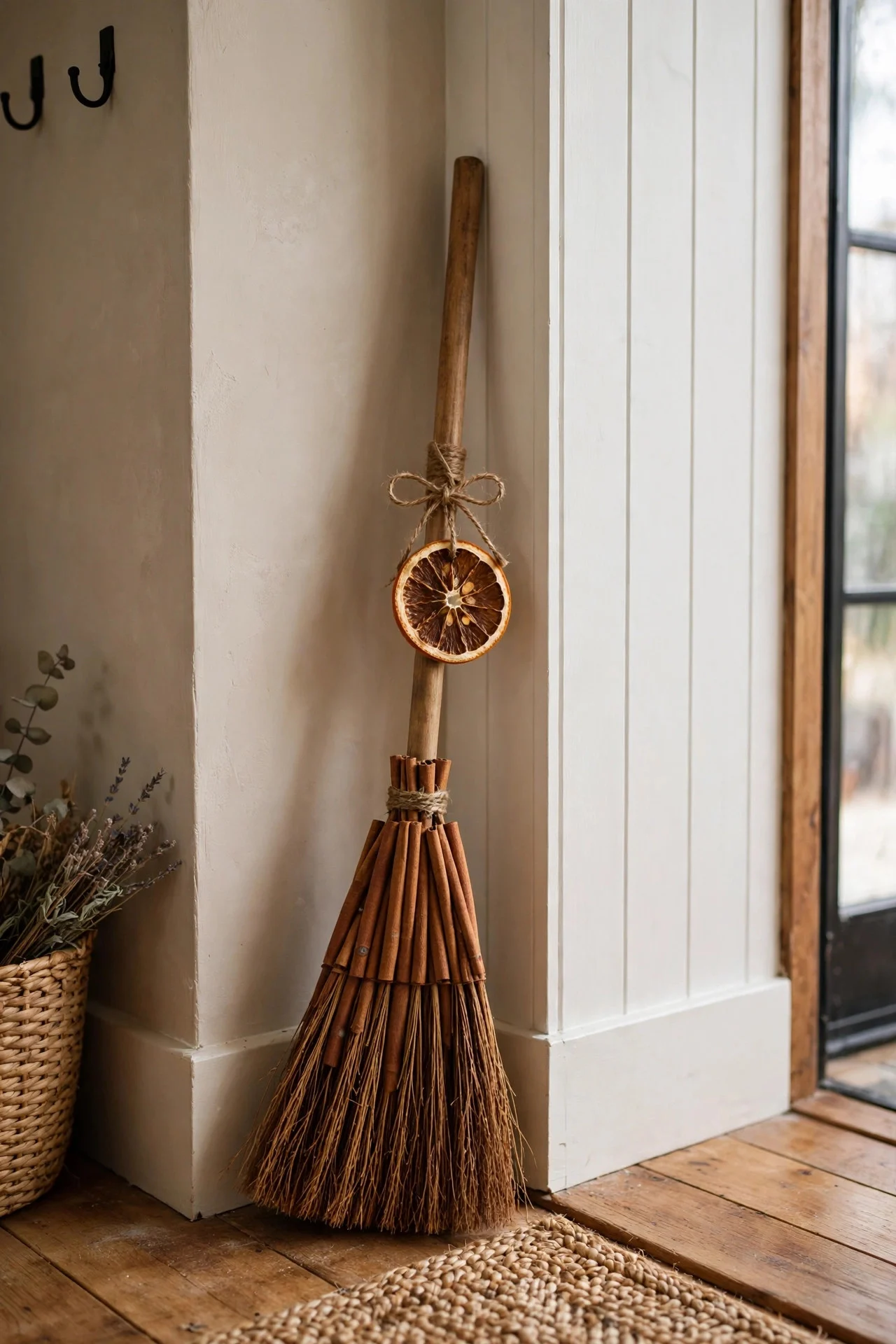
9. A Cinnamon Broom by the Entry
The cinnamon broom is fall’s best-kept secret: a full-size decorative broom made of cinnamon sticks that scents an entire entryway for weeks. Lean one in the corner by the front door or hang it on a hook.
They cost about $8 at grocery and craft stores in September and October. The scent is strong on day one, then settles into a warm background note — exactly what you want greeting visitors. When the scent fades around week three, crush a few broom sticks gently to release a fresh burst.
Try this: Tie a dried orange slice and a sprig of preserved eucalyptus to the broom’s handle with twine — instant upgrade.
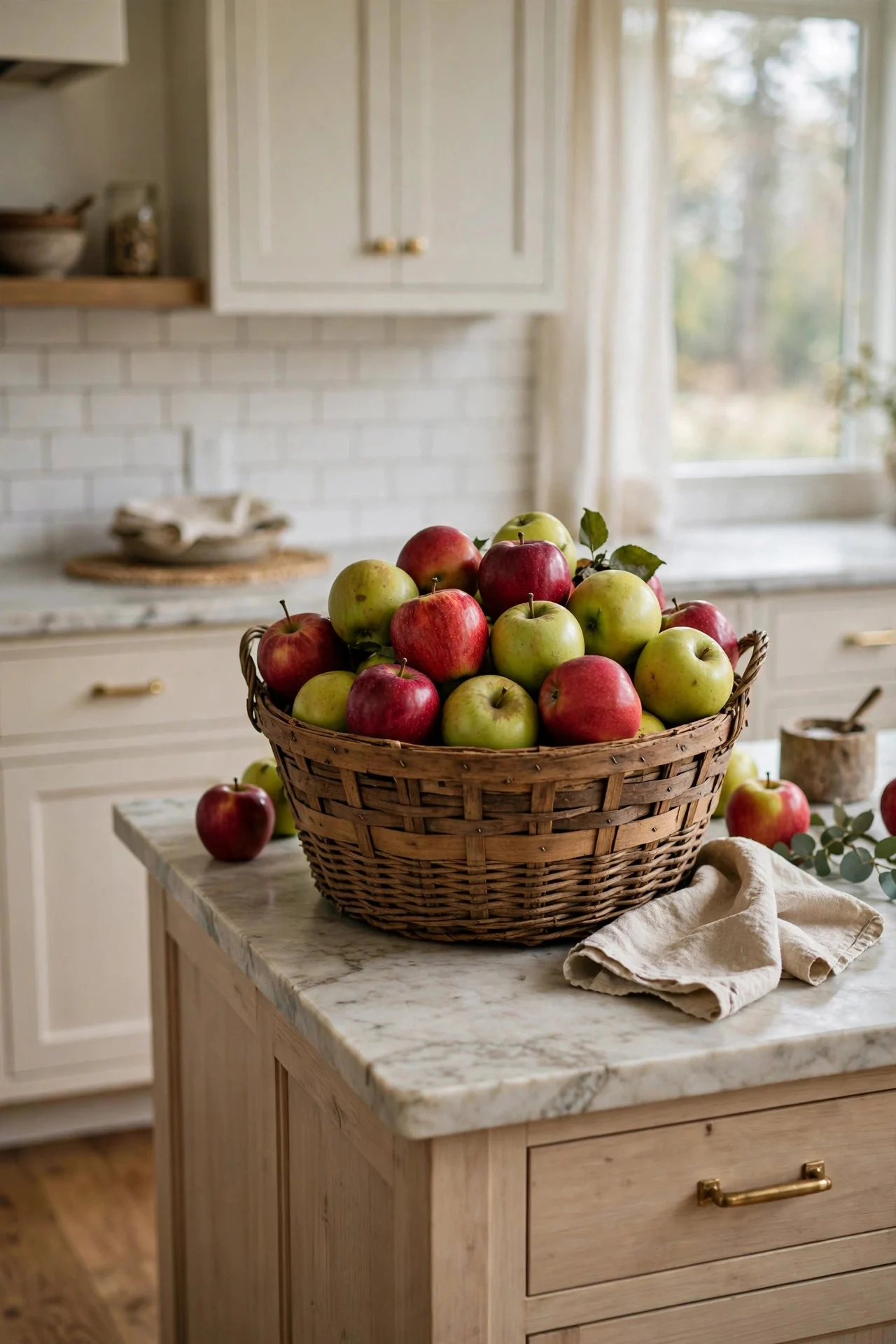
10. A Vintage Apple Basket in the Kitchen
Bring the orchard indoors with a bushel basket of fresh apples on the kitchen counter or island. Choose mixed varieties — Honeycrisp, Granny Smith, and a red McIntosh — so the basket has natural color variation.
This is decor you can eat: restock from the grocery store as the family snacks through it, and the display never goes stale. A bushel basket costs about $10 at an orchard or farm stand, and the apples run cheaper there than at the supermarket too. Put a folded tea towel under the basket — one bruised apple can leak juice onto a wood counter overnight.
Try this: Tuck a few whole cloves into one apple for a pomander — it perfumes the kitchen and looks old-fashioned charming.
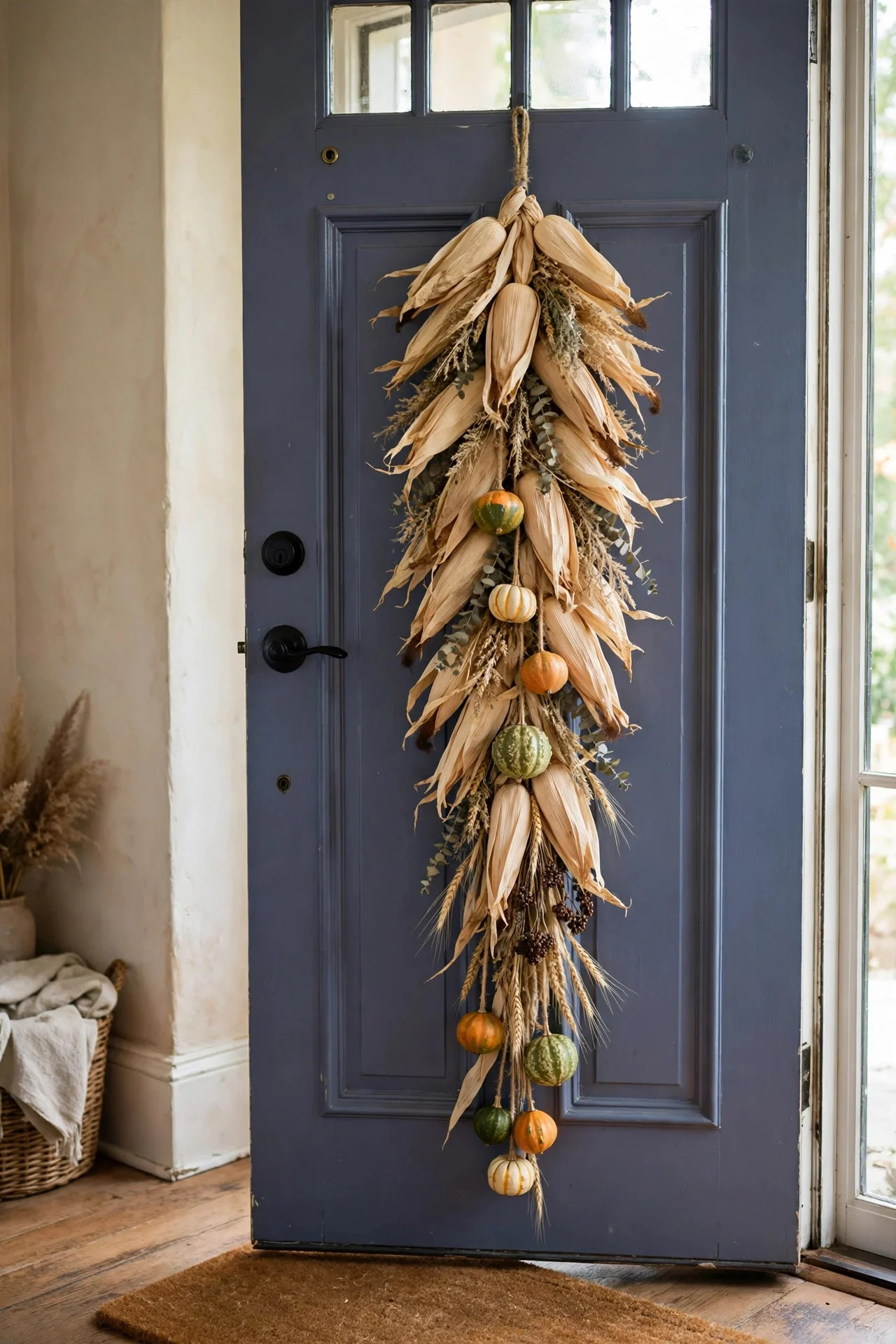
11. A Corn Husk Door Swag
Instead of a round wreath, hang a vertical corn husk swag on the front door — a gathered bundle of dried husks tied at the top, fanning out below. It’s unexpected, sculptural, and unmistakably harvest.
Buy dried corn husks in the tamale section of a Latin grocery store for a few dollars, soak them for ten minutes to make them pliable, then gather and tie with raffia. It dries stiff and holds its shape for the whole season. Spray the finished swag with clear matte sealer — it keeps the husks from curling in damp autumn air.
Try this: Wire three mini gourds into the center of the swag for a focal point that hides the tie.
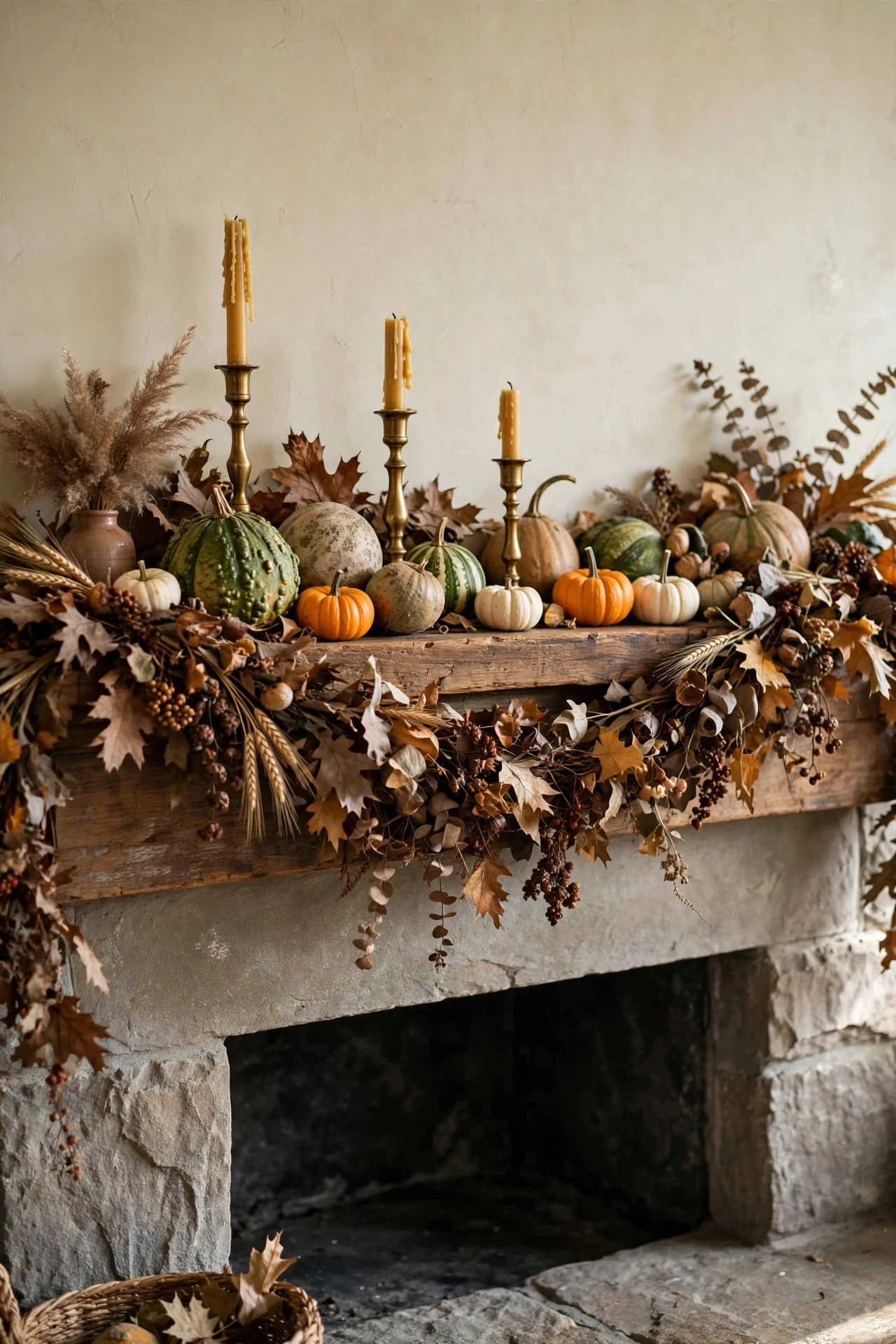
12. The Layered Harvest Mantel
Build your mantel in layers: a dried-leaf garland as the base, then a row of gourds and mini pumpkins in front, then two candlesticks — one tall, one short — at the ends. The formula works every fall because it’s about depth, not specific pieces.
Keep the palette to three harvest tones — say, gold, rust, and deep green — so the layers read as one composition. Step back after arranging; mantels always need one fewer item than you think. Anchor the garland with two removable hooks, not tape — dried-leaf garlands are heavier than they look and tape gives up by week two.
Try this: Run a string of warm-white fairy lights behind the gourds — the glow through the gaps makes the whole mantel look lit from within.
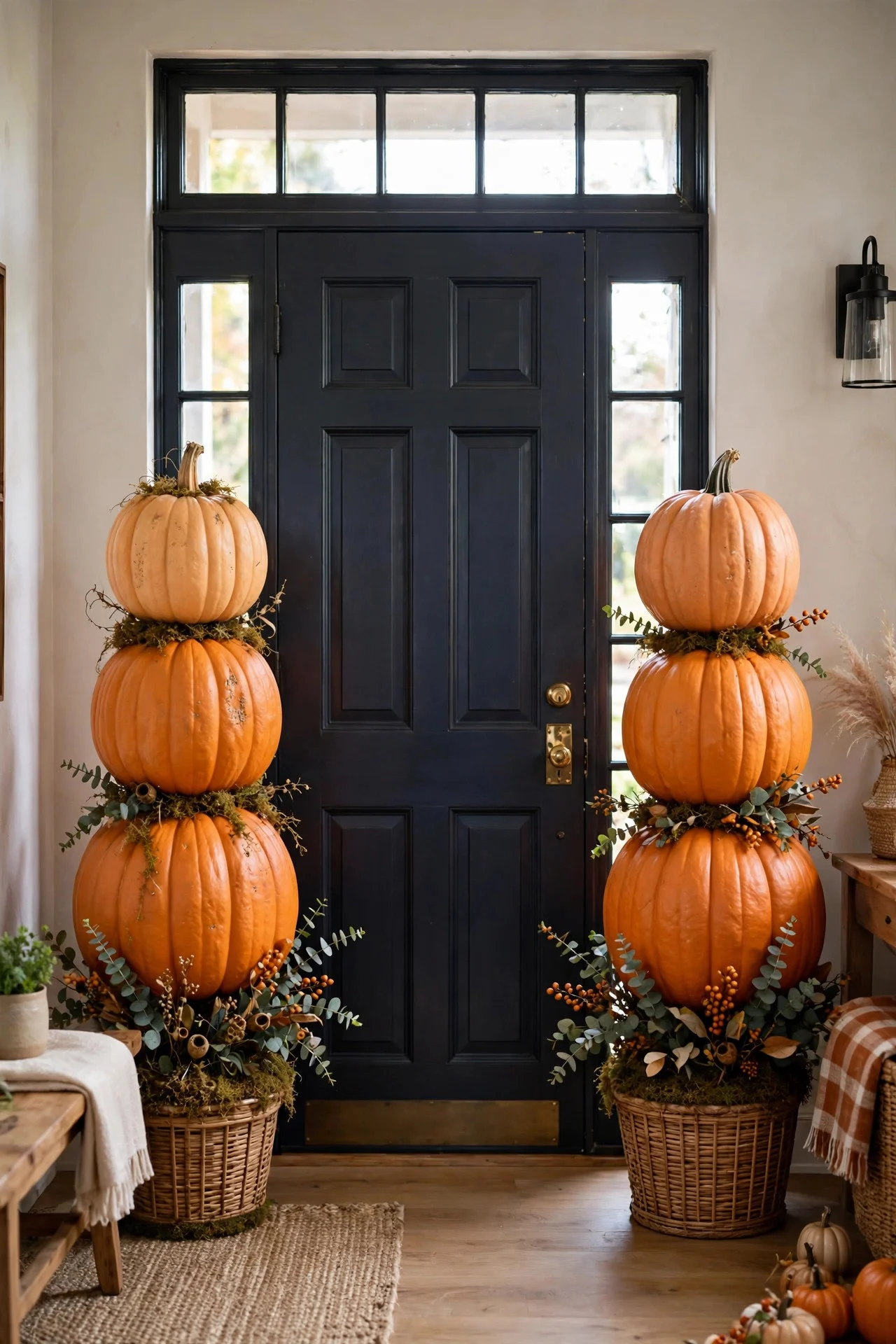
13. A Stacked Pumpkin Topiary
Flank the front door with pumpkin topiaries: three faux pumpkins — large, medium, small — stacked on a simple urn or planter. It gives the entry the symmetry of a formal topiary with pure harvest charm.
Use faux pumpkins so the stack survives wind and rain; a hot-glue dot between each pumpkin keeps them steady. Good faux pumpkins cost $10–$15 each and you’ll reuse them for a decade. Drive a wooden dowel through the stacked pumpkins into the urn’s soil for wind-proof stability.
Try this: Choose pumpkins in graduated shades — deep orange at the bottom, cream in the middle, pale green on top — for a designer ombré effect.
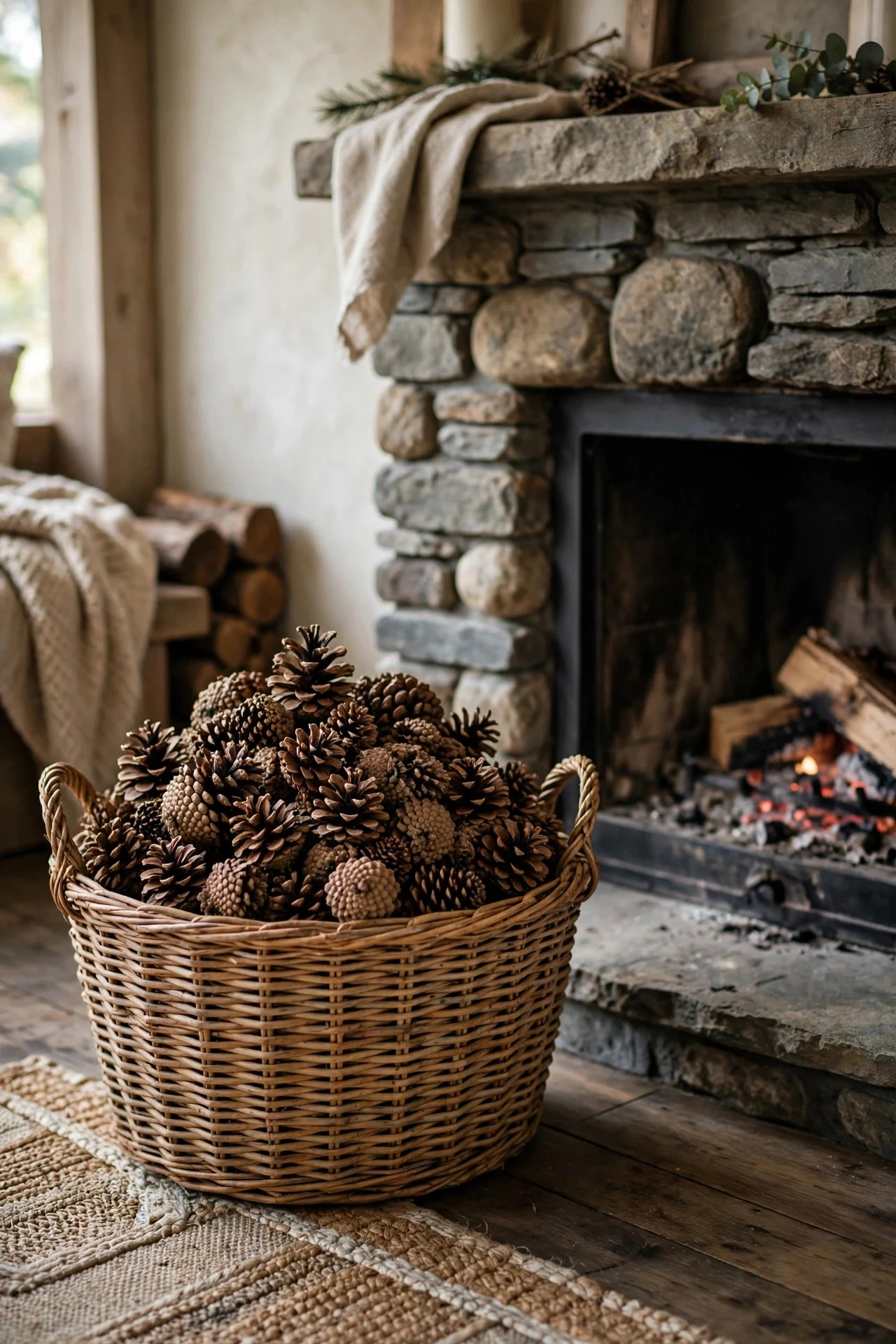
14. A Basket of Pinecones by the Fireplace
The simplest harvest decor might be the best: a woven basket heaped with pinecones beside the fireplace or wood stove. It signals “cozy season” the moment anyone walks in, and it costs nothing if you forage them.
Bake foraged cones at 200°F for 45 minutes first — it kills any tiny residents and opens the scales beautifully. Mix in a few dried orange slices for color, and refresh the basket each year. Add a few drops of cinnamon essential oil to the cones monthly — the basket becomes a slow-release scent diffuser.
Try this: Dab the tips of a few cones with gold craft paint for a subtle metallic glint among the natural browns.
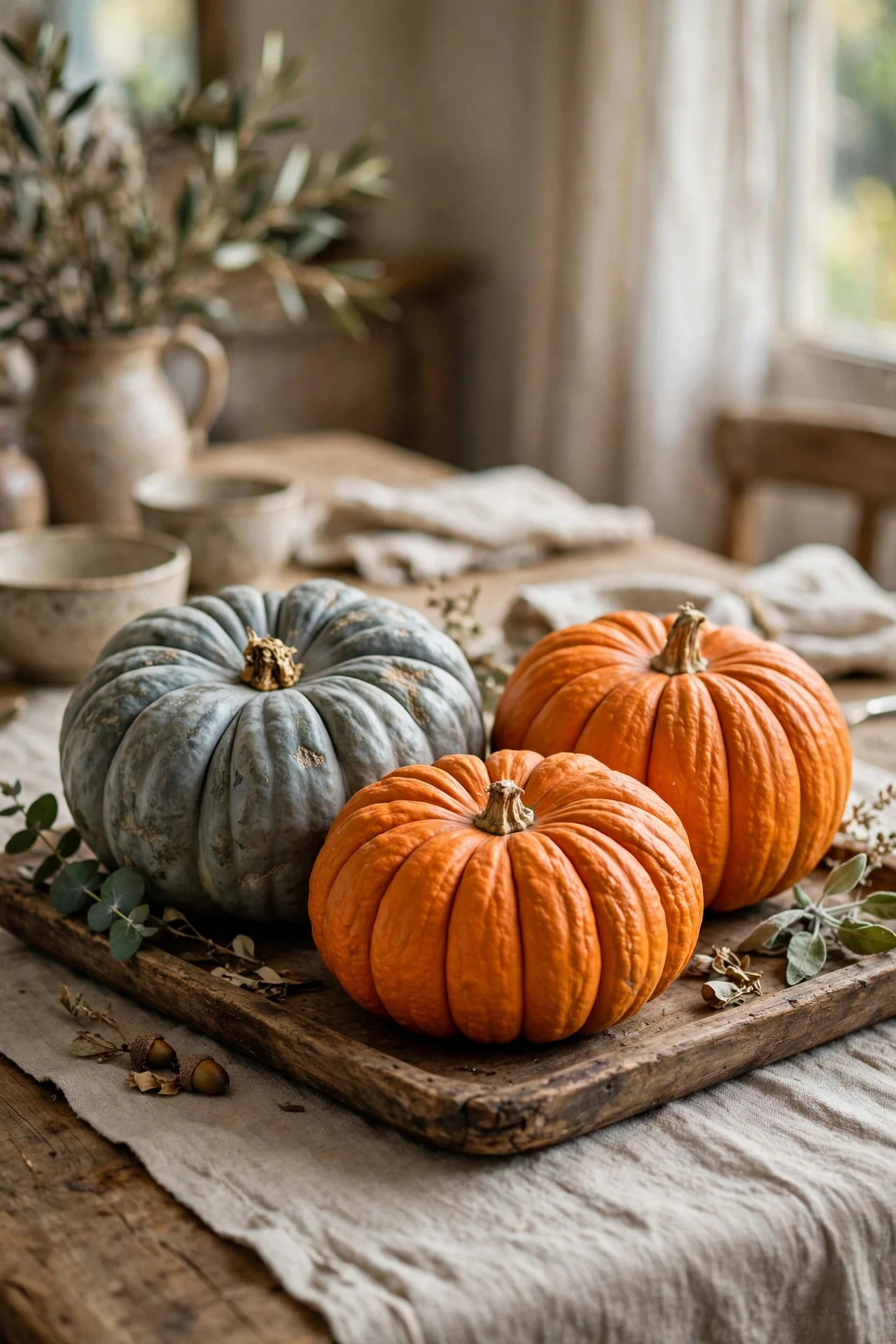
15. Heirloom Squash as a Dining Centerpiece
Heirloom squash — the warty, ribbed, blue-gray kind — are the most sculptural things in the produce aisle. Arrange three on a low wooden tray with a linen napkin runner underneath, and you have a centerpiece that needs no flowers.
Buy them at a farmers market in early fall for $3–$5 each; they keep for two months or more indoors. When the season ends, roast them — most heirlooms are delicious, not just decorative. Wipe squash with a vinegar-damp cloth before displaying — it removes field dust and discourages early soft spots.
Try this: Label each variety with a tiny kraft tag on a toothpick — guests love learning they’re looking at a Blue Hubbard or a Turk’s Turban.
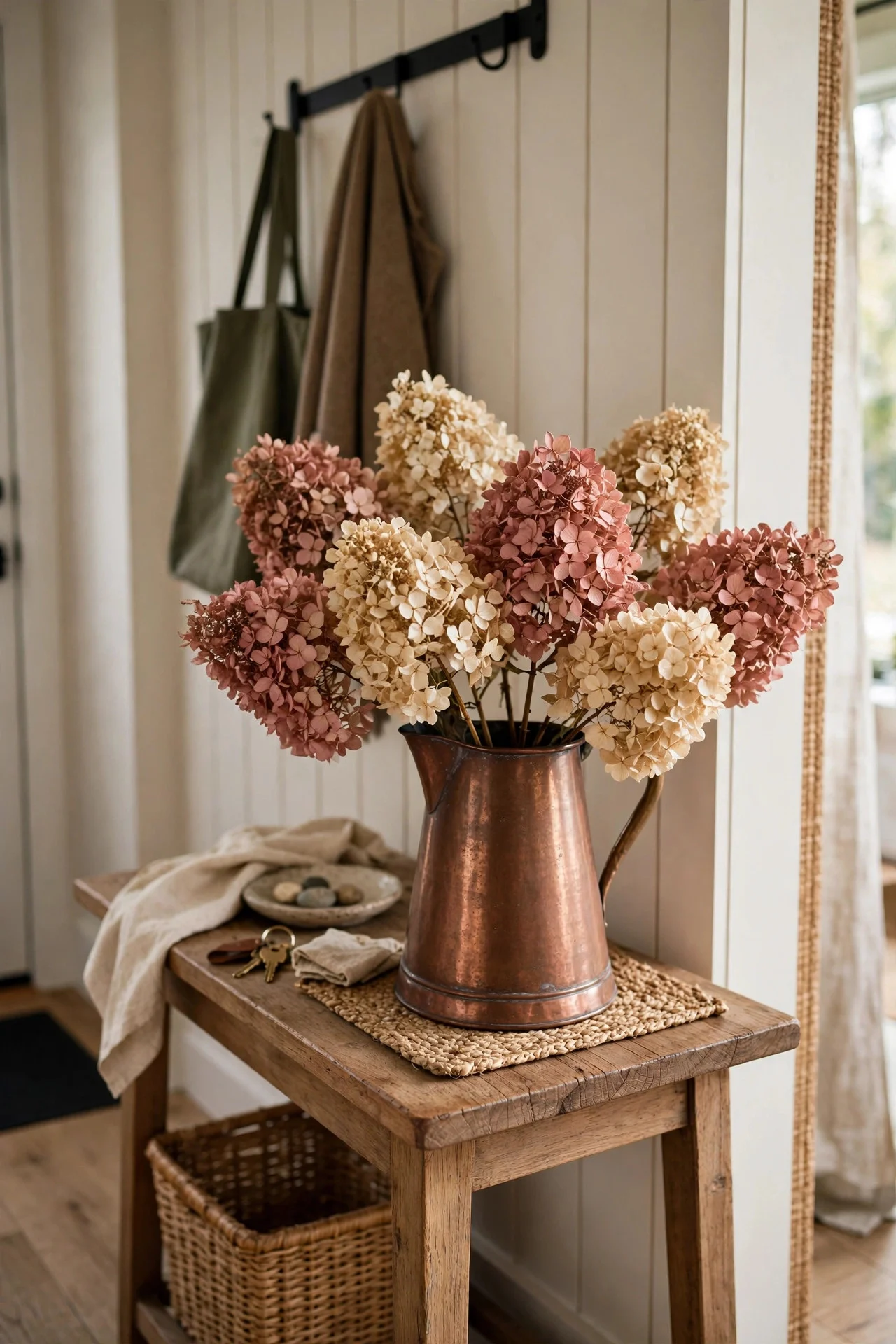
16. Dried Hydrangeas in a Copper Pitcher
Those hydrangea blooms fading on the bush? Cut them now. Dried hydrangeas in dusty rose, sage, and cream look stunning in a copper or brass pitcher — the metal warms up their muted tones.
Cut stems 12–14 inches long, strip the leaves, and stand them in an empty vase to dry for two weeks. No water needed after drying; mist them never, dust them yearly. One pitcherful fills an entry table or kitchen shelf. Keep dried hydrangeas out of direct sun — their dusty colors bleach to beige in a bright window within weeks.
Try this: Add two stems of dried bunny-tail grass for a soft, feathery contrast against the big hydrangea heads.
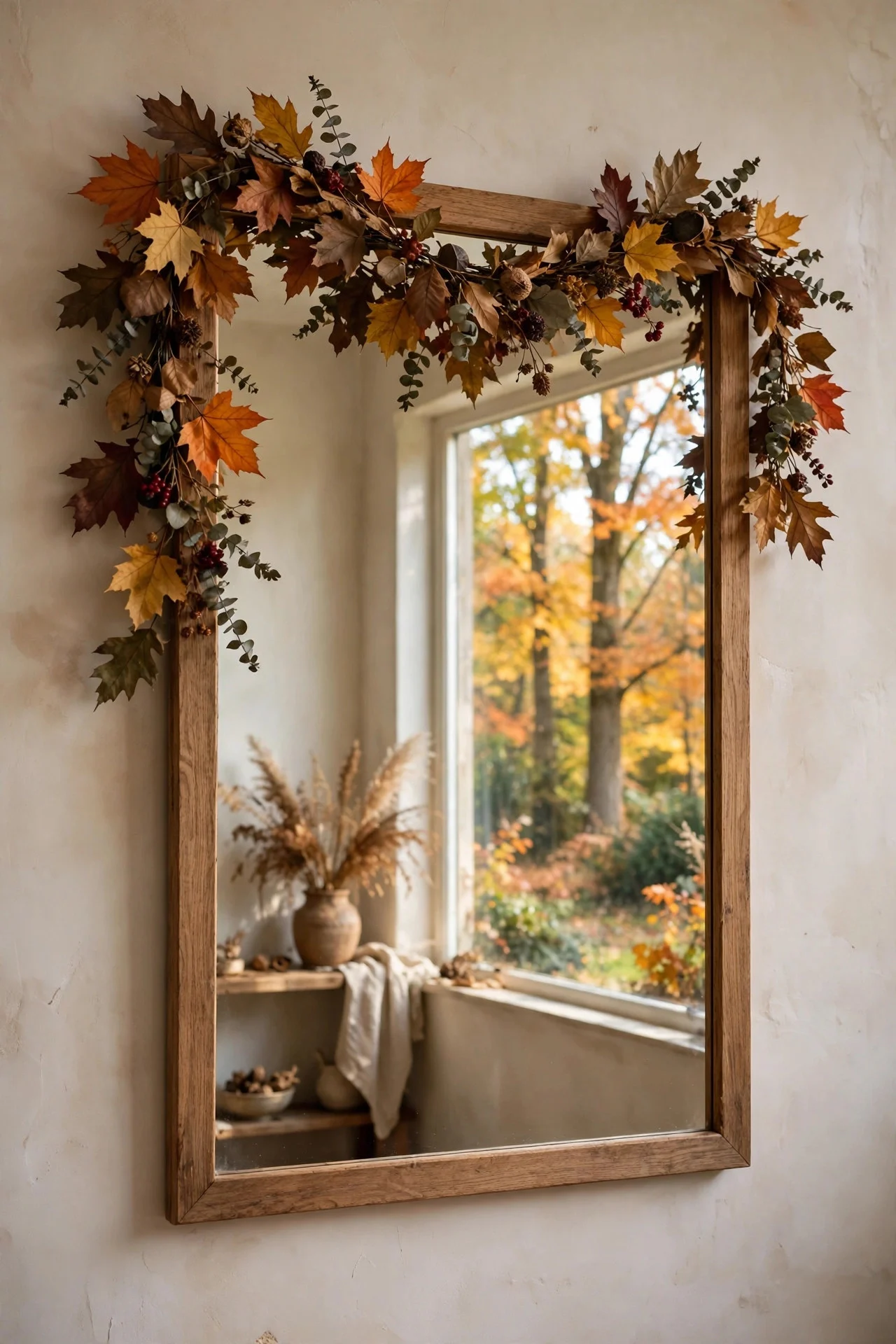
17. A Preserved-Leaf Garland Over the Mirror
Drape a garland of preserved maple and oak leaves across the top of a mirror, a doorway, or a headboard. The reflection doubles the color, making a $15 garland look like twice the decor.
Preserved leaves (glycerin-treated) stay flexible and colorful for years, unlike fresh leaves that crumble in a week. Hang with small removable hooks so you don’t mark the frame, and store the garland flat in a garment bag. Dust the garland with a cool hairdryer monthly — preserved leaves collect dust that dulls their color.
Try this: Layer two garlands slightly offset — one gold-dominant, one red-dominant — for a fullness one strand can’t achieve.
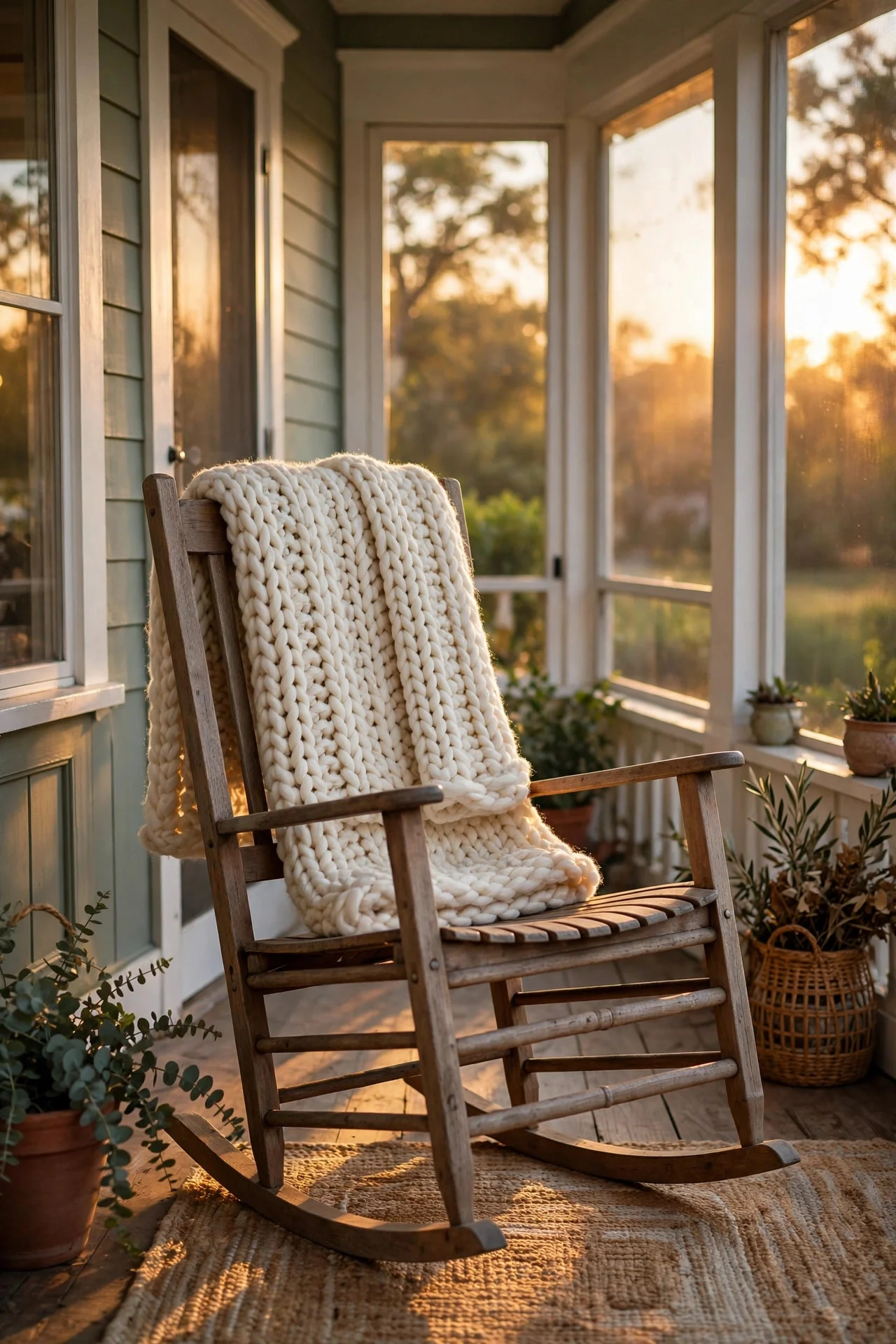
18. A Chunky Knit Blanket on the Porch Chair
Don’t forget the porch itself. A chunky knit blanket tossed over the rocking chair or porch swing invites people to actually sit out there with cider — and it photographs like a fall magazine cover.
Choose a machine-washable acrylic knit in cream or oatmeal for outdoor use; real wool felts in the rain. Fold it over the chair back rather than draping the seat, so it stays clean and dry. Bring the knit inside during heavy rain — even acrylic felts and stretches when soaked repeatedly.
Try this: Add an outdoor-rated lumbar pillow in a harvest plaid — the chair goes from “decor” to “favorite spot” in one move.
Frequently Asked Questions
What’s the difference between fall decor and harvest decor?
Fall decor is the broad season — leaves, pumpkins, cozy textiles. Harvest decor narrows in on abundance and the gathering-in: wheat, corn, gourds, apples, grains. It’s less about Halloween and more about the agricultural roots of the season.
When should I put up harvest decorations?
Early to mid-September is ideal — harvest decor reads as general autumn, not Halloween, so it never feels premature. Take it down after Thanksgiving, or keep the wheat and dried botanicals up through winter.
How do I decorate for fall without it looking like Halloween?
Skip black, purple, and anything spooky-shaped. Stick to harvest materials — gourds, wheat, corn, apples, dried leaves — in warm natural tones. If it could sit on a farm table, it’s harvest; if it belongs in a costume shop, it’s Halloween.
Will real gourds and pumpkins rot indoors?
Mini gourds last 6–8 weeks in normal indoor conditions; full-size pumpkins last 8–12 weeks if kept cool and dry. Check weekly and compost any that soften. Faux versions cost more upfront but last a decade — worth it for pieces you love.
Final Thoughts
Harvest decor works because it’s honest — real wheat, real apples, real texture. You don’t need a farmhouse to pull it off; you need a basket, a few gourds, and the willingness to let natural materials do the talking.
Start with one idea that fits your front door — that’s where the season greets you — then let it spread inside one room at a time. By Thanksgiving, your whole home will feel gathered in.