
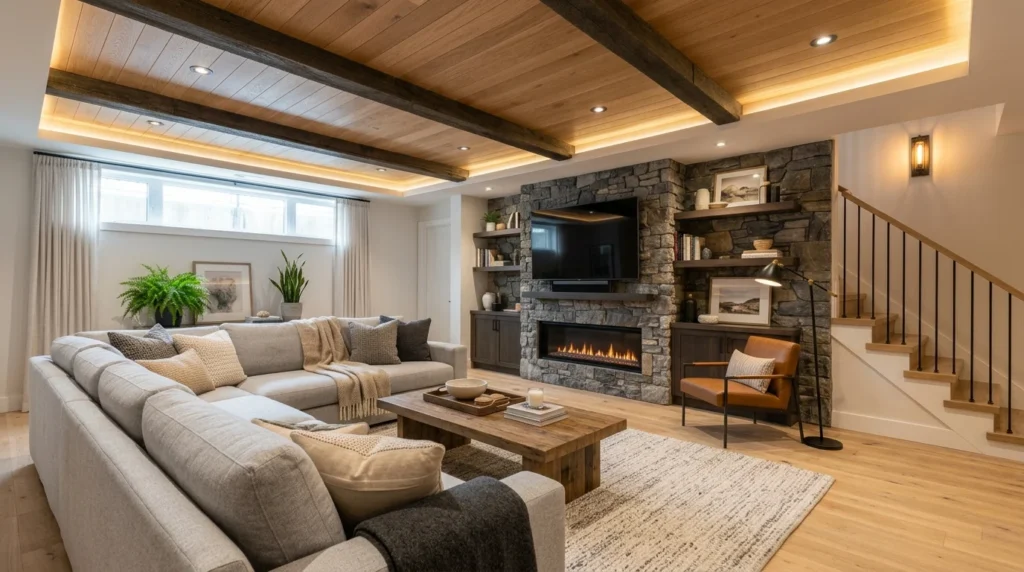
My basement used to be the kind of room nobody wanted to spend more than five minutes in. Exposed pipes, sagging insulation, and a single bare bulb hanging from a wire — it was more storage closet than living space. It wasn’t until I actually finished the ceiling down there that the whole basement suddenly felt like a real part of the house instead of an afterthought. What I didn’t expect was how much of a difference the ceiling alone made, more than the flooring or the paint on the walls.
Over the past few years I’ve redone my own basement ceiling twice (the first attempt taught me a lot of what not to do) and helped a neighbor finish his as well. Along the way I picked up a good sense of which ideas actually deliver a finished, high-end feel without draining a renovation budget. Here are 18 basement ceiling ideas that genuinely transformed the spaces I’ve worked on.
1. Painted Exposed Ceiling (Industrial Look)
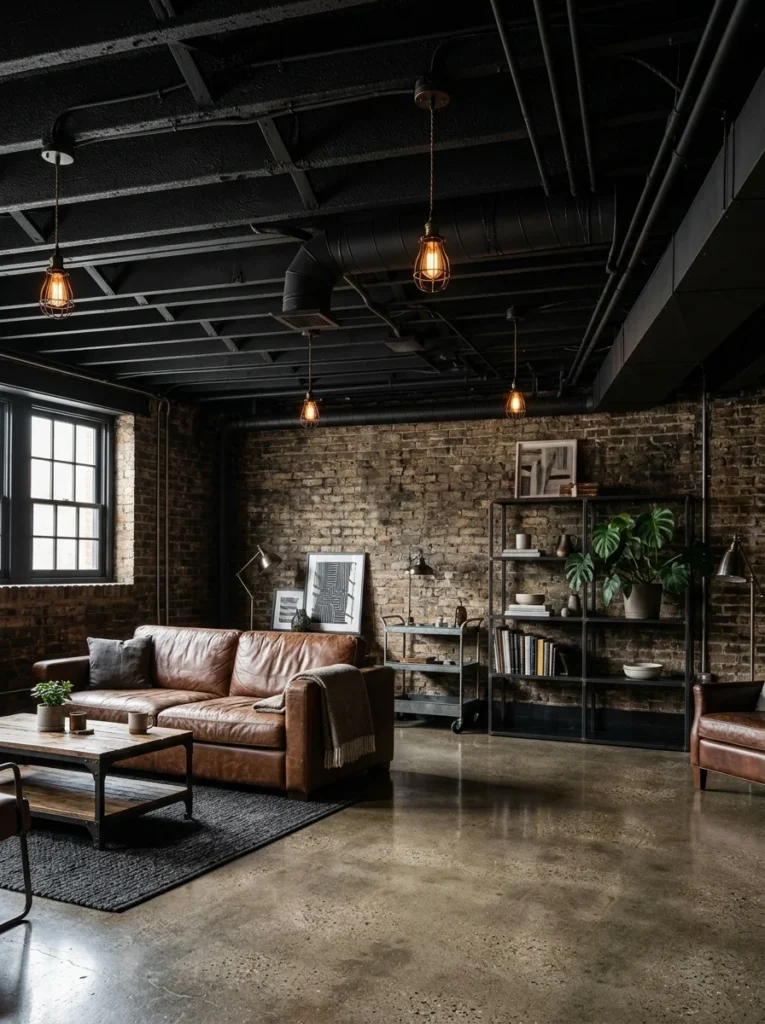
Before I spent a dollar on materials, I tried the simplest option first: painting everything — joists, ducts, wires, pipes, subfloor — a single matte black color. It sounds strange until you see it in person. Painting it all one uniform, dark color visually erases the clutter overhead and gives the basement an intentional, loft-style industrial look. This was by far the cheapest option I used, since it only required paint and a sprayer.
2. Suspended Drop Ceiling With Modern Tiles
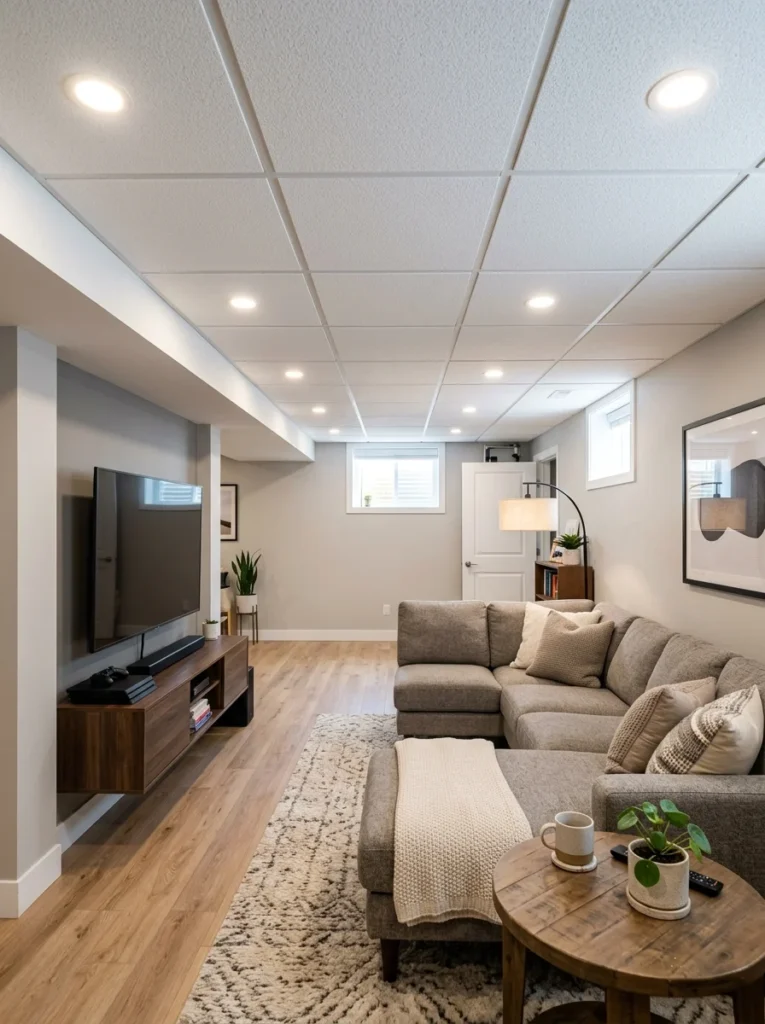
Traditional drop ceilings have a reputation for looking dated, but the tile options available now are nothing like the yellowed, water-stained panels from decades ago. I installed a drop ceiling with clean white tiles in my first basement attempt, and the biggest advantage was easy access to the plumbing and wiring above whenever something needed fixing.
3. Wood Plank Ceiling for Warmth
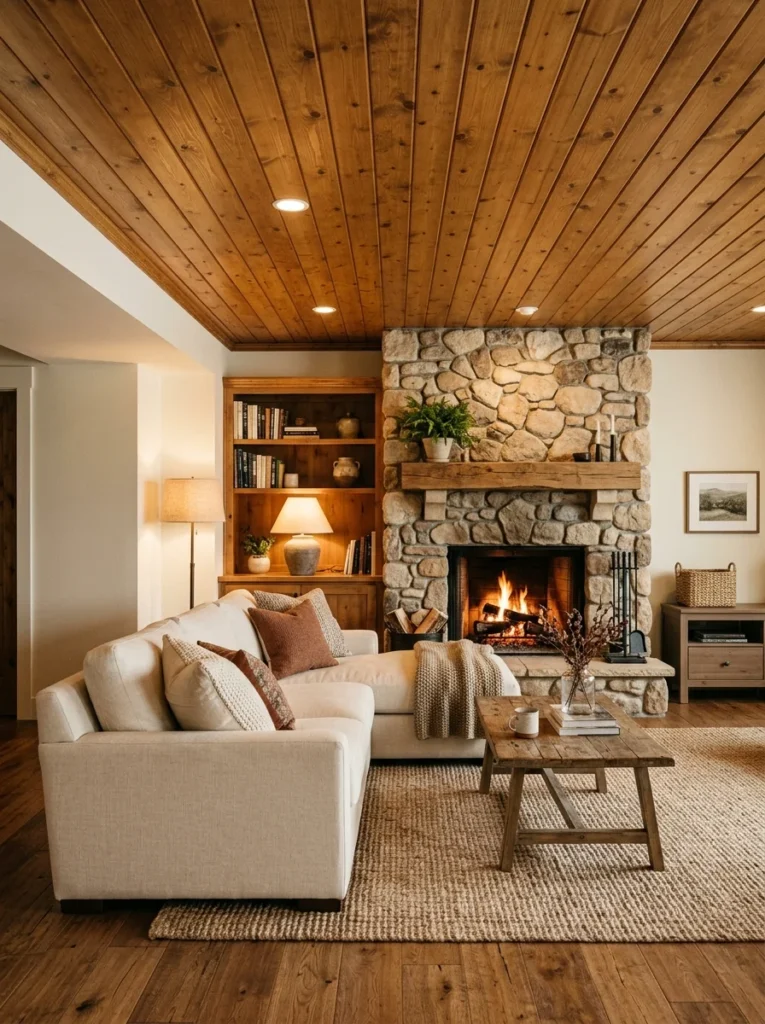
After living with the drop ceiling for a couple of years, I redid the space with wood planks instead, and it changed the entire mood of the basement. A wood ceiling brings warmth to a room that’s otherwise all concrete and cool tones, which basements tend to have in abundance. I used inexpensive pine boards with a honey stain, and the space finally stopped feeling like an unfinished afterthought.
4. Shiplap Ceiling
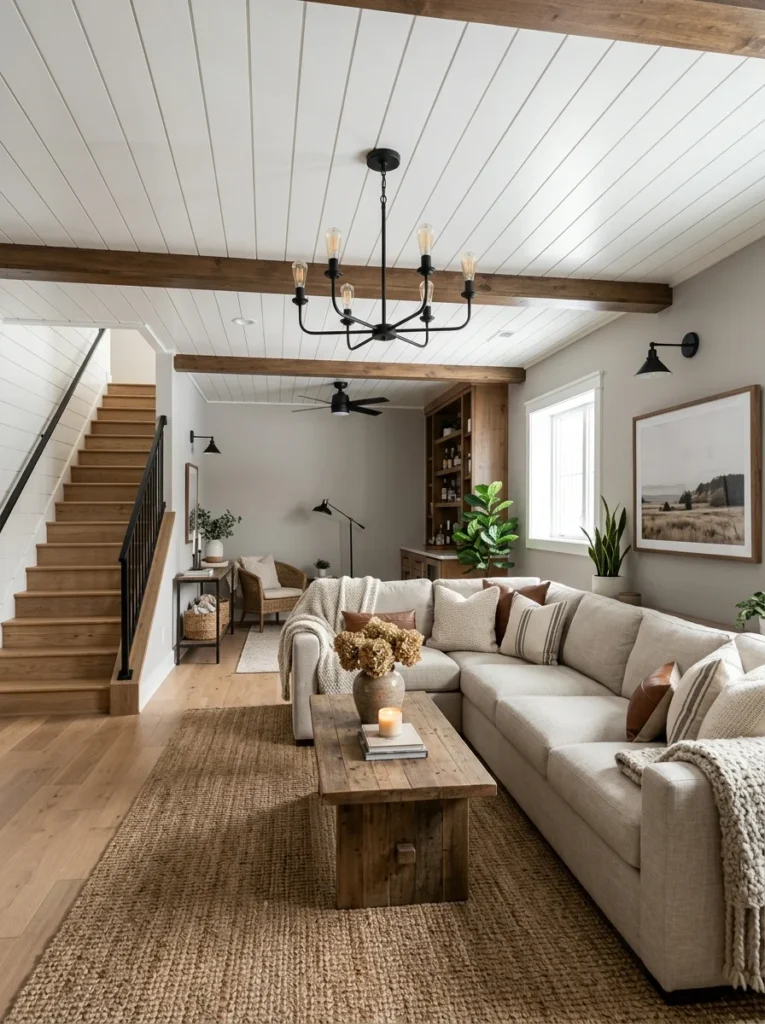
Shiplap has become a bit of a design cliché on the walls, but on a basement ceiling it still feels fresh and adds texture without heaviness. My sister used thin shiplap boards painted a soft white in her basement, and the horizontal lines actually made the low ceiling height feel less cramped.
5. Corrugated Metal Panel Ceiling
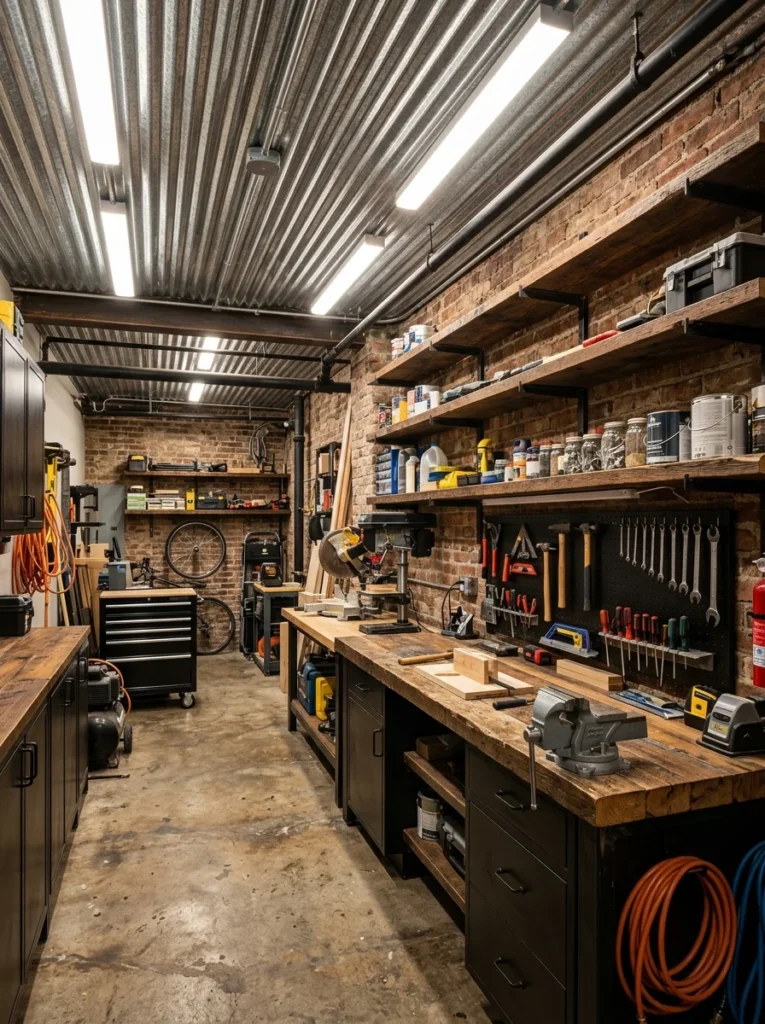
For a basement that leans more industrial or modern-farmhouse, corrugated metal panels are a surprisingly affordable option. A friend of mine used them in his basement workshop area, and the reflective surface bounced light around the room in a way drywall never could.
6. Open Ceiling With Spray Foam Insulation
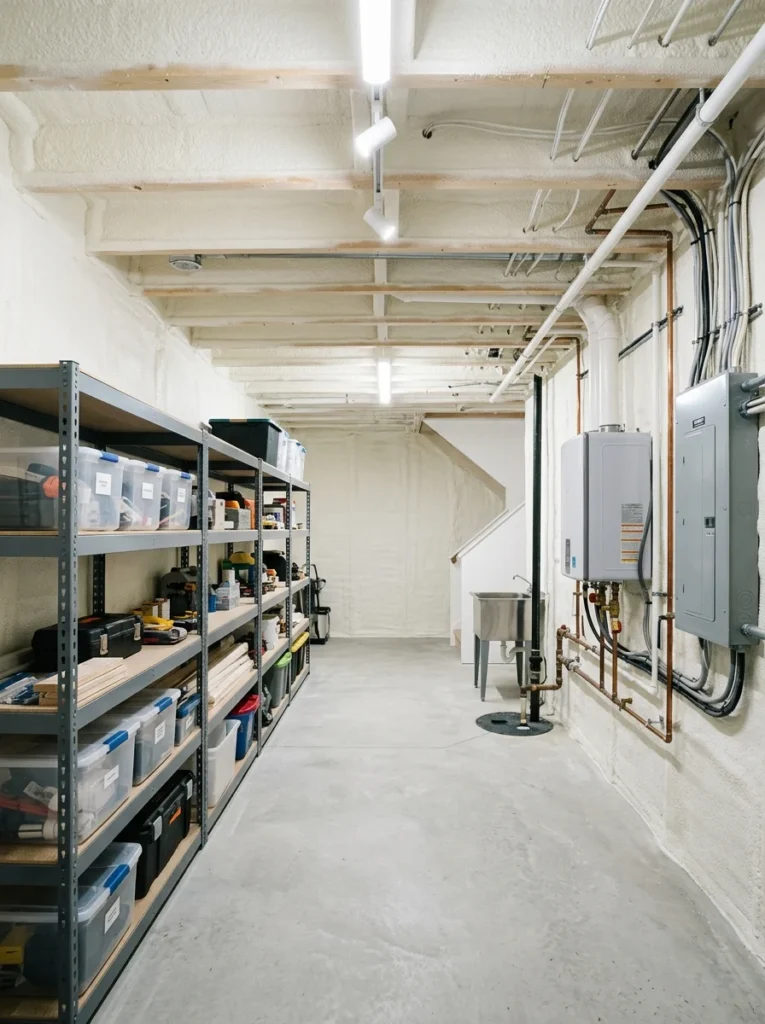
If you want the open, exposed-joist look but still need insulation, spraying the underside with foam insulation and leaving it visible (often in white or a light gray) gives a clean, finished appearance without covering anything up. This was actually the fastest option I’ve used across any basement project, since there’s no framing or panel installation involved at all.
7. Faux Wood Beam Accents Over a Flat Ceiling
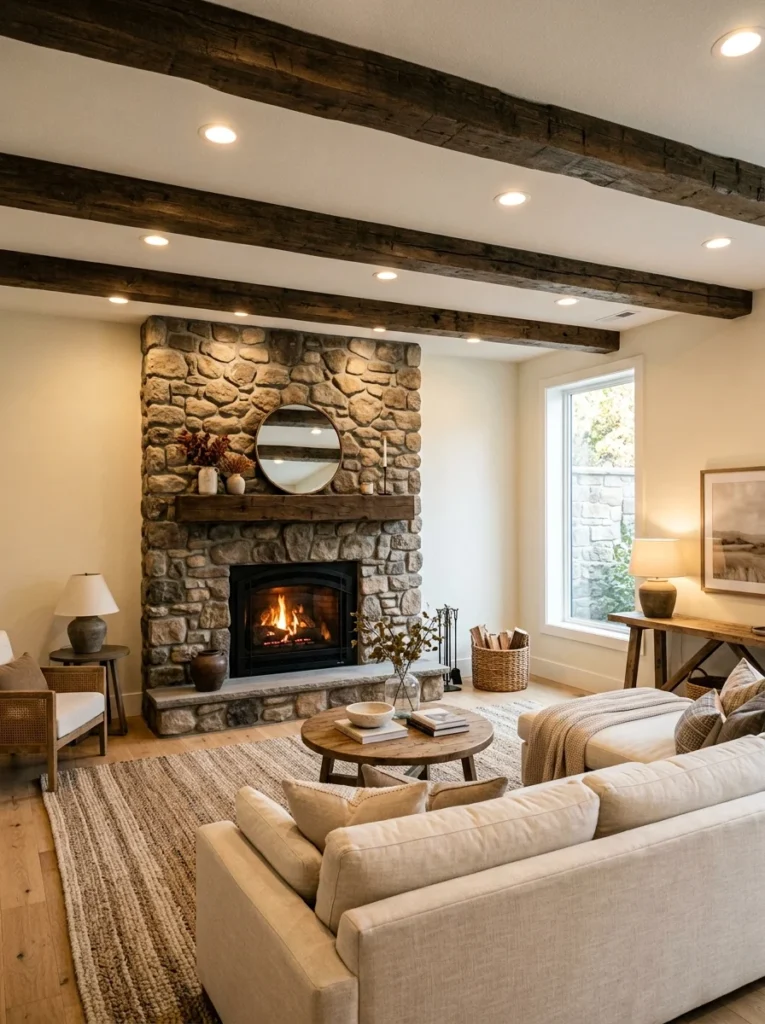
Rather than doing a full wood ceiling, adding a few faux wood beams across an otherwise flat, painted ceiling creates structure and visual interest. I added three lightweight polyurethane beams across my basement’s main open area, spaced evenly, and it gave the impression of real structural timber without any of the weight or cost.
8. Two-Tone Ceiling With Painted Ductwork
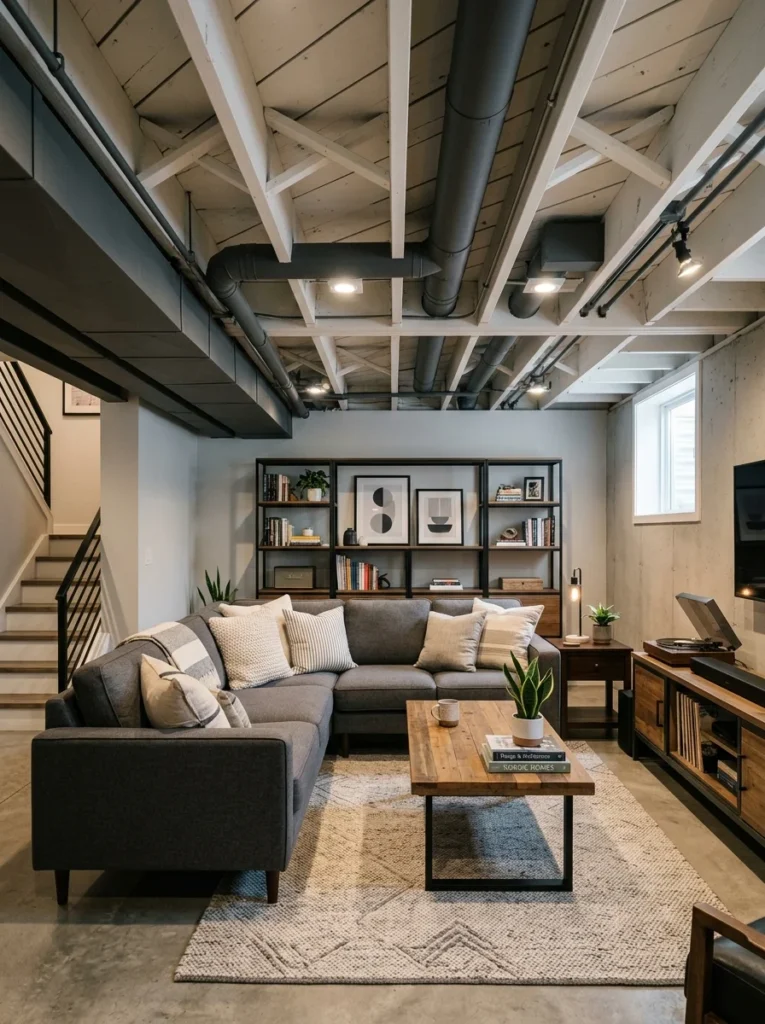
Basements often have ductwork running at different heights, which can look chaotic if left untouched. I painted my ductwork a slightly darker shade than the rest of the ceiling, which made it recede visually instead of standing out as an obstacle. It’s a small trick, but it made the mismatched heights look deliberate rather than accidental.
9. Acoustic Panel Ceiling for a Media Room
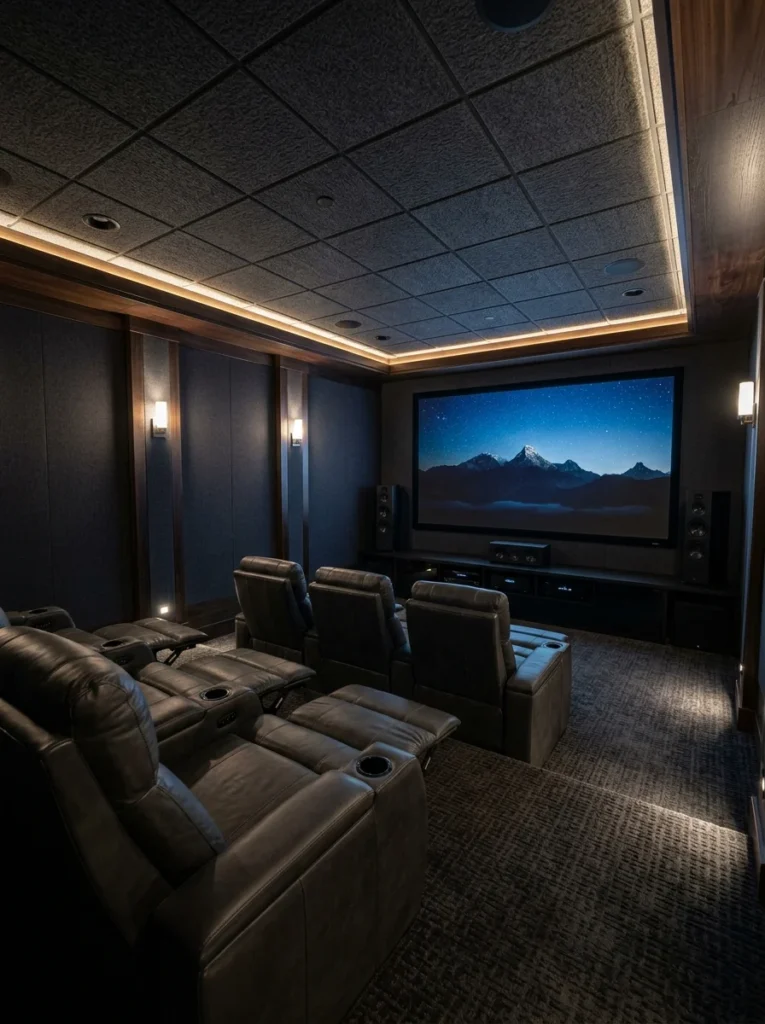
When I converted part of my basement into a small home theater, I added fabric-wrapped acoustic panels to the ceiling. Beyond the sound-dampening benefit, the soft texture and subtle color made the room feel cozy and intentional, almost like a private screening room rather than a converted basement.
10. Whitewashed Joist Ceiling
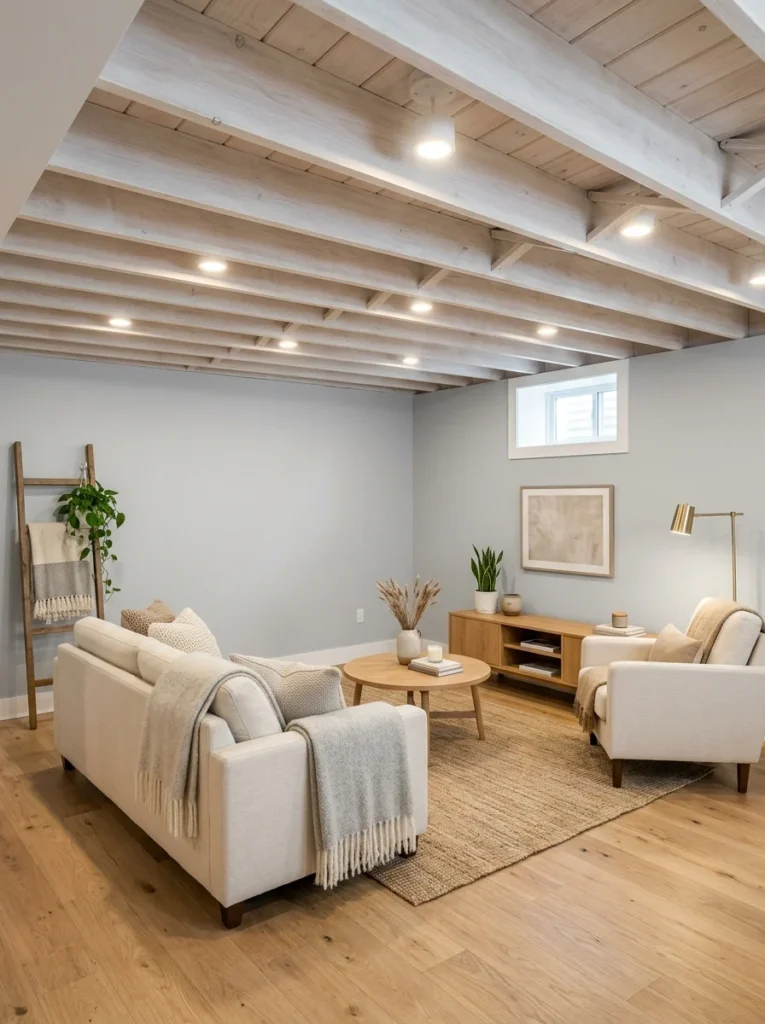
Similar to the exposed painted look but softer, whitewashing the joists and subfloor rather than using solid black paint keeps some of the wood grain and texture visible while still brightening the space. This worked especially well in the section of my basement that gets very little natural light.
11. Reclaimed Wood Ceiling for Character
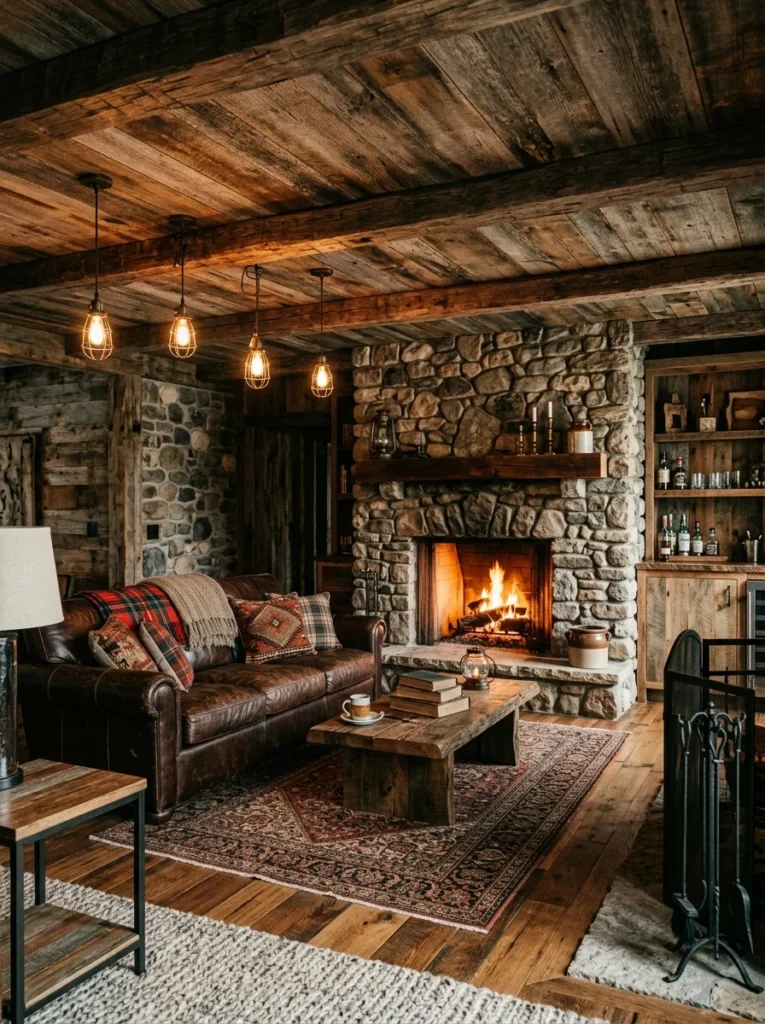
Using reclaimed wood, whether from old pallets, barn boards, or salvaged flooring, gives a basement ceiling a sense of history that new materials just can’t replicate. I sourced mismatched reclaimed boards from a local salvage yard for almost nothing, and the variation in tone and wear became the most complimented feature of the entire basement.
12. Coffered Ceiling Look Using Furring Strips
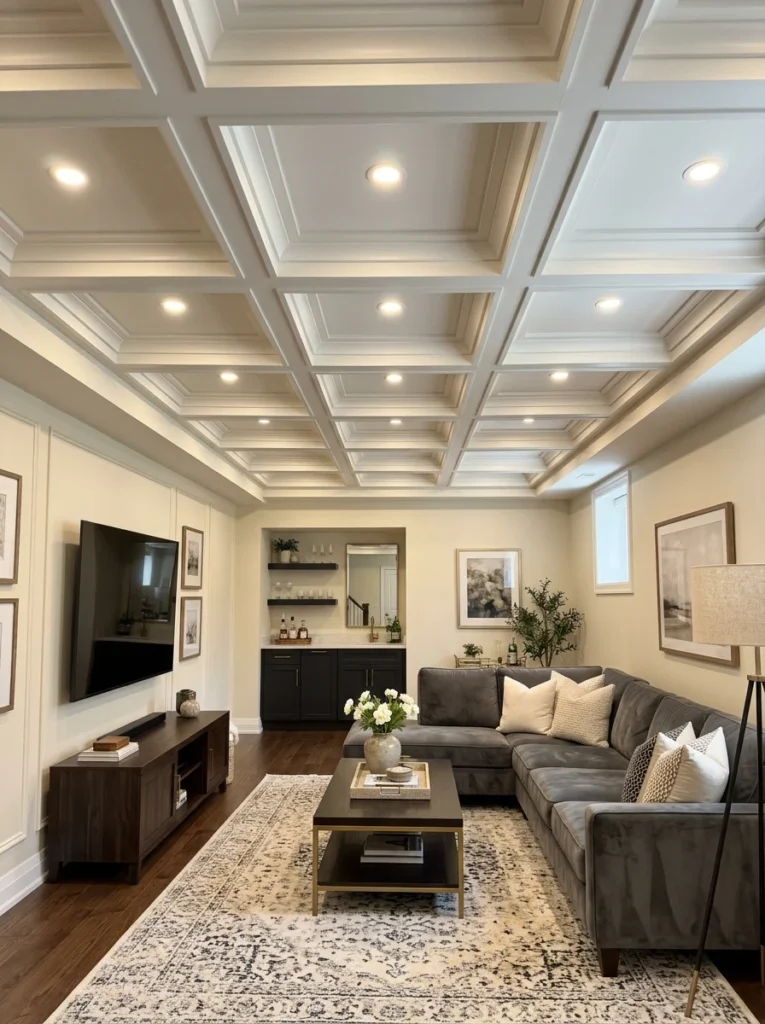
A coffered ceiling, with its grid of recessed panels, usually reads as an expensive architectural feature. I recreated a simplified version using basic furring strips arranged in a grid pattern over painted drywall, and from a few feet below it reads as far more custom and high-end than the material cost suggests.
13. Basement Ceiling With Recessed Lighting Grid
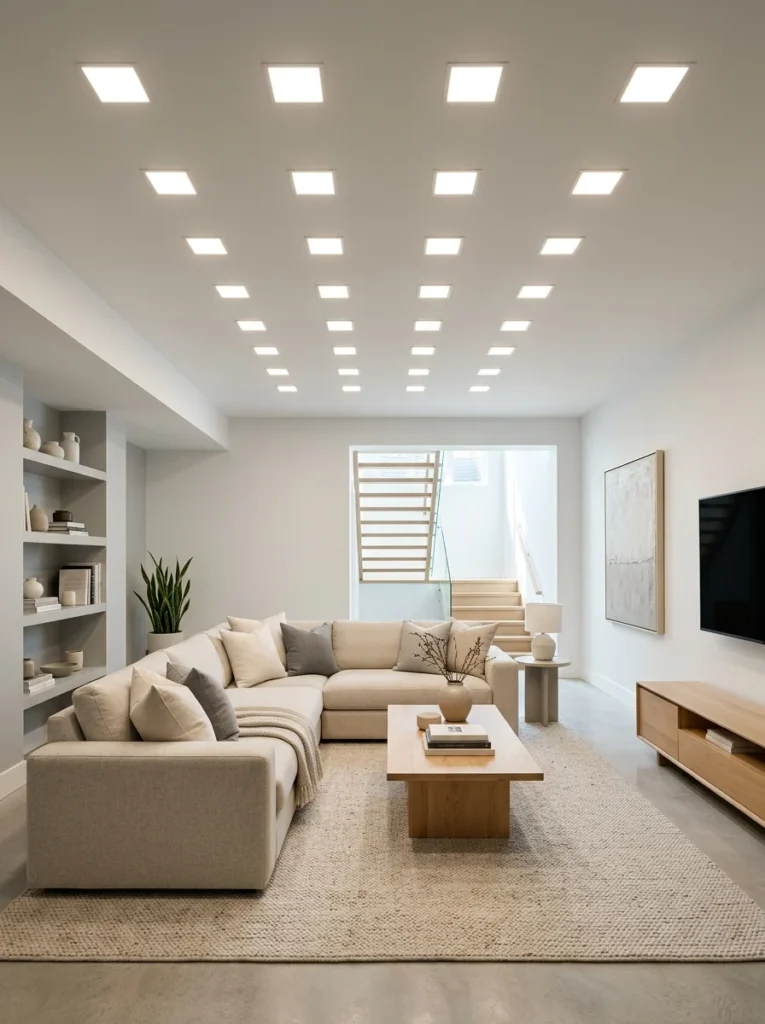
Sometimes the ceiling material matters less than the lighting layout. I kept my ceiling a simple flat white but added a symmetrical grid of recessed lights, which completely changed how “finished” the space felt. Even distribution of light eliminates the harsh shadows that make basements feel dim and unfinished.
14. Beadboard Ceiling for a Cottage Feel
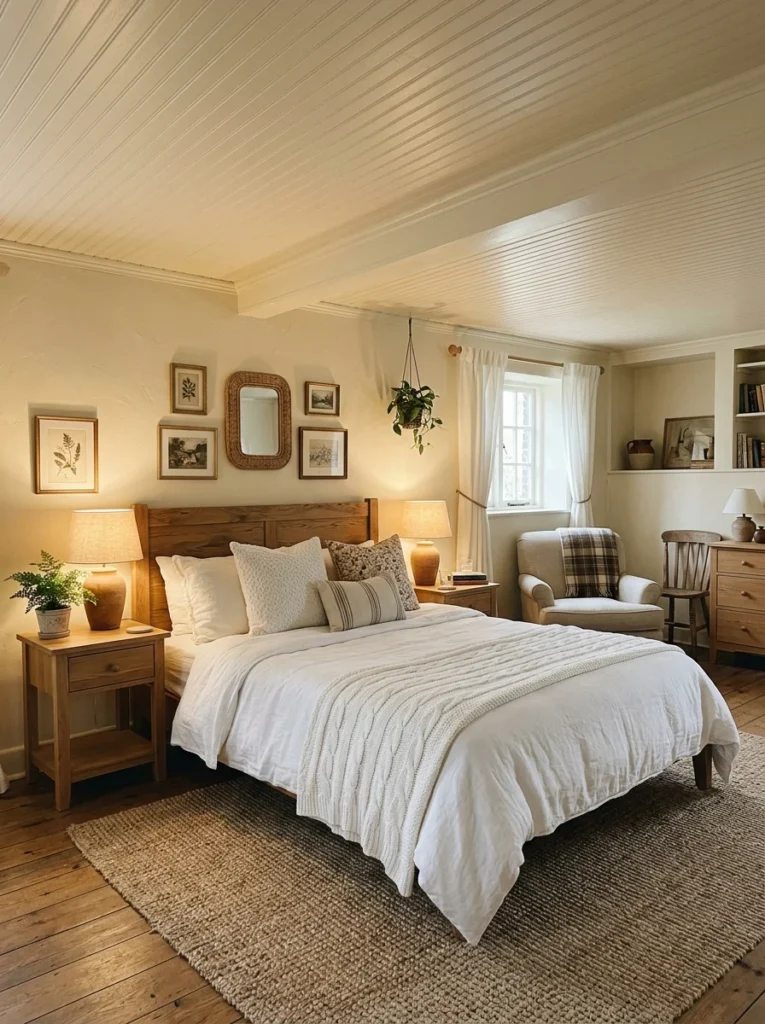
For a basement guest room, I used beadboard paneling on the ceiling, painted a soft cream color to match the walls. The subtle texture gives the room a cozy, cottage-like feel that stands in sharp contrast to the typical cold, concrete basement atmosphere.
15. Dark Painted Ceiling for a Cozy Den
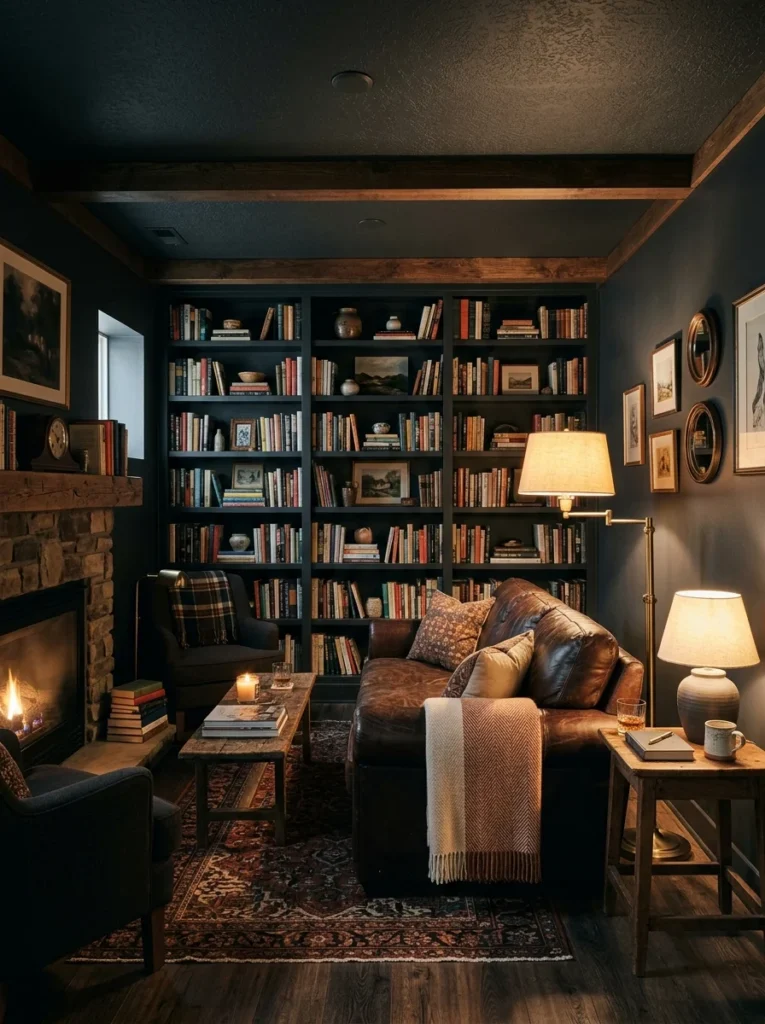
Painting a low basement ceiling dark might sound counterintuitive, but in a smaller, low-ceilinged room, a dark color can actually make the ceiling feel like it disappears rather than pressing down on the space. I used a deep charcoal in my basement den, paired with warm lamp lighting, and it became the coziest room in the house.
16. Wood Slat Ceiling With Hidden LED Strips
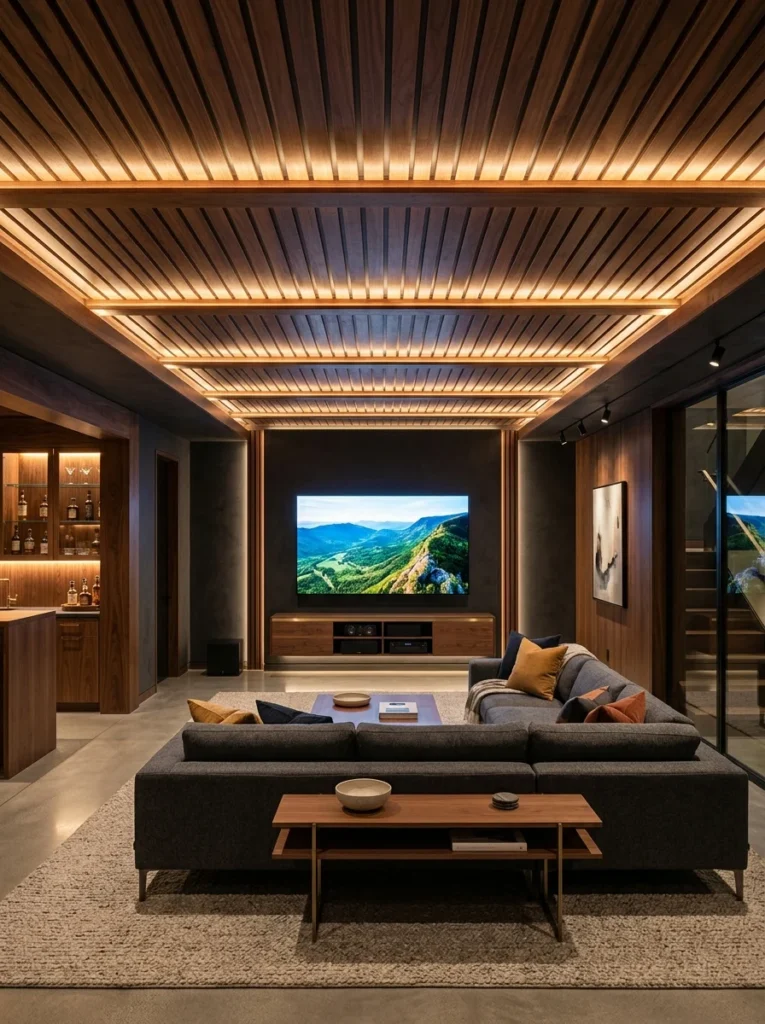
Thin wood slats installed with small gaps, backed by LED strip lighting, create a soft glow that filters through the wood. I added this above the seating area in my basement, and the warm, indirect light made evening use of the space feel intentional rather than makeshift.
17. Mixed-Material Ceiling by Zone
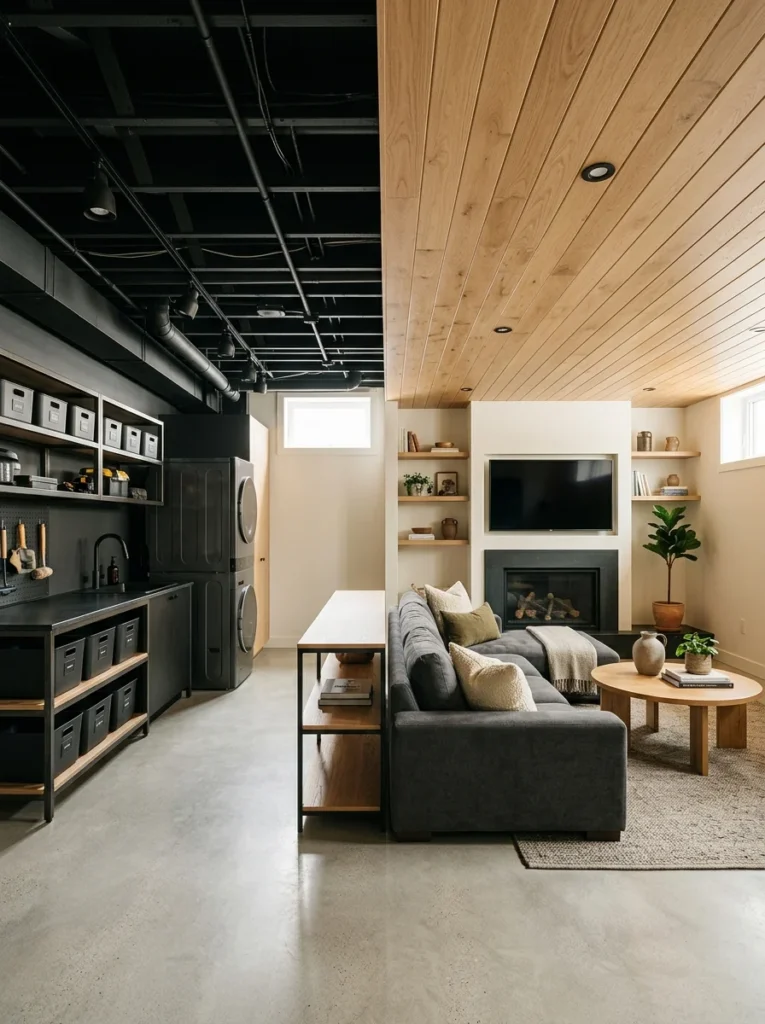
In a larger, open basement, using one ceiling treatment throughout the whole space isn’t required. I split my basement into zones: exposed painted joists in the laundry and utility area, and a finished wood plank ceiling in the living area. This let me spend money only where it mattered most, in the areas people actually spend time in.
18. Textured Popcorn Ceiling Removal and Simple Repaint
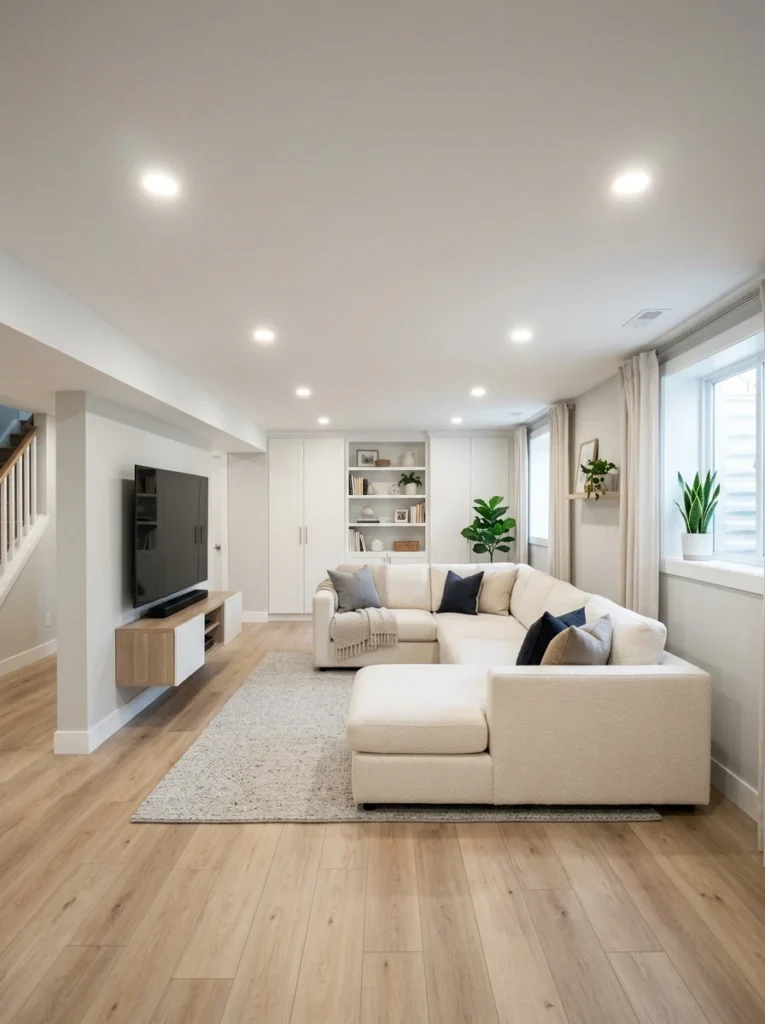
Sometimes the most transformative option is also the simplest. My neighbor’s basement had an old, yellowed popcorn ceiling that made the whole room feel outdated no matter what else was done to it. Scraping it off and repainting with a flat white completely changed the perceived age of the space, and it was one of the lowest-cost projects on this entire list.
Final Thoughts
If there’s one thing all of these basement projects taught me, it’s that the ceiling sets the tone for the entire room more than people expect. A basement can have great flooring, fresh paint, and comfortable furniture, but if the ceiling still looks unfinished or neglected, the whole space reads as incomplete. The good news, based on everything I’ve tried, is that you don’t need a massive budget to fix that. Paint, a few furring strips, some reclaimed wood, or even just better lighting can be enough to turn a basement from an afterthought into one of the most-used rooms in the house.
My advice, the same as with any renovation, is to start with the section of the basement you actually use the most. Get that area right first, and let the rest of the ceiling follow once you’ve seen how much of a difference it makes.