
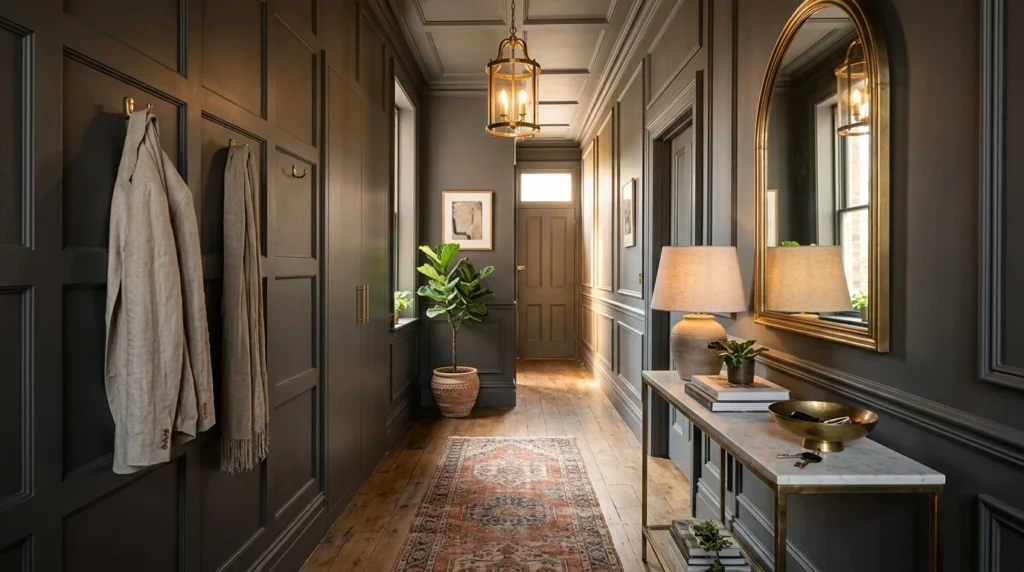
I’ll be honest with you — for the first two years of living in my current home, I completely ignored my hallway.
It was a narrow, dimly lit corridor with beige walls, a single bare bulb overhead, and a pile of shoes near the door that never seemed to go away. Every time I walked in, it felt like entering a storage unit. Not exactly the warm welcome I wanted to give myself — or my guests.
Then one afternoon, a friend visited and said something that stuck with me: “You know, the hallway is the first impression of your entire home.”
She was right. I had spent thousands of dollars renovating my living room and kitchen, but I had completely neglected the one space that every single person sees first when they walk through my door.
So I started researching, experimenting, and eventually renovating my hallway in stages — some changes costing very little, others requiring more investment. The results were dramatic every single time.
This guide is the result of everything I learned. These 19 hallway renovation ideas are tried, tested, and proven to make any entryway — big or small, old or new — feel genuinely expensive and beautifully designed.
Why Your Hallway Matters More Than You Think
Before we get into the ideas, let me make a case for why your hallway deserves serious attention.
The hallway is what designers call a transitional space — a zone that connects the outside world to your private home. How it looks and feels sets the emotional tone for everything that follows. A dark, cluttered hallway makes the whole house feel smaller and less cared for. A bright, intentionally designed entryway makes even a modest home feel polished and welcoming.
Studies in environmental psychology consistently show that first impressions of interior spaces are formed within seconds and are very difficult to change. In other words, if your hallway feels cheap, guests will unconsciously carry that impression into the rest of the tour — even if your living room is beautiful.
The good news? Hallway renovations are among the most impactful, and often most affordable, improvements you can make. You don’t need a large budget. You need a clear vision and the right ideas.
Here are the 19 best ones I know.
1. Paint the Walls a Bold, Confident Color
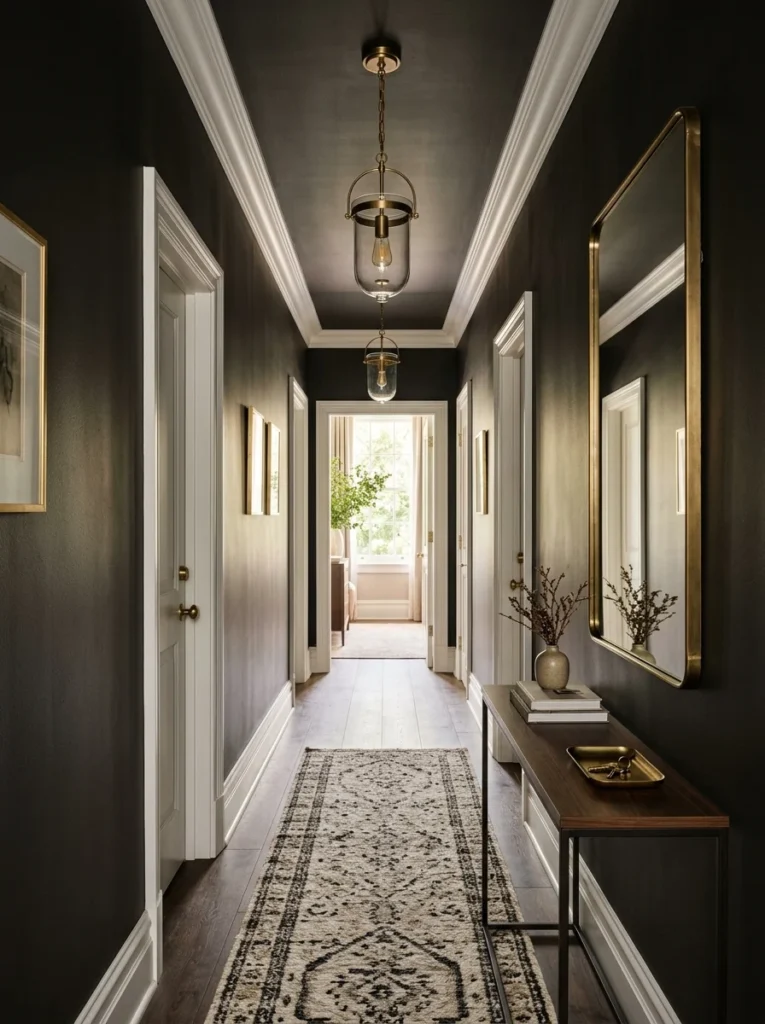
The single fastest way to transform a hallway is with paint — but not just any color. The hallways that feel expensive are almost never beige or “greige.” They’re bold.
Think deep navy blue, rich forest green, warm terracotta, charcoal, or even black. Yes, black. A hallway painted in a deep, saturated color feels like you’ve walked into a boutique hotel. It creates immediate drama and makes everything in the space — light fittings, mirrors, furniture — stand out.
When I repainted my hallway from builder’s beige to a deep, warm charcoal, the transformation was so significant that multiple friends asked if I’d had the whole house renovated. It cost me two tins of paint and an afternoon.
Pro tip: Use a satin or eggshell finish rather than matte in hallways. It’s easier to wipe clean and reflects light more beautifully.
2. Install Wainscoting or Wall Paneling
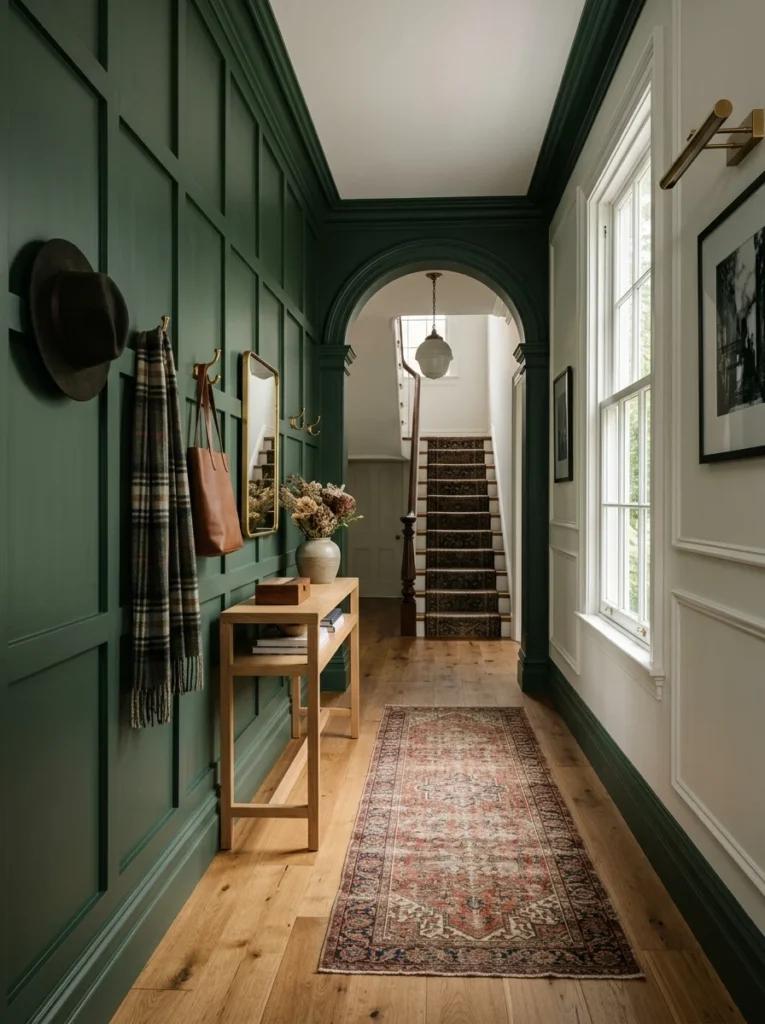
If you want one renovation that immediately says “expensive,” it’s wall paneling.
Wainscoting — the classic wooden panel treatment applied to the lower half of a wall — has been a hallmark of high-end interiors for centuries. But in 2026, paneling has evolved far beyond the traditional style. Grid paneling, shiplap, v-groove, and geometric panel patterns are all enormously popular.
The beautiful secret? Most of these effects can be created with inexpensive MDF strips, a bit of wood glue, and paint. I installed simple grid paneling in my hallway for under $120 in materials. The finished result looks like something from an architectural digest feature.
Best style combinations:
- Dark painted grid panels + brass hooks = classic luxury
- White shiplap + natural wood console = coastal farmhouse
- Geometric panels + bold color = contemporary designer look
3. Add a Statement Mirror
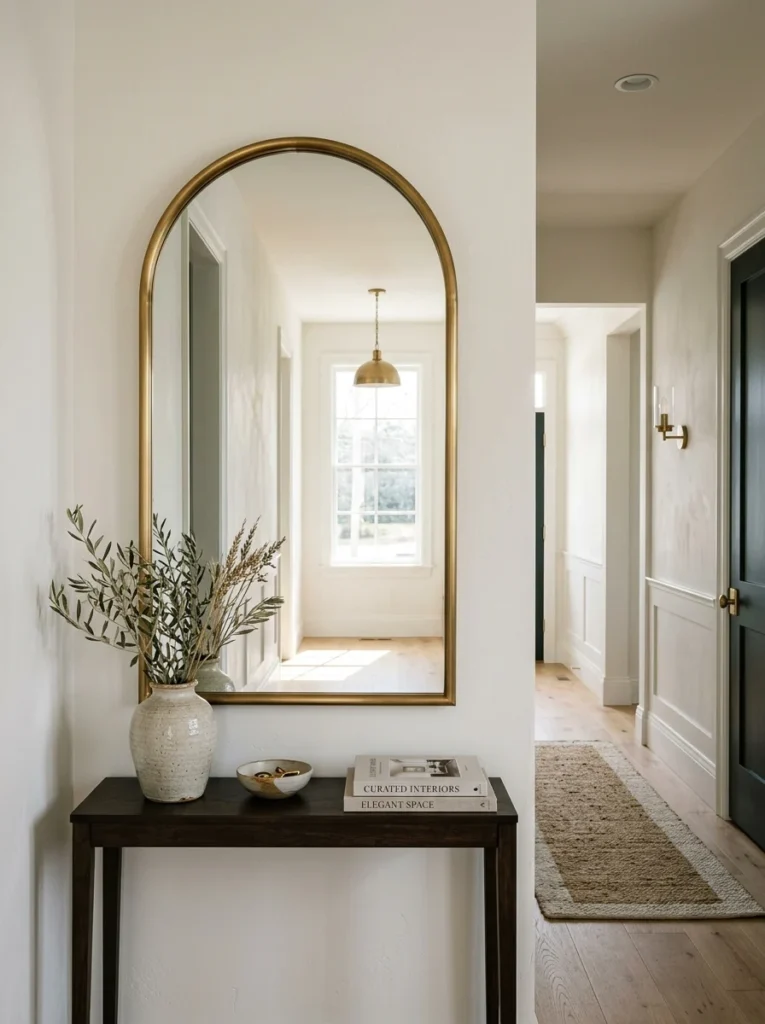
Mirrors are the hallway’s best friend for three reasons: they make the space feel larger, they bounce light around, and they give you somewhere to check yourself before you leave the house.
But not just any mirror. A statement mirror — something oversized, architecturally interesting, or with a distinctive frame — elevates the entire space. Think sunburst frames in aged gold, ornate vintage-style mirrors, arched mirrors, or large rectangular mirrors with minimal black frames.
In my hallway, I hung a large arch-shaped mirror with a warm brass frame directly across from the window. It doubled the apparent size of the corridor and reflected the natural light beautifully throughout the day.
Where to find affordable statement mirrors: HomeGoods, TJ Maxx, Wayfair, or secondhand marketplaces like Facebook Marketplace and eBay, where vintage and antique mirrors sell for a fraction of their retail value.
4. Upgrade Your Lighting Completely
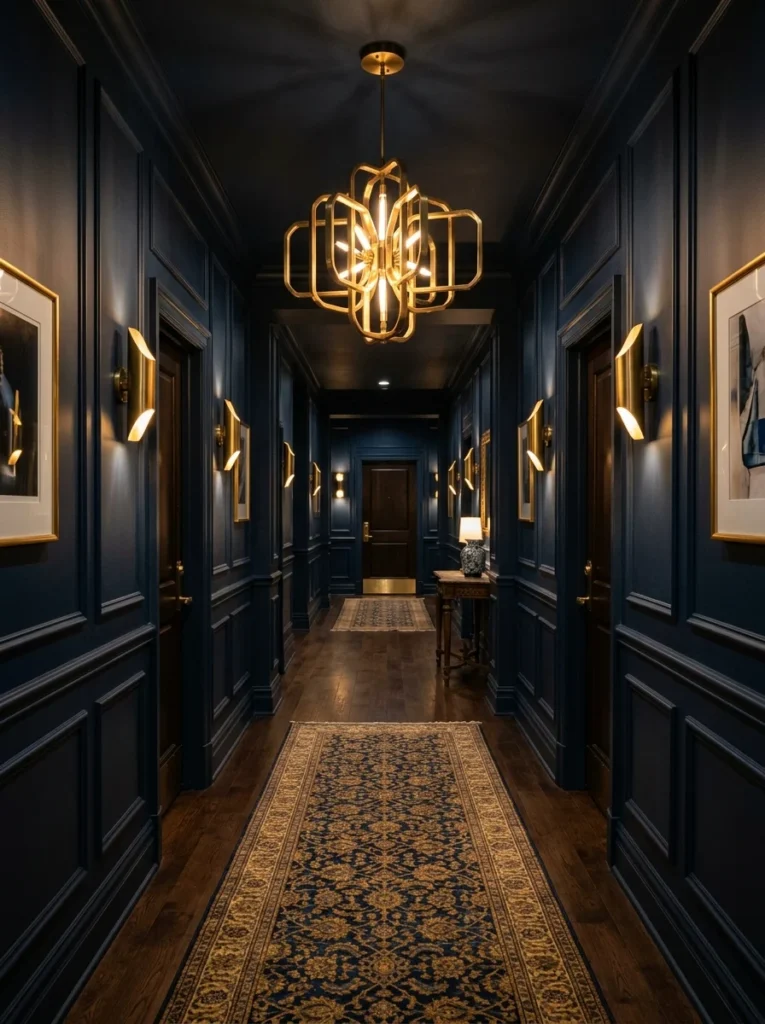
Nothing makes a hallway look cheap faster than bad lighting — and nothing makes it feel expensive faster than beautiful lighting.
Most hallways are lit by a single, uninspiring ceiling fixture. Replace it with something that makes a statement: a pendant light with architectural interest, a chandelier (even a small one), or a cluster of globe lights. For narrower hallways, wall sconces on either side create a beautiful, hotel-corridor effect.
Warm light bulbs (2700K-3000K color temperature) are essential. Cool or harsh white light drains the warmth and life from any space.
When I swapped out my old ceiling light for a simple but beautiful brass pendant, it felt like the hallway had been renovated overnight. The new light cost $85. The impact was worth ten times that.
5. Lay Encaustic or Patterned Floor Tiles
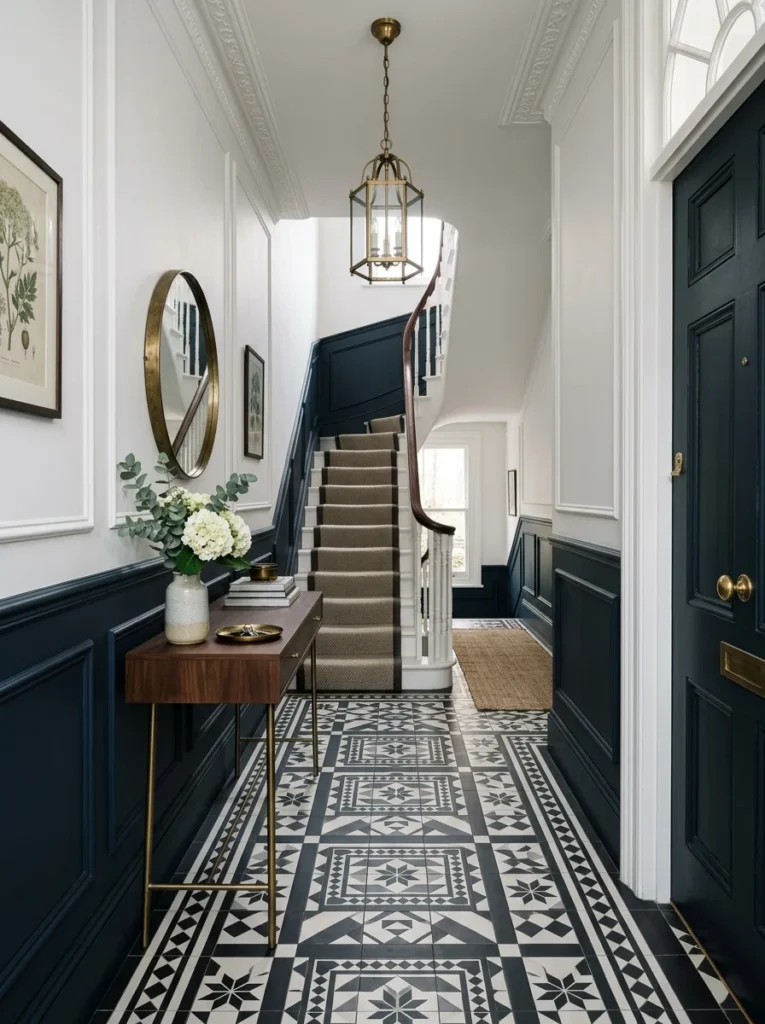
The floor is the most underestimated element in a hallway renovation.
Most hallways have plain, unremarkable flooring. But swap those for encaustic cement tiles, classic black-and-white checkerboard patterns, Moroccan-inspired geometric tiles, or richly colored Victorian-style tiles, and suddenly the hallway becomes the most interesting room in the house.
Patterned floor tiles have been used in grand entryways for centuries — in palaces, stately homes, and luxury hotels — specifically because they signal quality and intention the moment you walk through the door.
For a recent renovation I did in my guest entrance, I used black-and-white hexagon mosaic tiles. The installation took a weekend. The result looked like a feature from an interior design magazine.
Budget tip: Peel-and-stick tile stickers are available now in beautiful patterns, can be applied over existing flooring, and cost a fraction of real tiles. They’re ideal for rental properties or low-budget renovations.
6. Create a Dedicated Shoe and Coat Storage System
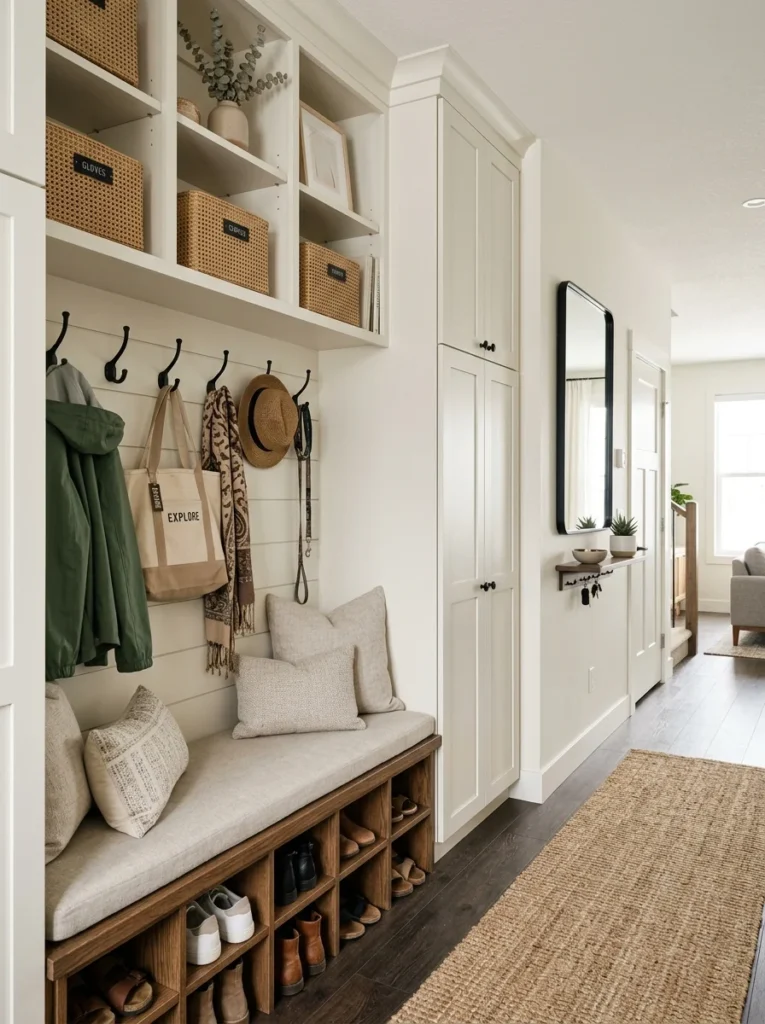
A hallway that looks expensive is never cluttered. And in most homes, the primary source of hallway clutter is shoes and coats.
A dedicated, built-in storage system — or even a freestanding unit that looks built-in — instantly tidies the space and signals organization and intention.
Custom built-in bench seating with cubbies below and hooks above is the gold standard. But even an off-the-shelf unit from IKEA, painted to match the walls and fitted with upgraded hardware, can look completely bespoke.
I built a simple mudroom bench in my hallway using IKEA KALLAX shelving units as the base, a piece of pine board as a bench top, and some trim to make it look built-in. Total cost: around $180. The result? Every single person who sees it assumes it was custom built.
7. Add a Console Table with Considered Styling
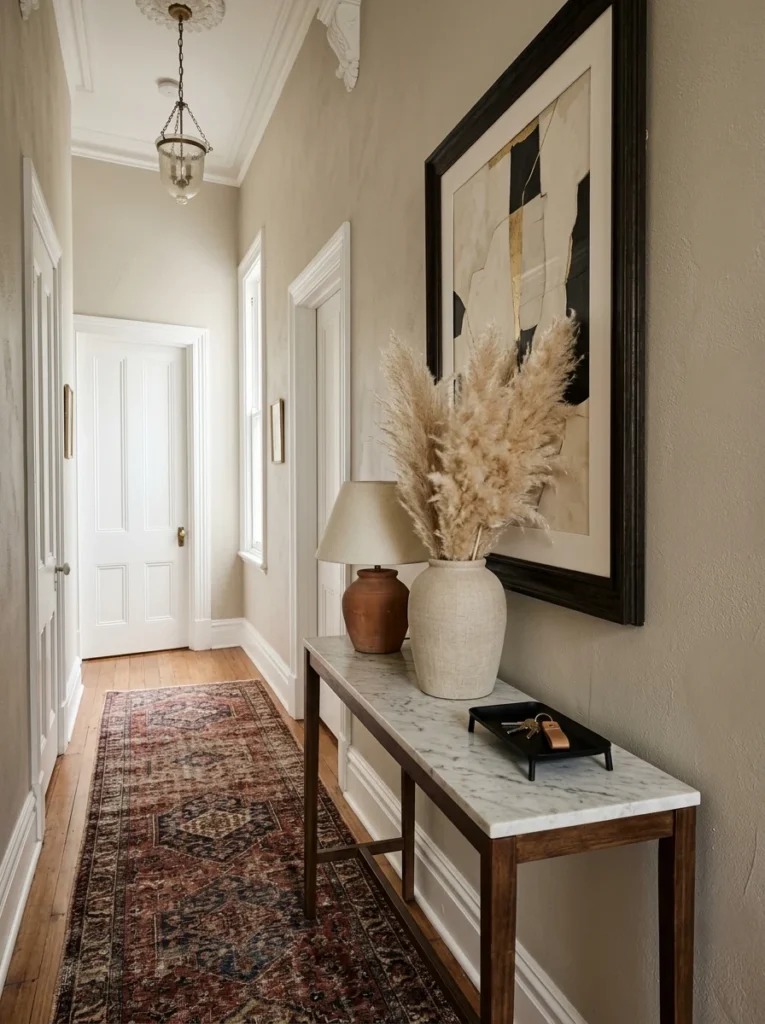
If your hallway is wide enough, a console table is one of the most impactful pieces of furniture you can add.
A slim console table against one wall provides a surface for styling — a lamp, a vase, a small bowl for keys, some fresh or dried flowers. It turns a functional corridor into a designed space.
The styling on a console table is important. The formula that always works: one lamp or tall vase, one shorter decorative object, and one practical element (like a small tray for keys). Odd numbers work better than even.
I have a narrow marble-topped console table in my hallway with a small terracotta lamp, a linen-colored vase with dried pampas grass, and a black tray for my keys and wallet. It takes up almost no space and makes the hallway feel like a proper room.
8. Install Hooks That Are Actually Decorative
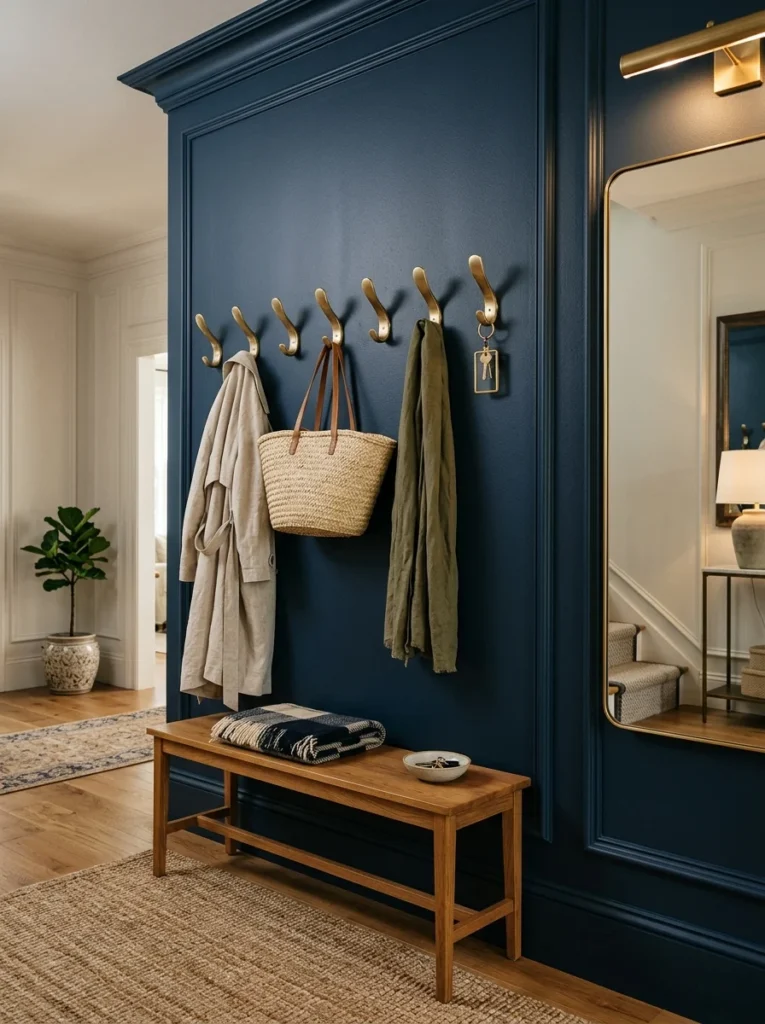
Most people have functional hooks in their hallway. Very few people have beautiful ones.
In 2026, decorative hooks — cast iron with an antique finish, sculptural brass, matte black with geometric shapes, or ceramic-tipped wooden pegs — are a simple but effective upgrade that adds personality and a sense of quality to any hallway.
Replace the standard chrome or plastic hooks with something that works as both a functional element and a design detail. A row of five beautiful hooks costs $30-60 and takes 20 minutes to install.
9. Hang Gallery Wall Art
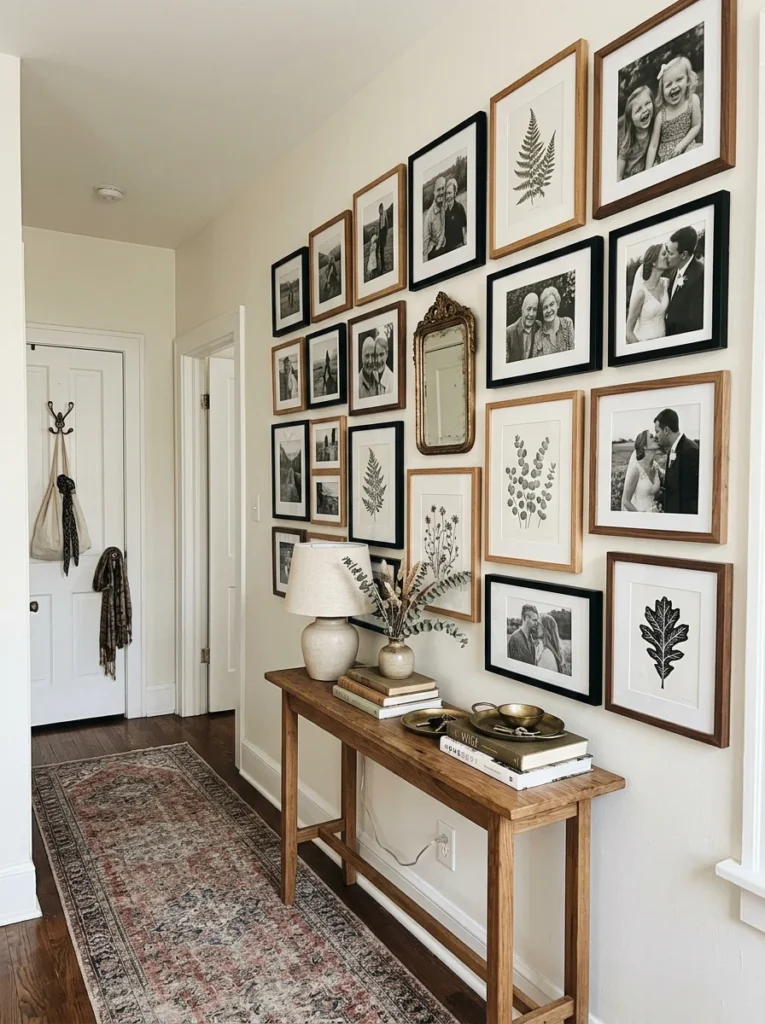
The walls of a hallway are valuable real estate that most homeowners leave completely blank or cover with generic prints.
A carefully curated gallery wall — even a simple one — turns a hallway from a corridor into a space with personality and story.
My favorite approach: a mix of black-and-white photographs (personal or sourced from online), one or two botanical prints, and a small mirror. All framed in matching or complementary frames. The result feels collected and personal rather than designed, which is exactly the effect you want.
Gallery wall tip: Lay the arrangement out on the floor before you put any nails in the wall. This lets you adjust the composition without making extra holes.
10. Add a Runner Rug in a Bold Pattern
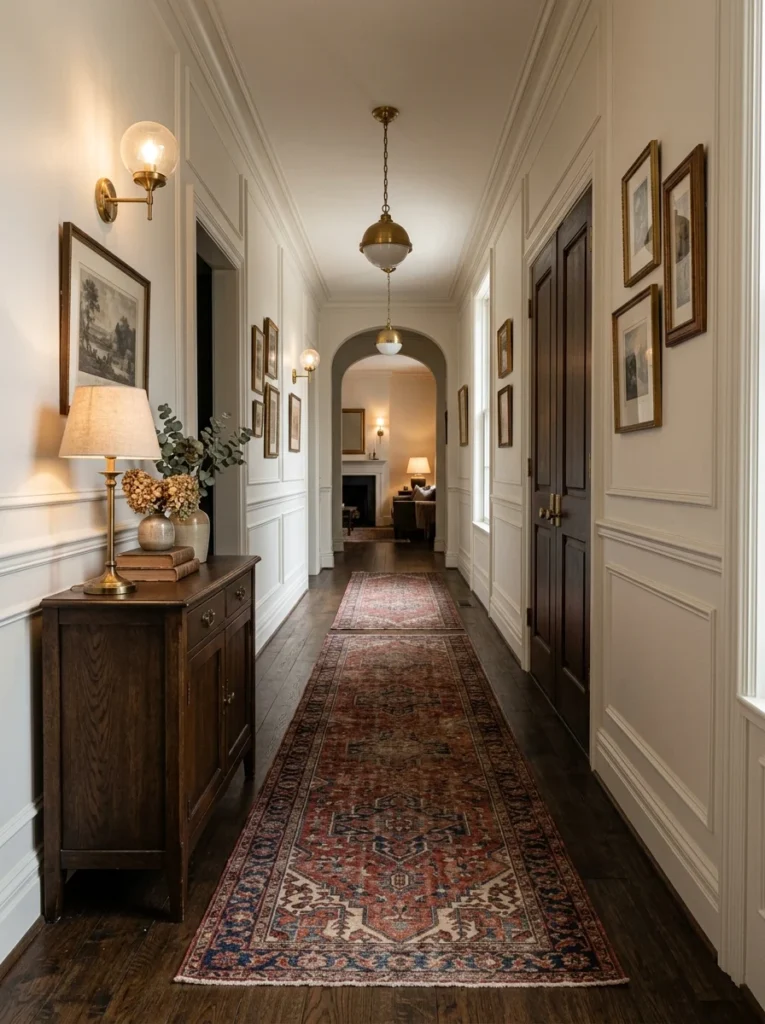
A long, narrow runner rug in a hallway does several things simultaneously: it adds warmth and texture underfoot, defines the walking path, protects the floor, and adds a layer of design interest.
In 2026, runner rugs in vintage-inspired patterns — particularly Persian, kilim, and Moroccan designs — are especially popular for hallways. The worn, faded look of a vintage runner adds instant character and warmth.
I have a vintage-style runner in deep red and navy in my hallway. It grounds the whole space and every person who enters comments on it within about 30 seconds.
11. Introduce Plants and Greenery
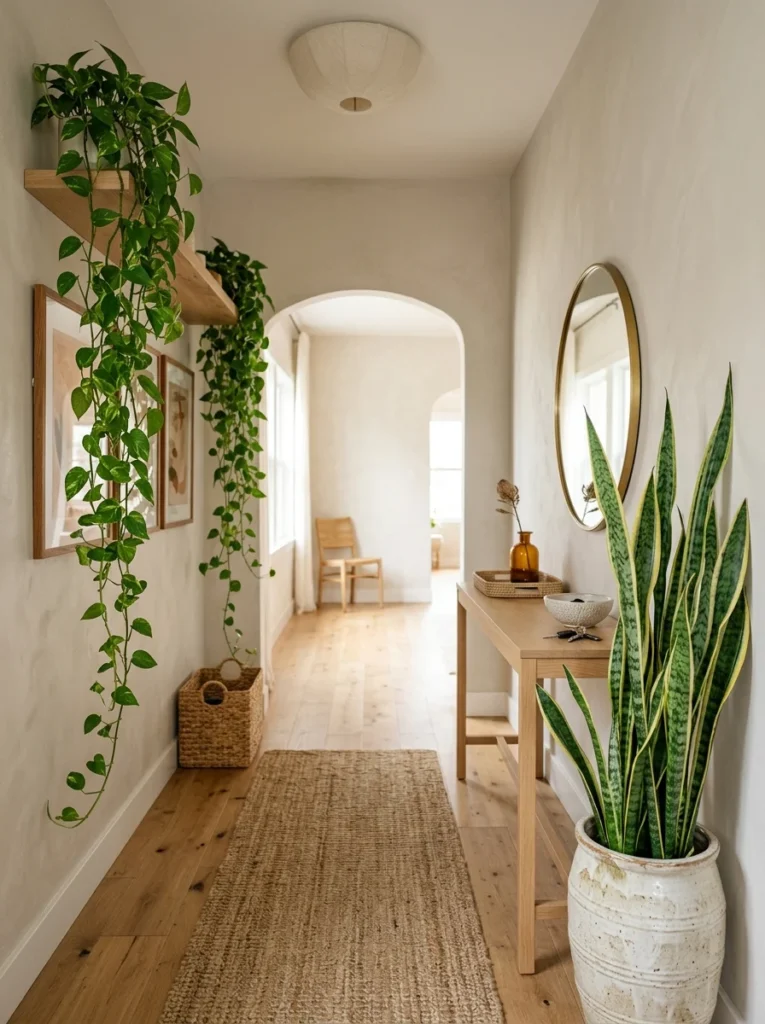
Plants in a hallway are unexpected — and that’s exactly what makes them effective.
A single statement plant — a tall fiddle-leaf fig, a dramatic snake plant, or a cascading pothos on a high shelf — adds life, color, and oxygen to a space that typically has neither.
The caveat: most hallways don’t get much natural light. Choose low-light tolerant plants like pothos, ZZ plants, snake plants, or cast iron plants. Alternatively, high-quality artificial plants have become almost indistinguishable from real ones in recent years and require zero maintenance.
12. Install Built-In Shelving
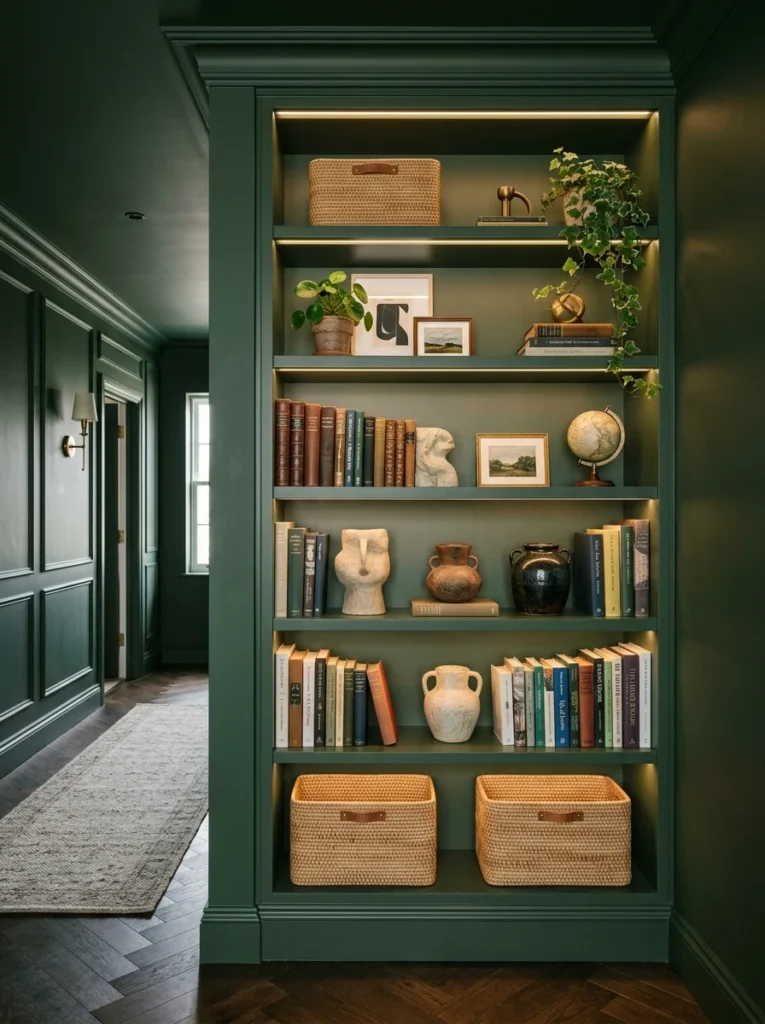
Built-in shelving — floor-to-ceiling or alcove-fitted — makes any hallway feel custom-designed and architecturally significant.
You can use built-in shelves to display books, art objects, plants, and storage baskets. The key is treating the shelving as a styled display rather than a dumping ground. Every object should be there intentionally.
If your hallway has an alcove — even a shallow one — this is the perfect place for fitted shelving. An alcove with built-in shelves, painted the same color as the walls (to create a seamless, architectural look), feels incredibly expensive and considered.
13. Replace Your Front Door Hardware
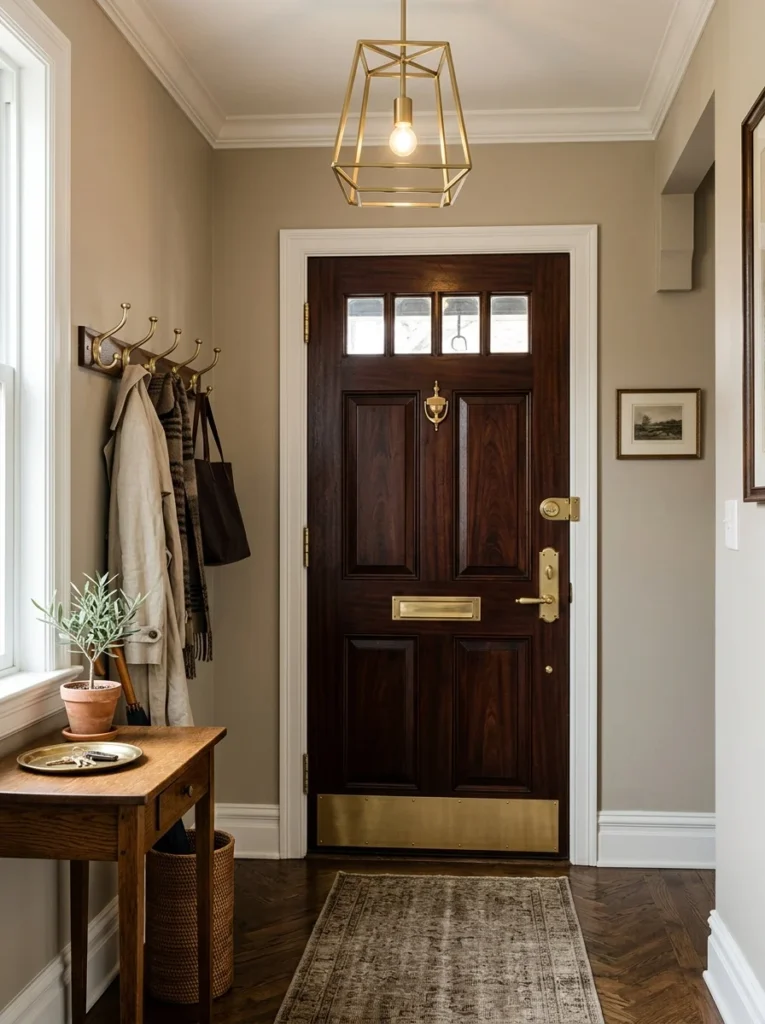
This one is specifically for the interior side of your entryway — but it’s often overlooked.
The door handle, deadbolt, hinges, and any other visible hardware on your front door are among the first things people see when they enter. Cheap, tarnished, or mismatched hardware makes the whole space feel unfinished.
Replace all visible hardware with matching, quality pieces. In 2026, brushed brass, matte black, and polished nickel are the dominant choices. Choose one finish and apply it consistently across all hardware in the hallway — hooks, door handles, light fittings, mirror frames.
This concept — called a “mixed metals” approach or, more precisely, a “single finish” approach — is what interior designers use to make spaces feel cohesive and professional.
14. Add Architectural Interest with an Arched Detail
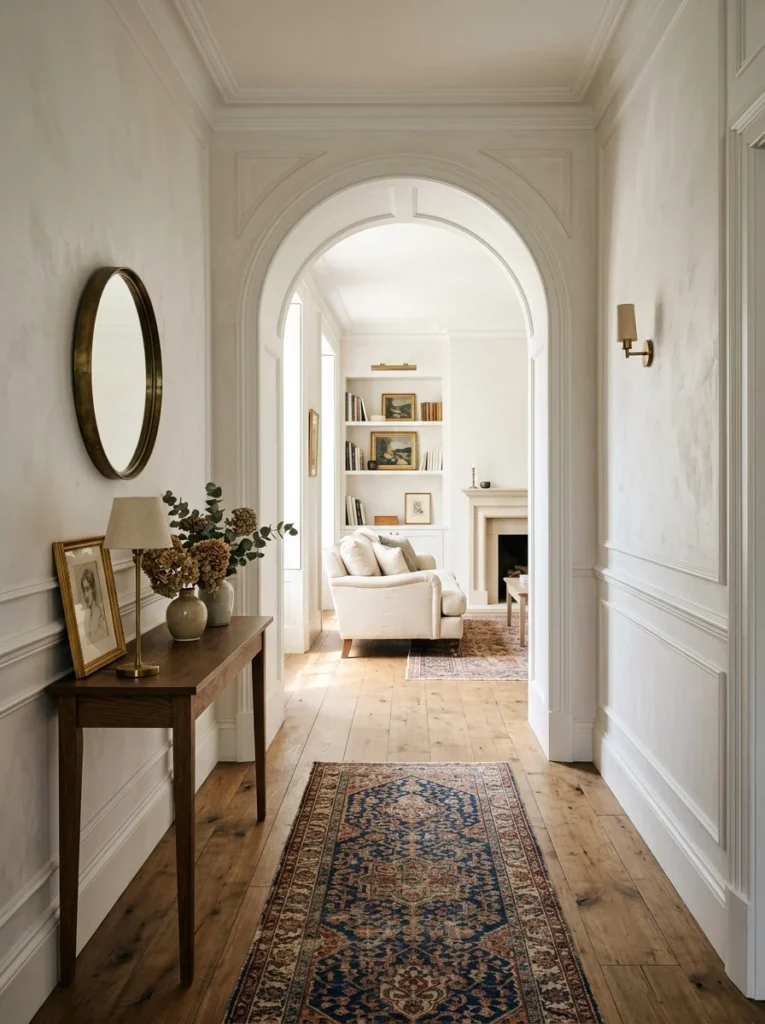
Arches are one of the biggest architectural trends in interiors right now, and they work beautifully in hallways.
If your hallway has a doorway leading into another room, consider adding an arched surround. This can be done with plasterwork, MDF framing, or even a painted arch effect using curved masking tape.
An arched doorway immediately suggests quality and architectural character. It transforms a flat, boring opening into a designed threshold.
Even a painted arch — literally just painting an arch shape on the wall — creates the impression of architectural detail at virtually zero cost.
15. Use Wallpaper for Maximum Impact
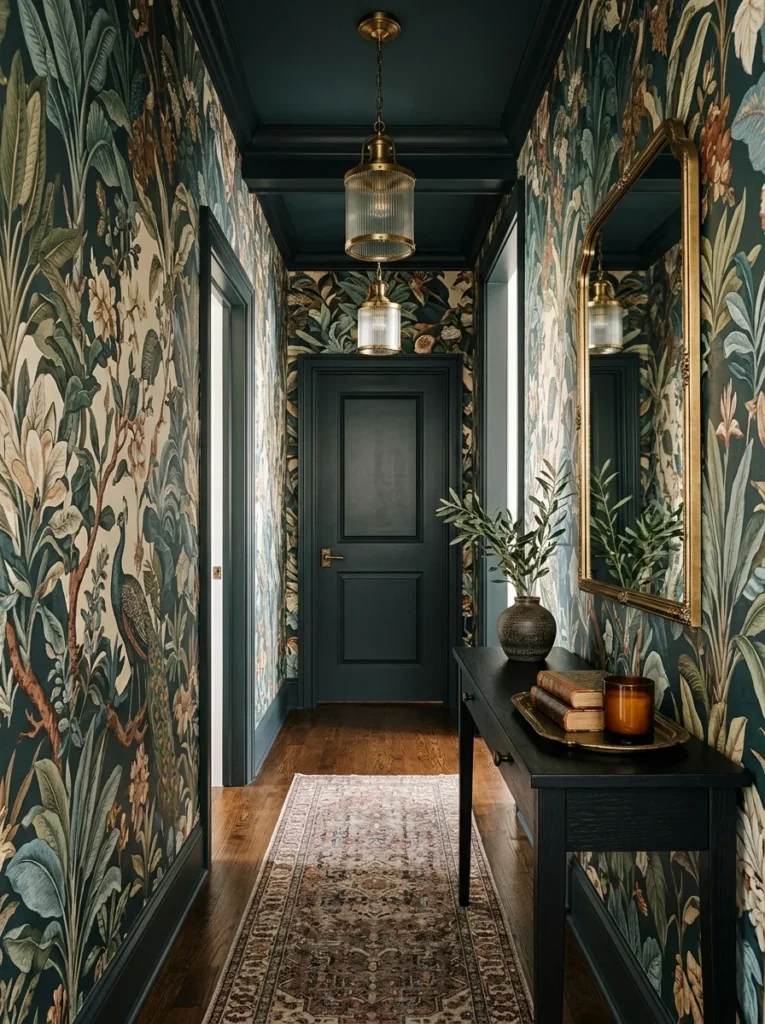
Wallpaper in a hallway is a design choice that almost always pays off.
Because hallways are typically small, a bold, expensive-looking wallpaper pattern doesn’t cost as much to install as it would in a larger room. But the visual impact is enormous.
In 2026, the most popular wallpaper styles for hallways include: large-scale botanical prints, abstract painterly patterns, grasscloth textures, and maximalist jungle prints. Any of these applied to a single accent wall or the full hallway creates a space that feels genuinely considered and luxurious.
16. Install Cove or Picture Rail Molding
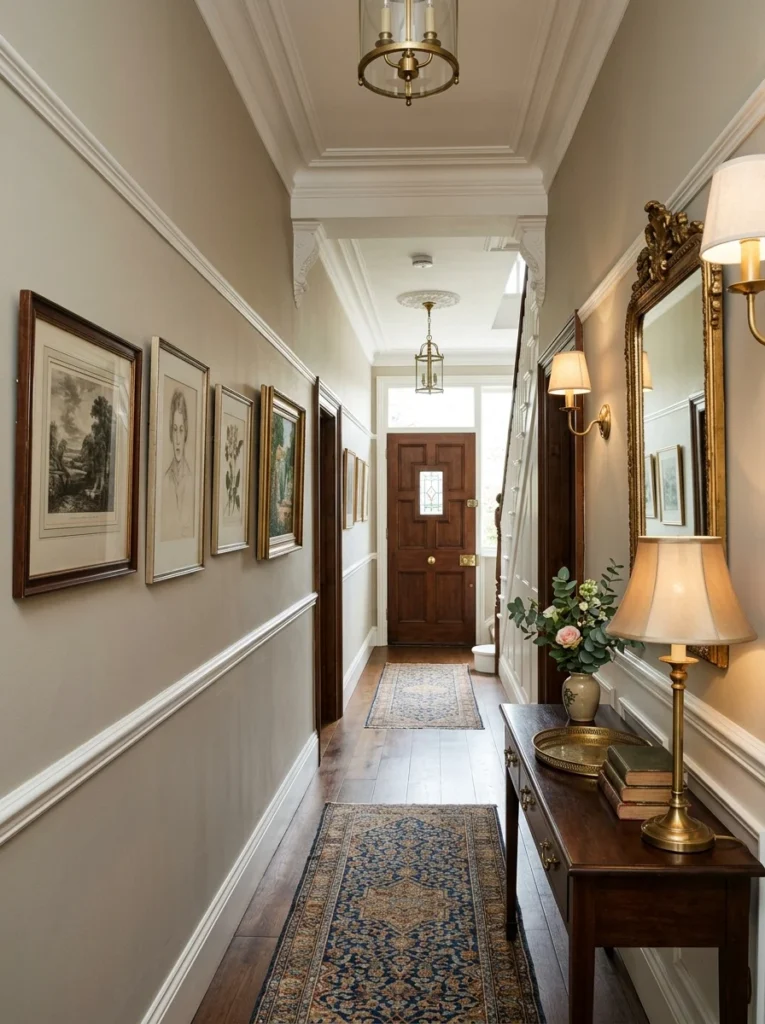
Ceiling molding — particularly cove molding and picture rail molding — is one of the most effective ways to add perceived value to a hallway.
These architectural details, once common in period homes, are now used strategically by interior designers to give contemporary spaces a sense of quality and history.
Cove molding at the ceiling-wall junction costs very little in materials and can be installed in a day. Painted the same color as the ceiling (usually white), it adds immediate architectural refinement.
17. Create a Feature Ceiling
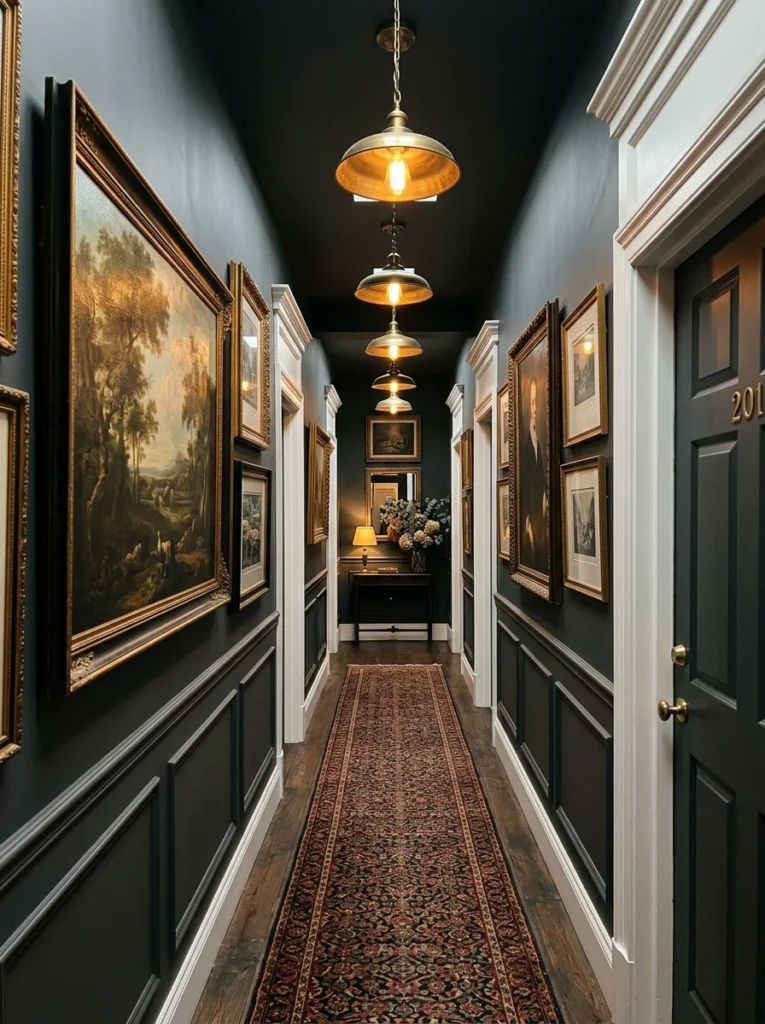
Most people renovate their hallway walls and floor without ever looking up. The ceiling is an untapped opportunity.
In 2026, feature ceilings — painted in a contrasting color, covered in a textured wallpaper, fitted with decorative beams, or illuminated with recessed lighting — are a powerful differentiator.
A ceiling painted in the same deep color as the walls creates a cocooning, immersive effect that feels incredibly luxurious. A ceiling covered in a simple grasscloth wallpaper adds unexpected texture.
I painted my hallway ceiling in the same charcoal as the walls, leaving the trim white. The effect was like stepping into a beautifully designed box — contained, intentional, and impressive.
18. Add a Scent
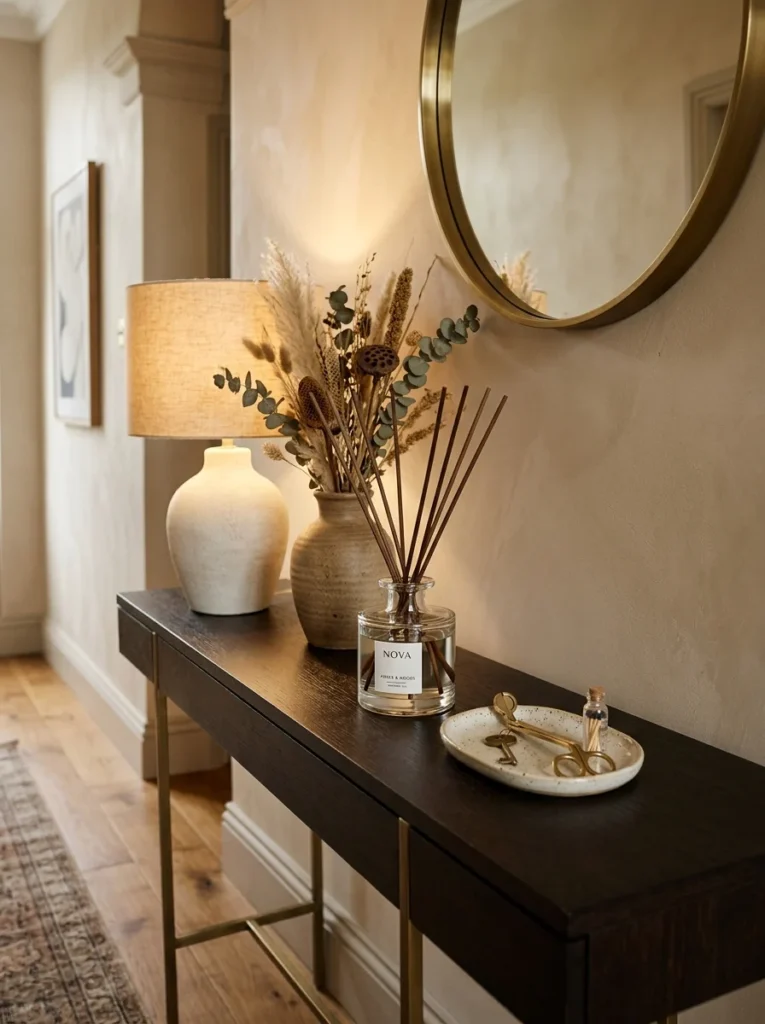
This is the idea that most renovation guides miss entirely — and it’s one of the most powerful.
Luxury hotels, high-end boutiques, and expensive homes all have one thing in common beyond the visual: they smell beautiful. A signature scent in your entryway creates an immediate sensory impression of quality and care.
A reed diffuser with a sophisticated fragrance — sandalwood, cedar, white tea, linen, or bergamot — placed on your console table or near the door makes your home feel like an experience, not just a building.
I have a reed diffuser in my hallway that costs about $25 to refill every few months. It is, without exaggeration, one of the most commented-on elements of my home. People walk in and immediately say “it smells amazing in here.” That impression sets the tone for everything that follows.
19. Light Your Hallway at Night With Accent Lighting
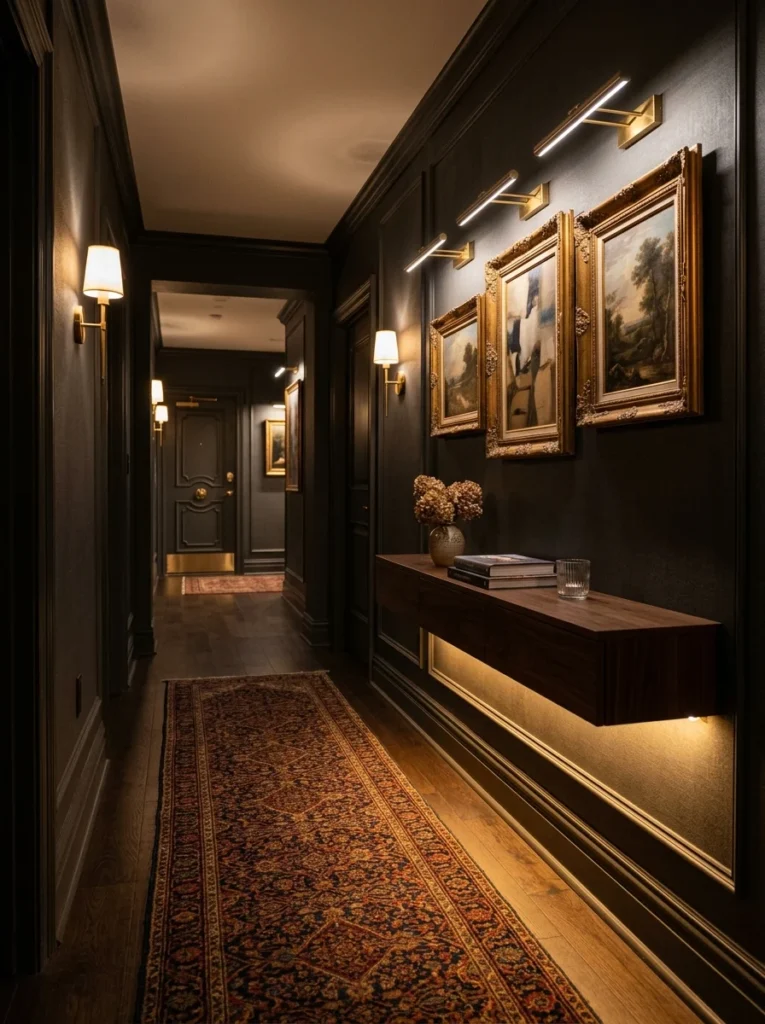
The final idea is about how your hallway performs after dark — which, for most of the year, is when you’re actually coming and going.
Accent lighting — small LED strip lights under a console table, plug-in wall sconces, or battery-powered picture lights above artwork — turns a hallway into a warm, atmospheric welcome at night.
This is particularly effective if you have art or architectural features (like paneling or shelving) worth highlighting. Directed light draws attention to these details and makes the space feel considered and curated even in the evening hours.
I installed small LED strip lights under my console table — they cost $12 from Amazon. In the evening, they create a warm glow at floor level that makes the whole corridor feel like a boutique hotel. It’s one of my favorite tricks.
Putting It All Together — A Phased Approach
You don’t have to implement all 19 ideas at once. Here’s how I’d prioritize them based on impact and budget:
Phase 1 — Immediate Impact (Under $200 total):
- Repaint the walls in a bold, saturated color
- Replace the ceiling light fixture
- Add a statement mirror
- Install a runner rug
- Add a reed diffuser
Phase 2 — Medium Investment (Under $500 total):
- Install wall paneling or wainscoting
- Add a console table with curated styling
- Hang a gallery wall
- Replace door and fixture hardware
- Add decorative hooks
Phase 3 — Renovation Level (Budget varies):
- Replace or tile the floor
- Install built-in storage or shelving
- Add architectural molding or an arched doorway
- Apply bold wallpaper
- Add architectural lighting
By working in phases, you spread the investment over time while building toward a hallway that truly feels expensive, curated, and uniquely yours.
What I’ve Learned About Hallway Design
After years of experimenting with my own hallway and helping friends with theirs, here are the most important lessons I can pass on:
Clutter is the enemy of luxury. No matter how beautiful your renovation, if there are shoes everywhere and bags piled by the door, the space will feel chaotic. Storage is not optional — it’s fundamental.
Lighting changes everything. A badly lit space always looks cheap. A beautifully lit space always looks expensive. This is the highest-impact, lowest-cost change you can make.
Cohesion beats individual pieces. One beautiful object in an incoherent space looks lonely. Average pieces in a cohesive, considered space look curated. Always start with a clear style direction before buying anything.
Scale matters. In narrow hallways, oversized elements — a large mirror, a tall plant, a big piece of art — work better than small, fussy details that get lost.
The hallway sets the whole tone. Get this right, and every room that follows benefits from the impression it creates.
Final Thoughts
Your hallway doesn’t need to be a forgotten space — a functional corridor you pass through without noticing. With the right renovation ideas, it can be the room that makes your whole home feel more expensive, more considered, and more like you.
The 19 ideas in this guide range from a $12 LED strip light to a full tiled floor renovation. Some take an afternoon; others take a weekend. All of them — applied thoughtfully — have the power to completely transform how your home feels from the very first step inside.
Start with one idea. See what it does to the space. Then keep going.
Which of these hallway renovation ideas are you most excited to try? Tell me in the comments — I’d love to see what you create.