
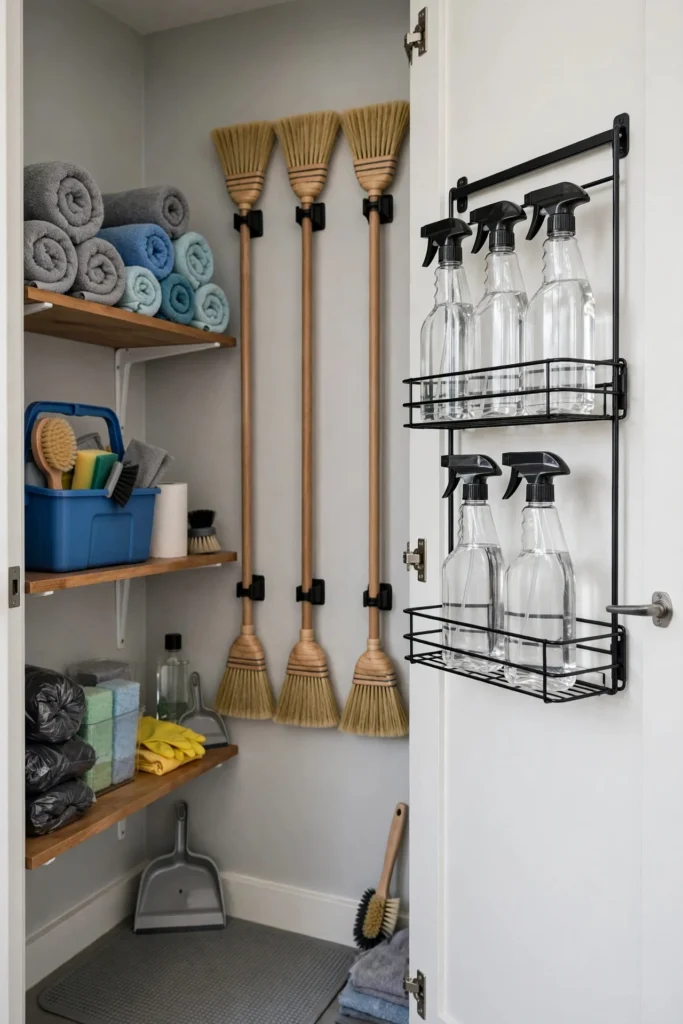
Cleaning supplies are the orphans of home organization. They end up scattered under three sinks, in the laundry room, the garage, and that one closet nobody opens. Then cleaning day arrives and you spend twenty minutes hunting for the glass cleaner.
These 13 ideas give your supplies one logical home — or a smart station in each zone — so everything is findable, safe, and easy to grab. Most use space you already have; all of them make cleaning faster.
1. Create One Central Cleaning Closet
If you have a spare closet — hallway, laundry room, even under the stairs — make it the headquarters. Every cleaner, tool, and refill lives here; you grab the caddy and go. One home ends the multi-sink scavenger hunt.
Install two or three adjustable shelves and a door-mounted rack for spray bottles. Keep a step stool nearby if the closet is deep. Label the shelves by task: bathrooms, kitchen, floors, laundry. The whole system fits in a 24-inch-wide closet.
A rolling garment rack’s lower bar makes a perfect drying spot for damp mops and cloths — hang them in the closet overnight, then store. Wet tools stored damp grow mildew in days, not weeks.
Try this: Hang a small whiteboard inside the door listing what’s running low — restock in one trip.
2. Build a Grab-and-Go Cleaning Caddy
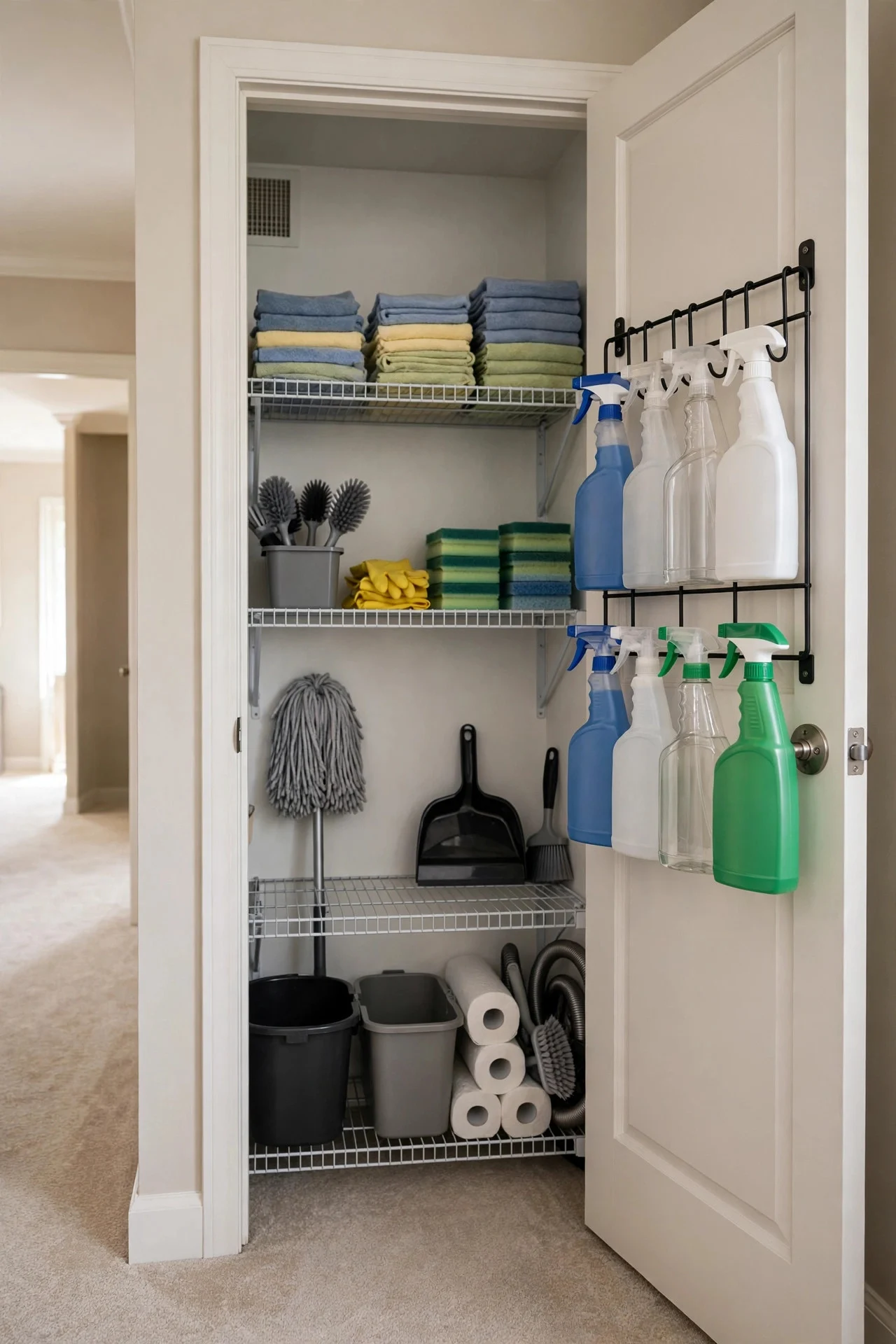
The caddy is the workhorse: one handled carrier holding your core cleaners — all-purpose spray, glass cleaner, disinfecting wipes, scrub brush, microfiber cloths. Grab it, clean a room, return it.
Choose a caddy with a center handle and divided compartments so bottles don’t tip. Keep it stocked; an empty caddy breaks the habit. Store it at the front of the closet so it’s the first thing you reach for.
Color-code the caddies if you hire cleaners — blue for bathrooms, green for kitchen — so nothing gets mixed up. A laminated checklist taped inside the caddy lid tells anyone exactly what clean means in your house.
Try this: Keep a second, smaller caddy for upstairs if you have two floors — no more lugging supplies up and down.
3. Mount Spray Bottles on the Door
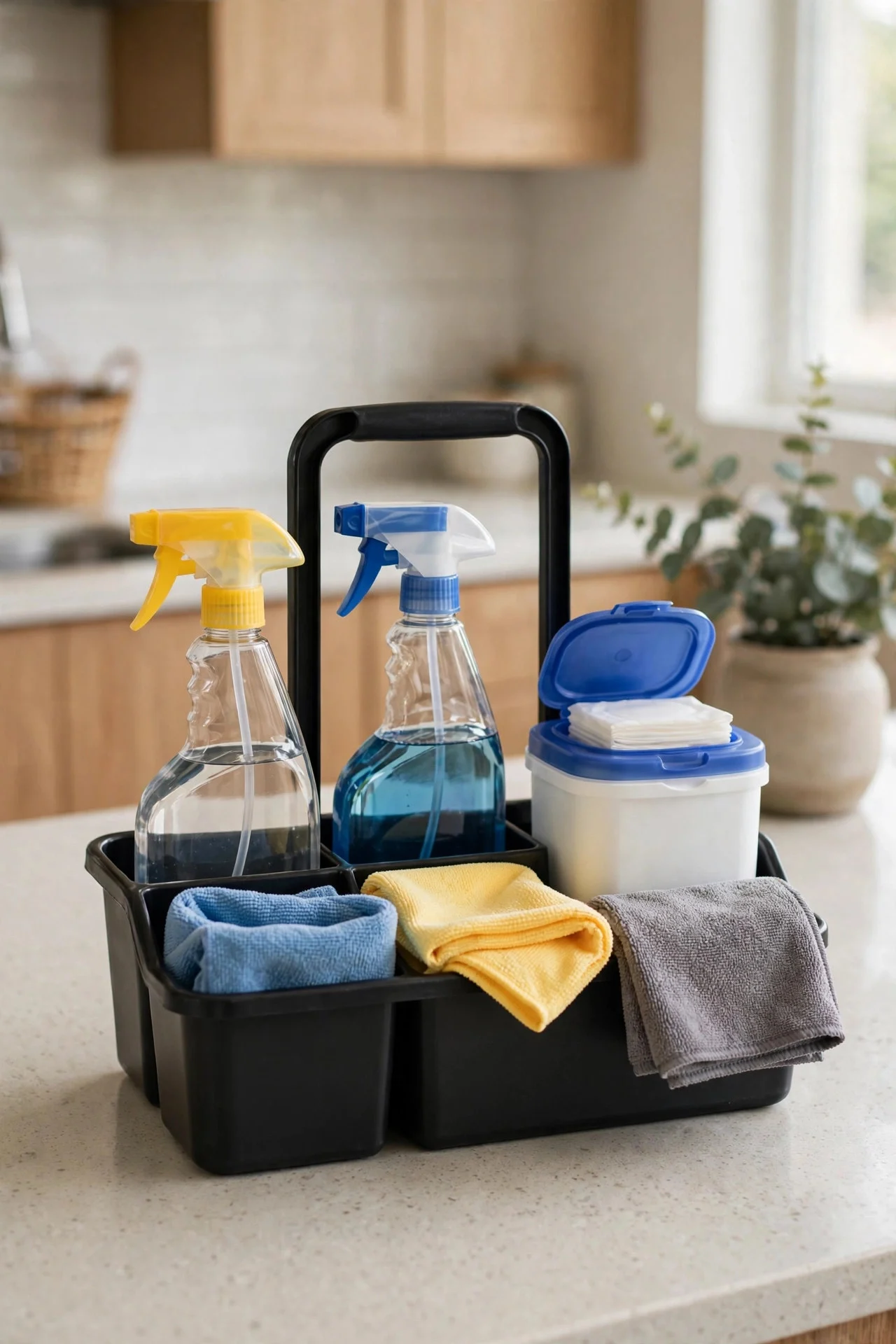
Spray bottles are tall and tippy — they waste shelf space and fall over constantly. A door-mounted rack or a row of adhesive hooks holds them upright on the inside of the closet door, freeing every shelf.
Mount at chest height so labels face out and you grab the right bottle instantly. This works on any smooth door interior. Keep bleach-based cleaners separate from ammonia-based ones, even in storage.
A tension rod mounted inside the cabinet under the sink creates a hanging bar for spray bottles — same idea, hidden location. This trick also works inside tall pantry cabinets for cleaning sprays.
Try this: Store bottles trigger-down in the rack — it keeps the trigger mechanism from clogging.
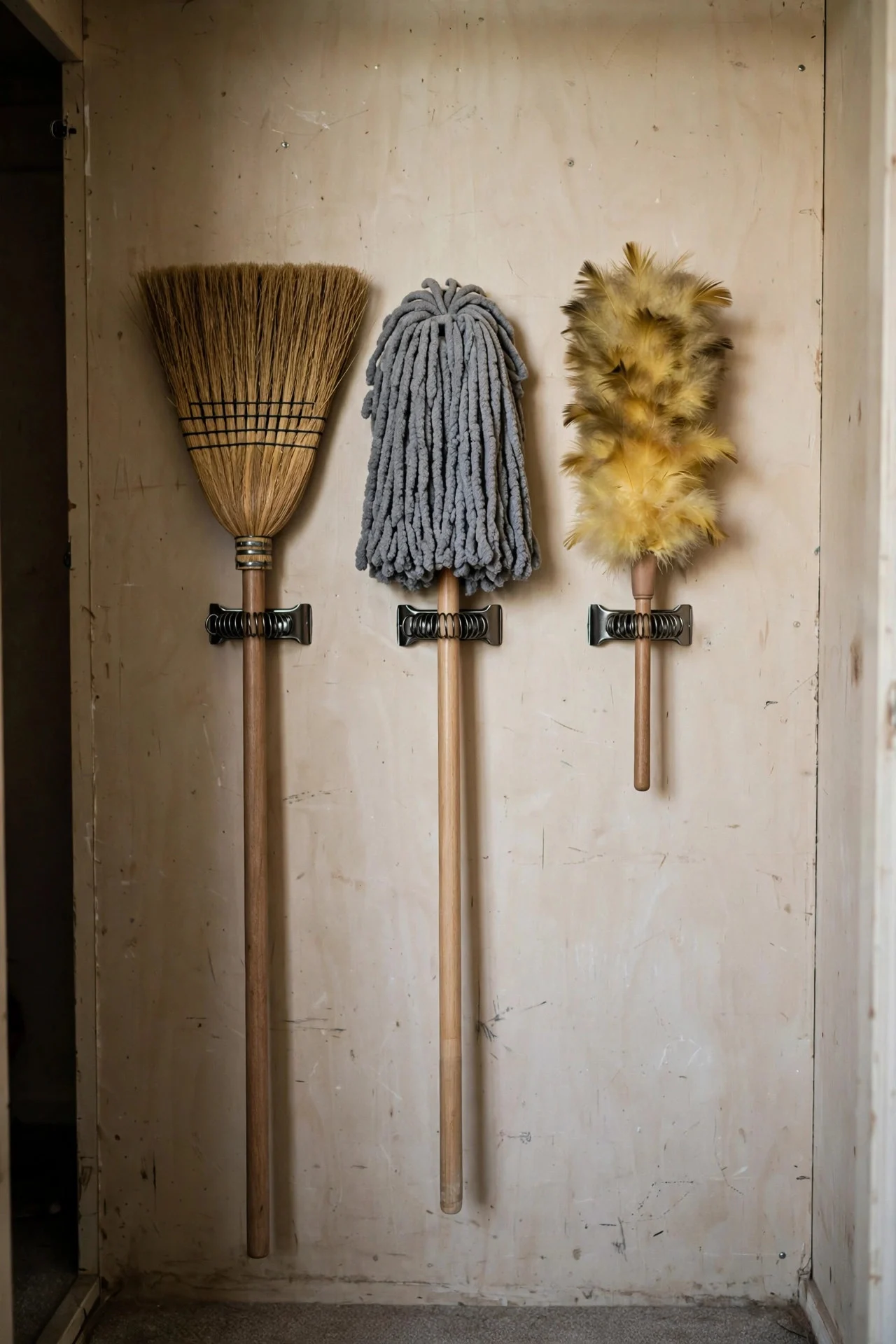
4. Hang Brooms and Mops on Wall Clips
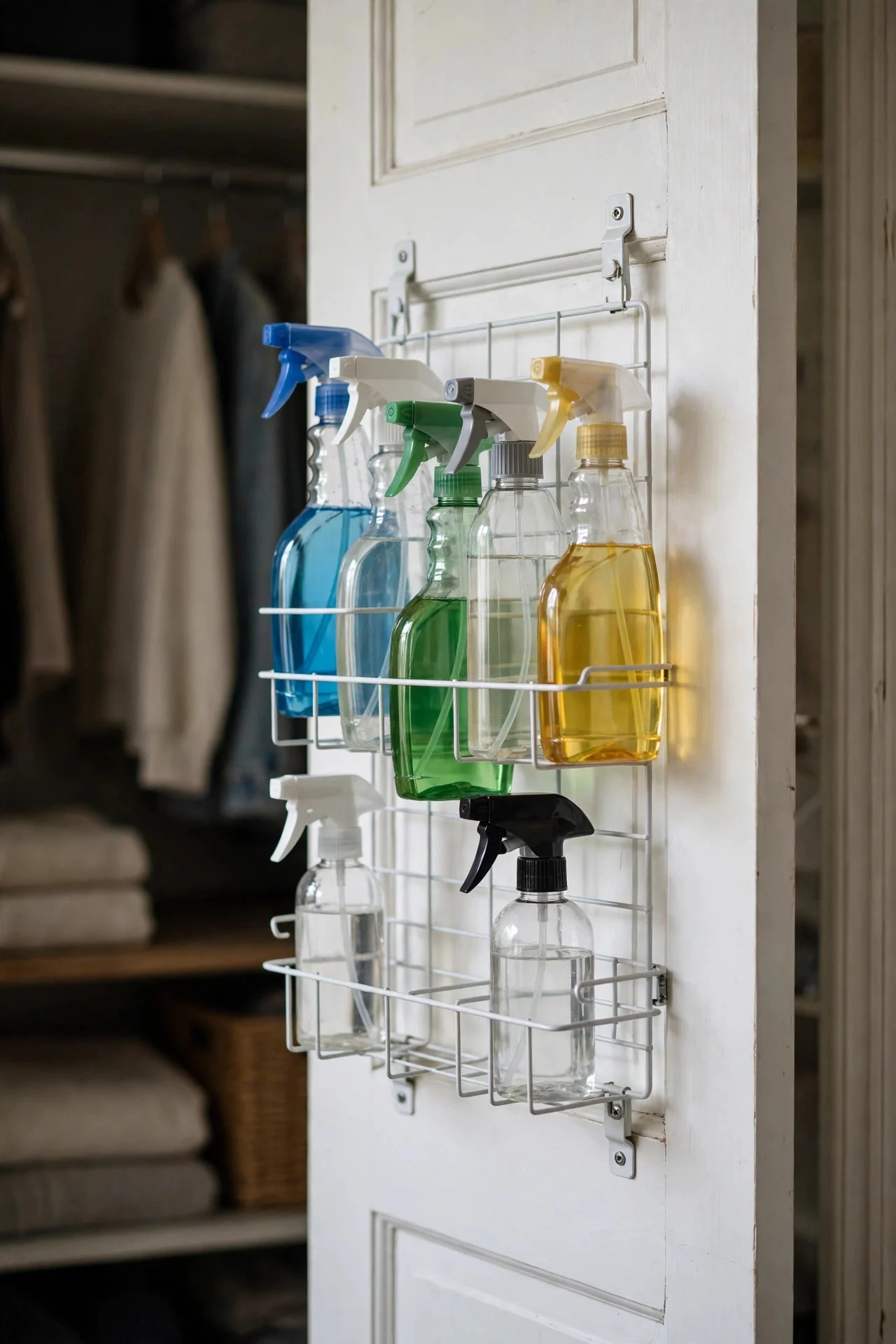
Brooms leaning in a corner fall, slide, and eat floor space. Spring-loaded wall clips (about $2 each) hold brooms, mops, and dusters flat against the closet wall — handles up, heads down, always accessible.
Mount the clips at about 48 inches high so the tool heads clear the floor. Space them 6 inches apart. One clip per tool; doubling up makes them hard to grab. This single change frees a full square foot of closet floor.
Rubber-tipped clips grip better than bare metal and won’t scratch handles. Replace clips when the spring weakens — a broom that falls at 2am is a special kind of household terror.
Try this: Hang the dustpan with the broom so the pair never separates.
5. Decant Into Labeled Spray Bottles
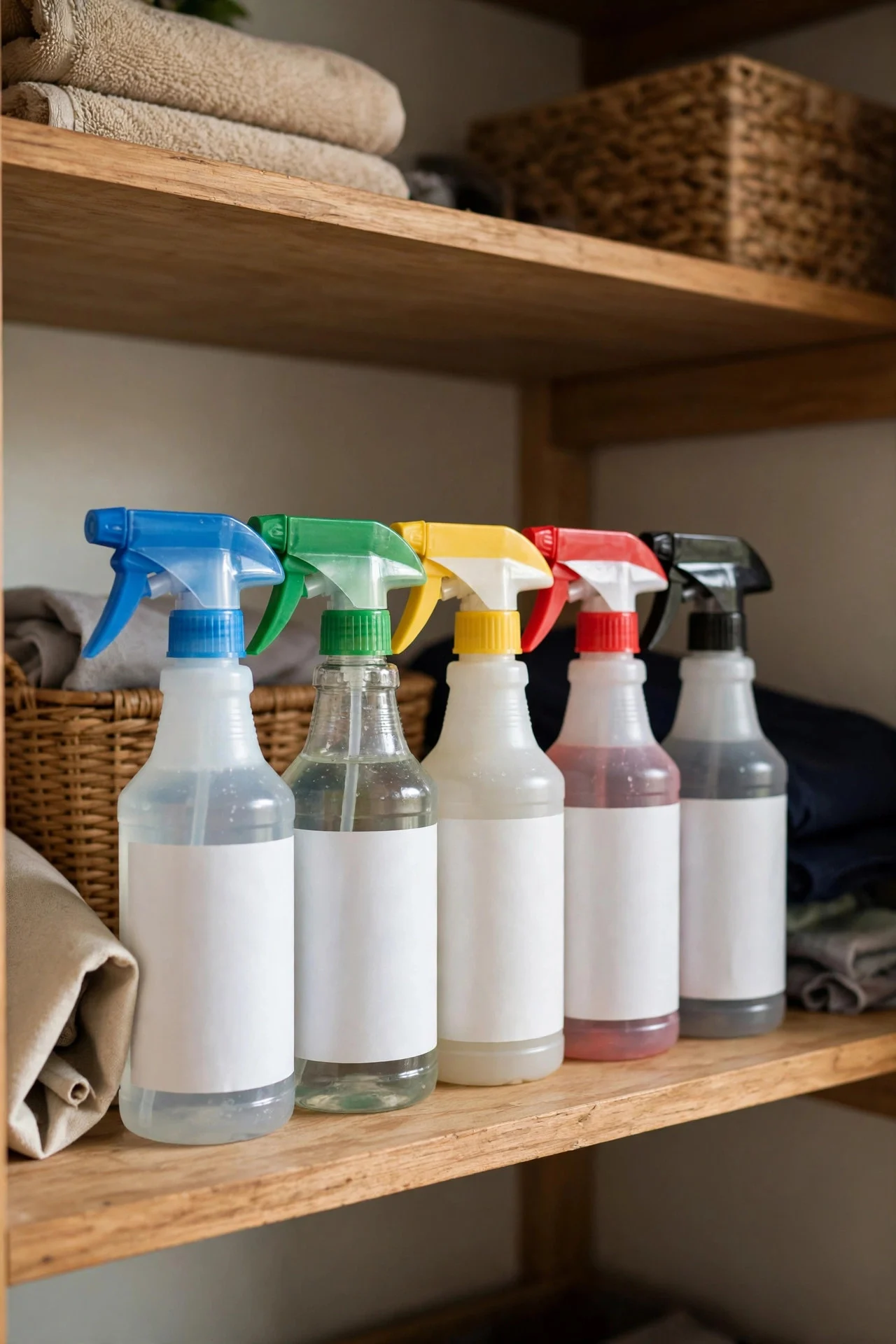
Concentrates and bulk cleaners save money but the jugs are bulky. Decant working solutions into labeled 16-ounce spray bottles — lighter to carry, easier to store, and you always know the dilution is right.
Label every bottle with the product name AND the mixing ratio; never rely on memory. Use chemical-resistant labels that won’t smear. Store concentrates on a high shelf, working bottles at grab height.
Mix only what you’ll use in a month — homemade solutions without preservatives grow things. Date every mixed bottle; when in doubt, dump it and remix. Fresh solution cleans better anyway.
Try this: Color-code the bottle triggers with tape — blue for glass, red for disinfectant — for instant identification.
6. Store the Vacuum in Its Own Nook
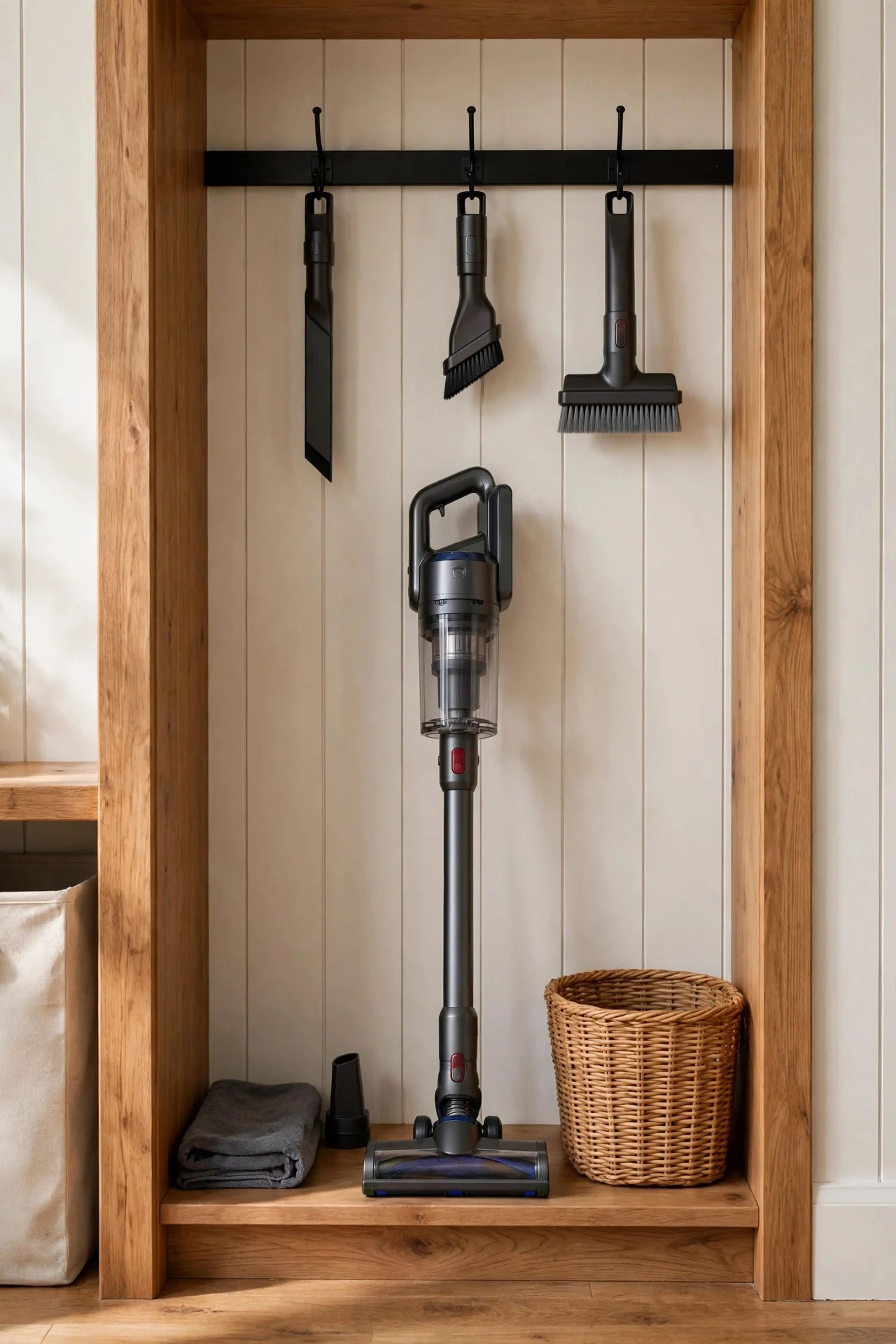
The vacuum is the bulkiest cleaning tool and the most annoying to retrieve. Give it a dedicated nook — a closet corner, the end of the laundry room, or a 14-inch-wide gap beside the washer — with its attachments on a hook above.
Wrap the cord using the vacuum’s own hooks, not around the body, to prevent cord damage. Empty the bin or change the bag after every few uses; a full vacuum cleans poorly. Keep the nook clear — nothing stacked on top.
Robot vacuums need a 2-foot clear zone around their dock — measure before assigning the nook. Keep the dock against a wall with the outlet nearby; extension cords across the floor defeat the purpose.
Try this: Hang a small caddy of vacuum attachments on the wall above so nothing gets lost.
7. Use a Rolling Cart for Multi-Room Cleaning
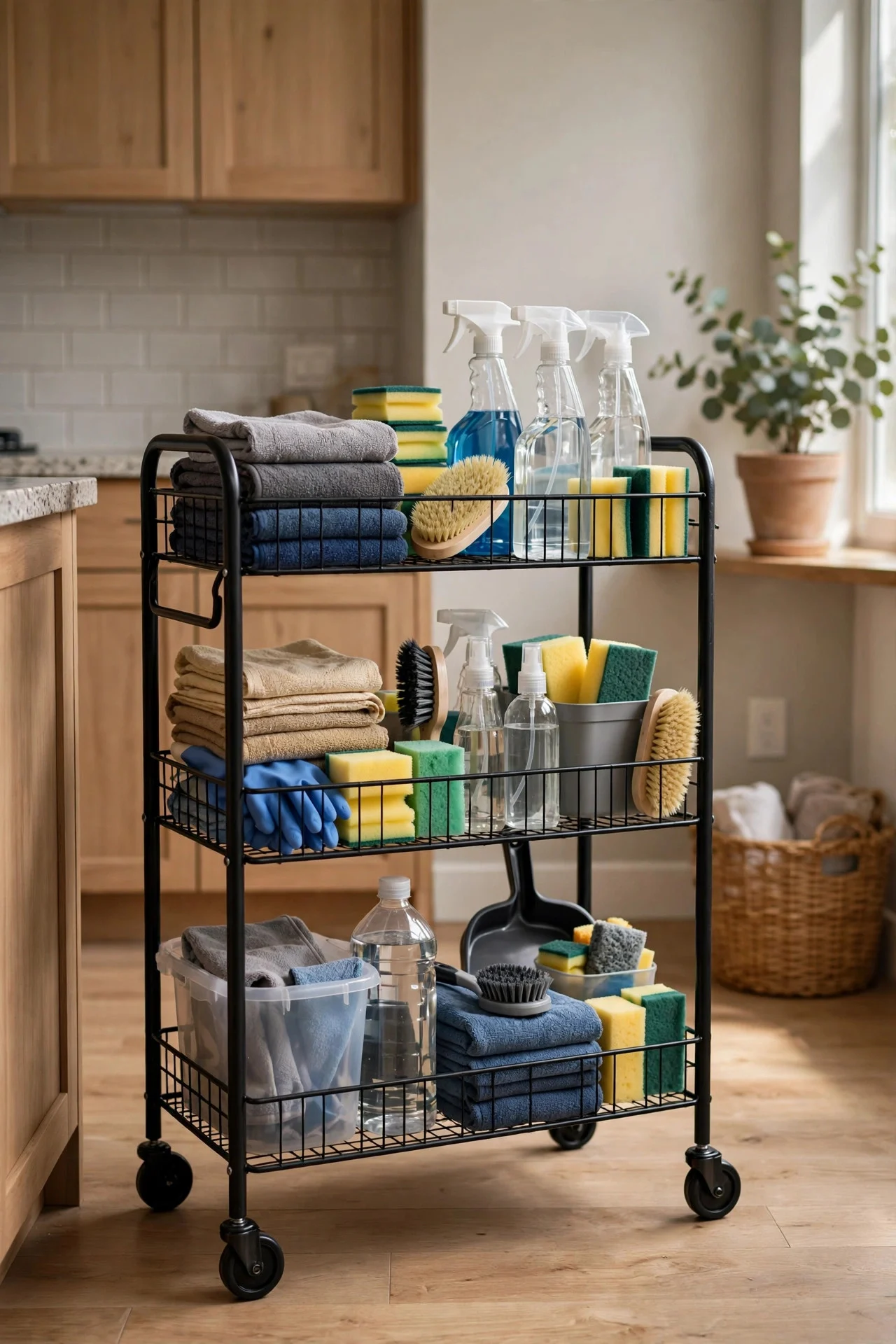
For deep-cleaning days, a three-tier rolling cart beats carrying a caddy back and forth. Load it with everything the job needs — bathroom cleaners on top, floor supplies in the middle, extras below — and roll it room to room.
Park the cart in the closet when you’re done; its 18×12-inch footprint is tiny. The top tier doubles as a surface for the trash bag and gloves. Locking casters keep it from rolling on hard floors.
Line the cart’s tiers with washable liners — cleaning supplies leak, it’s just a matter of time. A liner turns a disaster into a two-minute wipe. Replace liners when they get sticky.
Try this: Load the cart the night before a big clean so you start working, not gathering.
8. Keep Bathroom Cleaners in Each Bathroom
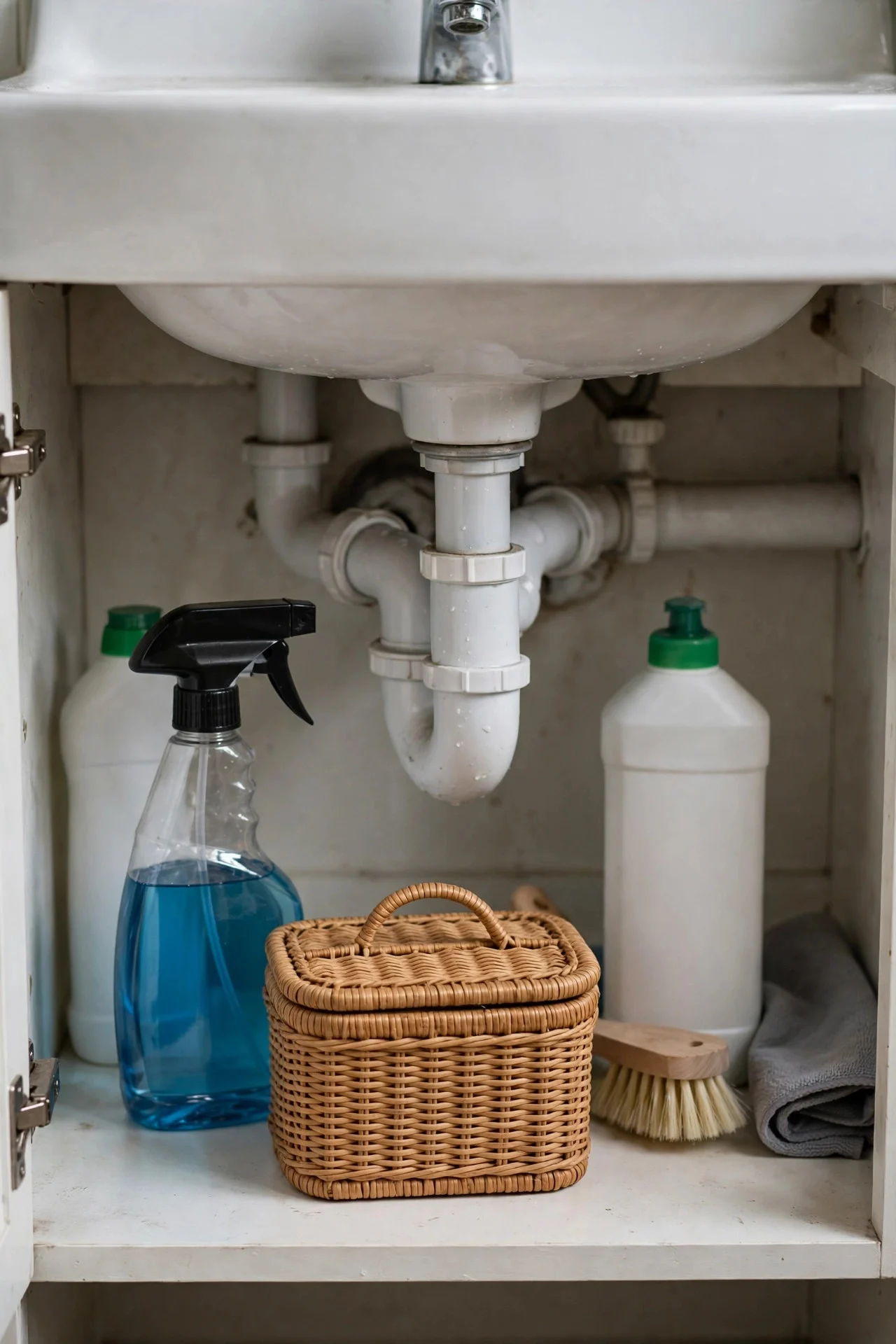
Walking a toilet cleaner across the house is silly. Keep a small lidded caddy with bathroom-specific supplies under each sink: toilet bowl cleaner, tub spray, a scrub brush, and gloves. The main closet holds the refills.
A 10-quart caddy fits under most sinks. Restock from the central closet monthly. Use a cabinet latch if small children are in the house — bathroom cleaners are the most hazardous ones you own.
A small suction-cup hook inside the cabinet door holds the scrub brush where it drips into the caddy, not onto the shelf. Replace brush heads every three months; worn bristles just push dirt around.
Try this: Tuck a toilet brush with a hidden holder beside each toilet so it’s always at hand.
9. Corral Laundry Supplies on a Shelf Above the Washer
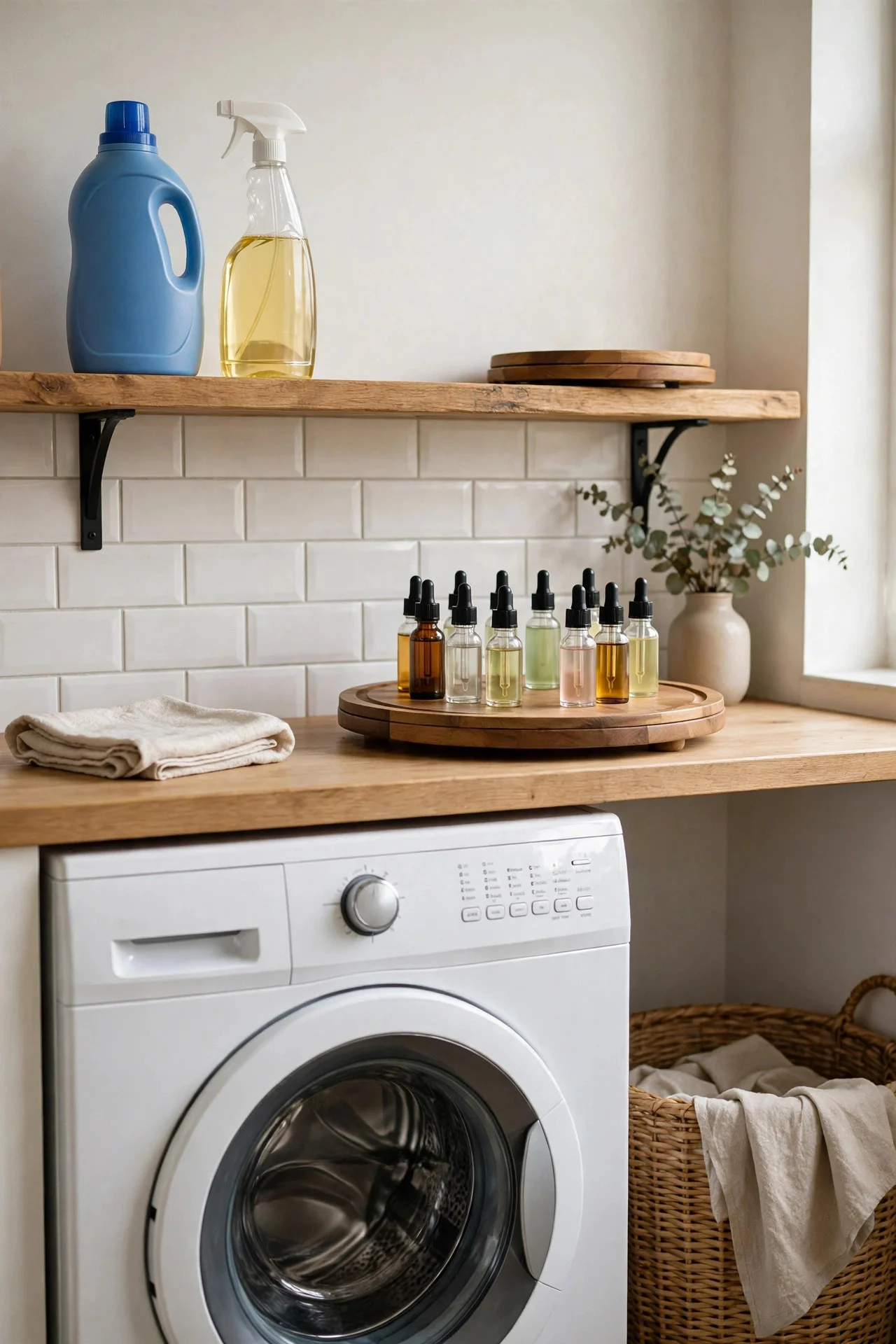
Detergent, stain remover, dryer sheets, and fabric softener belong on a shelf directly above the washer — not on top of the machine where they vibrate off. One 36-inch shelf holds a household’s entire laundry arsenal.
Use a small turntable for the little bottles (stain sticks, scent boosters) so nothing hides in back. Keep a trash bin nearby for lint and empty boxes. Mount the shelf 18 inches above the machines for easy reach.
A wall-mounted drying rack above the machines holds delicates without a freestanding rack eating floor space. Fold it flat when not in use — $25, ten minutes to install, endlessly useful.
Try this: Decant pods into a sealed jar on the shelf — the original bags tear and spill.
10. Store Bulk Buys in a Garage or Basement Zone
Bulk paper towels, the 12-pack of sponges, the giant detergent — they don’t belong in your daily closet. Create a bulk zone on garage or basement shelving: one shelf, everything oversized, restocking the house closet as needed.
Keep bulk cleaners off concrete floors (moisture seeps into cardboard) — use a wire shelf or a pallet. Check the zone quarterly and rotate stock. This keeps the daily closet lean and the bulk buys out of living space.
Keep a fire extinguisher on the garage shelf near the bulk zone — cleaning chemicals and cardboard are a bad combination. Check the extinguisher’s gauge yearly; a dead extinguisher is just decoration.
Try this: Write the purchase date on bulk items with a marker so you use the oldest first.

11. Lock Away Hazardous Products
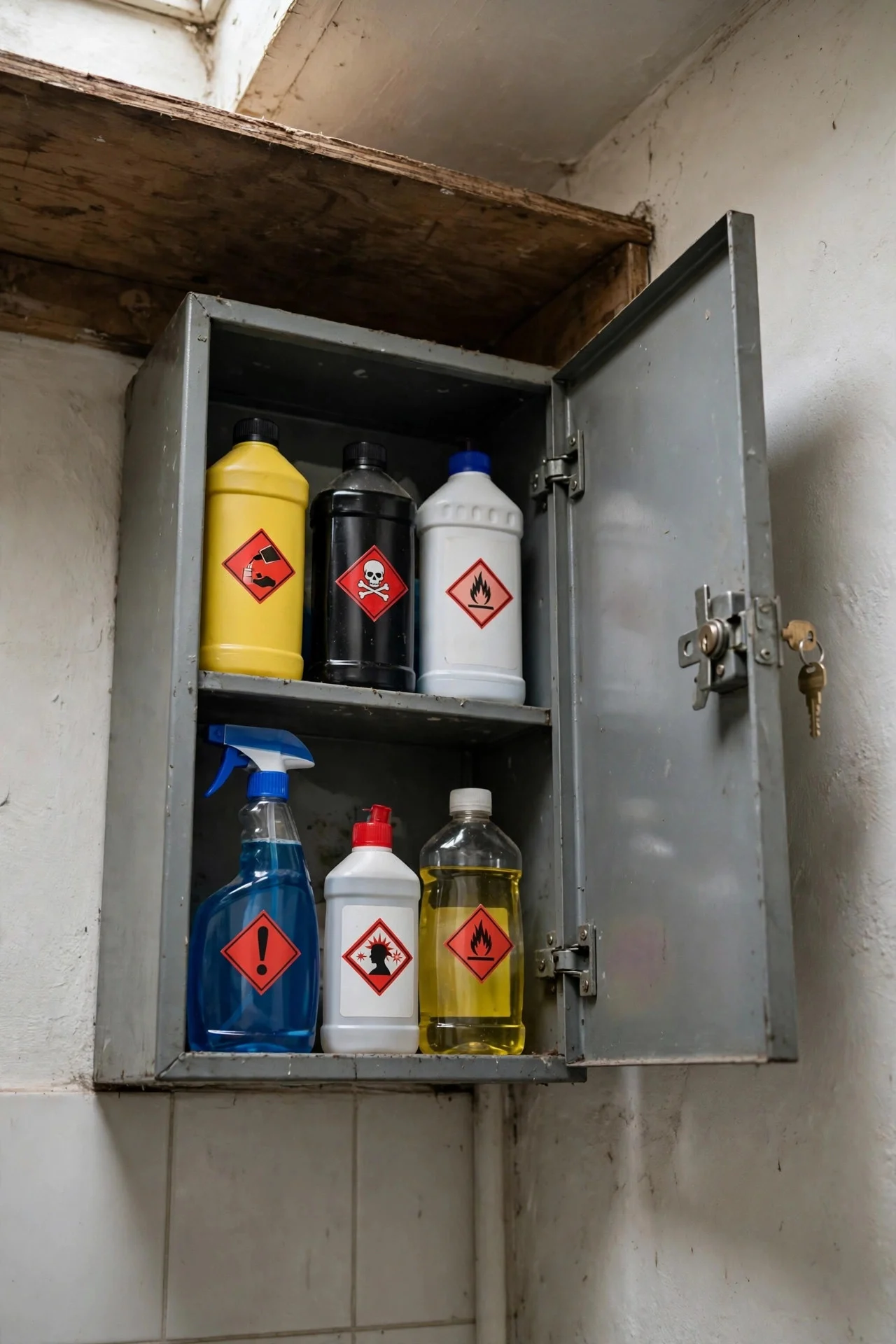
Bleach, drain cleaner, pesticides, and anything with a skull symbol needs a locked cabinet — non-negotiable in homes with kids or pets. A small locking cabinet or a high shelf with a childproof latch does the job.
Keep these products in their original containers with labels intact; never transfer them to food containers. Store them away from heat sources and never above food. Know your local hazardous-waste drop-off for expired products.
Write your local poison control number on the locked cabinet door — in an emergency, nobody should have to search for it. Keep products in original containers; the label carries the first-aid instructions.
Try this: Photograph the product labels and keep them on your phone — poison control will ask what’s in the bottle.
12. Hang a Mesh Bag for Microfiber Cloths
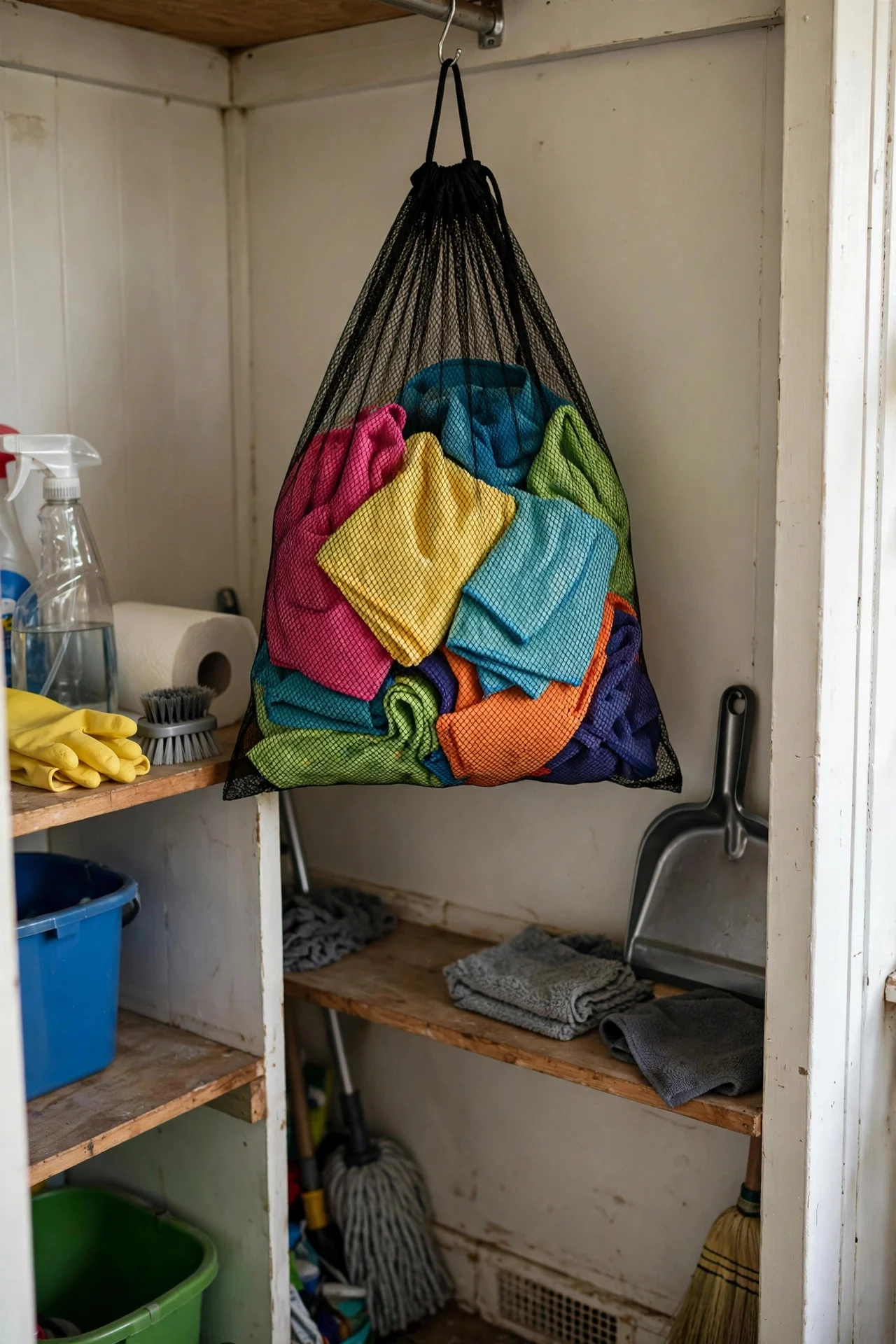
Microfiber cloths multiply and end up wadded in drawers. A mesh laundry bag hung on a closet hook holds them all — visible, ventilated, and grabbable. When it’s full, the whole bag goes in the wash.
Sort by task if you’re particular: one bag for glass, one for general. Wash microfiber separately from cotton (lint ruins them) with no fabric softener. Hang the bag at shoulder height so it’s a one-motion grab.
Replace microfiber cloths when they stop absorbing — usually after 100–150 washes. Old ones become dust rags; demote them, don’t trash them. A fresh 24-pack costs about $15 and lasts a year.
Try this: Buy cloths in different colors per task — blue for glass, yellow for dusting — and skip sorting entirely.
13. Do a Twice-Yearly Supply Audit
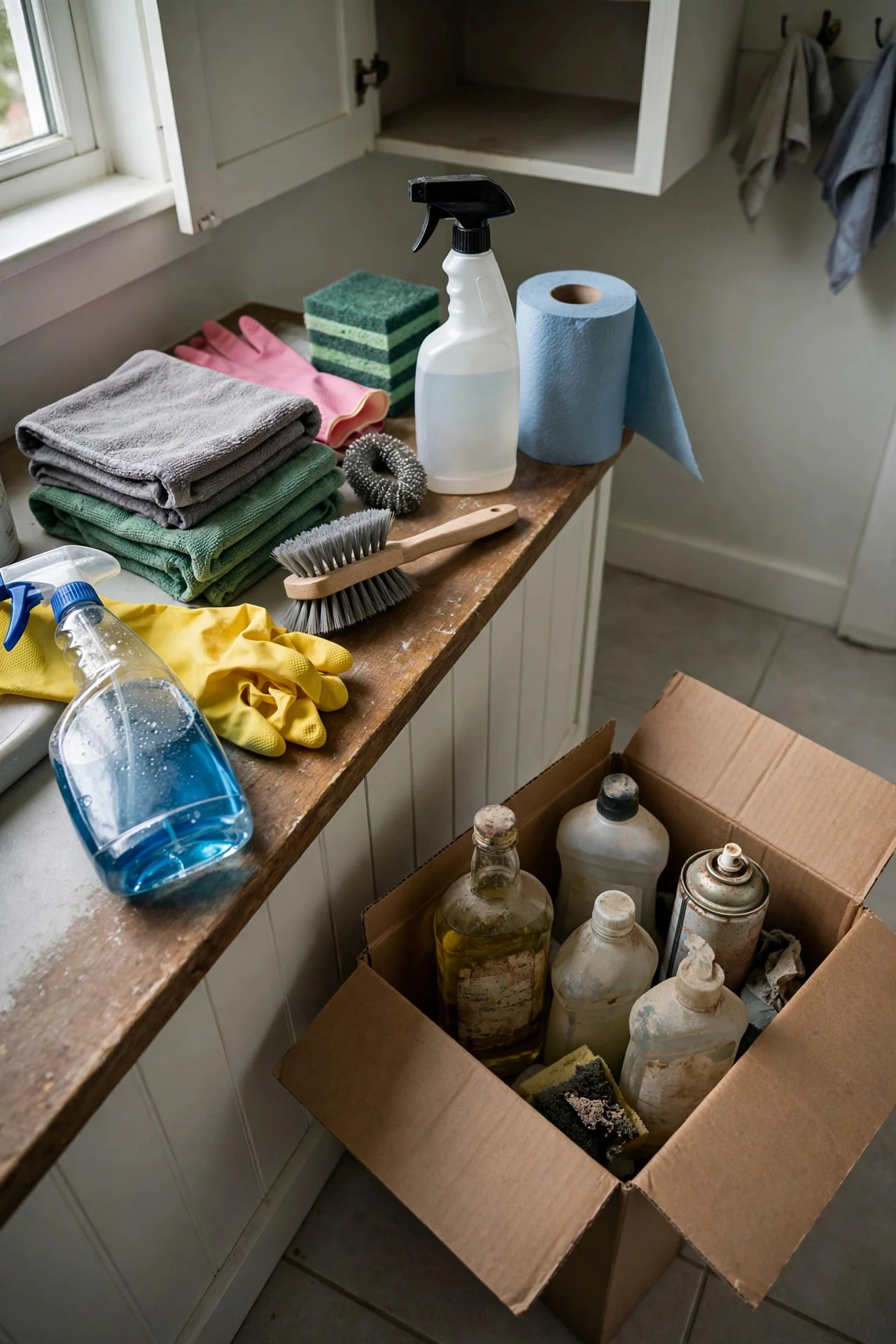
Cleaning supplies expire, leak, and duplicate. Every six months — tie it to daylight saving time — pull everything out, toss the dried-up and expired, consolidate the half-used duplicates, and wipe the shelves.
Check for leaks and swollen batteries in electric cleaners. Recycle empty spray bottles; refill the working ones. The audit takes thirty minutes and keeps the closet from slowly reverting to chaos.
Photograph the organized closet after each audit — the photo is your reset target for next time. If the current state doesn’t match the photo, you know exactly what drifted.
Try this: Keep a running “need” list on the closet whiteboard all year so the audit doubles as a shopping list.
Frequently Asked Questions
Where is the best place to store cleaning supplies?
One central closet near the middle of the house is ideal, with small satellite caddies under each bathroom sink and a laundry shelf above the washer. Bulk buys go to the garage or basement. Keep hazardous products locked and high.
How do I store cleaning supplies safely with kids?
Lock them up: a locking cabinet or childproof latches on every storage spot, hazardous products on high shelves, and everything in original labeled containers. Teach kids that cleaning bottles are never toys — and never leave a caddy unattended mid-clean.
Do cleaning products expire?
Yes. Disinfectants lose potency after about a year, bleach degrades within six months of opening, and spray triggers clog. Write the open date on each bottle and do a twice-yearly audit to clear out the dead stock.
What’s the minimum set of cleaning supplies I actually need?
An all-purpose cleaner, glass cleaner, disinfectant, toilet bowl cleaner, microfiber cloths, a scrub brush, and a good vacuum cover 95% of household cleaning. Everything else is a specialty product — buy it only when the job demands it.
Final Thoughts
Cleaning goes faster when you’re not hunting for supplies — that’s the whole point. One central home, a grab-and-go caddy, locked-away hazards, and a twice-yearly audit. Set it up once, and every cleaning session starts with working instead of searching.