
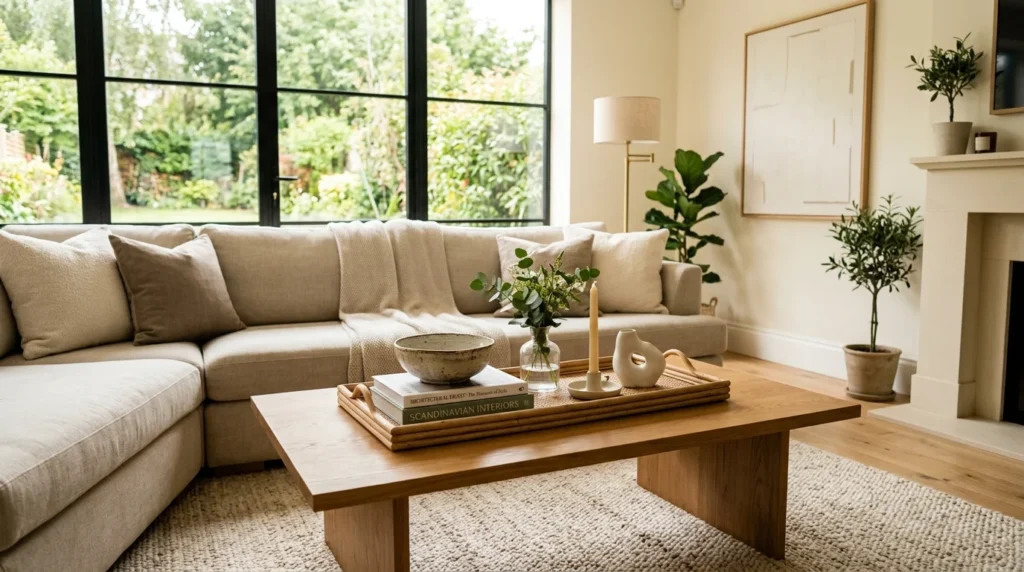
My coffee table used to be where the remote controls went to disappear, buried under mail, a half-finished glass of water, and whatever book I’d started but not quite finished in the last three months. It wasn’t a design failure exactly, it was just neglect, the kind of surface that becomes a catchall simply because nobody ever decided it should be anything else. The shift happened almost by accident, when I was tidying up before a friend came over and, instead of just clearing everything off, actually arranged the few things I kept on the table with a little intention. That five-minute decision turned into an ongoing habit, and now my coffee table is genuinely one of my favorite small details in the entire living room.
If your own coffee table has become more of a landing pad than a styled surface, here are 22 ideas, each explained in detail, for turning that central piece of furniture into something that actually contributes to how your living room feels.
1. Start With a Tray as Your Foundation
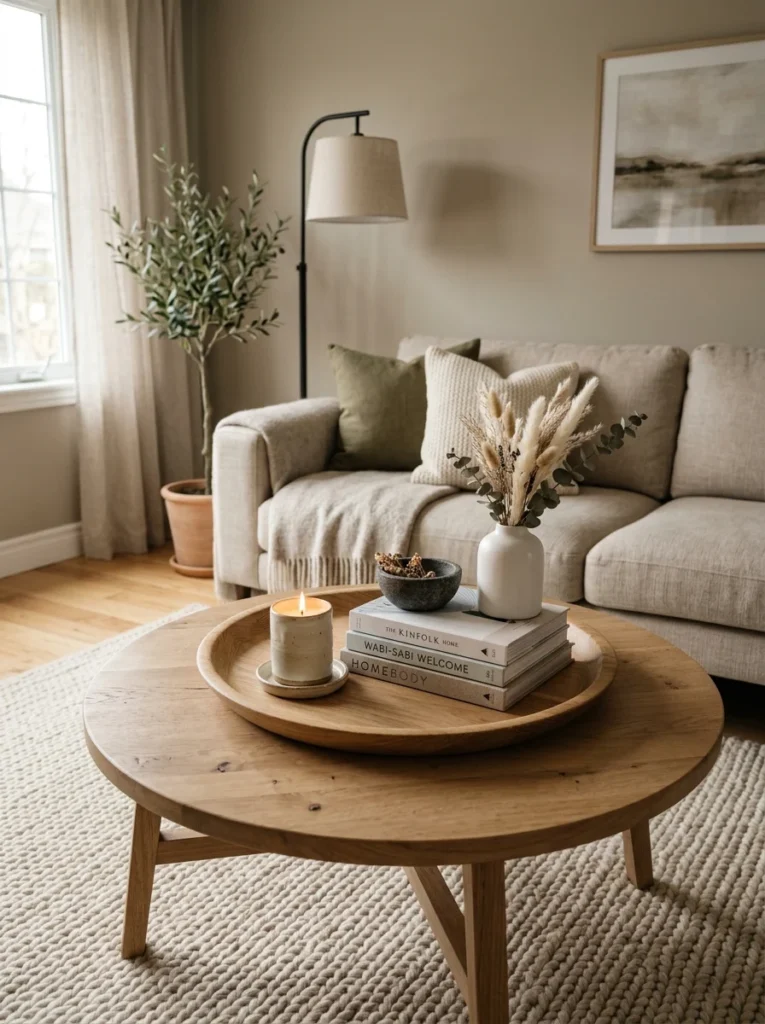
A decorative tray placed on your coffee table does more organizational and visual work than almost any other single item on this list, since it corrals smaller objects into one defined zone while giving the whole arrangement a sense of intentional structure. I use a simple round wood tray, and everything from my candle to a small stack of coasters lives within its boundary, which means even on busier days when the rest of the table gets a little cluttered, that contained zone still looks composed. Trays also make it considerably easier to quickly clear the table when needed, since you can simply lift the entire tray and its contents rather than individually relocating several small items scattered loosely across the surface. I’d recommend choosing a tray material that contrasts slightly with your table’s own surface, a wood tray on a glass table, or a metal tray on a wood table, so the tray reads as a distinct layer rather than blending invisibly into the table beneath it.
2. Stack a Few Meaningful Books
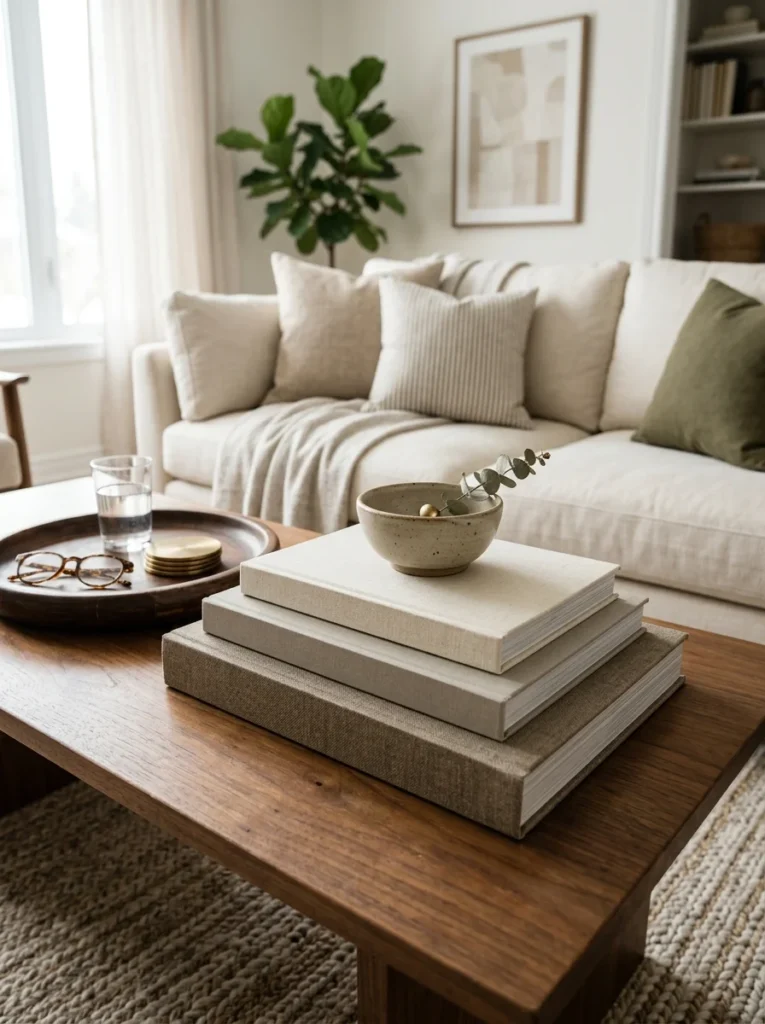
A small stack of two or three hardcover books, ideally ones you’d actually want to read or that connect to something you genuinely care about, adds both height variation and personality to a coffee table in a way that purely decorative objects can’t quite replicate. I keep a rotating stack that currently includes a photography book from a favorite artist and a well-worn travel guide from a trip that meant a lot to me, and guests occasionally end up picking one up and flipping through it during a visit, which is exactly the kind of small, genuine interaction that generic decor items rarely inspire. I’d recommend choosing books based on their cover design and spine color as well as their content, since the visual presentation matters here almost as much as what’s inside, and a stack of mismatched paperbacks with busy, colorful covers tends to look more cluttered than a smaller selection of hardcovers with simpler, more cohesive design. Varying the book sizes slightly when stacking, largest on the bottom, creates a naturally pleasing pyramid shape rather than a perfectly uniform, slightly awkward-looking stack.
3. Add a Textural Bowl for Small Objects
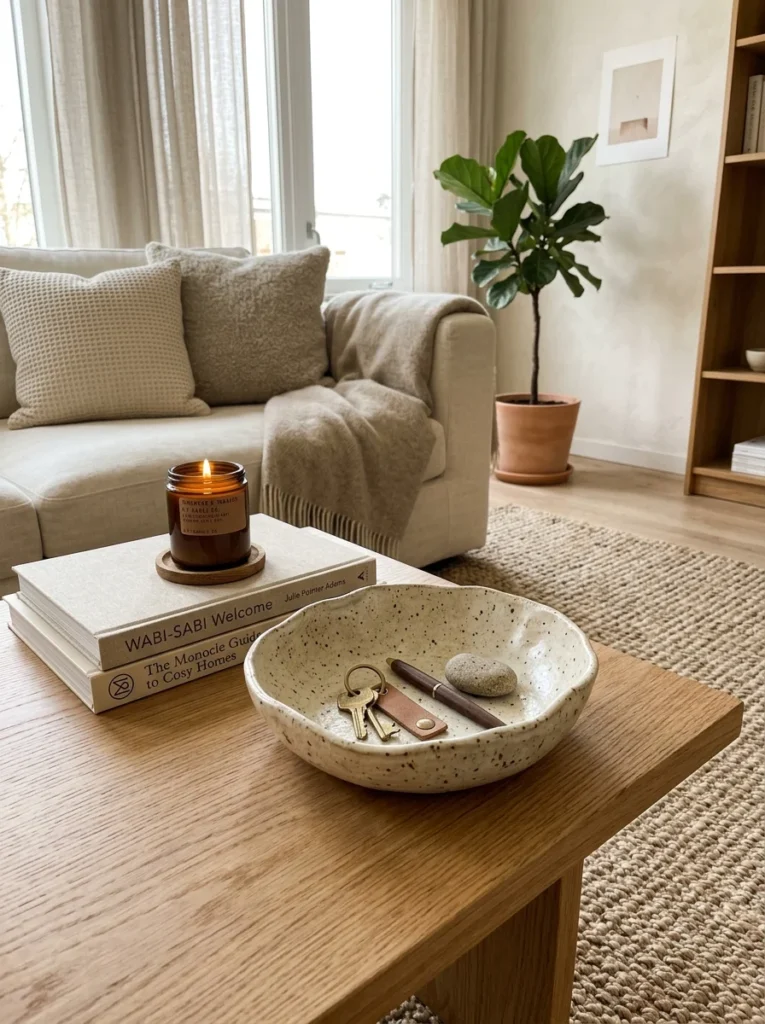
A ceramic or woven bowl, placed either on your tray or directly on the table, gives you somewhere intentional for the small objects that would otherwise scatter loosely across the surface, remote controls, a set of keys, a favorite trinket picked up while traveling. I use a simple textured ceramic bowl with a slightly irregular, handmade quality, and having that one designated spot has genuinely reduced how often small items end up sliding around loose on the table or falling into couch cushions. This is one of the more purely functional items on this list, but choosing a bowl with genuine visual interest, an interesting glaze, an organic shape, a woven rather than smooth surface, means it contributes to the table’s overall styled look even as it quietly does its practical job. I’d recommend keeping the bowl’s actual contents fairly minimal and curated rather than letting it become a genuine junk drawer equivalent, since an overflowing bowl undermines the same sense of intentional order that a well-chosen bowl is meant to provide in the first place.
4. Introduce a Single Fresh Flower or Small Plant
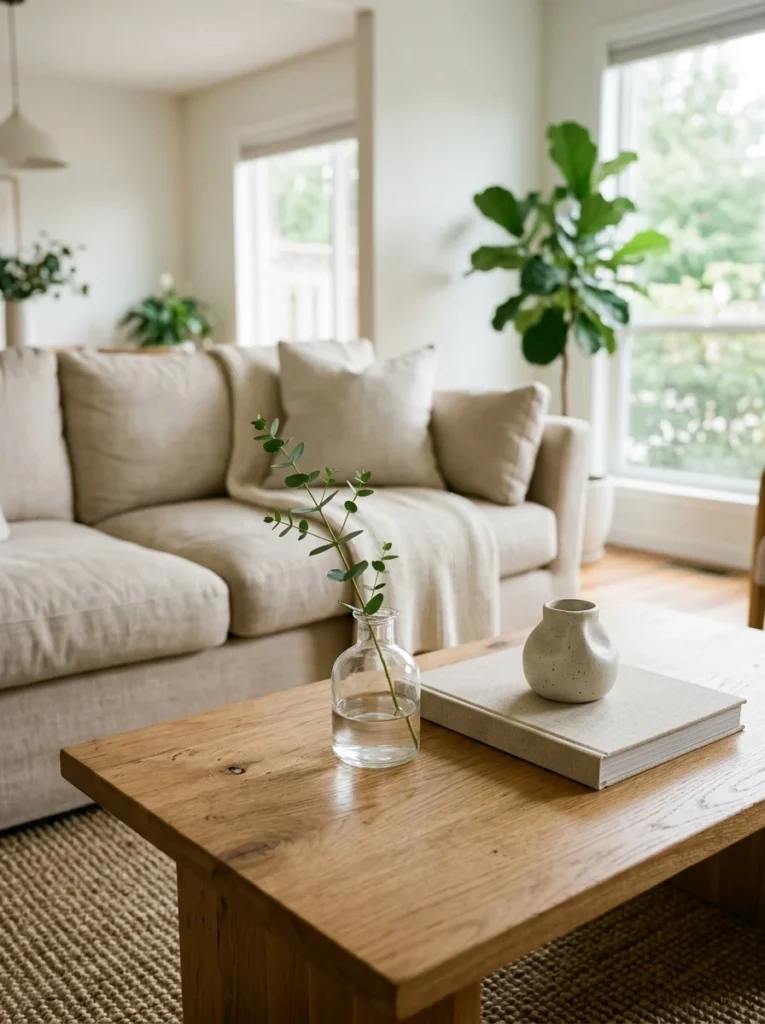
A small, single-stem vase or a compact potted plant brings genuine life and color to a coffee table in a way that static decor objects simply can’t replicate, and I’ve found that even one small stem, rather than a full elaborate arrangement, makes a noticeable difference in how fresh and cared-for the whole table feels. I keep a small bud vase with whatever single stem is available, sometimes just a sprig of greenery from my yard, refreshing it every week or so as part of a simple, low-effort routine rather than treating it as an elaborate floral design project. For anyone who doesn’t want the ongoing maintenance of fresh flowers, a small, well-chosen faux plant or a genuinely low-maintenance succulent achieves a similar visual effect with considerably less regular upkeep required. I’d recommend keeping whatever greenery you choose relatively small in scale compared to your other coffee table items, since an oversized plant can start to dominate and unbalance a surface that’s meant to hold a variety of different elements working together.
5. Layer in a Scented Candle
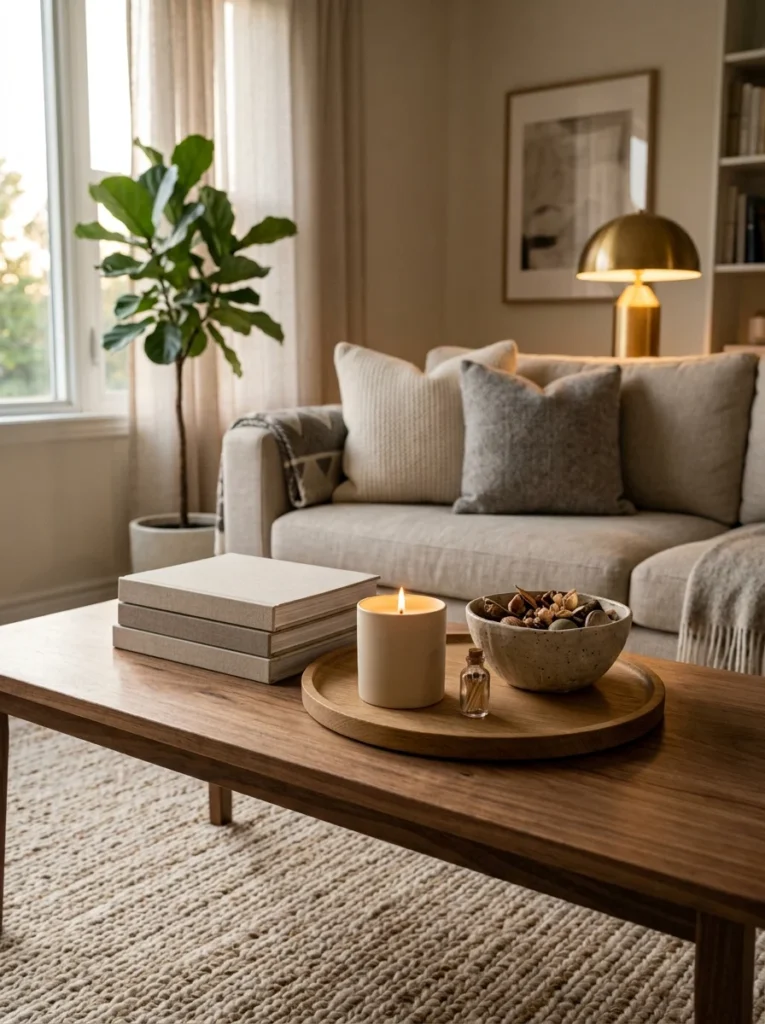
Beyond the visual contribution, a candle adds a sensory element to your coffee table styling that purely decorative objects don’t provide, and lighting it during an evening at home has become a small, genuine ritual that signals to me it’s time to actually relax rather than keep working. I choose a candle in a simple, understated vessel, avoiding overly branded or colorful packaging that might clash with the table’s other more neutral elements, since the candle itself is meant to blend into the overall styled look rather than stand out as an obviously commercial product. I’d recommend positioning your candle somewhere central or slightly off-center within your tray arrangement, rather than pushed to the very edge of the table, both for safety reasons and because a centrally placed candle tends to anchor the whole arrangement more effectively than one positioned as an afterthought. This is also one of the easiest items on this list to swap seasonally, choosing warmer, spiced scents in colder months and lighter, fresher scents as the weather warms, keeping the table feeling connected to the time of year.
6. Add a Piece of Small Sculptural Art
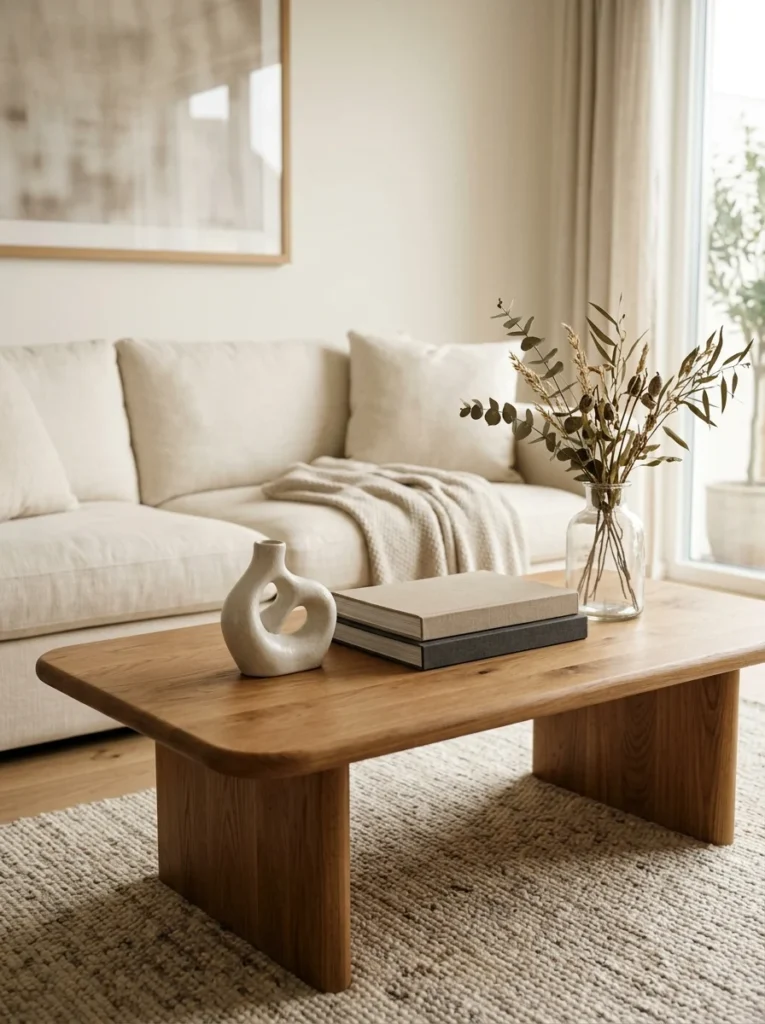
A small sculptural object, whether that’s an abstract ceramic piece, a carved wooden figure, or a simple decorative object with an interesting shape, gives your coffee table a piece of genuine visual art at a scale that works within the table’s smaller surface area. I keep a small, simple ceramic form with an organic, curved shape, something I picked up specifically because I liked how the light caught its slightly irregular surface rather than for any particular symbolic meaning. This is a good opportunity to display something you’ve collected while traveling or a piece from a local artist, since the coffee table’s relatively prominent, frequently viewed position means a genuinely meaningful object gets appreciated regularly rather than tucked away somewhere less visible. I’d recommend choosing just one sculptural piece as a clear focal point within your overall arrangement rather than several competing sculptural objects, since a coffee table’s limited surface area works better with one confident statement piece than multiple smaller ones competing for the same visual attention.
7. Use Coasters as a Styling Element, Not Just a Necessity
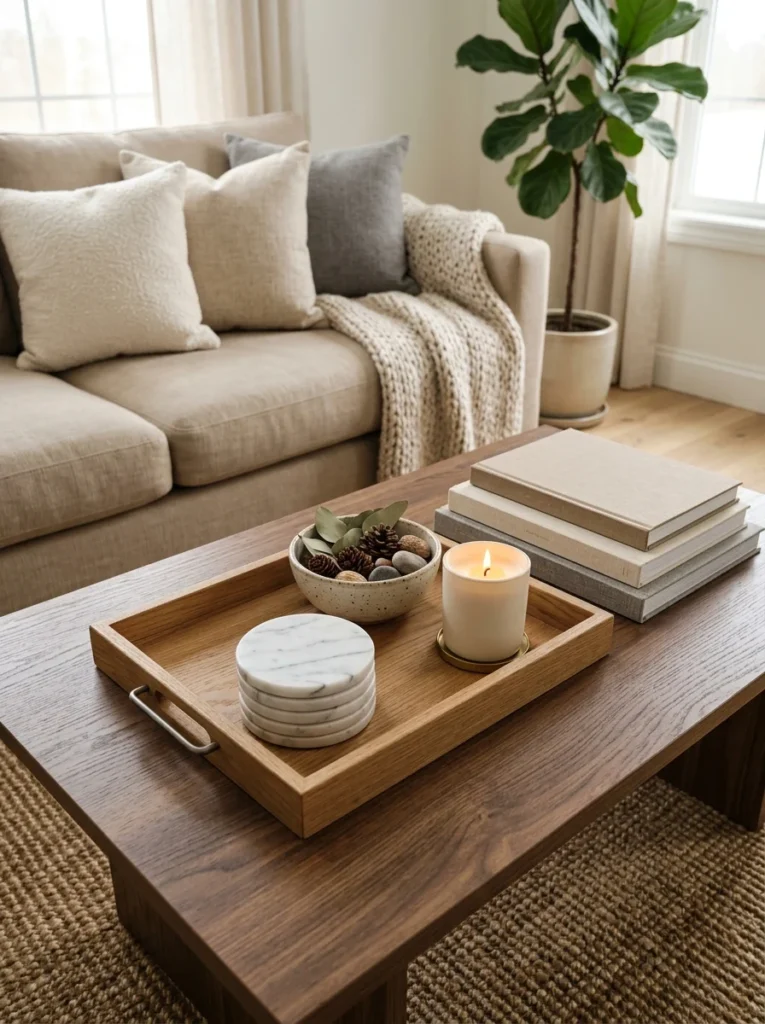
Rather than treating coasters as a purely functional item to be found only when actually needed, keeping a small, attractive stack or set displayed openly on the table, within your tray or bowl, means they’re both genuinely more likely to actually get used and contribute to the table’s overall styled appearance even when nobody’s currently holding a drink. I switched to a set of simple marble coasters with subtle veining, and beyond protecting the table’s surface, they add a small textural element that complements my tray without requiring any dedicated additional decor purchase. I’d recommend choosing a coaster material and color that coordinates with at least one other element already on your table, in my case the marble echoes a similar vein pattern in my side table’s surface, creating a subtle sense of connection between different pieces of furniture in the room. This is a genuinely practical addition that most people already own in some form, so the real opportunity here is simply choosing a version attractive enough to display openly rather than something purely utilitarian stuffed away in a drawer between uses.
8. Rotate Decor Seasonally
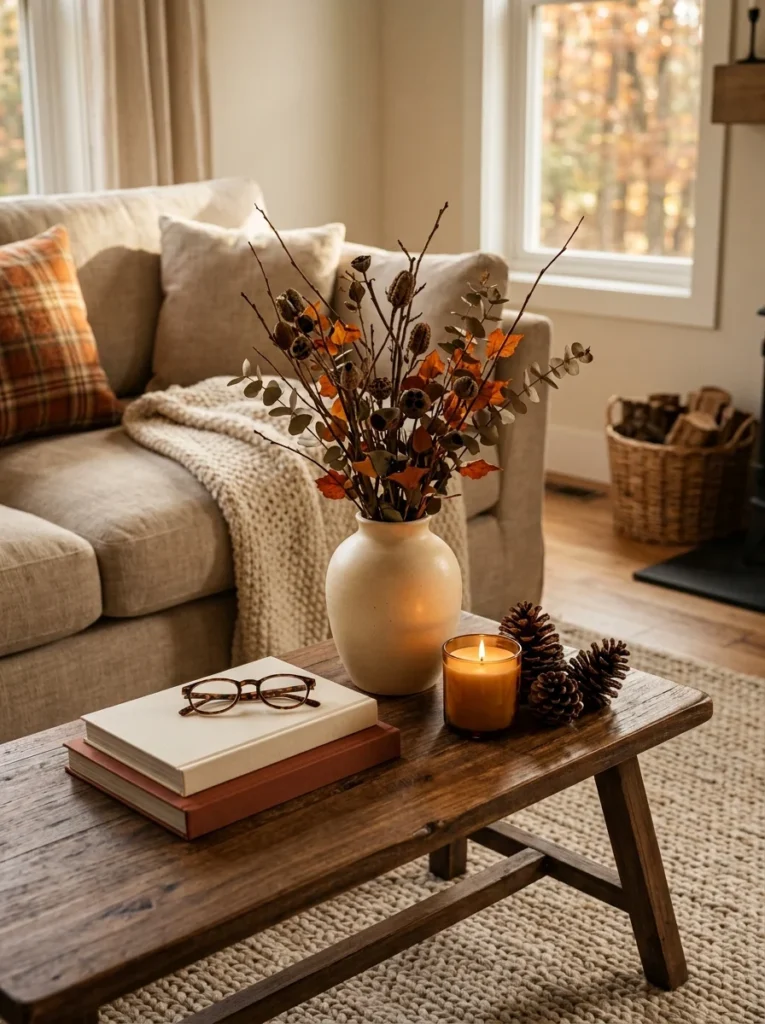
Rather than a completely static arrangement that never changes throughout the year, swapping out a few key elements seasonally, a different candle scent, a seasonal branch or bloom in your bud vase, a small decorative object that connects to the time of year, keeps the coffee table feeling current and intentional rather than frozen in whatever arrangement you first settled on. I keep a small box of seasonal items tucked in a nearby cabinet specifically for this purpose, a few dried autumn leaves for fall, a small pinecone cluster for winter, making the actual swap quick and low-effort rather than a project requiring new purchases each season. This approach works particularly well combined with the fresh flower or plant idea mentioned earlier, since naturally available seasonal blooms already provide much of this rotation without any additional planning required beyond simply noticing what’s currently in season. I’d recommend keeping this rotation focused on just one or two small elements rather than completely overhauling the entire table each season, since a subtle seasonal refresh maintains the table’s overall established look while still keeping it feeling connected to the current time of year.
9. Choose a Table Runner for Long or Rectangular Tables
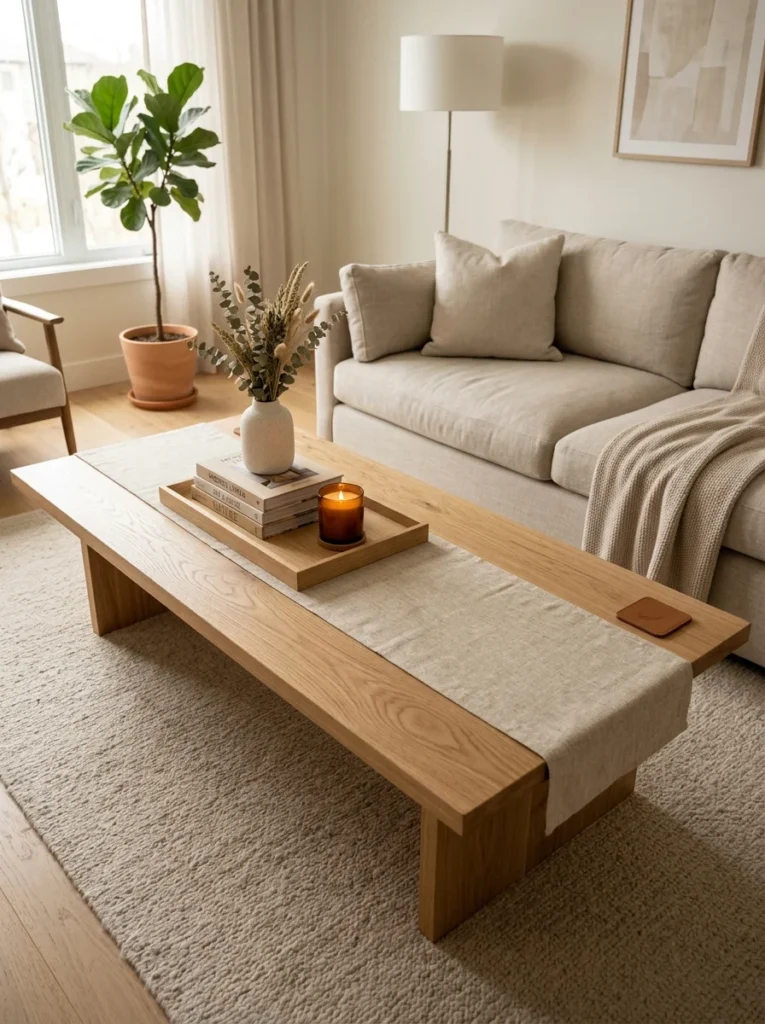
For longer, rectangular coffee tables specifically, a slim table runner running down the center creates a defined zone for your styled objects while leaving the remaining table surface clear for actual practical use, resting a drink, setting down a laptop, without disturbing your decorative arrangement. I don’t personally use this on my own round coffee table, but a friend with a considerably longer rectangular table uses a simple linen runner specifically for this purpose, and it genuinely helps organize her styling into one defined section rather than objects scattered randomly across the table’s full length. This works particularly well for coffee tables that see genuinely heavy daily practical use, since the runner clearly signals which portion of the table is meant for styled decor and which remains available for everyday activities without disrupting that arrangement. I’d recommend choosing a runner narrow enough that it doesn’t consume the majority of your table’s surface area, since the goal is defining a styled zone while still preserving meaningful practical space for the table’s actual daily function.
10. Incorporate a Stack of Coffee Table Books by Color
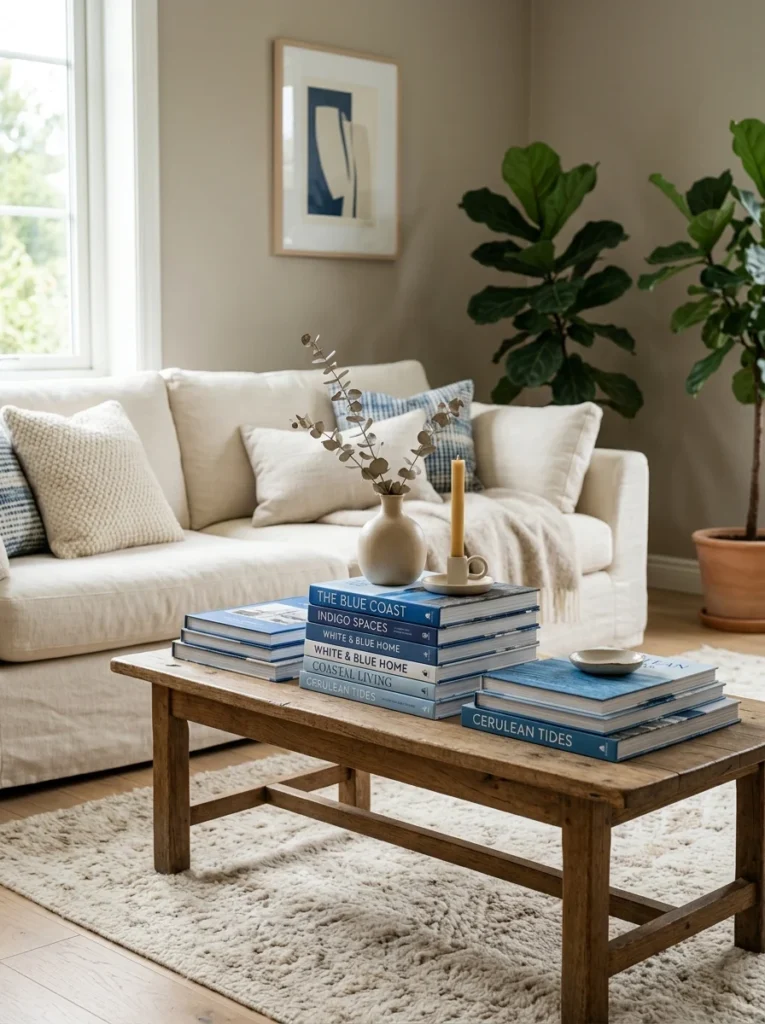
Beyond simply stacking a few meaningful books, some of the most visually striking coffee table arrangements I’ve seen organize an entire small library of coffee table books specifically by color, creating a deliberate gradient or coordinated palette rather than a random assortment of whatever titles happen to be on hand. A friend with a particularly large book collection arranges her stacks specifically in shades of blue and white, and the resulting visual cohesion genuinely elevates what could otherwise be a slightly chaotic stack into something that reads as deliberately curated interior design. This requires either an existing book collection large and varied enough to sort by color, or a willingness to specifically shop for coffee table books based partly on their cover design and color rather than purely their content, which is admittedly a more design-focused approach than most people take toward book buying. I’d recommend this specifically if you already own a substantial book collection and are willing to spend some time sorting through it for this particular purpose, rather than as a starting recommendation for someone building a coffee table book collection completely from scratch.
11. Add Texture Through a Small Woven Basket
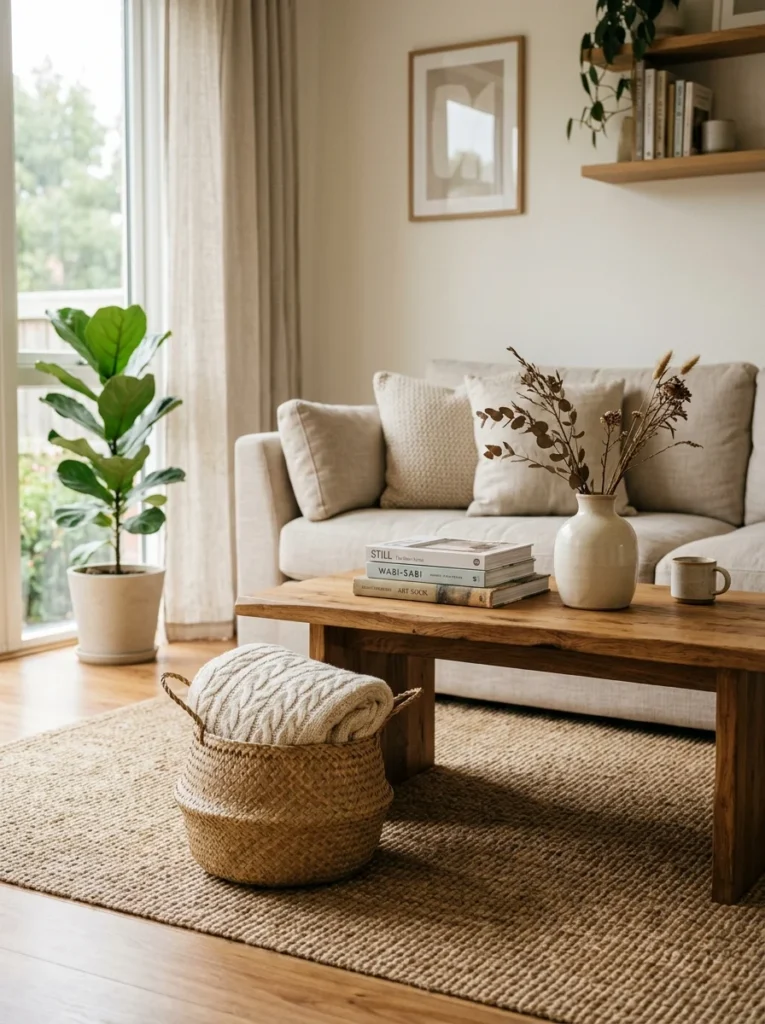
A small woven basket placed either on or directly beside your coffee table provides a spot for blankets, magazines, or other slightly bulkier items that don’t fit neatly into a tray or bowl, while adding the same kind of natural texture that woven elements bring to nearly every room throughout a well-considered home. I keep a small basket beside my coffee table specifically for a folded throw blanket, which means it’s genuinely accessible for actual use on a cold evening while still looking intentional rather than simply tossed over the back of a nearby chair. This works particularly well as a complement to the more precisely arranged items on the table’s actual surface, since the basket’s slightly looser, more casual texture balances out anything more formal or precisely arranged elsewhere in your styling. I’d recommend positioning the basket close enough to the table that it feels visually connected to the overall arrangement, rather than placed randomly elsewhere in the room where it might read as a disconnected, separate storage solution rather than part of the coffee table’s cohesive styled look.
12. Use Height Variation Deliberately
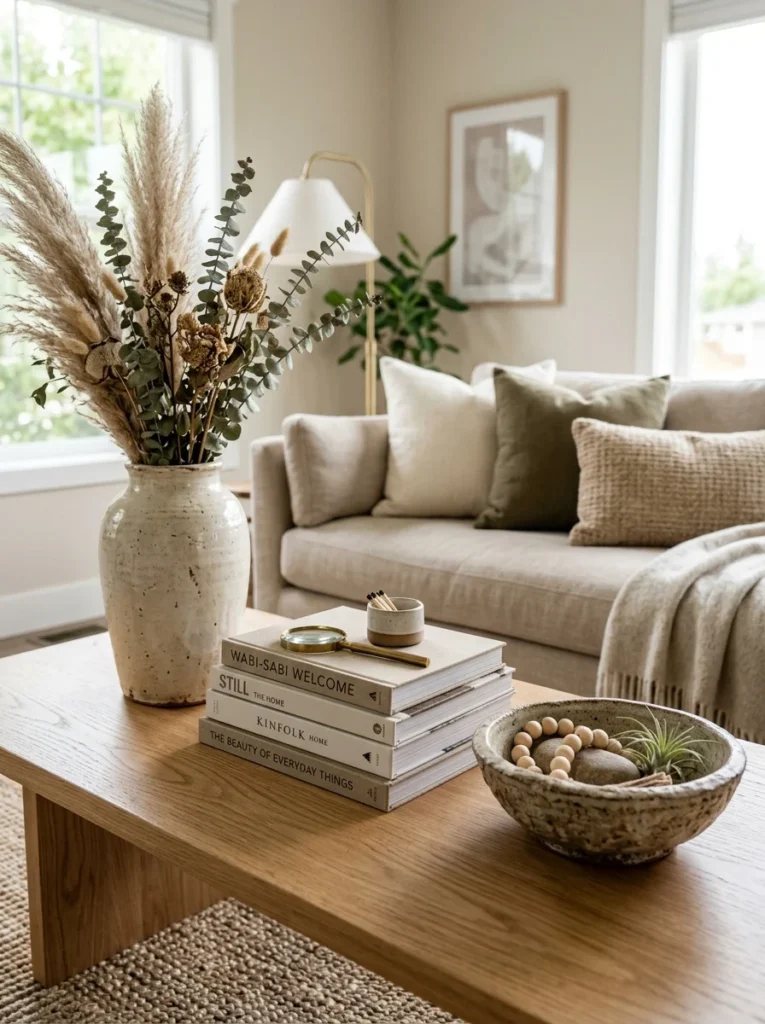
Just as with a dining table centerpiece, deliberately varying the height of items across your coffee table, a taller vase or sculptural piece alongside flatter items like books and a low bowl, creates visual rhythm and prevents the whole arrangement from reading as flat and monotonous. I specifically chose my items with this in mind, a taller ceramic vase anchoring one side of the tray while a stack of books and a low bowl balance the other side at a considerably lower height, and that intentional variation genuinely makes the small vignette more visually engaging than if everything sat at roughly the same level. I’d recommend sketching out or at least mentally mapping your intended height progression before finalizing your specific item choices, thinking in terms of tall, medium, and low elements rather than selecting individual pieces purely based on how much you like each one in isolation. This principle applies at whatever scale your specific coffee table allows, and even a fairly minimal arrangement with just three or four total items benefits from this same deliberate height variation rather than everything sitting at an identical level across the surface.
13. Choose a Cohesive Color Palette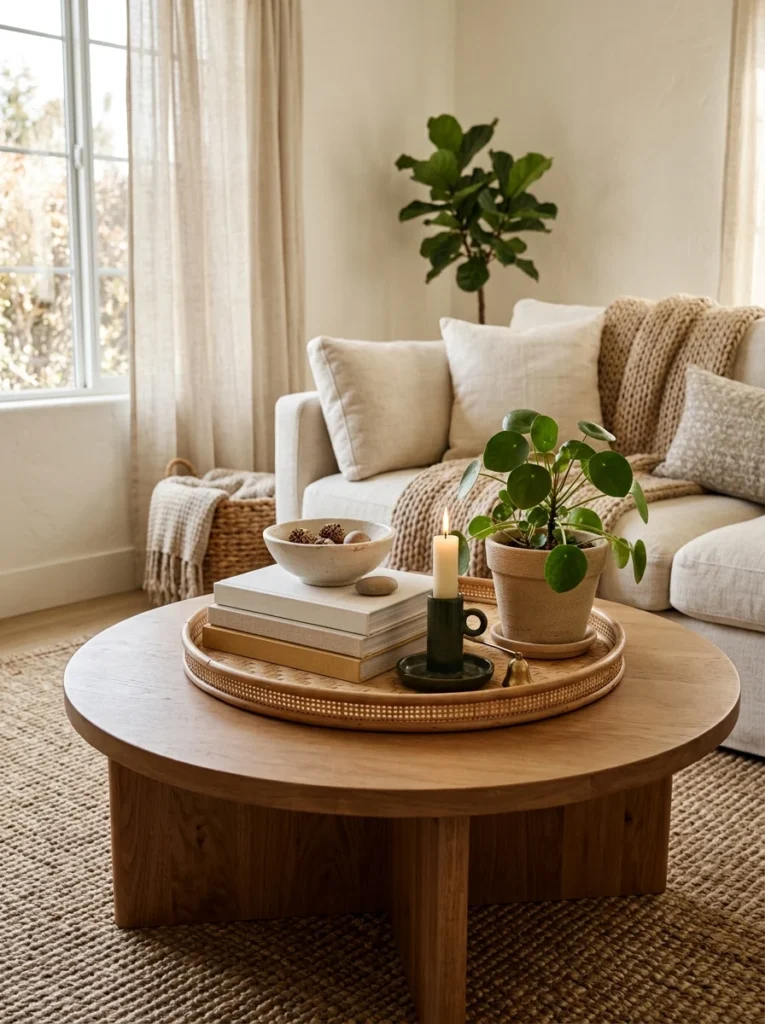
Rather than selecting each coffee table item purely based on individual appeal, choosing a broader two or three color palette that ties your tray, books, candle, and any additional objects together creates a considerably more cohesive, intentional-looking arrangement than a collection of items that don’t relate to each other visually. My own coffee table sticks to warm neutrals with small touches of deep green, echoed across my candle vessel, my ceramic bowl’s subtle glaze, and the cover of one of my displayed books, and that consistent thread ties everything together even though the individual items came from several completely different sources over time. I’d recommend identifying this palette relatively early, ideally before purchasing individual items, though it’s also possible to gradually edit an existing, more mismatched collection toward greater cohesion over time by slowly replacing pieces that clash with your chosen direction. This doesn’t mean every single item needs to match perfectly, but having a general color and tone framework in mind prevents the table from feeling like a random assortment of unrelated objects that happen to share the same surface.
14. Style Around Your Existing Rug and Furniture
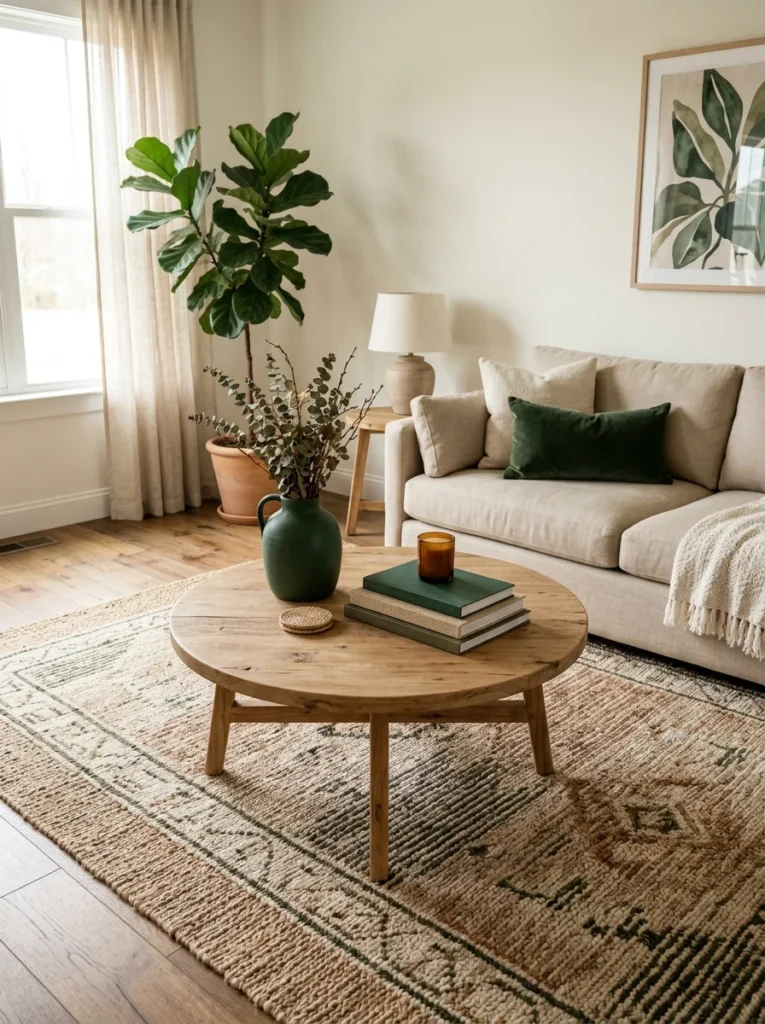
Rather than treating your coffee table as a completely independent styling project, choosing colors and materials that specifically complement your existing rug pattern, sofa fabric, and other nearby furniture ties the table into the room’s broader design rather than treating it as an isolated decorative island. I pulled the deep green accent in my coffee table styling directly from a similar tone already present in my area rug’s pattern, creating a visual connection between the table and the floor beneath it rather than two unrelated color choices existing independently in the same room. I’d recommend physically bringing any prospective coffee table decor items into your actual living room and observing them against your existing furniture and rug before purchasing, since colors and materials that seem appealing in isolation, viewed on a shelf or website, don’t always actually complement your specific existing room the way you might initially expect. This broader awareness of how the coffee table relates to everything else in the room is really what separates a genuinely cohesive living room from one where individual pieces, however nice on their own, don’t quite come together as a unified whole.
15. Add a Small Ashtray or Trinket Dish
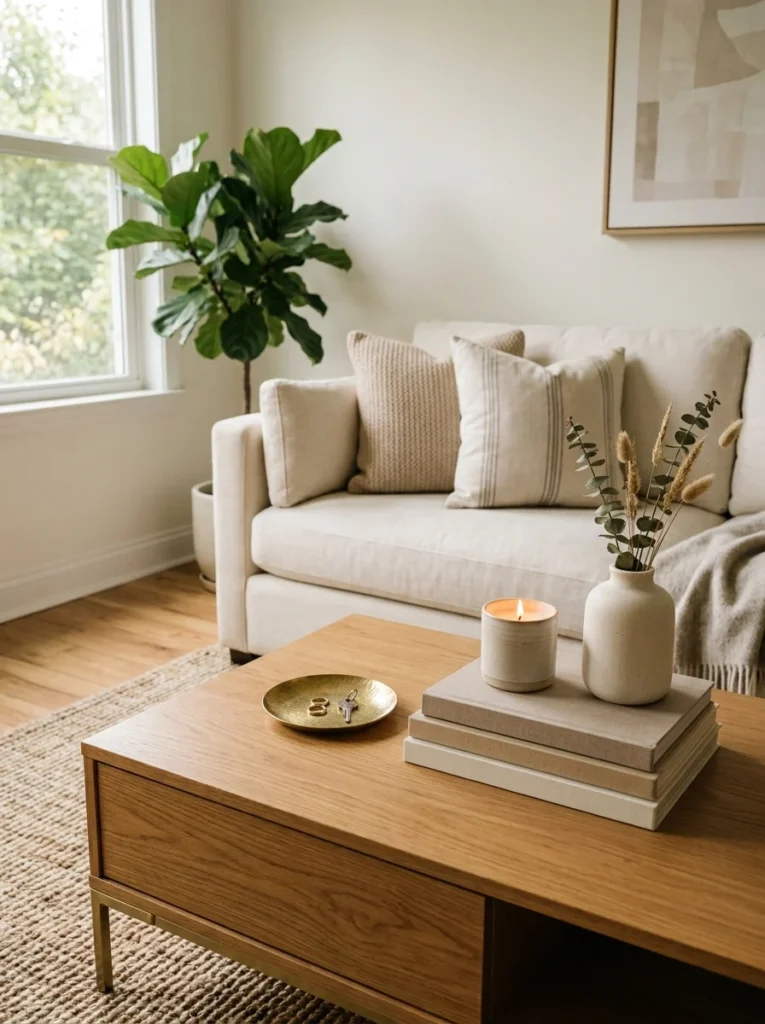
Even for non-smokers, a small decorative dish, sometimes labeled a trinket or catchall dish, provides a genuinely useful spot for jewelry removed before relaxing, a set of AirPods, or other small daily items that would otherwise end up scattered loosely across the table’s surface. I keep a small brass dish specifically for this purpose, and having that one designated spot has meaningfully reduced how often I misplace small items I’ve set down without thinking during an evening at home. This is a relatively inexpensive addition, and I’d recommend choosing a material and finish that coordinates with your other metal accents throughout the room, similar to the same hardware consistency principle that applies broadly across any well-designed space. This particular item bridges pure function and genuine decor especially clearly, since it’s doing real daily work catching small items while also contributing its own visual texture and metal finish to the overall tablescape, making it one of the more practically justified additions on this entire list.
16. Incorporate a Small Framed Photo
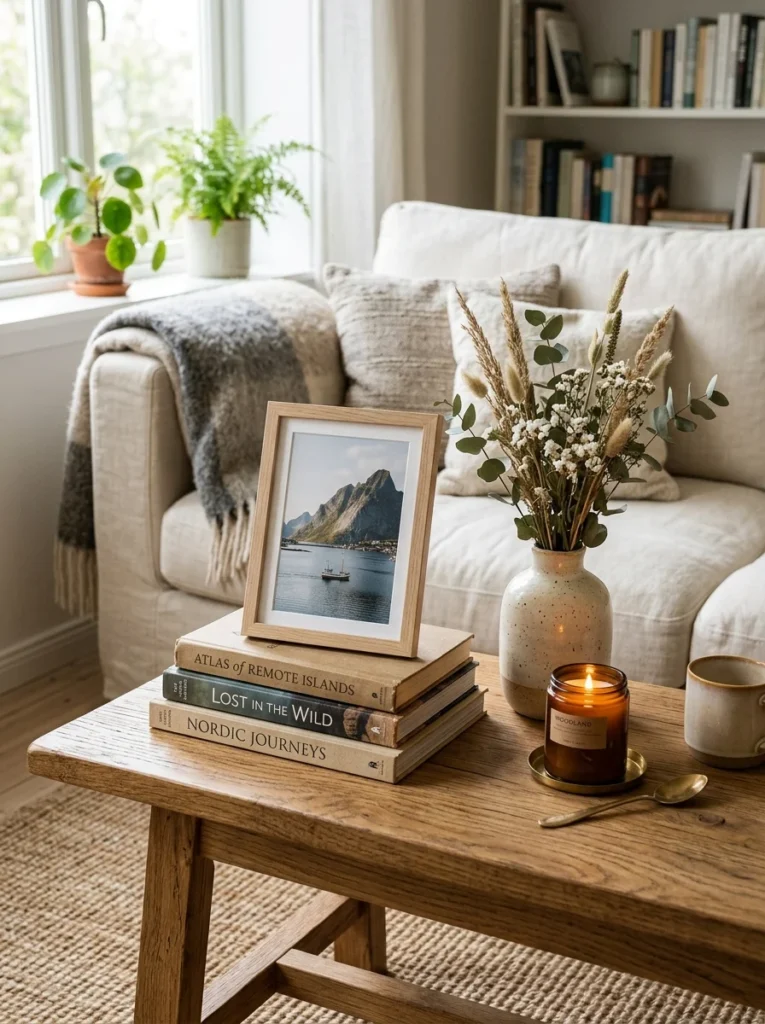
Leaning a small framed photograph, whether that’s a personal photo or a piece of purchased art small enough for a coffee table’s limited scale, against your tray or a stack of books adds a genuinely personal element that most purely decorative object choices don’t provide. I keep a small framed photo from a trip I took a few years ago propped casually against my book stack, and it’s a small detail that occasionally starts a conversation when someone visiting notices it and asks about the photo’s context. I’d recommend choosing a frame small enough not to overwhelm the table’s limited surface area, generally no larger than about five by seven inches for most standard coffee tables, since a larger frame tends to look more appropriate on a wall or console table than propped among smaller coffee table items. This idea works particularly well leaned rather than standing perfectly upright, since a slight lean against another object creates a more casual, natural feeling consistent with the relaxed, collected quality that tends to work best in coffee table styling overall.
17. Use a Games or Puzzle Box as Both Storage and Decor
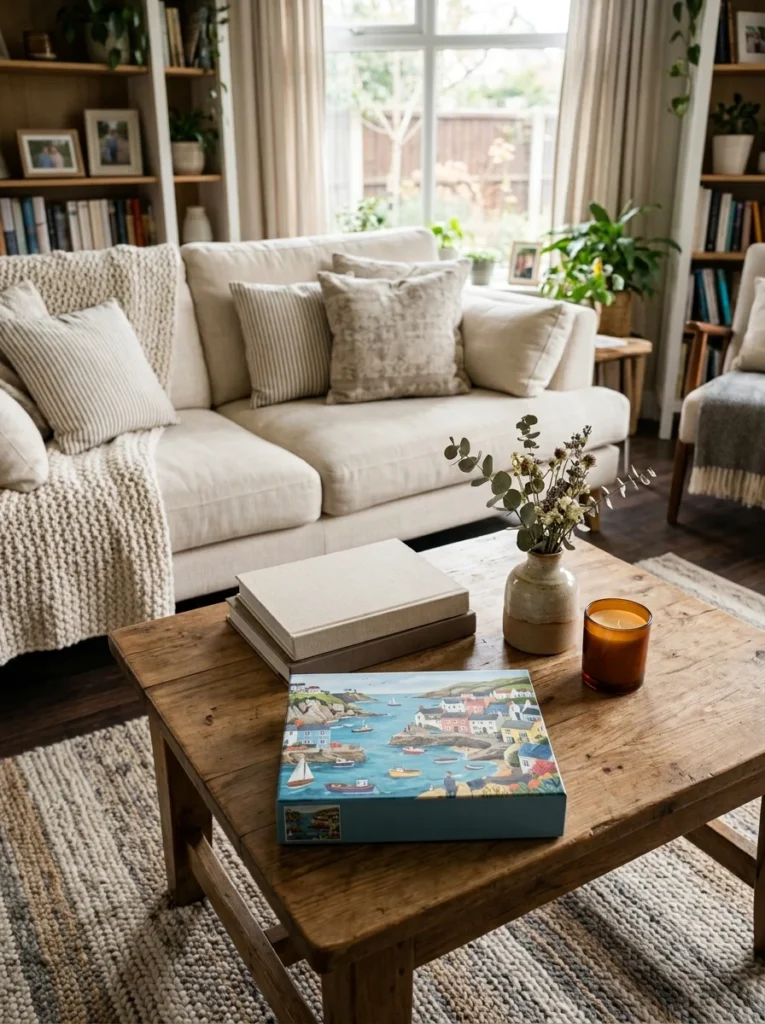
For coffee tables in genuinely lived-in living rooms where the space regularly hosts game nights or casual gatherings, storing a well-designed board game or puzzle box directly on or beside the table, chosen partly for its cover design, doubles as both practical storage and an interesting decorative object that also signals the room’s actual daily use and personality. A friend keeps a beautifully illustrated puzzle box stacked beneath her coffee table books specifically for this dual purpose, and it’s become both a genuinely used item during regular game nights and a visually interesting addition to her overall table styling the rest of the time. This idea works particularly well for households that actually do use games and puzzles regularly, since choosing this item purely for its visual appeal without any genuine intention to use it tends to feel slightly performative compared to an item that’s authentically part of your actual lifestyle and habits. I’d recommend this specifically as a way to incorporate genuine personality and function into your coffee table styling, rather than a universal recommendation for households that don’t actually engage in this particular activity.
18. Keep at Least One Corner Intentionally Clear
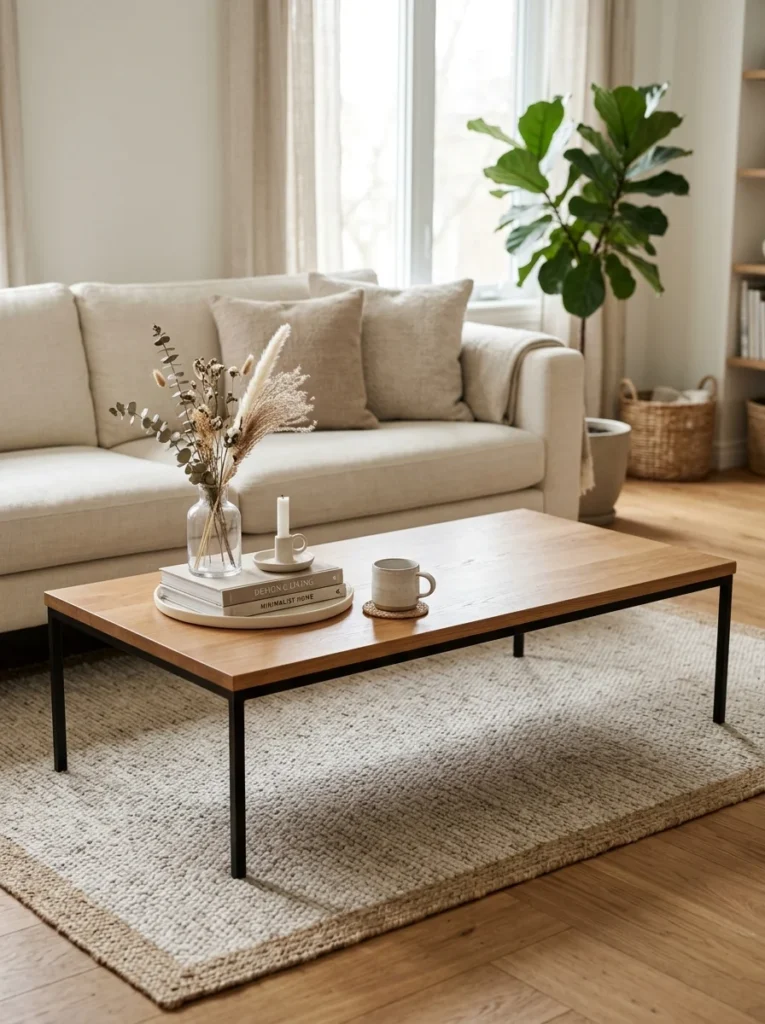
Just as with any well-styled surface throughout a home, resisting the urge to fill every available inch of your coffee table with decor, leaving at least one small section genuinely clear and available, prevents the whole arrangement from feeling cluttered and also preserves genuine practical space for setting down a drink or a laptop without disturbing your styled objects. I specifically leave one corner of my table completely clear, and that negative space actually makes the styled portion of the table feel more intentional and curated by contrast, rather than the table looking uniformly busy across its entire surface. This is a detail that’s easy to overlook when you’re excited about styling a previously bare or cluttered table, since the natural instinct is often to add more rather than to deliberately hold back and preserve some open space. I’d recommend treating this clear space as seriously as any other individual styling decision on this list, since a coffee table that’s completely covered edge to edge in decor items, however individually well-chosen, ultimately looks more cluttered and less considered than one that maintains at least some genuine breathing room.
19. Choose Materials That Complement Your Table’s Own Finish
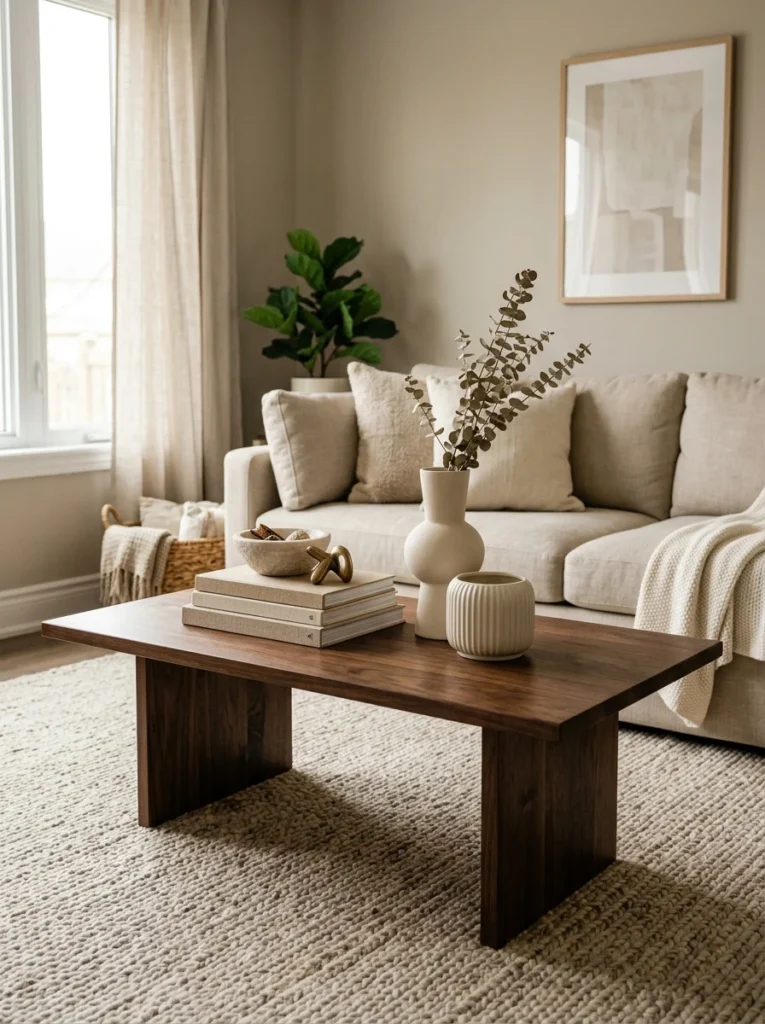
Whether your coffee table itself is glass, wood, marble, or another material, selecting decor items that either intentionally match or intentionally contrast with that base material affects how the whole arrangement reads, and I’d generally recommend leaning toward contrast rather than exact matching for the most visually interesting result. My own table has a warm walnut top, and I chose a lighter, more textured tray specifically to create contrast against that darker wood surface, rather than choosing another wood-toned tray that would have blended too closely into the table itself and reduced the visual definition between the two layers. For a glass coffee table specifically, this consideration becomes even more important, since a glass surface reveals whatever’s underneath the tray as well, making the relationship between your styling objects and the table’s own transparency a genuine design consideration rather than something purely incidental. I’d recommend bringing this same intentionality to whatever base material your specific table has, thinking through how your chosen decor items will visually interact with that particular surface rather than simply placing items without considering this underlying relationship.
20. Add a Small Amount of Metallic Shine
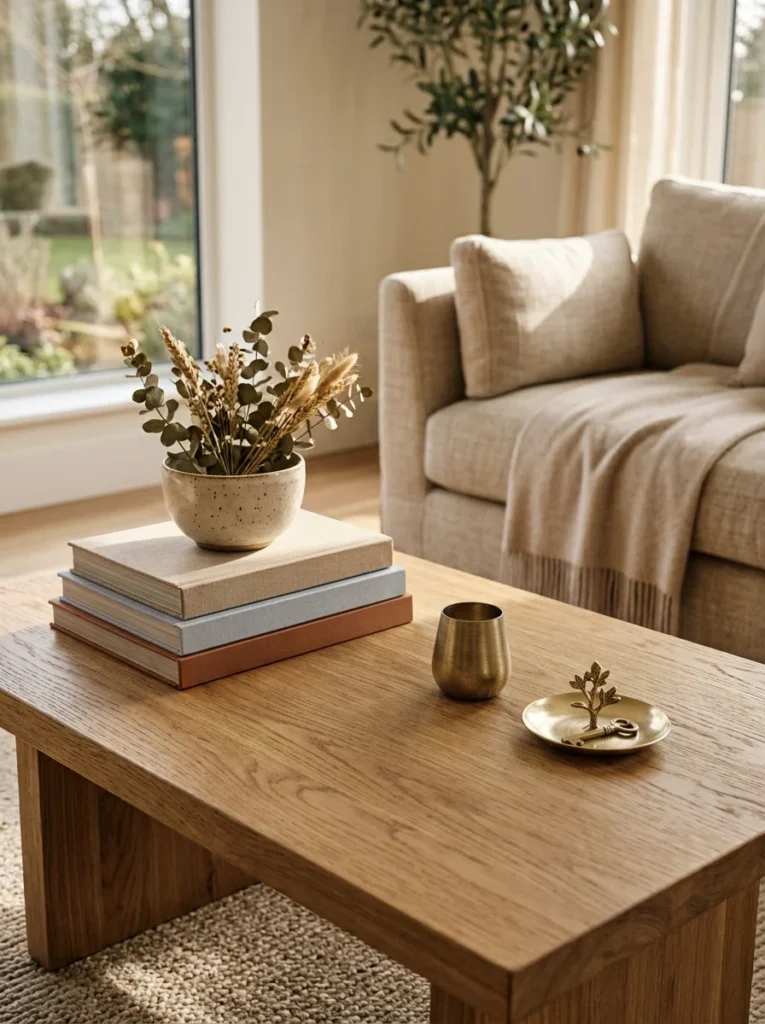
A single small metallic element, whether that’s a brass candle holder, a small silver dish, or metallic accents on a picture frame, adds a subtle reflective quality that catches available light and adds a touch of polish to an otherwise primarily matte arrangement of wood, ceramic, and fabric textures. I incorporated this through my small brass trinket dish specifically, and that single metallic touch genuinely elevates the overall arrangement more than its modest size would suggest, catching light differently throughout the day as natural sunlight moves across the room. I’d recommend keeping this metallic element relatively restrained, one or perhaps two small touches rather than several competing metallic pieces, since too much shine across a coffee table’s limited surface area can start to feel busy or overly formal rather than the subtle, sophisticated touch a single well-placed metallic accent achieves. This principle connects to the broader metal consistency guidance that applies throughout a home, and I’d recommend choosing this metallic accent’s specific finish, brass, silver, black metal, to match whatever finish you’ve already established elsewhere in the room’s hardware and fixtures.
21. Style for How You Actually Use the Table
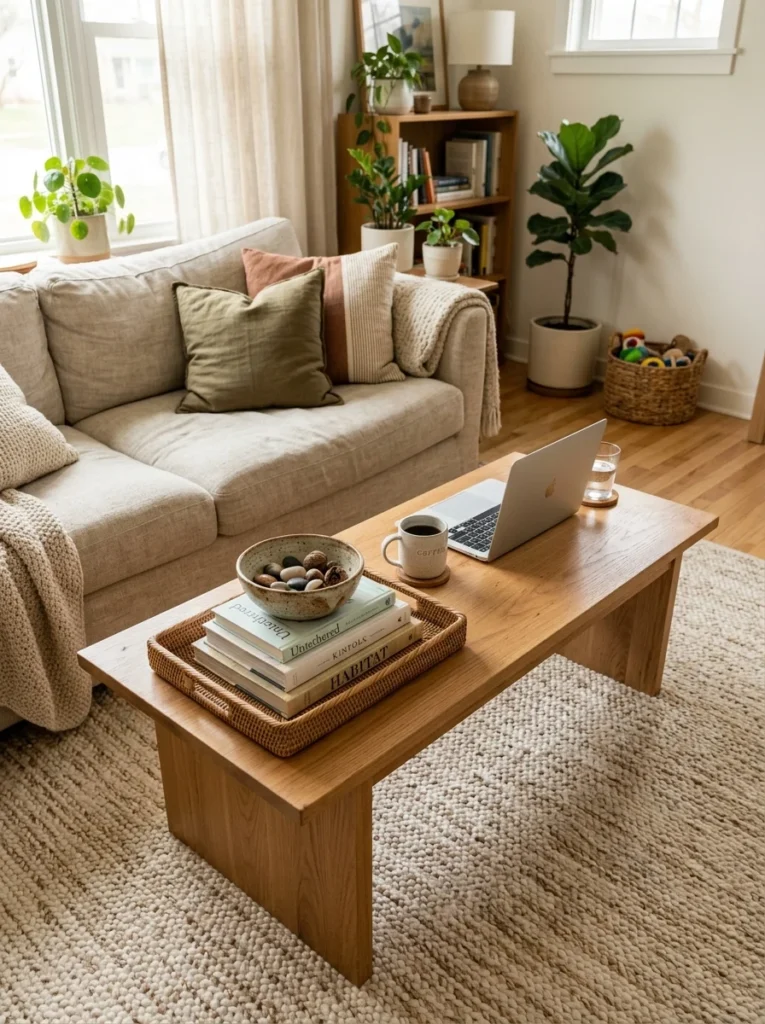
Beyond pure aesthetics, honestly considering how your coffee table actually gets used on a daily basis, as a footrest, a spot for laptops during work-from-home days, a landing pad for kids’ toys, should genuinely inform how elaborately or minimally you style it, since an arrangement that doesn’t account for real daily use tends to get disrupted constantly and eventually abandoned entirely. My own styling stays relatively minimal and low-maintenance specifically because I know from experience that anything too elaborate or precious gets knocked around within days of setting it up, given how much actual daily use my coffee table sees. I’d recommend honestly assessing your own household’s habits before committing to an elaborate, delicate arrangement, since a beautiful but impractical coffee table styling that constantly needs to be moved aside or gets damaged from actual use will likely end up abandoned faster than a simpler, more realistic arrangement that genuinely coexists with how the table actually functions in your daily life. This is really the same underlying principle that applies to sustainable design throughout any room in a home, that a styled space needs to work with your actual lifestyle rather than existing purely as an aspirational, impractical ideal.
22. Revisit and Edit the Arrangement Regularly
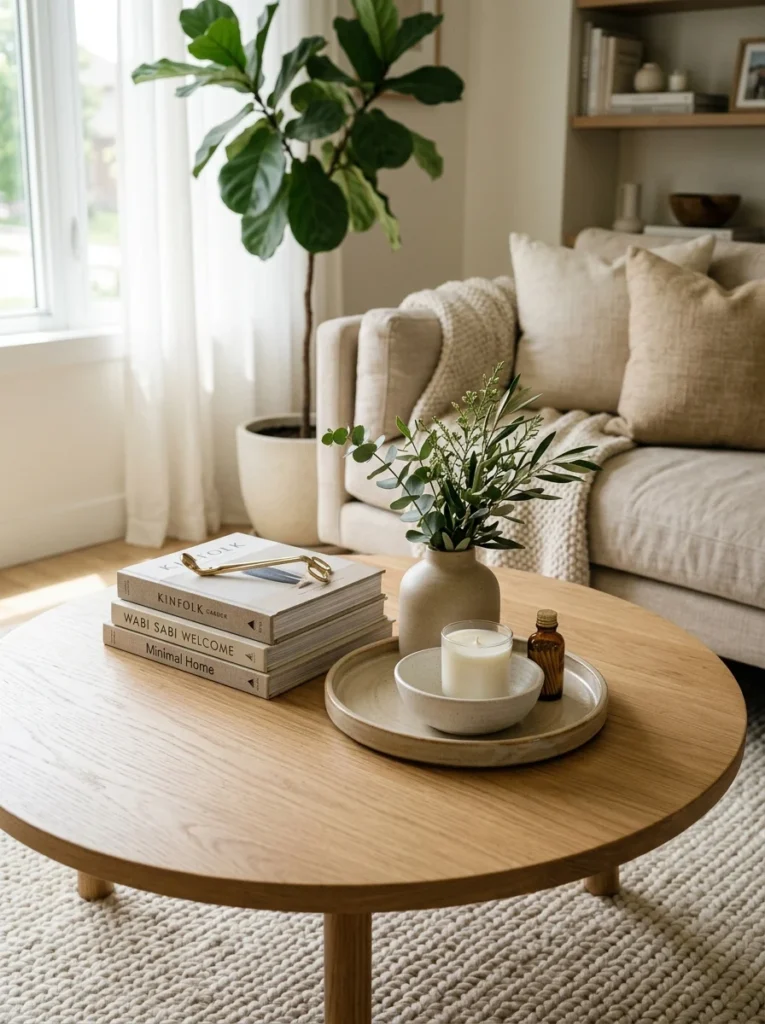
The final piece of advice is treating your coffee table styling as an ongoing, evolving project rather than a single, permanent arrangement set once and never reconsidered, periodically stepping back and honestly assessing whether every current item still earns its place on that limited surface. I do a quick edit of my own table every couple of months, removing anything that’s started to feel stale or that I’m simply not noticing anymore, and occasionally swapping in something new I’ve come across, a different book, a small object picked up while traveling, that genuinely reinvigorates my interest in a surface I look at every single day. This ongoing editing process is really what keeps a coffee table from either becoming stale and unnoticed or slowly sliding back into cluttered, unintentional territory over time, similar to the same periodic reassessment that benefits any curated space throughout a home. I’d recommend building this kind of casual, periodic review into your regular routine, treating it less as a formal styling project and more as a small, ongoing habit of paying attention to a surface that genuinely deserves that continued care given how frequently it’s actually seen and used.
Final Thoughts
Looking back at that cluttered, neglected surface buried under mail and remote controls, it’s honestly a little surprising how much a few minutes of intentional arranging changed my daily relationship with that one piece of furniture. Between all 22 of these ideas, the underlying theme is really about balancing genuine function with visual intention, choosing items that both look considered and actually serve how you use the space, rather than styling purely for photos while ignoring how the table actually gets used day to day.
If your own coffee table has drifted into landing-pad territory, I’d suggest starting with just a tray and one or two genuinely meaningful items, a stack of books you’d actually read, a candle you’ll actually light, rather than trying to assemble all 22 ideas into one elaborate arrangement immediately. That’s essentially how mine came together too, starting small and building gradually, until a surface I used to overlook completely became one of the small daily details I’ve genuinely come to enjoy.