
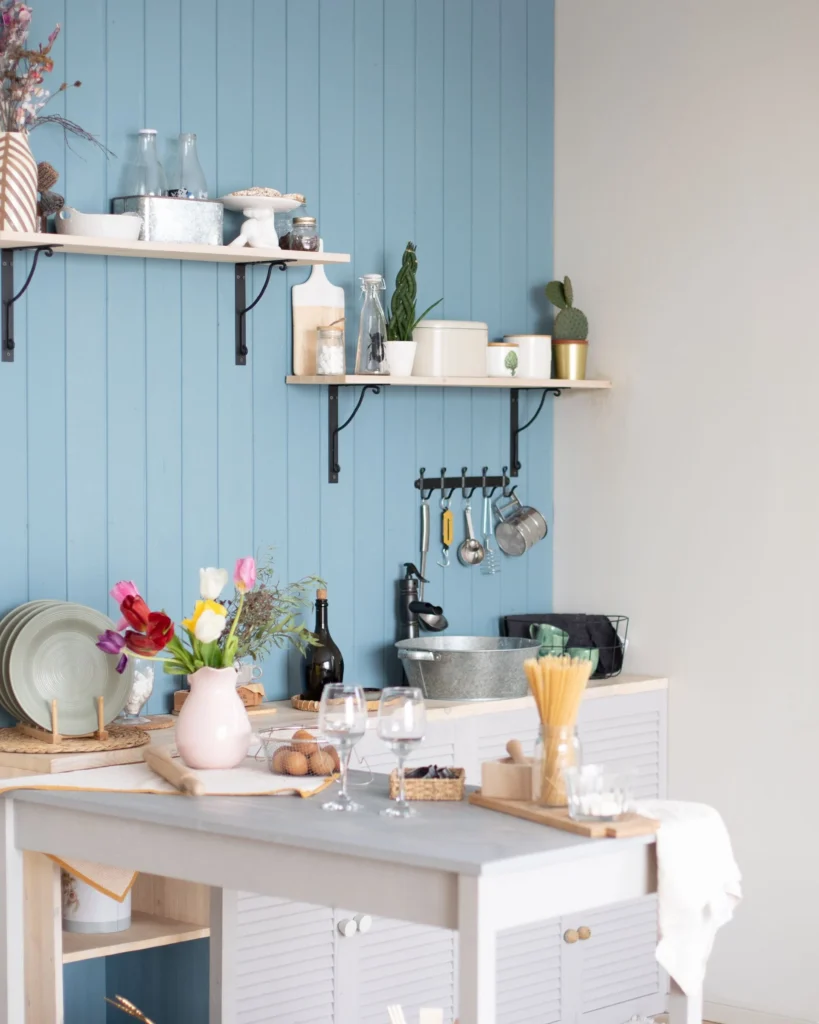
Most kitchens get all the attention below eye level: the cabinets, the counters, the cooker. The walls above them stay blank for years, and then one day you notice how bare the room feels. Good kitchen wall decor ideas change that without a remodel or a big budget. A clock, a shelf, a row of plates — small things, hung in the right spot, make the whole kitchen feel finished.
I have tried most of the ideas in this list in my own kitchen over the years, and I have made my share of mistakes too — shelves hung too high, frames that fell off in the steam, a plate wall that looked great for a week and then gathered dust. The thirteen ideas below are the ones that actually lasted. Pick one or two to start with, live with them for a week, and add more only if the wall still asks for it.
1. Kitchen Wall Decor Ideas Start With a Big Statement Clock
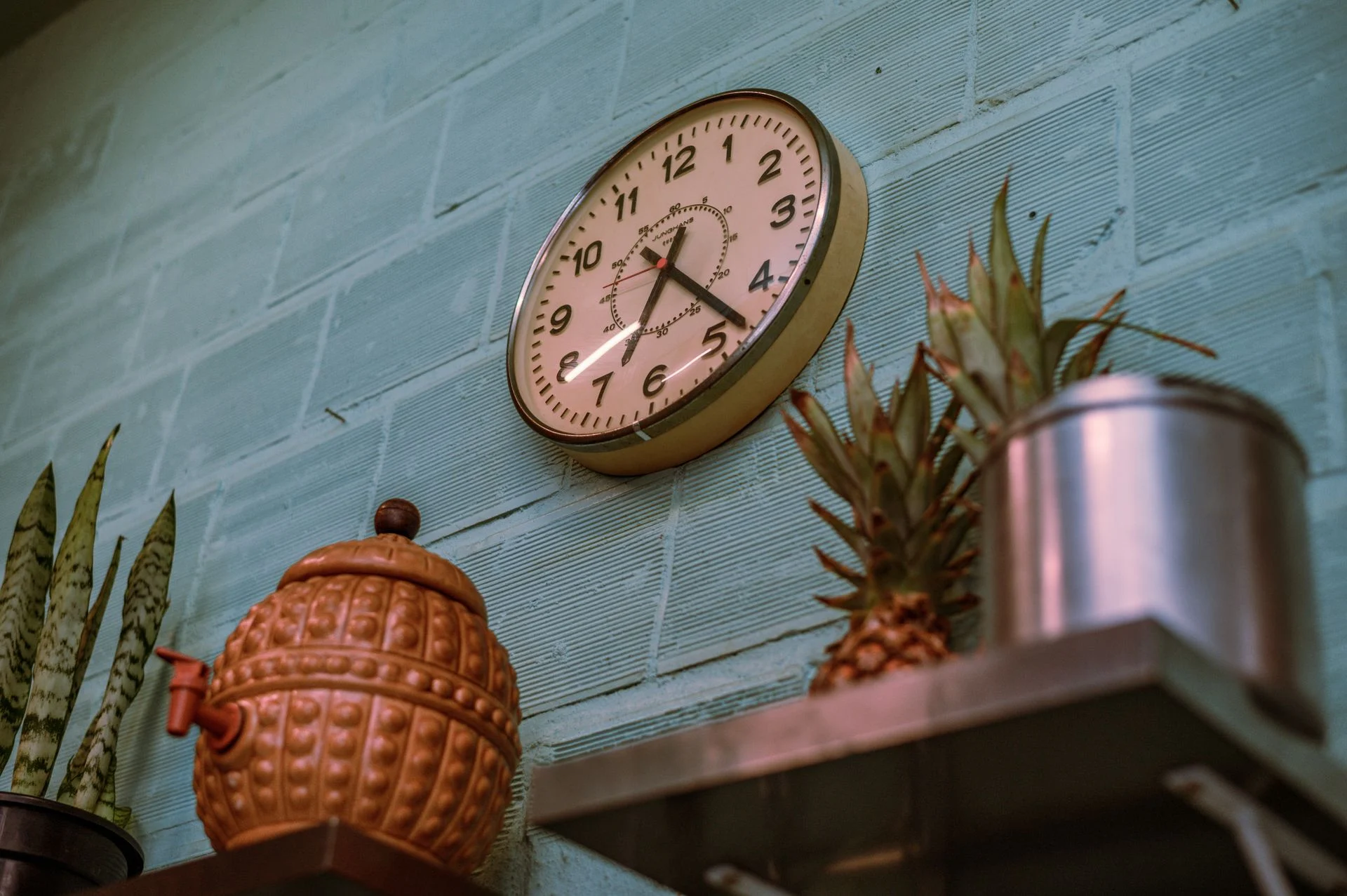
A big clock is the easiest win on a kitchen wall because it is useful as well as pretty. Pick one that you can read from the cooker and the table — at least 30 centimetres across, with a clear face and hands that stand out against the wall. I hung mine on the wall opposite the window, and now I check the time there a dozen times a day.
Hang it at eye level, not up near the ceiling where it gets lost. If your wall is tiled, use a proper masonry drill bit and a wall plug; a nail in grout will work loose within a month. I learned that the hard way when my first clock slid off at midnight and woke everyone.
Try this: hang the clock first, then arrange everything else around it so the wall has one clear focal point.
2. Hang Open Wooden Shelves and Style Them Lightly
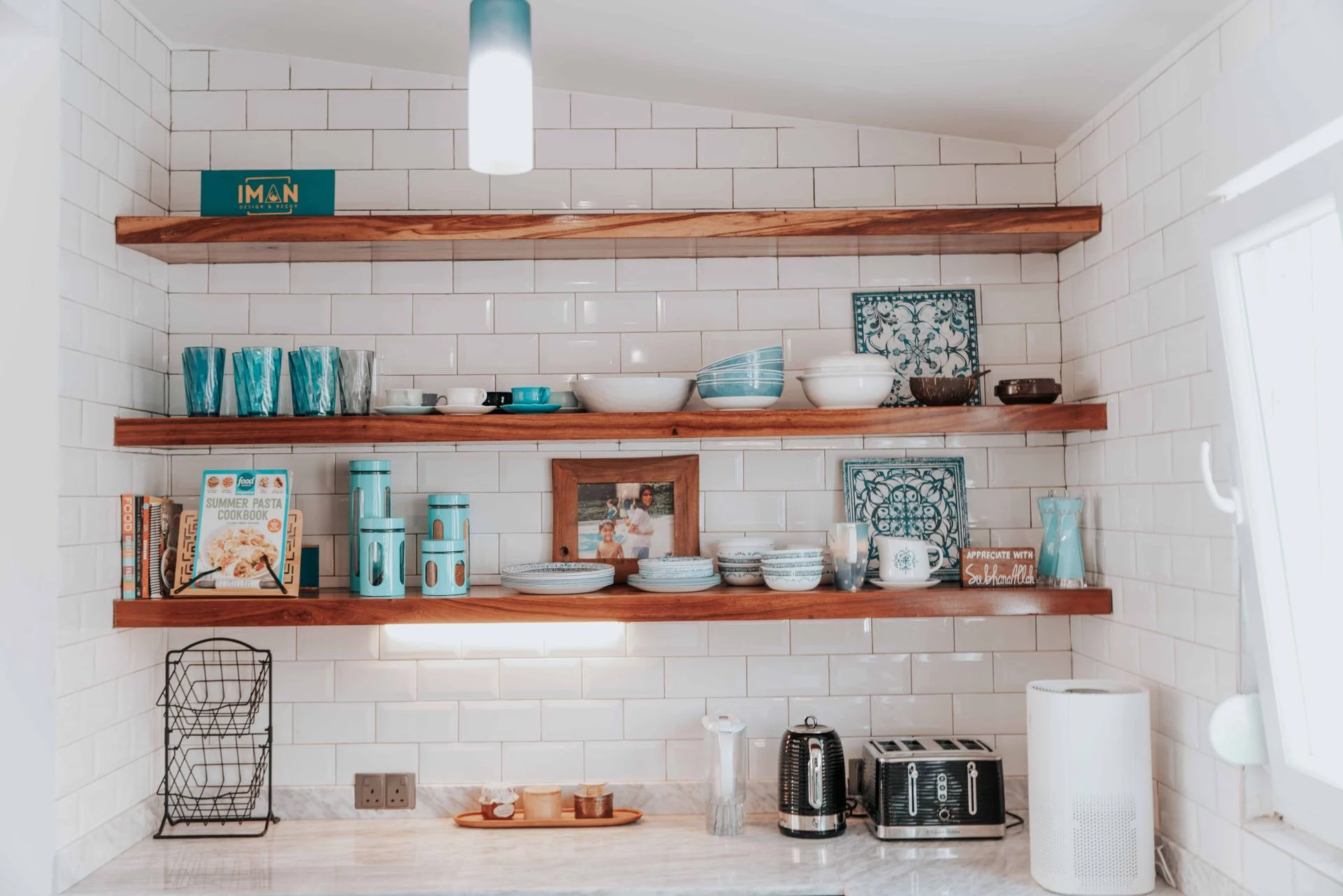
Open shelves turn a blank wall into storage and display in one go. Two or three wooden shelves above the counter hold the plates and bowls you reach for every day, and they make a small kitchen feel bigger because the wall is not boxed in by cabinets. Choose solid wood brackets that match your worktop, and keep the shelf depth around 25 centimetres so plates sit safely.
The trick is to leave breathing room. I once crammed every shelf full and the wall looked like a shop display. Now I keep the everyday dishes on the bottom shelf, a few jars and a plant on the top one, and a bit of empty space between groups. It takes five minutes to tidy and it stays looking calm.
Try this: put your prettiest everyday dishes on show and hide the chipped ones in a cupboard.
3. Build a Gallery Wall of Framed Food Prints
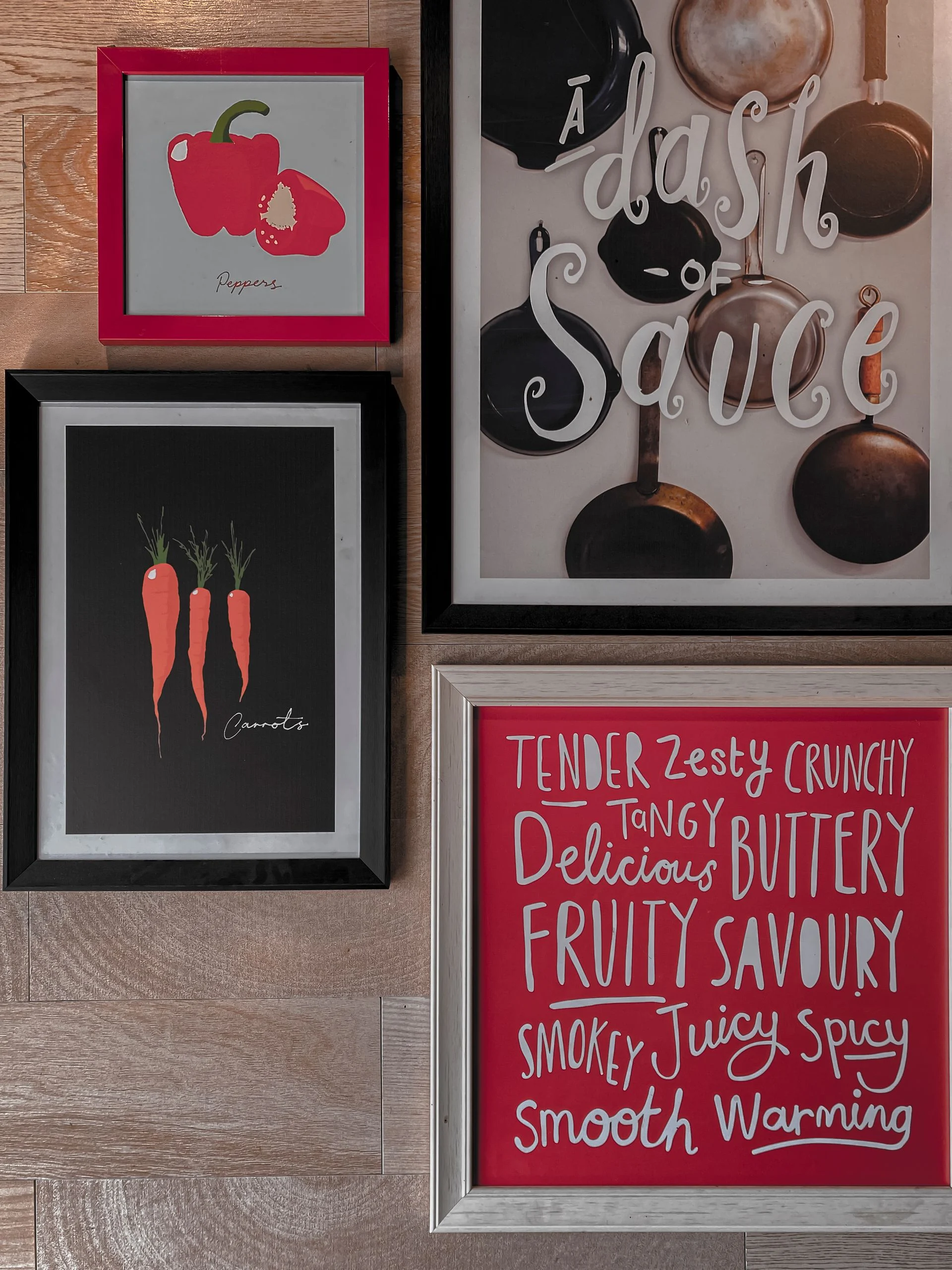
A gallery wall sounds fancy, but in a kitchen it can be as simple as four framed prints hung close together. Food prints work best — a pepper, a bunch of carrots, a pan, a few tasty words in bold type. Keep the frames the same colour so the different pictures still feel like one group, and mix one big frame with a few small ones.
Lay the frames on the floor first and shuffle them until the arrangement feels right. I tape paper templates to the wall before I drill anything, because holes in tile are forever. Hang the biggest frame at eye level and build outwards from it, leaving about five centimetres between frames.
Try this: start with three frames, step back, and add a fourth only if the group still looks lopsided.
4. Add a Chalkboard Wall for Menus and Notes
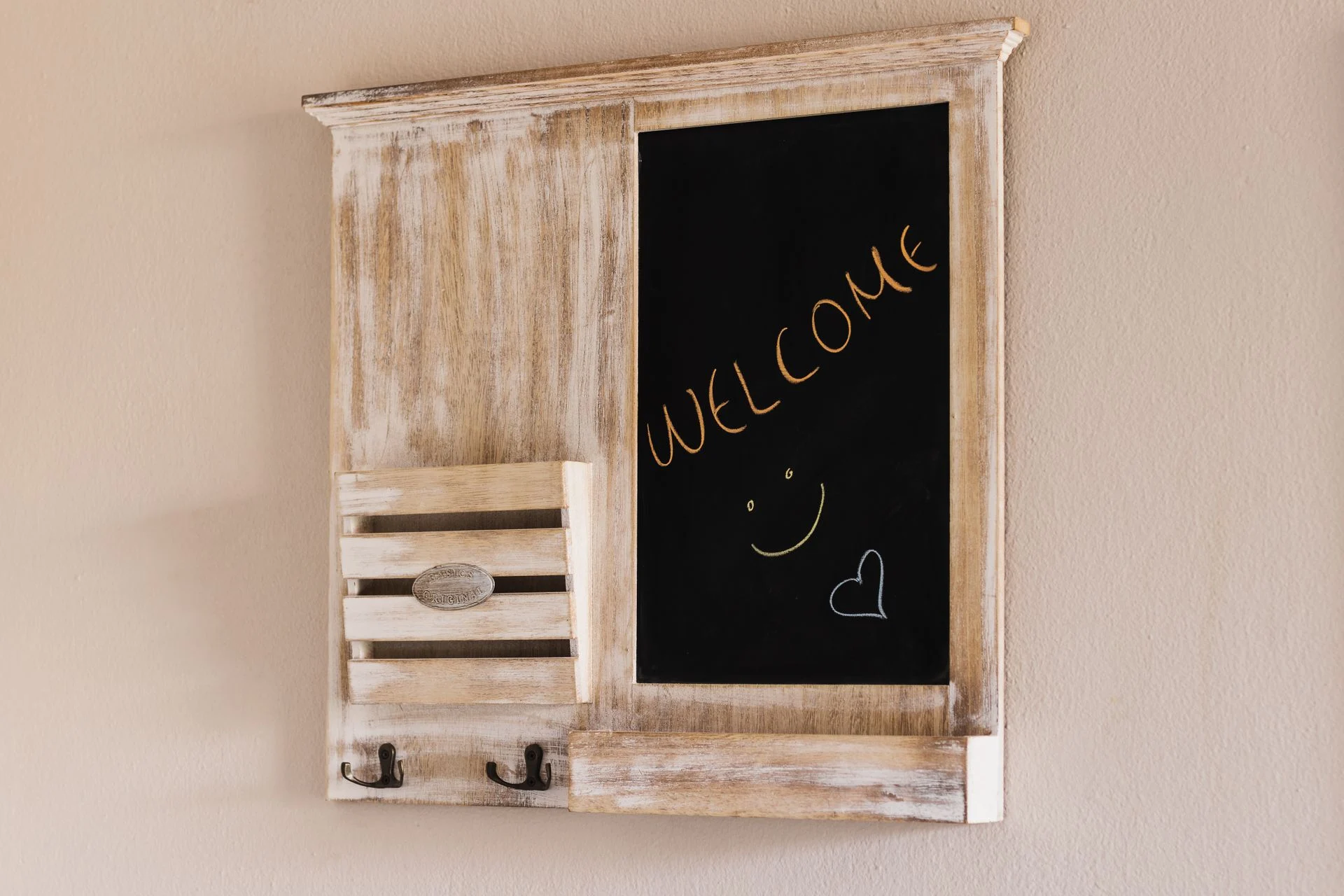
A chalkboard on the kitchen wall earns its place every single day. I write the week’s dinners on ours every Sunday, and the shopping list lives there too, so nobody has to ask what we need. A small framed chalkboard with a couple of hooks underneath works just as well as a whole painted wall, and you can take it down when you move.
Keep the chalk in a little pot nearby and wipe the board with a damp cloth once a week, or the writing starts to ghost. If you paint a whole section of wall with chalkboard paint, give it two coats and let it cure for three days before you write on it — I rushed mine and the first menu never fully came off.
Try this: write tonight’s dinner on the board each morning so the family stops asking what is for tea.
5. Hang a Peg Rail for Mugs, Pans and Utensils
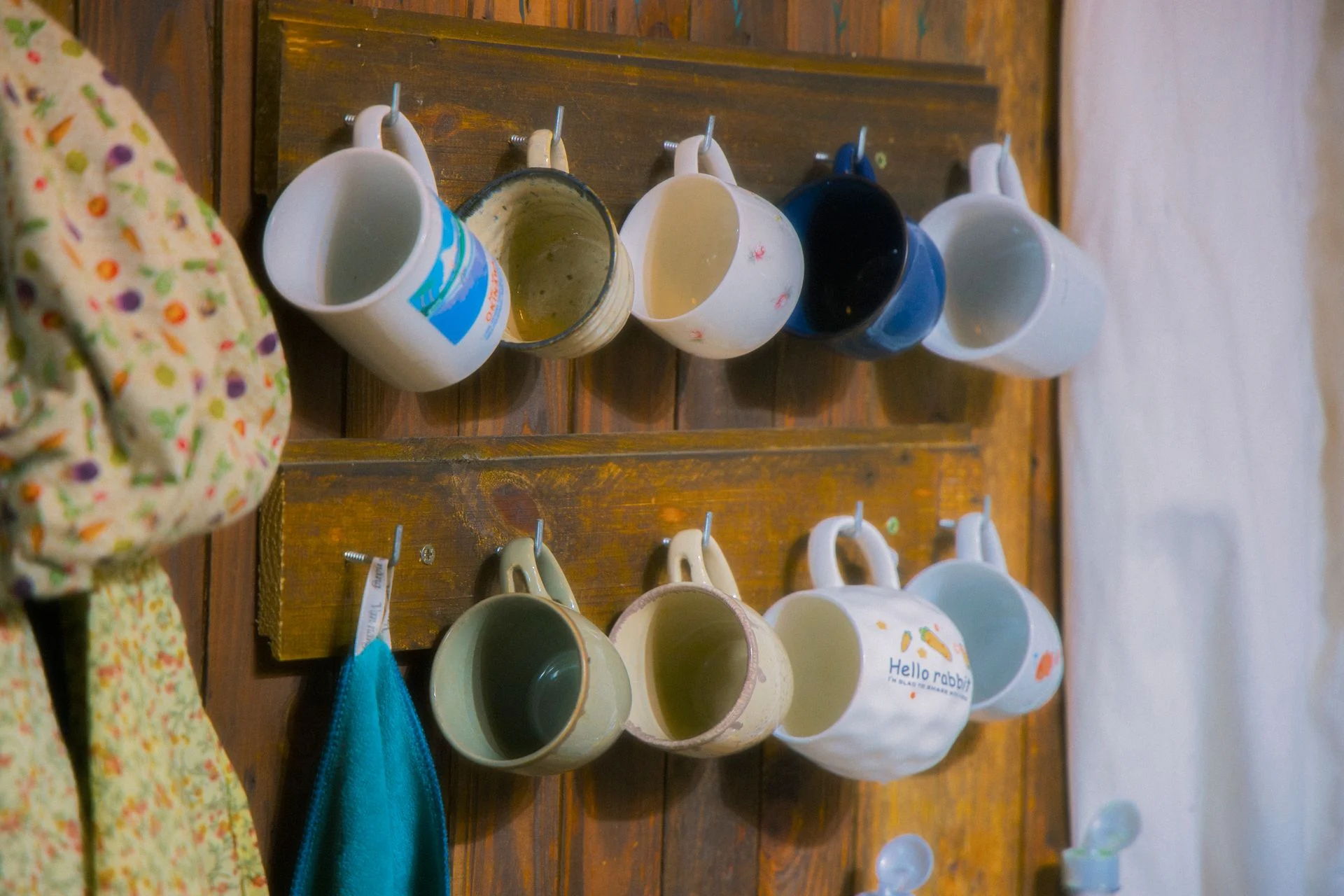
A wooden peg rail with hooks is the hardest-working thing on my kitchen wall. The mugs we actually use hang there instead of crowding a cupboard, and the rail costs very little. Screw it into the wall studs, not just the plaster, because a rail full of mugs is heavier than it looks — mine pulled clean out of the plaster the first time I loaded it.
Hang the rail where you make your morning coffee so the mugs are right where you need them. Mix in a couple of small pans or a pair of scissors if you have the hooks spare, but leave a gap between items so they do not clink every time you grab one. Pretty mugs go at eye level; the chipped ones go at the back.
Try this: hang only the six mugs you use most and store the rest away.
6. Put Up a Plate Wall With Mismatched Vintage Plates
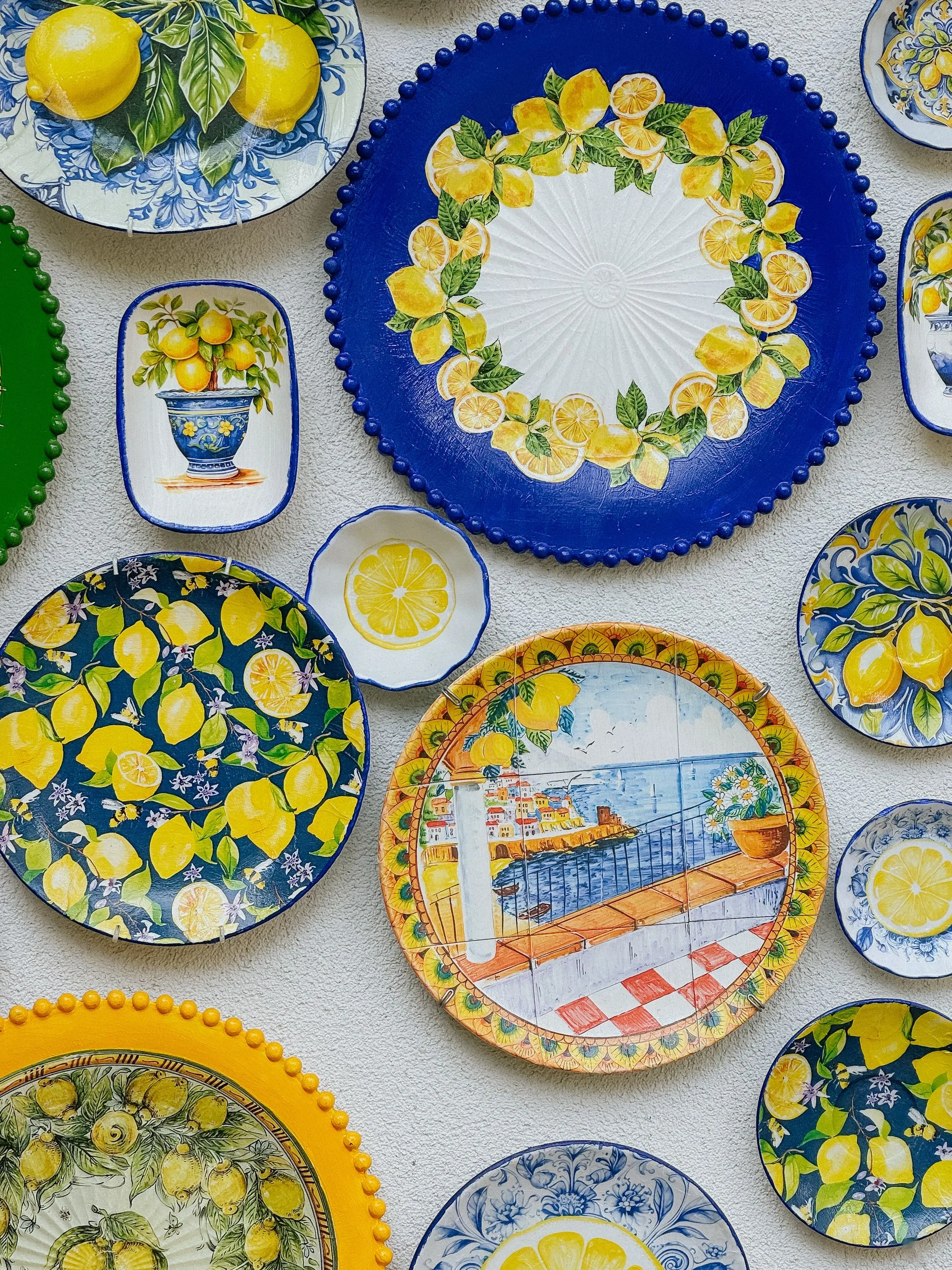
A plate wall is pure joy if you like colour. Charity shops and flea markets are full of pretty plates for very little money, and hung in a tight group they look like art. I look for plates in one colour family — mine are mostly blue and yellow — so the mix feels planned rather than random. Odd shapes are fine; that is half the charm.
Use plate hangers with a spring grip and a proper wall hook for each plate, and test every hanger by tugging it before you walk away. I lost a favourite plate the first week because I trusted a sticky hook on a steamy wall. Keep the group tight, with only a few centimetres between plates, and step back often as you hang them.
Try this: arrange the plates on the floor first, then photograph the layout before you hang a single one.
7. Grow a Herb Garden Right on the Wall
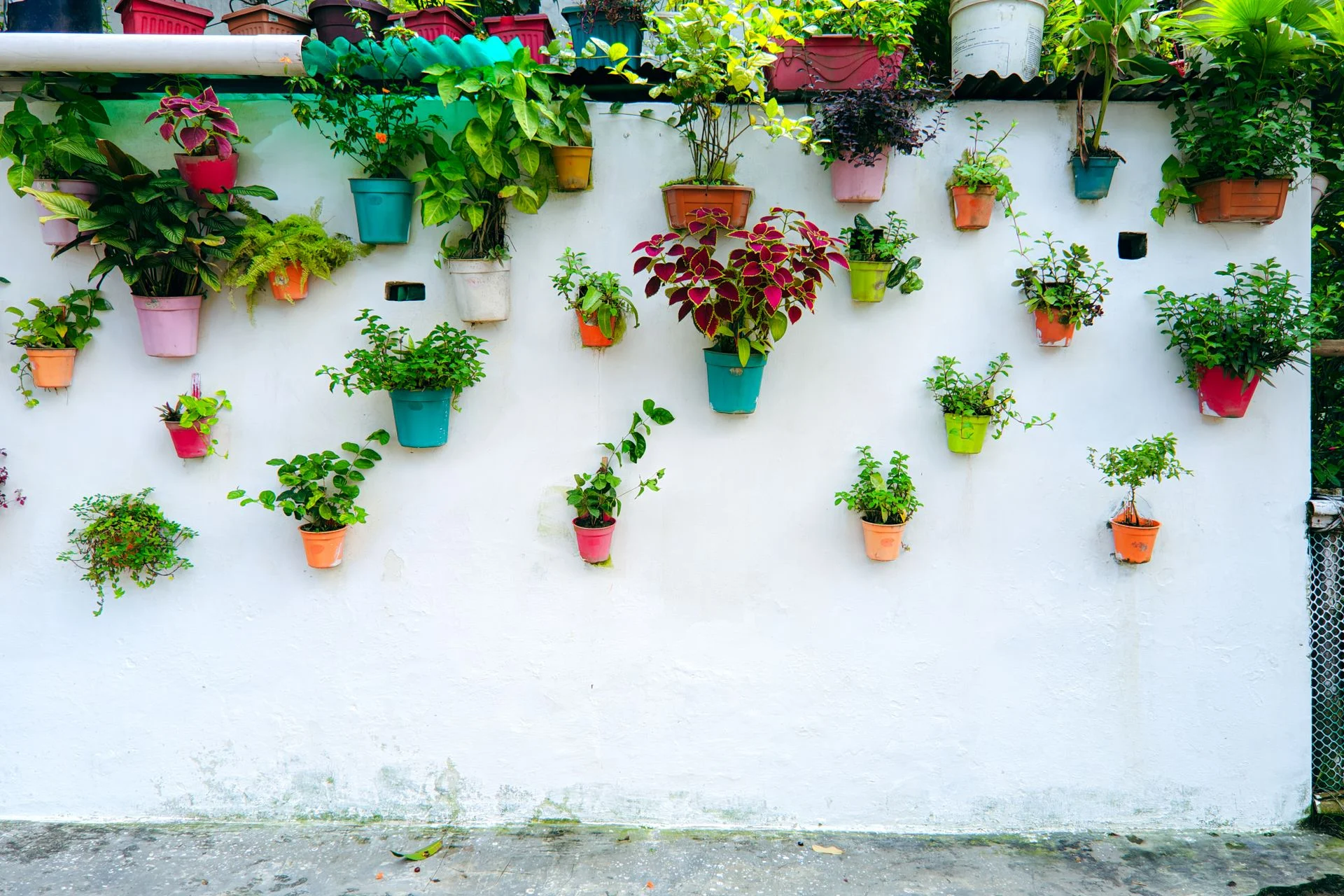
Fresh herbs on the wall mean you snip what you need while you cook, and the green softens a hard kitchen. Small pots on a wall-mounted rail or a set of hanging planters work well for basil, mint and parsley. Pick the sunniest wall you have, ideally near a window, and plant only the herbs you actually cook with — I grew rosemary for a year and never used it once.
Water little and often, because small pots dry out fast next to a warm cooker. The photo shows a wall of potted plants outdoors, not in a kitchen, but the idea is the same: lots of small pots hung close together on a wall. Indoors, a drip tray under each pot saves your wall and your floor.
Try this: start with three pots — basil, mint and parsley — and add more only once those three are thriving.
8. Hang a Big Round Mirror to Bounce the Light Around
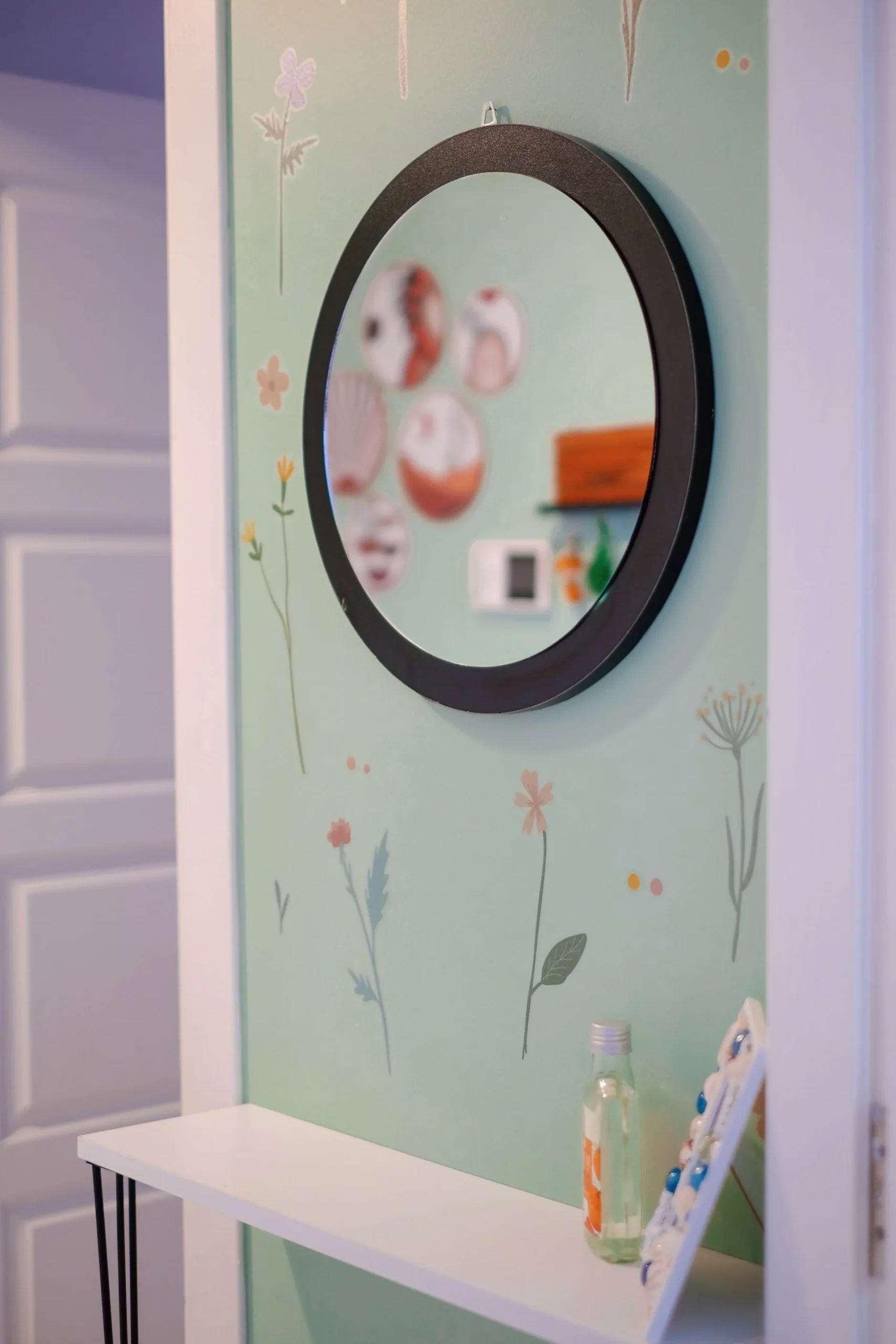
A round mirror is a kind trick in a small or dark kitchen because it throws light around and makes the wall feel wider. Hang it opposite a window if you can, so it catches the daylight, and keep the frame simple — black metal or pale wood works with almost everything. One big mirror beats three small ones every time.
The photo here shows a round mirror on a hallway wall with floral wallpaper, not in a kitchen, so picture it above a sideboard or on the wall by the kitchen door instead. Keep it away from the cooker, or steam will fog it every time you boil a kettle. A quick wipe with glass cleaner once a week keeps it bright.
Try this: hold the mirror up in different spots for a day before you drill, and pick the one that catches the most light.
9. Paint One Wall a Bold Colour and Keep the Rest Plain
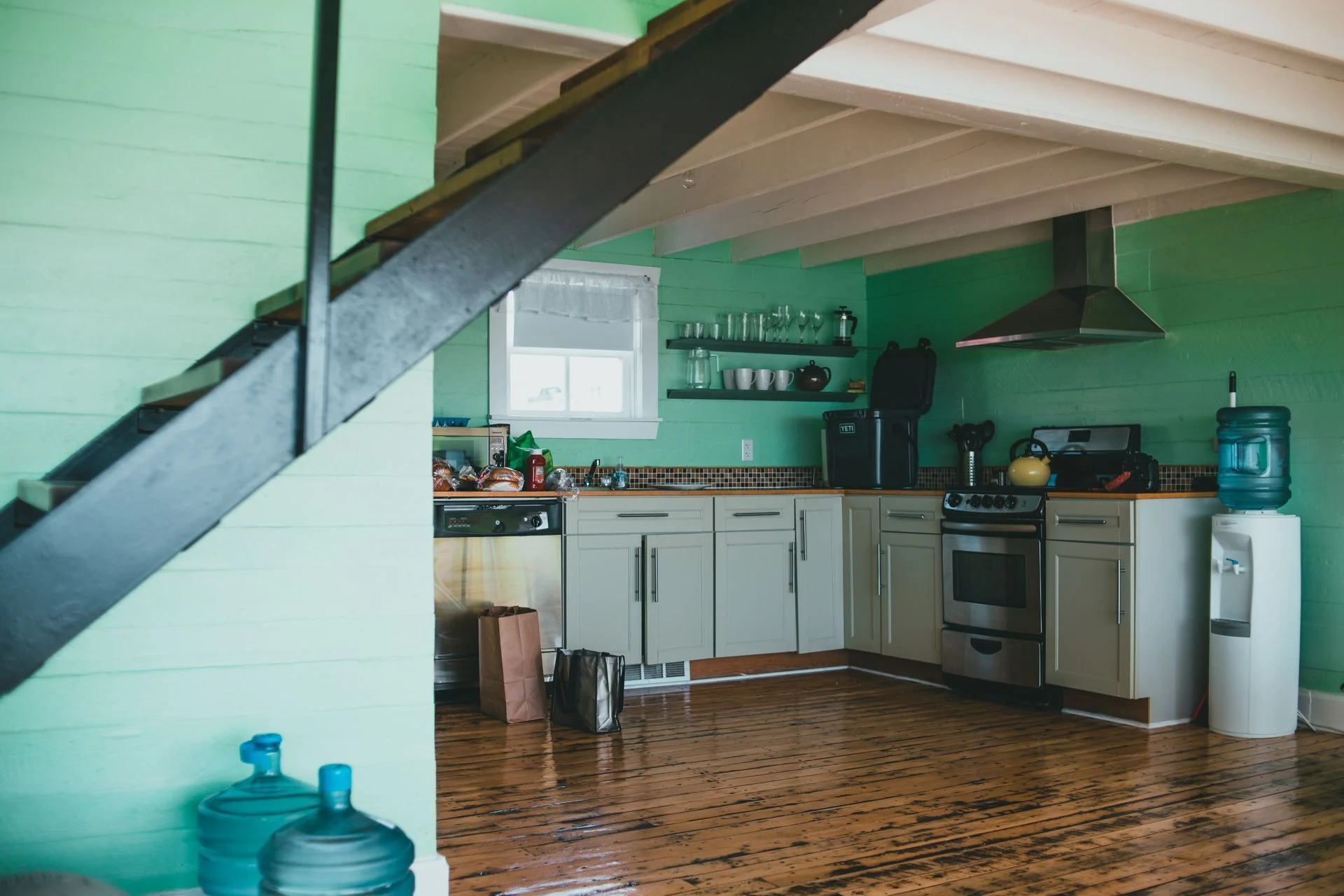
One bold wall is the cheapest dramatic change you can make in a kitchen. A deep green, a warm terracotta or a rich navy behind the table or the dresser gives the whole room a backbone, and the rest of the walls stay plain so it never feels heavy. I painted one wall green and guests still comment on it two years later.
Pick the wall you see first when you walk in, and paint it well: wash it down, use a kitchen paint that can handle steam and splashes, and give it two coats. Test the colour on a large piece of card first and look at it morning and evening — the green I almost chose looked lovely in the shop and muddy at home at night.
Try this: paint just one wall and live with it for a month before you decide about a second one.
10. Display Your Cutting Boards Like Wall Art
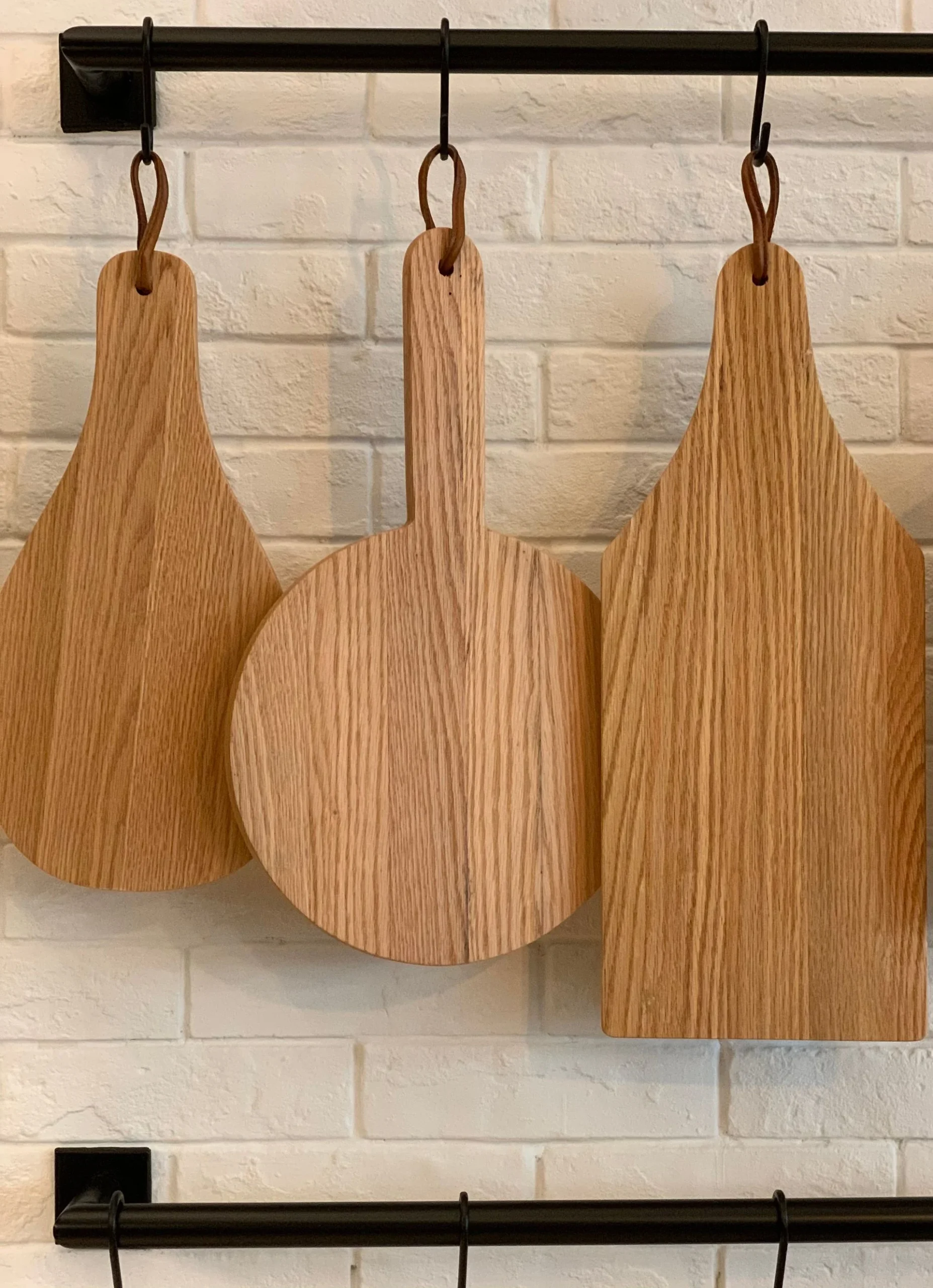
Cutting boards are too pretty to hide in a drawer. A row of wooden boards in different shapes and shades, hung on hooks or a rail, looks like a proper display and keeps them within reach. I keep my three favourites on the wall by the cooker and the rest in a drawer — the ones on show are the ones I use every day.
Hang them by their handles on sturdy hooks, with the biggest board in the middle and smaller ones either side. Give each board a wipe with food-safe oil now and then so the wood does not dry out and crack. Never hang a board that is still damp, or it will warp; let it dry flat first.
Try this: hang three boards of different shapes together and leave a hand’s width between them.
11. Add Floating Shelves With Plants and Cookbooks
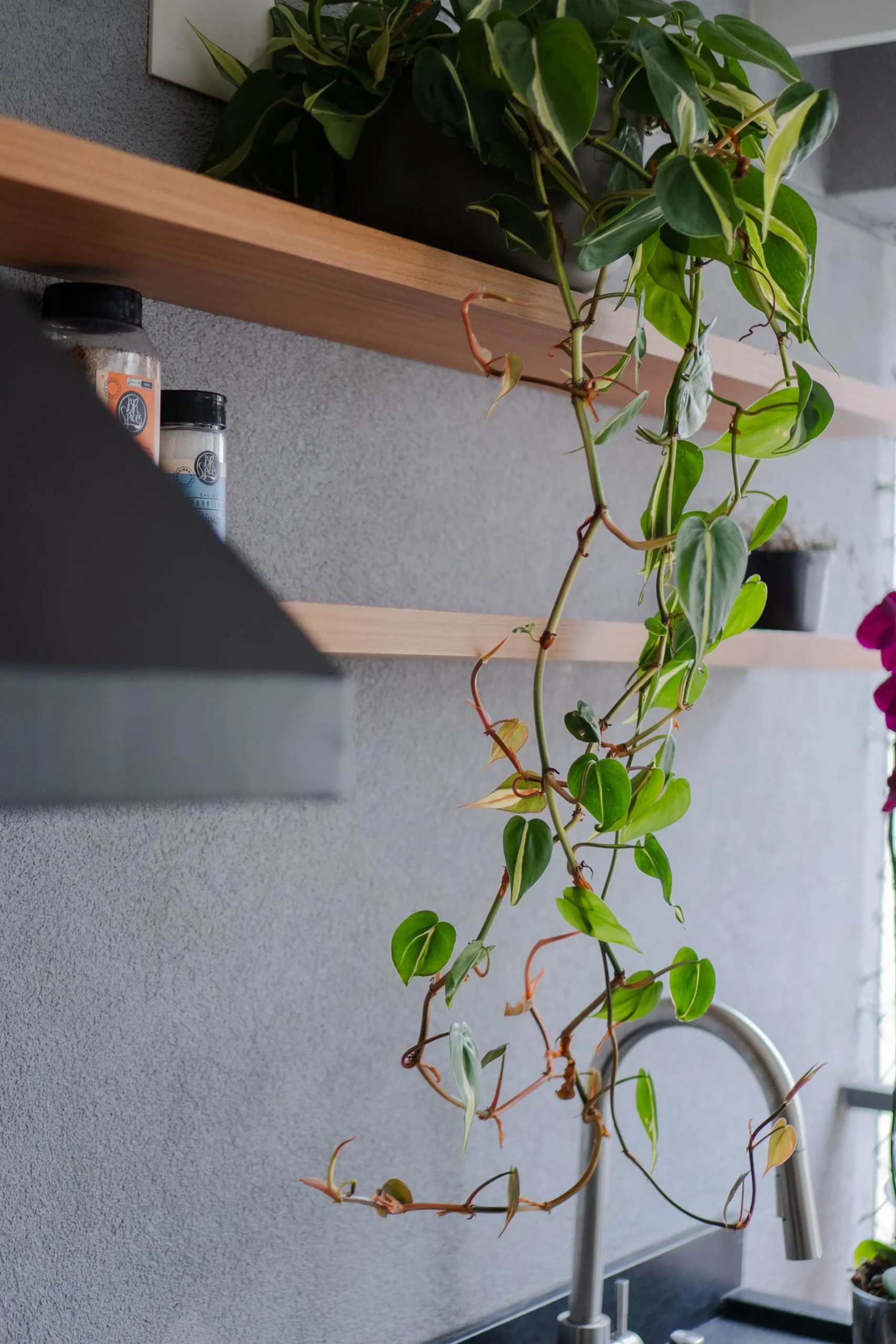
Floating shelves with a trailing plant and a stack of cookbooks make a kitchen wall feel lived in rather than staged. The plant softens the straight lines of the shelves, and the cookbooks show what you actually cook. I keep my three most-used cookbooks on the shelf by the stove, and the plant above them trails down in front of the tiles.
Fix floating shelves into studs or use proper heavy-duty wall anchors, because books are heavy and a shelf full of them will sag or fall if it is only held by plaster. Water the plant over the sink, not over the shelf, or the books below will get dripped on — I ruined a cookbook that way and I still think about it.
Try this: one plant, three cookbooks and one small jar is enough for a single shelf.
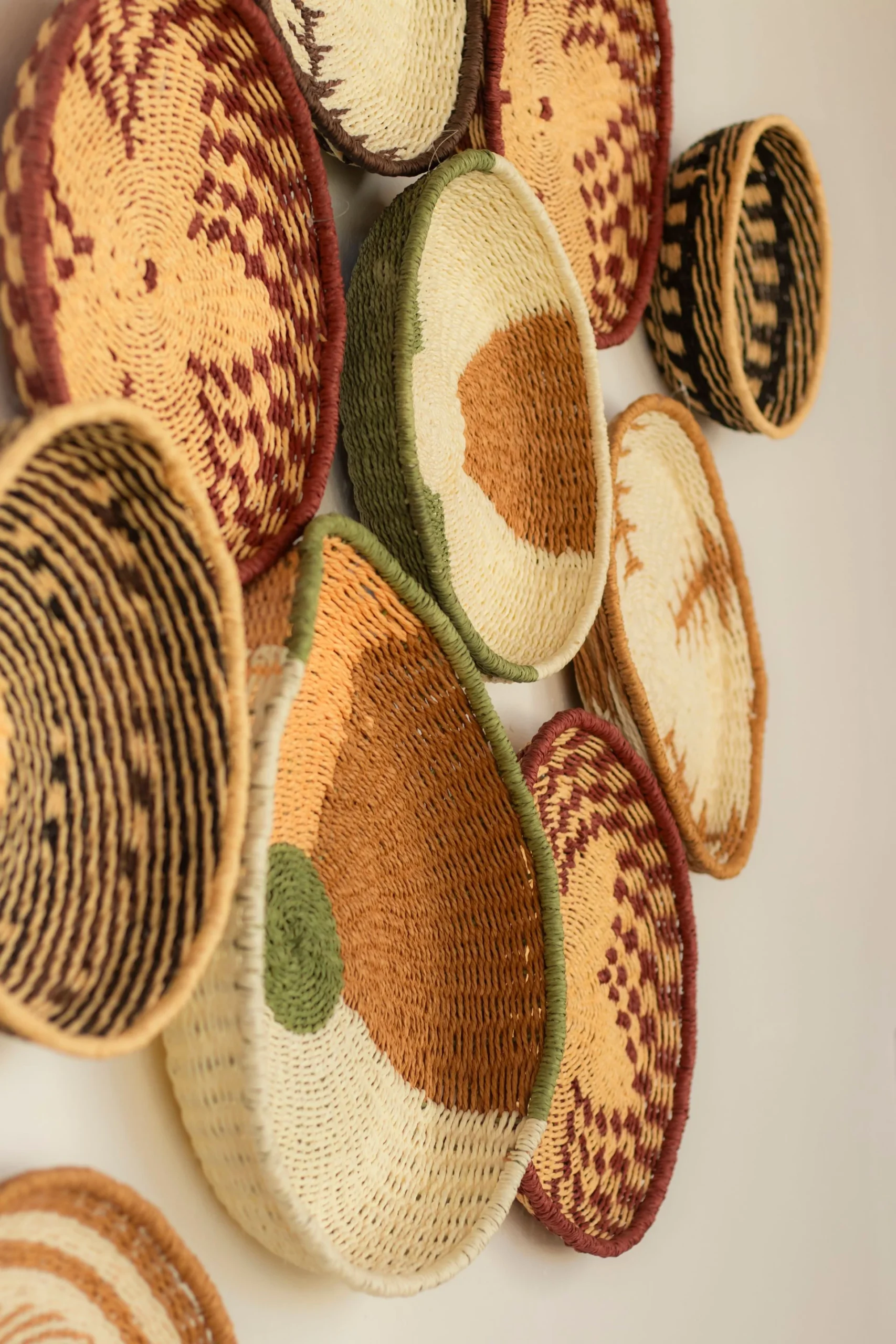
12. Hang Woven Baskets for Warmth and Texture
Flat woven baskets hung on the wall bring warmth and texture that flat paint never can. They are light, cheap, and easy to hang with a single small nail each, which makes them perfect for a wall you are nervous about drilling into. I mixed shallow baskets in natural tones with one or two patterned ones, and the group looks far more expensive than it was.
Play with the arrangement on the floor first, then hang the biggest basket slightly off-centre and build around it. Keep them away from the cooker, where steam and grease will dull the fibres. A quick shake outside now and then keeps the dust off, and if one fades in the sun, swap it to a shadier spot.
Try this: start with five baskets in different sizes and stop there — a small tight group looks better than a scattered one.
13. Frame a Vintage Recipe or a Family Photo
Nothing makes a kitchen feel personal like a recipe in someone’s handwriting, framed where you can see it while you cook. My grandmother’s soup recipe hangs by our stove, and I read it every time I make it. If you do not have a family recipe, an old cookbook page or a food photo in a simple frame does the same job.
Frame a copy, not the original, so the real thing stays safe from steam and splashes. The photo shows a vintage basil recipe card lying flat on a table with fresh basil leaves — it is not framed yet, which is exactly the point: pick a card like this, frame it behind glass, and hang it where it will make you smile. A plain wooden frame suits it best.
Try this: frame one recipe this weekend and hang it at eye level near the cooker.

What is the easiest kitchen wall decor idea for a rental?
A big clock or a set of adhesive-hook frames is the easiest place to start, because neither needs drilling. A chalkboard on a stand or a leaning mirror works too. Save the shelves and plate walls for a home you own, or ask your landlord first.
How do I hang heavy items like plates and mirrors on a kitchen wall?
Find the wall studs or use proper wall anchors rated for the weight, and never trust a sticky hook for anything heavy. Tiled walls need a masonry drill bit and a steady hand, so drill slowly and keep the tile cool with a little water.
What should I put on a blank kitchen wall above the sink?
Keep it simple and steam-proof: a small shelf with a plant, one framed print behind glass, or a narrow chalkboard for notes. Avoid paper prints without glass and anything fabric, because steam will spoil them within weeks.
How do I keep kitchen wall decor clean from grease and steam?
Wipe frames and shelves once a week with a damp cloth, and keep decor away from the cooker where the grease is worst. Glass-fronted frames, sealed wood and washable paint all survive kitchen air far better than bare paper or raw fabric.
Final Thoughts
Kitchen walls do not need much to feel loved — one good clock, a shelf with room to breathe, a few frames that mean something to you. The best walls in this list are not the fullest ones; they are the ones where every piece has a job or a memory behind it. Start small, hang things properly the first time, and let the wall grow slowly.
If your kitchen still feels bare after one change, add a second idea from this list rather than filling every inch at once. A wall with a bit of empty space looks calm and cared for, and you can always add the next piece when you find it at a market or in a charity shop. That slow, collected look is what makes a kitchen feel like home.