
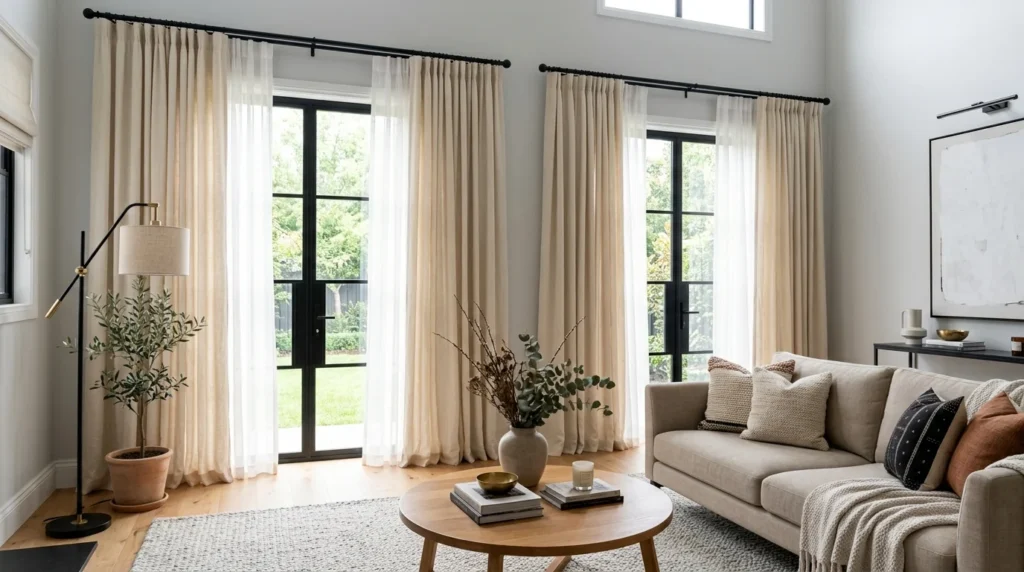
For the first two years in my current apartment, my living room windows had nothing but the plain white plastic blinds that came standard when I moved in. I told myself I’d get around to curtains eventually, the same way I told myself a lot of things during that stretch, and it wasn’t until a friend mentioned offhand that the room felt “a little bare” that I actually looked at those windows and realized how much they were holding the whole space back. What started as a simple trip to buy a basic curtain rod turned into months of experimenting with fabrics, lengths, and hanging techniques before I finally landed on a combination that made the entire living room feel finished in a way it never had before.
If your own living room windows are still waiting for their moment, here are 18 curtain ideas, each explained in detail, based on what I actually tried in my own space and what I’ve picked up from friends and a few professional stagers along the way.
1. Hang Curtains High Above the Window Frame
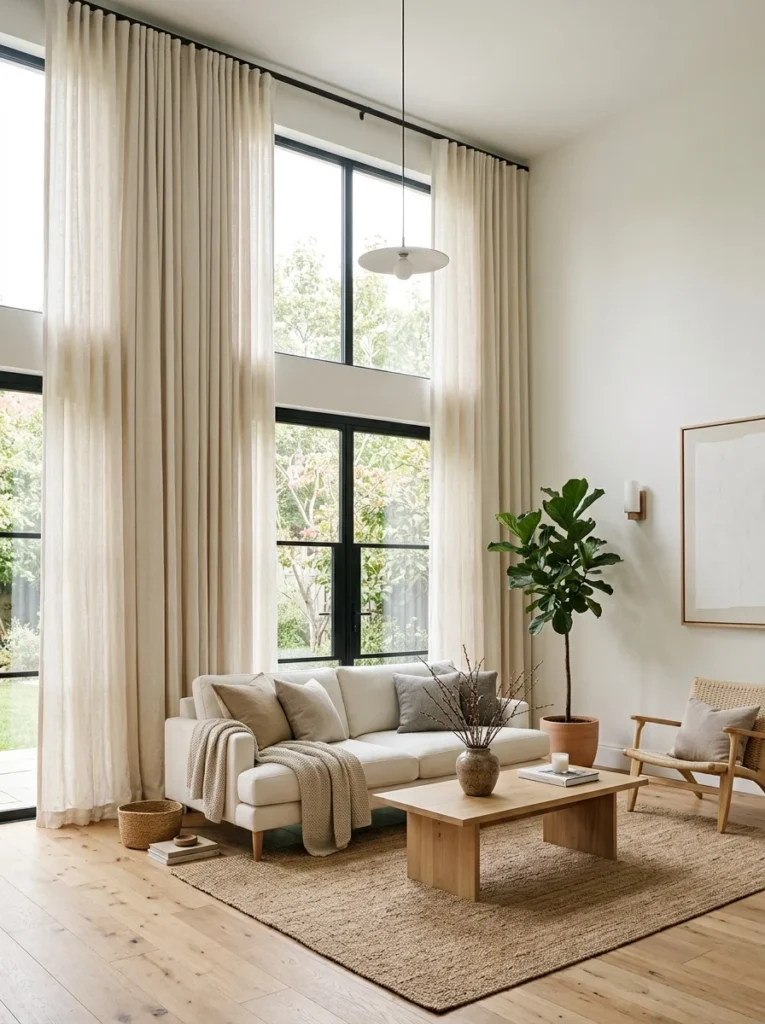
This was the single biggest lesson I learned during my own curtain project, and it’s a mistake I see repeated constantly in otherwise well-decorated rooms. Mounting the curtain rod just a few inches above the actual window frame, rather than closer to the ceiling, visually shortens the wall and makes ceilings look lower than they actually are. I moved my rod up to within about six inches of the ceiling, well above where the window frame itself ends, and the entire room instantly felt taller and more expansive, even though nothing about the actual architecture changed. The general guideline I’ve found most reliable is to hang the rod roughly four to six inches above the window frame, or as close to the ceiling as your specific wall allows, since more clearance generally reads as more intentional and dramatic rather than accidental. This single adjustment costs nothing beyond where you choose to place the mounting brackets, making it one of the highest-impact, lowest-cost changes on this entire list.
2. Extend the Rod Beyond the Window Frame
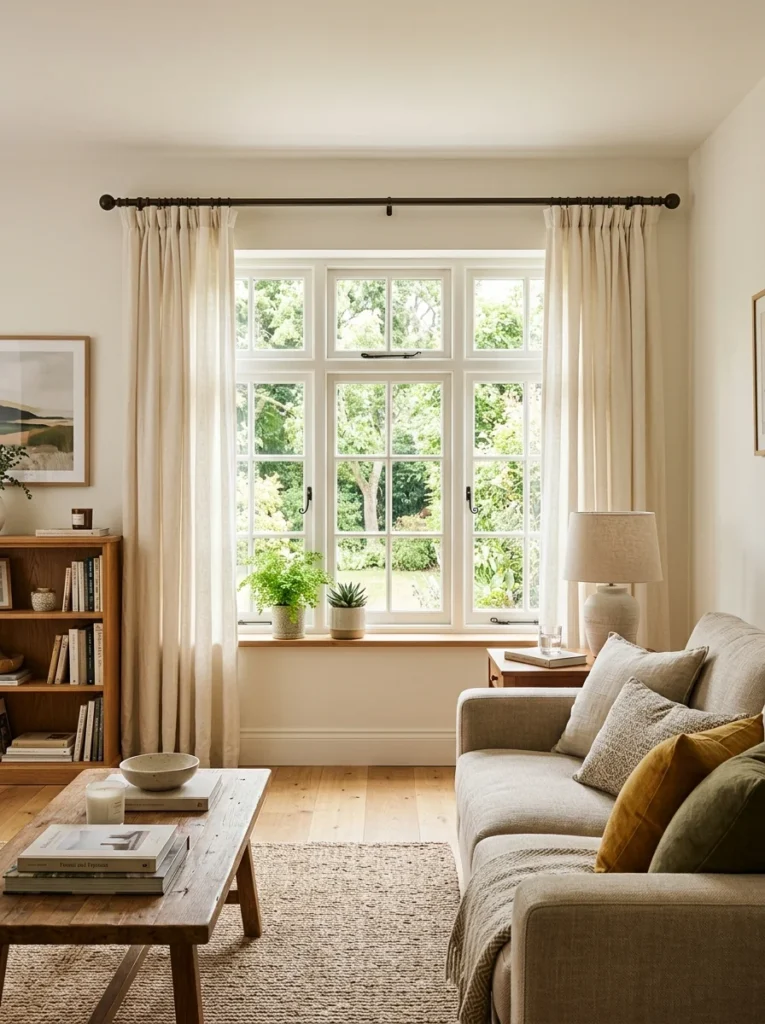
Alongside hanging curtains higher, extending the rod several inches, sometimes even a foot, beyond each side of the window frame makes the window itself appear wider and allows the curtains to fully clear the glass when opened, letting in maximum natural light during the day. My living room window isn’t particularly large, but extending the rod about eight inches past each side genuinely tricks the eye into perceiving a considerably wider window than actually exists. This also solves a practical problem I hadn’t considered before doing my own research, since curtains that only extend the exact width of the window frame end up blocking a meaningful portion of the glass even when fully pulled open, cutting down on natural light unnecessarily. I’d recommend measuring your specific wall space before deciding how far to extend the rod, since a smaller room might only comfortably accommodate a few extra inches on each side, while a larger living room can support a considerably wider extension without looking disproportionate to the rest of the wall.
3. Choose Floor-Length Panels
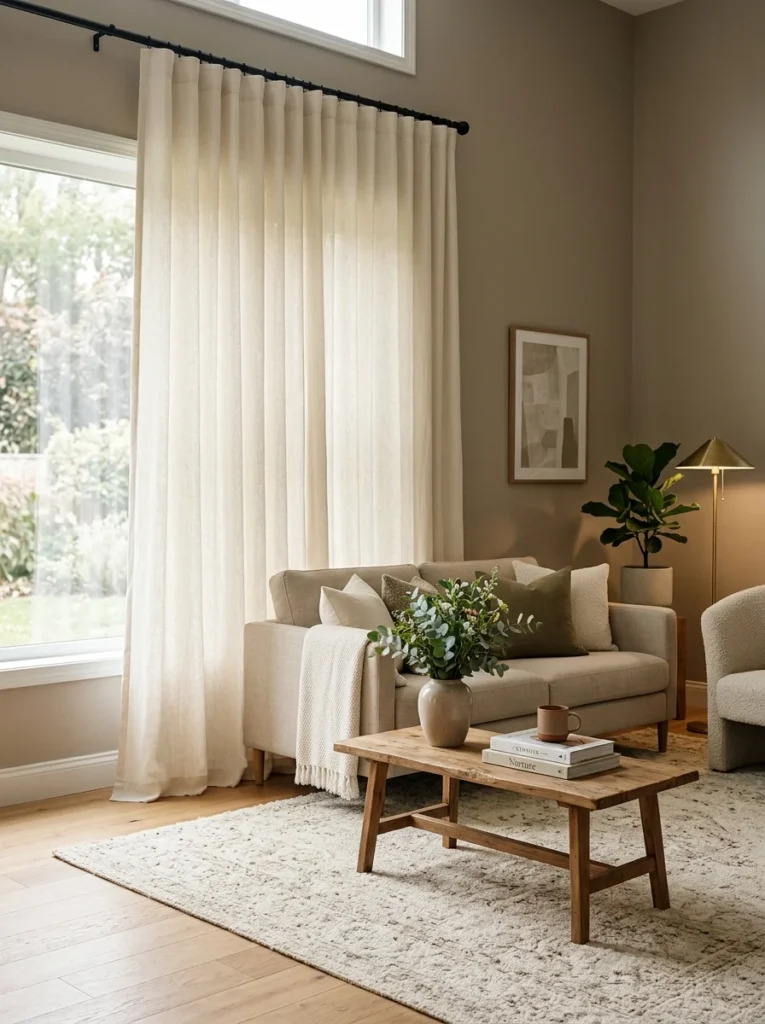
Curtains that stop a few inches above the floor, or worse, hover awkwardly at windowsill height, tend to make a room feel unfinished and slightly dated compared to panels that extend all the way to the floor. I replaced my original curtains, which stopped several inches short, with floor-length panels that just barely graze the floor, and the difference in how finished the room looked was immediate and considerable. There are a few options for exactly how the fabric meets the floor, a clean break just at floor level, a slight puddle where an extra inch or two pools softly on the ground, or a more dramatic puddle for a formal, luxurious look, and I’d recommend choosing based on both your personal style and how much foot traffic passes directly in front of the window. In a busy living room where people and pets regularly walk near the curtains, a clean floor-length break without excess puddling tends to hold up better over time and requires less frequent readjustment than a more dramatic puddled style.
4. Layer Sheers With Blackout Curtains
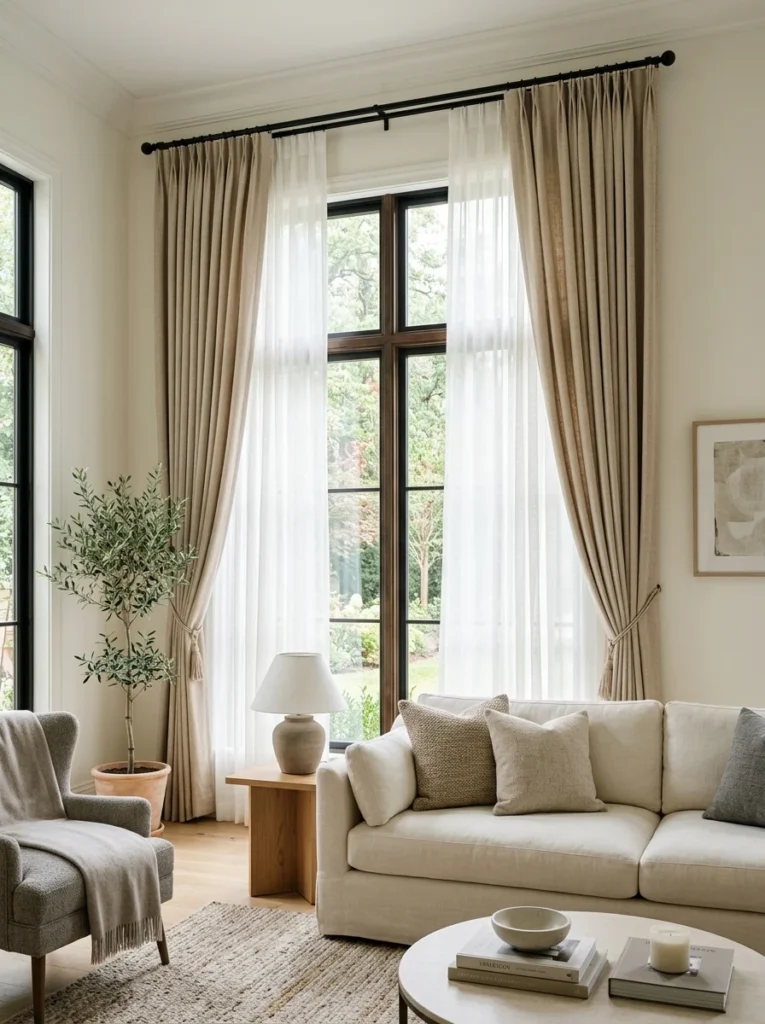
Combining a lightweight sheer panel with a heavier blackout curtain on the same window gives you the flexibility to filter soft, diffused light during the day while still having the option for complete darkness and privacy at night. I installed a double rod system in my living room specifically for this reason, sheers on the inner rod closest to the window and heavier linen blackout panels on the outer rod, and being able to adjust the room’s light and privacy independently throughout the day has been more useful than I initially expected. This setup works particularly well in living rooms that double as a space for watching movies or television, since you can close just the blackout layer during the day for glare reduction while still allowing some natural light through the sheer panel underneath. The main consideration is wall and window space, since a double rod system does require slightly more depth than a single rod, so I’d measure carefully if your window is positioned close to an adjacent wall or piece of furniture that might interfere with the additional rod’s projection.
5. Choose Linen for a Relaxed, Textural Look
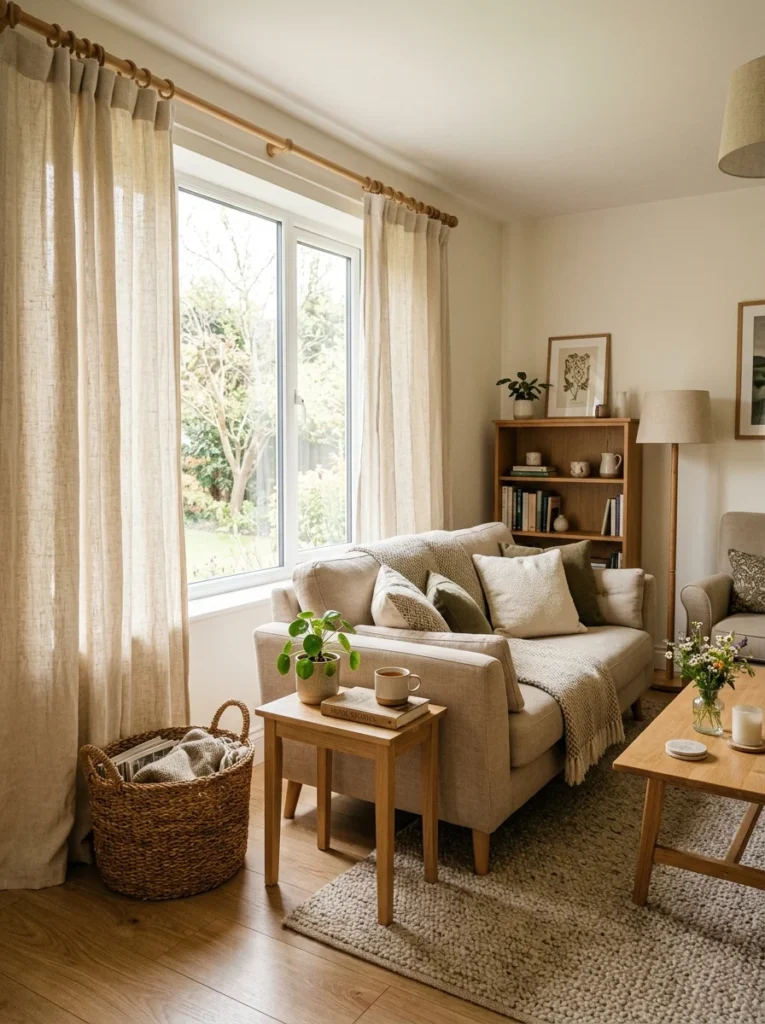
Linen has become my go-to fabric recommendation for almost any living room curtain project, since its natural texture and slightly imperfect drape add a relaxed, lived-in quality that more formal fabrics like silk or heavy velvet simply don’t achieve in the same way. My own living room curtains are a mid-weight linen blend in a warm cream tone, and the way the fabric catches natural light throughout the day, with subtle texture visible even from across the room, has become one of my favorite small details in the entire space. Linen does wrinkle more easily than some synthetic blends, which is part of its relaxed character but worth knowing before you buy if you strongly prefer a crisp, perfectly smooth appearance at all times. I’d recommend a linen blend with at least some polyester or cotton mixed in if you want a bit more wrinkle resistance while still keeping much of linen’s characteristic texture, rather than a completely pure linen that will show every fold and crease after being tied back or bunched during cleaning.
6. Go Bold With Pattern
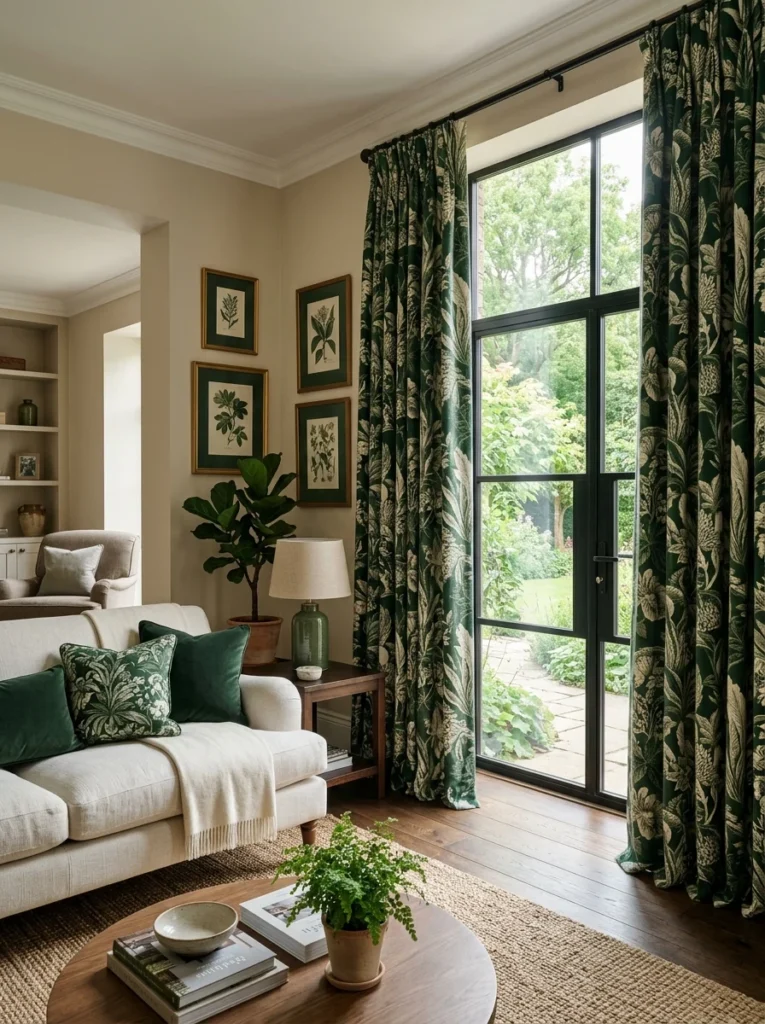
While solid, neutral curtains are the safer, more common choice, a bold patterned curtain can become the defining visual feature of an entire living room, especially in a space where the surrounding furniture and walls lean fairly neutral and could use a strong focal point. A friend used a large-scale botanical print in deep green and cream throughout her living room windows, and the pattern genuinely anchors the whole room, pulling together the green accent pillows and framed prints scattered elsewhere in the space. If you’re nervous about committing to a bold pattern across your entire window, starting with just one accent panel paired with a solid neutral partner panel is a lower-commitment way to introduce pattern without fully covering the window in it. I’d recommend bringing a fabric swatch home and observing it against your existing furniture and wall color in different lighting conditions before committing to yardage for full curtain panels, since patterns that look appealing in a small swatch can sometimes feel overwhelming once scaled up to cover an entire window.
7. Use Curtains to Define an Open-Concept Space
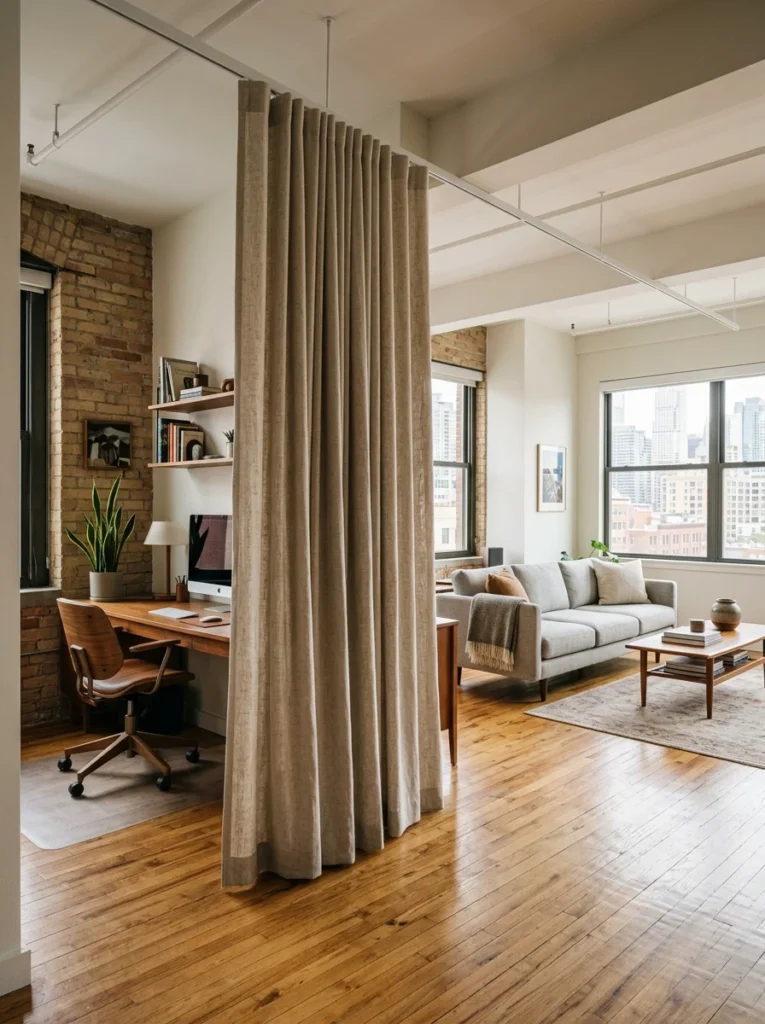
In open-concept living areas without walls to naturally divide different zones, a strategically placed curtain track can create a soft, flexible boundary between a living room and an adjacent dining or entry area without the permanence of an actual wall or partition. I’ve seen this done particularly well in a converted loft space, where a heavy curtain on a ceiling-mounted track could be pulled closed to visually separate a home office nook from the main living area when needed, then pushed completely open the rest of the time to maintain the open floor plan. This is a more involved installation than a standard window curtain, typically requiring a ceiling-mounted track system rather than a simple wall-mounted rod, but the resulting flexibility genuinely changes how a large open space can function throughout different times of day. If you’re dealing with an oddly shaped or overly large open living area, this approach offers a way to create more intimate, defined zones without committing to permanent construction or losing the overall open feeling of the space when the curtain is left open.
8. Add Trim or Tape Detail
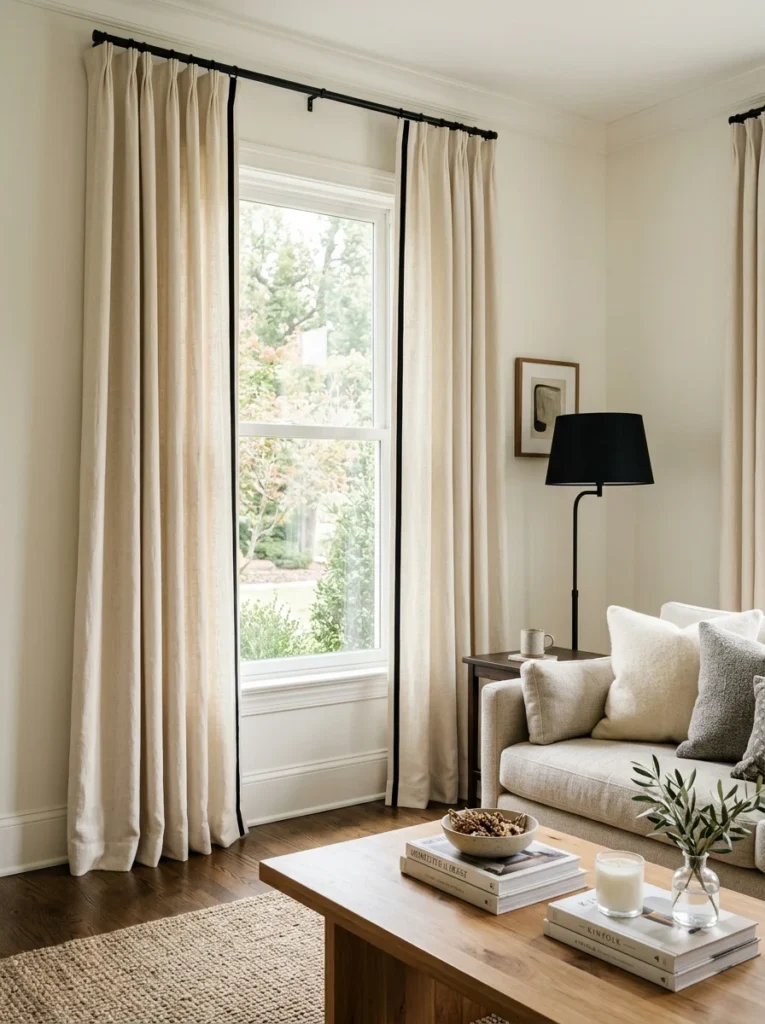
A relatively simple but genuinely effective way to elevate plain curtain panels involves adding decorative trim or tape along the leading edge, essentially a contrasting band of fabric or braided trim sewn or adhered along the inner edge of each panel where they meet in the middle. I added a simple black trim along the edges of my cream linen curtains, and that small line of contrast gives the panels a considerably more custom, tailored appearance compared to how they looked straight off the shelf. This is a project that can be done at home with fabric tape and a needle and thread, or a no-sew fabric adhesive, making it accessible even without any real sewing experience, or it can be done by a professional if you want something more permanently and precisely finished. Choosing a trim color that echoes another element in the room, in my case matching the black metal curtain rod and other hardware, ties the detail into the room’s broader color story rather than feeling like a disconnected addition. This is one of the more budget-friendly ways to make basic, inexpensive curtain panels look considerably more expensive and intentional than their actual price tag suggests.
9. Choose Velvet for Drama and Warmth
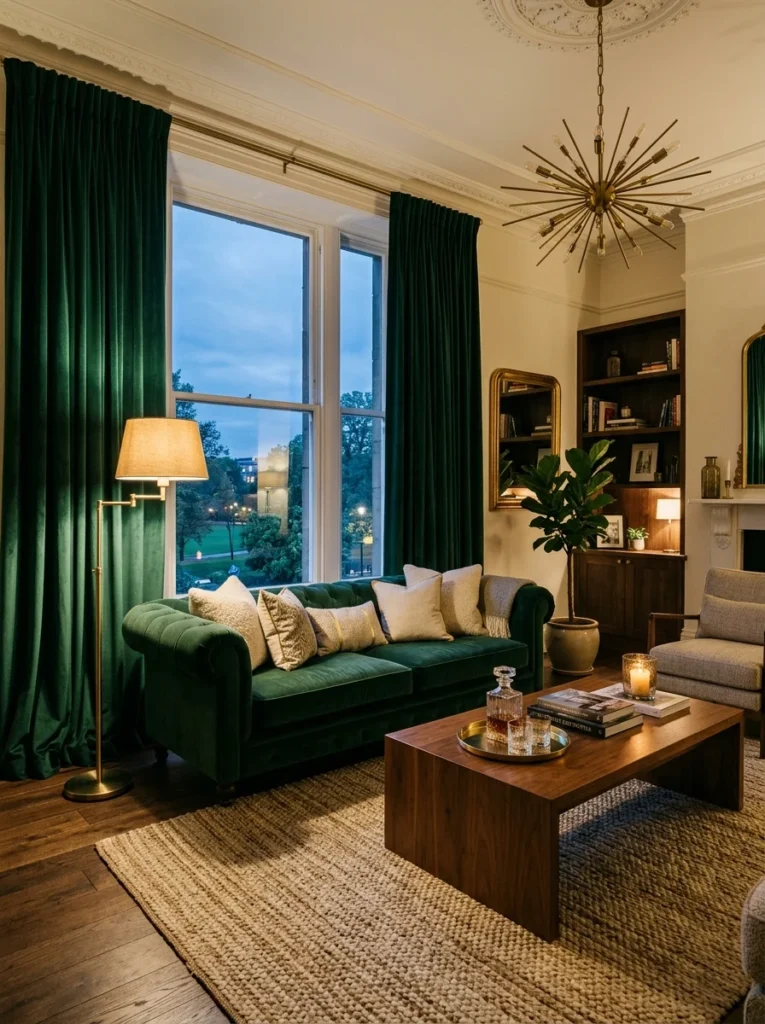
For living rooms wanting a more formal, dramatic feeling, velvet curtains add a rich depth of color and a soft, light-absorbing texture that’s difficult to replicate with any other common curtain fabric. A friend with a deep green velvet sofa chose matching velvet curtains in the same tone, and the effect throughout her entire living room feels genuinely luxurious, almost like stepping into a boutique hotel lobby rather than a typical residential space. Velvet also provides excellent light-blocking and insulating properties, which matters practically in addition to the visual impact, particularly in colder climates where heavier curtain fabric can meaningfully reduce drafts near windows during winter months. The main consideration with velvet is weight, both literal and visual, since it requires a sturdy curtain rod rated for heavier fabric, and the overall look reads as considerably more formal than lighter linen or cotton options, which may or may not suit your living room’s existing style depending on whether you’re going for relaxed and casual or rich and dramatic.
10. Try Grommet-Top Curtains for a Modern Look
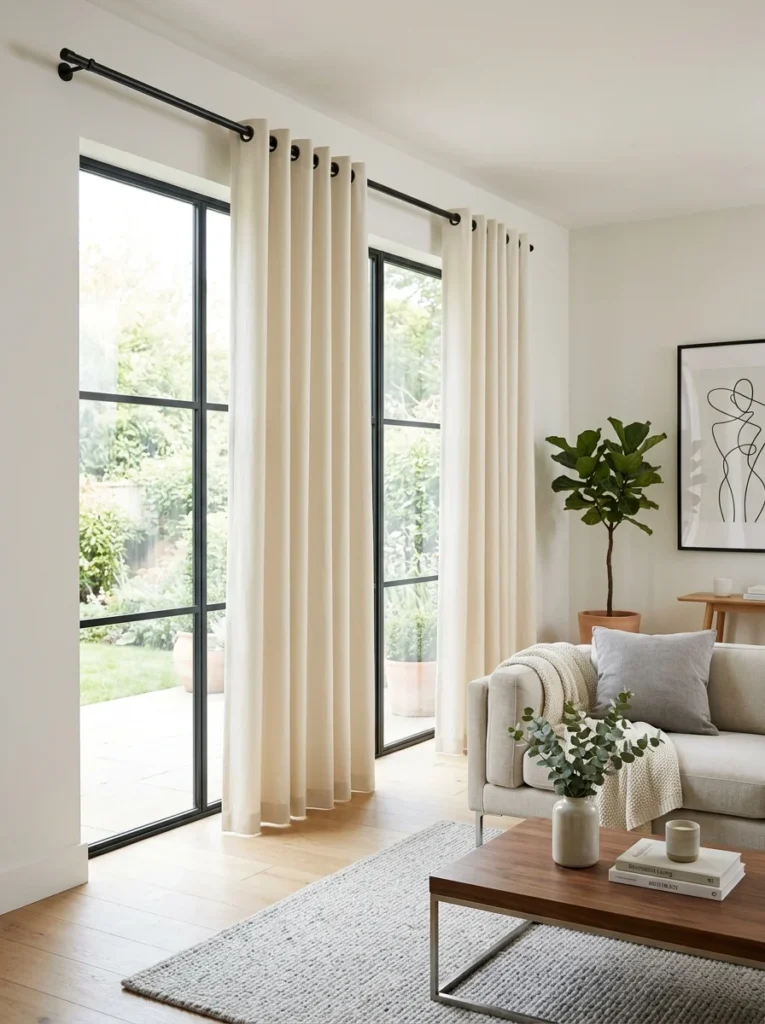
The way curtains attach to the rod at the top significantly affects the overall style of the finished window, and grommet-top curtains, with metal rings sewn directly into the fabric that the rod threads through, create clean, structured folds that read as distinctly modern compared to more traditional pleated or rod-pocket styles. I switched to grommet-top panels in my own living room specifically for this cleaner, more architectural look, and the consistent, evenly spaced folds that result genuinely look more polished than the somewhat random folding pattern I got with my previous rod-pocket curtains. This style also makes opening and closing the curtains considerably smoother, since the metal grommets glide along the rod with far less friction than fabric bunched directly around it. I’d recommend choosing a grommet finish that matches your rod’s hardware finish, whether that’s matte black, brushed nickel, or brass, since visible mismatched metal at the top of the curtain panel is a detail that’s easy to overlook when shopping but noticeable once the curtains are actually hanging in your space.
11. Consider Café Curtains for Partial Coverage
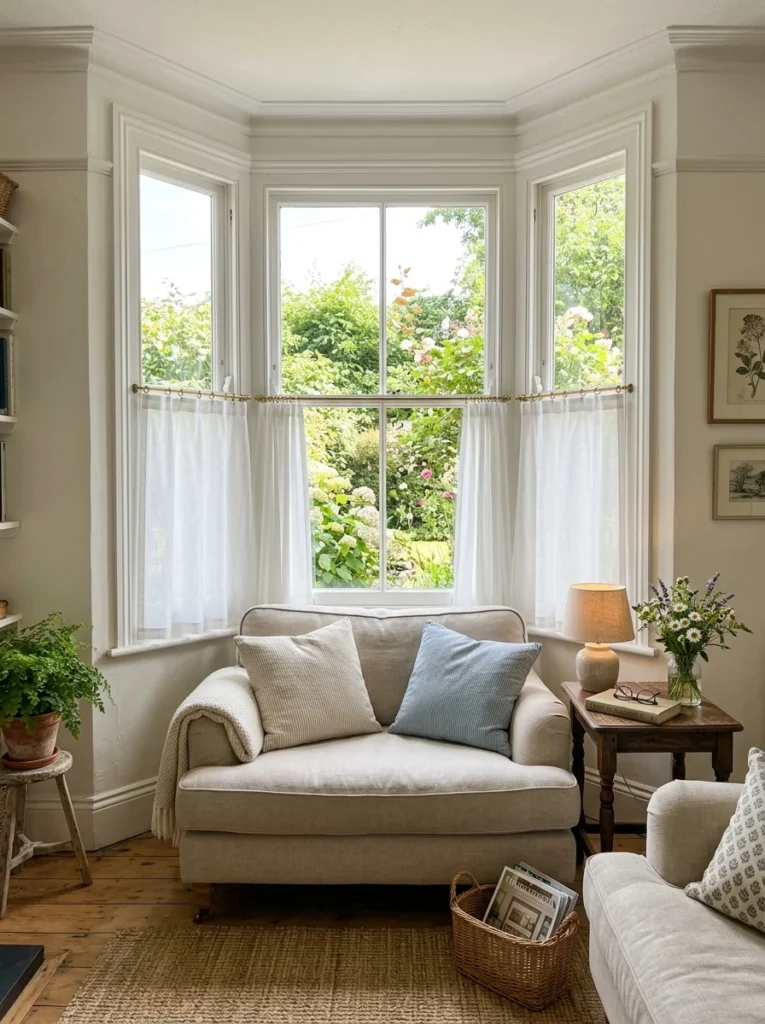
For living room windows where you want some privacy or light diffusion without covering the entire window, café-style curtains, which cover only the lower portion of the window on a rod mounted partway up the frame, offer a charming, slightly cottage-inspired alternative to full-length panels. This style works particularly well for windows that look out onto a private backyard or don’t face direct street-level visibility, where full privacy coverage isn’t as critical as it would be for a street-facing window. A friend used simple white cotton café curtains on her living room’s lower bay window section, leaving the upper portion of the window completely uncovered to maximize the amount of natural light entering that specific area of the room. This is a considerably less common choice for a primary living room window compared to bedrooms or kitchens, so it can add a distinctive, slightly unexpected character to the space if you’re looking for something different from the standard full-length panel approach that dominates most living rooms.
12. Use Tiebacks for a Tailored Look
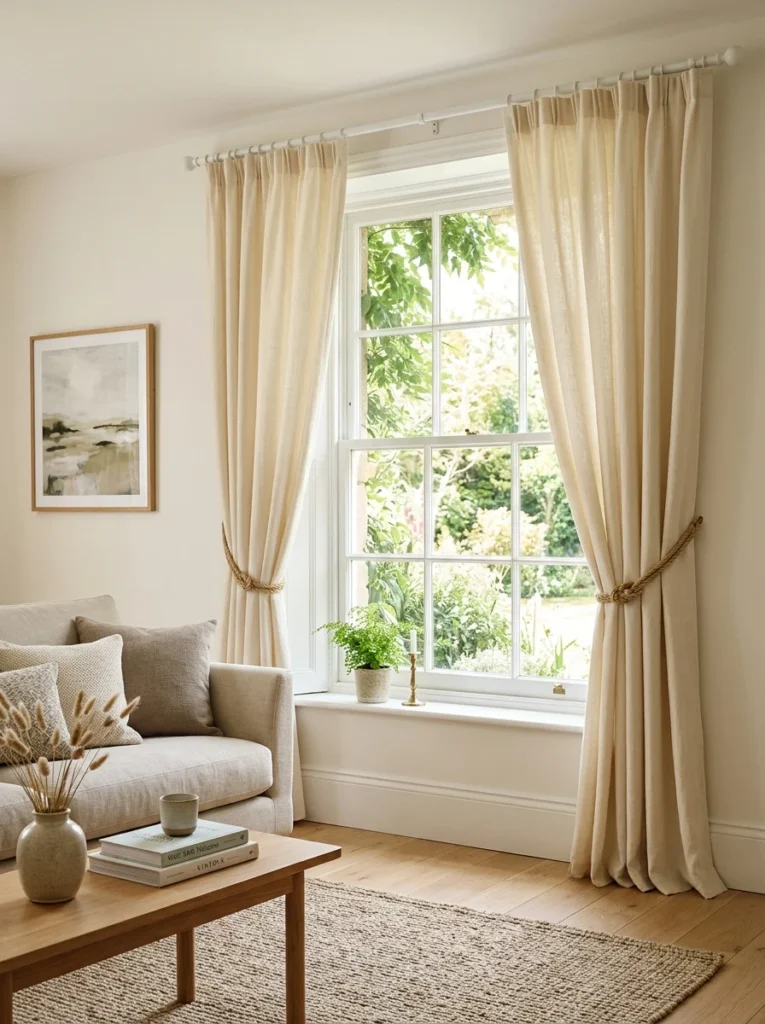
Even simple curtain panels look considerably more polished when pulled back and secured with a tieback rather than left hanging straight and flat against the window at all times. I use a simple woven rope tieback on my living room curtains during the day, which not only looks more intentional but also allows maximum natural light into the room, then release the panels to hang freely in the evening for a softer, more relaxed look. Tiebacks come in an enormous range of styles, from simple fabric ties that match the curtain material itself to more decorative metal hooks or tasseled rope versions that add their own distinct visual detail to the window. I’d recommend positioning the tieback at roughly two-thirds of the way down the curtain’s total length, rather than at the exact center, since that slightly lower placement tends to create a more elegant, natural-looking drape compared to a perfectly centered tie point. This is one of the lowest-cost additions on this entire list, and it genuinely changes how considered and finished even basic, inexpensive curtain panels appear.
13. Match Curtains to Your Wall Color for a Seamless Look
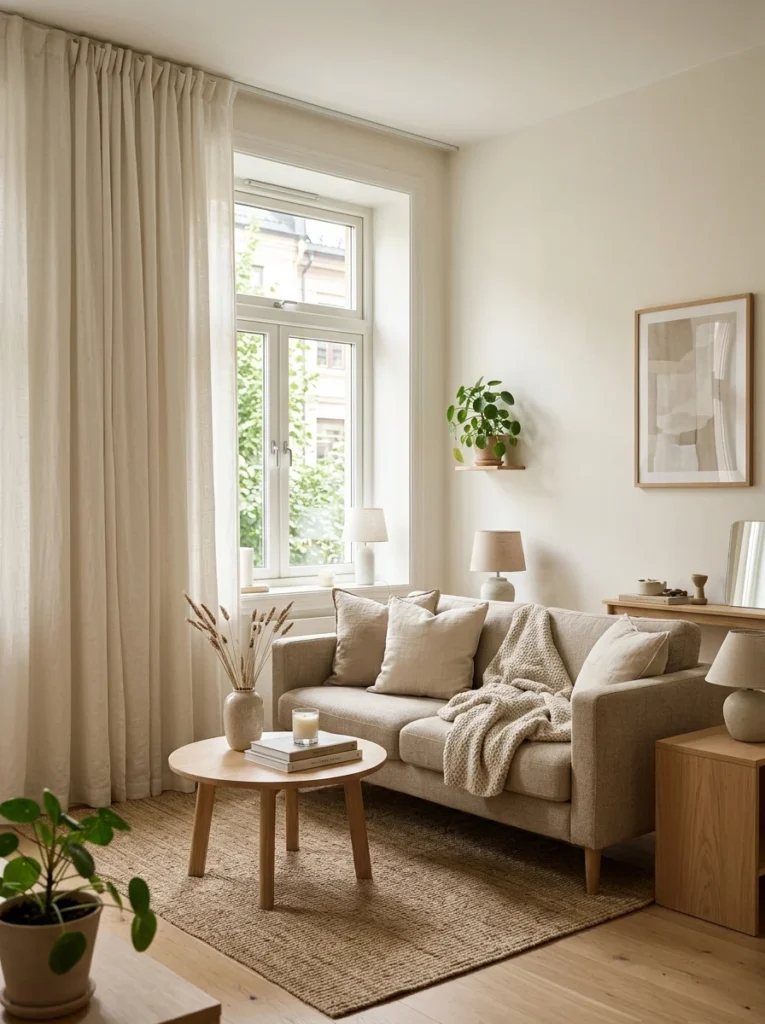
While bold contrast is one valid design direction, choosing curtains in a shade very close to your wall color creates an entirely different effect, making the window feel like a seamless extension of the wall itself rather than a distinctly separate element competing for attention. I’ve seen this done particularly well in a small living room where the owner wanted to maximize the sense of open space, choosing curtains in almost the exact same warm white as her walls, and the effect genuinely makes the room feel larger and less visually broken up compared to a starkly contrasting curtain color. This approach works best when you still choose a fabric with some texture or subtle pattern, since color alone matching the wall can occasionally read as slightly flat or accidental if there’s no other visual interest to the fabric itself. This is a particularly good strategy for smaller living rooms or rooms with several windows, where multiple boldly contrasting curtain panels might create a busier, more visually fragmented feeling than a room actually benefits from.
14. Choose Curtains That Complement Your Rug
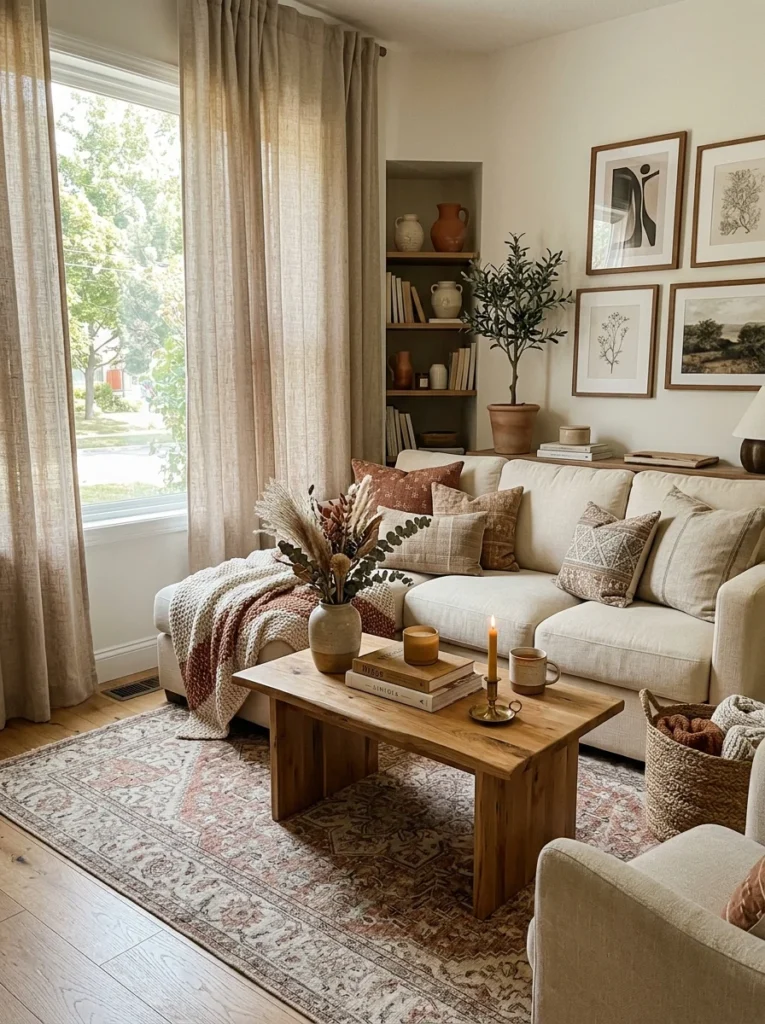
Rather than treating curtains and area rugs as entirely separate decisions, pulling a color or pattern element from your rug into your curtain choice, or vice versa, creates a cohesive thread that ties the whole room together from floor to ceiling. My living room rug has a subtle rust-colored geometric pattern, and I chose curtains with the faintest rust undertone in an otherwise neutral linen, a connection subtle enough that most guests wouldn’t consciously identify it, but it contributes to an overall sense that the room was thoughtfully coordinated rather than assembled piece by piece without any unifying vision. This doesn’t require an exact color match, which can actually look overly matchy and less sophisticated, but rather a general tonal relationship that ties the two elements together. I’d recommend laying a swatch of your prospective curtain fabric directly on top of your rug before making a final decision, since colors that look coordinated in isolation sometimes clash unexpectedly once placed side by side in the actual room.
15. Add Curtains Even to Windows You Don’t Plan to Close
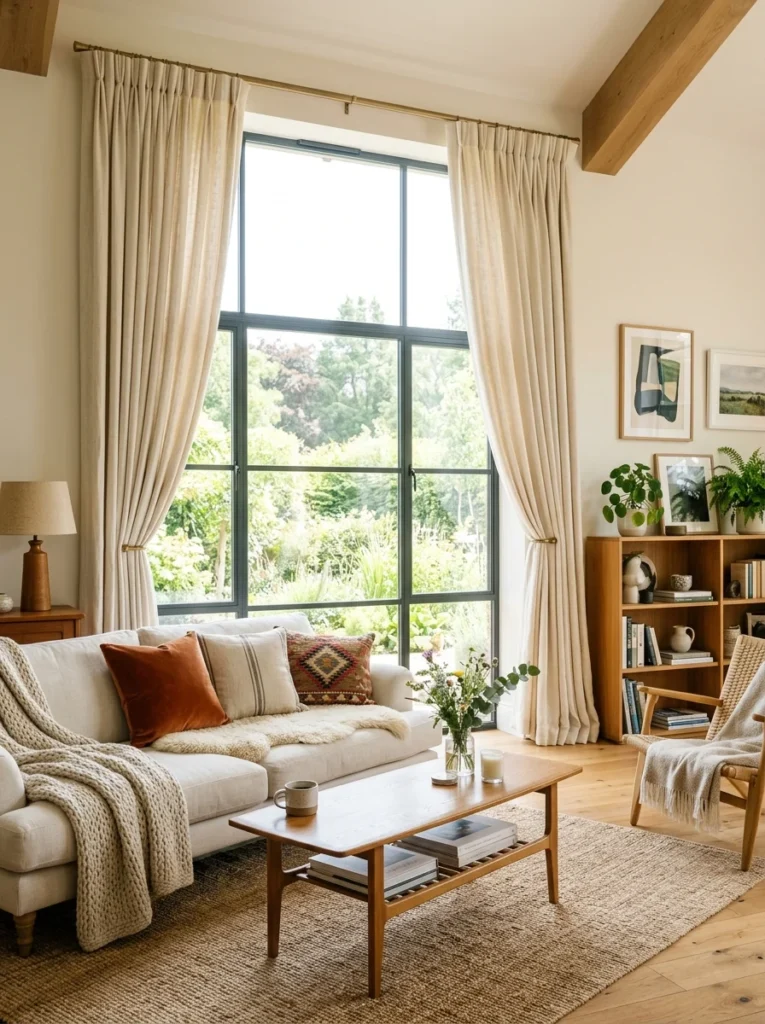
Some of the most visually striking curtain installations I’ve seen are purely decorative, curtains hung on windows that rarely if ever actually get closed, purely for the softening, finished effect the fabric brings to the room regardless of function. My own living room curtains genuinely stay open more often than not, since I enjoy the natural light too much to close them regularly, but I’d never remove them entirely, since the fabric itself adds warmth, texture, and a sense of completion to the window that plain glass and a bare frame simply can’t replicate on their own. This mindset shift, thinking of curtains as a permanent design element rather than purely a functional light and privacy control, opens up more creative fabric and style choices, since you’re less constrained by practical concerns like how easily a particular fabric operates when opened and closed daily. If privacy and light control genuinely aren’t concerns for a specific window, this frees you to choose fabric based purely on how it looks and feels in the space, prioritizing decorative impact over daily function.
16. Use a Decorative Curtain Rod as a Focal Point
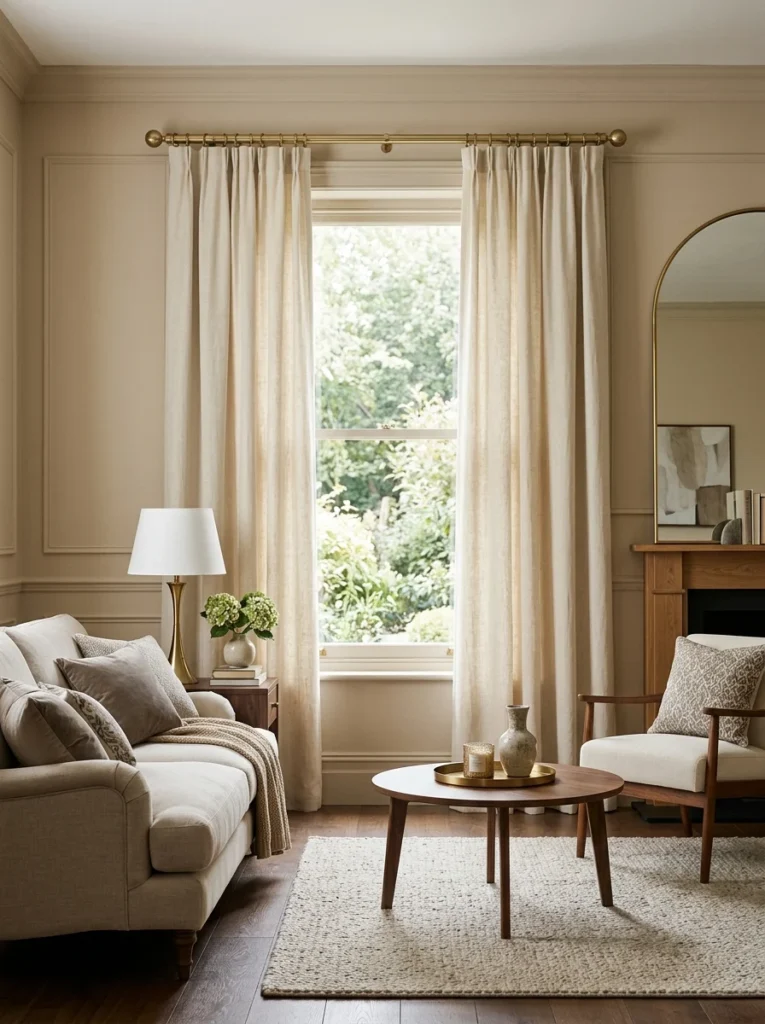
The curtain rod itself is often treated as a purely functional afterthought, but choosing one with genuine decorative character, an interesting finial shape, an unusual finish, or a distinctive silhouette, can turn it into a small but noticeable design detail in its own right. I chose a rod with simple sphere-shaped brass finials for my living room, a small detail that catches the light and adds a touch of polish even before you consider the curtain fabric hanging from it. This matters more than it might initially seem, since the rod and its finials are visible year-round, in every lighting condition, regardless of whether the curtains themselves are open or closed at any given moment. I’d recommend choosing a rod finish that coordinates with your other metal hardware throughout the living room, lamp bases, picture frames, and door hardware, following the same principle of metal consistency that applies broadly across cohesive interior design. Even a relatively inexpensive curtain fabric can look considerably more elevated when paired with a genuinely well-chosen, decorative rod rather than the most basic, purely functional option available.
17. Consider Motorized Curtains for Convenience and Style
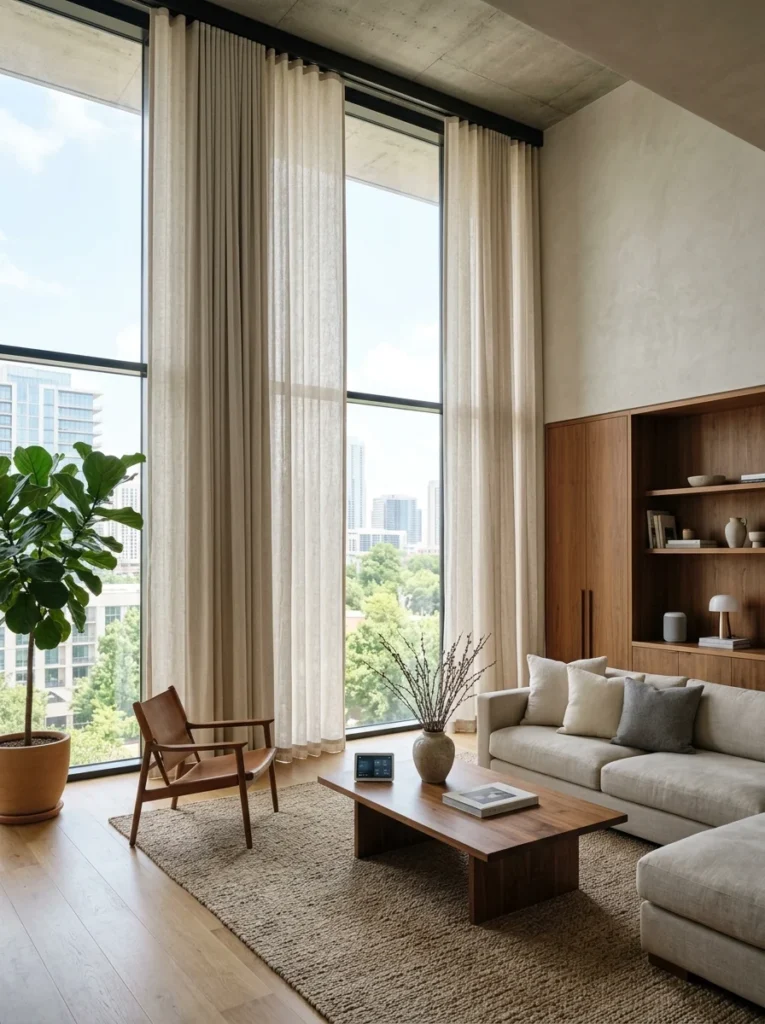
For living rooms with particularly tall or hard-to-reach windows, or simply for the added convenience, motorized curtain systems that open and close via remote control or a smart home app have become considerably more accessible and affordable in recent years compared to when this technology first emerged. A friend installed a motorized system on her living room’s floor-to-ceiling windows specifically because manually operating curtains that tall and heavy had become a genuine daily annoyance, and being able to open and close them with a simple voice command or scheduled automation has meaningfully improved her daily experience of the room. Beyond pure convenience, motorized systems can be programmed to open automatically in the morning and close in the evening, which adds a subtle, functional layer of home automation that also has practical benefits for both energy efficiency and basic home security when you’re away. This is a more significant investment than most other ideas on this list, both in terms of the hardware itself and installation, but for the right window and lifestyle, particularly larger or harder-to-reach installations, the convenience genuinely justifies the added cost for many homeowners.
18. Refresh Old Curtains With New Hardware Alone
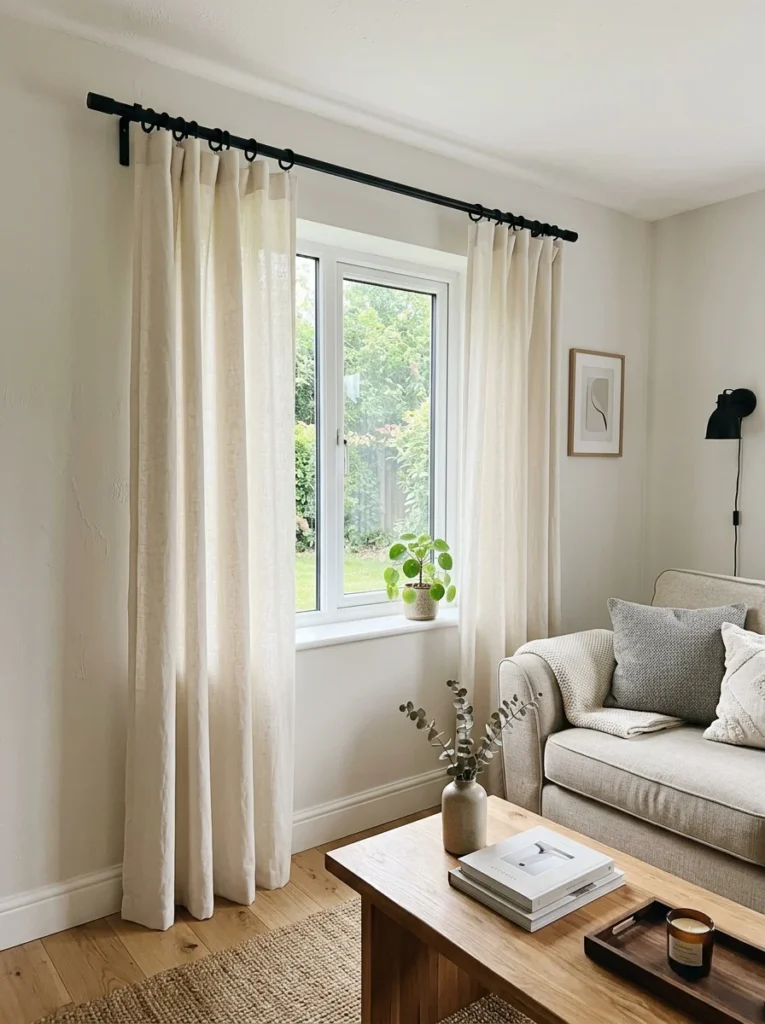
If your existing curtain panels are still in good condition but the overall look feels dated, sometimes the most cost-effective refresh involves simply updating the rod, rings, and tiebacks rather than replacing the fabric panels entirely. I did exactly this in a previous apartment, keeping perfectly serviceable cream curtain panels but swapping out an outdated brass rod and rings for a sleeker matte black version, and the entire window’s appearance felt considerably more current despite the actual curtain fabric remaining completely unchanged. This is one of the most budget-friendly refreshes on this entire list, since curtain rods and hardware typically cost a fraction of what new curtain panels themselves would run, particularly for larger windows requiring significant fabric yardage. I’d recommend this specifically as a starting point if you’re on a tighter budget but still want to meaningfully update your living room’s window treatments, since it’s entirely possible to achieve a noticeably different overall look through hardware changes alone before committing to the larger expense of replacing the curtain fabric itself.
Final Thoughts
Looking back at those bare white blinds that sat in my living room for two full years, it’s a little embarrassing how long I let something so easily fixable hold the whole room back from feeling finished. Between all 18 of these ideas, the underlying theme is really that curtains do far more work in a living room than most people give them credit for, affecting everything from how tall the ceilings appear to how warm and textured the whole space feels, regardless of how much time you actually spend opening and closing them.
If your own living room windows are still bare or working with something purely functional and forgettable, I’d suggest starting with the height and width adjustments in the first two sections before anything else, since those cost nothing beyond bracket placement and make the single biggest visual difference of everything on this list. From there, layer in fabric choice, hardware, and small details like tiebacks and trim gradually, the same way my own living room slowly came together, until the windows stopped being an afterthought and became one of the room’s actual design features.