
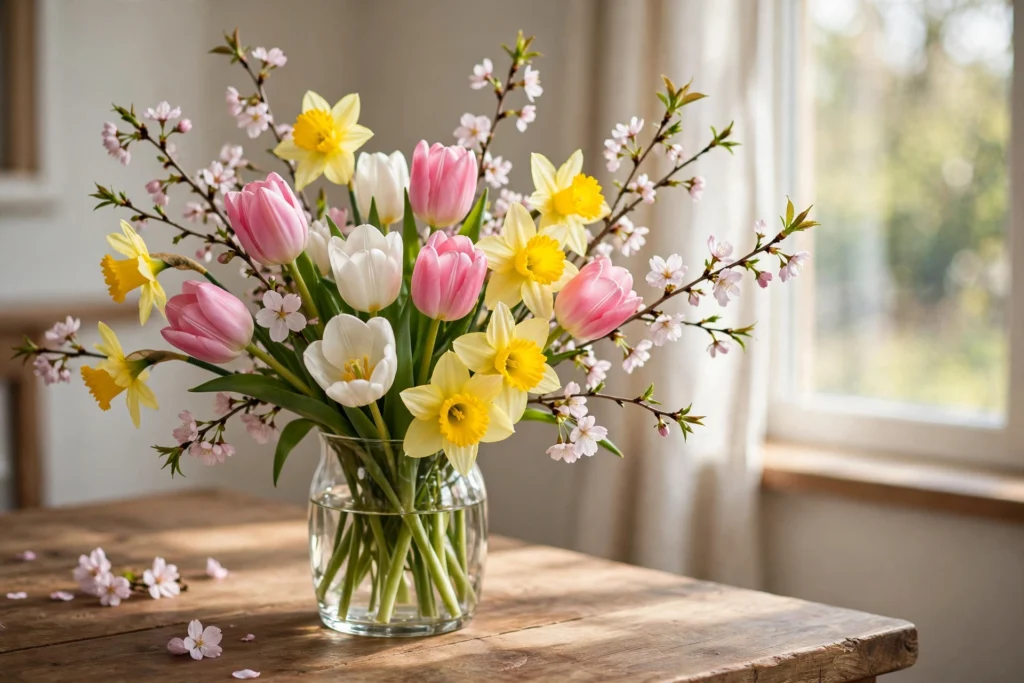
There is nothing quite like bringing the first flowers of the season indoors. After months of bare branches and grey skies, a vase of fresh spring blooms on the kitchen table can change the whole feel of a room. These spring flower arrangement ideas work for real homes — no florist training needed, no fancy budget required, just fresh stems, a vase you already own, and a few minutes of your time.
What I love most about spring flowers is how forgiving they are. Tulips keep growing in the vase and lean toward the light, daffodils open wider every day, and even a handful of grocery-store stems can look like a proper arrangement with the right container. Below you will find 20 ideas, from simple single-variety bouquets to statement branches, so you can pick the one that fits your space, your budget, and the flowers you can actually find this week.
1. Classic Tulip Bouquet in a Glass Cylinder
Tulips are the easiest spring flower to style, and a tall glass cylinder lets their long stems do the talking. Pick one color for a clean look, or mix two shades like soft pink and white. Trim the stems at an angle, strip off any leaves that would sit below the waterline, and drop them in so the heads sit just above the rim.
I tried this with a bunch of red tulips last March and made the rookie mistake of cramming in too many stems. They opened up, crowded each other, and half of them bent sideways overnight. Fewer stems, more breathing room — that is the whole secret. Change the water every two days and re-trim the ends, and your bouquet will easily last a week.
Try this: Use 10-12 stems in a cylinder vase and turn the vase a quarter-turn each morning so the tulips grow evenly.

2. Cheerful Daffodil and Narcissus Cluster
Daffodils are pure sunshine in flower form. Their yellow trumpets and white petals instantly lift a dull corner, and they are one of the cheapest spring flowers you can buy. Group them tightly in a low, wide vase or a ceramic bowl so the blooms form a full, sunny mound.
One thing I learned the hard way: daffodil sap can shorten the life of other flowers, so let freshly cut daffodils sit in their own water for a few hours before mixing them with anything else. On their own, though, they are no trouble at all. A bunch of twenty stems costs very little and fills a whole room with color.
Try this: Pair yellow daffodils with white narcissi in a cream ceramic bowl for a two-tone spring cluster.

3. Cherry Blossom Branches in a Tall Vase
Nothing says spring quite like flowering branches. A few cherry blossom stems in a tall, narrow vase make a dramatic statement with almost no effort — the height draws the eye up and makes a room feel taller.
I tried this with branches from a garden center and nearly learned an expensive lesson when my cat brushed past the vase. Now I anchor the vase with a few pebbles at the bottom and keep it away from busy walkways. Change the water every few days, and mist the buds lightly — they will open slowly and last far longer than cut flowers.
Try this: Use three to five branches of different heights and let the tallest one arch slightly to one side for a natural shape.

4. Wildflower Mason Jar Collection
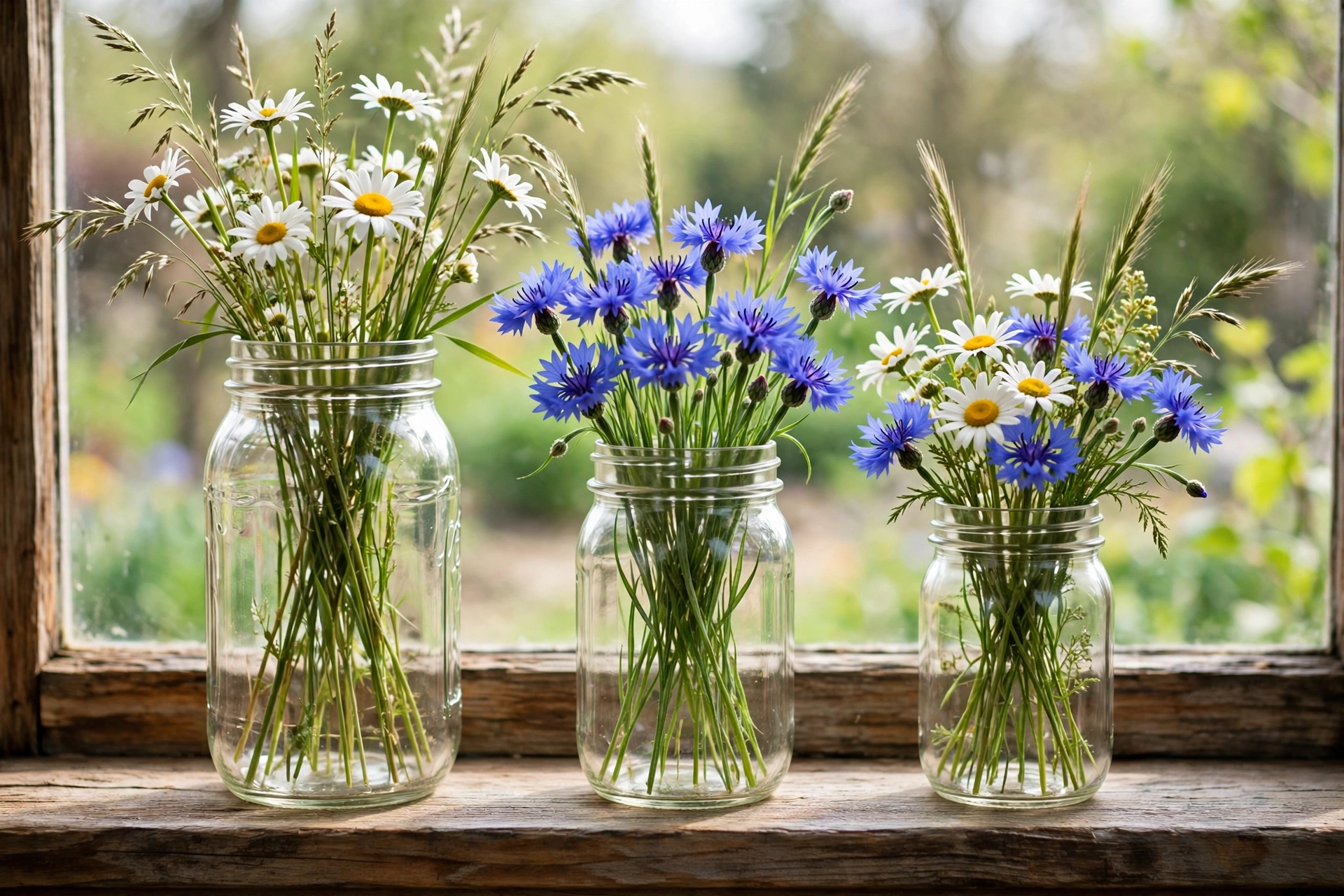
For a relaxed, cottage-style look, nothing beats wildflowers in mason jars. Gather a mix of whatever is blooming — daisies, buttercups, cornflowers, little sprigs of greenery — and divide them across three jars of different heights. Line them up along a windowsill, a mantel, or down the middle of a dining table as a casual runner.
I tried this for a weekend lunch and worried it would look too plain. It did not. Guests kept asking where the flowers came from, and the answer was just the garden and a roadside bunch. The key is variety: mix flower shapes and sizes, and add a few grass stems for movement. Tie a bit of twine around each jar neck if you want a finished touch.
Try this: Use one jar for tall stems, one for medium, and one for short blooms so the row reads like a little meadow.
5. Peony and Ranunculus Luxe Centerpiece
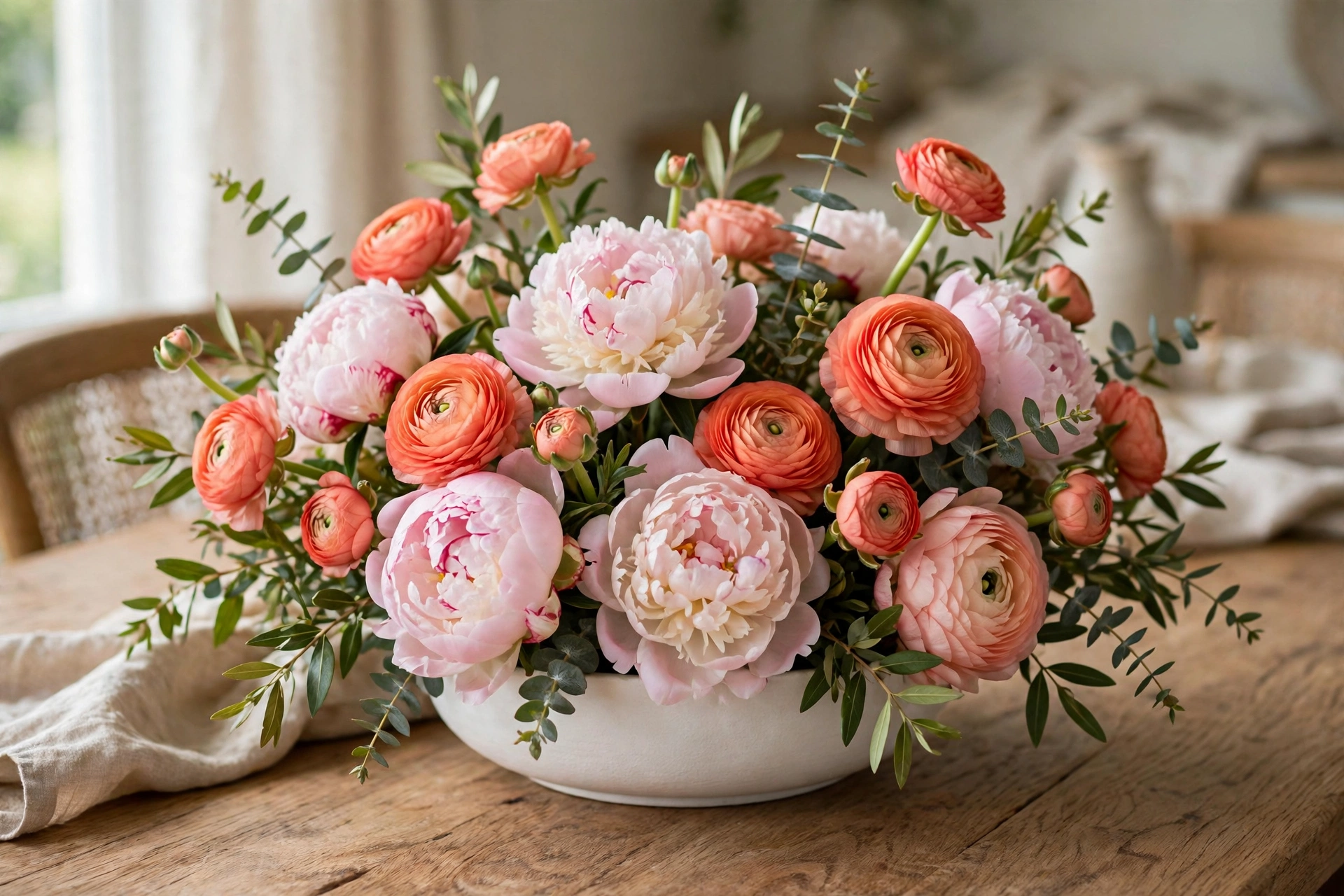
If you want one arrangement that stops people mid-sentence, peonies and ranunculus are the pair. Peonies bring big, soft, ruffled blooms; ranunculus add smaller, layered flowers in coral, blush, and cream. Keep the palette tight — all pastels, or all warm tones — and use a low, wide bowl so the blooms sit close together like a garden bed.
I tried this for a birthday dinner and spent more than I planned, so here is my honest advice: buy the peonies a few days early while they are still tight buds, and let them open at home. You get more days of bloom for the same money. Add ranunculus to fill the gaps — they are cheaper and last well.
Try this: Build the shape with greenery first, then place peonies as the stars and ranunculus in the gaps between them.
6. Fragrant Hyacinth Pots on the Windowsill
Hyacinths are the spring flower you smell before you see. A pot of pink or purple hyacinths on a kitchen windowsill perfumes the whole room, and the bulbs are easy to find potted up in spring. Keep them in their nursery pots slipped inside a pretty ceramic cover, or plant three bulbs in one wide pot for a fuller look.
I tried this in my kitchen and made the mistake of overwatering — soggy soil rotted one bulb before it even opened. Now I water only when the top of the soil feels dry, and I make sure the pot drains. Once the flowers fade, you can plant the bulbs outside and they will often come back next spring.
Try this: Group three hyacinth pots in one color on a sunny windowsill and let their scent greet you every morning.

7. Lilac Branch Statement Arrangement
Lilacs are short-lived but unforgettable. Their purple and white clusters smell like spring itself, and a big bunch in a simple vase needs nothing else. Cut long stems — lilacs look best when they are allowed to be tall and a little wild — and strip the lower leaves. Use a sturdy vase, since lilac stems are woody and heavy once they drink up water.
I tried this with lilacs from a neighbor’s bush and learned to split the woody stem ends with a knife before putting them in water. It sounds fussy, but it really does help them drink and last a couple of extra days. Lilacs only bloom for a short window, so when you see them, grab them — the season is gone before you know it.
Try this: Pair purple lilacs with a few white lilac stems in a clear glass vase for a two-tone statement.

8. Tulip and Eucalyptus Modern Mix
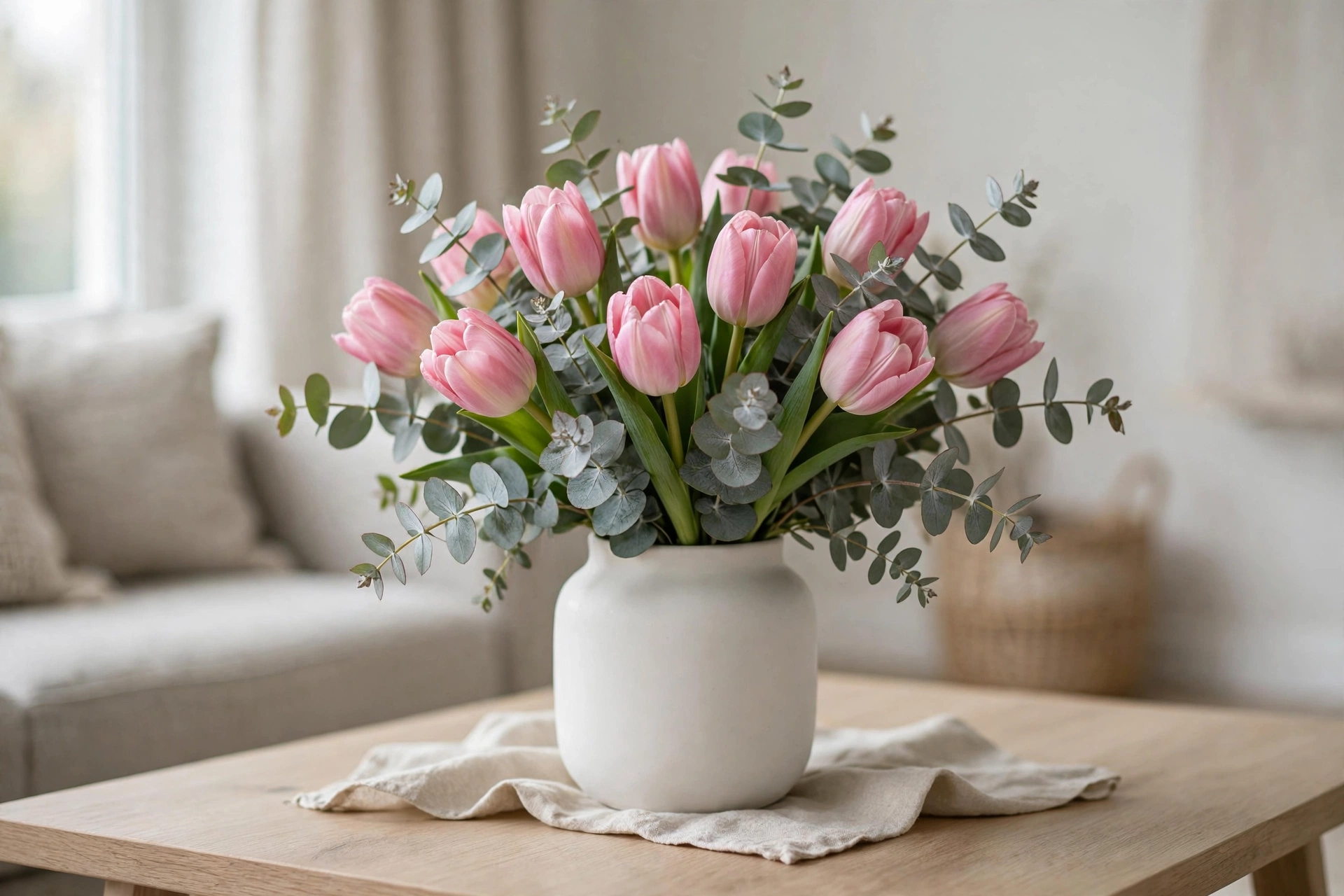
If classic tulip bouquets feel a bit too traditional for you, add eucalyptus. The silvery-green leaves cool down the bright tulip colors and give the bouquet a modern, airy shape. Use a simple white or concrete-look vase and keep the arrangement loose — a few tall eucalyptus stems rising above the tulips, a few tulips leaning out to the sides.
I tried this in a plain white vase and the first version looked flat because I kept everything the same height. The fix was simple: let the eucalyptus run taller and let two or three tulips sit lower. That height difference is what makes it look styled instead of just stuffed in a vase.
Try this: Use one bunch of tulips and three or four eucalyptus stems, and let the eucalyptus rise a few inches above the blooms.
9. Spring Bulb Garden in a Shallow Bowl
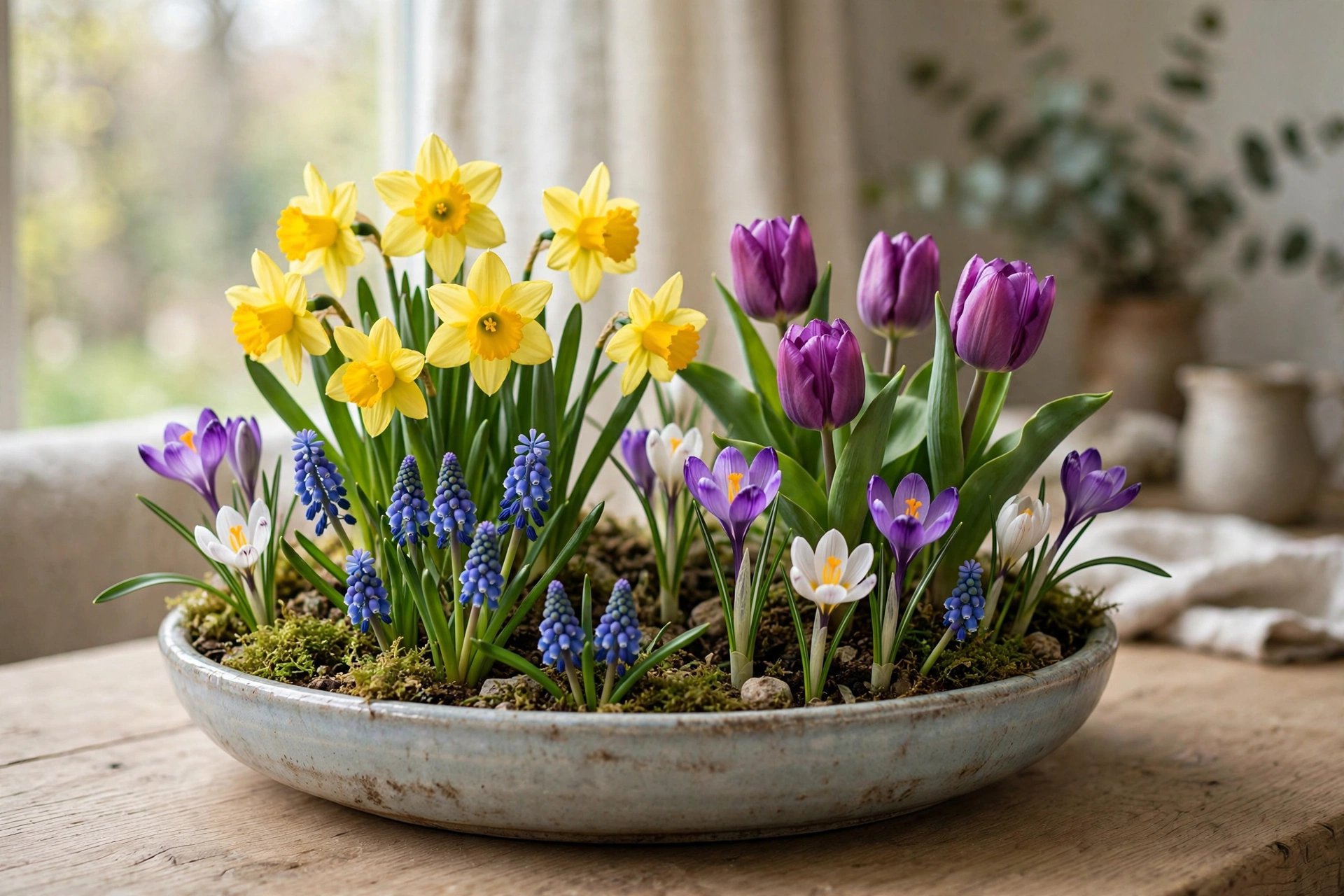
A bowl of forced bulbs — tulips, daffodils, crocuses, and grape hyacinths still in their soil — brings the garden indoors while the flowers are still growing. Plant them close together in a wide, shallow bowl with drainage, or buy a ready-planted bowl from a garden center. The mix of heights and colors looks like a tiny spring garden, and you can watch the buds open day by day.
I tried planting my own bowl one year and planted the bulbs too shallow, so the taller tulips flopped over as they grew. Now I plant them deeper and support tall stems with a few twigs pushed into the soil.
Try this: Layer crocuses at the front, grape hyacinths in the middle, and tulips at the back for a natural garden look.
10. Anemone and Sweet Pea Pastel Posy
Anemones have dark centers that make their pastel petals pop, and sweet peas add a soft, fluttery texture and a lovely scent. Together they make a small, pretty posy that is perfect for a bedside table or a bathroom shelf. Tie the stems with a ribbon and pop them in a small vase or even a drinking glass — this arrangement is about charm, not size.
I tried this with sweet peas from the garden and learned they drink a lot of water for such delicate flowers. Check the water daily and top it up, or they will wilt by the afternoon. Anemones last longer and keep their shape, so they carry the posy while the sweet peas do the scent work.
Try this: Keep the posy small — seven to nine stems — and tie it loosely with a silk ribbon for a soft, garden-gathered feel.

11. Forsythia Branch Burst
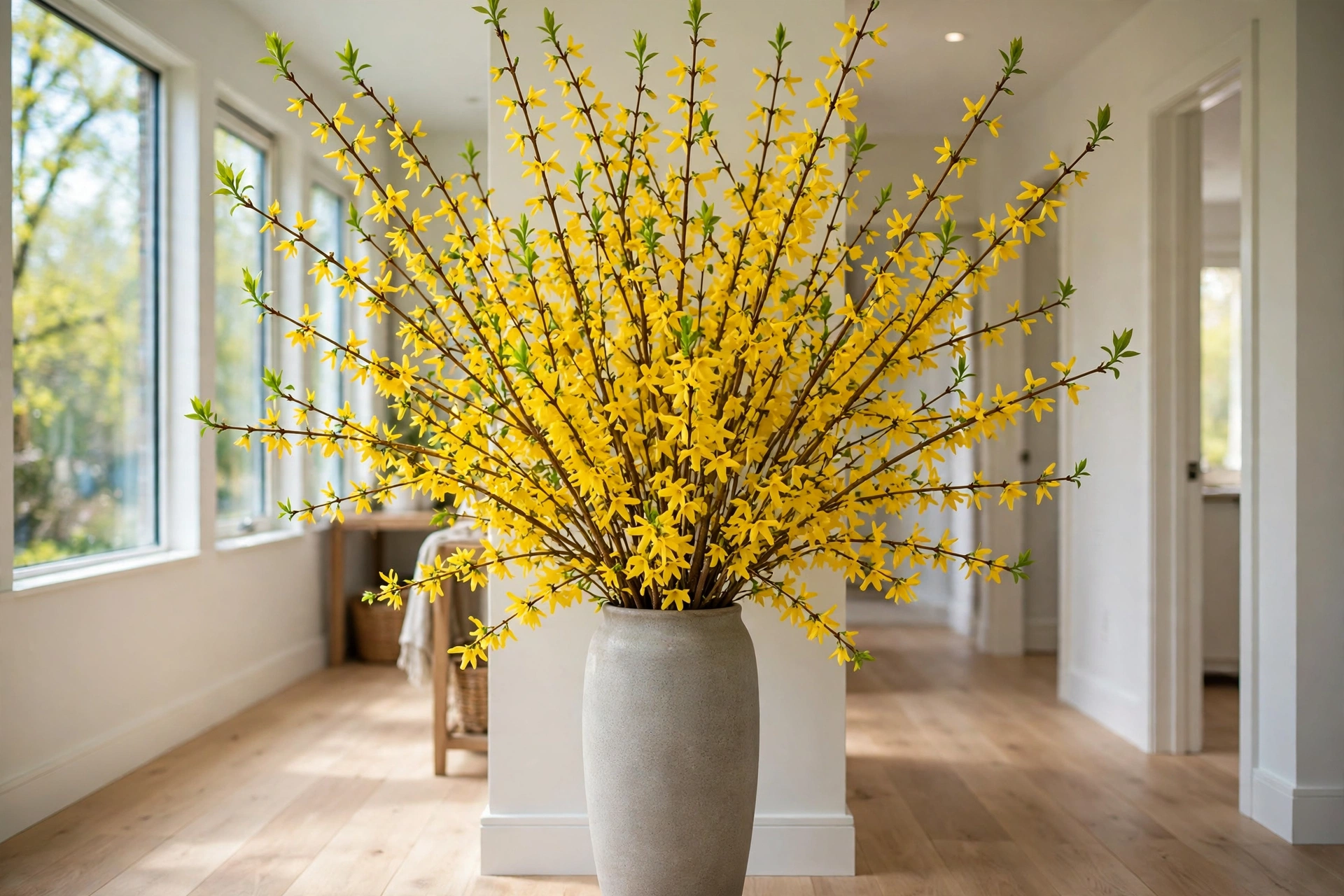
Before most flowers even wake up, forsythia bursts into bright yellow. A big bunch of forsythia branches in a floor vase or a tall jug is the fastest way to make a hallway or entryway feel like spring. The branches are long and arching, so they fill a corner beautifully, and they cost very little — or nothing, if a neighbor is pruning.
I tried this in a narrow hallway vase and the branches kept sliding to one side. A simple fix: crisscross the stems inside the vase so they brace against each other, and add a few stones at the bottom for weight. Forsythia branches also root in water, so you might end up with new plants if you leave them long enough.
Try this: Use five to seven long forsythia branches in a tall floor vase and let them arch outward like a fountain.
12. Mixed Meadow Flowers in a Pitcher
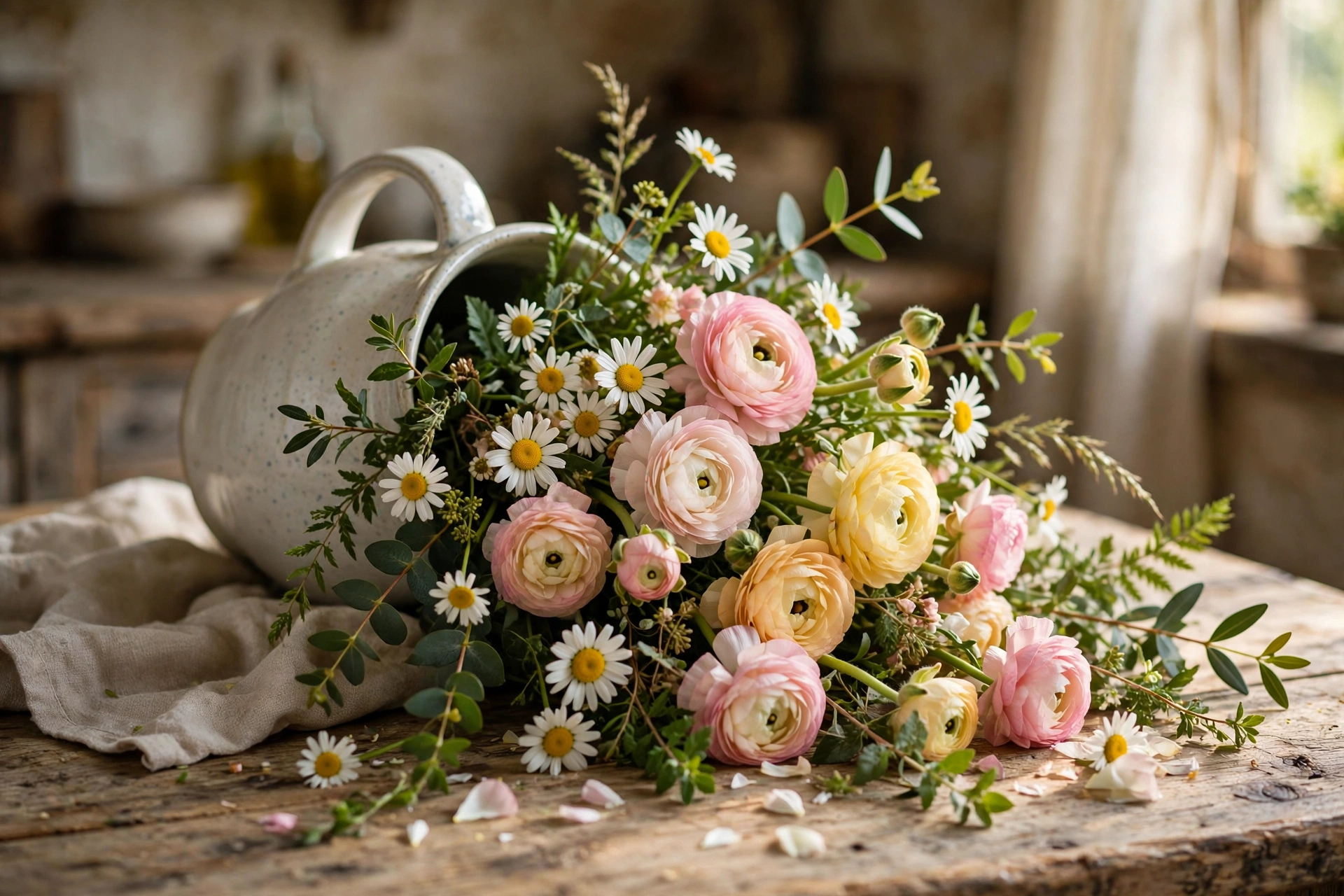
A ceramic pitcher full of mixed meadow flowers is the definition of easy spring style. The pitcher’s shape does half the work — the spout and handle give it character, and the wide mouth lets you arrange loosely without fuss. Fill it with a garden mix: daisies, ranunculus, sweet peas, a few sprigs of mint or fern. Let some stems spill over the edge for a just-gathered look.
I tried this for a Sunday table and overthought it at first, trying to make every stem perfect. The moment I stopped fussing and just let the flowers fall where they wanted, it looked ten times better. Meadow arrangements should look a little wild — that is the whole point.
Try this: Start with greenery, add the tallest flowers, then fill gaps with small blooms, and stop before it looks too neat.
13. Rose and Lisianthus Soft Romantic Bouquet
Garden roses and lisianthus make a soft, romantic bouquet that works beautifully in a bedroom or on a dressing table. Roses bring the classic shape; lisianthus adds delicate, rose-like blooms in blush, lavender, and cream that last surprisingly long in a vase. Keep the colors pale and the vase simple — a blush or white ceramic vase lets the flowers stay the focus.
I tried this with garden roses and learned to remove the guard petals — those slightly rough outer petals — so the blooms open cleanly. Lisianthus stems are a bit fragile, so handle them gently and keep them out of the middle of a tight bunch where they can get crushed. This bouquet smells lovely without being overpowering.
Try this: Use garden roses as the main flowers and tuck lisianthus buds between them for a soft, layered look.

14. Iris and Freesia Bold Color Pop
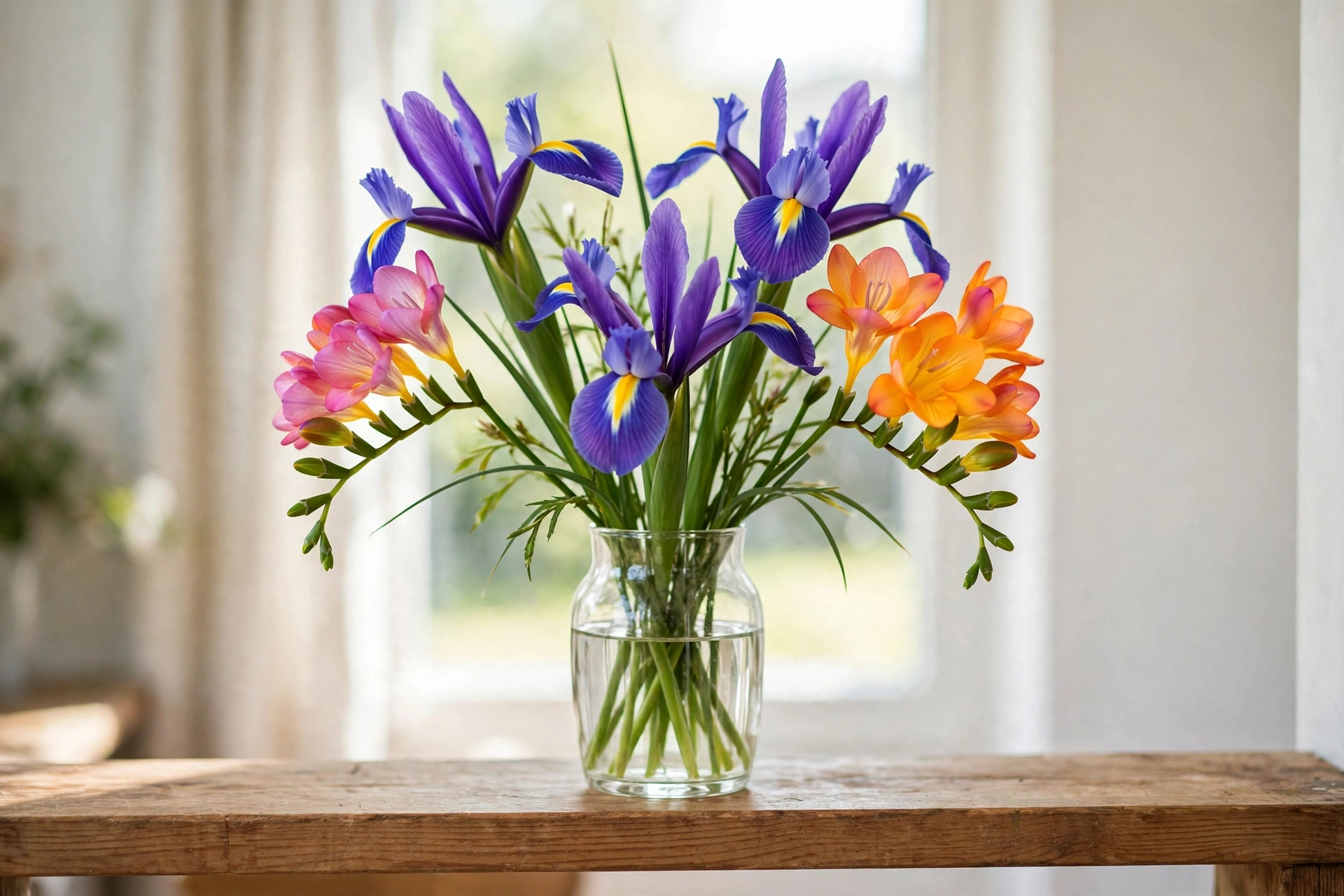
When you want color, not calm, reach for irises and freesias. Purple and yellow irises have a striking shape, and freesias add smaller, fragrant blooms in pink, orange, and white. Together they make a bold, cheerful arrangement that wakes up a neutral room. A simple glass vase keeps the focus on the flowers, and the mix of shapes — tall iris spikes, arching freesia stems — gives the bouquet real energy.
I tried this on a grey-walled shelf and the purple irises did all the work — the whole corner suddenly had a focal point. One tip: irises open fast, so buy them when the buds are still fairly closed and you will get several extra days.
Try this: Place tall iris stems at the back and let freesia stems arch forward for a lively, layered shape.
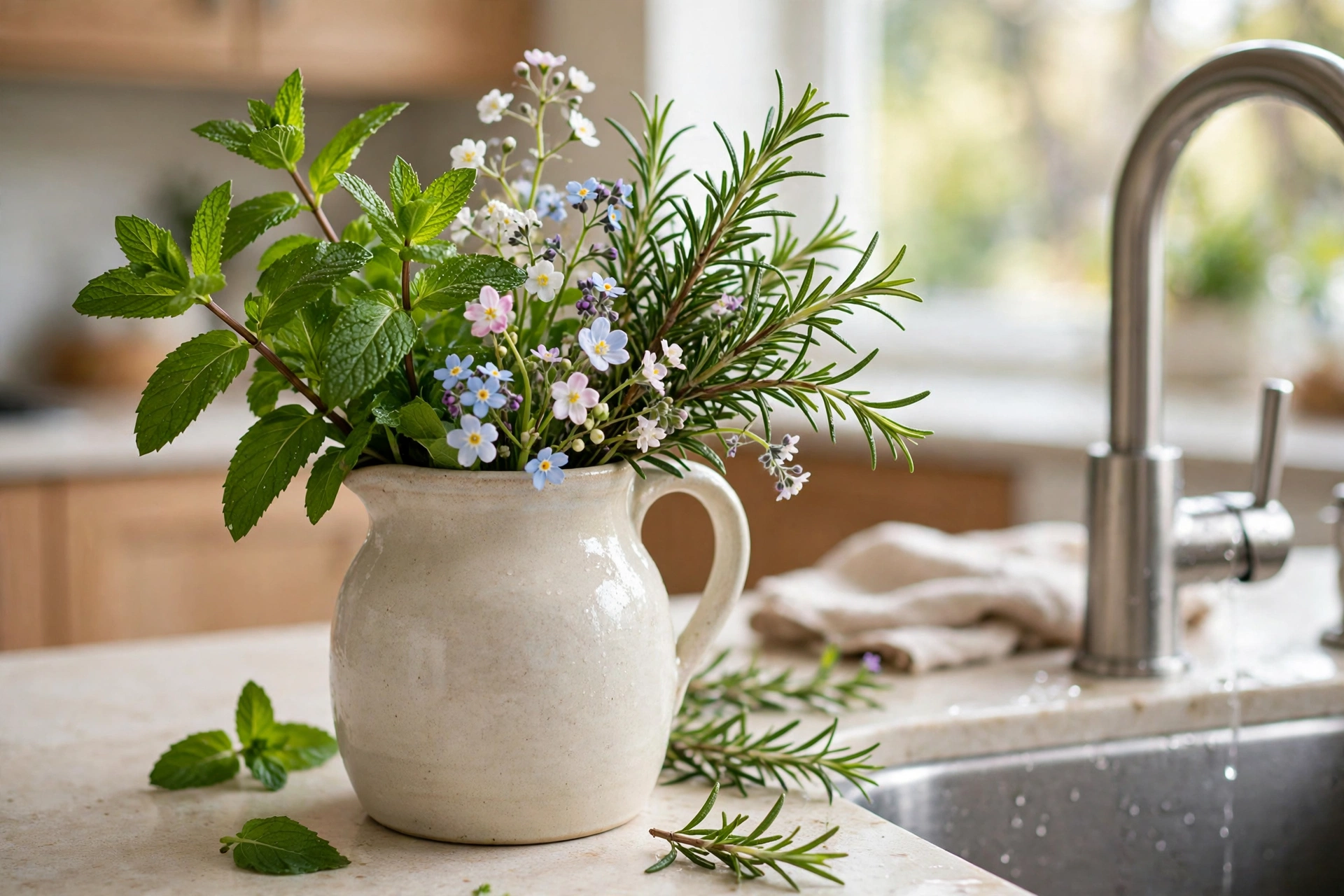
15. Herb and Flower Kitchen Arrangement
Mixing herbs with flowers is one of my favorite kitchen tricks. A small jug of mint, rosemary, and a few spring blooms — say, ranunculus or daisies — looks lovely, smells amazing, and is actually useful. Snip a sprig of mint for tea, a bit of rosemary for dinner, and the arrangement just keeps going. Use a jam jar, a small pitcher, or a tin can wrapped in twine.
I tried this on my kitchen windowsill and the mint took over the jar within a week — which was fine, because I kept snipping it for drinks. The trick is to keep herbs and flowers in separate small jars inside one tray if you want the flowers to last, since herbs drink fast and can crowd the vase.
Try this: Combine rosemary, mint, and three or four ranunculus stems in a small jug by the kitchen sink.
16. Floating Blossoms in a Glass Bowl
Floating flowers are the easiest arrangement of all, and they look far fancier than the effort involved. Fill a wide, shallow glass bowl with water and float a few open blooms — camellia heads, ranunculus, or small rose heads — plus a few leaves.
I tried this for a dinner party and worried the flowers would sink or flip over. They did not — flat-headed blooms float perfectly well for a day or two. The one mistake I made was using warm water, which made the petals go soft faster. Cool water, fresh blooms, and you are set. Swap the flowers out after a day for a fresh look.
Try this: Float five or six open blooms in a wide glass bowl with a few green leaves for a simple table centerpiece.

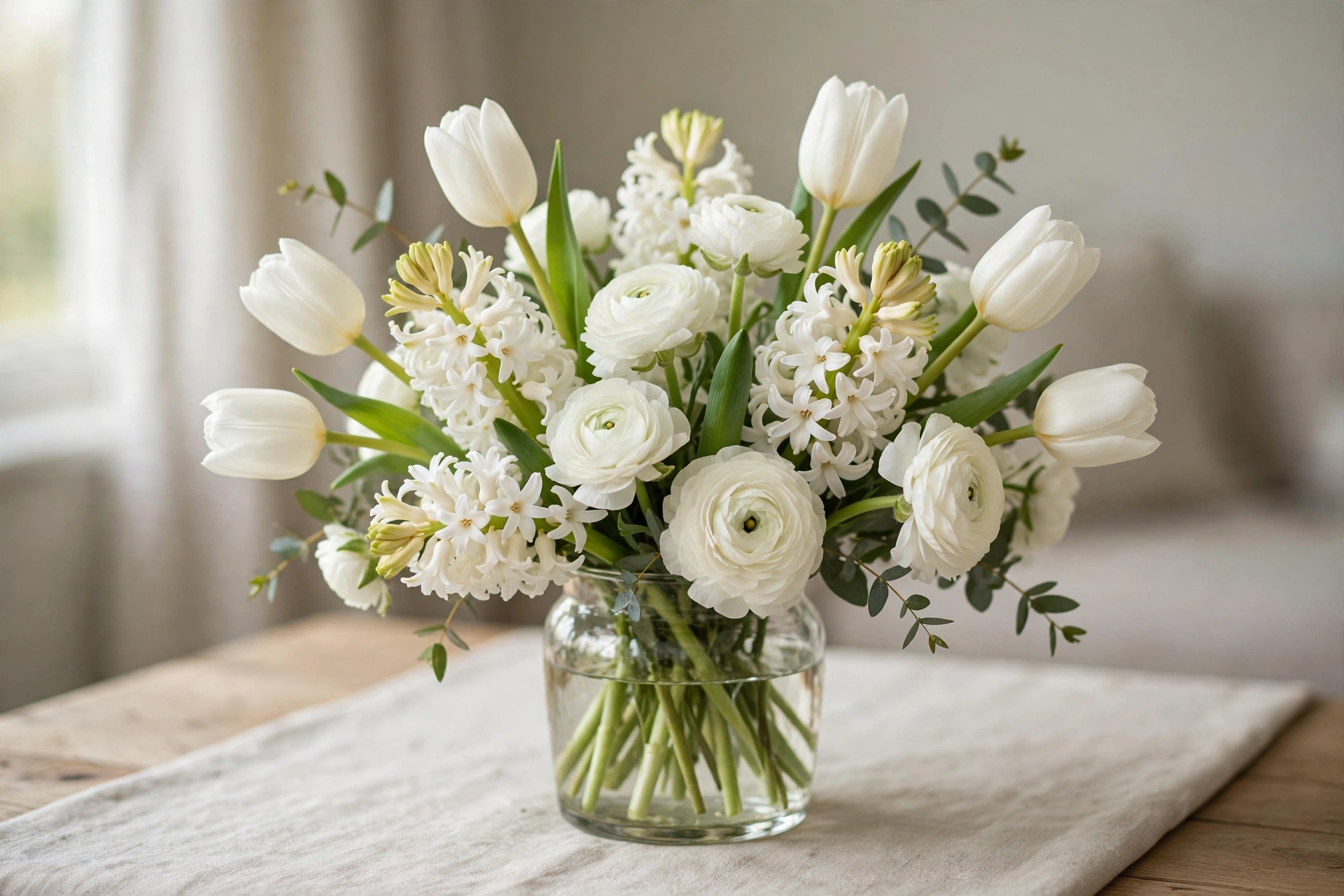
17. Monochrome White Spring Arrangement
An all-white arrangement is calm, elegant, and surprisingly easy. White tulips, white hyacinths, white ranunculus, and a few white anemones together create texture without color competition — the different flower shapes do all the work. A white or clear vase keeps it clean, and the arrangement fits any room, from a minimal living room to a classic bedroom.
I tried this in a white room and worried it would disappear against the walls. It did the opposite — the mix of shapes and the soft green stems gave it plenty of presence. The key is variety: if every flower is the same shape, a white arrangement falls flat. Mix at least three flower types, and add a little greenery so the white has something to sit against.
Try this: Combine white tulips, ranunculus, and hyacinths in a clear glass vase with a few green leaves for contrast.
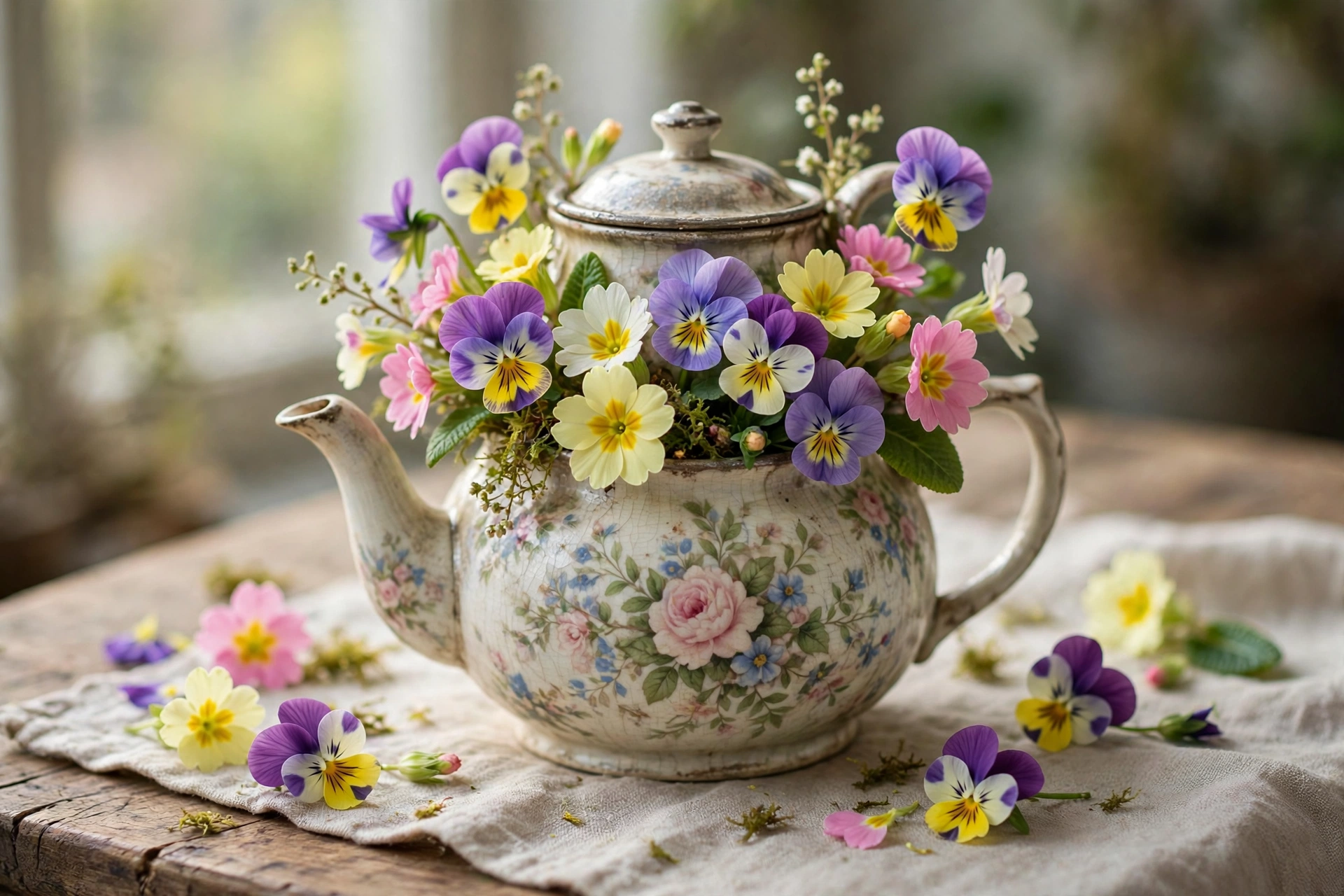
18. Vintage Teapot Floral Display
An old teapot makes a wonderful vase, especially for a small, low arrangement. The spout and handle give it instant personality, and a handful of short-stemmed flowers — violas, primroses, small ranunculus, a few sprigs of blossom — tucked into the opening look like they grew there. Check charity shops or your own cupboard for a teapot you no longer use for tea.
I tried this with my grandmother’s teapot and was nervous about staining it, so I slipped a small glass or jar inside first. That trick protects the teapot and makes arranging easier, since the jar holds the stems upright. Short stems work best — anything tall will tip the teapot’s balance. It is a lovely touch for a tea table or a shelf display.
Try this: Place a small jar inside a vintage teapot and fill it with short spring blooms like violas and primroses.
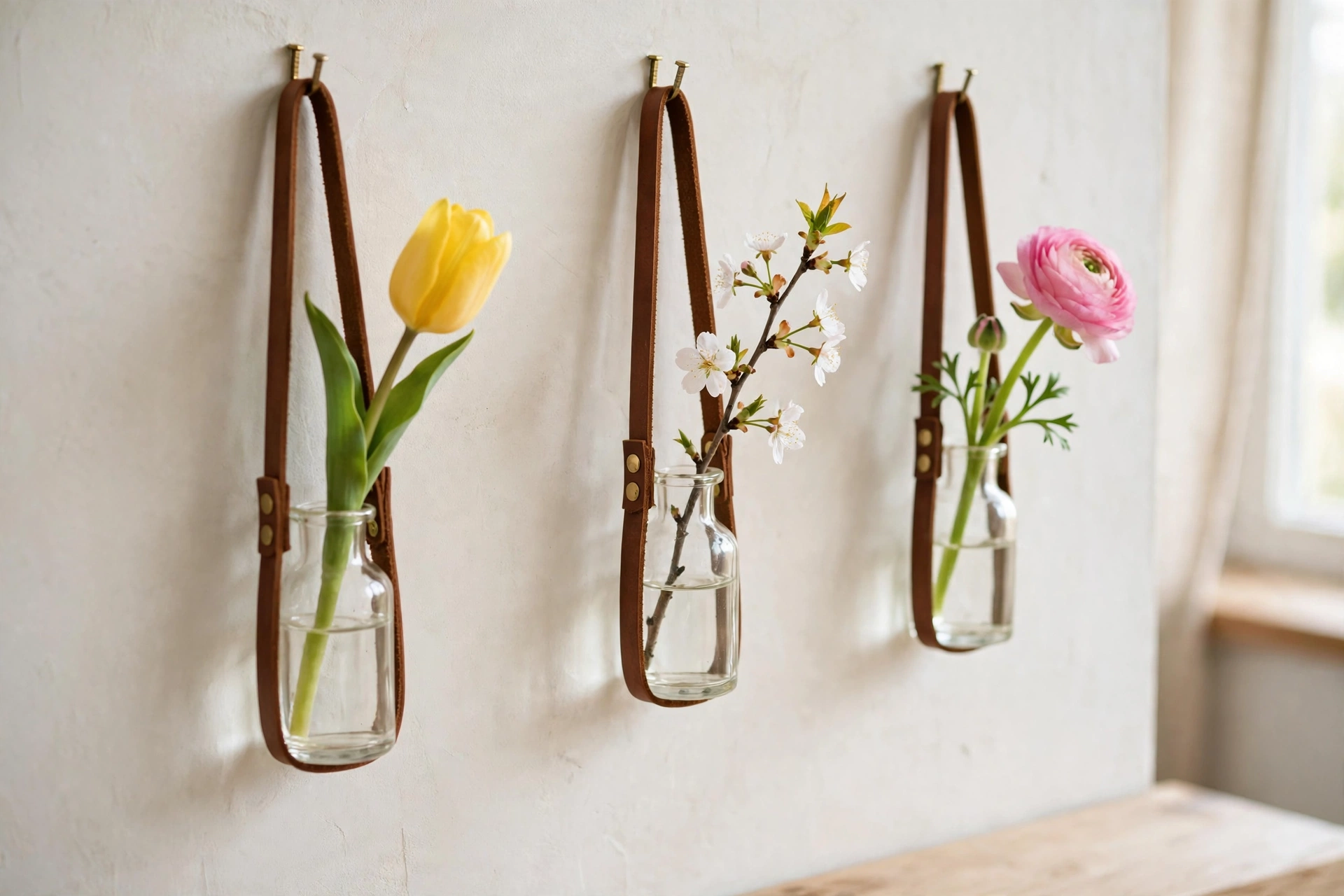
19. Hanging Bud Vases on the Wall
Bud vases are perfect for small spaces, and a row of them on the wall turns a few single stems into a real display. Hang three to five small glass bud vases at different heights on a wall, a shelf bracket, or a wooden board, and put one or two stems in each — a single tulip, a sprig of blossom, a ranunculus. The effect is light and airy, and you only need a handful of flowers.
I tried this in a narrow hallway where a full vase would have been knocked over within a day. Wall vases solved it completely, and changing the stems each week became a little ritual I actually look forward to.
Try this: Hang five bud vases in a loose row and give each one a different single spring stem for a gallery effect.
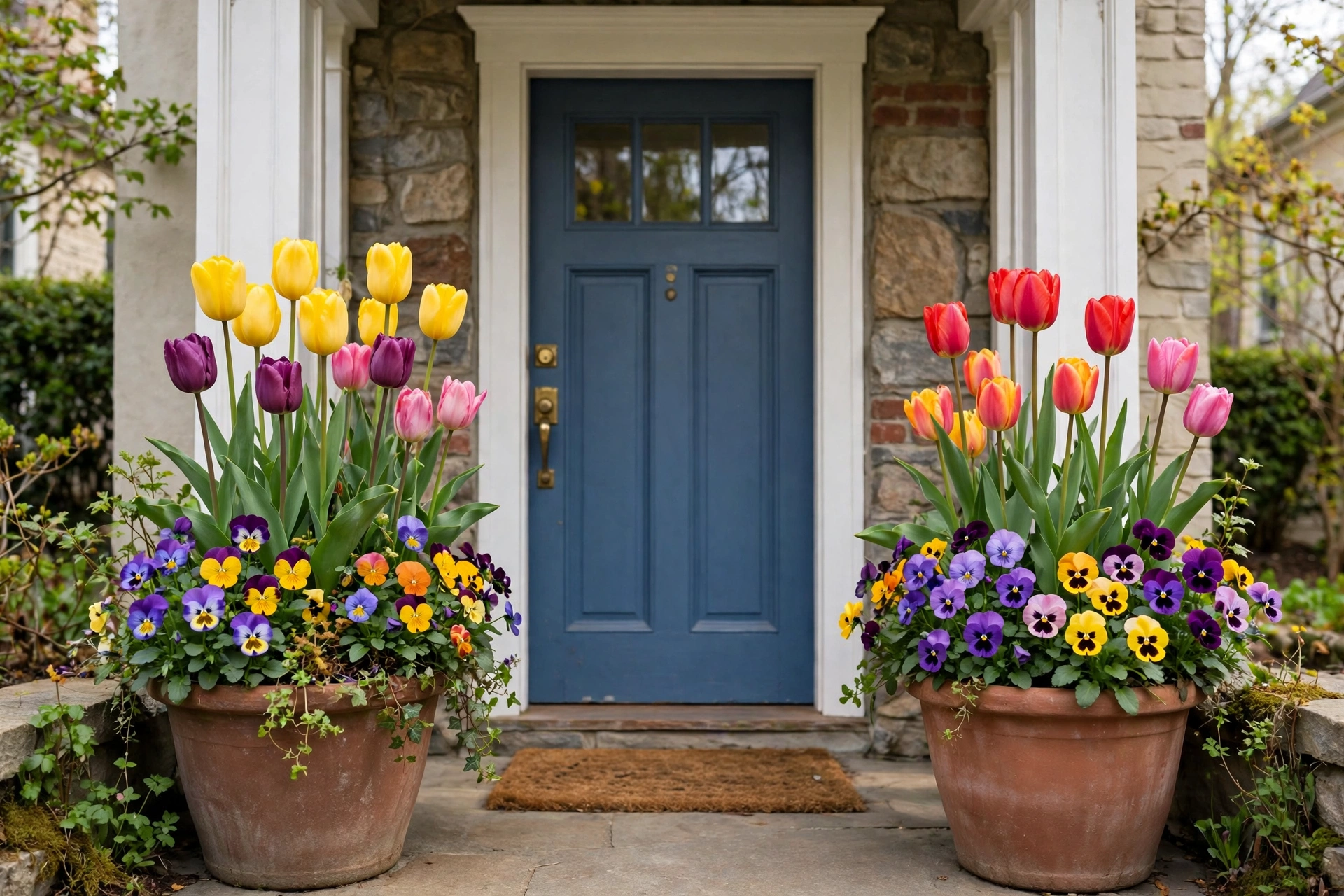
20. Spring Porch Pots with Tulips and Pansies
Spring flowers belong outside the front door too. A pair of pots by the porch — tulips rising in the middle, pansies spilling around the edges, maybe a few grape hyacinths tucked in — welcomes everyone who visits. Pots are easy to refresh: when the tulips finish, swap them for summer bedding and keep the pots going all year.
I tried this last spring and planted the tulips too late, so they bloomed short and scruffy. Plant bulbs in autumn if you can, or buy ready-grown pots in spring and just drop them into your containers. Pansies are the real work horsemen here — they bloom through cool weather and keep going long after the tulips fade. Water pots often, since containers dry out faster than garden beds.
Try this: Plant tall tulips in the center of each porch pot and ring them with colorful pansies for instant curb appeal.
Frequently Asked Questions
How long do spring flower arrangements last?
Most cut spring flowers last 5 to 10 days with fresh water and a trim every couple of days. Tulips and daffodils often last a full week, while sweet peas and lilacs are shorter-lived at around 4 to 5 days. Keep arrangements out of direct sun and away from fruit bowls, since ripening fruit gives off gas that ages flowers faster.
What is the best vase for spring flowers?
Match the vase to the stems. Tall, heavy flowers like lilacs and cherry branches need a tall, sturdy vase. Short, full bouquets like daffodil clusters suit a low bowl. As a rule, the vase should be about one-third to one-half the total height of the arrangement, and the mouth should be wide enough that stems are not crushed together.
Can I mix daffodils with other flowers?
Yes, but with one step first. Daffodil stems release a sap that can shorten other flowers’ vase life. Let freshly cut daffodils stand in their own water for at least a few hours, then rinse the stems before adding them to a mixed arrangement. Once conditioned this way, they mix happily with tulips, ranunculus, and most other spring blooms.
How do I keep tulips from drooping?
Trim the stems at an angle, use cool water, and keep the vase out of warm spots. Tulips keep growing in the vase, so they will bend toward light — turn the vase daily to keep the shape even. If a stem flops badly, wrap it in paper and stand it in water for a few hours; it will usually straighten up again.
Final Thoughts
Spring flowers do not need a special occasion or a big budget — just a vase, some fresh water, and a few stems you love. Start with one idea from this list, maybe the tulips in a glass cylinder or the wildflowers in jars, and see how it changes the room. Once you get the habit, you will find yourself reaching for fresh flowers every week, and your home will feel a little brighter for it all season long.