
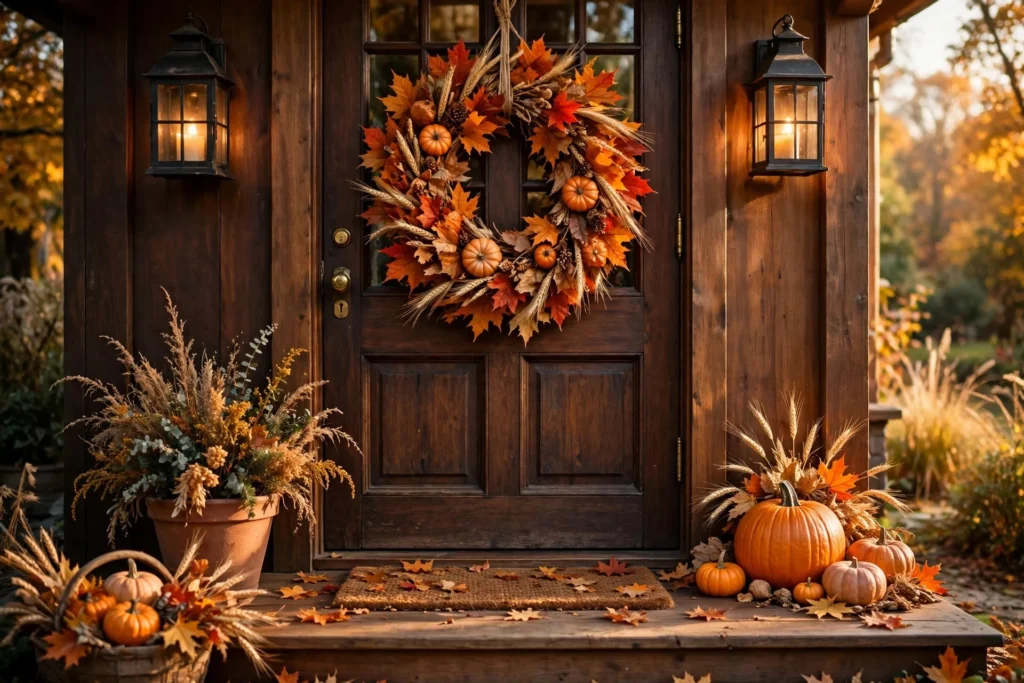
There is something about a good wreath on the front door that changes the whole feel of a house in November. Guests notice it before they even ring the bell, and neighbors slow down just a little when they walk past. If you are looking for thanksgiving wreath ideas that actually suit a real front door — not a magazine cover, but a door that gets opened ten times a day — you are in the right place.
I have hung more wreaths than I can count over the years, and I have learned that the best ones are not always the fanciest. They are the ones that hold up in the wind, match the color of your door, and make you smile every time you come home with groceries. Below are fifteen ideas I have either tried myself or watched friends pull off beautifully, with honest tips on what works and what to skip.
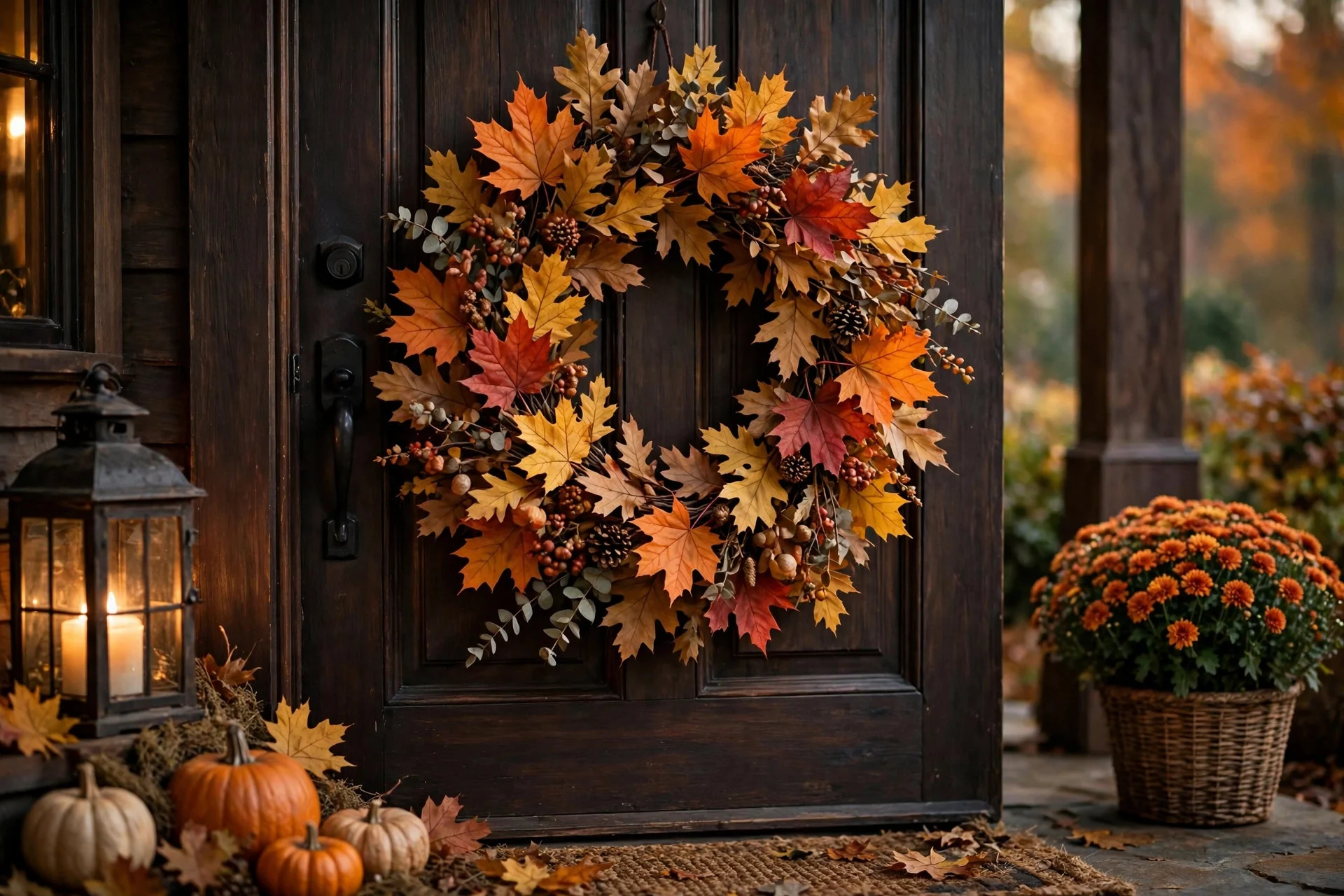
1. Classic Autumn Leaves — Simple Thanksgiving Wreath Ideas That Always Work
You really cannot go wrong with a full, leafy wreath in shades of orange, red, and gold. Start with a plain grapevine base, then tuck in bunches of faux maple and oak leaves, working your way around so the leaves all point the same direction. Add a few deeper red leaves here and there so it does not look flat. I tried this one the first year we moved in, and it took me about twenty minutes with a glue gun and a bag of craft-store leaves.
The mistake I made was hanging it with a thin nail that bent in the first gust of wind. Use a proper wreath hanger or a sturdy outdoor command hook, and give the wreath a little shake before you hang it so any loose leaves fall off now, not on your porch later.
Try this: layer two kinds of leaves — big maple leaves for fullness and smaller oak leaves to fill the gaps.
2. Mini Pumpkins and Gourds
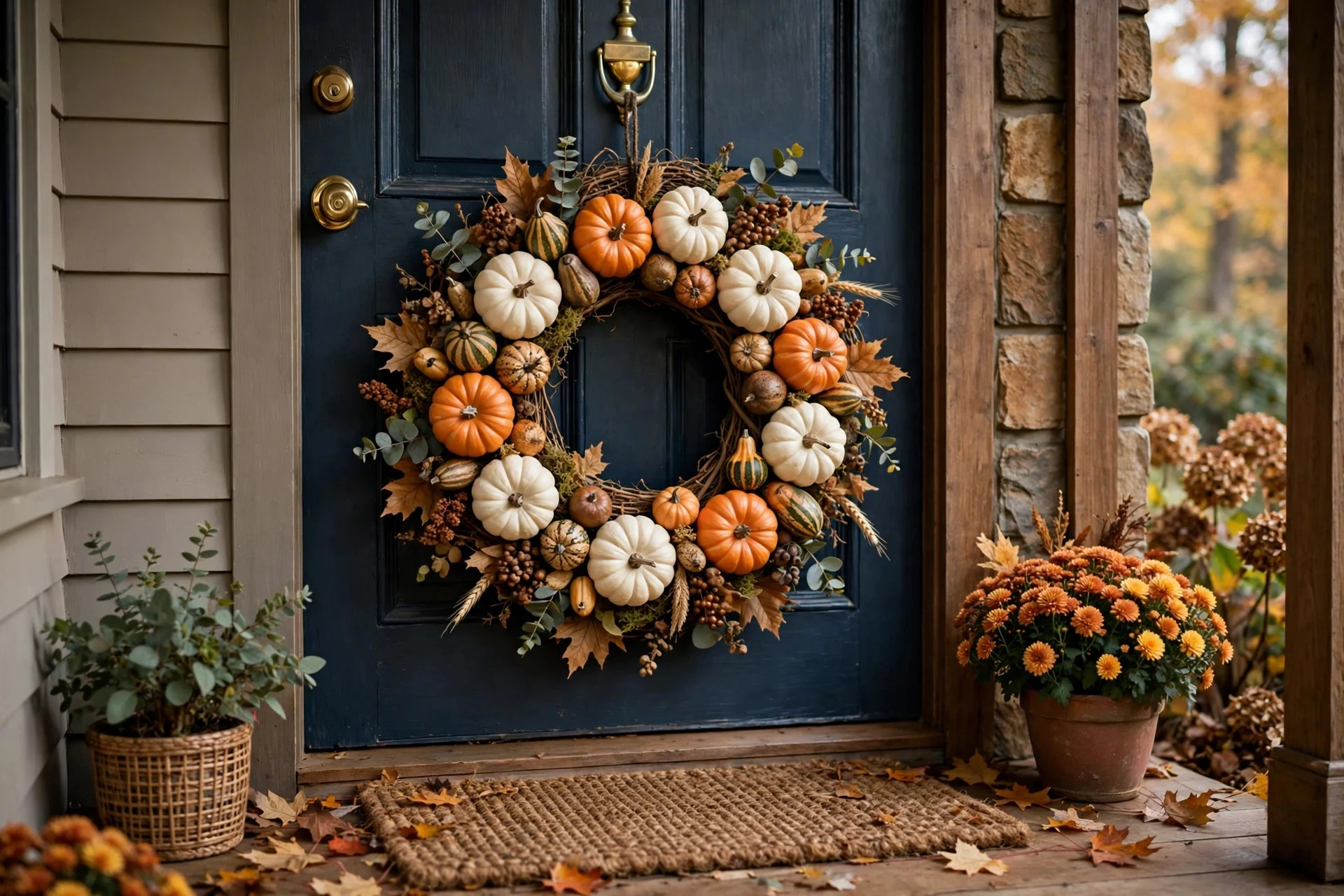
Mini pumpkins are the easiest way to make a wreath look like Thanksgiving without saying a word. Pick a grapevine wreath, then wire on a mix of small white, orange, and striped gourds, clustering them in groups of three instead of spacing them evenly. Fill the spaces between them with a few autumn leaves and some dried moss so you cannot see the wire.
I tried this with real mini pumpkins one year, and they looked wonderful for about a week before one of them went soft. Faux pumpkins are the smarter choice if your door gets afternoon sun. If you do use real ones, pick firm ones with no bruises and check them every few days. Either way, keep the heaviest pumpkins near the bottom so the wreath hangs straight.
Try this: use floral wire, not hot glue, for anything heavier than a leaf — glue lets go in the cold.
3. Golden Wheat and Dried Grass
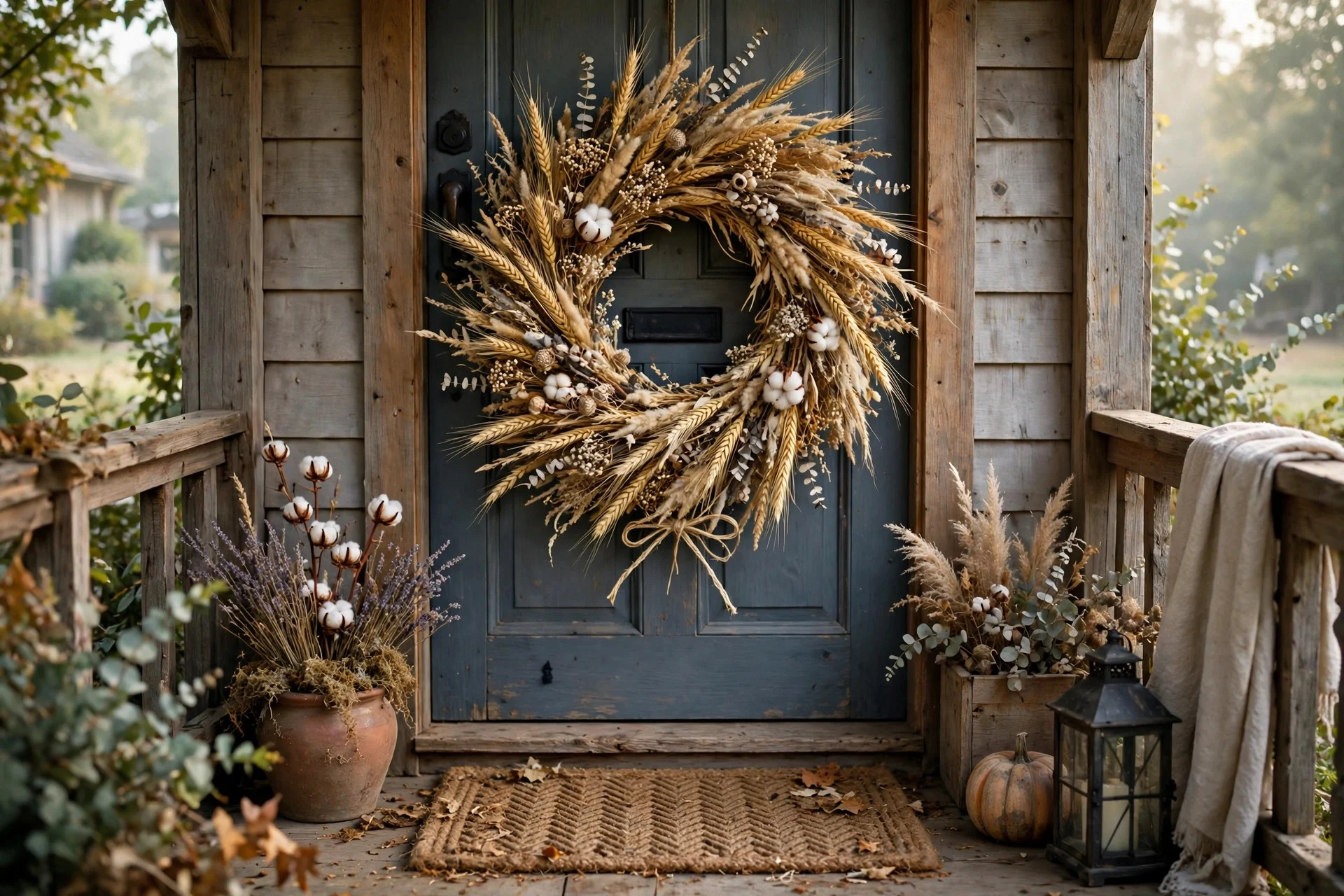
A wheat wreath is quiet, golden, and honestly one of the prettiest things you can hang in November. Bundle dried wheat stalks into small bunches, tie each one with twine, and attach them to a straw wreath form so they fan out in a circle. Add a few sprigs of dried grass or bunny tails for texture, and finish with a simple linen bow at the bottom.
I made one of these with my daughter a few years ago, and it is still the wreath people ask about most. The trick is to keep the bundles the same size, or the circle goes lopsided. My first attempt had one side twice as thick as the other, and I had to pull half of it apart and start again. Spray it lightly with hairspray to keep the seeds from shedding all over your doormat.
Try this: hang it on a sheltered door or under a porch roof — wheat does not love heavy rain.
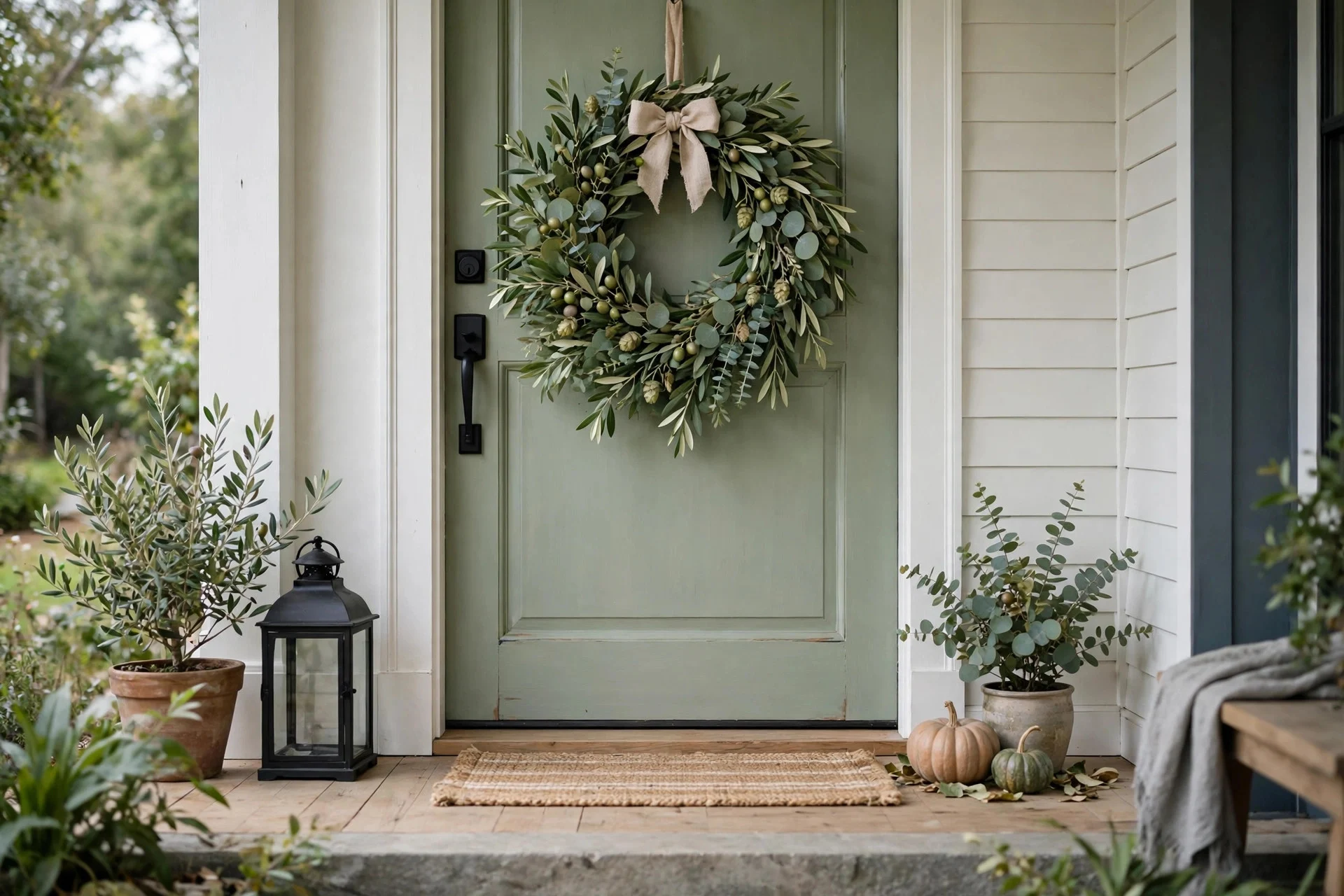
4. Fresh Eucalyptus and Olive Leaves
If your style leans more modern than rustic, a eucalyptus wreath is your friend. The soft sage green looks lovely against a dark door, and the smell when you walk past is wonderful. Buy two or three bunches of fresh eucalyptus and one bunch of olive branches, then wire them onto a thin wire frame in overlapping layers, all going the same way around.
I tried this on our navy front door last year, and the contrast was so good I left it up well past Thanksgiving. Fresh eucalyptus dries out gracefully, turning a softer grey-green, so it keeps looking good for weeks. The one thing I would not do again is hang it where the afternoon sun hits it directly — it dried out and went brittle in about ten days on the sunny side.
Try this: add three small white pumpkins at the bottom for a Thanksgiving touch without losing the clean look.
5. Pinecones and Red Berries
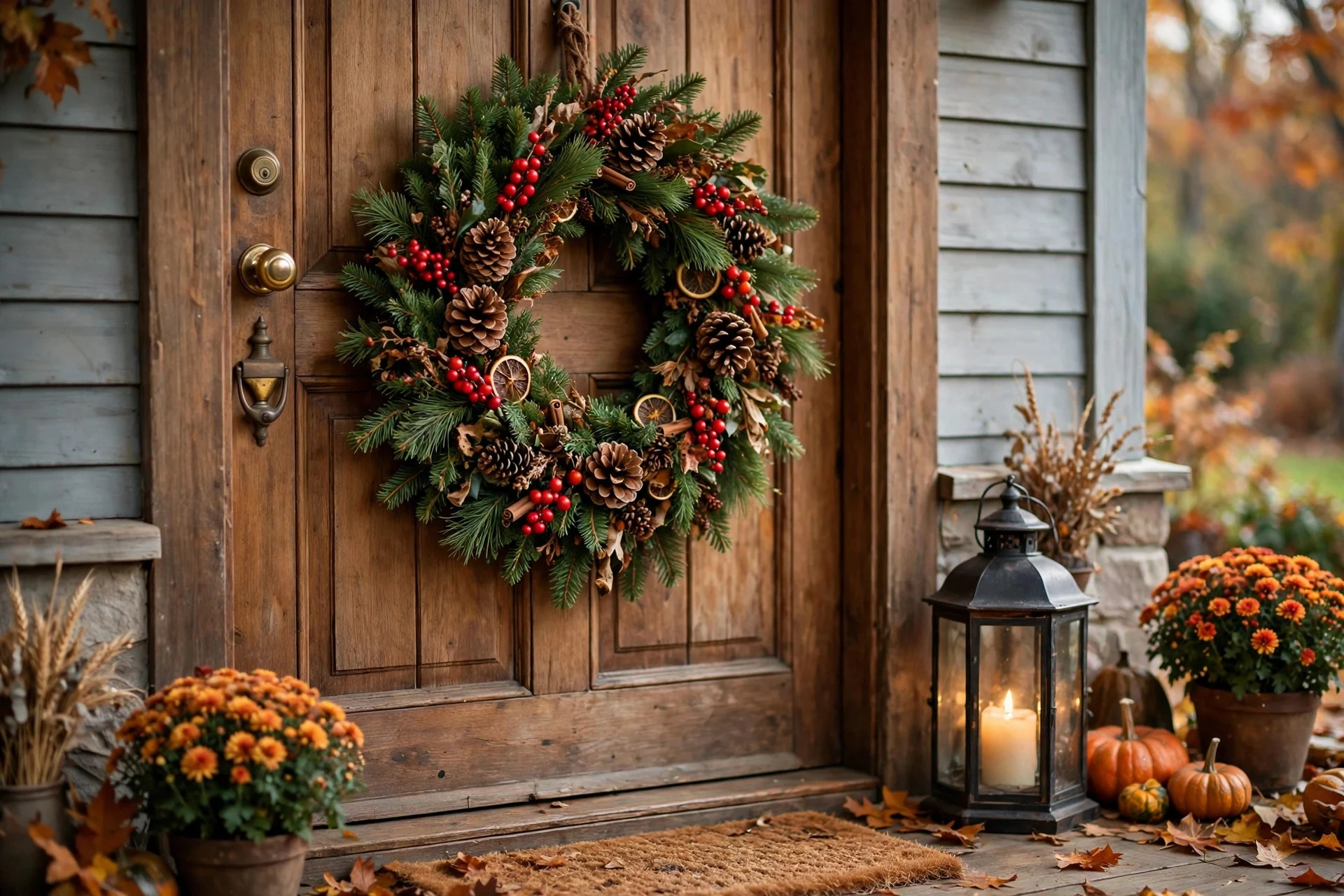
Pinecones and berries give a wreath that woodsy, gathered-from-the-yard feeling, and they cost almost nothing if you collect the pinecones yourself. Start with an evergreen wreath — real or faux — then wire pinecones in clusters of two or three, and tuck sprigs of red berries into the gaps. The red against the green is what makes the whole thing pop from the street.
I once used berries that were too long and floppy, and they drooped over the whole wreath like sad noodles. Short, stiff berry sprigs work far better. Also, bake any pinecones you collect from the yard at low heat for about half an hour first, or you might find tiny visitors moving in. Learned that one the hard way when a spider showed up on our door frame.
Try this: dab a little white paint on the pinecone tips for a light frosted look.
6. Burlap and Plaid Ribbon
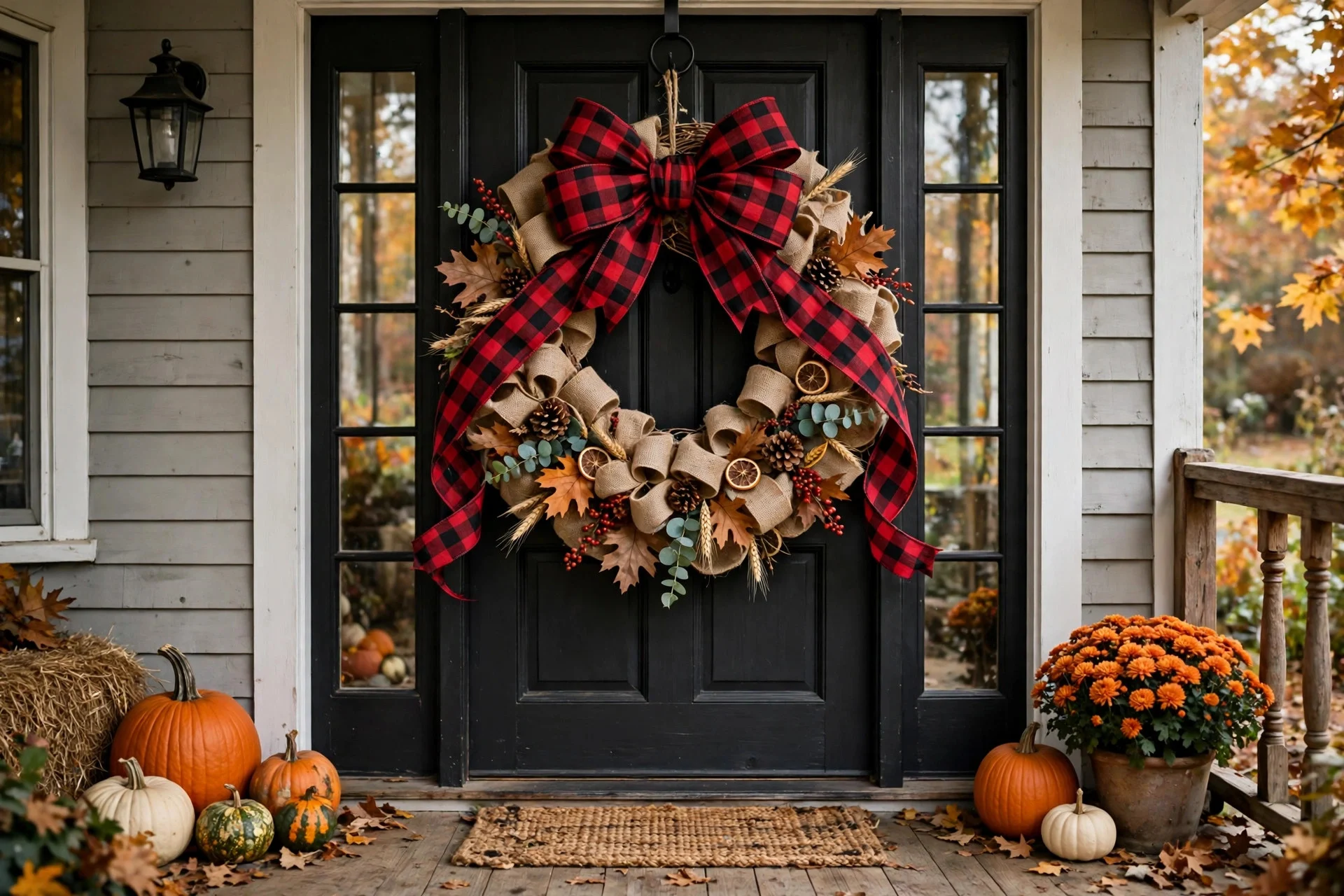
Sometimes the wreath itself can be simple and the ribbon does all the talking. A plain burlap wreath — just loops of burlap gathered around a wire frame — looks warm and handmade. Add a big plaid bow at the top or bottom, and tuck in a few faux leaves or a pinecone or two. The whole thing takes about fifteen minutes and costs less than a takeout dinner.
I made this one in a hurry before guests arrived, and it ended up being my favorite that year. My mistake was making the bow too small the first time — a wreath this plain needs a generous bow, at least eight inches across, or it looks unfinished. Watch a quick bow-tying video if you need to; a good bow is a skill worth learning, and you will use it on every wreath after this.
Try this: use wired ribbon so the loops hold their shape in the wind.
7. Dried Orange Slices and Cinnamon
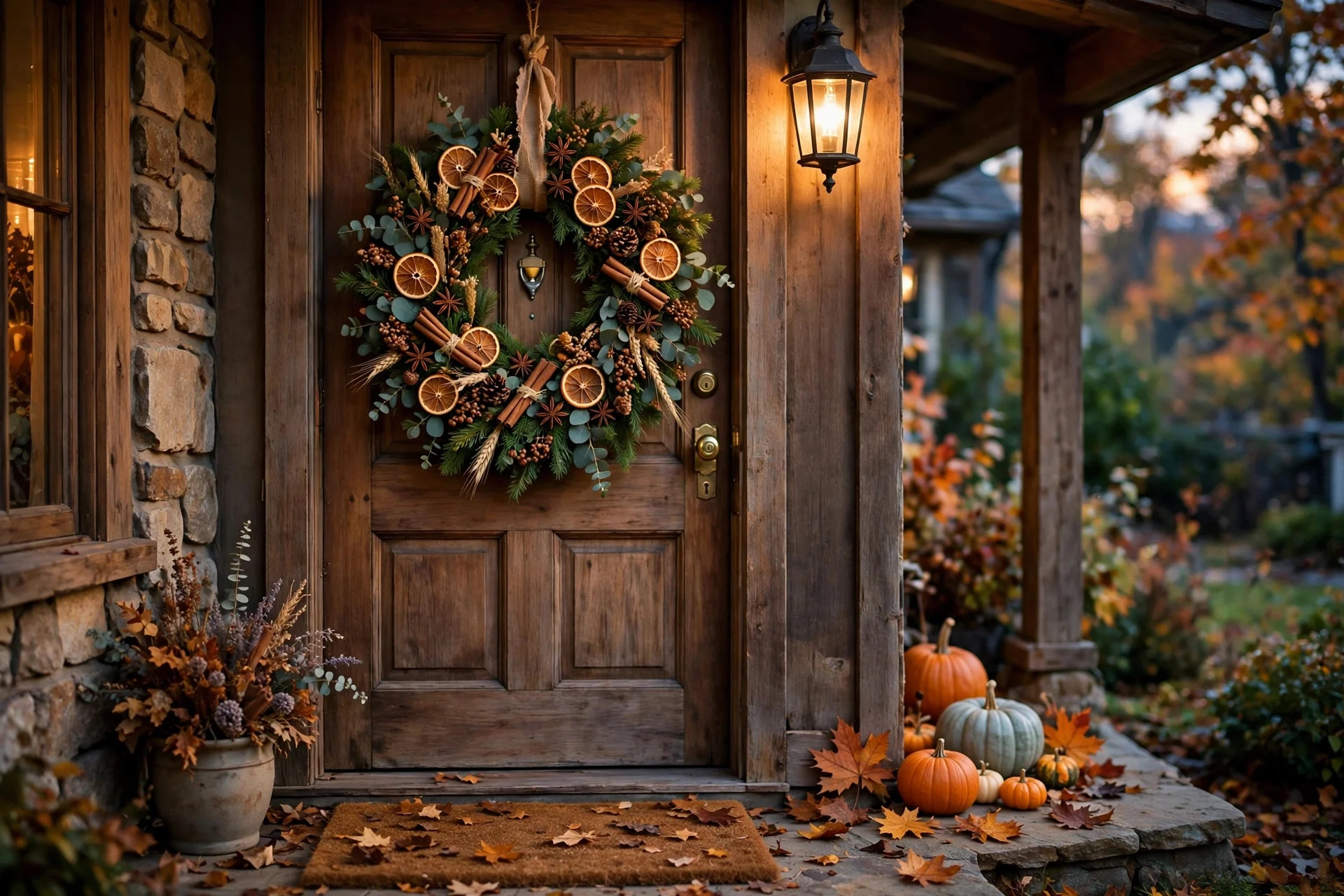
This one smells as good as it looks. Dry orange slices in a low oven until they are crisp, then wire them onto a wreath along with cinnamon sticks and a few dried bay leaves. The orange, brown, and green mix is warm and natural, and the scent hits you every time you open the door. It works beautifully on a simple grapevine base or over a bed of dried moss.
I tried this two Thanksgivings ago, and the oranges lasted the whole month without a problem. The mistake I made was using slices that were still a little soft in the middle — they went sticky and attracted a fly or two. Make sure the slices are fully dry and crisp before you use them, and give them a light coat of clear sealant if your porch gets damp.
Try this: add star anise for a pretty star shape and an extra hint of spice.
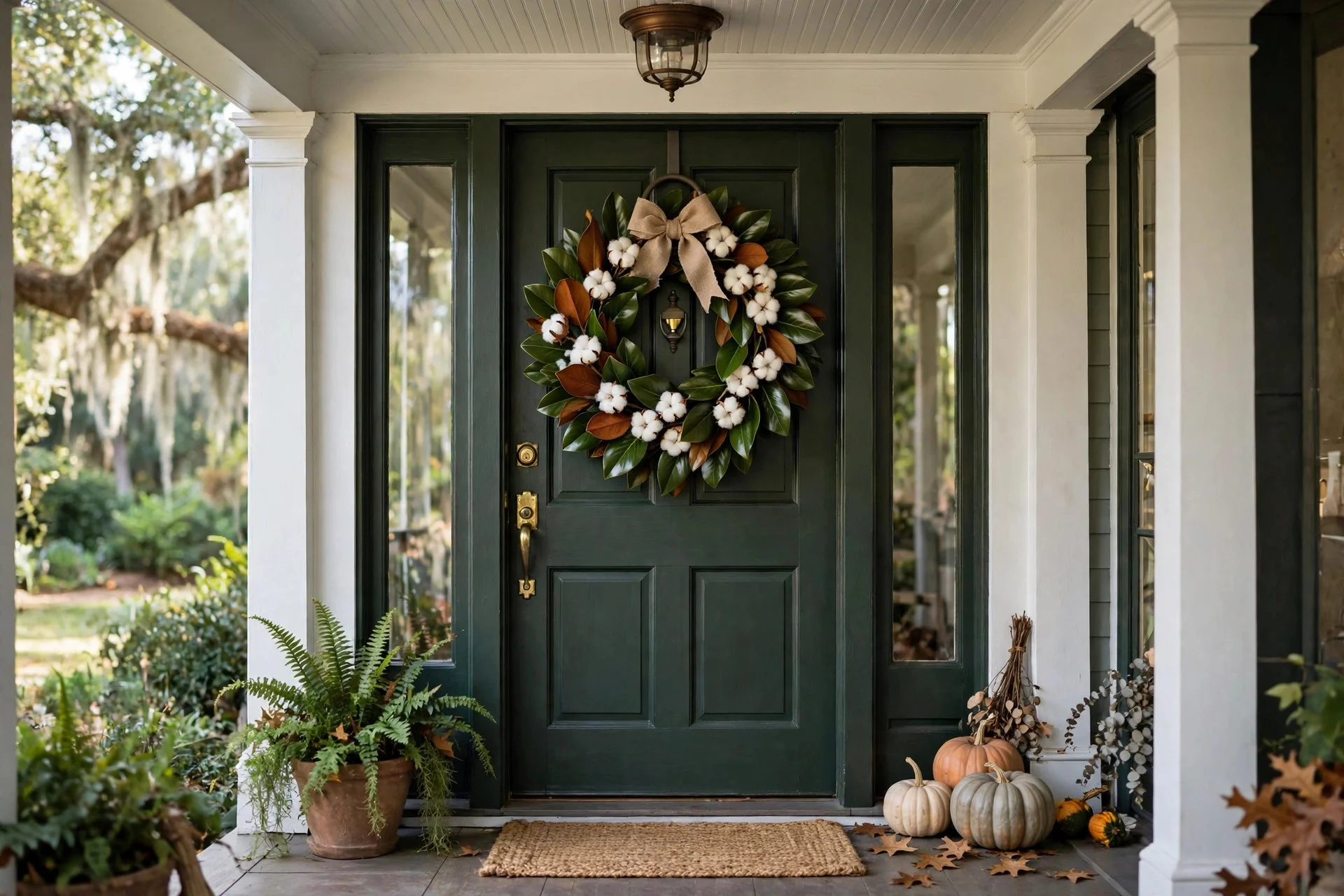
8. Magnolia Leaves and Cotton Bolls
Magnolia leaves are glossy, deep green, and almost indestructible, which makes them perfect for a front door. Layer them in overlapping rows around a wreath form, then tuck in fluffy cotton bolls and a few small pinecones. The result is elegant without trying too hard, and it fits just as well on a farmhouse as it does on a brick colonial.
I put one of these up for a friend whose house is all white and grey, and it was exactly the warmth her entry needed. The only thing to watch is that real magnolia leaves can curl at the edges as they dry, which actually looks charming if you let it happen evenly. Do not mix fresh and faux leaves in the same wreath — they age differently, and by week two you can spot the difference from the sidewalk.
Try this: add a cream velvet ribbon for a soft, finished edge.
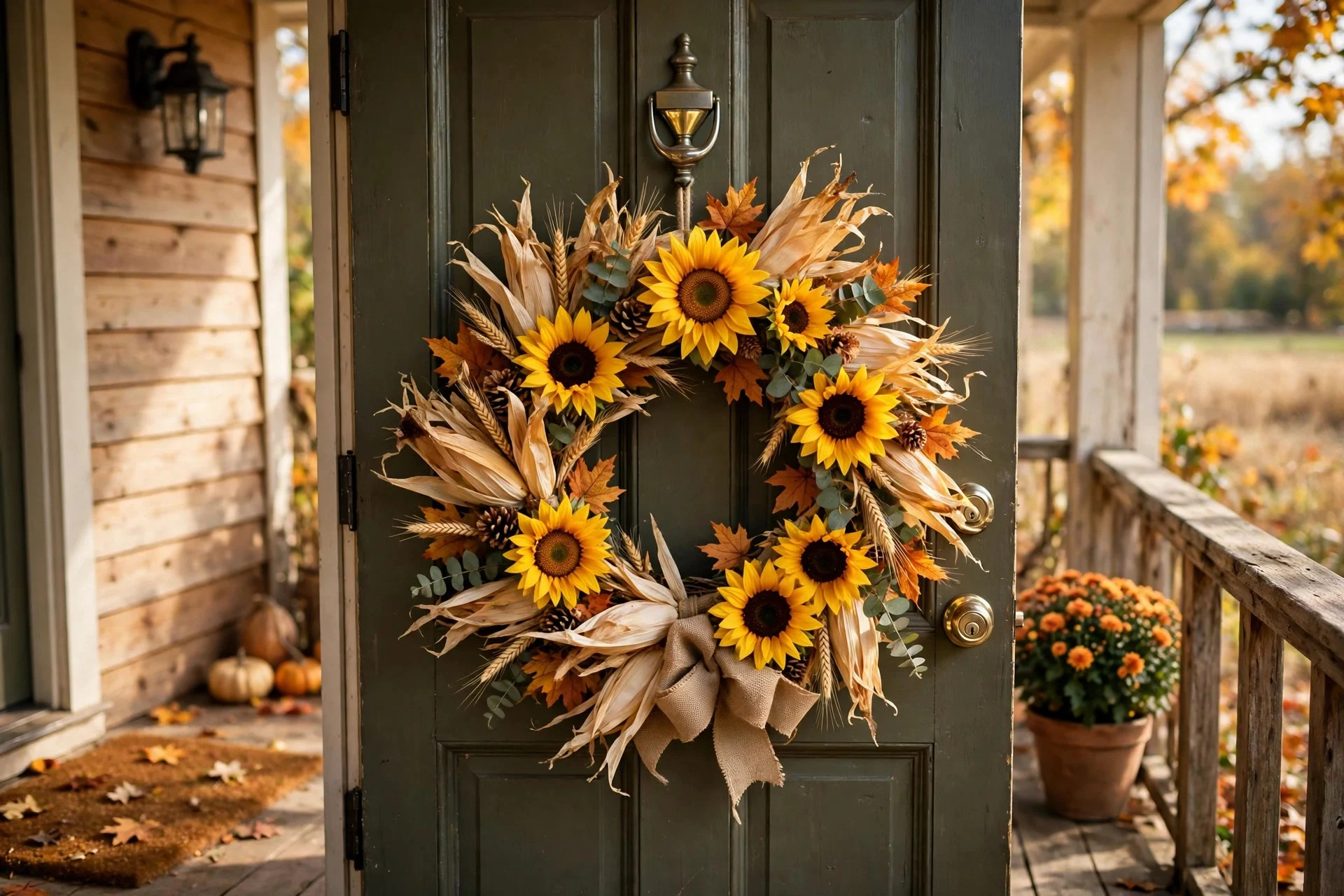
9. Sunflowers and Corn Husks
Sunflowers bring instant cheer to a front door, and they pair perfectly with dried corn husks for a real harvest feel. Use a grapevine base, wire on five or six sunflowers spaced around the circle, then fill in with corn husks, a few wheat stalks, and some small orange berries. The yellow against the door makes the whole entry look sunnier, even on a grey November day.
I tried this with fresh sunflowers once, and they wilted within three days — faux sunflowers are the way to go here. Pick ones with slightly varied shades of yellow so they do not look like they came out of the same plastic mold. And keep the flowers on the smaller side; oversized blooms make the wreath look top-heavy and they catch the wind like sails.
Try this: tuck a tiny bundle of Indian corn at the bottom for a pop of burgundy and gold.
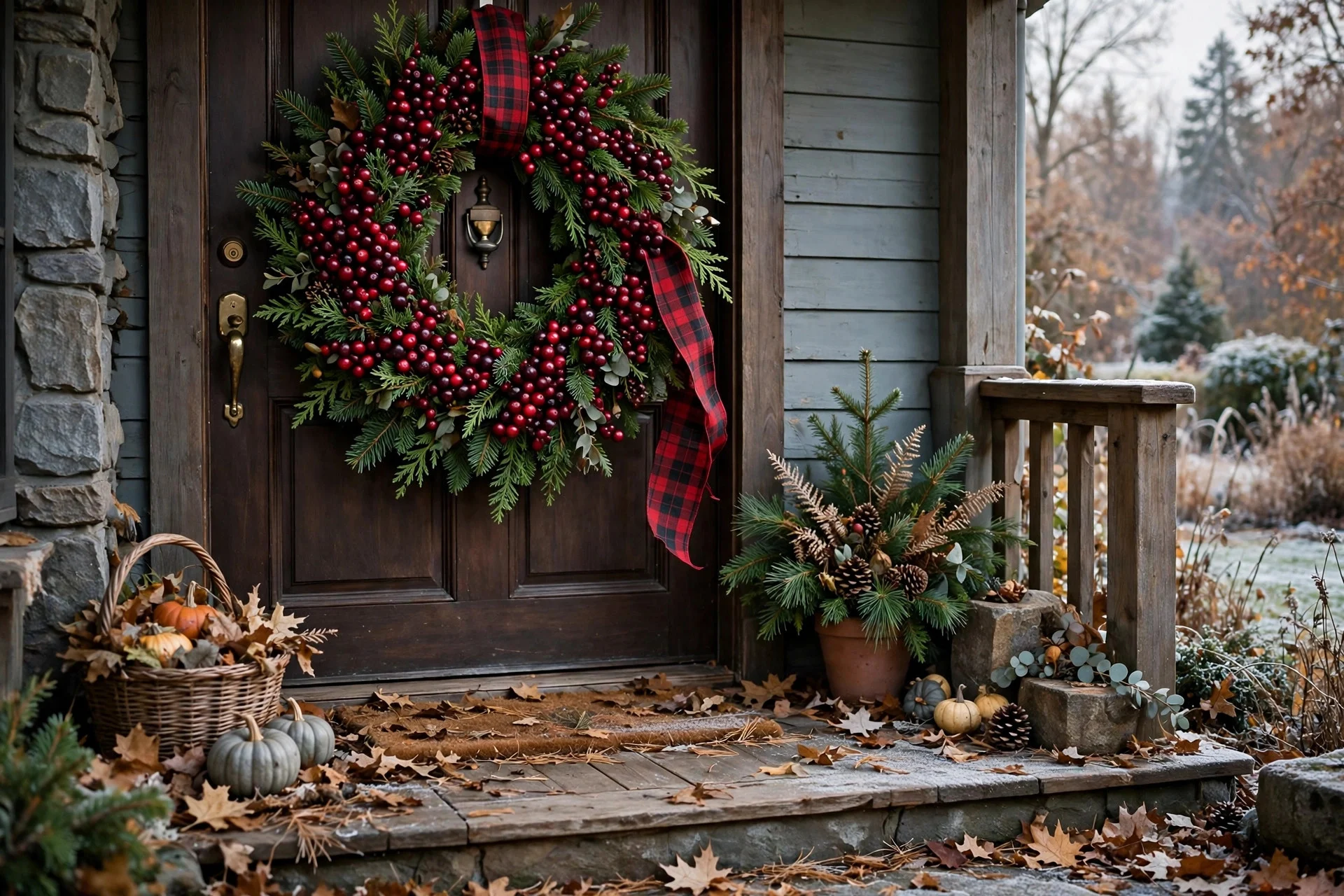
10. Cranberries and Evergreen
Deep red cranberries on dark green evergreen is a classic combination, and it carries you right from Thanksgiving into December without a single change. Start with a fresh or faux evergreen wreath, then weave in cranberry garlands or wire on clusters of faux cranberries. A plaid ribbon bow ties the whole thing together and keeps it from looking too Christmassy too early.
I made this one the week before Thanksgiving and left it up until New Year, and nobody guessed it was the same wreath. If you use real cranberries, thread them on floral wire rather than string — string sags when it gets wet. My first attempt with string ended up with all the berries sliding to the bottom after the first rain, and I had to redo the whole thing with a flashlight the night before guests came.
Try this: mix in a few white berries for contrast so the red really stands out.
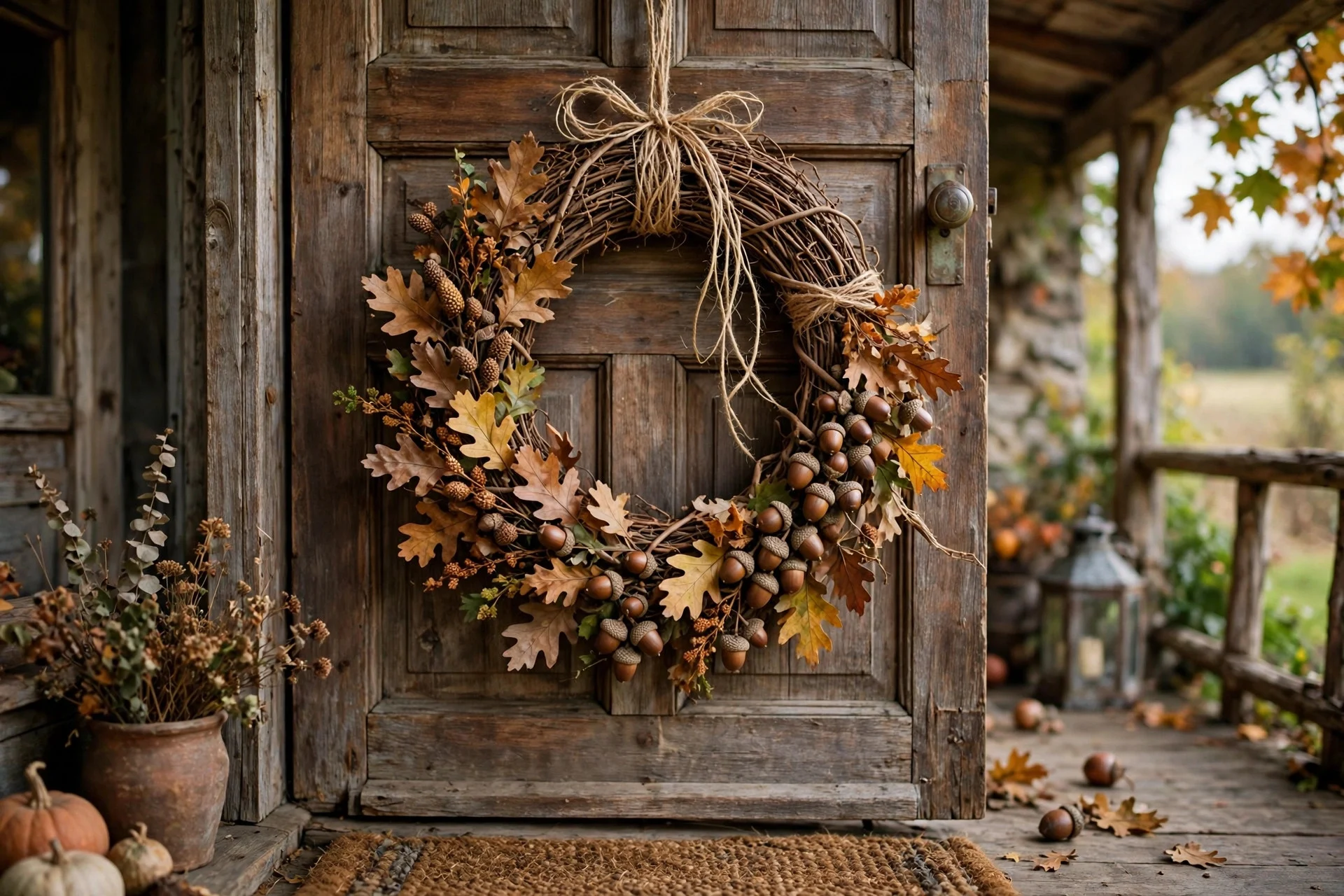
11. Rustic Grapevine and Acorns
A bare grapevine wreath with just a few thoughtful touches is one of the most honest-looking options out there. Leave most of the twiggy texture showing, then add clusters of acorns, a few oak leaves, and a length of twine tied in a simple bow. It looks like something you gathered on a walk, and that is exactly the charm.
I tried this when I was short on time and money, and it surprised me how many compliments it got. The key is restraint — it is tempting to keep adding things, but a grapevine wreath looks best when you can still see the vine. My mistake was gluing on too many acorns the first time, and it ended up looking like a squirrel’s pantry instead of a decoration. Three small clusters are plenty.
Try this: spray the acorns with a clear matte sealant so they keep their color outdoors.
12. Velvet Pumpkins and Gold Accents
If you like a little glamour with your Thanksgiving, velvet pumpkins are the answer. Choose them in cream, rust, and dusty rose, and nestle them into a wreath of eucalyptus or olive branches. Add a few gold-painted leaves or small gold pinecones for sparkle, and finish with a champagne-colored ribbon. It looks expensive, but the whole thing comes together with a handful of craft-store finds.
I put this one on our front door for a Thanksgiving dinner party, and it photographed beautifully in the evening light. The one thing I would change is the size of the pumpkins — I used two that were a little too big, and they made the wreath hang slightly off-center. Stick to small and medium velvet pumpkins, and balance them on opposite sides so the weight is even.
Try this: use a dark door as your backdrop — the cream velvet glows against it.
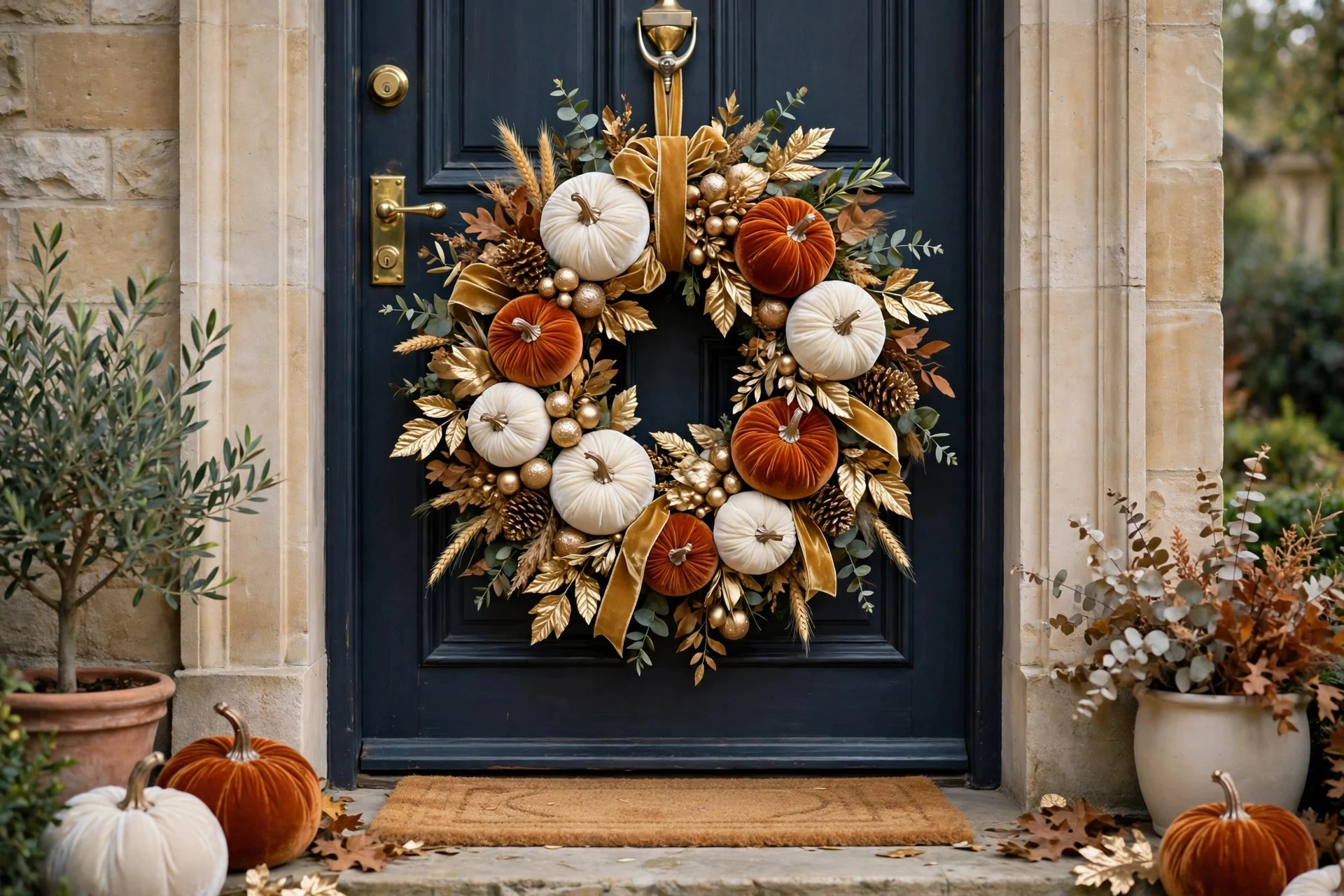
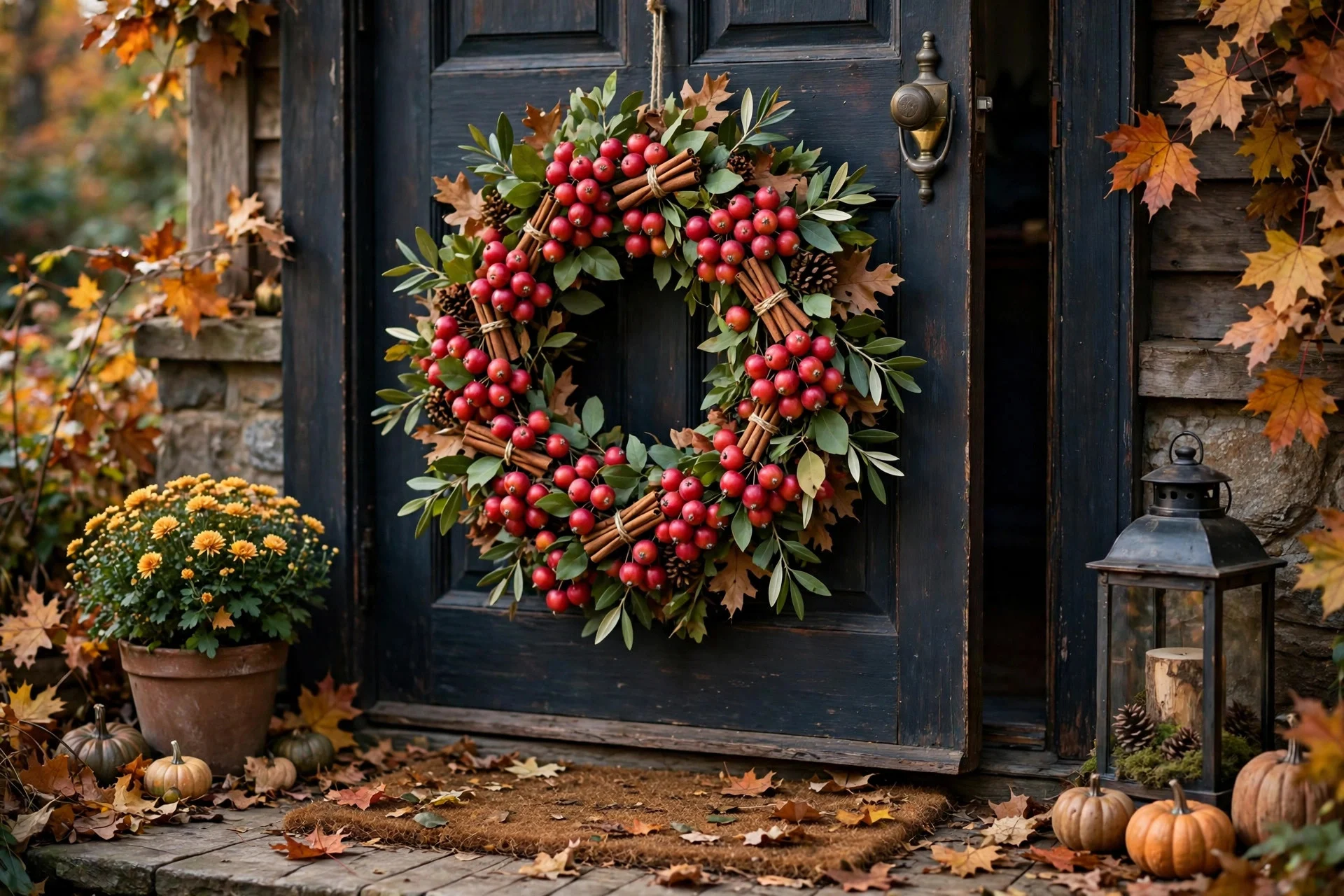
13. Red Apples and Cinnamon Sticks
Small red apples, cinnamon sticks, and green leaves make a wreath that feels like the kitchen spilled happily onto the front door. Wire faux apples onto a grapevine base in groups of three, add cinnamon sticks tied in little bundles, and fill the gaps with magnolia or bay leaves. The red, brown, and green palette works with almost any door color.
I tried this with real apples one year because I loved how they looked at the store, and within a week the birds had found them. Faux apples look just as good and last all season — save the real fruit for the pie. If you do want a natural scent, the cinnamon sticks carry it on their own. Make sure the apples are wired on tightly, because they are heavier than they look and gravity is not your friend here.
Try this: add a few sprigs of rosemary for a fresh green scent that lasts.
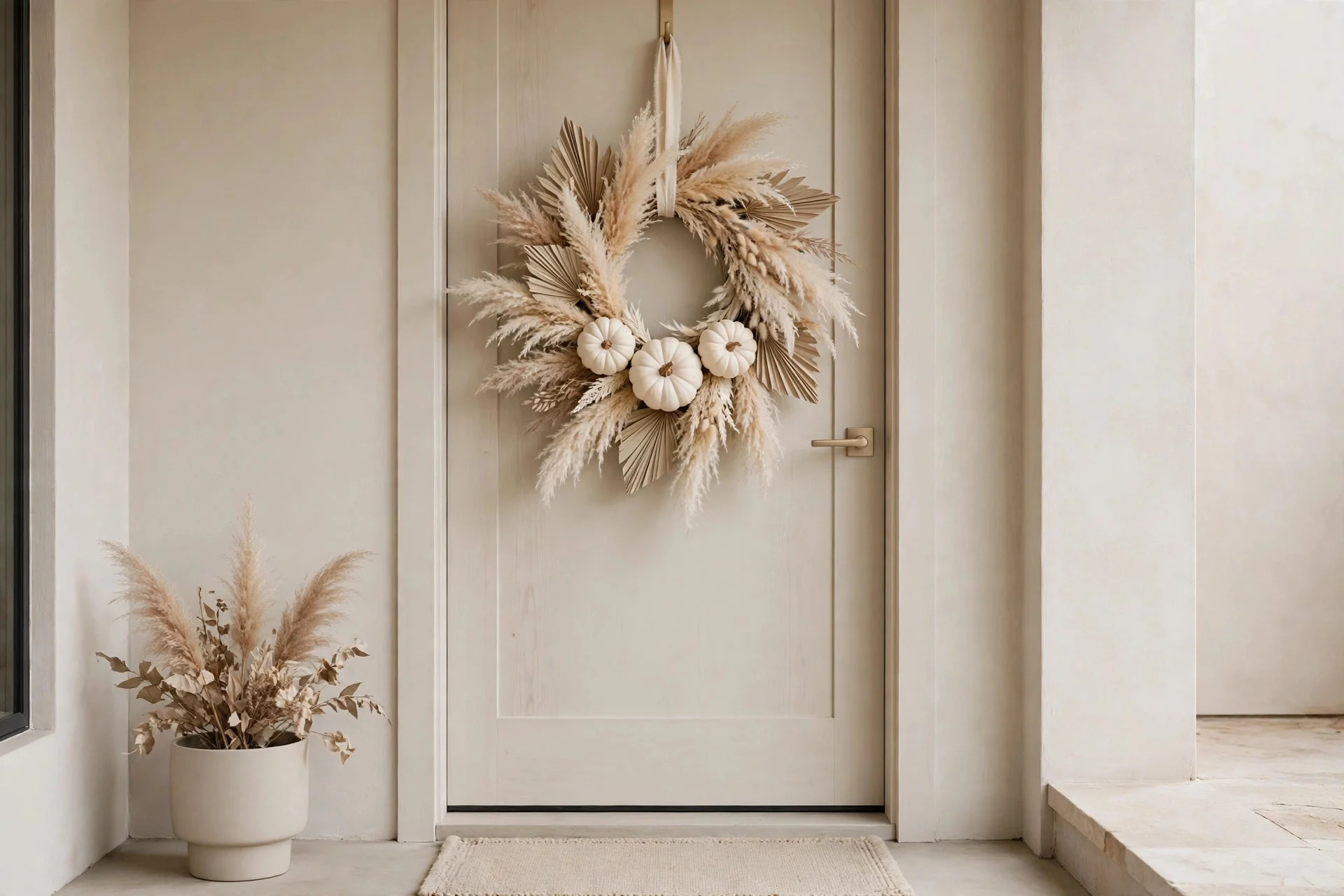
14. Neutral Cream and Pampas Grass
Not every Thanksgiving wreath has to shout in orange and red. A neutral wreath in cream, beige, and soft tan — pampas grass, dried palm, white pumpkins, and bleached pinecones — looks calm and modern, and it suits a light-colored door or a minimalist entry perfectly. Build it on a simple wire frame, keeping the pampas plumes fanning outward for a soft, full shape.
I made one of these for a friend who said orange was not her color, and she kept it up until spring. The trick with pampas is to give each plume a good shake outside before you use it, or you will have fluff all over your house. And keep it away from open flames — pampas is very dry and very flammable, so no candles right next to the door. A light hairspray mist keeps the plumes from shedding too much.
Try this: add one warm wood-toned element, like a small wooden bead garland, so it does not look washed out.
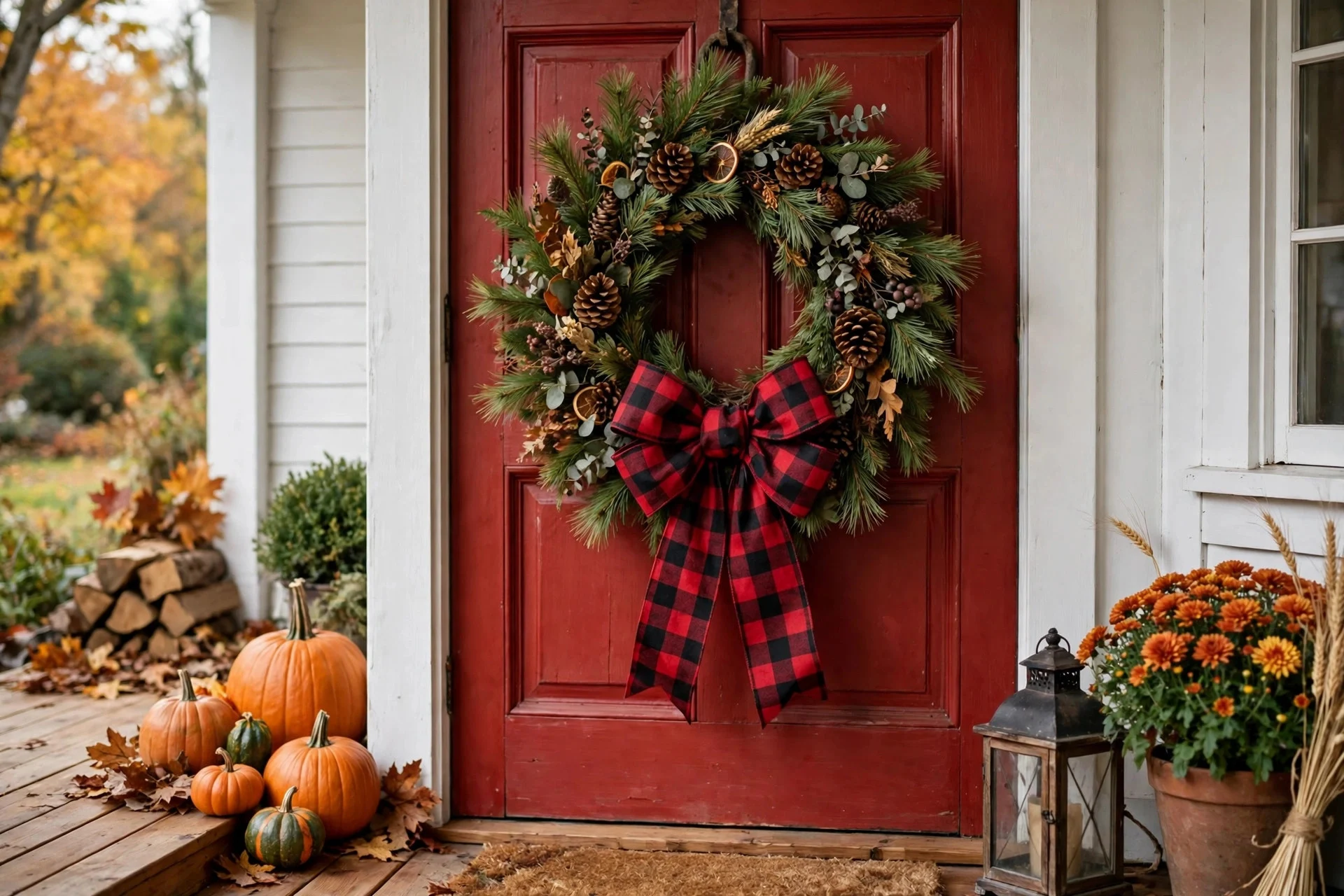
15. Pine Branches and a Big Plaid Bow
End with a classic: fresh pine branches and one big, bold plaid bow. Layer pine boughs around a wire frame, all pointing the same way, then add pinecones and a few red berries for color. The bow goes at the bottom or the top — either works — but make it big and full, with long tails that move a little in the breeze. It is the kind of wreath that looks right on any house, in any neighborhood.
I have hung some version of this wreath almost every year, and it never fails. The mistake I made early on was using pine branches that were too long and droopy, which made the wreath look tired instead of full. Trim the boughs to about eight inches and layer them thickly, and the wreath will look lush for weeks.
Try this: swap the bow for a different one in December and the same wreath works for Christmas too.
Frequently Asked Questions
How long will a Thanksgiving wreath last on my front door?
A faux or dried wreath will usually last the whole season, four to six weeks, with no trouble. A fresh one made with eucalyptus or pine will look good for two to three weeks, longer if your door is sheltered from sun and rain. Check it once a week and pull off anything that has gone soft or brown.
How do I hang a wreath without damaging my door?
An over-the-door wreath hanger is the easiest option and leaves no marks at all. A suction hook works on glass doors, and a heavy-duty outdoor command hook works on most painted doors. Avoid hammering nails into a door you care about — the holes are hard to hide later.
Can I leave my wreath out in the rain?
Most faux and dried wreaths handle rain fine, though wheat and pampas will shed and droop if they get soaked. Fresh wreaths actually like a little moisture. If a big storm is coming, bring a delicate wreath inside for the night and hang it back up in the morning.
What size wreath should I get for a standard front door?
For a standard 36-inch door, a wreath between 24 and 30 inches across looks best. Smaller than that and it gets lost, bigger than that and it overwhelms the door. Measure your door first, and leave at least three inches of space on each side of the wreath.
Final Thoughts
Your front door sets the tone for everything inside, and a Thanksgiving wreath is the simplest way to say welcome before anyone steps in. Pick the idea that fits your door, your budget, and the amount of time you actually have — then make it your own with a ribbon, a few pumpkins, or whatever you already have in the craft drawer. The best wreath is the one that makes you happy every time you come home, and any of these fifteen will do exactly that.