
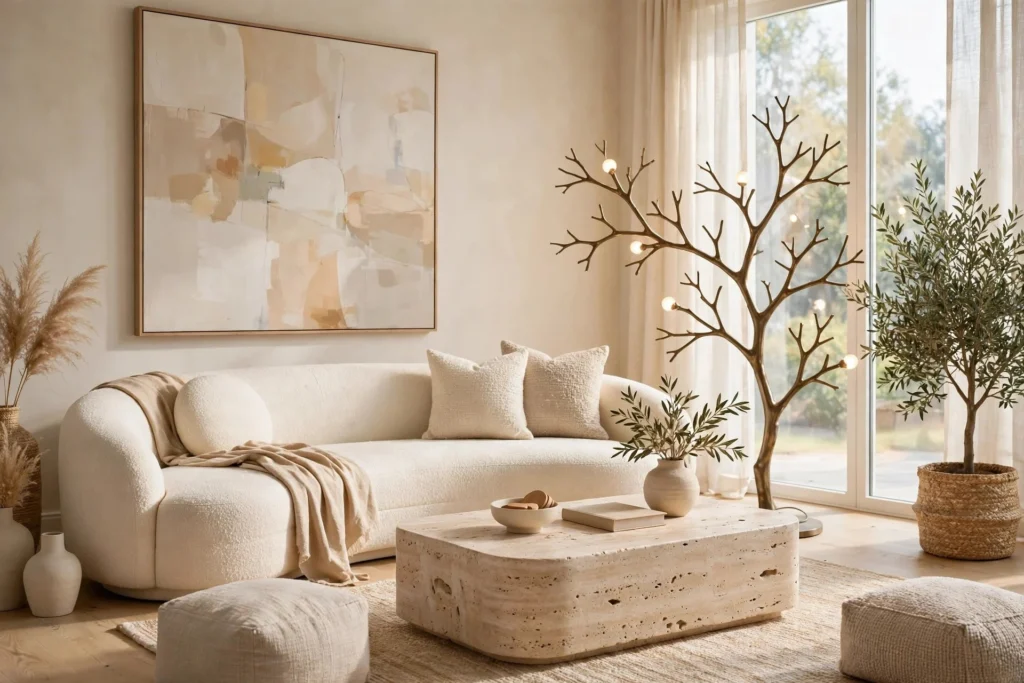
Contemporary living room decor ideas for 2026 have moved past cold, showroom-perfect rooms. This year is all about soft curves, warm neutrals, honest materials and furniture that actually gets used. The look is clean and current, but it feels lived-in, and that balance is what makes a room feel expensive without feeling untouchable.
I spent weeks studying what designers are really putting in homes right now, not just what shows up on mood boards, and the same themes kept coming up: sculptural shapes, layered lighting, rich texture and a few brave colour choices. These 17 ideas work whether you are starting from scratch or just refreshing one tired corner, and most of them cost far less than a full redesign.
1. Anchor the Room With a Curved Sofa — Contemporary Living Room Decor Ideas That Feel Soft, Not Stiff
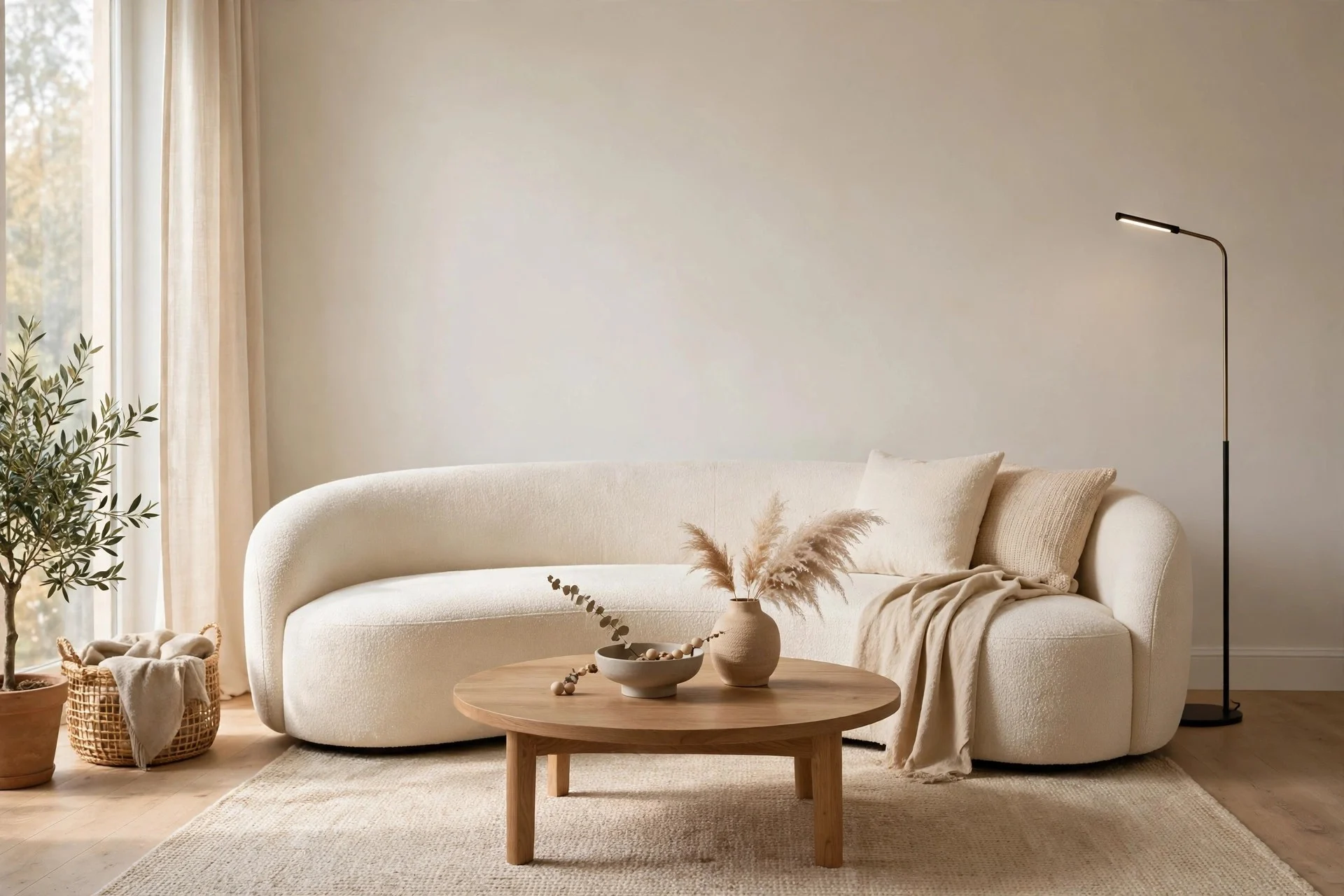
A curved sofa is the single fastest way to make a living room feel current. The gentle arc softens all the straight lines of walls, windows and TV units, and it pulls people into conversation instead of lining them up like an audience. I tried this in my own living room last spring and the whole space felt friendlier overnight, even though nothing else changed. Pick a low-profile curve in a warm neutral like oatmeal, mushroom or soft sage, then measure twice before you order. Curved sofas eat up more floor than they look like they will, so tape the outline on the floor first and live with it for a day.
Try this: pair the sofa with a round coffee table and one slim floor lamp, then leave the wall behind it bare for a week before deciding on art.
2. Lean Into Warm Minimalism Instead of Stark White
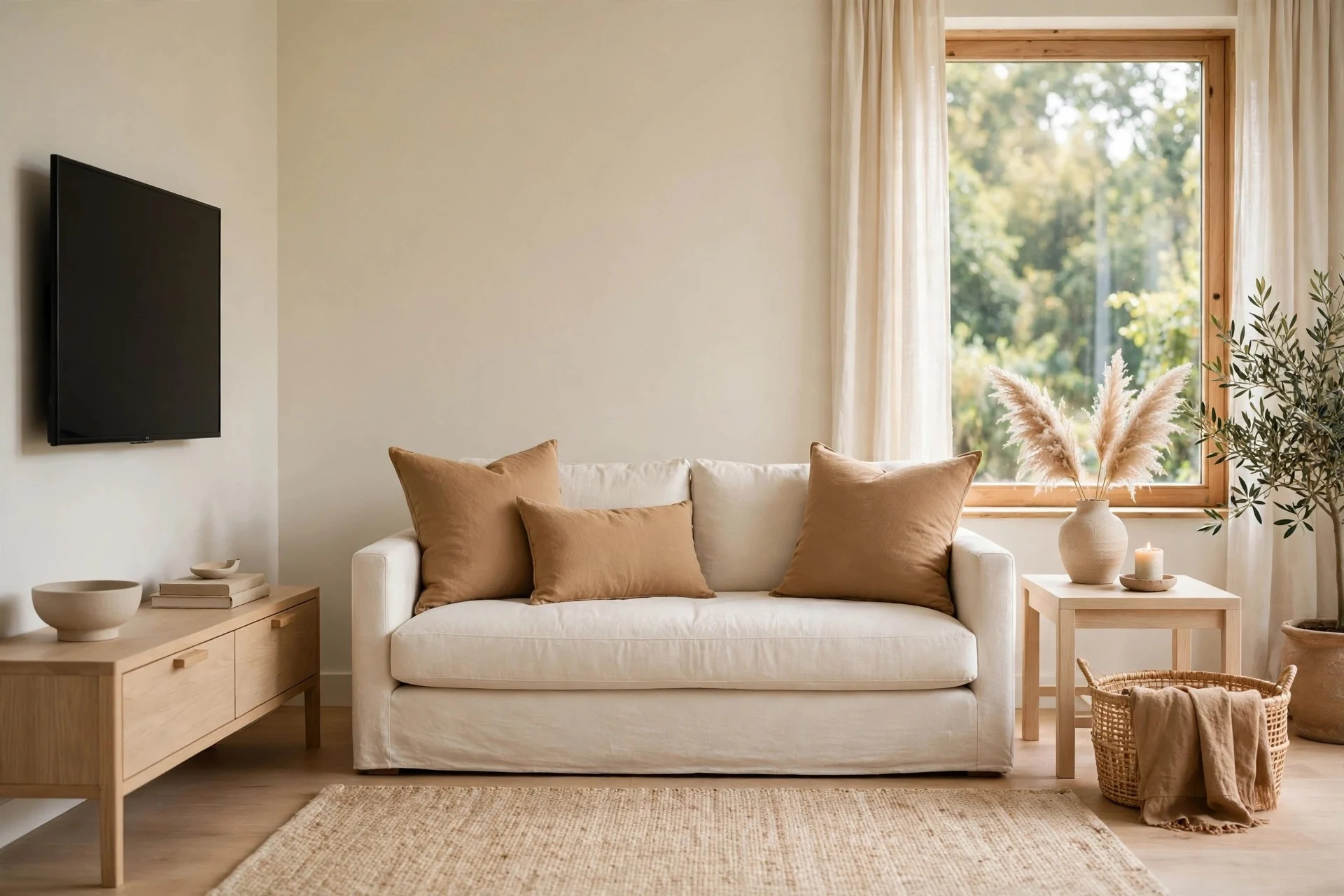
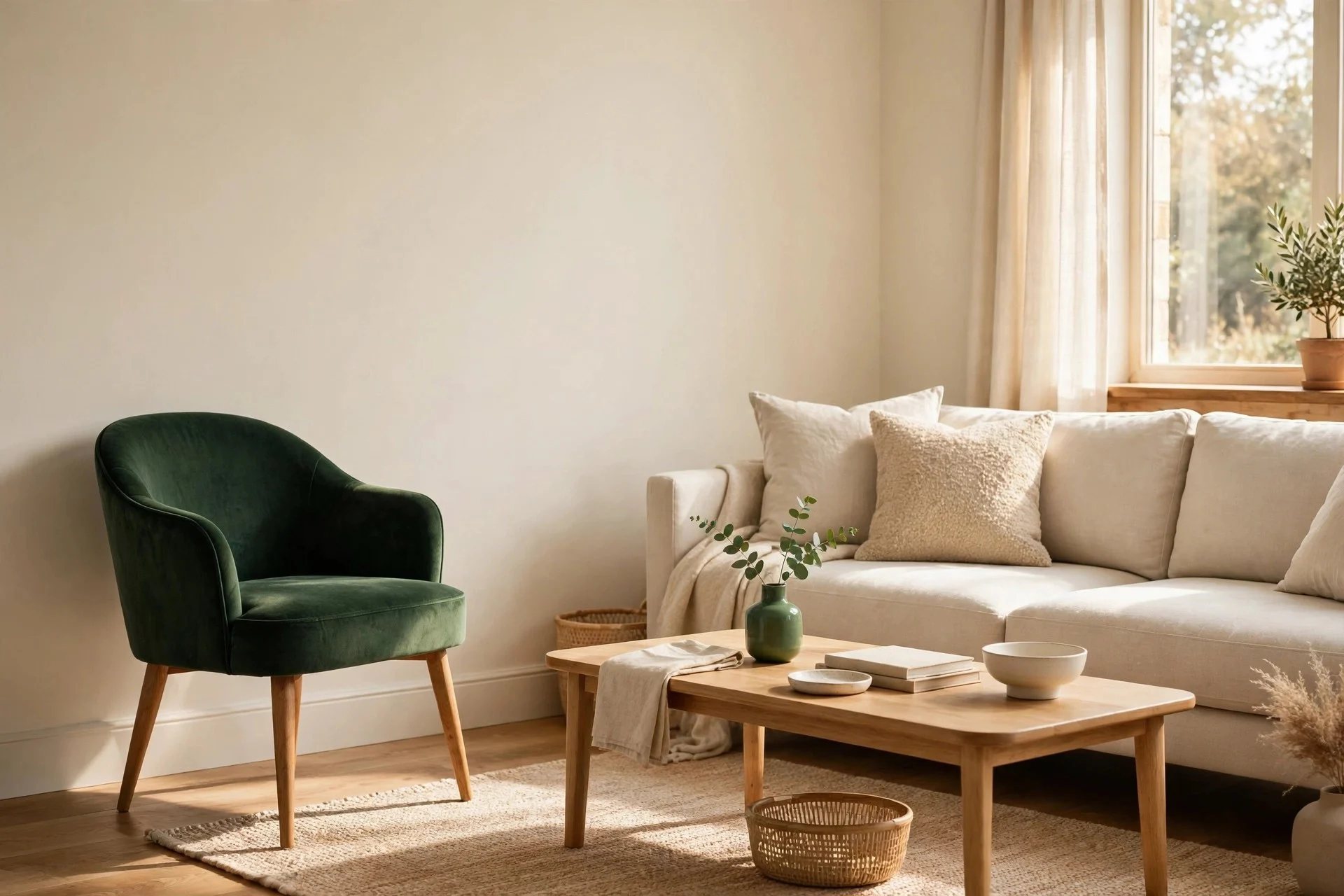
Warm minimalism keeps the calm of a pared-back room but swaps icy white for creamy plaster tones, pale oak and soft greige. The trick is to keep surfaces clear while letting texture do the talking. Start by painting the walls a warm off-white with a hint of yellow or pink in it, then bring in one pale wood piece, like a low media bench or a side table. I made the mistake of buying everything in the same shade of white once, and the room looked flat and washed out. A mix of warm tones, from cream to camel, is what gives the look its depth. Keep decor to a few well-chosen pieces and let each one breathe.
Try this: hold paint swatches against your sofa fabric in daylight, not under shop lights, before you commit to a wall colour.
3. Make One Sculptural Light the Star
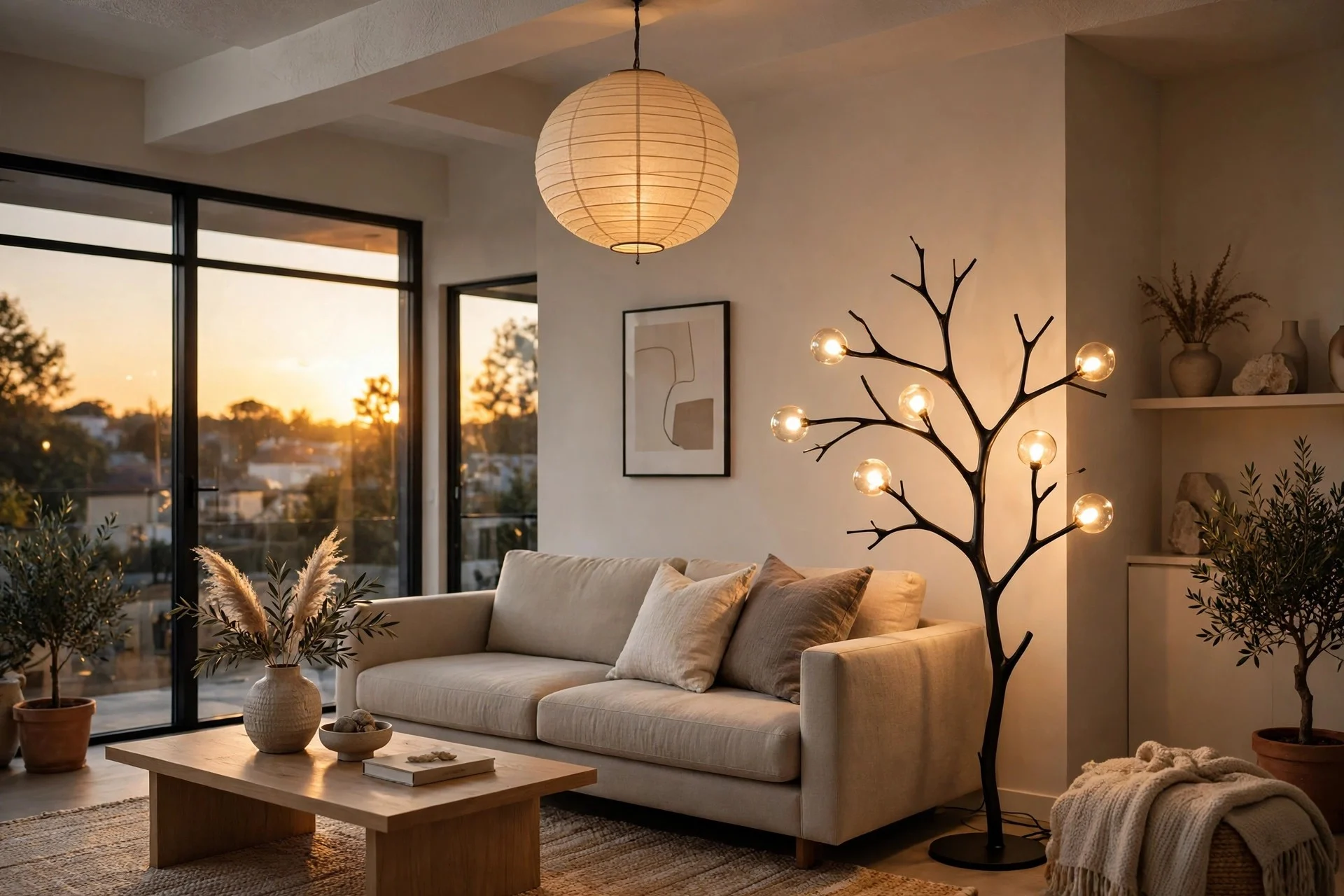
A sculptural light fixture works like jewellery for the room. Think of a branching floor lamp, a paper lantern pendant or a cluster of glass globes hanging at different heights. It draws the eye up, fills an empty corner and makes even a plain sofa look considered. Choose one statement piece rather than three competing ones. I learned this the hard way after hanging a bold pendant and adding a dramatic floor lamp in the same small room, and they fought each other all evening. Hang the pendant low enough to feel part of the seating area, around 150 to 170 centimetres above the floor, and put it on a dimmer so you can soften it after dark.
Try this: switch the light on in the shop or check a photo of it lit at night, because many sculptural lights look dull when they are off.
4. Bring In Bouclé and Other Touch-Me Textures
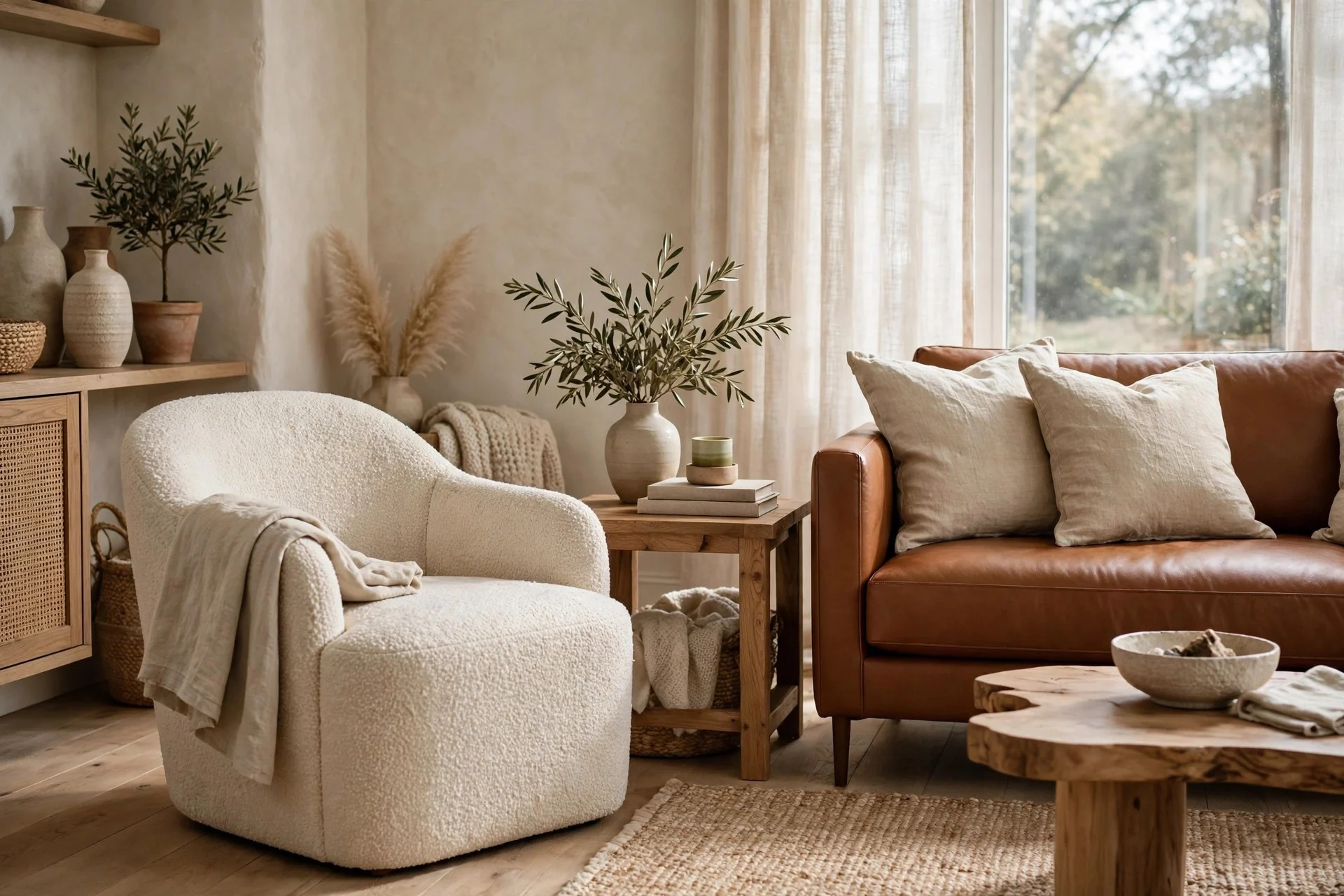
Bouclé is still everywhere in 2026, and for good reason. That nubby, cloud-like fabric makes a chair or a cushion look inviting from across the room, and it begs to be touched. Use it on one hero piece, like an accent chair or a pair of ottomans, rather than covering every seat in it. I tried a full bouclé sofa once and it was a nightmare to keep clean with a dog in the house, so now I keep the bouclé on pieces that get lighter use. Mix it with smooth leather, linen or velvet so the textures play off each other. A bouclé throw over a leather chair arm is a lovely, low-commitment way to test the look.
Try this: order a fabric swatch first and rub it, spill a little water on it and vacuum it, before you buy the chair.
5. Hang One Oversized Piece of Art
One big piece of art beats a fussy gallery wall in a contemporary room. A single oversized canvas or framed print gives the eye a place to rest and makes the room feel intentional, even if the rest of the furniture is simple. Go for something at least two-thirds the width of the sofa it hangs above, and hang it so its centre sits at eye level, roughly 145 centimetres from the floor. I once hung a small print above a wide sofa and it looked lost, like a postage stamp on a billboard, so I learned to size up. Abstract shapes, soft landscapes and bold colour blocks all work well. Leave the wall around it empty so the art can do its job.
Try this: cut a paper template the size of the art and tape it to the wall for two days before you hang anything.
6. Mix Materials Like a Designer
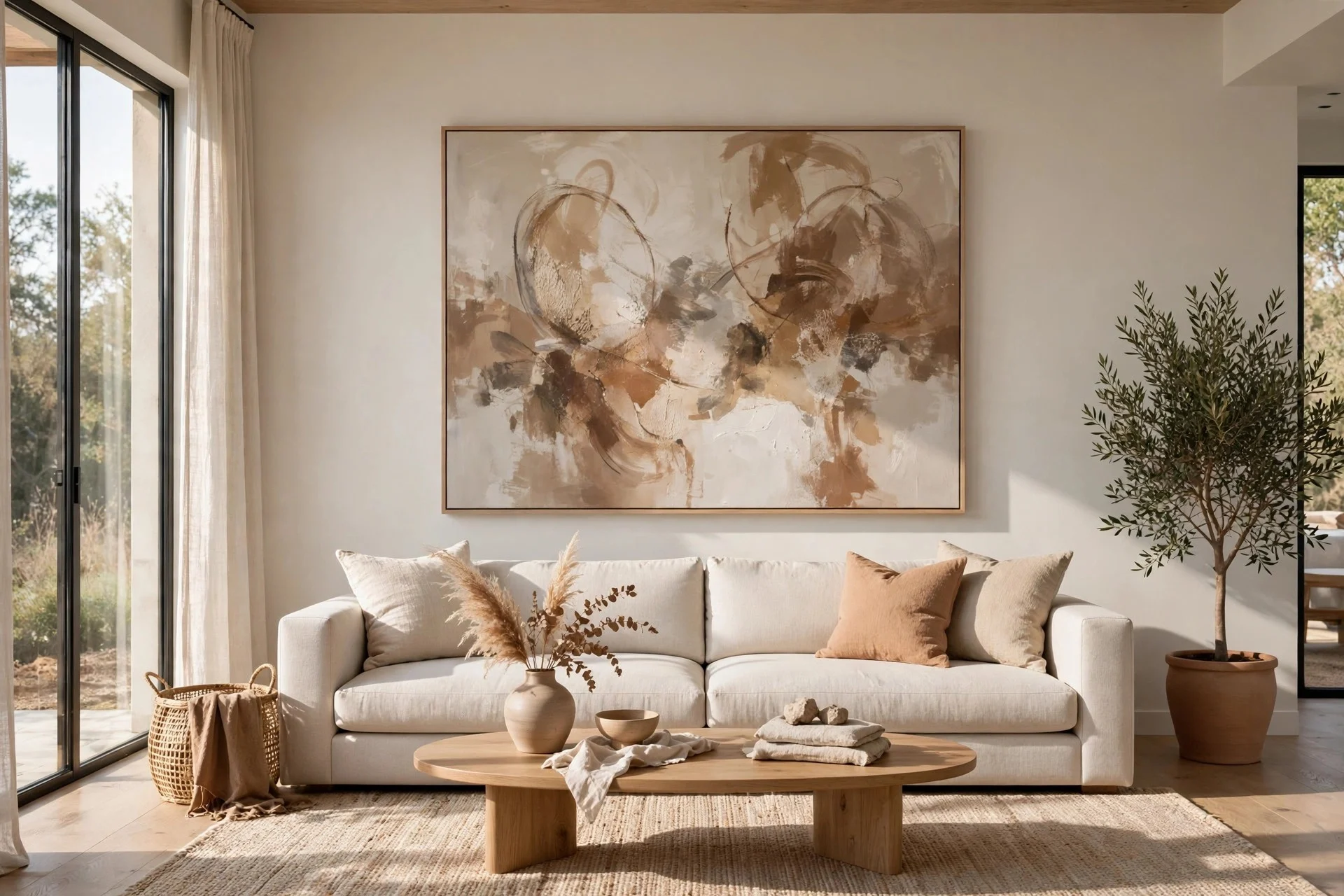
The most interesting contemporary rooms mix materials instead of matching everything. Warm wood next to cool stone, matte black metal beside soft linen, a glass side table near a chunky wool rug. The contrast is what makes each piece stand out. Start with three materials and repeat each one at least twice in the room so the mix feels deliberate rather than random. I once bought a marble coffee table, a marble lamp and marble coasters all at once, and the room felt like a stone showroom. One stone piece, one wood piece and one metal accent is a safer recipe. Keep the colour palette tight so the materials, not the colours, create the variety.
Try this: gather one small sample of each material on your coffee table and live with the group for a week before buying.
7. Choose a Low, Modular Sectional You Can Rearrange
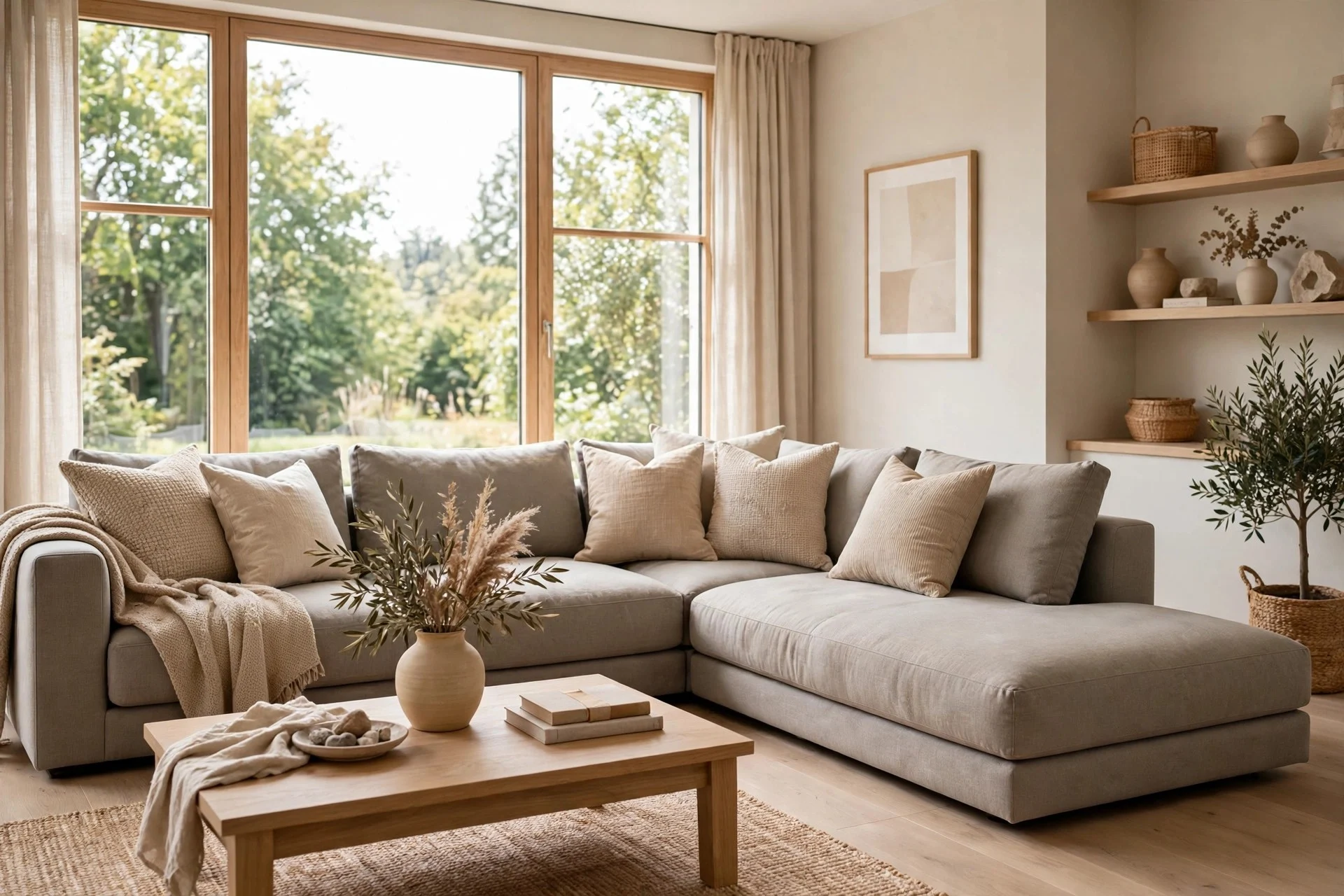
Low modular sectionals are the workhorse of 2026 living rooms. Their clean horizontal lines make ceilings feel taller, and because the pieces move, you can reshape the room for movie nights, guests or a quiet evening alone. Pick a low back, deep seats and a washable fabric if you have kids or pets. I bought a fixed L-shaped sofa years ago and regretted it every time I wanted to move the room around, so modular is now my rule. Start with two or three pieces and add a chaise or corner unit later if you need it. Keep the colour neutral and let cushions carry the pattern.
Try this: sketch two layouts on paper, one for everyday use and one for guests, before you choose how many pieces to buy.
8. Add One Rich Colour Accent and Let It Breathe
A single rich colour, like deep forest green, burnt terracotta or inky navy, gives a neutral room its personality. The key is restraint. Use the colour in two or three places, such as velvet cushions, one accent chair or a painted alcove, and keep everything else calm. I once painted a whole wall terracotta and loved it for a month, then found it tiring to live with, so now I favour smaller doses. A deep green velvet chair against cream walls feels brave without shouting. Repeat the accent in a small detail, like a vase or a book spine, so it looks planned. If you tire of it, cushions are far cheaper to swap than paint.
Try this: live with the colour in cushion form for a month before you paint a wall or buy a big chair in it.
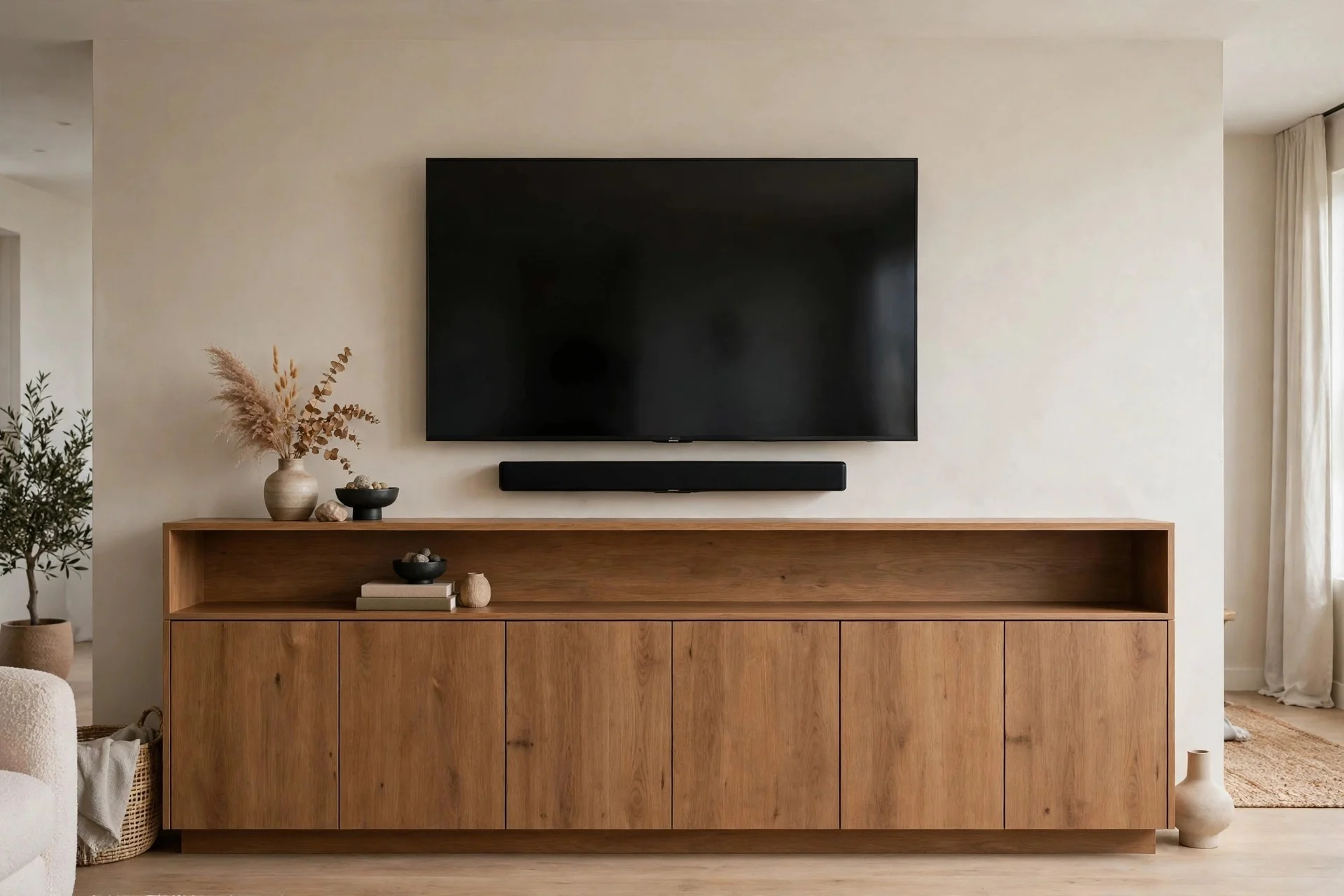
9. Hide the Clutter With a Sleek Media Wall
A media wall hides cables, consoles and clutter behind calm, flat-fronted storage, and it makes the TV look like part of the design instead of a black hole on the wall. Build it from simple handleless cabinets in a warm wood or a soft matte finish, and leave one open shelf for a few pretty objects. I hid my TV cables inside a floating cabinet last year and the difference was shocking, the room looked twice as tidy with no other change. Mount the TV at eye level from your seat, not above the fireplace, and add a soundbar shelf so nothing sits on the floor. Keep the styling on the open shelves sparse, three objects per shelf at most.
Try this: measure your largest console and add ten centimetres of breathing room before you order the cabinets.
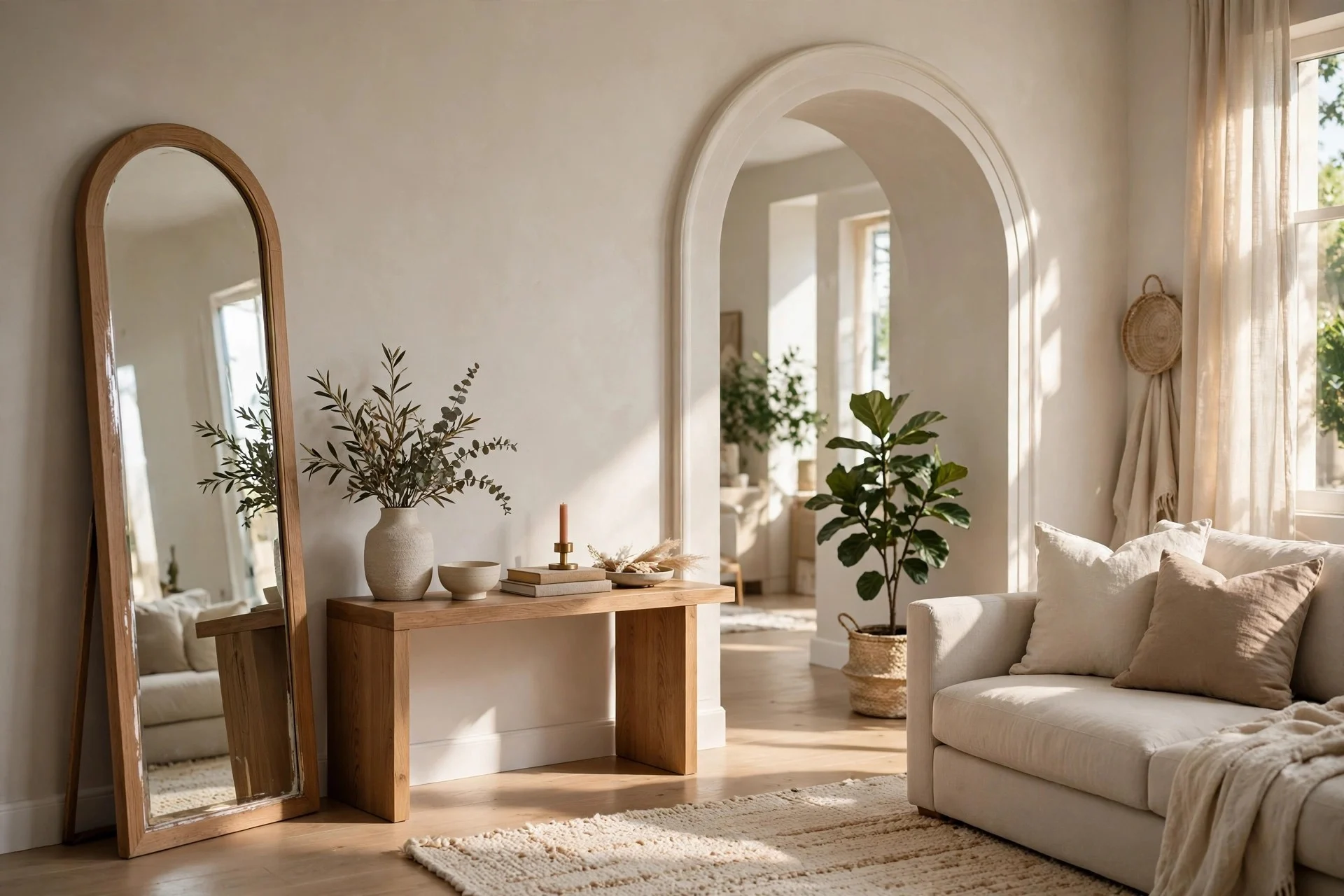
10. Soften Corners With Arches
Arches are the gentle shape of 2026. An arched mirror, an arched bookshelf or even an arched doorway breaks up all the rectangles in a living room and adds a soft, almost old-world charm. Start small with an arched mirror above a console or an arched floor lamp, and see how the shape changes the mood. I leaned a tall arched mirror against a blank wall and it instantly made the corner feel designed rather than forgotten. If you are feeling braver, paint an arch shape directly on the wall behind a chair or a reading lamp for a graphic, renter-friendly feature. Keep the arch in a colour close to the wall so it feels calm, not cartoonish.
Try this: prop the arched mirror in place and check it from the sofa, because the reflection matters as much as the shape.
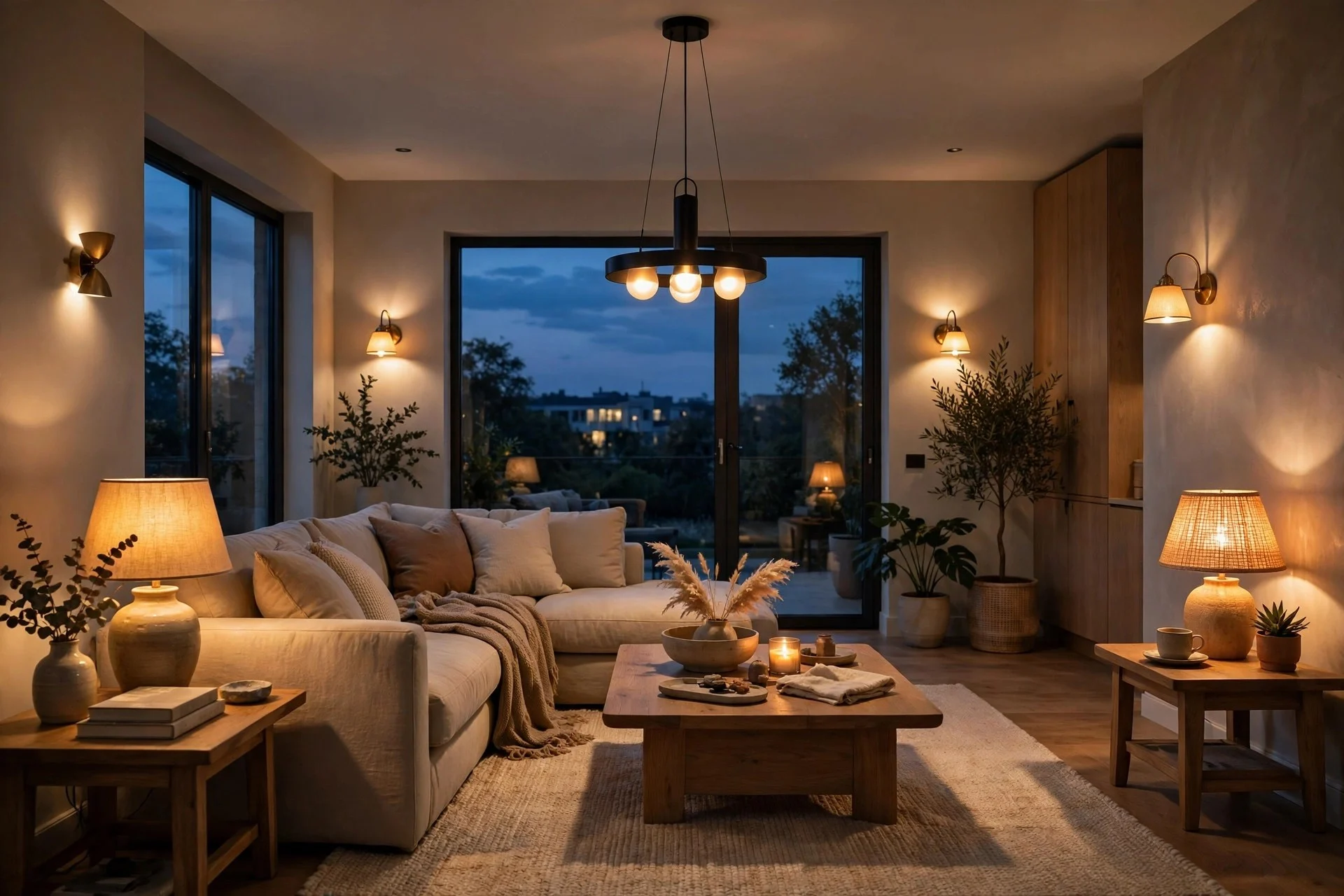
11. Layer Your Lighting in Three Levels
Good lighting is never one ceiling light doing all the work. Layer it in three levels: overhead for general light, task lighting like a reading lamp by the sofa, and soft accent light from sconces, candles or a low shelf light. Each layer should sit on its own switch or dimmer so you can change the mood in seconds. I used to rely on a single bright ceiling light and wondered why my living room felt harsh at night, then added two small lamps and the whole room changed. Use warm bulbs around 2700K for the evening layers, and keep the brightest light for cleaning or reading. The goal is a room that glows, not one that glares.
Try this: turn off the ceiling light tonight and see if two lamps alone are enough, then add a third layer only if the room feels dark.
12. Ground the Room With a Natural Stone Coffee Table
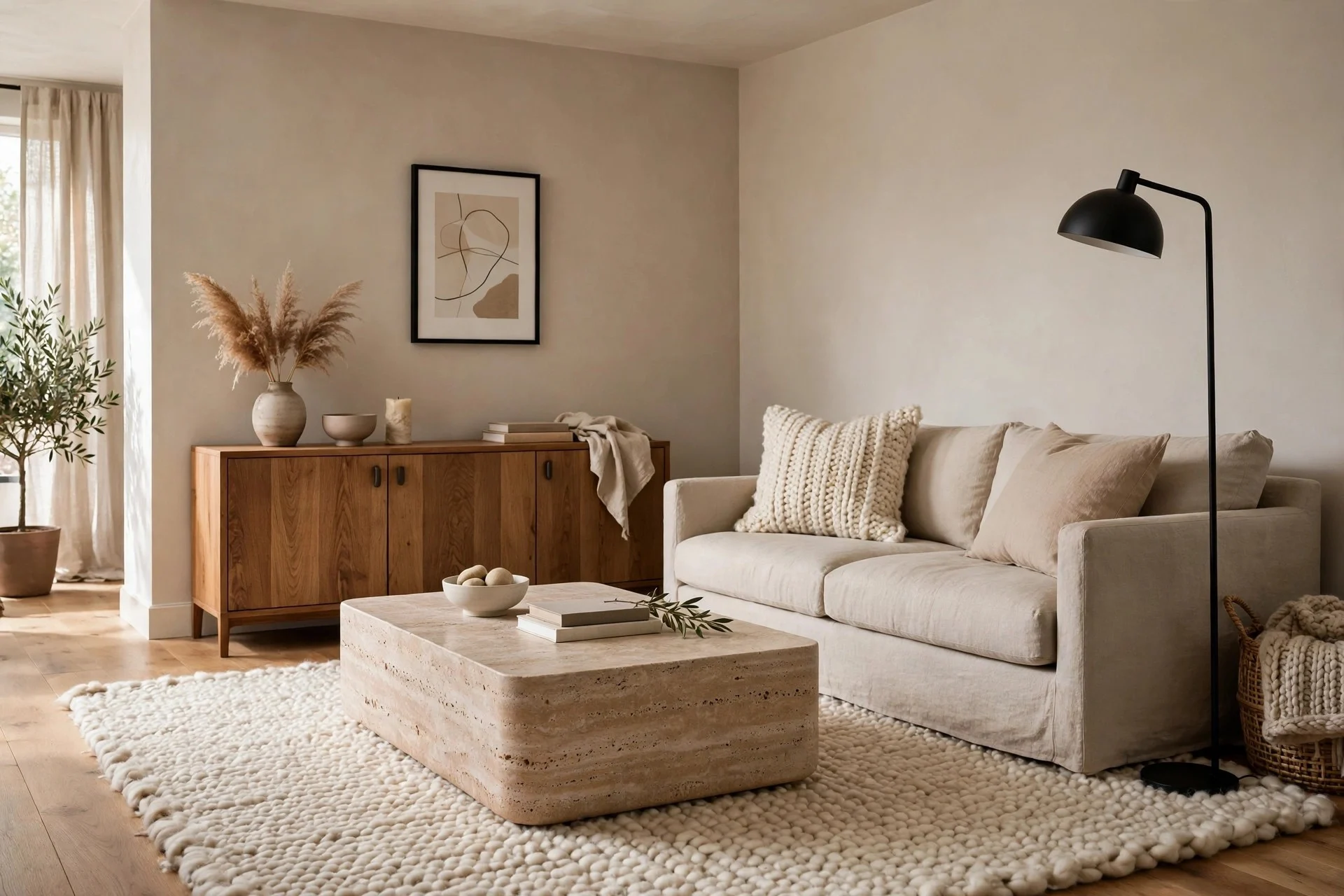
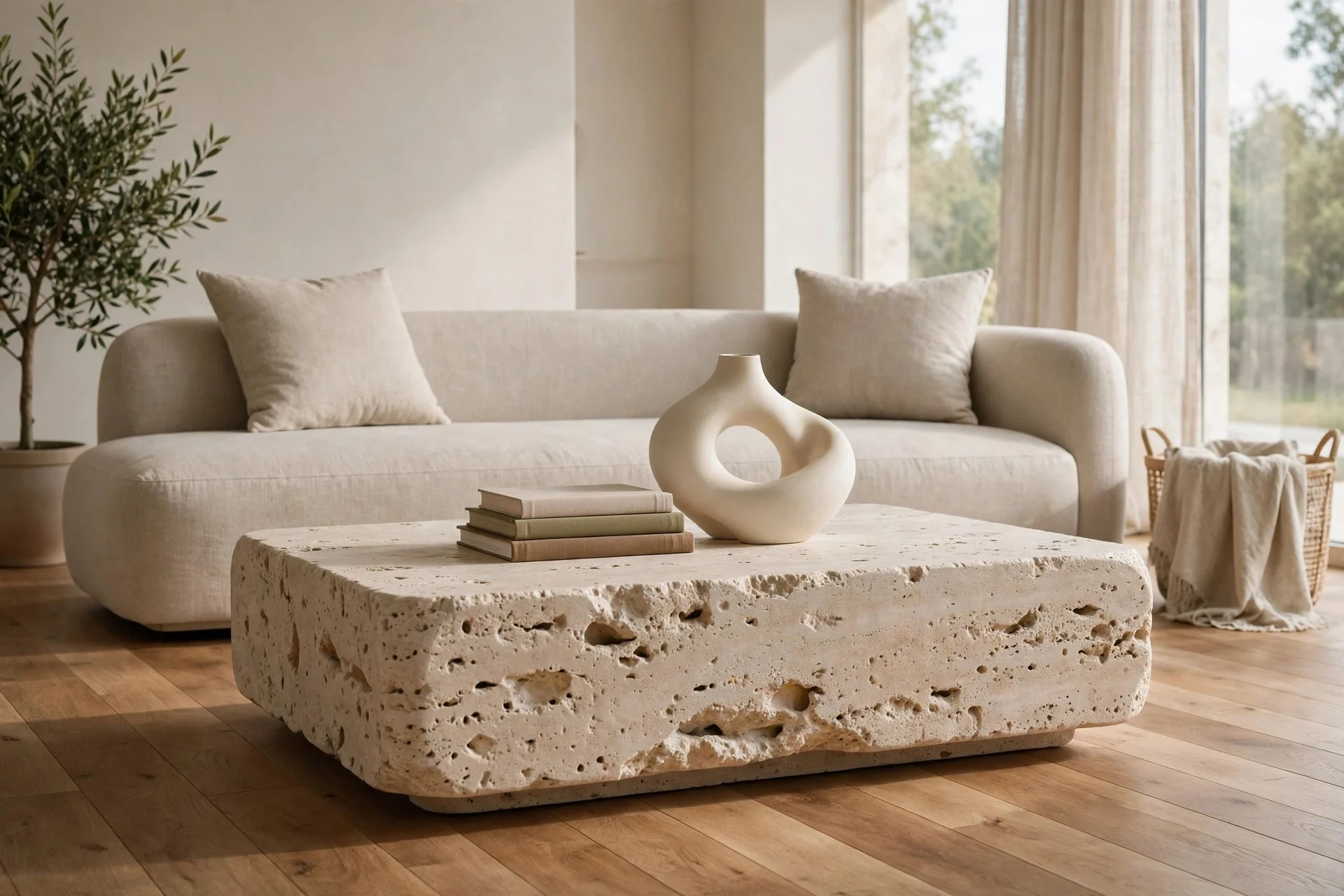
A travertine or marble coffee table brings a piece of nature into the room and gives the seating area a solid, grounded centre. The stone’s soft veins and warm tones sit beautifully against fabric sofas and wood floors. Choose a chunky, low shape, either a simple slab or a soft-edged oval, and keep the top mostly clear. I made the mistake of crowding my first stone table with books, candles and a tray, and the stone disappeared under the clutter. Now I keep one sculptural object and one small stack of books on it, and the table gets to shine. Seal the stone once a year so coffee rings wipe off easily.
Try this: place a coaster under every glass for the first month until using them becomes a habit.
13. Style Open Shelving With Restraint
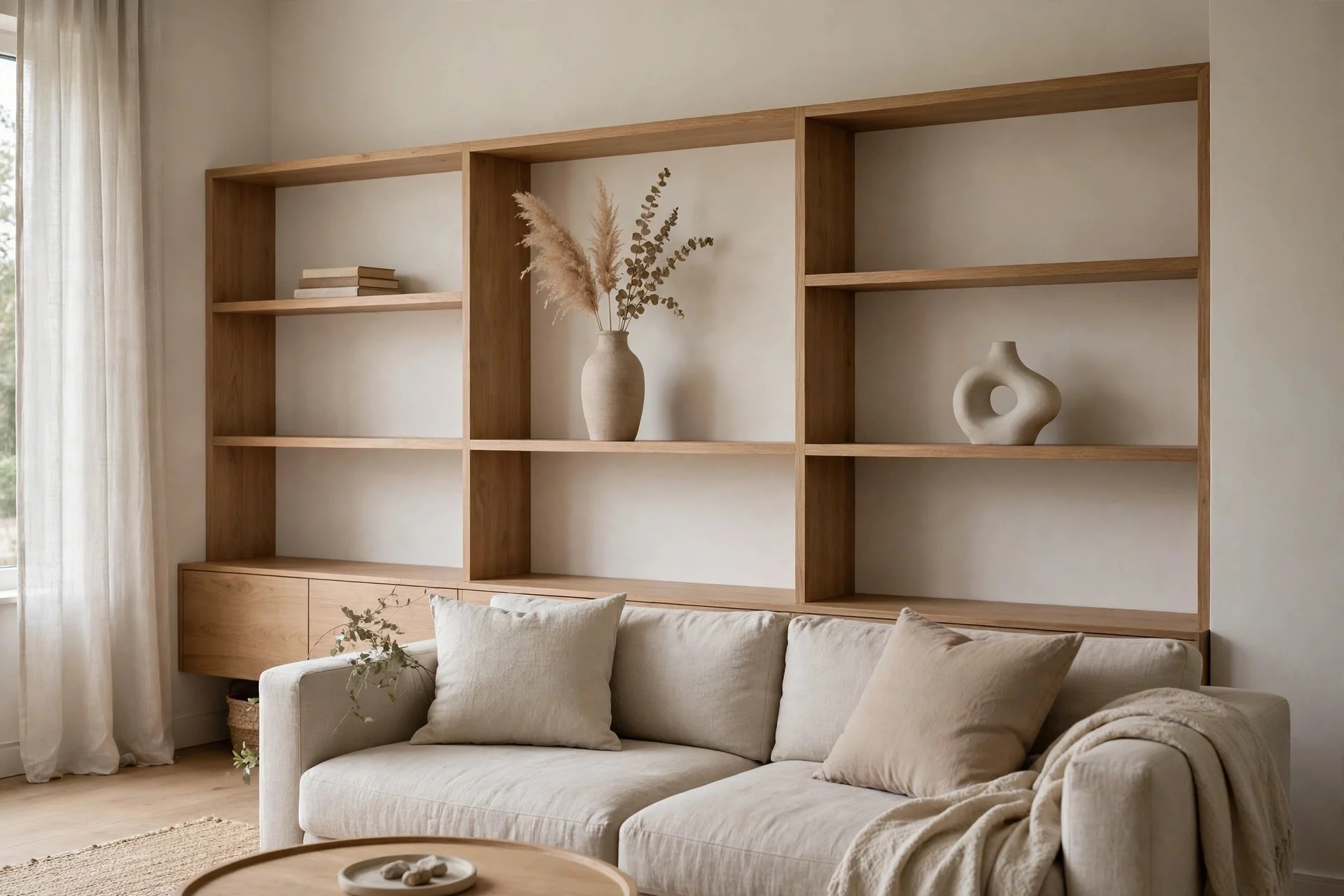
Open shelving looks effortless in photos and chaotic in real life unless you style it with restraint. The rule I follow is simple: fewer, bigger objects beat lots of small ones. Group items in threes, mix a tall vase with a stack of books and one sculptural piece, and leave at least a third of each shelf empty. I once filled every shelf to the edge and the wall looked like a shop, so I took half of it away and the room breathed again. Keep the colour palette to two or three tones that match the room, and hide the messy bits, like chargers and remotes, in a closed box on the lowest shelf. Dust the shelves weekly or they will betray you.
Try this: take a photo of your shelves, because a photo shows clutter your eyes have learned to ignore.
14. Let One Big Plant Be the Sculpture
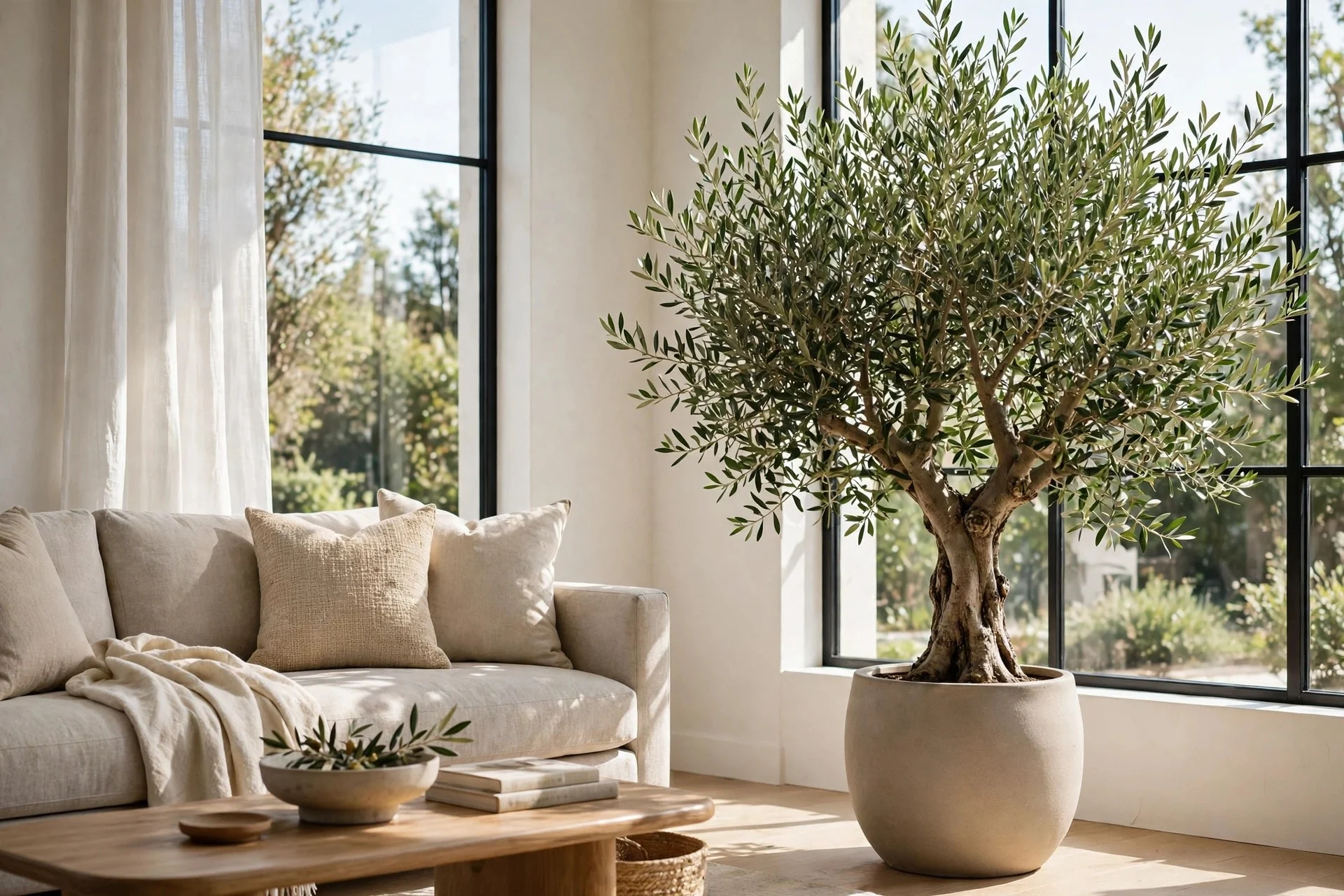
A single large plant, like an olive tree or a fiddle leaf fig, does the job of a sculpture while also making the air feel fresher. One statement plant in a beautiful pot has far more impact than a crowd of small ones scattered around. Place it in a bright corner where it gets a few hours of light, and choose a pot that matches your room, like matte ceramic or woven seagrass. I killed two fiddle leaf figs before learning to check the soil with my finger instead of watering on a schedule, so now I water only when the top few centimetres feel dry. Wipe the leaves monthly so they stay glossy and catch the light.
Try this: buy the plant in its nursery pot first and live with it for two weeks before spending money on a fancy planter.
15. Add Texture to the Walls With Limewash or Wood Slats
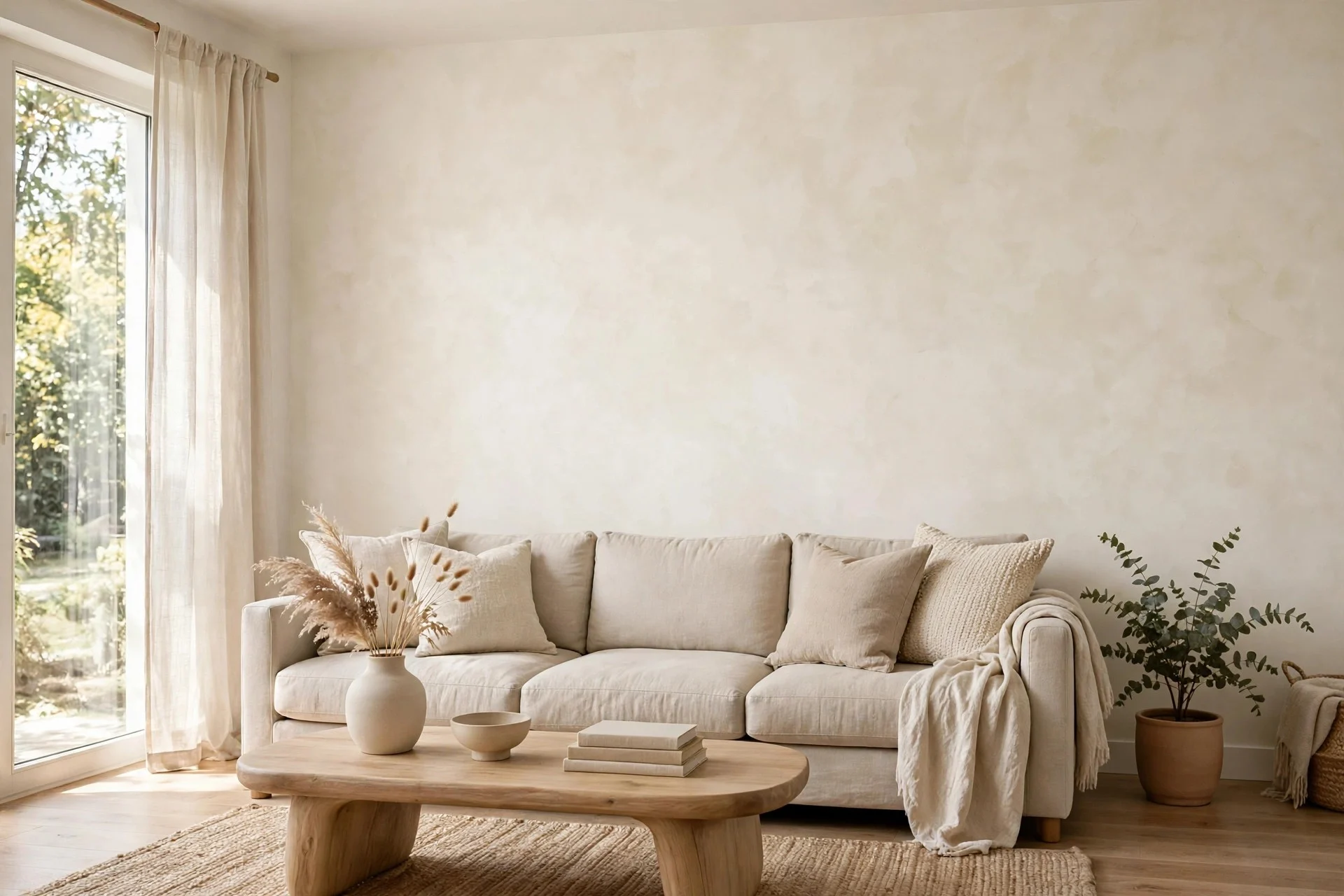
Flat painted walls can make even a well-furnished room feel plain, so give one wall some texture. Limewash paint creates a soft, cloudy finish that shifts with the light, while slim vertical wood slats add warmth and a gentle rhythm. Pick one feature wall, usually the one behind the sofa, and keep the other walls plain so the texture stays special. I limewashed a single wall in my living room and guests keep asking what the finish is, because it looks different in morning and evening light. Apply limewash in thin, crisscross layers, and let each coat dry fully before the next. Wood slats work best when they run floor to ceiling in a narrow panel.
Try this: test the limewash on a large board first and move it around the room at different times of day.
16. Pick Furniture That Works Twice as Hard
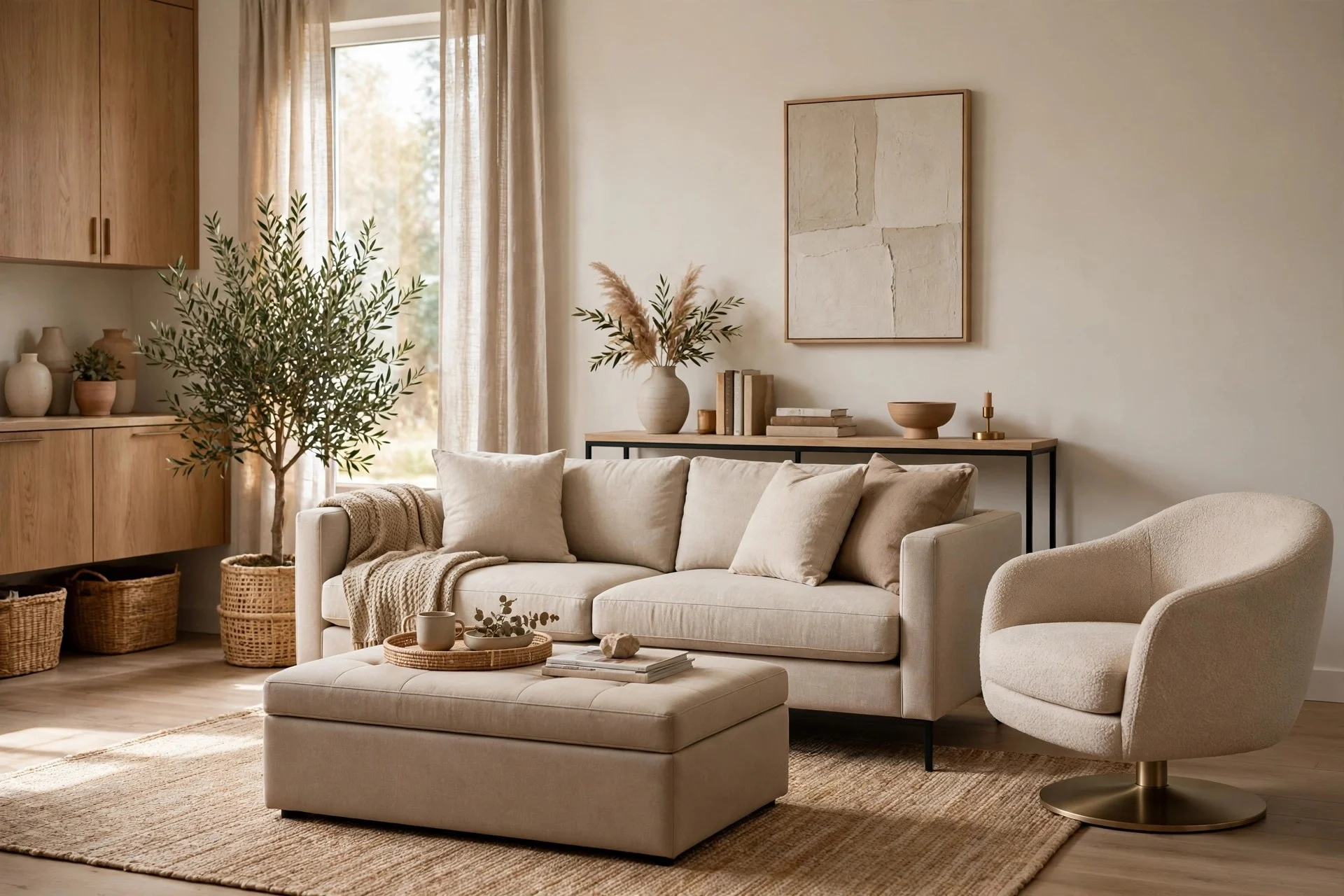
In a contemporary living room, the smartest pieces do two jobs. A storage ottoman holds blankets and doubles as a coffee table, a swivel chair turns from the TV to the window, and a slim console behind the sofa hides chargers and holds drinks. Look for pieces with hidden storage first, because clutter is what makes a calm room feel messy. I swapped a plain coffee table for a lift-top one last winter and it became the spot for laptop work, board games and Sunday breakfasts. Measure the piece against how you actually live, not how the showroom looks. A beautiful chair you never sit in is just an expensive sculpture.
Try this: list the three things that pile up in your living room, then buy the storage piece that solves the biggest pile first.
17. Finish With Layered Textiles and a Reading Corner
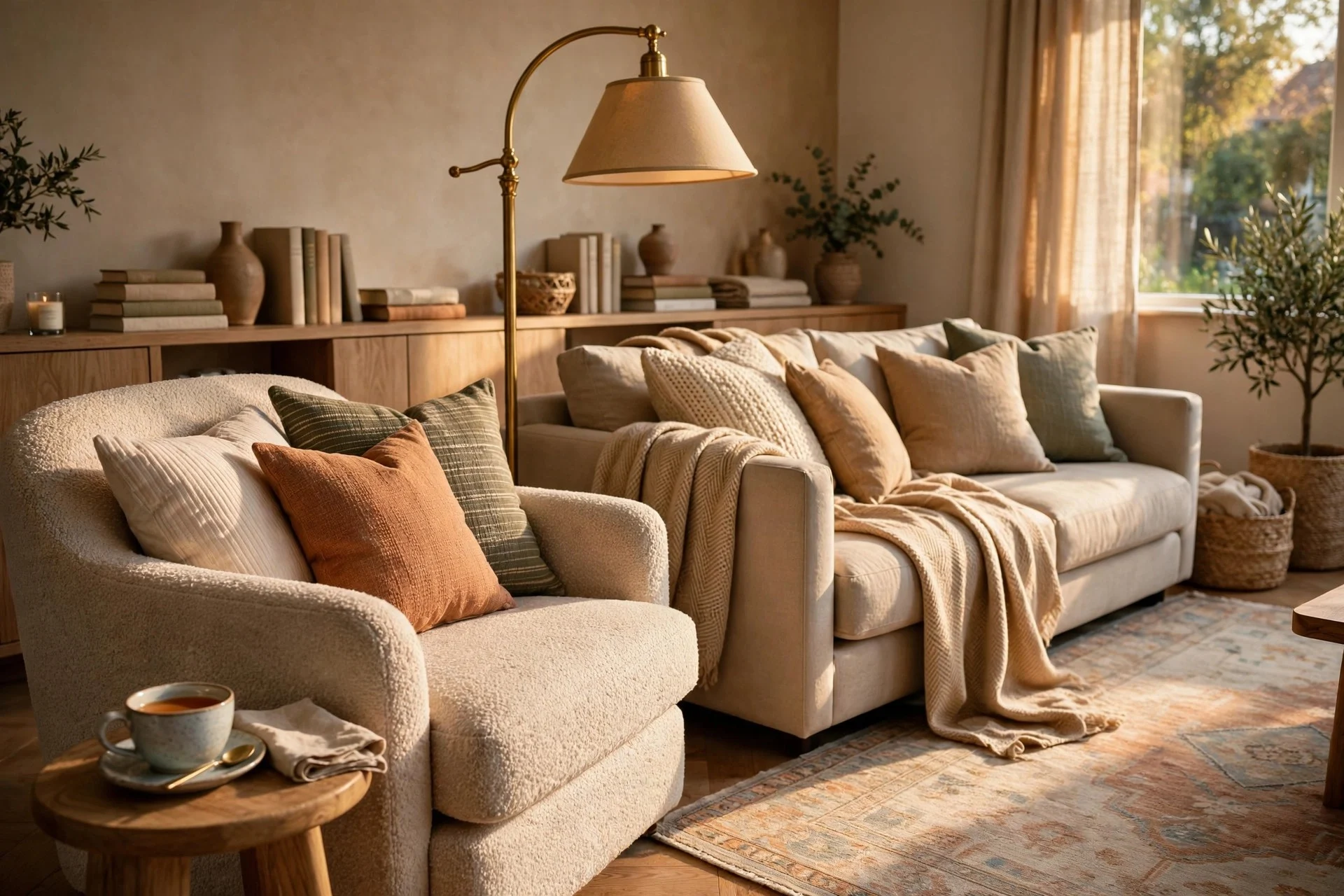
Textiles are the final layer that turns a designed room into a room people love sitting in. Layer a soft throw over the sofa arm, add two or three cushions in different textures, and lay a rug large enough that the front legs of the sofa sit on it. Then carve out one small reading corner with a comfortable chair, a floor lamp and a side table for a cup of tea. I used to think a reading corner needed a whole spare room, until I squeezed a chair into a sunny corner and it became the most used seat in the house. Keep the cushion colours close to the room’s palette so the layers feel rich, not noisy, and swap the throw with the seasons.
Try this: sit in the reading chair for ten minutes with a book before you buy it, because comfort matters more than looks here.
What defines a contemporary living room in 2026?
A contemporary living room in 2026 mixes clean lines with soft, organic shapes, warm neutrals, natural materials like wood and stone, and a few sculptural pieces. It feels calm and uncluttered, but the textures and curves keep it warm and welcoming rather than cold or minimal for its own sake.
Are curved sofas still in style in 2026?
Yes, curved sofas are still very much in style, and they have become a signature shape of contemporary design. The key is choosing a gentle curve in a durable, neutral fabric and keeping the rest of the room simple so the sofa stays the star.
How do I make a contemporary living room feel cosy?
Layer texture through rugs, throws, cushions and curtains, use warm lighting on dimmers, and add one or two natural elements like wood or a large plant. Cosiness in a contemporary room comes from softness and warmth, not from filling every surface.
What colours work best for contemporary living room decor?
Warm whites, greige, soft sage and pale oak form the base, with one rich accent like deep green, terracotta or navy for personality. Keeping the palette to three or four tones stops the room from feeling busy and lets the shapes and materials shine.
Final Thoughts
The best contemporary living rooms in 2026 are not the ones with the most expensive furniture, they are the ones that feel calm, warm and easy to live in. Start with one or two ideas from this list, the ones that solve a real problem in your room, and live with them for a few weeks before adding more.
Small changes, like a sculptural lamp, a textured wall or a well-chosen rug, can shift the whole mood of a room. Pick the idea that made you smile, try it this weekend, and let your living room grow into the space you actually want to spend time in.