
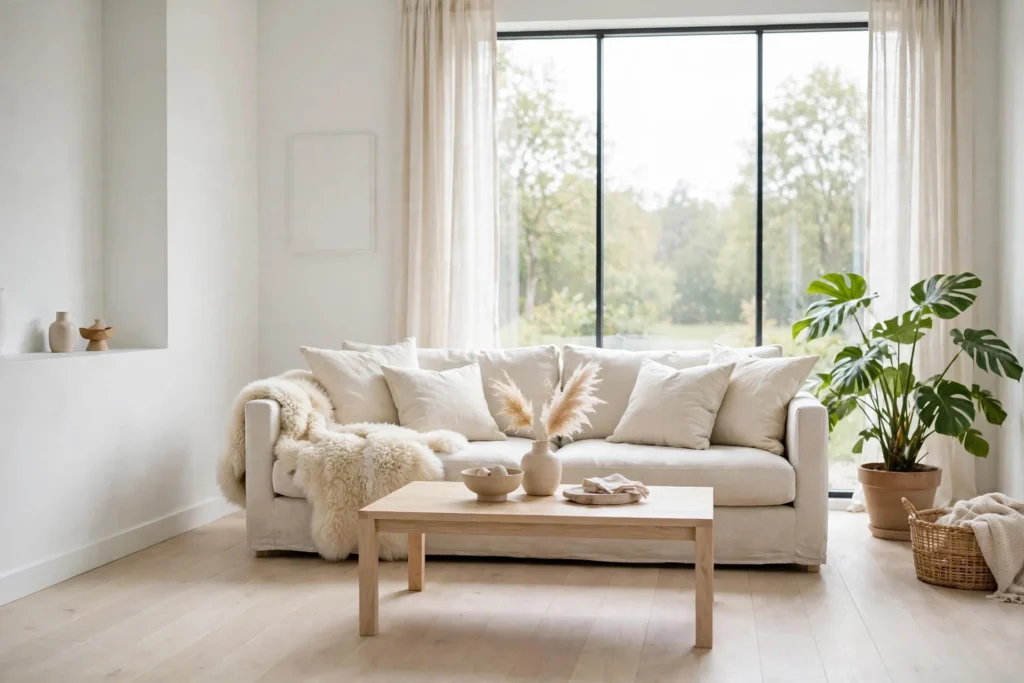
Scandinavian living room decor ideas work so well because they start with light, not stuff. When I first tried this look in my own living room, I made the classic mistake of buying a dozen small accessories before I had sorted the light, the colour, and the layout. The room looked busy, not calm. Once I stripped it back to white walls, pale wood, and a few soft textures, the whole space felt bigger and easier to live in, even on grey winter afternoons.
The trick is to keep every choice simple and useful. Pick a pale base, add one or two natural materials, bring in soft textiles for warmth, and leave some empty space on purpose. You do not need a big budget or a full furniture swap. Most of these ideas use what you already own, moved around or lightened up, and each one below takes an afternoon at most.
1. Scandinavian Living Room Decor Ideas Start With White Walls and Pale Wood Floors
White walls and pale wood floors are the base of almost every Scandinavian living room, and for good reason. The pale surfaces bounce daylight around the room, so even a small or north-facing space feels brighter and more open. I tried this in a room with dark laminate first, and no amount of white cushions could fix how heavy it felt. If you cannot change the floor, a large pale rug does a similar job. Keep the wall white warm, not blue-white, so the room still feels soft. Paint one wall first and live with it for a day before you commit to the rest.
Try this: paint a test patch in warm white, check it in morning and evening light, then roll the walls and add a pale wood or light-toned rug to ground the room.
2. Choose a Light Linen Sofa in Off-White or Soft Grey
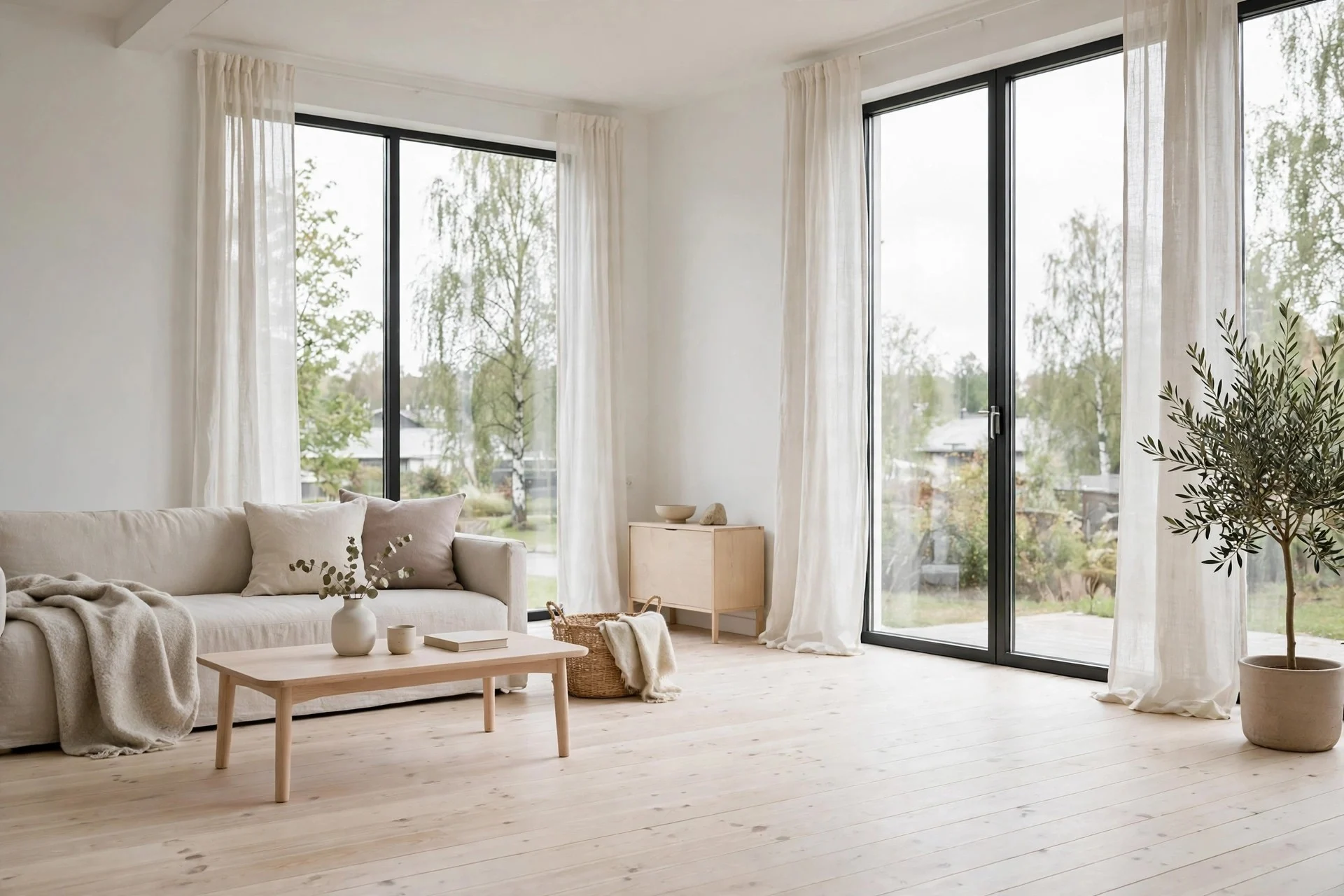
A light linen sofa sets the tone for the whole room. Off-white, soft grey, or pale oatmeal linen looks relaxed, not stiff, and it pairs with almost any wood tone. I tried a dark leather sofa in this style once and the room lost its lightness straight away, so I learned to let the sofa stay pale and add colour through cushions instead. Look for a simple shape with straight arms and wooden legs you can see. Slipcovers are a smart pick if you have kids or pets, because you can wash them. Keep the sofa away from the wall by a few inches so the room can breathe.
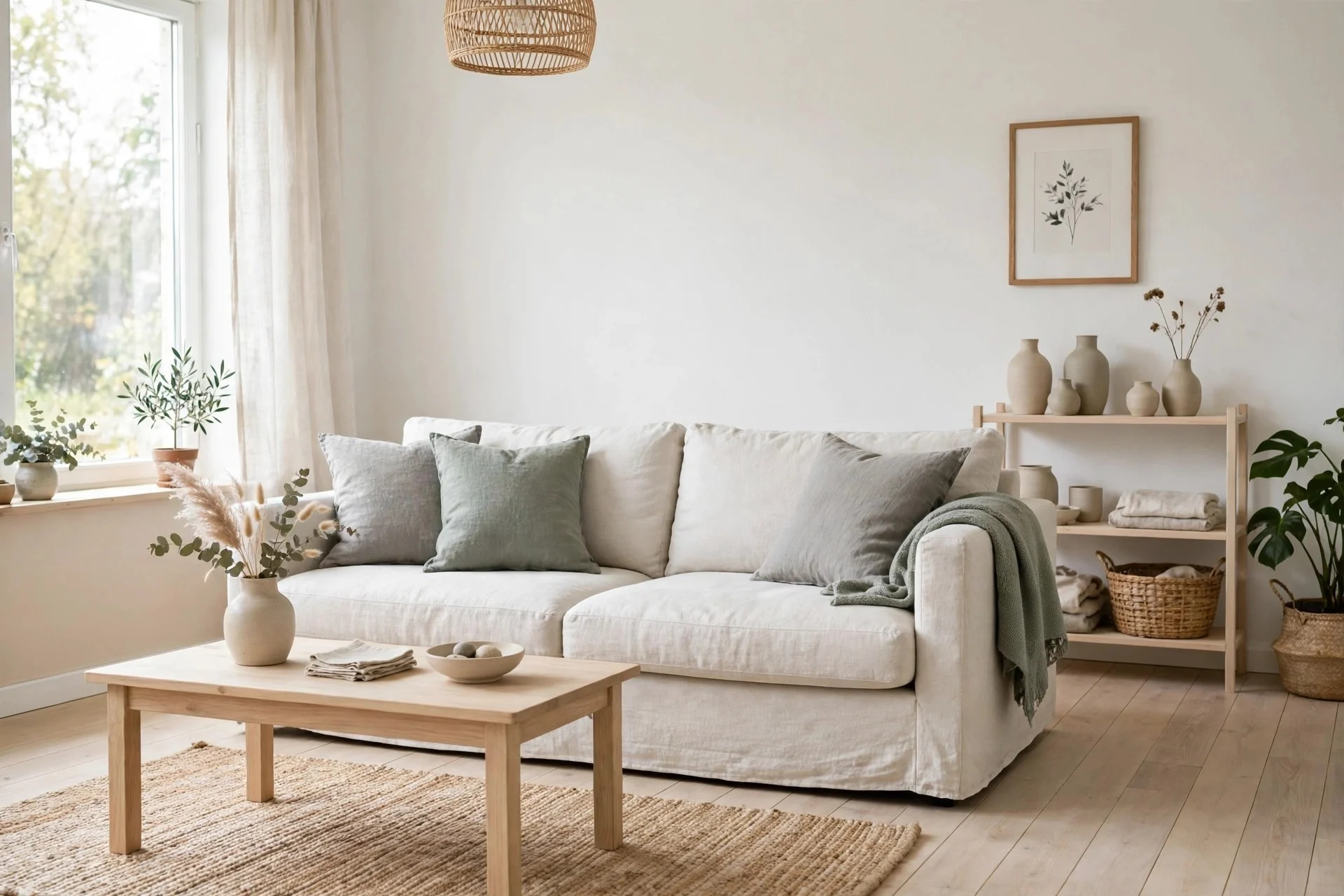
Try this: pick a washable linen slipcover in off-white, add two cushions in muted sage and grey, and keep a folded throw over one arm.
3. Layer Sheepskin Throws and Soft Knit Blankets
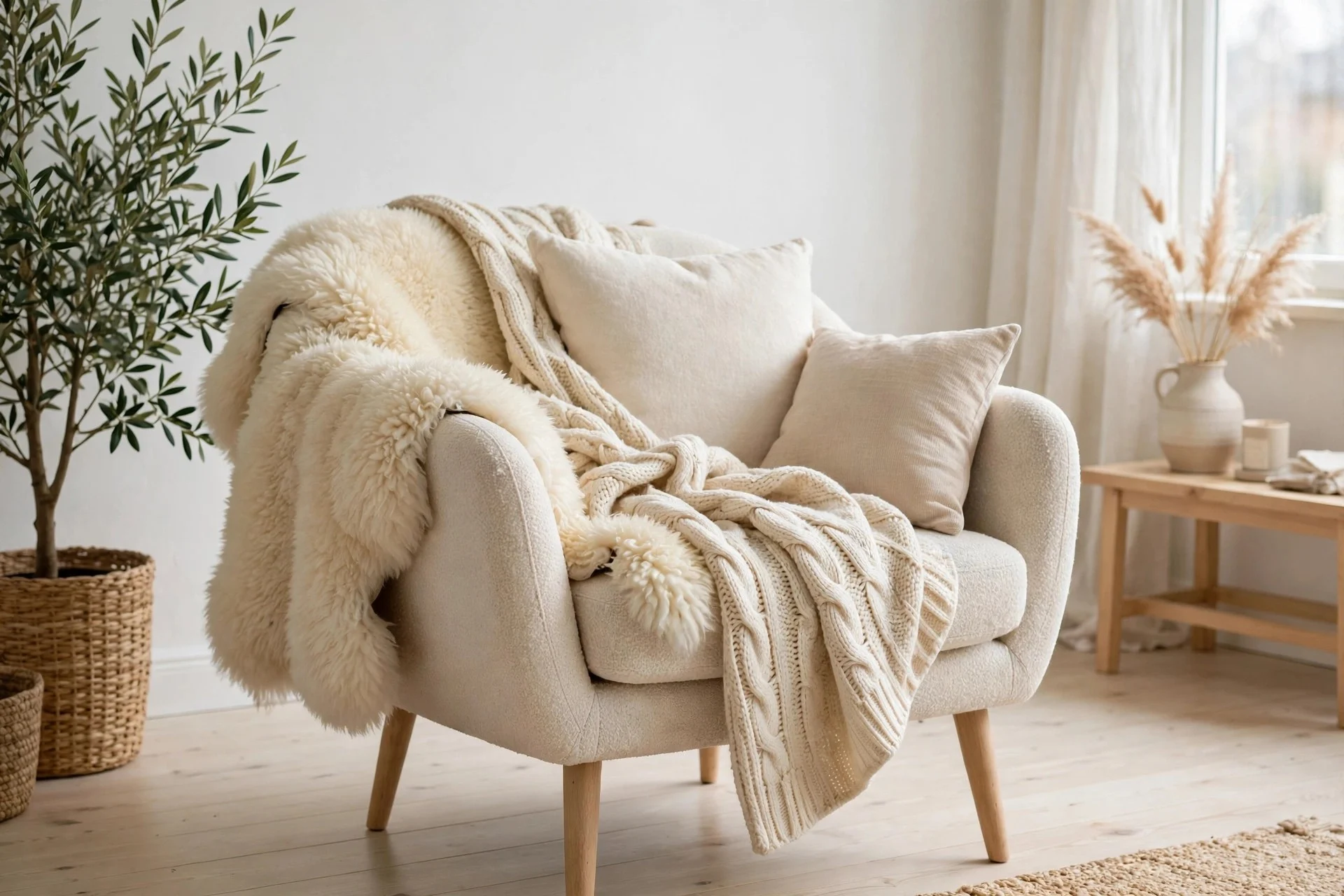
Scandinavian rooms look simple, but they never feel cold, and textiles are why. A sheepskin throw over an armchair, a chunky knit blanket on the sofa, and a soft cushion or two add the warmth that plain white walls need. I tried this with just one thin throw at first and it looked like an afterthought. Two or three layers, in cream, grey, and soft beige, work much better. Mix textures rather than colours: wool, linen, and cotton together feel rich without looking busy. Drape, do not fold everything into perfect squares, or the room will look like a shop display.
Try this: lay a sheepskin on your favourite chair, drape a knit blanket over the sofa arm, and add one linen cushion in a soft neutral tone.
4. Pick Simple Functional Furniture With Clean Lines
Scandinavian furniture is made to be used, not just looked at. Choose pieces with clean lines, visible wooden legs, and no fussy details: a low coffee table, a slim sideboard, and a chair you actually sit in. I made the mistake of buying a bulky storage unit that filled the whole wall, and the room felt cramped for months until I swapped it for a slimmer one. Measure before you buy, and leave a clear path through the room. One good piece beats three average ones. Pale oak, ash, or birch keeps the look light, and a round coffee table softens a room full of straight lines.
Try this: swap one bulky piece for a slimmer pale-wood version, leave at least a metre of walking space, and choose a round coffee table if your sofa is long.
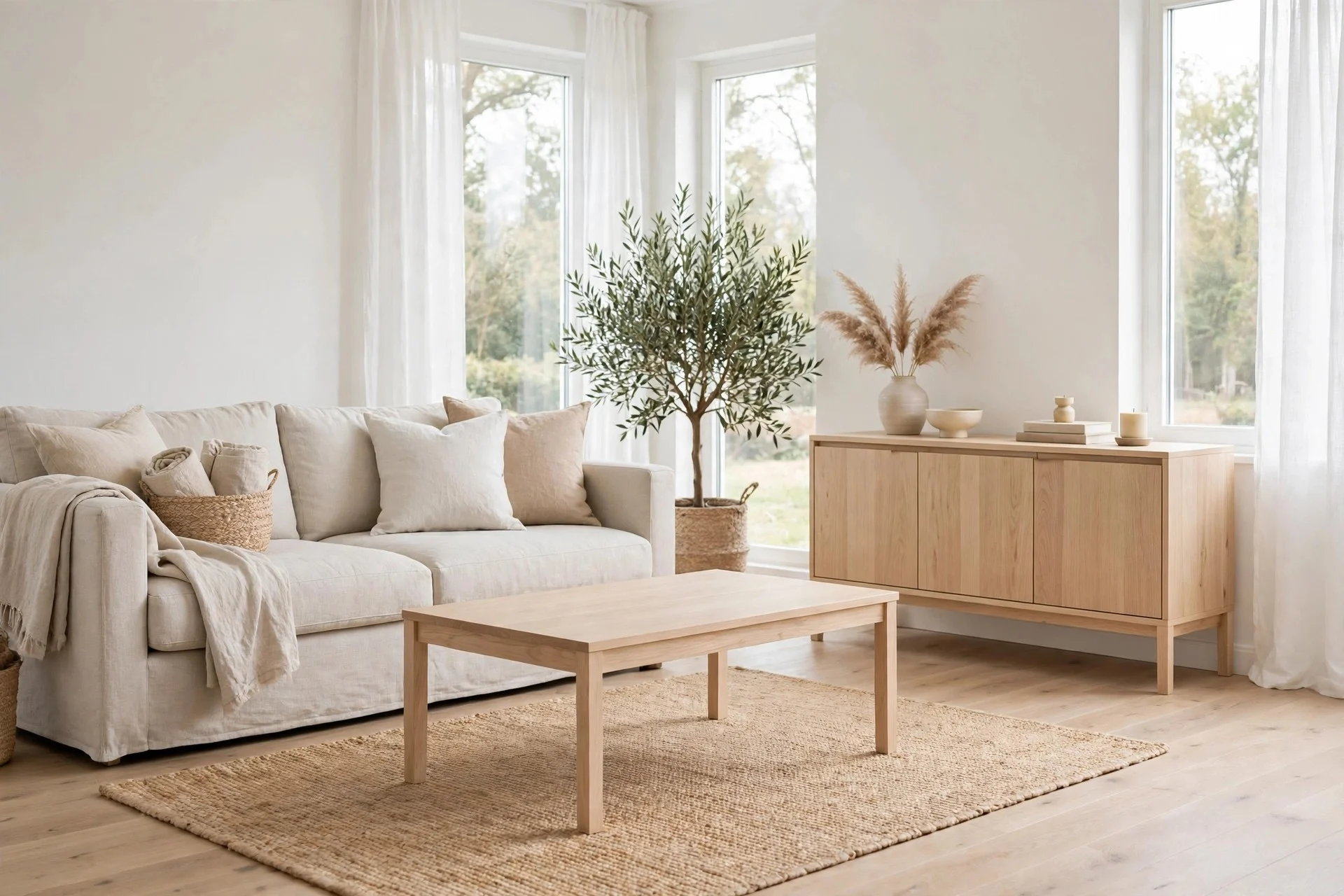
5. Layer Your Lighting With a Paper Lantern and Candles
Good lighting is what makes a Scandinavian living room feel cosy after dark. One ceiling light on its own leaves harsh shadows, so layer it instead: a paper lantern or simple pendant overhead, a floor lamp by the sofa, and candles on the coffee table or windowsill. I tried relying on the ceiling light alone one winter and the room felt flat every evening. Warm bulbs matter more than bright ones, so pick 2700K and keep the light low. Put lamps on different heights around the room and you will notice the difference on the first night.
Try this: hang a paper lantern over the coffee table, add a floor lamp beside the sofa, and light two or three plain candles in glass holders each evening.
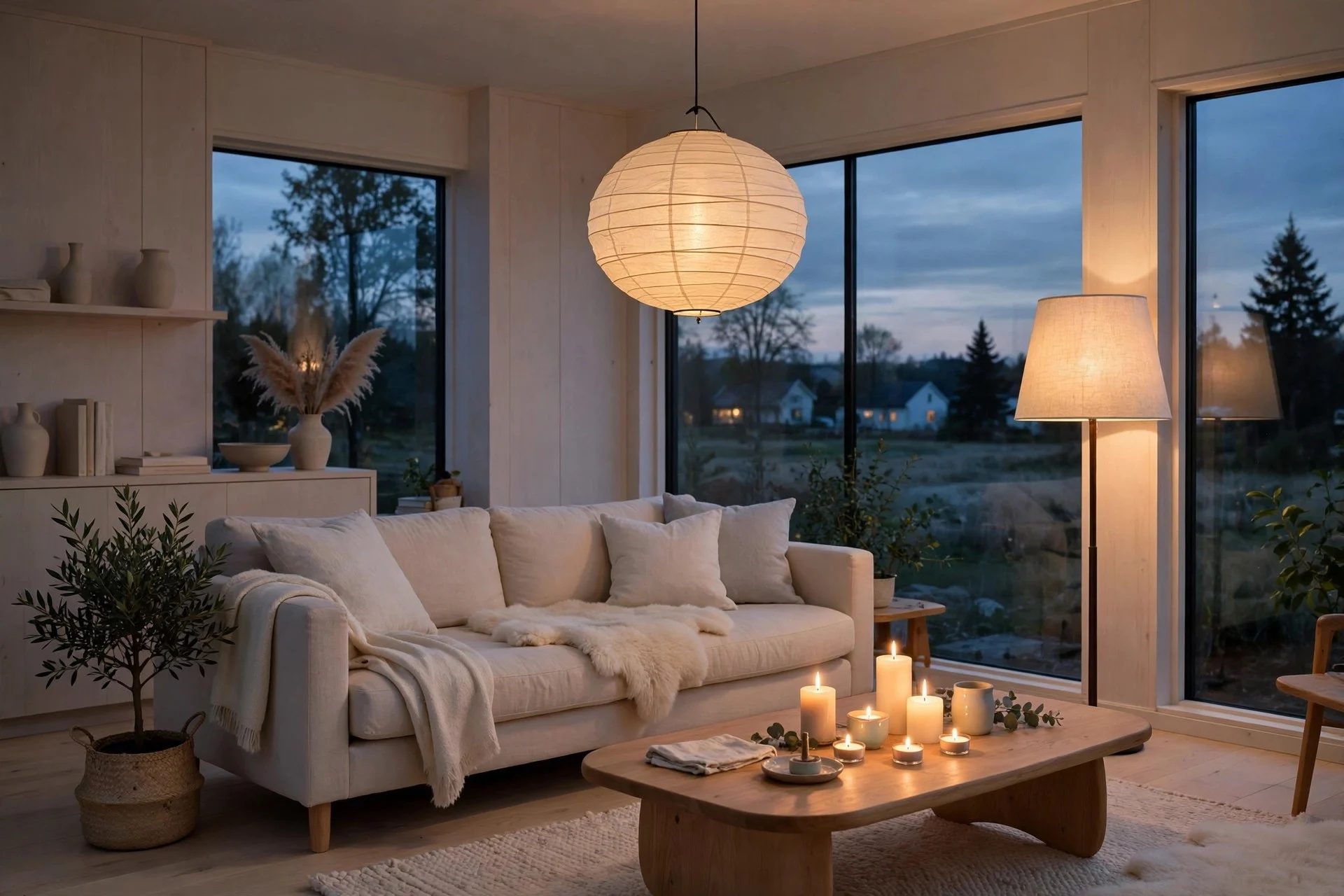
6. Style Open Shelving With a Few Ceramics and Books
Open shelving works in a Scandinavian living room only when you leave most of it empty. Pick one shelf, not five, and style it with a small stack of books, two or three plain ceramics, and one small plant. I tried filling every shelf once and it looked like a crowded shop, so I took half of it off and the pieces that stayed finally stood out. Group things in odd numbers and leave gaps between groups. White, cream, and stoneware ceramics suit the look best, and handmade pieces add character. Dust the shelves weekly, or the simple look turns grubby fast.
Try this: clear one shelf completely, then add back a stack of three books, two stoneware vases, and one small trailing plant, leaving space around each group.
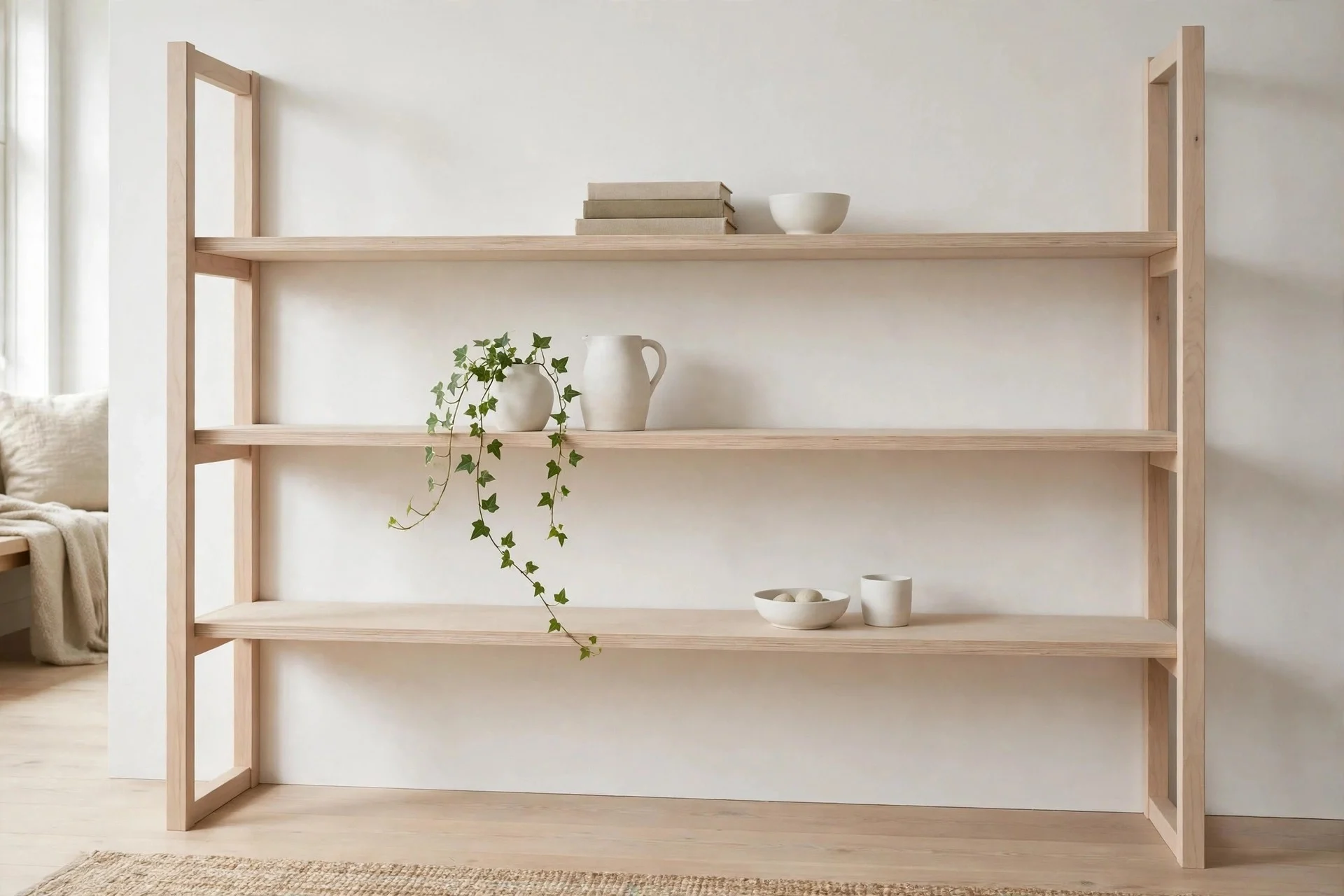
7. Hang a Large Mirror to Bounce Light Around the Room
A large mirror is one of the cheapest ways to make a Scandinavian living room feel brighter. Hang it opposite a window, or beside one, so it catches daylight and throws it back across the room. I tried a small decorative mirror first and it did almost nothing, so I swapped it for a tall, plain one with a thin wooden frame and the difference was instant. Keep the frame simple: pale wood or slim black metal. Avoid ornate frames, which fight the clean look. Check what the mirror reflects before you hang it, because it will double whatever is in front of it.
Try this: lean a tall mirror with a thin pale-wood frame opposite your brightest window and keep the surface in front of it clear and tidy.
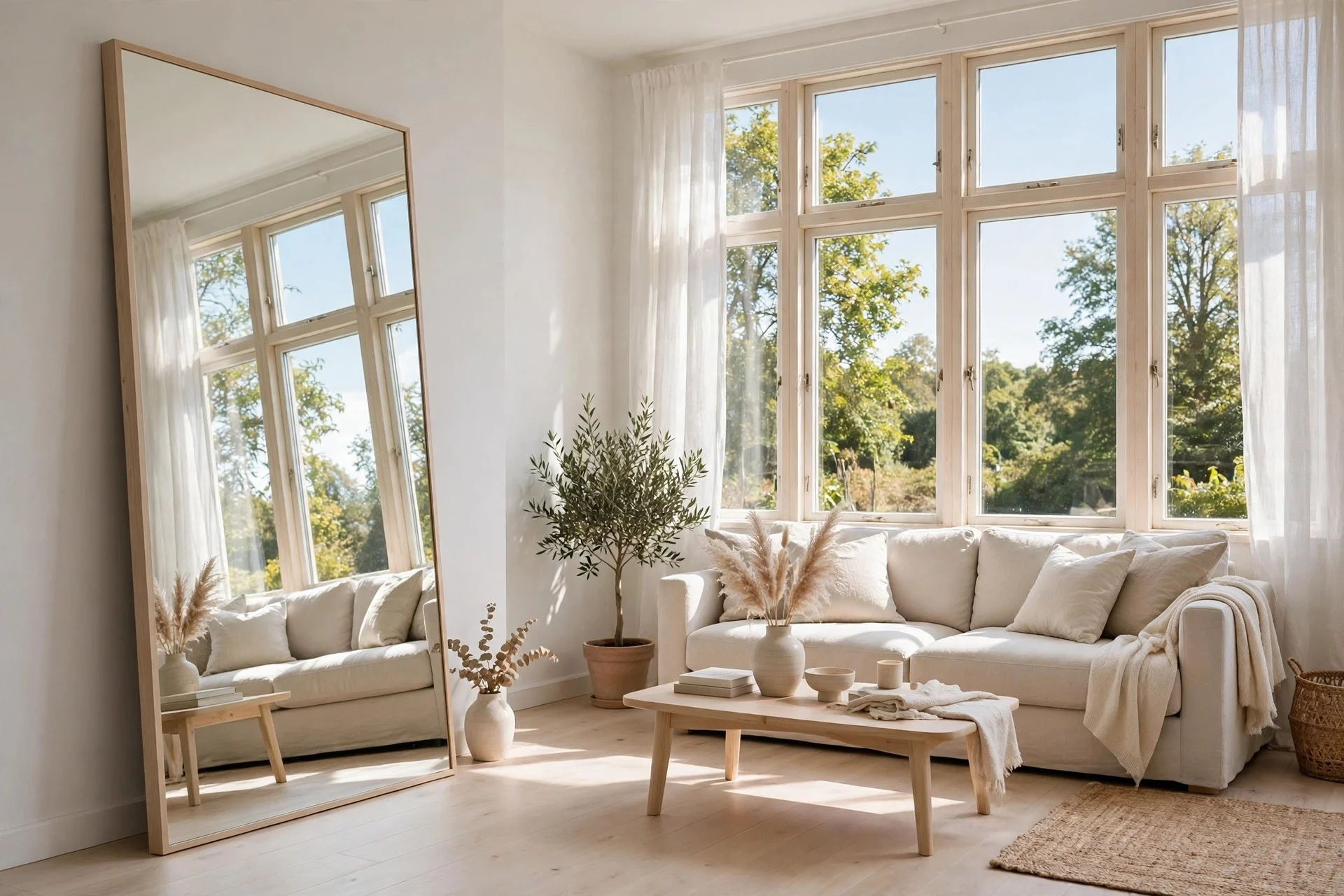
8. Add One or Two Easy Indoor Plants
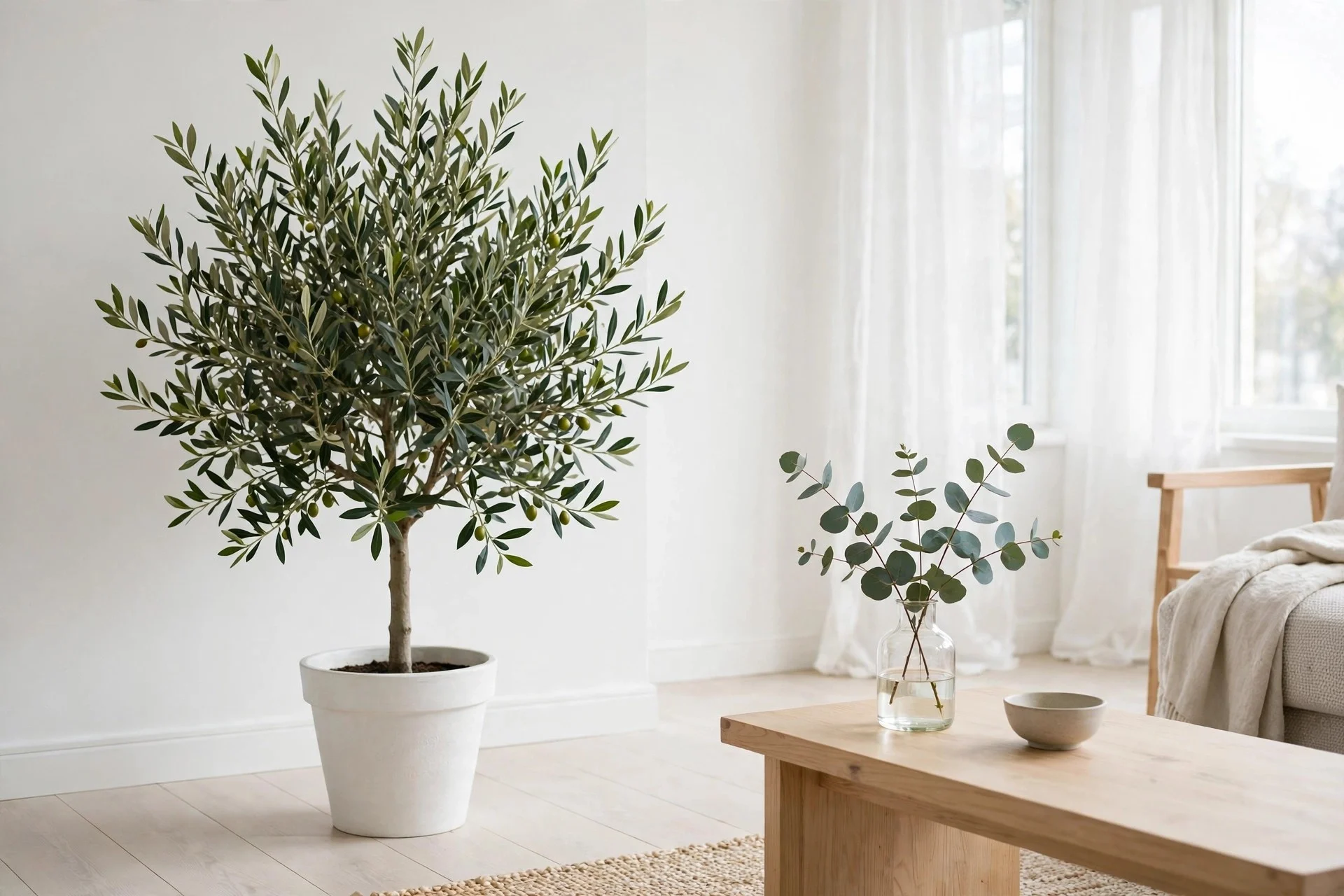
A plant or two brings life into a pale Scandinavian room without adding clutter. Eucalyptus in a vase, a potted olive tree, or a simple fern all suit the look, and they add a soft green that works with white and wood. I tried filling the room with plants once and it turned into a jungle that needed constant watering, so now I keep it to two and choose ones I can actually keep alive. Use plain pots in white, stone, or terracotta, and keep them on the floor or a low stool. Water less than you think in winter, and turn the pot now and then so it grows evenly.
Try this: place a potted olive tree in a plain white pot in one corner and a small eucalyptus stem in a glass vase on the coffee table.
9. Lay a Flatweave Wool Rug in a Soft Neutral Tone
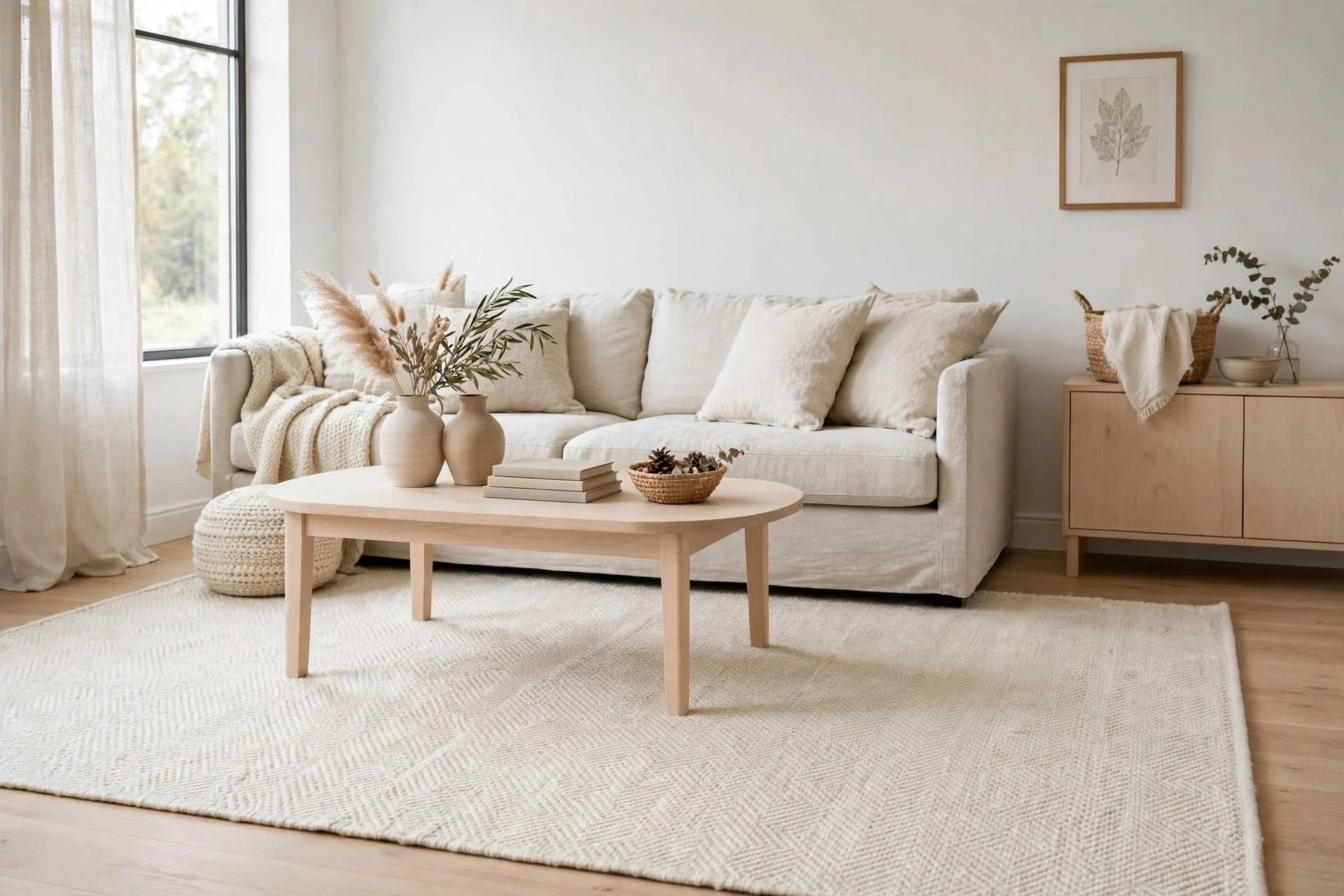
A flatweave wool rug in cream, light grey, or soft beige warms up pale floors and ties the seating area together. It also stops the room feeling echoey, which bare wood floors can do. I tried a thick shaggy rug first and it swallowed the light wood and made the room look heavy, so a low, flat rug was a much better fit. Size matters here: the front legs of the sofa and chairs should sit on the rug, not float beside it. A subtle stripe or plain weave is enough; bold patterns fight the calm look. Vacuum it weekly and it will last for years.
Try this: measure your seating area, pick a flatweave rug big enough for the sofa front legs, and centre it under the coffee table.
10. Use Slim Black Accents for Gentle Contrast
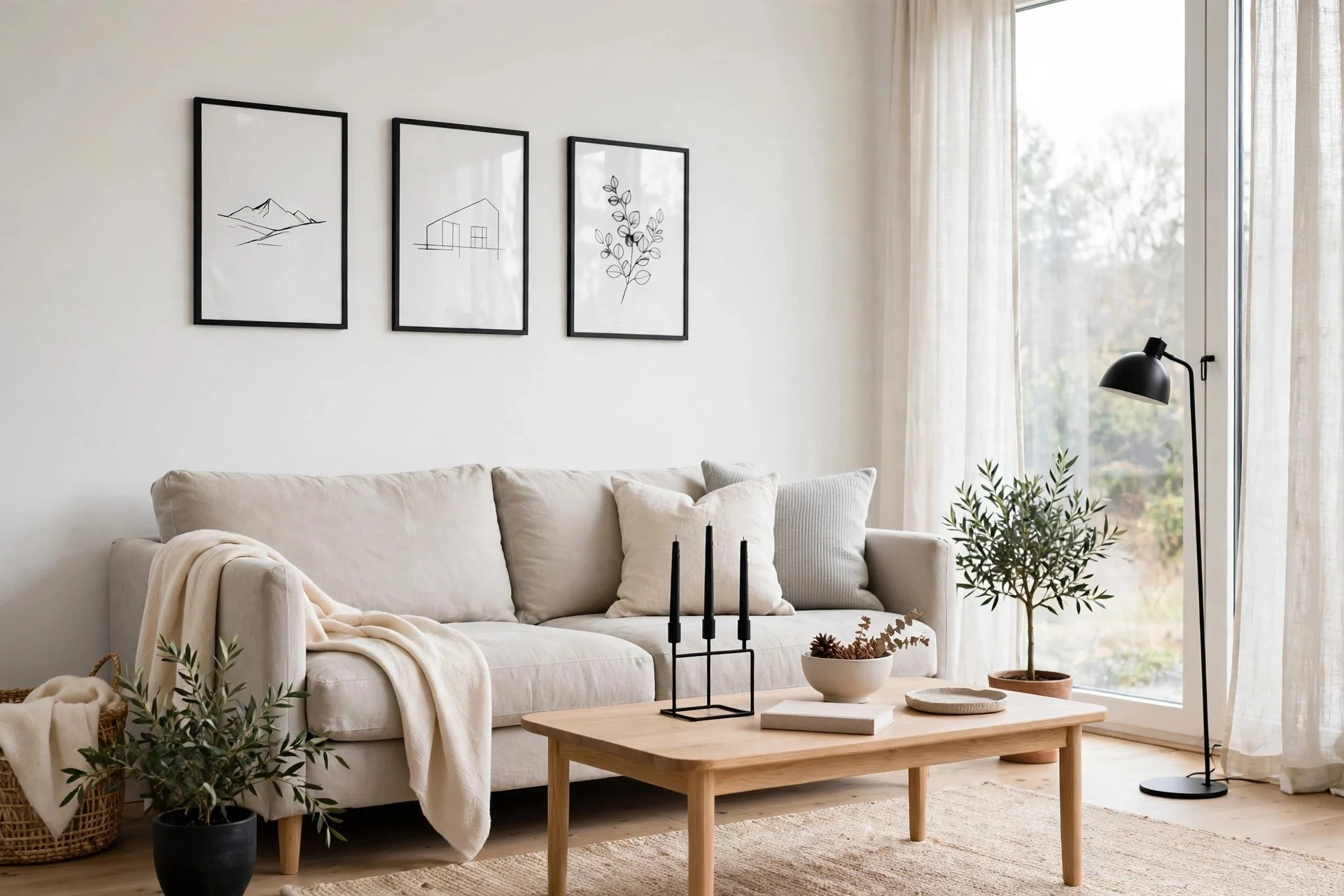
All white and pale wood can look washed out, so slim black accents give a Scandinavian room its shape. A black floor-lamp stem, thin black picture frames, or black handles on a sideboard add contrast without adding colour. I tried adding lots of black at first and the room turned stark, so I learned to keep it to three or four small touches and repeat them around the room. The key is thin lines, not big black blocks. A black pendant cord, a candle holder, and a frame or two are plenty. Step back and check the balance before you add anything else.
Try this: add three slim black touches, such as a lamp stem, two picture frames, and a candle holder, spaced across the room rather than grouped together.
11. Make a Window Seat or Simple Reading Nook
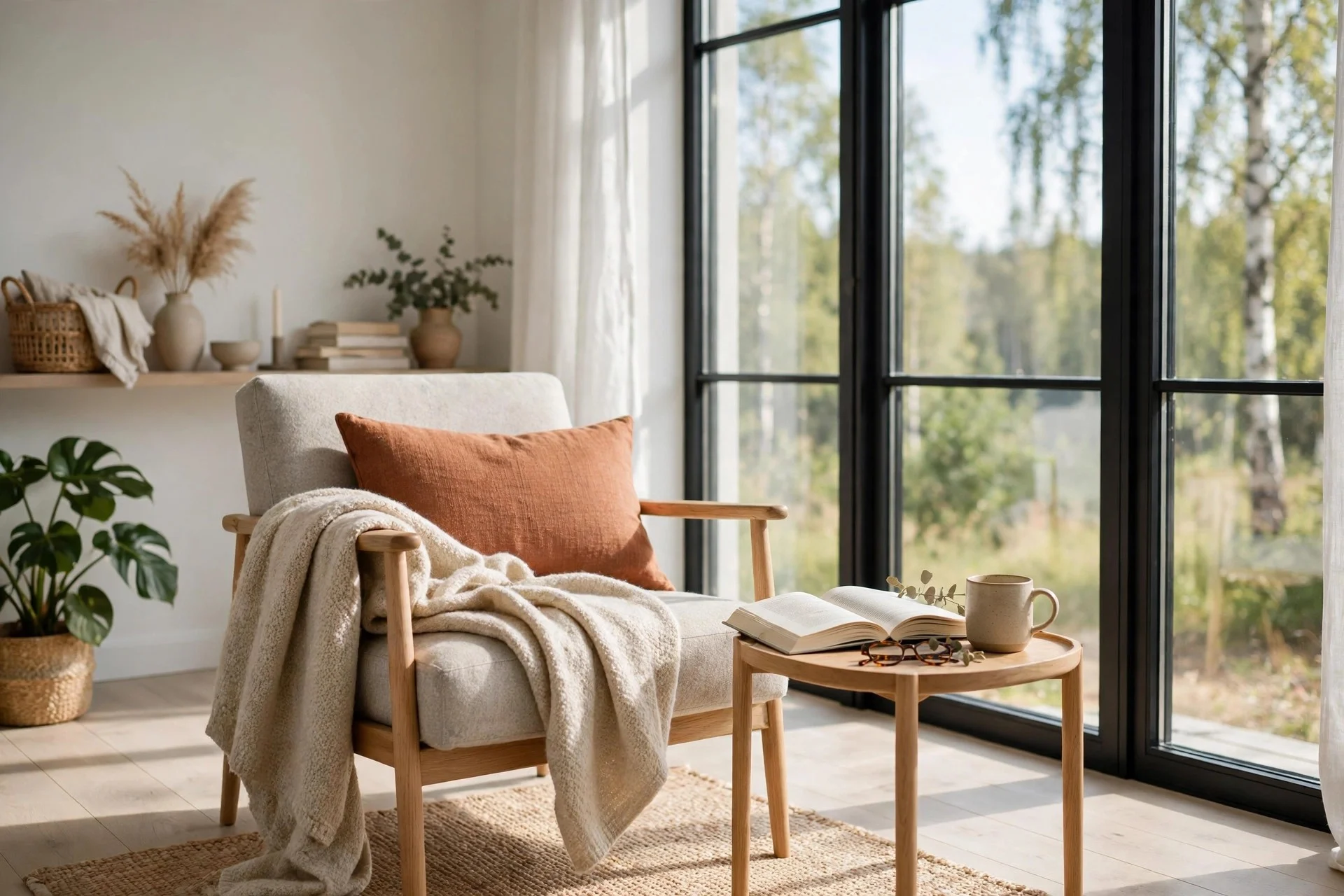
A window seat or a small reading nook turns an unused corner into the best spot in the room. Put a slim armchair by the window, add a cushion and a folded blanket, and place a small side table within reach for a cup of tea and a book. I tried this with a big chair that blocked the light, and it was a mistake; a slim chair with a low back works far better. Keep the nook simple: one chair, one lamp, one cushion. It gives the room a purpose beyond the sofa and television, and on a bright morning it is the first place everyone wants to sit.
Try this: move a slim armchair to your brightest window, add a cushion and a small side table, and keep a book and a blanket there ready to use.
12. Hang a Small Gallery Wall With Simple Black Frames
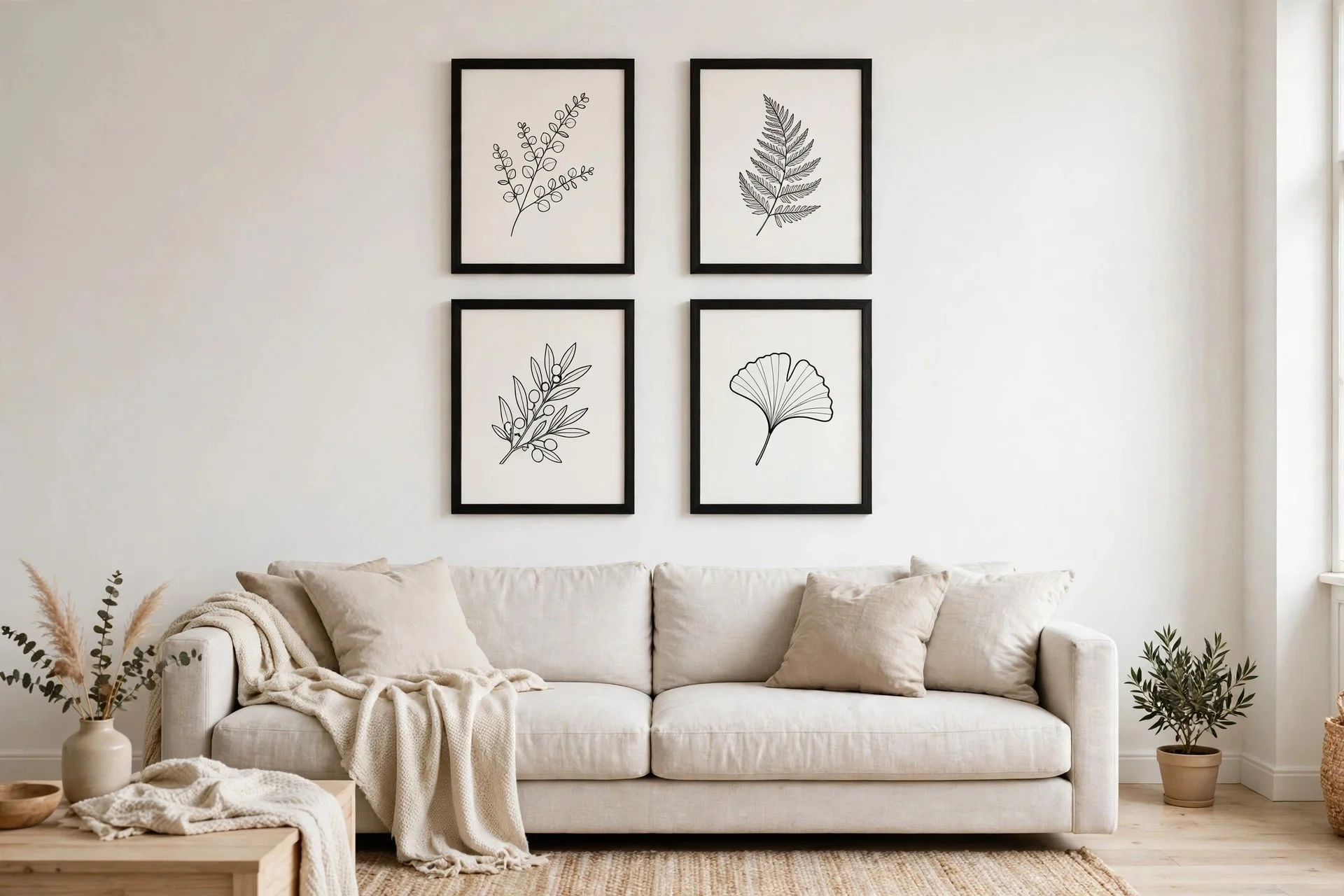
A small gallery wall adds personality without breaking the calm Scandinavian look. Choose four to six prints in simple black frames, with lots of white space in the art itself: line drawings, botanical prints, or quiet landscape photos. I tried a large gallery wall once and it took over the whole room, so now I keep it to one wall and one row or a neat grid. Hang the frames at eye level, with even gaps, and use a paper template on the wall first so you do not end up with extra holes. Leave the rest of the walls bare, or the room loses its breathing space.
Try this: lay four prints on the floor in a grid, trace them onto paper templates, tape the templates to the wall, then hang the frames at eye level.
13. Hide Clutter in Woven Baskets and a Lidded Box
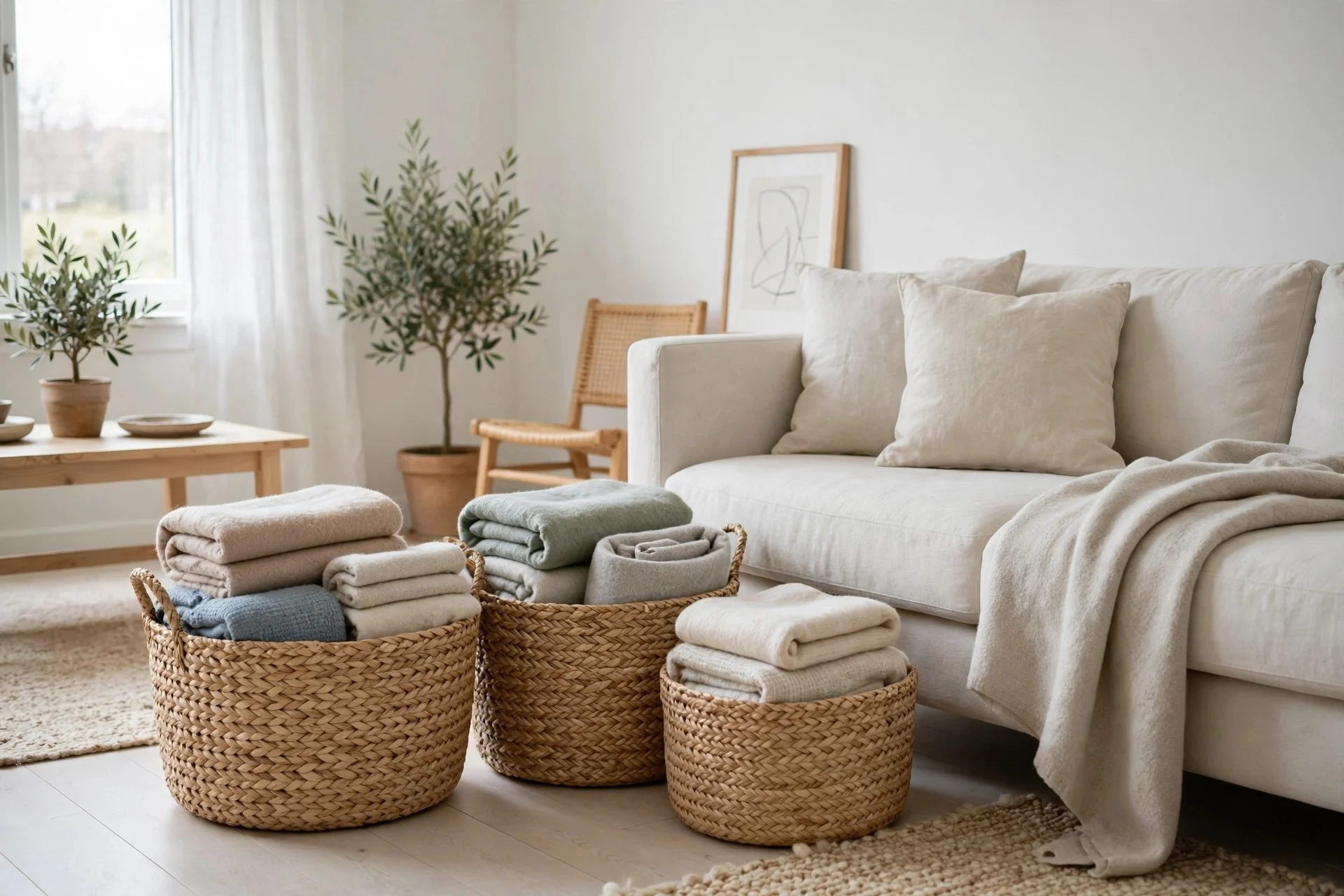
Scandinavian rooms look tidy because the clutter has a home, not because the people who live there own nothing. Woven baskets under a side table, a lidded box on a shelf, and a basket by the sofa for blankets all hide the everyday mess. I tried open storage first and the remotes, chargers, and magazines were always on show. A basket with a lid solves it in seconds. Pick natural seagrass or rattan in a light tone, and give each basket one job so it does not become a junk drawer. Tidy the baskets once a week and the room stays calm with very little effort.
Try this: put one basket by the sofa for blankets, one under the side table for chargers and remotes, and a lidded box on the shelf for small bits.
14. Build a Hygge Corner With an Armchair and a Knit Blanket
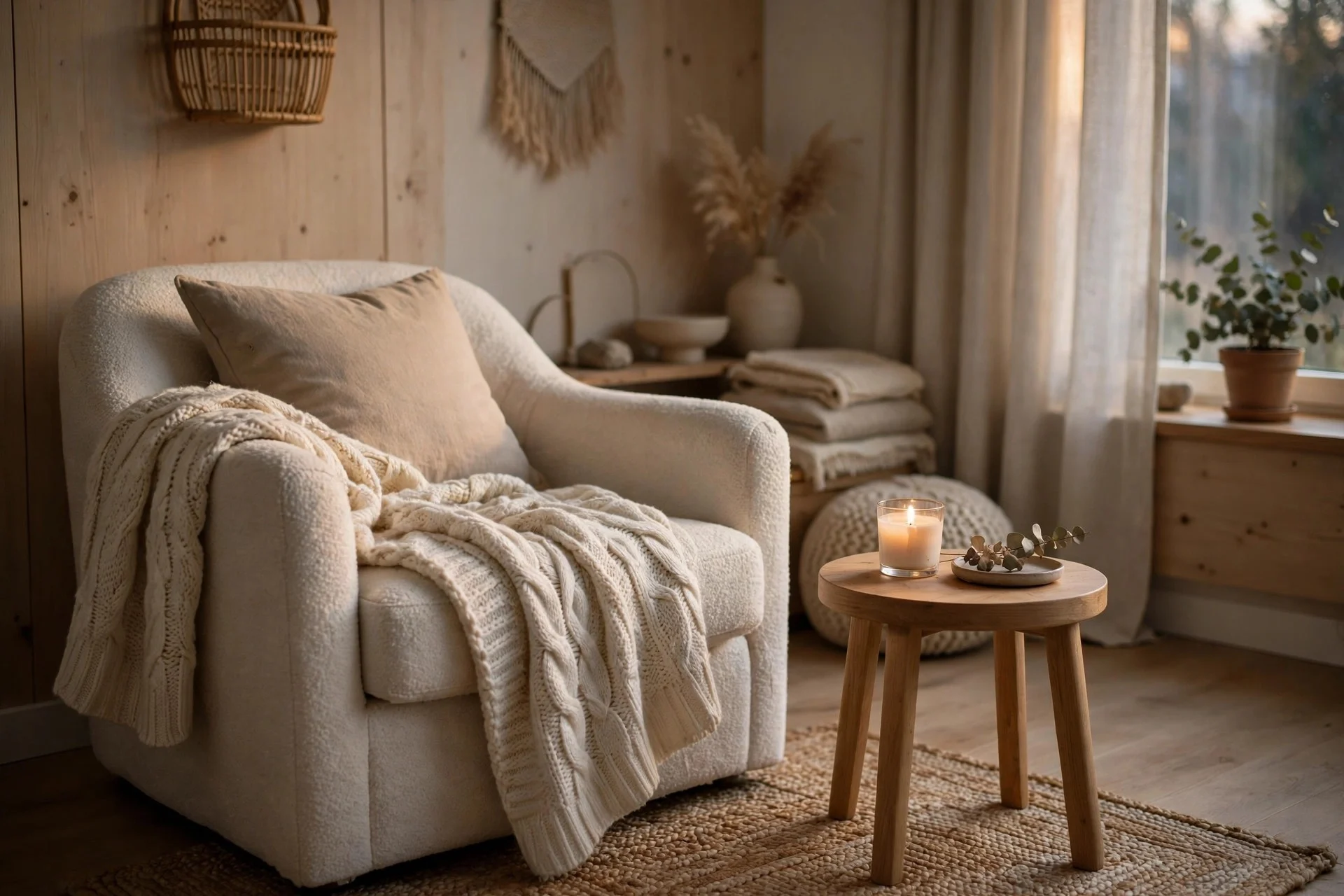
A hygge corner is a small, soft spot made for slowing down: a comfortable armchair, a knit blanket, a candle, and a warm drink within reach. It does not need a lot of space, just a corner that feels sheltered. I tried building one with a stiff designer chair once and nobody ever sat in it, so comfort comes first here. Choose a chair with a soft seat and a low back, add a cushion you actually lean on, and keep a small lamp nearby for evening reading. This is the spot for cold mornings and quiet evenings, and it makes the whole room feel more welcoming.
Try this: pick your softest armchair, move it into a quiet corner, add a knit blanket and a candle on a side table, and keep a mug there for slow mornings.
15. Keep Surfaces Clear and Style One Thing at a Time
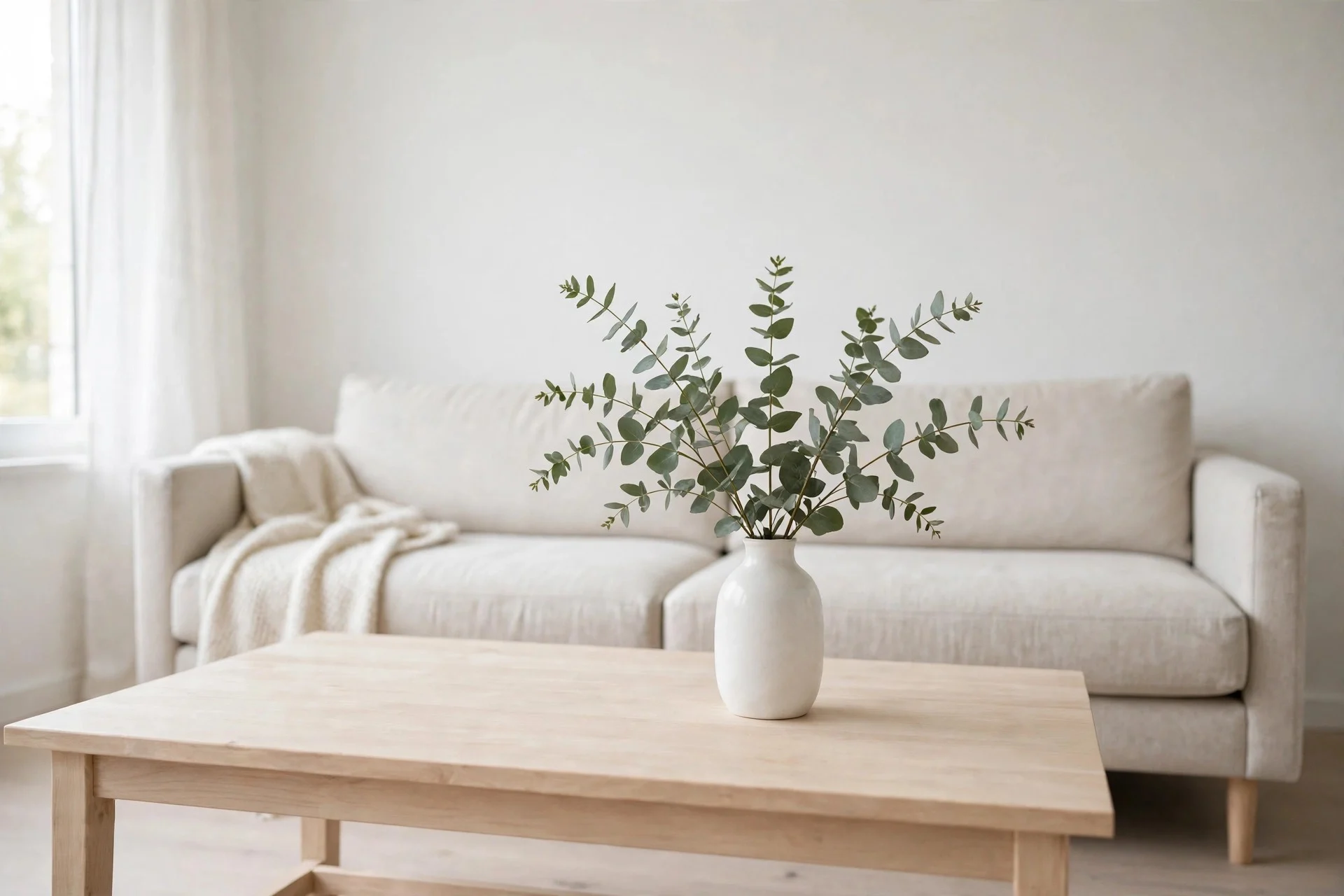
The simplest Scandinavian idea is also the hardest: keep surfaces clear. A coffee table with one vase, a sideboard with one lamp, and a windowsill with one plant look calm and intentional. I tried styling every surface at once and the room felt busy again, so now I style one surface, step back, and only add something if the spot still looks empty. Use a one-in, one-out rule for new pieces: if something new comes in, something old goes out. Clear the coffee table each night, and the room will greet you calmly every morning.
Try this: clear your coffee table completely, put back just one vase with eucalyptus, and follow a one-in, one-out rule for anything new you bring home.
Do Scandinavian living rooms have to be all white?
No. White walls are a good starting point, but soft grey, pale beige, warm cream, and muted sage all work. The point is a light base with a few natural tones on top, not a strict all-white rule. Add wood, wool, and green plants so the room still feels warm and lived in.
How do I make a Scandinavian living room feel cosy, not cold?
Layer textiles and warm light. Add a wool rug, a knit blanket, a sheepskin throw, and candles or a warm lamp in the evening. Bare white walls with hard furniture feel cold, but soft layers and low, warm light make the same room feel welcoming.
What colours go with a Scandinavian living room?
Stick to a pale base of white, cream, and light grey, then add muted tones such as sage green, dusty blue, soft beige, and pale wood. Keep black to slim accents, and let plants add the only strong green. Two or three muted colours are plenty.
Can I do Scandinavian decor on a small budget?
Yes. Start by clearing surfaces, moving furniture for better light, and adding a pale rug or a few soft textiles. Paint is cheap and makes the biggest difference. Buy one good piece at a time, and check second-hand shops for pale wood furniture before buying new.
Final Thoughts
Scandinavian living room decor works best when you keep it light, simple, and useful. Start with the walls and the light, add soft textiles for warmth, and let a few natural materials do the rest. You do not need to change everything at once. Pick one idea from this list, try it this weekend, and see how the room feels before you move on to the next.
Once the base feels right, the small touches, a candle, a plant, a basket, will fall into place on their own. That is the quiet charm of this style: a room that looks simple, feels warm, and is easy to live in every day.