
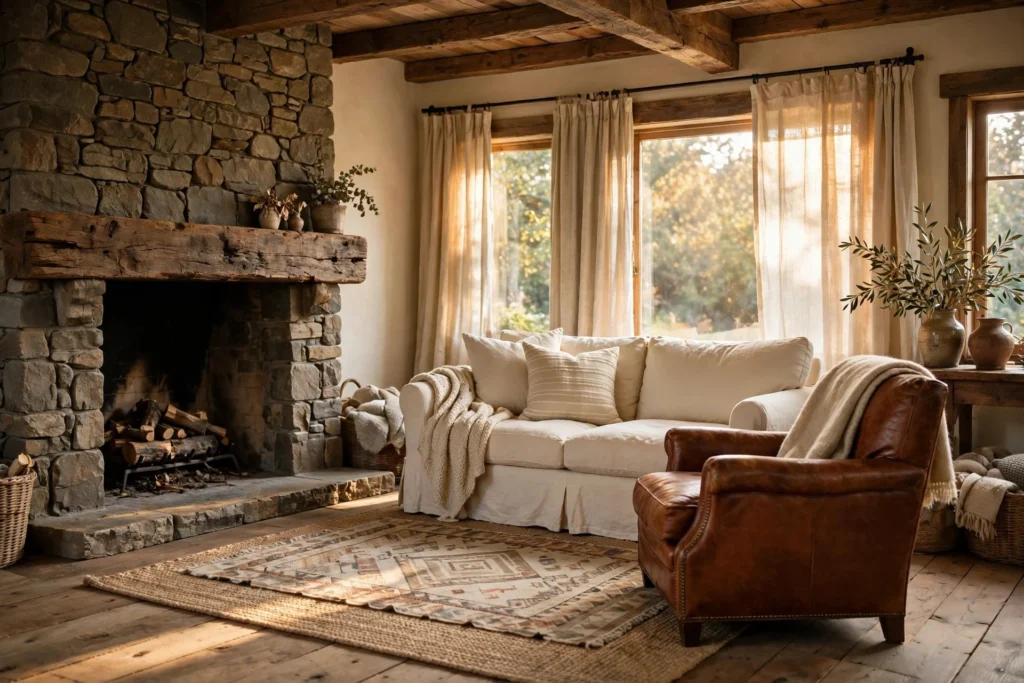
Rustic living room decor ideas work best when the room feels collected over time, not bought in one afternoon. I learned that the slow way, after filling my first living room with matching sets that looked fine in photos and cold in real life. The rooms that feel warm now are the ones with wood that shows its age, linen that wrinkles a little, and at least one piece with a story behind it.
This list sticks to natural materials and warm neutrals, the kind of choices that still look good five years from now. You do not need a cabin in the woods or a big budget. Start with one or two ideas, live with them for a week, and add the next layer only when the room asks for it.
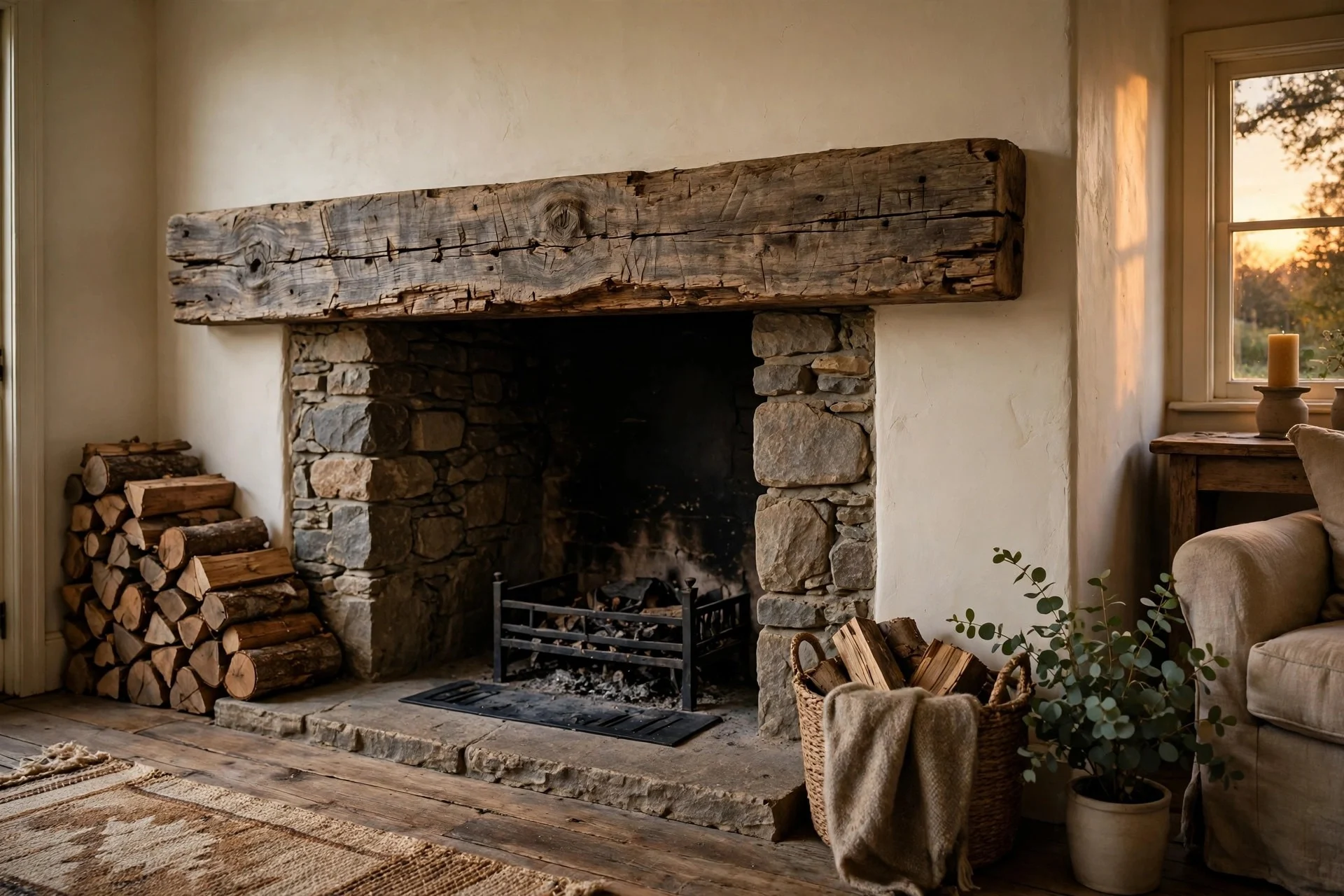
1. Rustic Living Room Decor Ideas Start With a Reclaimed Wood Beam
A thick reclaimed beam above the fireplace or across the ceiling sets the tone for the whole room before you buy a single cushion. I tried this in my own living room with a salvaged barn beam, and guests notice it before anything else. The knots, saw marks, and uneven edges do the decorating for you.
Measure twice and check the wall or ceiling can hold the weight, because old wood is heavy. Sand it lightly so nobody gets splinters, seal it with a matte finish, and mount it with proper brackets. If a real beam is out of reach, a hollow box beam made from reclaimed boards gives you the same look for far less weight.
Try this: pair the beam with plain cream walls so the wood stays the star of the room.
2. Build the Room Around a Stone Fireplace
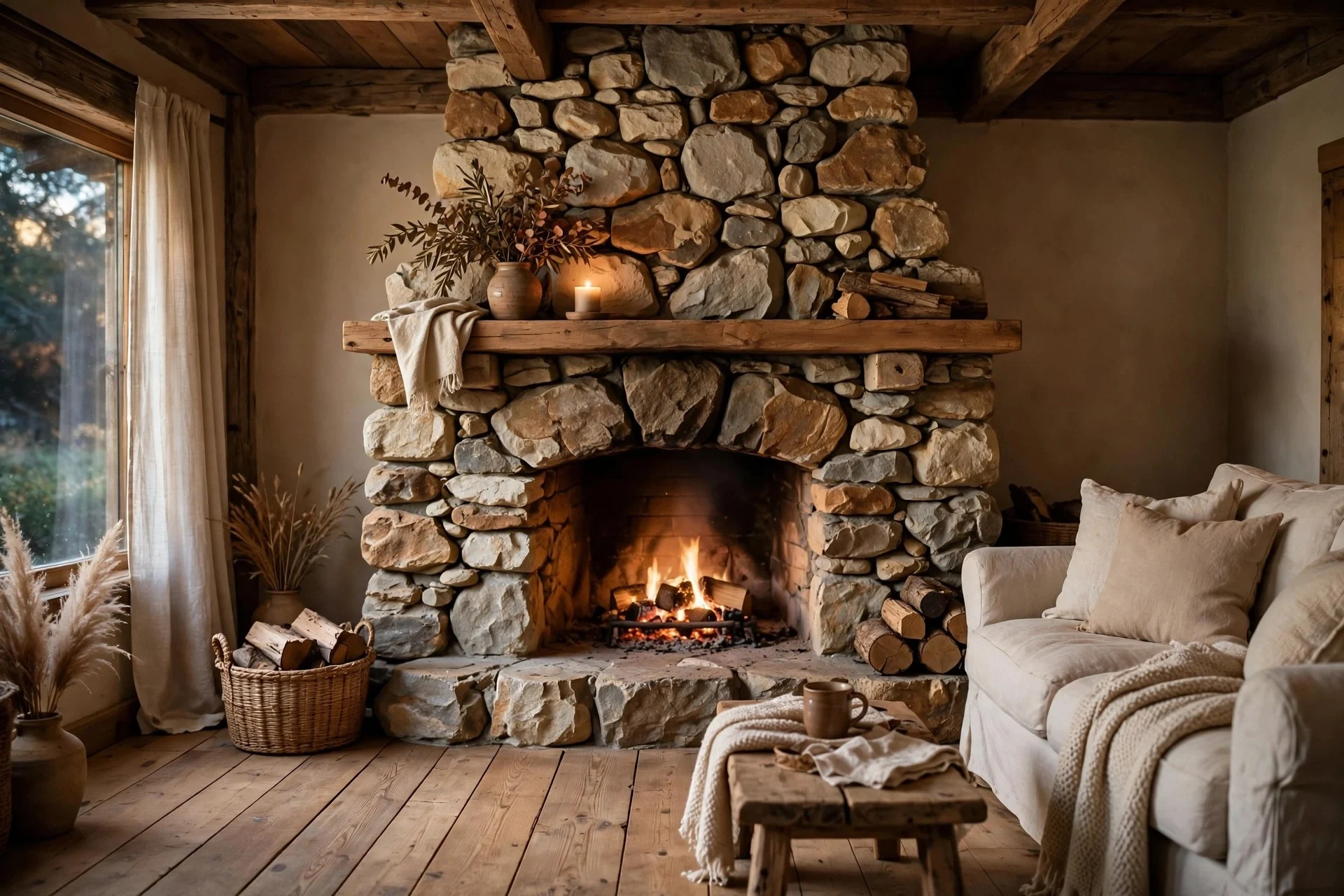
Nothing says rustic quite like a stone fireplace, even a small one. I once spent a whole winter with a plain painted fireplace surround and wondered why the room never felt finished. The day we clad it in rough-cut stone, the whole space finally made sense. Stone brings texture and weight that flat paint simply cannot fake.
Start by choosing a stone that suits your home, from pale limestone to warm river rock. A thin stone veneer works on most walls and costs less than full stone, and a good mason can finish a standard surround in a couple of days. Keep the mantel simple so the stonework gets the attention.
Try this: stack firewood in a neat pile beside the hearth for a lived-in touch.
3. Choose a Linen Slipcovered Sofa in Warm White
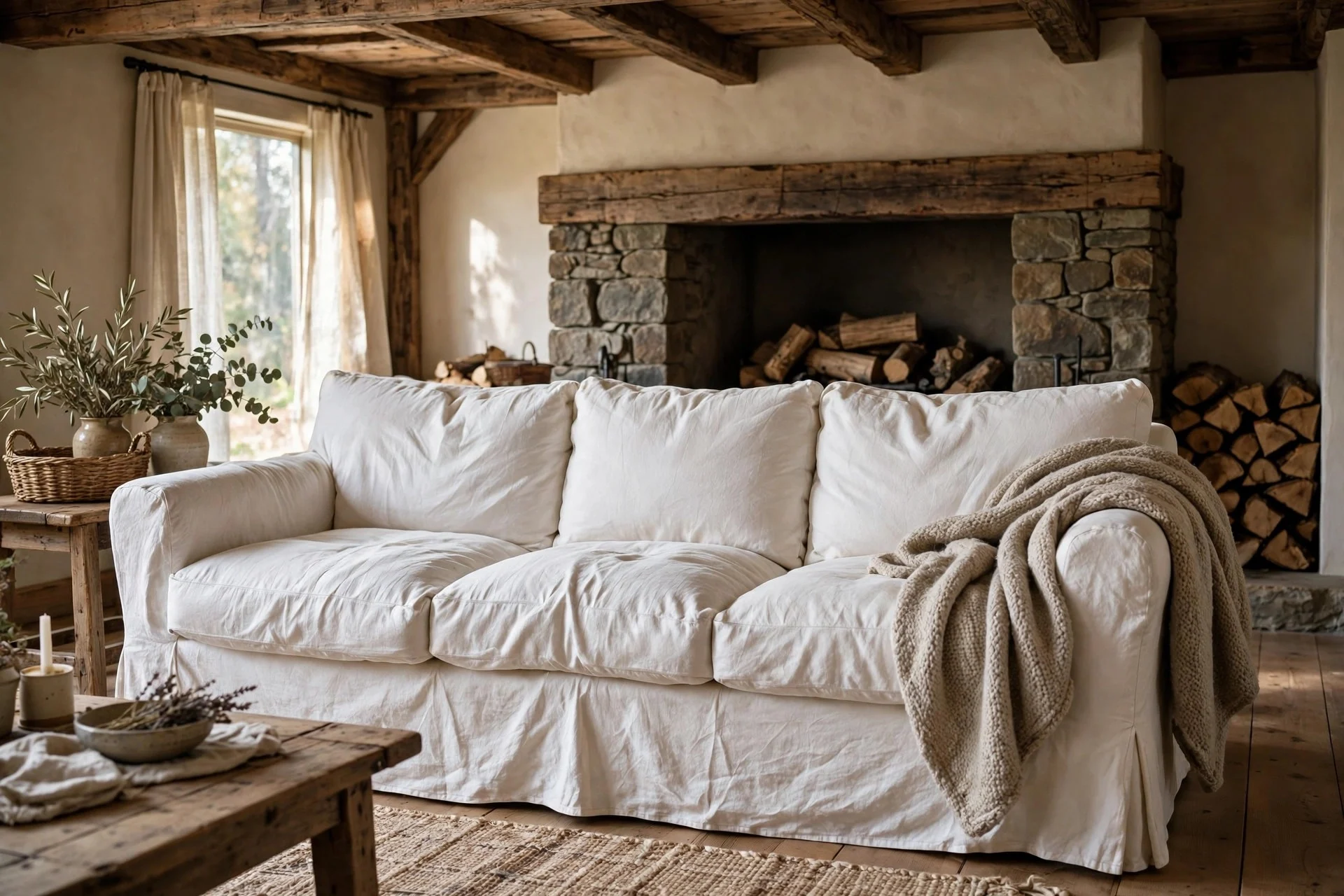
A linen slipcovered sofa is the most forgiving piece of furniture I have ever owned. The fabric softens with every wash, the wrinkles look intentional, and when the kids or the dog make a mess, the covers come off and go straight in the machine. That easy care is exactly what a relaxed rustic room needs.
Pick a warm white or natural flax shade rather than a bright bleached white, which can look stark against wood. Check that the slipcovers are fully removable before you buy, and keep a spare set if you can. A slightly oversized, deep seat makes the sofa feel like the heart of the room.
Try this: drape a wool throw over one arm so the sofa never looks too plain.
4. Add a Leather Armchair That Ages Beautifully
Good leather only gets better with age, which is why a worn leather armchair belongs in a rustic living room. I bought mine secondhand with a few scuffs already on it, and five years later those marks are my favourite part. New leather can look stiff, but a broken-in chair invites you to sit down with a book.
Look for full-grain or top-grain leather in cognac, chestnut, or deep brown. Sit in it before you commit, since a chair that looks great but hurts your back will end up as a coat rack. Place it near a window or beside the fire, with a small side table for your coffee.
Try this: condition the leather twice a year to keep it soft and stop cracks.
5. Layer a Jute Rug Under a Wool One
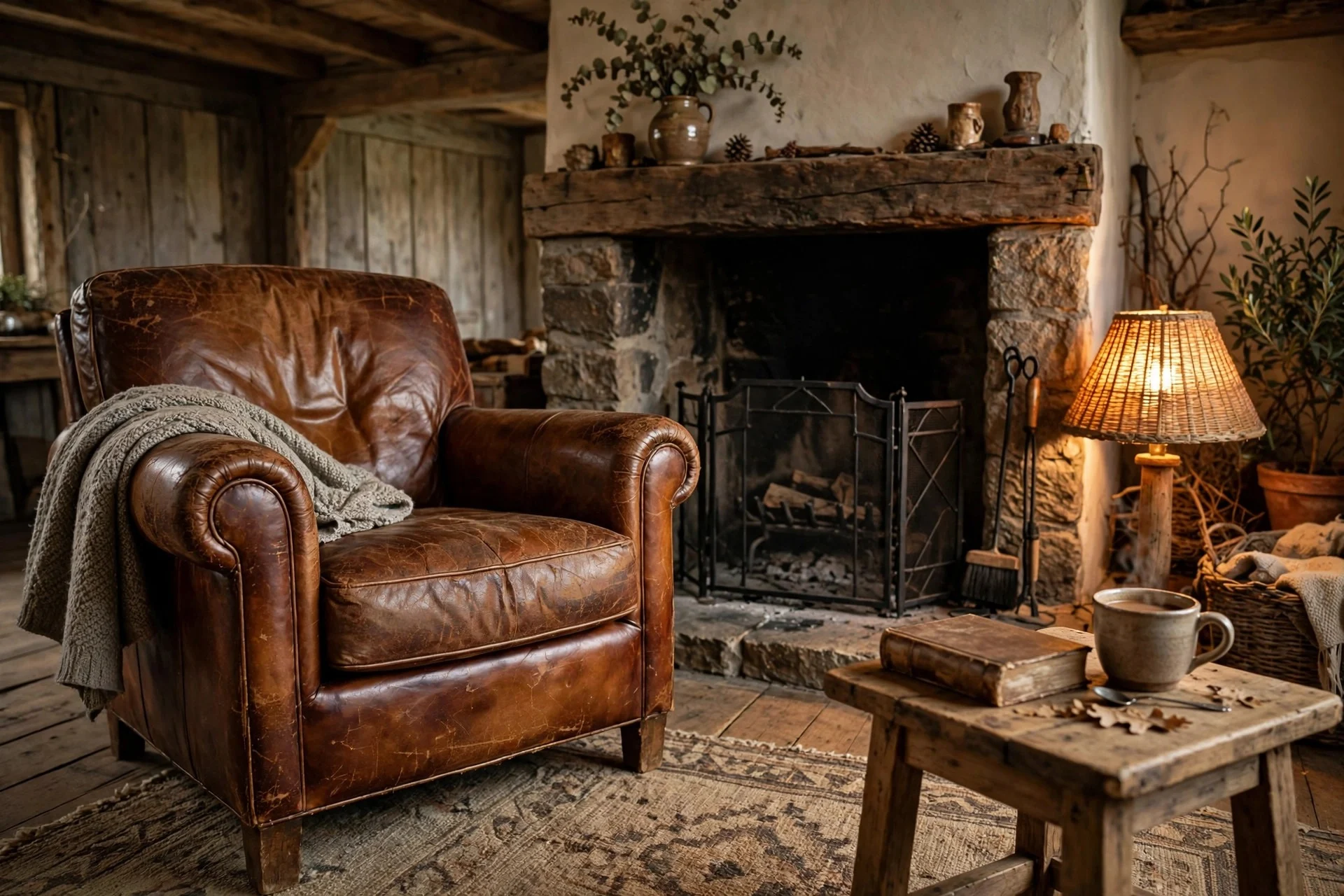
Layering rugs is the fastest way to make a hard floor feel warm underfoot. I tried this after years of one thin rug sliding around on bare wood, and the difference was immediate. The jute base adds rough texture, while the wool rug on top brings softness and pattern without shouting.
Start with a large flat-weave jute rug that covers most of the seating area. Add a smaller wool rug on top, slightly off-centre, in a muted pattern or solid warm tone. Use a rug pad underneath so nothing slips, and leave a border of wood floor showing around the edges.
Try this: pick the top rug in a colour pulled from your cushions or curtains.
6. Leave the Ceiling Beams Exposed
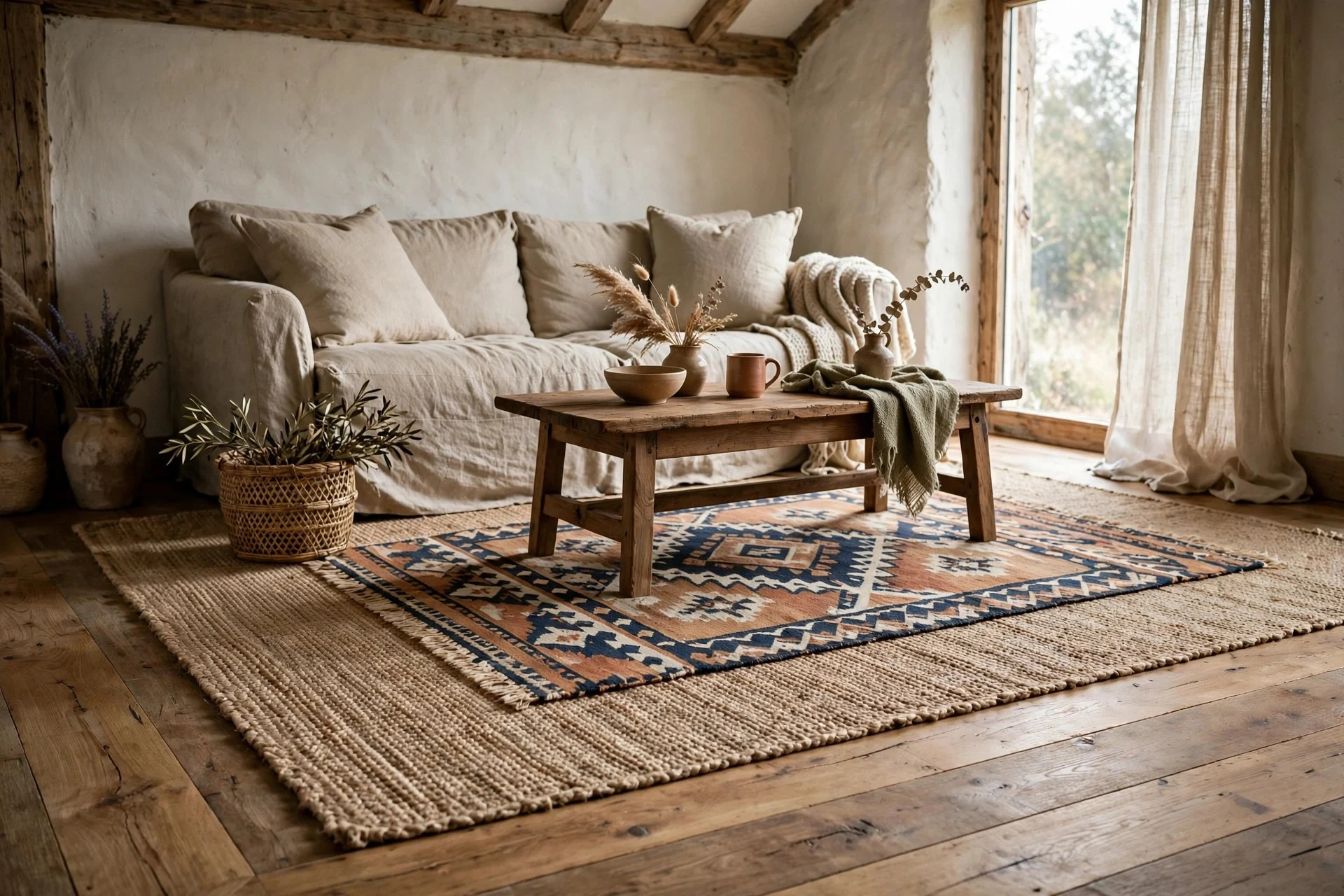
Exposed ceiling beams give a room its bones, and hiding them behind plaster is a shame. My neighbour boxed hers in years ago and still regrets it, while mine, left bare and lightly oiled, make even a plain room feel like a farmhouse. The beams draw your eye up and make the ceiling feel higher.
If your beams are painted over, test a small patch to see what wood sits underneath. A gentle clean and a coat of matte oil is often all they need. When there are no beams at all, reclaimed timber beams fixed to the ceiling can fake the look, but keep them slim so the room does not feel heavy.
Try this: keep the ceiling paint warm white so the beams stand out softly.
7. Hunt Down a Vintage Wooden Coffee Table
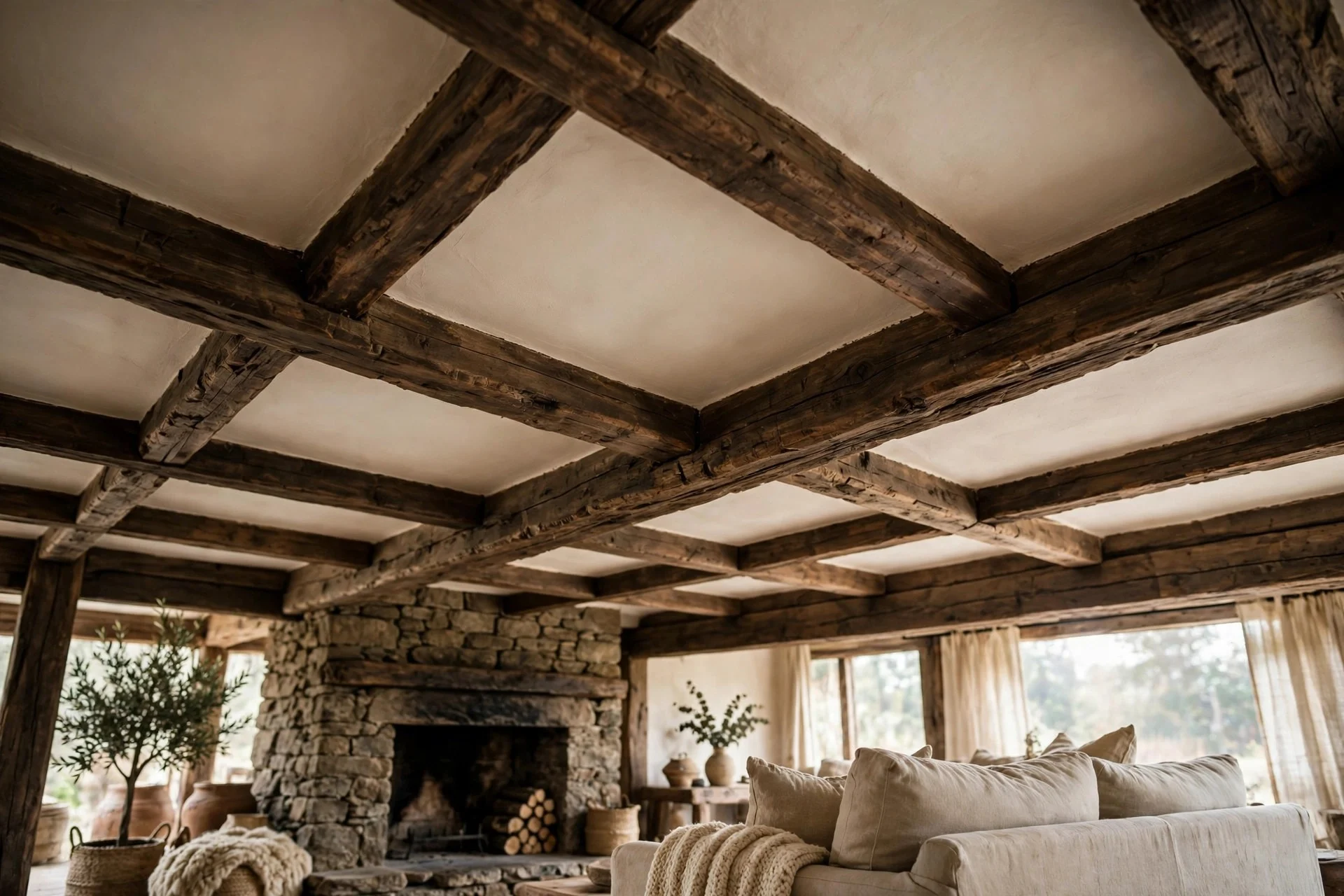
A coffee table with a past beats a flat-pack one every time. I found mine at a flea market, a scarred oak table with a drawer that sticks a little, and it holds the whole room together. The dents and ring marks are not flaws; they are proof that real life happens here.
Check flea markets, estate sales, and secondhand shops before buying new. Look for solid wood, sturdy joints, and a height that sits level with your sofa seat. A quick sand and a coat of wax can rescue most old tables, and a lower shelf is handy for books and baskets.
Try this: style only three things on top so the wood itself stays visible.
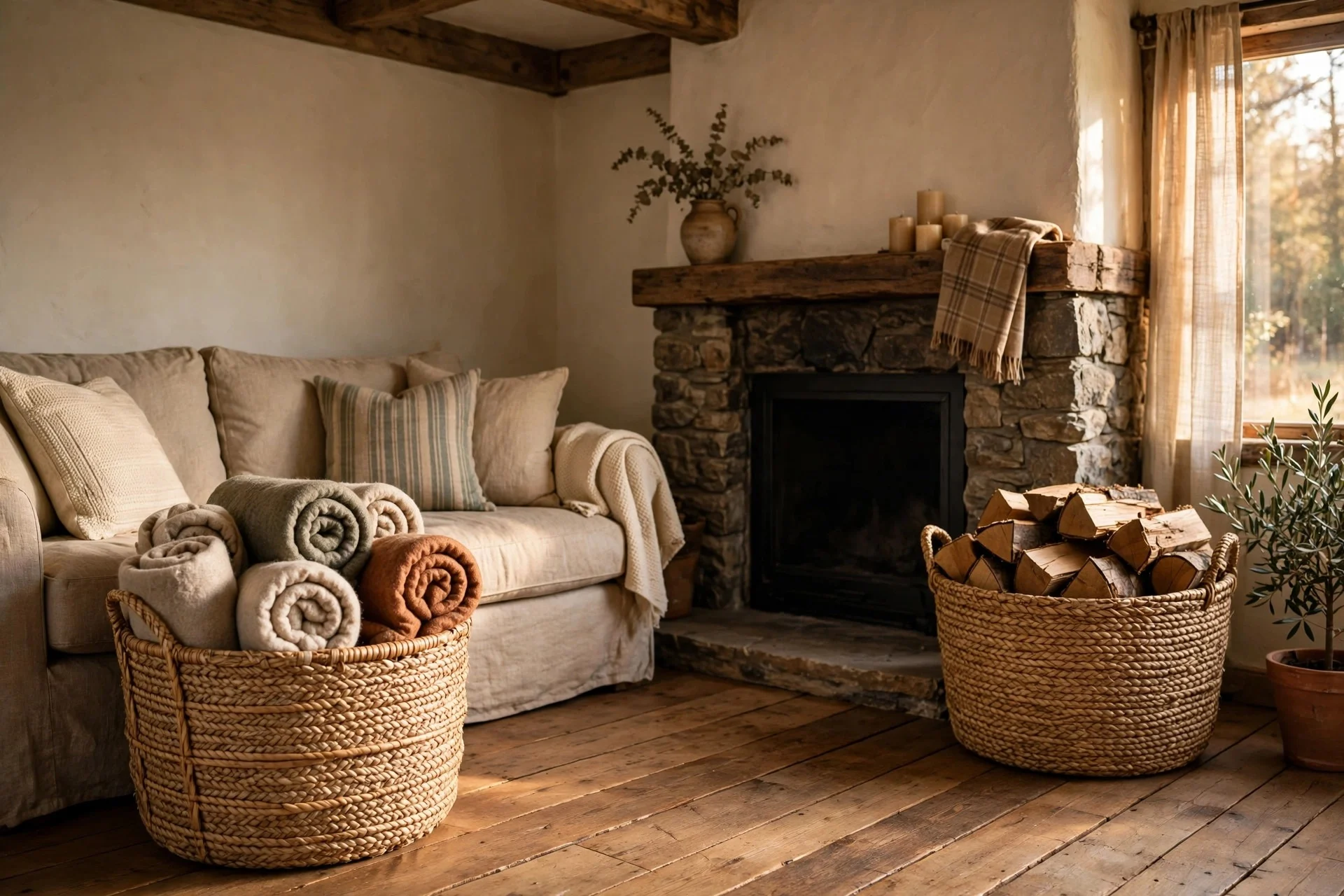
8. Fill Woven Baskets With Blankets and Firewood
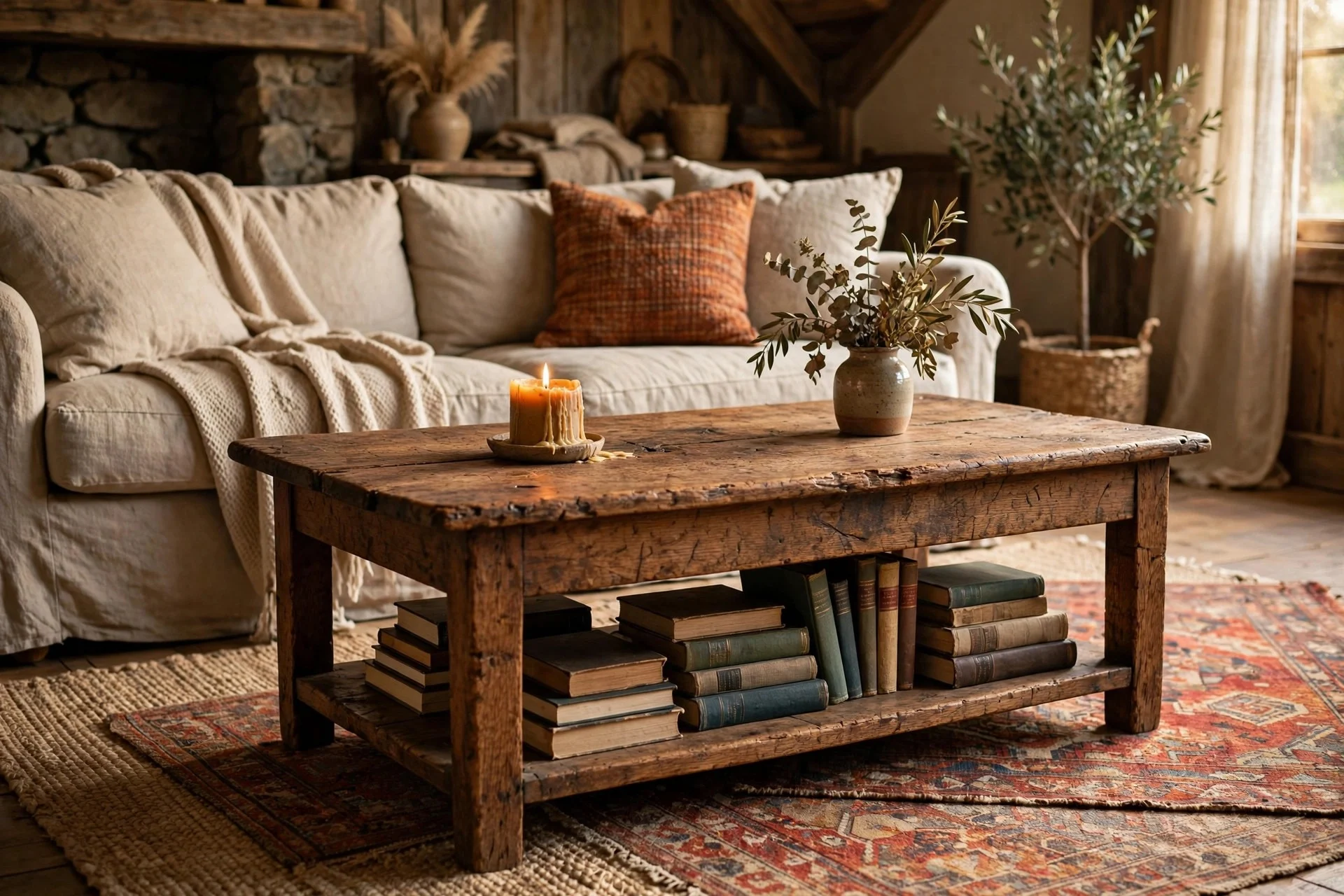
Woven baskets are the quiet heroes of a rustic living room. I keep one by the sofa stuffed with throws and another by the fire holding logs, and both get used every single day. They hide clutter, add natural texture, and cost far less than most storage furniture.
Choose seagrass, rattan, or willow baskets with sturdy handles, and size them to what they hold. A tall basket suits rolled blankets, while a low wide one works for firewood or magazines. Line the firewood basket with an old cloth so bark and dust stay off the floor.
Try this: roll throws instead of folding them so the basket looks full and inviting.
9. Paint the Walls a Warm Neutral With a Plaster Feel
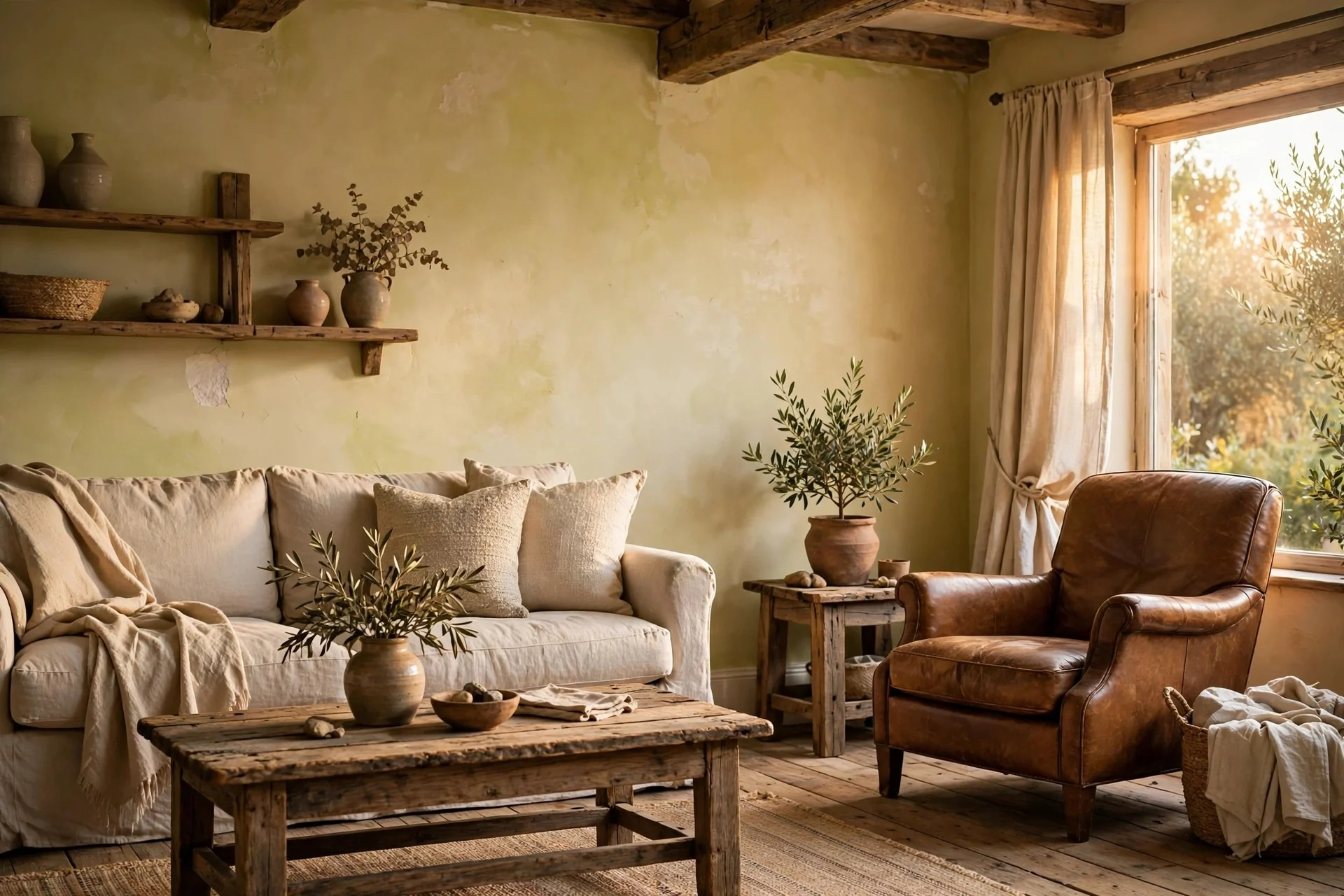
Wall colour does more work than any single piece of furniture, and cold grey kills a rustic room fast. I made that mistake once and lived with chilly walls for a year before repainting. A warm cream, soft greige, or pale clay with a hint of texture makes wood, leather, and linen look richer instantly.
Test three samples on different walls and watch them through a full day, since warm tones shift a lot between morning and lamplight. Limewash or a plaster-effect paint adds a soft, chalky depth that flat paint cannot match. Paint the trim a shade lighter than the walls for a gentle contrast.
Try this: paint one test patch behind the sofa before committing to the whole room.
10. Mix Iron and Wood on Open Shelving
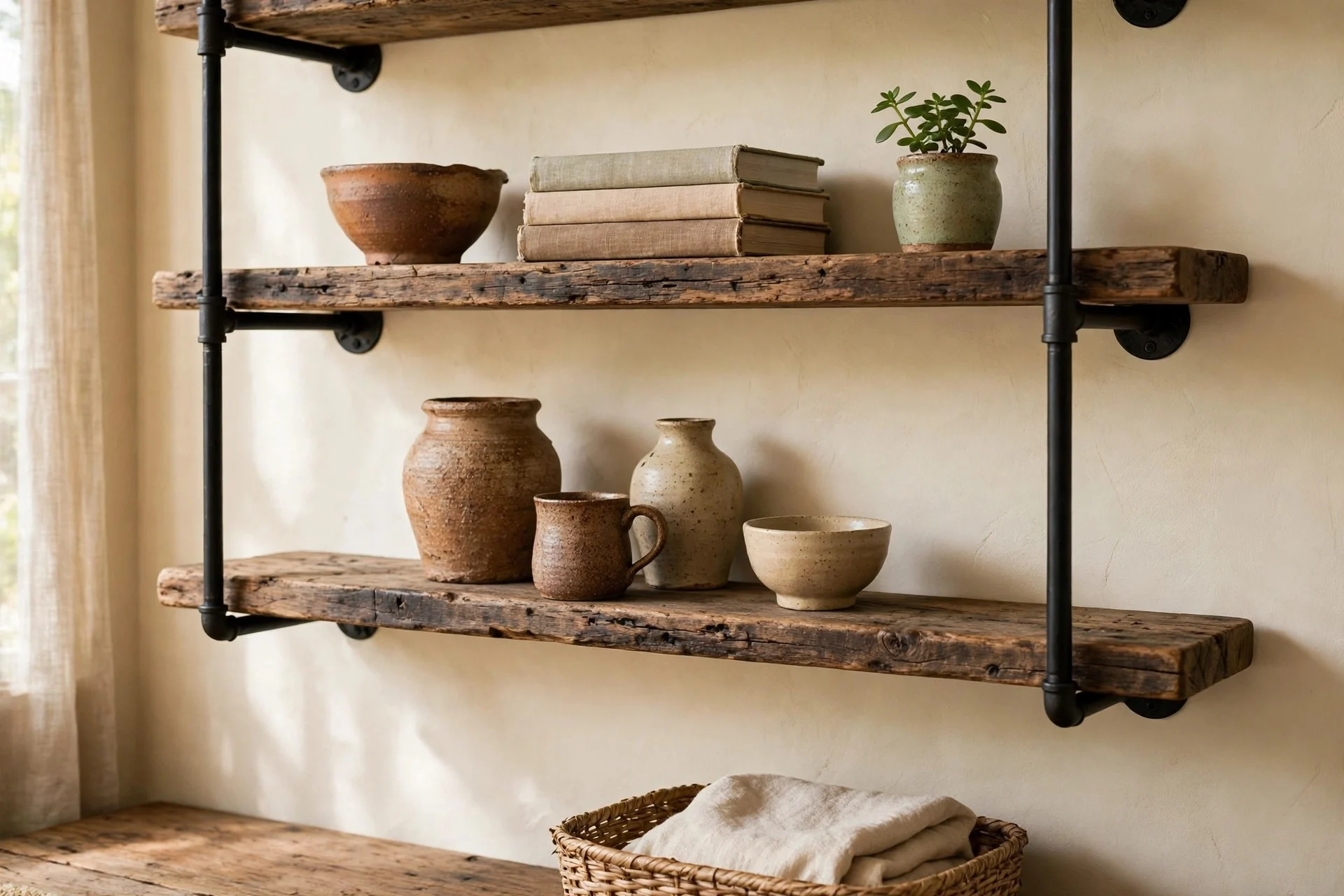
Open shelves in black iron and warm wood strike the right balance between sturdy and soft. I swapped my closed cabinets for a pair of these shelves and suddenly my pottery, books, and plants had a home where I could actually see them. The mix of materials keeps the rustic look from turning too sweet.
Mount the brackets into wall studs, because books and pottery get heavy fast. Keep the shelves to two or three, and leave breathing room between objects instead of filling every inch. Mix useful things with pretty ones: a stack of books, a clay vase, a small plant.
Try this: repeat the iron finish on a lamp or curtain rod to tie the room together.
11. Light Candles and Lanterns for Evening Glow
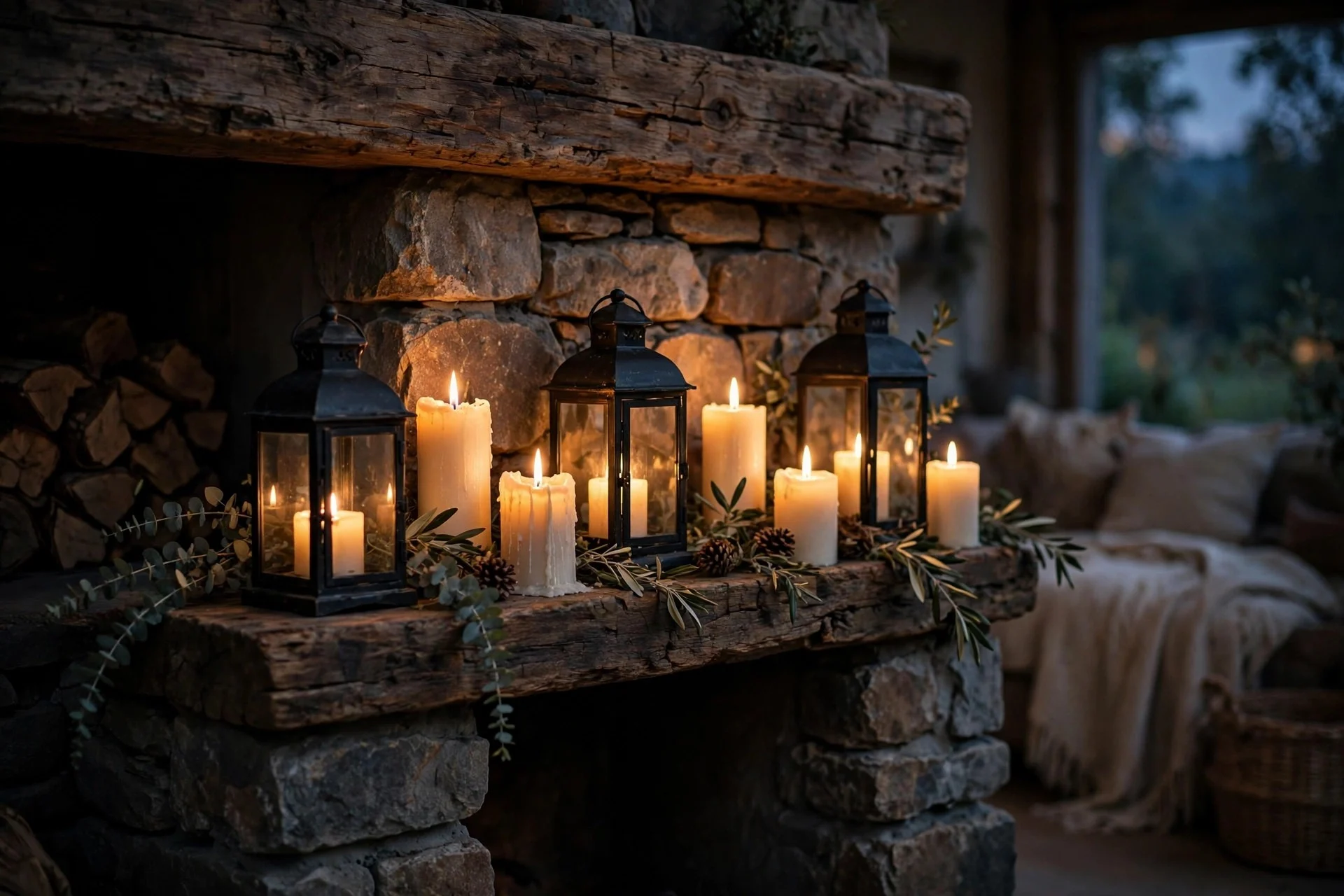
No lamp gives the same glow as real candlelight in a rustic room. I light a few pillar candles and a lantern every evening, and the whole room drops its shoulders. The flicker softens hard edges, warms up the wood, and makes even an ordinary Tuesday feel a little special.
Group candles in odd numbers on the mantel or coffee table, mixing heights for interest. Use sturdy lanterns with glass panels for safety, especially near curtains or throws, and never leave a flame burning in an empty room. Battery candles in a lantern work well if you have pets or small children.
Try this: choose unscented candles for the living room so the glow stays the point.
12. Hang Natural Linen Curtains That Puddle Slightly
Heavy lined curtains can make a rustic room feel formal, while linen hangs with an easy, lived-in drape. I switched to unlined natural linen and the windows finally looked like they belonged to the rest of the room. The fabric filters light into a soft golden haze instead of blocking it out.
Hang the rod high and wide so the curtains frame the window rather than covering it. Let the linen fall to the floor with just a slight puddle, and choose a colour close to your walls so the windows feel calm. Wash them once a season to keep the fabric fresh.
Try this: use simple black iron rings so the hardware matches the rustic mood.
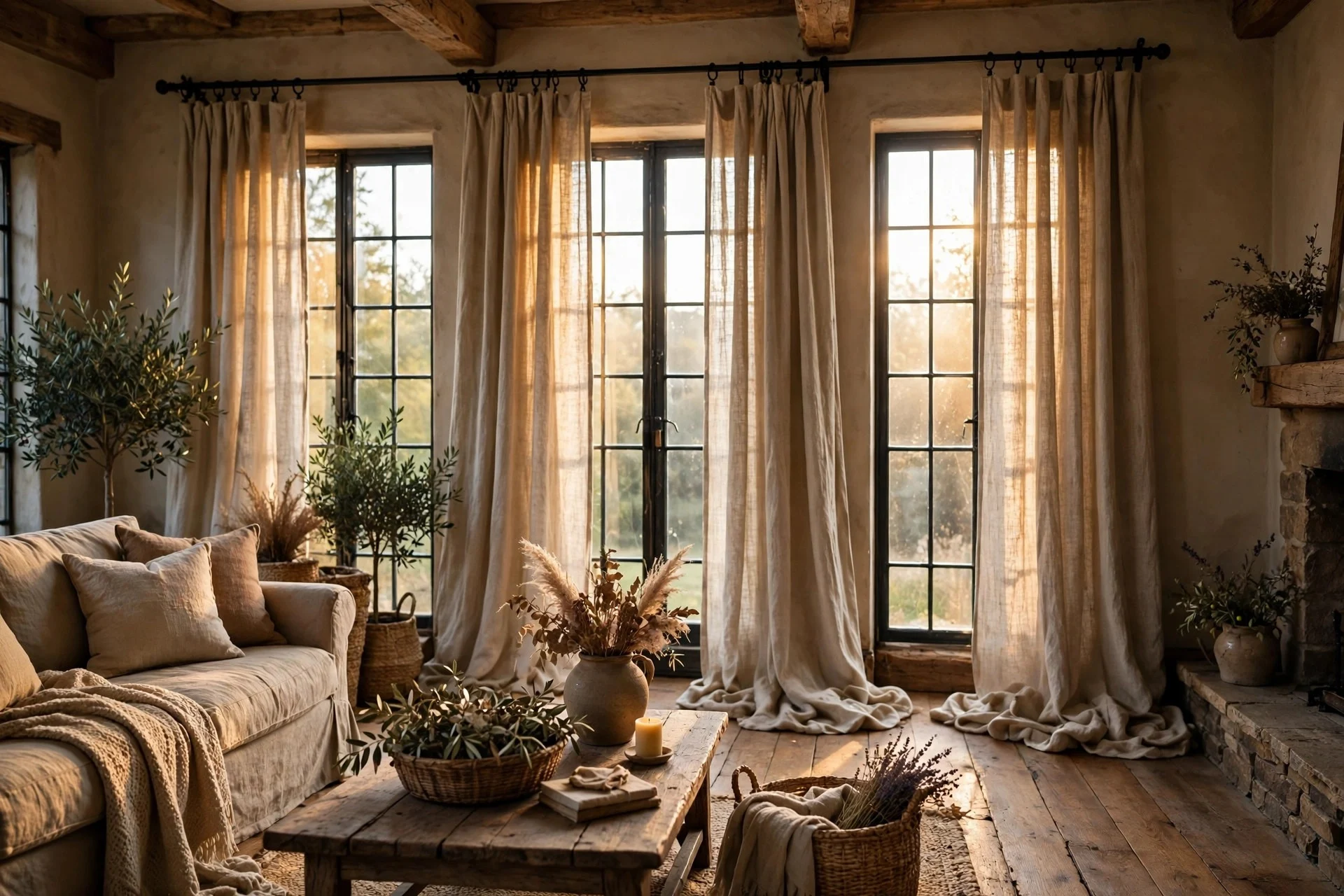
13. Hang Faux Antlers or a Branch Wall Piece
A wall piece made from branches or faux antlers adds a woodland note without turning the room into a hunting lodge. I hung a simple driftwood branch piece above my sideboard, and it fills a blank wall better than any print I tried. The organic shape breaks up all the straight lines of sofas and shelves.
Choose faux antlers in a natural or whitewashed finish, or a single sculptural branch mounted on the wall. Keep it to one statement piece per room, and hang it where it has space to breathe, above a console or on a wide empty wall. Skip anything too large for the wall, since it will crowd the room.
Try this: balance the piece with a small plant or candle on the furniture below it.
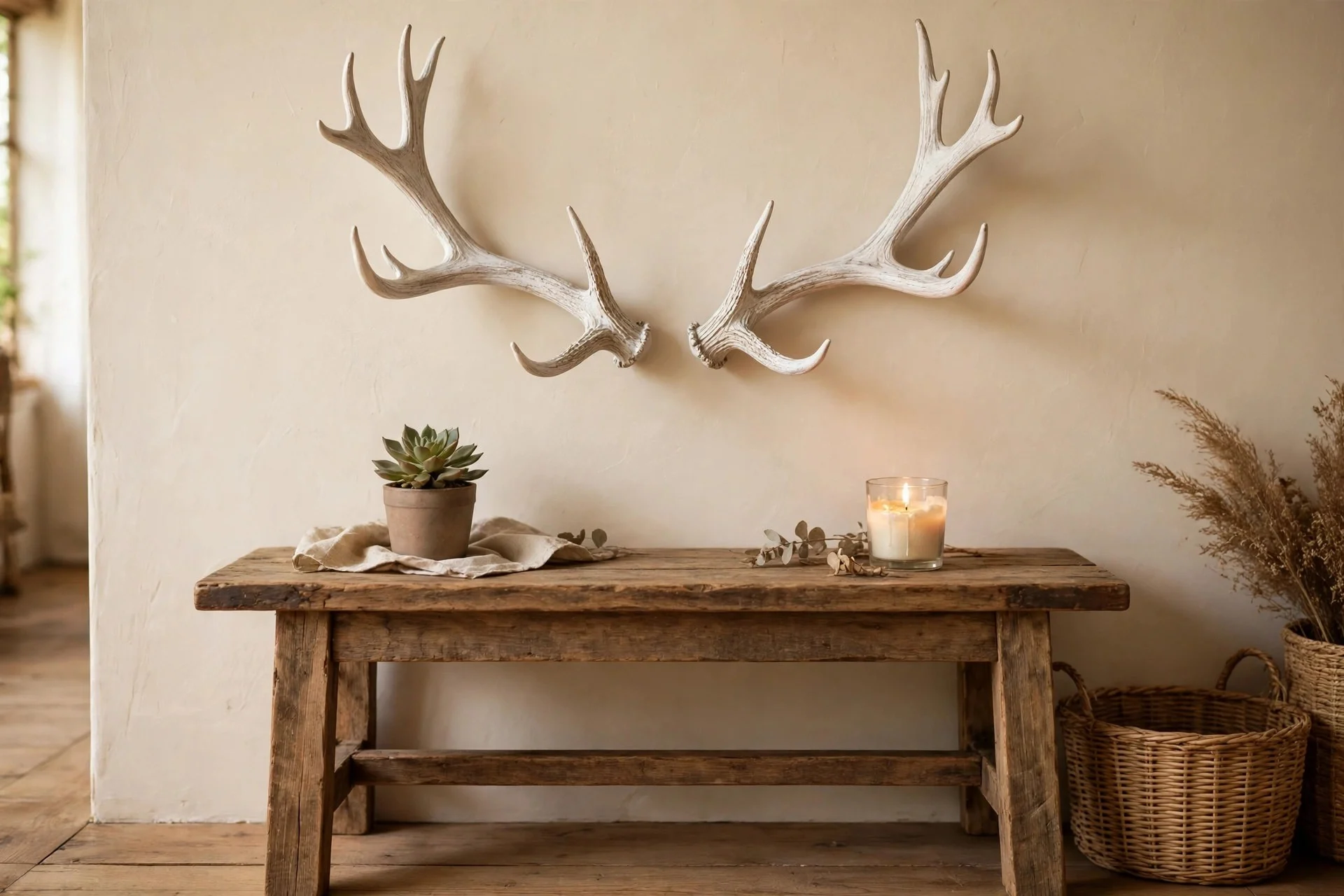
14. Display Handmade Pottery and Clay Vases
Handmade pottery has small wobbles and fingerprints that factory pieces never do, and that is exactly the point. I started collecting one clay vase at a time from local markets, and now the shelf by my window holds a little row of them. Each one is slightly different, and together they look like they belong.
Group three or five pieces of different heights on a shelf, mantel, or sideboard. Stick to earthy glazes, cream, terracotta, sage, or speckled brown, so the collection feels calm rather than busy. Fill one vase with dried grasses and leave the rest empty so the shapes speak for themselves.
Try this: buy one piece per season instead of a matching set all at once.
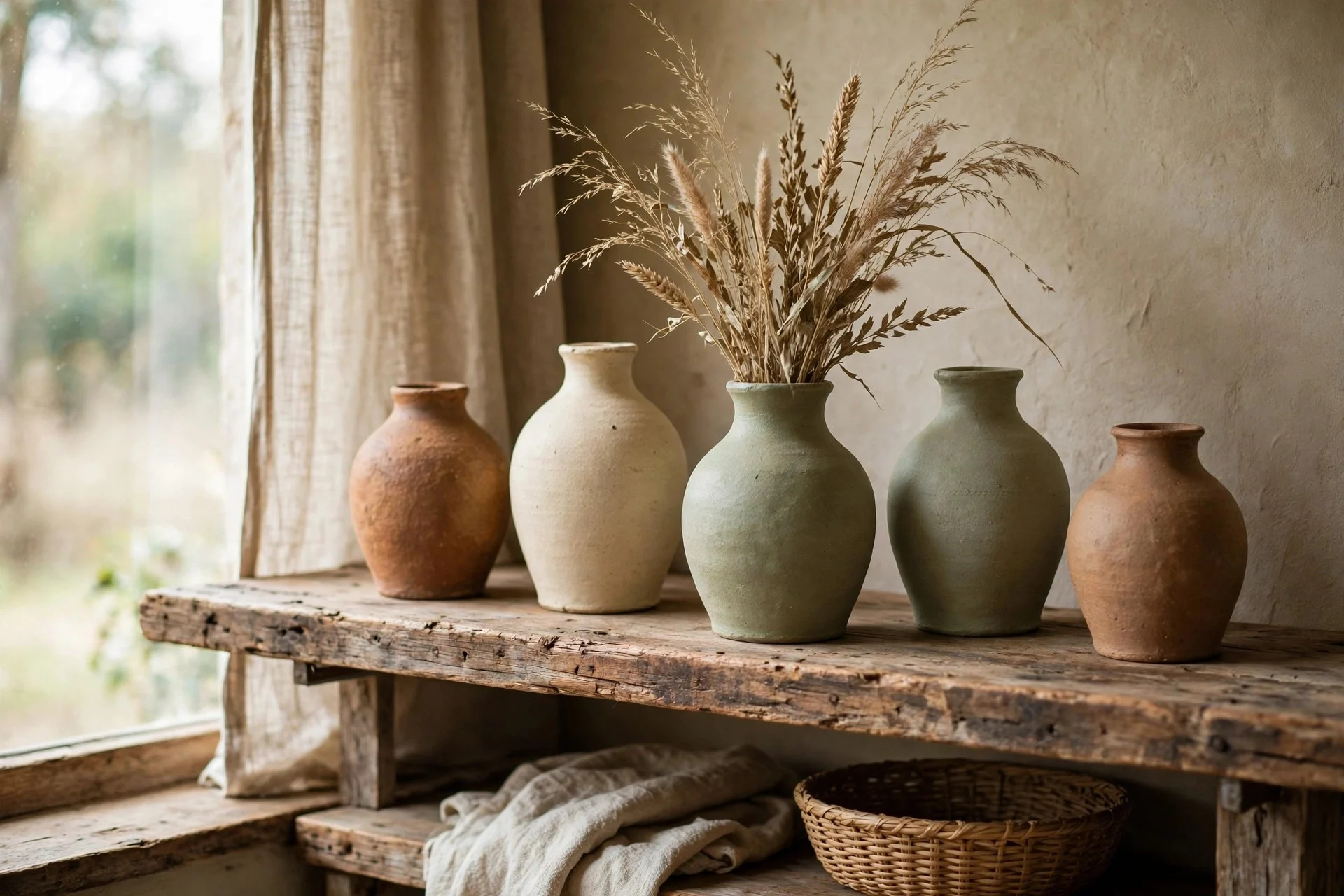
15. Layer Plaid and Knit Throws on the Sofa
A sofa without a throw looks unfinished to me, like a bed without a blanket. I keep a plaid wool throw folded over the back and a chunky knit one in the basket, and both get grabbed on cold evenings. The layers add colour and texture in seconds, and you can swap them with the seasons.
Pick throws in warm plaids, deep reds, forest greens, or soft creams, and mix one pattern with one solid. Drape one casually over an arm or the back of the sofa, never folded into a perfect square. Wash wool throws gently and air-dry them so they stay soft.
Try this: match one throw to the rug so the colours echo across the room.
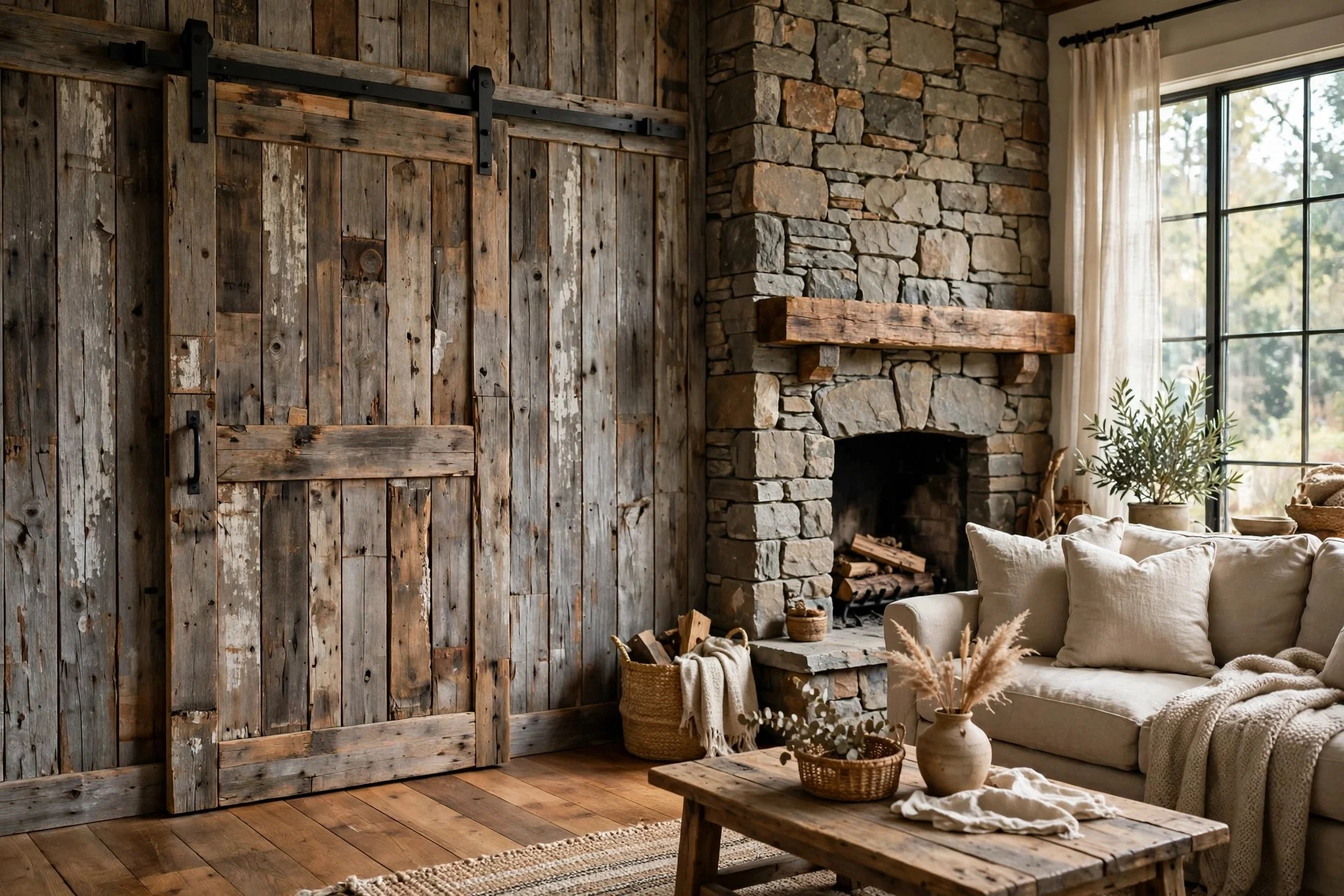
16. Add a Sliding Barn Door or Old Window Frame
A sliding barn door turns a plain doorway into a feature, and it saves floor space too. I fitted one on the pantry doorway off my living room, and it is the detail visitors ask about most. The rough wood and black iron rail add instant farmhouse character to an otherwise ordinary opening.
Measure the opening carefully and buy a rail rated for the door’s weight. A reclaimed door with old paint and hardware looks best, but a new pine door stained dark works too. If a barn door does not fit your layout, hang an old window frame on the wall as art instead.
Try this: leave the door hardware matte black so it matches your shelves and lights.
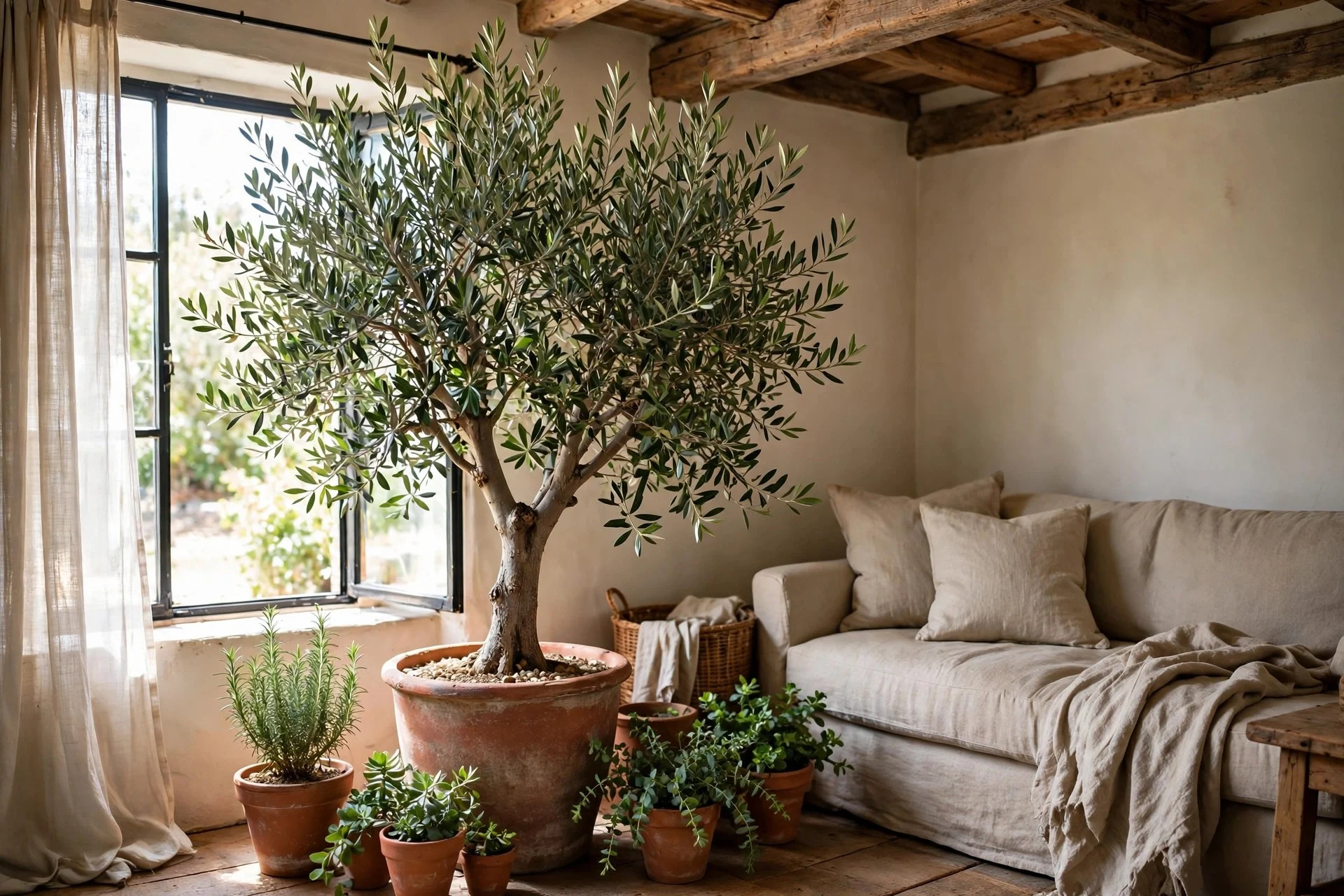
17. Bring In Plants in Terracotta Pots
Plants stop a rustic room from feeling like a museum of old wood. I keep a big olive tree in a terracotta pot by the window and a few smaller herbs on the sill, and the green wakes the whole room up. Terracotta suits the palette far better than glossy ceramic, and it ages with a lovely patina.
Choose plants that suit your light: olive and fiddle-leaf trees love bright windows, while pothos and snake plants cope with darker corners. Water terracotta pots a little more often, since the clay dries out fast. Group pots in odd numbers and vary the heights.
Try this: put the largest plant in the emptiest corner to balance the furniture.
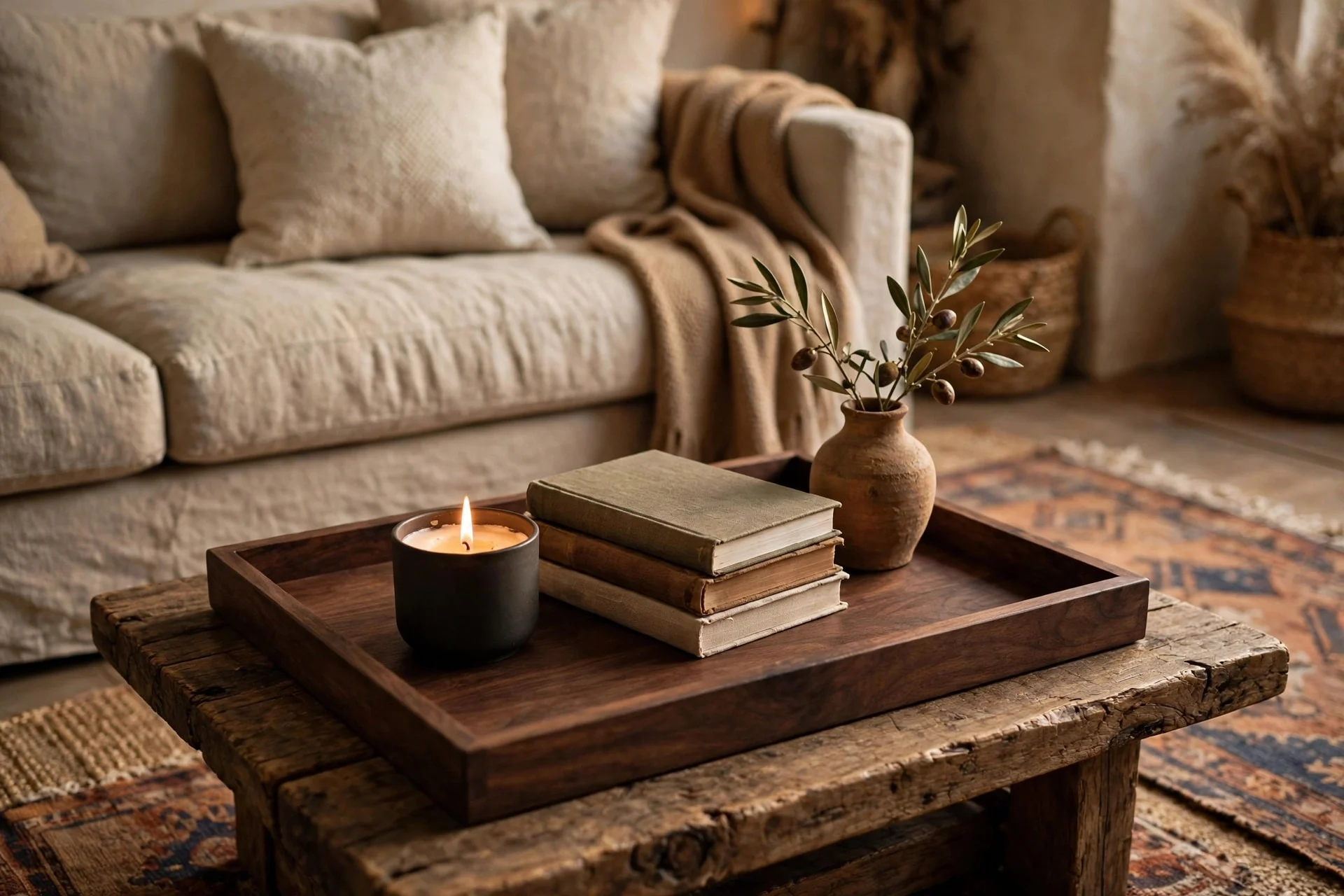
18. Style a Wooden Tray on the Coffee Table
A wooden tray is the simplest way to make a coffee table look styled instead of cluttered. I use one to corral the remote, a candle, and a small vase, and when friends come over I just lift the whole tray away. It keeps the surface tidy and gives the table a clear centre.
Pick a tray in reclaimed wood or dark walnut that fits about two-thirds of the table length. Add three items of different heights: something tall like a vase, something low like a stack of books, and a candle for glow. Leave the rest of the table clear so the tray has room to shine.
Try this: swap the tray contents with the seasons for a fresh look without buying anything.
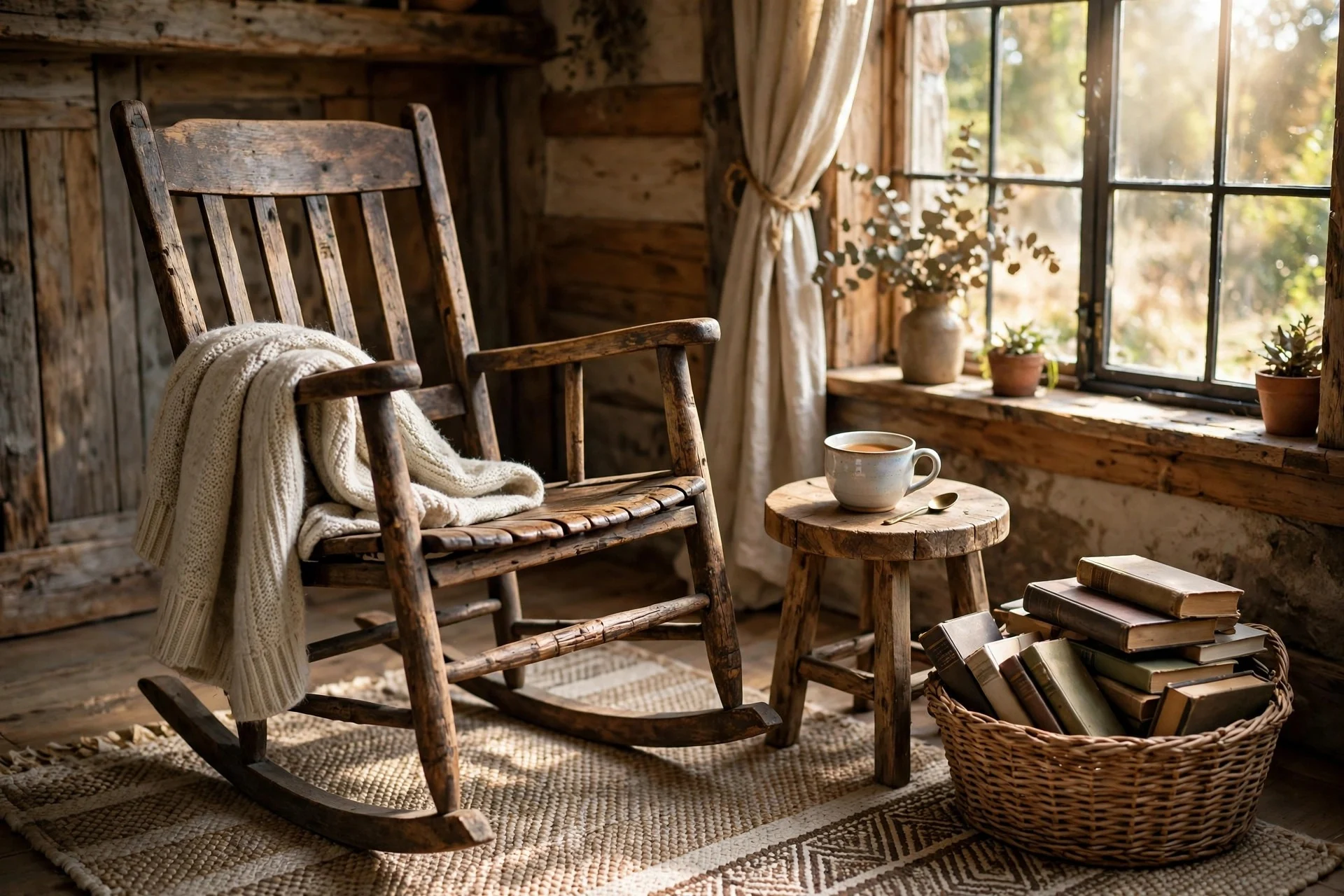
19. Create a Reading Nook With a Rocking Chair and Wool Blanket
Every rustic living room deserves one quiet corner made for sitting still. I set mine up with an old wooden rocking chair, a wool blanket over the arm, and a small basket of books, and it is where I end up most evenings. A nook like this gives the room a purpose beyond the television.
Pick a corner near a window for natural light, and add a small side table for tea and a floor lamp for dark evenings. A woven rug under the chair defines the spot and protects the floor from rocking marks. Keep the books you are actually reading within reach, not just the pretty ones.
Try this: add a cushion in a warm plaid so the chair feels soft from the first sit.
What colours work best in a rustic living room?
Warm neutrals do the heavy lifting: cream, warm beige, soft greige, and pale clay on the walls, with wood tones, cognac leather, and deep green or rust as accents. Avoid cold greys and bright whites, which can make natural materials look washed out.
How do I make a rustic living room feel cosy without clutter?
Layer textures instead of objects. A soft rug, a wool throw, linen cushions, and warm lamplight add cosiness without filling every surface. Keep one or two surfaces clear, and store extra blankets and magazines in baskets.
Can rustic decor work in a small living room?
Yes, if you keep the big pieces light and let texture do the work. A linen sofa, a slim wooden coffee table, and one statement beam or stone accent are enough. Skip heavy dark furniture on every wall, and let the floor show around the rug.
Is rustic living room decor expensive to create?
It does not have to be. Secondhand wood furniture, flea-market finds, and handmade pottery cost far less than new matching sets. Start with paint, textiles, and one good vintage piece, then add larger items like a beam or stone surround over time.
Final Thoughts
A rustic living room is not about buying a look in one go. It grows from honest materials, warm light, and pieces you actually use, from the beam over the fire to the blanket you reach for every night. Pick the idea that speaks to you first, try it properly, and let the room tell you what it needs next.
When the room starts to feel like somewhere you want to linger, you will know you got it right. That slow, settled feeling is the whole point, and it is worth far more than a perfect photo.