
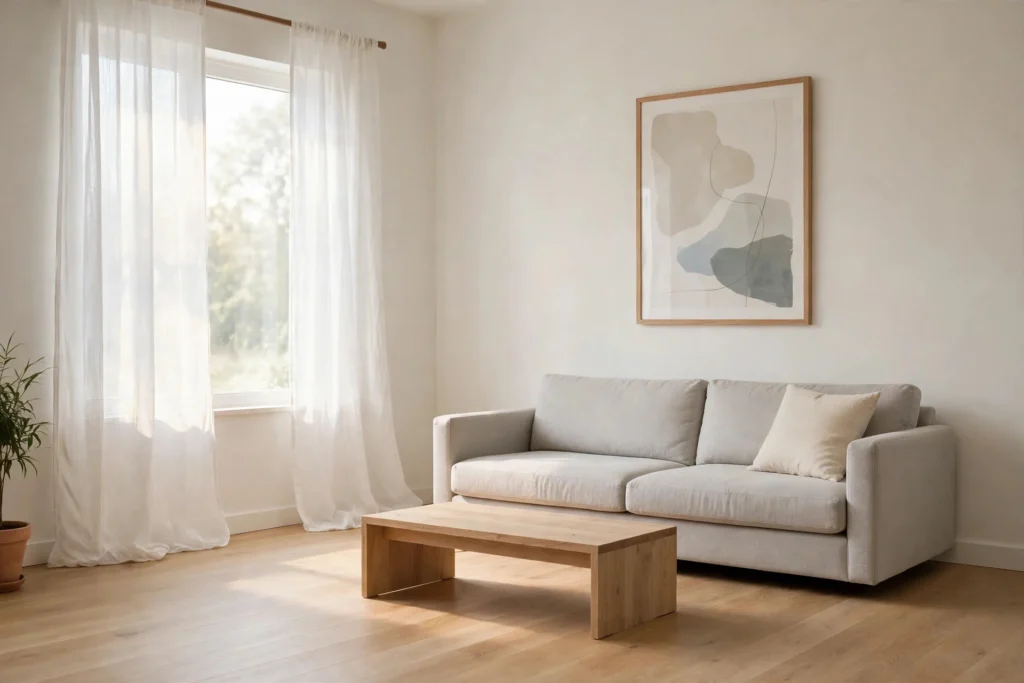
A calm living room does not happen by accident. It comes from small, clear choices made one at a time, and the best minimalist living room decor ideas are the simple ones you can actually live with every day. You do not need a big budget or a bare, cold room to get that peaceful feeling. You just need less stuff, honest materials, and a little breathing room around the things you keep.
I learned this the slow way, by buying too many small things and wondering why the room still felt busy. Once I started removing pieces instead of adding them, the room finally felt settled. The ideas below work in real homes, with kids, pets, and everyday mess. Pick one or two to start, live with them for a week, and see how the room feels before you change anything else.
1. A Neutral Base That Makes Minimalist Living Room Decor Ideas Work
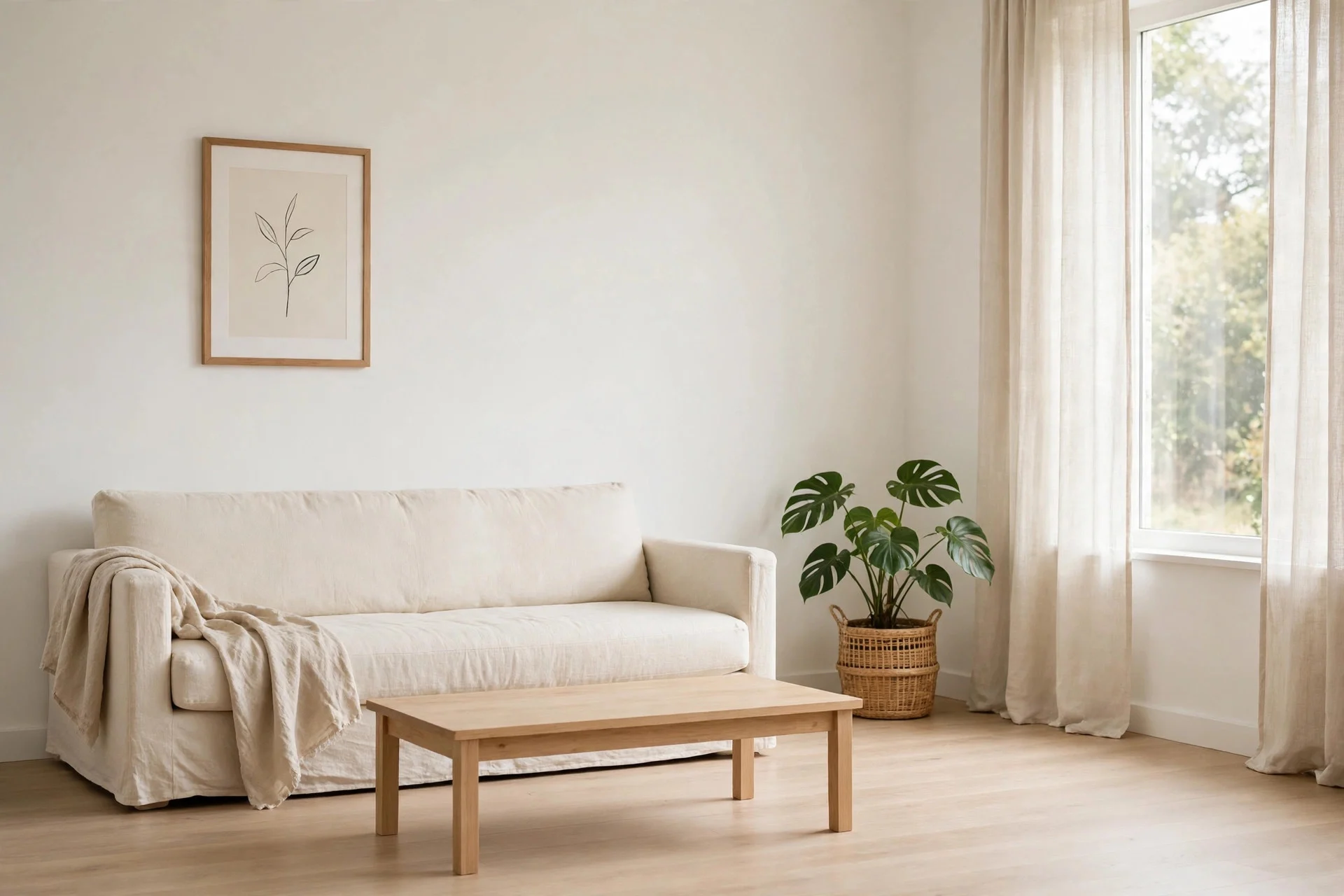
Start with warm white walls, a light floor, and soft beige or grey for the big pieces. A neutral base lets everything else in the room sit quietly together instead of fighting for attention. First, paint the walls one warm white and keep the ceiling the same shade. Next, choose a sofa and rug in tones that sit close to each other, not far apart. I tried this in my own living room after years of mixing bold colours, and the change was clear within a day. The room felt bigger, calmer, and much easier to tidy.
Try this: Hold paint and fabric samples together in daylight before you buy.
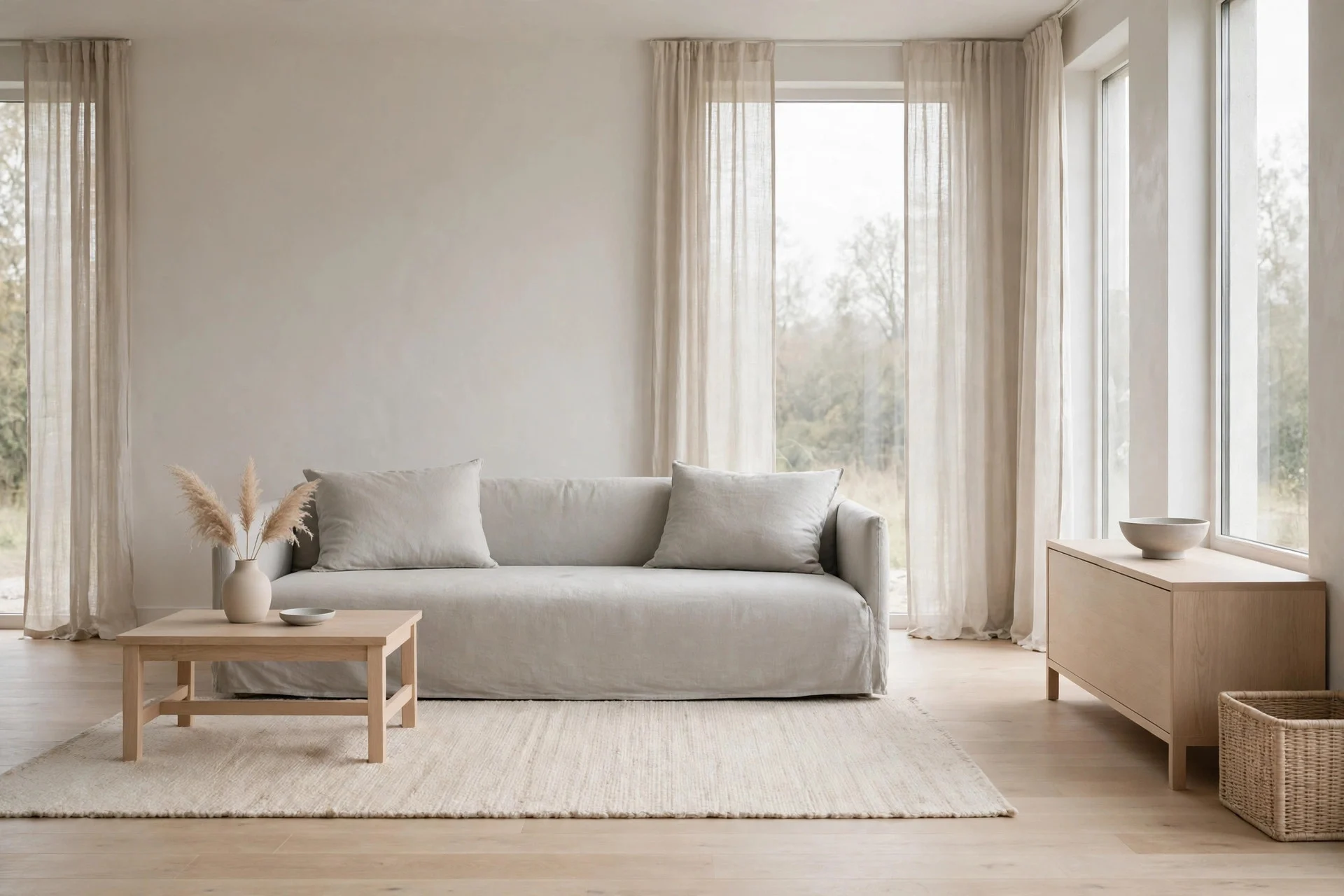
2. One Sofa, Chosen With Care
Your sofa is the biggest piece in the room, so it deserves the most thought. Pick one with clean, straight lines, a solid colour, and a fabric you can sit on every day without worrying. First, measure your wall and leave at least a hand’s width of space on each side. Next, sit on it properly in the shop, the way you sit at home. I made the mistake of buying a sofa that looked perfect in photos but felt stiff after twenty minutes, and I lived with that regret for years. A good sofa should feel as calm as it looks.
Try this: Sit, lean back, and stretch out before you pay.
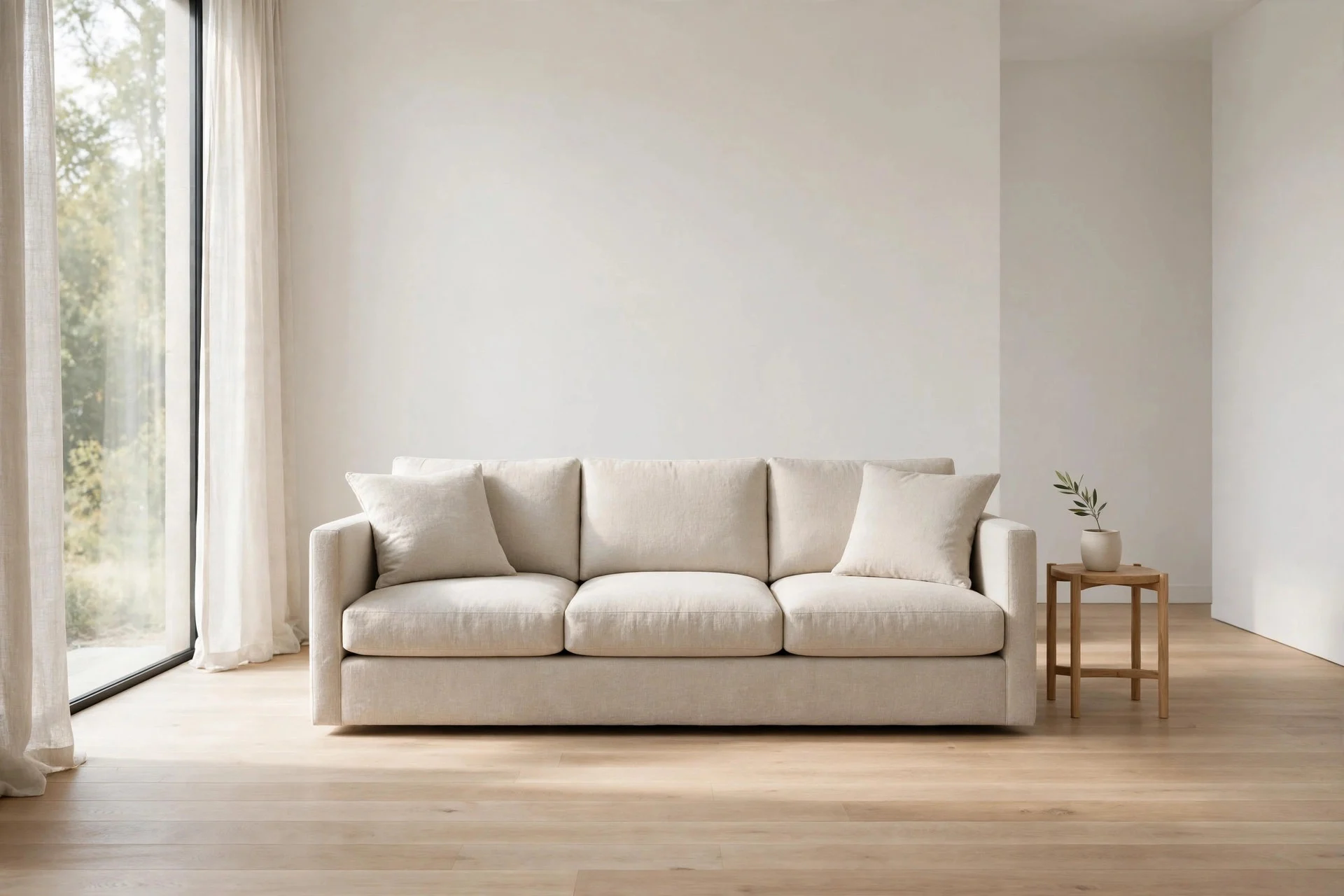
3. Clear the Surfaces, Keep the Calm
Flat surfaces collect clutter faster than any other spot in a house. Keys, mail, chargers, and half-finished cups all land there, and soon the whole room feels messy. First, take everything off your coffee table and sideboard and put it away. Next, allow only one or two items back, like a small vase or a single book. I tried this on a Sunday afternoon and laughed at how much stuff had piled up without me noticing. The room looked tidier at once, and keeping it that way took less than two minutes a day.
Try this: Give every stray item a home outside the living room.
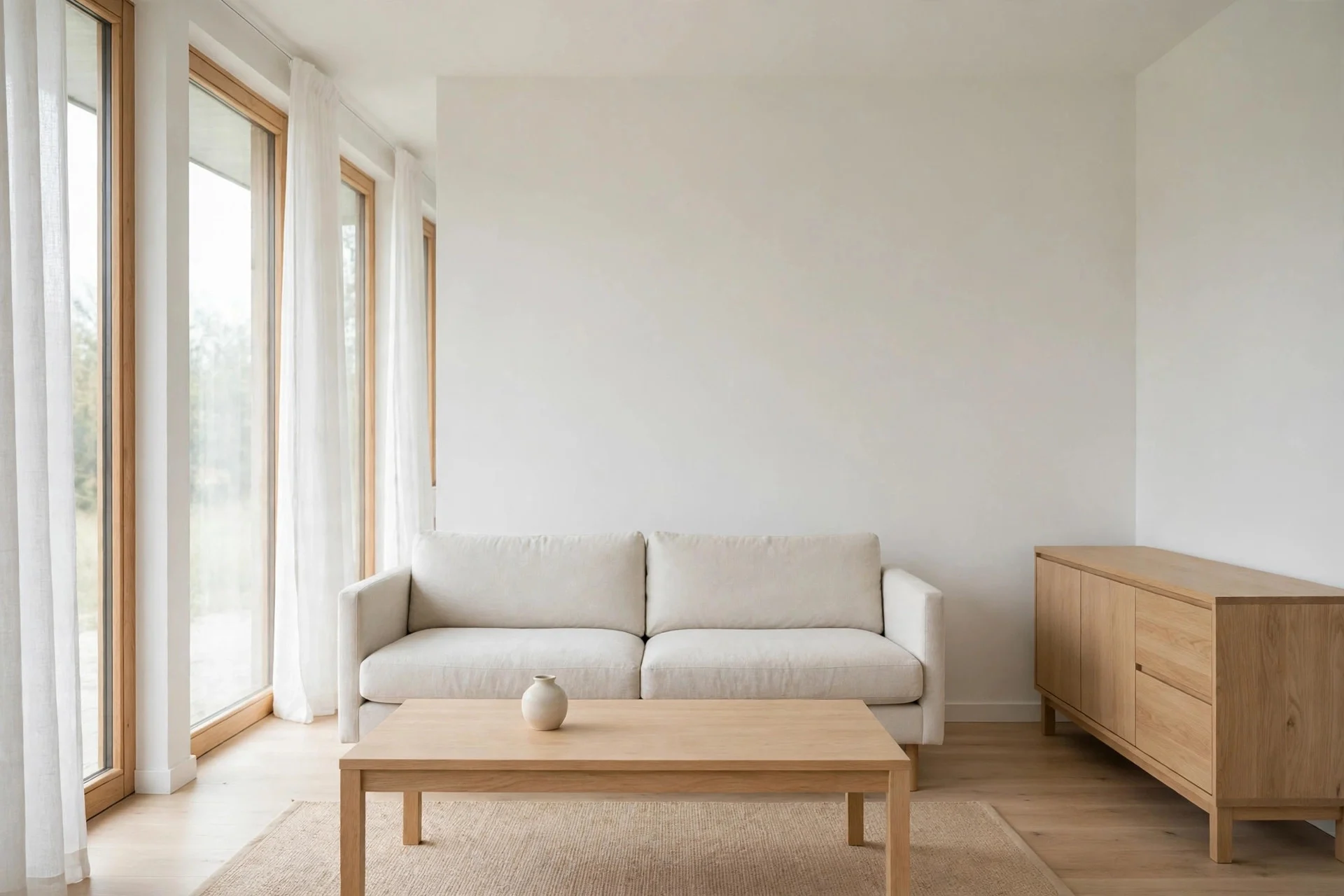
4. A Single Statement Coffee Table
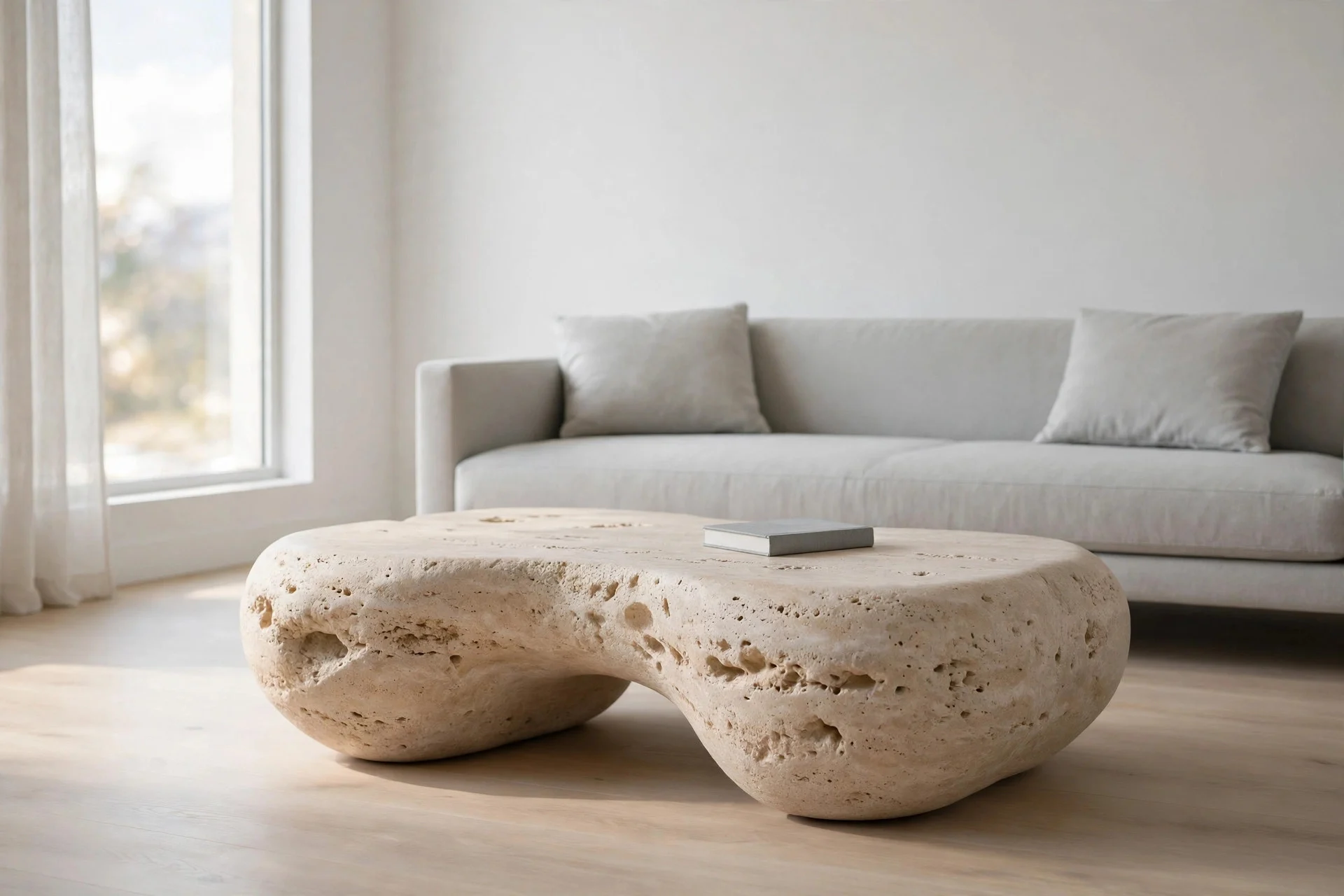
One strong coffee table can carry the whole seating area, so you do not need a crowd of small tables around it. Look for a simple shape in stone, light wood, or glass with a solid base. First, check the height against your sofa seat so cups and books sit within easy reach. Next, keep the top mostly empty and let the table itself be the feature. I once filled a pretty table with candles, trays, and books until nobody could see the table at all. Now I keep one small stack of books on it, and the table finally gets noticed.
Try this: Leave two-thirds of the table top empty.
5. Let Natural Light Do the Work
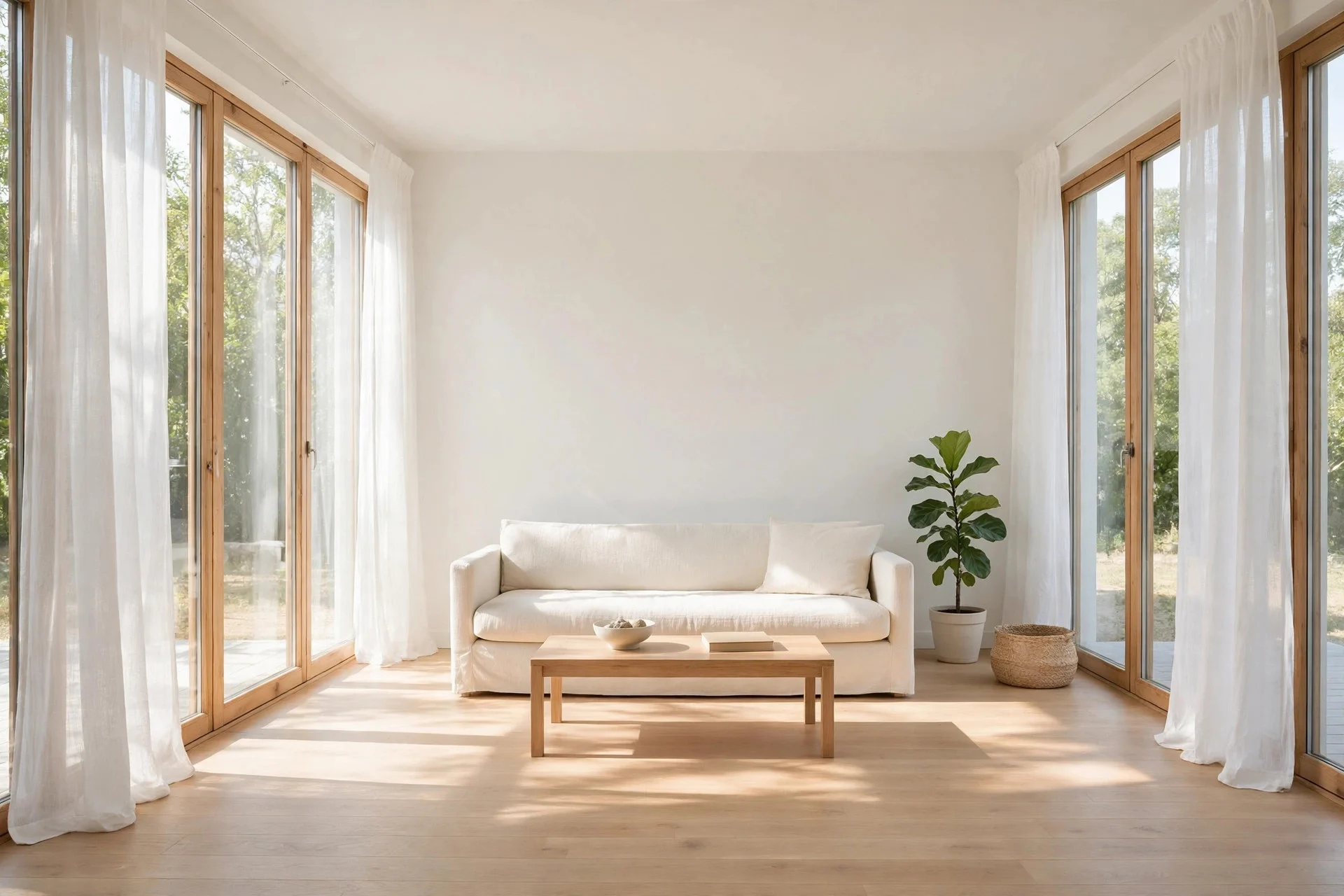
Daylight is the cheapest way to make a plain room feel warm and open. Heavy curtains and dark blinds block it out and make even a tidy room feel small. First, swap thick curtains for sheer white panels or light linen that still gives you privacy. Next, keep the window sill clear so light can fall right into the room. I tried this in a north-facing room I thought was hopeless, and the difference surprised me. The same furniture looked softer, the colours looked truer, and I stopped switching the lamps on so early.
Try this: Wash the windows inside and out this weekend.
6. One Large Piece of Art Instead of Many Small Ones
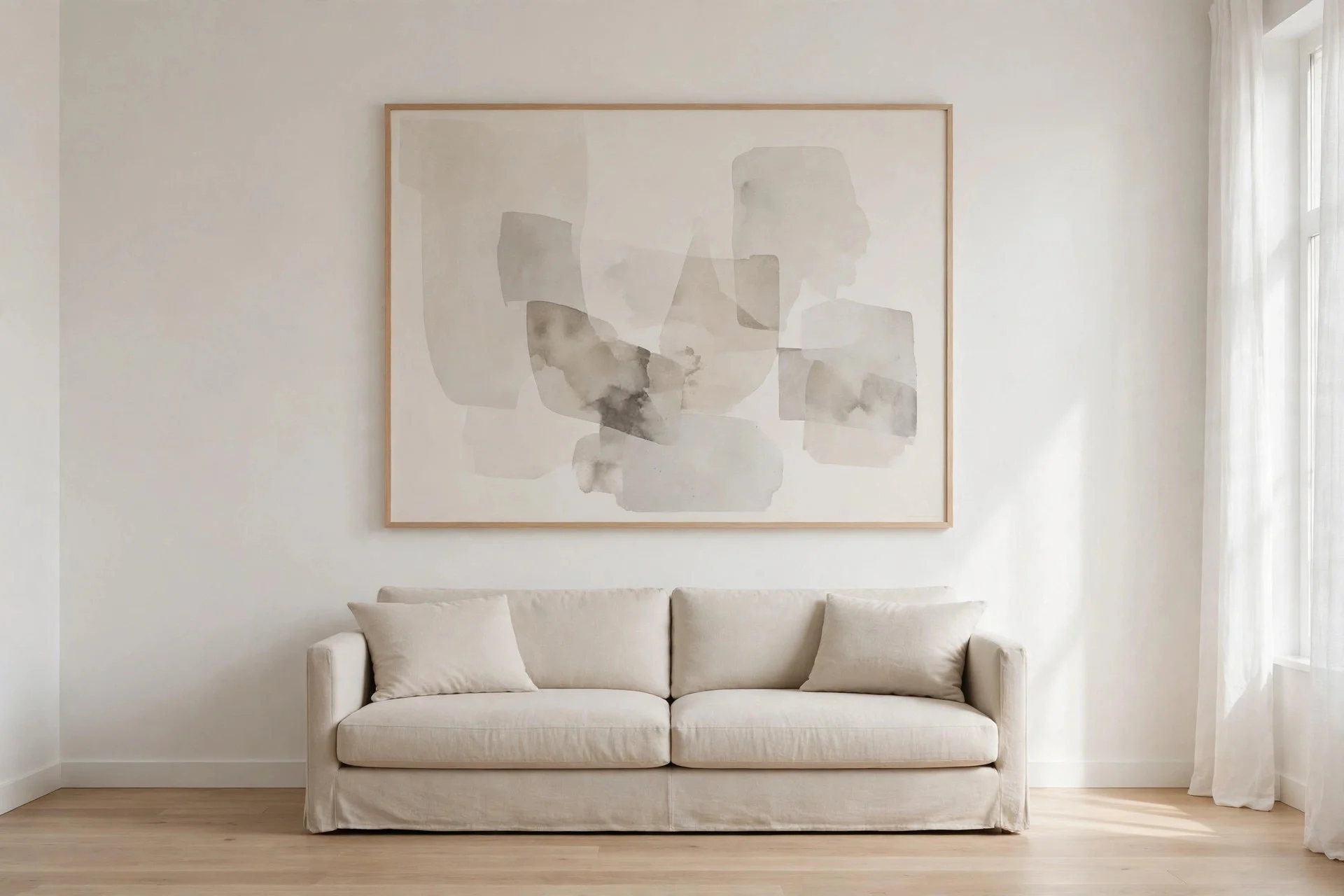
A wall full of small frames can look busy, even when each picture is lovely on its own. One large piece gives the eye a single place to rest and makes the wall feel calm. First, pick the wall behind the sofa or the one you see first when you walk in. Next, hang one print or canvas that is at least two-thirds as wide as the sofa. I tried this after years of adding one small frame at a time, and I wish I had done it sooner. The wall looked finished in an afternoon, and I stopped hunting for more pictures to fill it.
Try this: Cut a paper template to size before you hang anything.
7. Hidden Storage That Keeps Clutter Out of Sight
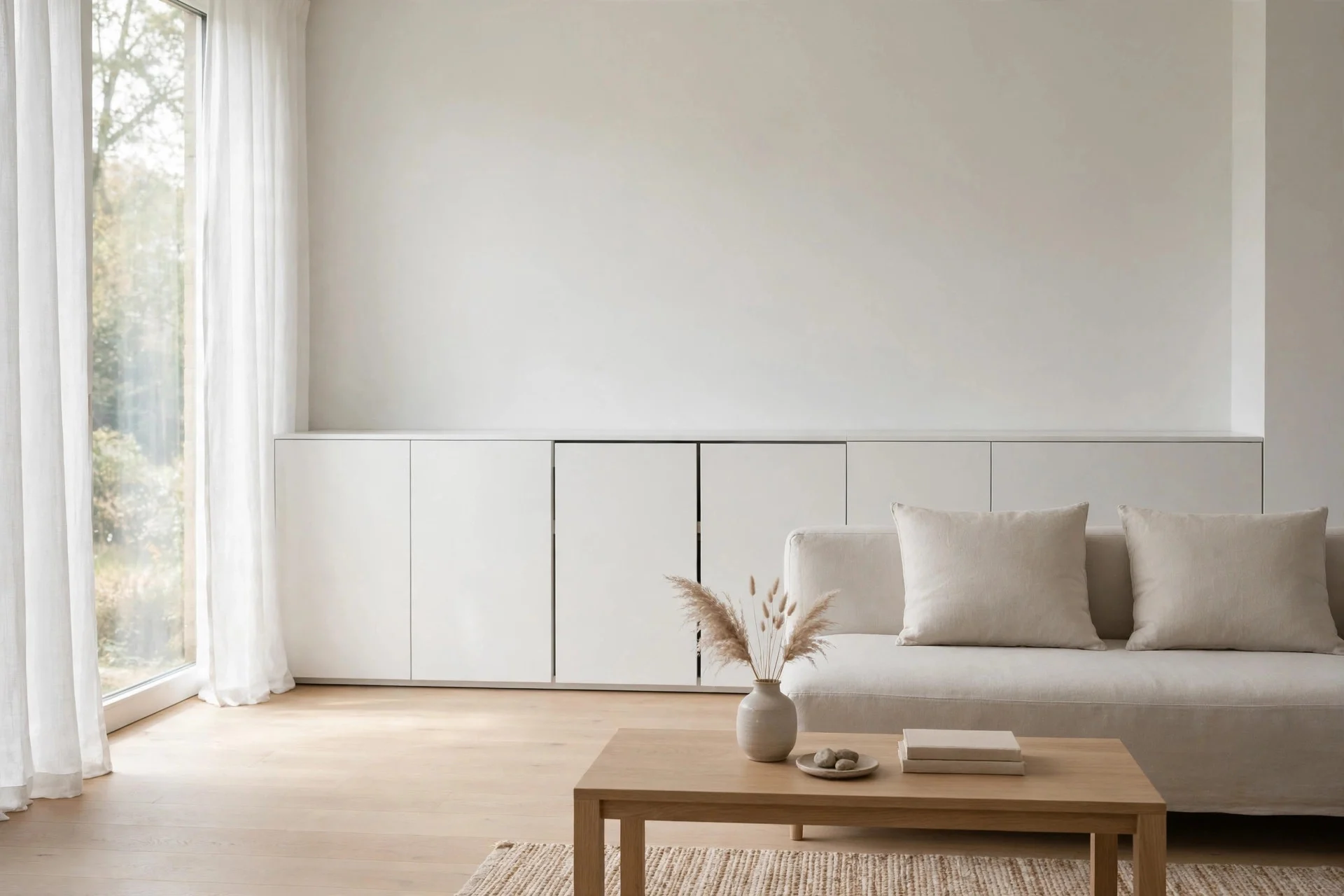
Minimal rooms still need a place for blankets, games, chargers, and all the everyday things that have nowhere else to go. Closed storage solves this without adding visual noise. First, choose a low cabinet or bench with plain, handle-free doors that blend into the wall. Next, give each shelf a job, so blankets live in one spot and games in another. I made the mistake of buying open shelves first, and they turned into a display of clutter within a month. With doors closed, the room stays calm even when life inside the cabinet is not perfect.
Try this: Store remotes and chargers in one labelled basket.
8. A Textured Throw, Not a Pile of Cushions
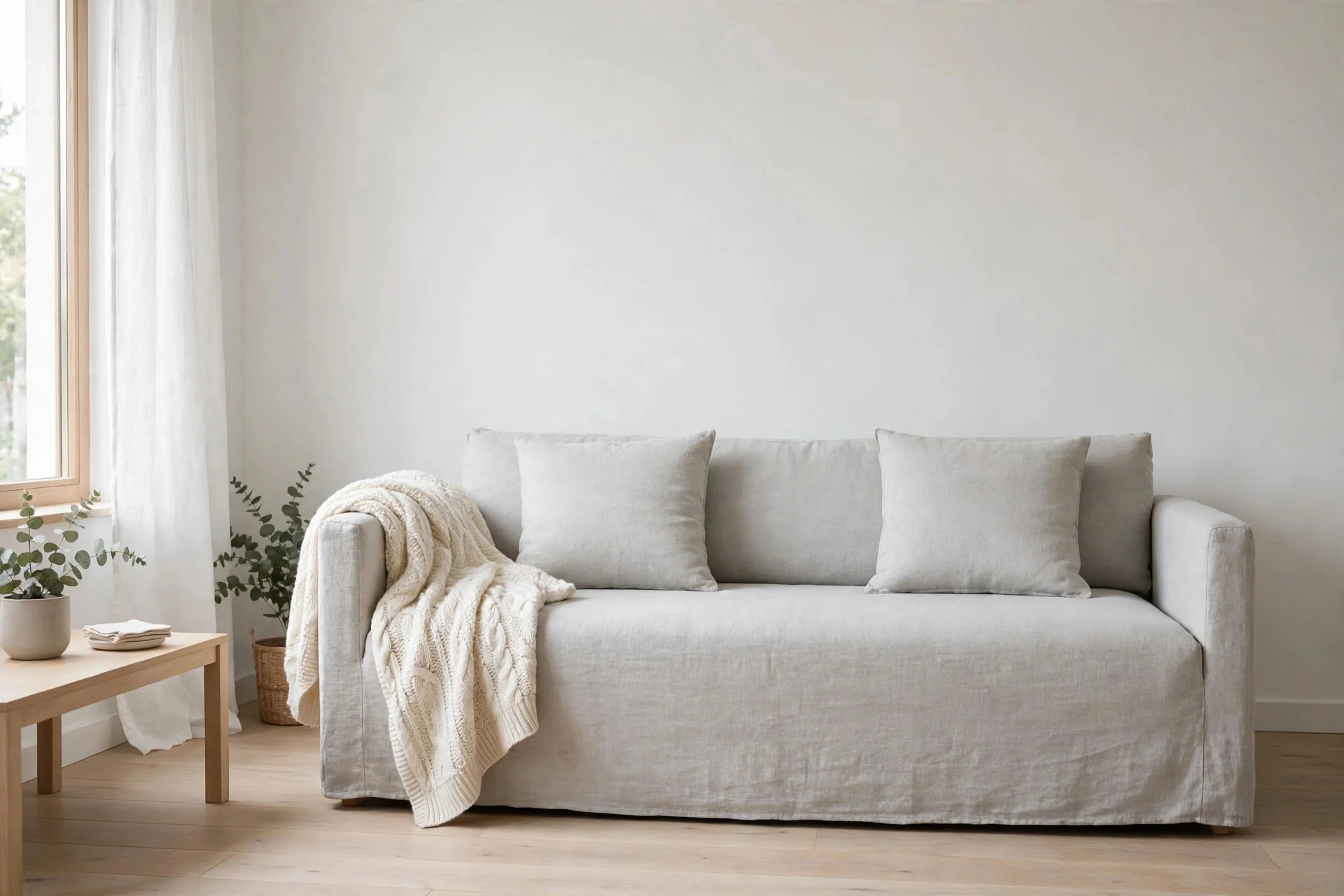
Softness matters in a plain room, but a mountain of cushions just creates more stuff to move every time someone sits down. One good throw adds warmth and texture without the fuss. First, pick a chunky knit or soft wool throw in cream or warm grey. Next, drape it over one arm of the sofa or fold it neatly across the back. I tried this after clearing six cushions off our sofa, and honestly, nobody missed them. The sofa looked tidier, sitting down got easier, and the throw was the one thing everyone actually reached for on cold evenings.
Try this: Keep two cushions at most, and let the throw do the rest.
9. Plants as Your Only Ornament
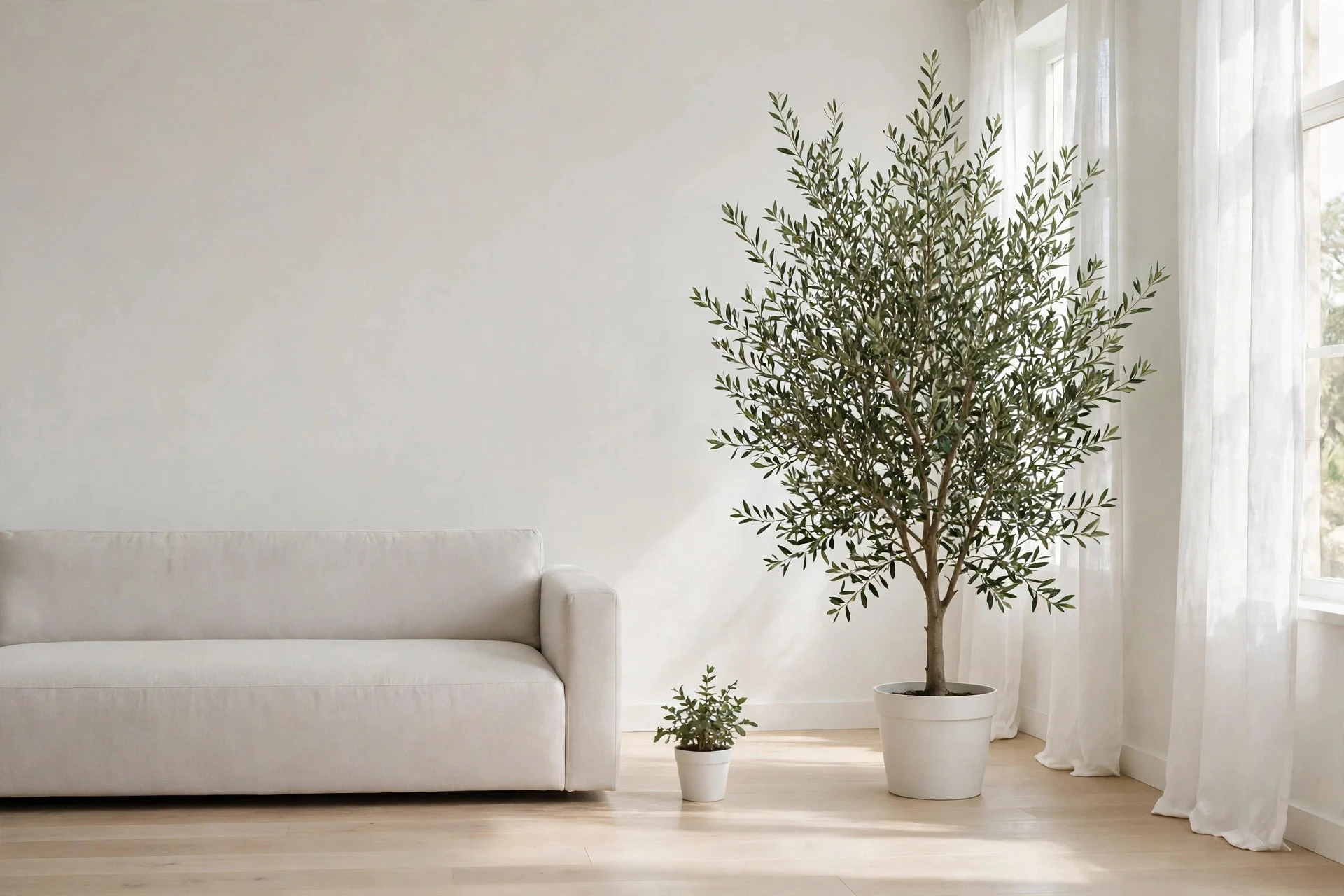
When a room has very little decoration, a plant stands out in the best way. It brings in colour, shape, and life without adding another object to dust or arrange. First, pick one larger plant, like an olive tree or fiddle leaf, for a corner that feels empty. Next, add one small pot on the floor or a low stand, and stop there. I tried this with three plants at first, then cut back to two, and the room felt calmer right away. Water them on the same day each week, and they will reward you by making the plain walls look planned.
Try this: Choose one plant you can keep alive, not five.
10. A Low, Clean-Lined Media Unit
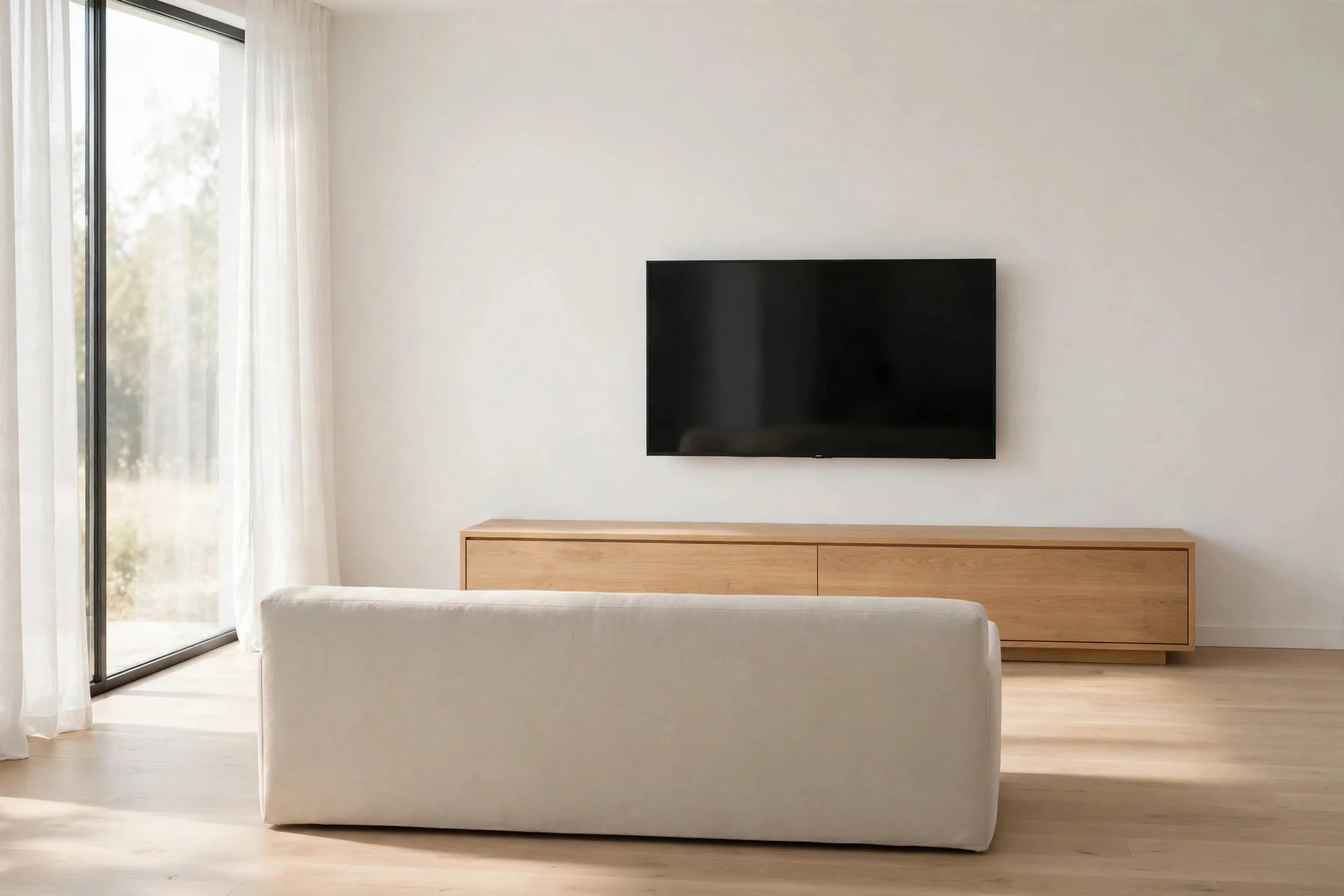
A television and its cables can ruin a calm room fast, but a low media unit keeps everything in line. Look for a long, simple console in light wood or plain white with doors to hide the boxes and wires. First, measure the width of your television and pick a unit a little wider than the screen. Next, run cables through the back of the unit so nothing hangs down the wall. I made the mistake of using a tall, dark unit first, and it pulled the whole room out of balance. A low unit lets the wall above it breathe, and the room feels wider.
Try this: Hide the router and boxes behind a closed door.
11. A Rug That Defines the Room Without Shouting
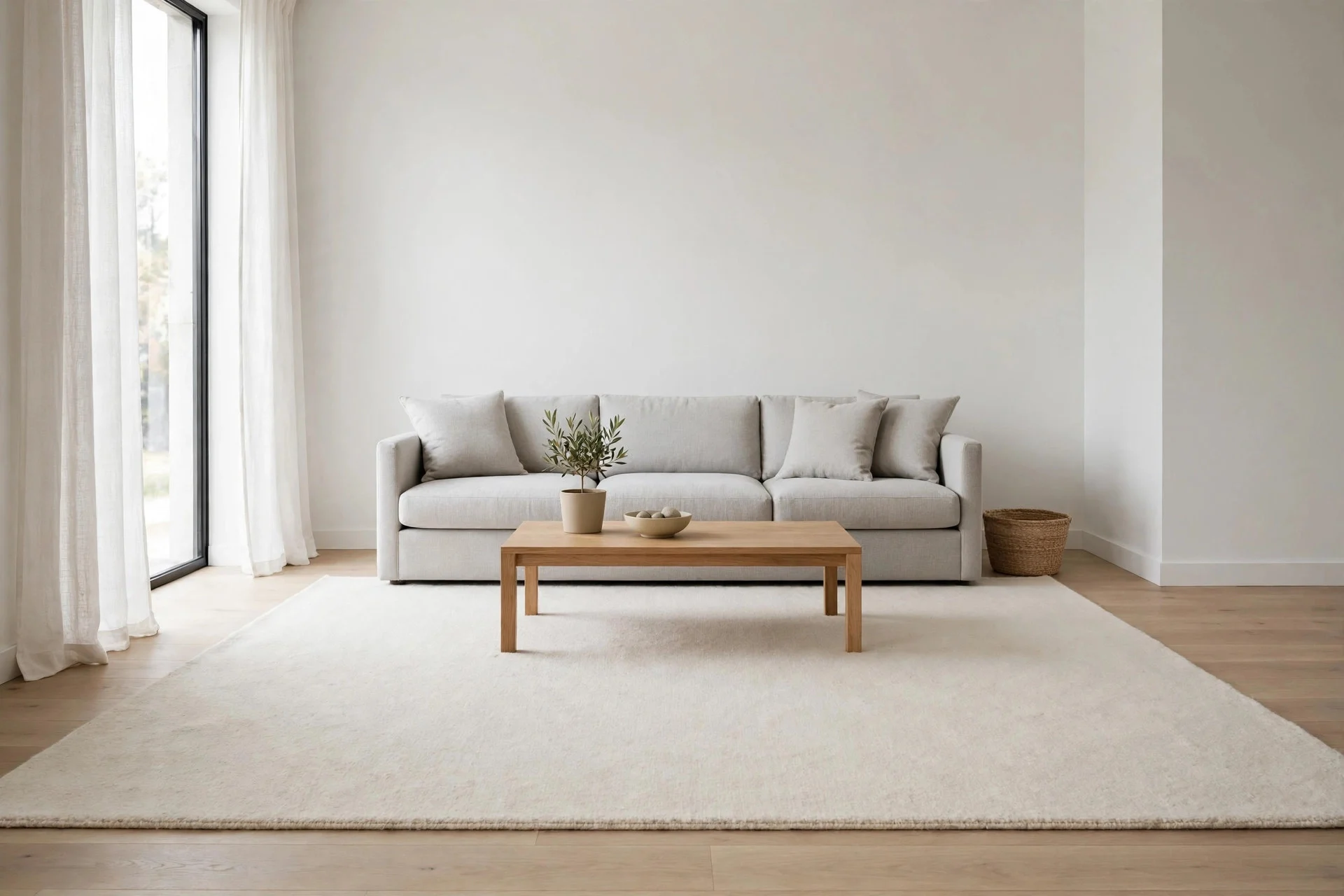
A rug pulls the seating area together, but a loud pattern can take over a quiet room. A plain rug in cream, soft grey, or pale beige does the job without stealing attention. First, pick a size that fits under the front legs of the sofa and chairs. Next, lay it flat for a day before you judge it, because a folded rug always looks smaller. I tried a bold patterned rug once, and I spent months trying to make the rest of the room match it. A plain wool rug was the fix, and now the sofa and table finally look like they belong together.
Try this: Tape the rug outline on the floor first.
12. Warm Wood Tones Against White Walls
White walls can feel cold on their own, and warm wood is the easiest way to soften them. Oak, ash, or pale walnut bring in a natural warmth that paint alone cannot give. First, bring in one wooden piece, like a coffee table or sideboard, and see how it changes the room. Next, add a smaller wooden detail, such as a tray or a picture frame, in the same tone. I tried this in a room that felt more like a waiting area than a home, and the wood made it feel lived in at once. Keep the tones close together, or the room will start to look patchy.
Try this: Match new wood to the floor, not the sofa.
13. Negative Space Is Part of the Design
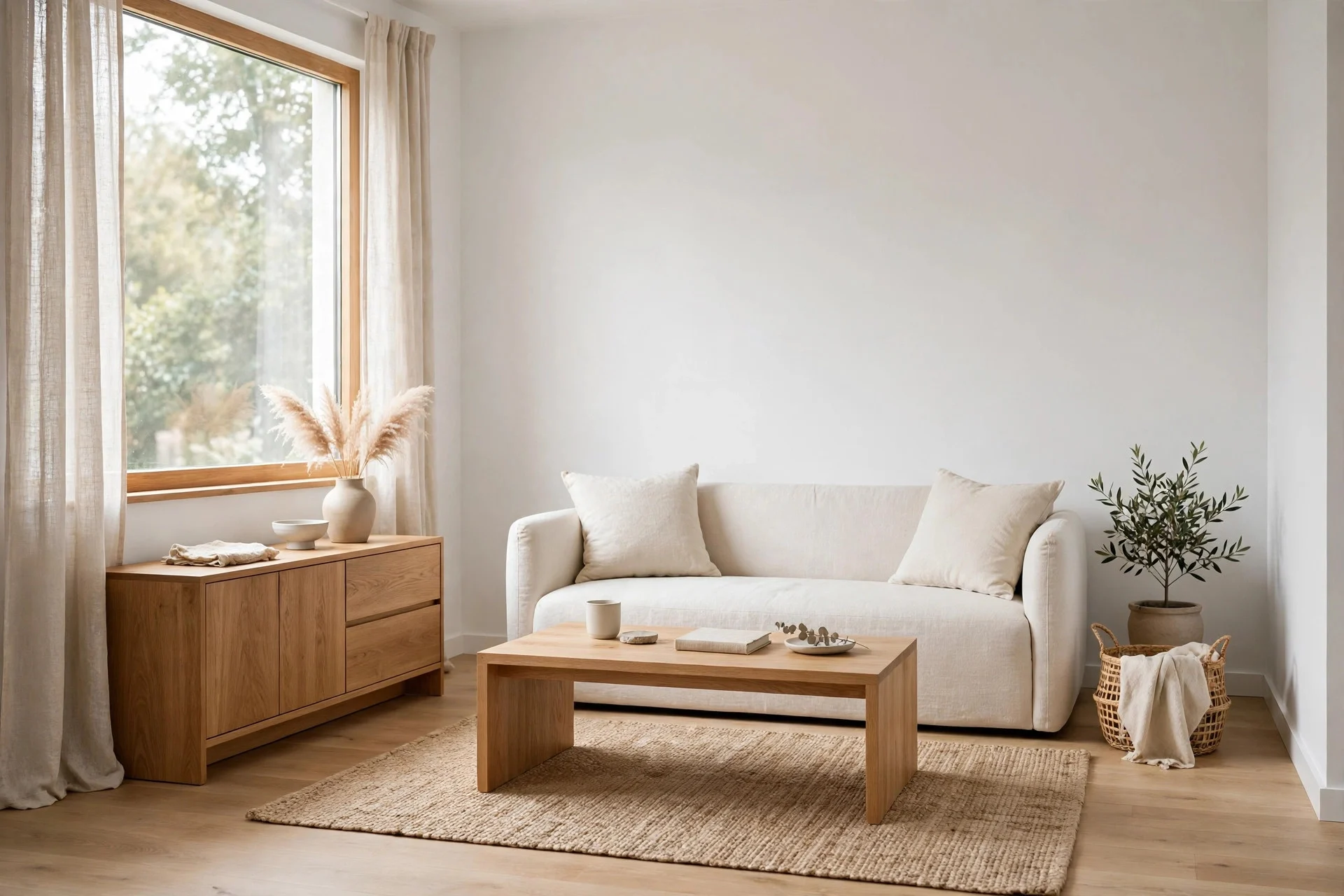
Empty wall and open floor are not wasted space. They are what let the pieces you love stand out, and they give your eyes somewhere to rest. First, look at each wall and ask if it really needs something on it. Next, leave at least one wall mostly bare and keep a clear stretch of floor in front of the sofa. I tried this by taking down a shelf I had filled just to fill the wall, and the room felt lighter the same evening. It felt strange at first, like something was missing, but after a few days the empty space felt like the calmest part of the room.
Try this: Leave one wall bare for a full month.
14. One Shelf, Styled Simply
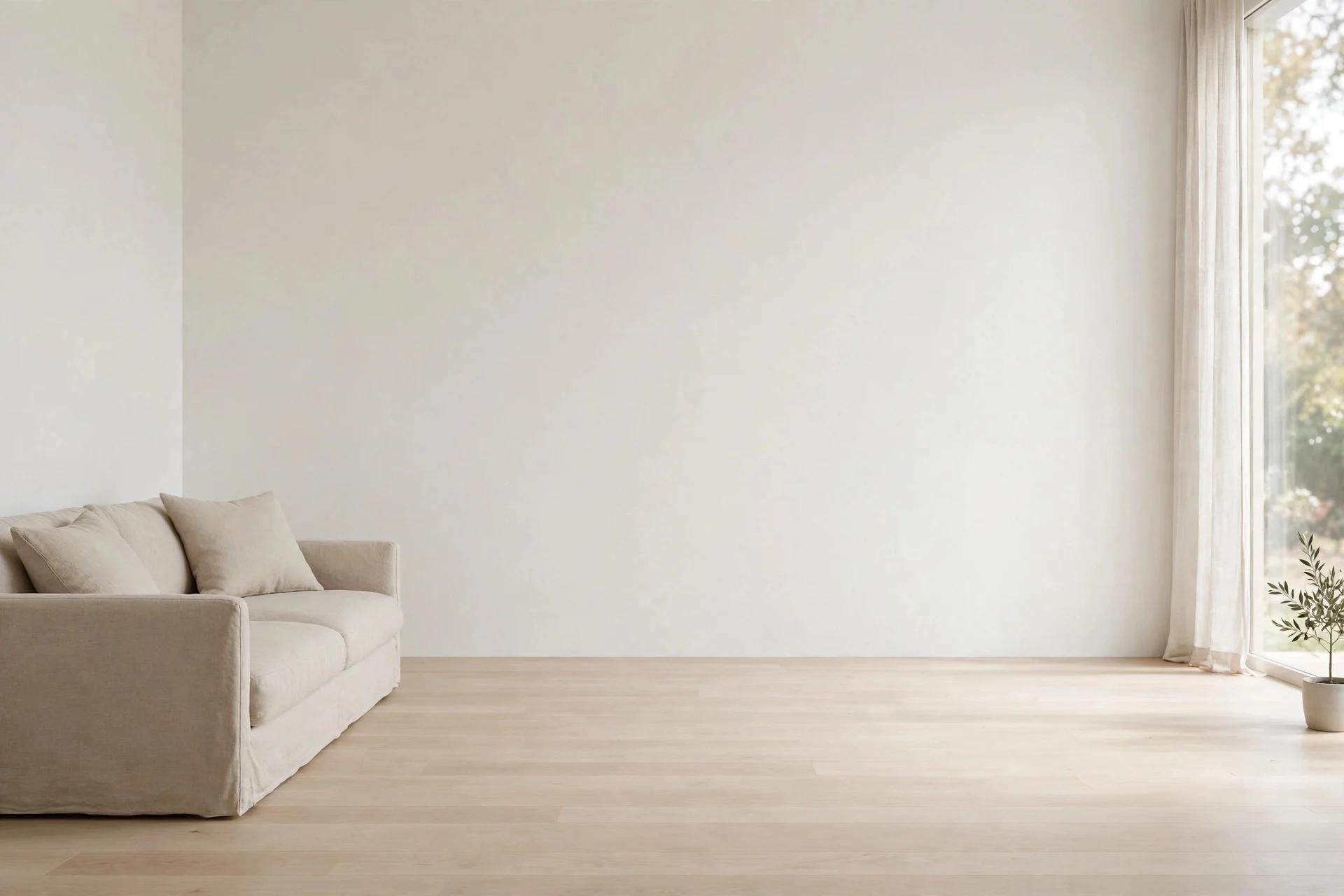
One shelf with three or four chosen things looks far better than a wall of shelves packed tight. It also takes far less time to dust and keep tidy. First, fix a single floating shelf at eye level on a wall that feels empty. Next, place a small vase, two stacked books, and one tiny plant on it, then step back and stop. I made the mistake of filling every shelf I owned, and each one turned into a small junk pile within weeks. One shelf forces you to choose, and the few things you pick end up meaning more because they earned their spot.
Try this: Remove one item from the shelf each week.
15. Matching Lamps for a Balanced Feel
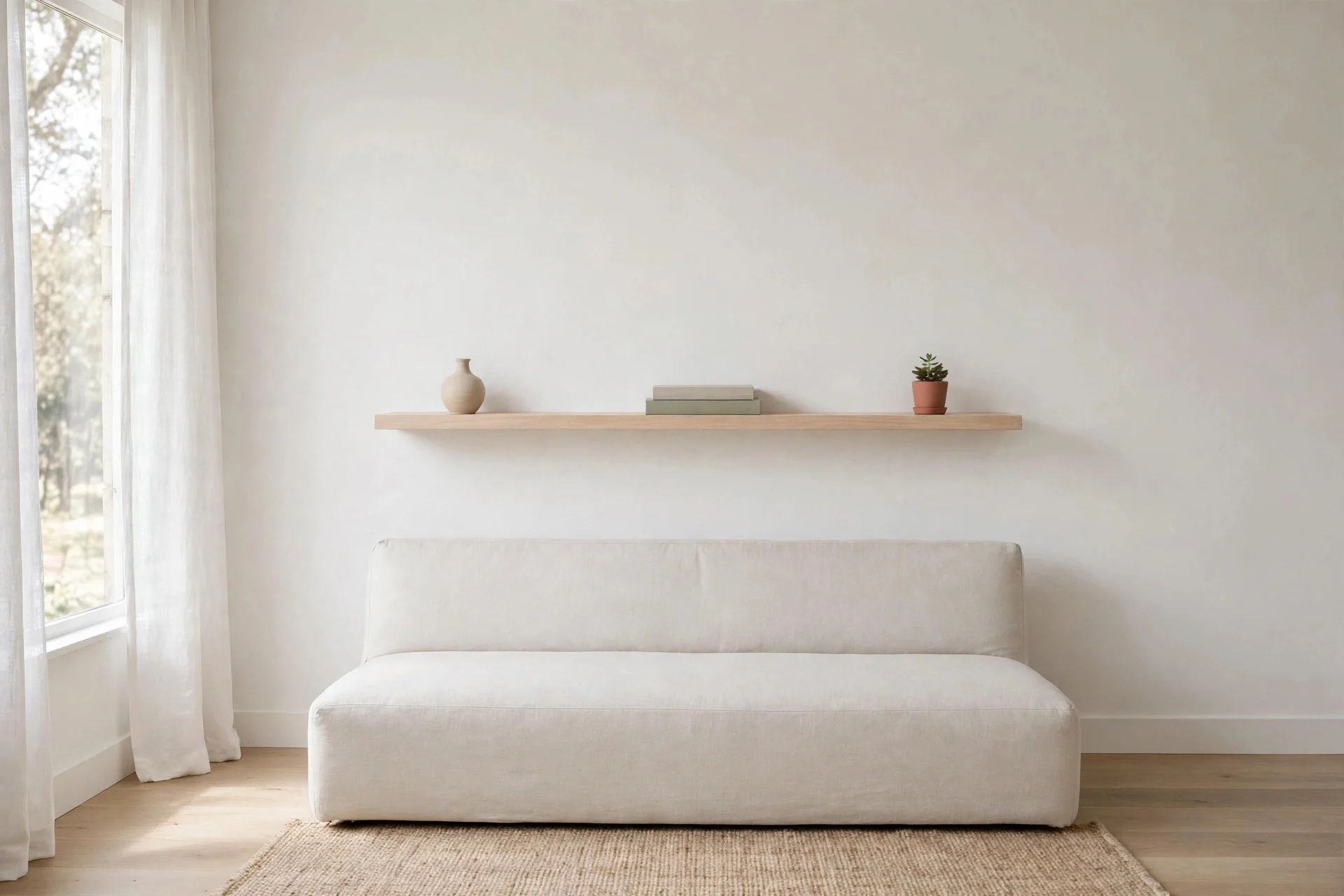
Two matching lamps, one on each side of the sofa, give a room a quiet sense of balance. They also give you soft, warm light in the evening without harsh ceiling lights. First, pick simple lamps with plain shades in ceramic, linen, or light wood. Next, place them at the same height on matching side tables or on the ends of a long console. I tried this after years of using one lamp and a bare bulb on the other side, and the room finally felt finished. The soft light in the evening makes the plain walls glow, and reading on the sofa feels much more comfortable.
Try this: Use warm bulbs, not bright white ones.
16. A Reading Corner With Just a Chair and a Light
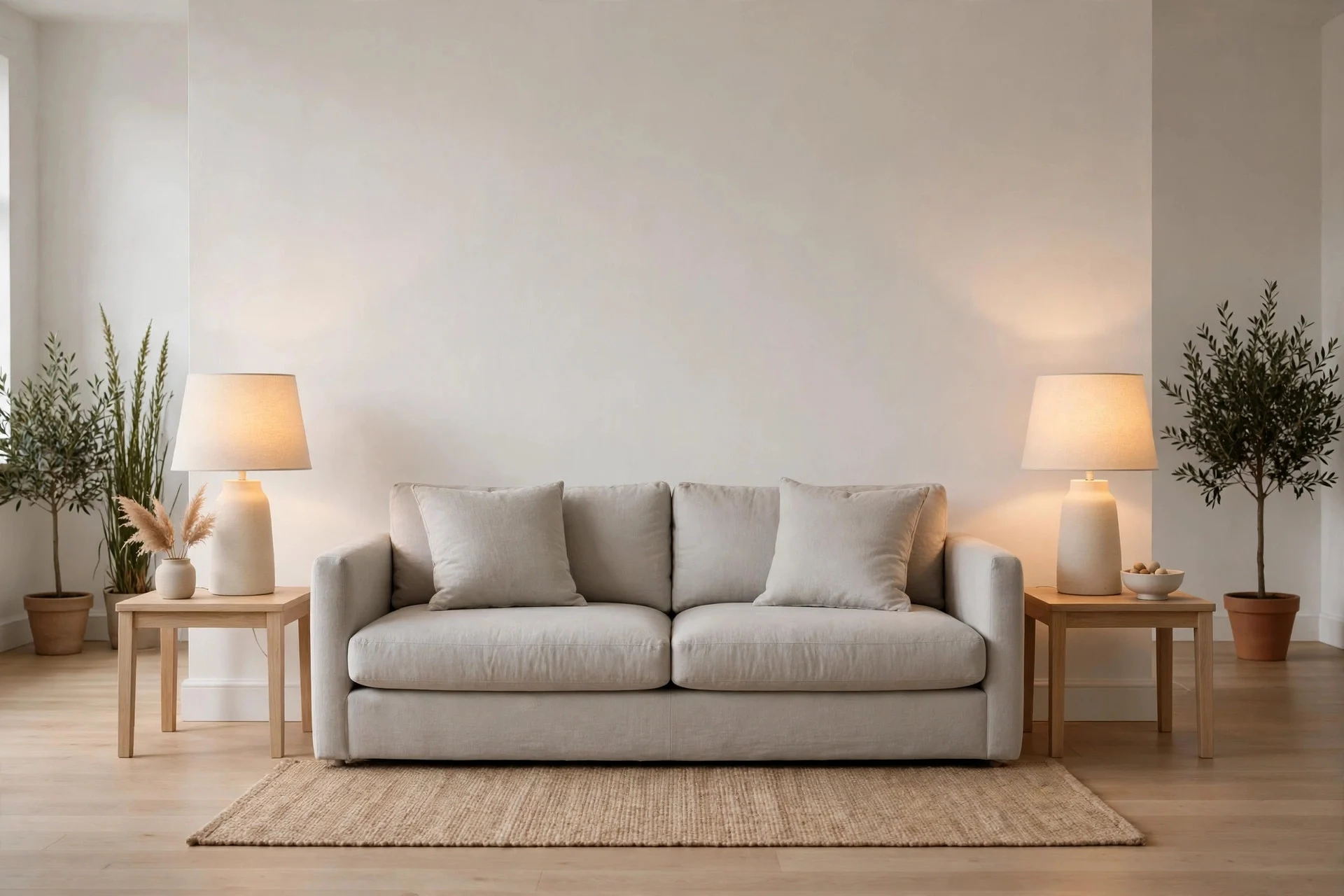
You do not need a whole library to make a reading spot. One comfortable chair, one good lamp, and a small stack of books are enough, and the corner will feel like a treat. First, pick the quietest corner, near a window if you have one. Next, add a slim floor lamp that shines over your shoulder and a chair you can sit in for an hour. I tried this with an old armchair I almost gave away, and it became the most used seat in the house. Keep the corner simple, or it will turn into another dumping ground for bags and laundry.
Try this: Keep only the book you are reading there.
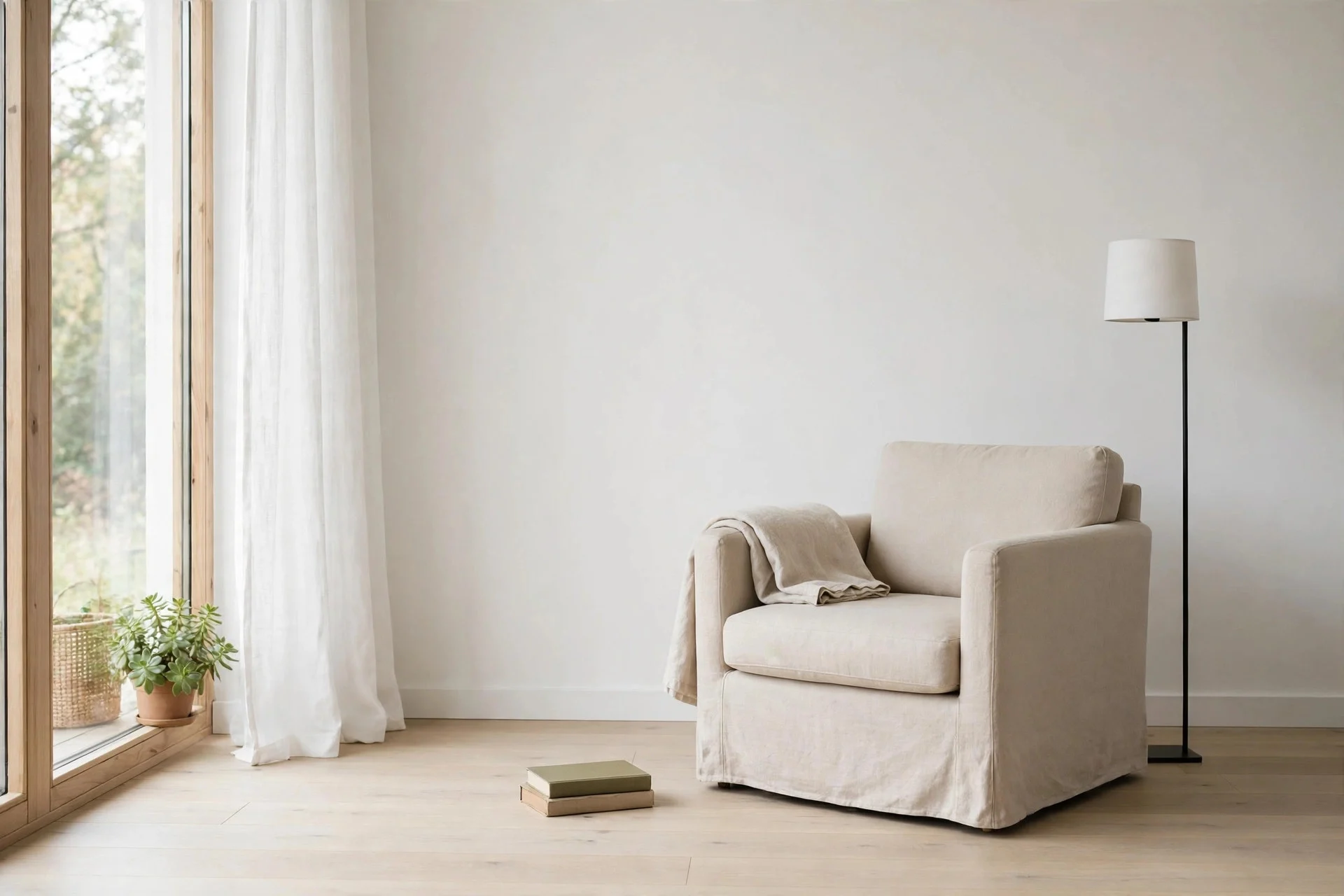
17. Edit Every Season, Keep Only What You Love
A calm room stays calm because someone keeps editing it. Each season, take a slow look around and remove anything that no longer earns its place. First, walk the room with a basket and take out anything you have not used or noticed in months. Next, live without it for two weeks before you decide to keep it or let it go. I tried this last spring and found a lamp, two cushions, and a basket I had stopped seeing years ago. The room felt fresh without spending a penny, and that is the real secret of a simple home.
Try this: Set a phone reminder to edit each season.
Frequently Asked Questions
How do I make a minimalist living room feel warm, not cold?
Warmth comes from texture and natural materials, not from more stuff. Add a wool throw, a plain rug, warm wood, and soft light from lamps. Keep the walls warm white instead of bright white, and let one or two plants bring in life. These small touches make a plain room feel like home without filling it up again.
What colours work best for a minimalist living room?
Warm white, soft beige, light grey, and pale wood tones work best because they sit quietly together. Pick one main neutral, one slightly darker tone, and one warm accent, like oak or terracotta. Keep the mix to three tones at most, and check them together in daylight before you commit.
How many decorative items should a minimalist living room have?
There is no fixed number, but a good rule is one or two items per surface and one feature per wall. If you have to move things every time you clean or sit down, you have too many. Start with less than you think you need, live with it for a week, and add back only what you truly miss.
Can a minimalist living room work with kids or pets?
Yes, and it often works better, because there is less to break and less to tidy. Choose washable fabrics, closed storage for toys, and sturdy furniture with rounded edges. Keep the floor clear for play, and accept that the room will look lived in at times. Calm does not mean perfect.
Final Thoughts
A minimalist living room is not about owning nothing. It is about owning things that earn their place and giving them room to breathe. Start with a calm base, pick one sofa you love, clear the surfaces, and let light and a few warm materials do the rest. You do not have to do all seventeen ideas at once. Try one this week, live with it, and see how the room feels. The calm will build slowly, and one day you will walk in and realise the room finally feels like yours.