
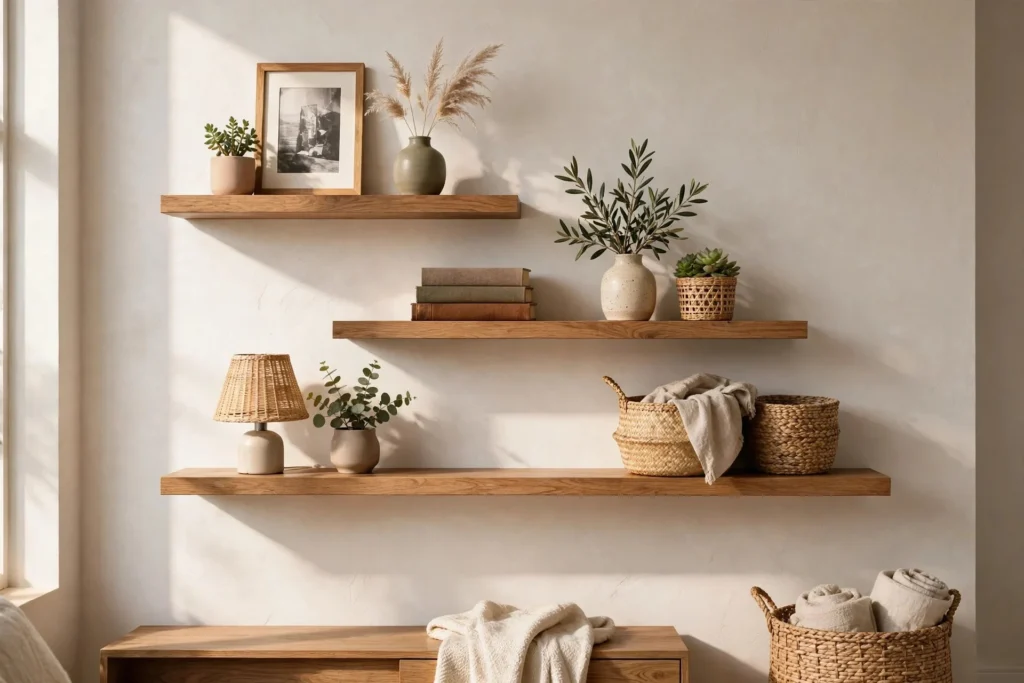
If your shelves look more like a random pile than a styled display, you are not alone. These living room shelf decor ideas are simple, budget-friendly ways to make open shelves look put together without buying a whole new set of accessories. You can start with things you already own, add one or two new pieces, and finish a shelf in an afternoon.
The trick is balance. Mix tall and short pieces, leave a little empty space, and repeat a colour or material so the shelf feels calm instead of crowded. Below are twelve looks I have tried in my own home, with the exact steps that worked and the mistakes worth skipping.
1. Gallery Wall That Tells Your Story
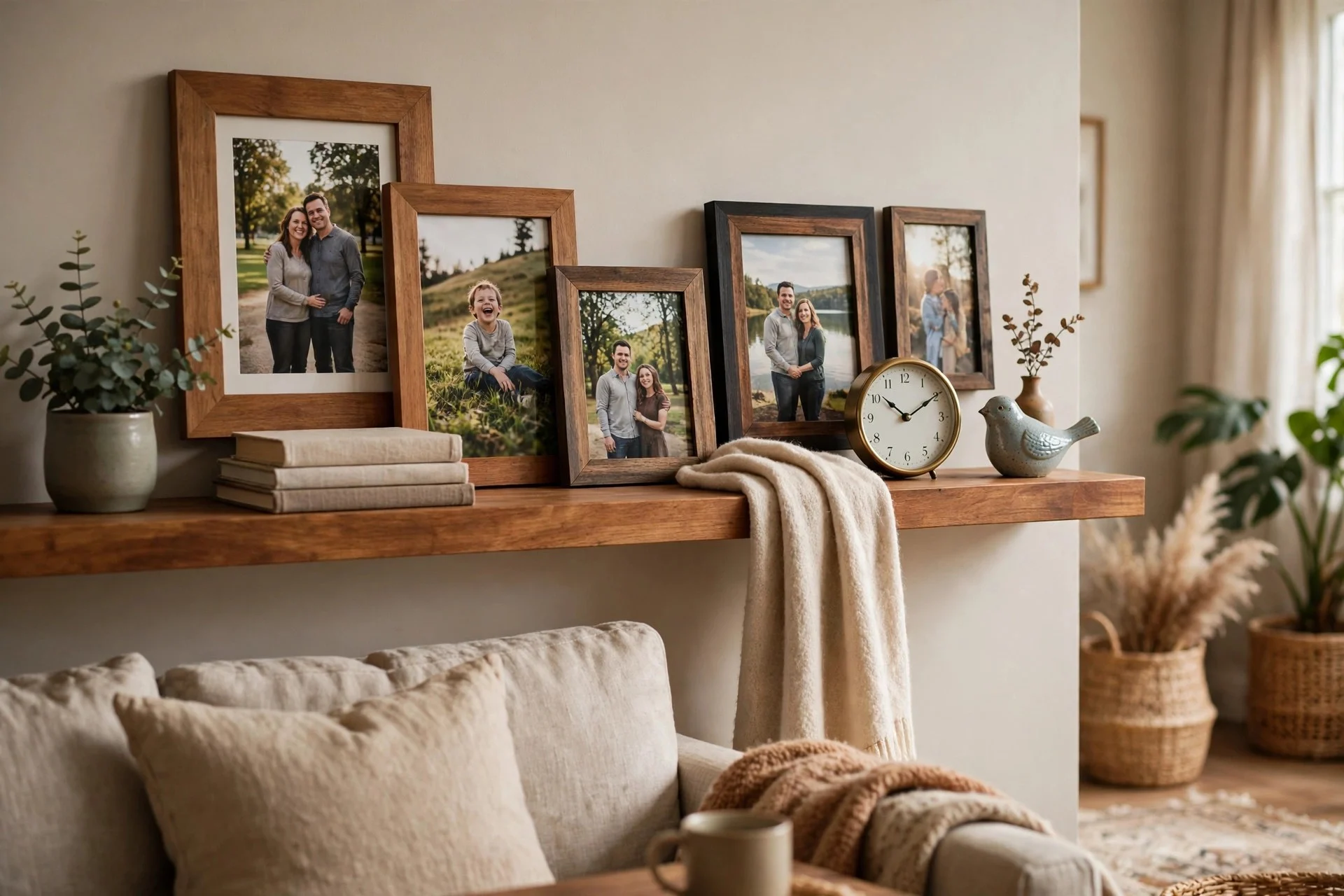
A gallery wall on a shelf lets you show off favourite photos and small keepsakes without putting a dozen holes in the wall. I started with three framed photos from family trips, then added a small clock and a ceramic bird my mum gave me. The mix of sizes keeps the eye moving, and because everything sits on one shelf, I can swap pieces around whenever I feel like a change. Start by picking a colour thread, like warm wood or black frames, so the different pieces still feel like they belong together. Place the tallest frame at one end, then work across with shorter items. Step back often, because a shelf that looks good up close can look lopsided from the sofa.
Try this: Group three frames of different heights together, then add one small object in front for depth.
2. Layered Books and Small Plants
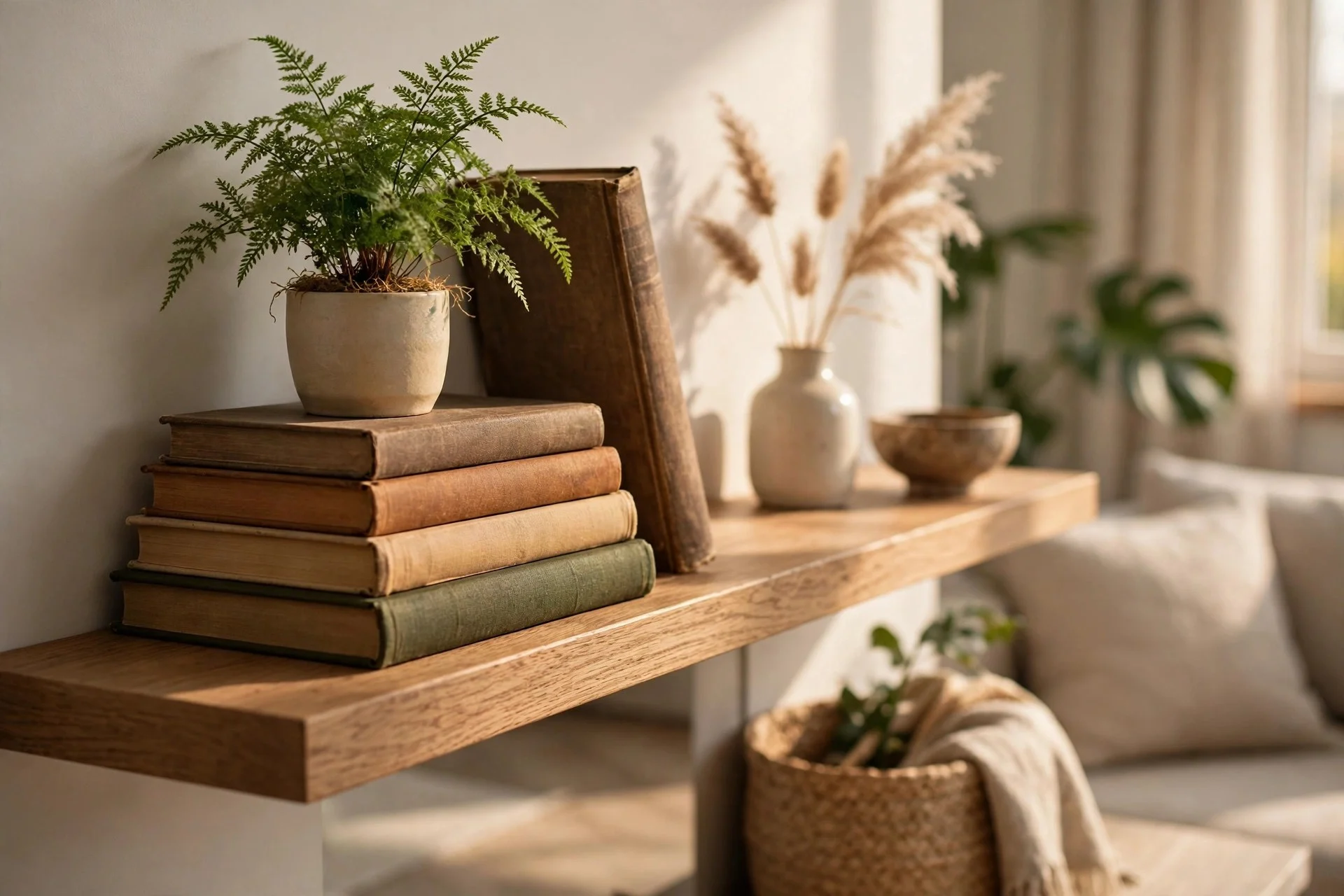
Books and plants are the easiest pair for a shelf that feels lived in. I stack two or three books flat, then set a small potted plant on top so the greenery sits at a different height from everything else. Behind the stack, I lean one more book upright like a bookend. The trick is to keep the plant small, because a big trailing plant will take over the whole shelf and hide the books. I tried this with a pothos first, and it grew so fast it covered the frames next to it, so now I stick to compact plants like a small fern or a succulent. Water the plant over the sink, not on the shelf, or you will end up with rings on the wood.
Try this: Stack three books flat, top them with a small potted plant, and lean one book upright behind.
3. A Row of Matching Ceramic Vases
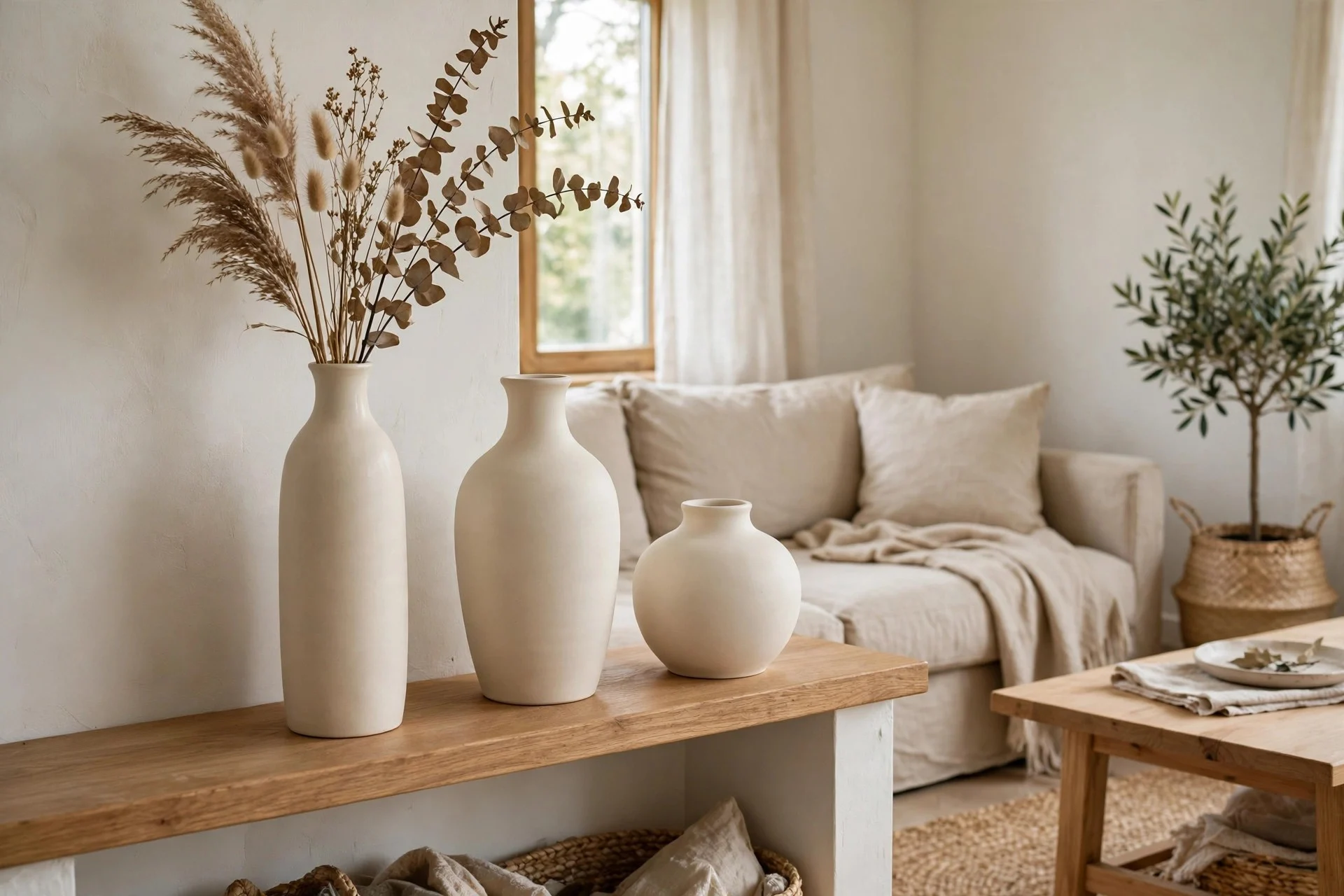
Sometimes the simplest look wins. A row of ceramic vases in the same colour family, but in different shapes and heights, looks calm and intentional with almost no effort. I picked up three cream vases over a few months, one tall and narrow, one round, one short and wide, and lined them up on the middle shelf. Leave a little gap between each one so they read as separate pieces instead of one long block. You can leave them empty, or pop a few dried stems into the tallest one for a bit of softness. Don’t make the mistake I did and fill every vase at once; the shelf ended up looking like a flower shop. One stem bunch is plenty, and the empty vases look good on their own.
Try this: Pick three vases in one colour, vary the heights, and add dried stems to just the tallest one.
4. Vintage Finds Mixed With New Pieces
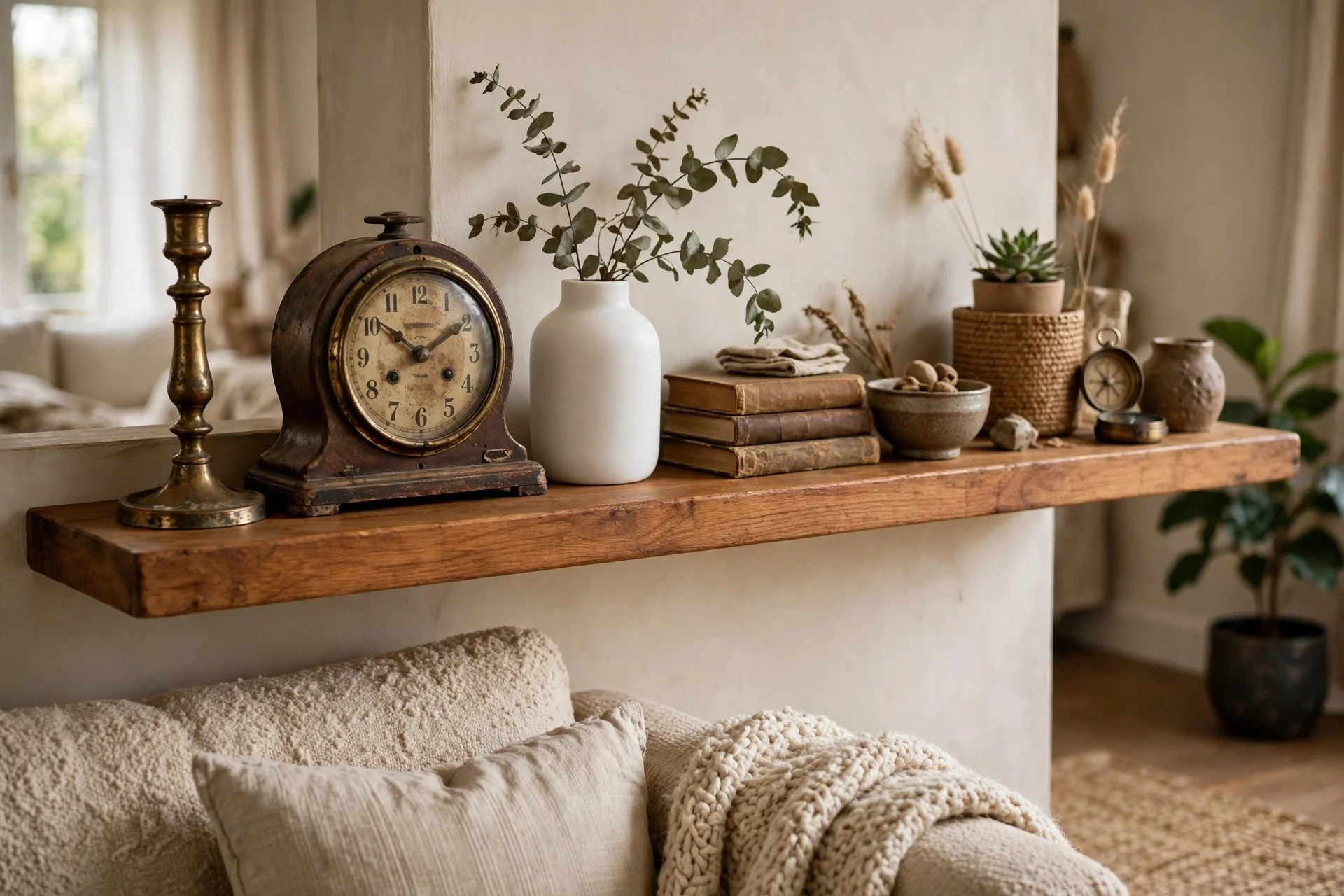
Mixing old and new is my favourite way to stop a shelf looking like a shop display. I put a brass candlestick I found at a flea market next to a plain new vase, and somehow the two make each other look better. The old piece brings character, and the new piece keeps the shelf from feeling dusty or dated. Hunt for one or two vintage items with a story, like an old clock, a wooden box, or a set of brass bookends, then pair each one with something simple and modern. Keep the colours close so the mix feels planned. I once crowded a shelf with five flea market finds at once and it looked like a jumble sale, so now I limit myself to one vintage star per shelf.
Try this: Pair one vintage find with a plain modern piece and let the old item be the star.
5. Seasonal Swaps That Keep Your Living Room Shelf Decor Ideas Fresh
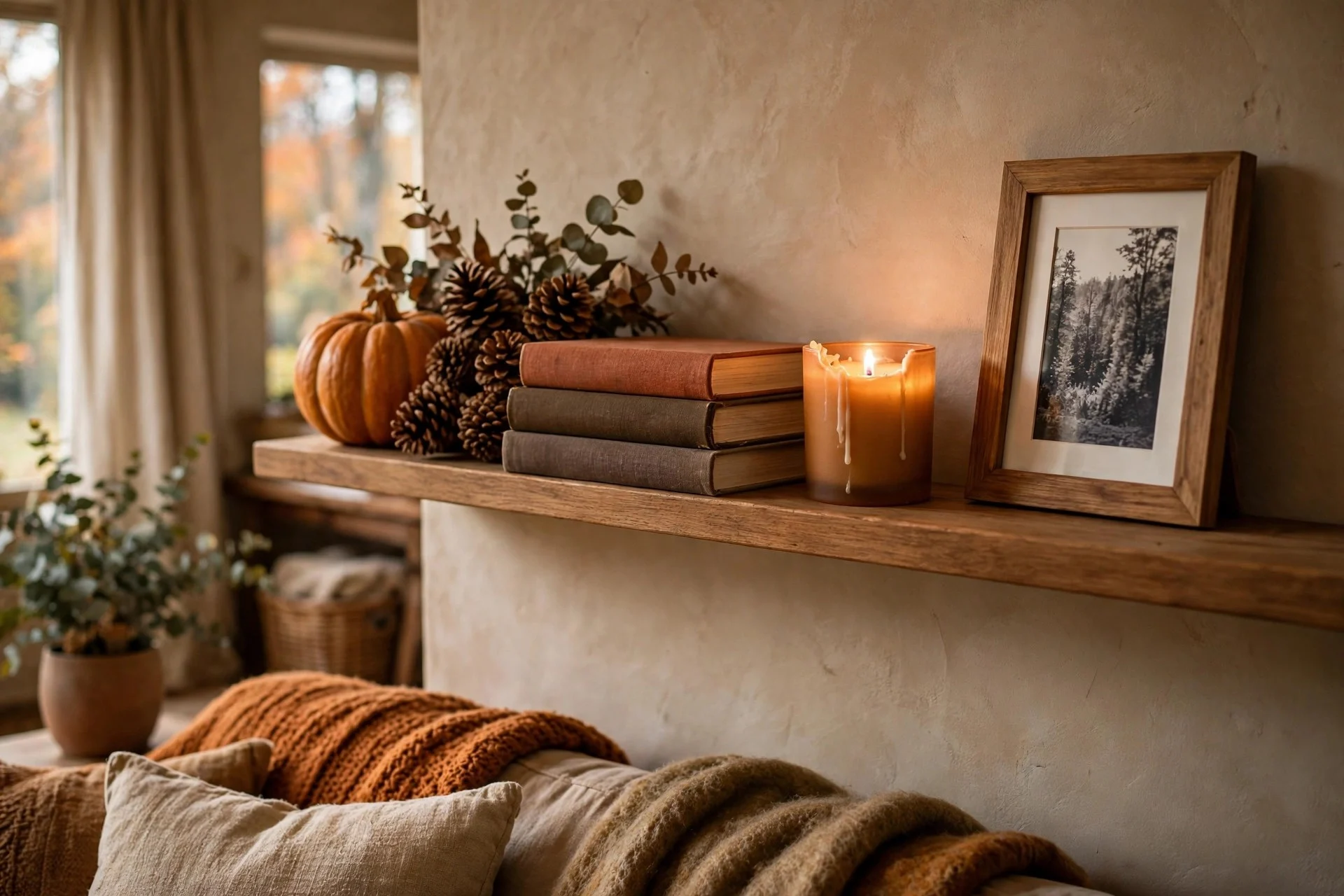
You do not need to redecorate the whole room when the seasons change. I keep the base of each shelf the same all year, the books, the frames, the vase, and swap just two or three small pieces per season. In autumn I add a small pumpkin and a warm-toned candle; in winter it becomes pine cones and a little string of fairy lights. The swap takes ten minutes and the room feels new again. Keep a small box of seasonal bits in a cupboard so the swap is quick and nothing gets lost between seasons. I tried storing them in a bag in the loft once and half the pieces went missing, so a labelled box is worth the effort. Pick one shelf to change first if you are short on time.
Try this: Keep your shelf base the same and swap just two small pieces each season.
6. Stacked Coffee Table Books as Risers
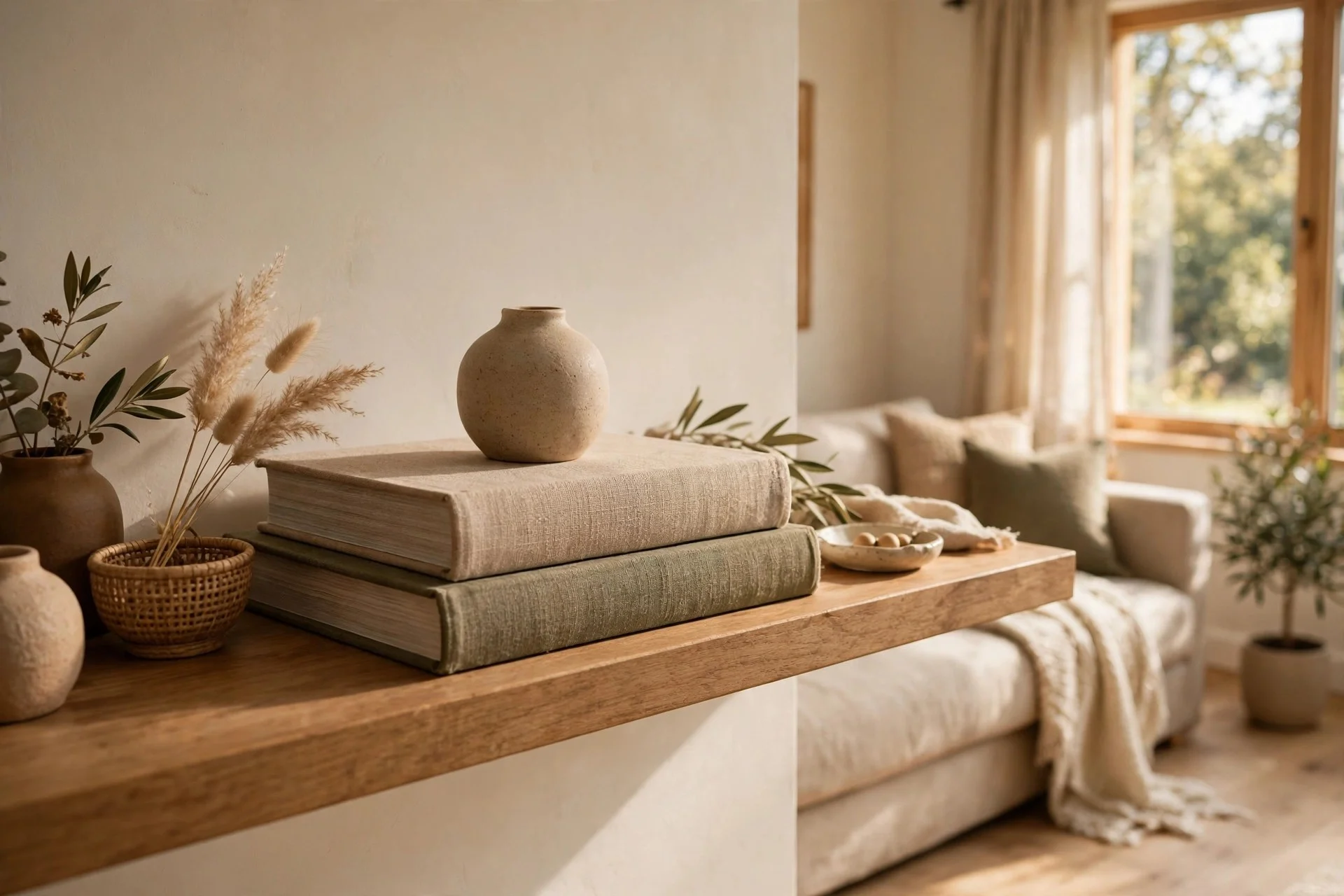
Big coffee table books are the quiet workhorses of shelf styling. I use a stack of two as a riser to lift a small vase or a candle up to the right height, which stops short objects from getting lost between taller ones. Pick books with covers you actually like, because the spines and covers are part of the look. A stack of books in similar tones, like deep green and cream, ties the shelf together without any extra shopping. I learned the hard way that glossy art books slide around, so I put a small felt pad under the bottom book to keep the stack steady. Don’t stack more than three, or the pile starts to look like storage instead of styling.
Try this: Stack two large books as a riser and set a small vase or candle on top.
7. Framed Prints Leaning, Not Hung
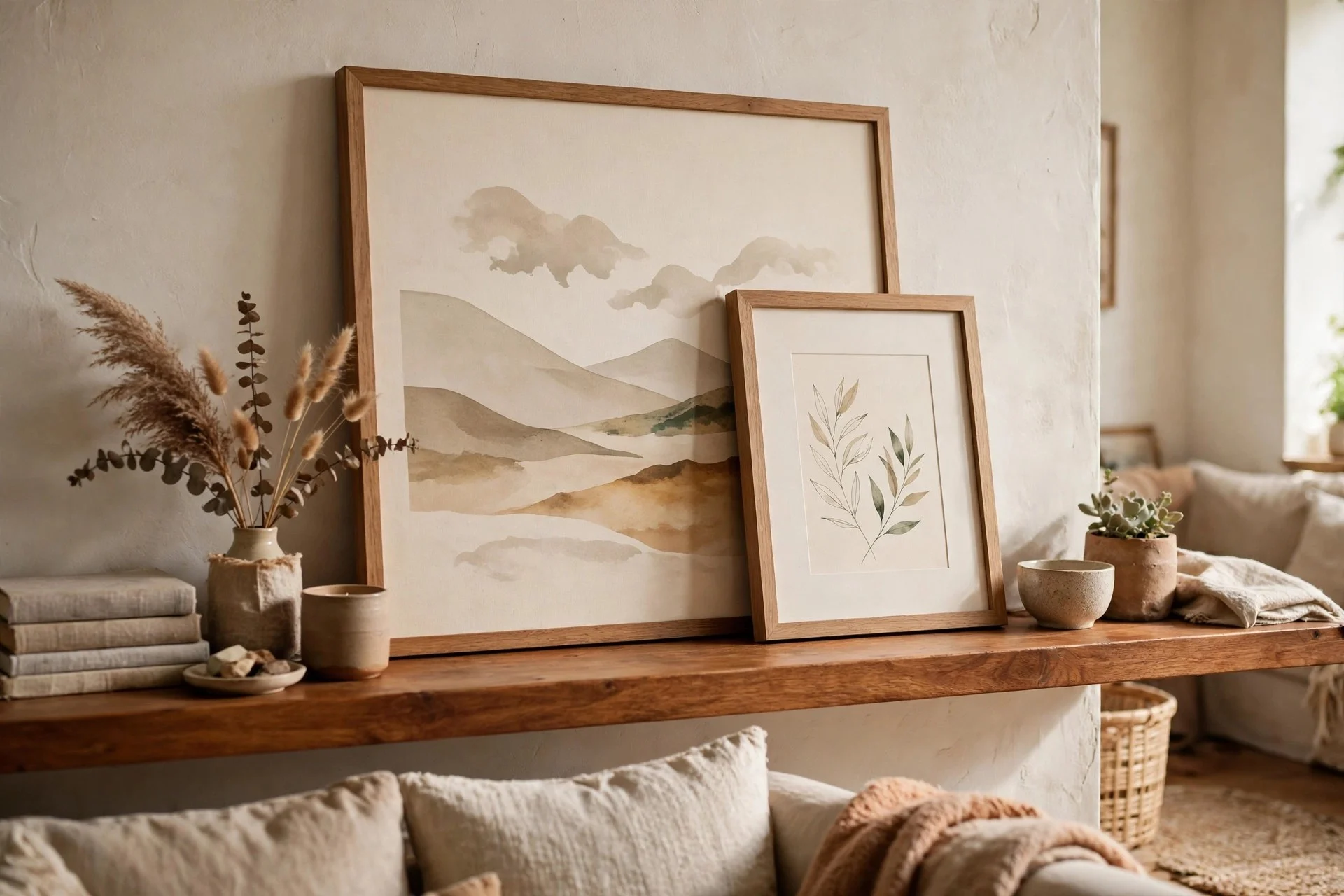
Leaning a framed print against the wall is the easiest no-drill trick I know. I lean a large print at the back of the shelf and layer a smaller frame in front of it, off to one side. The overlap adds depth, and the whole thing takes thirty seconds to set up. Make sure the frame sits flat against the wall and the shelf is deep enough to hold it safely; a shallow shelf and a heavy frame are a bad pair. I once leaned a frame on a narrow shelf and it slid forward every time someone walked past, so now I check the depth first and add a non-slip pad underneath. Swap the print when you fancy a change, with no holes to fill and no tools needed.
Try this: Lean one large print at the back and layer a smaller frame in front, off to one side.
8. Baskets and Woven Texture Up High
The top shelf is the hardest one to style, because it is high up and easy to ignore. I use woven baskets up there for texture and for hiding the bits nobody wants to see, like spare remote controls and charging cables. A basket with a lid looks neat from below, while an open one can hold a rolled throw or a few magazines. Mix one basket with a tall vase or a stack of books so the top shelf does not turn into a row of boxes. I tried putting three matching baskets in a row once, and from the sofa they looked like storage crates, so now I use just one basket and let the rest of the shelf breathe. Pick a warm natural weave that matches your wood tones.
Try this: Put one lidded woven basket on the top shelf to hide clutter and add warm texture.
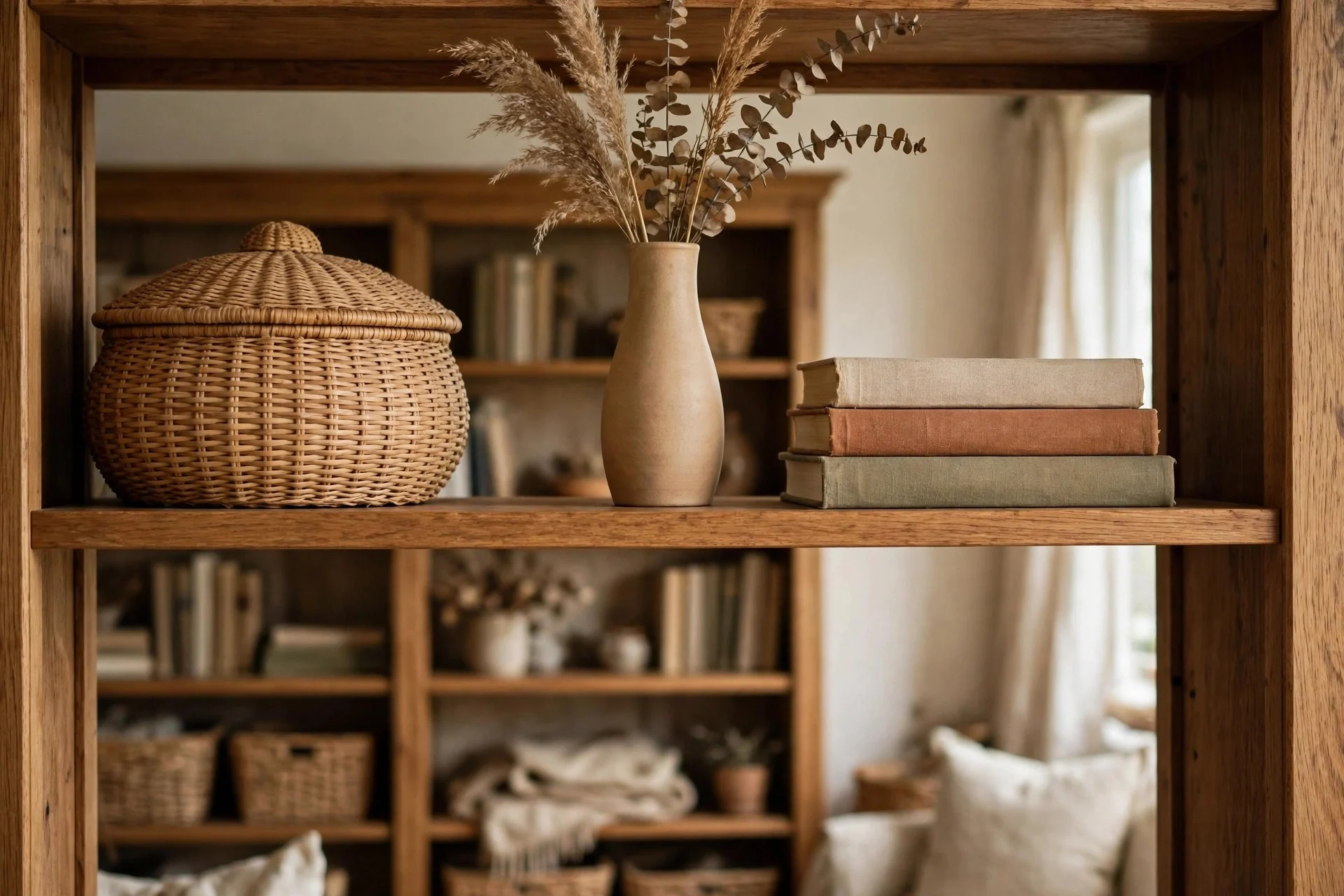
9. A Small Lamp for Warm Evening Light
A small lamp on a shelf changes the whole room after dark. I added a ceramic lamp to the end of our longest shelf, and the corner that used to disappear at night glows softly in the evening. Pick a lamp that fits the shelf height with room to spare, and use a warm bulb, not a bright white one, so the light feels cosy instead of harsh. Run the cord neatly down the back of the shelf or use a battery lamp if there is no socket nearby. I tried a tall lamp first and it blocked the art hanging above the shelf, so measure before you buy. A lamp also gives you a reason to style the shelf around it, with books and a small plant nearby.
Try this: Add a small lamp with a warm bulb to the end of a shelf for soft evening light.
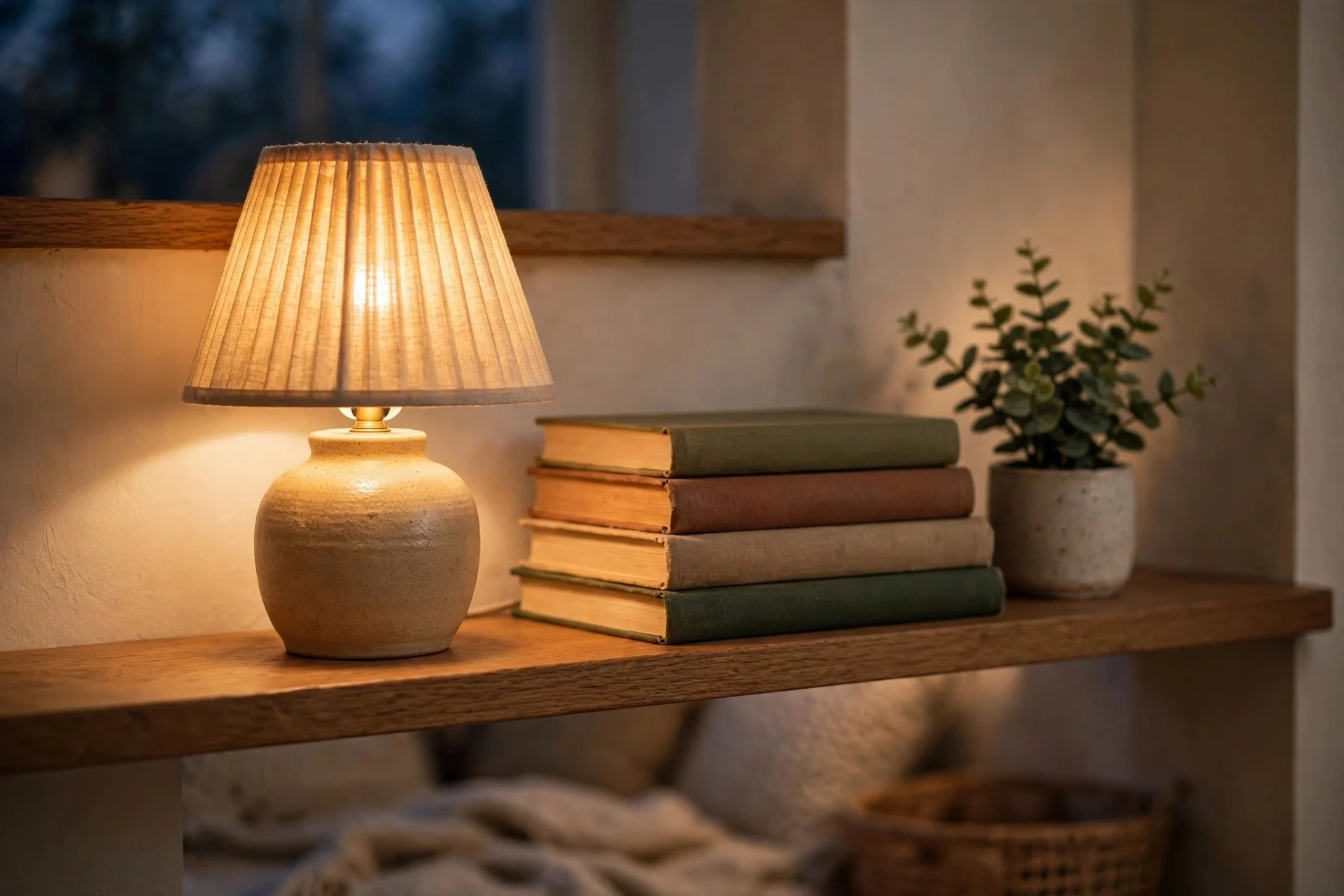
10. Trays That Keep Little Things Tidy
Small things look messy on their own, but put them on a tray and they suddenly look like a display. I keep a wooden tray on one shelf with a candle, a tiny plant, and the remote controls inside it. The tray gives the group a clear edge, so the pieces read as one arrangement instead of three random objects. Pick a tray that fits the shelf with space around it, and stick to one material, like wood, rattan, or brass, so it suits the rest of the room. I once used a tray that was too big and it swallowed the whole shelf, so measure first and leave at least a hand’s width of space on each side. When the shelf needs dusting, you lift one tray instead of five separate pieces.
Try this: Gather small items on one wooden tray so they read as a single neat arrangement.
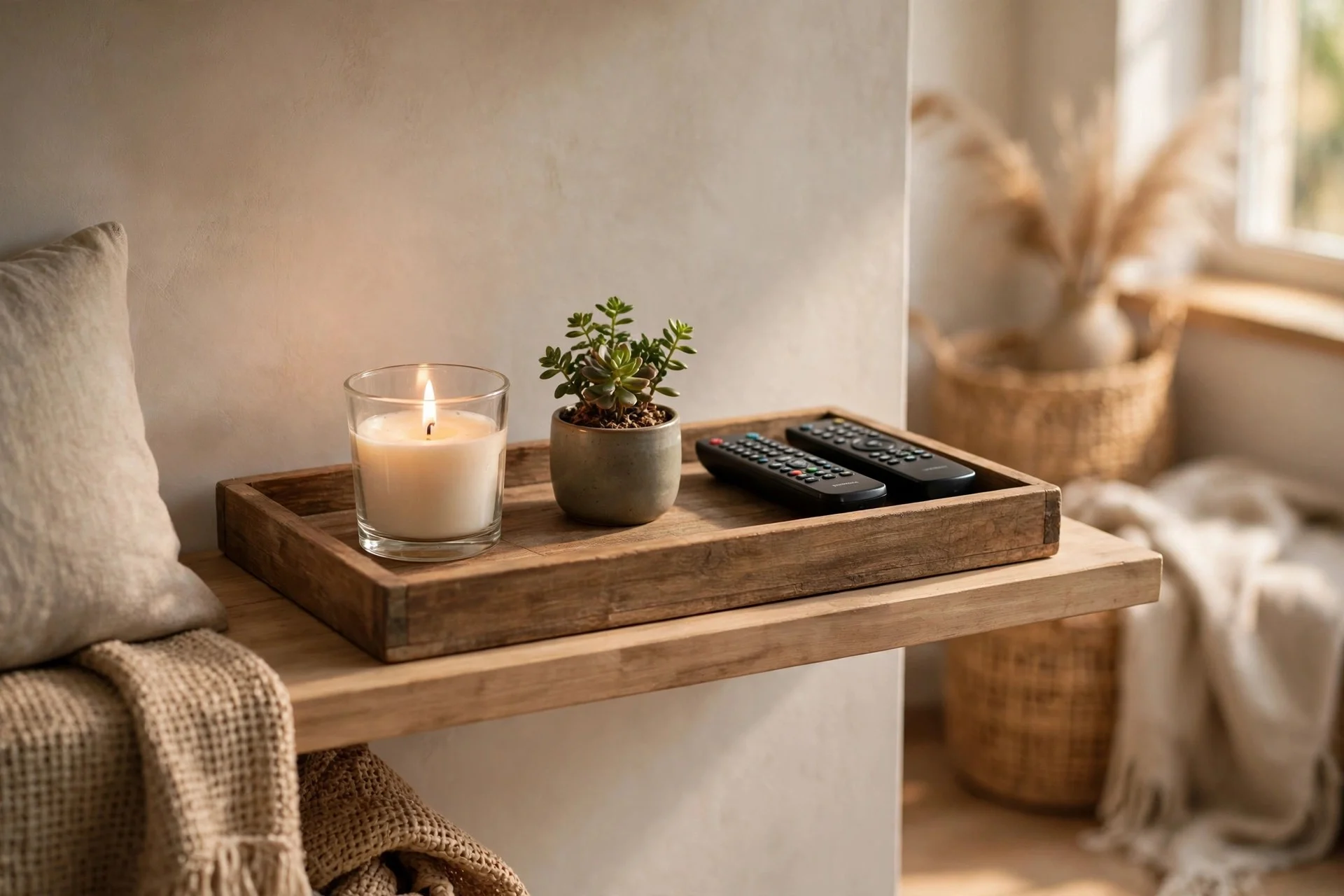
11. Sculptural Pieces With Breathing Room
One strong sculptural piece can carry a whole shelf if you give it room. I have a smooth stone sculpture on our middle shelf, standing on its own with nothing close beside it, and it draws the eye every time. The trick is to resist filling the gap around it. Leave at least a hand’s width of empty space on each side so the piece can stand out. A curved vase, a wooden bowl, or a simple abstract figure all work the same way. I tried this with two sculptures side by side at first, and they fought each other for attention, so now it is one star per shelf. Place it slightly off centre, which looks more relaxed than dead centre, and keep the colours around it quiet.
Try this: Give one sculptural piece a whole section of shelf with empty space on both sides.
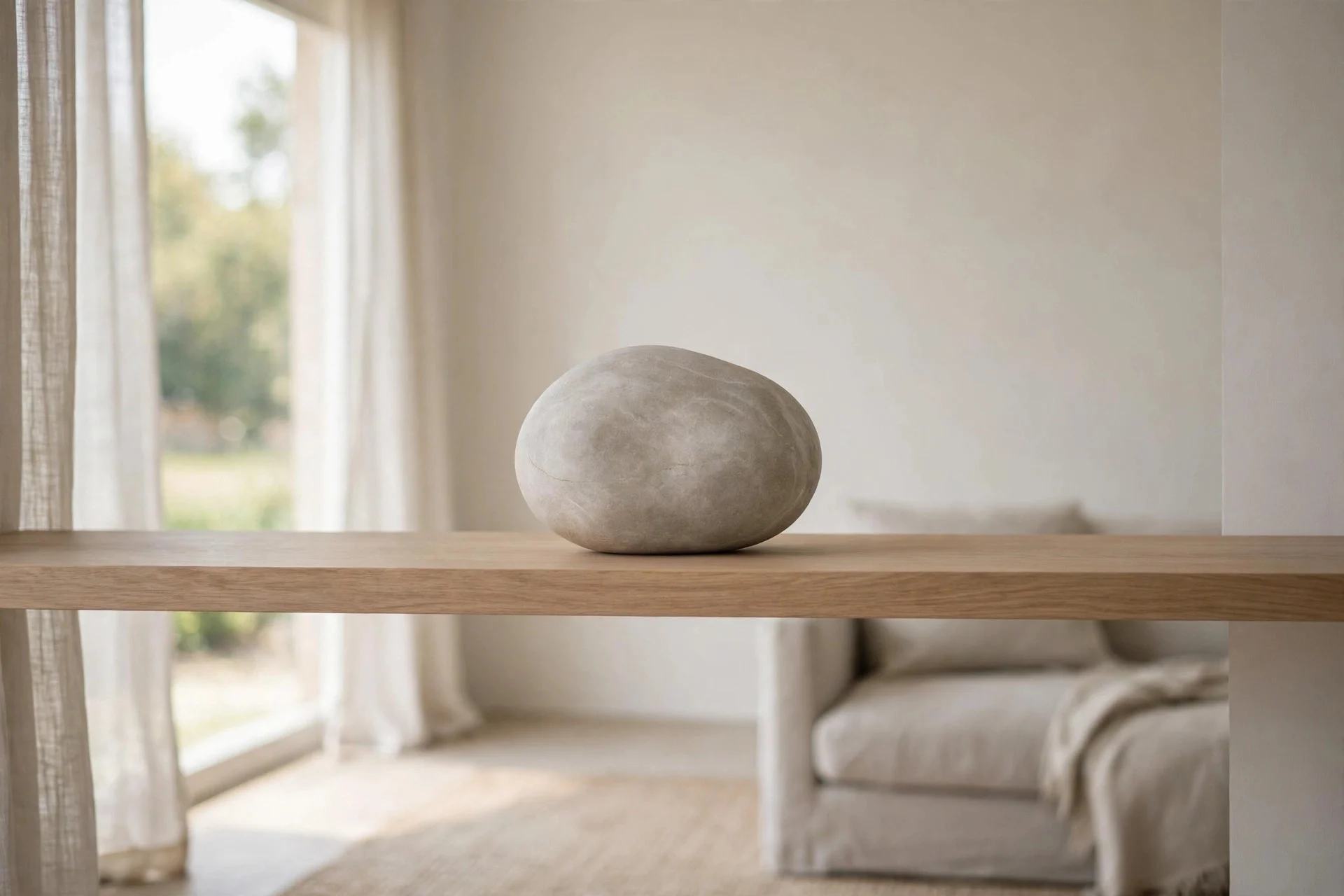
12. Family Photos in Matching Frames
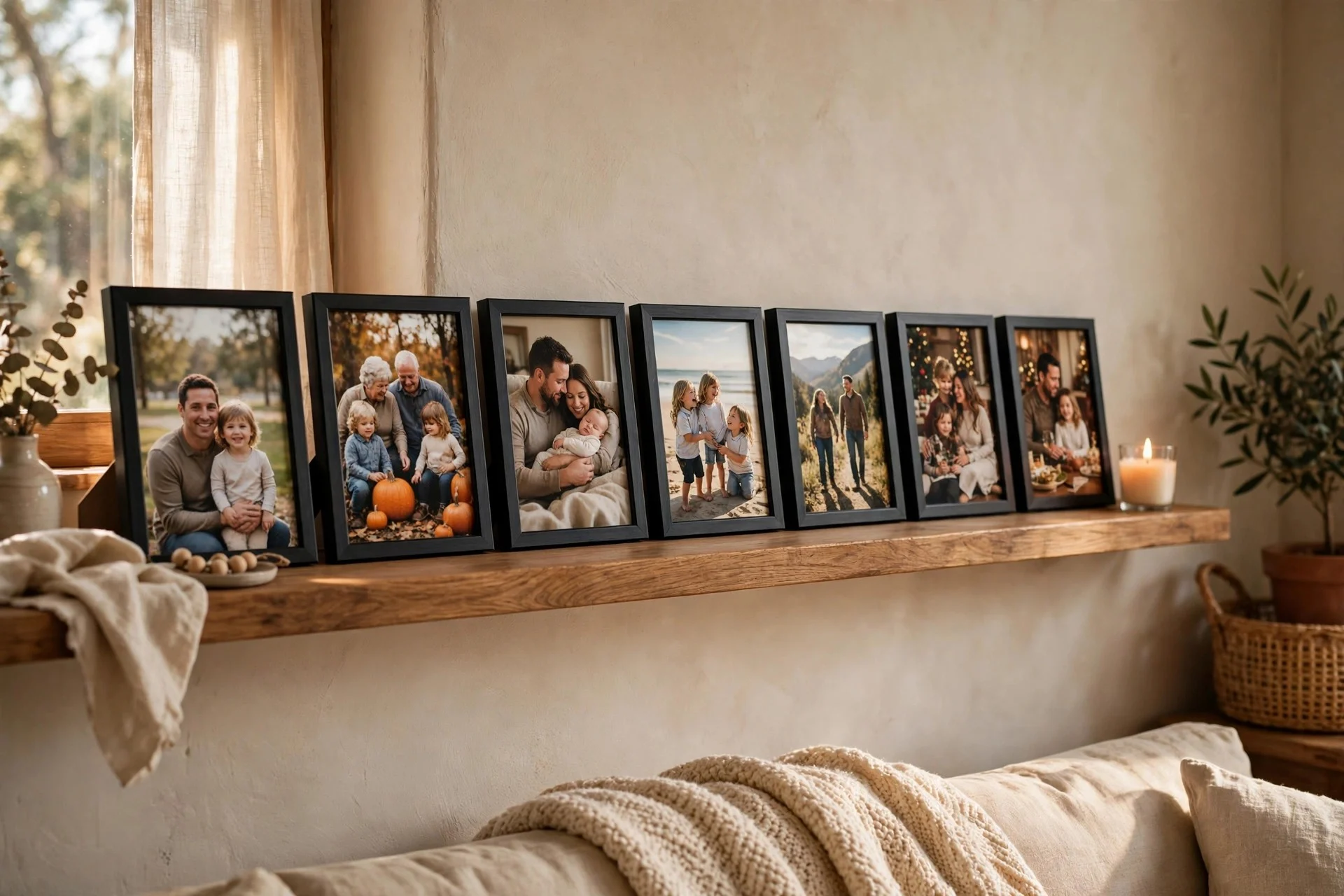
Matching frames turn a jumble of family photos into a proper display. I swapped our mixed frames for five simple black ones in two sizes, and the shelf looked calmer straight away. The photos are all different, a beach holiday, a birthday, a quiet Sunday at home, but the matching frames tie them together. Print photos in the same finish, all matte or all glossy, and line the frames up with even gaps. I tried mixing gold and black frames once and the shelf looked restless, so now I keep one frame colour per shelf. Add one small object, like a candle or a tiny plant, at the end of the row so the photos do not feel like a straight line.
Try this: Use matching frames in two sizes and print all photos in the same matte finish.
How do I style shelves without making them look cluttered?
Leave empty space on purpose. Group items in odd numbers, vary the heights, and step back from the sofa to check the whole shelf. If it still looks busy, take one thing away rather than adding another. Most shelves look better with fewer pieces than you first think.
What should I put on living room shelves?
Mix things you use and things you love. Books, framed photos, plants, vases, candles, and one or two personal keepsakes cover most shelves well. Avoid filling every inch, and keep anything you need often, like remote controls, inside a basket or on a tray.
How many items should go on one shelf?
There is no fixed number, but three to five pieces per shelf is a good starting point. A tall item, a medium one, and a small one give you variety without crowding. Larger shelves can hold two small groups with a gap between them.
How often should I change my shelf decor?
Change two or three small pieces with the seasons, and do a bigger refresh once a year. If a shelf still makes you smile when you walk past it, leave it alone. Styling should feel like fun, not another chore on the list.
Final Thoughts
Good shelf styling is less about buying new things and more about looking at what you already have with fresh eyes. Start with one shelf, group what you love, leave some breathing room, and live with it for a few days before you change anything. The shelves that work best in my home are the ones that grew slowly, one piece at a time, and tell a little bit of our story. Pick your favourite idea from this list, try it this weekend, and let the rest follow when you are ready.