
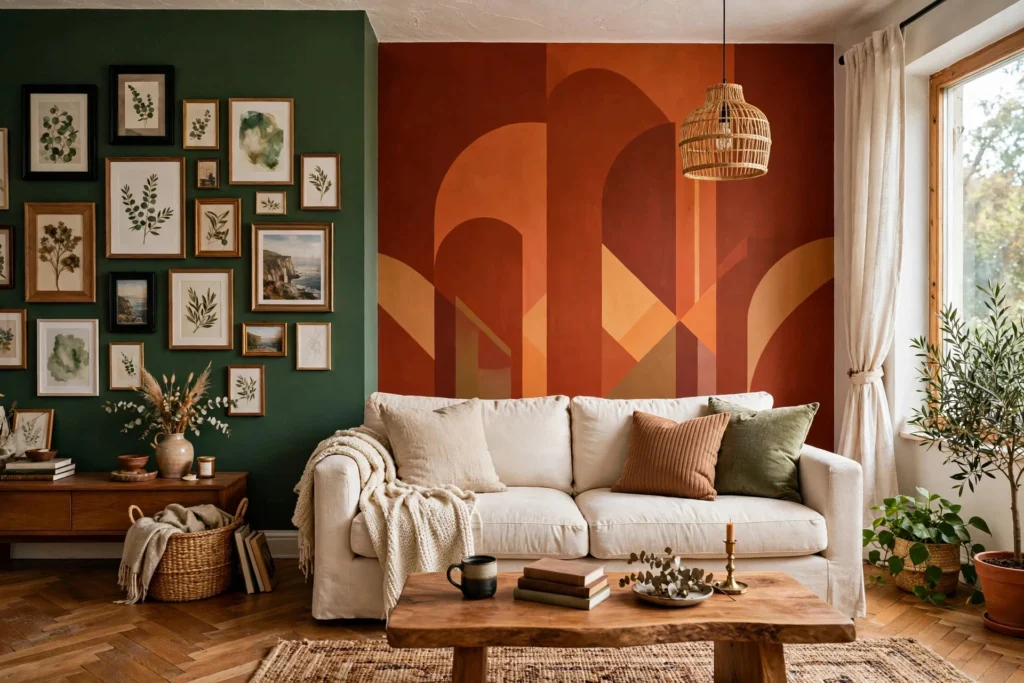
A blank wall can make even a lovely living room feel unfinished, like the room is waiting for someone to move in. These living room wall decor ideas are all about statement walls, the kind that give a room its character without a full renovation or a big budget. Most of them take a weekend at most, and a few take less than an hour once you have the pieces in hand.
I have tried most of these in my own home or in friends’ homes over the years, and the ones below are the ones that actually held up. Pick the idea that fits your wall, your sofa, and the way you live, then start there. One strong wall is usually enough, and you can always add a second later.
1. Gallery Wall That Tells Your Story
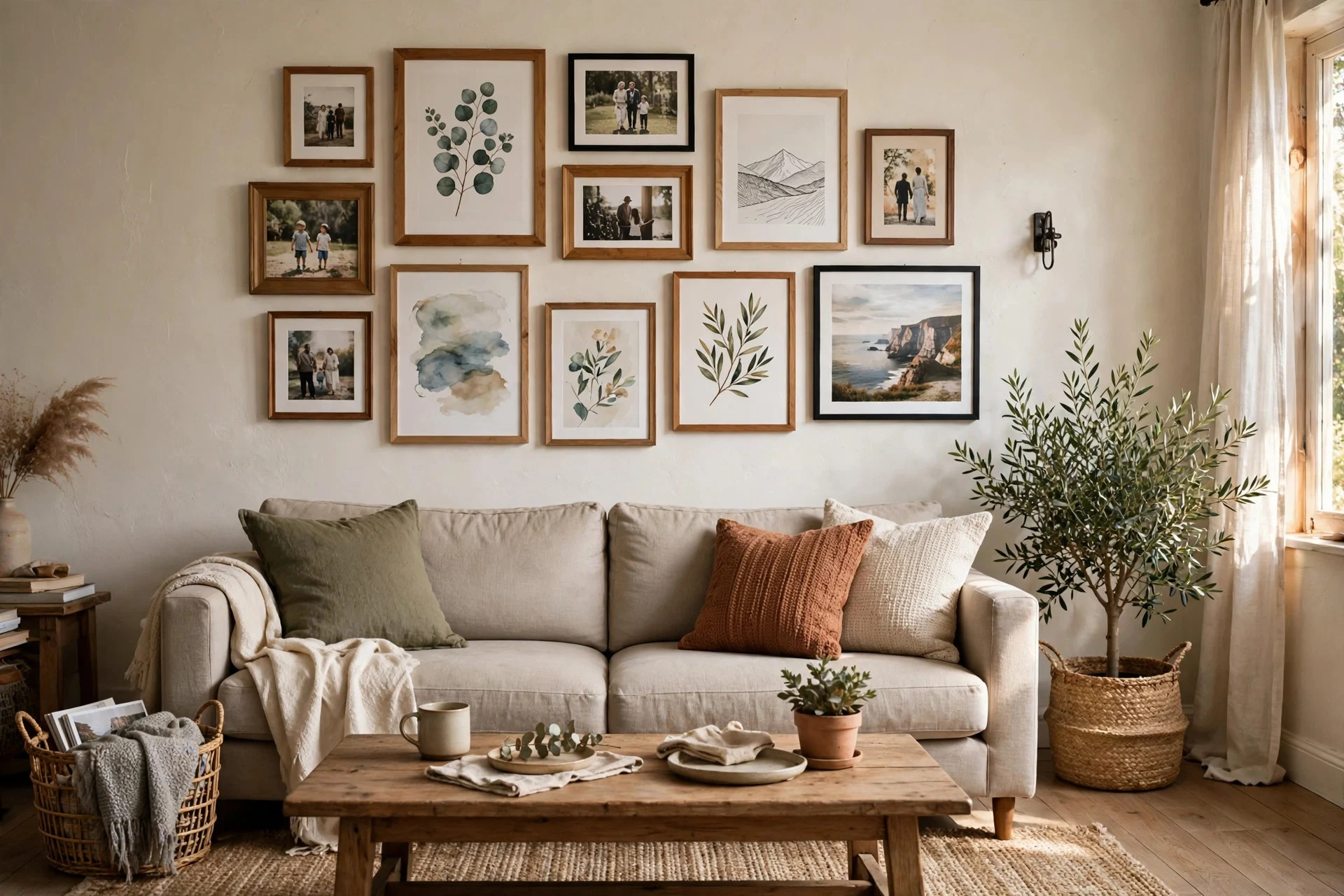
A gallery wall works best when it looks collected over time rather than bought in one afternoon. Start by gathering the pieces you already love, family photos, a print from a trip, and a small painting. Lay them out on the floor first and move them around until the mix feels balanced, with bigger frames near the centre and smaller ones filling the gaps. Hang the centre piece at eye level, then work outward, keeping about five centimetres between frames. I tried this in my own living room and the first version looked stiff because every frame matched, so I swapped in two wooden frames and one black one, and the whole wall relaxed at once. Test the layout on the floor before you hammer any nails.
Try this: Lay your frames on the floor first, take a photo of the layout, then hang from that photo.
2. One Oversized Canvas That Anchors the Room
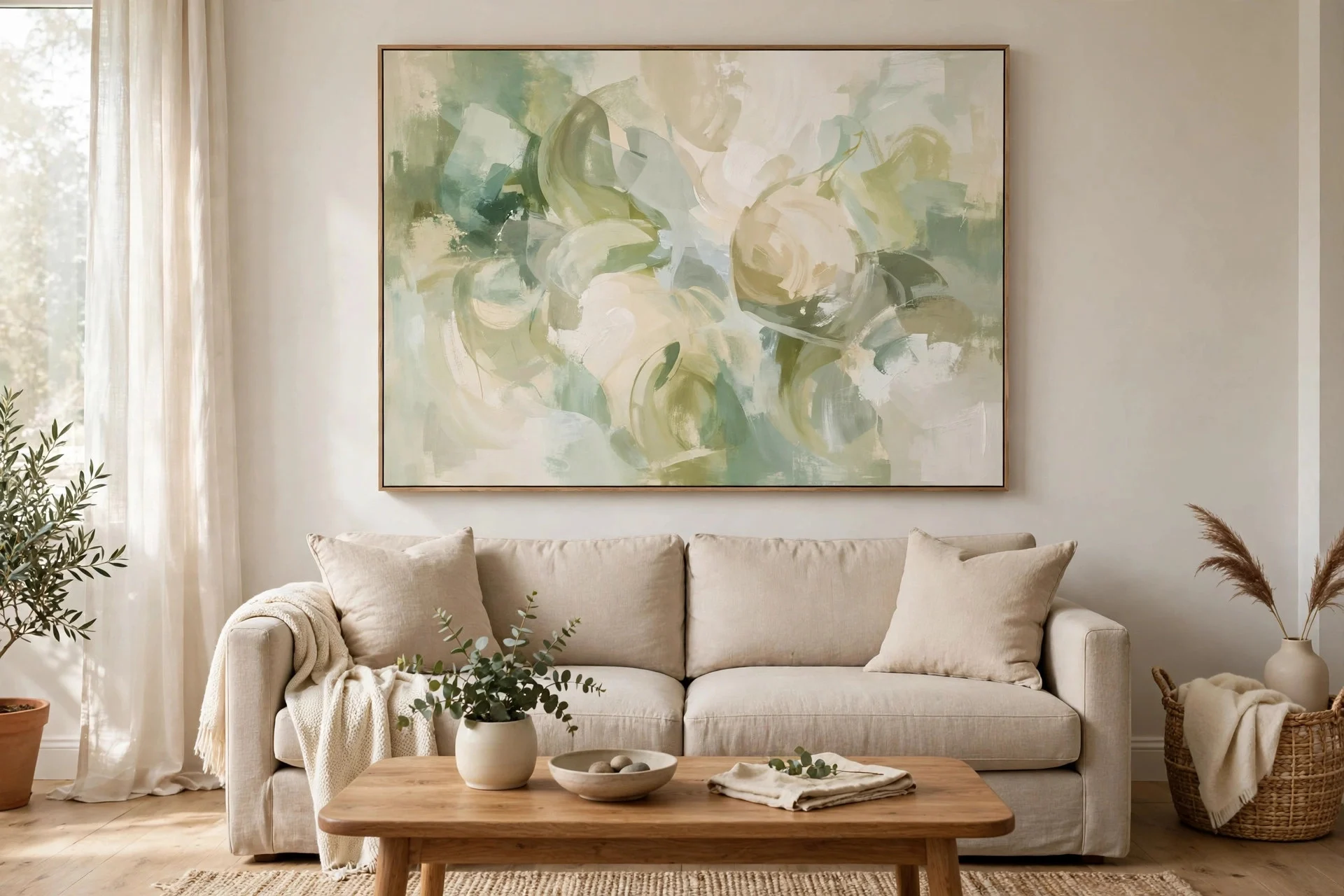
One big canvas can do the work of ten small frames, and it suits a wide blank wall better than anything else. Choose a piece that is about two thirds as wide as your sofa, in colours already in the room, like a cushion or a rug. Hang it so its centre sits at eye level, around 145 centimetres from the floor, and give it space, no clutter crowding it on either side. I tried this with a large abstract landscape in soft greens and creams, and the room felt settled the same evening. The mistake I made first was buying a canvas that was too small, which only made the wall look emptier, so measure the wall before you fall in love with a print.
Try this: Mark the canvas size on the wall with painter’s tape before you buy or hang it.
3. A Statement Mirror That Opens Up the Room
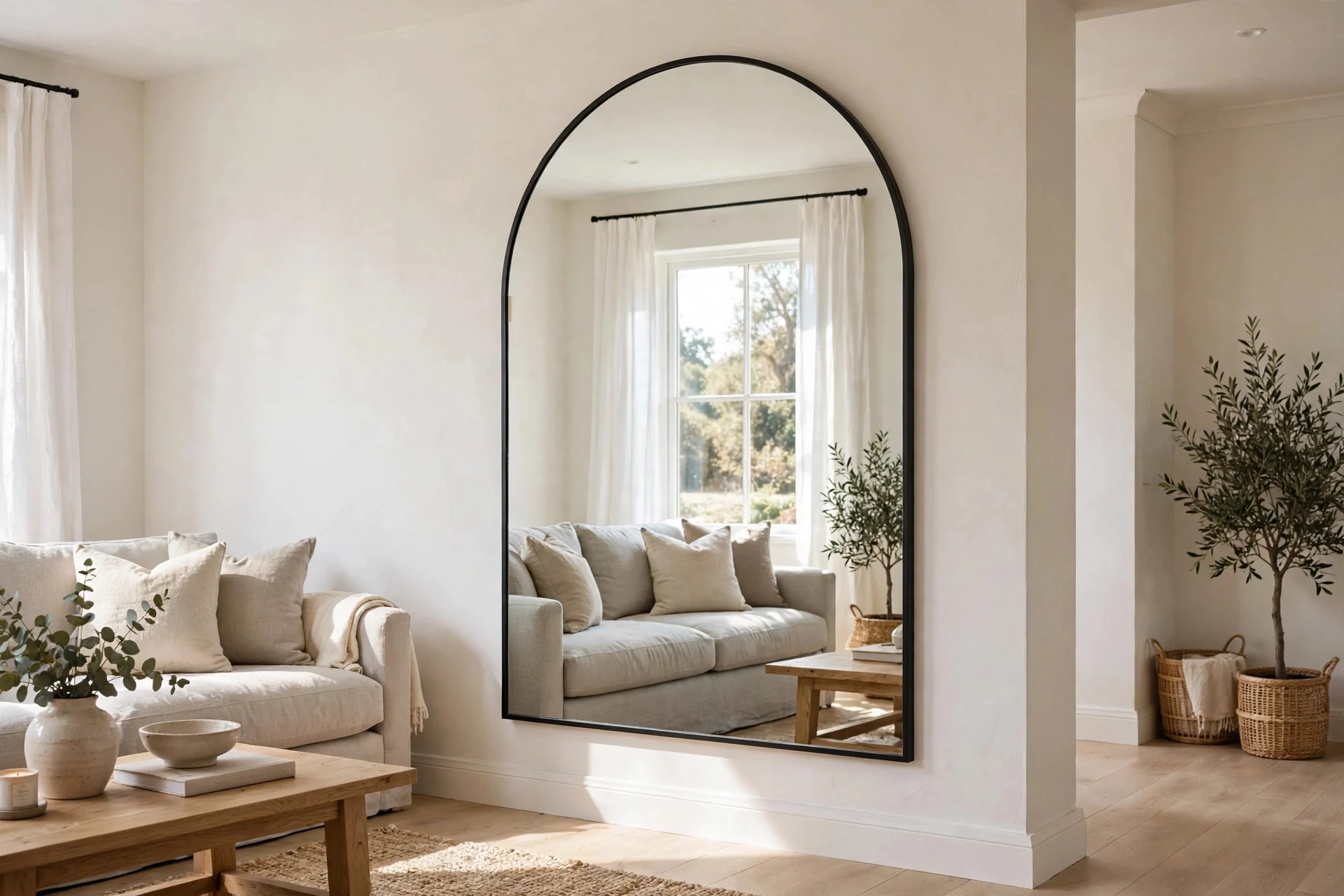
A big mirror is the easiest way to make a small living room feel wider and brighter, because it bounces light around and reflects the nicest part of the room. Pick a mirror with a frame that suits your style, and hang it opposite a window or beside one so it catches daylight. Keep the wall around it fairly plain, since the mirror itself is the feature, and check what it reflects before you fix it in place. I tried this in a narrow room and hung the mirror too high at first, so it showed only the ceiling. Lowering it by twenty centimetres changed everything, and now it reflects the garden and the sofa.
Try this: Stand where you sit most and check the mirror shows the window, not the ceiling.
4. A Painted Accent Wall Behind the Sofa
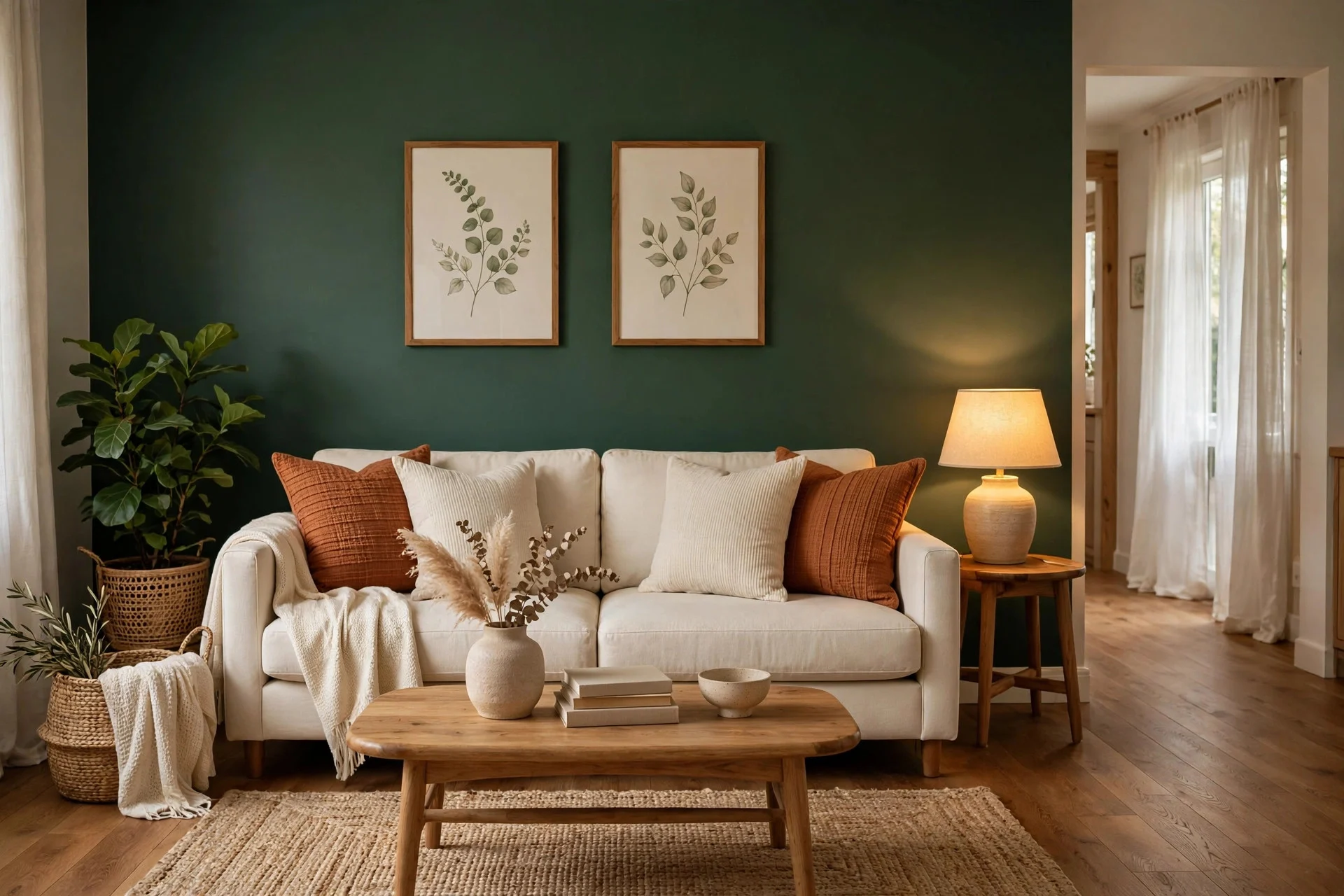
Paint is the cheapest way to make a statement wall, and one painted wall behind the sofa can change the whole mood of a room. Pick a colour that feels like you, deep green, warm terracotta, soft navy, or a dusty sage, and test it on a large patch first, since paint looks darker on a full wall. Paint the wall behind the sofa only, keep the other walls light, and let the sofa and cushions sit against it. I tried a deep green behind our sofa and loved it, though I learned to paint two coats and to wait a full day before judging the colour, as it dried lighter than it looked wet. Do not skip the painter’s tape along the ceiling.
Try this: Paint a one-metre test patch and live with it for two days before committing.
5. Floating Shelves With Room to Breathe
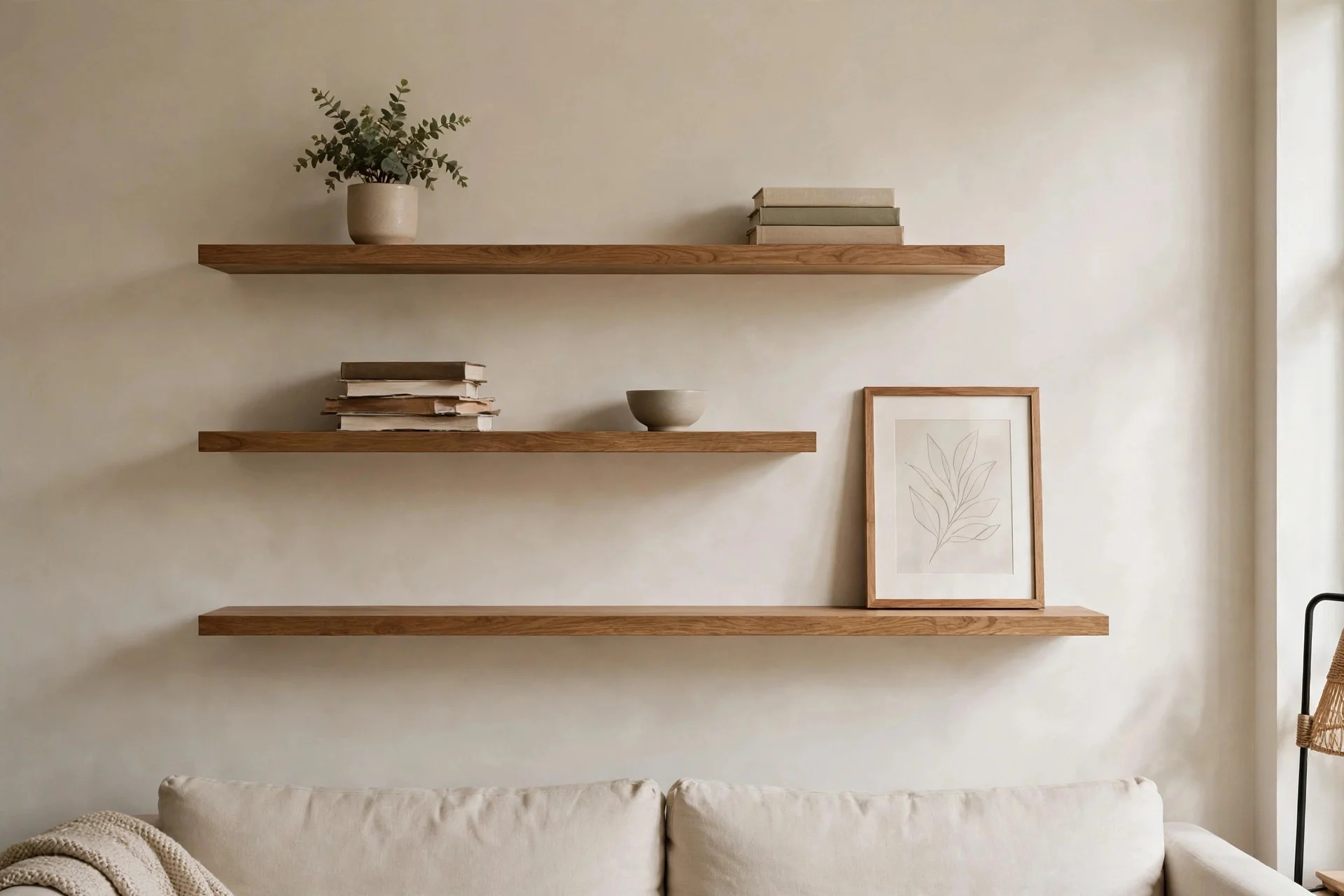
Floating shelves give you a wall that can change with the seasons, and they work well when you keep them calm rather than crowded. Fit two or three shelves above the sofa or along a side wall, spacing them about forty centimetres apart, and use solid fixings, since books are heavier than they look. Style each shelf with a mix of heights, a stack of books, a small plant, a framed print leaning against the wall, and leave some empty space on purpose. I tried this with three shelves and stuffed every inch at first, which made the wall look like a shop. Taking a third of the things off fixed it in minutes, and the shelves looked right at last.
Try this: Style a shelf, then remove one item from each shelf before you call it done.
6. Woven Wall Hangings for Soft Texture
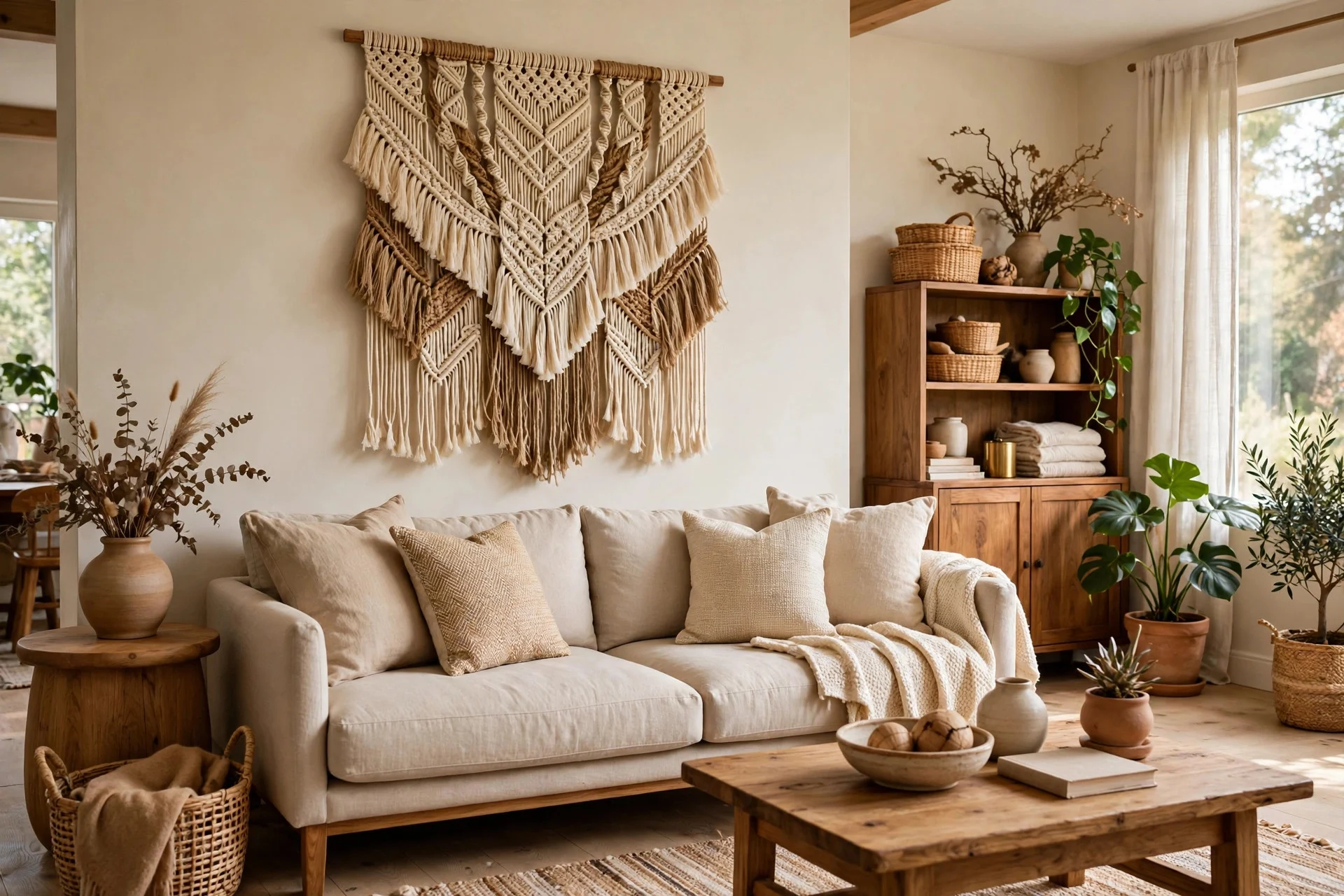
Not every statement wall needs to be bold or bright. A woven wall hanging, a macramé piece, or a flat woven textile adds softness and texture, and it softens rooms with lots of hard surfaces, like wood floors and leather. Hang one large piece centred above the sofa or a bench, low enough that it feels part of the furniture rather than floating near the ceiling. Pair it with a warm wood frame or a simple dowel, and keep the colours calm, cream, natural jute, or soft rust. I tried a large macramé hanging in a room with bare walls and cold light, and the wall felt warmer straight away, though I did learn to hang it on two hooks, as one hook let it tilt within a week.
Try this: Hang a woven piece with two hooks, not one, so it stays level.
7. Living Room Wall Decor Ideas Using a Picture Ledge
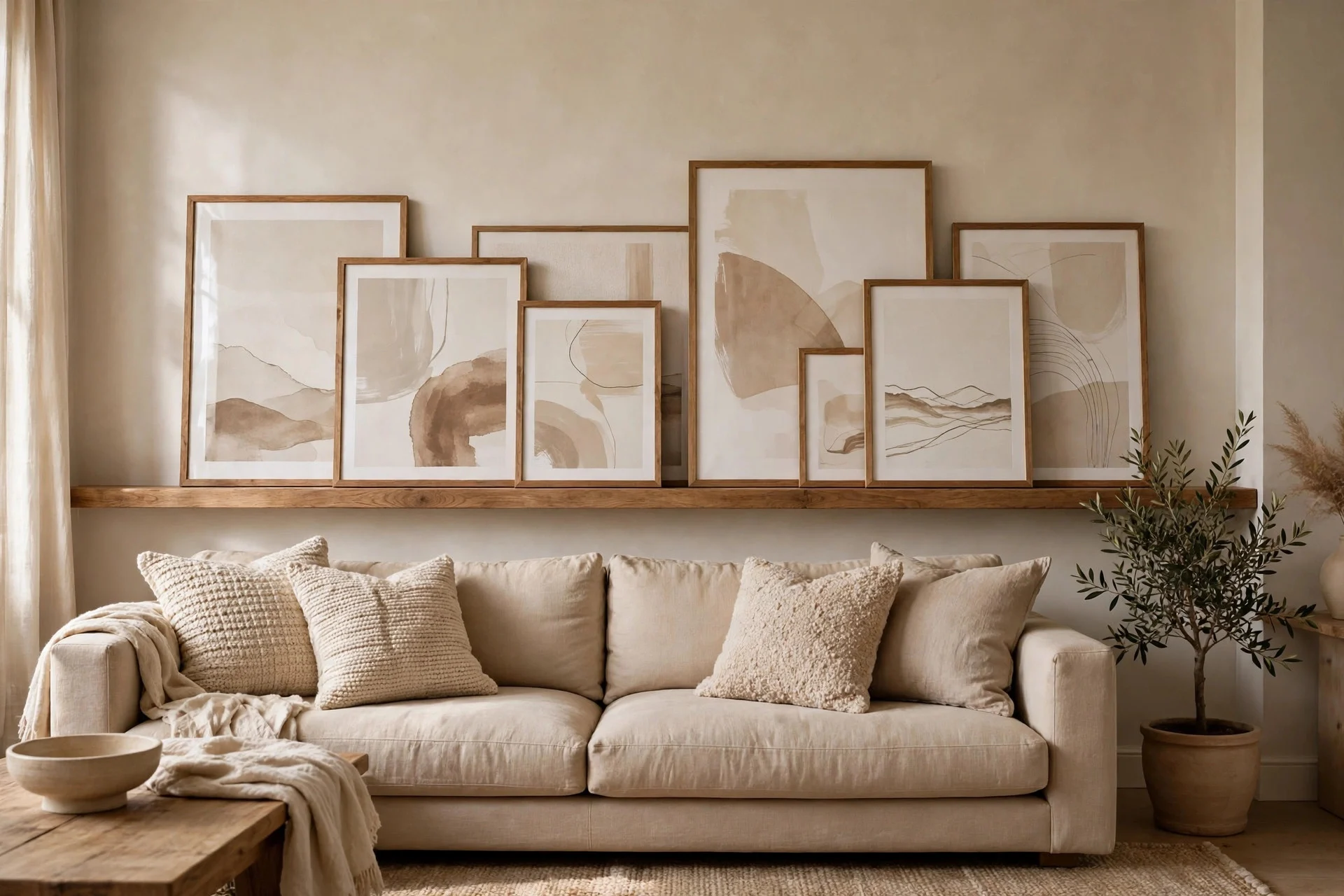
A picture ledge is a slim shelf with a lip that lets you lean art against the wall instead of hanging it, which means you can swap pieces in minutes. Fix one or two long ledges above the sofa, level and screwed into studs, then layer framed prints, small canvases, and a photo or two, overlapping them slightly so the display feels relaxed. Stand back and check the heights, taller pieces at the back, smaller ones in front. I tried this before a family visit and swapped the whole display in ten minutes, which felt like cheating. The only mistake was overloading the ledge, so keep a little gap at each end.
Try this: Leave a hand-width gap at each end of the ledge so the display can breathe.
8. Sculptural Metal Art in Warm Tones
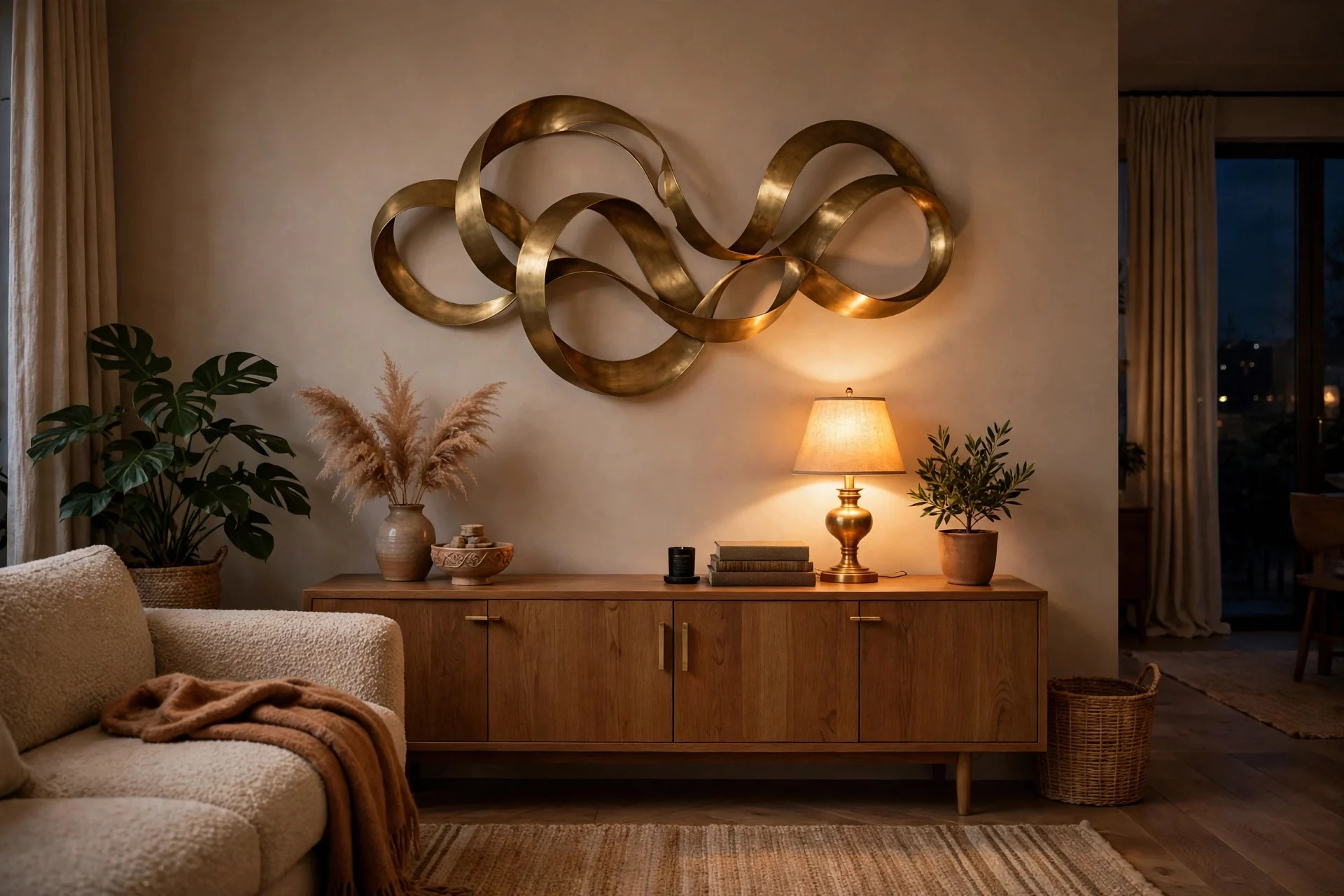
Sculptural metal wall art brings a bit of shine and shape to a wall that paint alone cannot give you. Look for a piece in brass, copper, or matte black with open shapes and curves, so light and shadow become part of the display. One medium piece is usually enough, paired with plain walls and simple furniture, since too much metal can make a room feel cold. I tried a brass sunburst piece above a sideboard and it looked flat in the morning, then lovely in the evening when the lamp came on, so now I always check a metal piece under lamplight before deciding where it lives. Hang it at eye level.
Try this: Check metal wall art under lamplight in the evening, not just in daylight.
9. A Grid of Matching Frames for a Calm Look
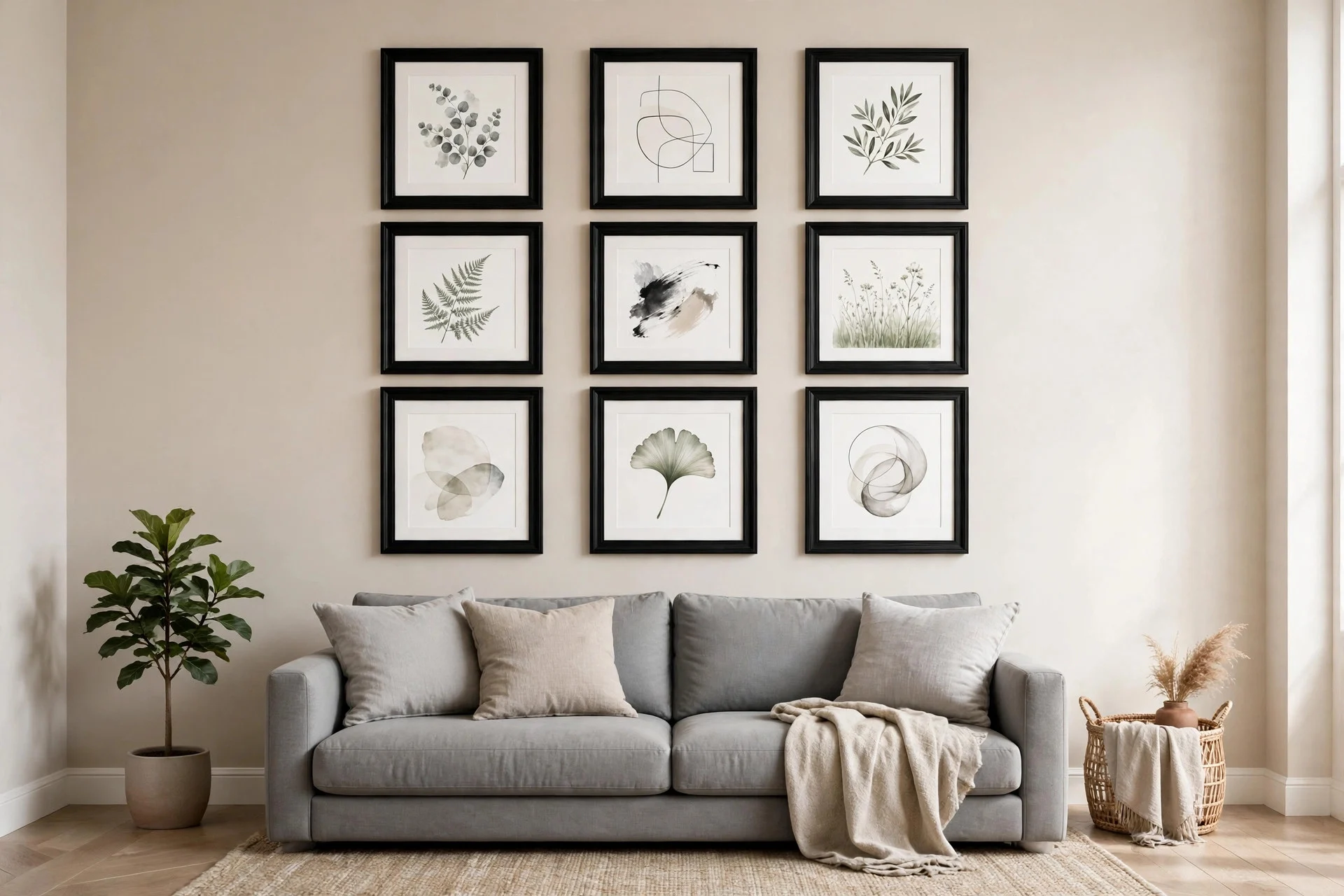
If a mixed gallery wall feels too busy for you, a neat grid of matching frames gives the same wall-filling effect with a much calmer feel. Choose six or nine identical frames, in black or light wood, filled with prints in one colour palette, so the grid reads as one piece. Space the frames evenly, about five centimetres apart, and use a paper template on the wall first so the rows stay straight. I tried this in a hallway-style living room wall with nine black frames and matching white mounts, and the wall went from messy to settled in one afternoon. Buy all the frames together, since mixing sizes would break the effect.
Try this: Tape paper templates on the wall first and check the grid with a spirit level.
10. Botanical Prints That Bring the Outside In
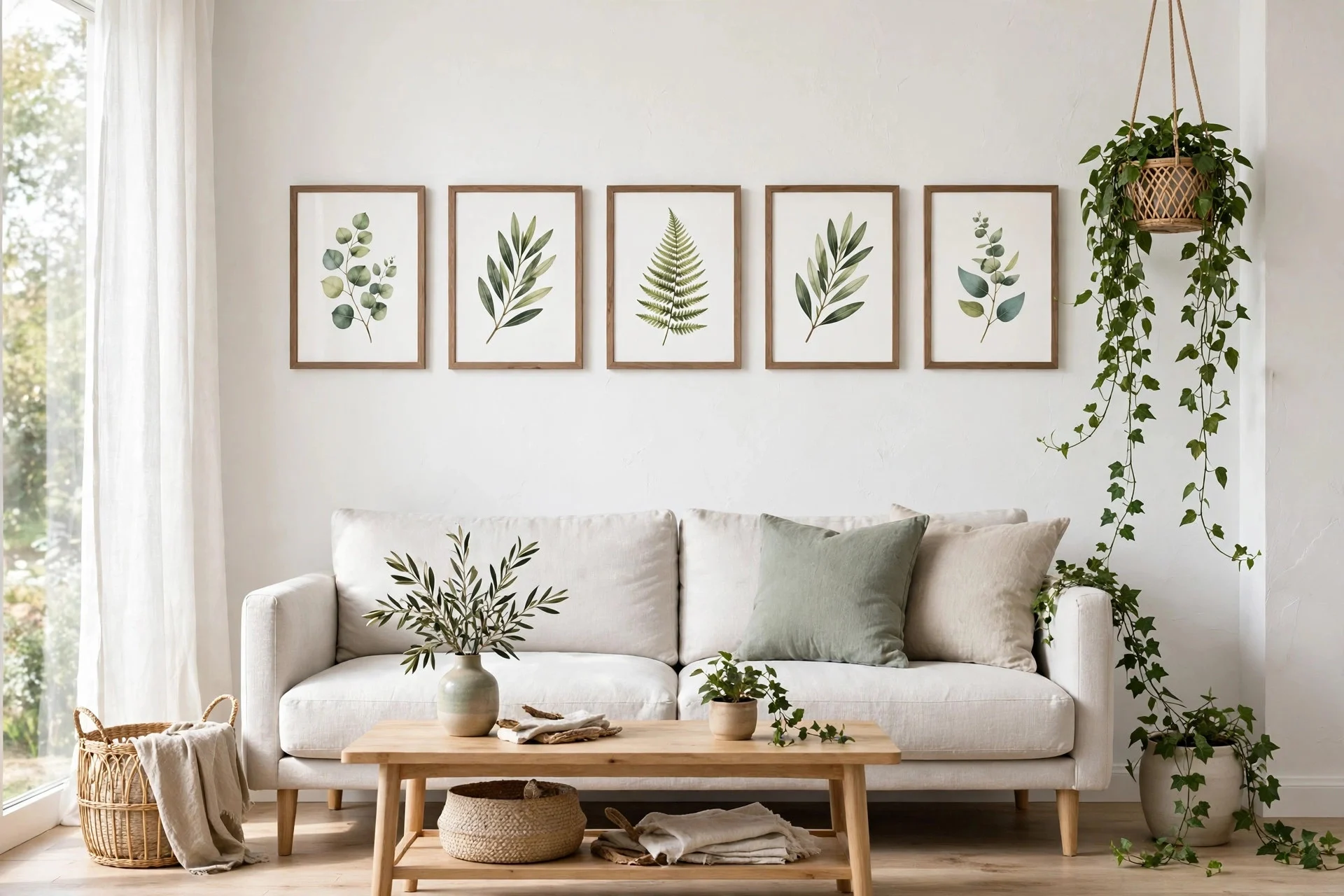
Botanical prints are a gentle way to make a statement, and they suit rooms that need a bit of life without a lot of colour. Pick three or four prints of leaves, ferns, or pressed flowers in soft greens, and hang them in matching frames in a row above the sofa. Keep the mounts wide and white so the prints have room to breathe, and pair them with a real plant nearby. I tried this in a north-facing room that always felt grey, and the green prints plus one trailing plant made the whole corner feel fresher, though I did learn to avoid glossy glass, which hid the prints in the light. Matt glass or no glass at all works far better here.
Try this: Use matt glass on botanical prints so daylight does not hide the artwork.
11. Vintage Finds and Thrifted Frames
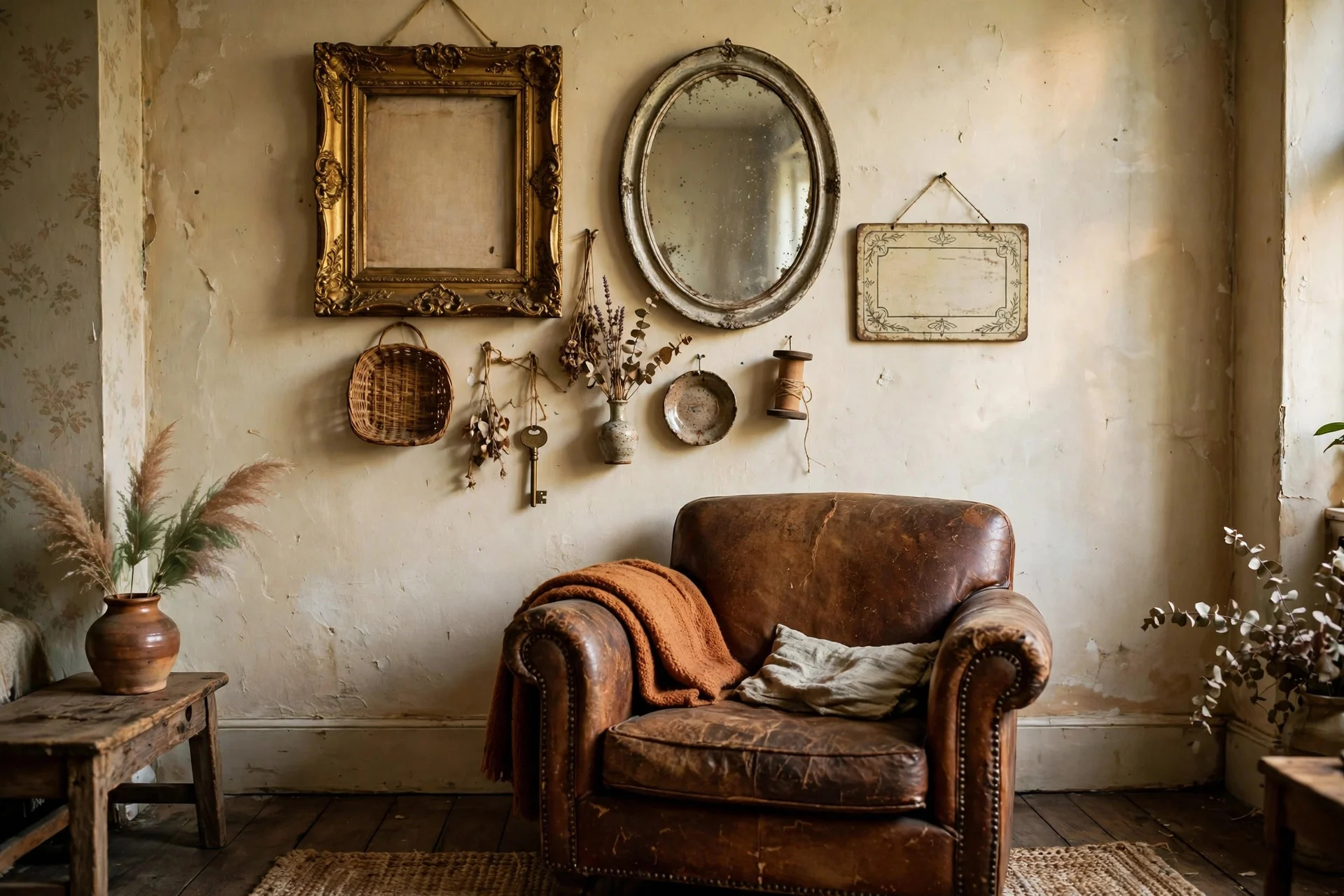
Some of the best statement walls are made from things other people were ready to throw away. A thrifted gilt frame, an old window frame, a flea-market mirror, or a vintage sign can carry more character than anything new. Look for pieces with good bones, solid frames and honest wear, then clean them gently and hang them where they can be seen properly. I tried this with an old gold frame I found for a few pounds, painted the inside mount cream, and slipped in a print I loved, and visitors ask about that frame more than anything else in the room. Do not buy every pretty thing you see, or the wall will never settle.
Try this: Buy one thrifted piece at a time and live with it for a week before adding another.
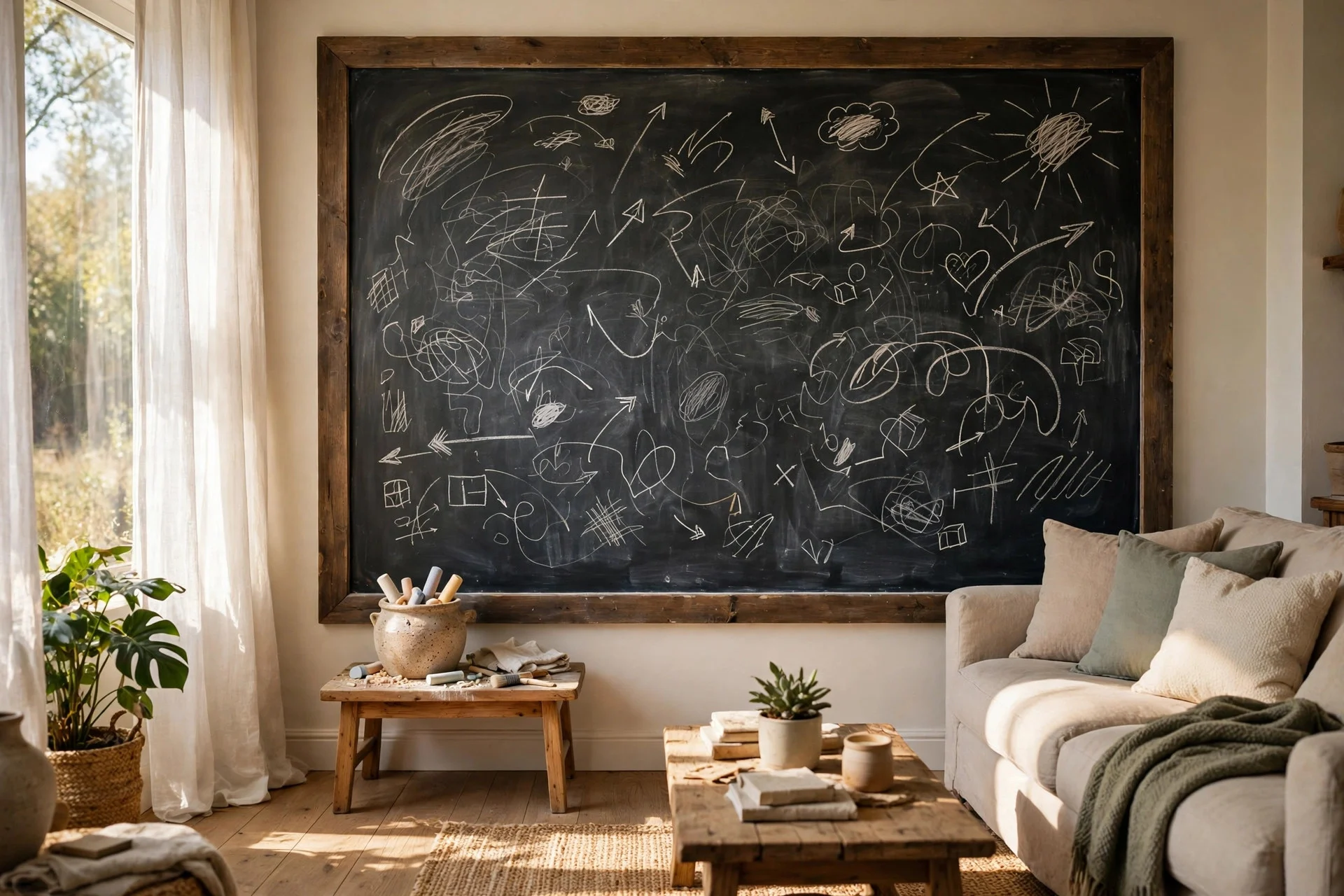
12. A Chalkboard Wall for Notes and Doodles
A chalkboard wall sounds like a kitchen idea, but a small one in the living room can be charming, especially in a family home. Paint one panel with chalkboard paint, or hang a large framed chalkboard beside the sofa, and keep a pot of chalk nearby. Use it for the week’s plans, a quote you love, or the kids’ drawings, and wipe it clean whenever you fancy a fresh start. I tried this in our living room and the kids claimed it within a day, which turned out to be the point. The mistake I made was using cheap chalk that squeaked and crumbled, so buy soft chalk and a proper eraser, and the board stays a pleasure rather than a chore.
Try this: Keep soft chalk and a proper eraser in a small pot beside the board.
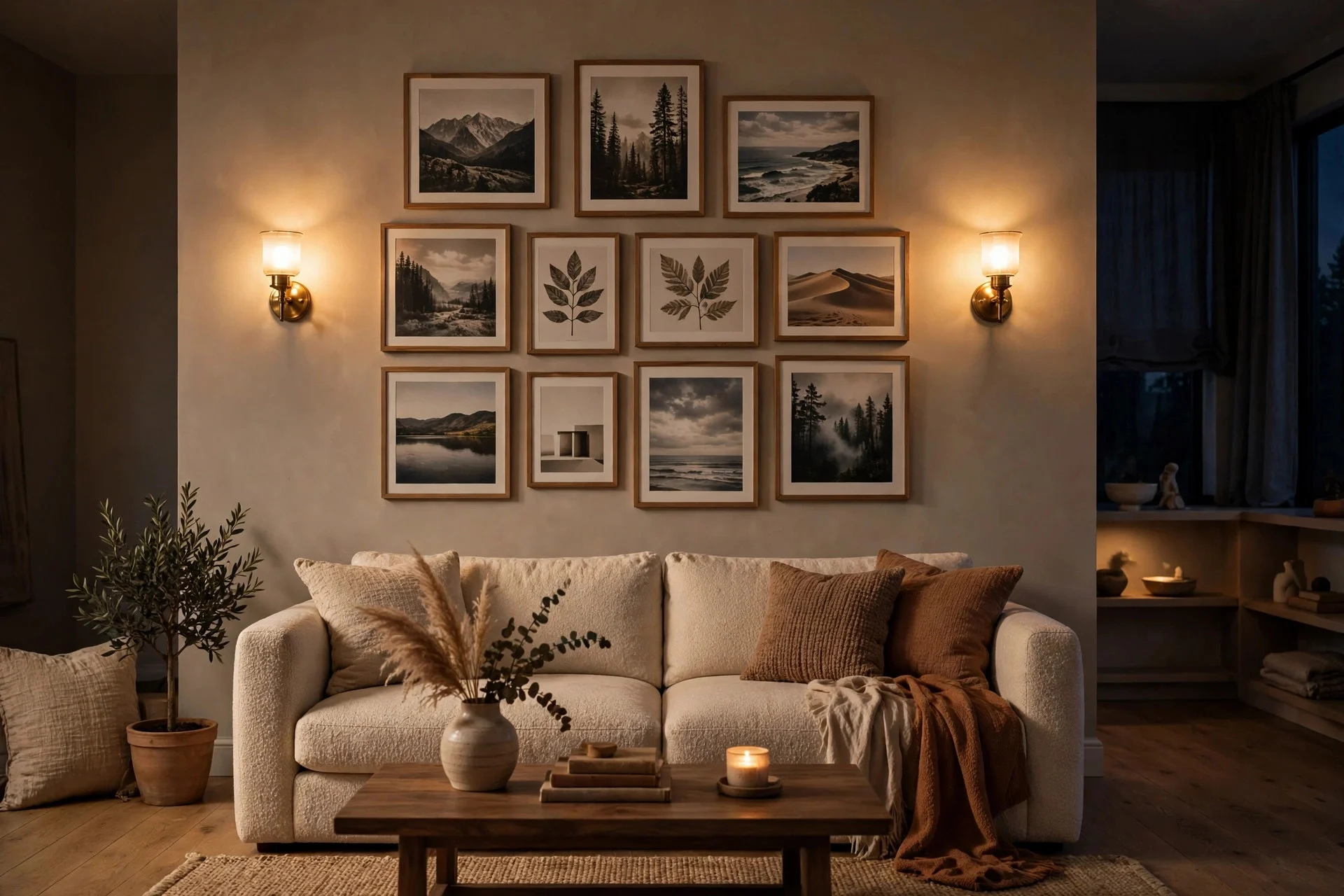
13. Wall Sconces That Finish the Wall at Night
A statement wall should still look good after dark, and that is where wall sconces earn their place. Fit a pair of sconces on either side of a mirror, a canvas, or a gallery wall, choosing warm bulbs and simple shades. If you cannot wire new lights, plug-in sconces with a cord cover work well and can be fitted in an afternoon. Turn them on in the evening and check the glow, soft and warm, not harsh, and make sure they do not glare from the sofa. I tried plug-in sconces beside our gallery wall and the whole wall came alive at night, though I did learn to hide the cords, since a dangling cord ruins the effect.
Try this: Choose warm bulbs and hide plug-in sconce cords with a slim cord cover.
How do I choose one statement wall in my living room?
Pick the wall you see first when you walk in, which is usually the wall behind the sofa or opposite the door. That wall carries the room, so give it the strongest piece and keep the other walls quieter.
How big should wall art be above a sofa?
Aim for art that is about two thirds as wide as the sofa and hung with its centre at eye level, around 145 centimetres from the floor. One large piece usually looks better than several small ones spread too far apart.
Can I mix a gallery wall with a painted accent wall?
Yes, and it often looks better than either idea alone, as long as one of them stays calm. Use a soft paint colour behind a busy gallery wall, or a bold paint colour behind one or two simple frames.
What if I rent and cannot drill into the walls?
Use picture ledges, leaning art, removable hooks, and lightweight frames, and keep heavy pieces on furniture instead of the wall. A painted look can come from a large fabric hanging or a leaning mirror, with no holes at all.
Final Thoughts
A statement wall does not need to be loud or costly. It just needs to feel like you, one wall with something worth looking at, hung at the right height, with a little space around it. Start with the idea that made you smile while reading, try it this weekend, and live with it for a week before you add anything else. The best living room walls grow slowly, one honest choice at a time, and yours will too.