
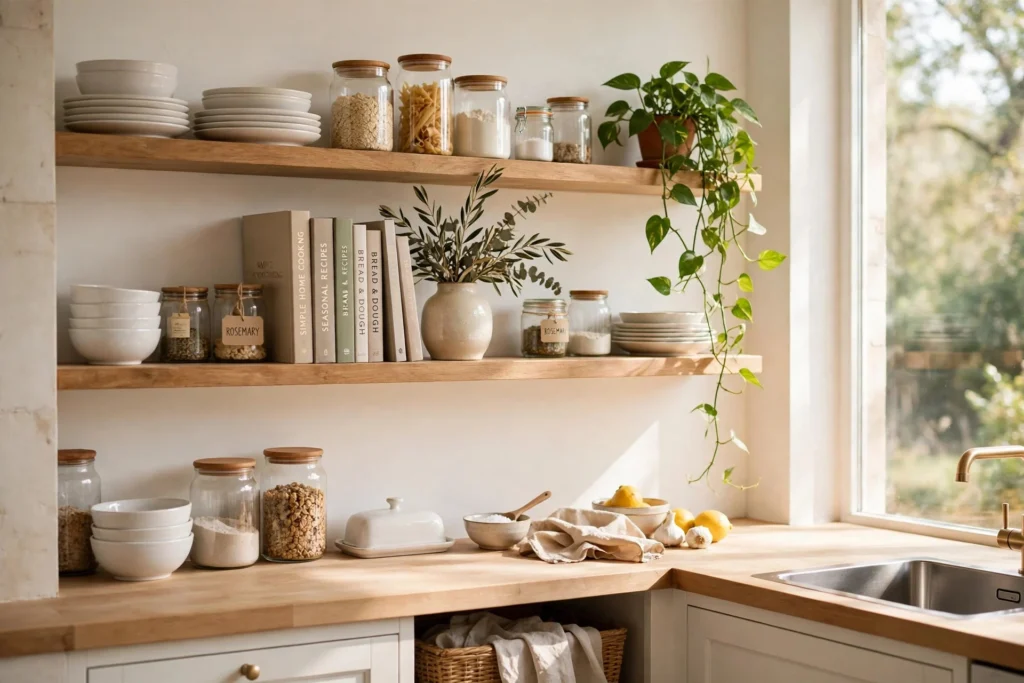
Open shelves can make a kitchen feel bigger, brighter, and a lot more personal — but only when they look lived-in on purpose instead of just crowded. The best kitchen shelf decor ideas are not about buying a whole new set of pretty things. They start with what you already own: the dishes you reach for every morning, a few jars, a plant that refuses to die, and a couple of pieces that actually mean something to you.
I have rearranged my own shelves more times than I can count, usually on a Sunday when I should have been doing something else. What I learned is simple: leave breathing room, repeat one or two colours, and put the everyday stuff where you can grab it. The fourteen ideas below follow that same thinking. They are cheap, practical, and easy to undo if you change your mind next month.
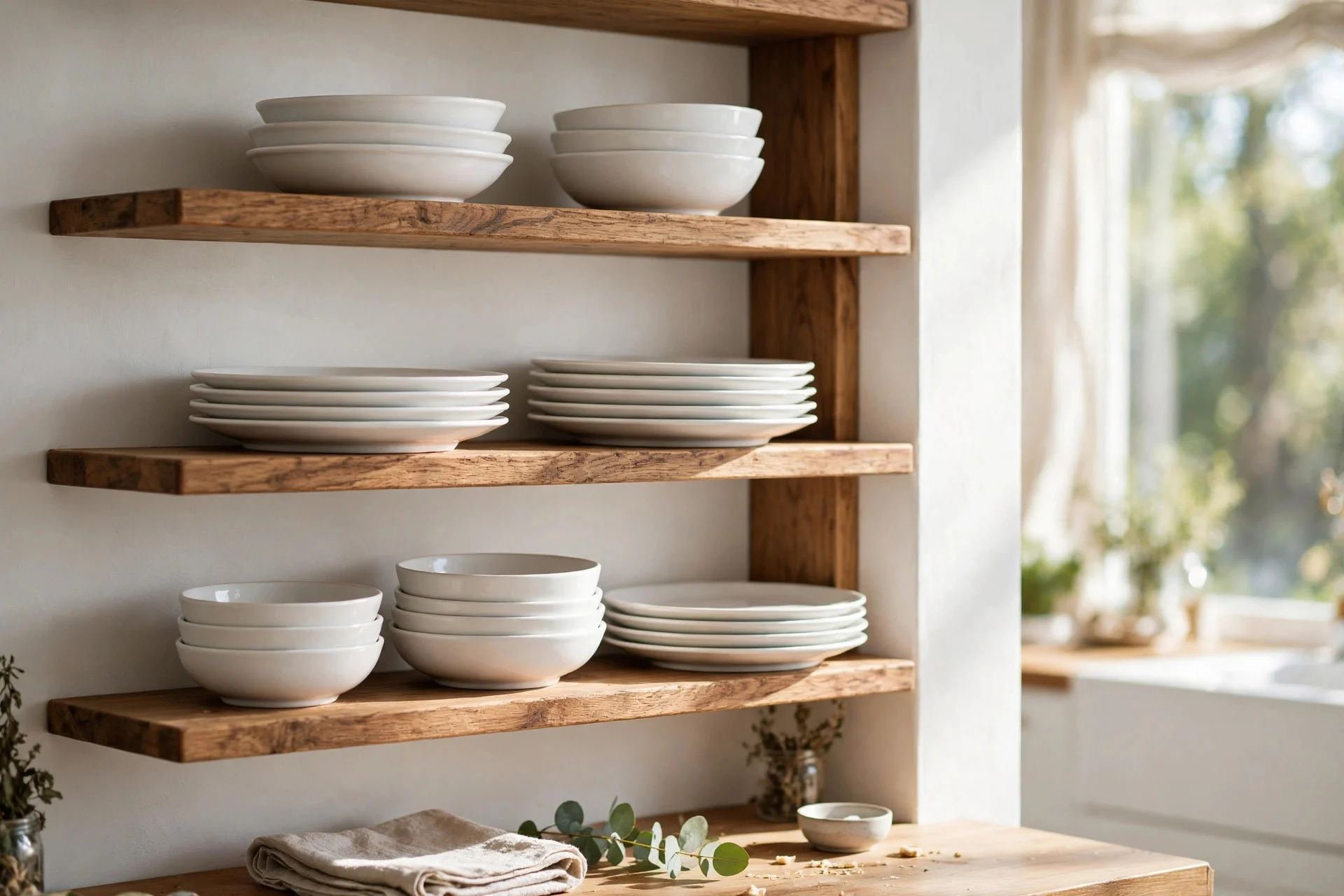
1. Kitchen Shelf Decor Ideas Start With Stacked White Dishes
Plain white dishes are the easiest starting point I know, because they go with everything and they never look dated. I stack dinner plates in short piles of four or five, bowls in a smaller stack beside them, and I leave a gap of air between each group so the shelf does not look like a cupboard that lost its doors. The trick is keeping the stacks low enough that you can lift a plate off the top without the whole pile wobbling. I once stacked mine too high and sent a bowl sliding across the counter — lesson learned the loud way. Mix in one or two pieces with a soft rim colour if plain white feels too stark for you.
Try this: Stack plates in groups of four, leave a hand-width gap between stacks, and keep the tallest pile on the lowest shelf.
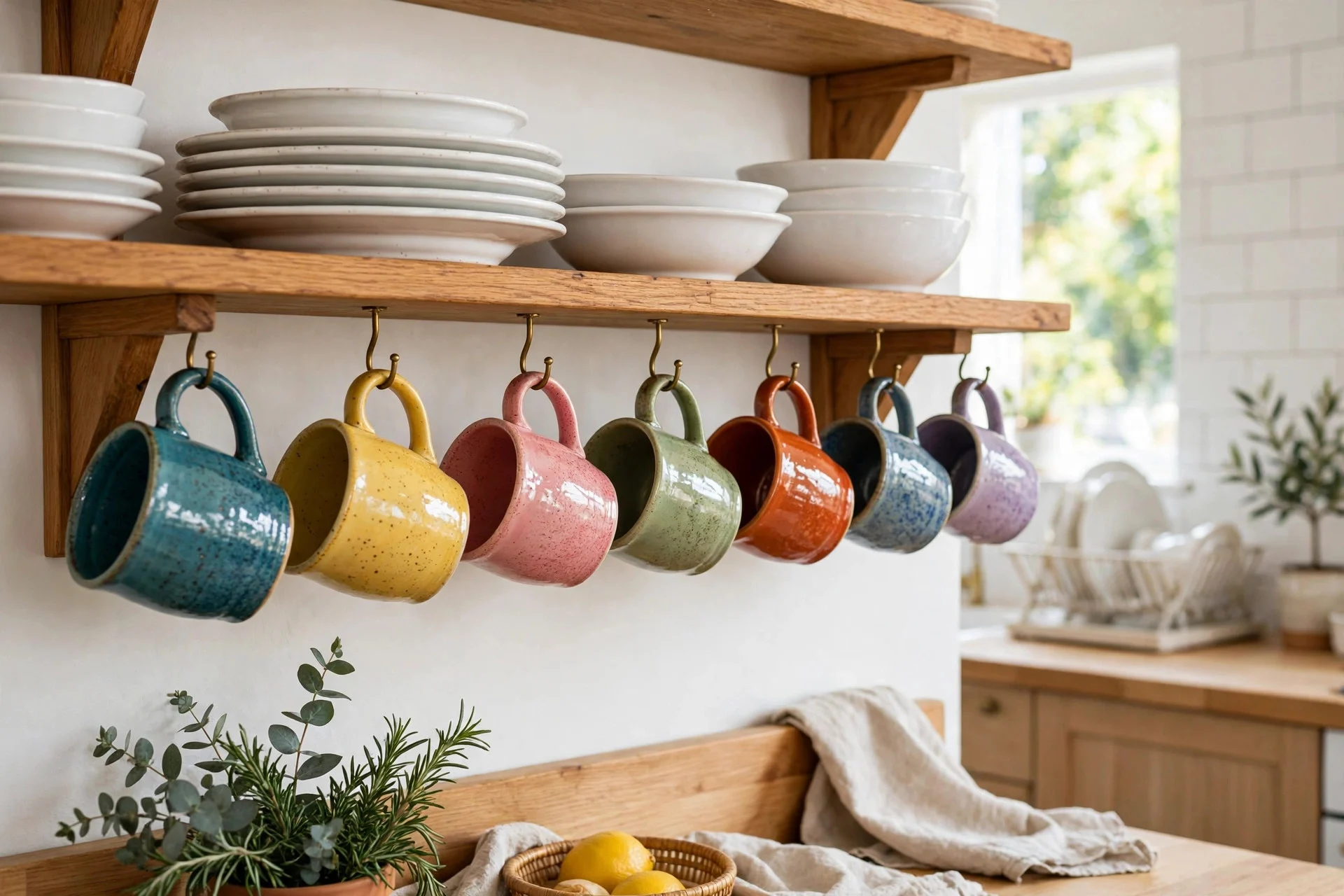
2. Everyday Mugs Hung on Hooks Below the Shelf
Mugs are the thing most of us own too many of, and hanging them under a shelf solves two problems at once: they stop crowding the shelf itself, and they are right there when the kettle boils. I screw small cup hooks into the underside of a wooden shelf and hang four or five favourite mugs by their handles, all facing the same way. Keep the colours in one family — creams, soft blues, or earthy tones — so it reads as a collection rather than a jumble. Do not hang the chipped one you keep meaning to throw away; the shelf will show it off, not hide it. This works best on a solid wood shelf, so check the thickness before you drill.
Try this: Fit three to five small hooks under the shelf and hang your best-matching mugs in a row, handles all facing out.
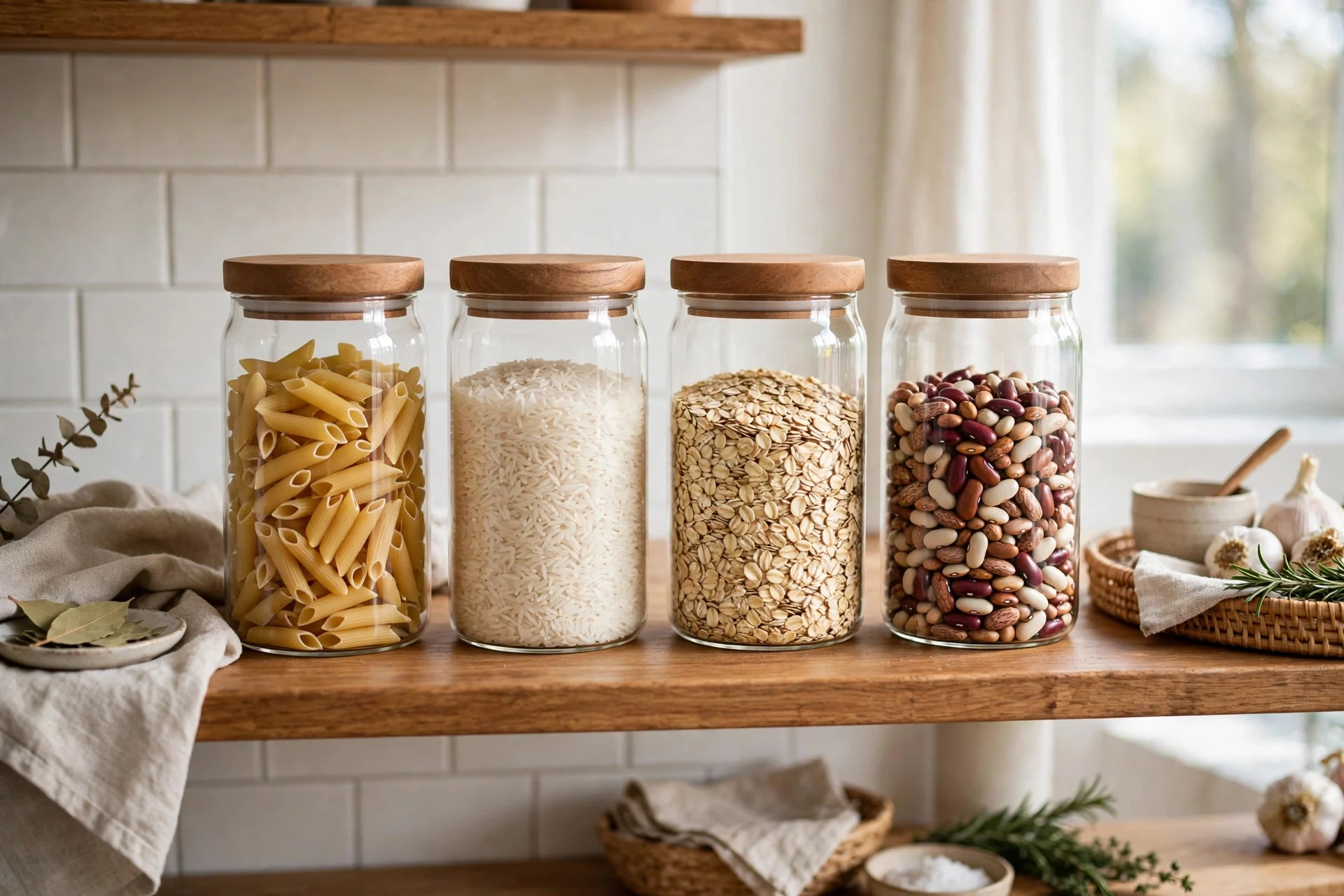
3. Glass Jars Filled With Pantry Staples
Clear glass jars turn boring pantry staples into decor, and they make cooking faster because you can see what is running low. I fill mine with pasta, rice, oats, flour, and dried beans, and I keep the jars the same shape so the shelf looks calm instead of busy. A simple paper label on the front keeps things honest — I learned that after mistaking salt for sugar in a cake, which is a mistake you only make once. Leave the lids loose enough to open with one hand and do not overfill them; a jar packed to the brim looks stressed and is a pain to scoop from. Wooden lids warm the look up nicely.
Try this: Use matching glass jars in two sizes, label each one clearly, and leave an inch of space at the top.
4. A Row of Cookbooks You Actually Cook From
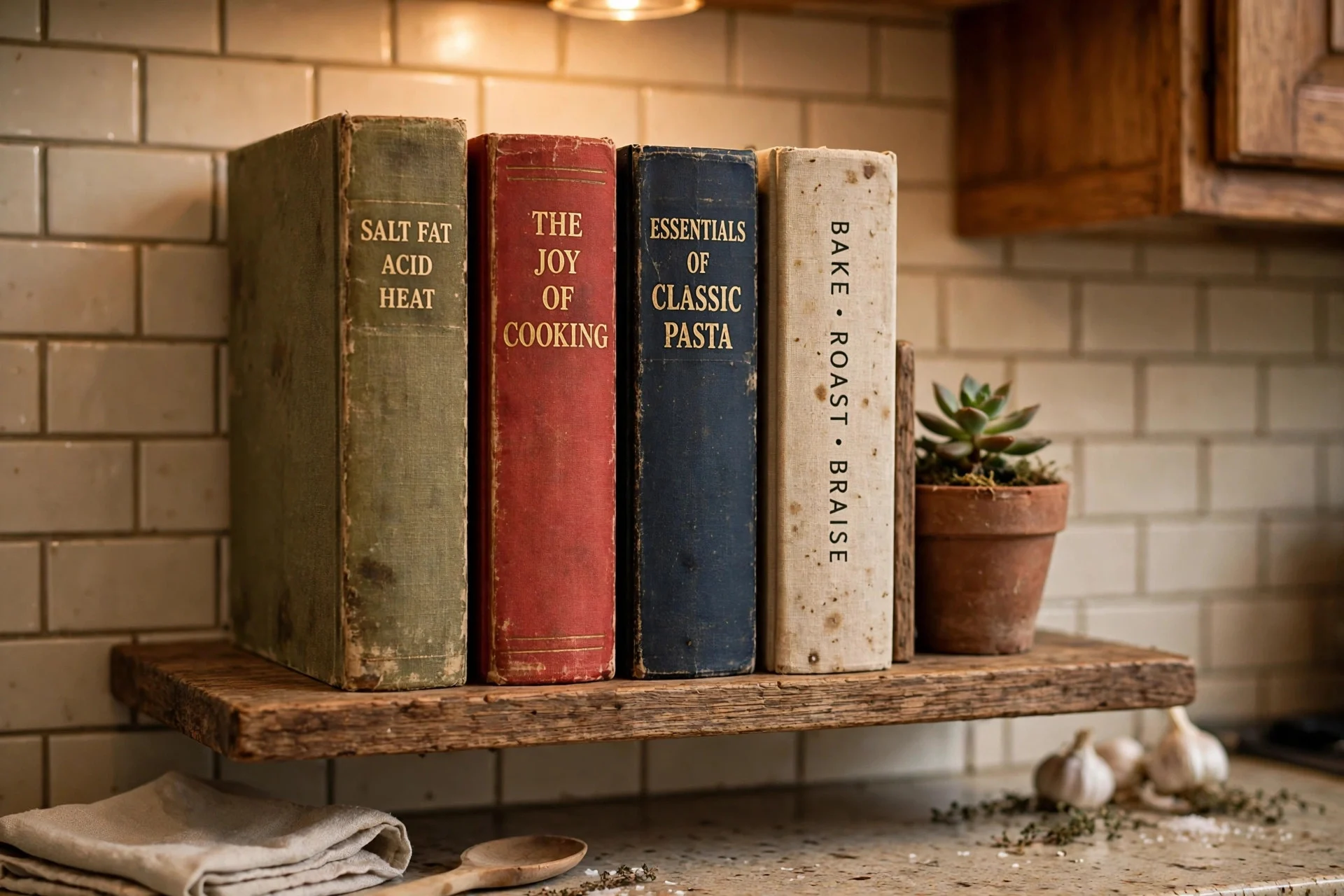
A shelf of cookbooks looks lovely, but only if the books are ones you genuinely open. I keep six or seven of my most-used books standing upright on one shelf, grouped by size, with a small bookend or a heavy jar holding them steady. The stained pages and bent corners are the point — they tell the story of meals you have actually made. I tried the trick of turning all the spines inward once, for that clean neutral look, and I spent a week pulling out the wrong book every single time. Keep the ones you love most at eye level and move the rarely used ones to a cupboard.
Try this: Stand your six most-used cookbooks upright, tallest at the ends, and add a small plant or jar as a bookend.
5. Trailing Plants That Soften Hard Edges
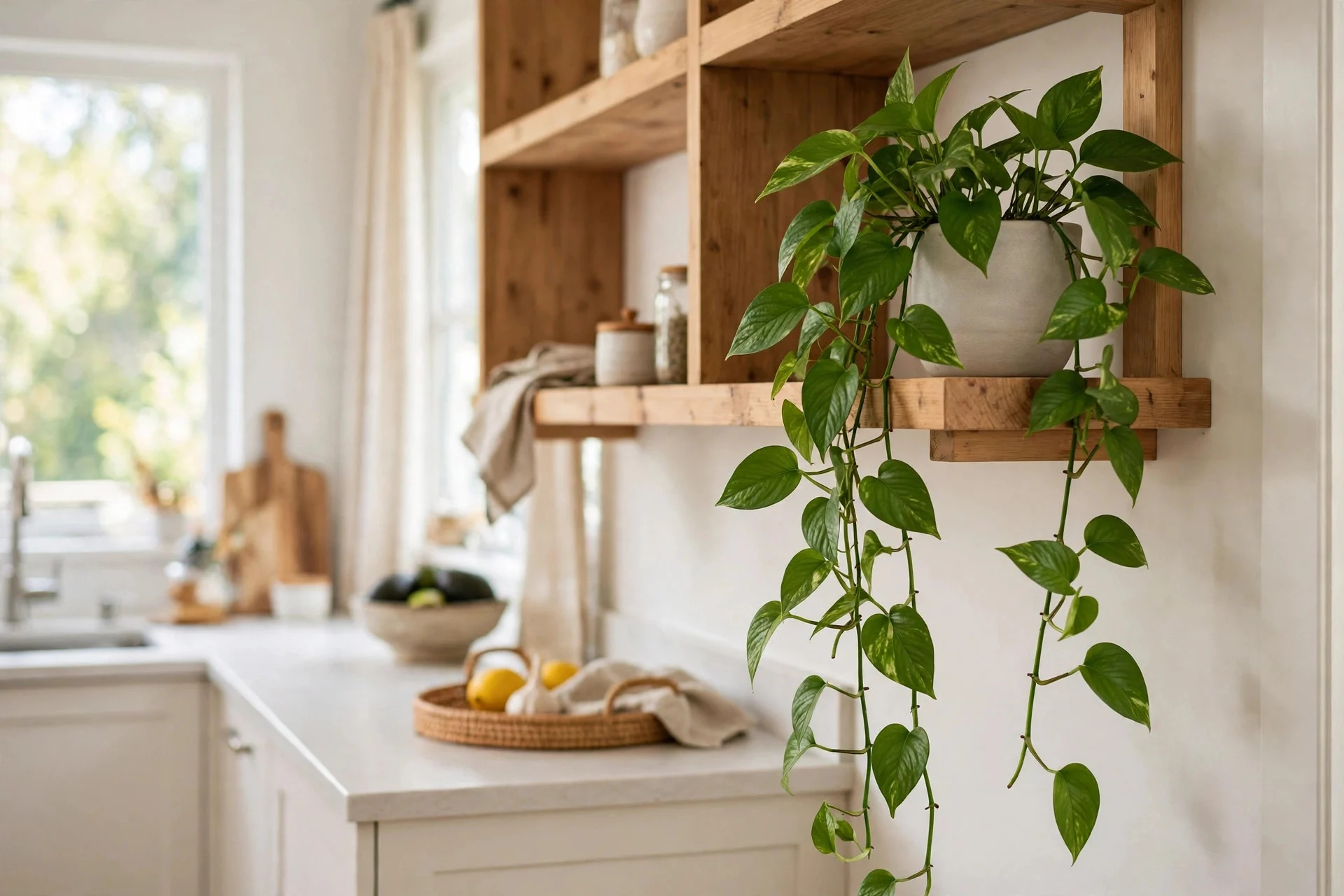
Kitchens have a lot of hard surfaces — tile, wood, glass, metal — and a trailing plant is the fastest way to soften all of it. I keep a pothos in a simple ceramic pot at the end of a shelf and let its vines drape down a few inches, trimming them when they start tickling the plates below. If your kitchen gets little light, pick a plant that forgives you; mine survived a whole winter of neglect and still looked fine. Water it over the sink, not on the shelf, unless you enjoy wiping up drips from your dishes. One plant per shelf is plenty — two starts to look like a jungle, and not in a good way.
Try this: Place one trailing plant at the end of a shelf in a plain pot and let it trail no more than six inches.
6. Wooden Cutting Boards Leaned in Layers
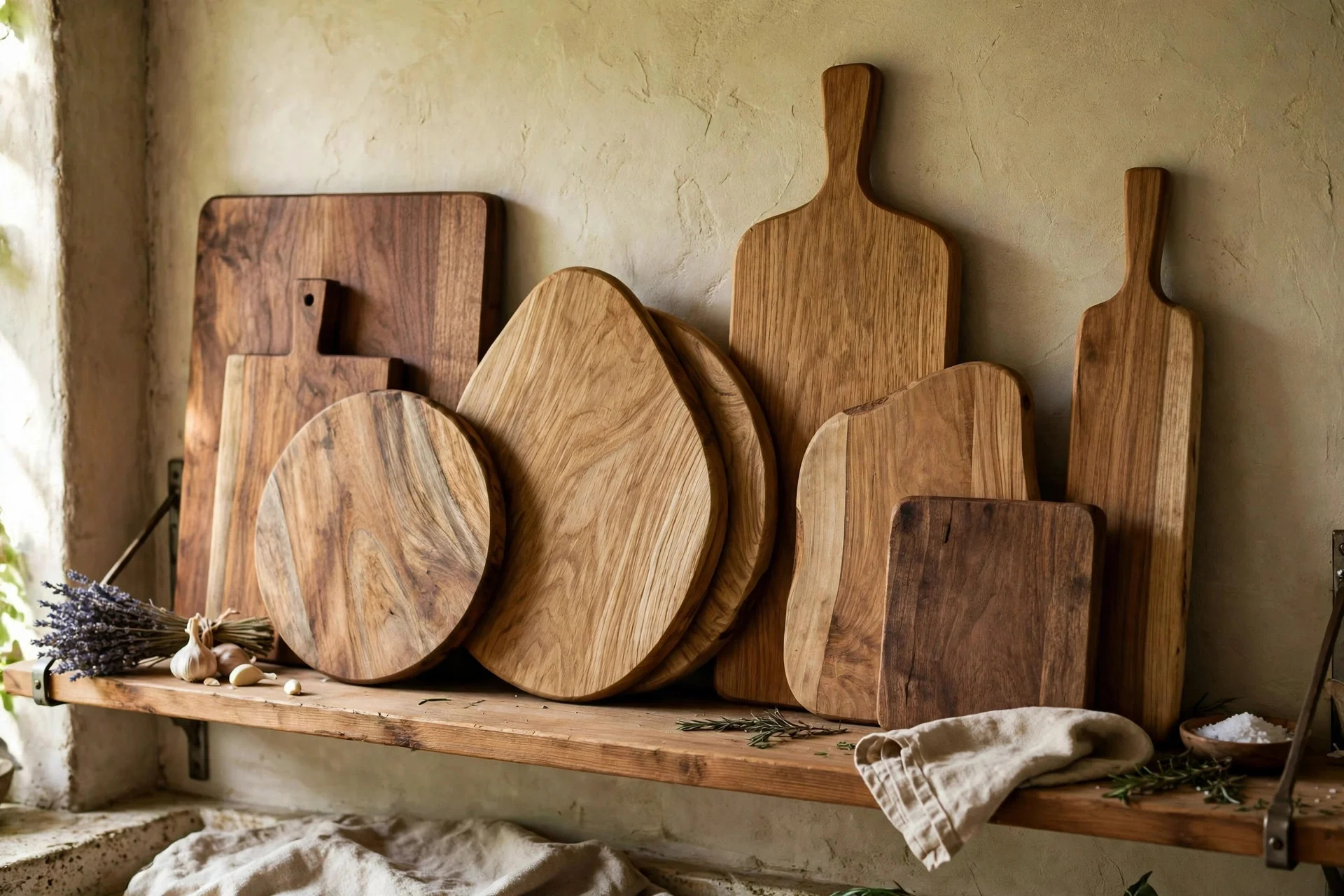
Cutting boards are workhorses, but leaned in a row they look like they were chosen on purpose. I stand two or three boards upright against the wall at the back of a shelf — a big one behind, a medium one in front, and a small round one to one side — so you see the wood grain and the different shapes. Use boards you actually cook with; the knife marks and the warm patina make them look real, not staged. I made the mistake once of buying a board purely for looks, and it sat there untouched while my good boards lived in a drawer. Keep the prettiest board at the back so it frames the smaller ones.
Try this: Lean three boards of different sizes in a row, biggest at the back, and leave the front of the shelf clear.
7. Small Baskets for the Messy Bits
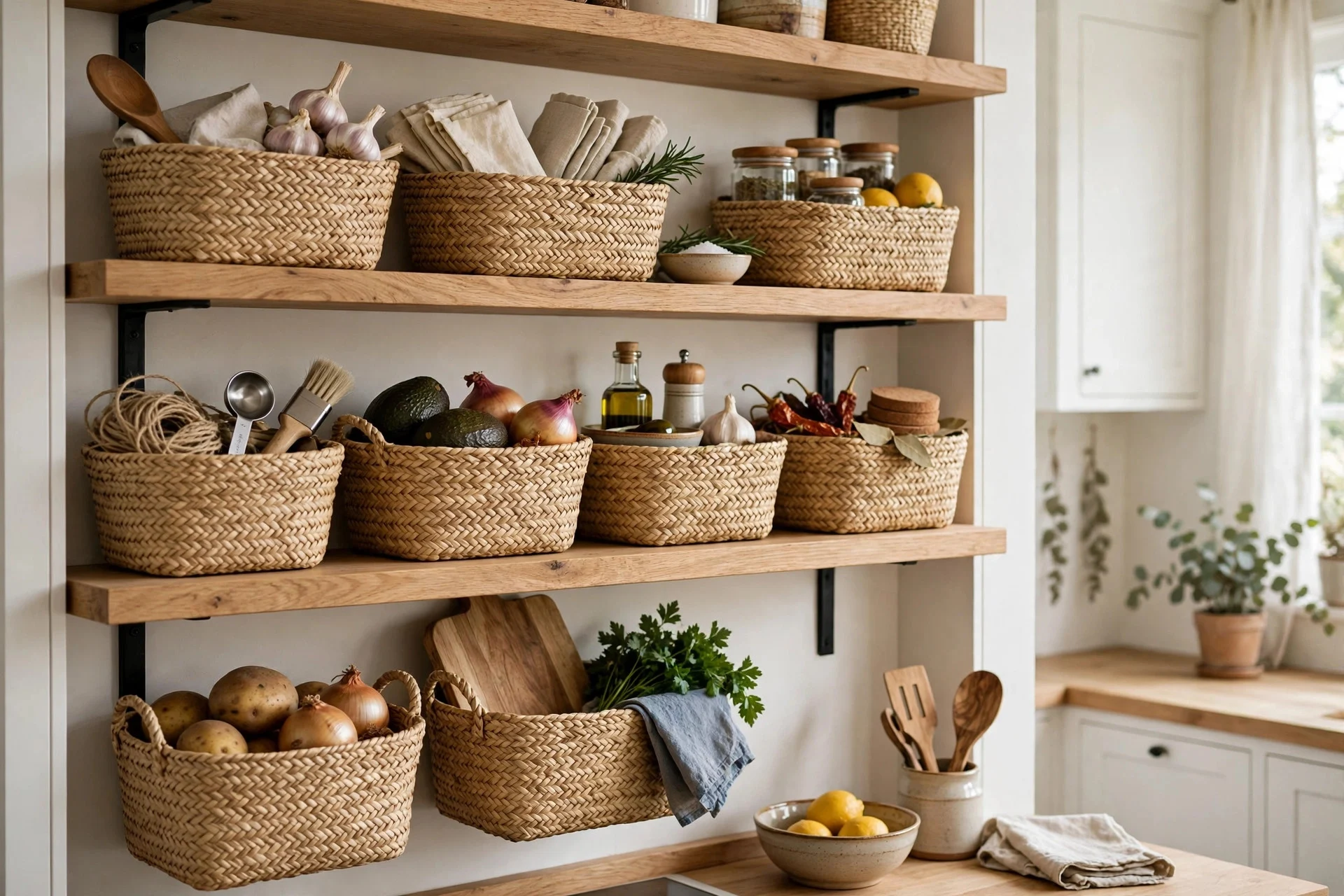
Every kitchen has messy bits — tea towels, spare batteries, the odd packet of something — and a small basket hides them while still looking tidy. I use one woven basket per shelf, no bigger than a shoebox, for the things that have no proper home. The basket itself becomes the decor, so pick one with a nice weave and a warm natural colour. I learned to label the inside of the basket, not the outside, so guests see a pretty basket and I still know where the spare light bulbs live. Do not let the basket overflow; the moment things poke out the top, the tidy look is gone and you are back where you started.
Try this: Add one small woven basket per shelf for clutter, keep it below the rim, and label it inside.
8. Matching Canisters in a Calm Colour
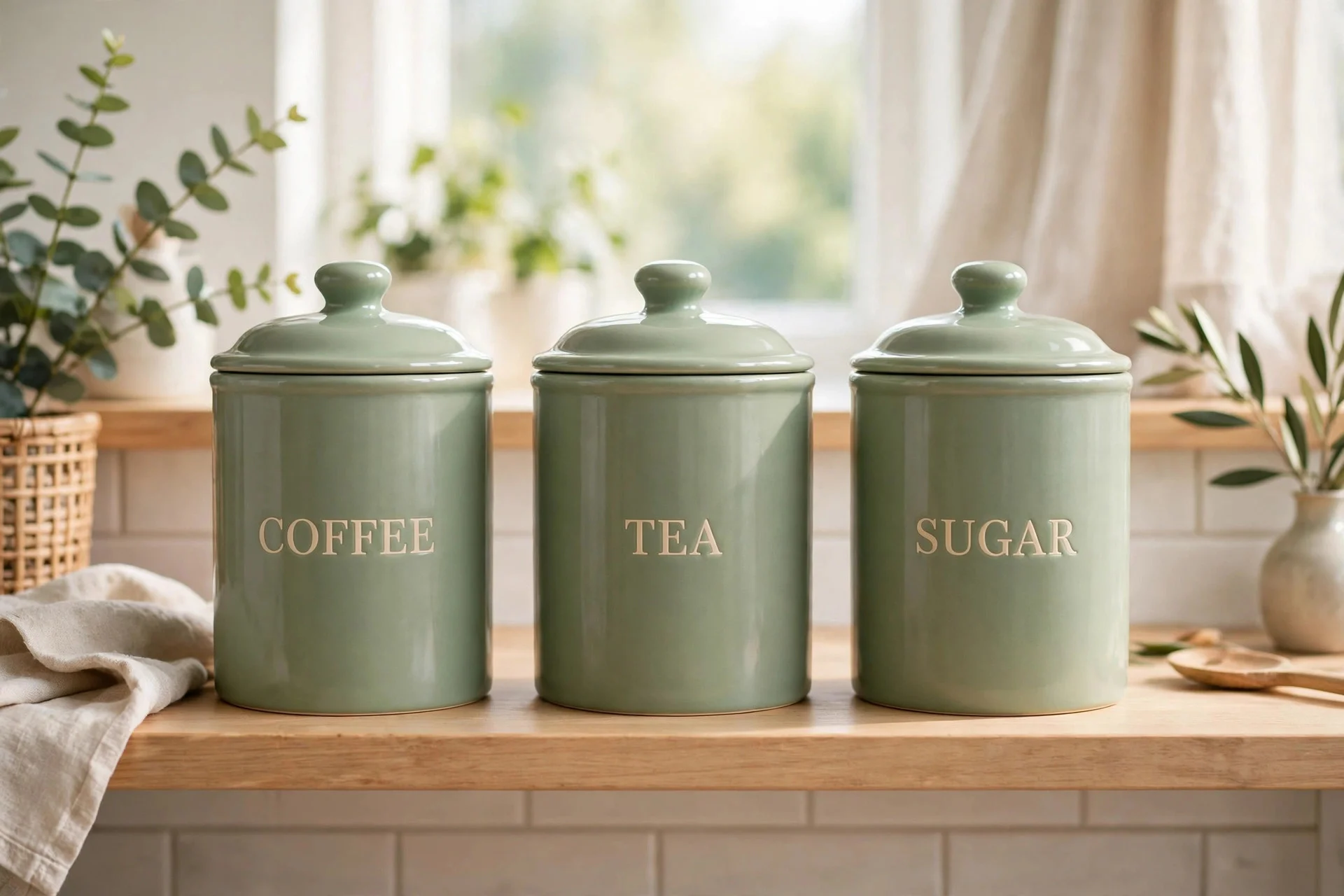
A set of matching canisters brings order to a shelf in seconds, especially if your dishes and jars are all different shapes. I use three canisters in the same soft sage green for coffee, tea, and sugar, lined up in a row with a little space between each one. The matching lids matter more than the matching bodies — mismatched lids are what make a set look accidental. I bought mine one at a time over a few months, which worked out fine, but I wish I had checked the lid sizes matched before bringing the third one home. Keep the canisters you use daily on the lowest shelf so you are not stretching for coffee first thing in the morning.
Try this: Line up three matching canisters for coffee, tea, and sugar, and keep them on the easiest-to-reach shelf.
9. A Single Vase With Fresh Stems
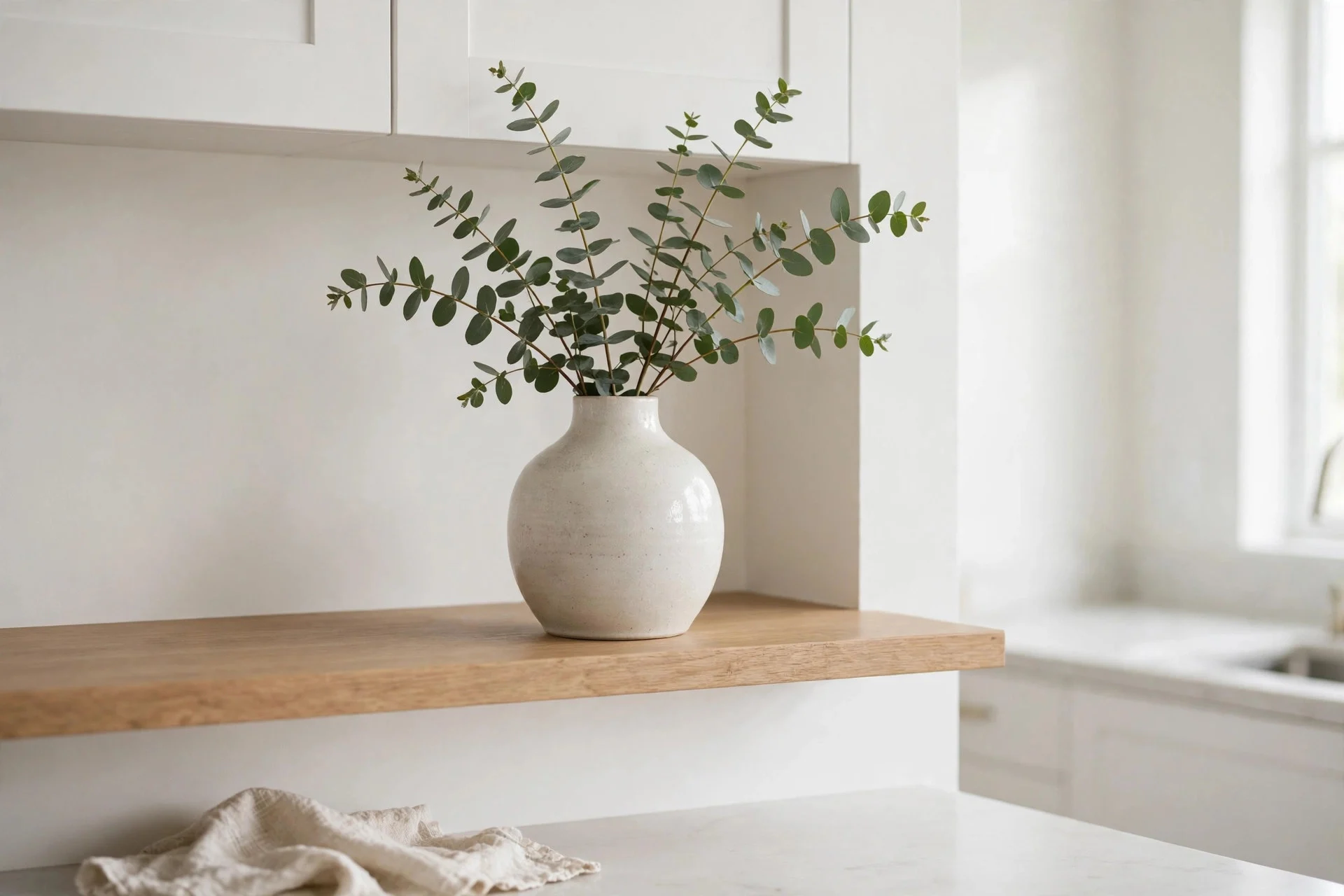
One vase with fresh stems does more for a shelf than five small ornaments ever will. I keep a simple glass or ceramic vase on the top shelf with whatever is in season — eucalyptus in winter, tulips in spring, a few stems from the garden in summer — and I change the water every couple of days so it never goes cloudy. The mistake I made early on was buying a vase that was too tall for the shelf above it, so the stems bent sideways and looked sad. Measure the gap before you buy, and pick a vase that leaves at least a few inches of air above the flowers. One strong vase beats a crowd of tiny ones.
Try this: Choose one vase that fits your shelf height with room to spare and fill it with three to five fresh stems.
10. Copper Pots and Pans on Display
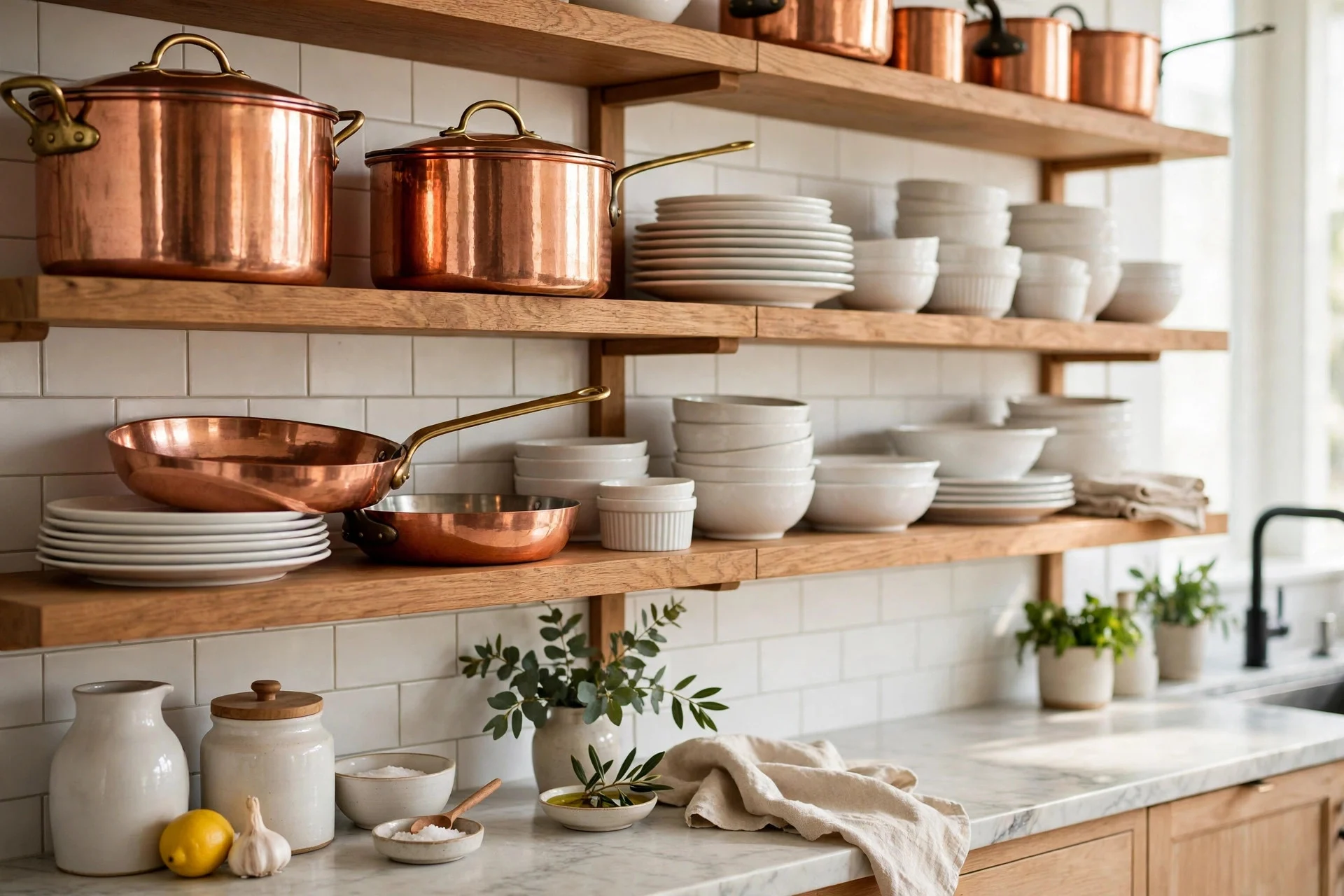
If you own copper pots, hiding them in a cupboard is a waste — their warm shine is made for open shelves. I hang one or two small copper pans from hooks under a shelf and stand a copper pot on the shelf itself, where the light catches it. The key is keeping them polished enough to glow but not so perfect that you are afraid to cook with them; a little patina is honest and looks better than a mirror finish anyway. I used to polish mine every week until I realised nobody in my house cared except me, and now a quick wipe after cooking is enough. Balance the copper with plain wood or white dishes so it does not take over.
Try this: Display one copper pot and one pan only, and pair them with plain white dishes to keep the look balanced.
11. Vintage Finds Mixed With New Pieces
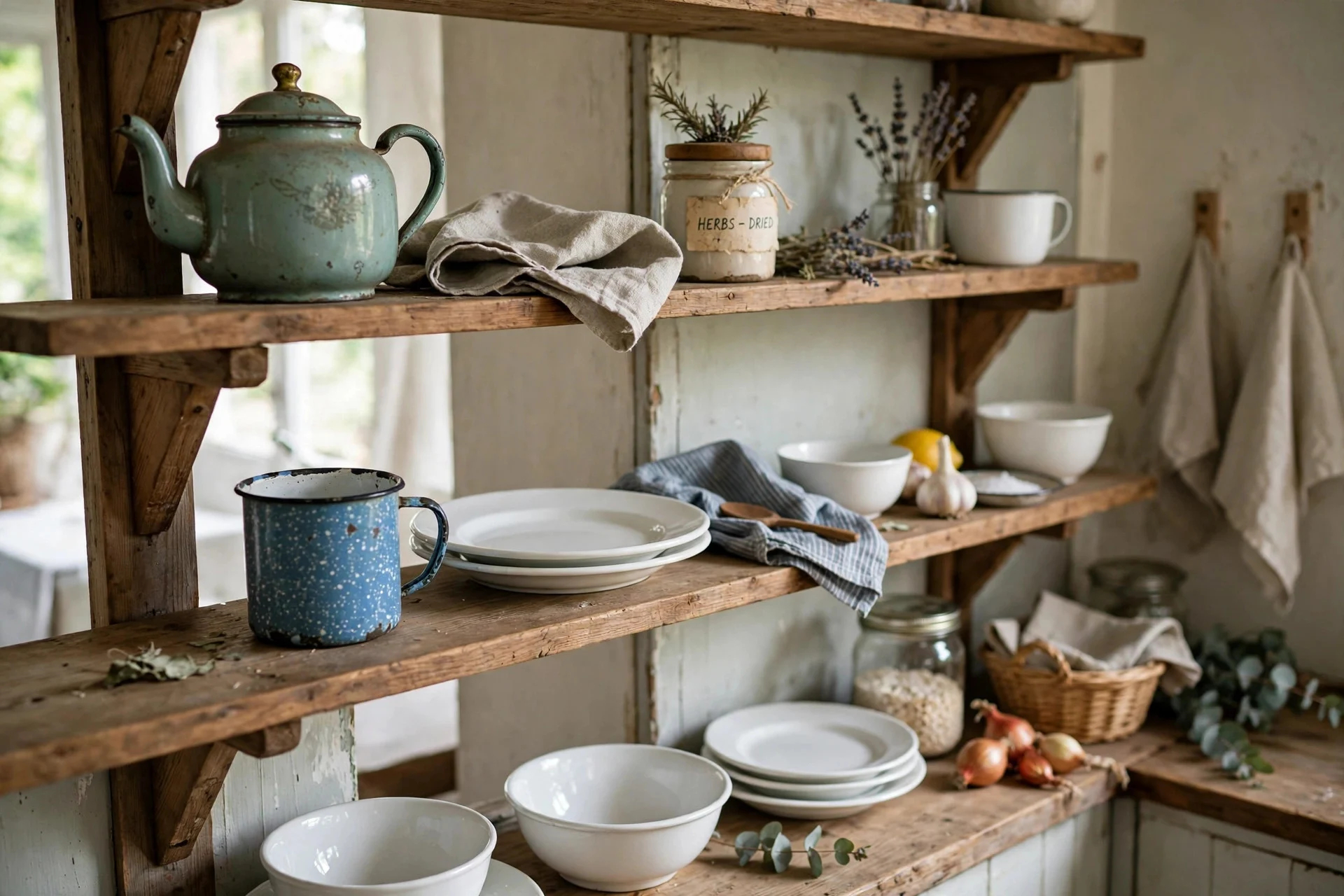
A shelf that is all brand-new can feel like a shop display, and a shelf that is all vintage can feel like a jumble sale. The sweet spot is mixing the two. I put my grandmother’s old teapot next to a plain new jug, and a chipped enamel mug beside a fresh white bowl, and somehow they make each other look better. The old pieces bring character and a story; the new pieces keep the shelf feeling fresh and usable. I once crowded a shelf with every vintage find I owned at once, and it looked like I was running a market stall. Pick one or two old pieces per shelf, give them space, and let them be the talking point.
Try this: Place one vintage piece per shelf next to plain new items and give it a clear gap on both sides.
12. A Small Chalkboard or Framed Print
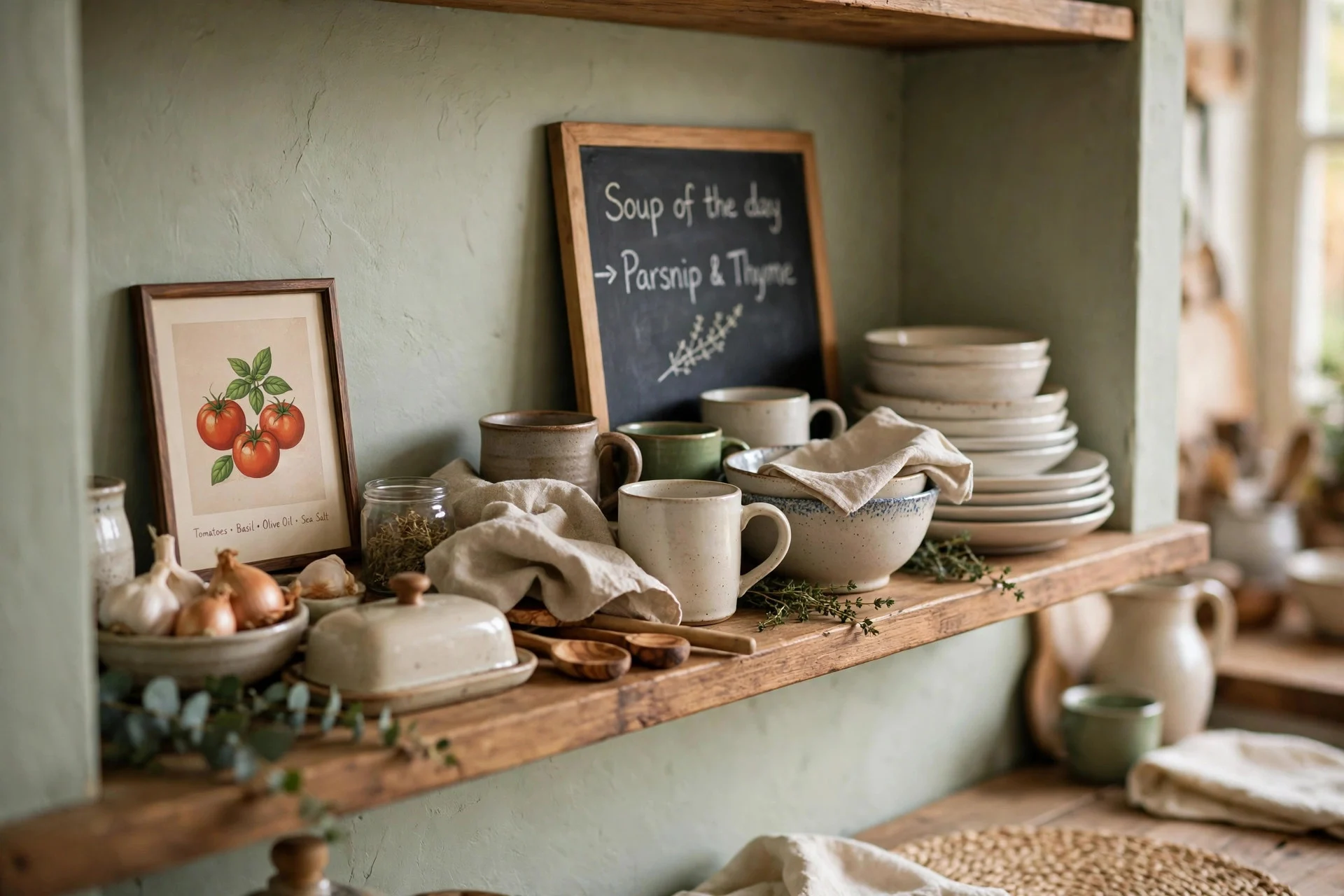
A small chalkboard or a framed print gives a shelf a focal point and a bit of personality without taking up much room. I lean a little chalkboard against the back of one shelf and change the message with the season — a recipe note, a shopping reminder, or just a line that makes me smile while I wait for the kettle. A framed print works the same way if chalk dust is not your thing; pick something simple, like a food illustration or a short quote, in a frame that matches your shelf wood. I learned to keep the frame small — anything bigger than a paperback starts to block the dishes behind it and turns the shelf into a picture gallery.
Try this: Lean one small framed print or chalkboard at the back of a shelf and keep it smaller than a paperback.
13. Spices in Matching Jars, Labelled Simply
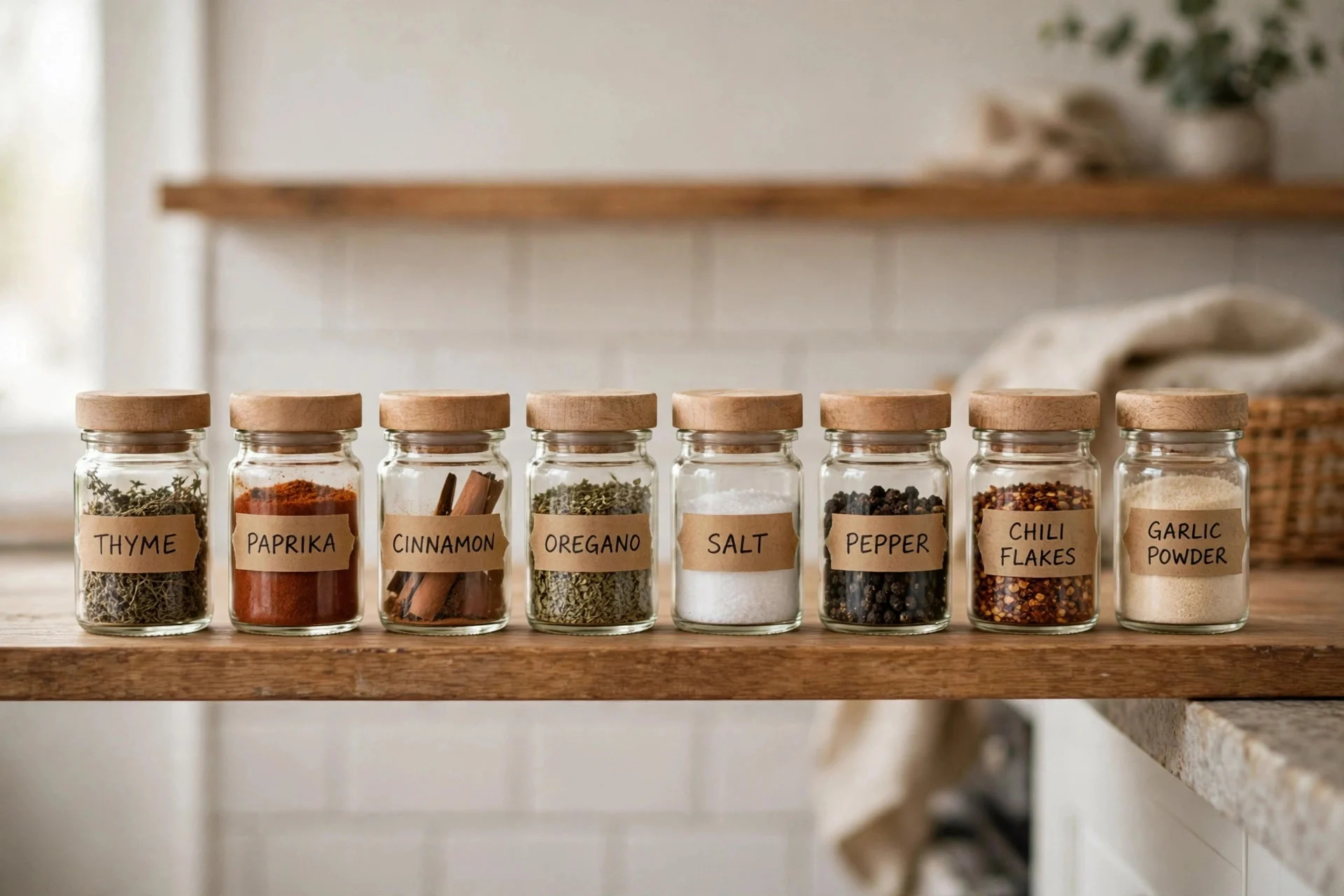
Spice jars are small, so they can look messy fast — unless they match. I moved all my spices into identical small glass jars with wooden lids, labelled in plain handwriting on the front, and lined them up in a single row on one shelf. Now I can find the paprika in two seconds instead of digging through a cupboard and knocking three jars over. The labels matter: I tried fancy printed ones once and they peeled off in the steam, so simple paper labels and a pen win. Keep the spices you use most at the front of the row and the rare ones at the back, and do not buy more jars than your shelf can hold in one neat line.
Try this: Decant spices into identical small jars, label them by hand, and line them up in one row, most-used at the front.
14. Seasonal Swaps That Keep Shelves Fresh
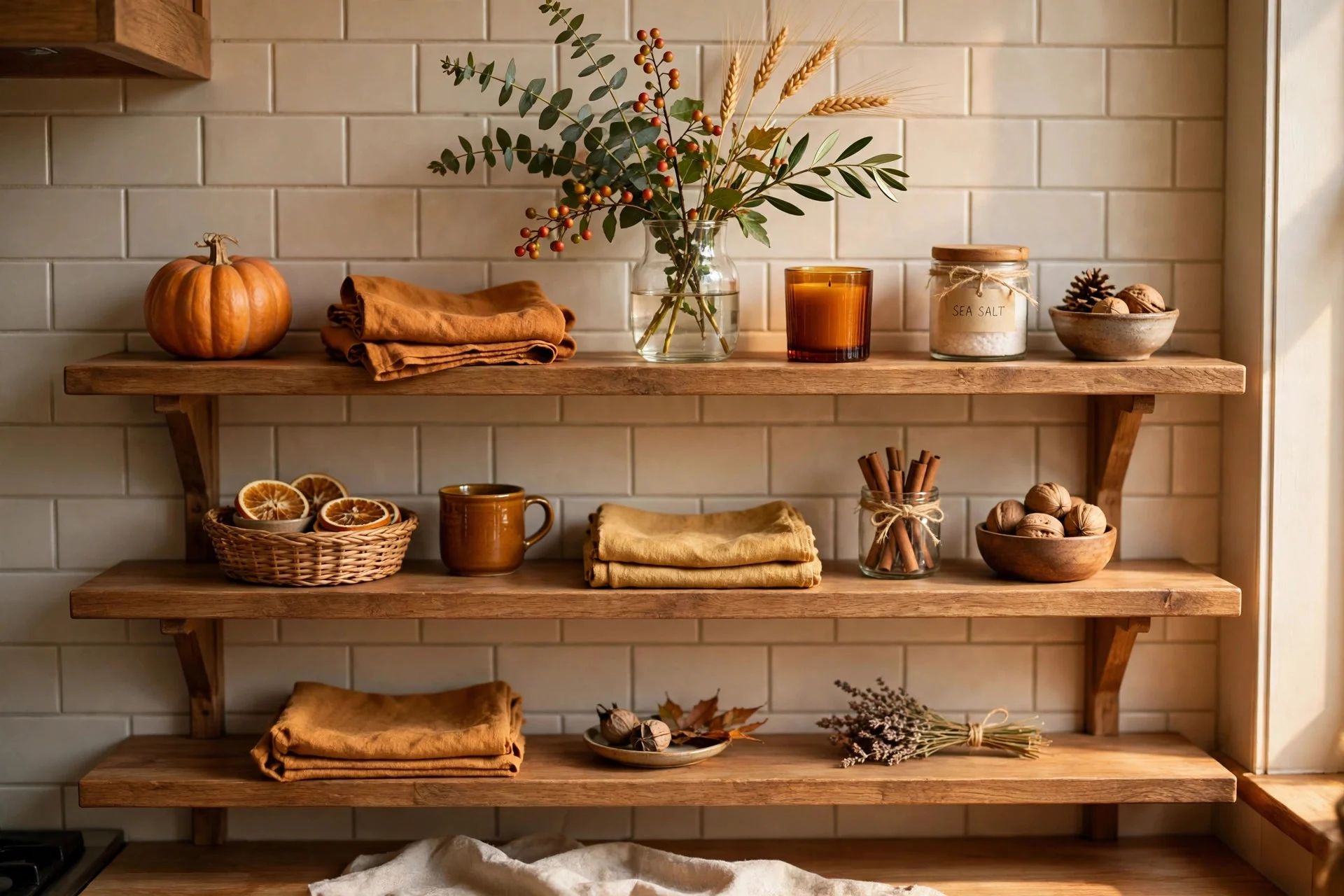
The cheapest way to keep open shelves interesting is to swap a few pieces with the seasons instead of redecorating the whole kitchen. I change just three things: the plant or stems, one small decorative piece, and the colour of a tea towel folded on the shelf. In autumn it is a small pumpkin and warm amber tones; at Christmas, a sprig of pine and a red mug; in spring, fresh tulips and a lighter linen. I used to swap everything at once and it took a whole afternoon — now it takes ten minutes and the kitchen still feels new. Store the off-season pieces in one basket so the swap is quick and nothing gets lost.
Try this: Swap just three small items each season — stems, one accent piece, and a folded tea towel — and store the rest in one basket.
Frequently Asked Questions
What should I put on open kitchen shelves?
Start with the things you use every day — plates, bowls, mugs, and glasses — then add one or two decorative pieces per shelf, like a plant, a vase, or a cookbook. If an item is not useful or does not make you smile, it does not belong on the shelf.
How do I keep open kitchen shelves from looking messy?
Leave empty space between groups, repeat one or two colours, and stick to a simple rule: no more than three groups of items per shelf. Put the messy bits in a basket or a cupboard, and edit the shelf every few months.
Do open kitchen shelves get dusty?
Yes, they do, but it is manageable if you use the dishes often — everyday plates get washed before dust settles. Give the shelves a quick wipe once a week and keep rarely used pieces in a cupboard instead.
Are open kitchen shelves practical for a small kitchen?
They can be, because they make a small kitchen feel bigger and keep everyday items within easy reach. Keep the shelves shallow, store heavy items low, and avoid overloading them — a small kitchen needs the breathing room even more.
Final Thoughts
Open shelving works best when it looks like a real kitchen, not a showroom. Start with one shelf, use the dishes and jars you already own, and add one idea at a time until the shelf feels like yours. If something does not work, move it — nothing here is permanent, and that is the whole point. A shelf you enjoy looking at every morning is a shelf that is doing its job.