
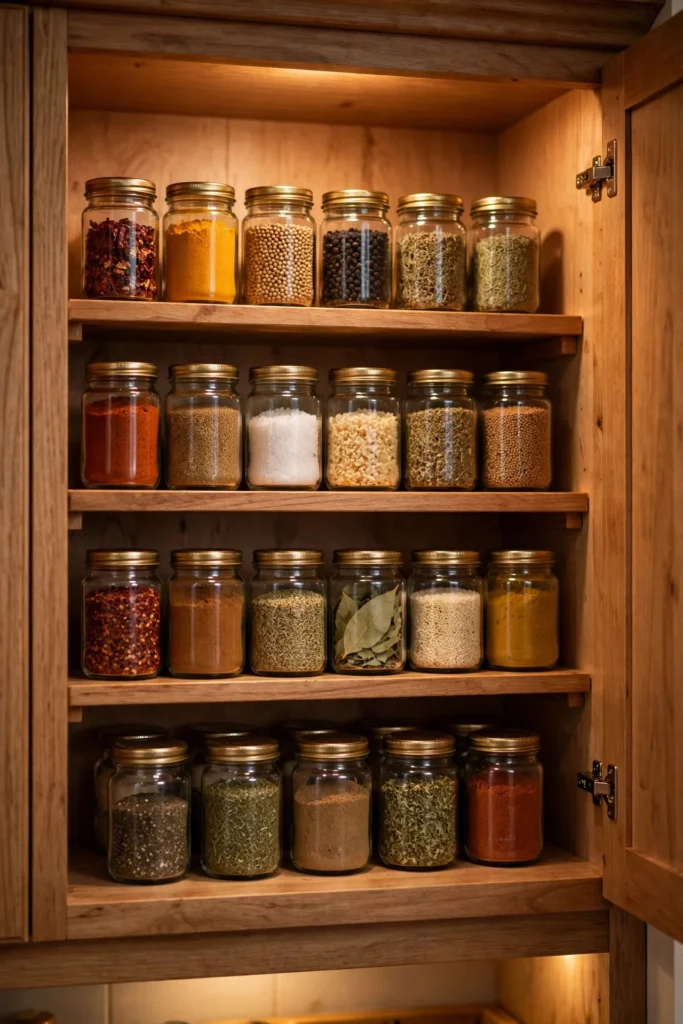
Every cook knows the moment: you’re mid-recipe, the pan is hot, and you’re digging through a cabinet of mismatched spice jars hunting for the paprika. Spices are small, they multiply, and they have an uncanny ability to hide the one you need behind eleven you’ll never use.
An organized spice collection isn’t about aesthetics — though it looks great — it’s about cooking faster and wasting less. These 14 spice rack organization ideas work for drawers, cabinets, pantries, and walls — from a dozen everyday spices to a serious eighty-jar collection.
1. Transfer Spices to Uniform Jars
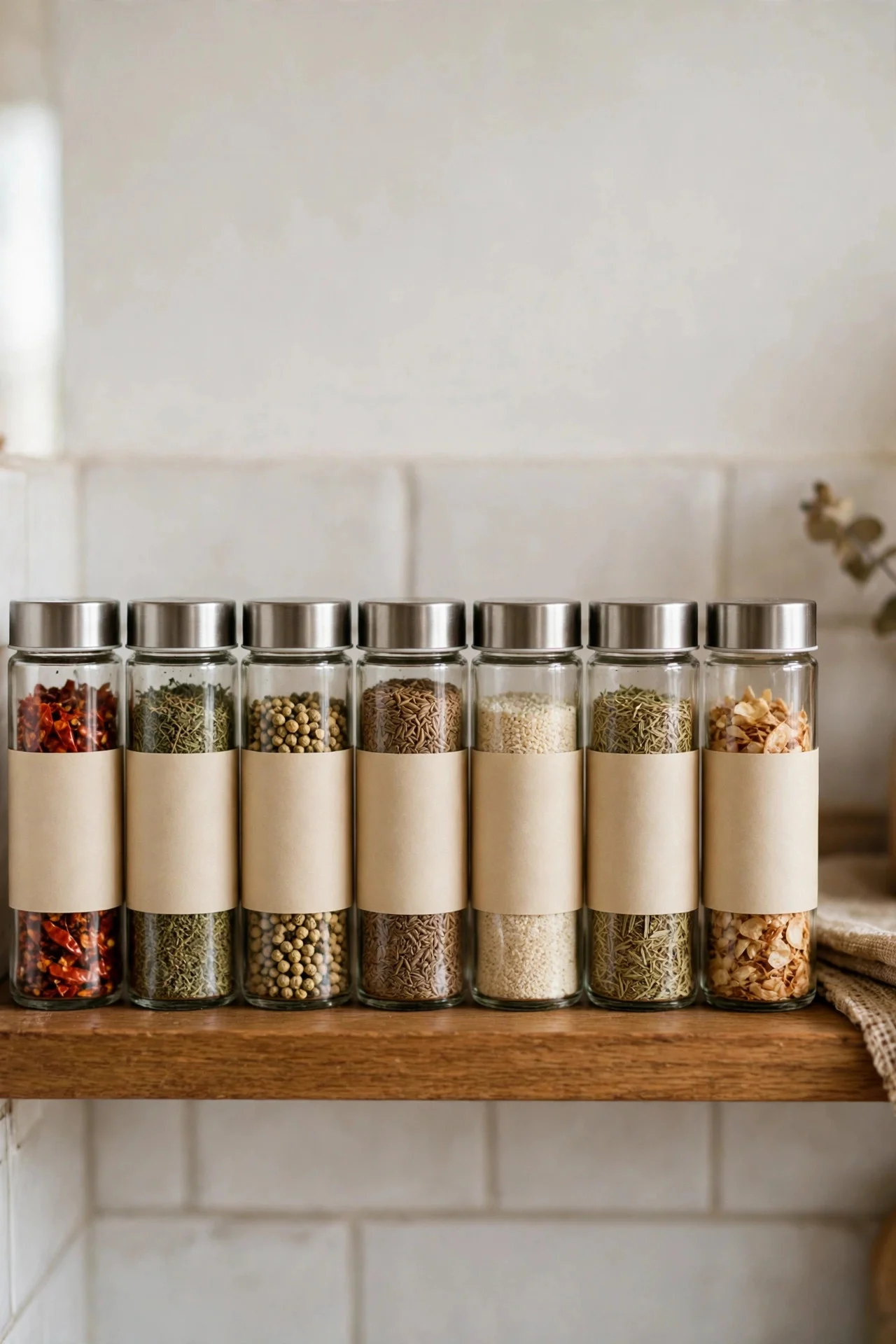
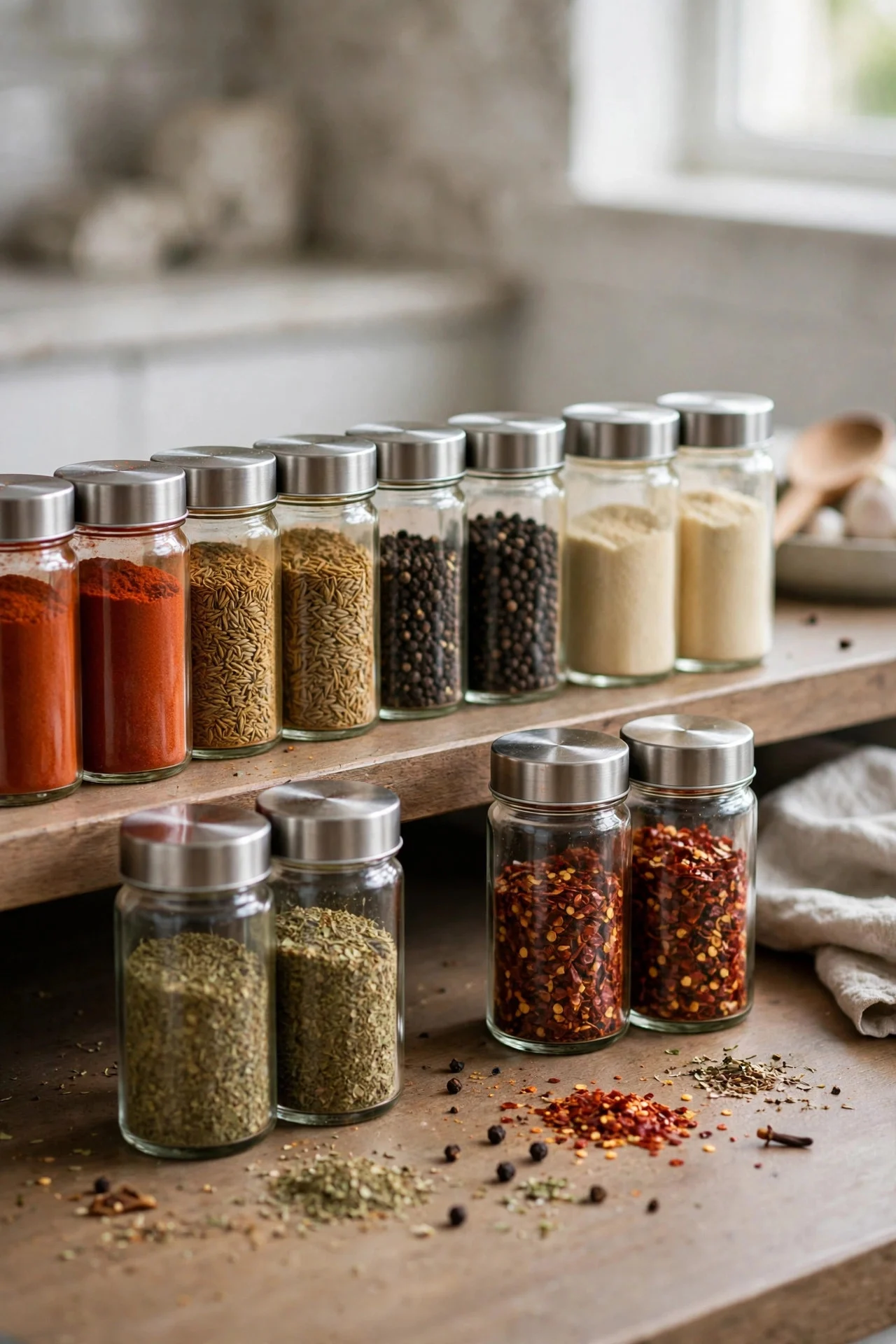
Mismatched store packaging is the root of spice chaos — different heights, shapes, and labels that face every direction. Decanting into uniform 4-ounce glass jars with matching lids makes every spice equally visible and stackable, and the shelf instantly calms down.
A set of 24 jars runs about $25–30. Label the lids with a chalk pen or printed labels so you can identify spices from above too — essential if they live in a drawer.
Try this: Keep a small funnel in the spice zone — decanting without one is how half a jar of cumin ends up on the counter.
2. Build a Tiered Shelf Inside the Cabinet
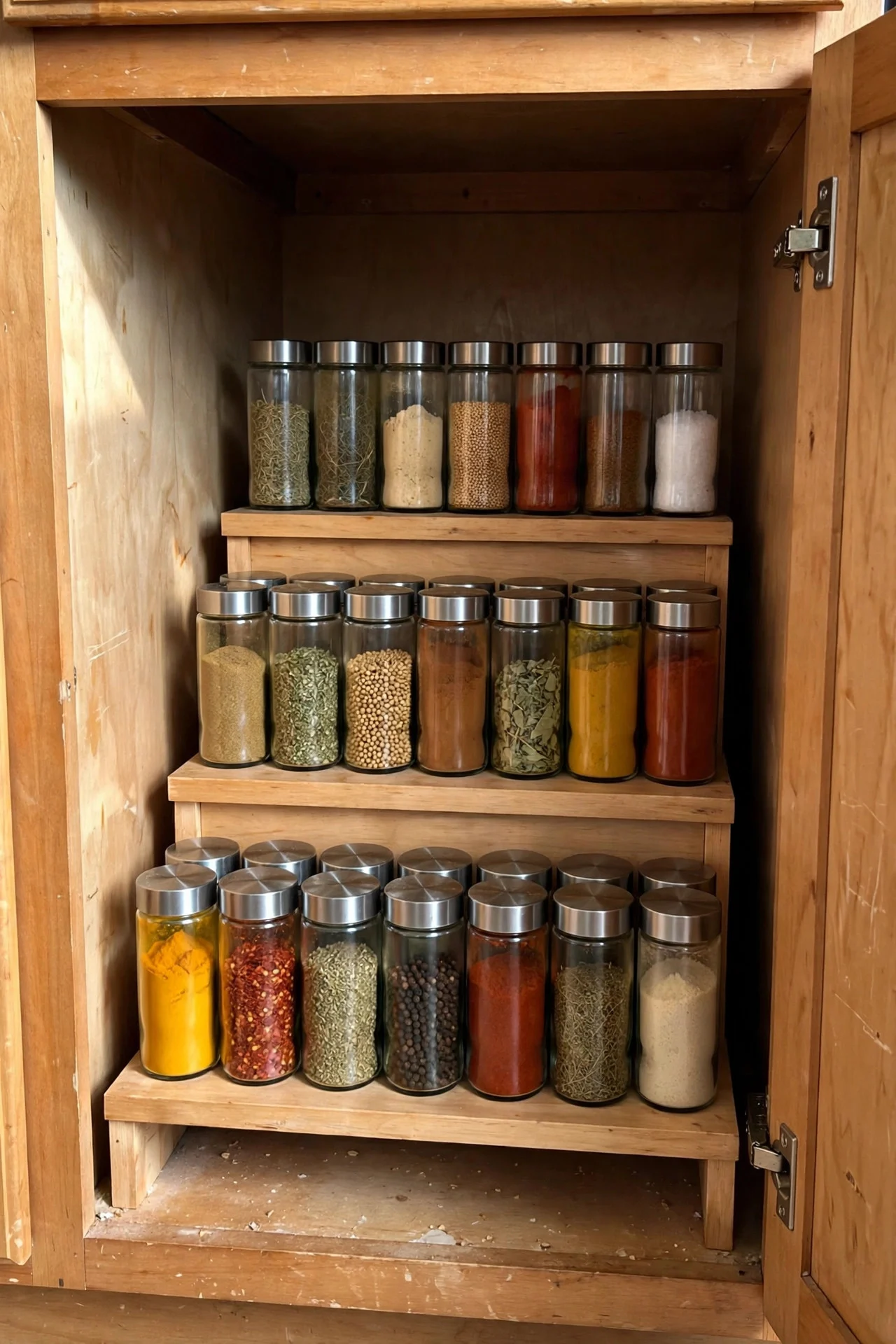
The classic problem: spices lined up single-file, so you can only see the front row. A tiered step shelf (about $12–15) lifts the back rows up like stadium seating, making every label visible at a glance.
Measure your cabinet depth first — most tiered shelves come in 8 or 10-inch depths. Three tiers fits standard spice jars perfectly.
Try this: Sort tiers by use frequency: daily spices (salt, pepper, garlic) front and center, baking spices on the top tier.
3. Store Spices in a Dedicated Drawer
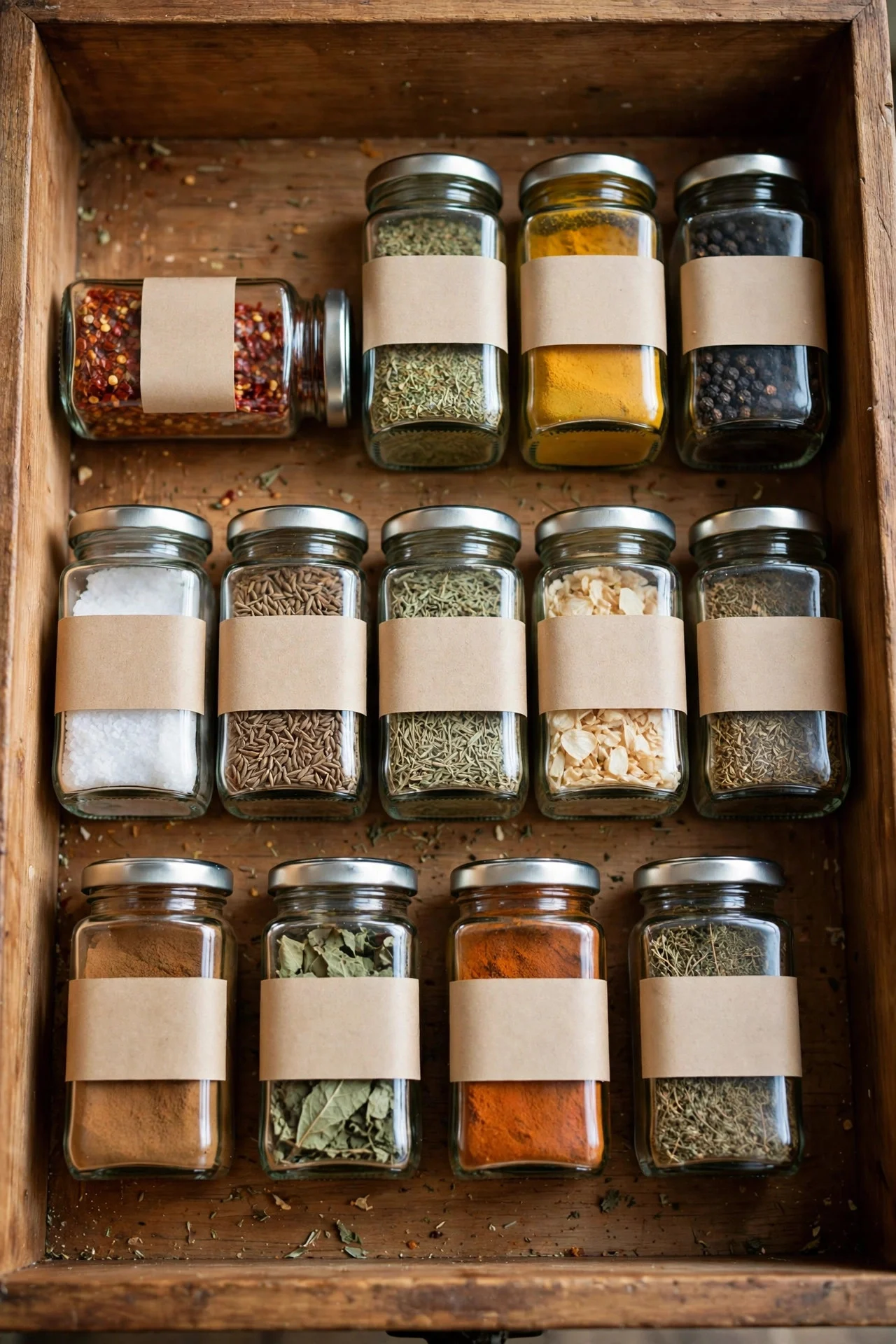
If you have a spare drawer near the stove, it’s the best spice home there is. Lay jars on their sides in rows inside the drawer, labels facing up, and you get a full inventory view every time you open it — no digging, no stacking.
Use a drawer insert or simple dividers to stop jars rolling. One standard 24-inch drawer holds 30–40 jars comfortably.
Try this: Put labels on the jar lids AND the sides — lids for the drawer view, sides for when a jar migrates to the counter.
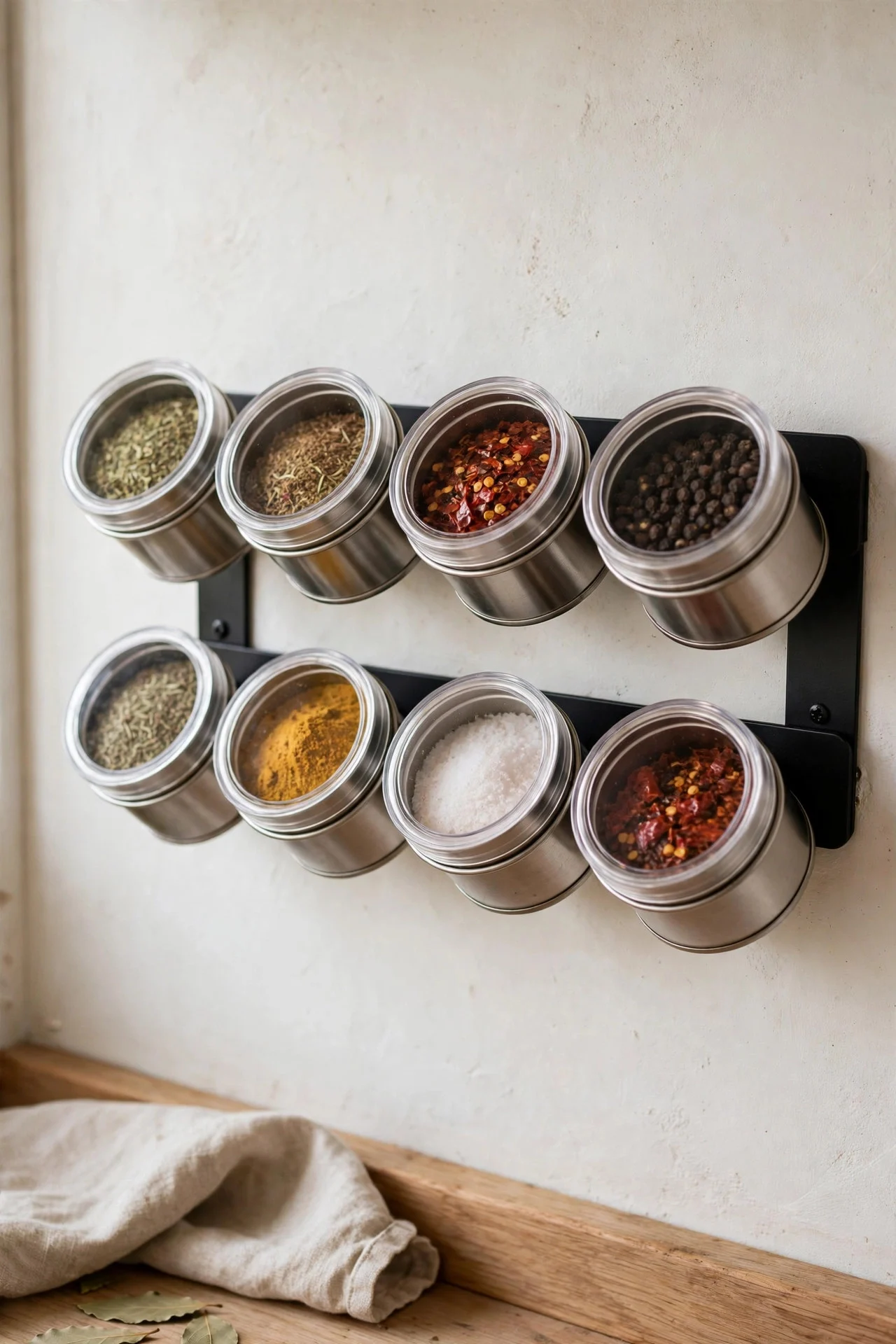
4. Mount a Magnetic Strip on the Wall
Small metal tins with clear lids stick to a magnetic knife-style strip mounted on the wall or inside a cabinet door. It turns dead wall space into spice storage and looks genuinely cool — like a restaurant kitchen.
A 16-inch magnetic strip holds about 12 tins and costs around $15. Mount it at eye level near the stove for grab-and-cook convenience.
Try this: Keep only your top dozen most-used spices on the strip; the rest live in the drawer or cabinet — the wall isn’t for the full collection.
5. Use a Lazy Susan in Deep Cabinets
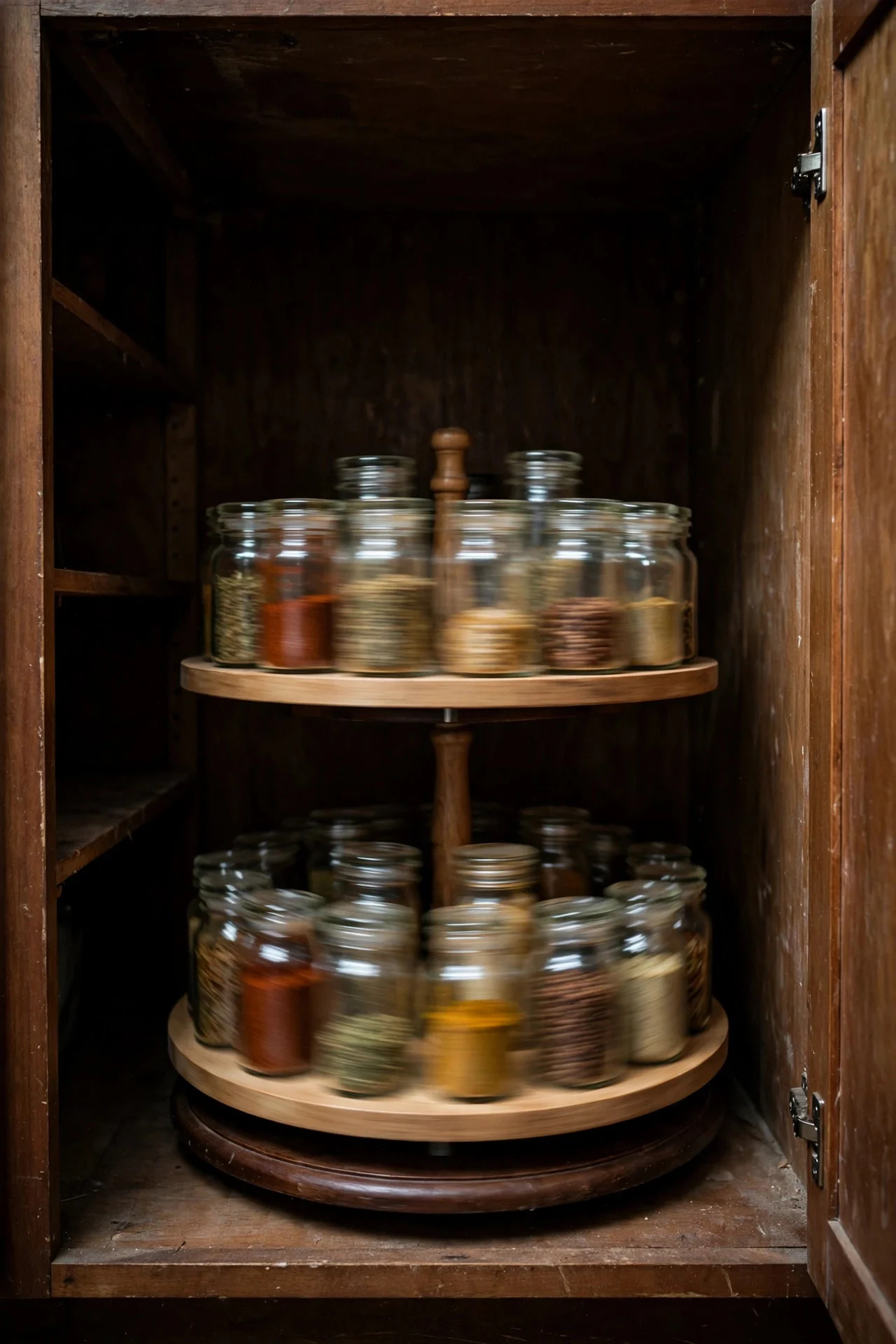
Deep corner cabinets are spice black holes. A two-tier lazy Susan ($15–20) spins the back row to the front, so nothing hides. It works for oils and vinegars too, which share the same deep-cabinet problem.
Choose one with a raised lip on each tier so jars don’t fly off when you spin. Measure the cabinet’s diagonal clearance — the turntable has to fit through the door opening.
Try this: Put tall bottles in the center and short jars around the edge — the height difference keeps everything visible while spinning.
6. Hang a Door-Mounted Spice Rack
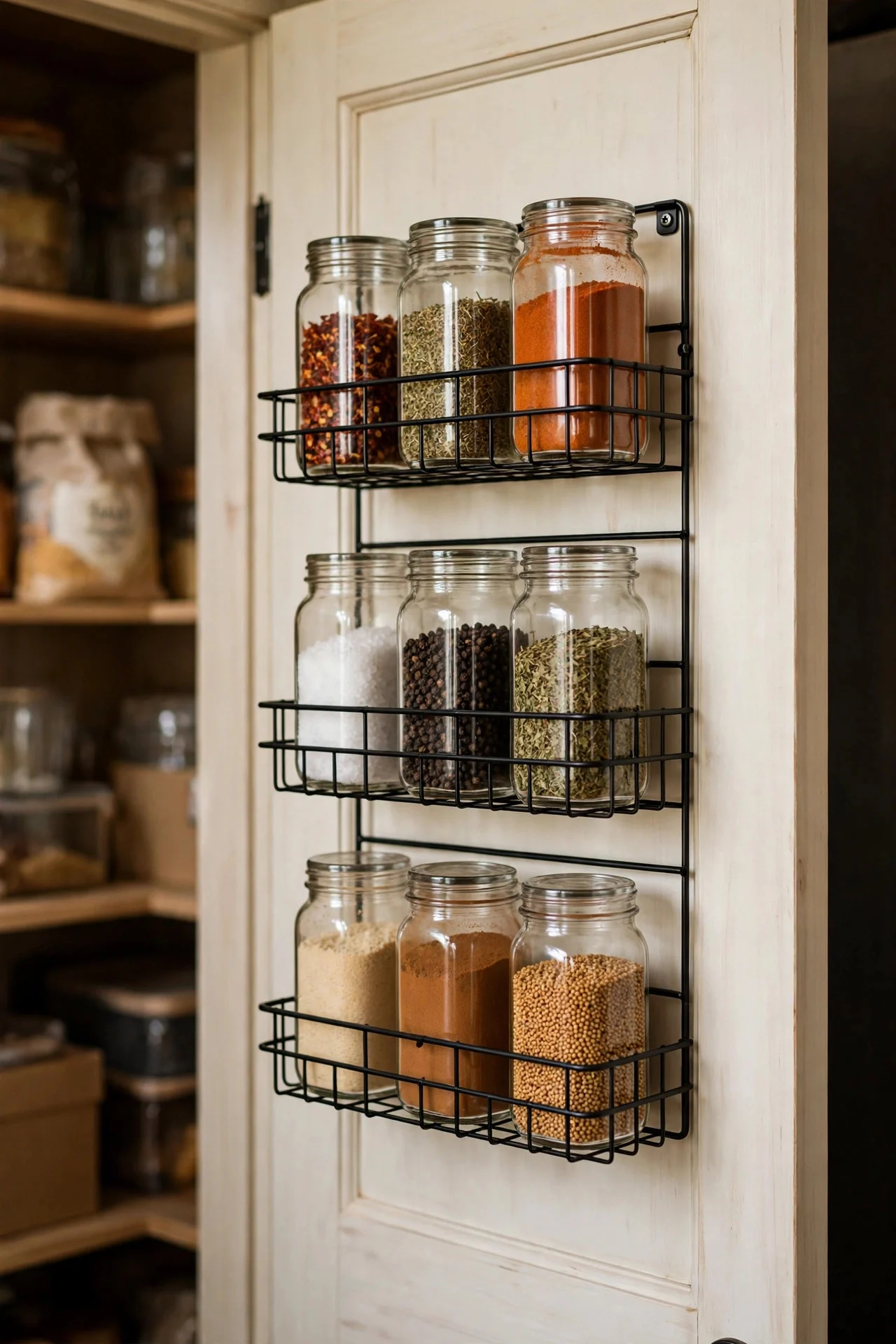
The inside of a pantry or cabinet door is wasted space in most kitchens. A door-mounted wire rack holds 20+ jars, costs about $15, and installs with two screws — no cabinet shelf space sacrificed at all.
Check door clearance before buying: loaded racks need about 4 inches of depth, and the door has to close over whatever’s on the shelf behind it.
Try this: Use the door rack for baking spices if your main rack is by the stove — split the collection by cooking zone.
7. Alphabetize (Yes, Really)
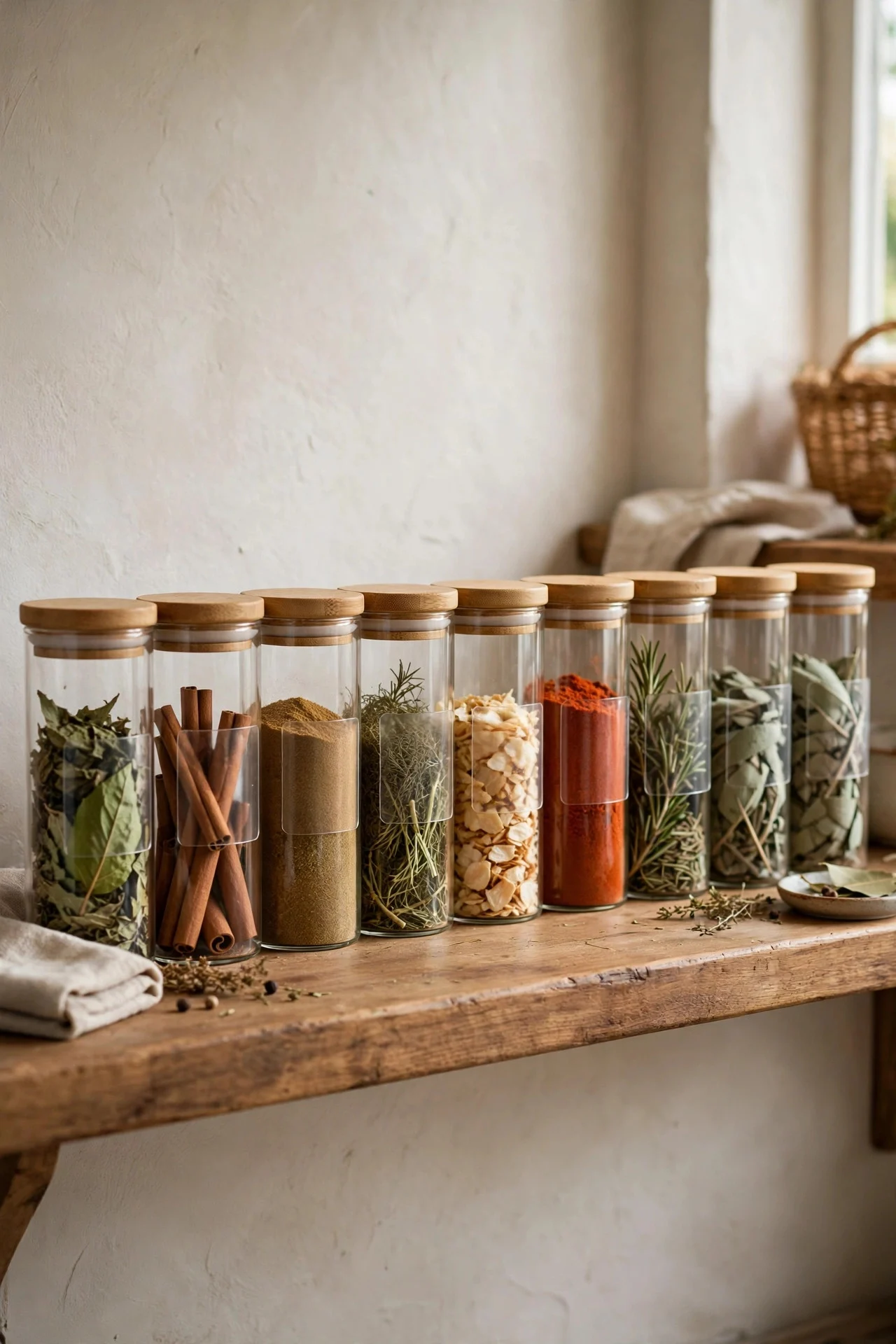
It sounds obsessive until you have 40 spices and need the marjoram. Alphabetical order is the only sorting system that survives long-term, because you never have to remember which category you filed something under. Is smoked paprika with “paprika” or “smoked”?
Label jars clearly and line them up A to Z. It takes one afternoon and pays off every single time you cook.
Try this: When you buy a new spice, it gets filed immediately — the system only works if new arrivals don’t pile up on the counter.
8. Create a Spice Refill Station in the Pantry
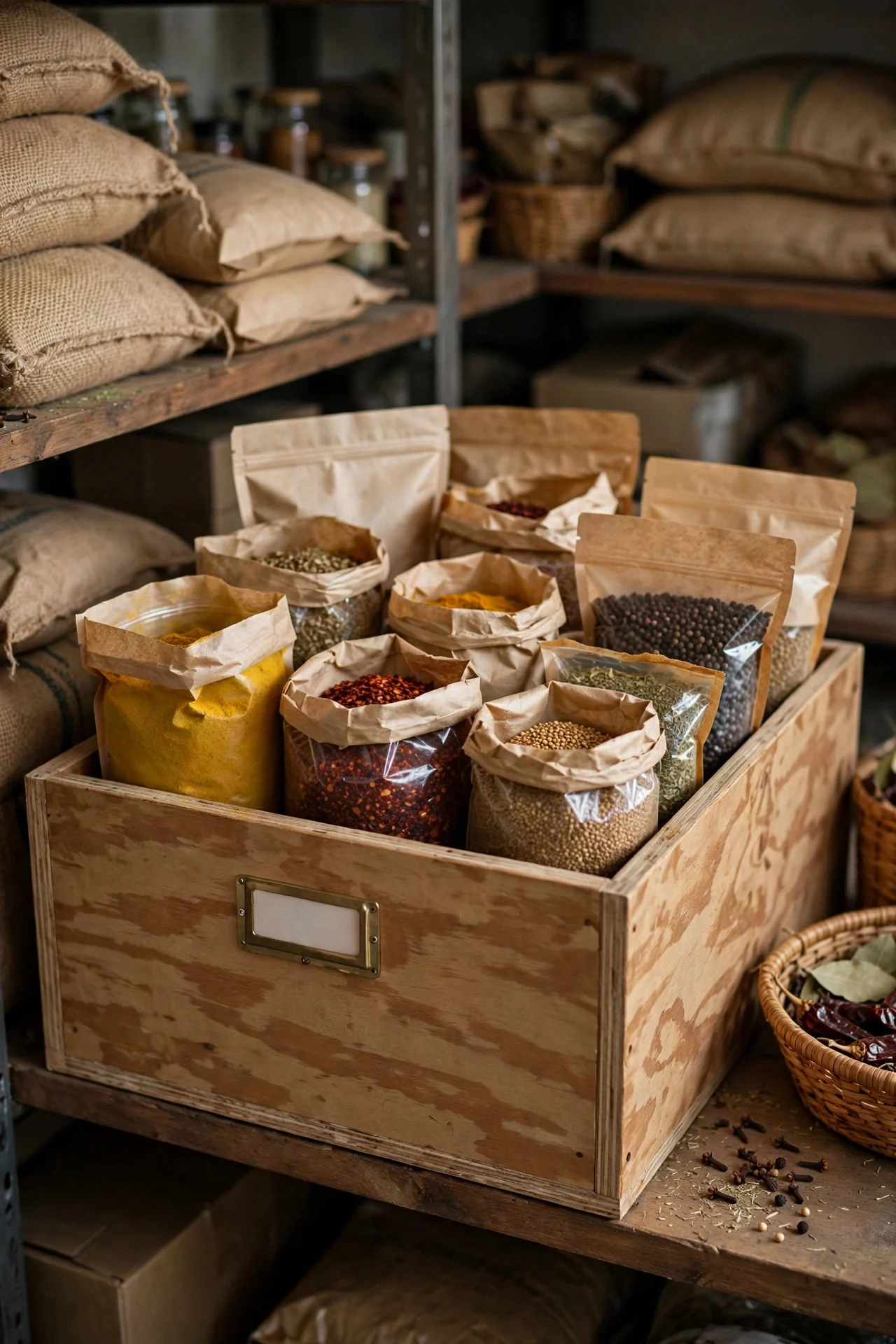
Buying bulk bags and refilling small jars is cheaper and takes less space than storing full-size store bottles. Keep the bulk bags in a labeled bin in the pantry — your “spice warehouse” — and refill the working jars as they run low.
One bin holds the overflow for 20+ spices. Mark the purchase date on each bag with a marker so you know what’s getting old.
Try this: Refill day is also expiration-check day — ground spices lose potency after about a year.
9. Group Spices by Cuisine in Small Baskets
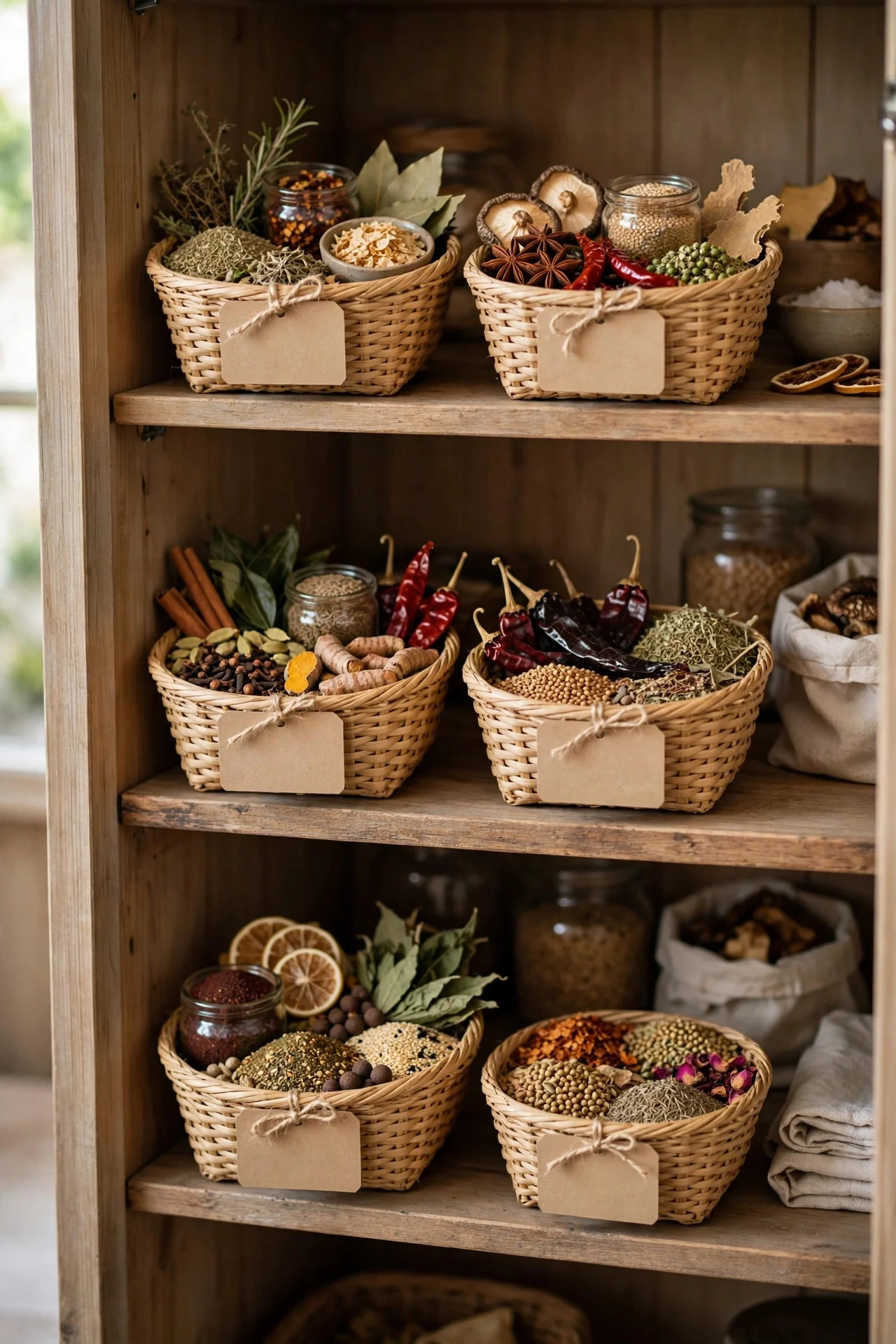
If alphabetical feels too clinical, group by cuisine: an “Italian” basket (oregano, basil, red pepper flakes), a “baking” basket (cinnamon, nutmeg, cloves), a “Mexican” basket. Grab one basket instead of six jars.
Small open baskets or bins, about 8 inches wide, fit on a pantry shelf and cost a few dollars each. Label each basket with its cuisine.
Try this: Keep salt, pepper, and olive oil OUT of the baskets — they belong at the stove permanently.
10. Use a Pull-Down Shelf for High Cabinets
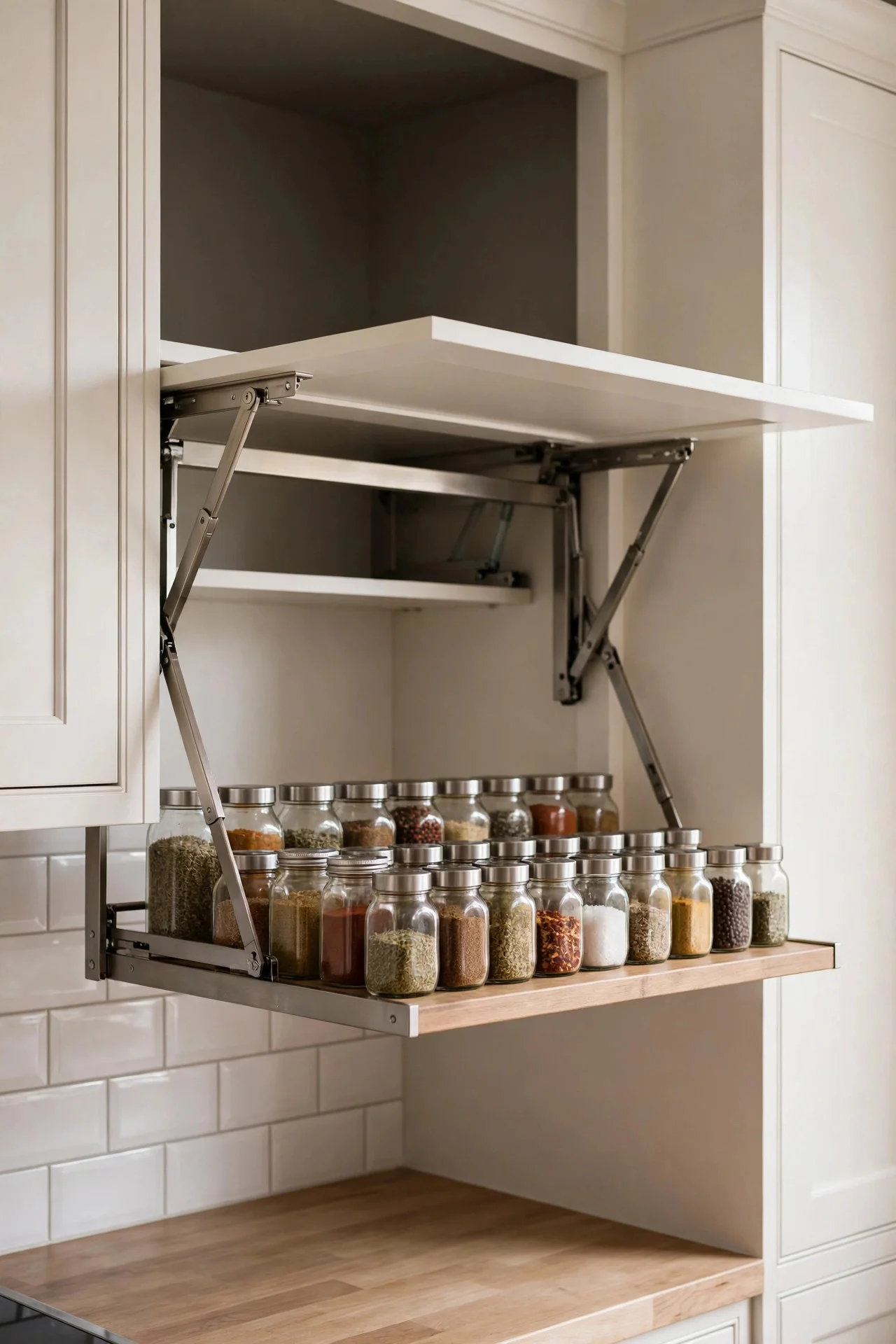
Spices stranded in a cabinet you can’t reach get forgotten. A pull-down shelf insert ($30–50) brings the top shelf down to you with a handle — no step stool, no climbing on counters.
It’s a bigger investment than most ideas here, but it’s the fix for kitchens where the only free cabinet is the high one. Installation takes about 20 minutes with a screwdriver.
Try this: Reserve the pull-down for lightweight items only — heavy cans will wear out the mechanism.
11. Label Everything With Expiration Dates
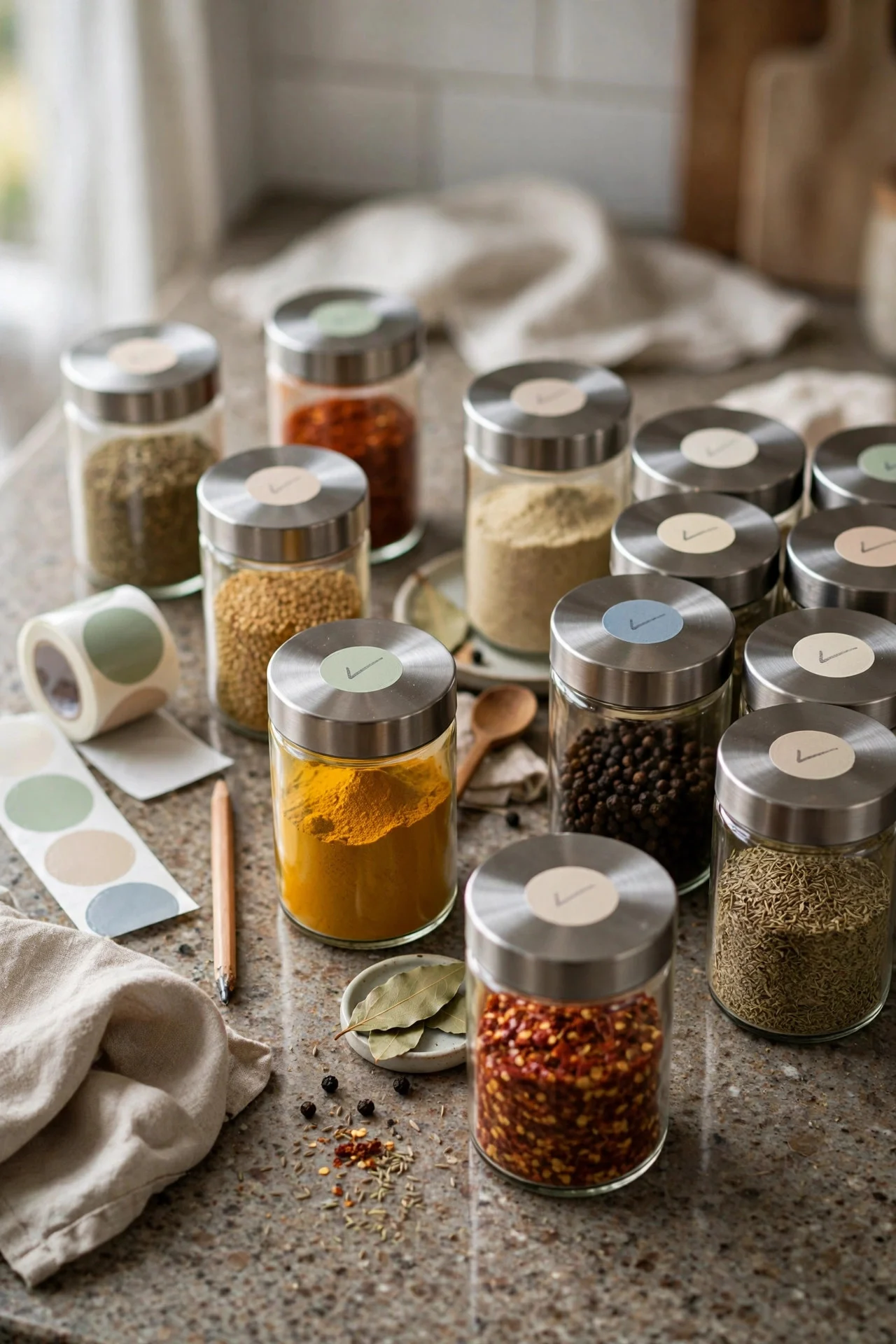
That jar of thyme from 2019 isn’t seasoning anything anymore. When you decant, write the month and year on the label. Ground spices fade after 6–12 months; whole spices last 2–3 years.
Once a year, pull everything out and check dates. Toss what expired, and note what you never used — that’s your “don’t rebuy” list.
Try this: The sniff test works too — if a spice doesn’t smell like itself when you open the jar, it’s done.
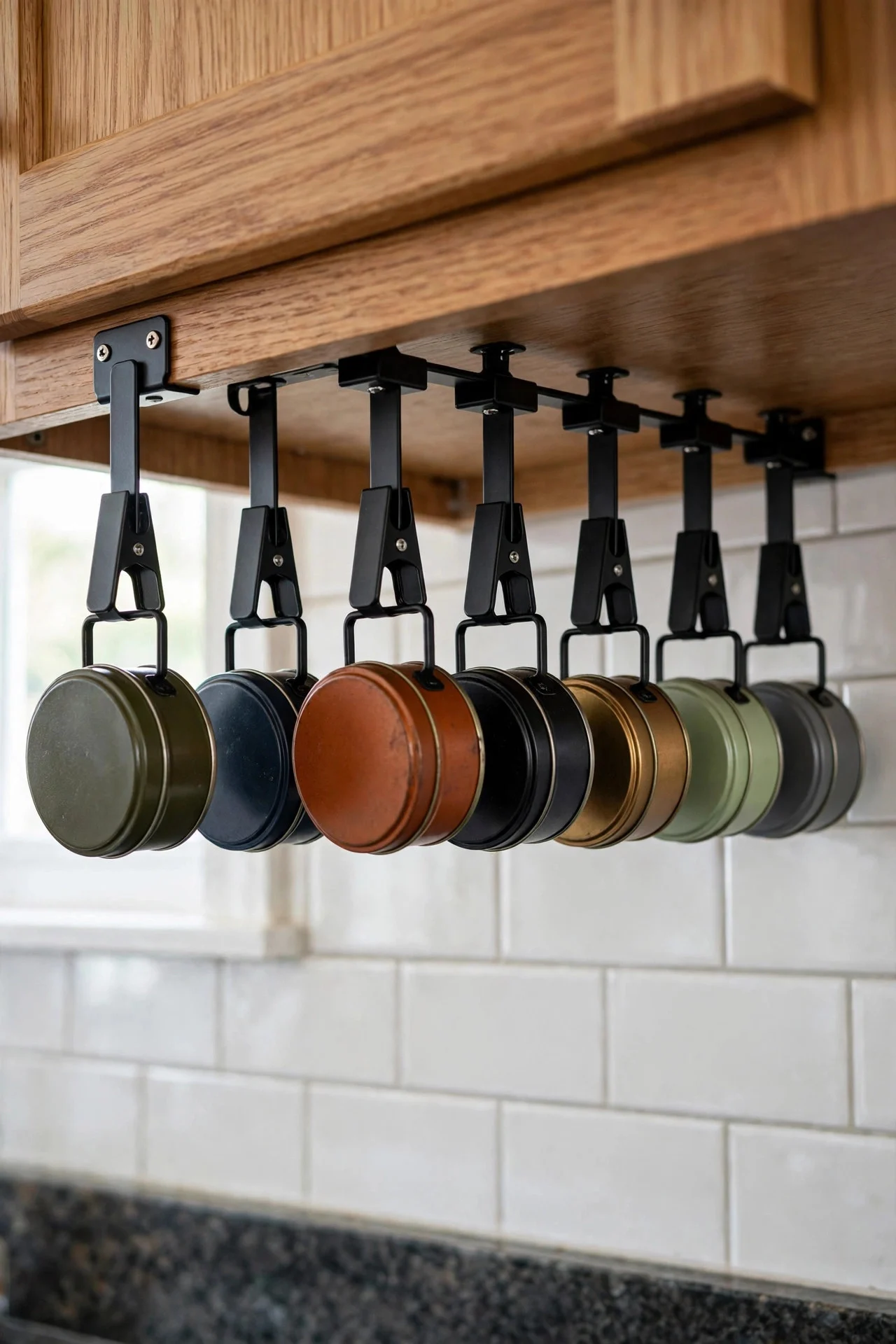
12. Mount Individual Clips Under a Cabinet
Small magnetic or clip holders mounted under an upper cabinet keep spice tins suspended upside-down, freeing the entire shelf below. It’s a clever trick for tiny kitchens where every shelf inch matters.
The tins hang at eye level and you read the lids from below. A set of 12 magnetic tins runs about $20.
Try this: This works best for the lightweight everyday spices — heavier tins can work loose over time.
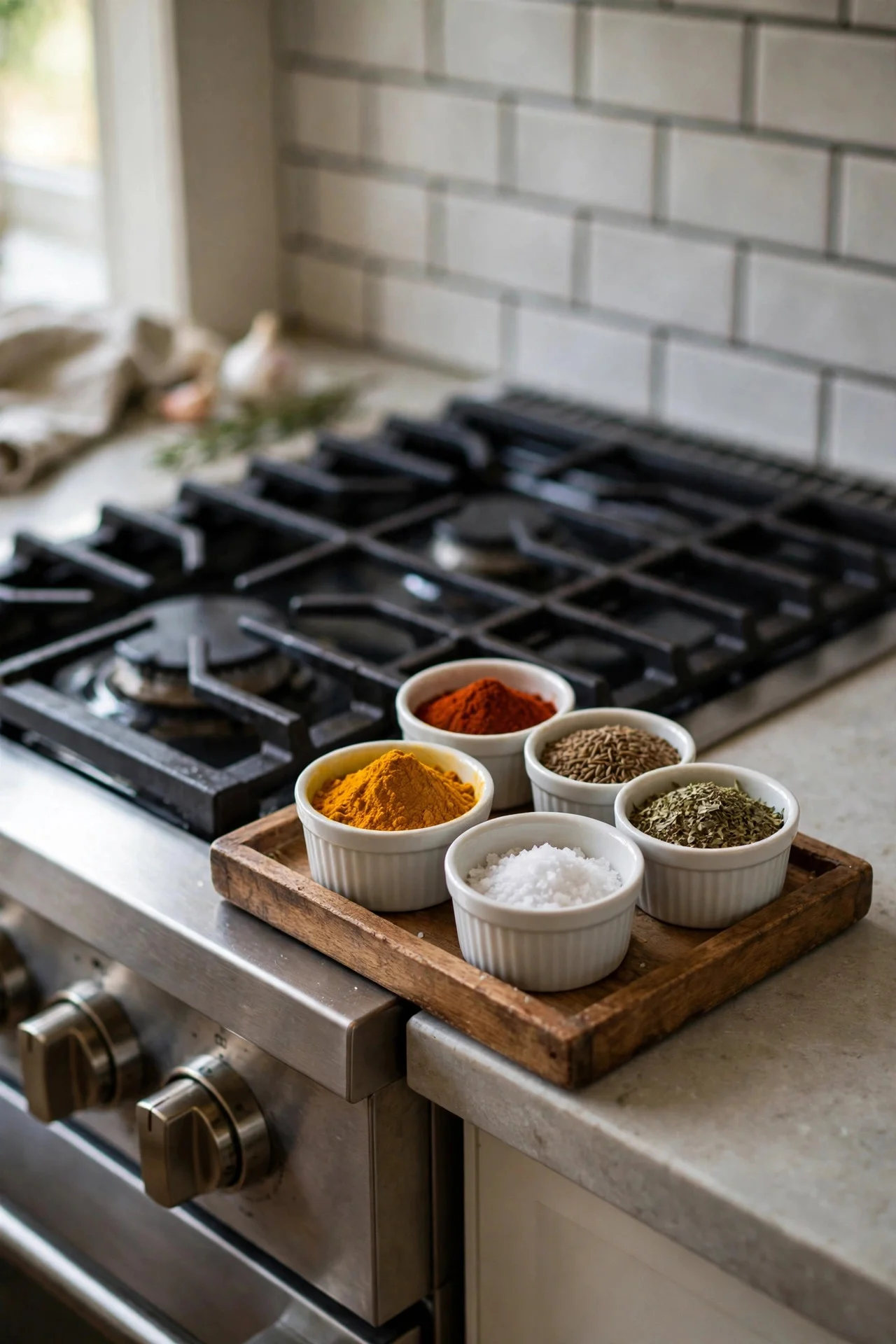
13. Keep a “Tonight’s Spices” Tray by the Stove
Instead of opening the cabinet six times per recipe, pull what you need onto a small tray or in a ramekin set before you start cooking. Chefs call it mise en place; at home it just means you’re not juggling jars over a hot pan.
A small wooden tray lives by the stove permanently. Spices go back to their home after dinner — the tray never becomes storage, just a staging area.
Try this: Measure spices into the tray before the heat goes on — mid-recipe measuring is where the chaos starts.
14. Audit and Purge the Duplicates
Most disorganized spice collections are actually overstuffed collections. Pull everything out and you’ll find three half-jars of cumin, two oreganos, and a mystery blend from 2021. Consolidate duplicates, toss the dead ones, and donate unopened extras.
Do the full purge once a year — it takes about 30 minutes and usually removes a third of the collection. An organized small collection beats a chaotic big one every time.
Try this: Keep a running “spice shopping list” on the fridge — buy only what’s on it, and duplicates stop appearing.
Frequently Asked Questions
What’s the best way to organize a lot of spices in a small kitchen?
Go vertical and use doors: a door-mounted rack plus a drawer of uniform jars covers 50+ spices without touching a single shelf. Magnetic strips and under-cabinet clips add even more capacity to dead space.
How long do spices actually last?
Ground spices stay potent 6–12 months; whole spices (peppercorns, cloves) last 2–3 years. Store them away from heat and light — not above the stove — and label decanted jars with the date.
Should I alphabetize my spices?
If you own more than 25, yes. It’s the only system that doesn’t require remembering your own categories, and it makes new spices self-filing. For smaller collections, grouping by cuisine works fine.
Are uniform spice jars worth the effort?
Absolutely. Matching jars make every label readable, stack and fit predictably, and turn a chaotic shelf into a calm one. A $25 set of 24 jars is one of the best-value kitchen upgrades there is.
Final Thoughts
Spice organization pays you back every time you cook — faster meals, less waste, no more buying your third jar of cumin. You don’t need all fourteen ideas; pick the storage style that matches your kitchen (drawer, door, wall, or tiered shelf), decant into uniform jars, and label with dates. The rest is just keeping the system honest with a yearly purge.