
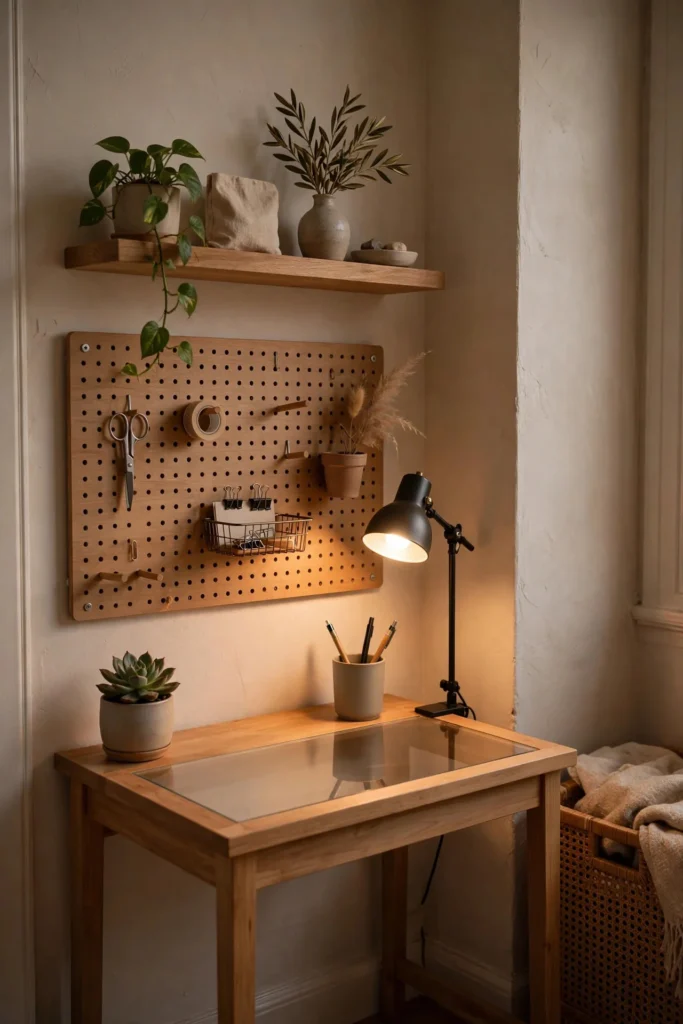
A small desk in a small space has no margin for error. When your workspace is a corner of the bedroom, a closet nook, or half a dining table, every stray pen and paper stack is right in your eyeline — and it quietly drains your focus all day long.
The trick isn’t minimalism for its own sake; it’s giving everything a tiny, specific home. These 19 desk organization ideas are built for tight quarters: each one saves surface space, most cost under $20, and none of them require a bigger desk.
1. Mount a Floating Shelf Above the Desk
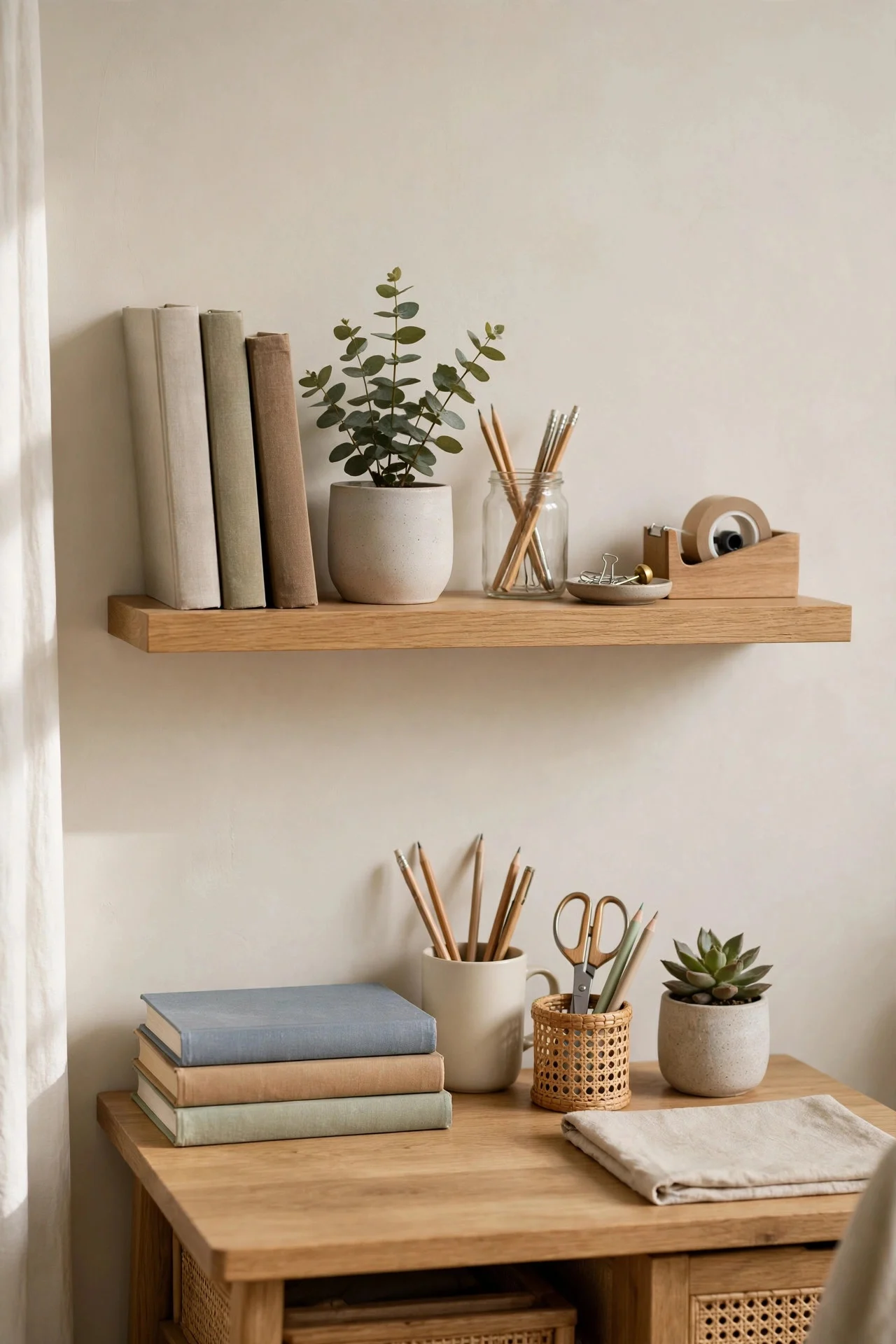
The wall above your desk is free real estate. A 24-inch floating shelf holds books, supplies, and a small plant, pulling clutter off the work surface and into vertical space. One shelf at eye level is usually enough — two starts to feel like a wall of stuff.
Mount it 18–20 inches above the desktop so a monitor fits underneath. A basic shelf and brackets cost about $15–20 and take 20 minutes to install.
Try this: Keep only reference items on the shelf — supplies you use daily belong on the desk itself, not a reach away.
2. Corral Cables With an Under-Desk Tray
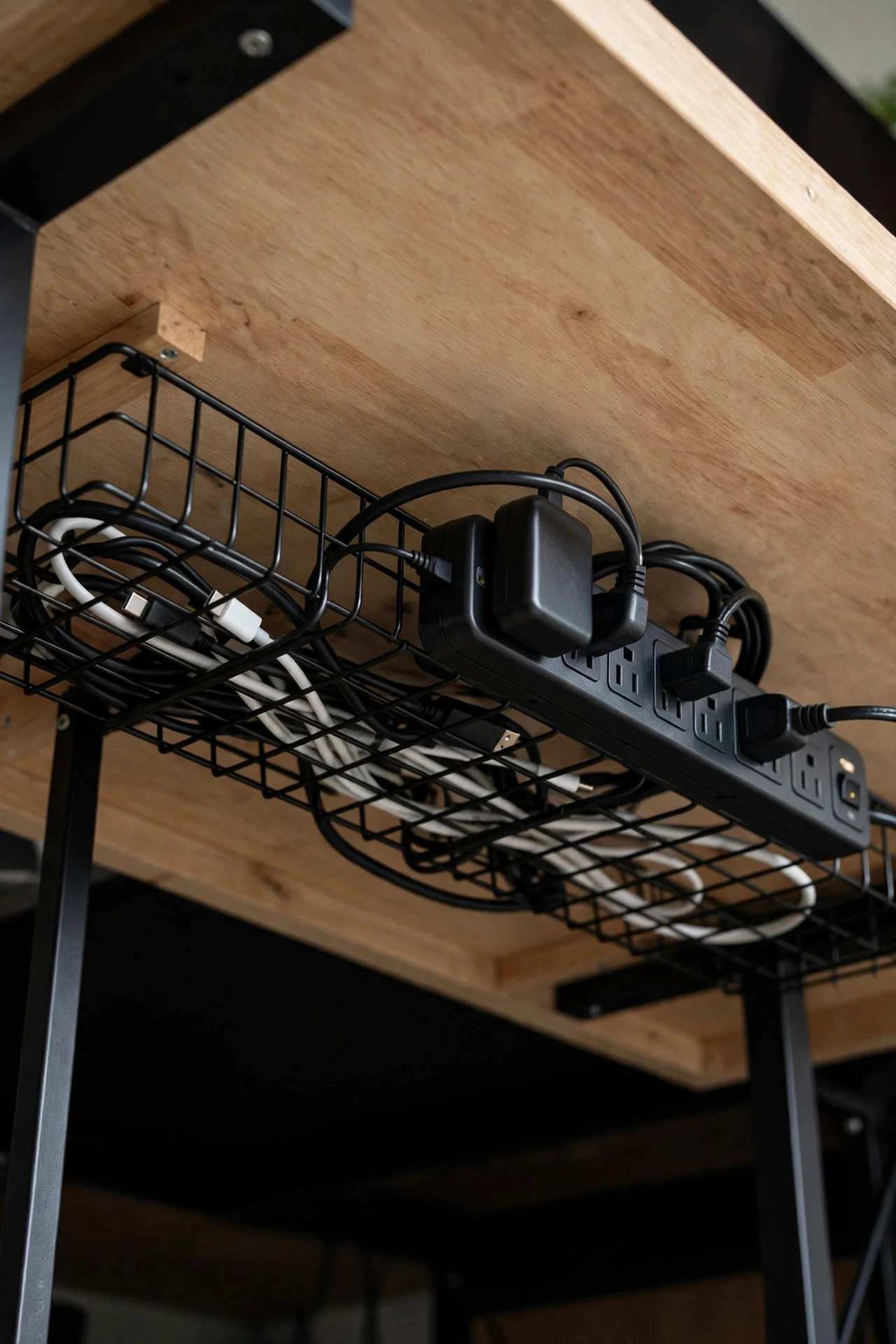
Cables are the invisible mess of small desks. A $12 under-desk cable tray screws beneath the desktop and holds the power strip, chargers, and excess cord length in one hidden channel — the floor and desk back edge stay clean.
Bundle cables with reusable velcro ties before they go in the tray. Label each charger with a piece of tape so you’re never unplugging the wrong thing.
Try this: Run one power strip in the tray and plug everything into it — one cable to the wall, that’s the whole visible footprint.
3. Use a Monitor Riser With Storage
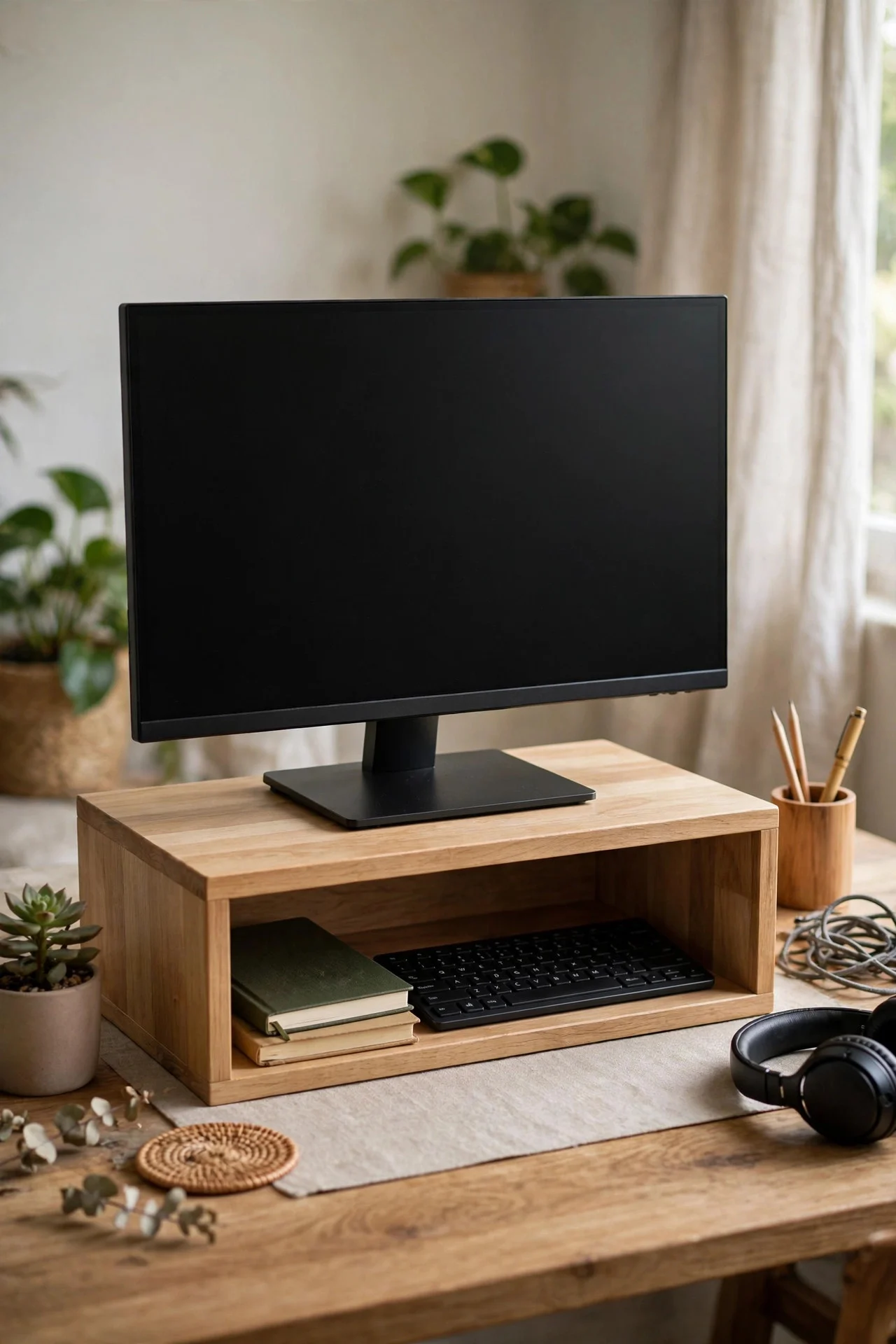
A monitor riser lifts your screen to eye level (good for your neck) and creates a shallow storage zone underneath for the keyboard, notebooks, or a slim drawer unit. When you’re done working, the keyboard slides away and the desk is clear.
Wooden risers run $25–40; make sure yours is wide enough for your monitor base with a few inches to spare. The storage space underneath is about 4 inches tall — perfect for flat items.
Try this: If you use a laptop, a riser plus an external keyboard gives you the same ergonomic win and the same hidden storage.
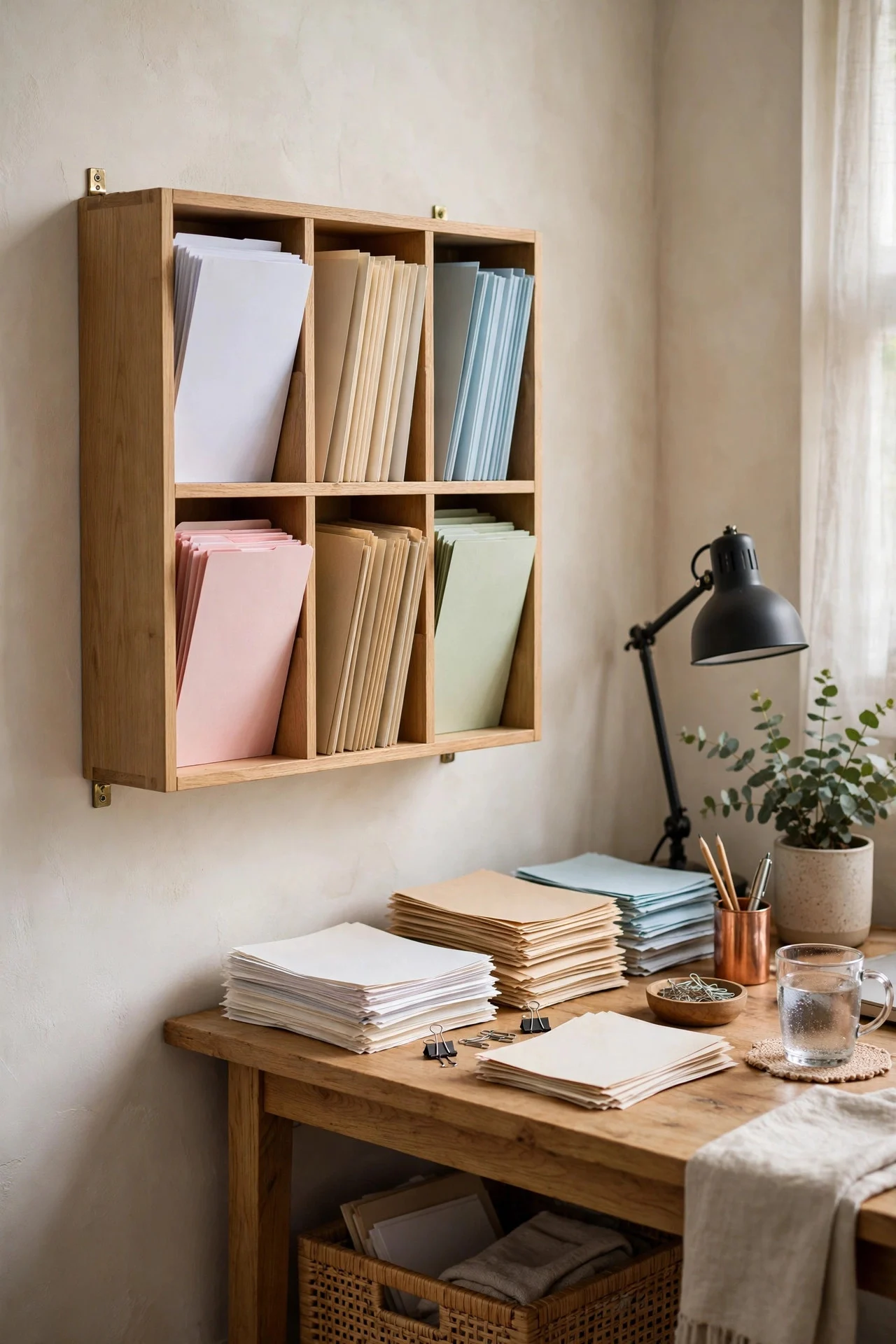
4. Sort Papers in a Wall-Mounted File Sorter
Paper piles are desk killers. A wall-mounted file sorter ($15) with 3–5 slots — inbox, action, bills, filing — gets paper off the desk and into a visible vertical system. Mount it beside the desk at arm’s reach.
Process the inbox slot weekly. Paper that sits longer than a week isn’t a system, it’s a new pile with better posture.
Try this: Photograph or scan anything you might need digitally, then shred the original — half your paper doesn’t need to exist physically.
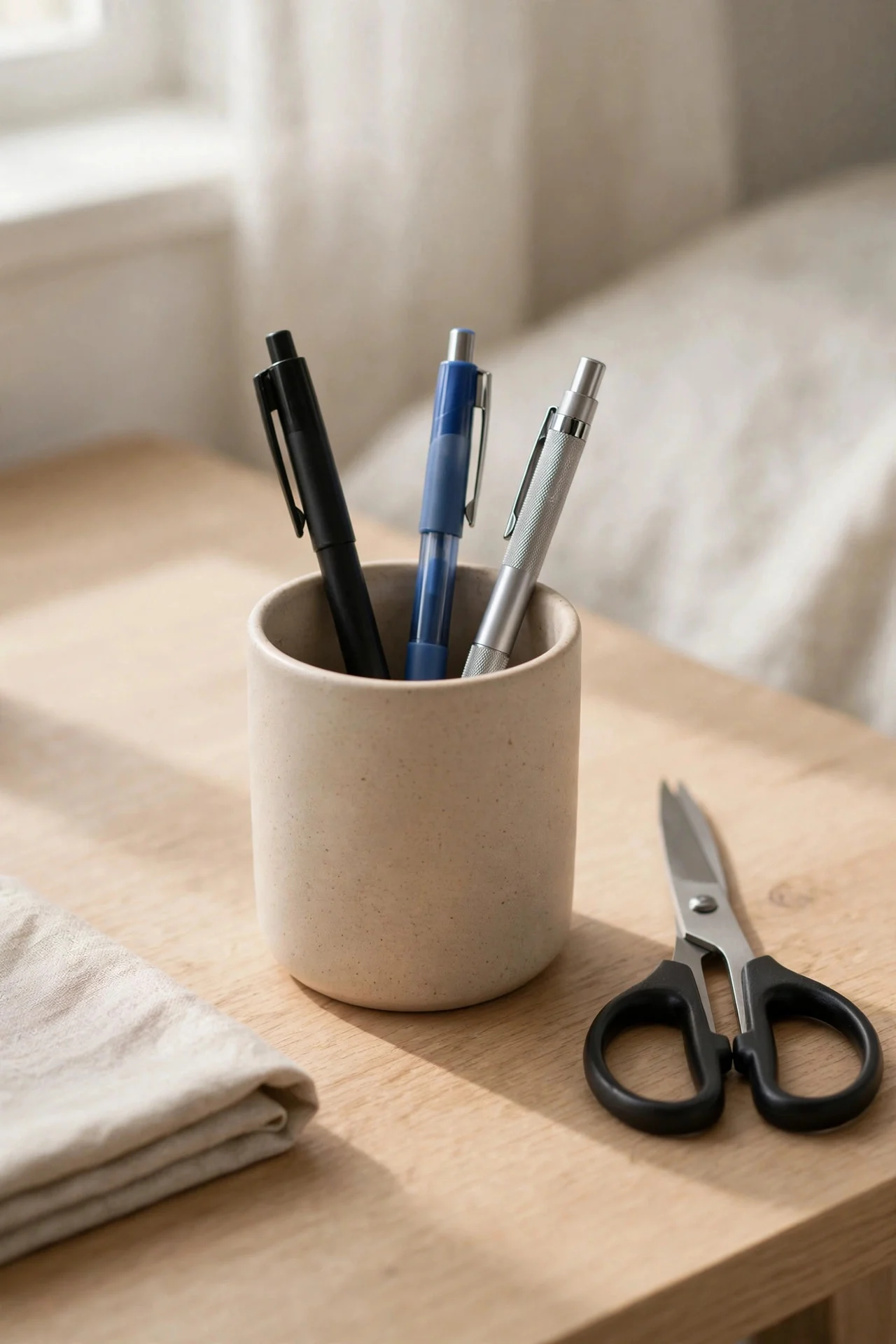
5. Keep One Pen Cup, Not Five
Be honest: how many pens do you actually use? One cup holding your 6–8 best pens, two highlighters, and scissors is enough. The rest — dried-out markers, hotel pens, mystery pencils — go in a drawer or the trash.
A single heavy cup or small mason jar won’t tip when you grab a pen. Place it on your non-dominant side so your writing hand stays clear.
Try this: Test every pen in the house once a year and toss the dead ones — you’ll be shocked how many there are.
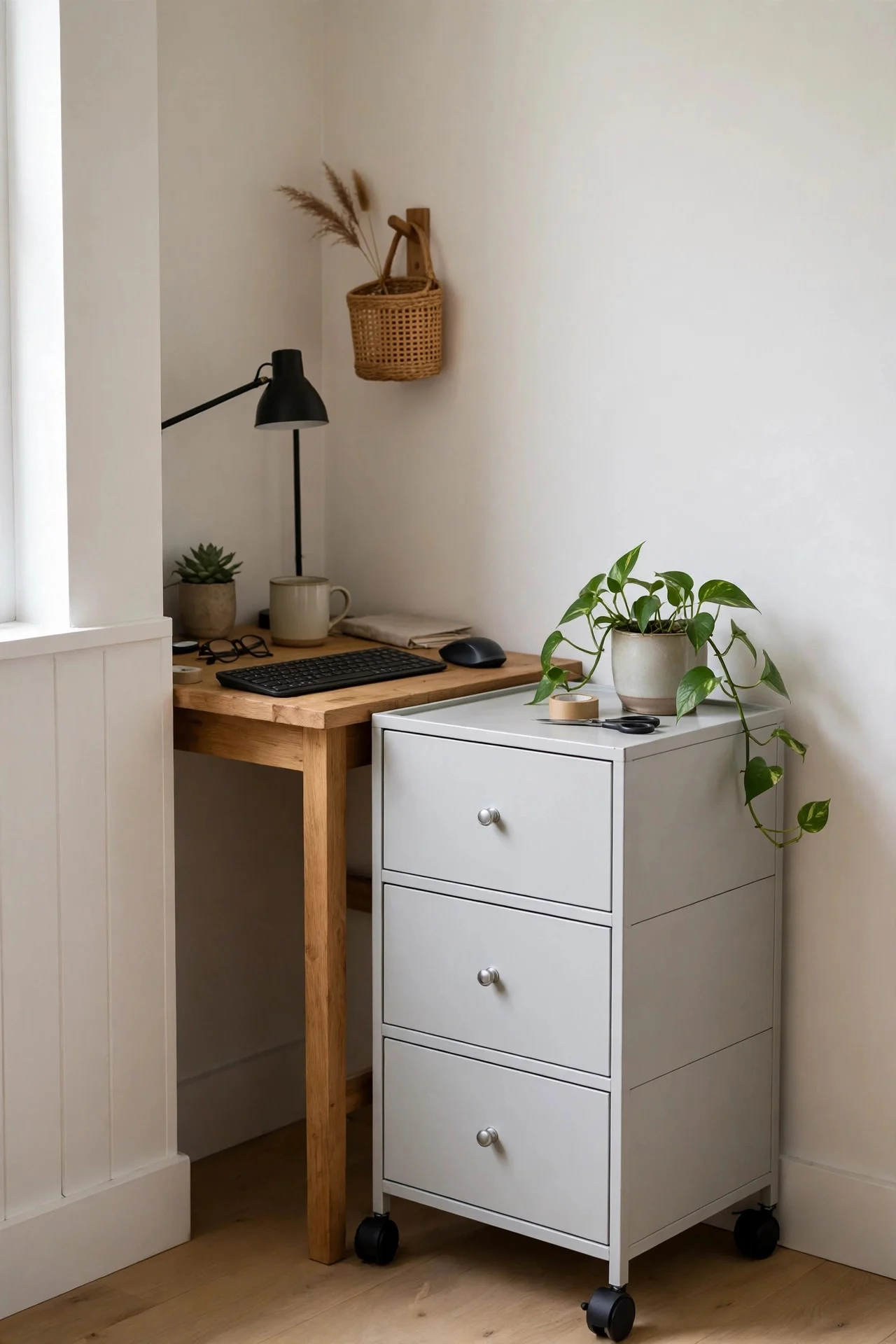
6. Add a Small Drawer Unit Beside the Desk
A 3-drawer rolling unit ($30–40) tucked under or beside the desk holds office supplies, chargers, notebooks, and personal items that don’t deserve desk space. It rolls out when you need it and vanishes after.
Label the drawers: supplies, tech, personal. The top of the unit doubles as a printer stand or extra surface when the desk is full.
Try this: Put a lock on the bottom drawer if the desk is in a shared space — some things deserve privacy.
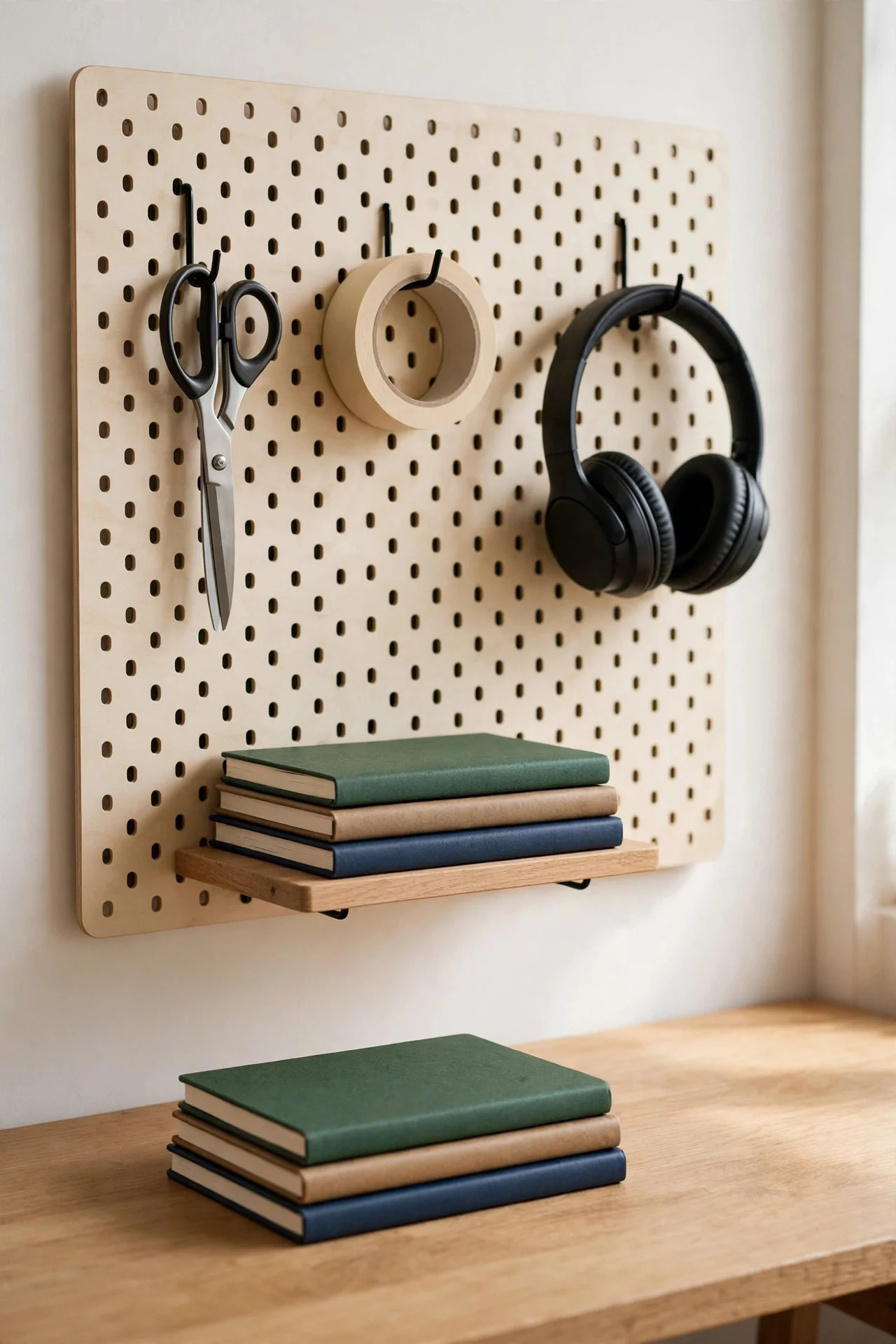
7. Hang a Pegboard for Supplies
A 16 x 20-inch pegboard above or beside the desk ($12 plus hooks) holds scissors, tape, headphones, small shelves for notebooks — all off the desk. It’s endlessly reconfigurable as your needs change.
Paint it to match your wall color for a calmer look, or go bold for a statement. Either way, everything hangs visible instead of hiding in drawers.
Try this: Hang your headphones and most-used notebook on the pegboard — they’re the two things that otherwise live on the desk permanently.
8. Use Stackable Letter Trays Sparingly
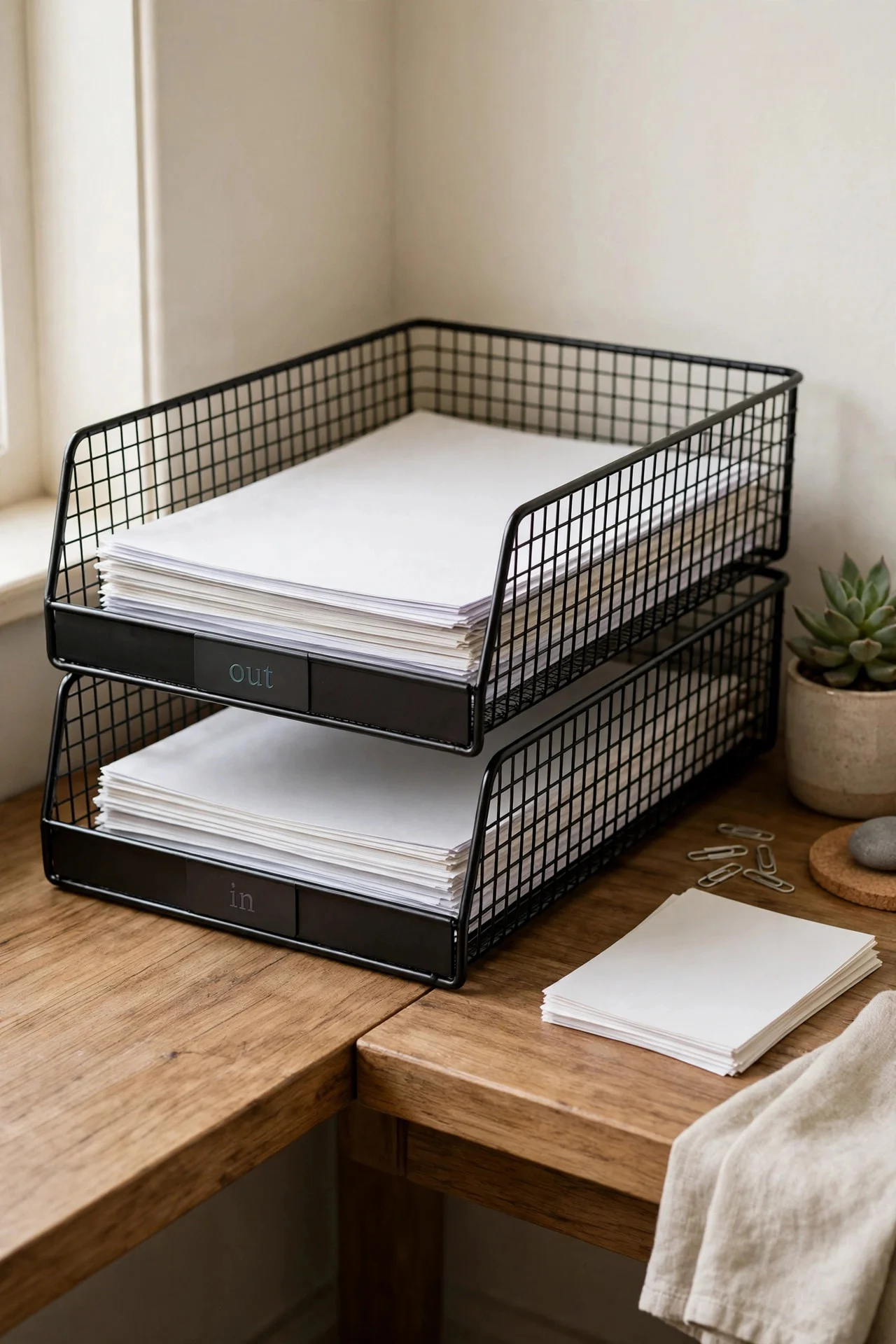
Two stackable letter trays — no more — handle incoming and outgoing paper. They take up the footprint of one sheet of paper and keep the desk’s one corner of paper contained. Three or more trays just become a paper condo.
Label them “in” and “out.” Clear acrylic lets you see at a glance whether the “in” tray needs attention.
Try this: Empty the “out” tray every Friday — if it never empties, it’s not a system, it’s storage.
9. Dock Devices in a Charging Station
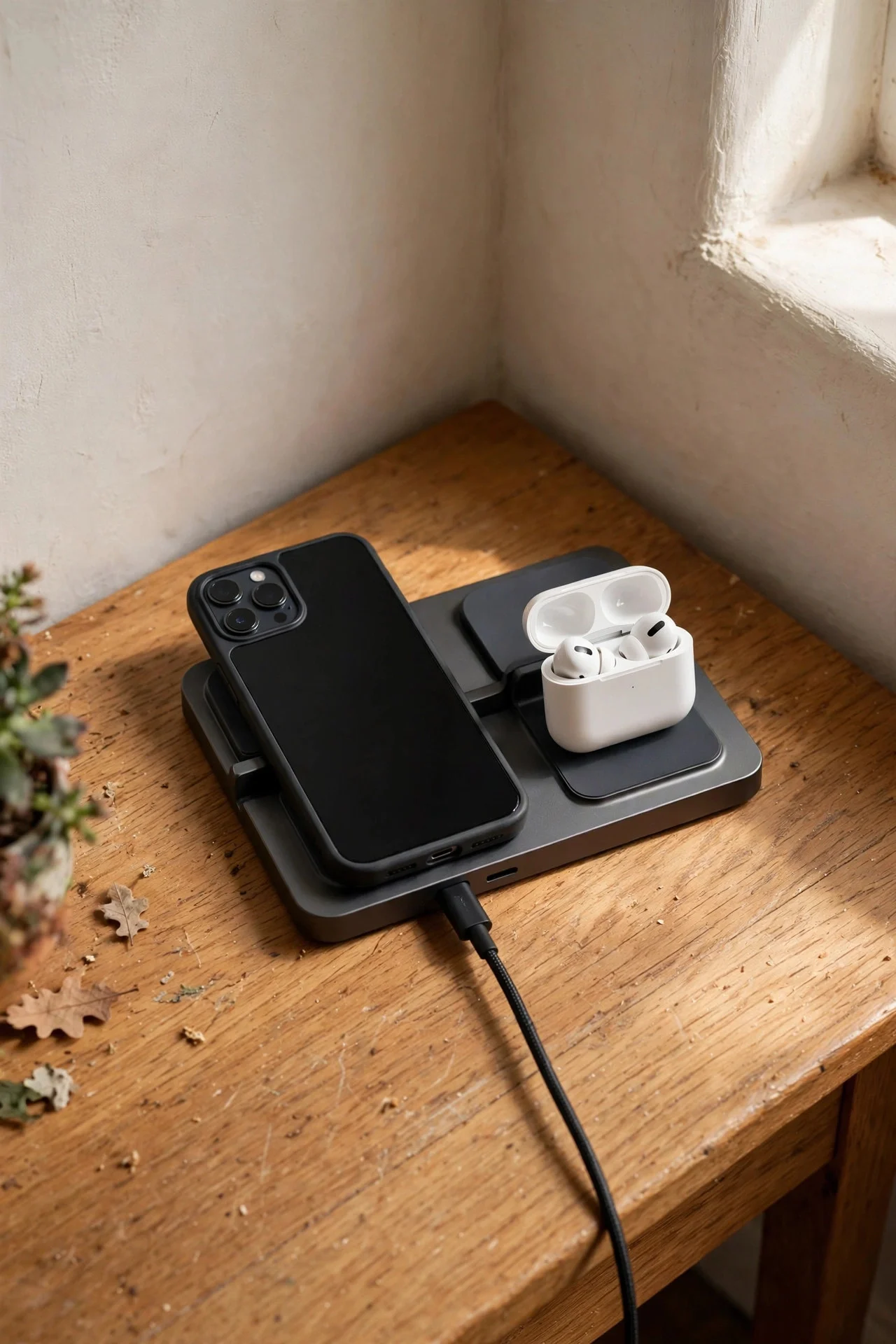
Phones, earbuds, and watches charging loose on the desk create a tangle of cables and clutter. A small multi-device charging dock ($20–30) parks everything in one spot with one cable to the wall.
Place it at the desk’s back corner or on the shelf above — close enough to grab, far enough that you’re not checking your phone mid-task.
Try this: Charge devices outside arm’s reach during work hours — it’s the cheapest focus upgrade there is.
10. Stick With One Notebook System
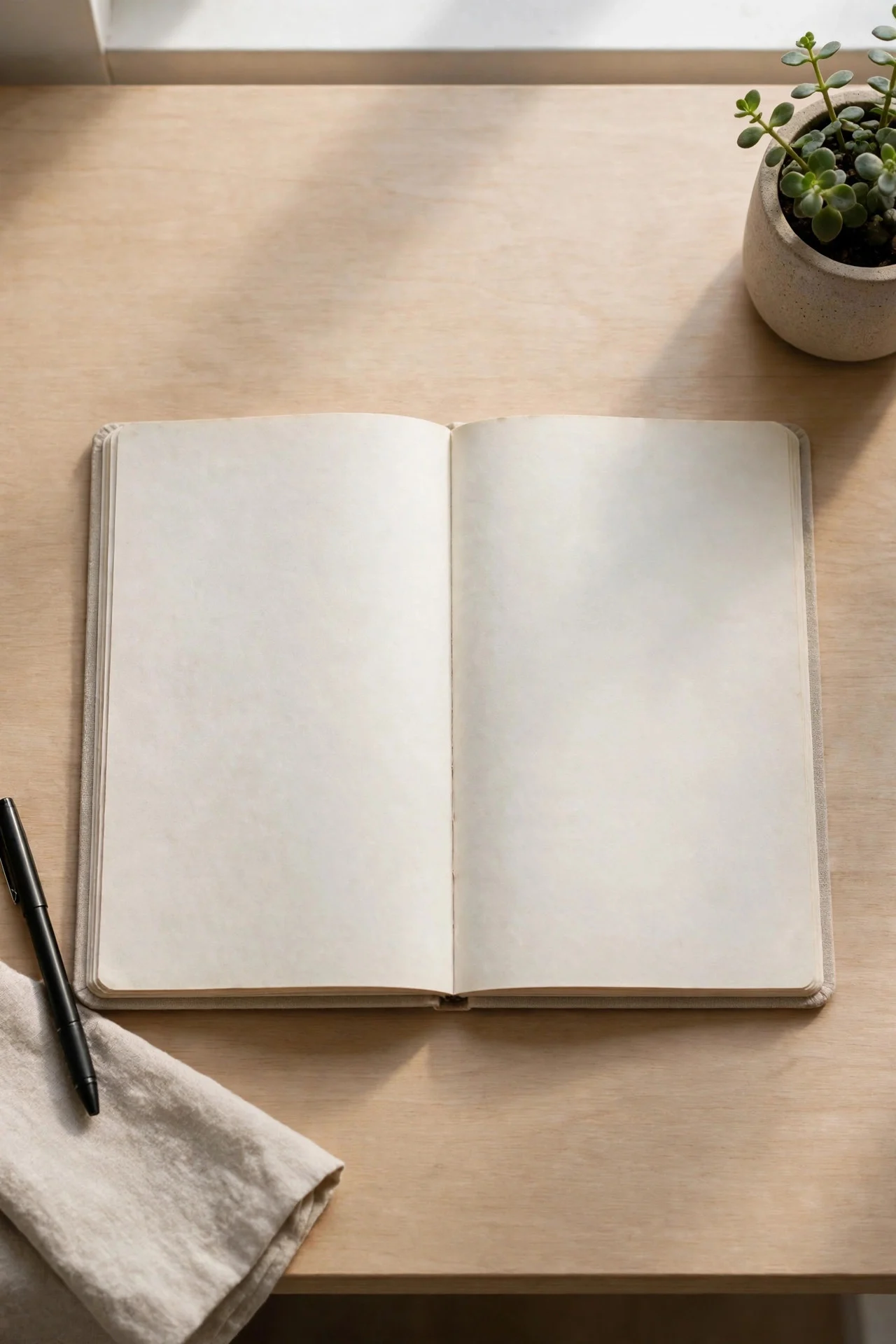
Five half-used notebooks scattered around means you can never find the note you need. Pick one notebook (or one app) and commit. When it’s full, archive it on the shelf and start the next one.
A simple numbered-page notebook with an index page at the front works for years. The system matters less than the commitment to one system.
Try this: Date every page — six months from now, you’ll actually be able to find that idea.
11. Mount a Small Whiteboard for Tasks
A 12 x 16-inch whiteboard on the wall beside the desk ($10) holds today’s 3–5 tasks where you can’t ignore them. It replaces the sticky-note constellation that slowly takes over small desks.
Erase and rewrite daily — a whiteboard with last month’s tasks is just wall clutter. Use it for the day’s priorities only; long-term planning lives elsewhere.
Try this: Write tomorrow’s top three tasks at the end of each workday — you start the next morning already oriented.

12. Use the Desk’s Side for Hanging Storage
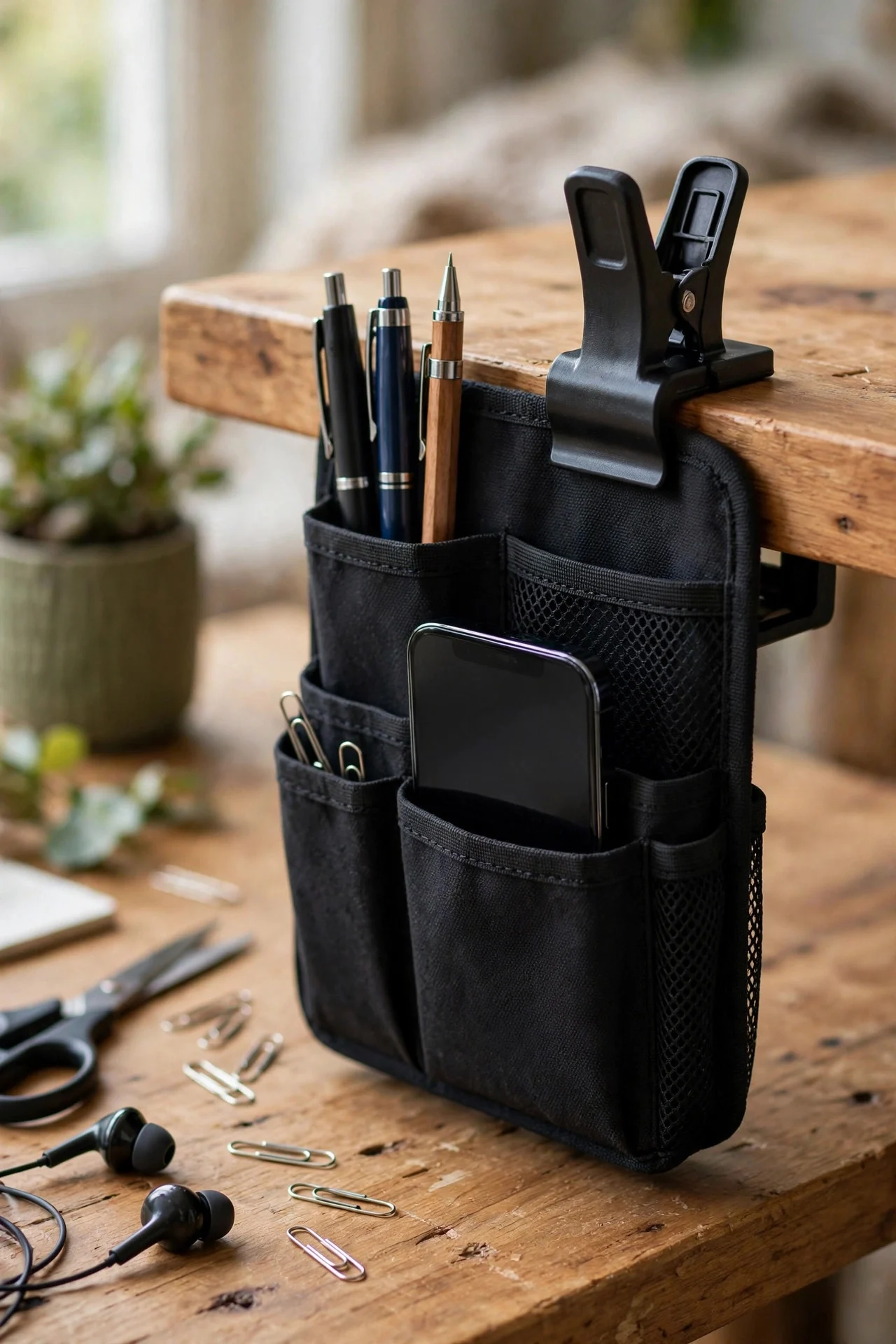
The side panel of your desk is usable space. Adhesive hooks or a clip-on side organizer hold a bag, headphones, or a small trash bag — things that otherwise sit on the floor or the desktop.
A $8 clip-on desk side caddy holds pens, sticky notes, and a phone without touching the work surface. It works on desks as thin as 1 inch.
Try this: Hang your work bag on the desk side every evening — the morning “where’s my bag” scramble disappears.
13. Keep a Micro Trash Can Within Reach
Small desks generate small trash — sticky notes, envelopes, snack wrappers — that piles up because the bin is across the room. A tiny desktop or under-desk bin ($8) catches it all, and you empty it when you take out the main trash.
Line it with a small bag so emptying takes five seconds. Without a nearby bin, trash migrates to the desk corners and stays there.
Try this: Empty the micro bin every evening as part of your shutdown ritual — tomorrow starts clean.
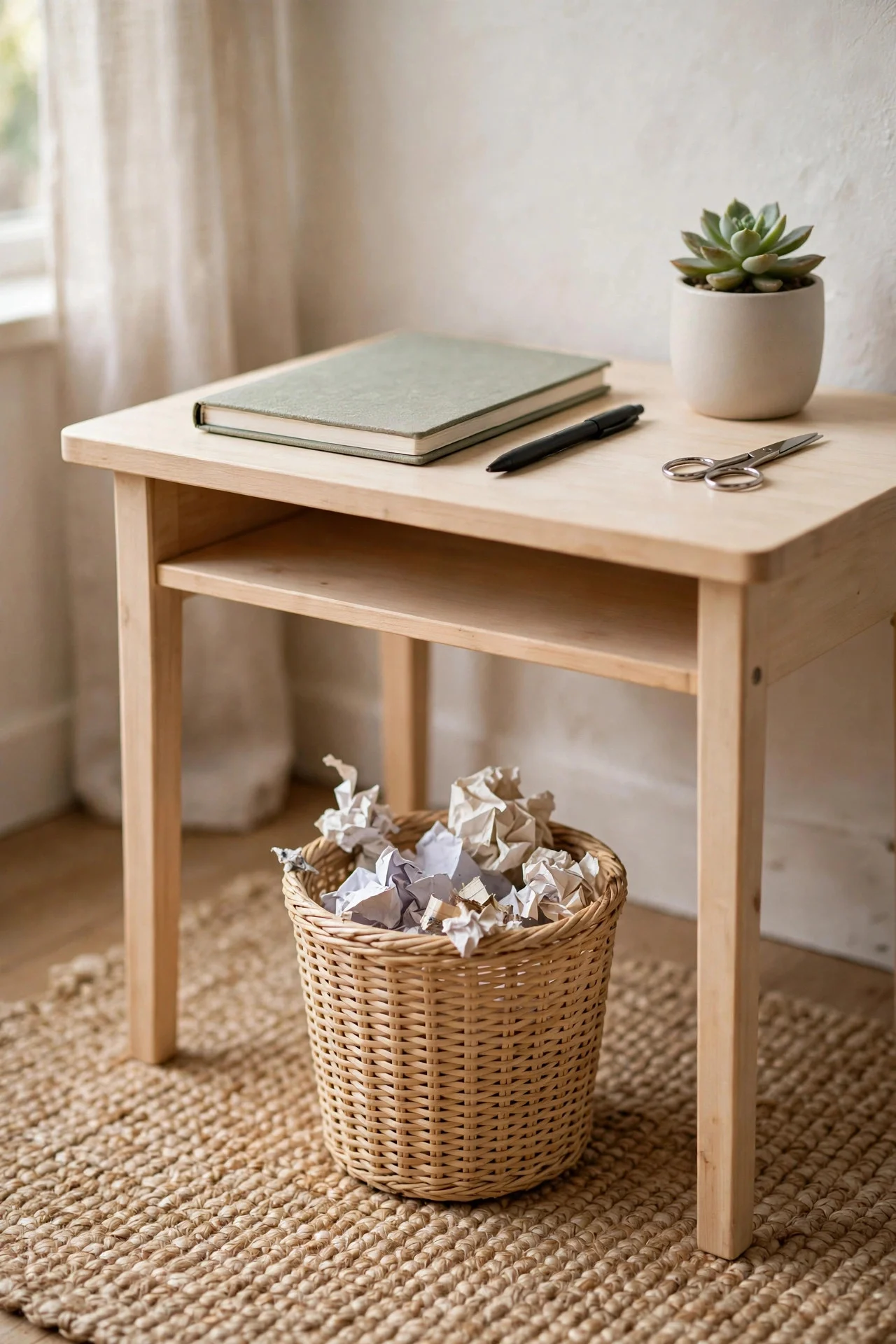
14. Store Reference Books Vertically on the Shelf
Books laid flat on a small desk eat the whole surface. Stand them upright on the wall shelf with a bookend, spine-out, and they take up 2 inches of desk-adjacent space instead of 12.
Keep only the 5–8 books you actually reference. The rest belong on a real bookshelf — a small desk can’t be a library and a workspace.
Try this: If you haven’t opened a reference book in six months, photograph the key pages and donate the book.

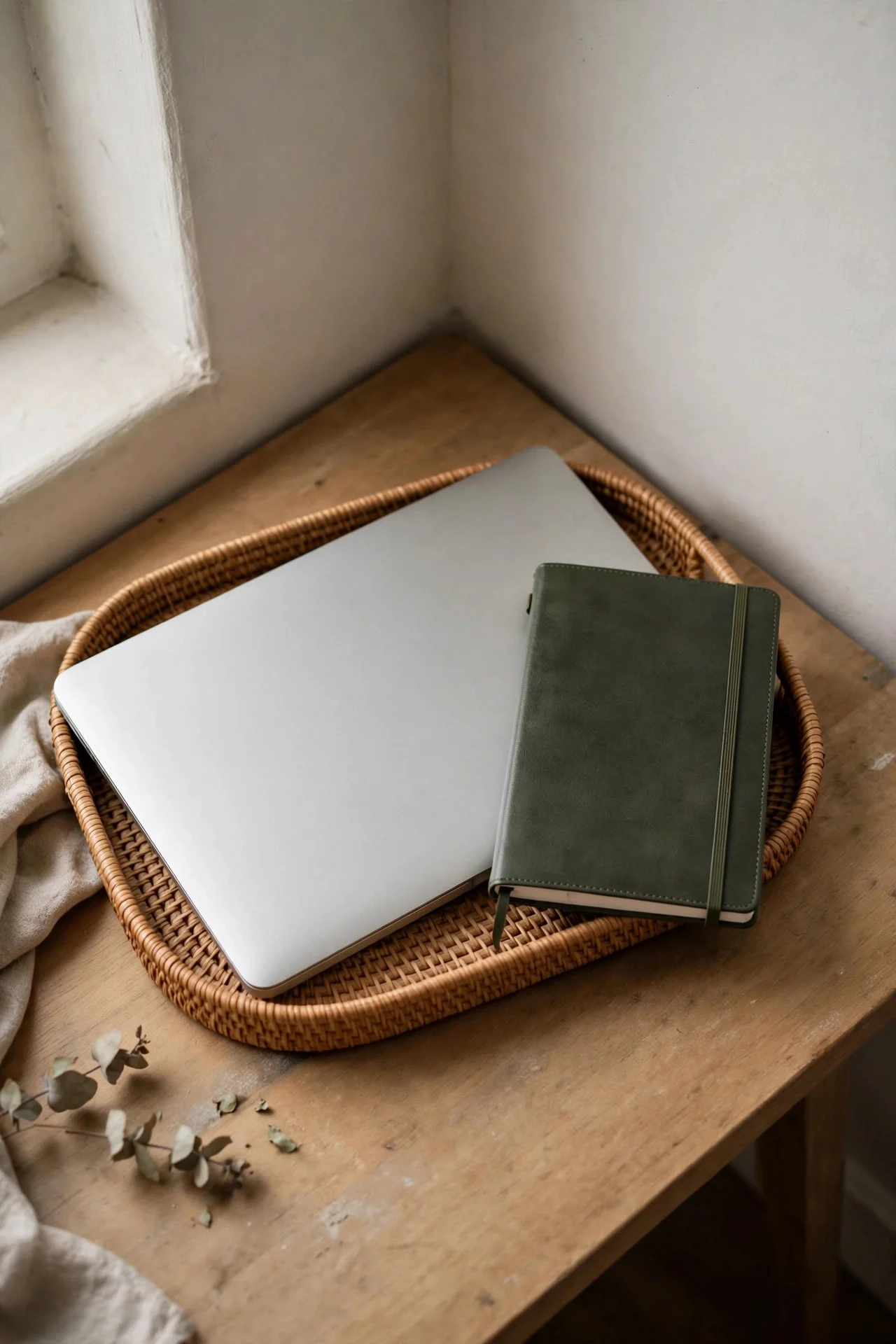
15. Create a Shutdown Ritual Tray
End-of-day clutter happens because there’s no “done” step. A small tray on the desk’s corner becomes the landing zone: laptop closed and placed on it, notebook stacked, pen cup centered. Thirty seconds, desk reset.
The tray’s boundary is the point — items inside it are “put away” even though they’re on the desk. It satisfies the tidying urge without a drawer for everything.
Try this: Wipe the desk down as part of the ritual — a clean surface in the morning changes how the day starts.
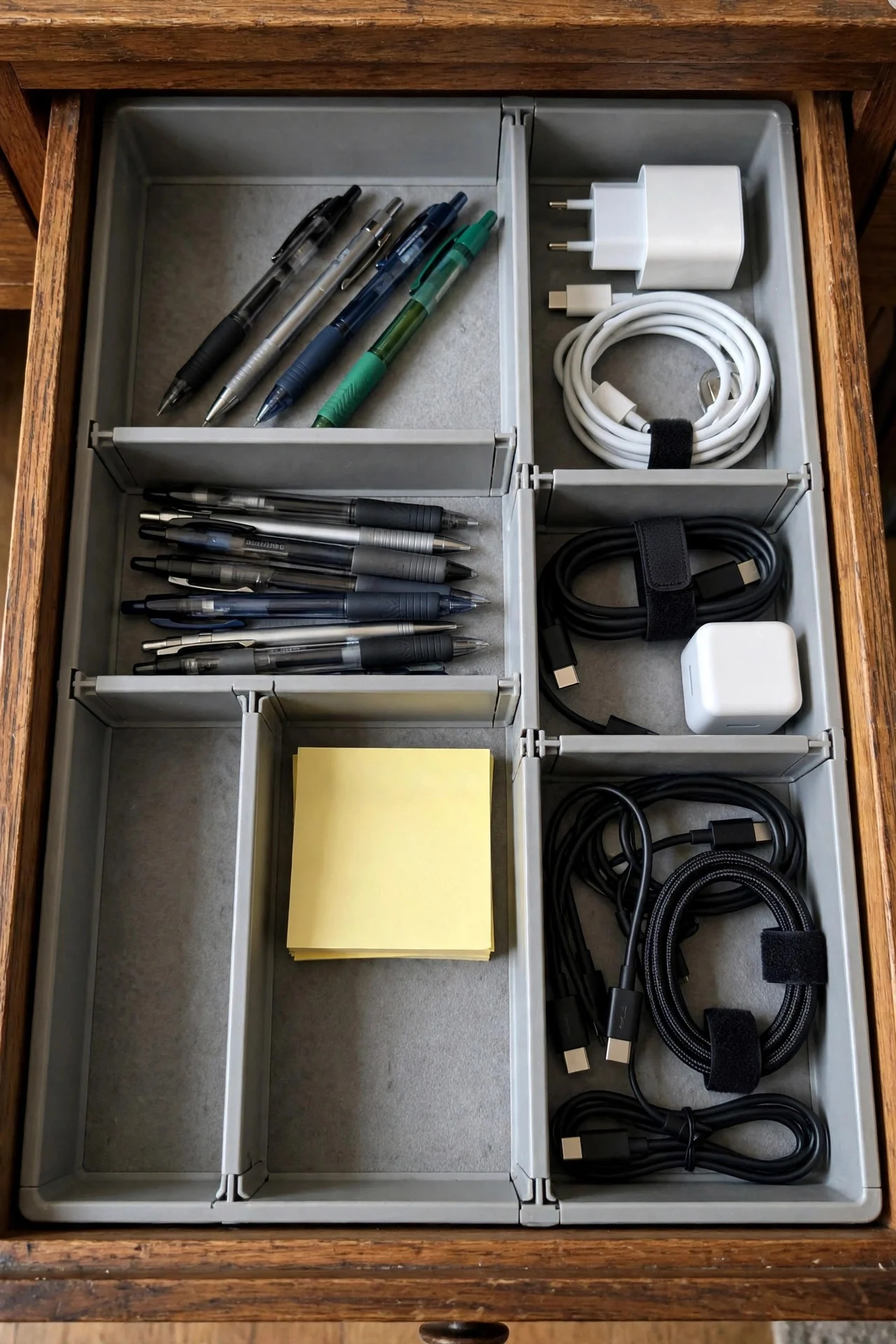
16. Use Drawer Dividers for the One Drawer
Most small desks have exactly one drawer, and it becomes a junk drawer within weeks. A $10 set of adjustable dividers splits it into zones: pens, sticky notes, chargers, personal. Small zones stay organized; one big zone doesn’t.
Every item gets a zone, and anything without a zone doesn’t live in the drawer. That’s the whole rule.
Try this: Dump and re-sort the drawer quarterly — it’s a 10-minute job that prevents the slow slide into chaos.
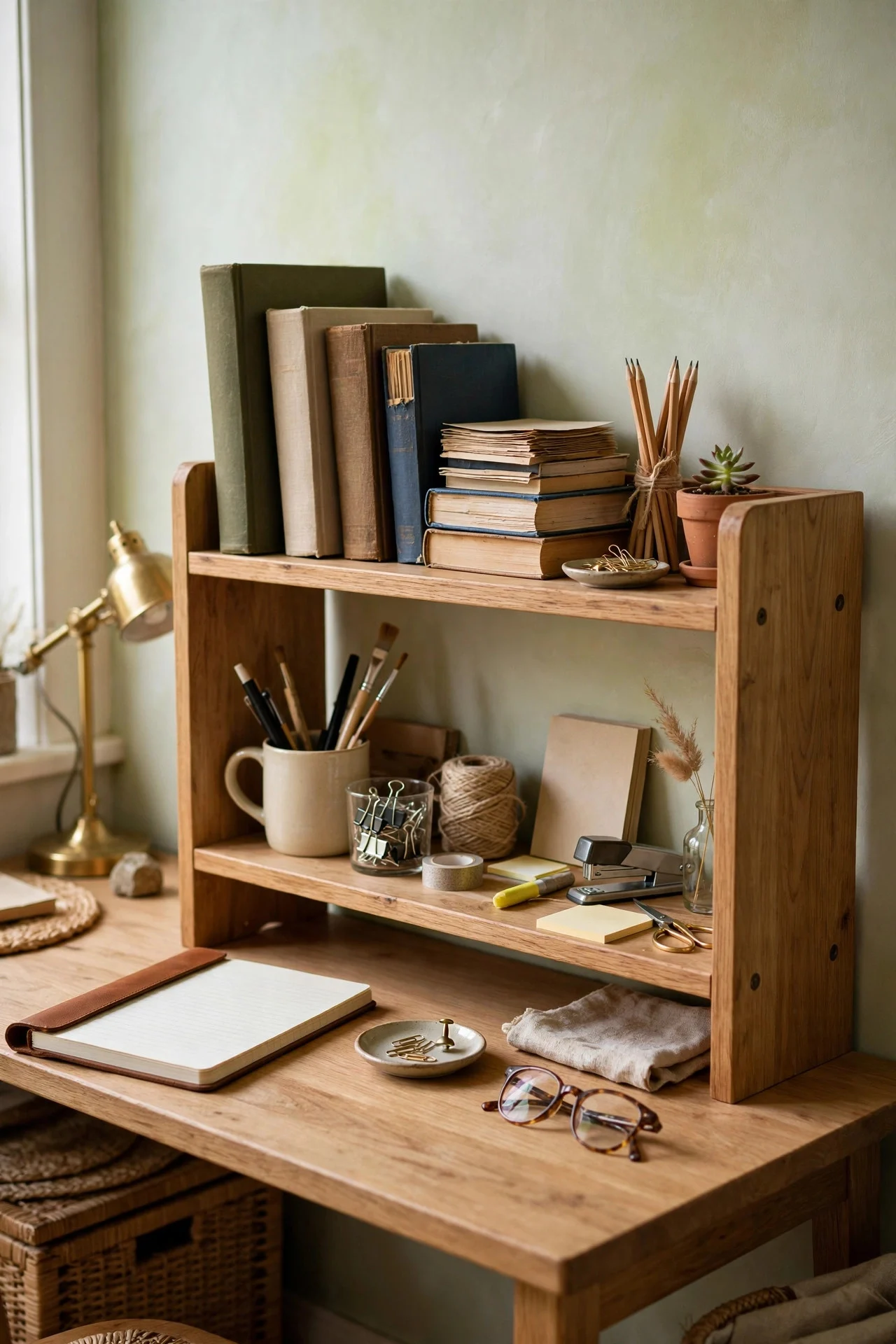
17. Add a Desk Hutch (If Space Allows)
If your desk sits against a wall with room above, a small hutch or shelf unit ($40–60) adds two tiers of storage without touching the floor. Books, supplies, and files go up; the desktop stays for working.
Measure carefully — hutches need 24+ inches of clear wall above the desk. In a true closet-desk setup, skip this and use the floating shelf instead.
Try this: Keep the hutch’s bottom shelf for daily items and the top for archives — reach frequency decides placement.
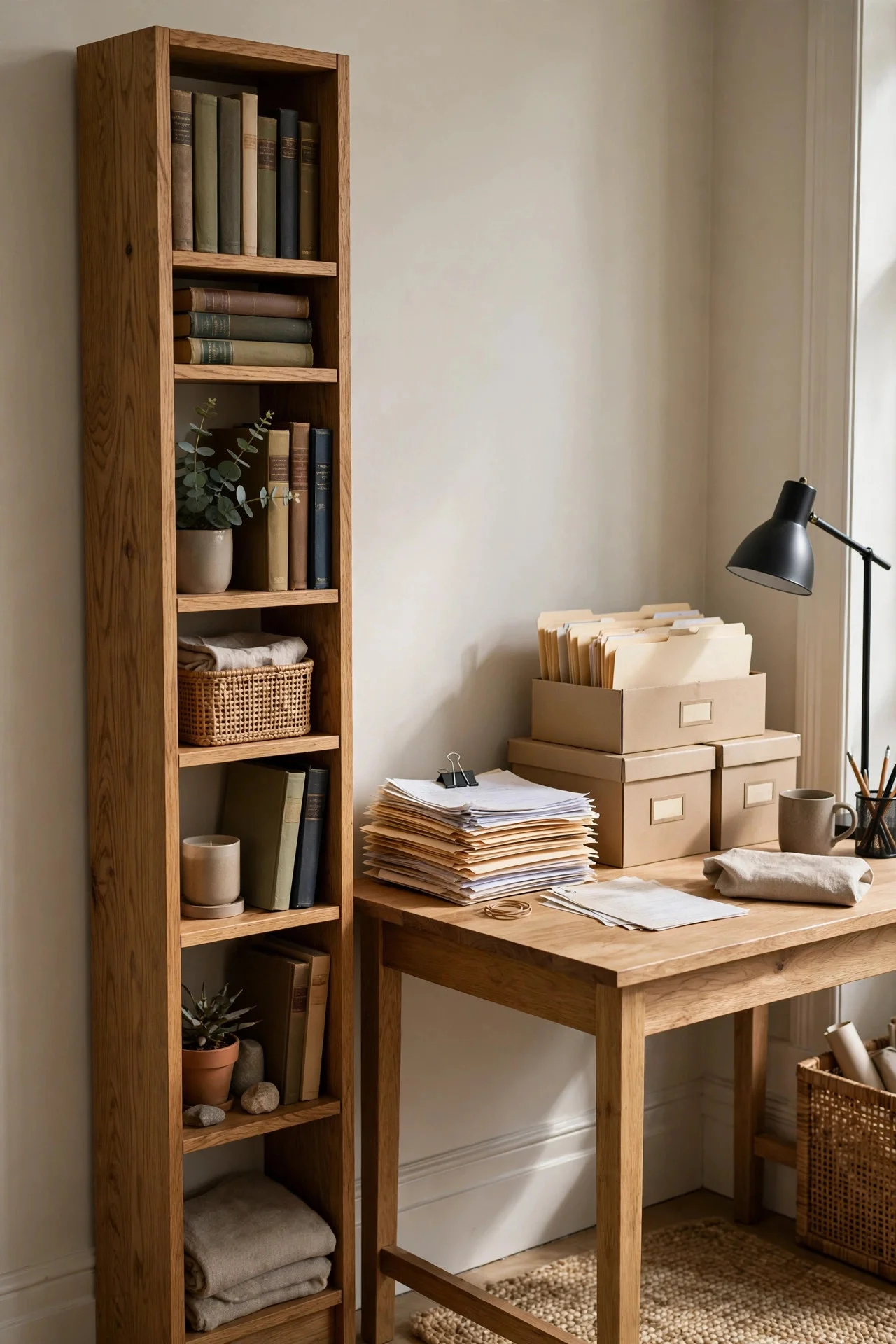
18. Go Vertical With a Narrow Bookcase Beside the Desk
A slim 12-inch-deep bookcase ($35–50) beside the desk holds files, supplies, and reference materials that would otherwise colonize the desktop. It’s the overflow valve for a small workspace.
Use the top as a printer or plant stand, the middle shelves for active projects in labeled boxes, the bottom for archives. One narrow tower absorbs an amazing amount of desk spillover.
Try this: Face the bookcase’s open side toward the desk so everything is grab-and-return in one motion.
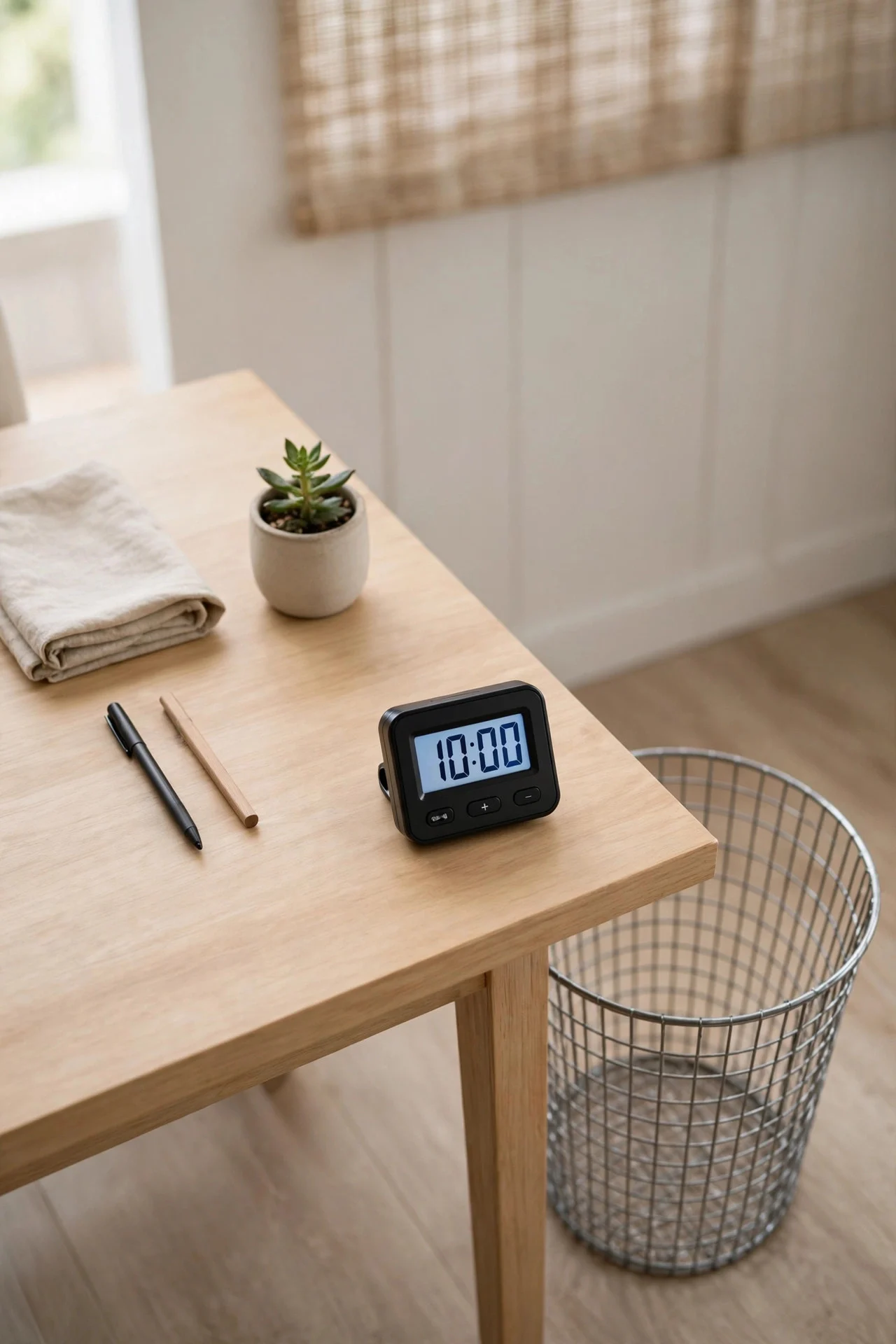
19. Do a Weekly 10-Minute Desk Reset
No system survives without maintenance. Once a week — Friday afternoon works — spend 10 minutes: file the papers, return supplies to their homes, toss the trash, wipe the surface. Set a timer; it really is only 10 minutes.
This is the habit that makes all 18 ideas above actually work long-term. Organization isn’t a project, it’s a rhythm.
Try this: Pair the reset with something pleasant — a favorite playlist, a good coffee — so it becomes a ritual, not a chore.
Frequently Asked Questions
How do I organize a very small desk?
Go vertical first: wall shelf, pegboard, wall-mounted file sorter. Then hide the rest: under-desk cable tray, rolling drawer unit, monitor riser with storage. The desktop itself should hold only what you’re actively using.
What’s the best way to hide cables on a small desk?
An under-desk cable tray with a power strip inside, plus velcro ties bundling every cable. One cable runs from the tray to the wall — everything else is invisible.
How do I keep papers from piling up on my desk?
Two letter trays (in and out), a wall-mounted sorter for active paper, and a weekly processing habit. Scan or photograph anything you can, and shred the original — most paper doesn’t need to exist physically.
What should stay on a small desk permanently?
As little as possible: your computer, one pen cup, and maybe a small plant. Everything else — chargers, notebooks, supplies — lives on the shelf, pegboard, or drawer unit and comes to the desk only when in use.
Final Thoughts
A small desk works when everything has a home and the surface stays mostly clear. Start with the vertical moves — shelf, pegboard, file sorter — because they add storage without taking space. Then hide the cables, corral the supplies, and commit to the weekly 10-minute reset. Small space, clear desk, clearer head.