
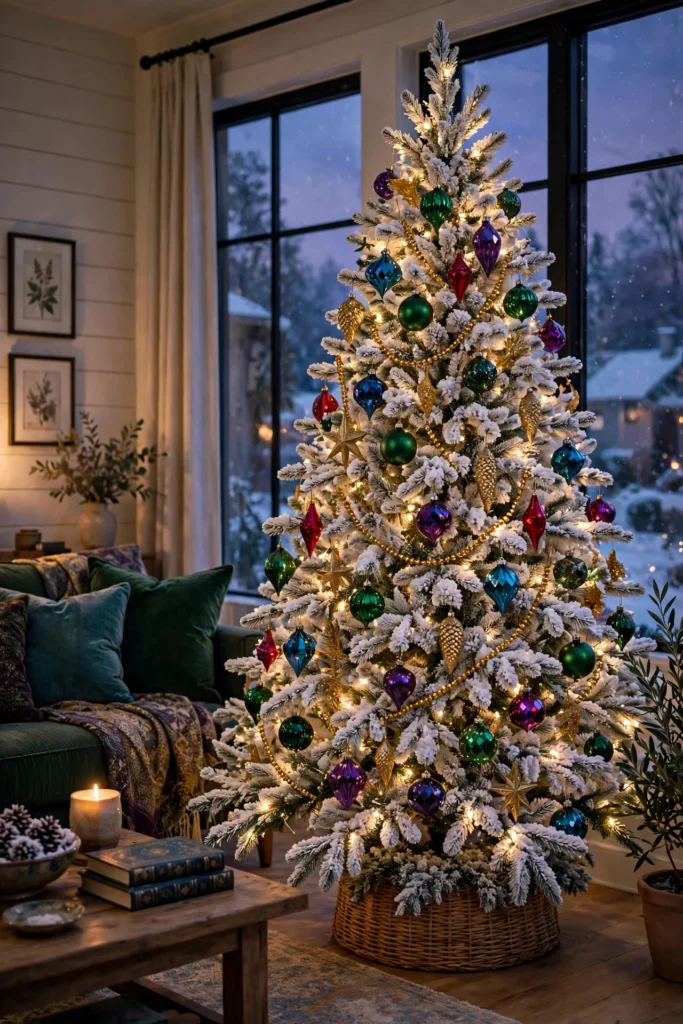
A flocked tree isn’t just a tree with snow on it — it’s a completely different canvas. Those white-dusted branches change every decorating rule: colors behave differently, ornaments need more scale, and techniques that work on green trees fall flat on white. Decorate a flocked tree like a regular one and it looks washed out; decorate for the flocking and it’s the most striking tree in the neighborhood.
These 17 ideas are flocking-specific: palettes that pop on white, the ornament scale that actually shows up, lighting that doesn’t get buried, and how to care for the flocking itself. If you own (or are eyeing) a flocked tree, this is your manual.
1. Why Flocking Changes Every Rule
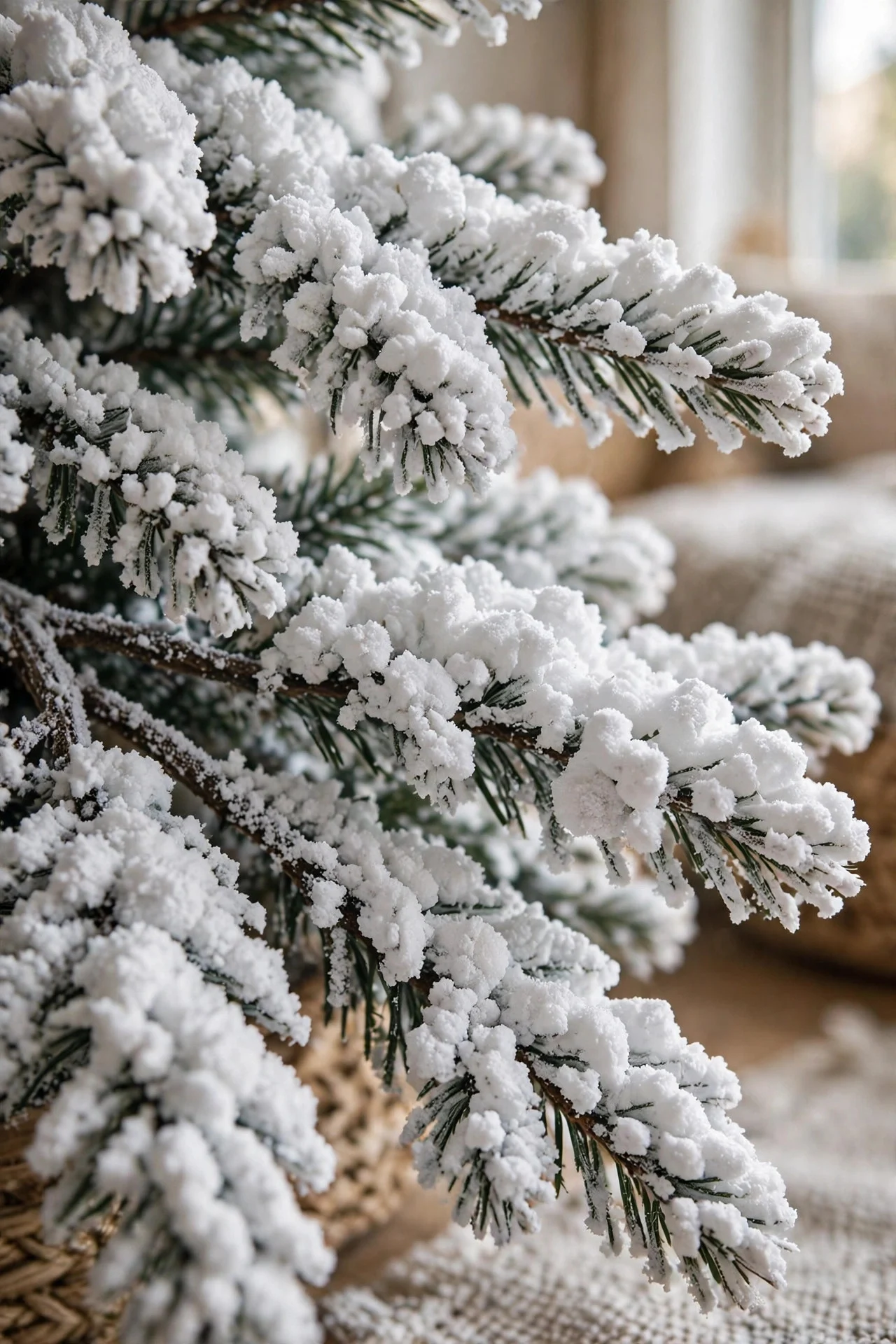
On a green tree, ornaments provide the color. On a flocked tree, the white branches are already a strong visual element — they reflect light, create high contrast, and eat small decorations alive. Everything you hang needs to be bolder, bigger, or brighter than you’d choose for green branches.
Think of flocking as a white wall: pale ornaments disappear against it, dark and saturated colors sing. This single principle — contrast over subtlety — guides every idea below. If an ornament looks “delicate” in the store, it’ll look invisible on flocking. Step back ten feet when judging ornament scale — flocked trees are always viewed from farther than you think.
Try this: Hold any candidate ornament against white paper in the store — if it pops there, it’ll pop on your tree.
2. Jewel Tones That Ignite on White
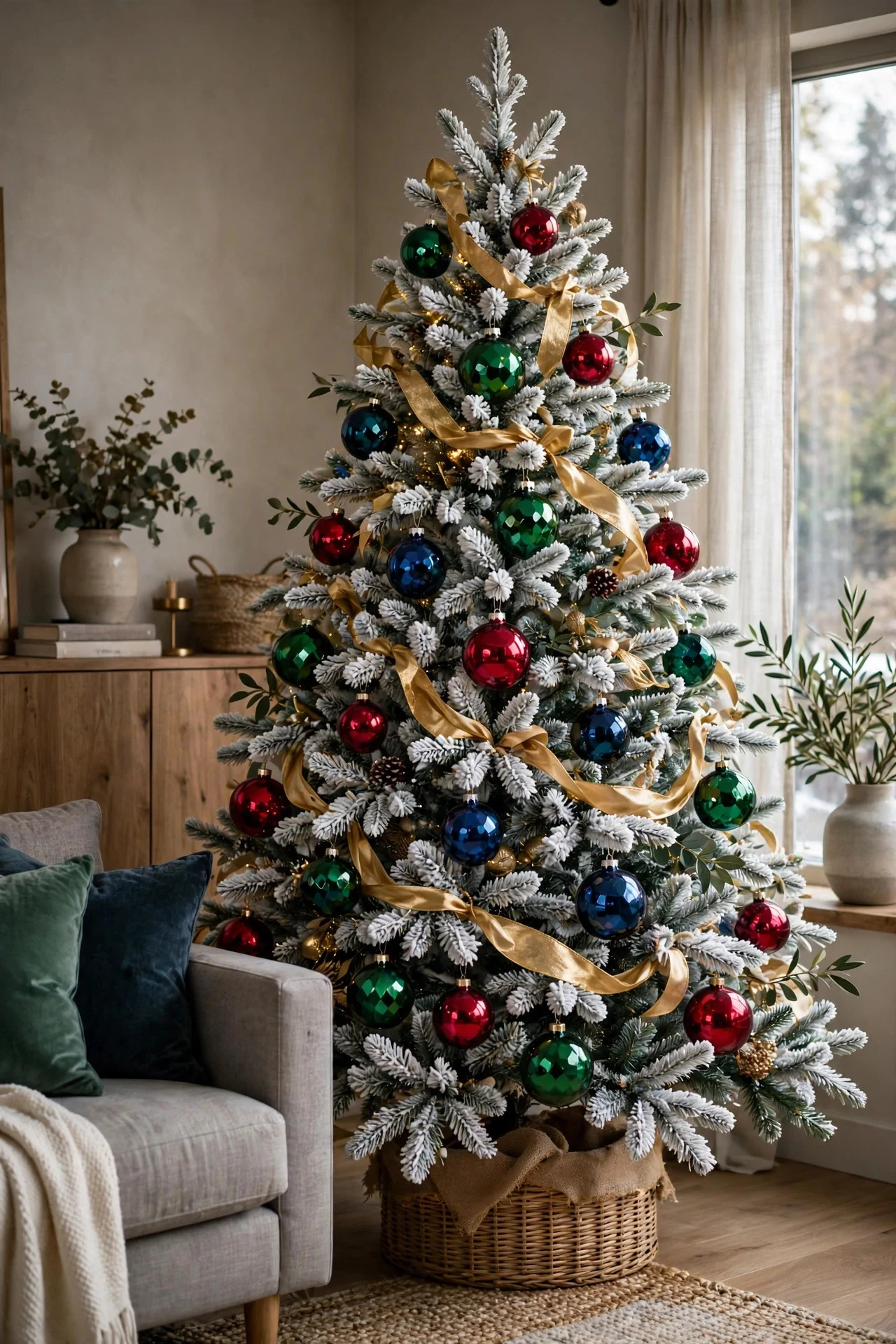
Emerald, ruby, sapphire, amethyst — jewel tones were made for flocked trees. Against white branches, saturated color looks electric in a way green trees can’t match. This is the single most popular flocked-tree palette, and it earns it.
Use solid, glossy jewel-tone baubles in 3- to 4-inch sizes; matte finishes get lost in the flocking’s texture. Add gold accents — ribbon, picks, a topper — to bridge the jewel colors. The result reads as luxurious, never gaudy. Buy jewel ornaments in single-color multipacks — pre-mixed jewel assortments always include one dud shade.
Try this: Cluster jewel ornaments in groups of three same-color baubles — the color blocks read clearly even from across the room.
3. Gold and Champagne Elegance
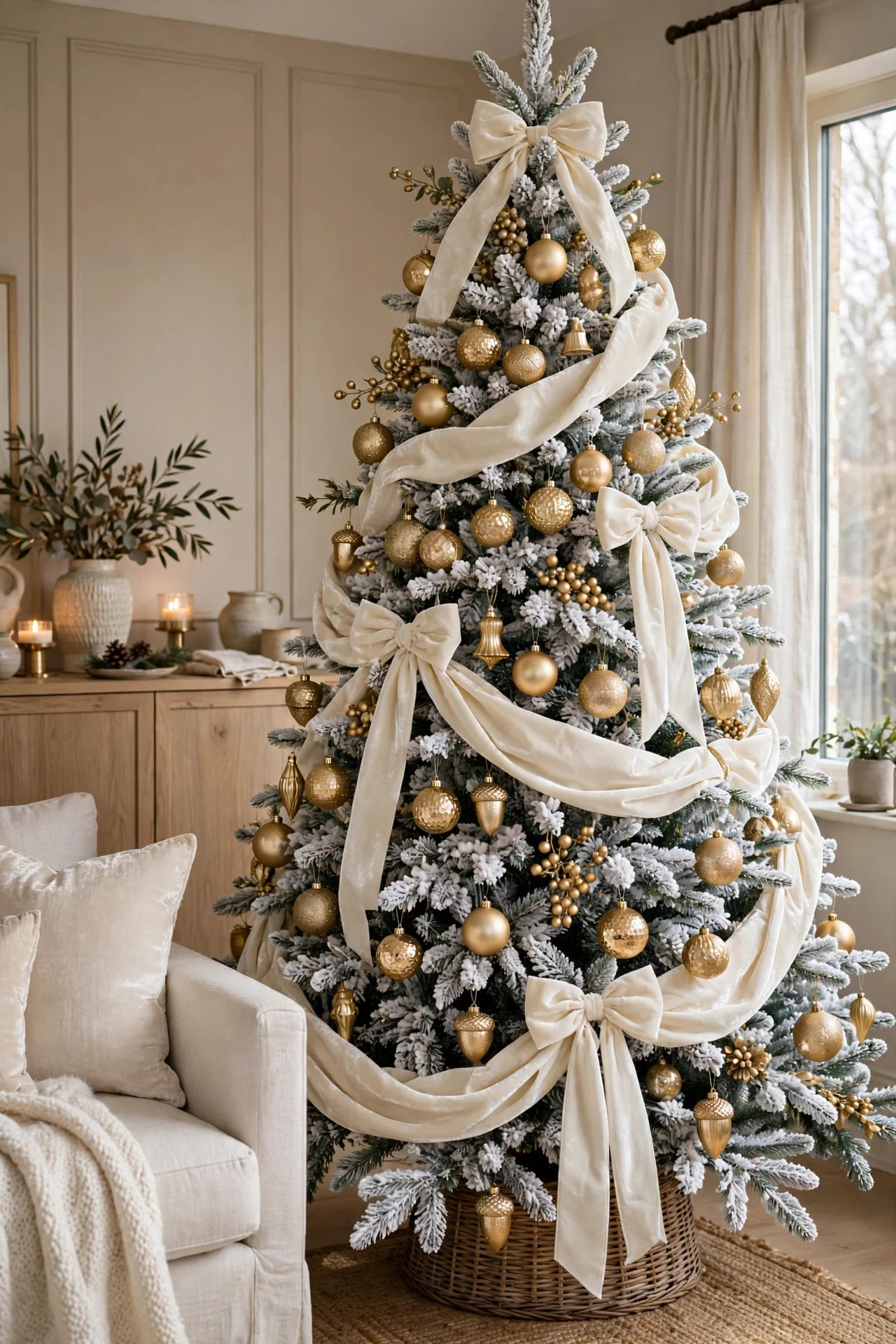
For a softer take: champagne gold, ivory, and warm metallics on flocking. The white branches do half the work — they brighten the whole tree — so gold ornaments glow like they’re lit from within. It’s the most bridal, refined flocked look.
Mix gold finishes deliberately: shiny, brushed, and glittered golds layered together. Add ivory velvet ribbon tucked deep into the branches. Warm white lights are essential — cool white turns champagne gold icy and flat. Avoid yellow-gold on bright-white flocking — it clashes; champagne and aged gold harmonize instead.
Try this: Add five or six large gold floral picks — peonies or magnolias — for a softness baubles alone can’t give.
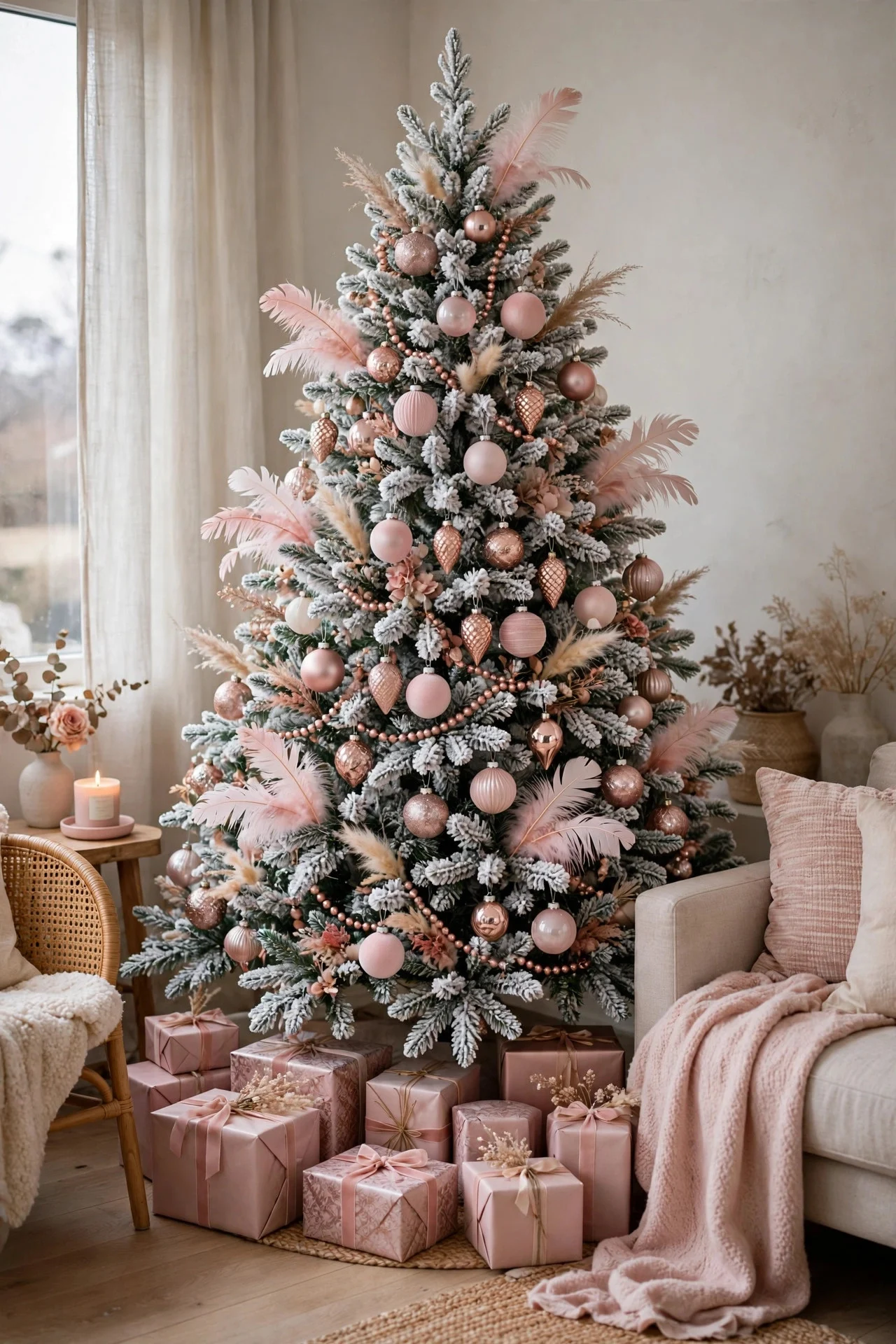
4. Blush Pink on Snow
Blush pink and rose gold on a flocked tree looks like a winter sunrise — romantic, modern, and wildly photogenic. The white flocking keeps pink from reading juvenile; instead it reads as sophisticated and fresh.
Anchor the pink with metallics: rose-gold baubles, copper ribbon, a champagne topper. Without metal structure, all-pink drifts into nursery territory. Feather picks in blush add the softness this palette loves. Test blush ornaments against the flocking in daylight — some pinks turn peach under warm tree lights. A champagne star topper bridges blush and white better than a pink topper, which can look washed out.
Try this: Hang blush ornaments slightly deeper in the branches — the flocking frames them like snow around petals.
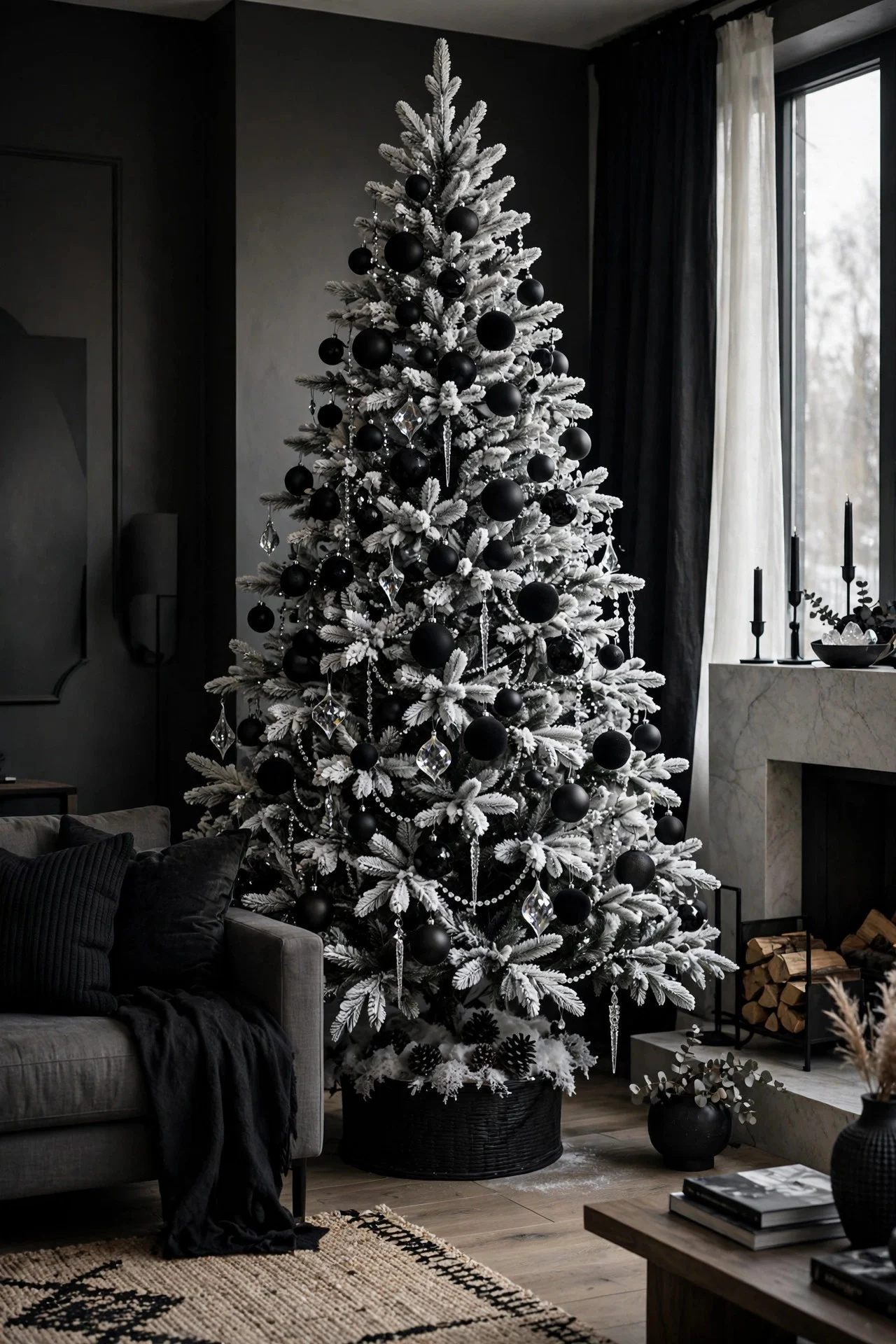
5. Black-and-White Monochrome Drama
The boldest flocked look: matte black ornaments on white branches, with silver or crystal accents. It’s high-contrast, graphic, and unforgettable — the tree equivalent of a tuxedo.
Black needs help to avoid flatness: mix matte black baubles with glossy black ones and faceted crystal drops that throw rainbows. A silver star topper bridges the two extremes. This theme suits modern, minimalist homes and makes a genuine statement. Add one mirrored ornament per branch tier — the reflections break up the black-and-white starkness. Silver tinsel — used sparingly, one strand — adds the only shimmer this stark theme needs.
Try this: Add black velvet ribbon — the texture difference between velvet, glass, and flocking is what makes monochrome rich.
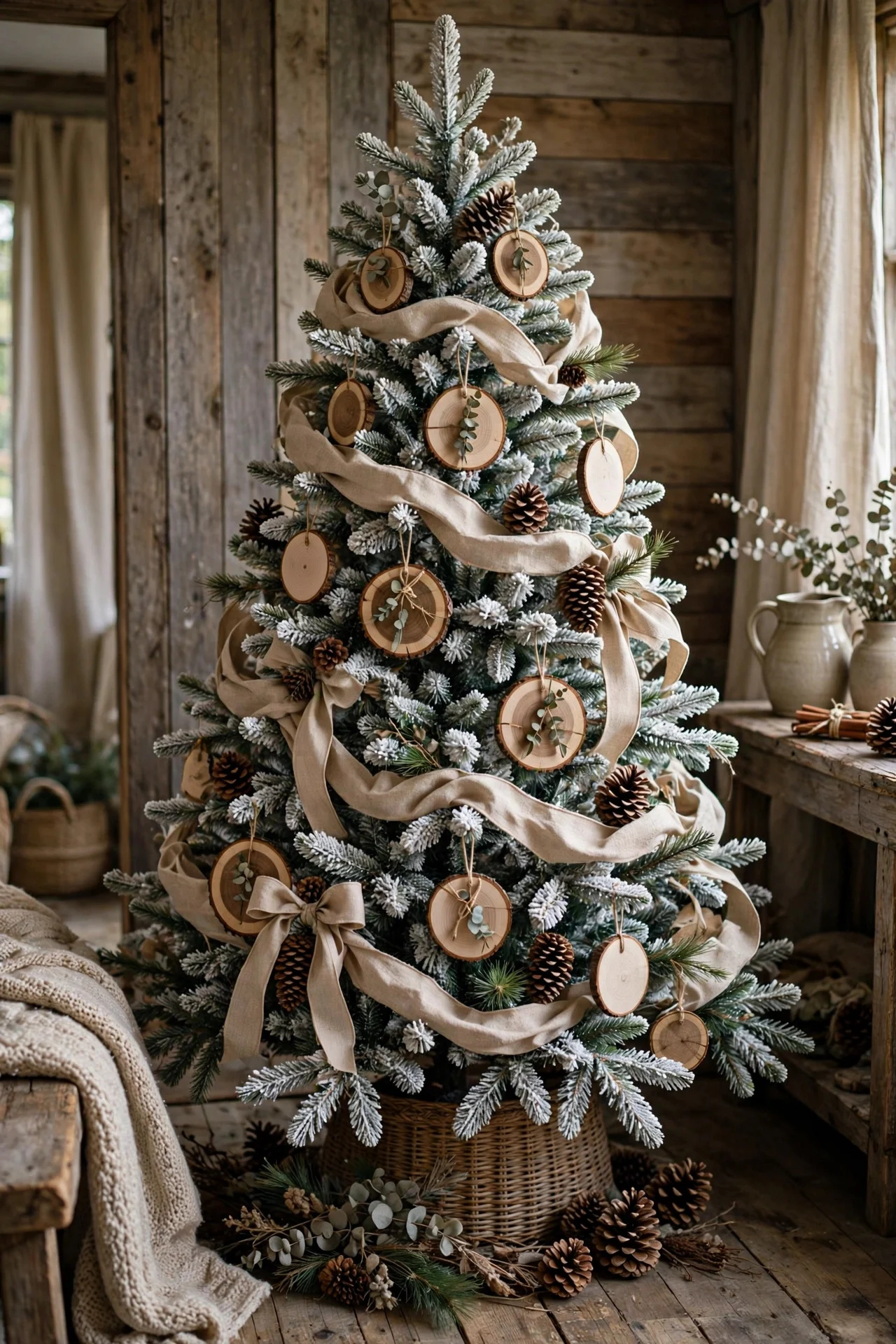
6. Natural Wood and Beige Rustic
Wood-slice ornaments, beige linen ribbon, pinecones, and dried botanicals on flocking create a Scandinavian-cabin feel — as if the tree is sitting in a snowy forest. The palette is quiet: cream, tan, bark brown, soft white.
Natural materials need scale on flocking — choose wood ornaments 3 inches or larger, and cluster pinecones in groups. The contrast here is texture, not color: rough bark against soft flocking, smooth linen against fuzzy branches. Seal wood-slice ornaments with matte polyurethane — raw wood absorbs flocking dust and grays over time.
Try this: Hang small bundles of dried lavender with the wood ornaments — the purple-gray sprigs add subtle color and scent.
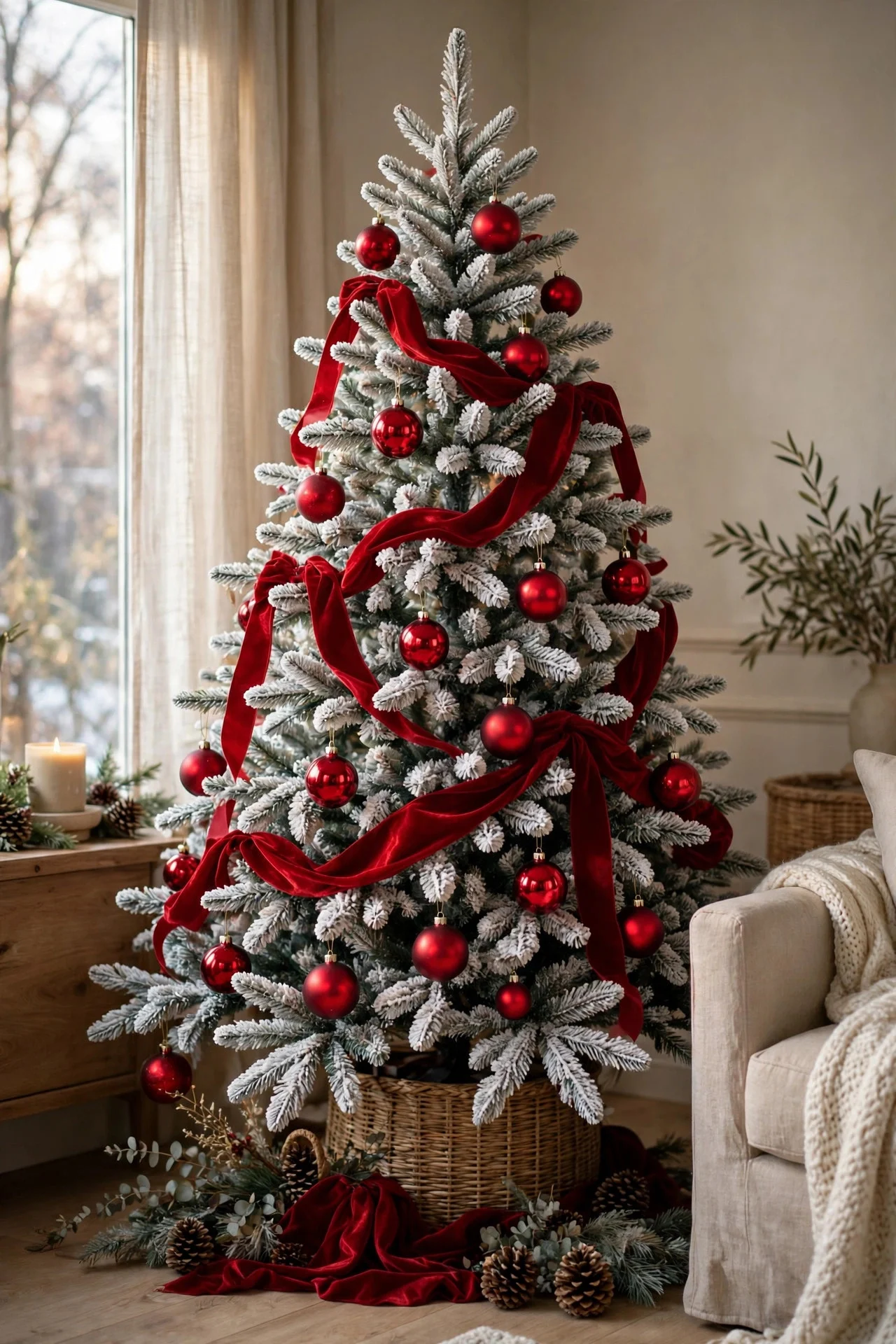
7. Classic Red That Finally Pops
Red ornaments on a green tree are traditional; red ornaments on a flocked tree are spectacular. The white branches make classic Christmas red look richer and more vivid — like the red was turned up a notch.
Go big and glossy: 4-inch shiny red baubles, red velvet ribbon, maybe red berry picks. Add white or silver accents to echo the flocking. This is the theme for traditionalists who want their classic tree to feel new again. Choose blue-red over orange-red for flocked trees — orange-reds vibrate against white; blue-reds look rich.
Try this: Use one red — candy-apple or deep cranberry, not both. Mixed reds look muddy against white; a single red looks deliberate.
8. The Deep-Tuck Ribbon Technique
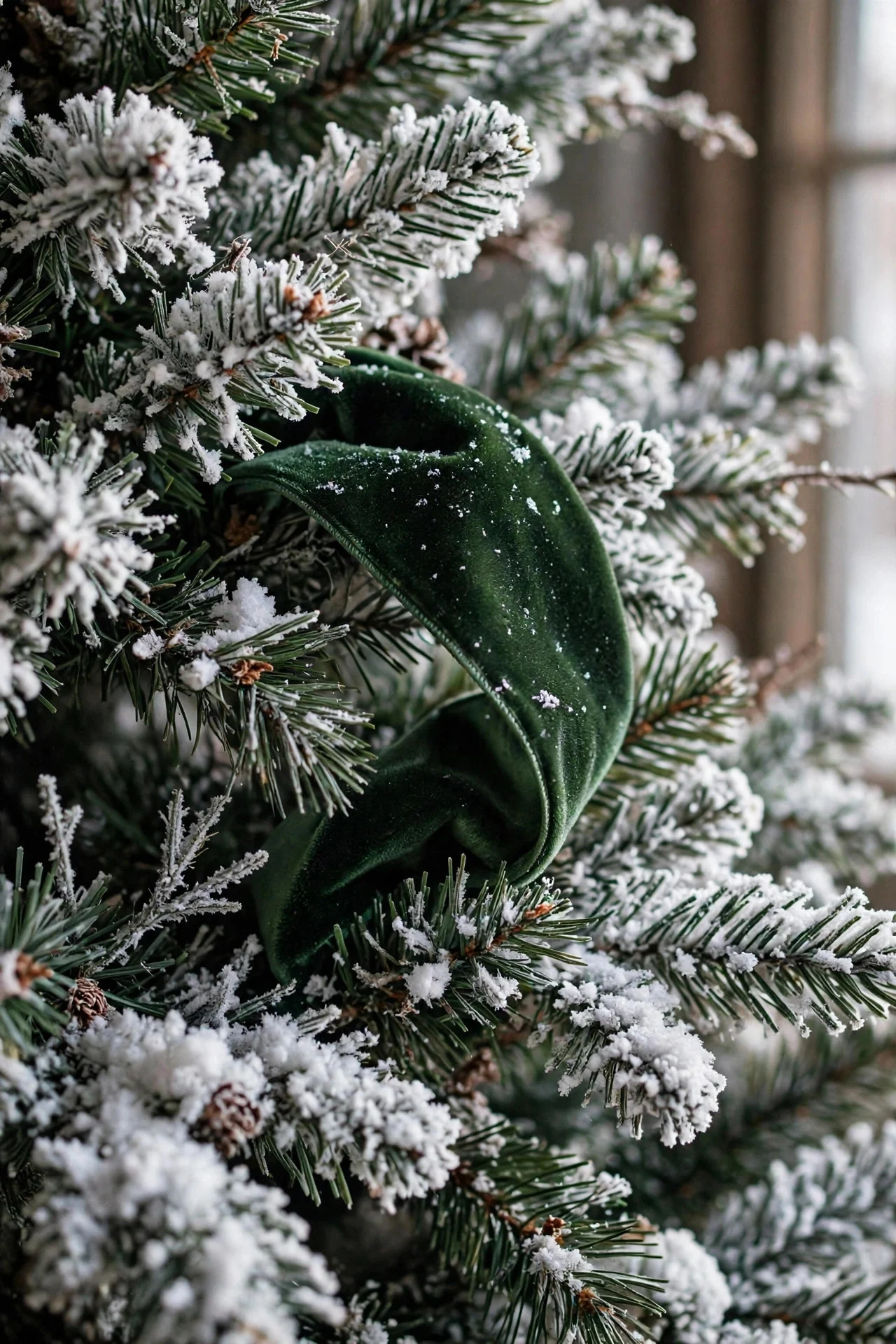
Flocking hides a multitude of sins — including ribbon mechanics. On flocked trees, tuck wide velvet ribbon deep into the branches rather than draping it on the surface; the white flocking swallows the tucks and the ribbon appears to emerge from snow.
Use 2.5- to 4-inch wired ribbon — wider than you’d choose for green trees — because narrow ribbon vanishes into the flocking. Twist and push every 10 inches. The effect is ribbon flowing through snowdrifts rather than lying on branches. Cut ribbon ends in a dovetail notch — the V-cut reads as custom and prevents fraying in the flocking.
Try this: Choose ribbon with a patterned reverse side — when the tuck twists, both sides show and the detail rewards close looking.
9. Light Toward the Tips, Not the Trunk
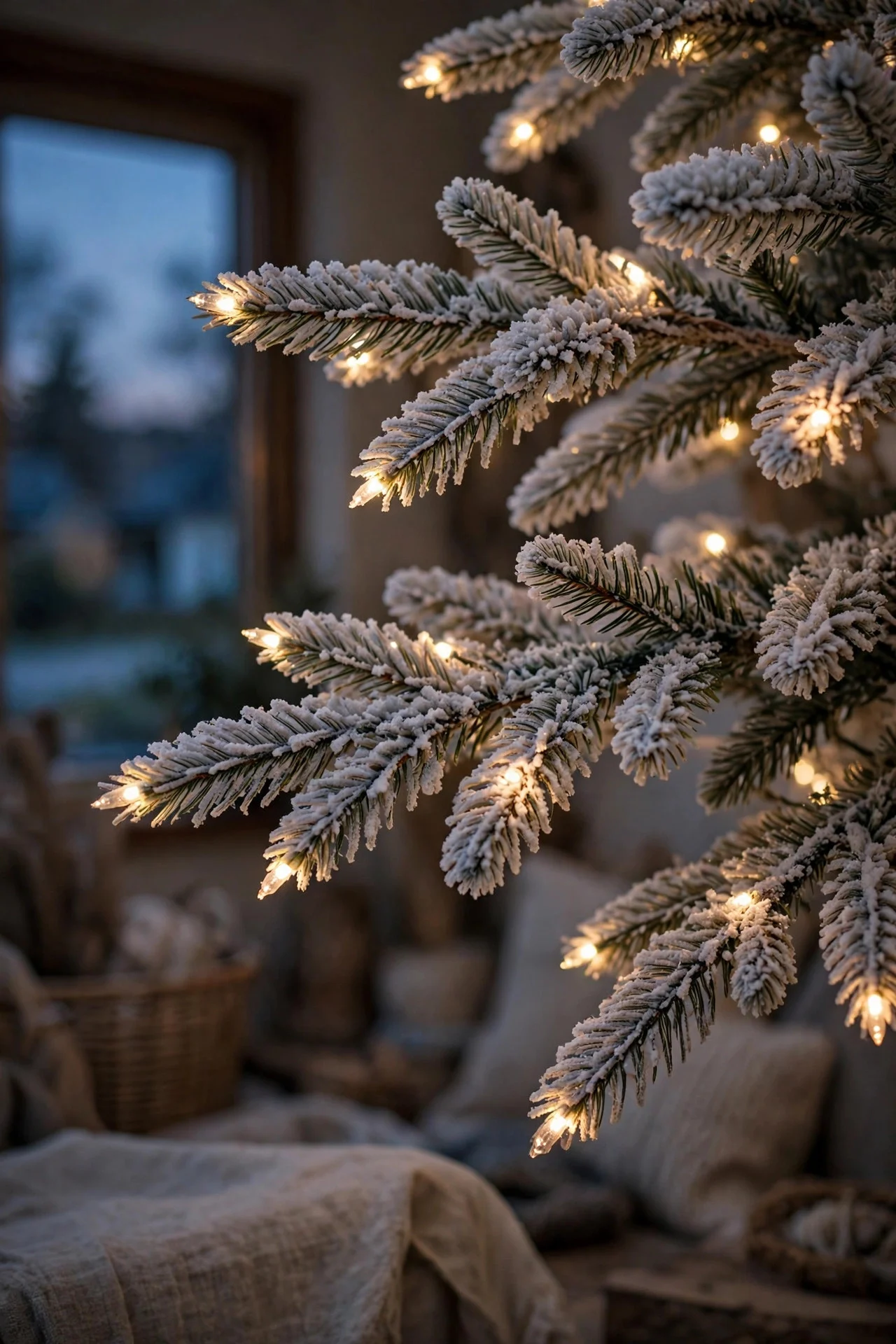
Here’s what nobody tells you: flocking buries lights. Strands pushed deep near the trunk disappear into white fluff, wasting half your lights. On a flocked tree, wrap lights toward the outer third of the branches where they sit on top of the flocking, not inside it.
Warm white (2700K) is the only choice — cool white plus white flocking reads as blue and sterile. Because white branches reflect light beautifully, you can use slightly fewer strands, but place every bulb where it’s visible. Replace one warm-white strand with a champagne-tinted strand — the subtle variation mimics candlelight on snow.
Try this: After lighting, view the tree from across a dark room — any dark patches mean lights got swallowed; pull those strands outward.
10. Go Oversized or Go Home
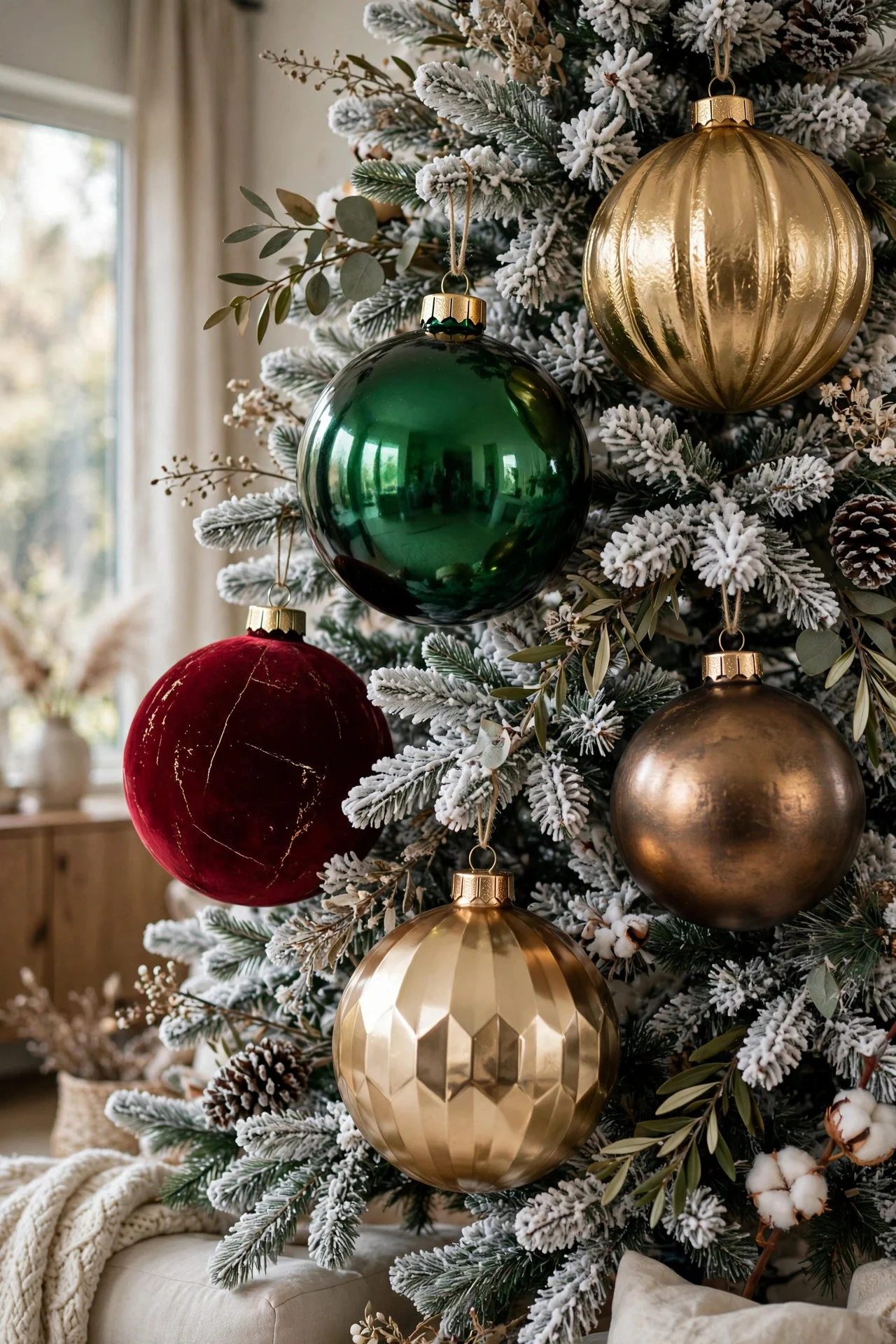
Flocking eats small ornaments — a 2-inch bauble buried in white branches is practically invisible from six feet away. The rule for flocked trees: ornaments should be one size larger than you’d buy for a green tree. Think 4- to 6-inch statement baubles.
Oversized doesn’t mean heavy: large shatterproof baubles give the scale without the weight that drags flocked branches down. Use 15–20 large ornaments as anchors, then fill with medium pieces. The tree will look abundant rather than fussy. Hang oversized baubles with ribbon loops, not wire hooks — hooks slip on flocked branches, ribbon grips.
Try this: Hang your largest ornaments at eye level and slightly outward — they’re the tree’s jewelry, so put them where they’re seen.
11. Flocking Care: Shake, Vacuum, Cover
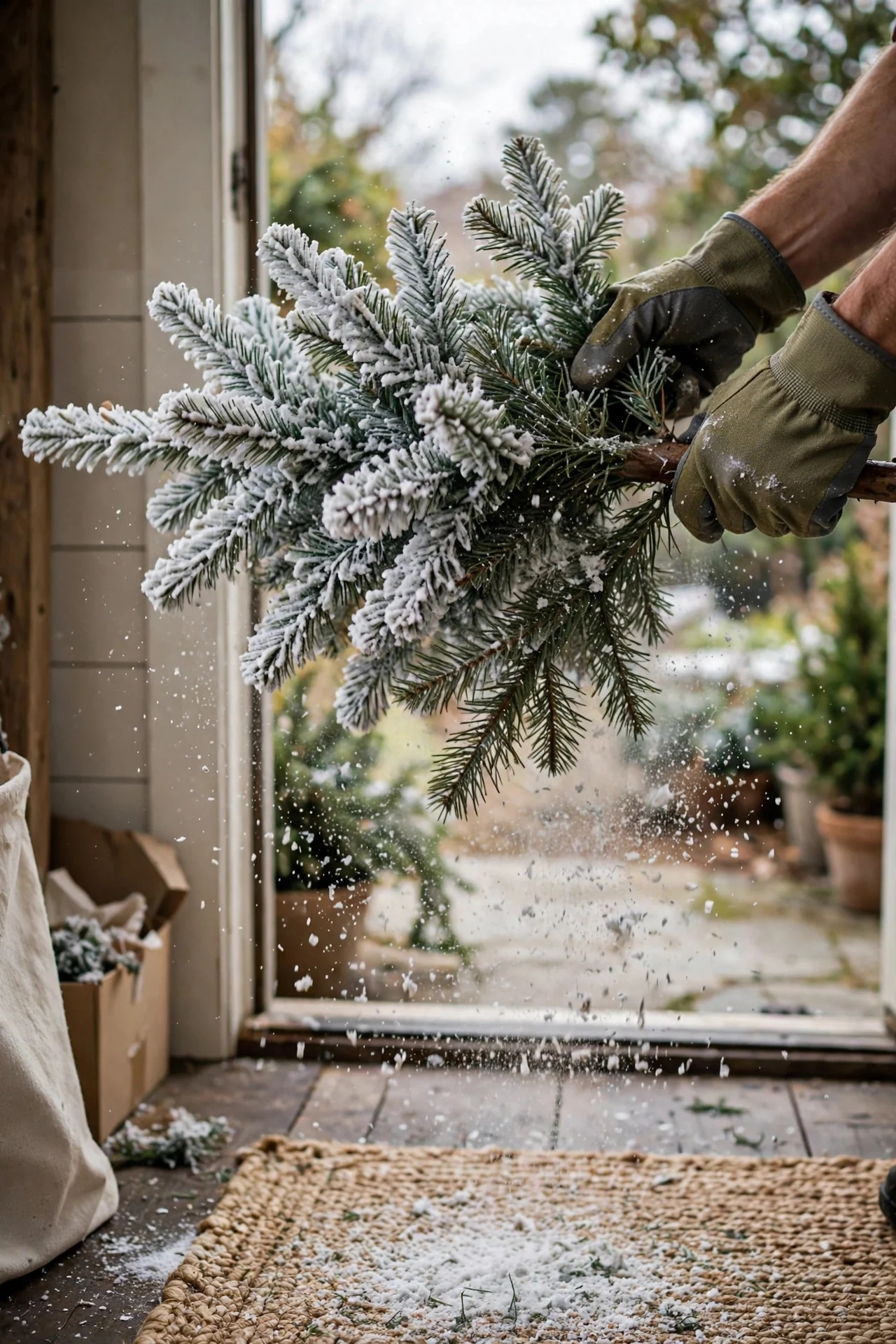
Flocking sheds — accept it, manage it. When you unbox the tree, take it outside or to the garage and shake each section vigorously before assembling; this removes the loose flock that would otherwise snow your living room for a month.
During the season, vacuum fallen flock with a brush attachment rather than sweeping — sweeping grinds it into carpet. In January, wrap the tree in an old sheet before bagging it; the sheet catches shed flock and keeps the tree’s coating intact for next year. Never use water or cleaner on flocking — moisture dissolves the adhesive and you’ll get bald patches.
Try this: Wear a dust mask during setup shake-out — flocking dust is non-toxic but unpleasant to breathe.
12. A Natural Collar Grounds the White
A flocked tree’s bright base needs grounding, or the whole tree looks like it’s floating. A woven seagrass or rattan collar — natural, textured, earthy — anchors all that white beautifully. Avoid white or silver collars; they blur into the flocking.
The collar should contrast: dark wicker, galvanized metal, or deep wood tones all work. Size it 2–3 inches wider than the stand per side. The natural-meets-snow combination is what makes flocked trees look styled rather than snowy. Choose a collar with a waterproof liner — condensation and meltwater ruin raw wicker fast.
Try this: Tuck a few pinecones and a sprig of greenery around the collar’s edge — it transitions the eye from white branches to natural base.
13. Match the Mantel With Flocked Garland
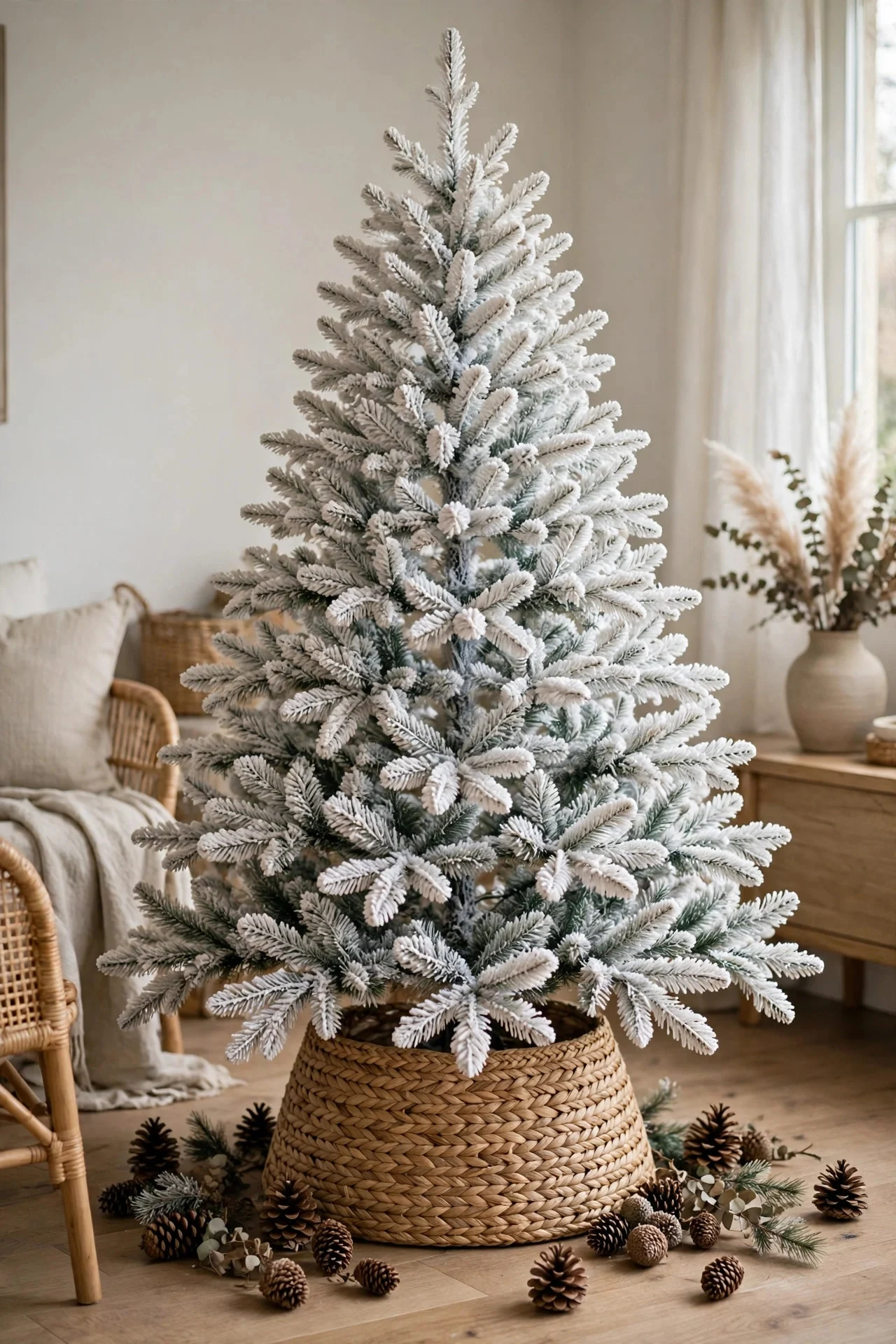
A flocked tree looks even better when the room echoes it. A flocked garland on the mantel — same white-dusted finish — ties the whole room to the tree. Decorate the garland with the same ornament palette in miniature.
Buy the garland from the same manufacturer as your tree if possible; flocking shades vary (bright white vs. champagne-tinted) and mismatched whites look dirty next to each other. One 9-foot garland dresses a standard mantel. Flock your own garland with spray snow to match exactly — one $8 can covers a 9-foot garland.
Try this: Weave the same ribbon from your tree through the garland — the repetition is what designers call “rhythm,” and it works.
14. A Gold Star That Crowns the Snow
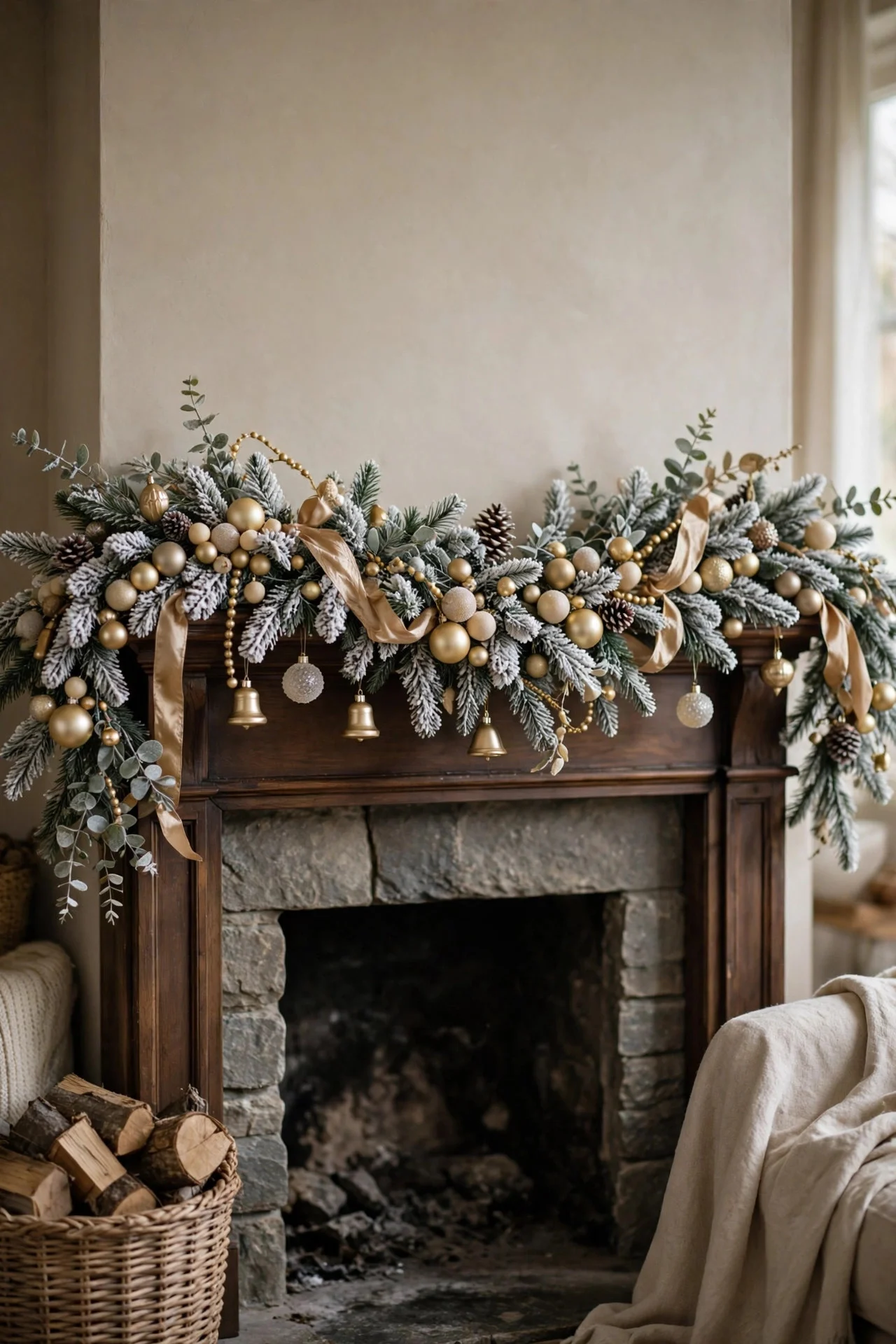
Toppers get lost on flocked trees — white and silver toppers vanish into white branches. A gold star, 8–10 inches, is the answer: metallic gold contrasts crisply with flocking and catches light from every angle.
Choose an open, dimensional star rather than a flat one — dimension reads at distance, flat shapes don’t. Wire it firmly to the top branch; flocked tips are slippery and toppers tilt. Aged or champagne gold suits the snowy look better than bright yellow gold. Weigh the topper before buying — flocked tips are weaker than green ones and heavy toppers lean.
Try this: Wrap the top 12 inches of the tree with an extra ribbon loop below the star — it builds a visual pedestal for the topper.
15. Keep the Palette to Two Colors
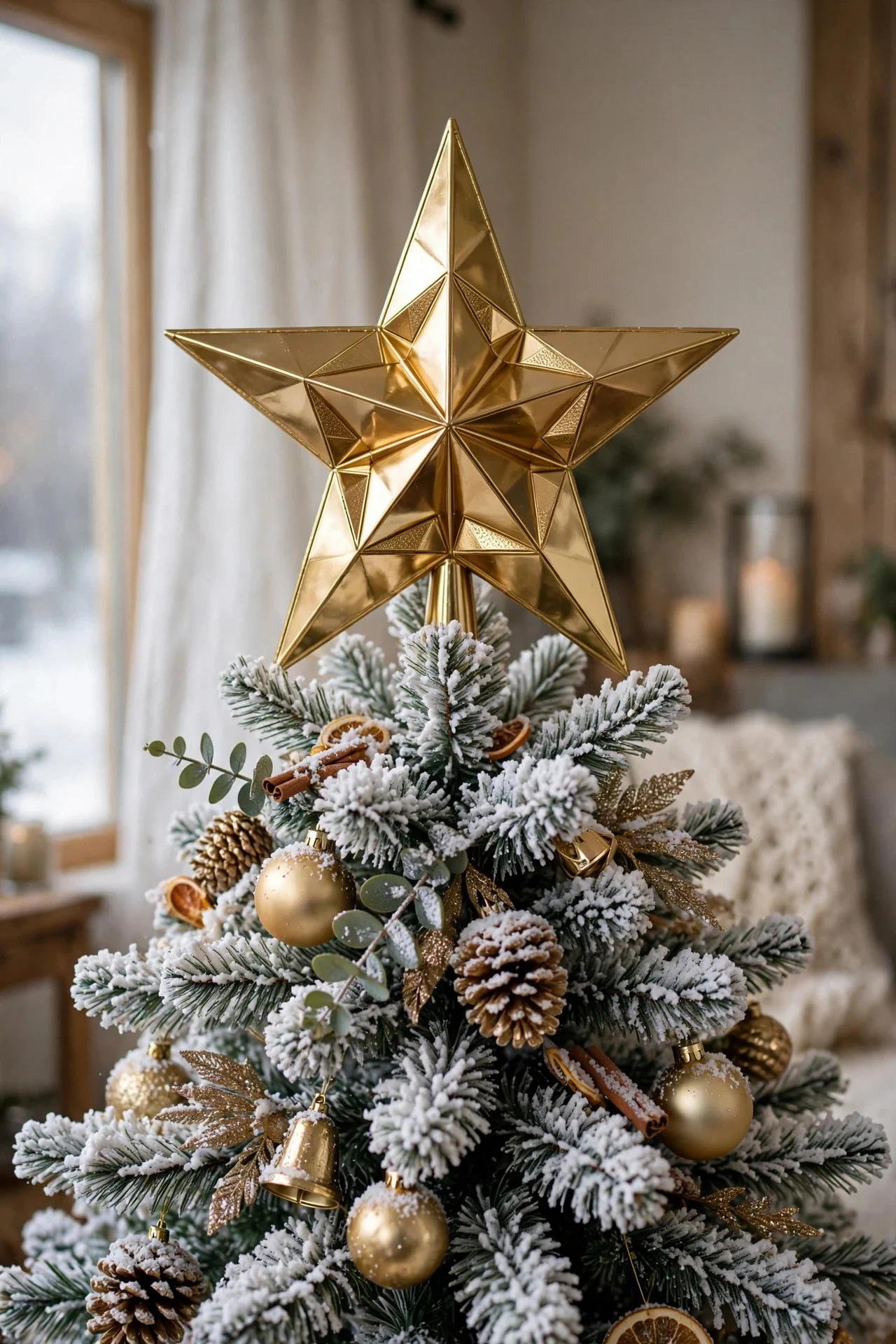
Flocking is already visually busy — white texture everywhere. Adding three or four ornament colors on top creates chaos. The most stunning flocked trees use exactly two colors plus metallics: red and gold, blue and silver, blush and champagne.
Two colors let the flocking breathe as a design element instead of background noise. If you crave variety, vary finishes within your two colors — matte, glossy, glittered — rather than adding a third hue. Photograph the tree in black and white — if the two colors still read as distinct in grayscale, the contrast works.
Try this: Lay your ornaments on white poster board before decorating — if the grouping looks calm there, it’ll look calm on the tree.
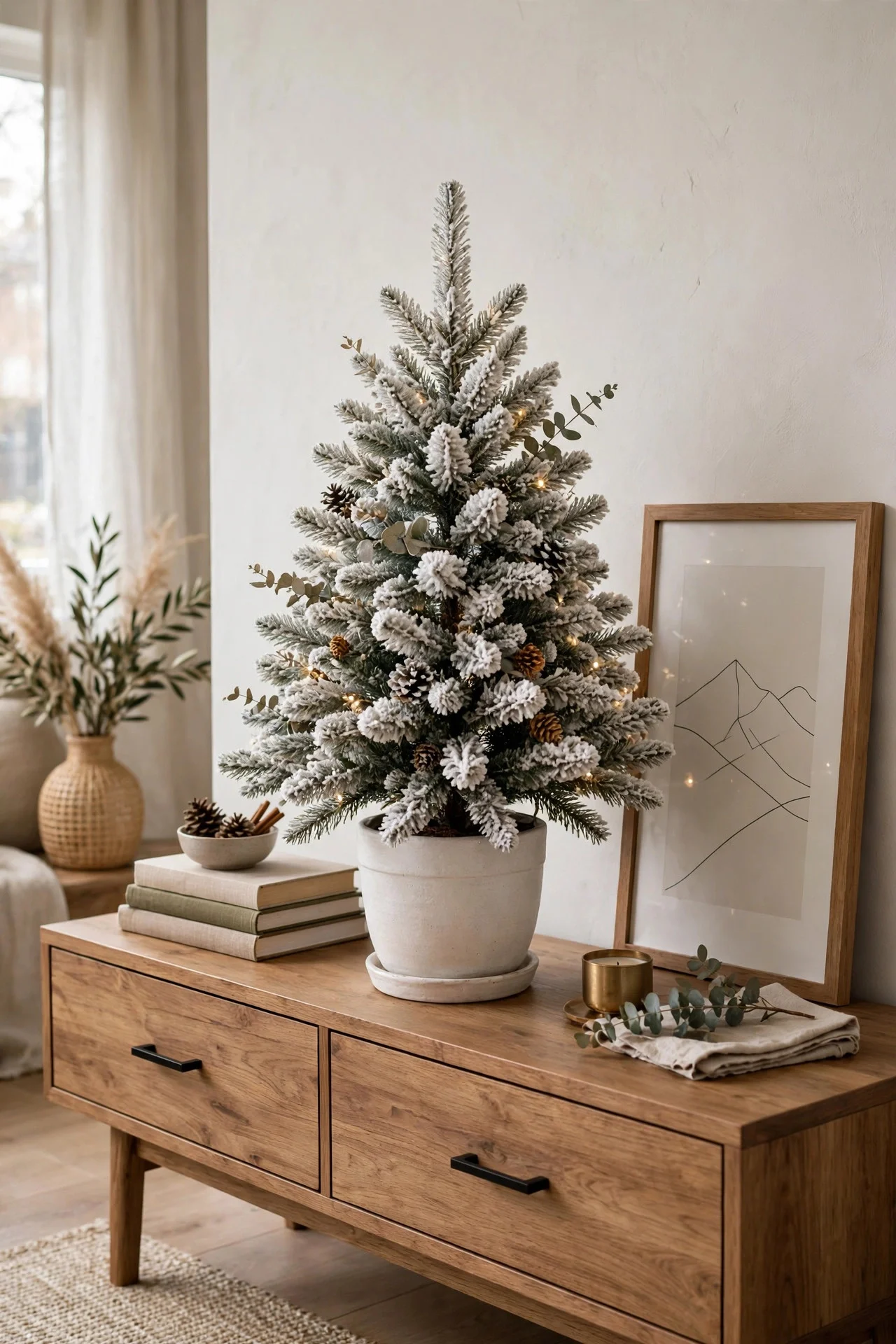
16. The Mini Flocked Tabletop Tree
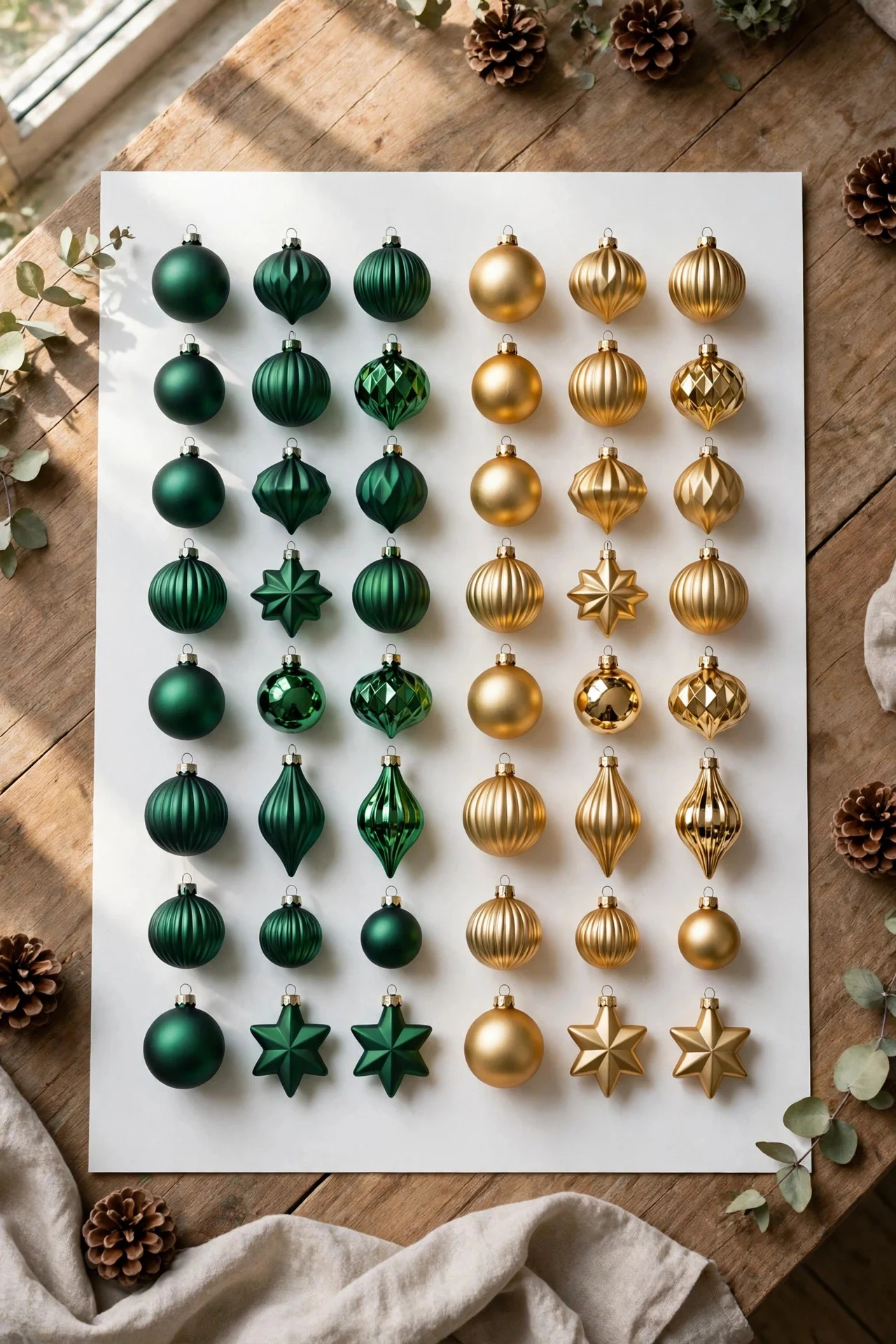
Not ready to commit to a full flocked tree? A 2- to 3-foot mini flocked tree gives you the snowy look on a console, desk, or nightstand for $25–$40. It’s also the perfect test: live with flocking for a season before investing $200 in the full-size version.
Decorate minis with restraint — a dozen small ornaments and a light strand. Mini flocked trees shed less, store in a shoebox, and look adorable in bathrooms and bedrooms where a big tree can’t go. Group three mini flocked trees together — a trio at staggered heights looks styled, a single one looks lonely.
Try this: Put the mini in a white ceramic pot instead of its plastic base — the monochrome pot-and-flock combination looks boutique-bought.
17. Flocked Trees Brighten Small Rooms
Here’s an underrated advantage: a flocked tree reflects light, making small or dark rooms feel bigger and brighter. In a north-facing living room or a small apartment, a flocked tree does double duty as decor and as a light source.
Lean into it — position the tree where it catches natural daylight, and the white branches will glow even with the lights off. Pair with light-colored ornaments (champagne, blush, silver) to maximize the brightening effect. Dust flocked branches with a microfiber mitt before the season — clean flocking reflects noticeably more light.
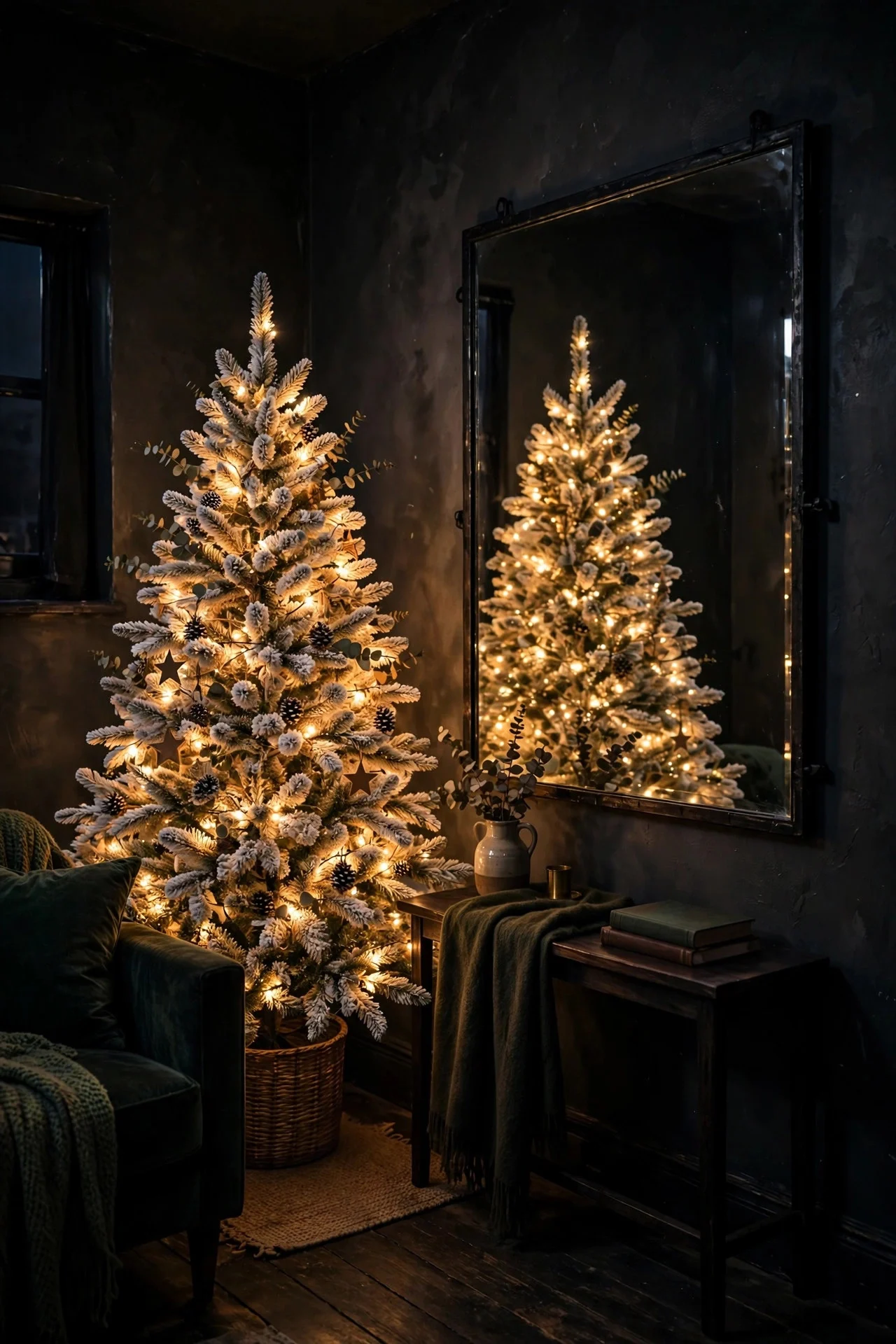
Try this: Hang a mirror opposite the flocked tree — the reflection doubles the light and the snowy branches.
Frequently Asked Questions
Do flocked Christmas trees shed?
Yes — some shedding is normal, especially in the first season. Shake the tree outdoors during setup to remove loose flock, vacuum (don’t sweep) fallen bits with a brush attachment, and wrap the tree in a sheet before storing to minimize ongoing loss.
What color ornaments look best on a flocked tree?
Saturated, high-contrast colors: jewel tones, classic red, black, and rich metallics like gold and champagne. Pale or small ornaments disappear against white branches — go bolder and one size larger than you would on a green tree.
How long does flocking last on an artificial tree?
With decent care — shaking out loose flock yearly, storing covered, avoiding moisture — flocking lasts 5–8 years before thinning noticeably. Keep the tree dry; humidity and water are what break flocking down fastest.
Are flocked trees safe for kids and pets?
The flocking itself is non-toxic but it’s an irritant if inhaled in quantity — shake the tree out well before bringing it inside, and discourage pets from chewing branches. As with any tree, keep small ornaments out of reach of toddlers.
Final Thoughts
A flocked tree rewards boldness. Bigger ornaments, stronger contrast, tighter palettes — everything about decorating for white branches is about committing harder, not holding back. Timid decorating is what makes flocked trees look washed out.
Pick your two colors, size up your ornaments, light toward the tips, and let the snow do the rest. Your flocked tree isn’t a compromise or a novelty — decorated right, it’s the main event.