
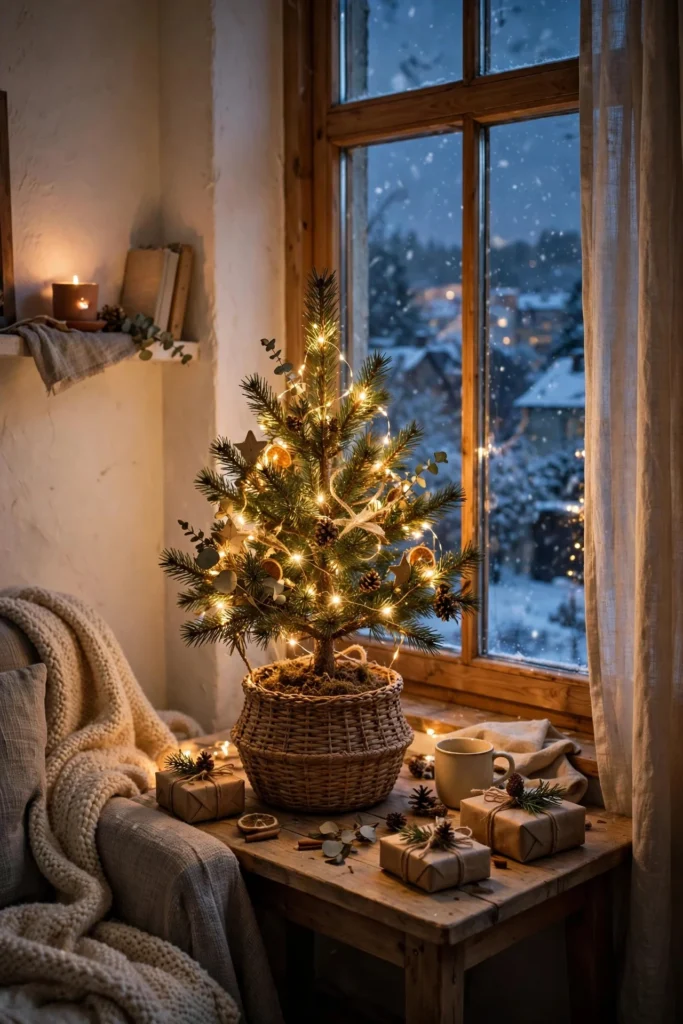
A full-size Christmas tree needs roughly four to six square feet of floor space — and in a studio apartment, a small living room, or a home with a curious toddler, that’s space you just don’t have. But skipping the tree doesn’t mean skipping the centerpiece feeling. Plenty of small-space alternatives give you the greenery, the lights, and the ornament display without swallowing your room.
Below are 12 Christmas tree alternatives designed for tight quarters: tabletops, walls, corners, and even your ceiling. Most cost under $40, several take less than an hour, and a few double as everyday decor once the holidays pass.
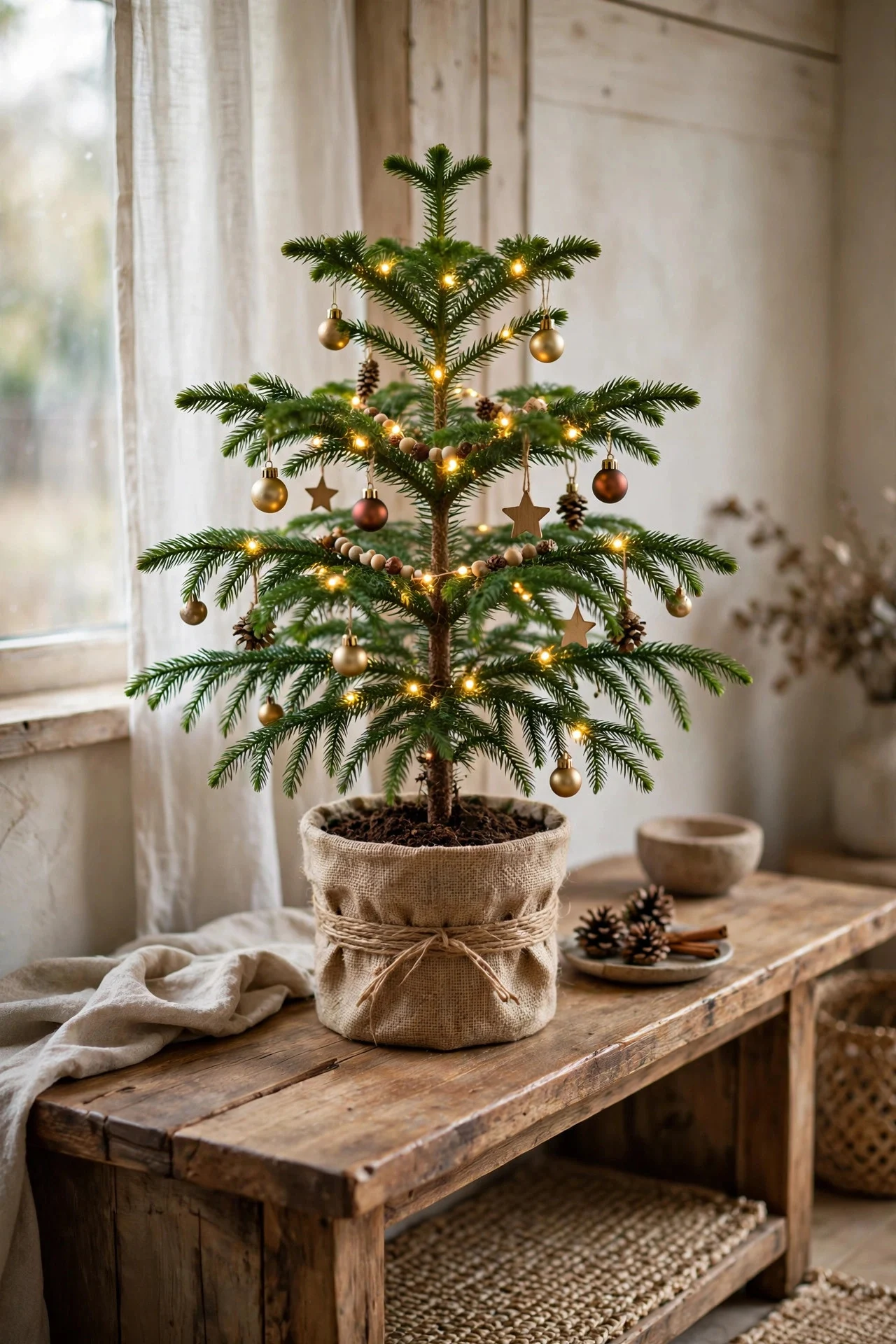
1. The Tabletop Potted Pine
A two- or three-foot potted pine on your dining table or console gives you every bit of the Christmas-tree feeling with none of the floor-space guilt. Look for a small Norfolk Island pine or a dwarf Alberta spruce at a garden center — they usually run $15 to $30 in early December.
Dress it simply: one string of 50 warm-white micro lights, six to eight small ornaments, and a burlap wrap around the plastic pot. When January comes, you can keep it as a houseplant instead of dragging a dead tree to the curb. Water it sparingly — about half a cup twice a week — and keep it away from heating vents; a Norfolk pine that survives December becomes a genuinely nice houseplant by spring.
Try this: Set the pot inside a woven basket one size up and fill the gap with crumpled kraft paper for a clean, finished base.
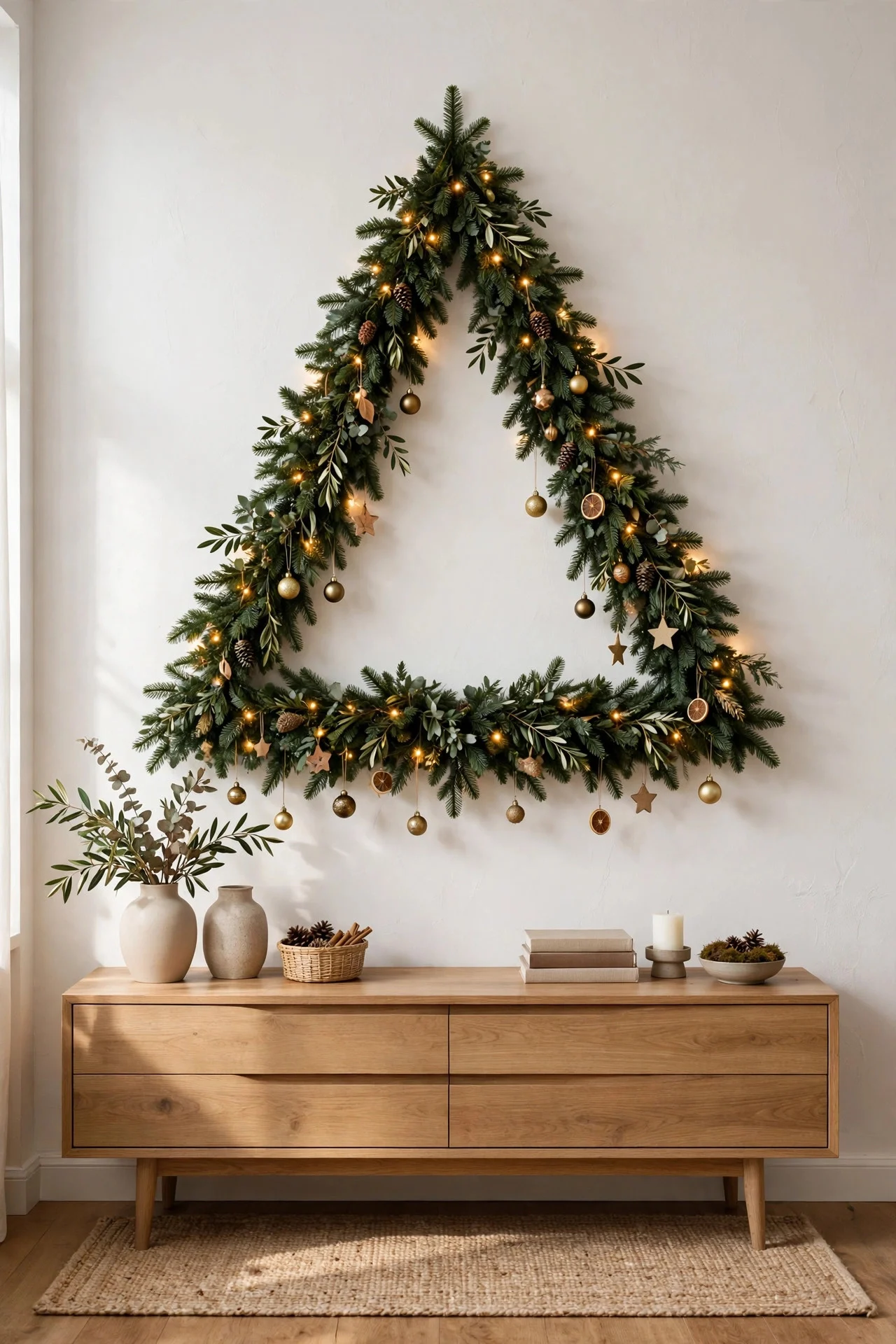
2. A Flat Tree on the Wall
Zero floor space required: arrange a Christmas tree shape directly on your wall. Lay evergreen garland (real or faux) in a triangle from a top anchor point, or pin bare branches in graduated rows. A four-foot wall tree fits above a sideboard or desk.
Hang lightweight ornaments from the branches with thin wire, and string battery fairy lights through the shape. Painter’s tape, small nails, or removable hooks all work — renters, rejoice. Map the triangle on the wall first with painter’s tape; a four-foot tree needs roughly a three-foot-wide base, and the tape outline keeps your rows even as you pin.
Try this: Outline the triangle with warm-white fairy lights first, then tuck greenery inside the glow — it reads like a tree even from across the room.
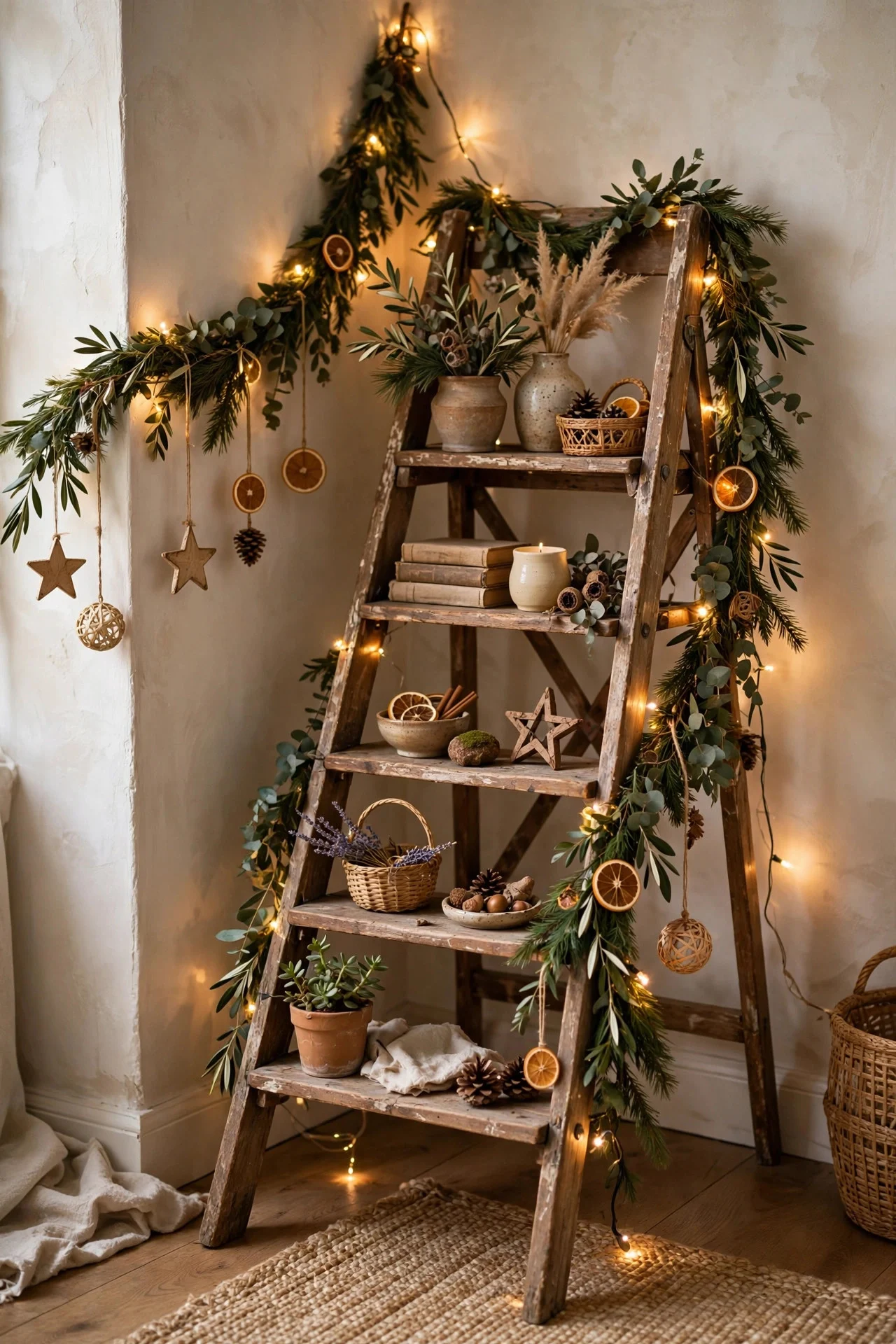
3. The Corner Ladder Tree
An old wooden step ladder, opened into a corner, makes a charming slim tree substitute that takes up barely a square foot. Drape a faux garland up each side, weave in lights, and hang ornaments from the rungs.
Style each step like a little shelf: a mini wreath on one, a stack of wrapped books on another, a candle cluster on the third. Flea markets and thrift stores sell wooden ladders for $10 to $25. Sand any rough rungs and wipe the ladder down before decorating; thrift-store wood is often dusty, and a quick once-over keeps ornaments and garland clean.
Try this: Paint the ladder matte white or deep green before decorating — it looks intentional instead of borrowed from the garage.
4. A Wreath on a Stand
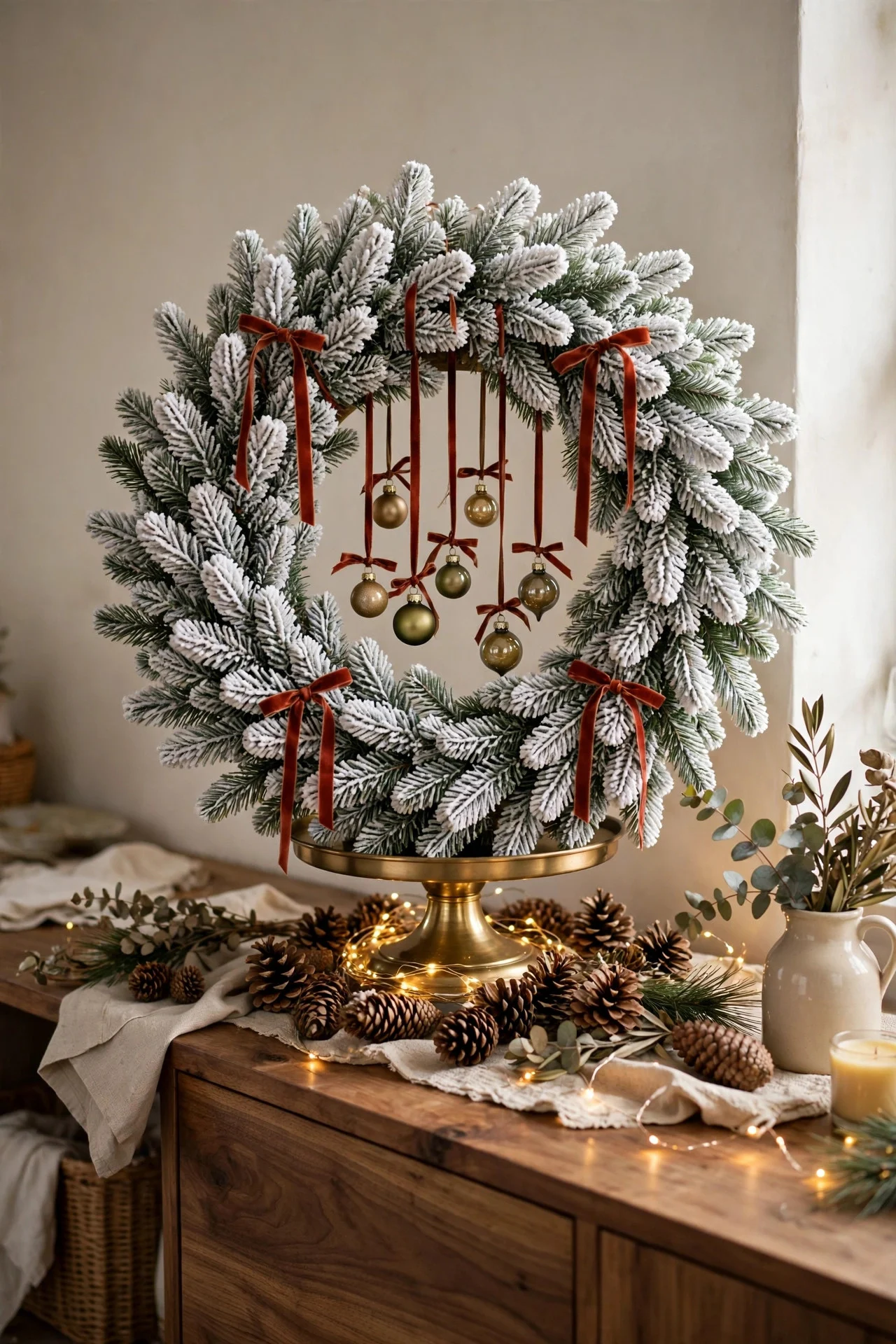
One oversized wreath — 30 inches or more — on a plate stand, easel, or even a coat rack becomes a striking tree stand-in. It’s all the Christmas greenery your small space needs, and it sits on a table or shelf instead of the floor.
Hang your favorite ornaments from the wreath’s inner branches with ribbon, and nest a candle or a small vase of pine sprigs in the center opening. Flocked or berry-heavy wreaths look especially lush. A 30-inch wreath needs a stand at least 10 inches deep to sit securely; a collapsible plate easel from a craft store costs about $12 and folds flat in January.
Try this: Prop it in a low dough bowl or tray with a few pinecones and fairy lights scattered around the base.
5. The Hanging Branch Tree
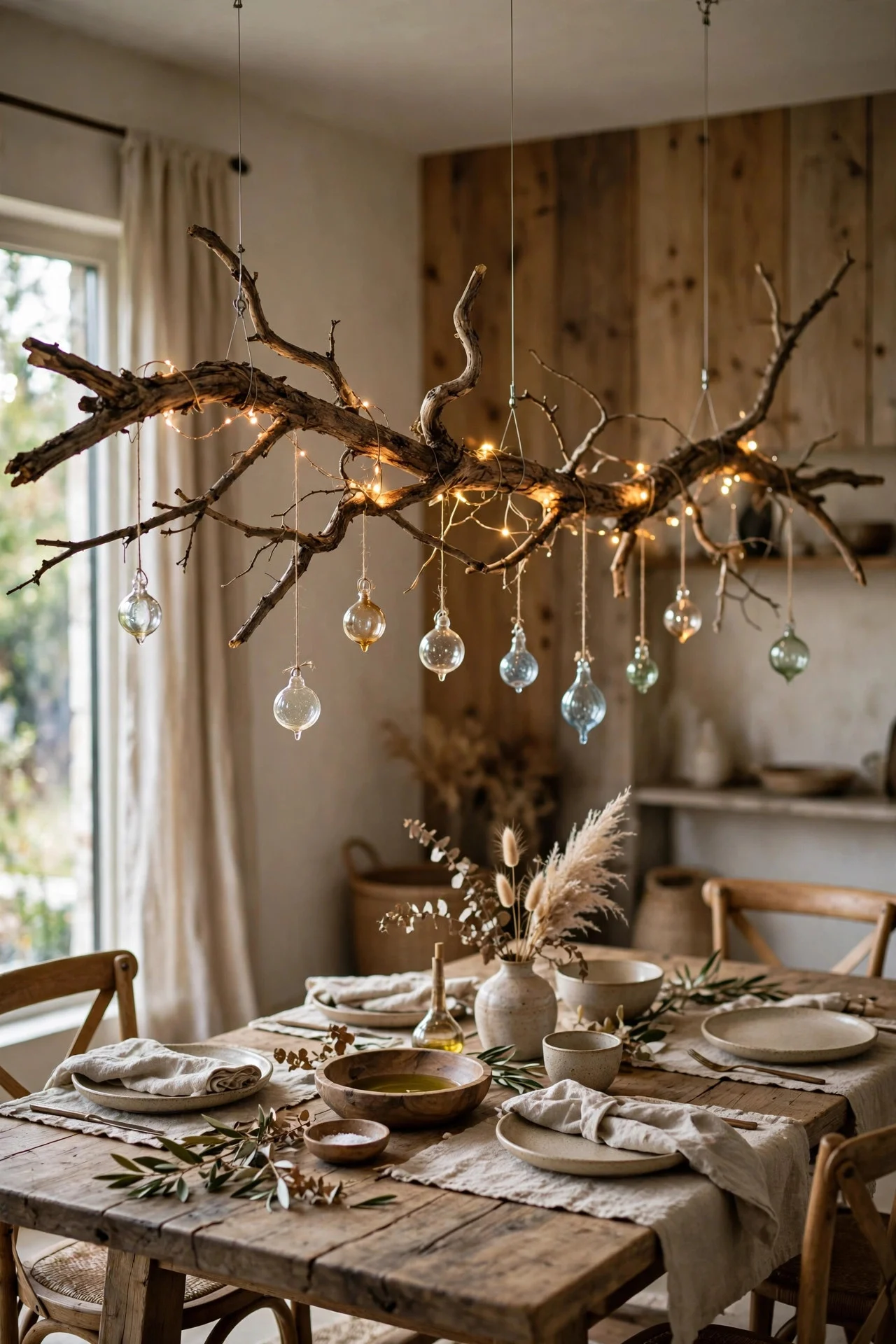
Suspend one long branch or driftwood piece from the ceiling with fishing line, and hang ornaments and lights from it — a floating tree that uses exactly zero floor or surface space. It works beautifully over a dining table or in a bedroom corner.
Choose a branch about three feet long and keep the hanging elements light: glass balls, paper stars, and a battery-operated light string. The result feels airy and sculptural, not improvised. Hang the branch with two anchor points, not one, spaced about 18 inches apart — a single line lets the branch slowly rotate, while two keep it steady all season.
Try this: Wrap the branch in cedar or eucalyptus garland first — the greenery disguises any foraged-branch scruffiness.
6. A Stacked-Book Tree
Stack hardcover books in a pyramid — largest on the bottom, smallest on top — to build a literary Christmas tree on any side table. It’s free if you use books you own, and book lovers find it genuinely delightful.
Drape a thin gold or green garland around the stack and perch a star, pine sprig, or small candle on top. Use books in red, green, cream, and gold covers for a seasonal palette without any extra purchases. Put felt pads between the books if any are valuable; the weight of the stack can dent covers, and pads cost pennies at a hardware store.
Try this: Tuck battery tea lights between the books so the “tree” glows from within in the evening.

7. The Olive Tree Swap
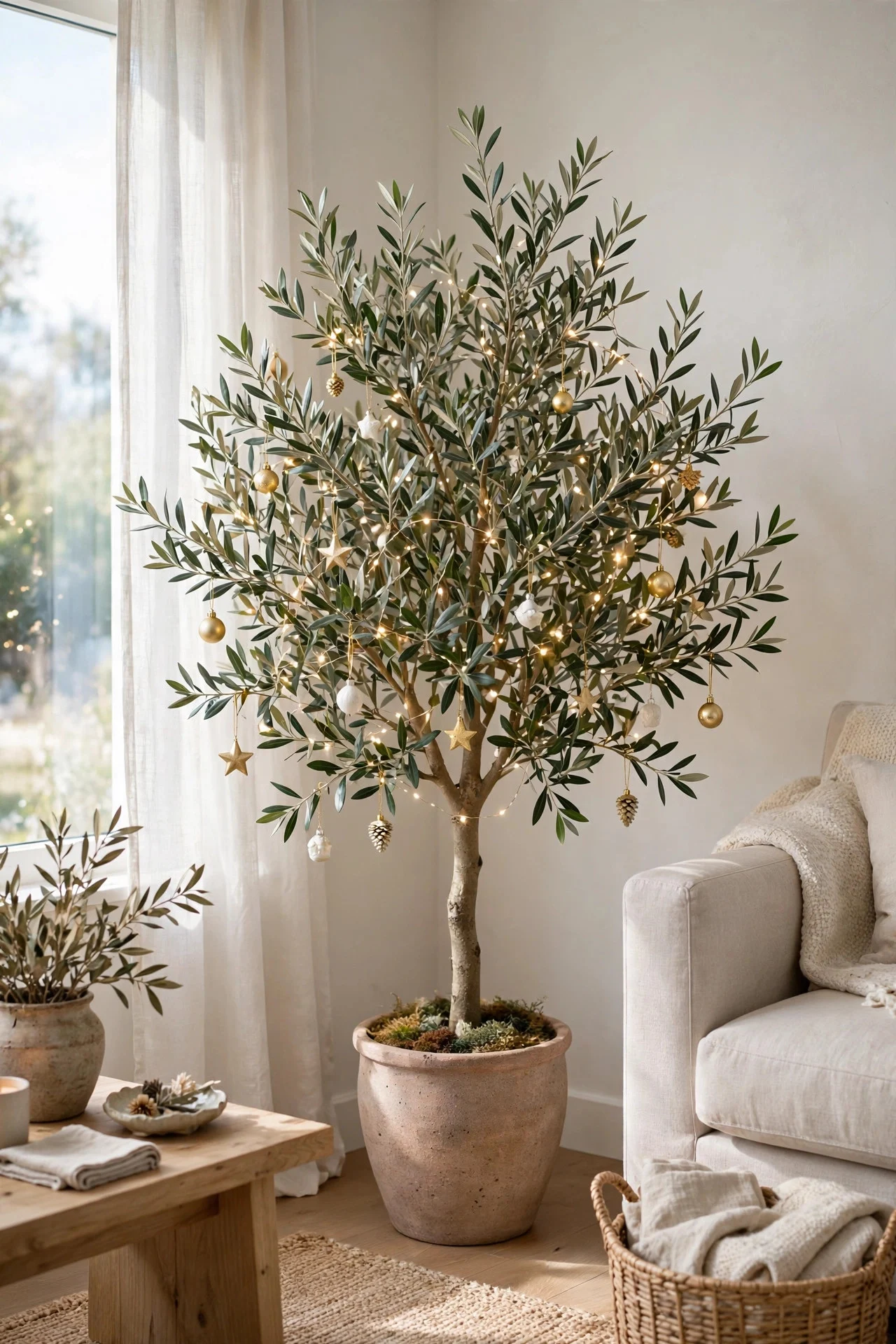
If you already own a houseplant with some structure — an olive tree, a fiddle-leaf fig, a tall snake plant cluster — decorate it. A two- to four-foot olive tree with its silvery-green leaves looks stunning with gold and white ornaments.
Use only lightweight ornaments and one string of micro lights so you don’t stress the branches. It doubles as your everyday plant the other eleven months, which is the ultimate small-space economy. Check the branches’ weight limit by hanging one ornament first and watching for droop overnight; olive branches are springier than pine and tell you quickly what they can hold.
Try this: Keep the color story to one metallic (gold or copper) plus white — restraint is what keeps a decorated houseplant classy.
8. A Tiered-Tray Tree Scene
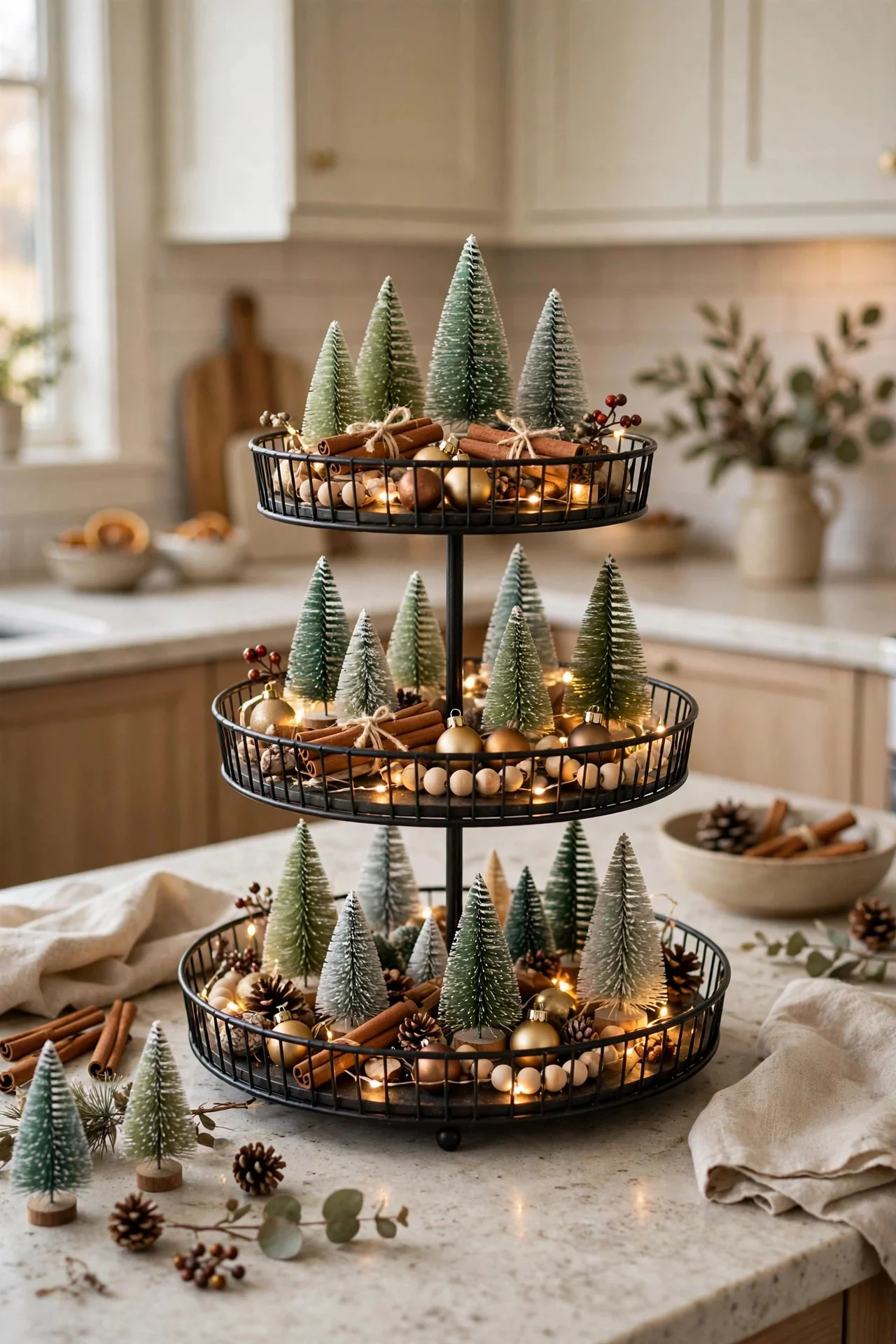
Turn a two- or three-tier tray into a miniature Christmas village tree hybrid: tiny bottle-brush trees, mini ornaments, and a string of micro lights on each level. It lives on your kitchen counter or coffee table and takes up about twelve inches.
Mix in real elements — a sprig of cedar, cinnamon sticks, a few cranberries in a tiny dish — so it smells like Christmas too. Bottle-brush trees cost $1 to $5 each at craft stores. Anchor the tray on a non-slip shelf liner cut to size; tiered trays wobble when bumped, and the liner keeps the whole scene steady on slick counters.
Try this: Dust the whole tray with a spoonful of Epsom salt for a snowy effect that costs almost nothing.
9. The Chalkboard Tree
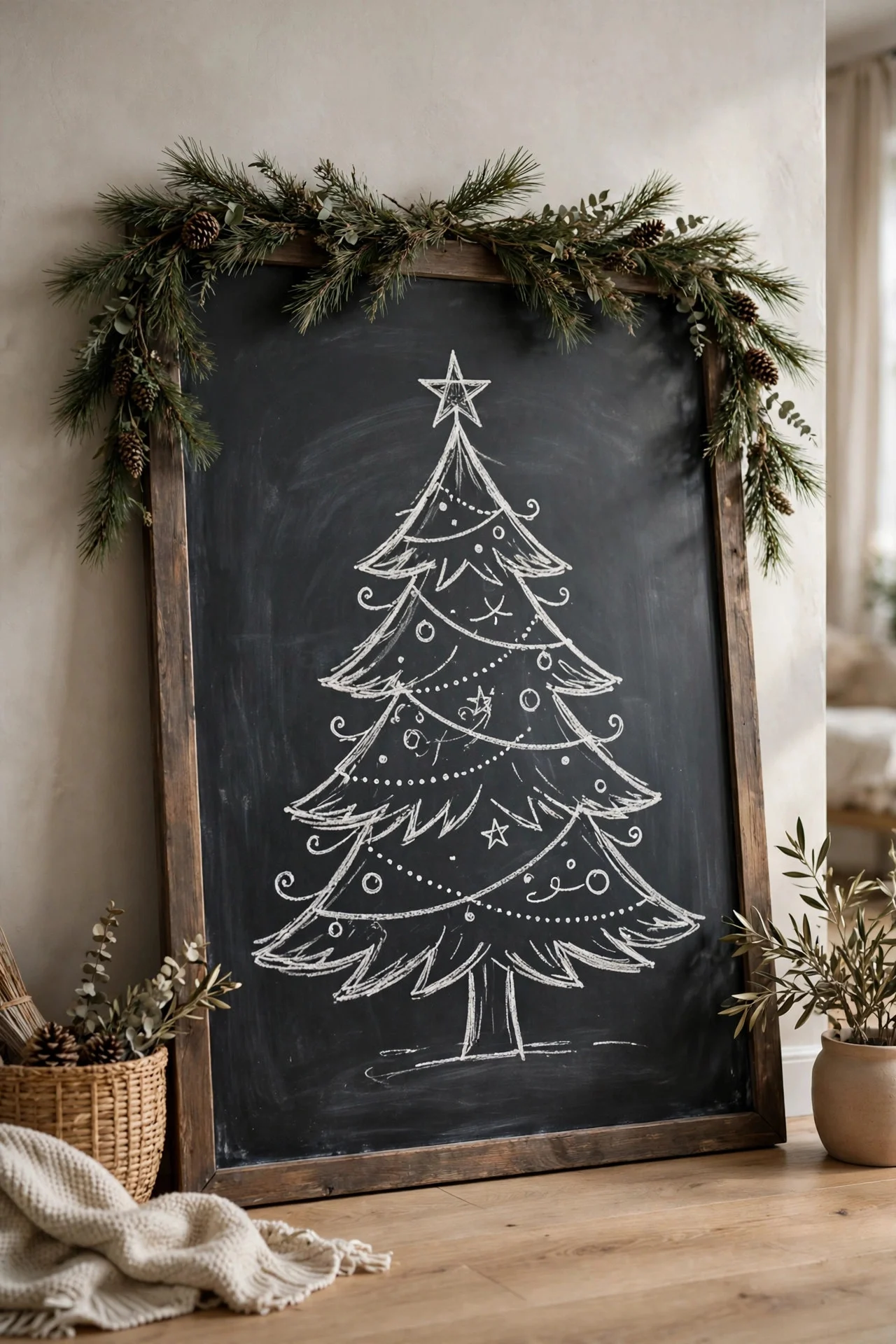
Lean a large framed chalkboard against the wall and draw your tree — a triangle, ornaments, a star — in chalk marker. It takes up as much space as a leaning frame and changes the mood of the whole room.
White chalk on a dark board reads elegant; colored markers make it playful for kids’ rooms. Add a real pine garland across the top of the frame and a small basket of wrapped gifts at the base. Season the chalkboard first by rubbing chalk over the whole surface and wiping it off; it prevents ghosting so next year’s drawing starts on a clean slate.
Try this: Write your family’s holiday countdown dates or favorite Christmas lyrics in the empty space around the drawn tree.
10. Ribbon-Tree Wall Art
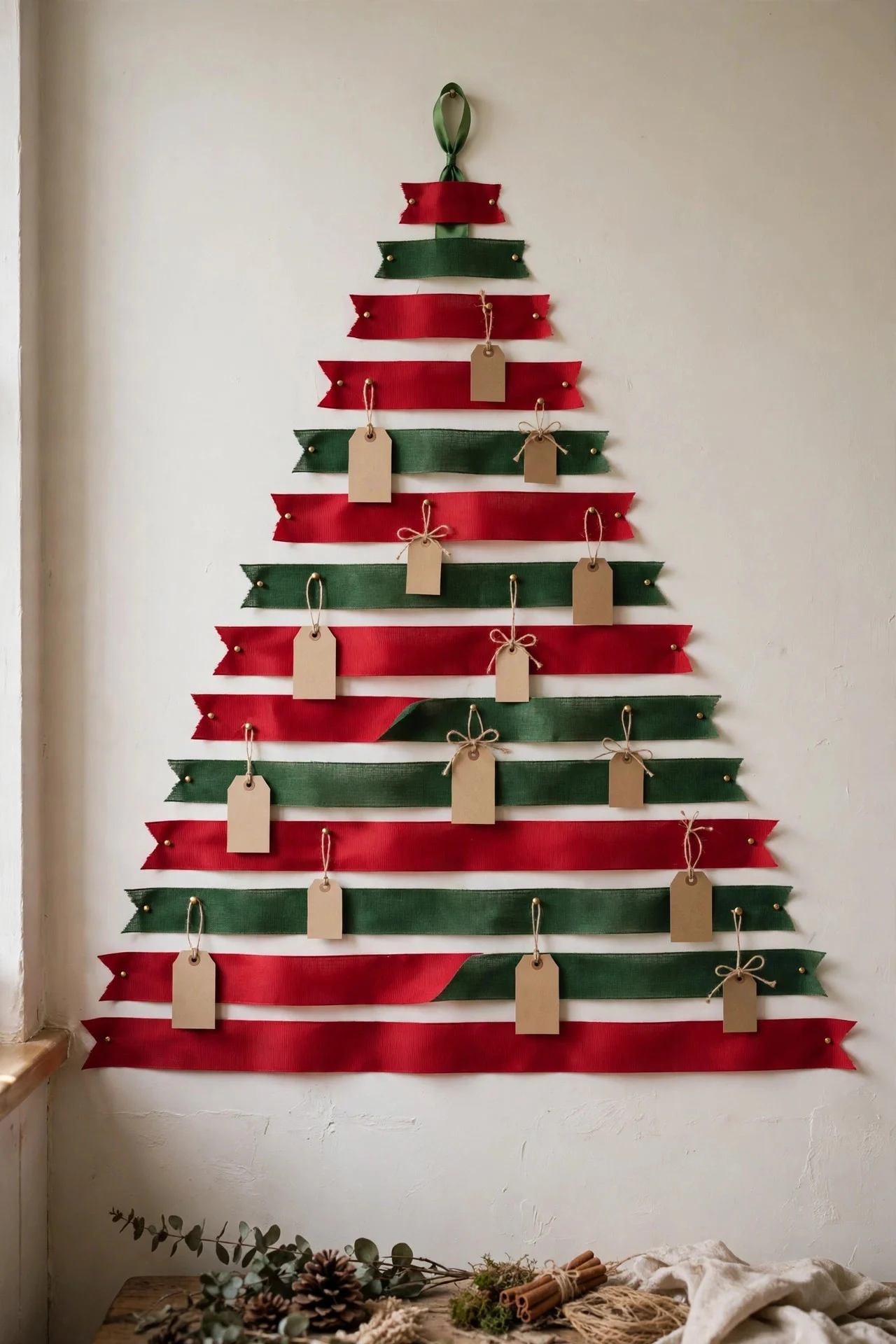
Cut lengths of wide wired ribbon — green, red, gold — in graduated sizes and pin them to the wall in a tree silhouette, longest at the bottom. A washi-tape star tops it off, and a few tiny clothespinned gift tags stand in as ornaments.
The whole project takes about thirty minutes and costs under $10 in ribbon. Because it’s flat against the wall, it works in hallways, entryways, and behind doors where nothing else fits. Use wired ribbon at least two inches wide — narrower ribbon curls and won’t hold the straight lines that make the tree silhouette read clearly from across the room.
Try this: Write one thing you’re grateful for on each ribbon strip — it becomes a gratitude tree, not just decor.
11. A Slim Pencil Tree in the Corner
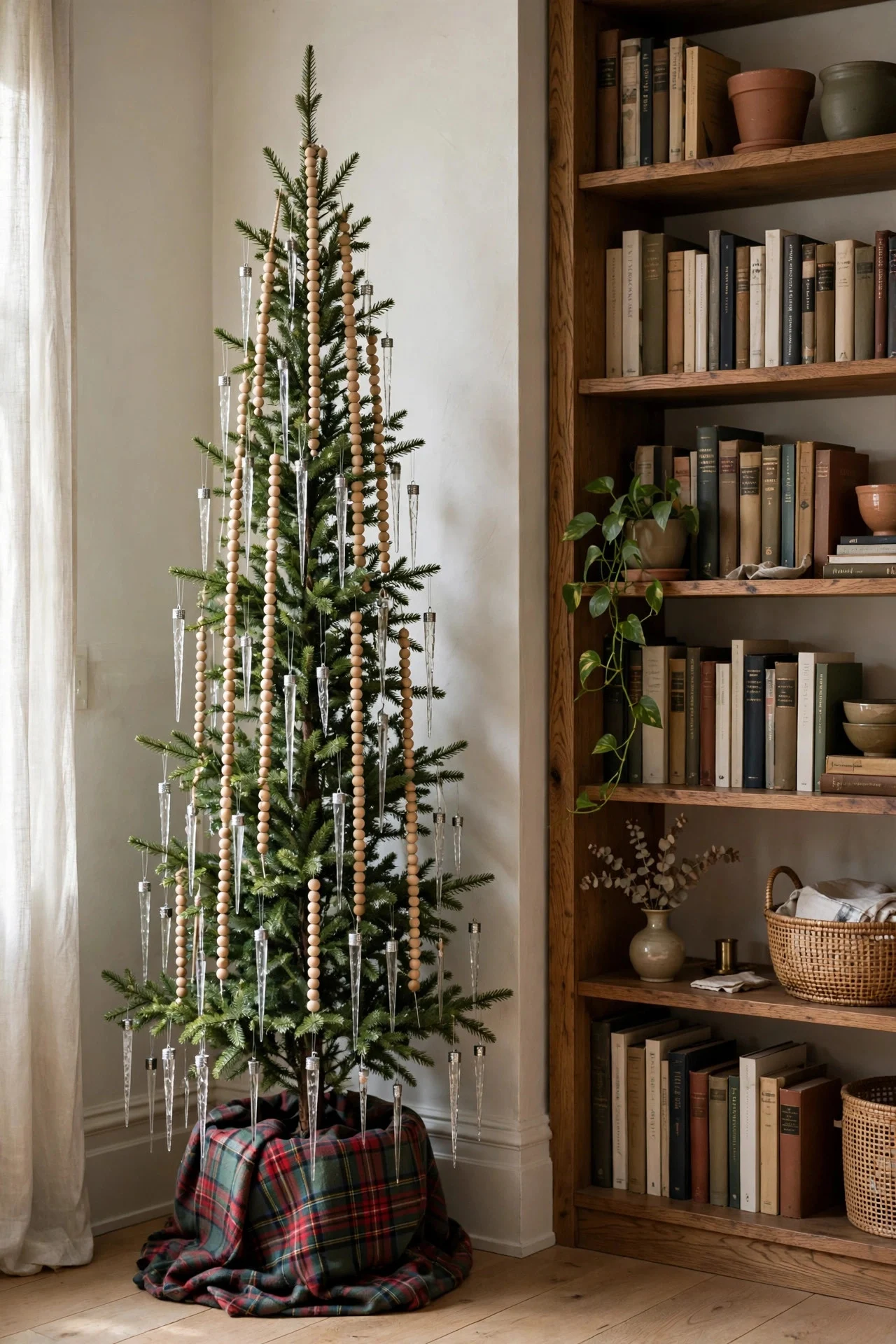
Pencil trees are the one “real tree” option that genuinely fits small spaces: they’re under two feet wide at the base but come in five- and six-foot heights. Tuck one into a dead corner or beside a bookshelf where a standard tree would never go.
Because the branches are slim and upward, they show off ornaments beautifully — use long icicles, vertical bead garlands, and anything that draws the eye up. Artificial ones run $40 to $80 and store in a box barely bigger than a broom. Fluff a pencil tree branch by branch from the bottom up, bending each tip slightly upward; ten minutes of fluffing is the difference between sparse and lush.
Try this: Wrap the base in a plaid throw or a vintage tablecloth instead of buying a tree skirt — it hides the stand and adds color.
12. The Branch-in-a-Vase Tree
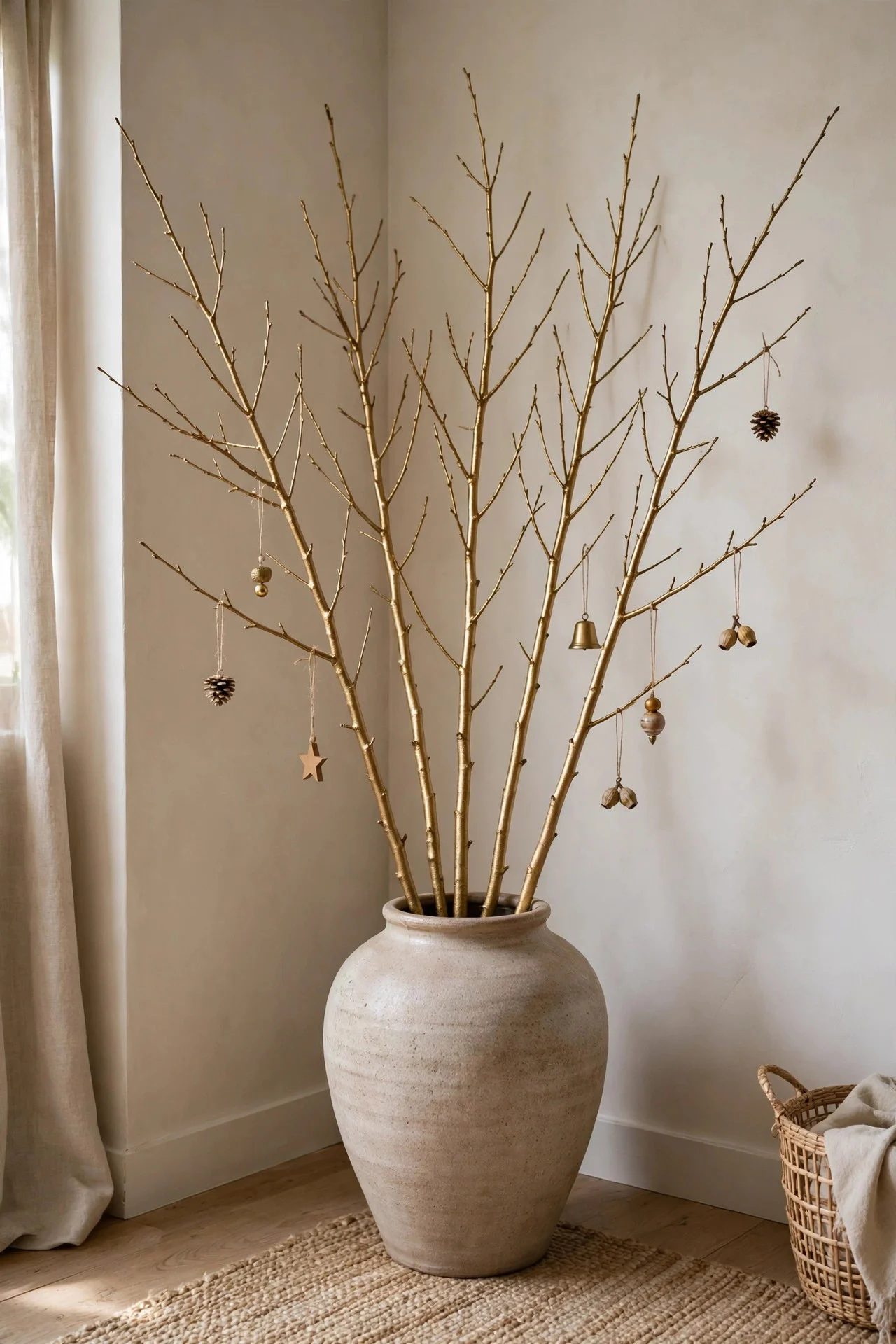
Perhaps the simplest alternative of all: arrange five to seven bare branches in a tall floor vase and decorate them. Manzanita, birch, or curly willow branches look sculptural and modern; spray-paint them white or gold for extra drama.
Hang a dozen lightweight ornaments and wrap one light string around the vase itself. A corner vase tree takes up the footprint of a single vase — about ten inches — and looks like something from a design studio. Fill the vase one-third with sand or pebbles before adding branches; tall arrangements are top-heavy, and the weight at the base stops the whole thing tipping.
Try this: Swap ornaments for paper snowflakes in January and keep the branch display up all winter — one arrangement, two seasons.
Frequently Asked Questions
What is the best Christmas tree alternative for a tiny apartment?
A tabletop potted pine or a wall-mounted flat tree. Both give you lights, greenery, and a place to hang ornaments while using zero floor space, and the potted pine doubles as a houseplant afterward.
How do I hang ornaments without a tree?
Ladders, wall-mounted branches, hanging ceiling branches, and wreath stands all take ornaments beautifully. Use thin wire or ribbon for hanging, and keep glass pieces away from high-traffic edges.
Are slim pencil trees actually worth it for small spaces?
Yes — a six-foot pencil tree has a base under two feet wide, so it fits corners and narrow walls a standard tree can’t. They cost $40 to $80, assemble in minutes, and store in a slim box.
Can I use a real plant as a Christmas tree?
Absolutely. Norfolk Island pines, dwarf Alberta spruces, and olive trees all decorate well. Use lightweight ornaments and micro lights, water normally, and avoid heavy glass balls that strain branches.
Final Thoughts
A small space doesn’t mean a skimpy Christmas — it means a smarter one. Whether you go with a tabletop pine, a wall of ribbon, or a ladder dressed to the nines, the magic comes from the ritual: the lights in the evening, the ornaments you love, the greenery you can smell. Pick the alternative that fits your square footage and your style, and enjoy a holiday that feels full without feeling crowded.