
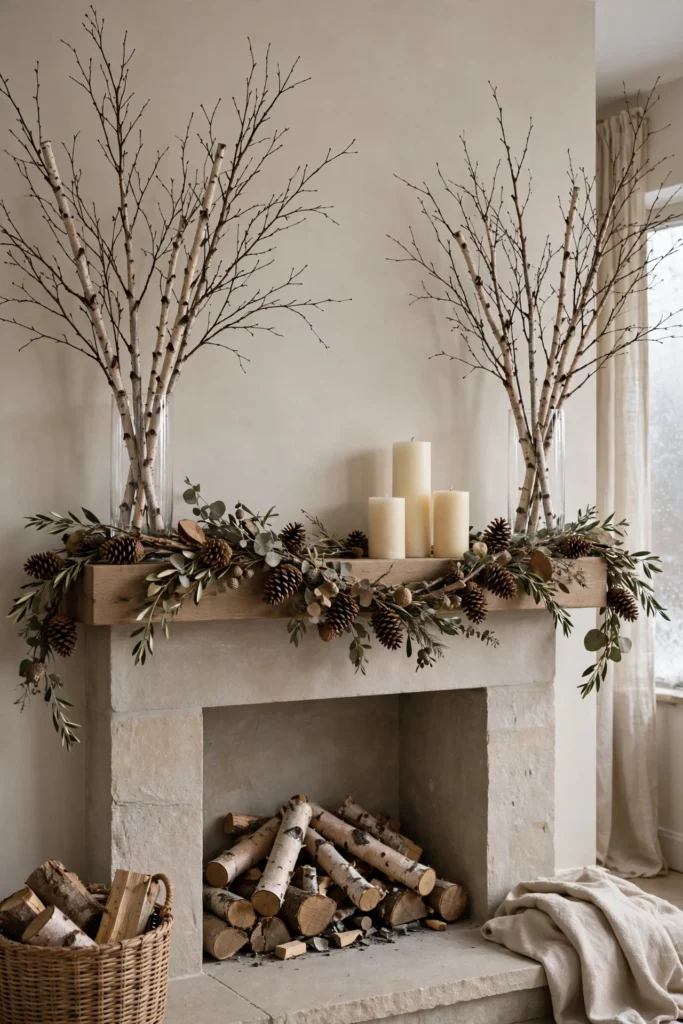
January mantels are tricky. The stockings are packed away, the garland went back in its box, and suddenly the fireplace — the focal point of the whole room — looks naked. But ripping everything down and starting from a blank slate is actually the fun part: winter has its own palette, and it’s quieter and more interesting than Christmas red.
These 15 winter mantel decor ideas skip every holiday cliché and lean into what the season actually looks like: bare branches, frosty textures, candlelight, and calm neutrals. Nothing here needs to come down in February.
1. A Pinecone Garland Runner
String pinecones on jute twine — drill a small hole through the base of each cone, thread them 3 inches apart — and drape the strand along the mantel with a natural sag in the middle. It takes about 40 cones for a 6-foot mantel and costs nothing if you forage them.
Mix in a few dried orange slices or cinnamon bundles for scent and color contrast. The whole thing stores in a bag for next year.
Try this: Dust the cones lightly with white craft paint on the tips for a frosted look — dry-brush, don’t soak.
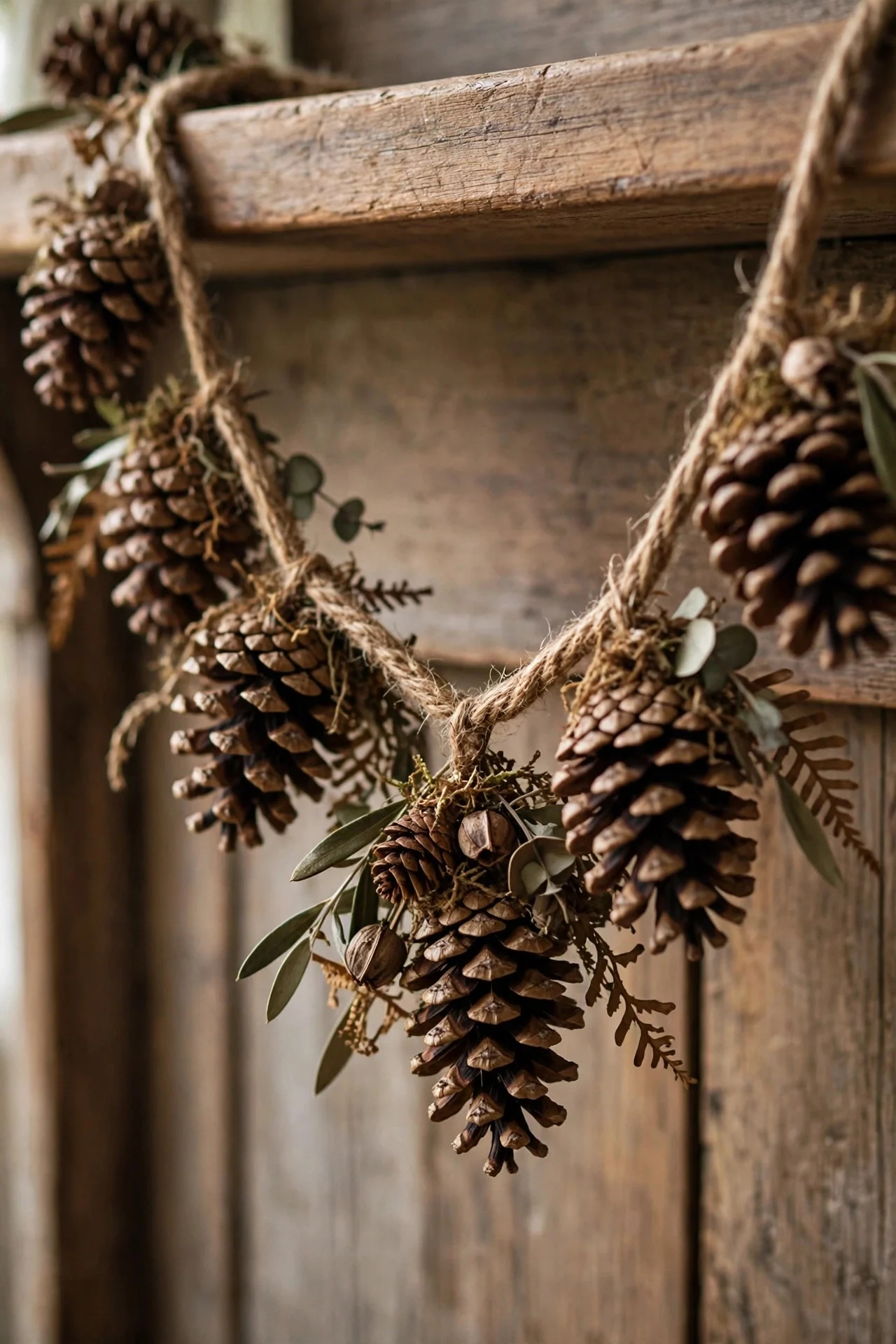
2. Bare Birch Branches in Tall Vases
Flank the mantel with two tall cylinder vases holding birch or curly willow branches. Cut branches to roughly twice the vase height so they arc outward, and keep the vases identical — symmetry at the ends lets the middle stay relaxed.
This is the lowest-maintenance mantel styling there is: no water, no wilting, no dusting beyond a yearly wipe. Foraged branches are free; craft-store bundles run about $10.
Try this: Weave one strand of warm fairy lights through each branch cluster for evening glow.
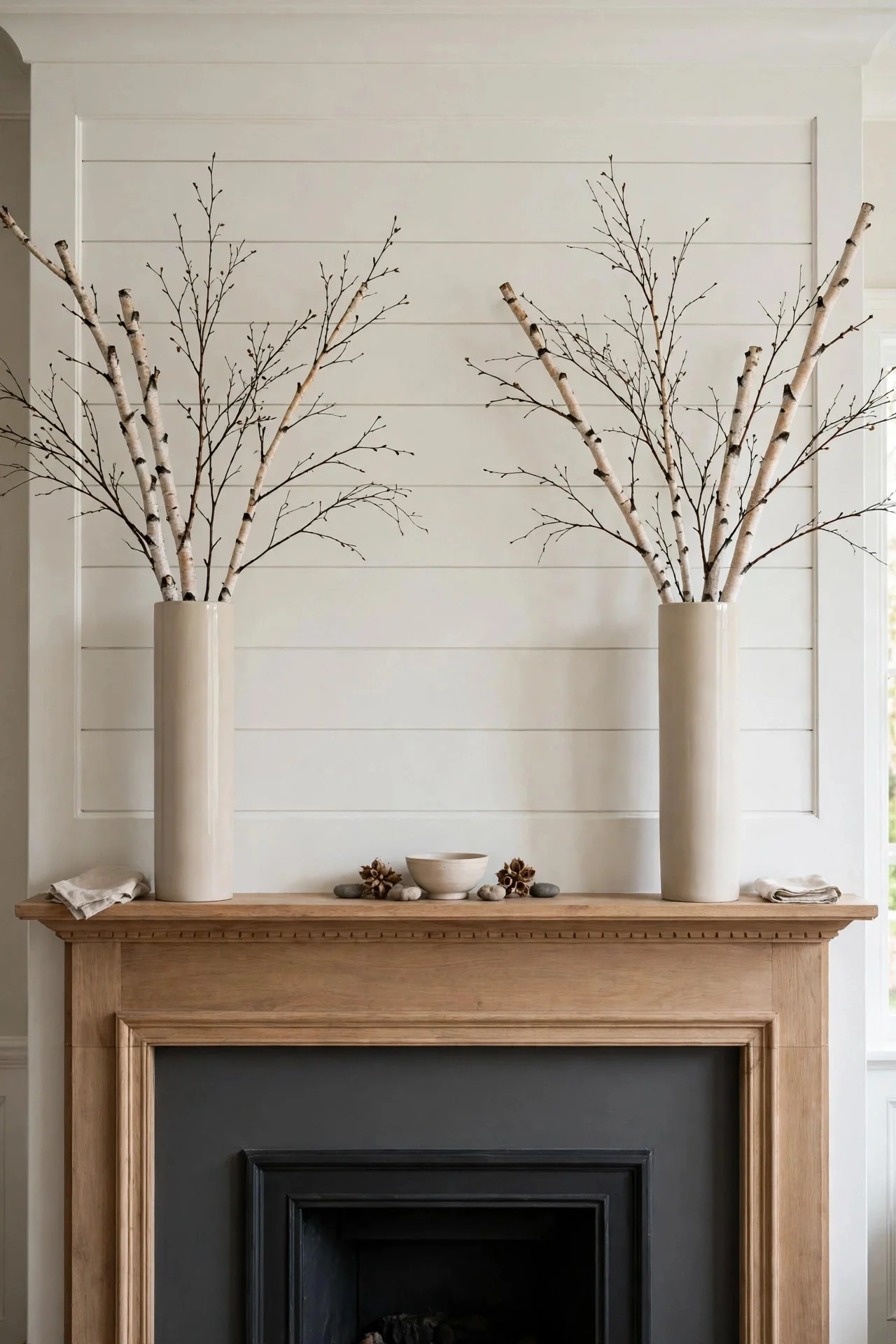
3. A Winter Landscape as the Anchor
Every good mantel needs an anchor, and in winter a landscape print does the job beautifully. Lean a 16″ x 20″ (or larger) winter scene — snowy forest, frozen lake, pale mountains — against the wall instead of hanging it. Leaning feels casual and lets you layer smaller pieces in front.
Free public-domain museum scans print beautifully at home or at a copy shop for a few dollars. A thin black or natural wood frame keeps it modern.
Try this: Layer a smaller 8″ x 10″ print in front, slightly off-center — instant depth, gallery-style.
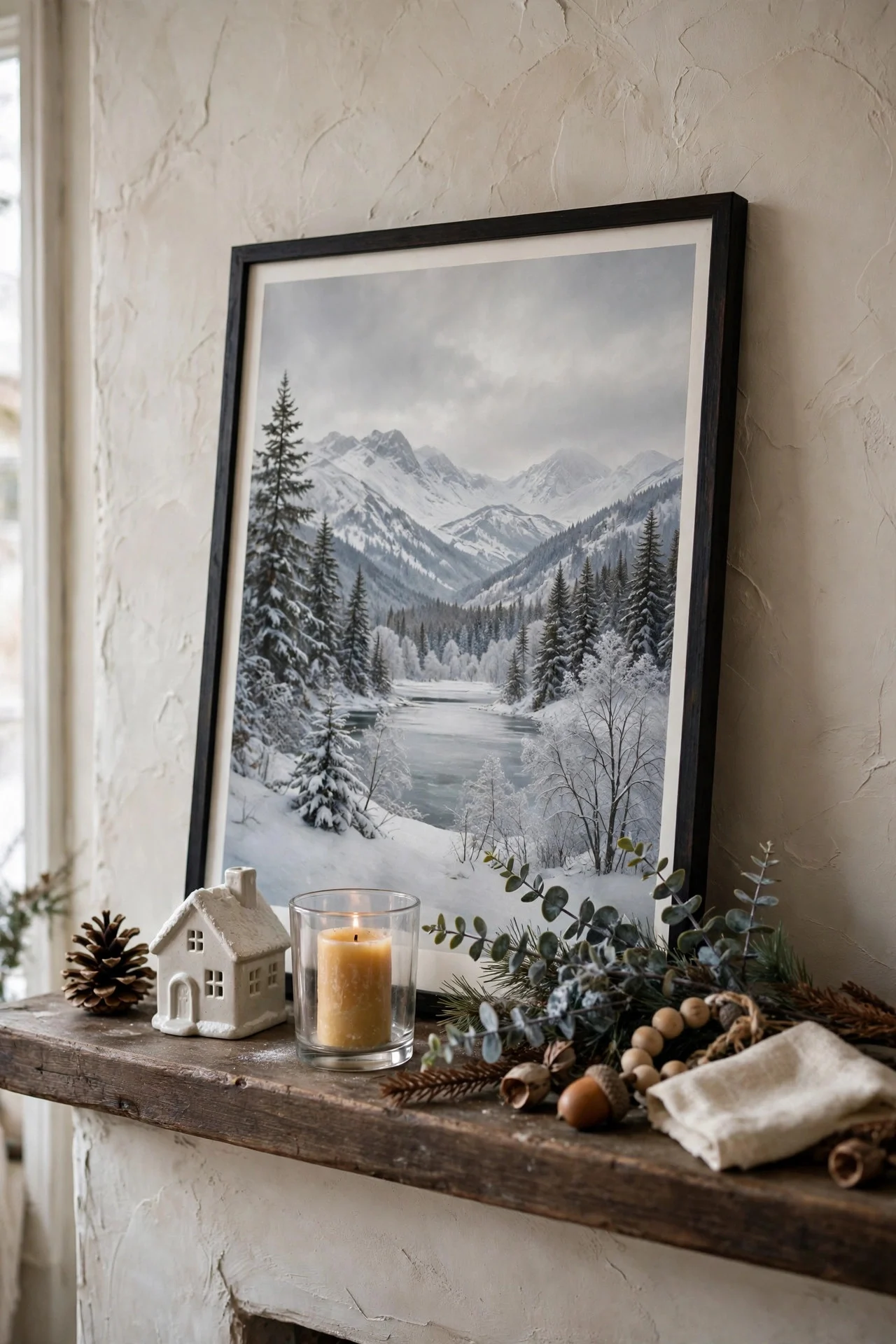
4. Candlelight in Three Heights
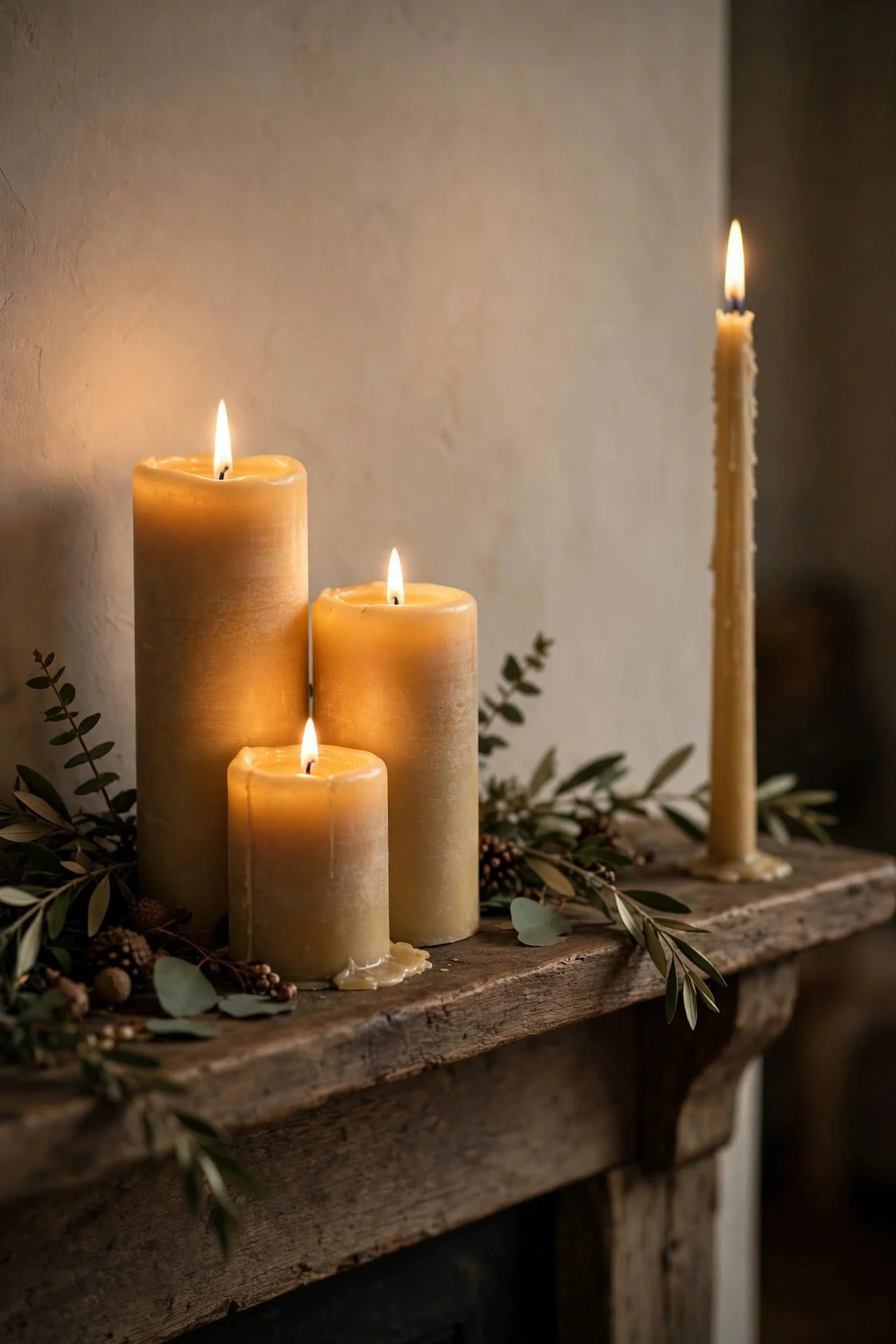
Cluster pillar candles in three distinct heights — say 4″, 6″, and 9″ — on one side of the mantel, and mirror with a single tall taper on the other. The asymmetry feels designed rather than decorated, and the flicker is the whole point on dark January evenings.
Use LED pillars with timers for the daily glow and save real candles for weekends. A set of three LED pillars costs about $15.
Try this: Set candles on small wood slices or stone coasters — it grounds them and protects the mantel.
5. A Stack of Beautiful Books
Two or three coffee-table books stacked horizontally make a perfect mantel riser — they add height for smaller objects and look effortlessly collected. Choose covers in winter tones: deep blue, charcoal, cream.
Top the stack with one small object: a brass candlestick, a tiny potted succulent, a found stone. One object, not three — restraint is what makes it look styled.
Try this: Shop your own shelves first; the best mantel books are the ones with covers you’d frame.

6. Ceramic Houses in a Row
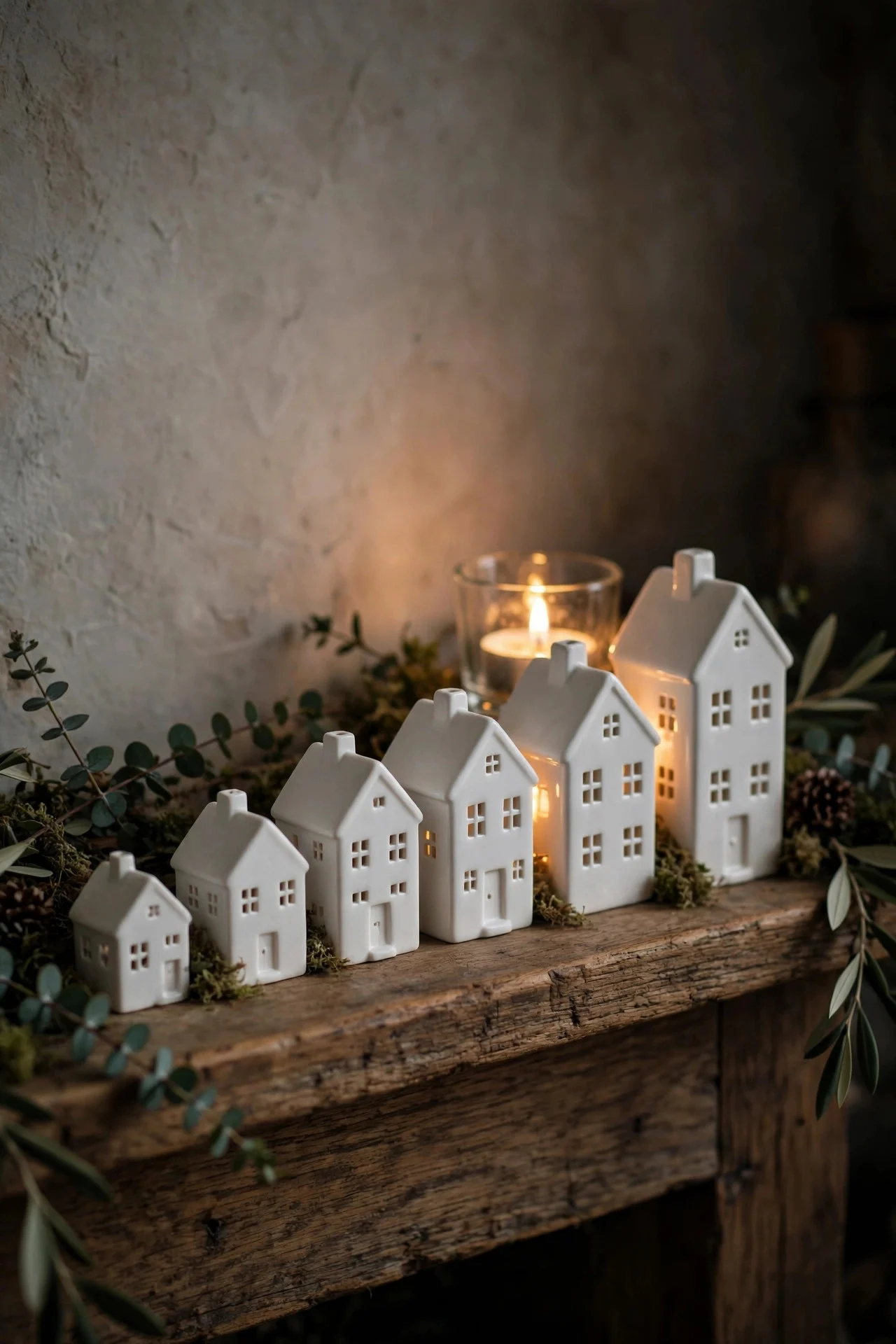
A row of small ceramic houses — the unlit, matte kind, not the Christmas village kind — reads as a quiet winter hamlet on the mantel. Line up five to seven in graduated heights along the back edge, all in white or cream.
They’re widely available for $3–8 each after the holidays, when stores clear seasonal stock. Identical color unifies different shapes.
Try this: Place one tea light behind the row so the houses glow in silhouette at night.
7. An Eucalyptus Swag, Loosely Draped
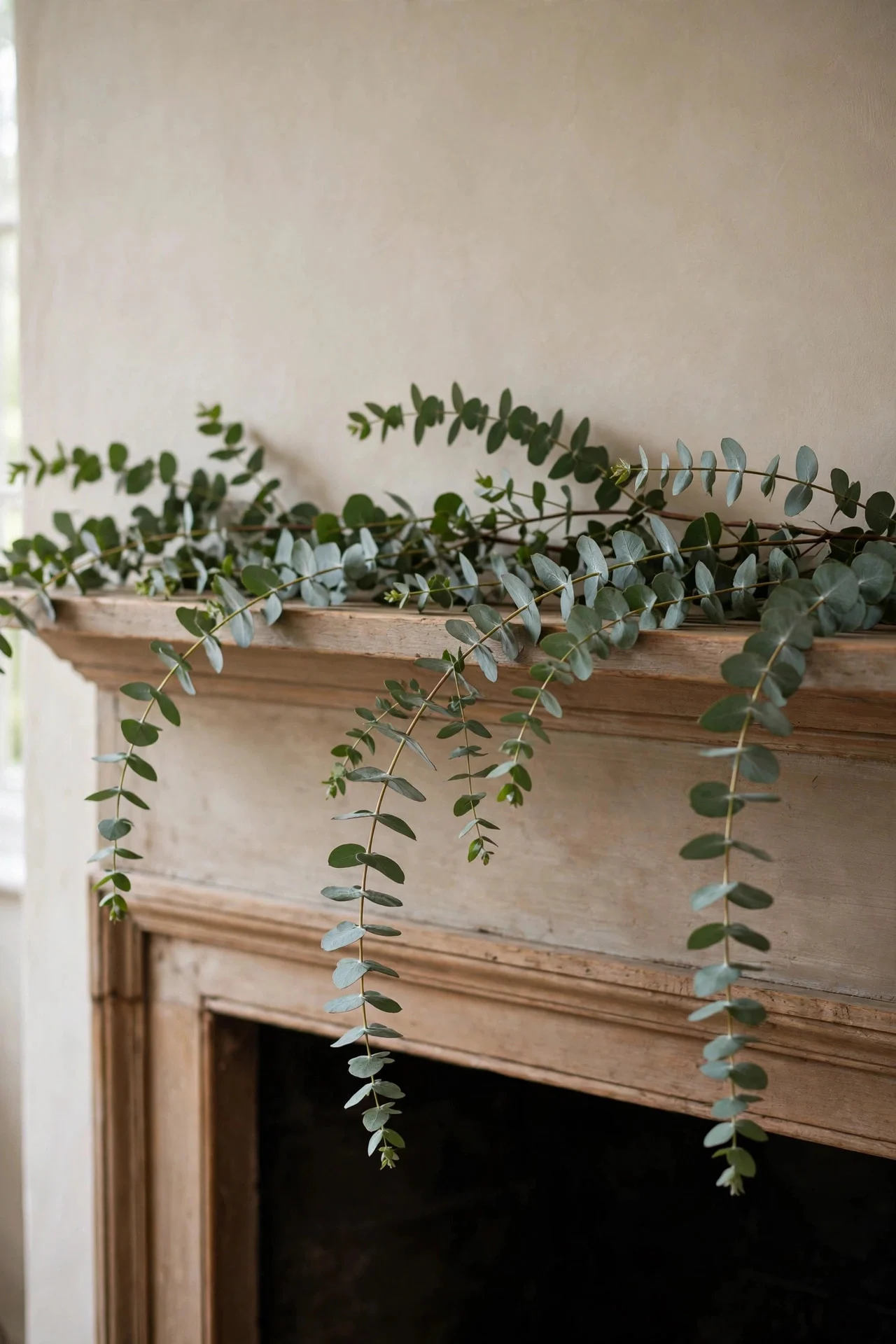
Fresh or preserved eucalyptus draped loosely across the mantel — not a tight garland, just stems laid with their ends overlapping — brings soft green and a clean scent. A $12 bunch from the grocery store covers a standard mantel.
Let a few stems trail over the front edge for movement. When it dries, it keeps its shape and color for months.
Try this: Tuck in dried white baby’s breath for a frosted, snowy texture contrast.
8. A Round Mirror as the Centerpiece
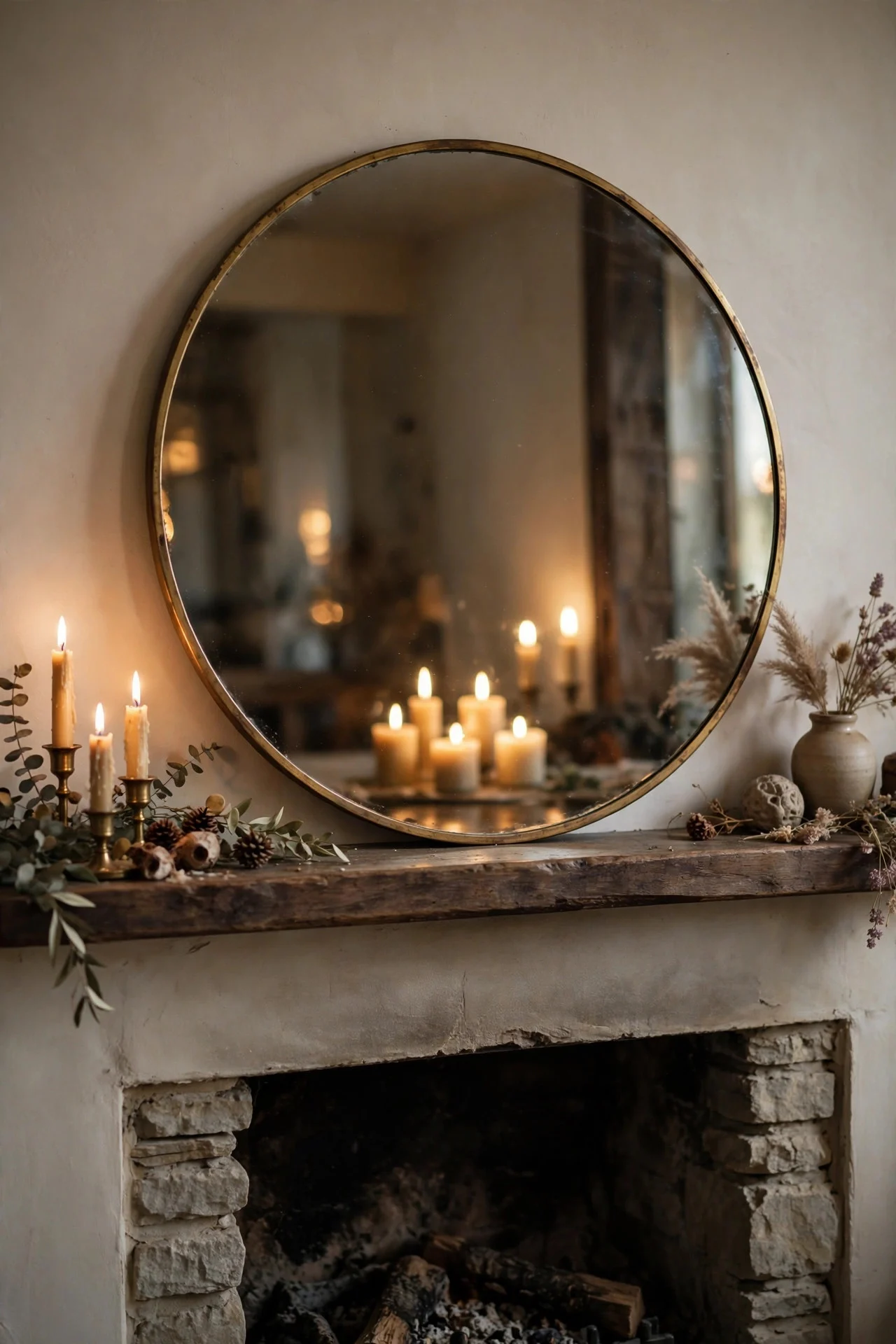
If your mantel anchor is usually art, try a round mirror instead — 24″ to 30″ diameter, hung or leaned. It bounces winter light around the room and makes the fireplace feel larger. The reflection of candlelight in a mirror doubles the glow for free.
A simple wood or thin brass frame suits winter; skip anything ornate. Thrift stores are full of round mirrors for under $20.
Try this: Lean, don’t hang — you can swap it for art in spring without patching holes.
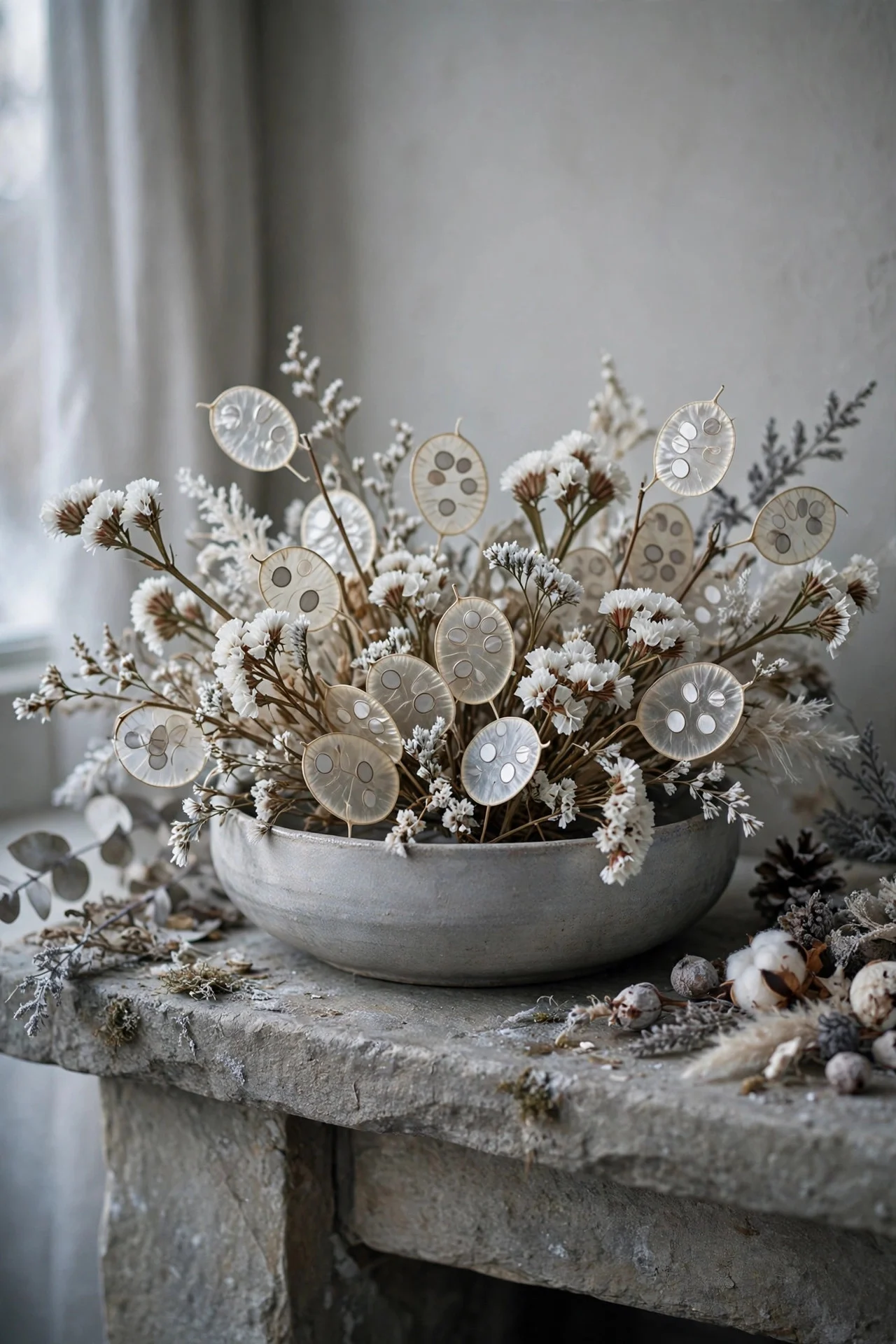
9. Dried Florals in Muted Tones
Dried lunaria, white statice, and bleached ruscus in a low ceramic bowl or a row of bud vases bring winter texture without a single green leaf. The silvery, papery tones look like frost caught midair.
Dried stems last for years, so this is a buy-once arrangement. A $15 mixed bunch fills three bud vases with stems to spare.
Try this: Spray dried stems very lightly with hairspray to stop shedding — an old florist trick.
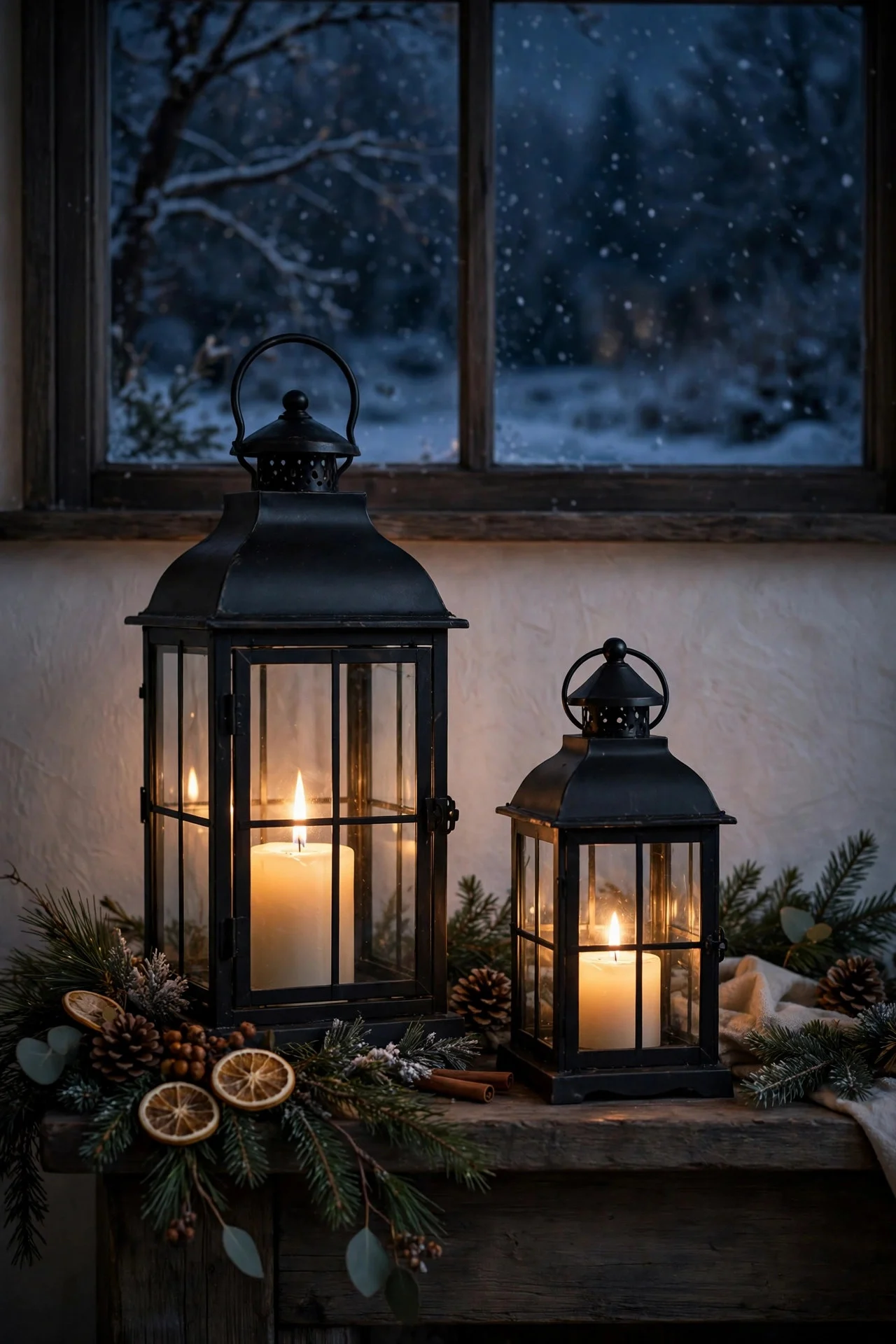
10. Lanterns Instead of Candlesticks
Swap traditional candlesticks for two black or bronze lanterns in different sizes. They read more “winter cabin” than “dining room,” and the glass panels protect the flame from drafts near the fireplace.
Fill with LED candles on timers so the mantel glows every evening without a thought. Lanterns in the 10″–14″ range suit most mantels.
Try this: Fill the lantern base with faux snow or Epsom salt around the candle — a winter scene in miniature.
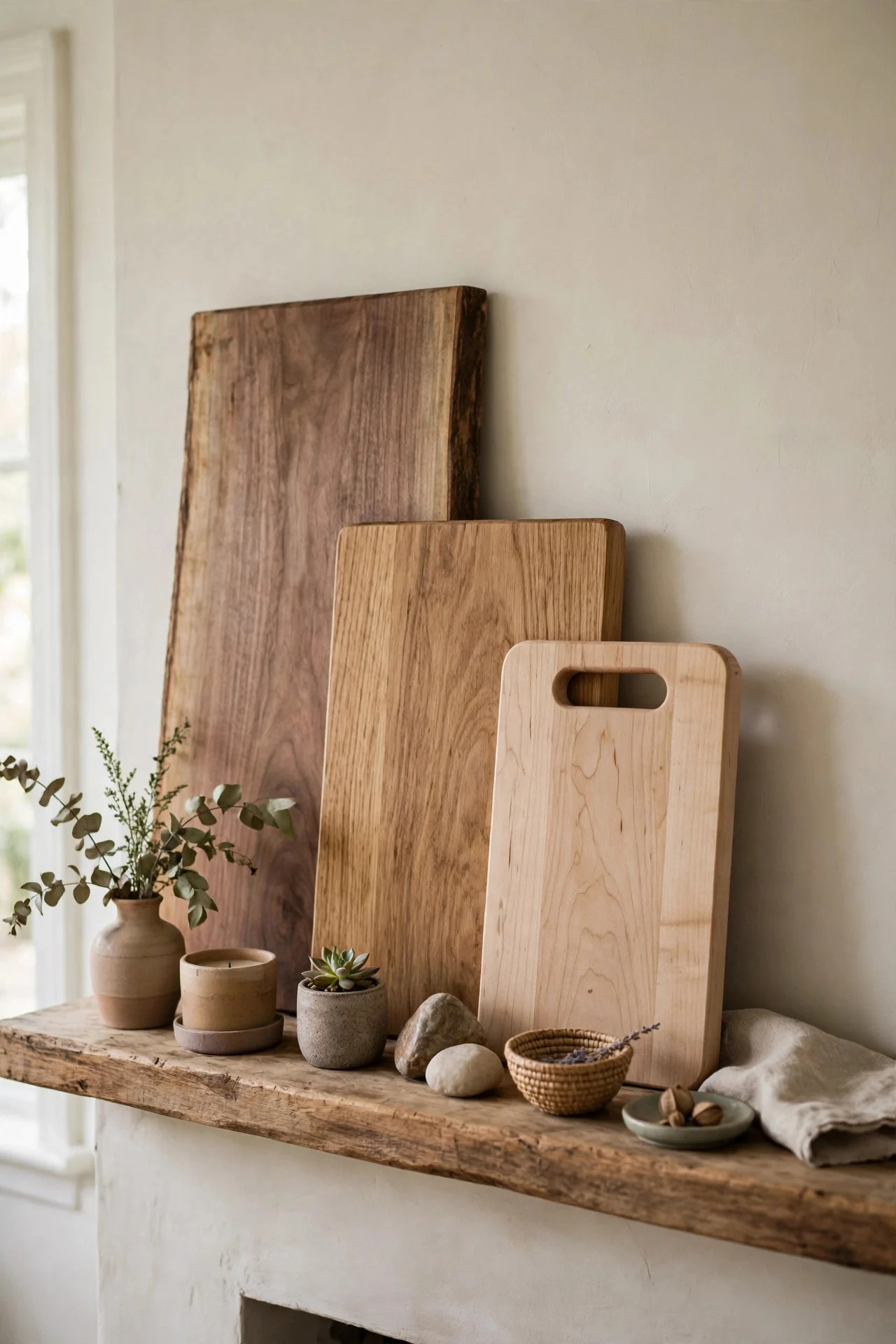
11. Layered Cutting Boards (Yes, Really)
Lean two or three wooden cutting boards in graduated sizes against the wall behind your mantel objects. The warm wood tones and organic shapes add a rustic layer that plays beautifully against stone or painted brick.
Use boards you already own — paddle shapes and round ones mix well. It’s free styling that looks surprisingly intentional.
Try this: Rub the boards with mineral oil first so the wood glows instead of looking dry.
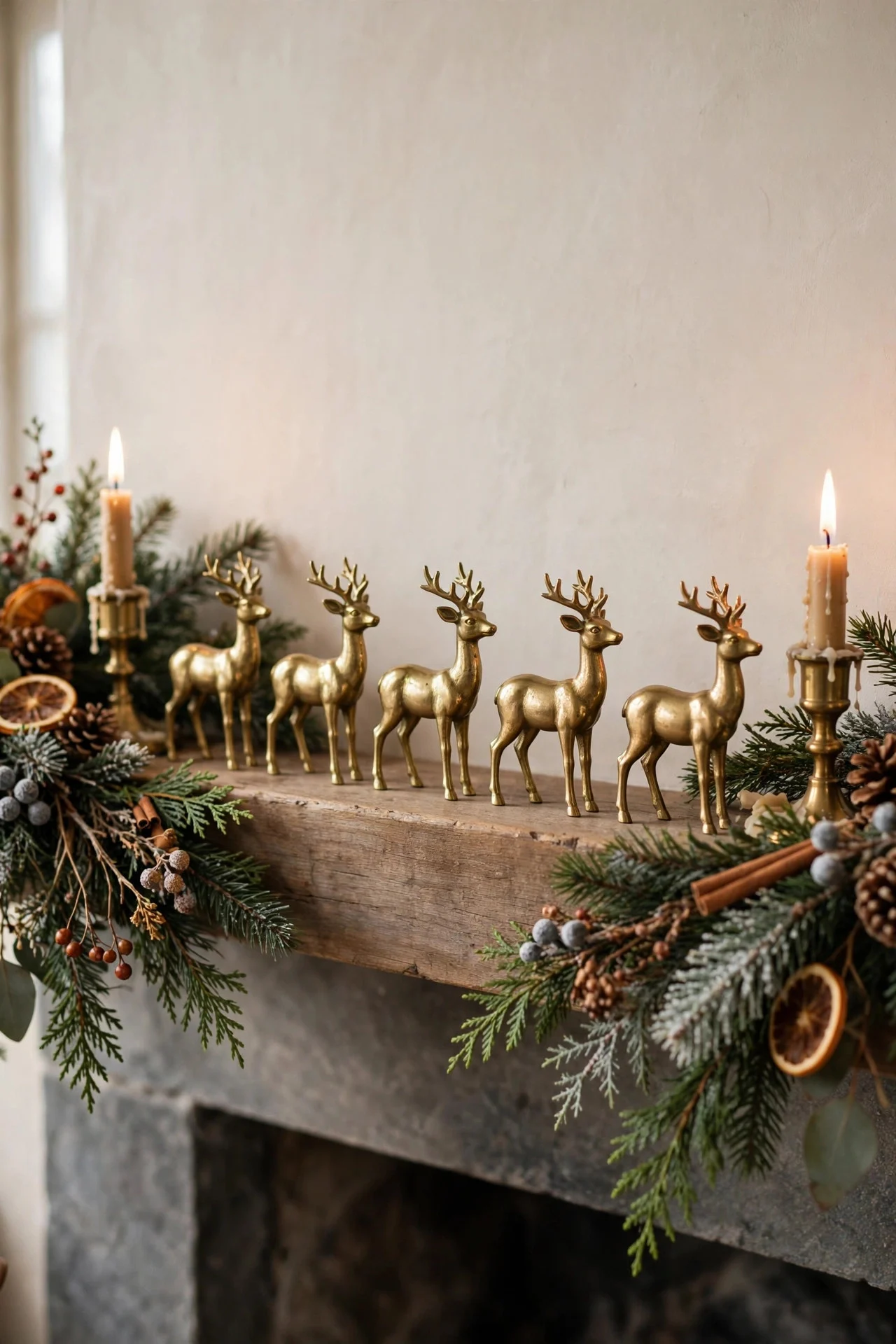
12. A Row of Small Winter Figurines
Deer, owls, cardinals, rabbits — small animal figurines in wood, brass, or matte ceramic lined along the mantel feel seasonal without a hint of holiday. Three to five pieces, all in the same material, read as a collection.
Thrift stores and flea markets are goldmines for brass animals at $2–5 each. Keep them small — 3″ to 5″ tall — so they don’t fight the anchor piece.
Try this: Group them in odd numbers with slight spacing — even spacing looks like a store display.
13. Woven Texture: Baskets and Grass
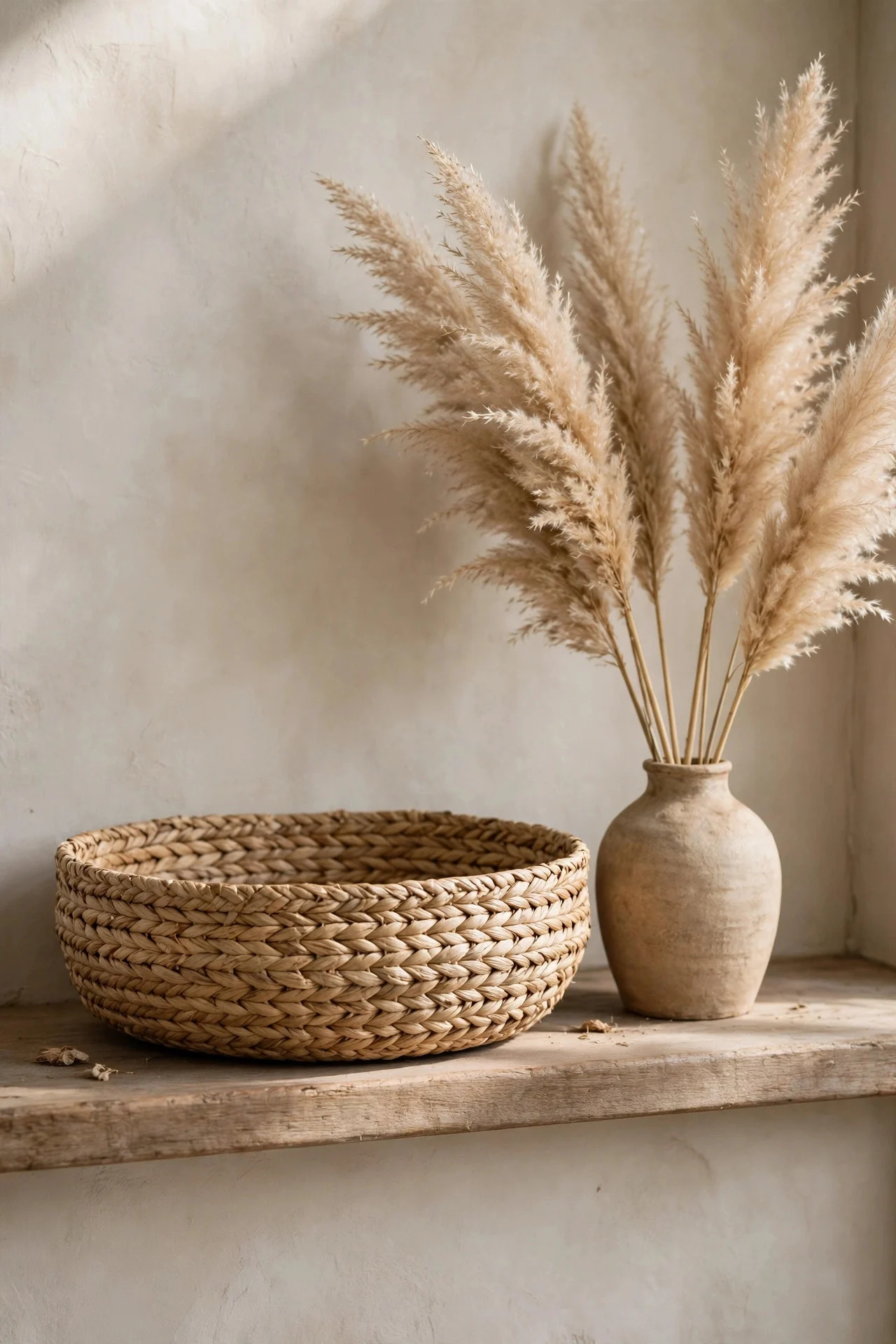
Set a low woven basket or a bundle of dried pampas grass in a vase at one end of the mantel. The natural fiber texture warms up stone and brick fireplaces instantly and adds the organic layer winter rooms crave.
Keep pampas away from open flames — it’s extremely flammable. Place it at the far end from any lit candles, or use LED only nearby.
Try this: A shallow seagrass tray under your candle cluster ties the woven texture into the whole arrangement.
14. Frosted Glass and Mercury Accents
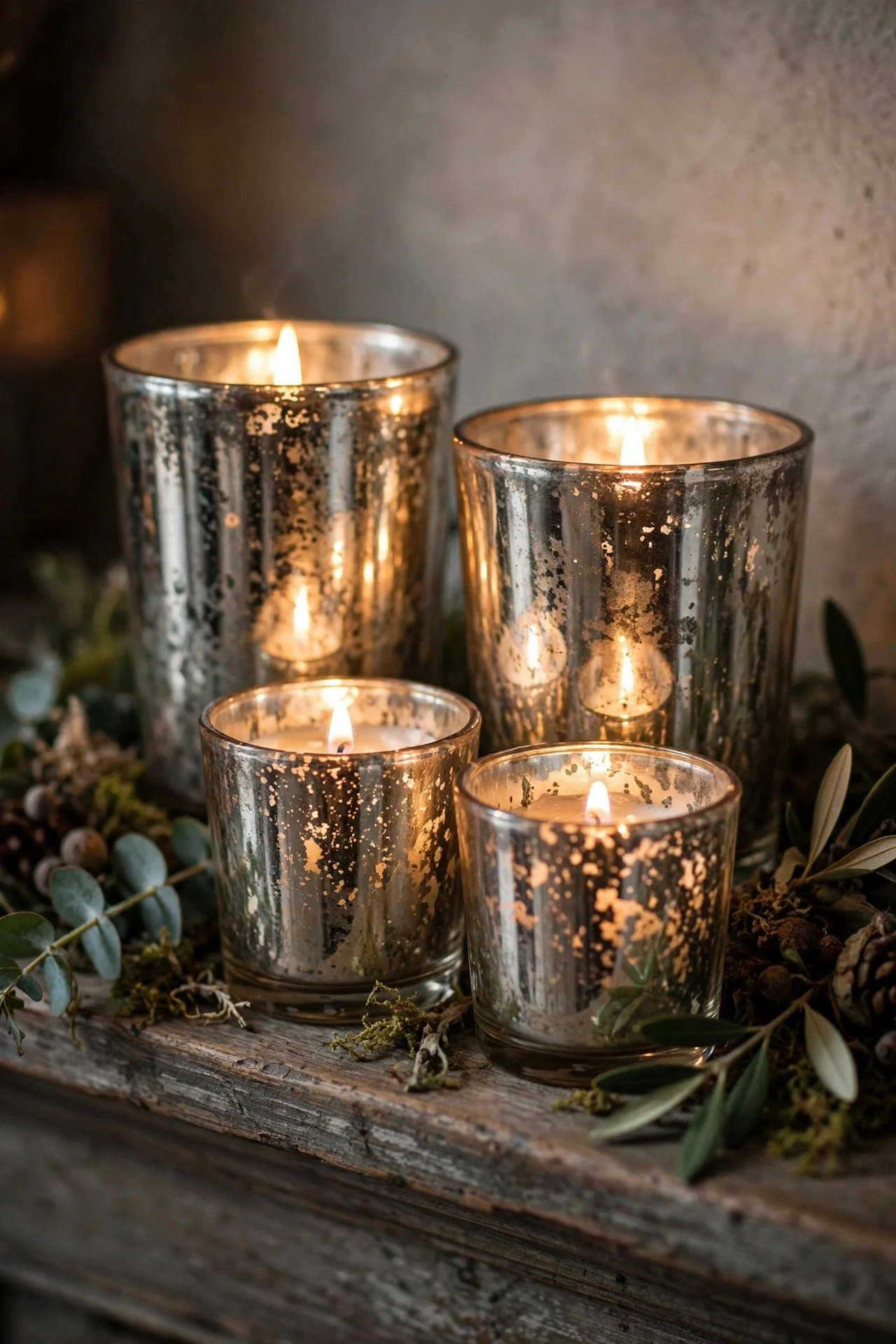
A few mercury glass votives or frosted glass hurricanes scattered along the mantel catch candlelight and throw it in ripples. The mottled silver finish looks like ice — perfect winter texture without any literal snowflakes.
Mix two sizes and cluster in threes. Post-holiday clearance is the time to buy; sets that were $25 in December drop to $8 in January.
Try this: Put one votive inside a larger hurricane for a layered glass effect — double the shimmer.
15. The “Almost Bare” Minimalist Mantel
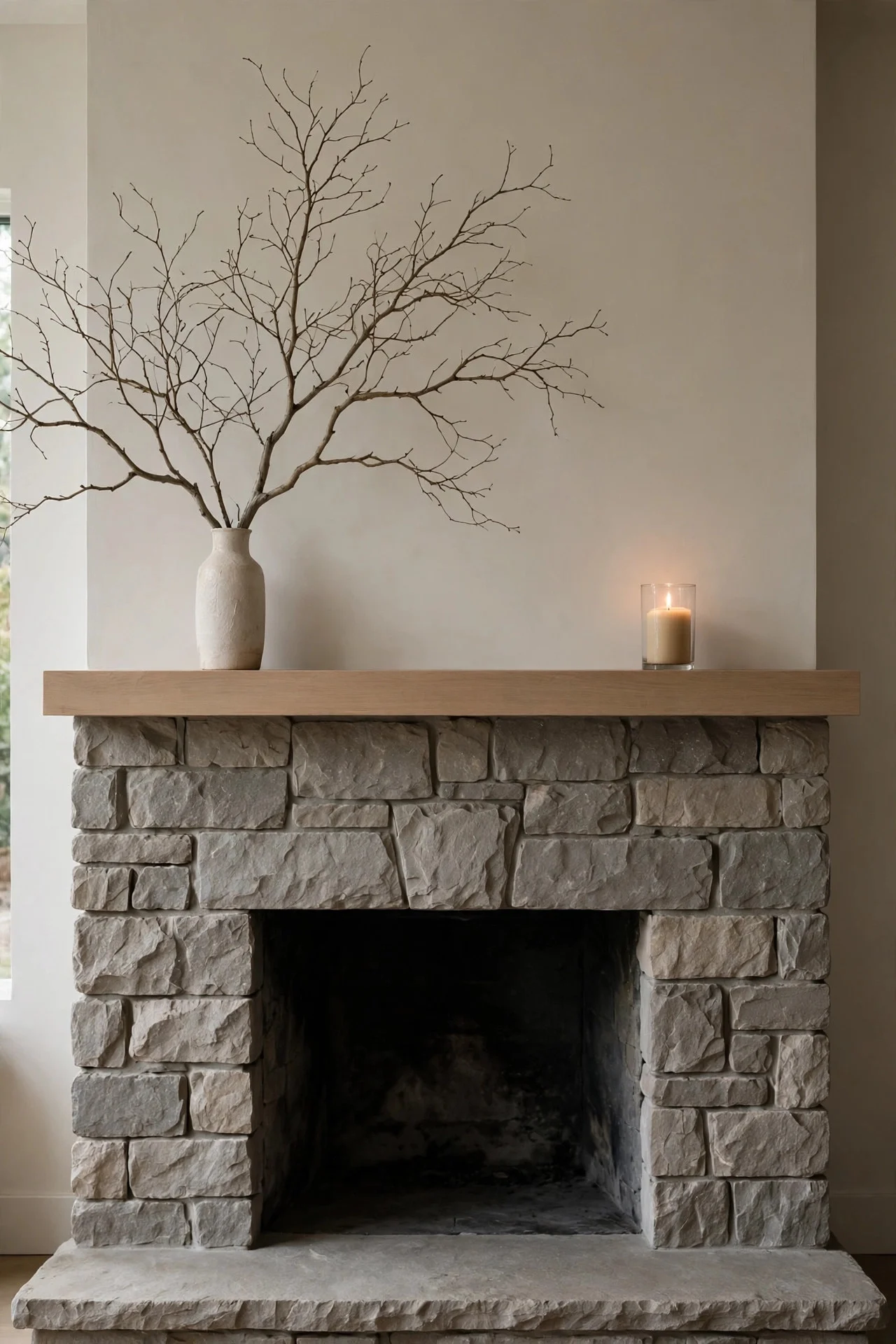
Sometimes the bravest winter mantel is nearly empty: one large branch in a vase, one candle, done. Negative space lets the fireplace architecture — the stone, the wood beam, the shape — be the decoration.
This works best on fireplaces with strong materials: exposed brick, a chunky wood mantel, natural stone. If the fireplace is beautiful, get out of its way.
Try this: Dust the mantel shelf itself and polish the fireplace surround — when there’s little decor, every surface shows.
Frequently Asked Questions
How do I decorate my mantel in winter after Christmas?
Remove everything explicitly holiday — stockings, red and green, Santa figures — and rebuild around winter textures: branches, candles, pinecones, and neutral tones. The fireplace stays styled; only the theme changes.
What should I put on a mantel in January and February?
Lean on the season’s natural palette: bare branches, dried florals, candlelight, ceramics in white and cream, wood tones, and one piece of winter art. Nothing with a holiday motif, so it all works through February.
How do I style a mantel without a fireplace?
The same principles apply to a faux mantel or console table styled as one: anchor with art or a mirror, add height at the ends with branches or lanterns, and keep the middle low. Symmetry at the edges with a relaxed center works every time.
How often should I change mantel decor?
Four seasonal shifts a year is plenty for most people: spring, summer, fall, and winter. A winter mantel styled in January can stay through February untouched — that’s the beauty of non-holiday winter decor.
Final Thoughts
The post-Christmas mantel doesn’t need to mourn the holidays — it gets to be something quieter and, honestly, more livable. Pick an anchor, add candlelight, layer in one natural texture, and step back. Winter’s palette is restraint, and restraint done well looks expensive.