
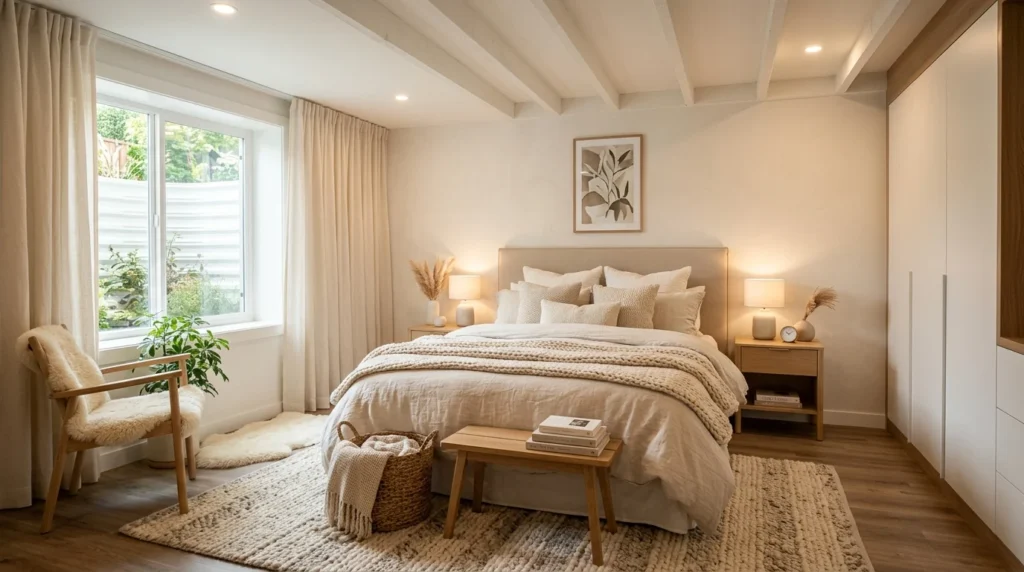
A basement bedroom occupies a unique and genuinely challenging position in residential design. It is a room that must perform all the functions of a bedroom — providing a space for sleep, rest, privacy, and personal refuge — while working against several of the characteristics that typically define a comfortable bedroom. Where an above-grade bedroom has natural light streaming through windows that occupy a meaningful proportion of the wall area, a basement bedroom has small, high windows that admit limited light. Where an above-grade bedroom has views of the garden, the street, or the sky, a basement bedroom has views of a window well or a portion of a retaining wall. Where an above-grade bedroom benefits from the warmth of sunlight throughout the day, a basement bedroom is consistently cooler and typically damper than the rooms above it.
These are real challenges that cannot be entirely wished away through clever design — they are a consequence of the basement’s physical position below grade, and any honest guide to basement bedroom design needs to acknowledge them directly rather than presenting the basement bedroom as simply another room that happens to be on a lower level.
What good basement bedroom design can do — and does, in the most impressive examples of the form — is address each of these challenges so effectively that the finished room genuinely does not feel like a basement. A basement bedroom designed with maximum attention to light, warmth, color, ceiling treatment, and the specific details that combat the below-grade challenges can feel genuinely comfortable, genuinely restful, and genuinely welcoming — not despite being below grade, but as a room that has been designed specifically for its position and that works with its unique characteristics rather than struggling against them.
This guide covers every aspect of basement bedroom design — the legal requirements that must be met before any other design consideration, the strategies for maximizing light in a room with inherently limited light access, the ceiling treatment that makes the most of available height, the color palette that creates warmth rather than coldness, the textiles and materials that make the room feel genuinely comfortable, and the storage solutions that suit the basement bedroom’s typically limited wall space. The result of applying these principles consistently is a basement bedroom that the person sleeping in it experiences as a comfortable, private, well-designed room — not as a compromise.
Section 1: Legal Requirements — What Must Be in Place Before Design Begins
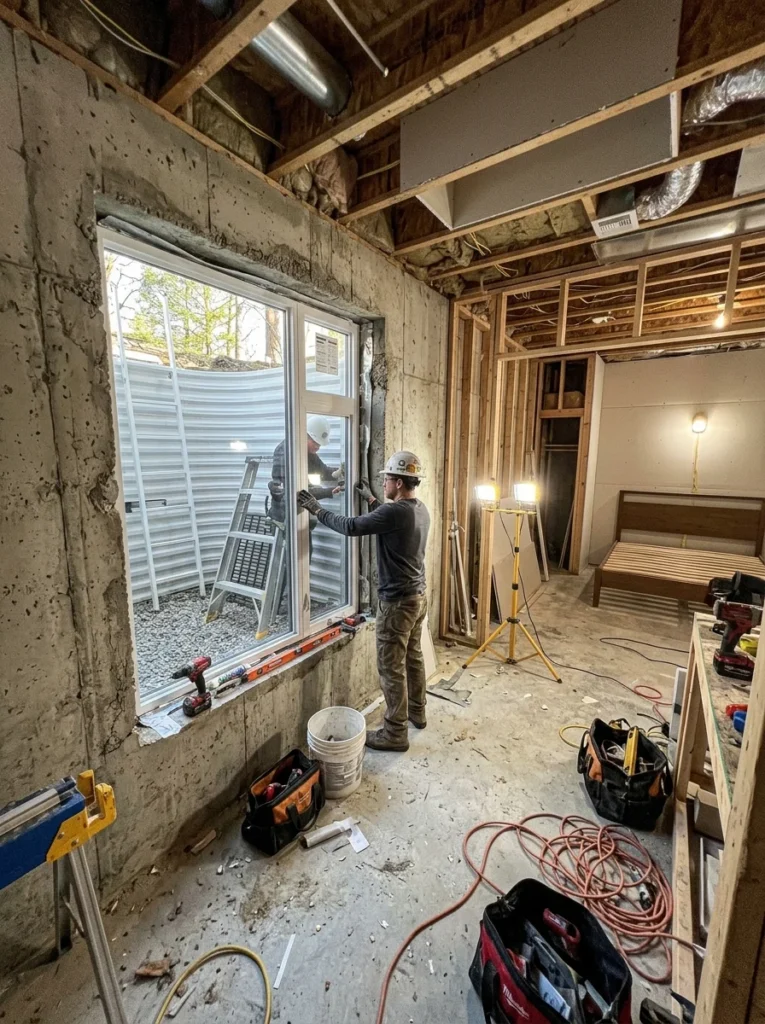
The design of a basement bedroom must begin with the legal requirements that any room designated as a bedroom must meet, because these requirements are not optional design preferences — they are safety and habitability standards that exist because departures from them have contributed to serious injury and loss of life. A basement room used for sleeping that does not meet these requirements is both a safety hazard and a liability, regardless of how well it is designed in every other respect.
The Egress Window — The Most Important Legal Requirement
An egress window in a basement bedroom is not optional. It is required by building codes in virtually all jurisdictions and is the requirement that most directly affects the design of the basement bedroom from the earliest planning stage.
An egress window serves as an emergency exit from the bedroom in the event that the primary exit — the stairway — is blocked by fire, smoke, or other emergency. Without an egress window, a person sleeping in a basement bedroom during a fire may have no way to exit the room if the stairway is involved in or blocked by the fire. The egress window requirement exists specifically to prevent this situation.
The specific dimensions required for an egress window vary by jurisdiction but are commonly specified as a minimum net clear opening area of 5.7 square feet, a minimum net clear opening height of 24 inches, a minimum net clear opening width of 20 inches, and a maximum sill height of 44 inches above the finished floor. The window must be operable from the inside without the use of keys, tools, or special knowledge — meaning that any window hardware must be operable by hand without these aids.
In most basements, the existing windows do not meet egress requirements — they are too small, too high in the wall, or both. Adding a compliant egress window to a basement bedroom requires cutting through the foundation wall — a significant structural operation that requires professional execution and building permit approval. The window well — the excavated area outside the foundation that brings light and air to the below-grade window opening — must be large enough to allow a person to climb through the egress window and exit to the exterior.
The egress window requirement should be identified and budgeted for at the very beginning of the basement bedroom planning process. It is one of the most significant cost items in the basement bedroom project — the wall cutting, window installation, and window well construction — and its absence from the plan is a design error that cannot be corrected after the room is otherwise finished.
Minimum Ceiling Height
Building codes typically require a minimum ceiling height of seven feet in the habitable area of a basement bedroom. This minimum applies to the majority of the room’s floor area — localized areas of reduced height, such as beneath a beam or a duct, are often allowable if the main occupiable area of the room meets the minimum. The specific minimum and the allowable exceptions are established by the local building code, which should be consulted before finalizing the ceiling treatment plan.
A basement with a floor-to-joist height of exactly seven feet or slightly above has limited tolerance for any ceiling finish that adds thickness below the joists. The ceiling treatment options for such a space are constrained to the thinnest possible finishes — a thin drywall finish applied directly to the underside of the joists, or an exposed painted ceiling — rather than a drop ceiling system that could reduce the finished height below the minimum.
Smoke Detector and Carbon Monoxide Detector
A basement bedroom must be equipped with smoke detectors and carbon monoxide detectors meeting the requirements of the local building code. Smoke detectors should be on the ceiling of the bedroom and in the hallway or stairwell connecting the basement to the main house. Carbon monoxide detectors are required in rooms containing or adjacent to fuel-burning appliances — in a basement that contains a gas furnace, a gas water heater, or any other fuel-burning appliance, a carbon monoxide detector in or adjacent to the basement bedroom is typically required.
These detectors must be hardwired to the home’s electrical system with battery backup in most jurisdictions — battery-only detectors are not compliant with many current codes for new installations. The electrical provision for hardwired detectors should be included in the basement bedroom’s electrical plan.
Section 2: Maximizing Light — The Central Design Challenge
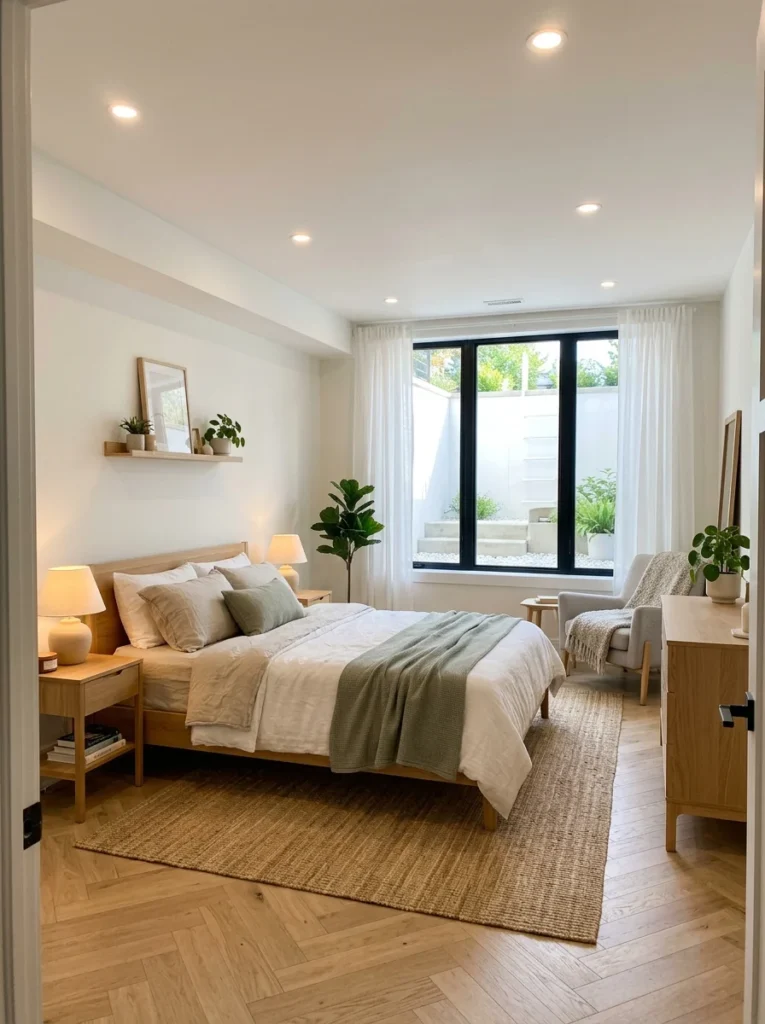
The most consistent design challenge of the basement bedroom is the limited natural light that the below-grade position allows. Addressing this challenge effectively is the most important design task in creating a basement bedroom that feels genuinely comfortable rather than simply functional.
Maximizing the Egress Window
The egress window — installed as a requirement rather than as a design choice — is typically the largest and most significant natural light source in the basement bedroom. Making the most of the light this window provides requires attention to every element of the window and window well installation.
The window well outside the egress window should be as large as practical — not merely the minimum size required for egress compliance. A larger window well admits more light to the window and feels less enclosed from inside the bedroom. A window well with a curved or angled back wall — reflecting light into the window rather than absorbing it — admits more light than one with a flat back wall. A window well with a white or light-colored interior surface — painted concrete block or rendered masonry — reflects more light into the bedroom than an unpainted dark surface.
Window well covers — clear polycarbonate domes that cover the window well opening at grade level — protect the window well from rain, leaves, and debris while allowing natural light to pass through unobstructed. A window well without a cover accumulates debris and water that can block light and create moisture problems. A window well with a clear cover maintains maximum light transmission and requires minimal maintenance.
Inside the bedroom, the window treatment for the egress window should maximize light transmission during the day while providing adequate privacy and blackout capability for sleep. A layered window treatment — a motorized or manually operated blackout roller blind for sleep times, with a sheer curtain panel for daytime use — provides the full range of light control without compromising the light-maximizing purpose of keeping the window as open as possible during daylight hours.
Supplemental Windows Where Possible
If the basement bedroom has wall length beyond what is occupied by the egress window — particularly on walls that are partially above grade on a sloped site — additional windows should be considered to supplement the egress window’s light contribution. Even small supplemental windows — hopper windows, awning windows, or additional double-hung windows sized below the egress minimum — admit meaningful additional natural light and create the impression of a more generously windowed room.
On sites where the basement is at grade on one or more sides — a walkout basement or a daylight basement — the design opportunity for natural light in the basement bedroom is significantly greater. A full-size window or even a sliding glass door on the grade-level wall of a walkout basement bedroom provides natural light, outdoor views, and ventilation at a scale that makes the room feel genuinely like an above-grade bedroom rather than a below-grade one.
Artificial Lighting That Compensates for Limited Natural Light
In a basement bedroom that receives limited natural light regardless of the improvements made to the window and window well, the artificial lighting plan must compensate by providing illumination that approaches the quality of natural light during the hours when the room is used in daylight conditions.
The most effective artificial lighting approach for a below-grade bedroom uses multiple sources of warm, layered light that create depth and dimension in the room — the opposite of the flat, uniform overhead illumination that makes basement rooms feel harsh and institutional. Recessed ceiling lights provide general illumination. Bedside lamps on both sides of the bed provide warm task lighting at a comfortable height for reading. A floor lamp in one corner provides an upward light source that illuminates the ceiling and creates the impression of ambient warmth throughout the room.
The bulb specification for every light source in the basement bedroom should be warm white — 2700 to 3000 Kelvin — with a CRI of 90 or above. Warm white, high-CRI light most closely approximates the quality of natural daylight in its rendering of colors and in the warmth and comfort of the environment it creates. Cool white or daylight-temperature bulbs in a basement bedroom without natural light create a harsh, clinical atmosphere that is the opposite of what a bedroom environment requires.
A dimmer switch on every lighting circuit in the basement bedroom allows the room’s artificial lighting to be adjusted from full brightness for morning and daytime use to a warm, dim atmosphere for evening and nighttime use. The ability to modulate the lighting intensity is particularly important in a room where artificial light is the primary light source — a room that is always at the same brightness level regardless of the time of day or the activity taking place lacks the natural variation in light intensity that the circadian rhythm expects and that contributes to genuine rest.
Section 3: Ceiling Treatment — Making Low Feel Less Low
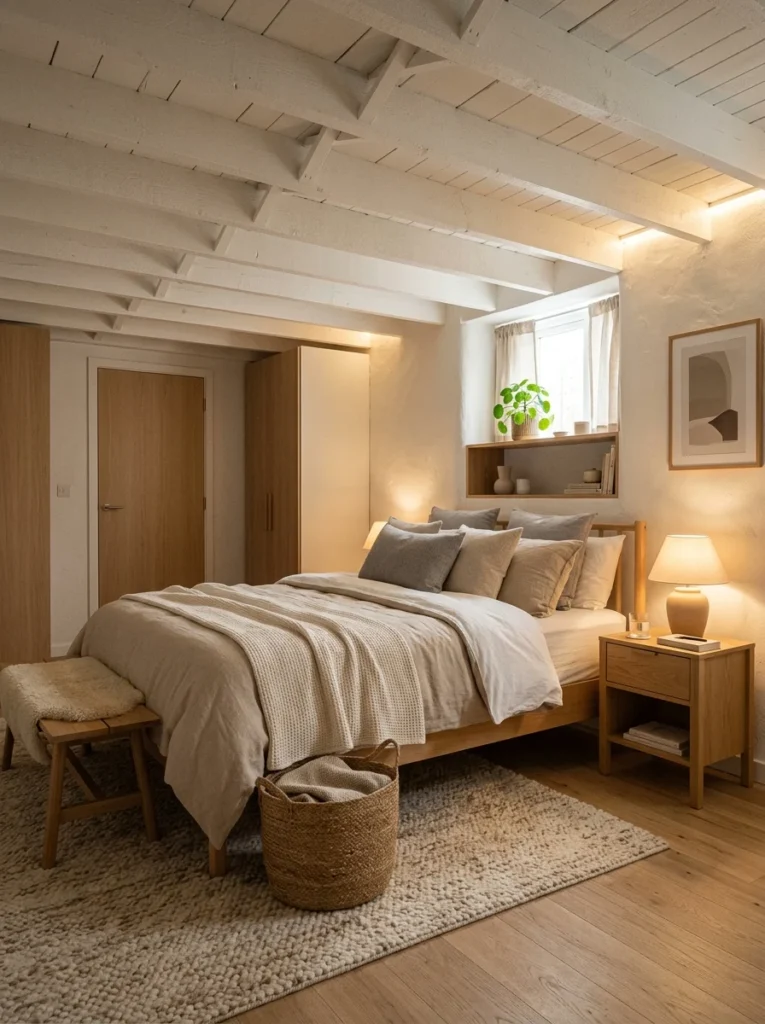
The ceiling of a basement bedroom has two challenges to address simultaneously: it needs to look finished and residential, and it needs to preserve as much of the available ceiling height as possible. The ceiling treatment that best addresses both challenges depends on the specific structural configuration of the basement — whether the floor joists above run in a direction that suits a particular ceiling approach, whether beams or ducts reduce the height in specific areas, and what the finished height will be after the chosen ceiling treatment is installed.
Painting the Ceiling White — The Single Most Effective Height Illusion
Regardless of which ceiling treatment is chosen for the basement bedroom, painting the ceiling white — or the lightest possible version of the room’s wall color — is the single most effective visual technique for making a low ceiling feel higher than it is.
A white ceiling reflects the room’s artificial light back down into the space, brightening the room from above and creating the impression that the ceiling surface is further away than it actually is. A dark ceiling does the opposite — it absorbs light, appears to advance toward the viewer, and makes an already low ceiling feel lower. In a basement bedroom where ceiling height is at or near the minimum, a dark ceiling is the single most damaging color decision available and should be avoided unconditionally.
The white ceiling should be a warm white — with cream or yellow undertones rather than cool blue undertones — to suit the warm palette that is recommended for the basement bedroom walls and textiles. A warm white ceiling reads as slightly more cream than stark white, which prevents the ceiling from creating a cold contrast with the warm wall colors below it.
Avoiding Beams and Protrusions
Beams, soffits, and duct enclosures that project below the main ceiling surface create localized reductions in ceiling height that are more disruptive to the sense of headroom than the general ceiling height suggests. A basement bedroom where the main ceiling height is seven feet six inches but where a beam projects six inches below the main ceiling creates a localized height of seven feet that is encountered repeatedly when moving through the room and that makes the room feel lower than its main dimension.
Where beams and soffits are unavoidable — where structural beams or duct runs are fixed and cannot be relocated — the least visually damaging treatment is to paint them the same color as the ceiling, which minimizes their visual distinction from the ceiling surface and reduces the degree to which they appear to intrude into the room’s space. A beam painted white, like the white ceiling it is part of, is less visually imposing than the same beam painted a contrasting color or left in its natural wood finish.
Section 4: Color Palette — Warm Tones That Fight the Below-Grade Chill
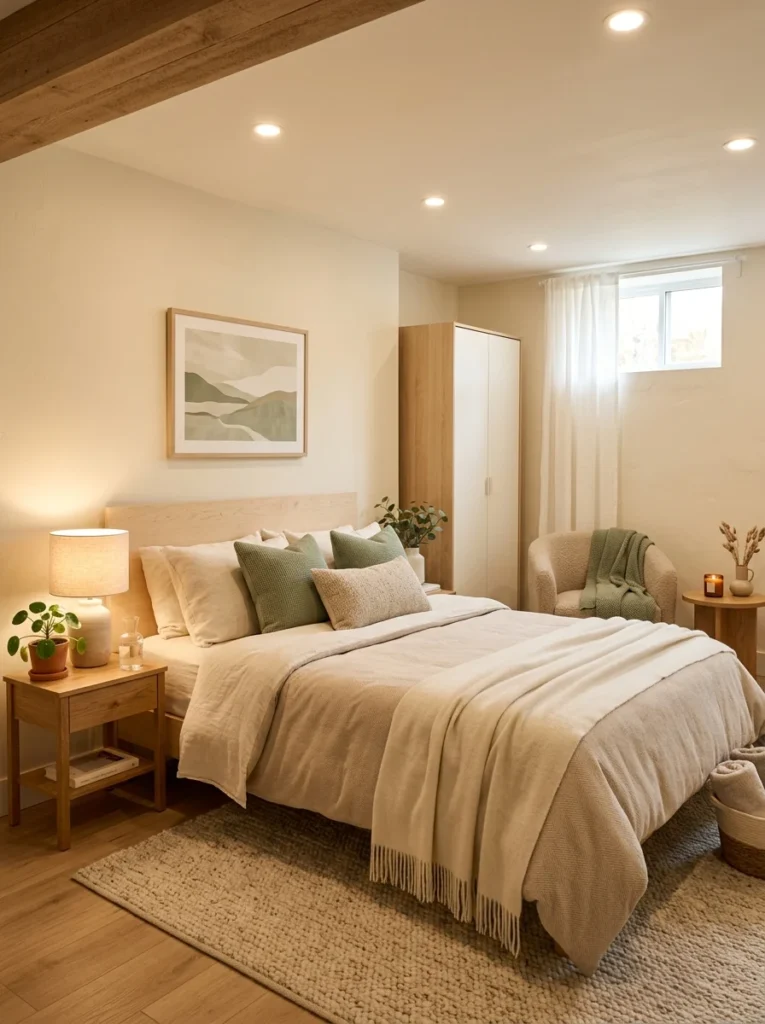
The color palette of a basement bedroom does more work than the palette of an above-grade bedroom because it is compensating for the inherent coolness — both thermal and visual — of the below-grade position. The palette needs to create warmth where the room’s position works against it, to create brightness where limited natural light works against it, and to create a sense of visual openness where the reduced ceiling height and limited window area work against it.
Light Colors — Walls That Reflect and Open Up the Space
Light wall colors — warm whites, soft creams, pale warm greys, and muted sage greens with warm undertones — are the most effective choice for a basement bedroom because they reflect the available light, both natural and artificial, throughout the space rather than absorbing it, and because they create the visual impression of walls that recede slightly from the center of the room, which makes the space feel larger and more open than it is.
The specific light color chosen for the basement bedroom should have warm undertones — yellow, cream, or brown rather than blue or green — to counteract the coolness of the below-grade environment. A pale grey with warm beige undertones — a greige — reads warmer in a basement than a cool grey of similar lightness. A warm cream reads warmer than a stark cool white of similar lightness. The warmth in the undertone is the quality that makes a light color feel welcoming rather than clinical in a below-grade space.
Avoiding Dark Colors in Small Basement Bedrooms
The moody dark palette — deep navy, forest green, charcoal, rich burgundy — that works beautifully in above-grade bedrooms with generous natural light and adequate ceiling height is the most risky palette choice for a basement bedroom with limited light and ceiling height near the minimum. Dark colors absorb the limited light available in the basement bedroom and make the ceiling feel lower and the walls feel closer. The atmospheric quality that dark colors create in a well-lit, generous room becomes an oppressive quality in a small, dimly lit, low-ceilinged room.
If a darker, richer color is desired in the basement bedroom, the most successful approach is to use it in a very limited way — a single feature wall behind the bed in a deep warm tone, with the remaining walls in a light complementary color — rather than as the dominant room palette. This approach introduces the richness of a deeper color at the room’s primary focal point while keeping the majority of the room’s surfaces in the light tones that maximize the perception of light and space.
Section 5: Flooring — Warmth and Comfort Underfoot
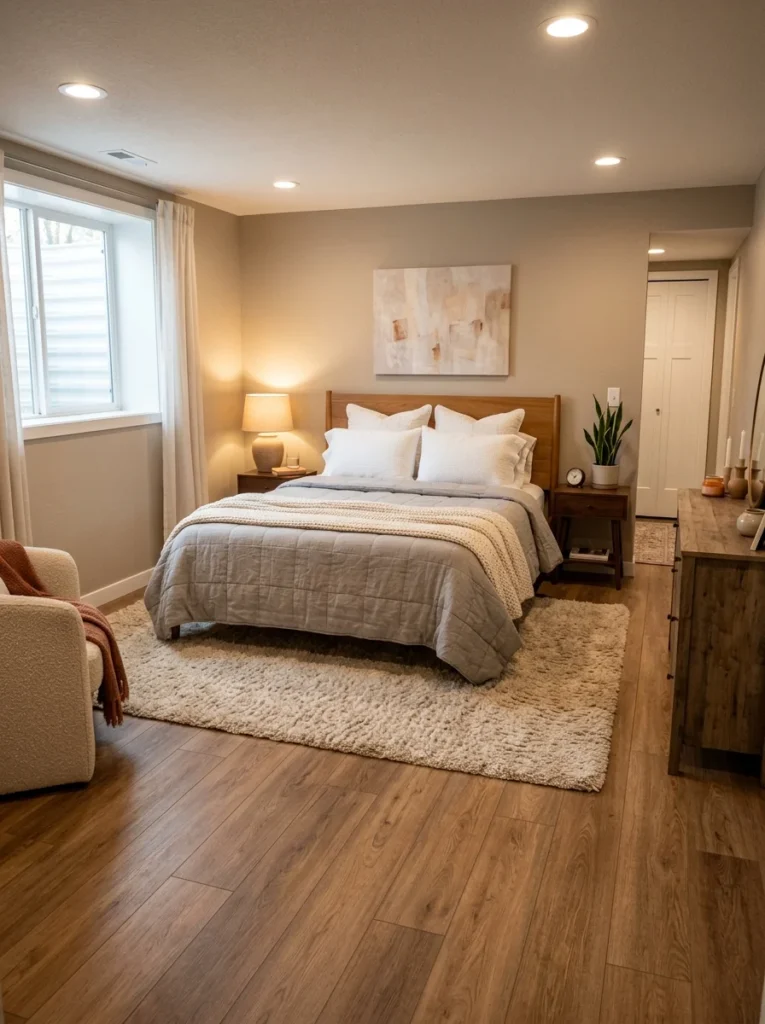
The floor of a basement bedroom has a specific requirement that above-grade bedroom floors do not share: it must address the coldness of the concrete slab below it, which conducts heat away from the foot and creates a cold, unwelcoming surface in a room intended for bare-foot comfort.
Luxury Vinyl Plank With Underlayment
Luxury vinyl plank flooring over concrete provides a warmer underfoot surface than bare concrete, tile, or engineered wood, and with an appropriate underlayment — a thick foam or cork underlayment layer between the concrete and the vinyl plank — the thermal comfort improves significantly. The underlayment serves three functions simultaneously: it provides a thermal break between the cold concrete and the vinyl surface, it adds cushioning that makes the floor more comfortable to stand and walk on, and it reduces the impact noise that travels through the floor to the space below.
For a basement bedroom, a luxury vinyl plank with a thick built-in underlayment — many premium luxury vinyl plank products include an attached underlayment layer — or with a separate high-density foam or cork underlayment provides the most comfortable and most thermally appropriate floor surface for the application.
A Large, Thick Rug
The most immediately effective way to add warmth, comfort, and visual softness to a basement bedroom floor is a large, thick area rug. A rug that covers the majority of the bedroom floor — extending beneath and beyond the bed on three sides — provides a genuinely warm, soft surface for bare feet in the spaces most used for standing: beside the bed, in front of the dresser, and in the center of the room.
The rug in a basement bedroom should be as thick and as soft as practical — a high-pile or medium-pile rug with a dense, warm construction provides significantly more thermal and tactile comfort than a flat-woven or low-pile rug. The rug color should complement the room’s warm palette — warm cream, natural oatmeal, warm grey, or a soft pattern in warm tones — and should contribute to the room’s overall warmth and visual softness.
Underfloor Heating — The Most Comfortable Long-Term Solution
Electric underfloor heating — heating elements installed between the concrete slab and the finished flooring — is the most comfortable and most fundamentally effective solution to the cold floor challenge of a basement bedroom. Underfloor heating warms the floor surface from below, creating a warm surface for bare feet regardless of the ambient temperature of the room, and contributes meaningfully to the room’s overall thermal comfort in cold weather.
The installation of underfloor heating in a basement bedroom is most practical and most cost-effective when done during the basement finishing project, before the flooring is installed. Retrofitting underfloor heating after the flooring is installed requires removing and replacing the flooring — a significant disruption and additional cost. The cost of the underfloor heating element and its thermostat, installed during the finishing project before the floor goes down, is modest relative to the daily comfort improvement it produces.
Section 6: Bedding and Textiles — Creating Warmth Through Layering
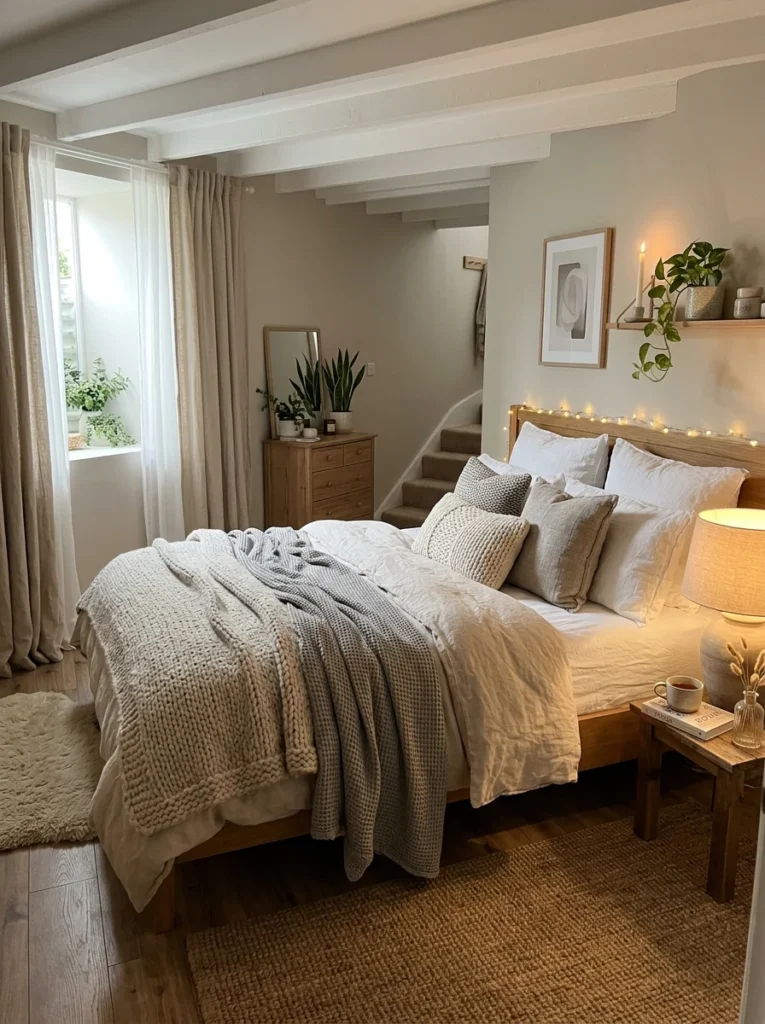
The bedding and textile choices in a basement bedroom are one of the most direct and most accessible ways to create the warmth, softness, and comfort that compensate for the below-grade challenges of limited light, lower temperature, and harder surfaces.
Layer Warm Textiles Generously
The layering principle — more layers of lighter, warmer textiles rather than fewer layers of heavier ones — creates a bed that looks visually rich and inviting and that allows the room’s occupant to adjust their thermal comfort easily by adding or removing layers rather than changing the room temperature for the entire space.
A base of smooth, soft cotton or linen sheets in a warm neutral — ivory, warm cream, or warm white — provides the foundation layer. A duvet or comforter in a warm weight appropriate for the basement’s typical sleeping temperature provides the primary warmth layer. A knit blanket or a woven throw folded at the foot of the bed provides an additional warmth layer and a significant visual texture contribution. Two or three cushions in warm fabrics — velvet, linen, knit — layered at the head of the bed complete the visual richness of the bed styling.
Curtains — Full-Length, Heavy, and Warm-Toned
In a basement bedroom where the egress window admits limited natural light, full-length curtains hung from ceiling to floor — or as close to ceiling height as the room’s ceiling height allows — create the visual impression of a larger, more generously windowed room. Even if the actual window is small and positioned high in the wall, full-length curtains framing the window extend the visual presence of the window opening from the floor to the ceiling, which gives the window a scale and importance that its actual dimensions do not provide.
The fabric of the curtains should be warm in tone — linen in warm cream or ivory, velvet in warm grey or dusty blue, or cotton in any warm neutral — and heavy enough to hang with the weighted, full quality that creates the most impressive curtain effect. Lightweight fabrics in sheer or semi-sheer weights lack the visual substance that a basement bedroom needs from its curtains and tend to look underdressed against the room’s typically lower and more limited windows.
Section 7: Storage in a Basement Bedroom
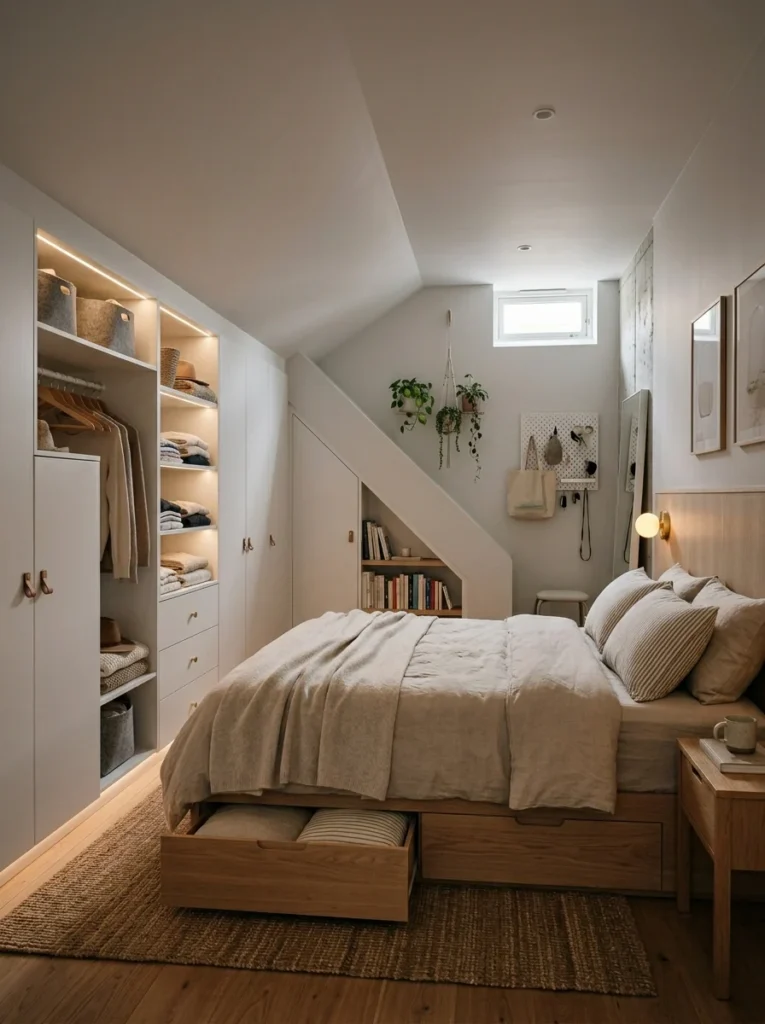
A basement bedroom typically has less wall space available for storage than an above-grade bedroom — the egress window, the mechanical penetrations, and the staircase access consume portions of the wall area that would otherwise be available for wardrobes and storage furniture. The storage strategy for a basement bedroom needs to make the most of every available wall section and to use vertical space efficiently.
Built-In Wardrobe Along the Low Wall
In a basement bedroom with a sloped ceiling that creates a low-wall section beside the staircase — a common configuration in basements where the staircase runs along one wall — the space beneath the slope is most efficiently used as built-in wardrobe storage. The low-wall section that is too short for comfortable standing occupancy is an appropriate height for hanging short garments, for shelving folded items, and for drawer storage — all of which can be housed in a built-in wardrobe structure that uses the full depth of the space up to the ceiling slope.
A built-in wardrobe along the low wall makes productive use of a zone of the basement bedroom that would otherwise be unusable for any other purpose, frees up the full-height wall sections for the bed and other furniture, and creates a custom, considered appearance that suits the bedroom aesthetic.
Under-Bed Storage Maximization
The space under the bed in a basement bedroom — particularly if the bed is raised on legs or placed on a storage platform — provides one of the largest single storage volumes available in the room without consuming any additional floor area. Under-bed storage containers — flat boxes with lids on wheels or on slides — hold seasonal clothing, spare bedding, shoes, and other items that are needed occasionally rather than daily.
A storage bed — a bed frame with built-in drawers on the sides or a hydraulic lift mechanism that reveals storage beneath the mattress — provides the most organized and most accessible version of under-bed storage and eliminates the need for a separate dresser in a room where wall space for additional furniture is limited.
Conclusion
A basement bedroom is not simply a bedroom that happens to be below grade — it is a room that requires specific design responses to specific challenges that above-grade bedrooms do not share. The egress window is non-negotiable. The ceiling treatment must preserve height and reflect light. The color palette must create warmth rather than adding to the coolness of the below-grade position. The flooring must address the thermal conductivity of the concrete slab. The lighting must compensate comprehensively for limited natural light. And the textiles must layer warmth and softness that the room’s position and materials do not naturally provide.
A basement bedroom designed with attention to each of these challenges — not as a room that is being apologized for but as a room that is being designed specifically for the situation it occupies — is a room that genuinely works as a bedroom. The person sleeping in it wakes to a room that feels warm, comfortable, and private. The design decisions that created that experience are invisible — they have been absorbed into the room’s character so completely that the below-grade position that motivated them is simply not felt.
That is the goal of good basement bedroom design — not to make the room look like it is not in the basement, but to make the room feel so genuinely comfortable and well-designed that the question of where it is does not arise.