
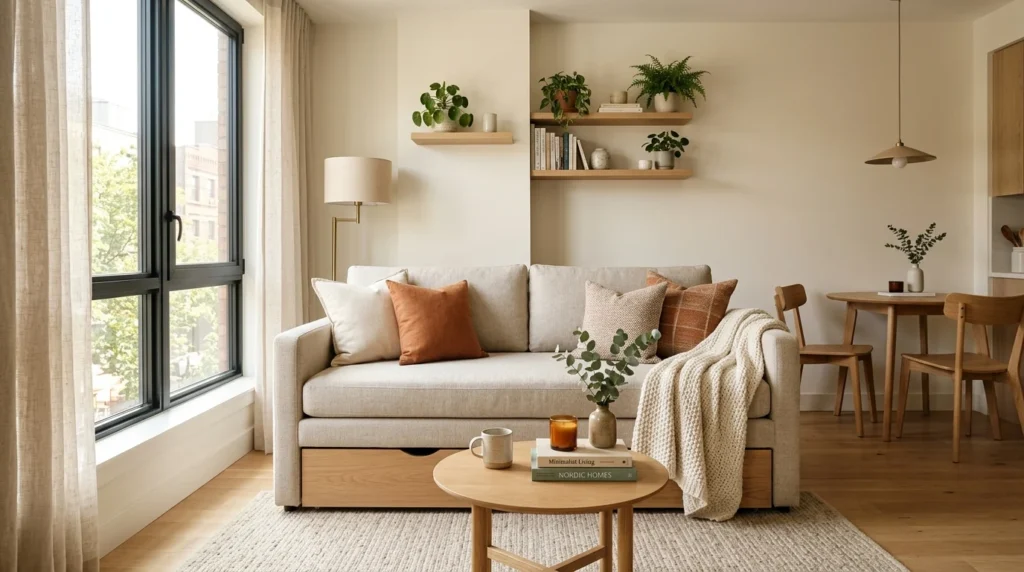
The first sofa bed I ever bought was a disaster. I picked it based purely on how it looked folded up as a couch, never once sitting on the actual mattress inside before buying it. My first overnight guest ended up sleeping on the floor with a blanket because the mattress bar dug into her back so badly she couldn’t stand it. That experience taught me more about multitasking furniture than any article ever could, and it sent me on a genuine hunt over the next few years to figure out which sofa bed solutions actually work in real life, not just in a showroom.
Since that first bad purchase, I’ve lived in three different small apartments, each requiring some version of a couch that had to double as a guest bed, a daybed, or extra seating for movie nights. Some of what I tried was a waste of money. Some of it turned out to be genuinely clever, and a couple of small habits I picked up along the way ended up mattering more than the furniture itself. Here’s what I’ve learned, mistake by mistake, from three rounds of trial and error.
1. Actually Sit and Lie Down on the Mattress Before Buying
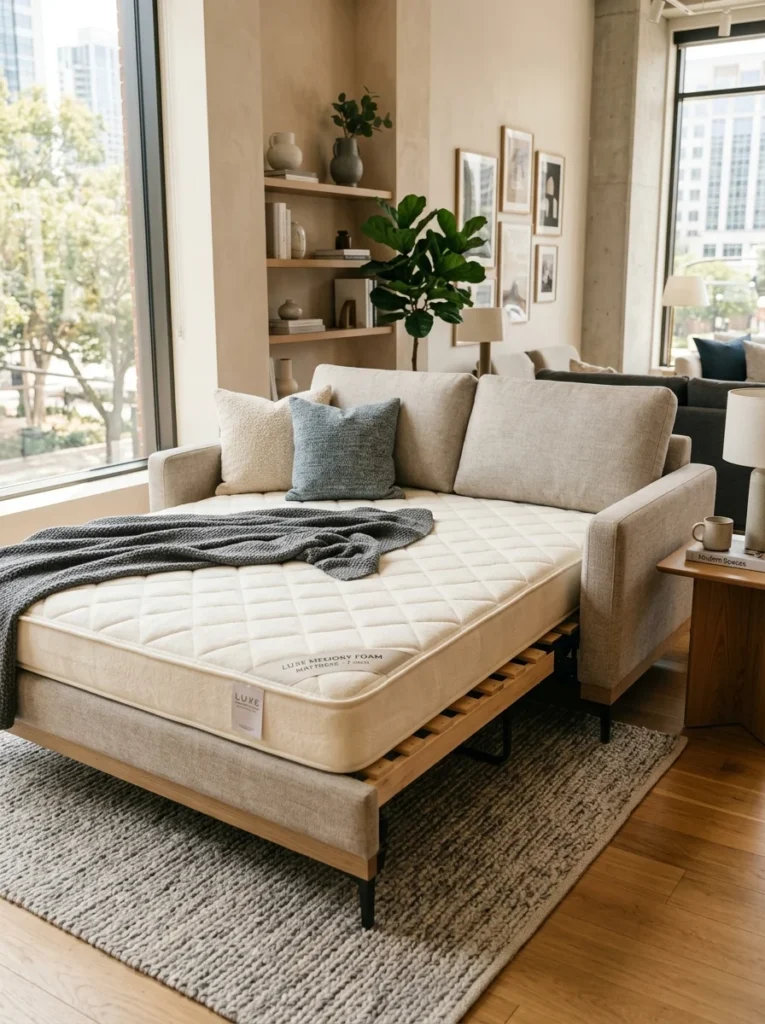
This sounds obvious in hindsight, but I skipped it entirely on my first purchase and paid for it. Now I spend at least ten minutes lying on any sofa bed mattress in the store, testing it the way an actual overnight guest would, including turning onto my side the way most people actually sleep rather than just lying flat on my back for thirty seconds. The frame construction underneath matters just as much as the mattress itself, since a thin mattress over a well-designed frame can sleep better than a thick one over a frame with a bar running right through the middle. I now specifically press down along the center of any mattress in the store to check for a hard bar before even considering the thickness of the padding on top.
2. Look for a Memory Foam or Innerspring Hybrid Mattress Insert
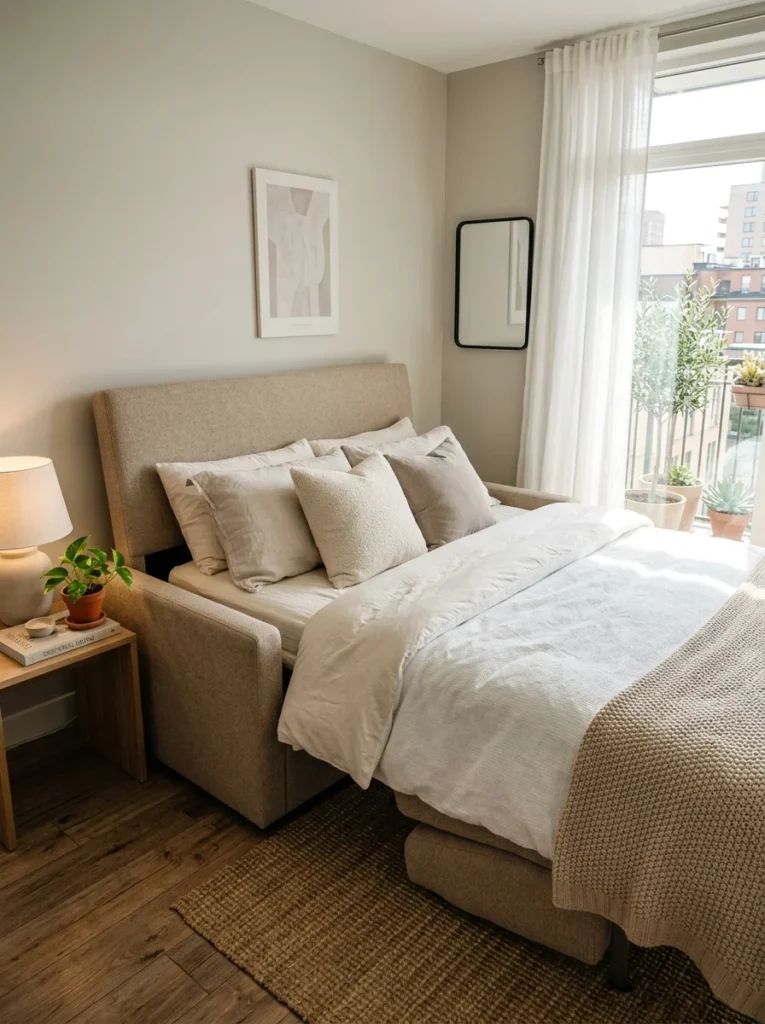
My second sofa bed came with a basic memory foam insert instead of the standard thin foam pad my first one had, and the difference in comfort was significant enough that guests started commenting on how surprisingly comfortable it was. If your current sofa bed has a thin, uncomfortable mattress, a separate memory foam topper cut to size can genuinely transform how it sleeps without replacing the whole piece.
3. Choose a Frame That Converts in One Motion, Not Several
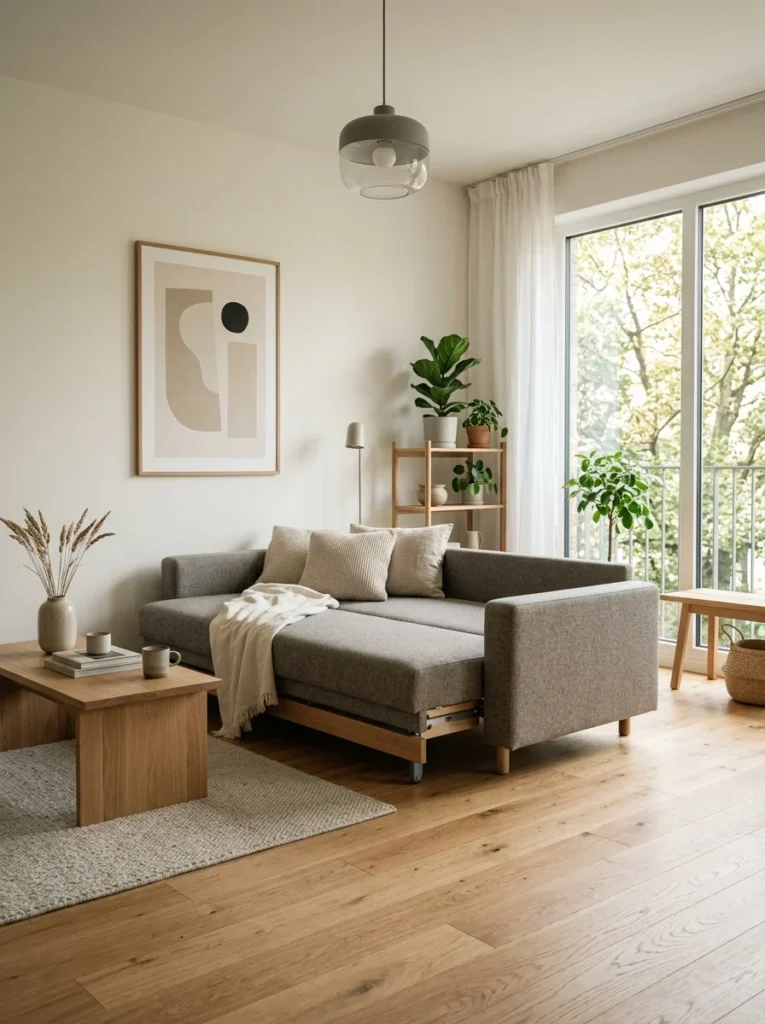
I once helped a friend set up a sofa bed that required removing all the back cushions, unfolding three separate sections, and adjusting a support leg before it was usable. It took nearly ten minutes and neither of us wanted to do it again the next morning to fold it back, so it stayed unfolded for the entire length of her stay, blocking half the living room the whole time. My current sofa bed converts with a single pull motion, and that simplicity alone has made me use the bed function far more often than I did with my more complicated first one, including for casual afternoon naps that I never would have bothered setting up the old sofa bed for.
4. Consider a Daybed With a Trundle Instead of a Traditional Sofa Bed
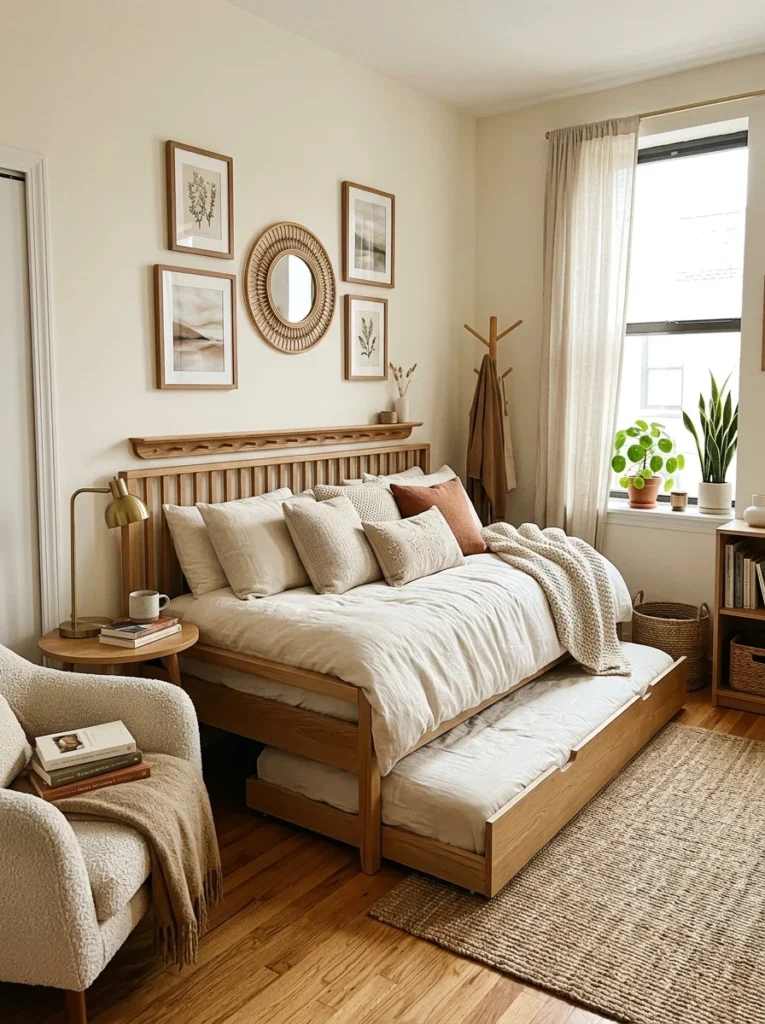
In my smallest apartment, a traditional pull-out sofa bed didn’t leave enough floor clearance to fully unfold, and I actually returned one after discovering it would have blocked my only walkway to the kitchen. Switching to a daybed with a pull-out trundle underneath solved that problem completely, since the trundle slides out at the same height rather than unfolding outward into the room. It also meant I could use the daybed as regular seating throughout the day without any bulky folding mechanism underneath me, which made it feel far less like “guest furniture” and more like a normal part of the room.
5. Use a Storage Ottoman as a Backup Sleeping Surface
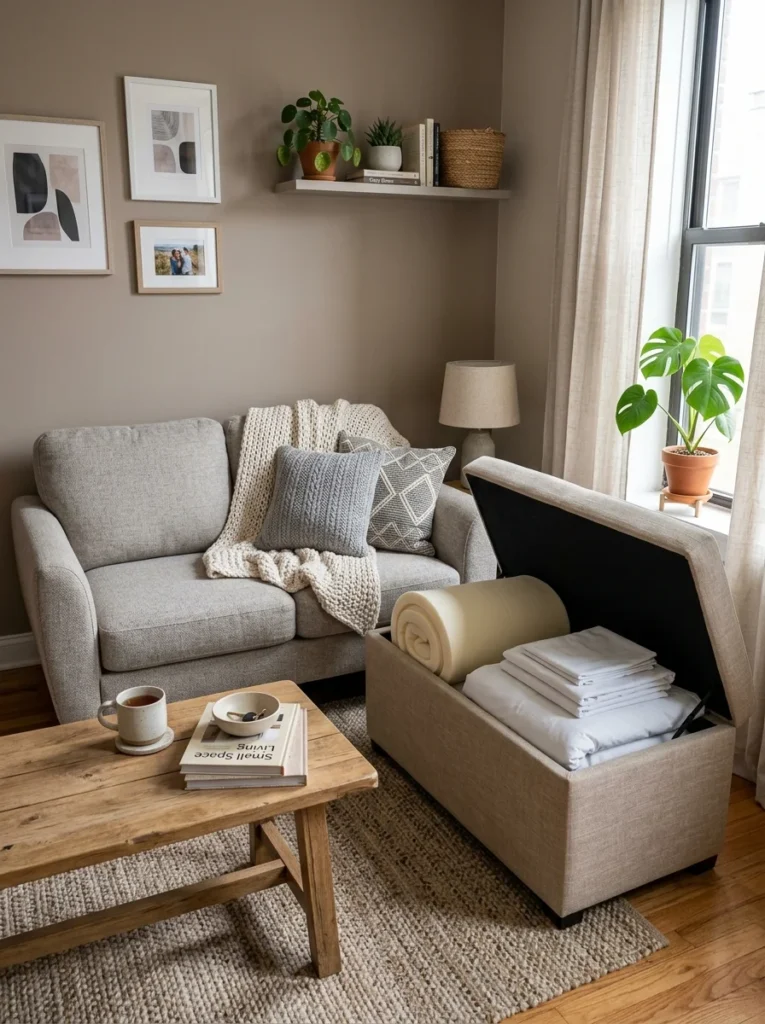
This isn’t a true sofa bed solution, but it’s saved me more than once. A large, sturdy storage ottoman with a flat, firm top can function as a low sleeping platform for a single guest in a pinch, especially when paired with a foam topper stored inside it for exactly that purpose. It’s not a permanent solution, but for occasional guests it’s meant I didn’t need to dedicate space to full-time sofa bed furniture.
6. Look for Sofa Beds With Built-In Storage Underneath
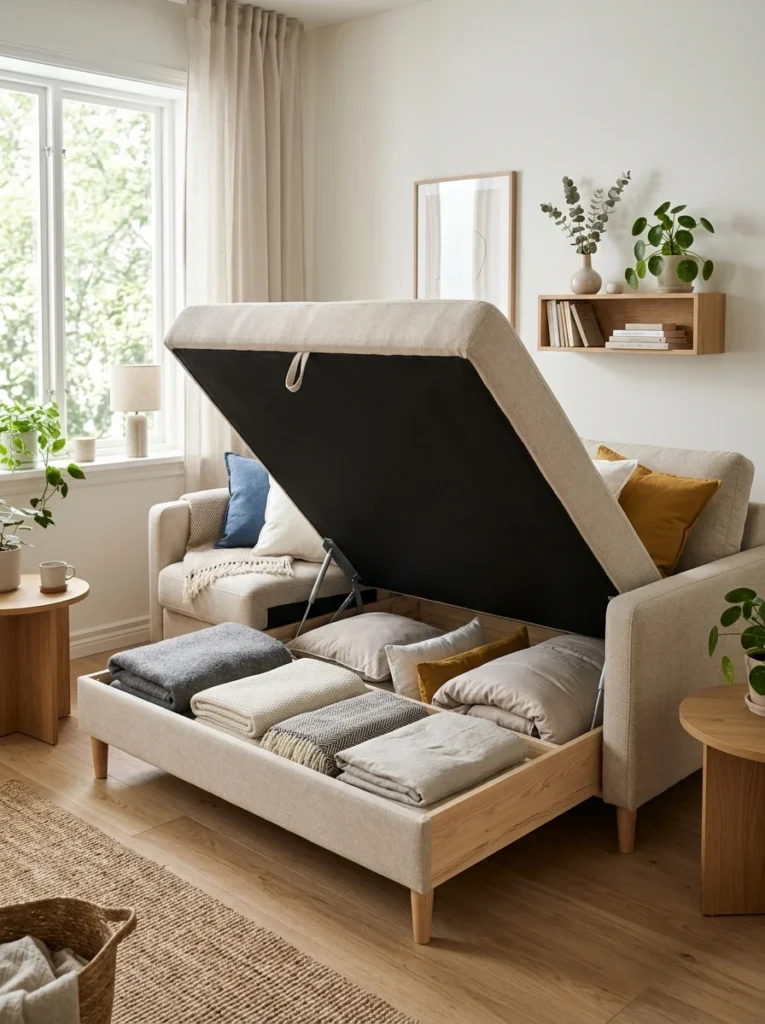
My current sofa has a storage compartment beneath the mattress that holds extra bedding, a spare pillow, and a folded sheet set, so everything needed to make up the bed is stored inside the piece itself. Before this, I kept sofa bed linens in a separate closet, and there was always a scramble to find matching sheets when a guest showed up unexpectedly, usually ending with mismatched pillowcases and an apology. Having everything built into the sofa itself made the whole process noticeably less stressful, and it freed up an entire shelf in my linen closet that used to be dedicated just to guest bedding.
7. Choose a Sleeper Chair for Truly Tight Spaces
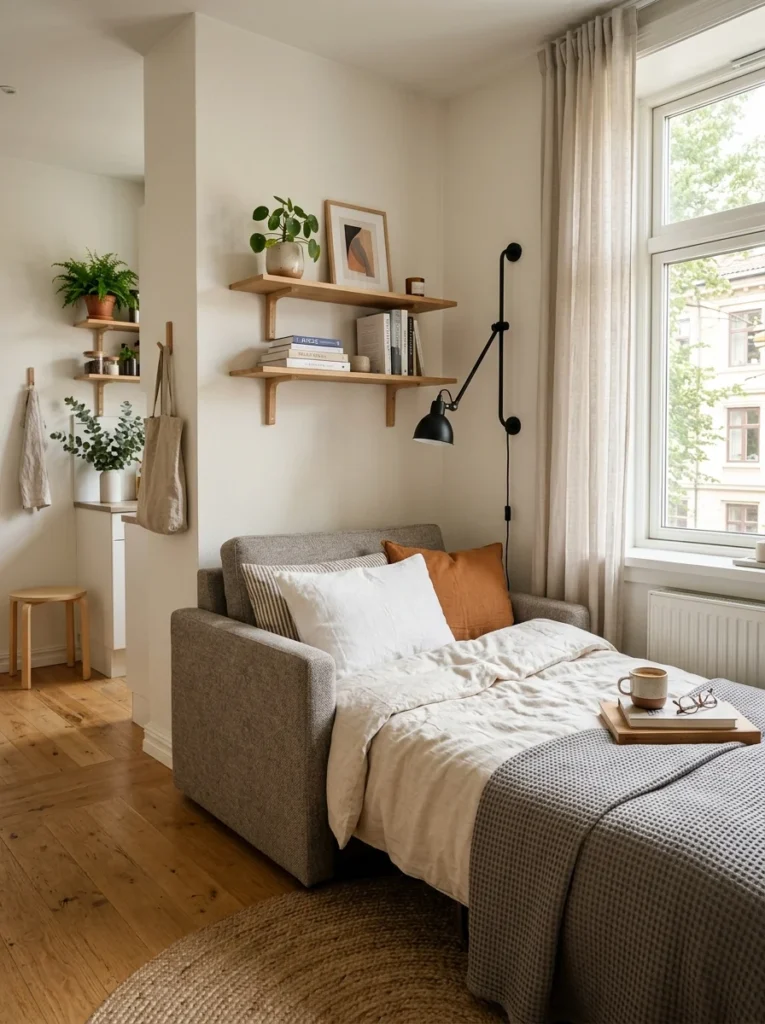
In an apartment too small for even a loveseat-sized sofa bed, I used a single sleeper chair that unfolds into a twin-sized bed. It’s not going to sleep two people comfortably, but for a studio apartment with occasional single guests, it took up a fraction of the floor space a full sofa bed would have needed while still folding out flat enough to sleep on. It also meant I could tuck it into a corner as a reading chair for most of the year, only unfolding it the handful of nights a friend actually needed somewhere to sleep, which made it feel far less like dedicated guest furniture taking up permanent space in an already small room.
8. Add a Slipcover to Hide Wear From Frequent Folding
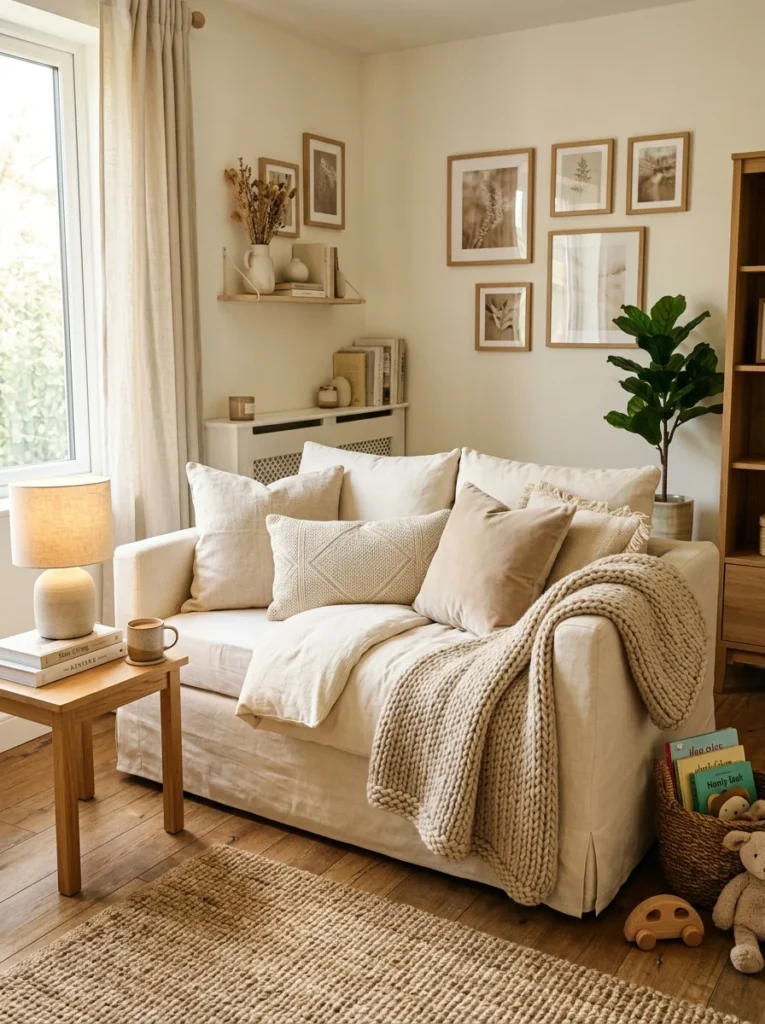
Sofa beds get more physical wear than a standard couch simply from being folded and unfolded repeatedly, and mine started showing creasing along the fold lines within the first year. A fitted slipcover not only hid that wear but made the whole piece easier to keep clean, since I could remove and wash it directly rather than spot-cleaning upholstery I couldn’t fully launder.
9. Pick Removable, Washable Cushion Covers
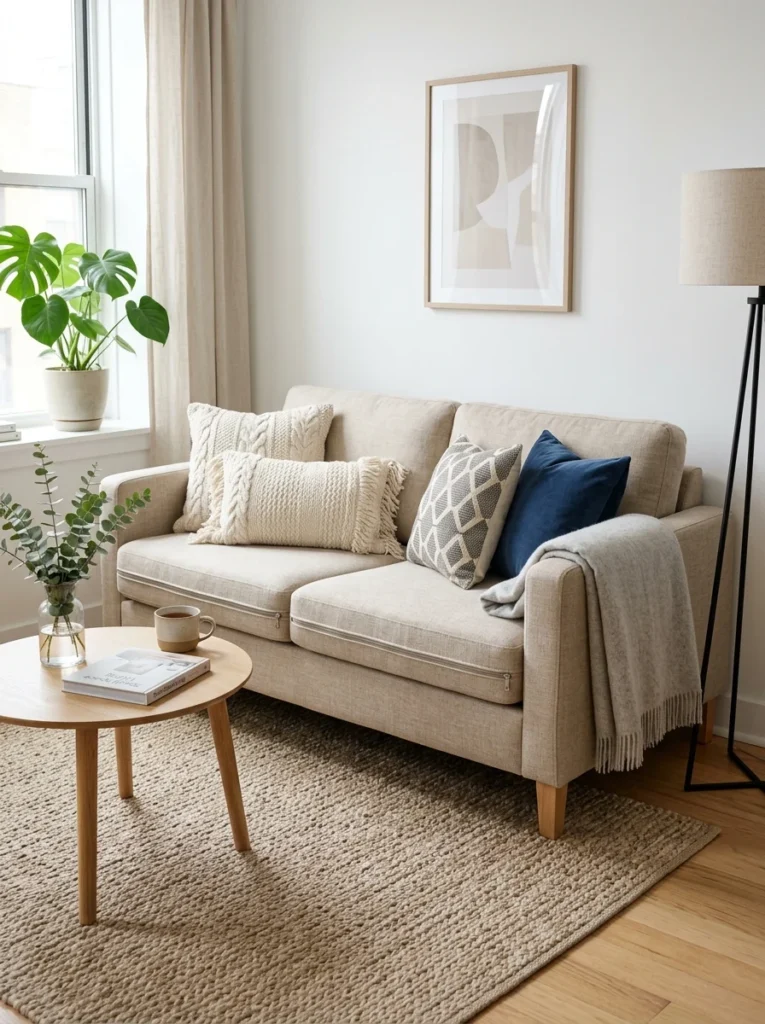
Related to the point above, I learned to specifically look for sofa beds with zippered, washable cushion covers after ruining a set of cushions during a spilled coffee incident with a houseguest who felt terrible about it for the rest of the weekend. Being able to unzip and wash the covers separately has made the whole piece far more practical for a couch that regularly doubles as a bed for other people, and it’s taken away a lot of the anxiety I used to feel about guests eating or drinking anywhere near the sofa.
10. Use a Fold-Out Futon for a More Casual, Flexible Space
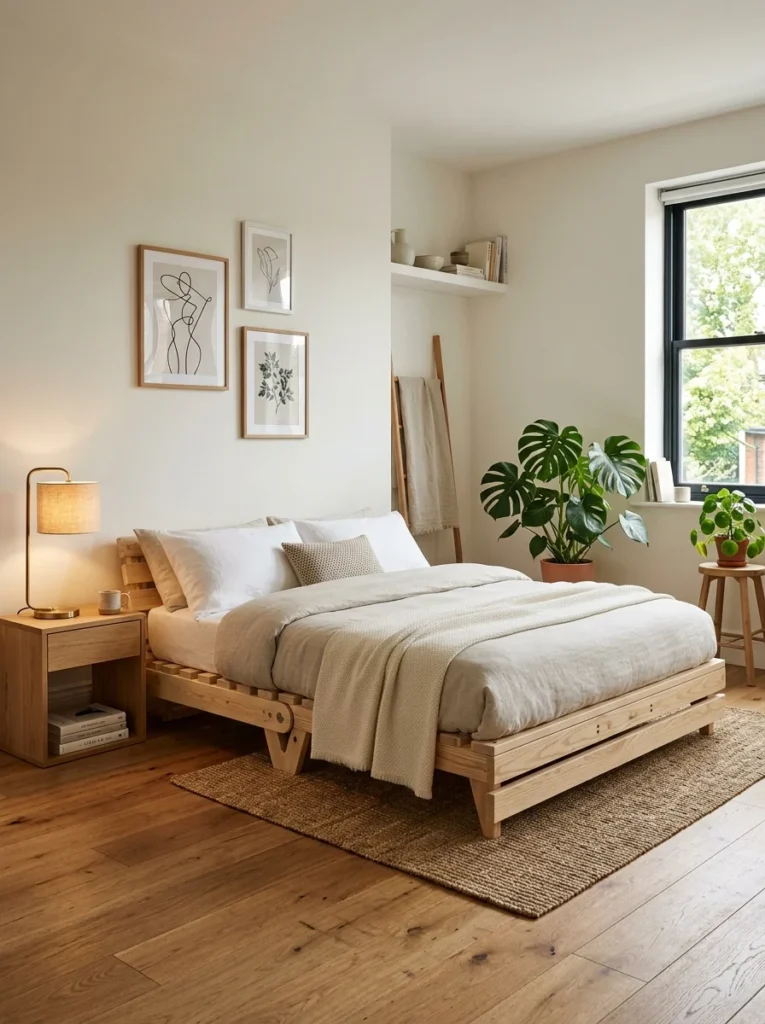
In a more casual living room setup, I used a futon frame that reclines flat instead of a traditional folding sofa bed mechanism. It’s a simpler, sturdier design overall, with fewer moving parts to eventually wear out, and the flat wooden slats underneath the futon mattress held up noticeably better over time than the metal folding frame in my first sofa bed, which had already started squeaking within the first year. The futon also had the advantage of reclining to a few positions in between fully upright and fully flat, which turned out to be genuinely useful for lounging while watching a movie, not just for sleeping.
11. Add a Bolster or Body Pillow Setup That Converts Easily to Bedding
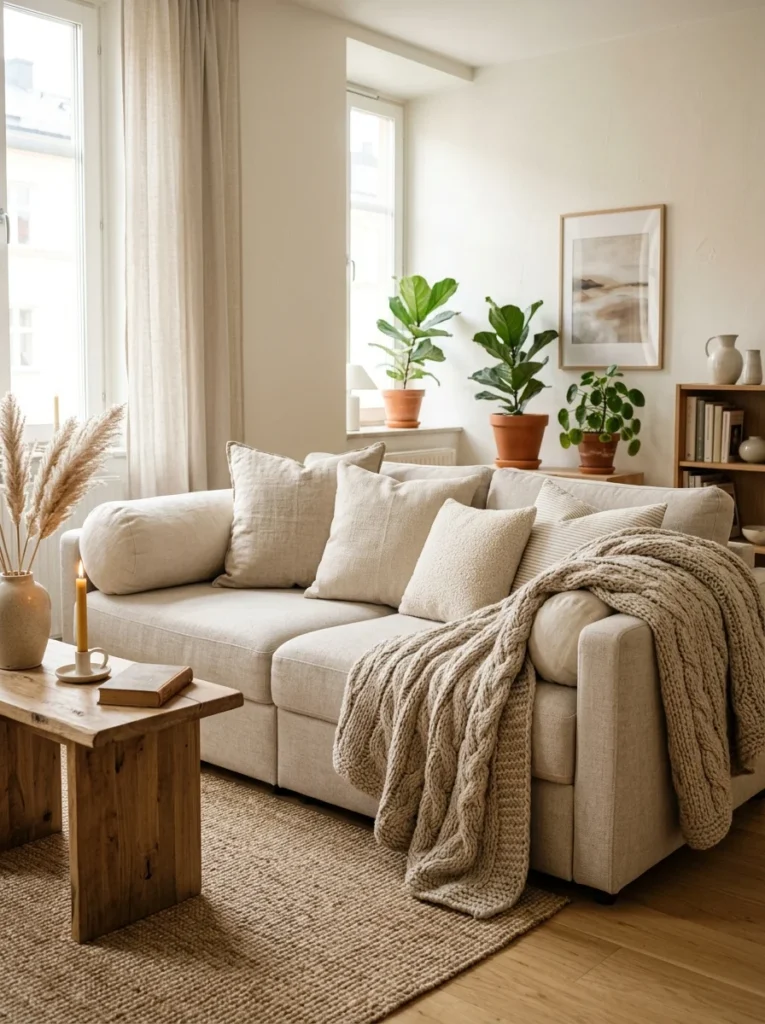
I keep two long bolster pillows on my sofa bed that double as extra back support during the day and get tucked aside at night to become makeshift side pillows for a guest. It’s a small styling choice that means the sofa always looks intentionally decorated as seating, without needing to hide obvious bedding nearby.
12. Position the Sofa Bed With Conversion Clearance in Mind From Day One
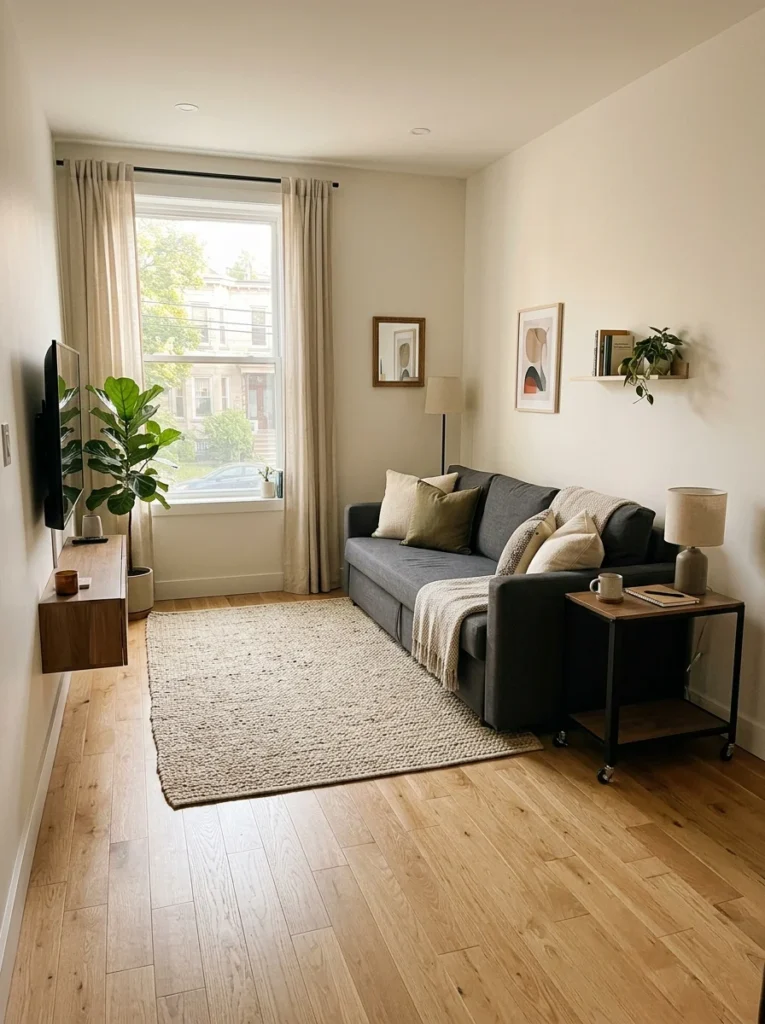
I made the mistake in my first apartment of placing a coffee table directly in front of my sofa bed, only to realize every time I wanted to use the bed function, I had to drag the table across the room first, usually at eleven at night while a tired guest waited by the door with their bags. Now I always measure and leave at least three feet of clear floor space in front of any sofa bed before placing any other furniture nearby, even if it means a slightly less filled-in looking living room during the day. I’ve found a small side table on wheels works well as a stand-in for a coffee table in this kind of layout, since it can be rolled out of the way in seconds instead of lifted and carried.
13. Choose Neutral, Durable Upholstery Over Delicate Fabric
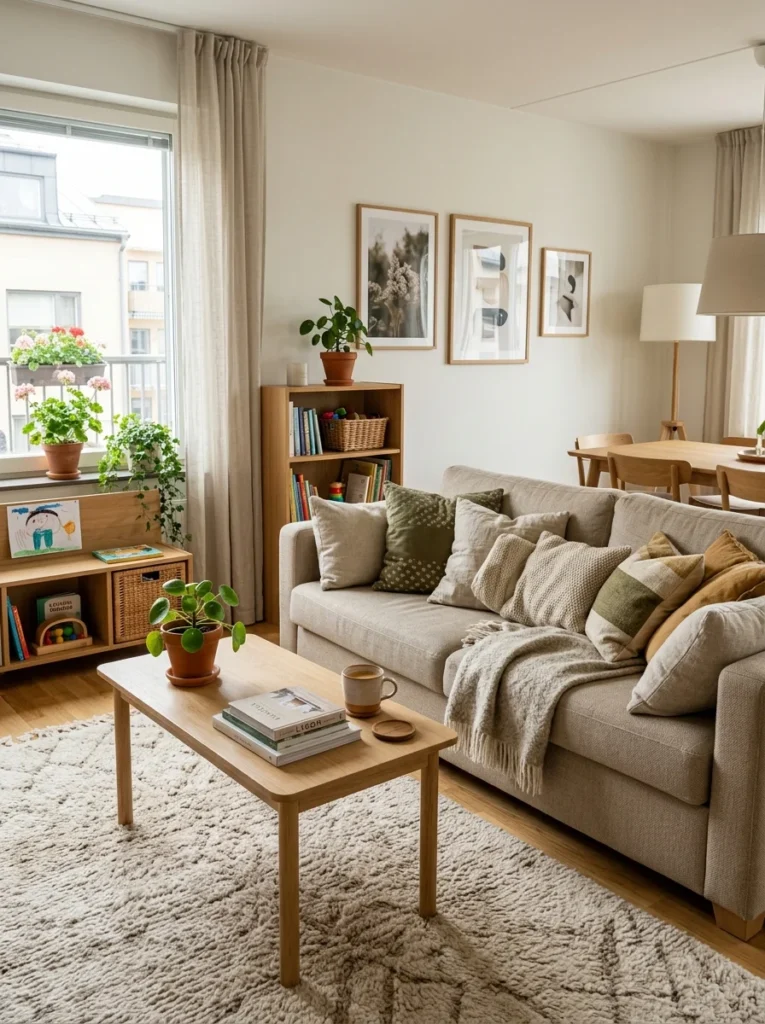
My first sofa bed had a light-colored, delicate woven fabric that showed every mark within months of regular guest use, including a stubborn wine stain that never fully came out. My current one has a more durable, tightly woven neutral fabric that’s held up to years of regular folding, sitting, and the occasional spilled drink far better. If a sofa is going to double as a guest bed, I’ve learned it’s worth prioritizing fabric durability over how delicate or trendy the texture looks in photos, since the piece is going to see far more physical wear than a standard sofa that never gets folded out.
14. Keep a Dedicated Basket of Bedding Nearby, Even Without Built-In Storage
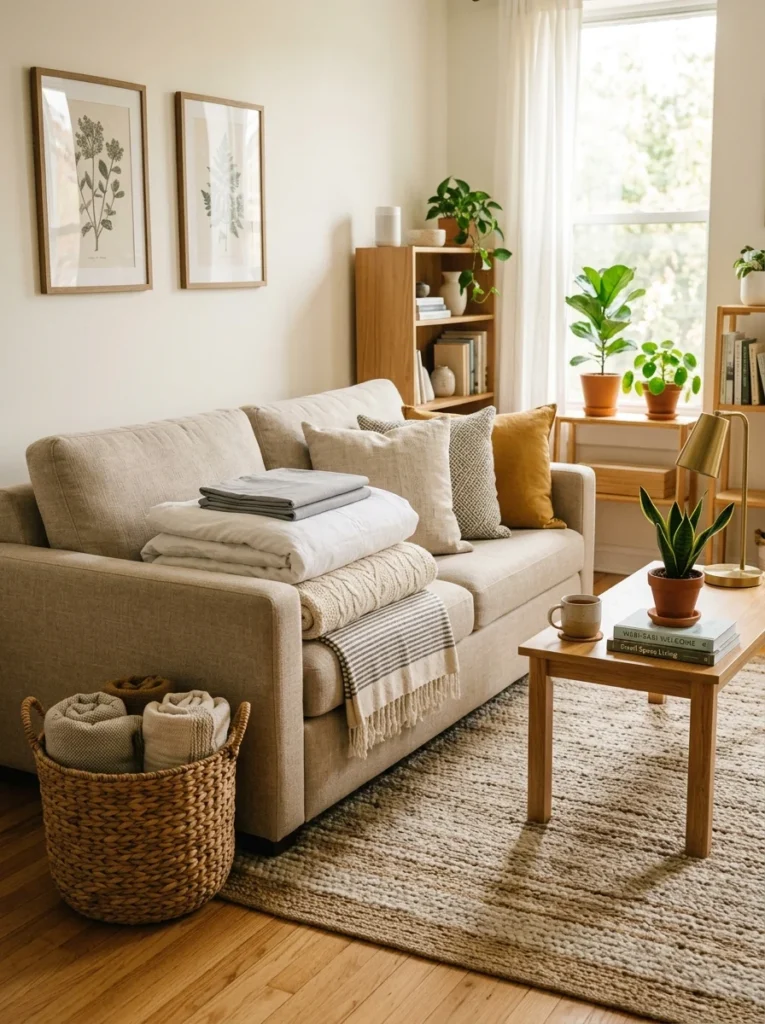
If your sofa bed doesn’t have built-in storage underneath, keeping a labeled basket or bin specifically for sofa bed sheets and an extra pillow, tucked into a nearby closet or under a side table, makes the whole setup feel far less improvised when guests arrive unexpectedly. It’s a small organizational habit, but it’s the difference between calmly pulling out clean sheets and frantically searching through mismatched linens at eleven at night. I keep a spare set of sheets specifically sized for the sofa bed’s mattress in that basket at all times, separate from my regular bedding, so I’m never tempted to grab something that doesn’t actually fit.
What I’d Do Differently If I Started Over
If I could go back and redo that very first sofa bed purchase, I’d spend the extra time testing the mattress in person rather than trusting how the piece looked folded up in a showroom photo. Comfort, frame simplicity, and built-in storage have mattered far more to how often I actually use the bed function than the initial look of the couch itself. A sofa bed that’s slightly less stylish but genuinely comfortable to sleep on gets used constantly. One that looks great folded up but sleeps terribly just becomes an expensive, oddly-shaped regular couch that occasionally embarrasses you in front of overnight guests. Looking back, almost every real improvement in my setup came from paying attention to the parts nobody sees in a product photo, not from chasing a more stylish-looking piece.
If you’re currently shopping for a piece that needs to multitask in a small space, my honest advice is to prioritize the sleeping mechanism and mattress quality first, and let the upholstery and styling be a secondary decision. The couch will be seen every day, but it only really has to prove itself the night someone actually needs to sleep on it, and that’s the test that matters most. I still think back to that first uncomfortable sofa bed and the friend who ended up on the floor, and every purchase since then has been shaped by making sure that never happens again.