
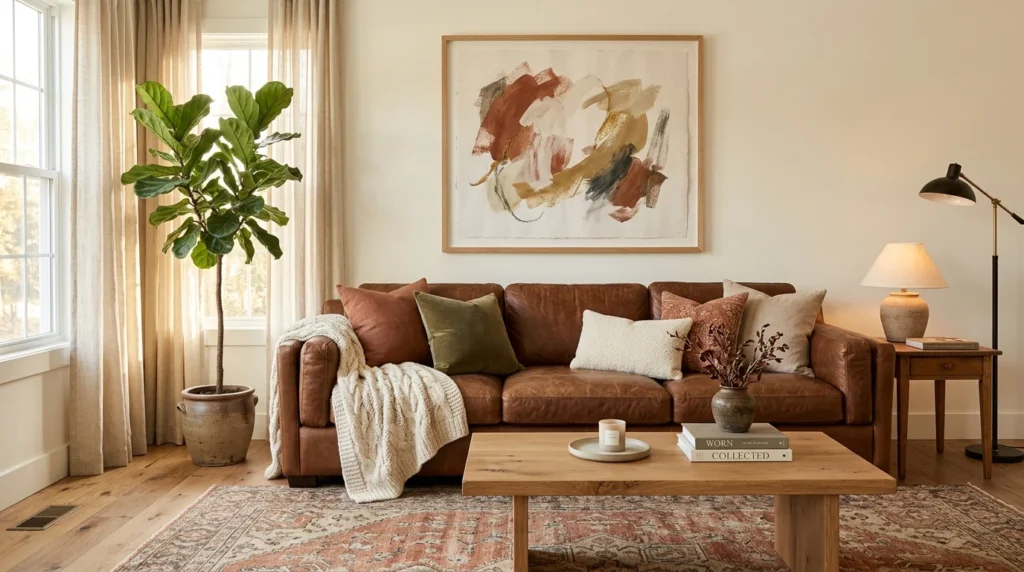
I almost didn’t buy a leather sofa. For years I assumed leather meant cold, stiff, and a little too formal for a real home — something you’d see in a hotel lobby, not a place where you actually want to curl up with a blanket on a Sunday. Then I inherited a worn, honey-colored leather couch from a relative who was downsizing, and it completely changed my mind. That sofa ended up being the warmest, most lived-in piece of furniture I’ve ever owned, and it taught me that leather done right is nothing like the cold, corporate image I had in my head.
Since then I’ve styled two different leather sofas in two different apartments, made a few mistakes with rugs and lighting that made the room feel more like a waiting room than a living room, and slowly figured out what actually makes leather feel warm and welcoming instead of stiff. None of what follows required a full renovation or a big budget — most of it came down to small styling decisions I only learned by getting them wrong first. Here’s everything that’s worked for me.
1. Choose a Warm, Aged Tone Over Anything Too Glossy
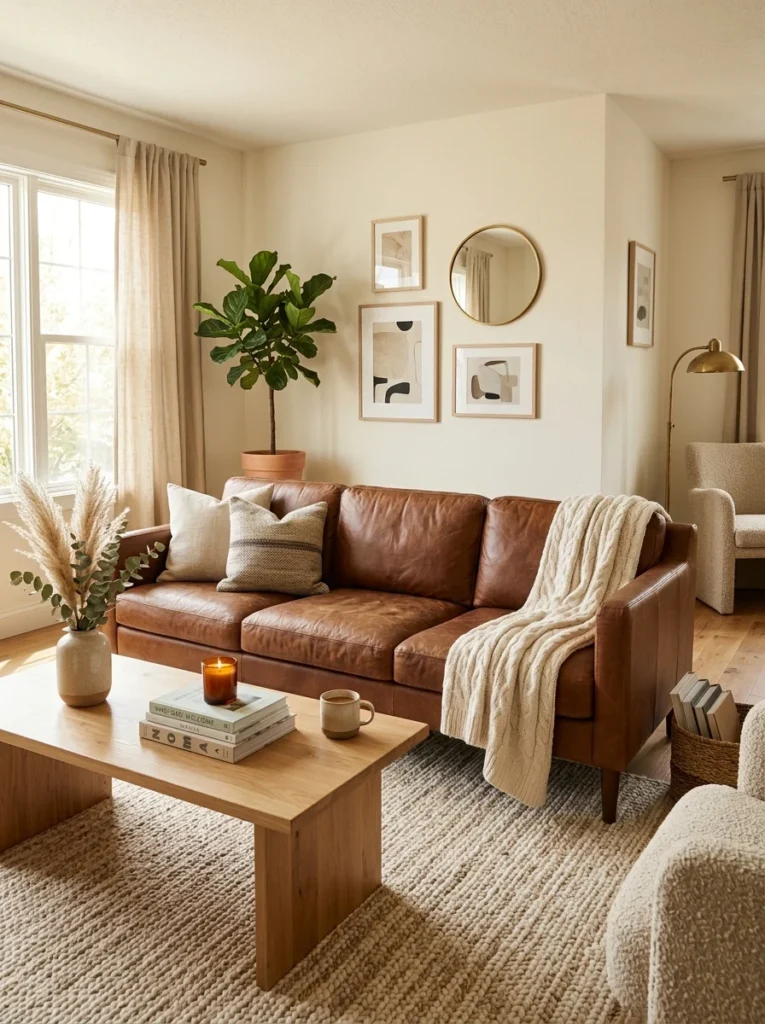
The single biggest factor in whether a leather sofa feels cozy or cold is the finish. My first instinct was to look for something sleek and glossy, but a matte, slightly aged-looking leather in a warm brown or cognac tone reads as inviting in a way that shiny black leather rarely does. The inherited sofa I mentioned had a naturally worn patina, and I’ve since learned that a distressed or “waxed pull-up” leather finish gets that same lived-in look right from the start. When I later shopped for a sofa on my own, I brought a small fabric swatch of a rug I liked to the store just to compare undertones side by side, which saved me from picking a leather that looked warm under store lighting but turned out cooler once it got home.
Testing the leather in different light before committing matters more than most people expect. A leather that looks rich and warm under a showroom’s yellow lighting can look noticeably grayer once it’s sitting in your living room under daylight from a window. Now I always ask to see a sample near natural light, or take a swatch home overnight, before committing to a full sofa. It’s a small extra step that has saved me from a fairly expensive disappointment more than once.
2. Layer It With a Chunky Knit Throw
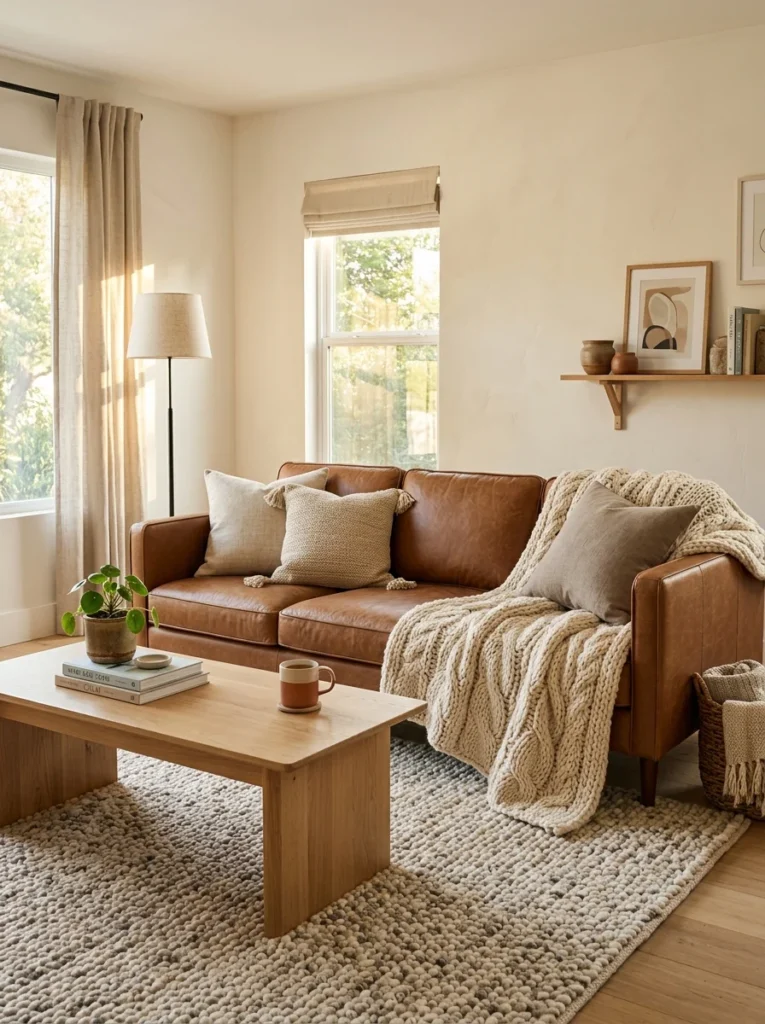
This was the first thing I did when I got that inherited sofa, mostly to hide a small worn patch on one arm, and it ended up becoming a permanent styling choice. A thick, textured knit throw draped over one arm or the back cushion softens the visual weight of the leather almost instantly. I rotate between a cream cable-knit and a deeper rust-colored one depending on the season, and it’s the cheapest change that makes the biggest visual difference.
3. Add a Mix of Soft Textile Pillows
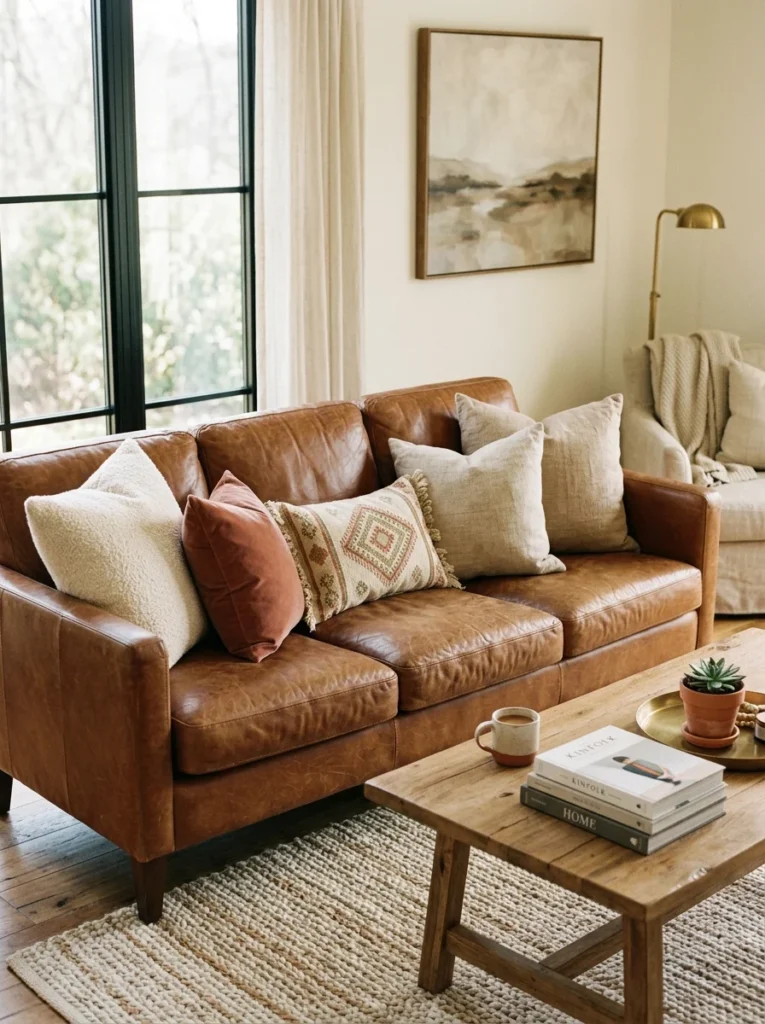
I made the mistake early on of buying pillows in a matching leather or faux-leather fabric, thinking it would look cohesive. Instead, it made the whole sofa feel flat and one-note, like everything was fighting for the same visual space. Switching to a mix of linen, boucle, and velvet pillows in varying but complementary colors gave the sofa visual texture and made it look noticeably more comfortable, even before anyone sits down. I settled on a rule of three different textures per sofa, which keeps the arrangement from looking either too matched or too chaotic, and it’s a ratio I’ve stuck with in both apartments since.
4. Place It on a Warm-Toned Rug, Not a Cool One
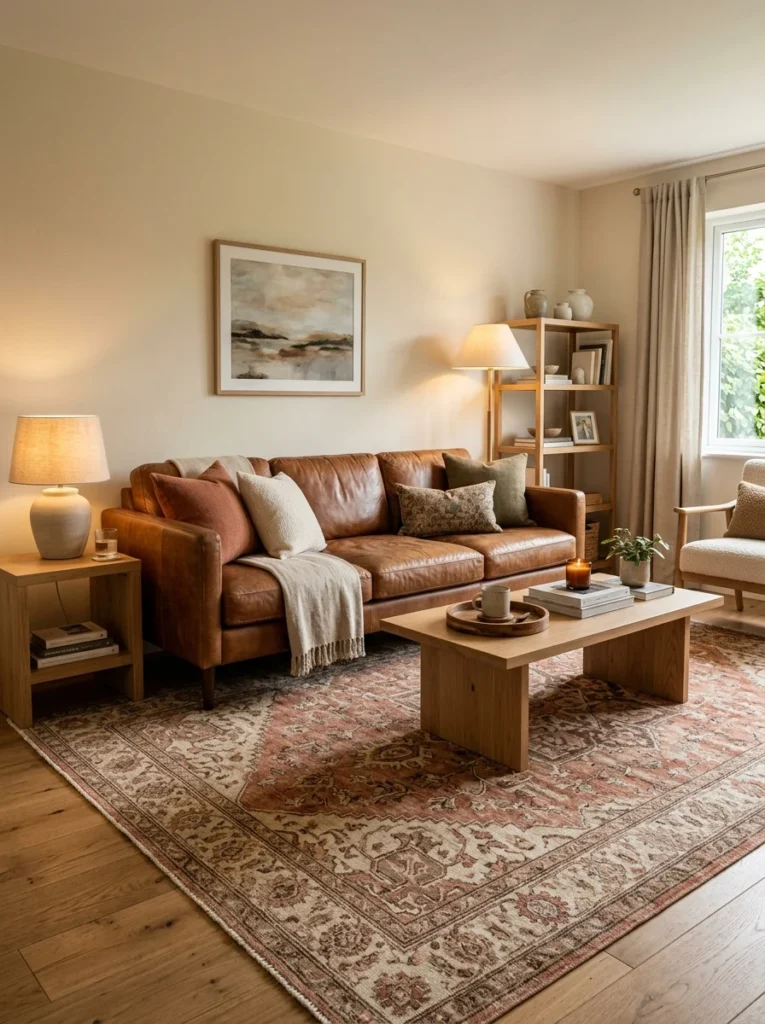
I once placed my leather sofa on a gray and white geometric rug, and the whole seating area ended up feeling sterile despite the leather itself being a warm brown. Swapping to a rug with warm terracotta and cream tones underneath made an enormous difference in how the entire room read, even though the sofa itself didn’t change at all. The rug sets the temperature of the whole room more than people expect, and it’s often the first thing I now consider before buying any other decor piece for a room with a leather sofa in it.
I’ve also noticed that the pattern of the rug matters almost as much as its color. A busy, high-contrast pattern under the sofa competed with the visual texture of the leather itself, while a simpler, more subtly patterned rug let the leather stay the focal point of the room instead of getting lost in the mix.
5. Use Warm, Layered Lighting Nearby
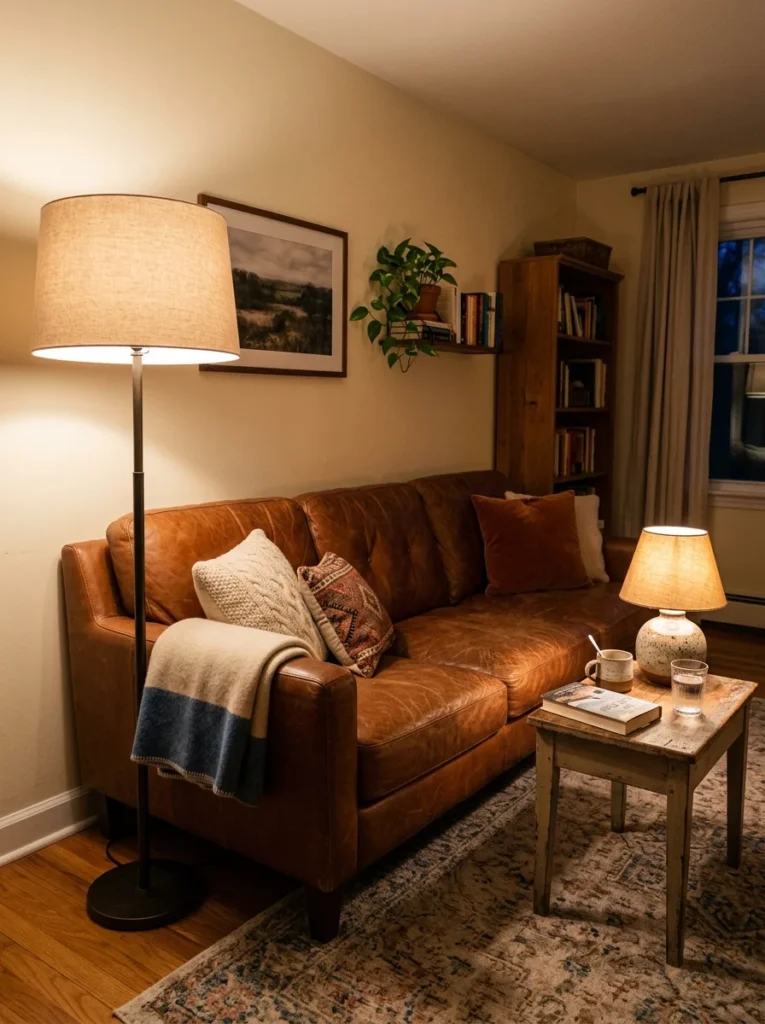
Overhead lighting alone made my leather sofa look almost institutional in the evenings. Adding a floor lamp with a warm-toned bulb next to one end of the sofa, along with a smaller table lamp on a side table, gave the whole seating area a softer glow that made the leather look richer rather than harsh. This is one of those changes that’s hard to appreciate in photos but makes a real difference when you’re actually sitting there at night.
6. Pair It With Wood Furniture That Has Some Grain and Character
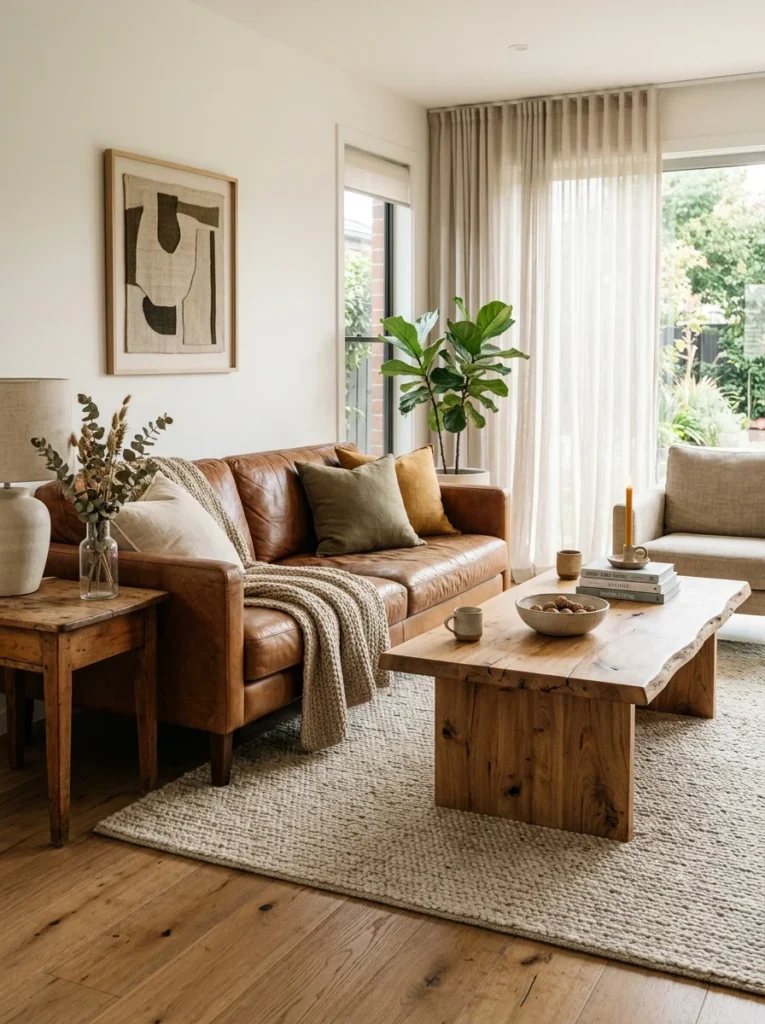
A glossy black coffee table in front of my leather sofa made the whole arrangement feel colder than I wanted. Switching to a coffee table with visible wood grain, in a warmer tone that roughly matched the leather, tied the whole seating area together in a way I didn’t expect from such a simple swap.
7. Don’t Be Afraid of a Slightly Worn, Imperfect Look
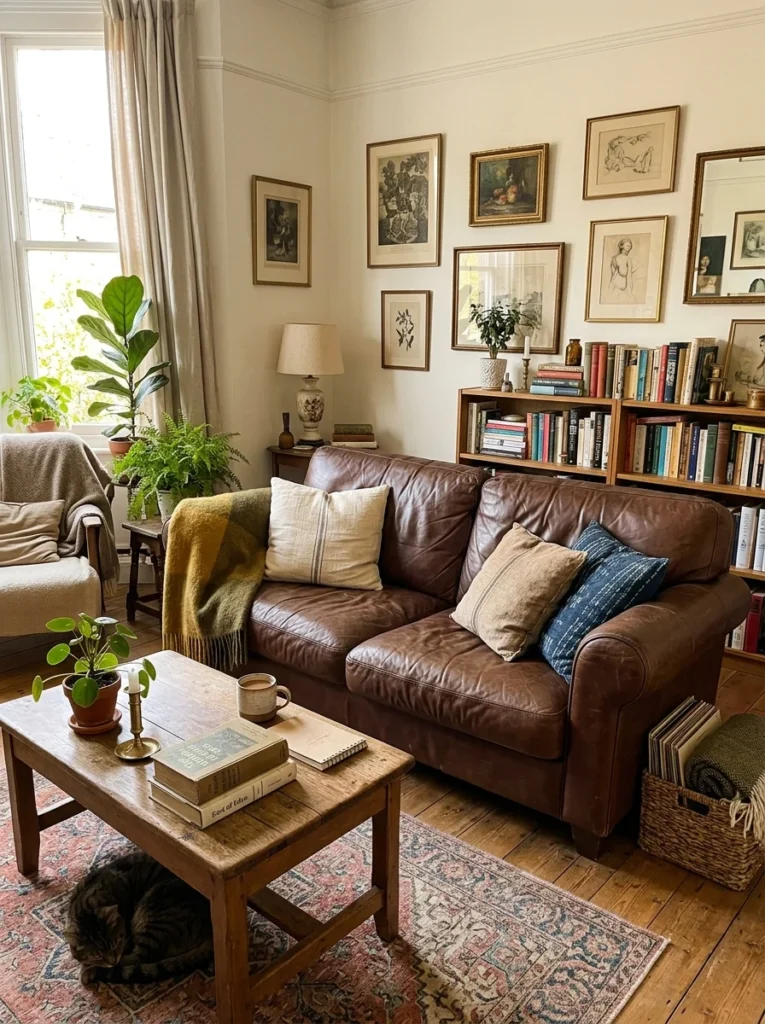
I used to obsess over keeping the leather perfectly pristine, using conditioner constantly and panicking over the smallest scuff. Once I relaxed about it and let the sofa develop a bit of natural character over time, it actually started to look more inviting, not less. A few soft creases and a slightly matte worn spot on the seat cushions read as “well-loved family sofa” rather than “damaged furniture.” I still condition the leather every few months to keep it from drying out and cracking, but I’ve stopped trying to erase every mark it picks up along the way, and the sofa is better for it.
8. Add Greenery Nearby to Soften the Material Contrast
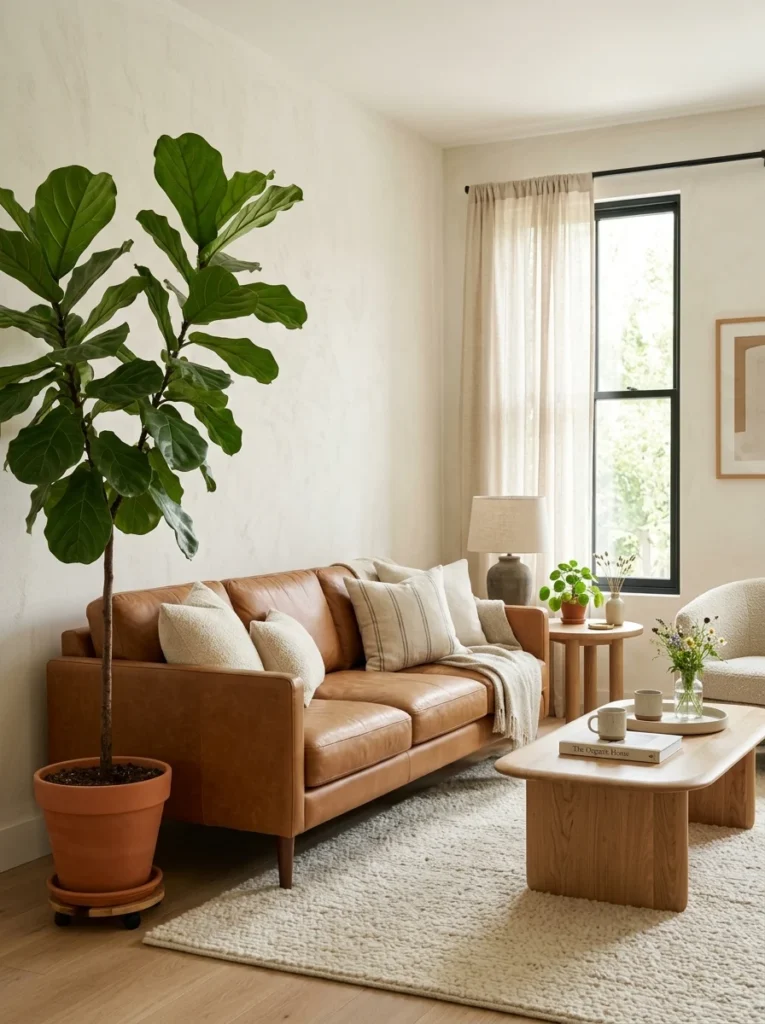
Leather is a hard, structured material, and I found that placing a large leafy plant near one end of the sofa softened the overall look of that corner of the room considerably. A fiddle leaf fig next to my current sofa fills an empty corner and breaks up what would otherwise be a lot of straight lines and solid leather in one area.
9. Use a Neutral Wall Color Behind It, With One Warm Accent
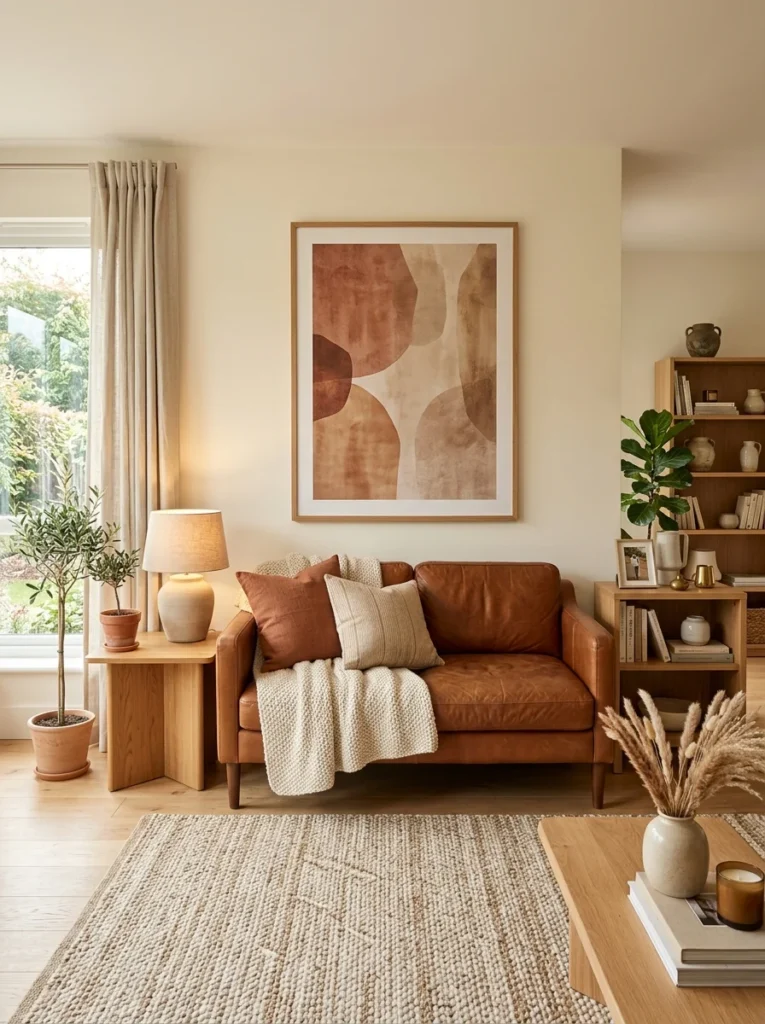
When I had a cool gray wall behind my leather sofa, the whole combination felt a bit flat and corporate, almost like a waiting room rather than somewhere I wanted to relax. Repainting that wall a warmer off-white, and adding one piece of art with warm tones in the frame, made the sofa feel like it belonged in a home rather than an office reception area. I was hesitant to repaint an entire wall just for one piece of furniture, but the cost was minimal compared to how much it changed the overall feeling of the room, and it’s a change I’d make again in any future apartment with a similar cool-toned wall color.
10. Mix in a Vintage or Antique Side Table
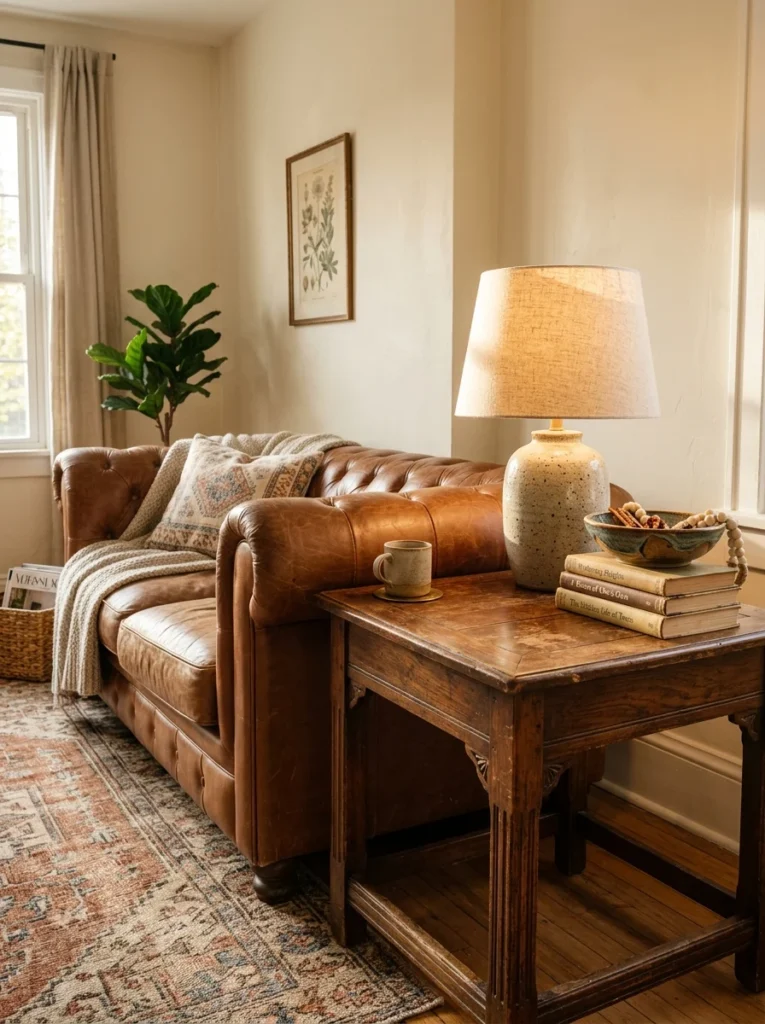
A brand-new, mass-produced side table next to my leather sofa always looked slightly out of place, like two different design eras colliding. Finding a small vintage wooden side table at a secondhand shop gave the whole corner a sense of history that complemented the leather’s own aged character much better than anything new I tried.
11. Consider a Tufted or Chesterfield-Style Silhouette for Extra Character
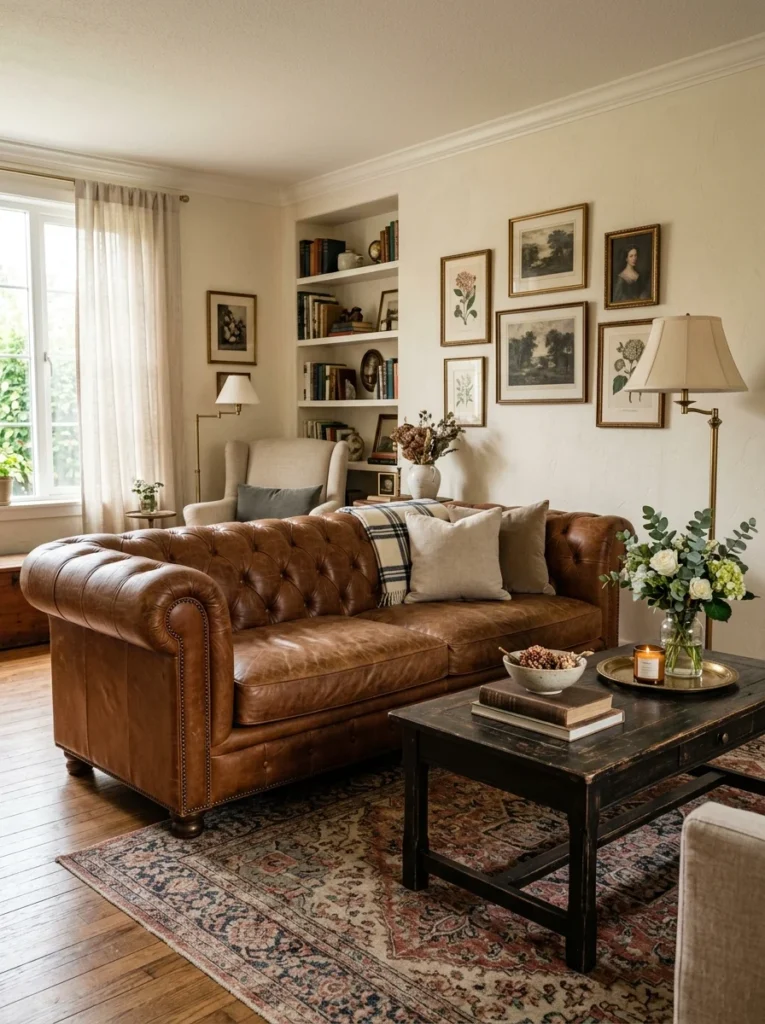
My current sofa has a simple, straight-lined silhouette, and while I like it, I’ve noticed that leather pieces with rolled arms or tufted backs tend to photograph and feel noticeably warmer and more traditional. If you’re shopping for a new leather sofa specifically for warmth, the shape itself does a lot of the work before you even add any styling. A friend of mine has a Chesterfield-style leather sofa in a similar cognac tone to mine, and even with almost no additional styling around it, hers reads as warmer and more established simply because of the rolled arms and deep button tufting catching the light differently across the surface.
12. Add a Textured Ottoman Instead of a Second Matching Leather Piece
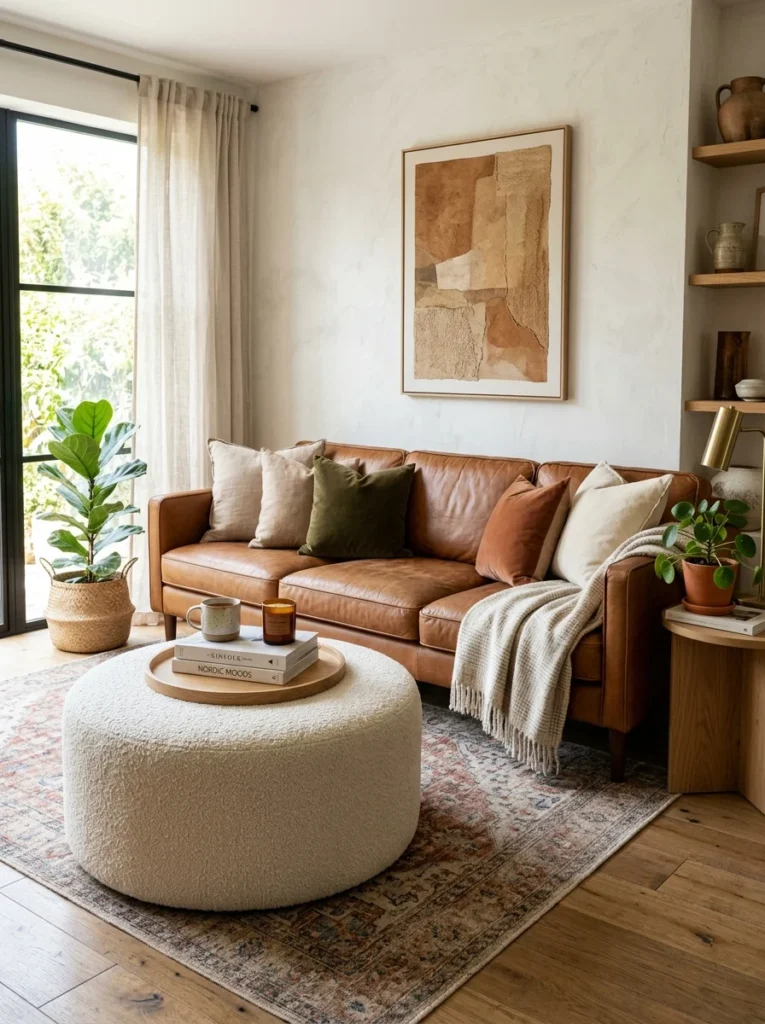
I initially bought a matching leather ottoman to go with my sofa, and the room ended up feeling like a furniture showroom. Replacing it with a woven or upholstered fabric ottoman in a complementary color broke up the leather and gave the seating area more visual variety without looking mismatched.
13. Let Natural Light Hit It Directly if Possible
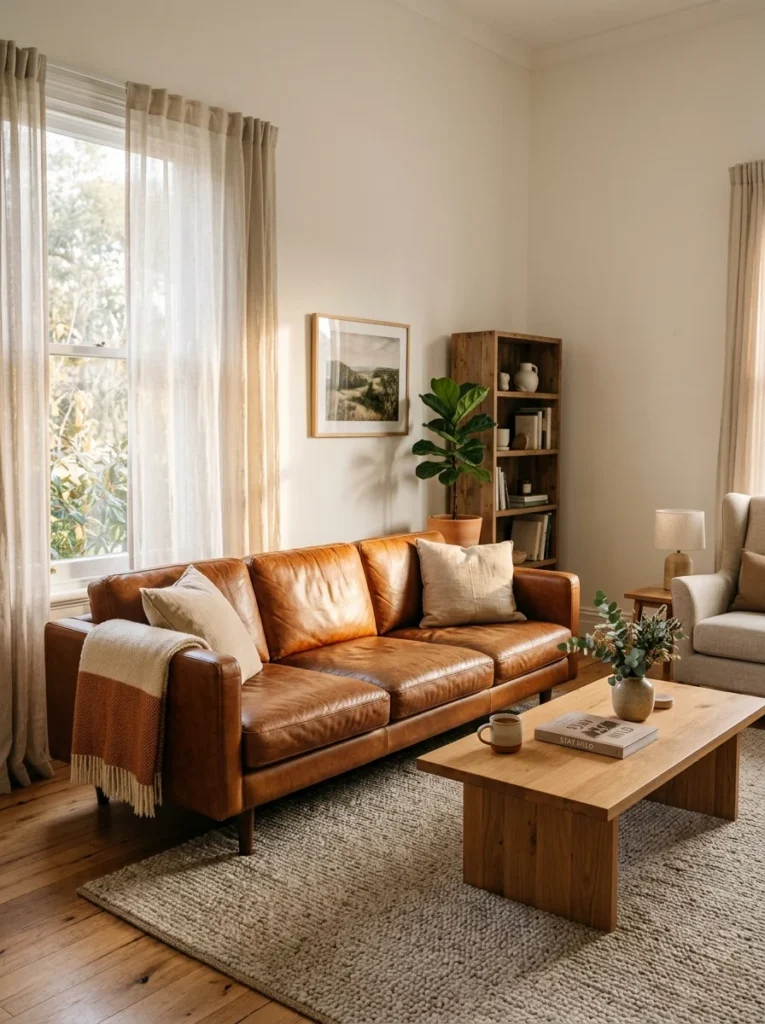
I rearranged my living room specifically so the leather sofa sits partially in the path of afternoon sunlight coming through the window, and the difference is noticeable. Natural light brings out the natural variation and richness in leather in a way that artificial lighting alone never quite manages, especially in the late afternoon when the light turns slightly golden. The only caveat I’d add from experience is to avoid placing leather in direct, unfiltered sunlight all day, since I did notice a very slight fading on one arm of my first sofa after a full summer in a sunroom. A sheer curtain that softens the light without blocking it entirely has worked well as a middle ground in my current apartment.
14. Use Blankets and Pillows in Seasonal Color Shifts
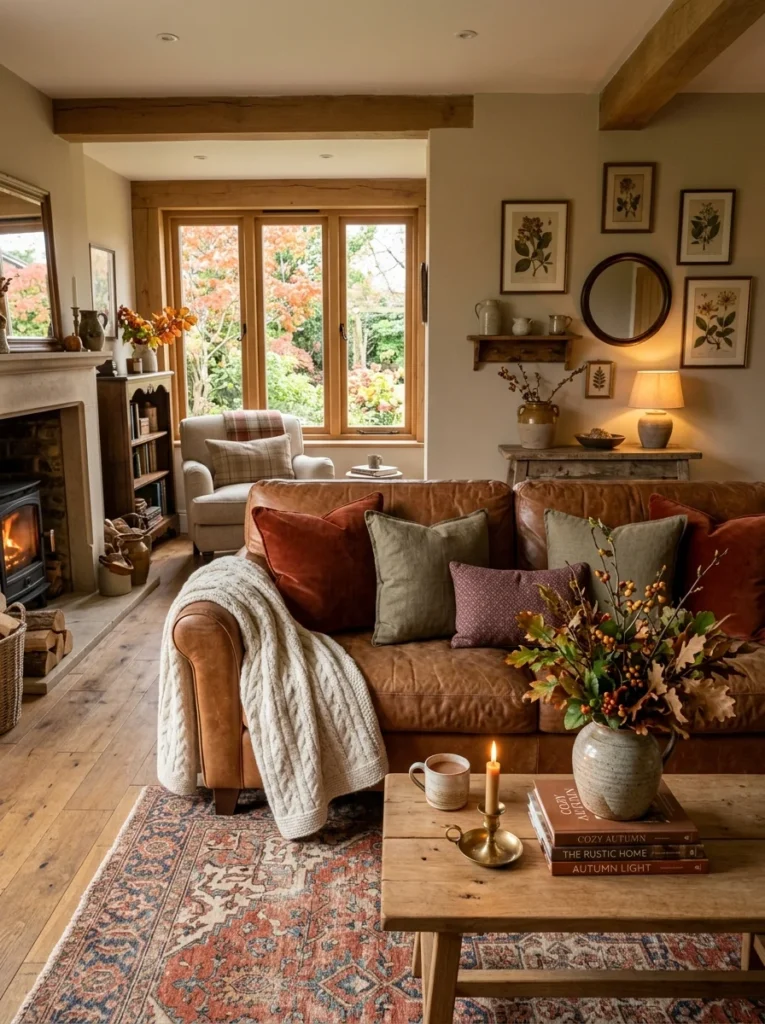
One trick that’s kept my leather sofa feeling fresh year-round is swapping the textiles around it seasonally. Cream and soft blush tones in spring and summer, then deeper rust, olive, and burgundy tones in fall and winter, make the same sofa feel like it’s evolving with the seasons rather than staying static.
15. Give It Breathing Room Instead of Crowding It With Furniture
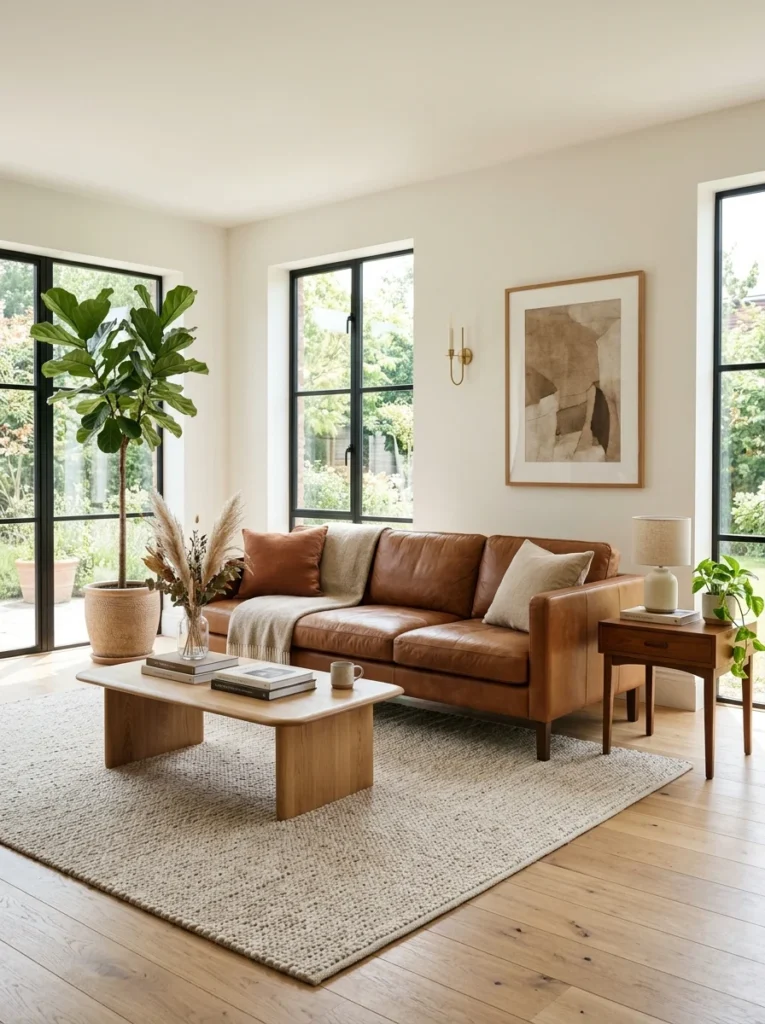
My first attempt at arranging a small living room had the leather sofa pushed right up against a bookshelf and side table with almost no gap. Pulling everything back a few inches and giving the sofa some visual breathing room made the piece feel more like a statement item and less like it was being squeezed into a corner out of necessity.
What I’d Tell Anyone Nervous About Leather
Looking back at how hesitant I was to even consider a leather sofa, I think the biggest misconception is that leather is inherently a cold or formal material. In my experience, it’s actually one of the most forgiving materials to style warmly, because it takes so well to layering — throws, pillows, warm lighting, and a bit of natural wear all work in leather’s favor rather than against it. The sofa I inherited years ago is still one of my favorite pieces of furniture I’ve ever owned, not despite being leather, but partly because of how well it’s aged alongside everything I’ve layered around it.
If you already own a leather sofa that feels a little stiff or cold in your space right now, my honest suggestion is to start with the rug and lighting before touching anything else. Those two changes made the biggest difference in my own living room, and they’re both fully reversible if you decide to change direction later. Everything else on this list can be added gradually, a throw pillow here, a lamp there, without ever needing to touch the sofa itself. That’s ultimately what convinced me leather was worth the investment in the first place: it’s a piece of furniture that keeps adapting to whatever you build around it, season after season, without ever needing to be replaced.