
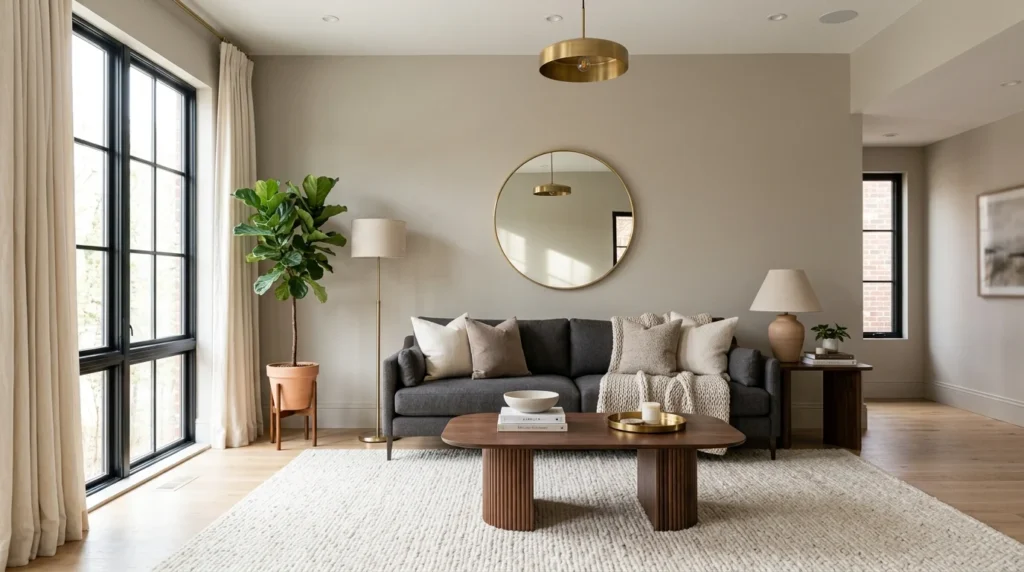
Grey wasn’t my first choice. When I moved into my current apartment, I actually painted the living room a warm beige because I thought grey would feel cold and unwelcoming. Six months later, I repainted it grey anyway, mostly out of curiosity, and I still remember standing in the doorway afterward completely surprised by how different the room felt — calmer, more grown-up, somehow bigger even though nothing about the layout had changed. That repaint turned into a full living room overhaul, and grey ended up being the best design decision I made in that apartment.
If you’re considering grey for your own living room, here are 17 ideas, each explained in detail, based on what actually worked in my space and in a few friends’ homes I helped style along the way.
1. Choose the Right Undertone Before Anything Else
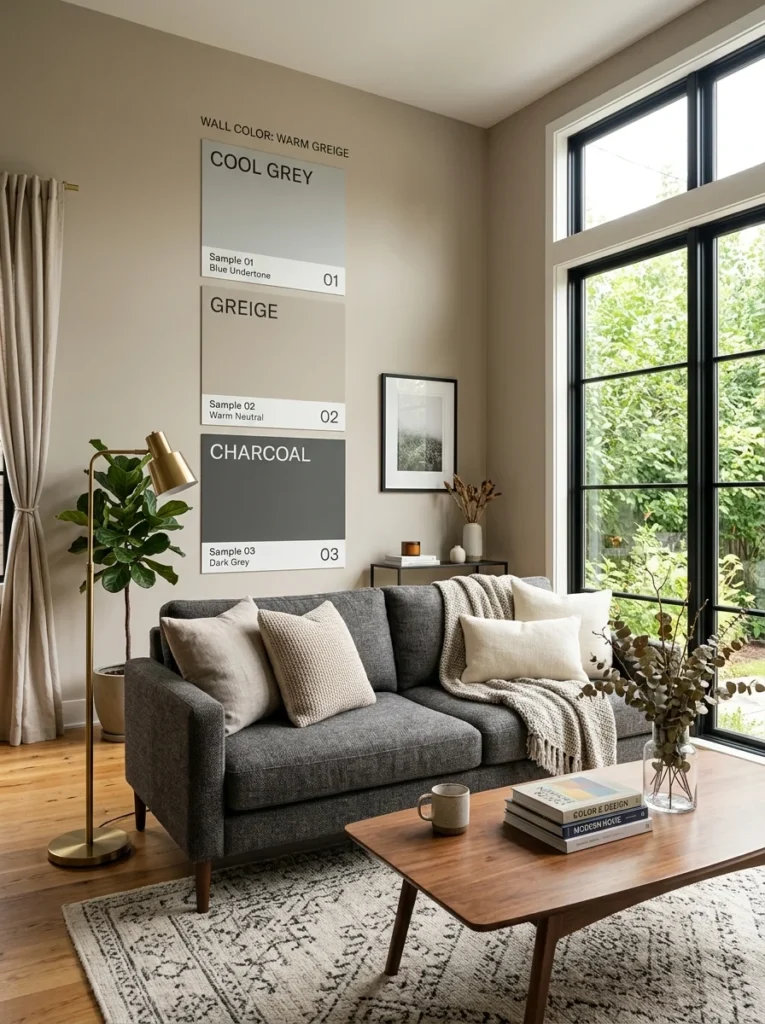
This is the single most important decision in a grey living room, and it’s the one people skip most often. Grey paint almost always has a hidden undertone — blue, green, purple, or beige — and that undertone changes everything about how the room feels once the light hits it. When I first painted my living room, I picked a grey that looked perfectly neutral on the paint chip but turned distinctly lavender under my evening lamps. I ended up repainting a second time with a warmer, greige-leaning shade, and the difference was night and day. Before committing to a full wall, paint a large sample swatch, at least two feet by two feet, and observe it at different times of day: morning light, afternoon light, and evening lamp light. A cool undertone works beautifully in bright, sunlit rooms, while a warmer, greige undertone tends to feel more inviting in rooms that don’t get as much natural light. Take the swatch to a window and also view it under your existing lighting fixtures, since fluorescent and warm LED bulbs can shift the tone dramatically. This one extra step, which takes maybe a day of patience, can save you from an expensive repainting mistake and sets the entire tone for every other decision on this list.
2. Layer Multiple Shades of Grey Together
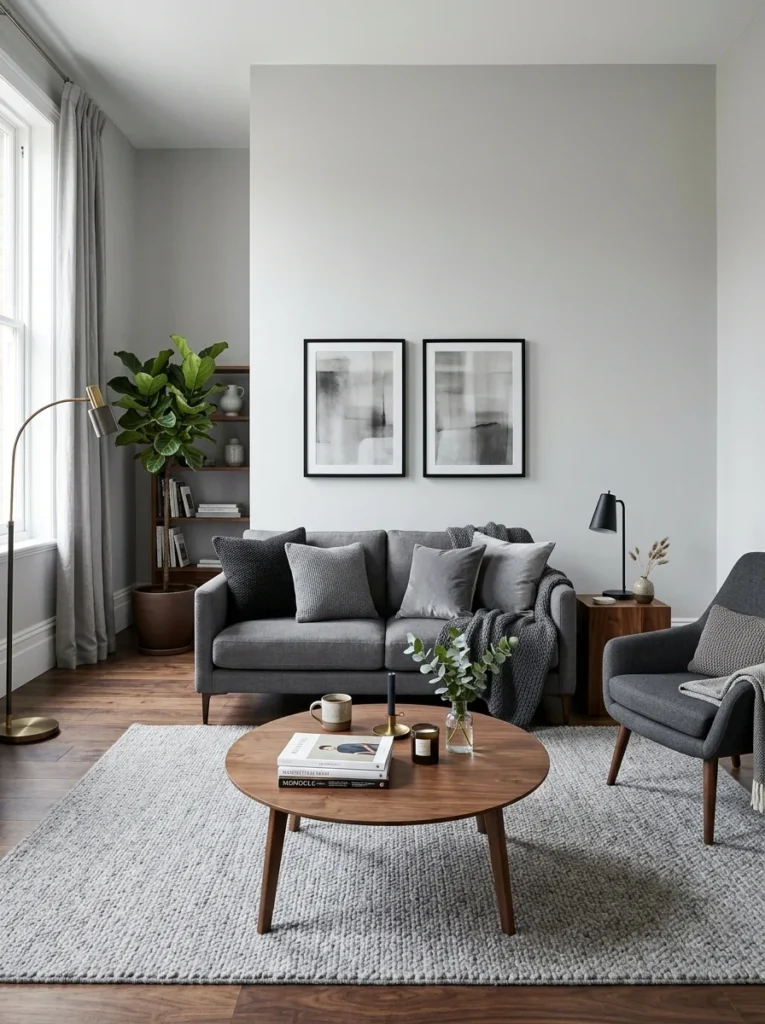
A common mistake is choosing one grey and using it everywhere, which can flatten a room and make it look unfinished. Instead, I layered at least three different shades: a mid-tone grey on the walls, a charcoal sofa, and a pale dove-grey area rug. That range of light, medium, and dark tones gives the eye something to move across instead of settling on one flat plane of color. When you’re shopping for furniture and textiles, think of grey the same way you’d think about any neutral palette — with depth and variation rather than a single uniform swatch. A charcoal throw blanket against a lighter grey sofa, or a graphite coffee table against pale walls, creates a sense of intentional design rather than an accident of matching everything at once. I’ve found that keeping a small paint chip or fabric swatch in my bag while shopping for furniture prevents the frustrating situation of bringing home a grey that clashes subtly with everything else. The goal isn’t to match perfectly, but to create a gradient of tones that feels cohesive and considered.
3. Warm It Up With Wood Tones
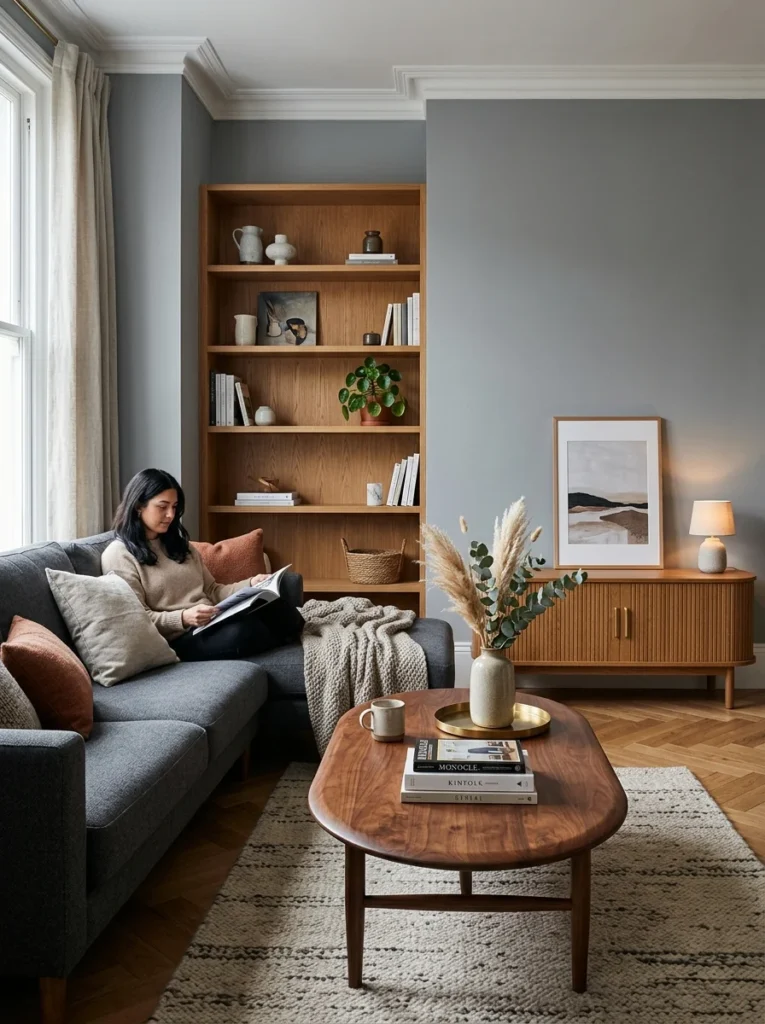
Grey on its own can tip into cold or sterile territory if you’re not careful, and wood tones are the easiest fix. My coffee table is a warm walnut, my floors are a medium oak, and even my bookshelf has visible wood grain rather than a painted finish. Every time I’ve walked into an all-grey room with no wood at all, it’s felt slightly clinical, almost like a waiting room rather than somewhere to relax. Wood introduces a natural, organic element that softens the coolness of grey and adds visual warmth without disrupting the overall neutral palette. You don’t need a lot of it — even a single wooden accent table, a picture frame, or a set of wooden trays on the coffee table can shift the entire feeling of the room. When choosing wood tones, I’ve noticed that warmer woods like walnut or oak tend to pair better with cool-toned greys, while lighter woods like ash or white oak complement warmer, greige-based palettes more naturally. The contrast between the flat, matte quality of painted grey walls and the grain and texture of real wood is part of what makes this pairing feel so timeless rather than trend-driven.
4. Add Brass or Gold Hardware for Contrast
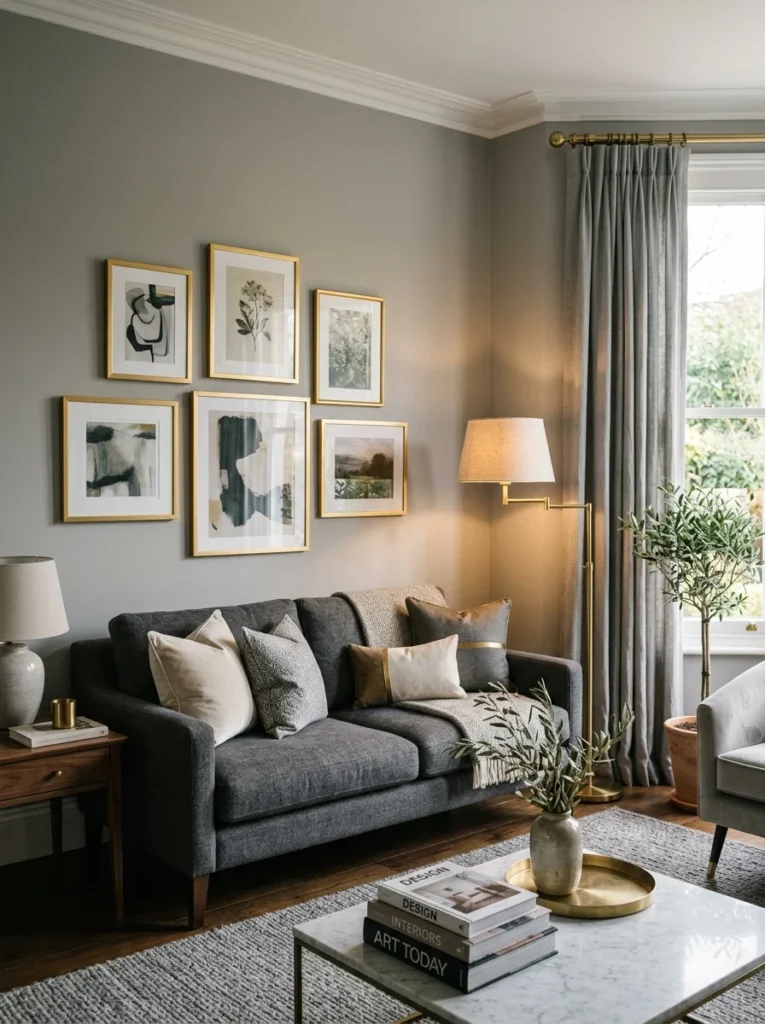
Grey pairs beautifully with warm metals, and this is one of the fastest ways to elevate a room without a full furniture overhaul. I swapped the plain nickel handles on my media console for brushed brass ones, and it’s a small detail that gets noticed more than almost anything else in the room. Brass lamp bases, gold picture frames, and even a single brass side table can inject warmth and a subtle sense of luxury into a grey space that might otherwise feel a bit flat. The key is consistency: once you introduce a metal tone, try to repeat it in at least two or three other places in the room so it reads as an intentional choice rather than a random accent. I chose brass throughout my living room in the lamp base, the picture frames, and the curtain rod, and that repetition ties the whole space together visually. If brass feels too bold for your taste, aged or antique brass offers a softer, more muted version of the same warmth. Either way, the contrast between cool grey surfaces and warm metallic accents creates a balanced, layered look that keeps the room from feeling one-dimensional.
5. Use a Statement Rug to Anchor the Space
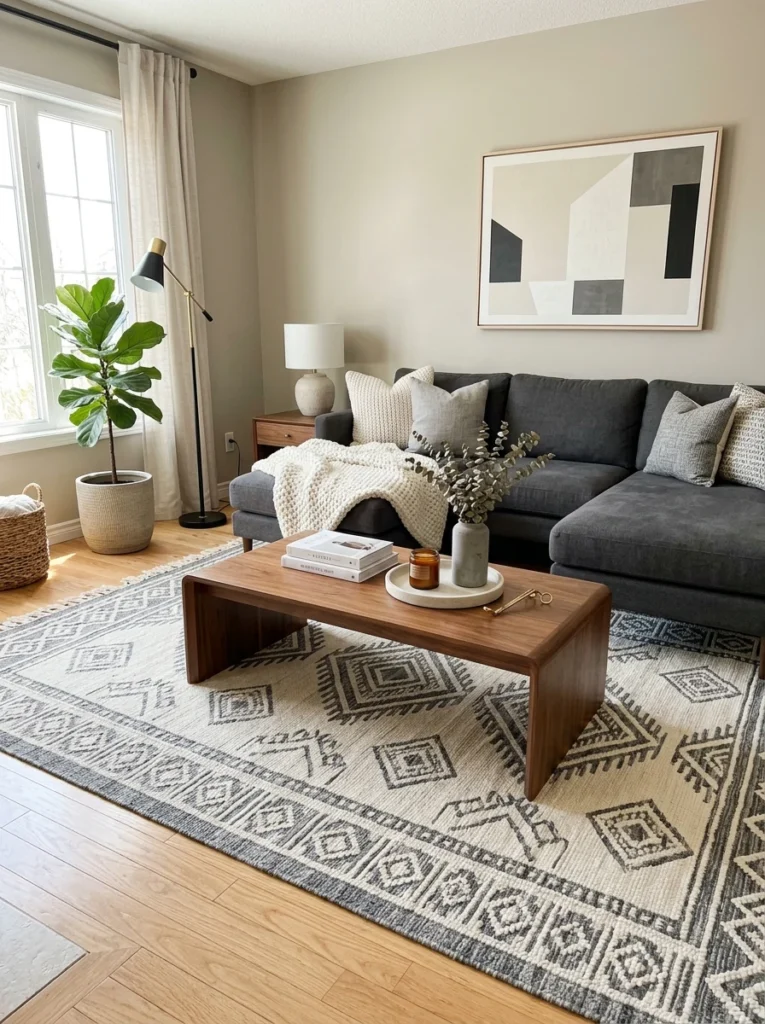
A large rug does more work in a living room than almost any other single item, and in a grey room, it’s your chance to introduce pattern without overwhelming the palette. I chose a rug with a subtle geometric pattern in cream, grey, and a touch of rust, and it immediately gave the room a focal point that draws the eye downward and grounds the furniture arrangement. The size matters just as much as the pattern: a rug that’s too small will make your furniture look like it’s floating, while a properly sized rug, big enough for at least the front legs of your sofa and chairs to rest on, creates a sense of cohesion. In a monochrome grey room, a patterned rug becomes almost like the artwork of the floor, giving texture and visual interest without requiring you to introduce a lot of extra color. If bold patterns aren’t your style, even a subtly textured rug in a slightly different shade of grey than your walls can add enough dimension to keep the space from feeling flat.
6. Introduce a Single Bold Accent Color
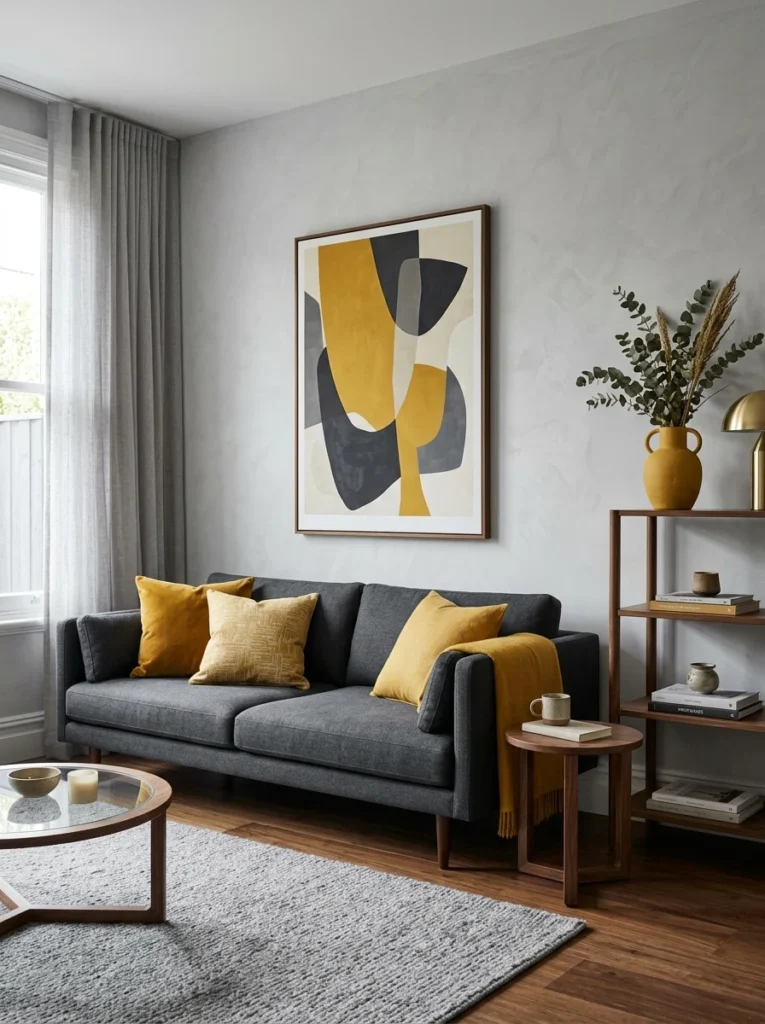
Grey is an incredibly flexible base, and I’ve found that choosing one bold accent color, rather than several competing ones, makes the biggest visual impact. In my living room, that color is a deep mustard yellow, used in one accent pillow, a small vase, and a piece of framed art. Every time someone visits, that pop of yellow against the grey backdrop is the first thing they comment on. The trick is restraint: pick one color family and repeat it in small doses throughout the room rather than scattering multiple accent colors that compete for attention. Deep blues, blush pinks, forest greens, and burnt oranges all work beautifully against grey, so the choice really comes down to what feels right for your own taste and the mood you want the room to have. I’d recommend testing your chosen accent color in a small, low-commitment way first, like a single throw pillow, before investing in larger pieces like an accent chair, just to make sure it holds up well against your particular shade of grey once it’s actually in the room.
7. Mix Textures to Avoid a Flat Look
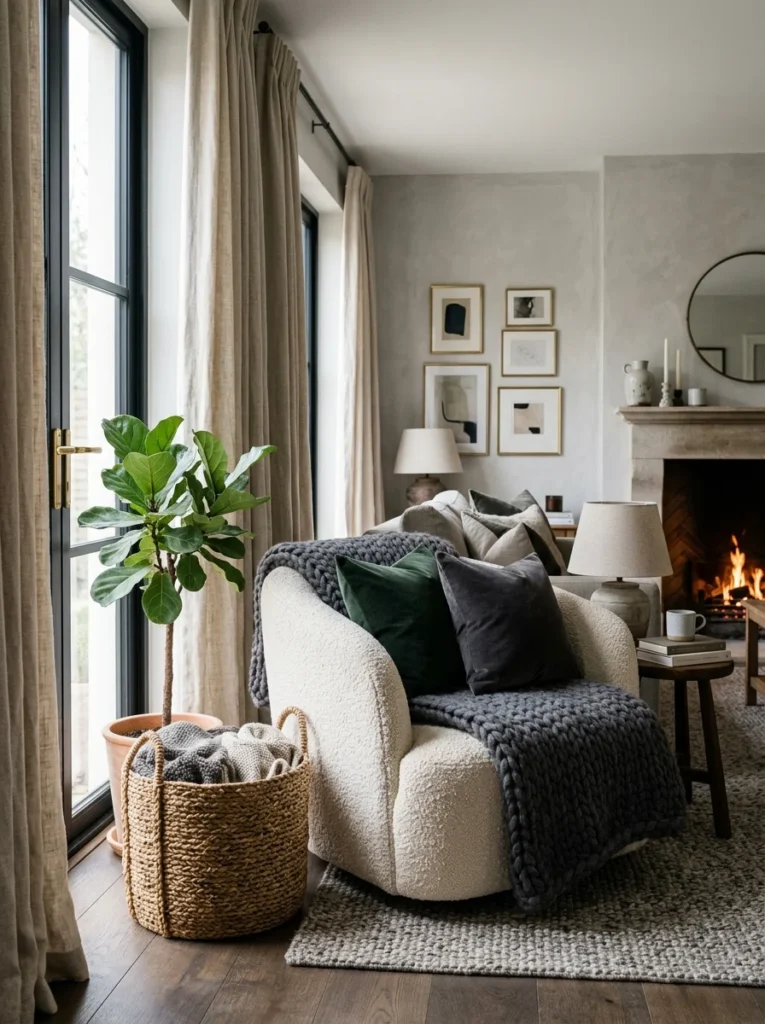
Because grey is a neutral tone, texture becomes one of your most important design tools for keeping the room visually interesting. My sofa is a slightly nubby boucle fabric, my throw blanket is a chunky knit, and my curtains are a soft linen blend, and that variety of textures does a lot of the visual heavy lifting that color would normally do in a more colorful room. Smooth leather, plush velvet, woven rattan, and knitted textiles can all coexist in the same grey room and each one adds a different tactile quality that makes the space feel richer. I’ve noticed that rooms which rely purely on color contrast but skip texture tend to photograph fine but feel oddly sterile in person, almost like a showroom rather than a lived-in space. Running your hand along different surfaces in a room is actually a good gut check: if everything feels the same, whether that’s smooth painted walls, a smooth sofa, and a smooth glass coffee table, it’s worth introducing at least one or two contrasting textures to break up that uniformity.
8. Choose Furniture Silhouettes With Clean Lines
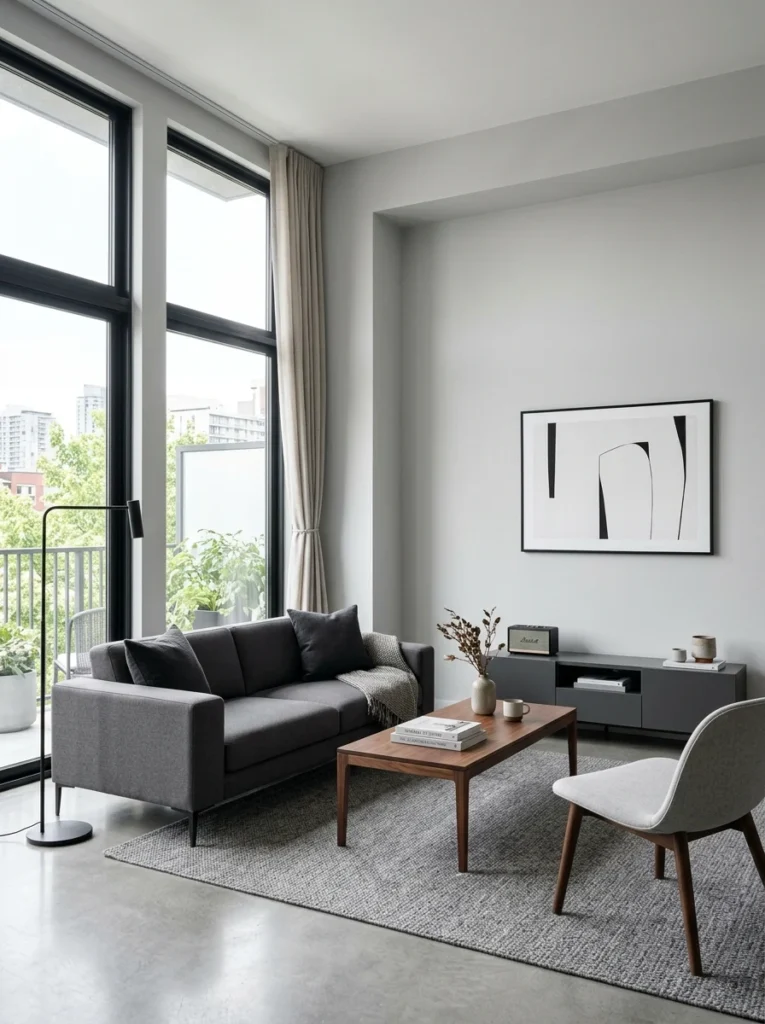
Grey living rooms tend to lean toward a modern aesthetic, and clean, simple furniture silhouettes support that feeling far better than ornate or heavily carved pieces. When I replaced my old rolled-arm sofa with a low-profile, straight-lined version, the entire room felt more current and less cluttered, even though the sofa itself wasn’t dramatically smaller. Look for furniture with simple, tapered legs, minimal ornamentation, and clean upholstery lines rather than tufted or overly detailed pieces if you’re going for that timeless modern look. This doesn’t mean the furniture has to feel cold or impersonal, just that the shapes should feel intentional and uncluttered. I’ve found that a few well-chosen, simply shaped pieces make a much stronger impression than a room full of furniture competing for attention with different silhouettes and styles. If you already own more ornate furniture, even reupholstering key pieces in a solid grey fabric can help unify the room’s overall silhouette.
9. Layer in Black Accents for Definition
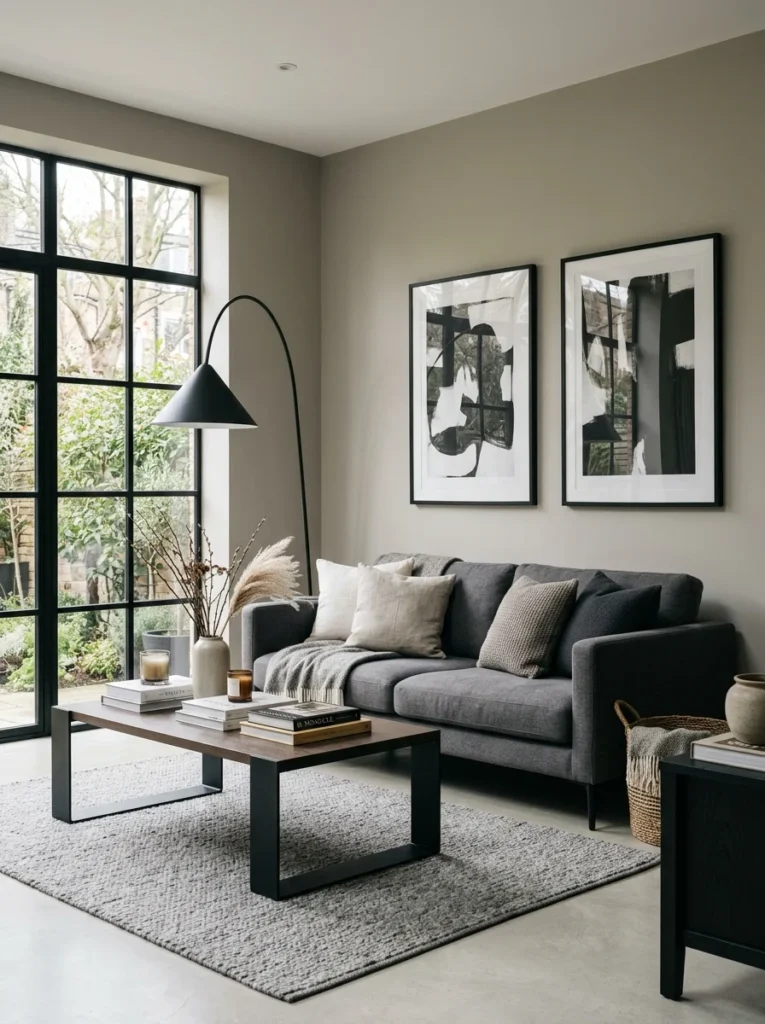
Pure grey rooms can sometimes lack definition, and black accents solve that problem by adding sharp contrast and visual structure. My window frames are black, my floor lamp has a black base, and I have a black-framed piece of art above my sofa, and those small touches of black give the room an anchor point that keeps the eye from drifting aimlessly across a sea of grey tones. Black works almost like punctuation in a sentence: used sparingly, it adds clarity and rhythm, but overused, it can make a room feel heavy. I’d recommend starting with one or two black elements, like a picture frame or a lamp, and observing how the room feels before adding more. In my experience, black paired with grey creates a distinctly modern, almost architectural feeling that’s harder to achieve with warmer neutral pairings, which is part of why this combination has remained so popular in contemporary interior design.
10. Add Greenery for a Living, Organic Contrast
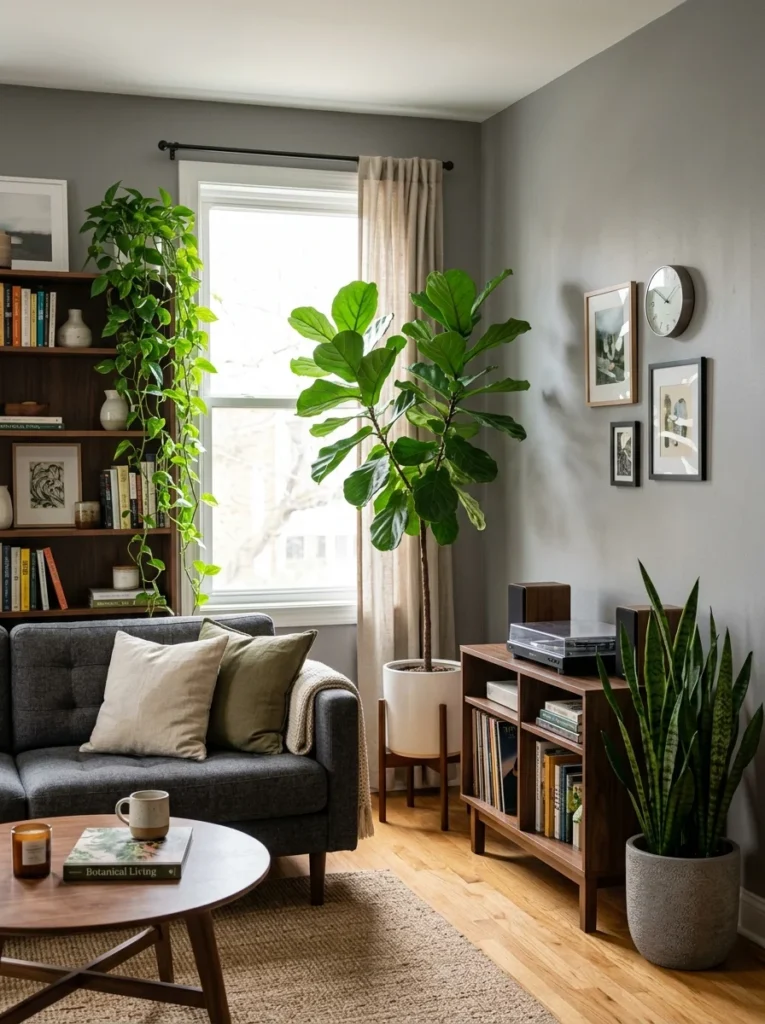
Nothing balances a grey room quite like the deep, saturated green of real plants. I keep a large fiddle leaf fig in the corner near my window and a smaller pothos trailing from a bookshelf, and both add a burst of natural color that grey and neutral tones simply can’t replicate on their own. Beyond the visual benefit, plants add a sense of life and calm to a room that might otherwise feel very structured and deliberate. If you don’t have much natural light, snake plants, ZZ plants, and pothos are all forgiving, low-light options that still deliver that same lush, green contrast. Even a small cluster of plants on a windowsill or a single larger statement plant in an empty corner can soften the more architectural, structured feeling that grey rooms sometimes have, and I’ve genuinely noticed a difference in how relaxed the room feels since I started incorporating more greenery.
11. Use Layered Lighting Instead of One Overhead Fixture
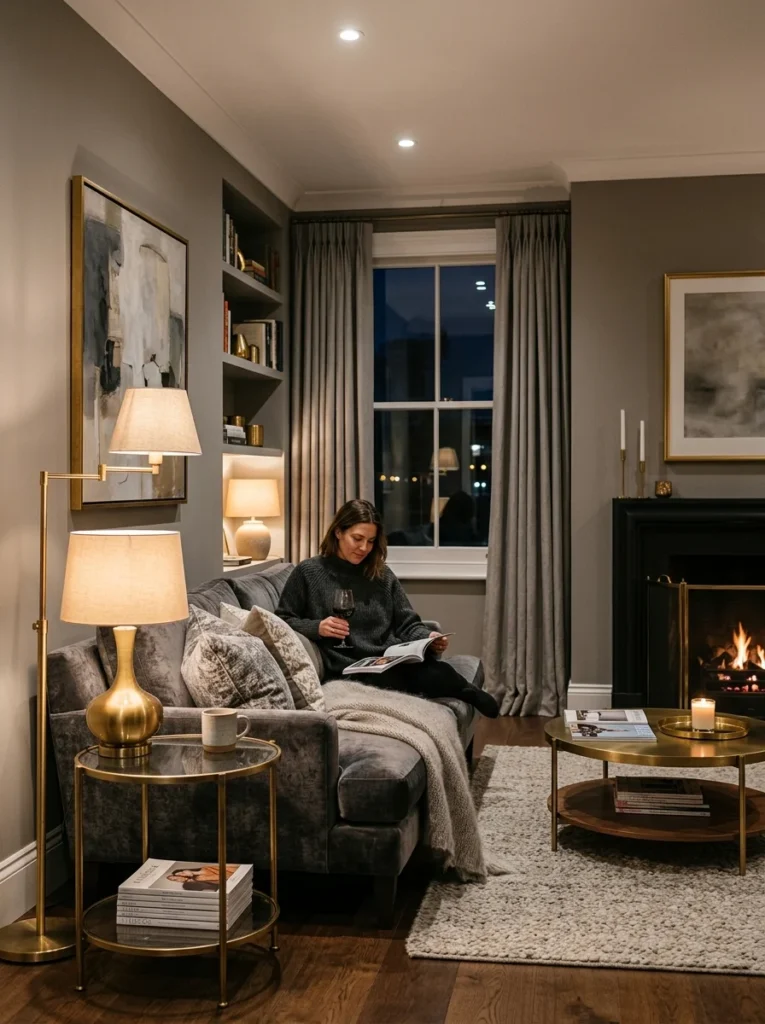
A single overhead light in a grey living room tends to flatten the whole space and can make the grey tones look dull or even slightly blue at night. I layered three different light sources: a floor lamp near the reading chair, a table lamp on the console, and dimmable recessed lighting overhead, and being able to mix and adjust these depending on the time of day made an enormous difference in how warm and inviting the room feels in the evening. Warm-toned bulbs, generally in the 2700K to 3000K range, help counteract any coolness in the grey paint, especially once natural daylight fades. I’d genuinely recommend testing your lighting after dark before committing to a final grey paint color, since a shade that looks perfectly warm during the day can shift noticeably once your only light source is an overhead fixture with cooler-toned bulbs.
12. Frame the Windows With Floor-Length Curtains
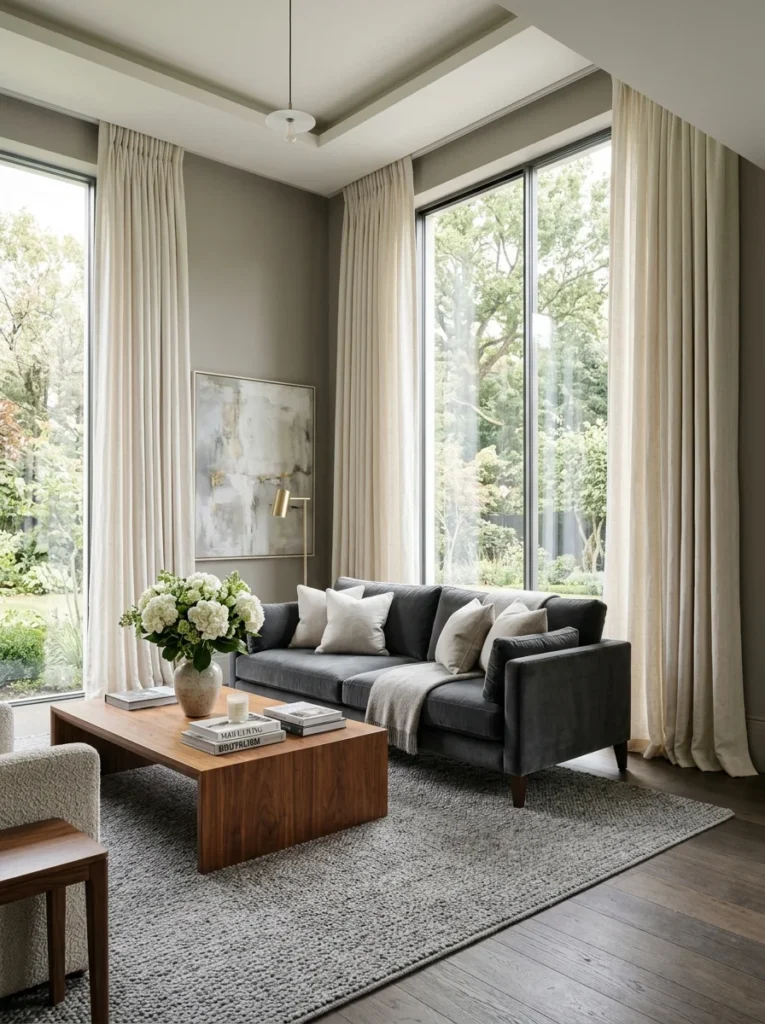
Curtains that stop short of the floor, or worse, sit just below the windowsill, tend to make a room feel smaller and less finished, especially in a grey living room where clean lines matter so much. I hung mine as close to the ceiling as possible and let them puddle just slightly on the floor, and the change in the room’s proportions was immediate, making the ceiling feel higher and the windows feel larger than they actually are. A soft grey, cream, or even a subtly patterned linen curtain works beautifully against grey walls, adding texture without introducing competing colors. If your budget allows for it, this is one of those changes that has a disproportionately large visual impact relative to its cost, since curtains affect the entire vertical proportion of a room in a way that most other decor elements simply can’t match.
13. Display Artwork With Grey, Black, and White Tones
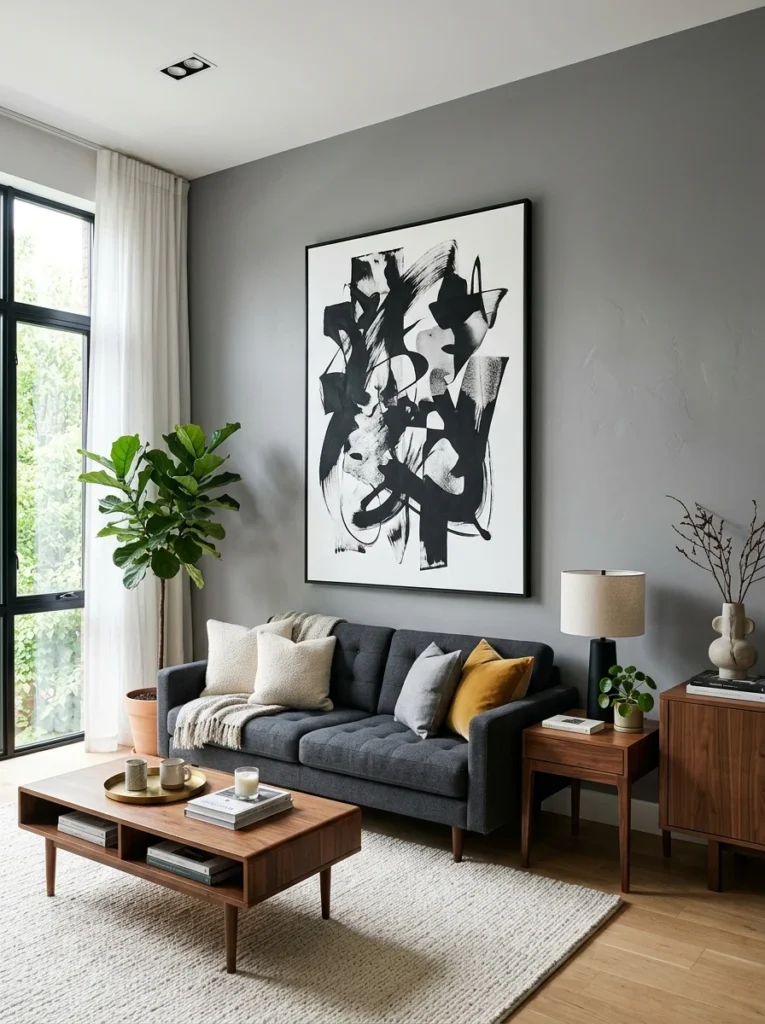
Artwork is one of the easiest ways to reinforce a cohesive grey palette while still adding personality to the room. Above my sofa, I have a black-and-white photography print in a simple grey-toned frame, and it ties directly into the room’s color story without introducing anything jarring. Abstract art, black-and-white photography, and even simple line drawings all tend to complement grey living rooms particularly well, since they echo the tonal, understated quality of the walls and furniture rather than competing with it. I’d recommend choosing artwork that has some connection to your accent color as well, even if it’s subtle, since that creates a visual thread that ties the whole room together. A gallery wall of several smaller black-and-white or grey-toned pieces can also work beautifully if you have a larger blank wall, giving you a chance to add visual interest without breaking from the room’s overall neutral, cohesive feeling.
14. Choose a Statement Coffee Table
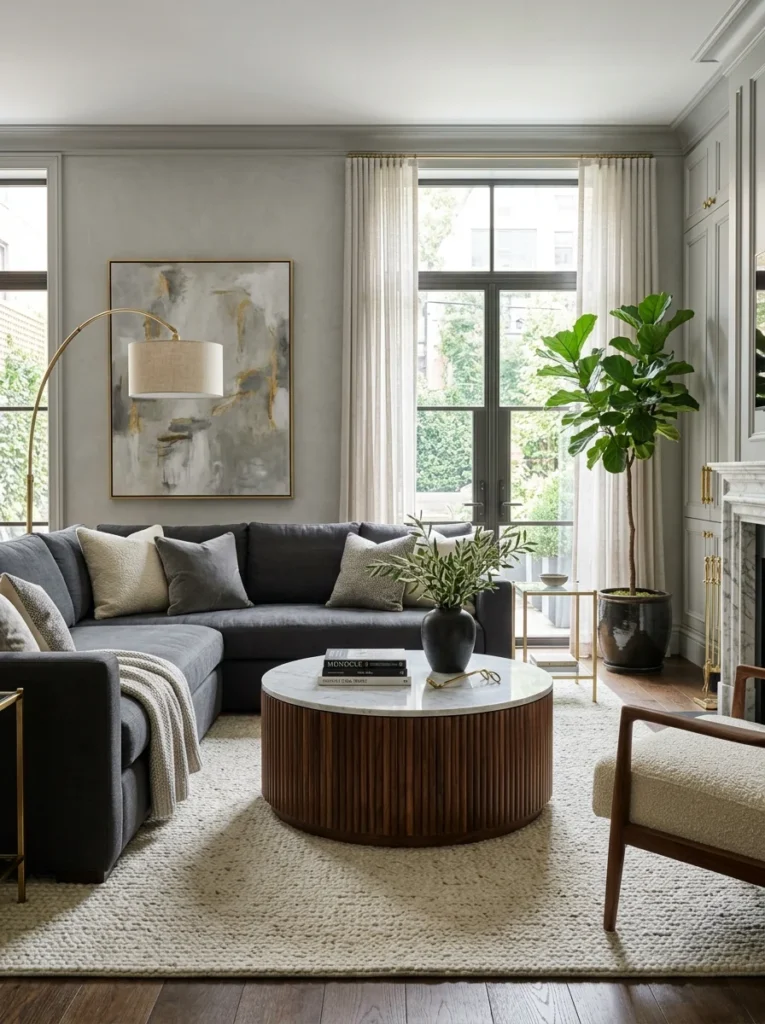
In a room built around a neutral palette, the coffee table has room to become a genuine focal point rather than just a functional surface. Mine has a fluted, cylindrical base and a round marble-look top, and it’s become one of my favorite pieces in the entire room precisely because it stands out just enough against the more understated grey backdrop. A coffee table with an interesting shape, material, or texture, whether that’s a live-edge wood slab, a sculptural metal base, or a marble top, gives you a chance to add personality without disrupting the overall calm, cohesive palette of a grey living room. Because the rest of the room leans neutral, even a moderately bold coffee table won’t feel out of place the way it might in a more colorful room. This is often the piece I’d recommend splurging on if your budget only allows for one or two statement items, since it sits at the visual center of most living room layouts.
15. Add a Gallery of Mirrors or a Single Statement Mirror
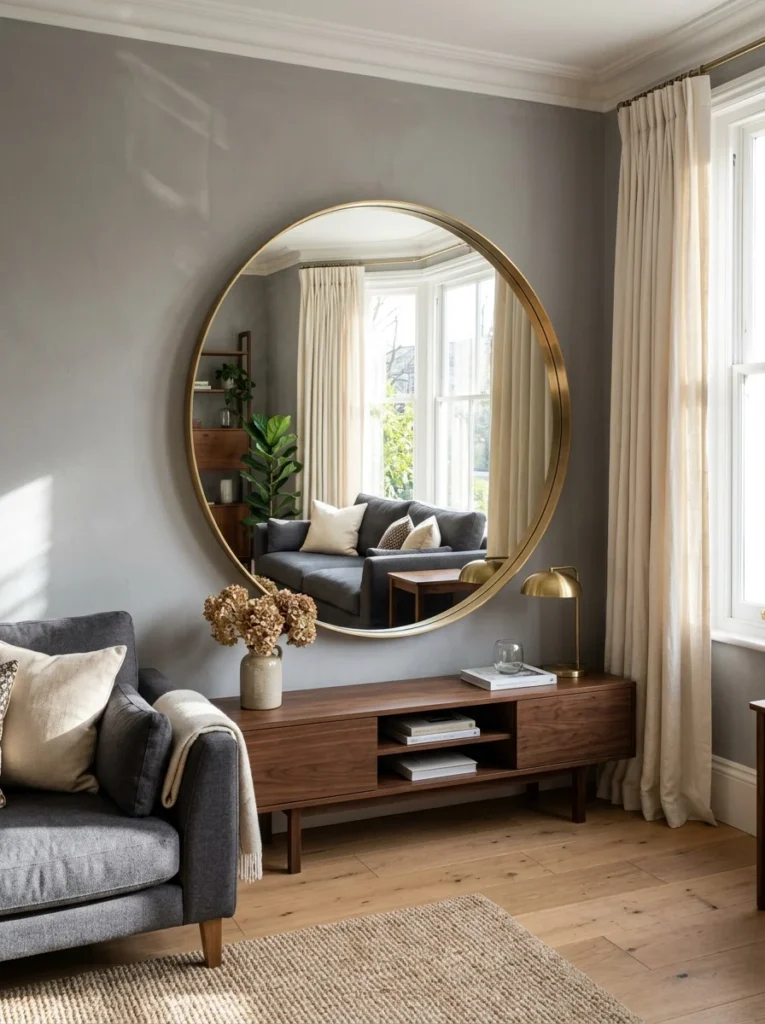
Grey rooms, especially those with less natural light, benefit enormously from a well-placed mirror, both for the practical reason of bouncing light around the space and for the visual interest a well-framed mirror provides. I hung a large round mirror with a brass frame across from my main window, and it noticeably brightens the room in the late afternoon while also echoing the brass accents I used elsewhere. Beyond function, an oversized or uniquely shaped mirror can serve almost like a piece of art, adding a focal point to an otherwise plain wall. If you already have a gallery wall of framed art, incorporating one mirror into that arrangement adds an interesting visual break and reflects light back into the display itself, which I’ve found makes the whole wall feel more dynamic rather than static.
16. Balance the Room With Cream or Ivory
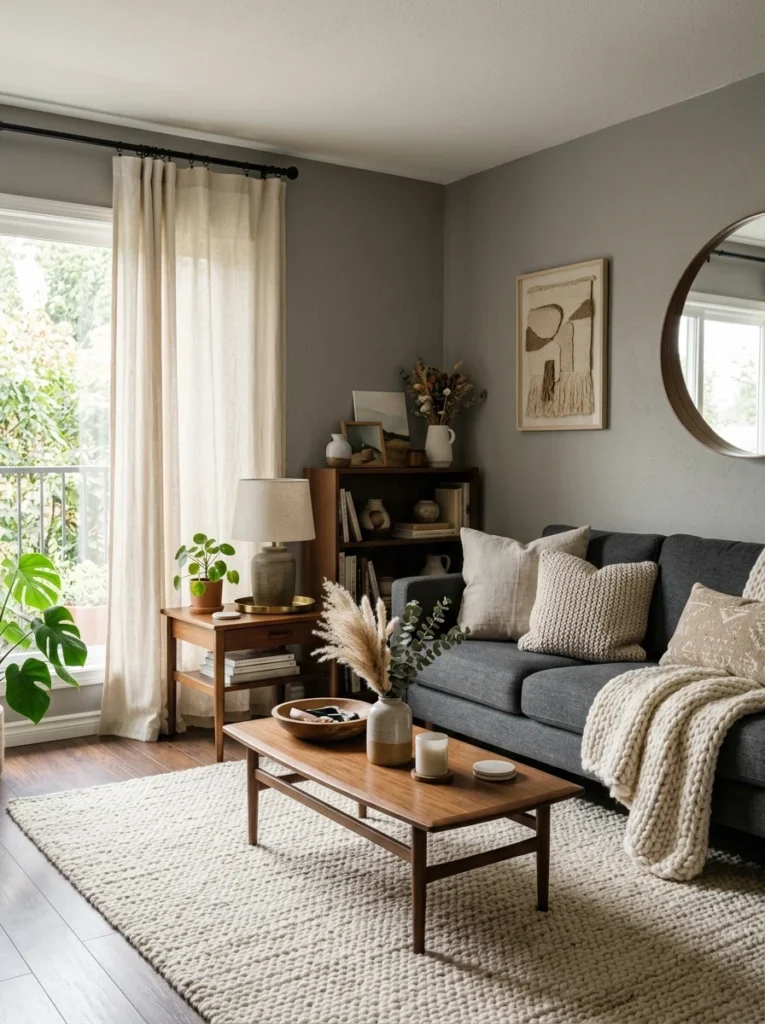
While grey is the foundation, pairing it exclusively with black, white, or other cool tones can start to feel a bit severe over time. I’ve found that introducing cream or ivory, in a throw blanket, a set of curtains, or an area rug, softens the palette considerably and makes the whole room feel warmer and more approachable without sacrificing that modern, put-together look. Cream acts almost like a bridge between the coolness of grey and the warmth of wood tones and brass accents, tying the whole color story together. In my own living room, the cream linen curtains do exactly this job, softening what would otherwise be a fairly cool combination of grey walls, a charcoal sofa, and black window frames. If you’re building a grey living room from scratch, I’d suggest thinking of cream as an essential supporting player rather than an optional extra, since it prevents the space from tipping too far into cold, minimalist territory.
17. Keep Surfaces Curated, Not Cluttered
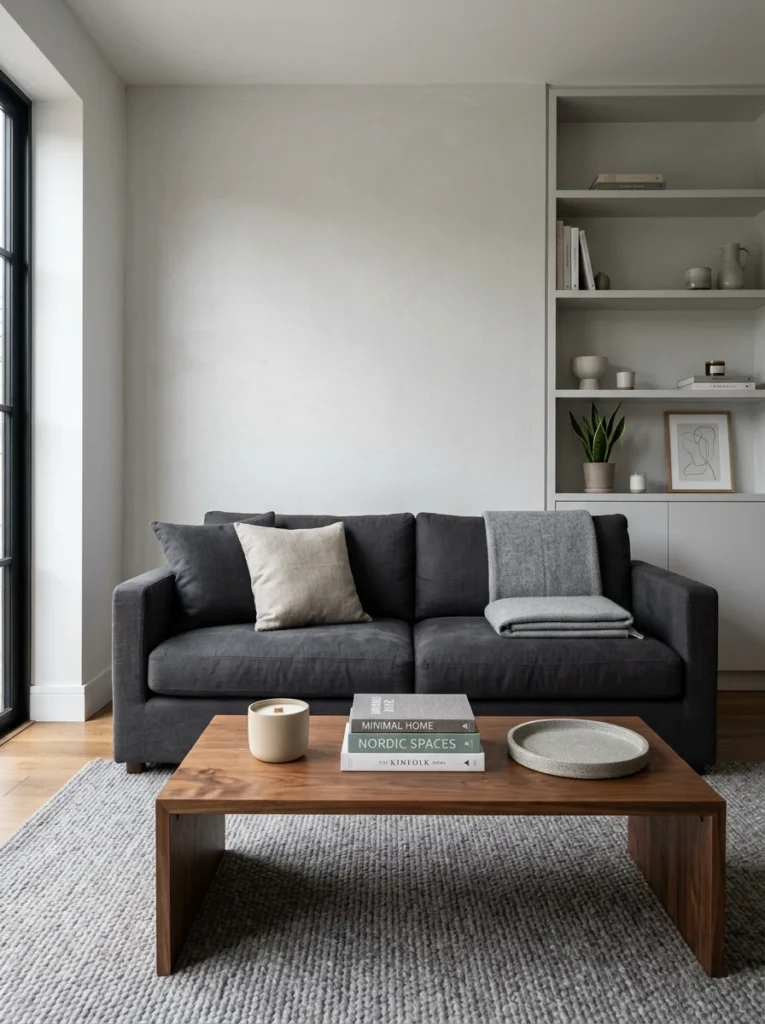
The final piece of advice, and honestly the one that took me the longest to actually follow, is to resist the urge to fill every surface. A grey living room relies on negative space to feel calm and intentional, and it’s easy to undo all of that careful planning by piling too many decorative objects onto shelves and tables. I try to follow a simple rule now: for every new item I want to display, I remove one that’s already there. My coffee table holds a small tray, a candle, and a single stack of books, nothing more, and that restraint is part of what makes the space feel curated rather than cluttered. This is genuinely the hardest habit to maintain, especially if you enjoy collecting small decorative pieces, but it’s also the detail that separates a professionally styled room from one that just has a lot of nice things in it without any real editing.
Final Thoughts
Looking back at my own living room, grey turned out to be one of the most flexible design decisions I could have made, precisely because it acts as a backdrop rather than the main event. Every one of these 17 ideas builds on that same foundation: use grey as your neutral canvas, then layer in warmth through wood, brass, cream, and greenery, add definition through black accents and clean furniture lines, and resist the temptation to overfill the space once it starts coming together.
If you’re just beginning your own grey living room project, I’d genuinely recommend starting with the undertone test in the first section before anything else, since that single decision shapes how every other choice on this list will actually look once it’s in your space. From there, add elements gradually, rug, lighting, wood tones, one accent color, and let the room evolve the same way mine did, one considered decision at a time rather than all at once.
My name is James William, and I write about practical, real-world home decor ideas that don’t require a full renovation budget to make a genuine difference in how a room feels.