
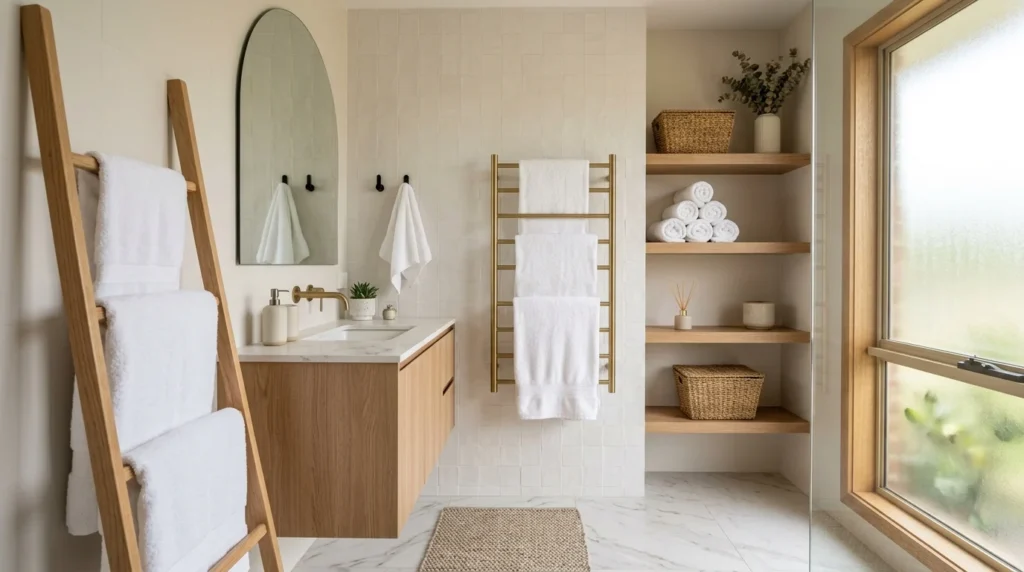
My old bathroom had exactly one towel bar, screwed in slightly crooked by whoever lived there before me, and it was barely big enough for one towel, let alone the three or four that seemed to multiply every time guests came over. For almost a year, I just lived with a pile of damp towels draped over the shower door, telling myself I’d deal with it eventually. When I finally did deal with it, I didn’t just replace the one bar — I ended up rethinking the whole wall, and it turned into one of those small renovation projects that made a disproportionately big difference in how the bathroom actually functioned day to day.
If your bathroom has the same one-towel-bar problem mine did, here are 14 towel rack ideas, each explained in detail, based on what I actually tried, what I saw work well in friends’ bathrooms, and a few ideas I wish I’d known about before I started.
1. Ladder-Style Towel Racks
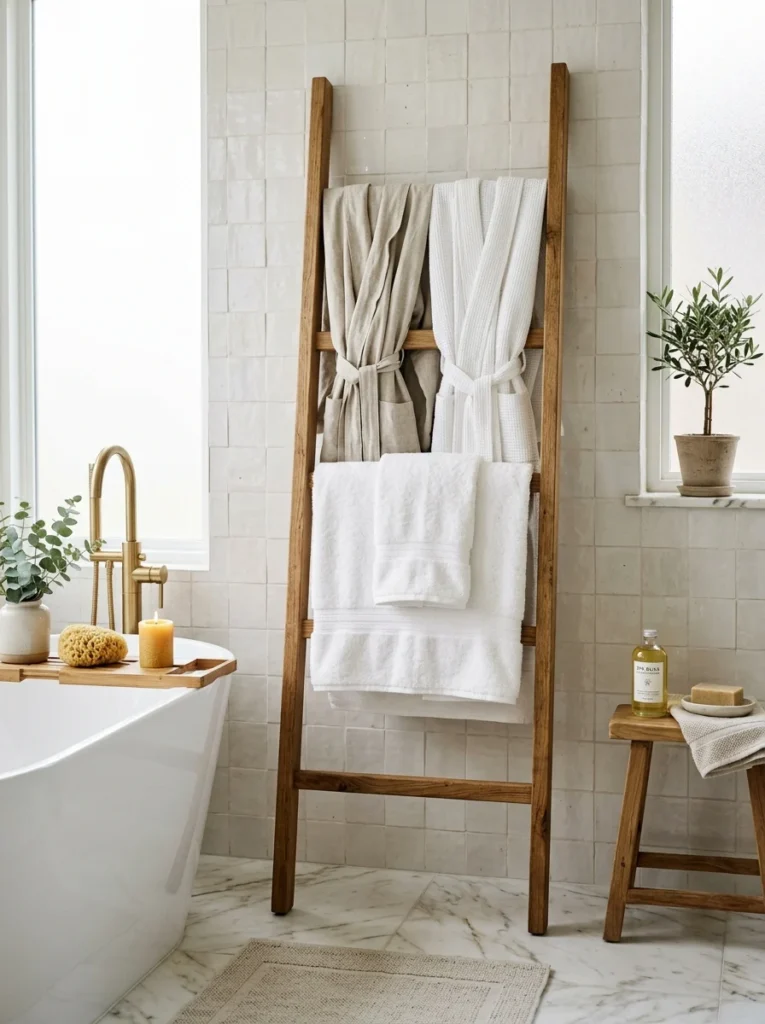
A leaning ladder rack was the first thing I bought when I started this project, mostly because it didn’t require any drilling, which felt like a low-risk way to test whether I even liked the look before committing to anything permanent. It leans against the wall at an angle and has multiple rungs, so instead of one towel bar, you suddenly have four or five places to hang towels, robes, or even a spare washcloth. Beyond the extra capacity, the ladder shape adds a slightly rustic, textural element to the bathroom that a plain straight bar just doesn’t have. Mine is a light wood tone, and it warms up what would otherwise be an all-tile, all-cool-surfaces room. The one thing I’d mention from experience is to check the weight capacity before loading it up with heavy, oversized bath towels, since cheaper versions can wobble if you hang too much on the top rungs at once. Ladder racks also work particularly well in bathrooms where wall space is limited but floor space isn’t, since they lean rather than mount, and they can be moved to a different spot entirely if you ever rearrange the room.
2. Wall-Mounted Hooks in a Row
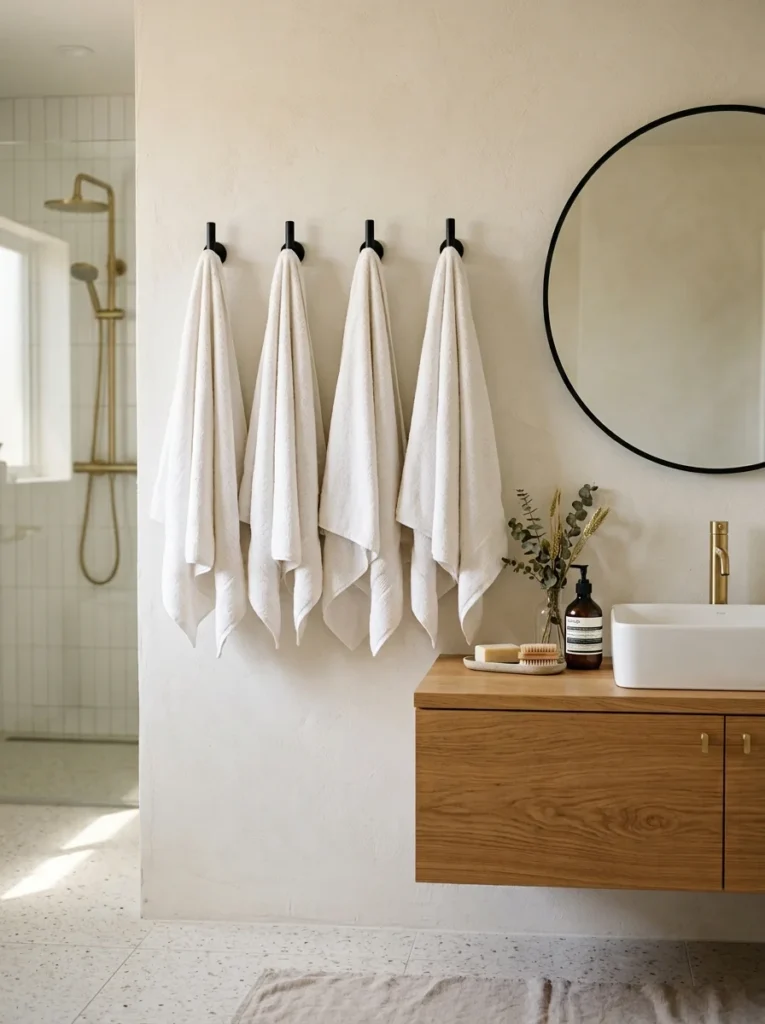
Sometimes the simplest solution really is the best one. After the ladder rack, I added a row of five wall-mounted hooks along the wall opposite the shower, spaced about six inches apart, and it turned out to be the single most-used towel storage in the whole bathroom. Hooks let towels air dry faster than folded bars because more of the fabric is exposed to open air, which matters more than I expected in a bathroom with limited ventilation. They’re also incredibly easy to install, usually requiring just a single screw or anchor per hook, which makes this a good weekend project even for someone who isn’t particularly handy. I chose matte black hooks to match my other bathroom hardware, but brass, chrome, or even unfinished wood knobs all work depending on your existing fixtures. If you have kids, lowering one or two hooks to their height makes a genuine difference in getting them to actually hang up their own towels instead of leaving them on the floor, something I learned from watching my sister deal with this exact issue in her own bathroom.
3. Over-the-Door Towel Bars
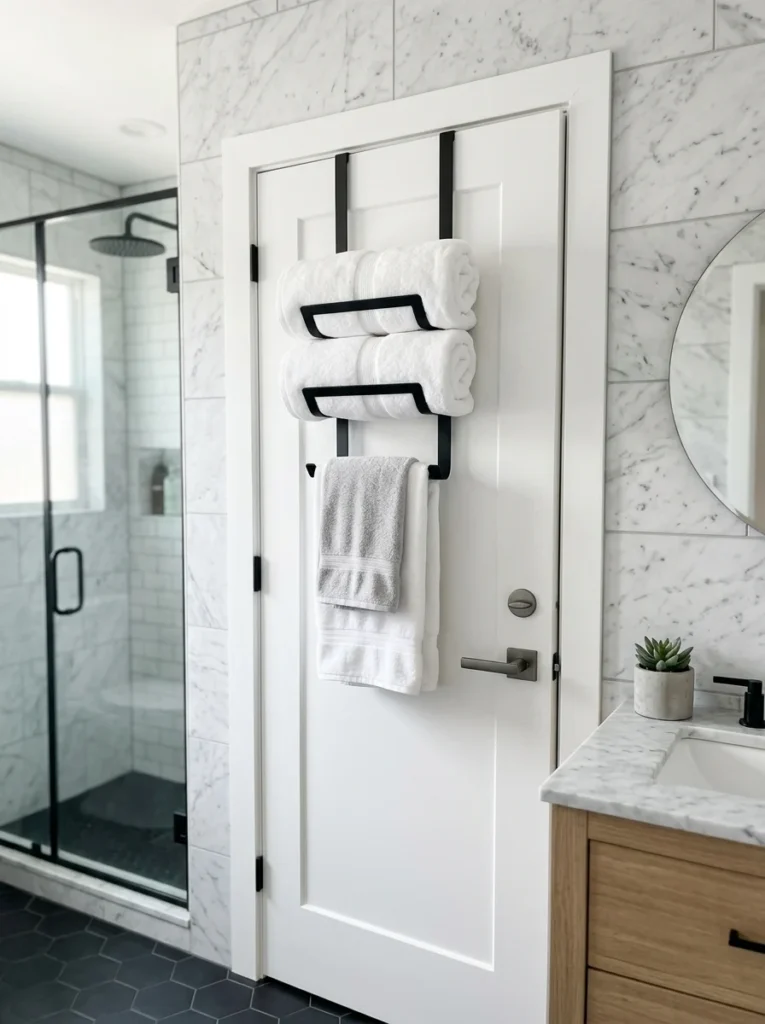
For renters or anyone hesitant to drill into tile, an over-the-door towel bar is one of the easiest upgrades available, and it was actually the very first thing I tried before moving on to permanent fixtures. It hooks directly over the top of a standard door and typically holds two to three towels without any tools required at all. The main downside I noticed is that it can make the door feel slightly heavier when opening and closing, and depending on the design, it may not sit perfectly flush, but for a completely tool-free, deposit-safe option, it’s hard to beat. I’d recommend measuring your door thickness before ordering, since some slimmer doors don’t work well with the wider bracket designs. This is a particularly good option for a bathroom door that doesn’t get used constantly, since a door you’re opening and closing all day can end up being a slightly annoying spot for towels to hang, always shifting slightly with the door’s movement.
4. Built-In Recessed Towel Niches
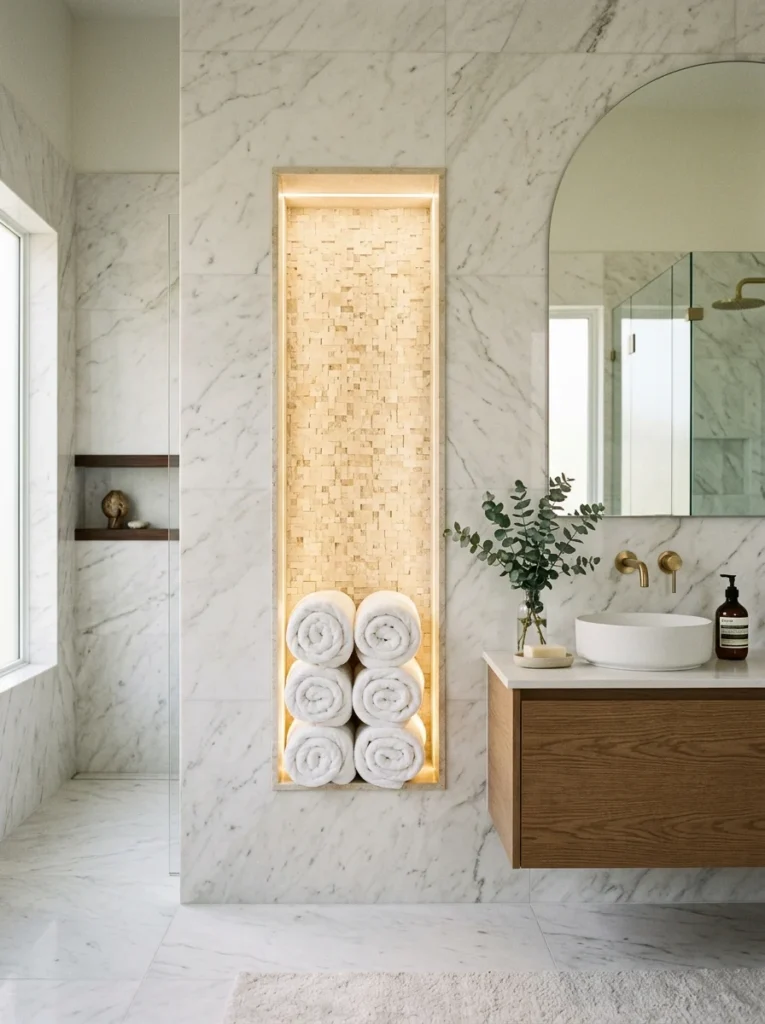
This is the option that requires the most commitment, but it’s also the one that looks the most intentional once it’s finished. A friend of mine had her contractor build a recessed niche into the wall during a full bathroom renovation, essentially a shallow shelf built into the drywall between the studs, and it holds a stack of neatly rolled towels without taking up any additional floor or wall space. It’s not something you can add after the fact without opening up the wall, so this really only makes sense if you’re already doing a larger renovation or building a bathroom from scratch. That said, if the opportunity comes up, it’s worth considering, since it gives the room a built-in, custom feeling that’s hard to replicate with any added-on fixture. Lining the niche with a contrasting tile or a small light fixture inside can turn a purely functional storage spot into a genuine design feature, which is exactly what happened in my friend’s bathroom.
5. Freestanding Towel Stands
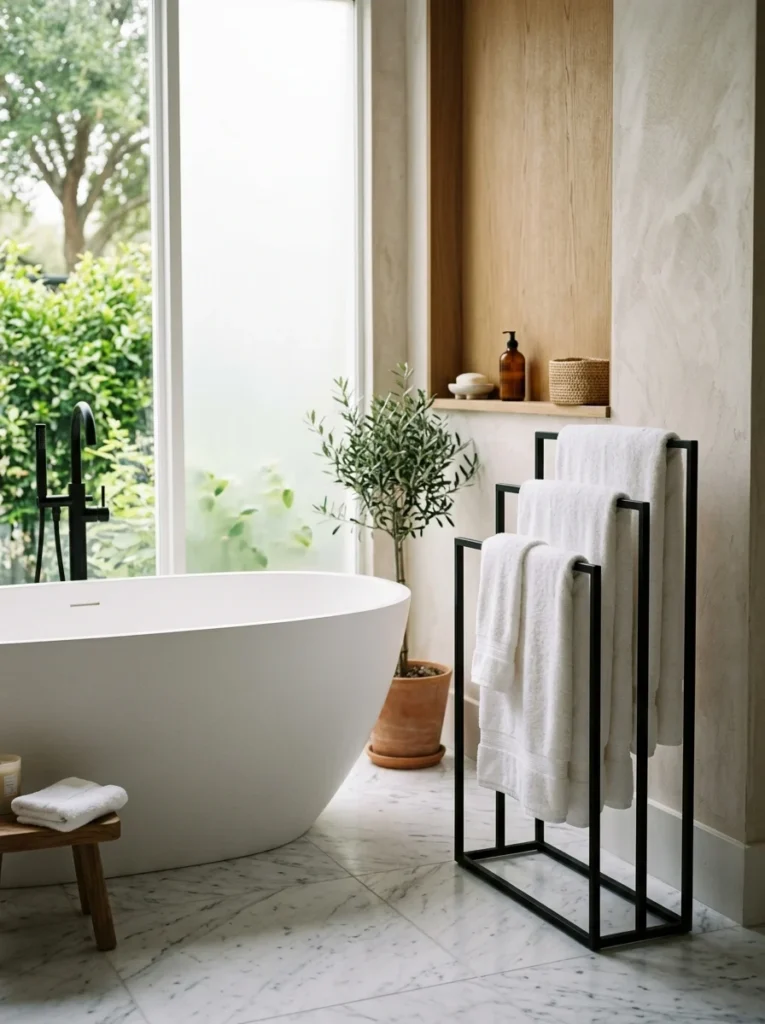
When I moved into a rental with tiled walls I really didn’t want to drill into, a freestanding towel stand became my go-to solution, and it’s stayed in my bathroom even after I moved somewhere I could have mounted something permanent. It typically has a base with multiple bars or hooks stacked vertically, giving you a lot of hanging capacity in a fairly small footprint. Because it’s freestanding, you can move it wherever it’s actually useful, next to the shower, near the tub, or tucked into an awkward corner that wouldn’t otherwise get used for anything. The tradeoff is that it takes up floor space, which matters more in a smaller bathroom, so I’d measure your available floor area carefully before buying one, especially if your bathroom door swings inward and needs clearance. Mine is a simple black metal frame, and it’s held up well over several years of daily use without wobbling or rusting, even in a fairly humid bathroom.
6. Heated Towel Racks
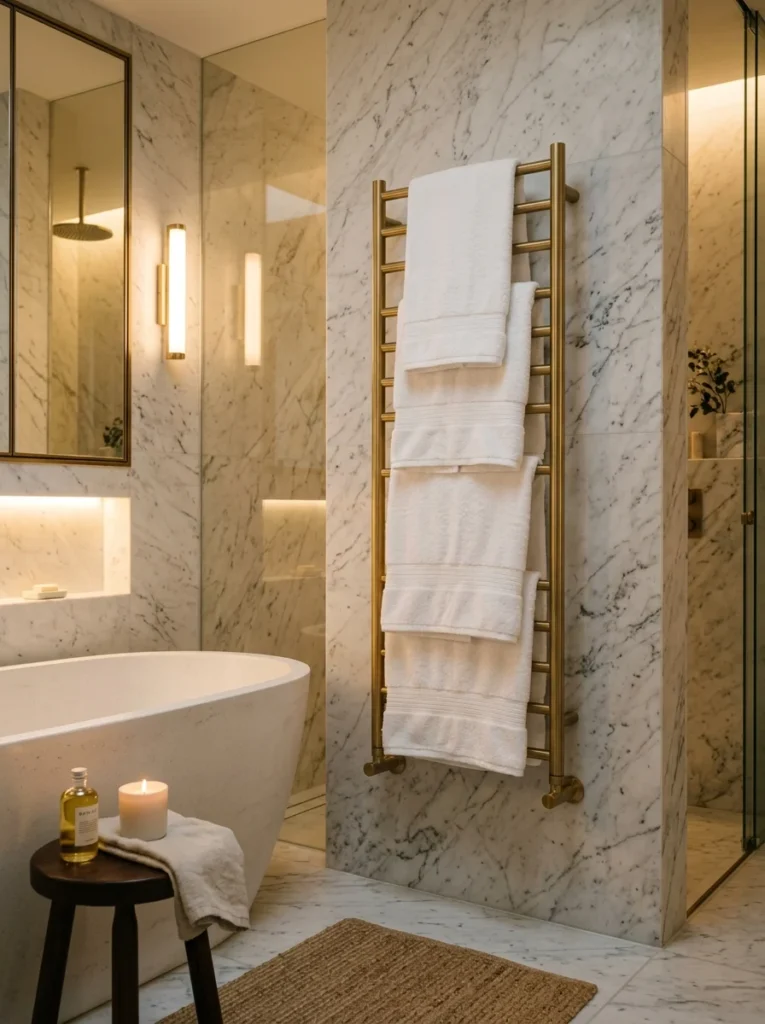
This was a genuine splurge, and I hesitated for months before finally installing one, but it’s become one of those upgrades I recommend to almost everyone now, especially if you live somewhere with cold winters. A heated towel rack warms the bars slightly, so towels dry faster and, more importantly, feel warm when you grab them after a shower, which honestly sounds like a small luxury until you actually experience it. Beyond the comfort factor, faster-drying towels also mean less musty smell and less frequent washing, since damp towels left folded on a regular bar tend to develop odor much faster than ones that dry quickly on a heated rack. Installation typically requires an electrician if you’re going for a hardwired version, though plug-in models are available if you want to avoid that step. I’d recommend this as a “someday” upgrade if it’s not in your current budget, since it’s genuinely one of those things that’s hard to go back from once you’re used to it.
7. Corner-Mounted Towel Racks
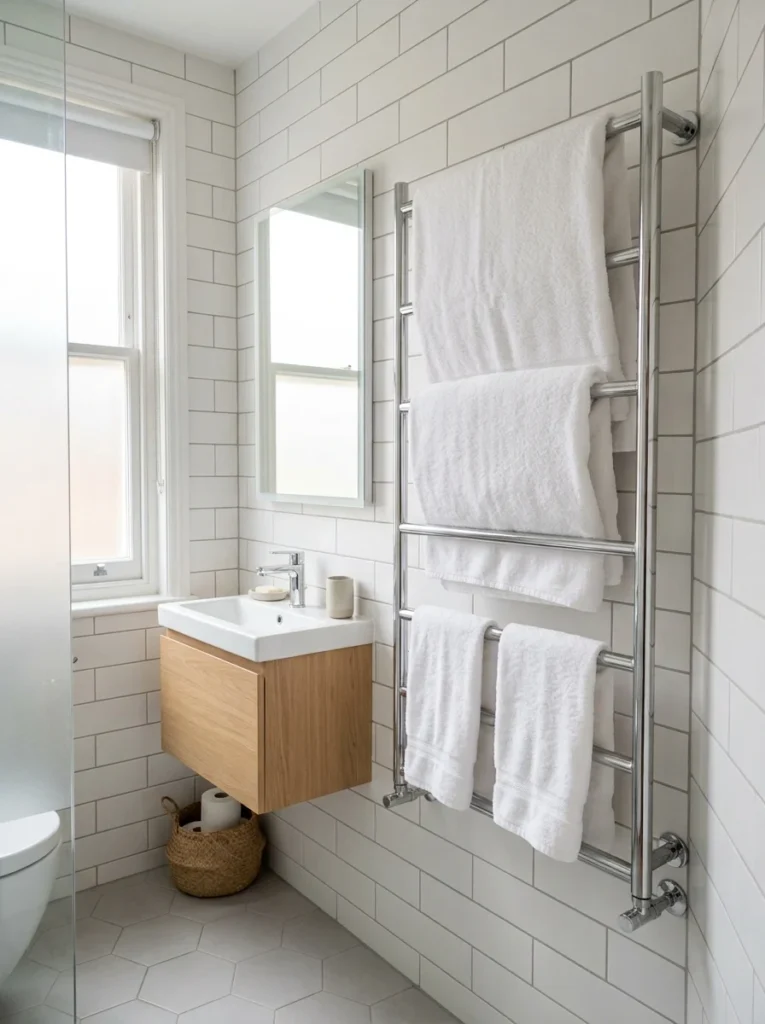
Bathrooms with awkward layouts, mine included, often have dead corner space that isn’t quite big enough for a full cabinet or shelf but is perfectly suited for a small corner-mounted towel rack. I installed one in the corner between my shower and the wall, an area that was previously just empty space I walked past every day without using at all. Corner racks typically mount at a 45-degree angle across the corner, which makes them fit almost invisibly into the room’s layout while still providing a genuinely useful spot for an extra towel or two. Because the footprint is so small, they’re a good option even in fairly cramped bathrooms where every other towel storage idea on this list might feel like it’s competing for space. I’d suggest measuring the depth of the corner carefully before installing, since some designs stick out further than you’d expect and can end up brushing against anyone walking past if the bathroom is on the narrower side.
8. Towel Rings for Hand Towels
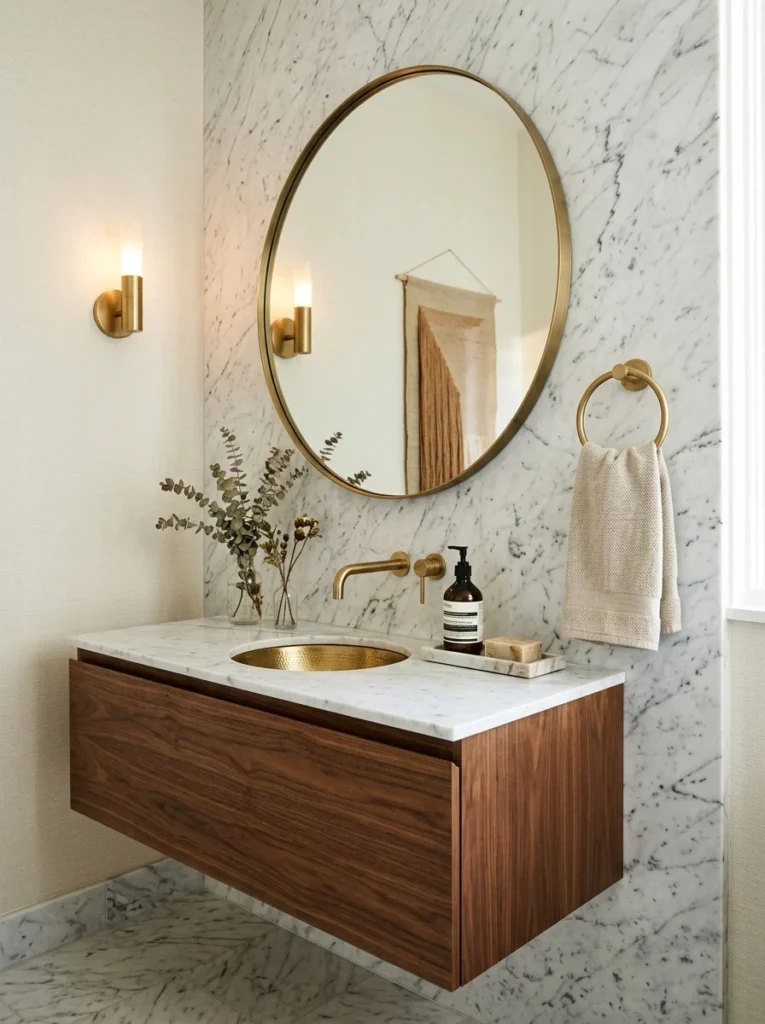
A dedicated towel ring near the sink solves a completely different problem than the larger bath towel storage ideas on this list, and it’s one I didn’t think much about until I actually installed one. Before that, my hand towel just sat folded on the counter, getting damp and slightly gross by the end of the day. A ring mounted beside or below the sink gives the hand towel somewhere specific to hang, allowing it to dry between uses instead of sitting in a damp pile. I matched mine to the finish of my faucet, a small detail that ties the whole sink area together visually. Towel rings take up very little wall space, usually just a few inches, which makes them easy to fit even in a small powder room where every inch of wall matters. This is one of those upgrades that costs very little and takes maybe twenty minutes to install, but noticeably improves the daily experience of using the sink.
9. Rustic Wood Ladder Racks
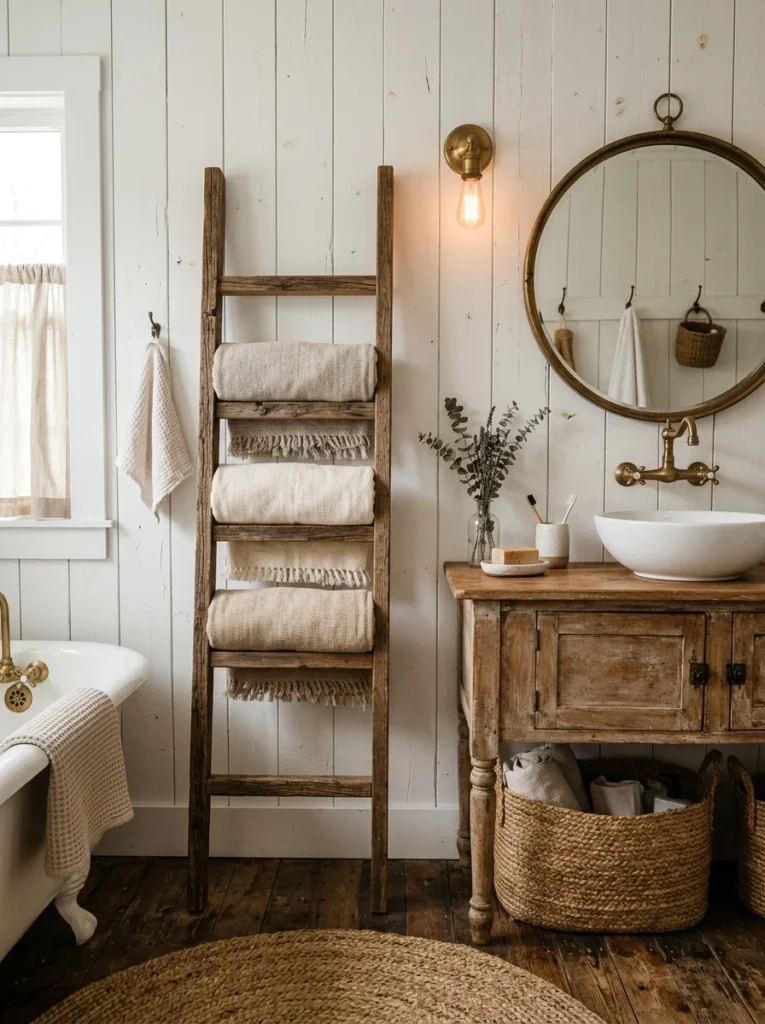
While similar in concept to the metal ladder rack I mentioned earlier, a rustic wood version brings a completely different feeling into the room, and I ended up adding one to a guest bathroom specifically for that warmer, more organic look. Reclaimed or distressed wood ladders pair particularly well with farmhouse-style bathrooms, adding visible grain and texture that metal simply can’t replicate. Because wood is more porous than metal, it’s worth choosing a rack with a sealed or treated finish if it’s going to be in a consistently humid bathroom, otherwise it can warp or develop water stains over time, something I learned the hard way with an untreated version I tried first. The rungs also tend to be spaced slightly wider than metal versions, which works well for larger bath towels but can leave smaller hand towels slipping through if you’re not careful about how you drape them. Overall, this is one of the more visually distinctive options on this list, and it works especially well as a statement piece in a bathroom that otherwise leans fairly minimal.
10. Industrial Pipe Towel Racks
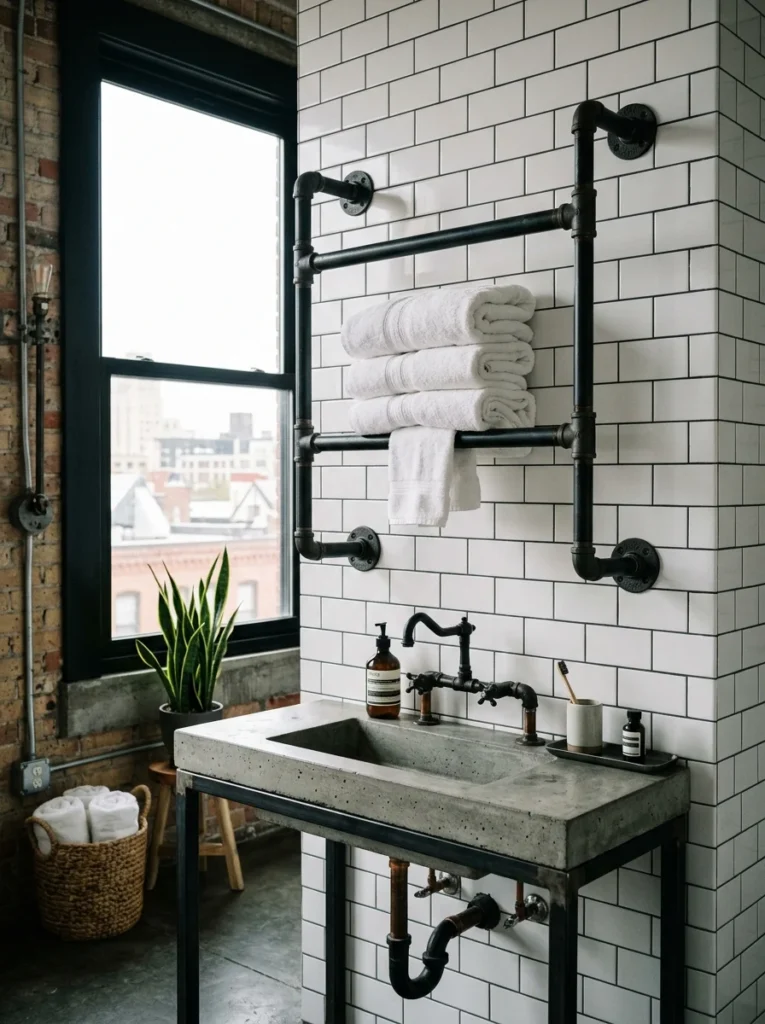
For a completely different aesthetic, industrial pipe racks, made from black iron plumbing pipe fittings, add a raw, slightly edgy look that I’ve seen work particularly well in bathrooms with exposed brick, concrete countertops, or other industrial design elements. A friend built his own using pipe fittings from a hardware store, which ended up being both cheaper and more customizable than a pre-made version, since he could adjust the exact length and configuration to fit his specific wall space. The heavy, matte black finish contrasts nicely against white subway tile, which is a pairing I’ve seen repeated in a lot of modern industrial bathrooms for good reason. This option does require secure wall mounting since the pipe fittings themselves are fairly heavy even before you hang towels on them, so I’d recommend using proper wall anchors rated for the combined weight rather than relying on standard drywall screws alone, especially if you’re not mounting directly into a stud.
11. Multi-Bar Swing-Out Racks
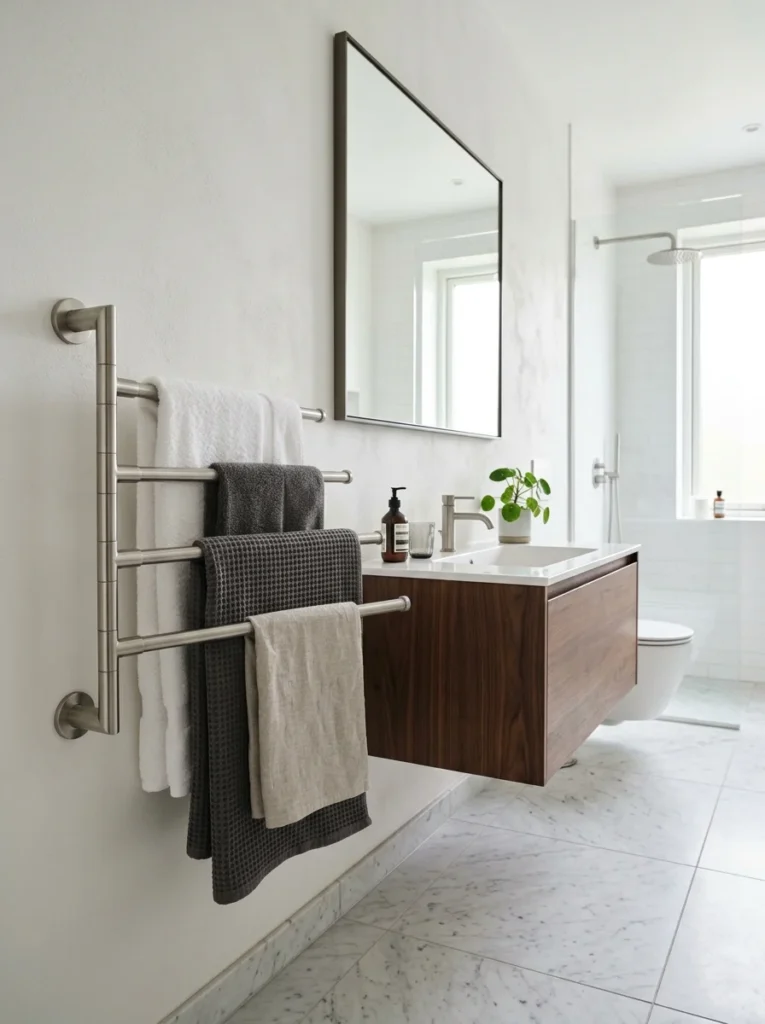
This was the upgrade that finally solved my original one-towel-bar problem for good. A swing-out rack has multiple arms that fold flat against the wall when not in use and extend outward like a fan when you need to hang several towels at once, which makes it especially useful in smaller bathrooms where a wide, fixed multi-bar rack simply wouldn’t fit. Mine has four separate arms, giving me the equivalent of four towel bars in the same wall space that used to hold just one. When folded flat, it barely protrudes from the wall, which matters in a bathroom where every inch of walking space counts. The moving parts do require slightly more maintenance than a fixed bar, and I’d recommend choosing a version with a solid metal hinge rather than a plastic one, since the plastic versions I tried first started to loosen and squeak within about a year of daily use.
12. Open Shelving With Integrated Bars
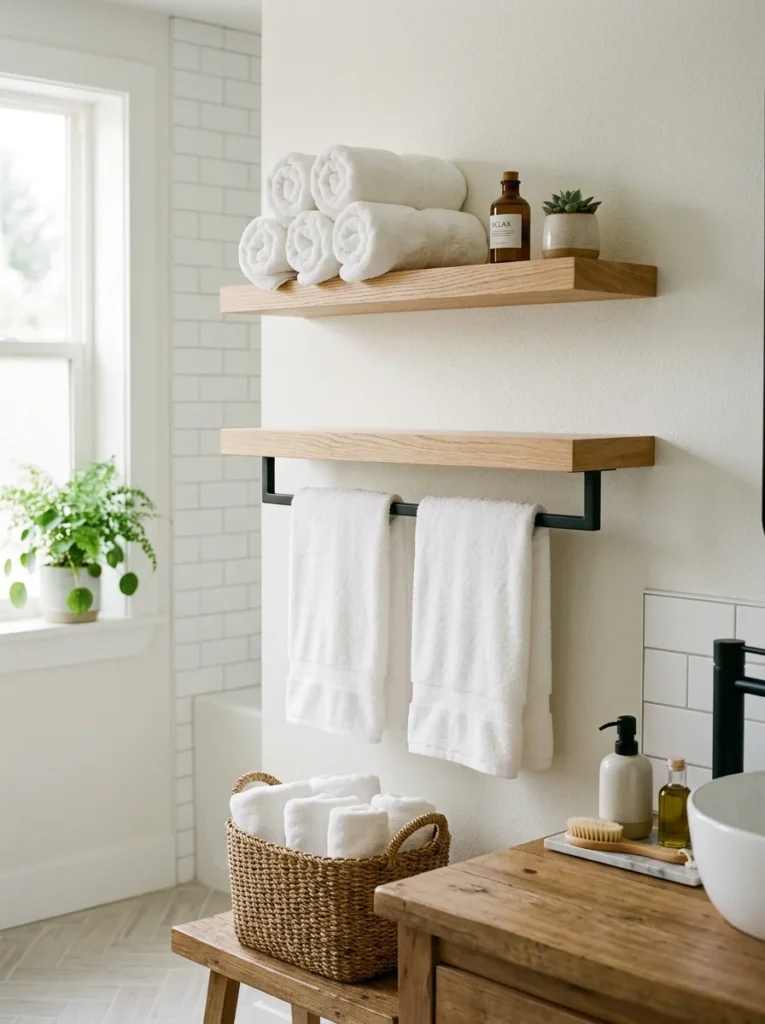
Combining shelving and a towel bar into one fixture turned out to be a smart way to maximize a single section of wall, especially above the toilet, a spot that’s often awkwardly underused in smaller bathrooms. I installed open wood shelves with a metal bar mounted just underneath, so folded towels sit on top while a hanging towel occupies the bar below, effectively doubling the storage in that one vertical strip of wall. This works particularly well if you like displaying neatly rolled towels as part of the room’s overall look, since the open shelf becomes a visible, styled element rather than hidden storage. I’d suggest keeping the shelf itself fairly shallow, around eight to ten inches, so it doesn’t compete too much with the towel bar space directly beneath it, and using it for folded towels rather than heavier items that might make the whole unit feel top-heavy over time.
13. Decorative Towel Ladders as Wall Art
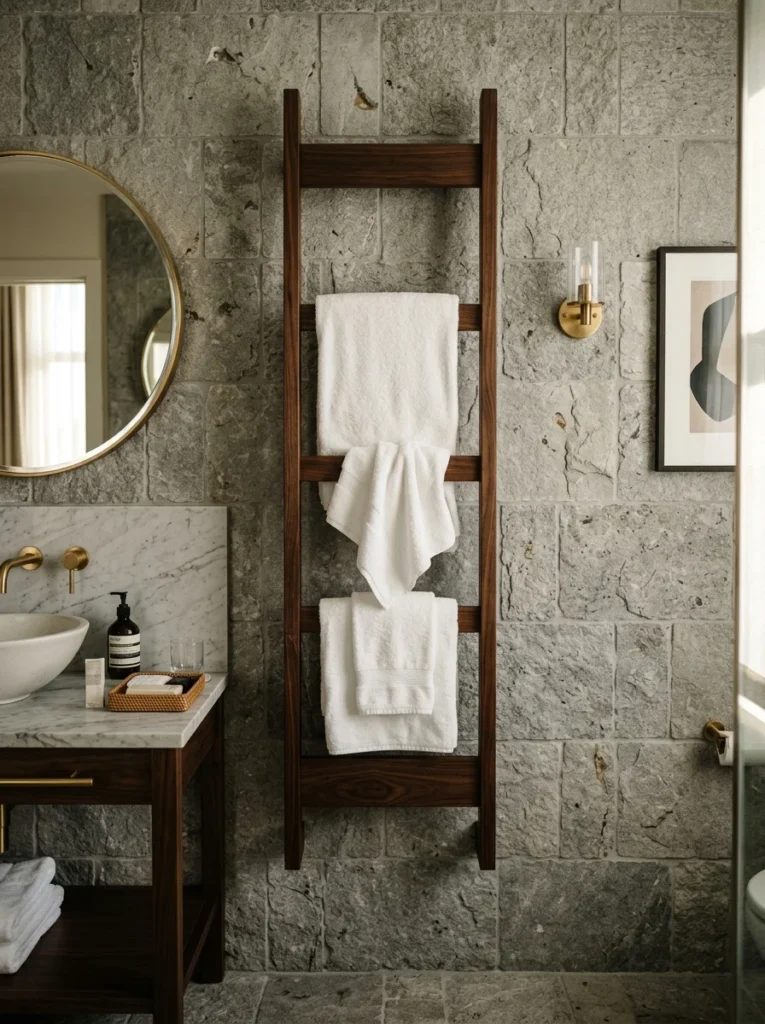
Somewhere between purely functional and purely decorative, a few towel ladder designs are intentionally styled to double as wall art even when they’re not holding a single towel. I saw this done particularly well in a boutique hotel bathroom, where a narrow, dark wood ladder with subtle carved detailing was mounted flush against the wall, more sculptural than the leaning versions most people are used to. Even empty, it added visual interest to an otherwise plain expanse of tile, which is a detail that stuck with me long after that trip. This approach works best if you’re willing to spend a bit more on a rack with genuinely interesting design details, since a plain, purely utilitarian version won’t have the same effect when it’s not actively holding towels. If your bathroom already has a strong design identity, whether that’s modern, farmhouse, or minimalist, choosing a towel rack that matches that identity closely enough to function as a design element, not just storage, is worth the extra consideration.
14. Matching Hardware Across All Fixtures
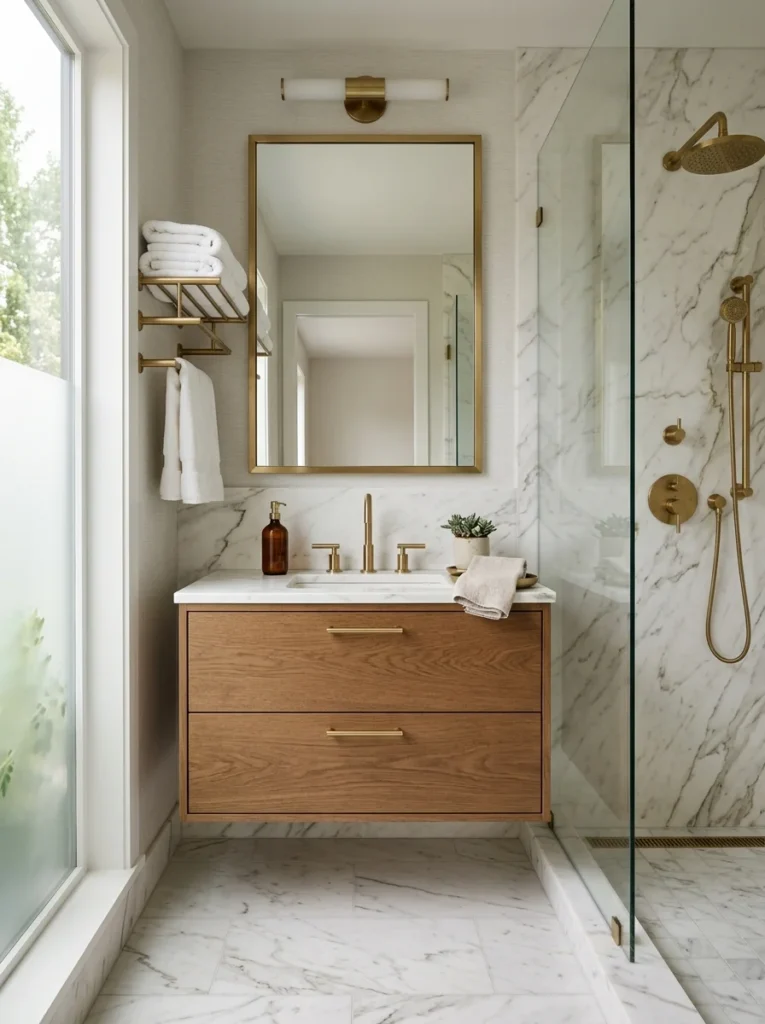
This last point isn’t really a specific rack style, but it’s the detail that ties every other idea on this list together into something that looks intentional rather than randomly assembled. Once I’d settled on a matte black finish for my main towel rack, I made sure my faucet, cabinet handles, and light fixtures all matched or at least closely coordinated, rather than mixing chrome, brass, and black throughout the same small room. It’s a detail that’s easy to overlook when you’re focused on solving the practical problem of where towels actually go, but mismatched metal finishes are one of the most common reasons a bathroom feels slightly “off” without anyone being able to pinpoint exactly why. If you’re adding a new towel rack to a bathroom with existing fixtures, I’d genuinely recommend choosing the new rack’s finish to match what’s already there rather than picking whatever style you like best in isolation, since consistency across the room does more visual work than any single fixture on its own.
Final Thoughts
Looking back at that original crooked towel bar, it’s a little funny how much thought eventually went into replacing it. But the truth is, towel storage is one of those small, easily overlooked bathroom details that actually gets used multiple times a day, every single day, which makes it worth more consideration than it usually gets. Between all 14 of these ideas, the common thread is really about matching the solution to your specific bathroom, whether that means a completely tool-free over-the-door bar for a rental, a heated rack for a genuine daily upgrade, or a full recessed niche if you’re already mid-renovation.
If you’re starting from the same one-towel-bar situation I was in, I’d suggest picking just one or two ideas that fit your current bathroom and budget rather than trying to overhaul everything at once. A row of hooks and a ladder rack alone solved about ninety percent of my original towel problem, and everything else I added after that was really just refinement.
My name is James William, and I write about practical, real-world home decor ideas that don’t require a full renovation budget to make a genuine difference in how a room actually functions.