
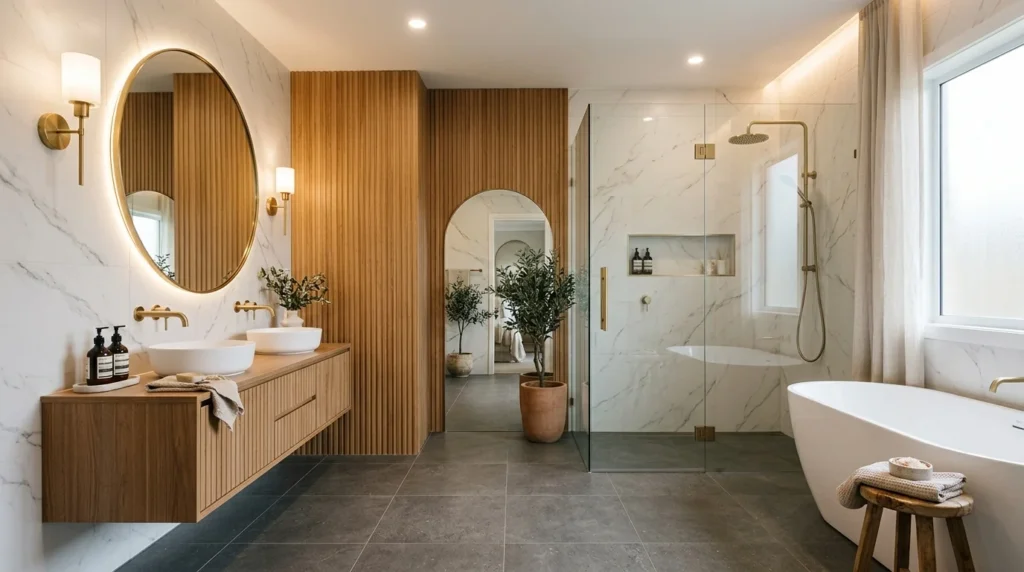
Tile is the most permanent and most consequential material decision in any bathroom. Unlike paint, which can be changed in a weekend, or fixtures, which can be swapped without major disruption, tile requires significant labor to install and even more significant disruption to remove and replace. A tile choice made without sufficient thought or knowledge produces a bathroom that feels wrong every single day and costs a considerable amount to correct.
The challenge is that tile selection is genuinely complex. There are more tile options available today than at any previous point in the history of interior design — hundreds of materials, thousands of colors, dozens of formats, and an almost limitless range of patterns, textures, and finishes. Walking into a tile showroom without a clear framework for making decisions is an overwhelming experience that often results in either paralysis or an impulsive choice that looks reasonable in the showroom but wrong in the finished bathroom.
This guide provides that framework. It covers every aspect of tile selection for a bathroom — materials and their practical properties, size and format choices, color combinations that work reliably, surface and texture considerations, the difference between floor and wall tile requirements, and the specific tile trends that are delivering the most beautiful results in contemporary bathrooms. It also covers the decisions that are most commonly made poorly — grout color, tile direction, and feature tile placement — and explains the principles that make these decisions correctly.
Whether you are designing a new bathroom from scratch, renovating an existing one, or simply trying to understand what went wrong with a previous tile choice, this guide gives you the knowledge to make tile decisions with confidence and clarity.
Understanding Tile Materials: What Each One Is and How It Performs
Ceramic Tile
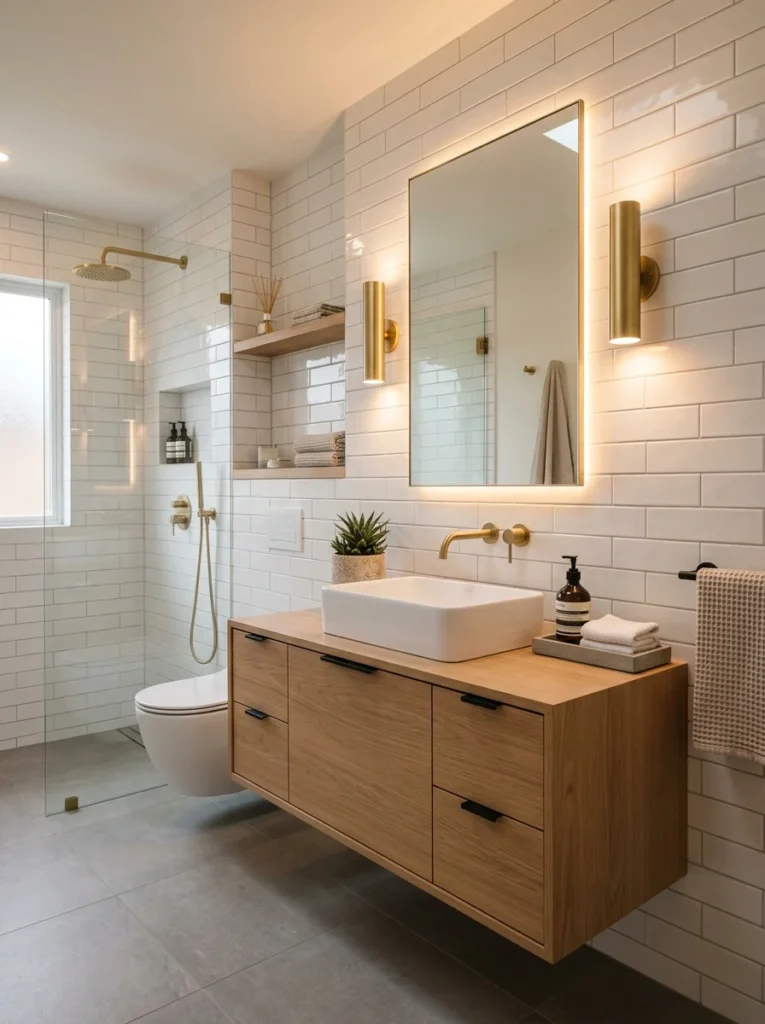
Ceramic tile is made from clay that is shaped, glazed, and fired in a kiln. It is the most widely used tile material in residential bathrooms and has been for decades, primarily because it combines good practical performance with accessible pricing and an enormous range of colors, sizes, and finishes.
The glaze on the surface of a ceramic tile provides a waterproof, stain-resistant layer that protects the clay body beneath it. This glaze is what gives ceramic tiles their characteristic smooth, slightly reflective surface. The glaze is also what makes ceramic tiles relatively easy to clean — most bathroom stains and soap deposits release easily from a glazed ceramic surface with standard cleaning products.
The limitation of ceramic tile in a bathroom context is its durability relative to porcelain. Ceramic tiles are less dense than porcelain, which means they are more susceptible to chipping if heavy objects are dropped on them, and the exposed clay body beneath a chip or crack is porous and vulnerable to moisture penetration. For walls and low-traffic floor areas, ceramic tile performs well and represents excellent value. For high-traffic floors, wet shower floors, and any area subject to heavy use, porcelain is a more appropriate choice.
Porcelain Tile
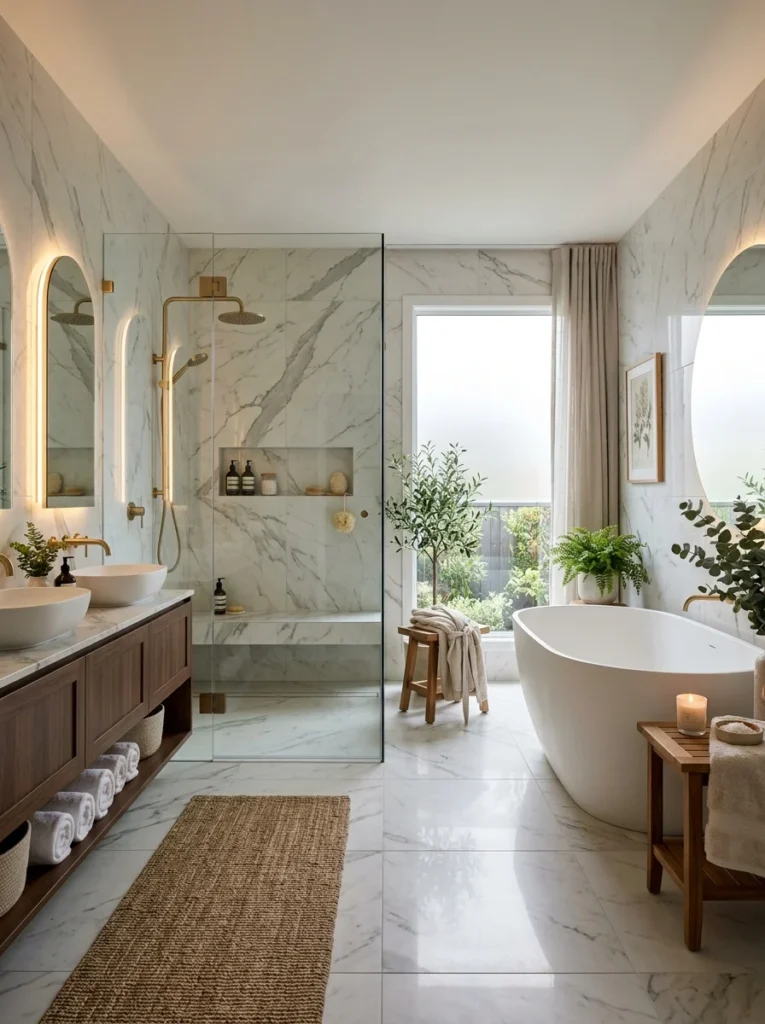
Porcelain tile is made from a more refined clay fired at higher temperatures than ceramic, producing a tile that is significantly denser, harder, and less porous than its ceramic counterpart. The density of porcelain makes it more resistant to moisture penetration, more resistant to chipping and scratching, and more suitable for heavy-use applications.
The most significant practical advantage of porcelain over ceramic in a bathroom is its suitability for wet areas. Porcelain’s low water absorption rate — typically less than 0.5 percent by weight — makes it appropriate for use in shower floors, shower walls, and any area subject to direct and regular water exposure. Ceramic tiles, with their higher absorption rates, are less suitable for these applications and can deteriorate over time in continuously wet environments.
Porcelain tiles are available in an extraordinary range of surface finishes and appearances. Polished porcelain has a highly reflective surface that resembles natural stone and works well in bathrooms where a luxurious, high-gloss aesthetic is desired. Matte porcelain provides slip resistance that makes it the appropriate choice for shower floors and bathroom floors where wet feet will frequently be in contact with the surface. Textured porcelain tiles — with surface relief that increases grip — provide the highest level of slip resistance and are the appropriate choice for any wet floor application.
The most relevant development in porcelain tile technology for bathroom design is the ability to produce large format tiles with realistic natural stone appearances. Porcelain tiles that accurately replicate the appearance of Carrara marble, travertine, slate, and other natural stones are widely available at price points far below the natural materials they replicate, and at a practical performance level that often exceeds the natural stone. Natural marble, for example, is porous and requires regular sealing, stains easily, and is vulnerable to acidic cleaning products. A porcelain tile that looks identical to marble requires none of this maintenance.
Natural Stone Tile
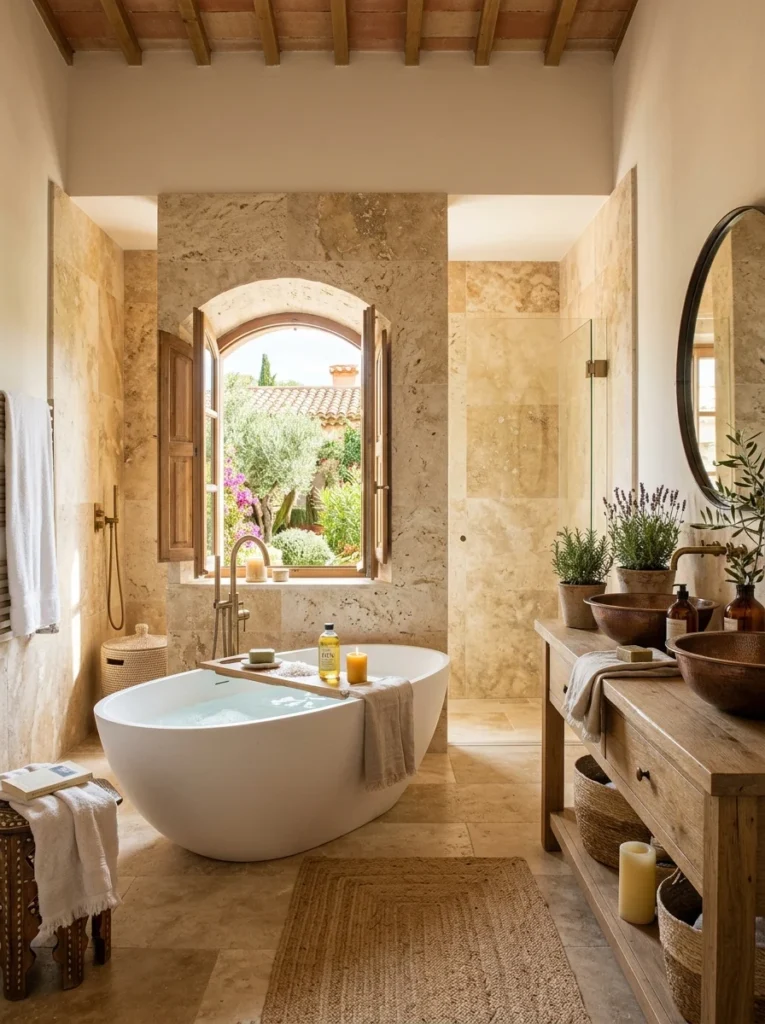
Natural stone tiles — marble, travertine, limestone, slate, and granite — bring an irreplaceable authenticity and organic beauty to a bathroom that no manufactured tile can fully replicate. The variation in pattern, color, and texture between individual stone tiles — which comes from the natural geological processes that created the stone — produces a surface with genuine visual complexity and depth.
The practical demands of natural stone in a bathroom are significant and need to be understood before committing to it as a material choice. Most natural stones are porous to varying degrees, which means they absorb moisture, staining agents, and cleaning products if not properly sealed. A stone tile bathroom requires sealing on installation and regular resealing thereafter — the frequency depending on the specific stone and the level of water exposure.
Marble is the most widely desired natural stone in bathrooms and also one of the most demanding in terms of maintenance. It is susceptible to etching from acidic substances — including many common cleaning products, lemon juice, and even some toothpastes — which leave dull marks on the polished surface. Marble in a bathroom used by a family with children or by people who are not prepared to manage its maintenance requirements will show its vulnerability relatively quickly. In bathrooms where the user is committed to the maintenance requirements, marble produces interiors of extraordinary beauty.
Travertine is a warm-toned natural stone with a characteristic porous surface that gives it an organic, ancient quality unlike any other material. It is softer than marble and more susceptible to scratching and chipping, but it is also more forgiving in terms of appearance — the natural variation in its surface means that minor imperfections read as part of the material’s character rather than as damage. Travertine suits warm, earthy, Mediterranean-influenced bathrooms and produces a quality of warmth and authenticity that is genuinely difficult to replicate with manufactured tiles.
Slate is the most practical of the natural stone options for bathroom floors, particularly in shower applications. Its naturally split surface provides excellent grip even when wet, and its density and hardness make it resistant to scratching and chipping. Slate has a distinctive dark, layered appearance that suits both contemporary and industrial bathroom styles.
Glass Tile
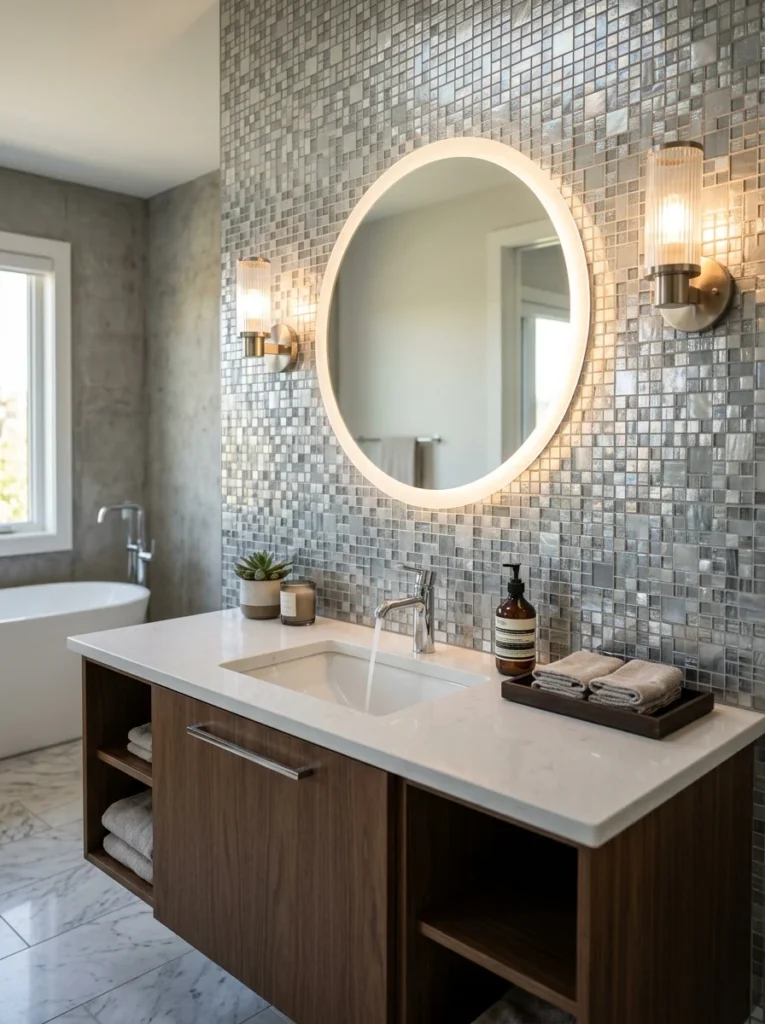
Glass tiles are made from glass formed into tile shapes, available in a range of sizes from small mosaic pieces to larger format wall tiles. Their defining characteristic is their reflectivity and translucency — glass tiles reflect light in a way that no other tile material does, and many are partially translucent, with color visible through the glass body rather than only on the surface.
In bathrooms, glass tiles are most effective as accent materials rather than as the primary tile throughout. A glass tile backsplash behind the vanity, a glass mosaic feature strip in the shower, or a glass tile niche create focal points of light and color that catch and redirect the room’s light in a way that adds sparkle and visual interest to the bathroom.
Full glass tile applications — shower walls, floor-to-ceiling glass tile — are visually striking but present practical challenges. Glass tiles are slippery underfoot unless specifically textured for floor use, show water spots and soap film more readily than ceramic or porcelain, and require more careful installation than standard tiles because their non-porous surface has limited adhesive grip.
Cement Tile
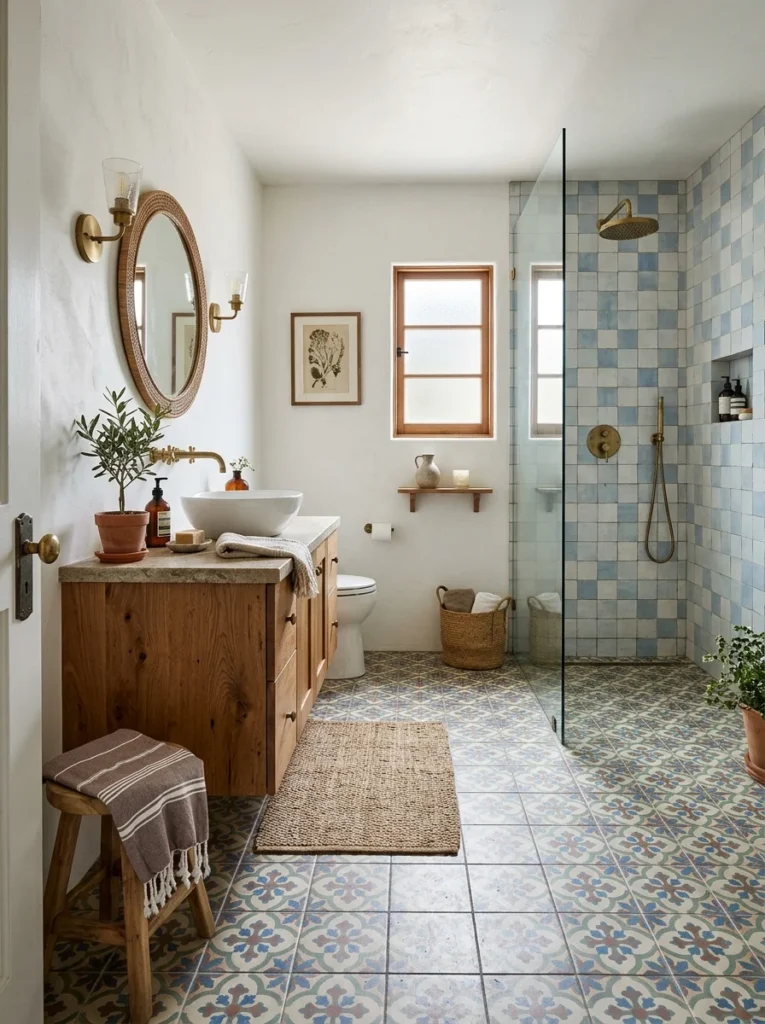
Cement tiles are handmade from a mixture of cement, sand, and pigment, pressed into molds to create the pattern and color that defines each tile. They are unglazed — the color is in the tile body itself rather than in a surface coating — which gives them a distinctive matte, slightly chalky appearance with a depth of color that glazed tiles cannot replicate.
The patterns available in cement tiles are virtually unlimited — geometric, floral, traditional, contemporary, and everything in between. The most characteristic cement tile applications are Moroccan-style geometric floors, Spanish-influenced decorative wall patterns, and traditional encaustic tile patterns in period bathrooms.
The practical demands of cement tile in a bathroom are significant. Because they are unglazed and made from a porous material, cement tiles must be sealed before installation and regularly thereafter. They are susceptible to staining from water, soap, and cleaning products if not properly maintained, and they require pH-neutral cleaning products rather than standard bathroom cleaners, which are often acidic or alkaline enough to damage the tile surface. In bathrooms where the maintenance requirements are understood and managed, cement tiles produce floors of extraordinary character and beauty.
Tile Size and Format: Choosing What Works in Your Space
Large Format Tiles — 24 Inches and Above
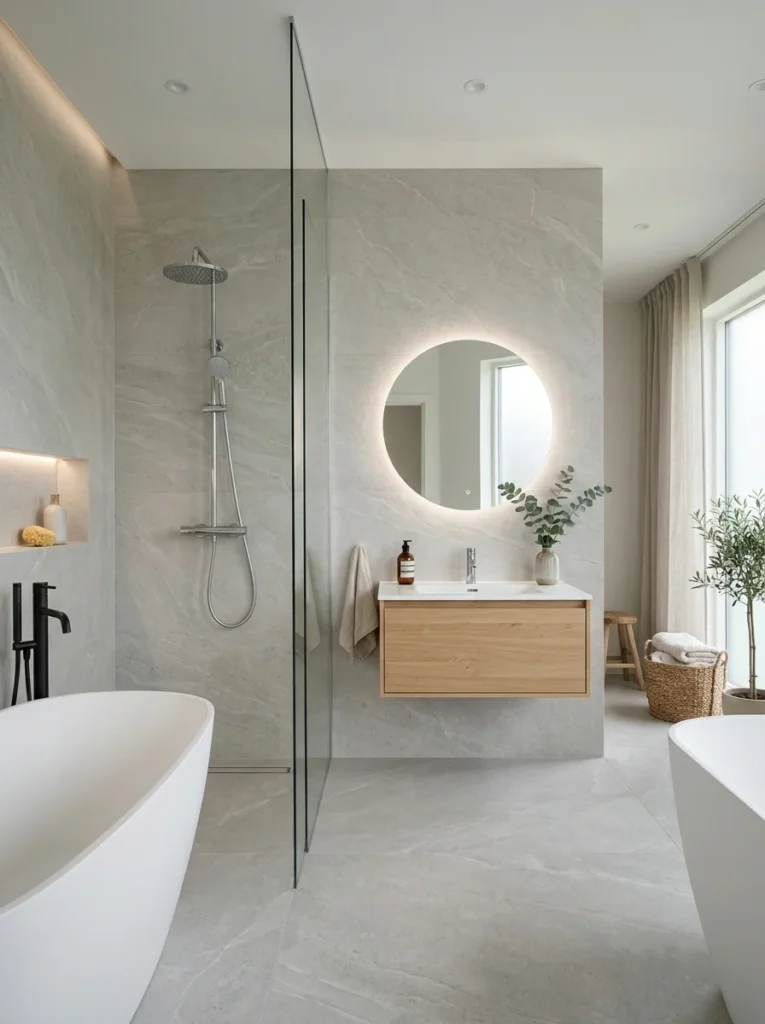
Large format tiles — tiles with a minimum dimension of 24 inches — are the most effective choice for making a bathroom feel larger, as established in the previous article in this series. Their fewer grout lines, cleaner surface appearance, and seamless visual quality create the impression of more space than smaller tiles in the same room.
Large format tiles work on both floors and walls, though wall installation requires additional skill and appropriate adhesive to manage the weight of large tiles on a vertical surface. On the floor, large format tiles are most effective in rooms with enough square footage to display the full tile without too many cut tiles at the edges — a 24-inch tile in a bathroom that is only 60 inches wide will require a cut tile on both sides, which can look awkward if not planned carefully.
The planning of large format tile layouts — where the tiles start, where the grout lines fall, and how cut tiles are distributed around the room — requires more care than smaller tile layouts. A tile layout plan drawn to scale before installation begins is essential for large format tiles, particularly in small rooms where the tile layout interacts significantly with the room’s proportions and focal points.
Medium Format Tiles — 12 to 24 Inches
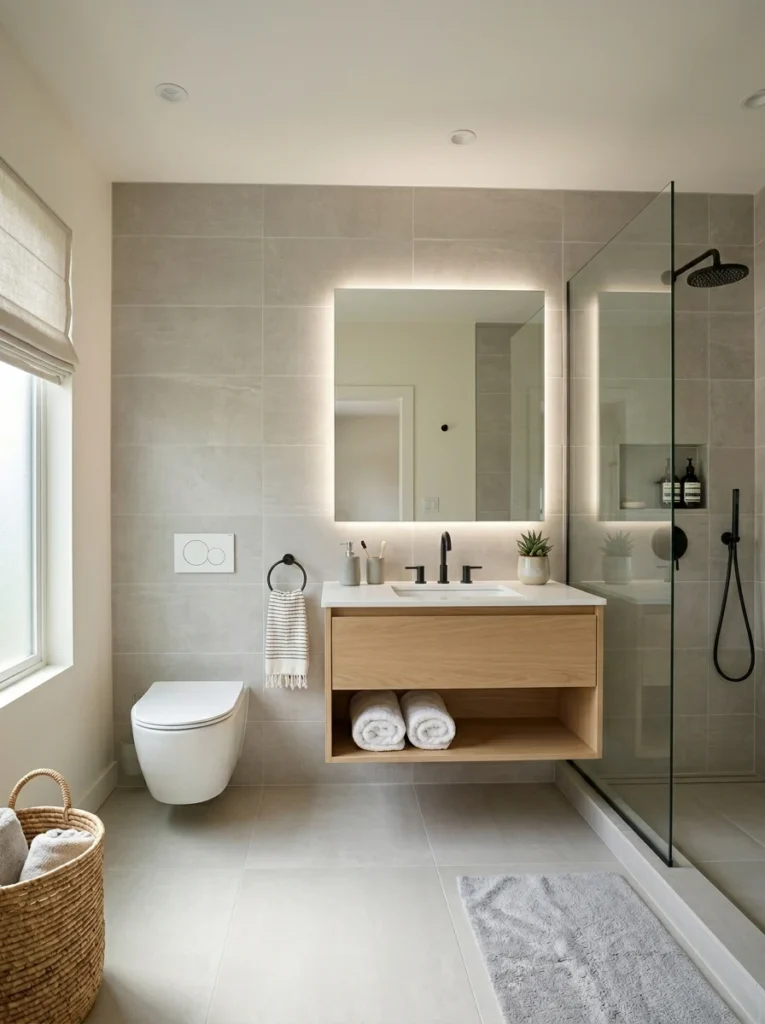
Medium format tiles offer a balance between the seamless spatial quality of large format tiles and the flexibility of smaller sizes. A 12 by 24 inch tile on the bathroom wall is large enough to reduce visual complexity significantly compared to subway tile or mosaic, while remaining manageable enough for straightforward installation without specialist equipment.
The 12 by 24 inch format is particularly versatile because it can be laid in multiple orientations that create different visual effects. Installed with the long dimension horizontal, it emphasizes the width of the wall and makes low ceilings feel more appropriate. Installed with the long dimension vertical, it emphasizes the height of the wall and makes standard ceiling heights feel taller. This flexibility makes the 12 by 24 inch format one of the most reliable choices for bathrooms where the room’s proportions benefit from deliberate visual adjustment.
Subway Tile — The Classic That Earns Its Ubiquity
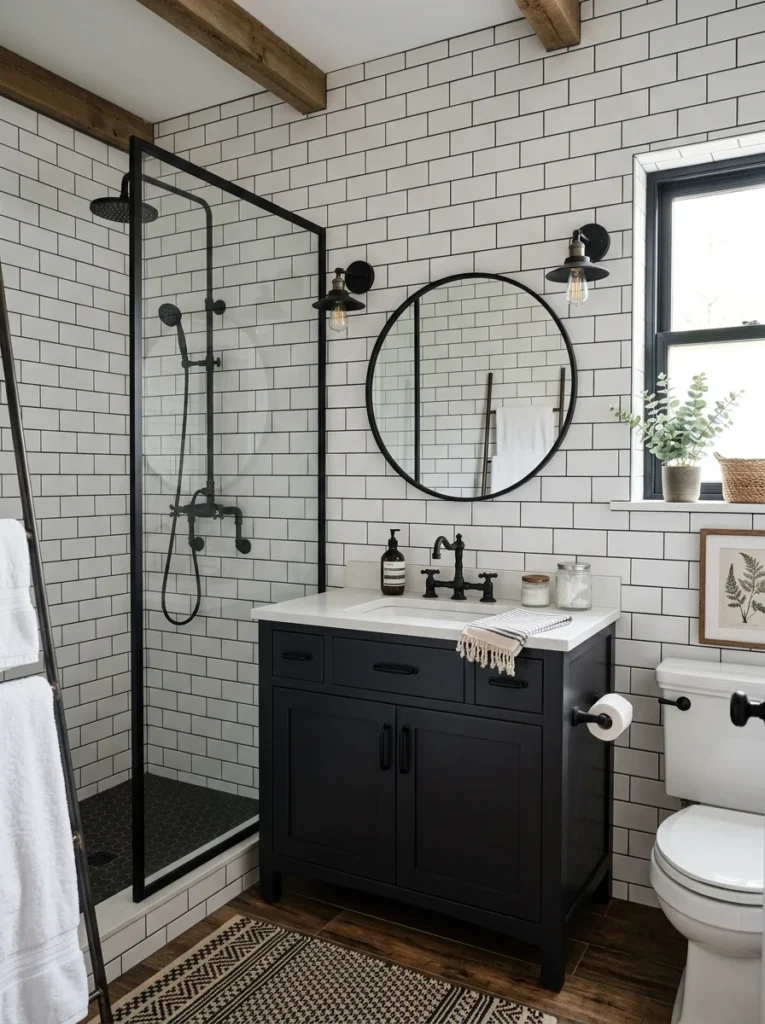
The subway tile — a rectangular tile typically measuring 3 by 6 inches — has been the most popular bathroom wall tile in the English-speaking world for over a century, and its continued dominance is not arbitrary. Subway tiles are versatile, timeless, widely available, and reliably attractive in a range of settings.
The classic white glazed subway tile in a horizontal brick pattern is the most neutral and universally applicable tile choice available — it suits contemporary bathrooms, traditional bathrooms, farmhouse bathrooms, and transitional bathrooms equally well, and it provides a clean, simple background that allows fixtures, fittings, and accessories to be the primary design statements.
The variations available on the classic subway tile — different sizes, different finishes, different colors, and different laying patterns — extend its applicability significantly. A 4 by 8 inch subway tile in a matte finish reads as more contemporary and less classic than the standard 3 by 6 inch glossy tile. A colored subway tile — dusty blue, sage green, or warm terracotta — transforms the classic format into something with more personality and palette integration. A subway tile laid in a vertical stack pattern rather than the standard horizontal brick creates strong vertical lines that suit bathrooms where ceiling height needs to be emphasized.
Mosaic Tile — Small Scale With Specific Applications
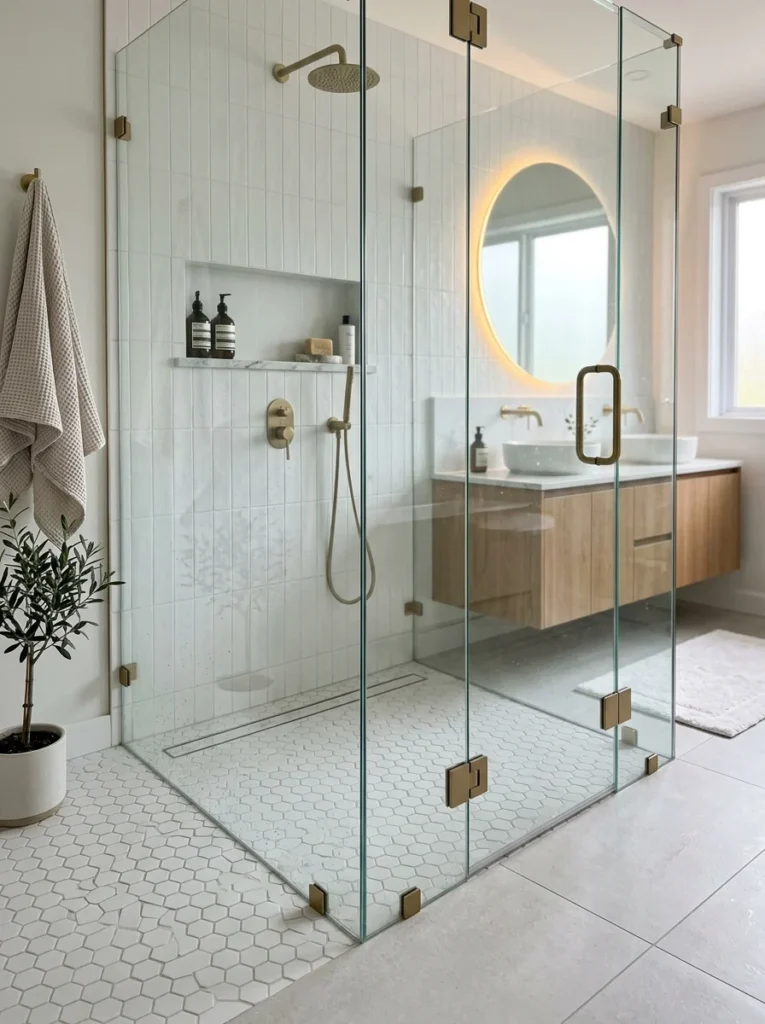
Mosaic tiles — tiles of 2 inches or less in their smallest dimension, typically supplied on mesh-backed sheets for easier installation — have a long history in bathroom design and remain relevant in specific applications where their small scale is an advantage rather than a limitation.
The most appropriate applications for mosaic tiles in a contemporary bathroom are shower floors and feature accents. On a shower floor, small mosaic tiles conform to the slight slope toward the drain more readily than larger tiles, which require more precise cutting to achieve the same drainage gradient. The many grout lines of a mosaic floor also provide increased grip compared to a large tile floor with fewer grout lines, which is an important safety consideration in a wet shower environment.
As feature accents — a mosaic niche within a larger tile field, a mosaic border strip as a horizontal accent, or a mosaic feature panel as a focal point — small tiles provide visual richness and detail that contrasts effectively with the simpler, larger tile surfaces around them.
The primary caution with mosaic tiles in bathrooms is maintenance. The high number of grout lines per square foot of a mosaic surface creates significantly more surface area for soap scum, mineral deposits, and mold to accumulate in than a larger tile surface. Mosaic tile applications in wet areas require more frequent and more thorough cleaning than larger format tiles to maintain their appearance.
Floor Tile Guide: What Matters Most Underfoot
Slip Resistance — The Most Important Floor Tile Specification
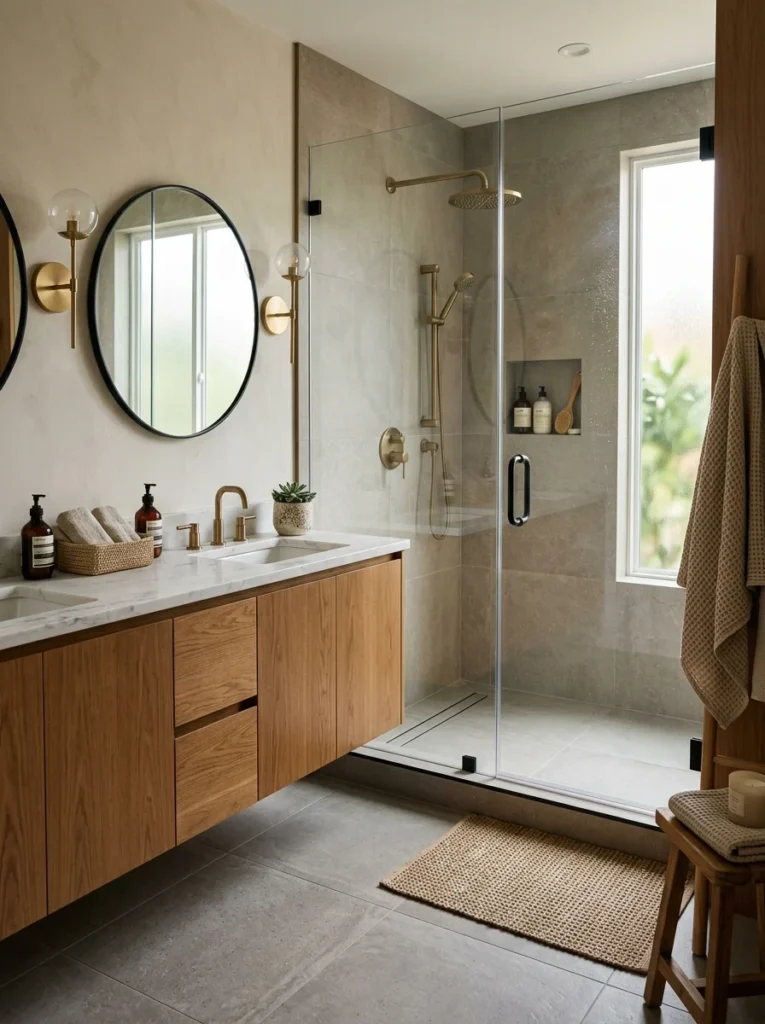
The slip resistance of a floor tile is the most important specification to evaluate when choosing bathroom floor tiles, and it is the specification most frequently overlooked in favor of appearance. A floor tile that looks beautiful but is slippery when wet is not an appropriate bathroom floor tile regardless of its other qualities.
Slip resistance is measured by the coefficient of friction — a higher number indicates a more slip-resistant surface. The relevant standards vary by country, but the general principle is consistent: bathroom floor tiles, and shower floor tiles in particular, need a coefficient of friction rating appropriate for wet conditions.
Polished tiles — whether porcelain, ceramic, or natural stone — have the lowest slip resistance of any tile finish. The highly reflective, smooth surface that makes polished tiles beautiful also makes them dangerous underfoot when wet. Polished tiles are appropriate for bathroom walls, where there is no slip risk, but are not appropriate for bathroom floors where wet feet will walk.
Matte tiles have significantly higher slip resistance than polished tiles because their surface has more texture and friction. A matte porcelain or ceramic tile is appropriate for standard bathroom floors used by healthy adults. Textured tiles — tiles with a deliberately roughened or embossed surface — provide the highest slip resistance and are the appropriate choice for shower floors and bathrooms used by children or older adults where slip risk is a primary safety consideration.
Grout Joint Width for Floors
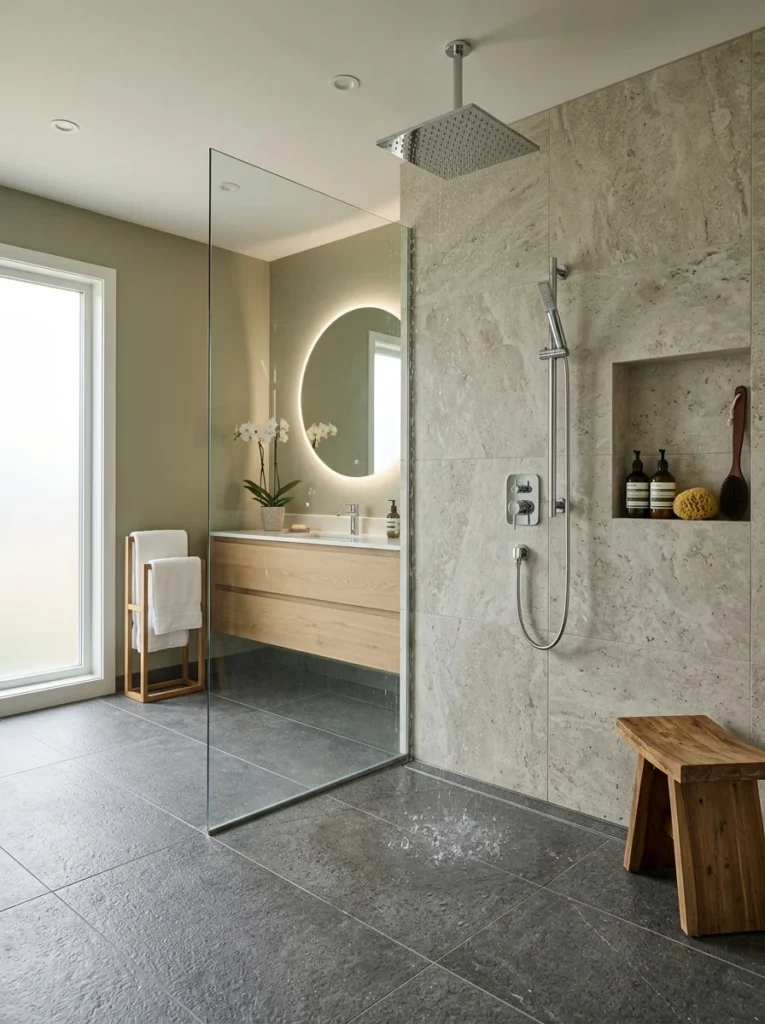
The width of the grout joint between floor tiles affects both the appearance and the practicality of the floor. Wider grout joints — 3mm and above — are more forgiving of slight variations in tile size and are easier to install without lippage (height differences between adjacent tile edges). Narrower grout joints — 1.5mm and below — create a cleaner, more seamless appearance but require more precisely manufactured tiles (rectified tiles) and more skilled installation.
For large format floor tiles, wider grout joints are typically more appropriate because the tiles are more likely to have slight size variations and because the installation of large tiles requires the additional tolerance that a wider joint provides. For smaller format tiles installed by a skilled tiler using precision tiles, narrower joints create the cleanest and most visually satisfying results.
Floor Tile Color and Pattern
Floor tile color in a bathroom affects both the aesthetic and the practical character of the space. Light floor tiles make the floor feel larger and contribute to an open, bright atmosphere. Dark floor tiles ground the room, add visual weight, and are more forgiving of the mineral deposits and water marks that accumulate on bathroom floors between cleaning sessions.
The most enduringly popular floor tile combinations in bathrooms are white or light grey walls with a darker or contrasting floor tile — which creates a clear visual distinction between vertical and horizontal surfaces and gives the room a grounded, intentional quality — and a monochromatic approach where the floor and wall tiles are in the same color family, which creates the seamless, spa-like atmosphere discussed in the previous article.
Pattern on bathroom floors — geometric tiles, encaustic patterns, black and white checkerboard — adds significant visual interest and character but requires more confidence in the design decision and more careful management of the rest of the bathroom’s palette to prevent visual competition between the patterned floor and other design elements.
Wall Tile Guide: What Works on Vertical Surfaces
The Shower Wall — The Most Critical Tiling Decisio
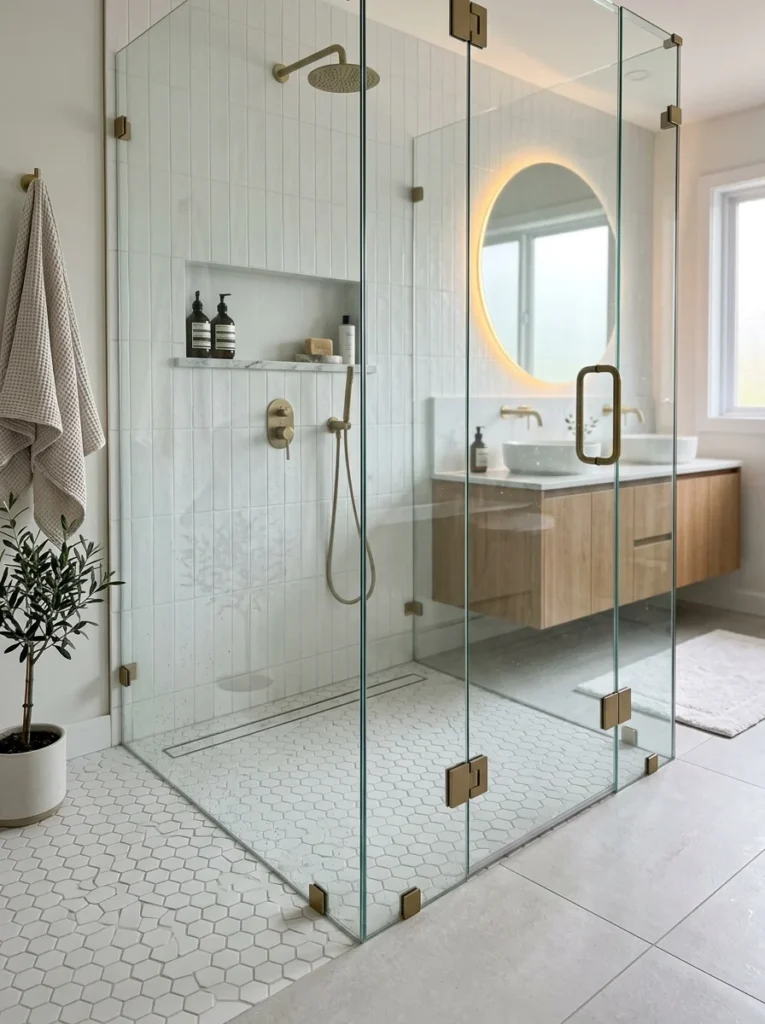
The shower wall is the most important tile application in any bathroom because it is permanently exposed to direct water and requires a tile material and installation quality that can withstand continuous wet conditions without deteriorating. Porcelain is the most appropriate material for shower walls because its low water absorption rate and hard, non-porous surface handle continuous moisture exposure without the maintenance demands of natural stone or the porosity of standard ceramic.
The grout in a shower wall application is as important as the tile itself. Standard cement-based grout is porous and requires regular sealing to prevent moisture penetration and mold growth. Epoxy grout — a two-component system that cures to a completely non-porous finish — is significantly more durable in wet shower environments, resists staining and mold growth without sealing, and maintains its color more consistently over time. Epoxy grout costs more than cement grout and requires more skill to install, but its performance in shower applications justifies the additional cost in most situations.
Feature Walls — Creating a Focal Point Without Overwhelming the Room
A feature wall — a single wall tiled in a different material, color, or pattern to the surrounding walls — is one of the most effective ways to add visual interest and personality to a bathroom without the complexity and cost of applying a distinctive tile throughout the entire room.
The most common positions for a bathroom feature wall are the wall behind the vanity and the wall behind the toilet. Both positions place the feature tile at the focal point of their respective zones — the vanity wall is typically the first wall seen when entering the bathroom, and the toilet wall is directly opposite the entrance in many bathroom layouts.
The tile choice for a feature wall needs to complement rather than compete with the primary tile used on the surrounding walls. A bold geometric cement tile feature wall surrounded by simple white subway tiles creates a clear hierarchy — the feature tile is the statement element, the white subway tile is the quiet background. The same bold geometric tile surrounded by another visually complex tile creates two competing elements with no clear hierarchy and a result that feels busy and unresolved.
Zellige Tiles — The Handmade Tile That Defines Contemporary Bathroom Design
Zellige tiles are traditional Moroccan handmade tiles produced from natural clay, glazed with metalite glazes, and fired in traditional kilns. The production process — which involves hand-cutting each tile to approximate dimensions rather than machine-cutting to precise ones — produces tiles with slight variations in size, thickness, and surface texture that give zellige installations their characteristic organic, handcrafted quality.
The glaze on zellige tiles is applied in a traditional technique that produces a surface with slight undulations and variations in reflectivity — the surface catches light differently at different angles and from different viewing positions, which gives zellige walls a quality of movement and depth that machine-made tiles cannot replicate. This reflective quality makes zellige particularly effective in bathrooms where natural light enters from one side — the changing angles of light throughout the day interact with the zellige surface to create continuously shifting patterns of light and shadow.
Zellige tiles are available in a wide range of colors, with the most popular for contemporary bathroom applications being warm white, off-white, sage green, dusty blue, and warm terracotta. Their irregular edges require wider grout joints than machine-made tiles — typically 3 to 5mm — which contributes to their handcrafted, artisanal character.
Fluted and Textured Tiles — The Texture Trend With Genuine Design Value
Fluted tiles — tiles with a series of vertical or horizontal channels that create a ribbed surface texture — have become one of the most prominent bathroom tile trends of the past several years. Unlike many tile trends that are primarily about surface pattern or color, fluted tiles add genuine three-dimensional texture to bathroom walls that interacts with light in a way that flat tiles cannot.
The ribbed surface of a fluted tile catches light on the raised ridges and creates shadow in the recessed channels, producing a constantly shifting play of light and shadow across the wall surface that changes as the ambient light conditions in the room change. This dynamic quality makes fluted tile walls genuinely interesting to look at rather than merely attractive in a static way.
Fluted tiles are most effective as feature wall tiles rather than throughout the entire bathroom. A fluted tile feature wall behind the vanity, in the shower, or on the wall behind the bathtub creates a strong visual statement that works in dialogue with simpler tiles on the surrounding surfaces.
Color Combinations That Work Reliably in Bathrooms
White and Black — The Most Timeless Combination
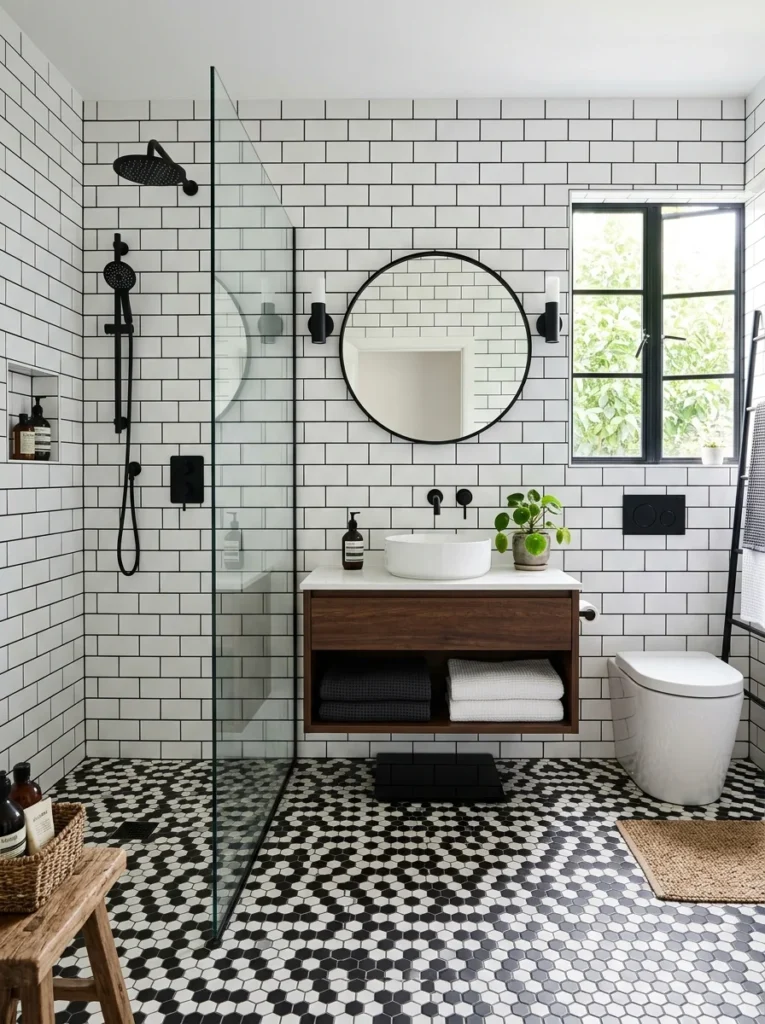
The combination of white tiles and black grout — or black tiles with white grout — is the most enduringly popular tile color combination in bathroom design because it creates a graphic clarity that reads as simultaneously classic and contemporary. The strong contrast between white and black is visually decisive — there is no ambiguity about the palette, no uncertainty about whether the combination works. It simply does, in virtually every bathroom context.
Classic applications of the white and black combination include white subway tiles with dark charcoal or black grout on bathroom walls, black and white hexagon tiles on the floor, and white large format tiles with a black accent strip or border detail. Each of these applications is a proven performer that has appeared in beautiful bathrooms for over a century and shows no sign of dating.
Warm Beige and Terracotta — Earthy and Luxurious
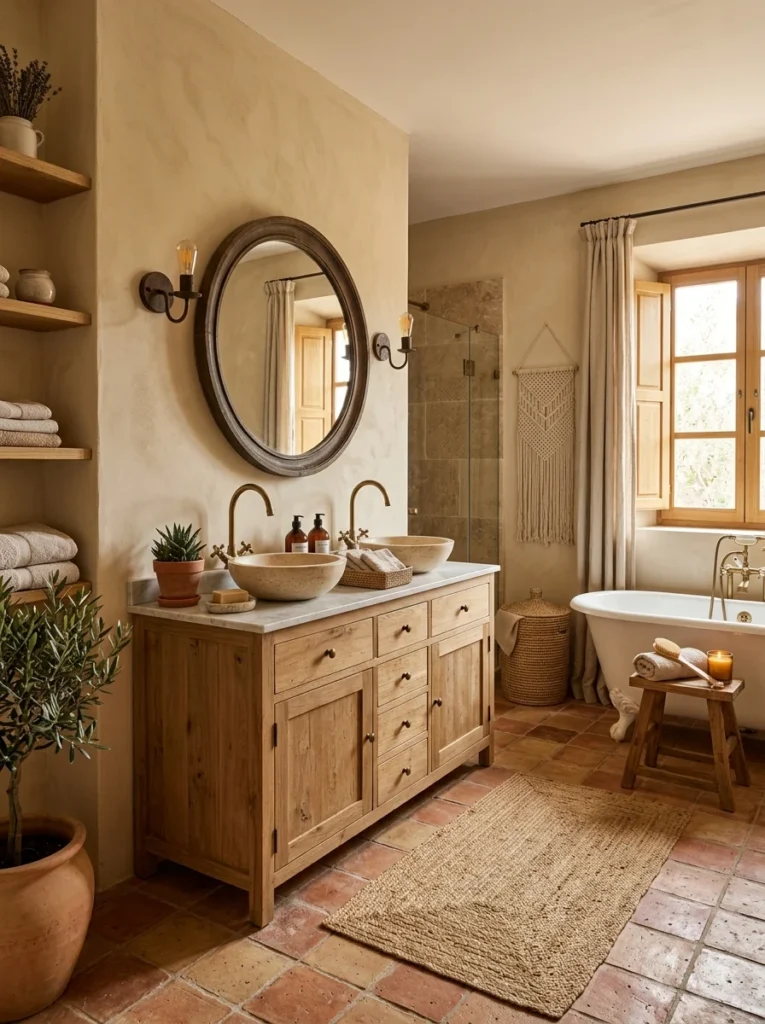
The warm beige and terracotta palette in bathroom tiles creates spaces that feel simultaneously luxurious and organic — bathrooms with the quality of a high-end spa or boutique hotel, rather than the clinical efficiency of a standard domestic bathroom.
Warm beige large format tiles on the walls combined with a terracotta or warm rust floor tile produce a completely enveloping warmth that makes the bathroom feel like a genuine retreat rather than a functional room. The combination of matte beige surfaces with the slightly reflective quality of zellige or handmade tiles in warm tones adds the textural interest that prevents a warm neutral palette from feeling flat.
Grey and Warm Wood — Modern Spa Aesthetic
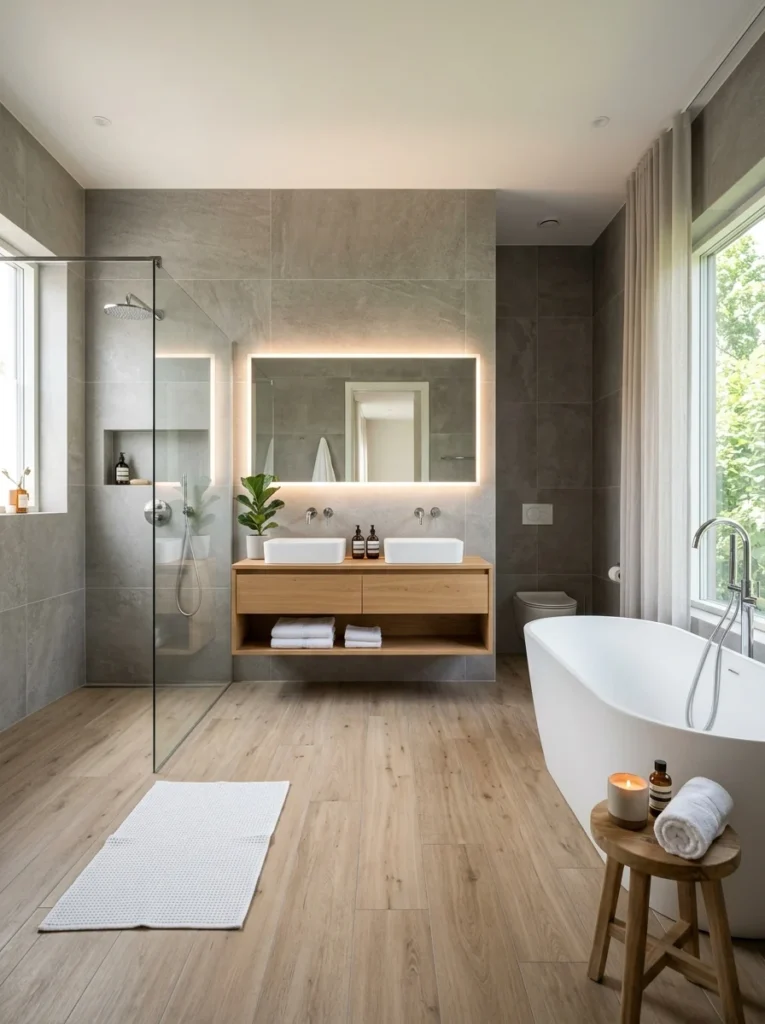
Grey tiles — whether cool mid-tone grey or warm greige — combined with wood-effect tiles or actual wood elements in the bathroom create the aesthetic most associated with contemporary Scandinavian spa design. The combination of cool, clean grey surfaces with the warmth of wood grain produces a bathroom that feels both clinically clean and genuinely warm — a combination that is difficult to achieve with either material alone.
Wood-effect porcelain tiles — porcelain tiles printed with high-resolution digital imagery of natural wood grain — bring the warmth of wood to wet bathroom environments where natural wood would not be appropriate. Applied to the floor of a bathroom alongside grey wall tiles, wood-effect porcelain creates a genuinely striking combination that reads as sophisticated and considered.
All White With Textural Variation
An all-white bathroom — white tiles on every surface — risks reading as blank and clinical without something to create visual interest within the monochromatic palette. The solution is textural variation — different tile surfaces in the same white tone that interact with light differently and create visual richness through surface quality rather than color contrast.
A combination of glossy white wall tiles, matte white floor tiles, and a textured or zellige feature tile in off-white creates an all-white bathroom with genuine depth and sophistication. The differences in reflectivity between the glossy, matte, and textured surfaces mean that the white reads differently on each surface — bright and reflective on the glossy wall tiles, soft and chalky on the matte floor tiles, warm and organic on the zellige feature wall.
Grout Color: The Decision That Changes Everything
Grout color is one of the most consequential tile specification decisions and one of the most commonly underestimated. The grout forms the lines between every tile in the room and covers a significant proportion of the total tile surface area — more than most people realize. A bathroom with 3mm grout joints and 10 by 10 cm tiles has approximately 20 percent of its tiled surface in grout. At that proportion, the grout color is a genuinely significant element of the bathroom’s visual palette.
Light grout — white, cream, or very pale grey — minimizes the visibility of grout lines and creates the most seamless, continuous tile surface possible. It makes tiles read as a unified surface rather than as individual tiles separated by lines. The disadvantage of light grout is that it shows staining, mold, and discoloration more readily than darker grout, which creates maintenance demands in wet bathroom areas.
Dark grout — charcoal, dark grey, or black — makes each tile read as an individual element separated from its neighbors by a clear line. This is the graphic quality that makes the white tile and dark grout combination so visually decisive and so consistently striking. Dark grout is also significantly more resistant to visible staining and discoloration in wet areas, which makes it the more practical choice for shower applications where maintenance is a genuine concern.
Mid-tone grout — warm grey, greige, or taupe — is the most forgiving choice practically and the most flexible visually. It does not disappear as completely as light grout, nor does it make the graphic statement of dark grout, but it performs well practically and suits a wide range of tile colors and bathroom palettes.
Where to Spend and Where to Save on Bathroom Tiles
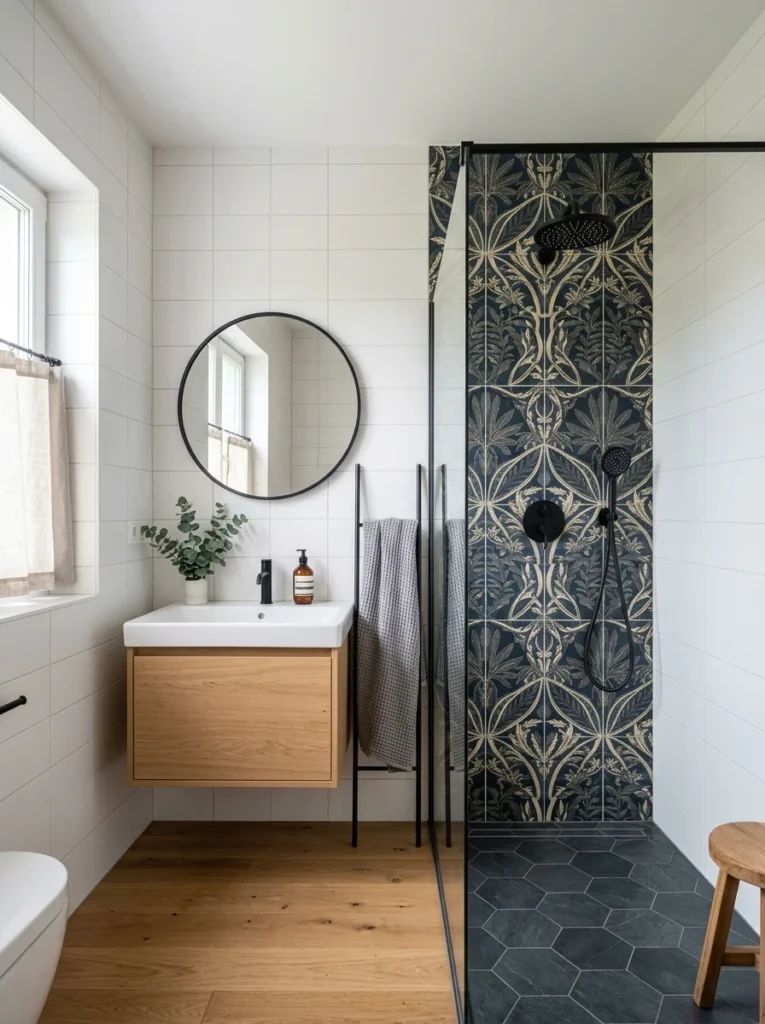
Not all surfaces in a bathroom require the same level of tile investment. A strategic approach to where the budget is concentrated produces better overall results than spending evenly across every surface.
The shower wall and floor are the highest priority areas for tile quality investment. These surfaces are permanently wet, subject to intense scrutiny at close range, and among the most difficult and expensive to retile if the original choice proves inadequate. Using the best quality tile the budget allows — porcelain with good slip resistance ratings for the floor, a beautiful feature tile for the primary shower wall — delivers visible results in the most important zone of the bathroom.
The main bathroom floor is the second priority. It is seen immediately upon entering the room, walked on constantly, and a significant visual element of the overall bathroom design. A floor tile of genuine quality in an appropriate material and finish is worth the investment.
The walls outside the shower zone are the lowest priority for tile quality investment. These surfaces receive no direct water exposure, are viewed from a distance, and are less subject to wear than shower walls and floors. This is where a more affordable tile in the same color family as the premium shower tile can be used without compromising the overall impression of the bathroom.
Conclusion
Tile selection for a bathroom is a decision that rewards knowledge, patience, and the willingness to test and evaluate options physically before committing to them. The material choice — ceramic, porcelain, natural stone, glass, or cement — establishes the practical parameters within which the aesthetic decisions are made. The size and format determine how the space will feel. The color and pattern set the palette and the personality of the room. The grout color either reinforces or undermines every tile decision made above it.
The framework in this guide — understanding materials first, then format, then color, then grout — provides a clear sequence for making tile decisions that prevents the most common mistakes and produces results that look genuinely considered and intentional rather than assembled from available options.
Tile chosen well is the foundation on which a beautiful bathroom is built. Everything that sits on top of it — the fixtures, the fittings, the accessories, and the lighting — can only look as good as the tile decisions that surround them allow.