
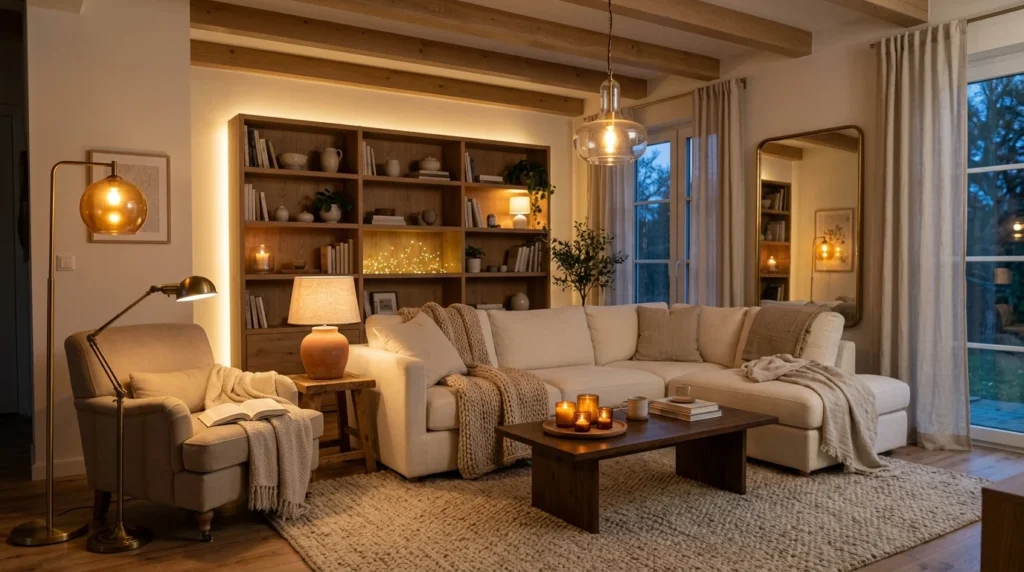
There’s a specific evening I still think about. I’d just finished setting up my living room furniture — new couch, new rug, everything arranged exactly how I wanted it — and I flipped on the single overhead light to admire the result. The room looked flat. Cold, almost clinical, like a furniture showroom after closing time, even though every piece in it was something I genuinely liked. It took me almost a year of small changes, trial and error, and a few genuinely bad purchases to understand that lighting, not furniture, was what had been missing the whole time. Once I started treating light as its own design element instead of an afterthought, the room finally started to feel like somewhere I wanted to spend my evenings. Here’s everything that actually made a difference.
1. Stop Relying on One Overhead Light
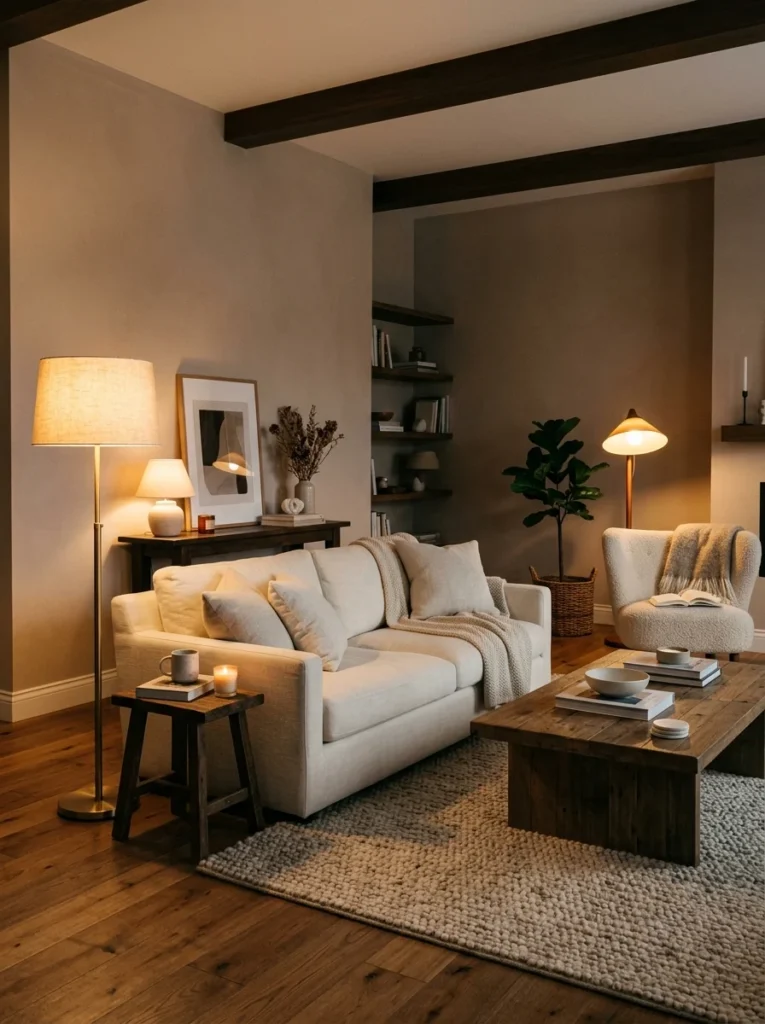
This was the root of my original problem, and it’s the one most people don’t think to question because it’s how most rooms come pre-wired. A single ceiling fixture lighting an entire room creates flat, even light with no depth, no shadow, and no warmth — everything gets the same harsh treatment regardless of what’s actually happening in that part of the room. The moment I started using multiple smaller light sources instead of one big one, the room stopped looking like a rental listing photo and started feeling like an actual living space with texture and mood.
2. Add a Floor Lamp in an Empty Corner
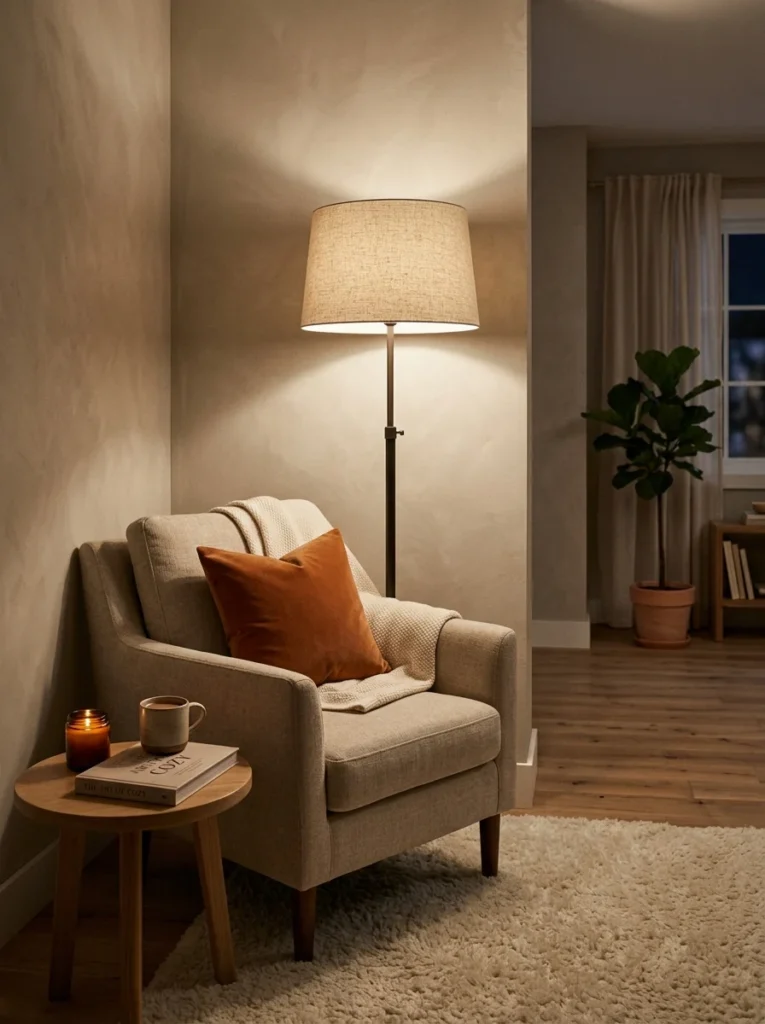
I put a floor lamp in the corner behind my armchair, a spot that used to just look dark and slightly unfinished no matter how I arranged the furniture around it. That single lamp filled the dead zone completely, and it’s now the light I turn on most evenings instead of the ceiling fixture. It’s a cheap fix for a problem I didn’t even realize I had until it was solved.
3. Use Table Lamps at Different Heights
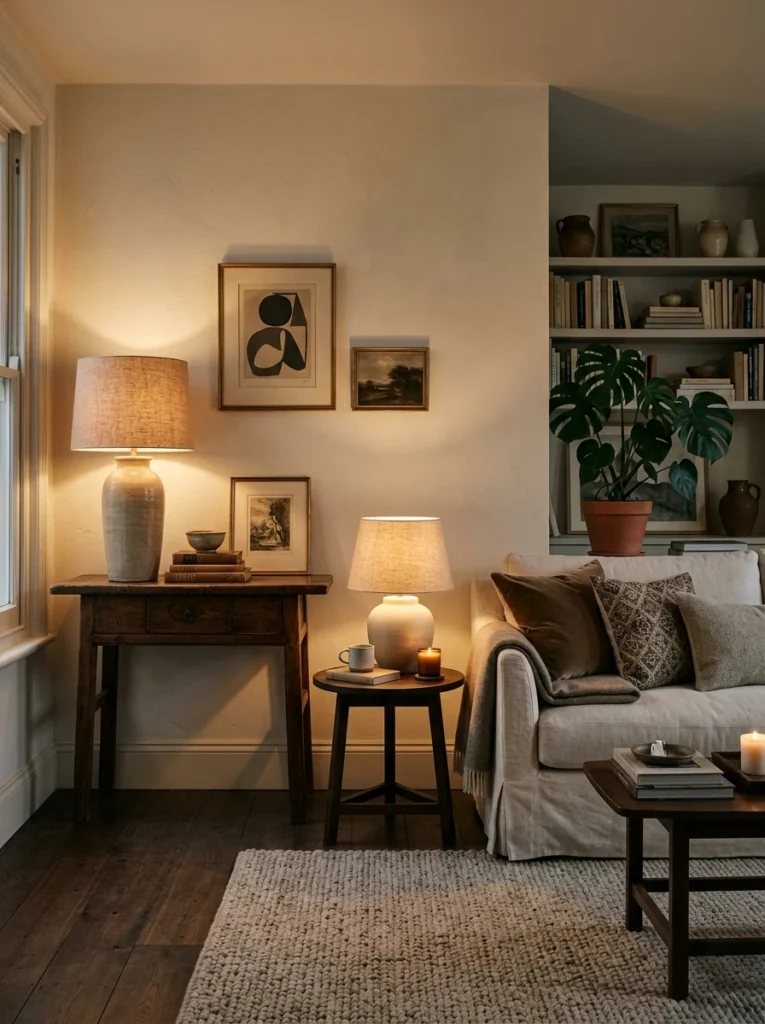
Matching lamp heights across a room sounds logical on paper — symmetry, balance, all the design-school terms — but in person it looks oddly uniform, almost like a hotel lobby. I intentionally paired a taller lamp on my console table with a shorter, squatter one on my side table, and the varied heights immediately made the lighting feel less staged and more like it had accumulated naturally over time.
4. Warm White Bulbs Over Daylight Bulbs
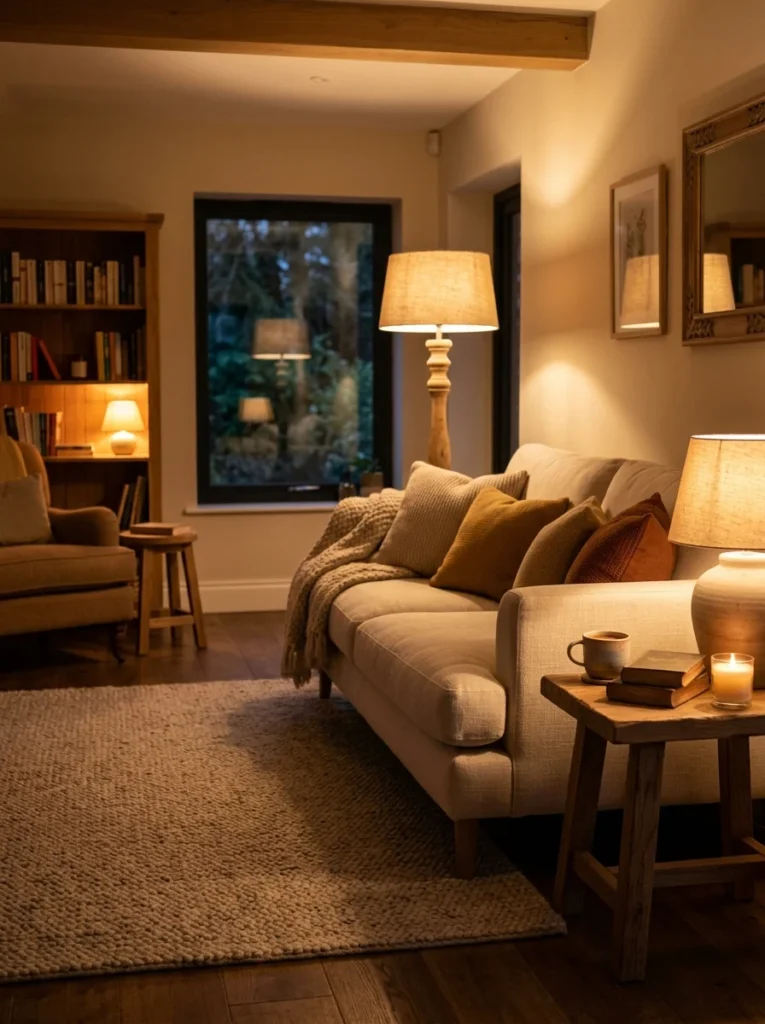
I made the mistake early on of buying daylight-toned bulbs for my living room lamps simply because the packaging said they were brighter, and brighter seemed better at the time. They made the room feel like a hospital waiting area the moment the sun went down. Switching every bulb to warm white, somewhere around 2700K, completely changed the atmosphere without moving a single piece of furniture.
5. Dimmer Switches Are Worth the Small Investment
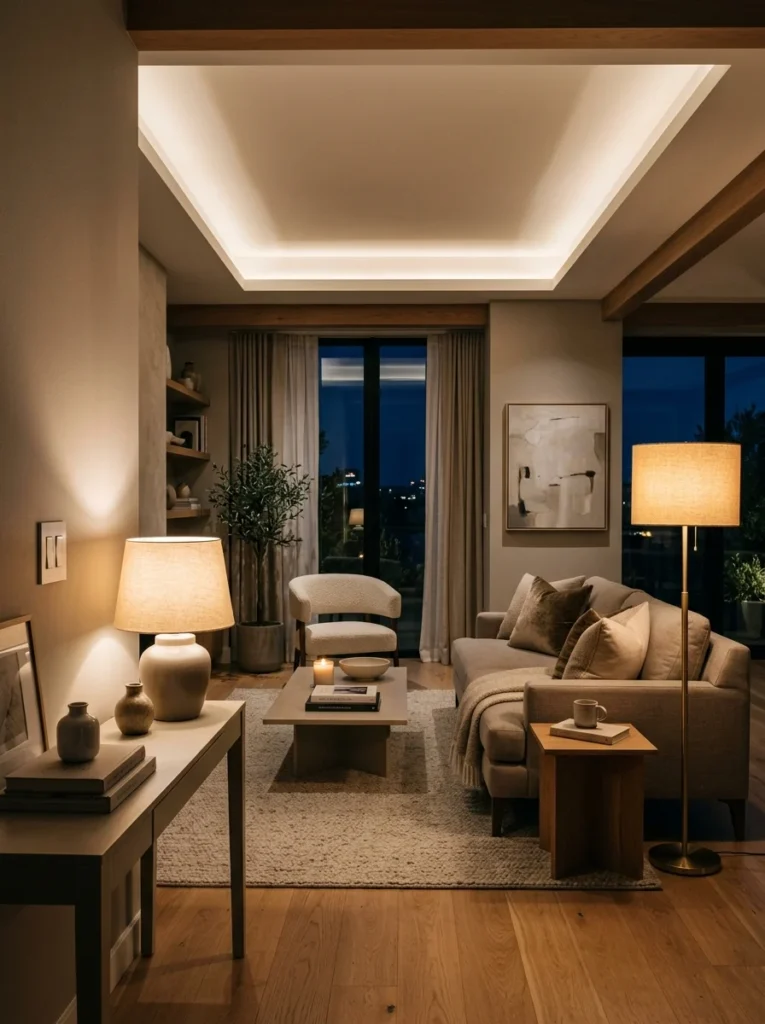
Installing a dimmer on my main overhead light meant I didn’t have to abandon it entirely — I could still flip it on occasionally for cleaning or bright activities, but dial it down for everything else. Even at its lowest setting, it adds a subtle wash of light across the ceiling that works surprisingly well layered underneath the lamps rather than competing with them.
6. Layer Light at Three Different Levels
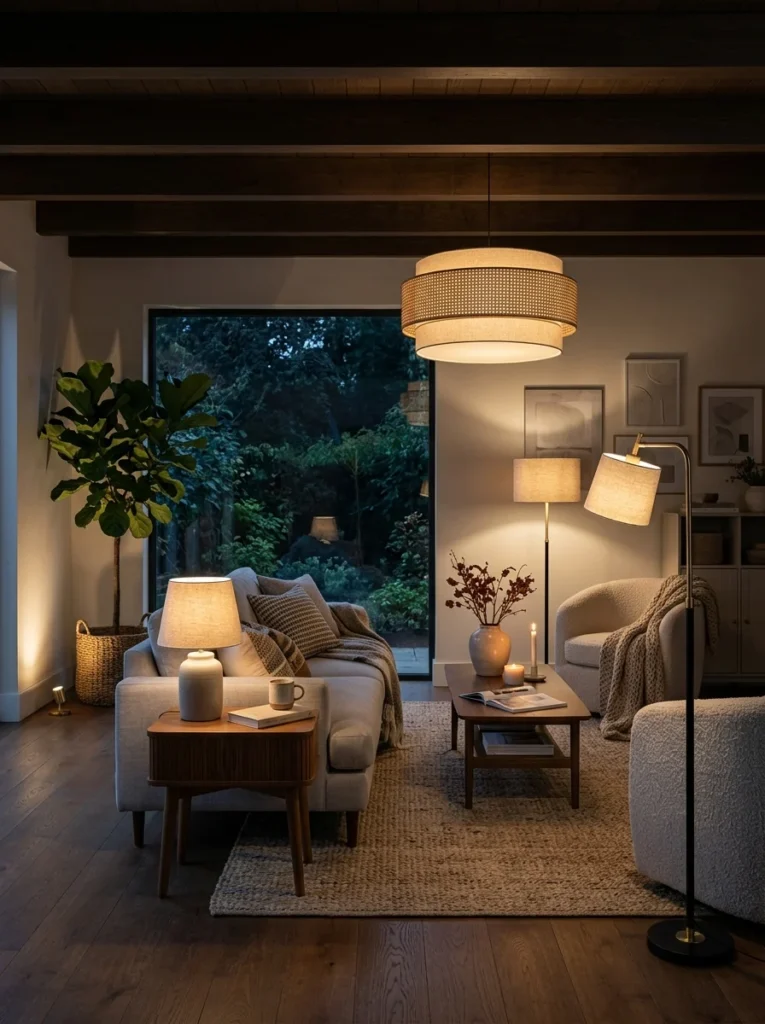
I didn’t fully understand this concept until a friend pointed it out while sitting in my own living room: good lighting usually happens at floor level, mid level, and ceiling level all at once, rather than any single source trying to do everything. A floor lamp near the seating, a table lamp by the console, and a dimmed overhead fixture together create a sense of depth that no single light, however bright, can replicate on its own.
7. Uplighting Behind Furniture Adds Instant Drama
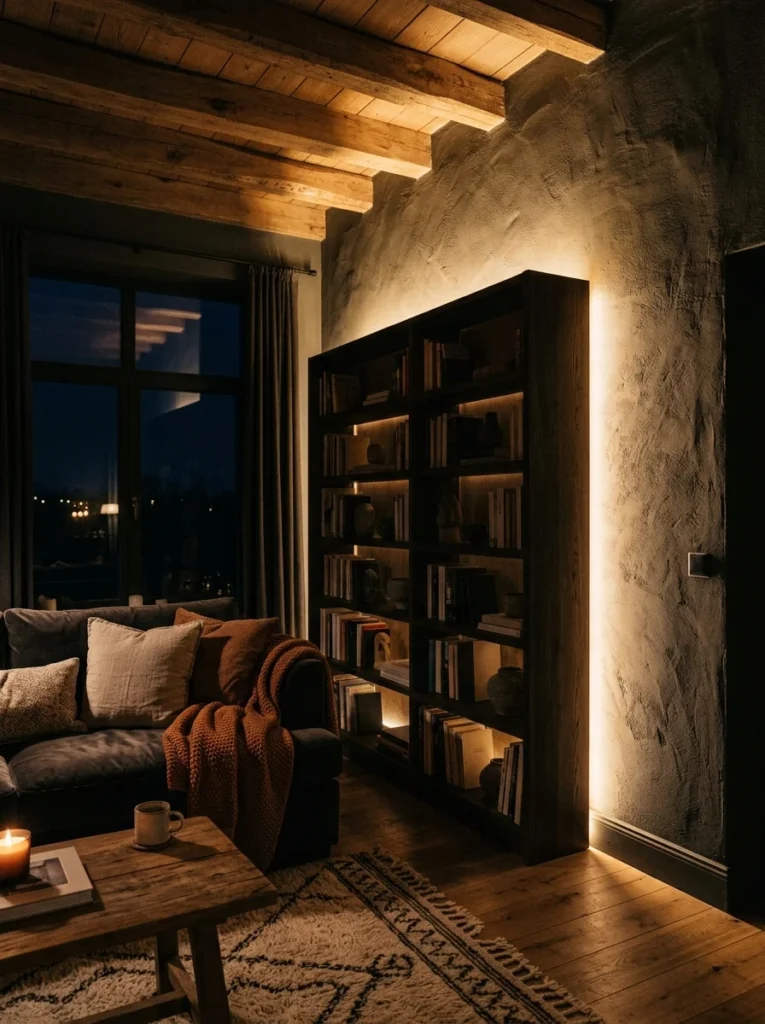
I placed a small uplight behind my bookshelf almost as an experiment, angled so the light washed up the wall rather than out into the room. The soft glow it throws upward changes the entire feel of that side of the room after dark, adding a sense of height and depth that the shelf never had under regular lighting.
8. String Lights Aren’t Just for Bedrooms
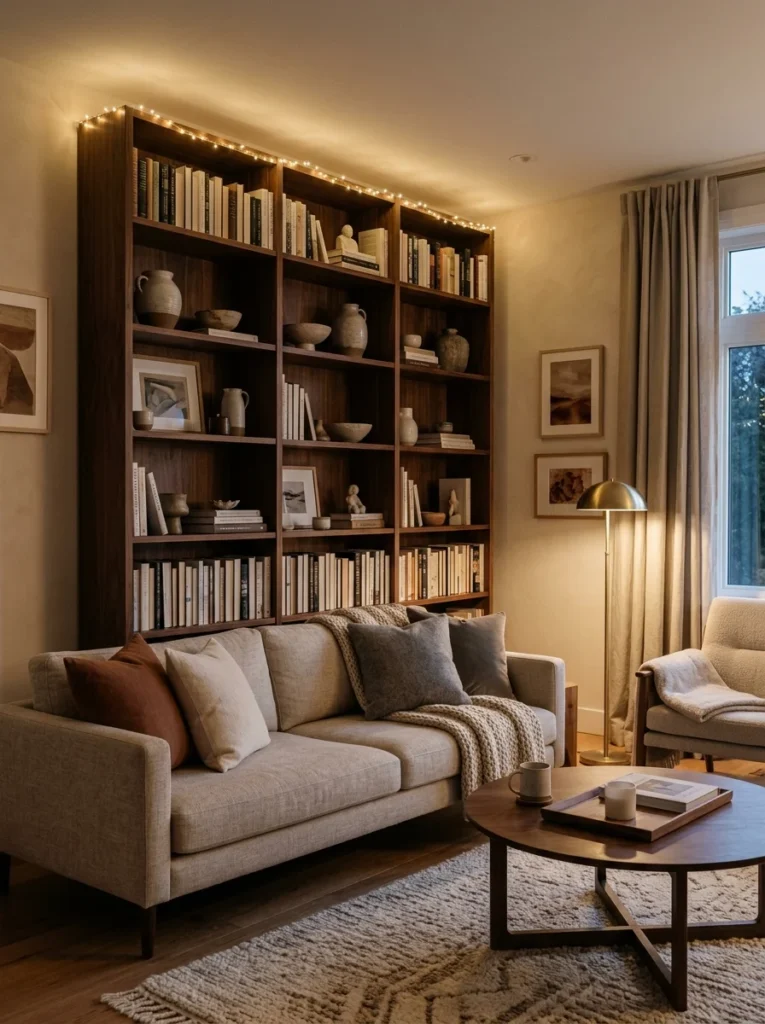
I was genuinely skeptical about adding string lights to an adult living room, assuming they’d read as juvenile or dorm-room-ish. Draped along the top of one shelf with warm-toned, non-blinking bulbs, they turned out to be one of the most complimented details in the entire room, and nobody who’s seen them has ever called them out as out of place.
9. Candles Fill In the Gaps Lamps Can’t
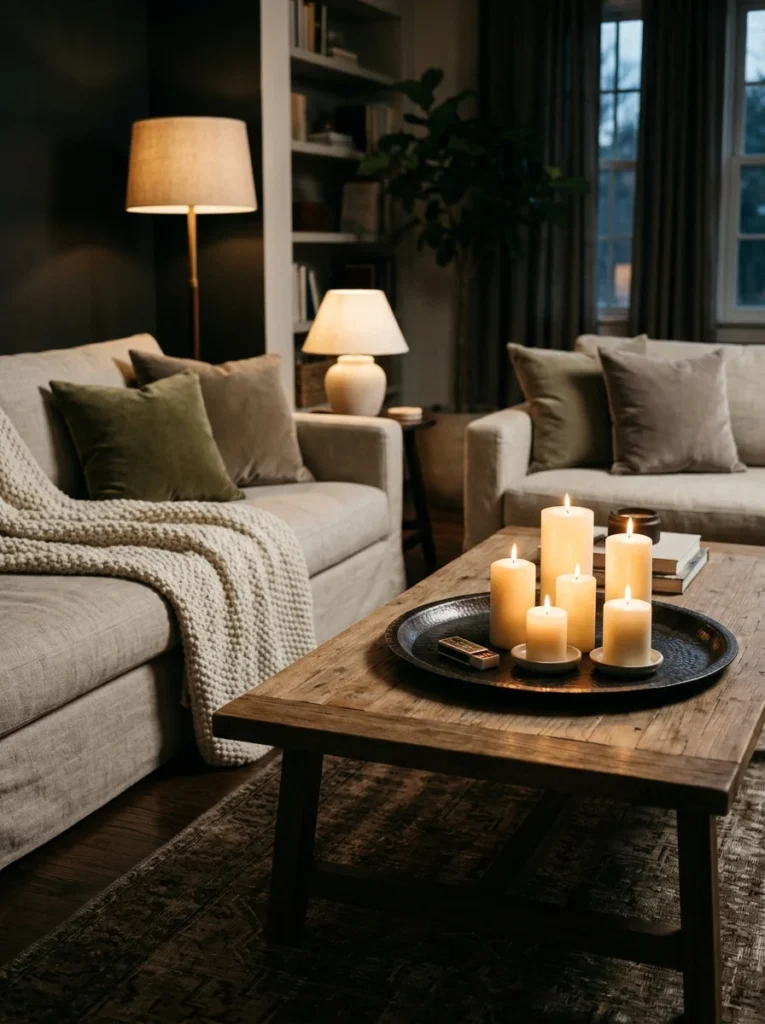
On evenings when I want something even softer than my lamps provide, a few candles clustered on the coffee table fill in whatever shadows remain in a way that feels genuinely cozy rather than deliberately staged. There’s also something about the slight flicker of real flame that no bulb, however warm, quite manages to replicate.
10. Match Lampshade Color to the Mood You Want
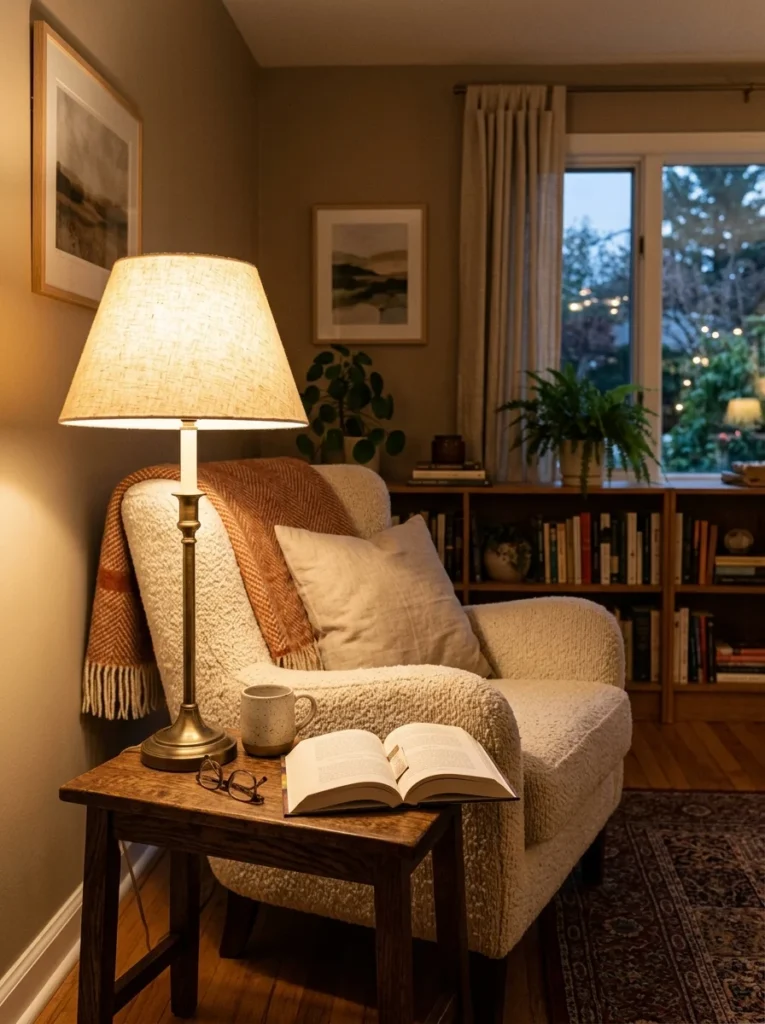
I swapped a stark white lampshade for a cream-colored one on my main reading lamp, and the light it cast changed noticeably from slightly harsh and clinical to warm and inviting. It’s easy to assume the bulb is what determines the tone of light in a room, but the shade filters and colors that light just as much.
11. Position Lamps Near Where You Actually Sit
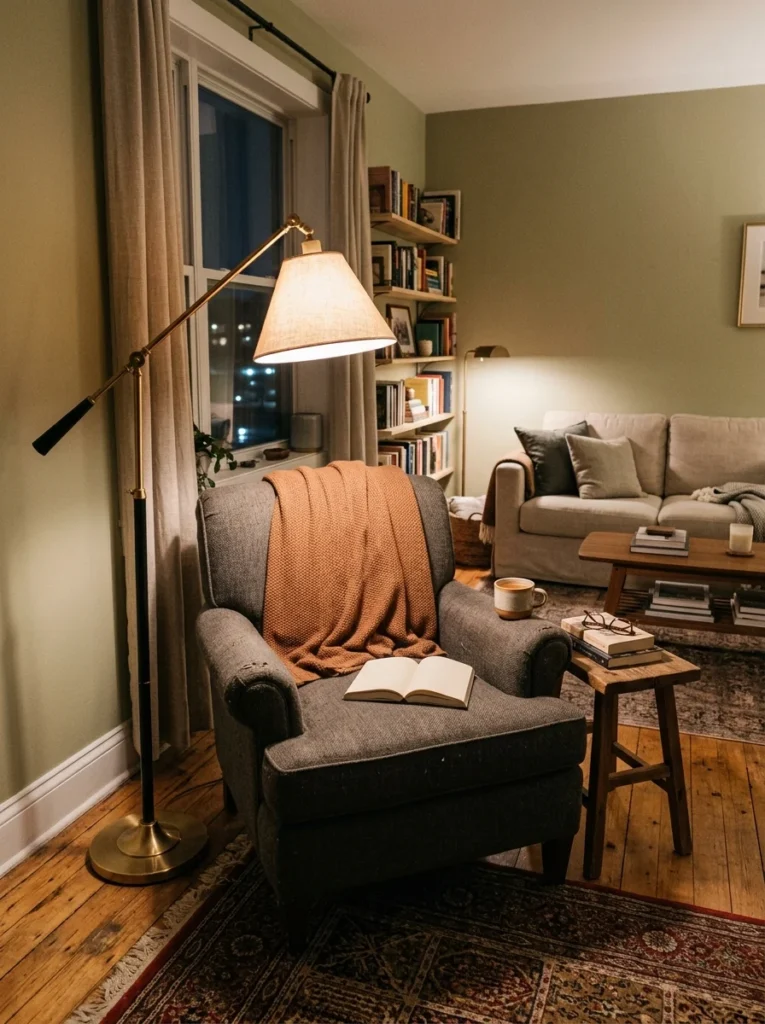
My first floor lamp was placed purely for visual balance in the room rather than any real function, and I realized months later that I had never once actually used it while sitting anywhere nearby. Once I moved it directly next to my reading chair instead of the opposite corner, it finally earned its spot and became a light I reach for daily rather than one that just looked nice from across the room.
12. Use a Reading Lamp With an Adjustable Arm
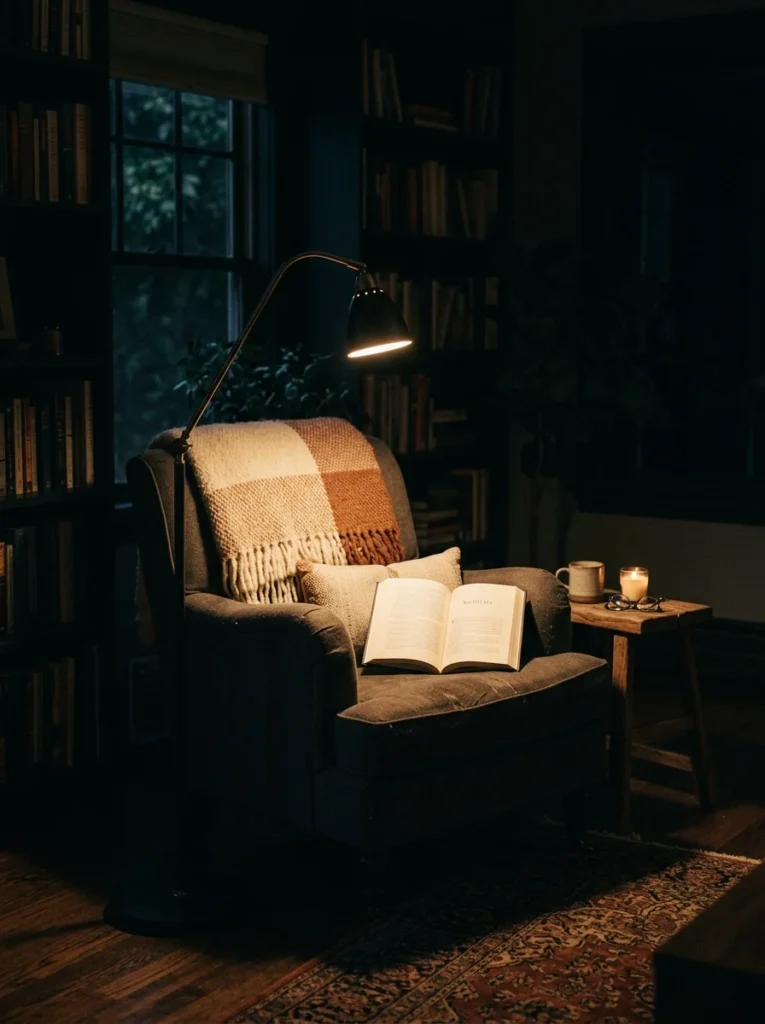
For the specific spot where I actually read most evenings, a lamp with a bendable or adjustable arm let me direct the light exactly onto the page without flooding the whole corner with brightness. It’s a small, inexpensive detail, but it made reading in that chair noticeably more comfortable than it had been under a fixed, static lamp.
13. Don’t Ignore Natural Light During the Day
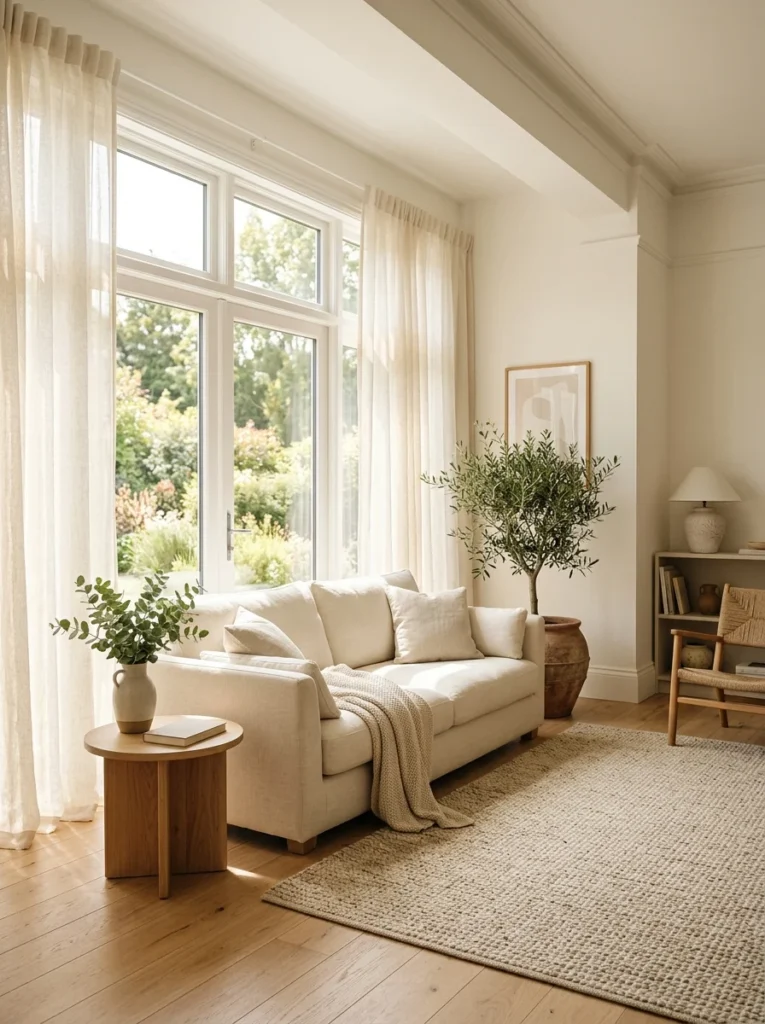
Before I got fixated on artificial lighting, I hadn’t noticed how much my heavy blackout-style curtains were blocking daylight even during the middle of the afternoon. Switching to a lighter, sheer curtain let in significantly more natural light throughout the day, which meant I didn’t need to rely on lamps until much later in the evening than before.
14. Mirrors Amplify Whatever Light Source They Face
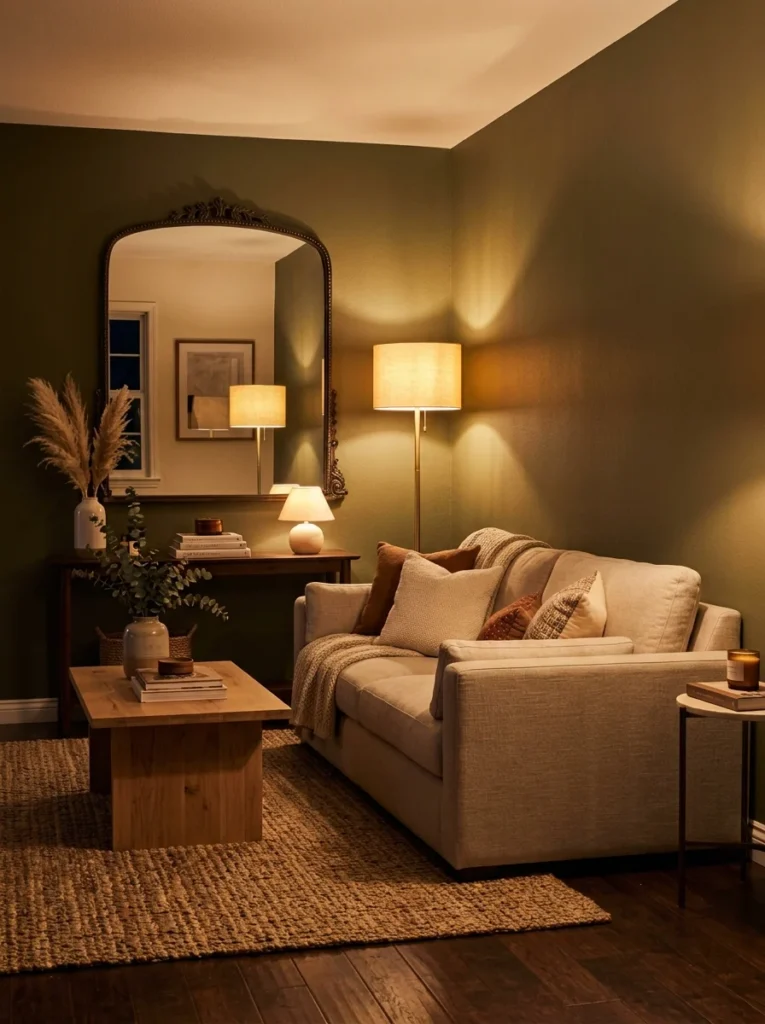
Placing a mirror directly across from my brightest lamp bounced that light further into the room, essentially making one lamp do the work of nearly two. It’s a trick that costs nothing extra if you already own a mirror somewhere in the house, and it’s one of those changes that’s hard to notice consciously but easy to feel.
15. Group Lamps in Odd Numbers for Better Balance
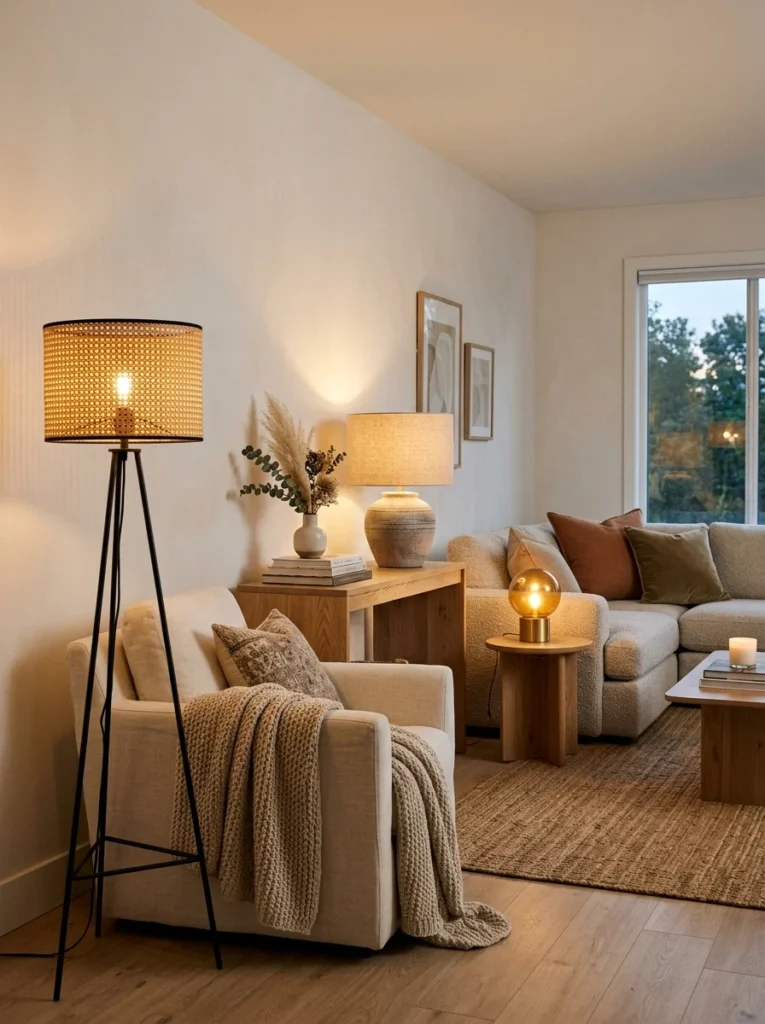
This sounds like pure decor theory, but I noticed it firsthand in my own space — two lamps positioned on opposite ends of a room can feel oddly symmetrical and a little stiff, almost too deliberate. Adding a third, smaller light source somewhere in between the two main ones made the whole layout feel more relaxed and naturally arranged rather than obviously planned.
16. Smart Bulbs Make Adjusting Mood Effortless
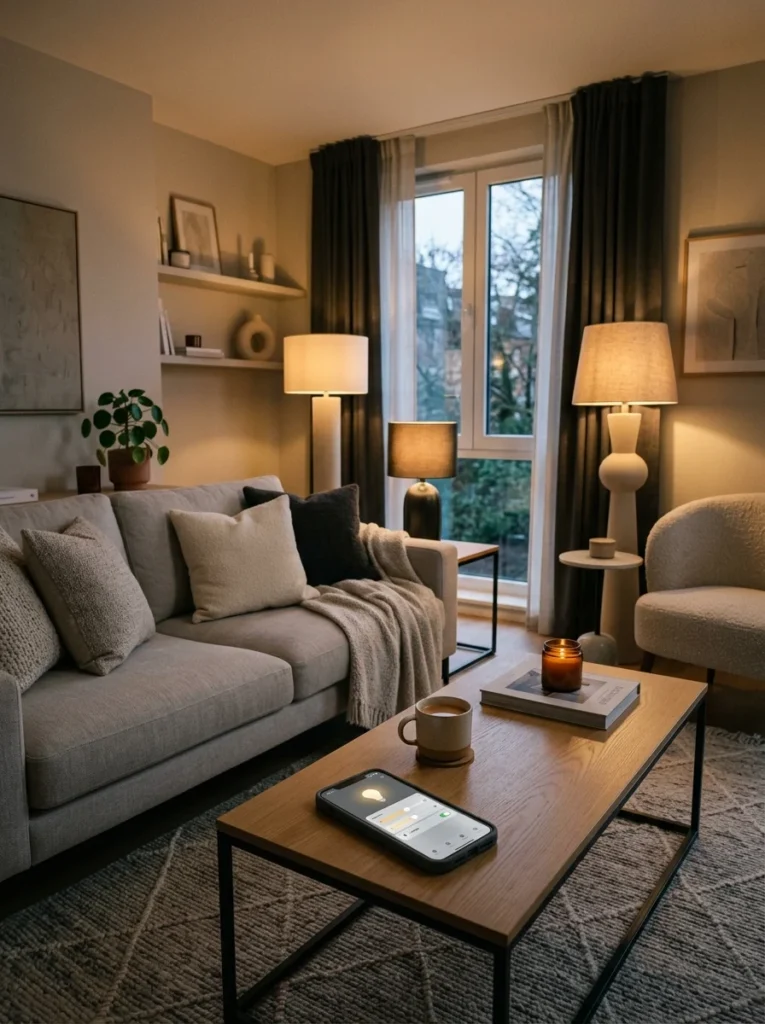
I resisted smart bulbs for a long time, assuming they were an unnecessary gadget aimed at people who liked gadgets for their own sake. Being able to shift instantly from bright, cool-toned light while cleaning to a warm, dim setting for movie nights, all from my phone without getting up, turned out to be genuinely useful in a way I hadn’t expected rather than a novelty that would wear off.
17. Pendant Lights Can Replace a Boring Overhead Fixture
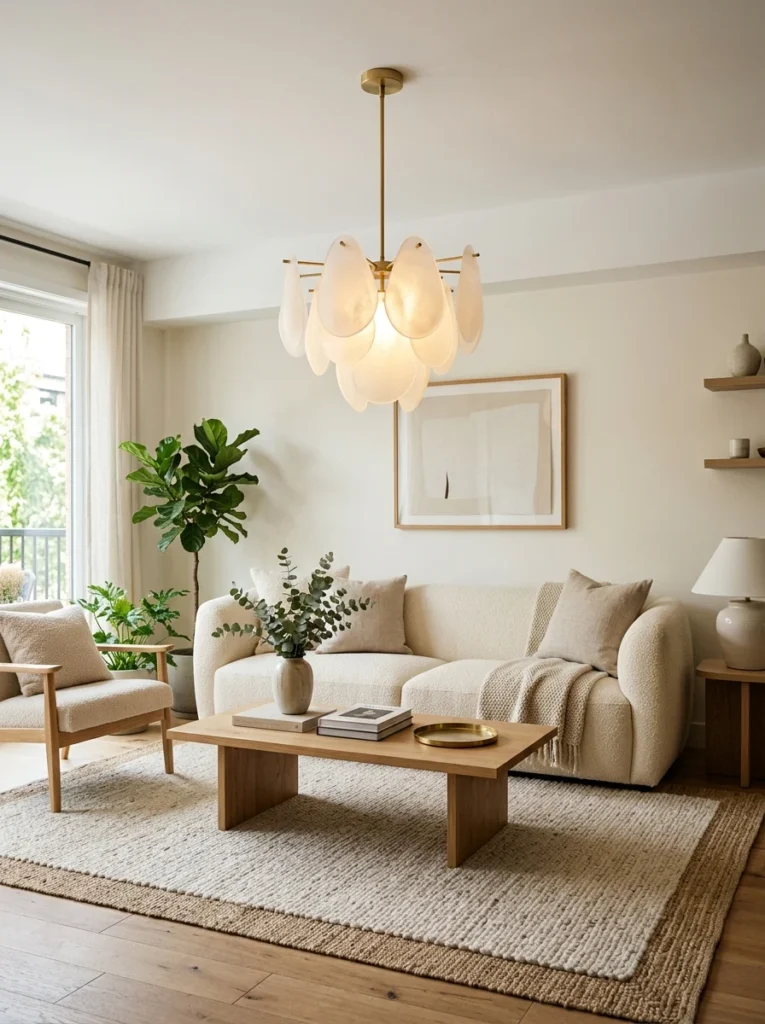
Swapping my builder-grade ceiling fixture for a simple pendant light was one of the more affordable upgrades I made, since it used the existing wiring and didn’t require an electrician. It changed the character of the entire room far more than I anticipated for something that took less than an hour to install.
18. Accent Lighting for Art or Shelves Adds Focus
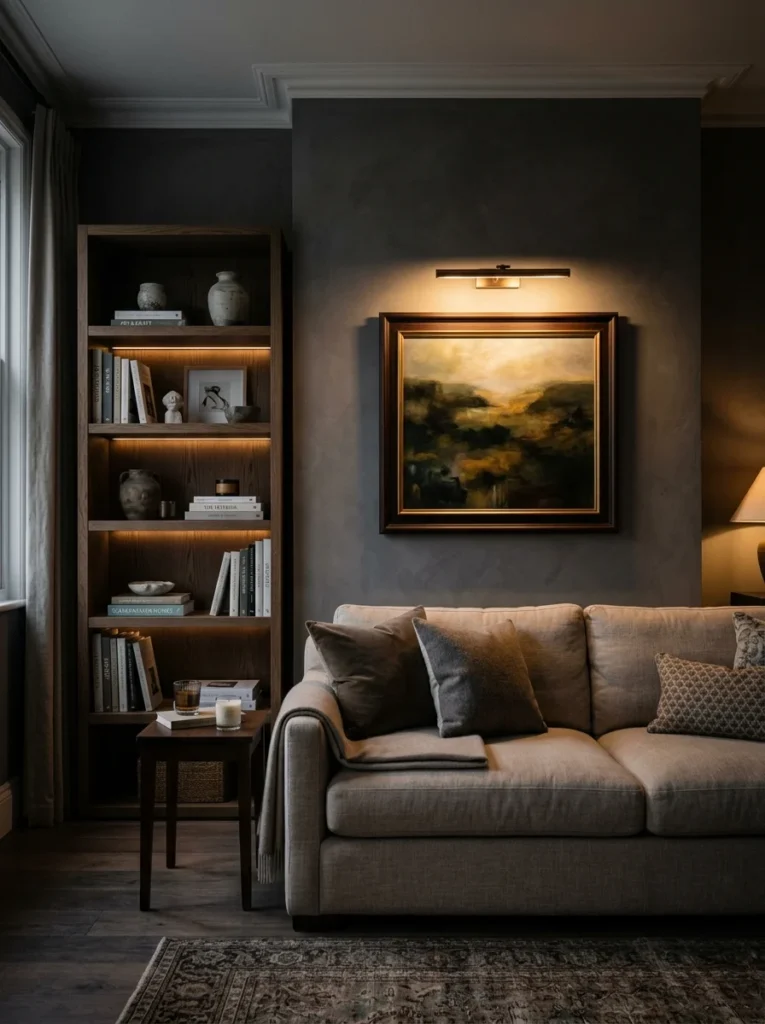
A small clip-on light aimed at a piece of art I particularly like gives that section of the wall a slight spotlight effect once the sun goes down. It draws the eye there specifically, rather than leaving the whole room evenly and somewhat forgettably lit from corner to corner, which is exactly the flat feeling I was trying to move away from in the first place.
19. Turn Off the Big Light and See What’s Missing
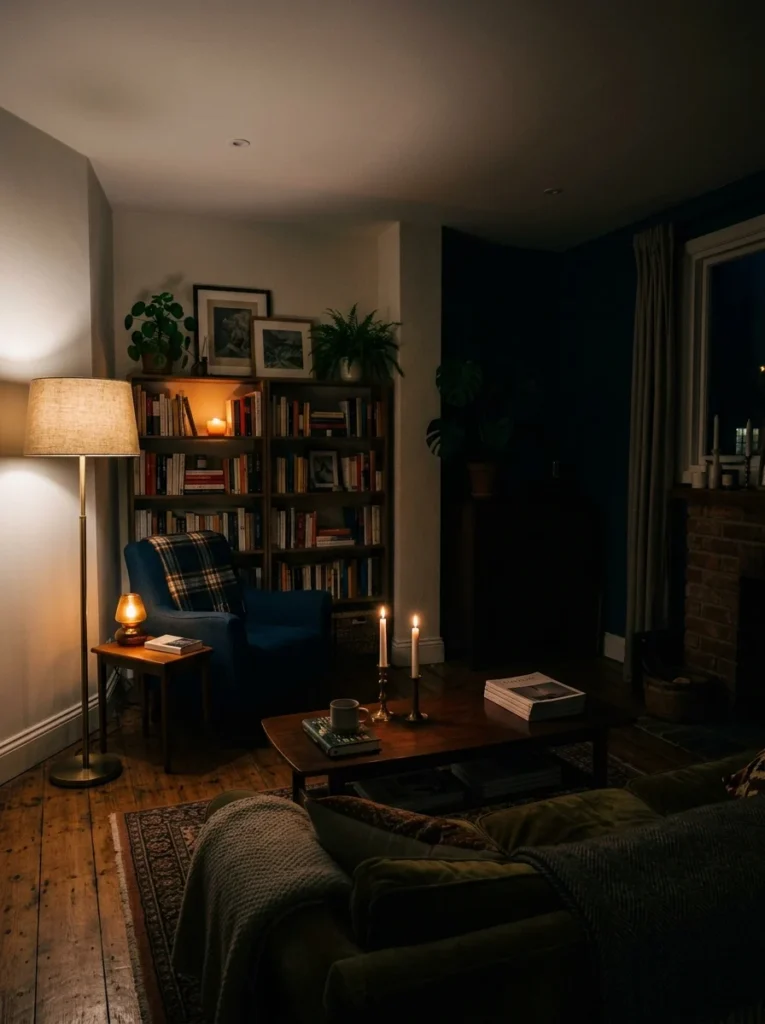
This became my go-to test for any new lighting change, and it’s the simplest one on this whole list. I turn off the main overhead light and just sit in the room for a few minutes, paying attention to where my eyes land and where they don’t. Wherever it still feels dark, uneven, or a little empty is exactly where the next lamp, candle, or accent light needs to go next.
A Few Mistakes I’d Warn You About Before You Start
Looking back at the whole process, there are a handful of mistakes that cost me either money or time, and I’d rather you skip them entirely. The first was buying several lamps all at once from the same store because they were on sale, without testing how their light actually looked once they were plugged in around the room. Two of them turned out to have a slightly cool, almost blue-ish tint despite being labeled warm white, and I ended up returning both. Now I always test a single bulb in the actual room before committing to a matching set.
The second mistake was underestimating how much cord management would matter. With four or five separate lamps instead of one overhead fixture, I suddenly had cords running along baseboards and behind furniture that hadn’t been a problem before. Cord clips and a couple of short extension cords solved this, but it’s worth planning for before you’ve already got lamps scattered everywhere.
The third, and probably the most avoidable, was assuming more light sources automatically meant a better room. For a short period, I had every lamp, the overhead light, and string lights all on simultaneously, and the room went right back to feeling flat and overly bright, just from a different combination of sources. The actual goal isn’t maximum light — it’s the right light in the right places, turned on selectively depending on the time of day and what I’m actually doing in the room.
Where This Leaves Me Now
My living room today runs almost entirely on lamps, a pendant light, and the occasional candle. The overhead light gets used maybe once a week, usually just for cleaning or when I’ve dropped something small on the floor and need to actually see it. It took longer than I expected to get here, mostly because I kept assuming one more piece of furniture, one more shelf, or one more rug would fix the flatness I felt that first evening. It never was the furniture. If your living room still feels a little cold or unfinished even though everything looks right on paper, I’d start by turning off the main light and paying close attention to what’s genuinely missing from there. More often than not, the answer isn’t something you need to buy — it’s just a lamp you already own, placed somewhere it hasn’t been tried yet.