
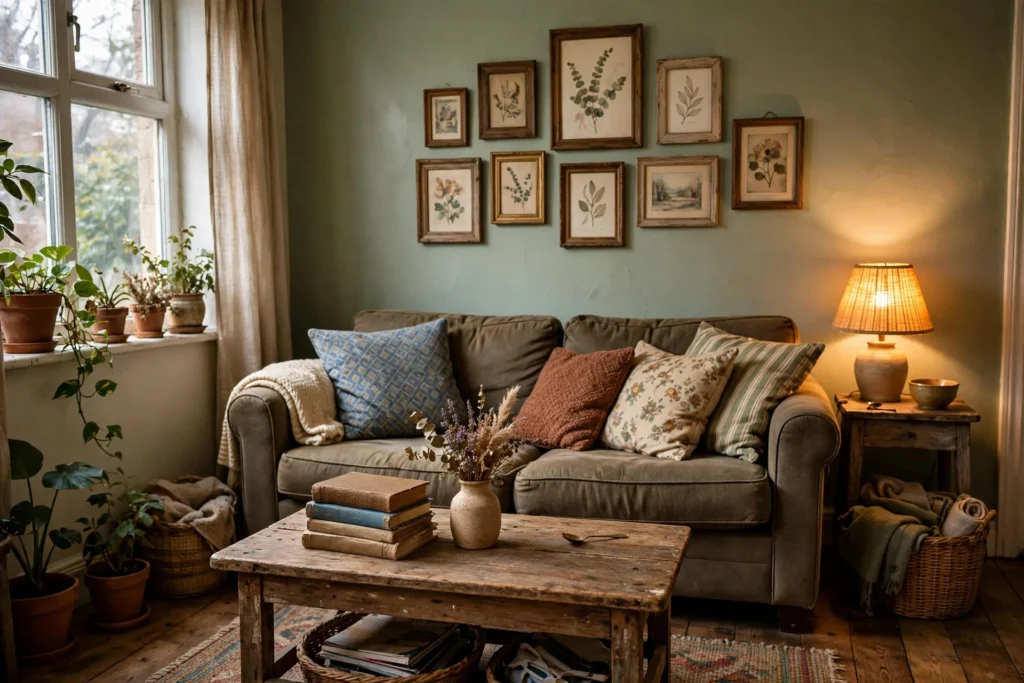
Our first flat was so small that the sofa nearly touched the kitchen counter, and our decorating budget was even smaller. I spent months thinking a nice home needed new furniture, but it turns out that small home decor ideas on a budget work best when you start with what you already have and change one small thing at a time. Nothing here needs a loan, a skip, or a weekend lost to flat-pack furniture.
I have tried every idea in this list in one small home or another, and I have made most of the mistakes so you do not have to. Some of these cost nothing at all, most cost less than a takeaway dinner, and a few need a tin of paint and a free afternoon. Pick one, try it this weekend, and see how different the same room can feel.
1. Small Home Decor Ideas on a Budget That Start with Paint
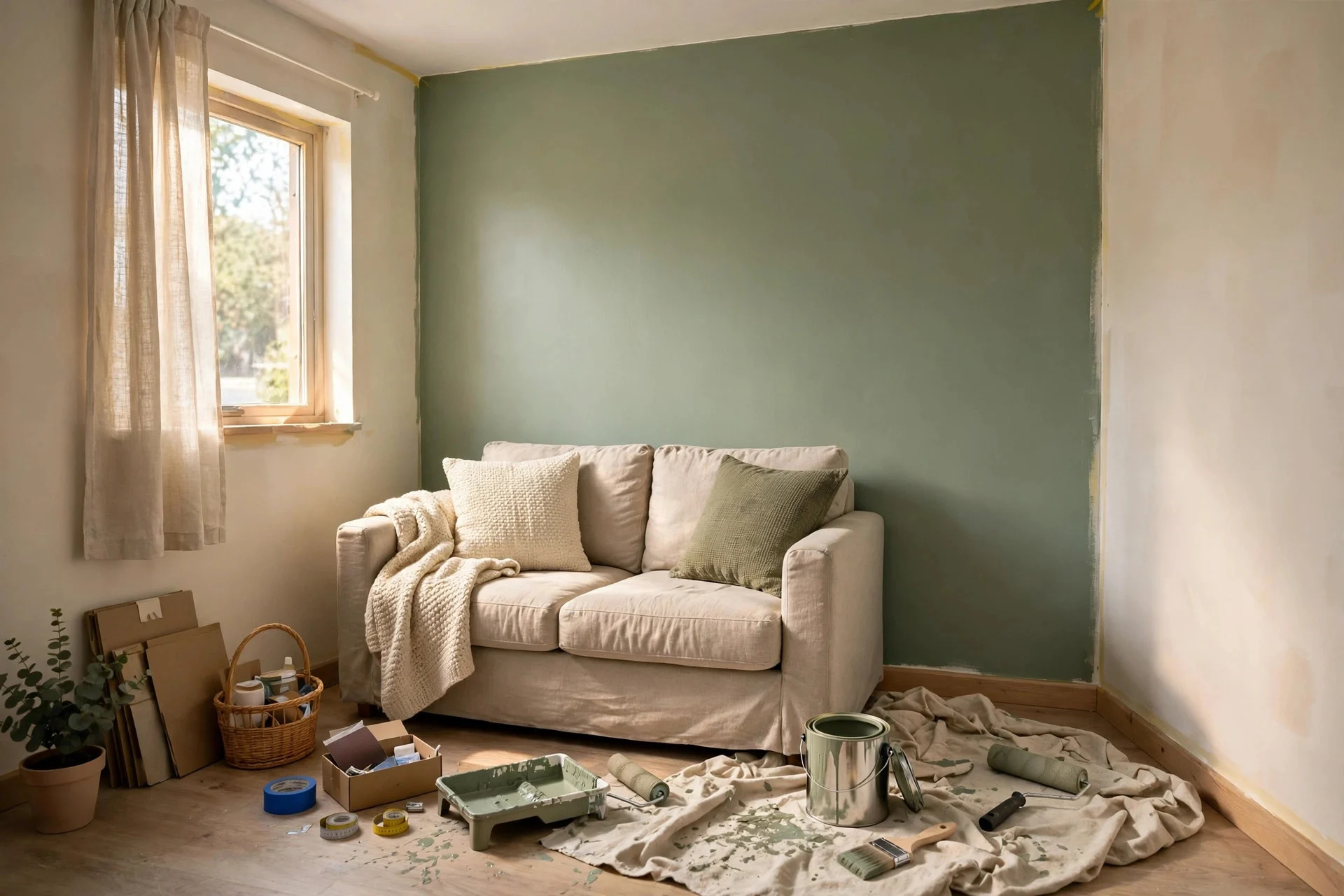
Paint is the cheapest way I know to change how a room feels, and one wall is usually enough. I painted the wall behind our sofa a soft sage green with a tester pot, and the whole living room suddenly looked planned instead of thrown together. A single colour pulls the sofa, the cushions, and the pictures into one story.
Start by picking the wall you look at most, usually the one behind the sofa or the bed. Clean it, tape the edges, and use a small roller so you get a smooth finish without brush marks. Two thin coats beat one thick coat.
Try this: paint one wall this weekend and leave the rest white. If you hate it, a tin of white paint fixes it in an afternoon, so the risk is tiny and the payoff is huge.
2. Build a Gallery Wall from Thrifted Frames
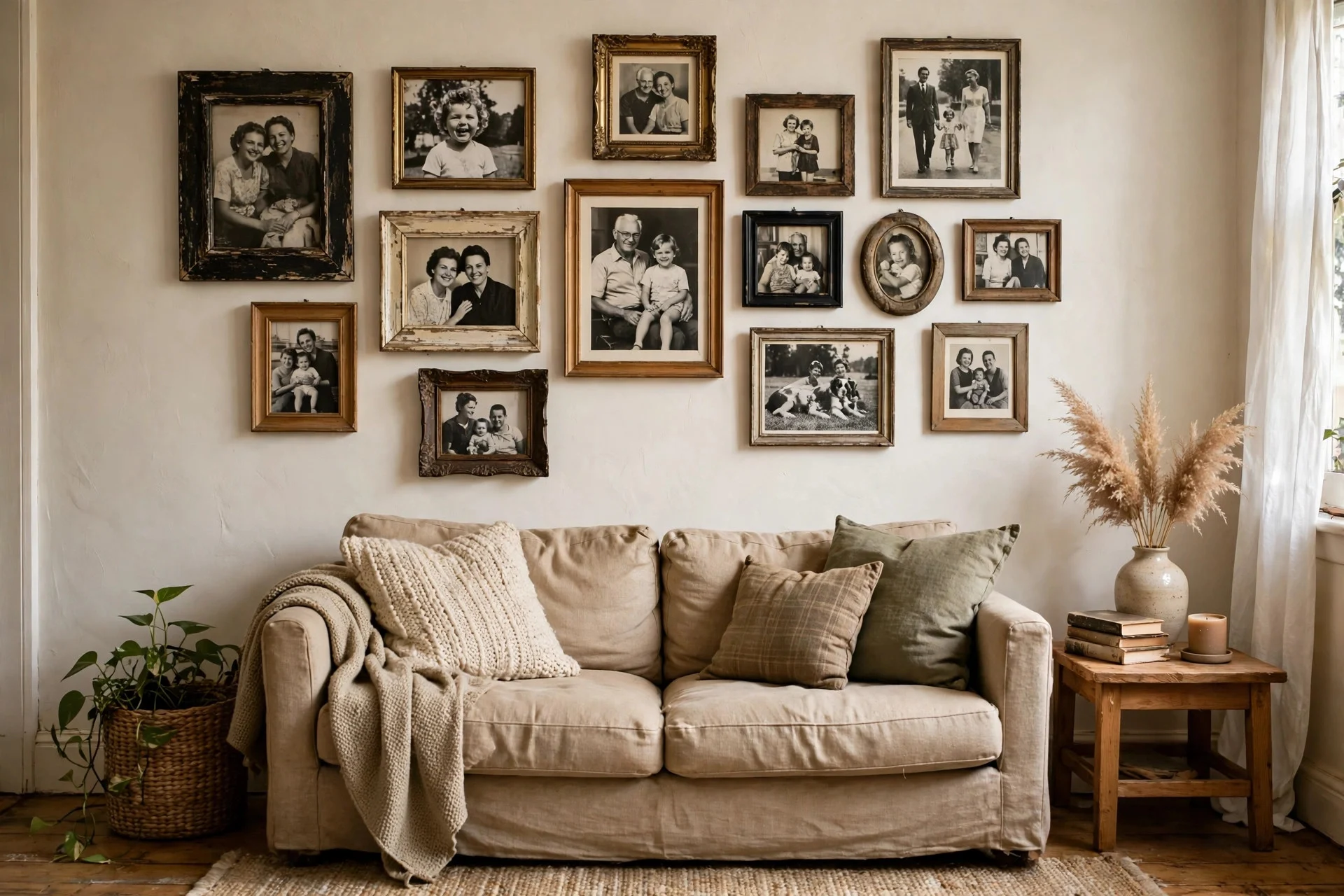
A gallery wall looks expensive, but mine cost less than a pizza because every frame came from charity shops and car boot sales. The trick is mixing sizes and finishes on purpose: a gold frame next to a plain black one looks collected, not careless. I used black and white prints and old postcards.
Lay the frames out on the floor first and move them around until the shape feels balanced. Start with the biggest frame slightly off centre, then fill in around it, keeping about two finger widths between frames. Hang the whole thing at eye level, not up near the ceiling, or it will feel like it is floating away from the sofa.
Try this: gather five frames this week, even if they do not match. Lay them on the floor, take a photo of the layout you like, then hang them in that exact order.
3. Swap Your Cushion Covers, Not Your Sofa
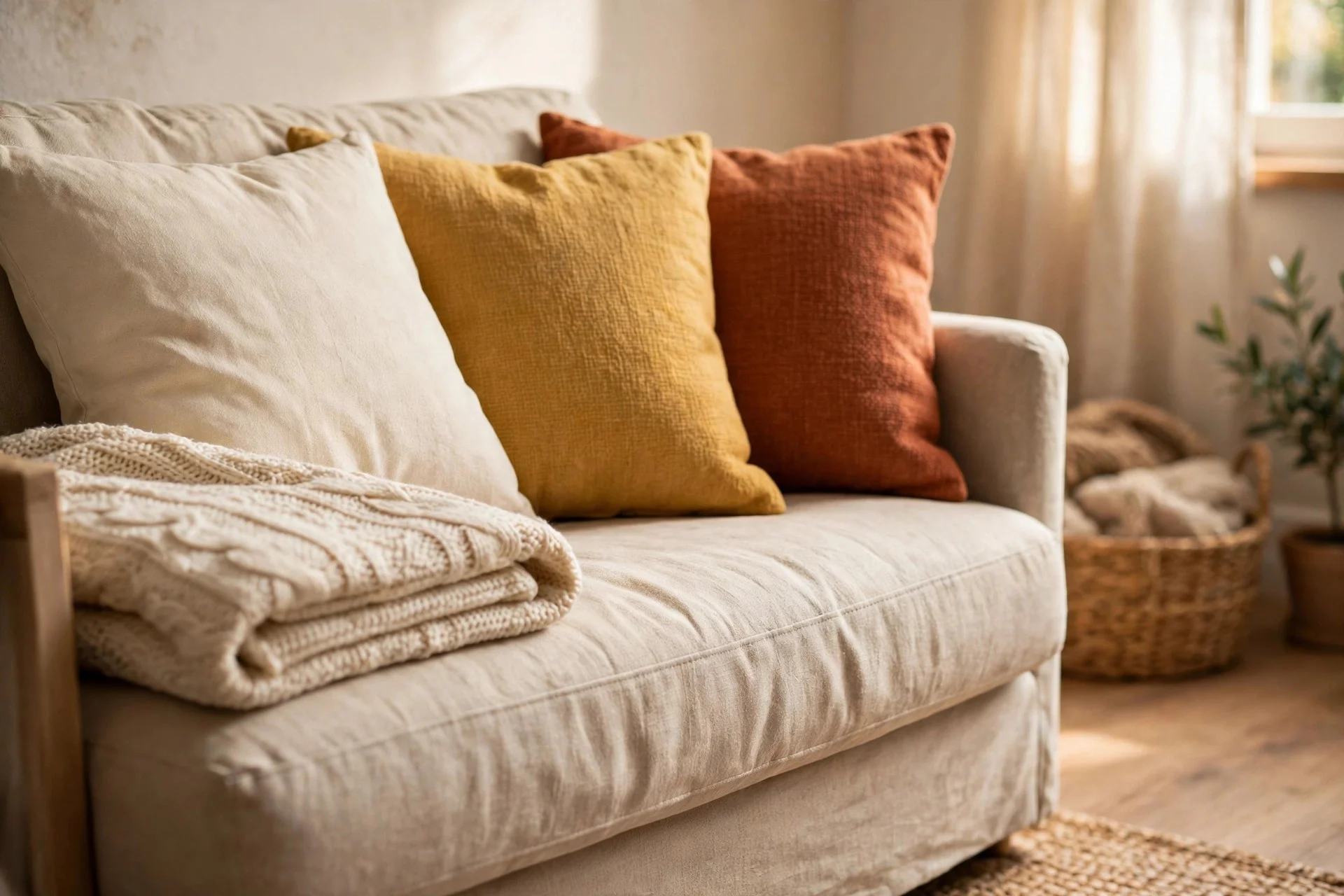
Our old sofa was fine, just tired, and I nearly replaced it before a friend pointed out that the cushions were the problem. New covers in cream, mustard, and rust cost me less than one month of the sofa payments I was about to take on, and the sofa looked like a different piece of furniture.
Pick two plain covers and one with a pattern, all in colours already in your room. Wash them first so they sit flat, then stuff the old inner cushions in and karate-chop the tops to get that soft dent in the middle. I tried four patterned covers at once and the sofa looked like a jumble sale, so trust me on the two-plain-one-pattern rule.
Try this: change just the covers and add one folded throw over one arm. Stand back and see if the sofa still needs replacing — mine did not.
4. Try Peel-and-Stick Wallpaper on One Wall
I was scared of wallpaper because my mum still talks about steaming it off a wall in the nineties, but peel-and-stick paper is a different thing entirely. I put a floral strip behind our bed, and it took one evening, no paste, and no mess on the carpet.
Measure the wall, then buy one roll more than you think you need, because matching the pattern eats up paper fast. Start at the top, peel a little at a time, and smooth it down with a dry cloth as you go. If a bubble appears, lift the edge gently and smooth it again instead of pressing harder, which only stretches the paper.
Try this: paper the wall behind the bed or the sofa only. One bold wall gives you the drama, and the rest of the room stays calm and cheap to paint.
5. Rearrange the Furniture You Already Own
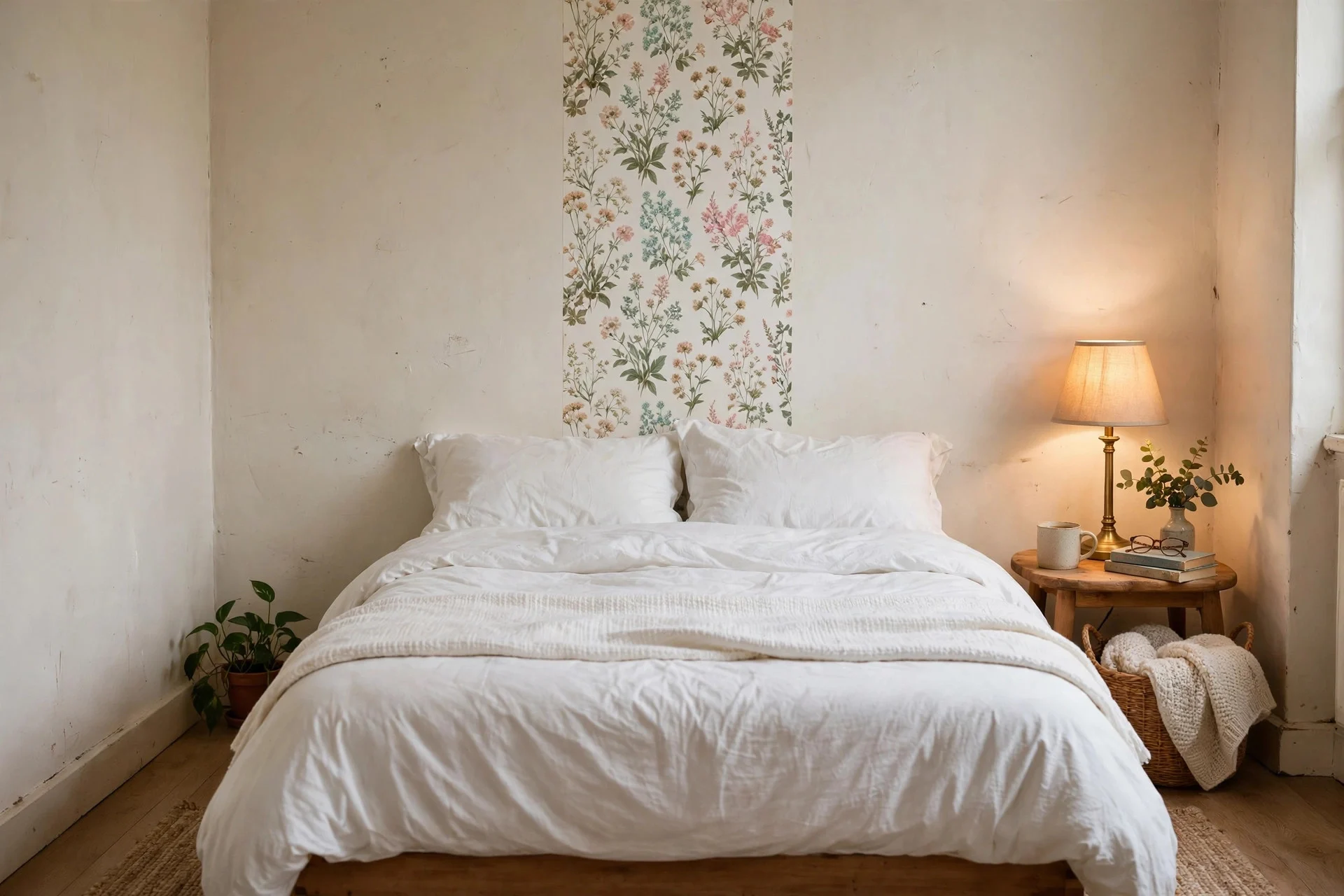
This one costs nothing, and it is the idea I reach for first whenever a room feels stale. I once spent a whole Saturday moving our sofa, and by Sunday I could not believe it was the same flat. Angling the sofa toward the window gave us a reading corner we had missed for years.
Start by taking a photo of the room as it is now. Leave a clear path to the door, pull chairs away from the walls, and try floating the sofa with a small table behind it. Change one thing, live with it for a day, then move the next.
Try this: pull your sofa six inches off the wall and angle one chair toward the light. That tiny shift often makes a small room feel bigger and much more inviting.
6. Put Up DIY Floating Shelves
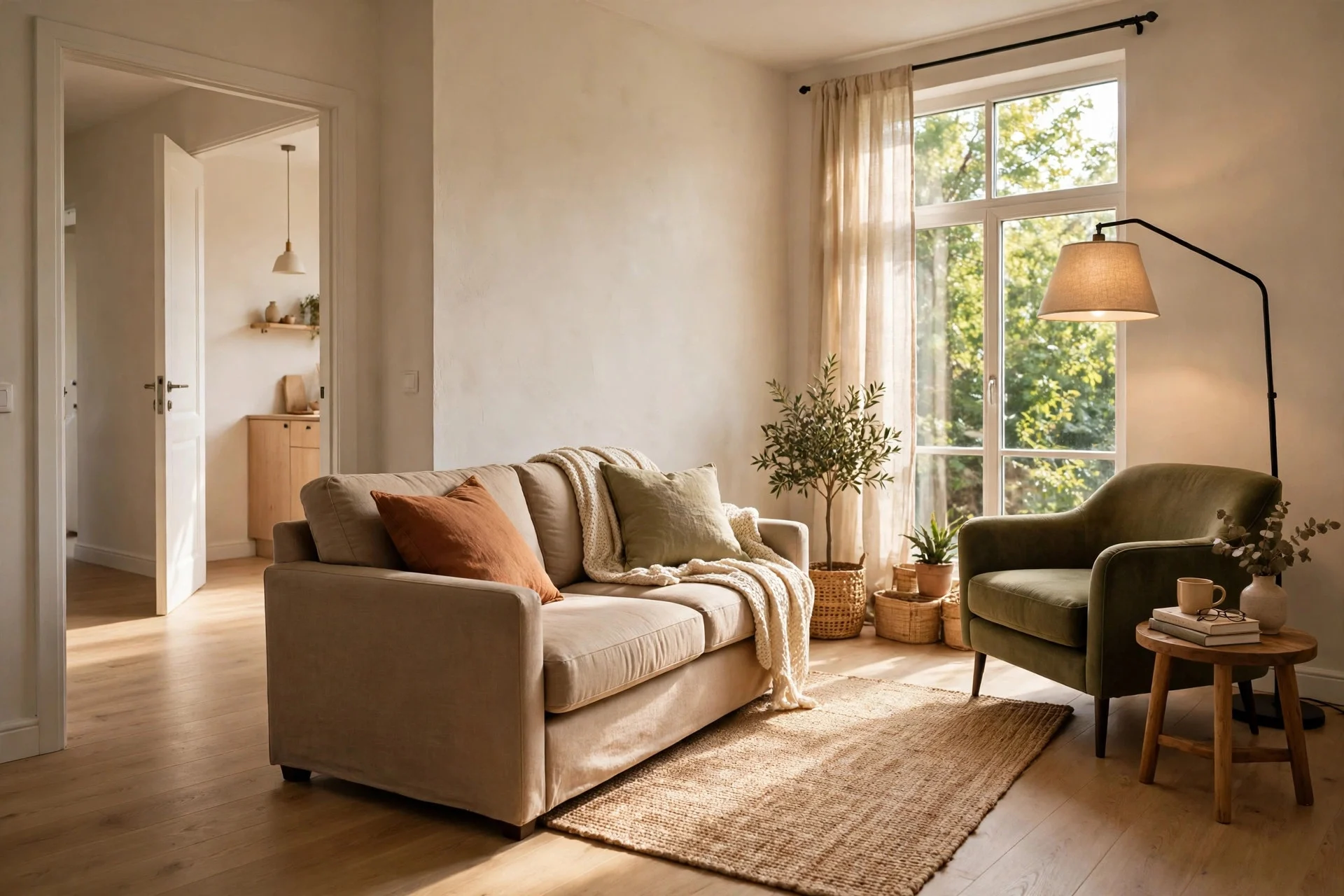
Bare walls make a small home feel unfinished, and floating shelves fix that for the price of two planks and a few brackets. I put up a pair in our kitchen, and suddenly the mugs, jars, and a small plant had a home instead of crowding the counter. The shelves hold the clutter and show off the pretty things at the same time.
Pick a short, empty stretch of wall and check for pipes and wires before you drill anything. Use a spirit level, mark your holes in pencil, and fix the brackets into the wall plugs, not just the plaster. Put the heavy jars low and leave some empty space.
Try this: fit one shelf this weekend and style it with three things you already own — a mug, a jar, and a plant. Add a second shelf only if the first one earns its keep.
7. Hang a Secondhand Mirror to Bounce the Light
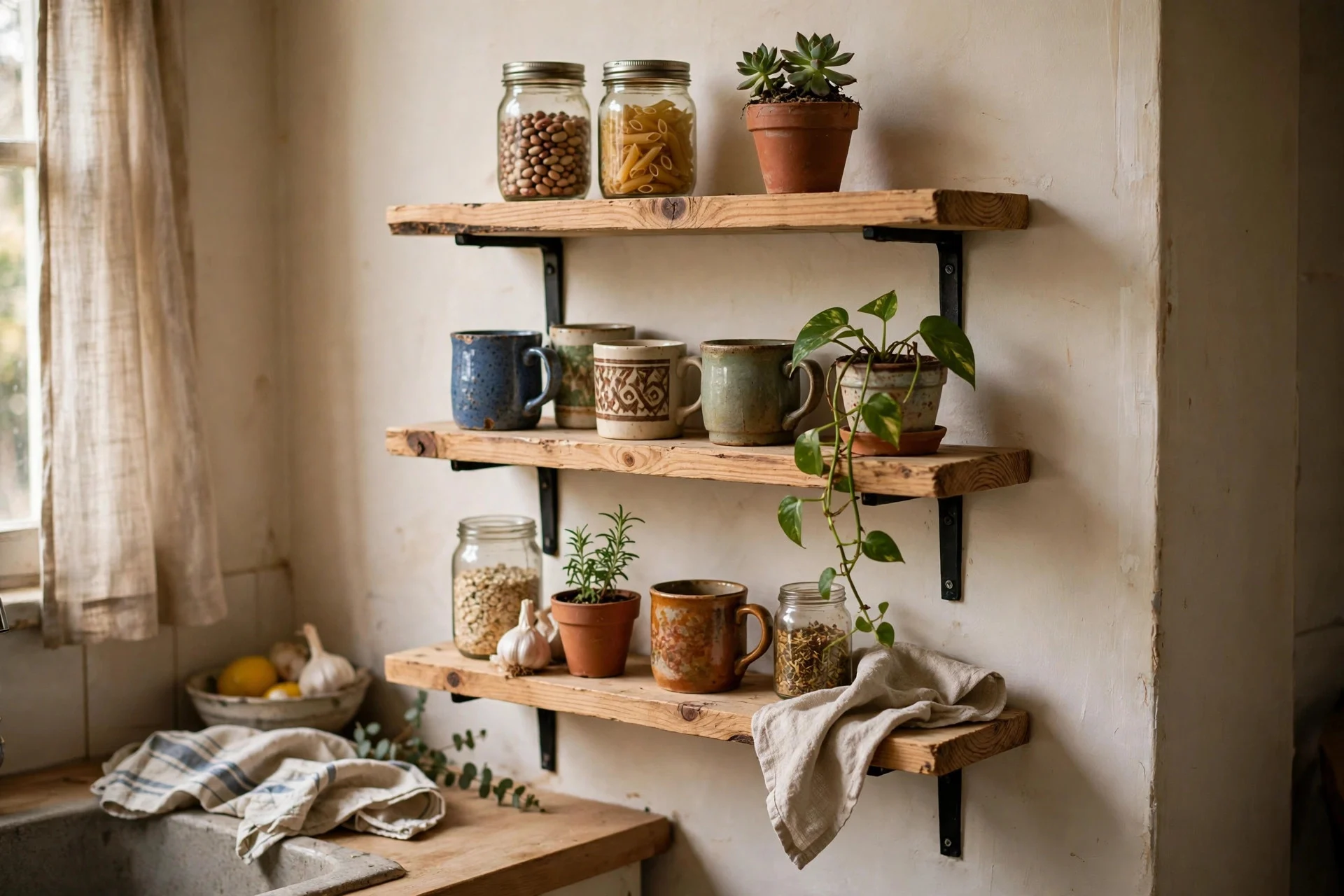
A big mirror is the oldest small-room trick I know, and secondhand ones are everywhere for a few pounds. I found an arched mirror at a car boot sale, leaned it against the wall opposite our window, and the room doubled in light overnight.
Hang or lean the mirror where it reflects a window, a lamp, or a plant, never a blank wall or a pile of laundry. Check the fixings can take the weight, because old mirrors are heavier than they look, and I once hung one on a picture hook that bent within a week. If you lean it, make sure the bottom sits flat and it cannot slide.
Try this: prop a mirror opposite your brightest window for a day before you fix it up. If the light does not improve, move it until it does — the right spot is worth hunting for.
8. Fill the Corners with Cheap Plants
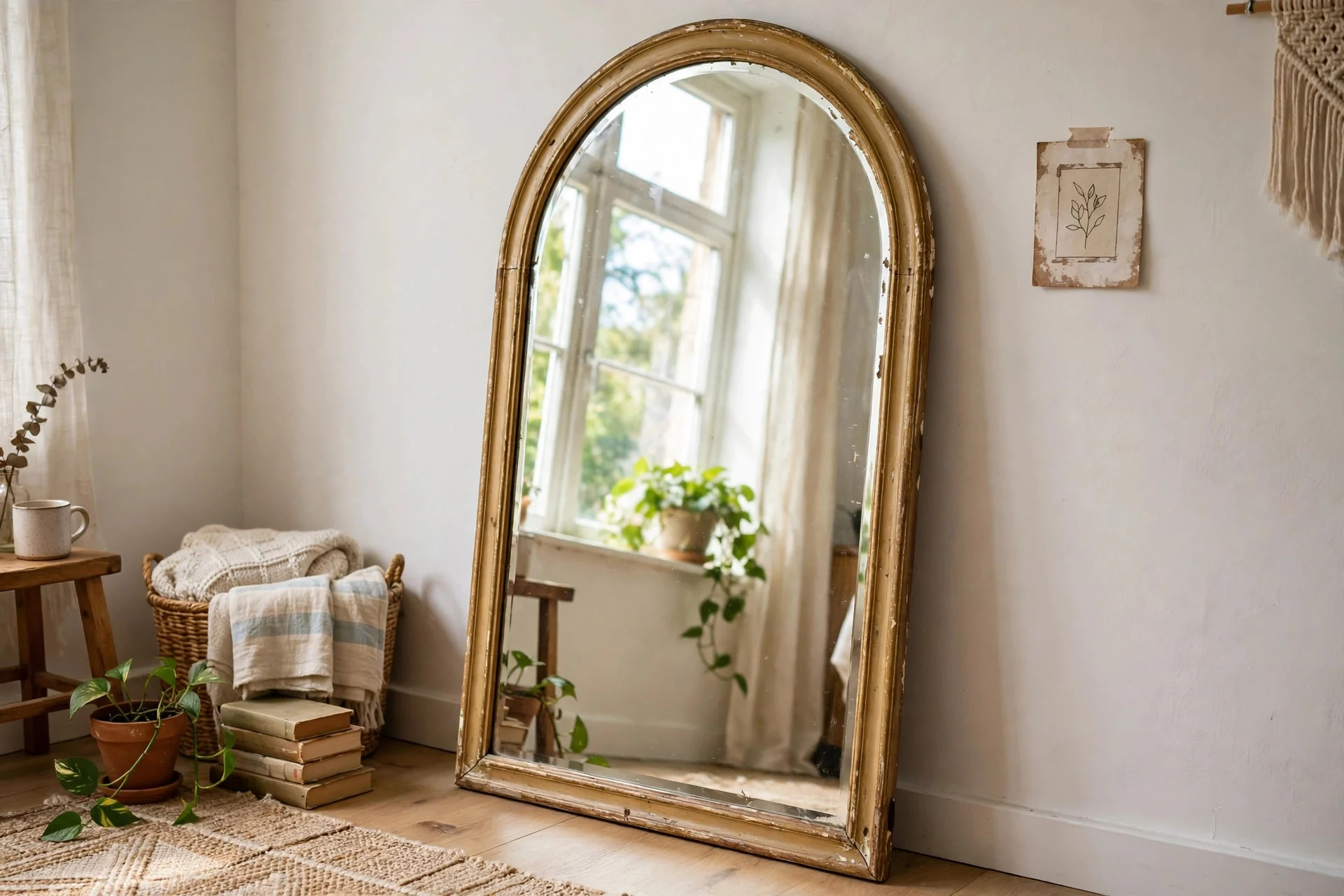
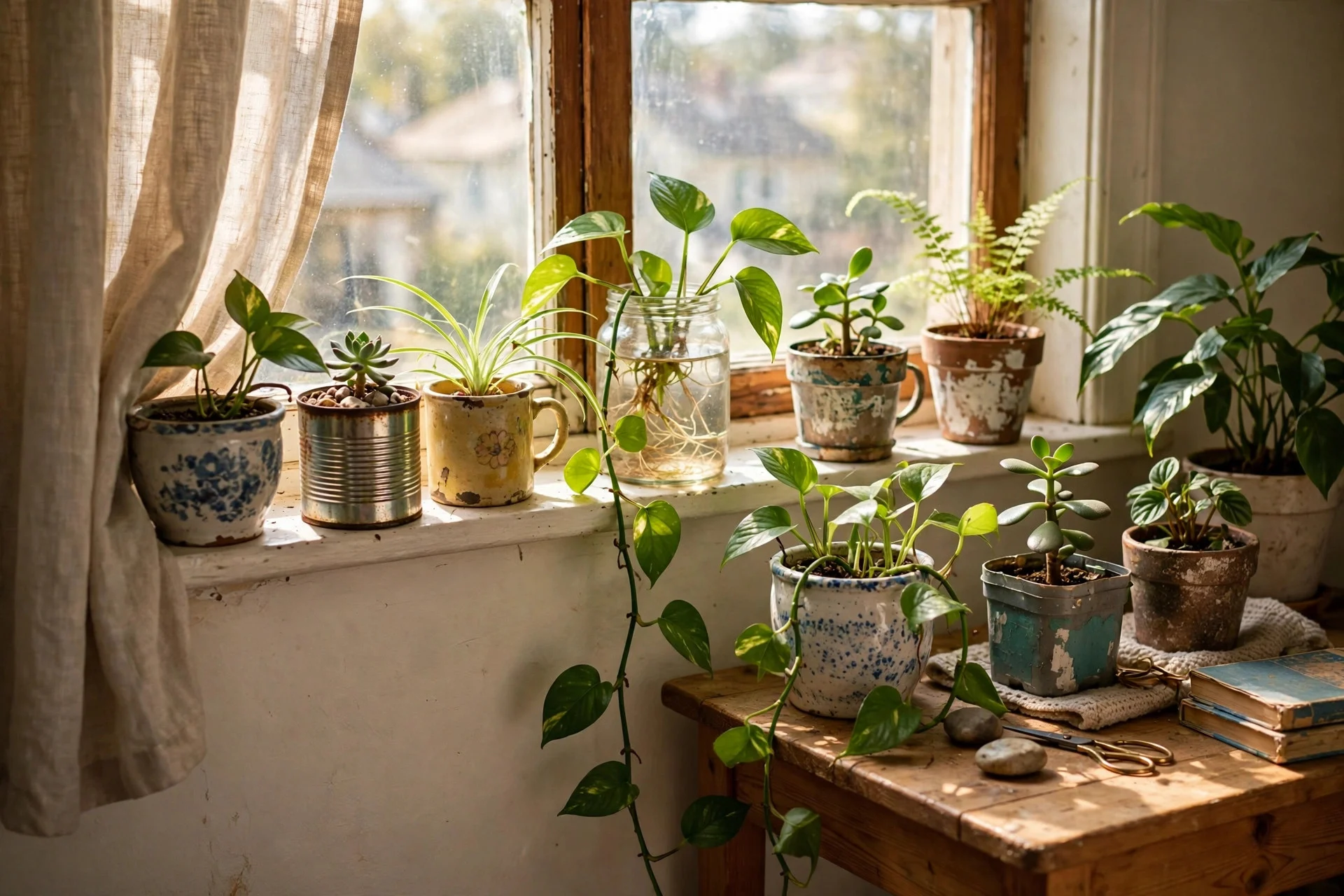
Plants are my favourite budget buy because a two-pound cutting can fill an empty corner in a year. I started with one pothos in a jam jar of water, and now cuttings from that same plant sit in every room.
Start with easy plants that forgive you: pothos, spider plants, and snake plants are hard to kill and easy to share. Put them near light but not in harsh sun, water only when the top of the soil feels dry, and use any pot you have — old mugs, tins, and thrifted planters all work. I killed a fern by watering it every day, so now I check the soil first and water less.
Try this: buy one cheap plant and one cutting from a friend this week. Put the cutting in water on the windowsill and watch it root — free plants are the best kind.
9. Warm Up the Lighting Without Buying New Lamps
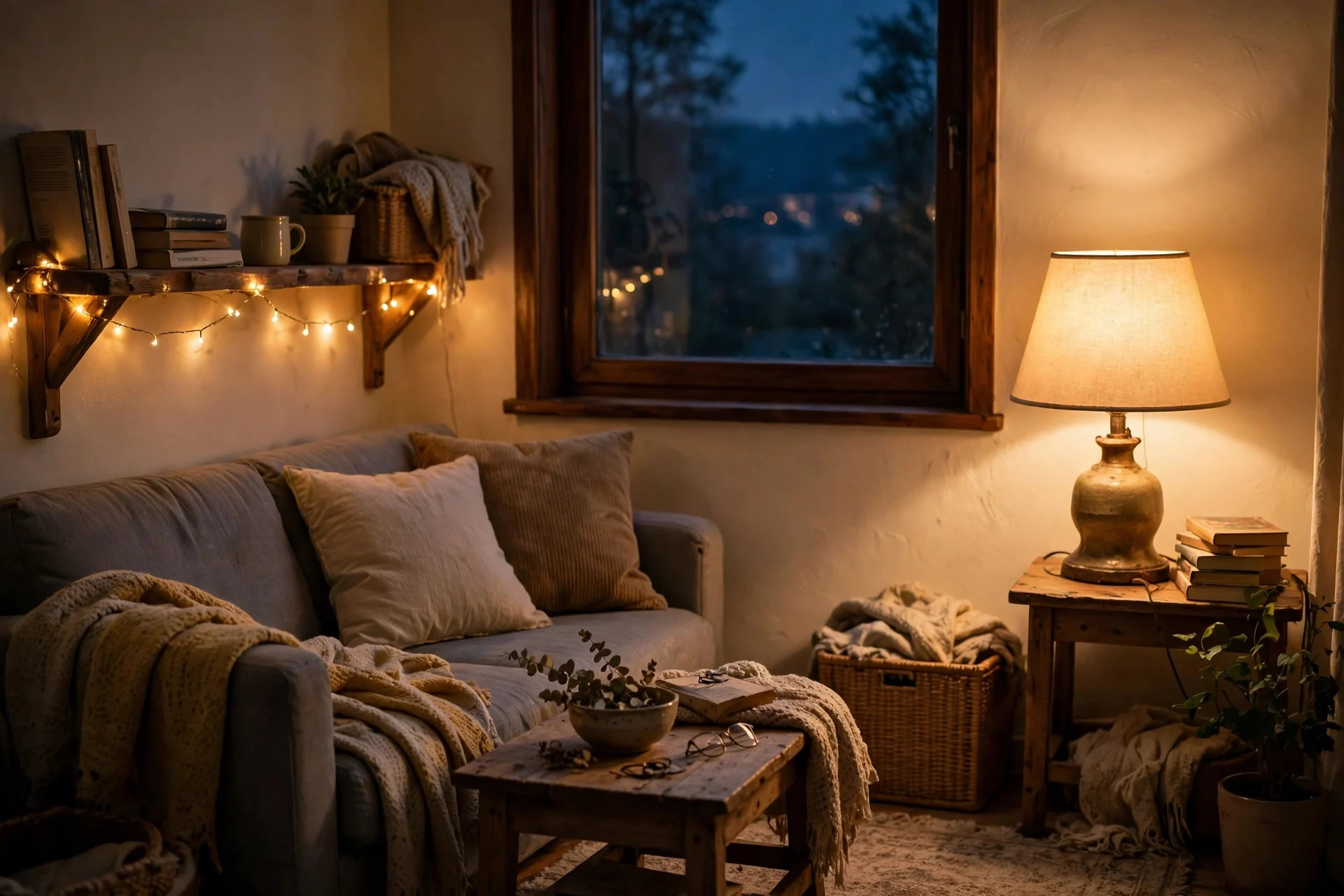
Our flat used to feel like an office at night because the only light was a cold bulb hanging from the ceiling. Swapping that bulb for a warm one and moving a lamp I already owned into the corner changed the whole evening mood for less than five pounds. Warm light makes cheap furniture look good and small rooms feel cosy instead of cramped.
Use warm white bulbs, around 2700K, in every lamp you actually sit near, and keep the bright white ones for the kitchen and bathroom. Add a second low light, like a small lamp or a string of fairy lights on a shelf, so the light comes from two places instead of one harsh spot overhead.
Try this: change one bulb to warm white tonight and switch off the ceiling light. Sit with just the lamp on and see how different the room feels.
10. Use Baskets as Storage That Looks Good
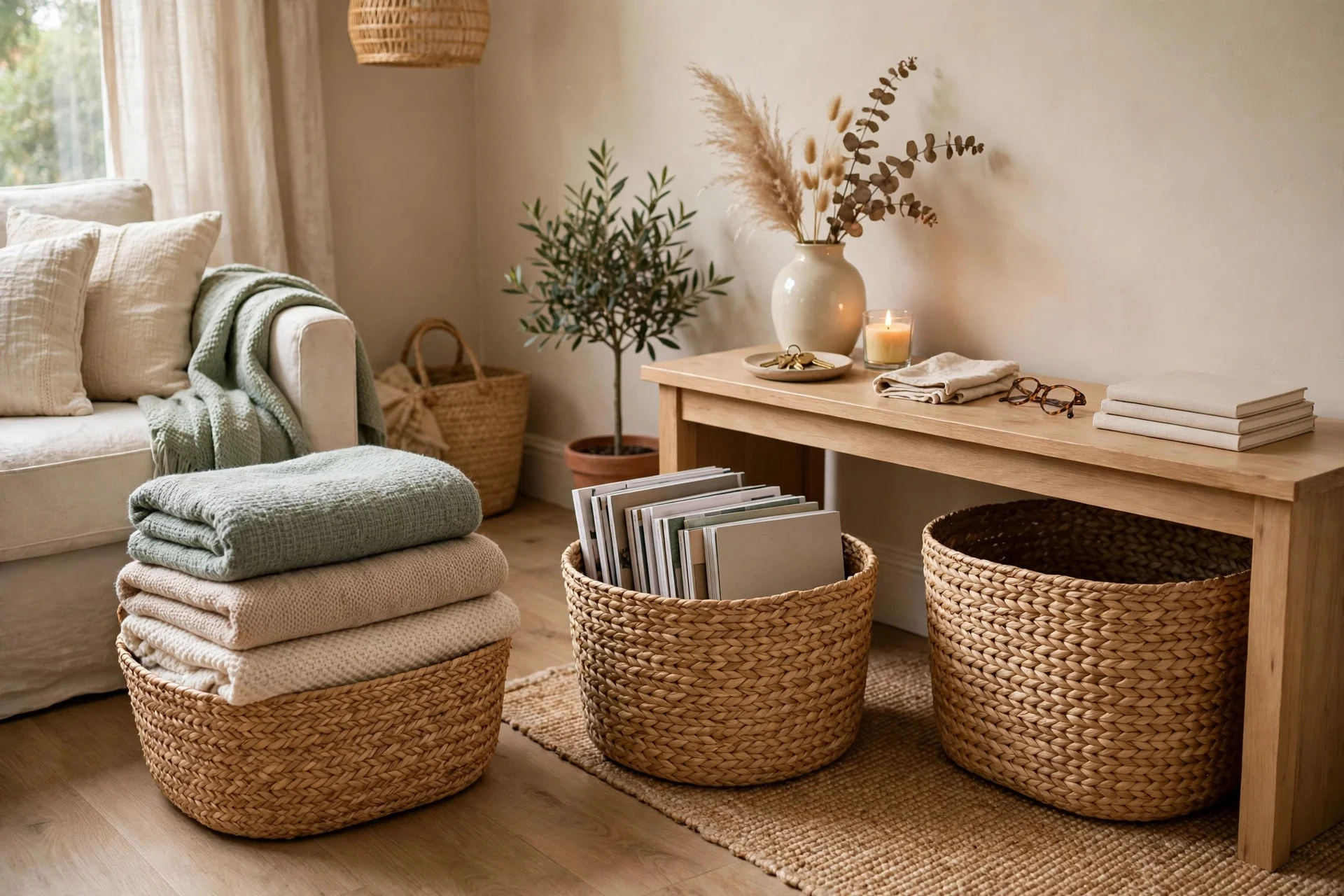
Every small home has stuff with nowhere to go: blankets, magazines, chargers, the remote controls. Baskets solved that for me because they hide the mess and look like decor at the same time. I keep one by the sofa for throws and one under the console for shoes.
Pick baskets in the same natural material, like seagrass or wicker, so they look like a set even if they came from different shops. Give every basket one job and one home, and put the thing you use most in the easiest basket to reach. I bought a pretty basket with no job once, and it just collected random junk until I gave it a purpose.
Try this: put one basket where the mess gathers most — by the sofa, by the door, or in the bathroom. If it fills up in a week, you have found its job.
11. Paint an Old Piece of Furniture
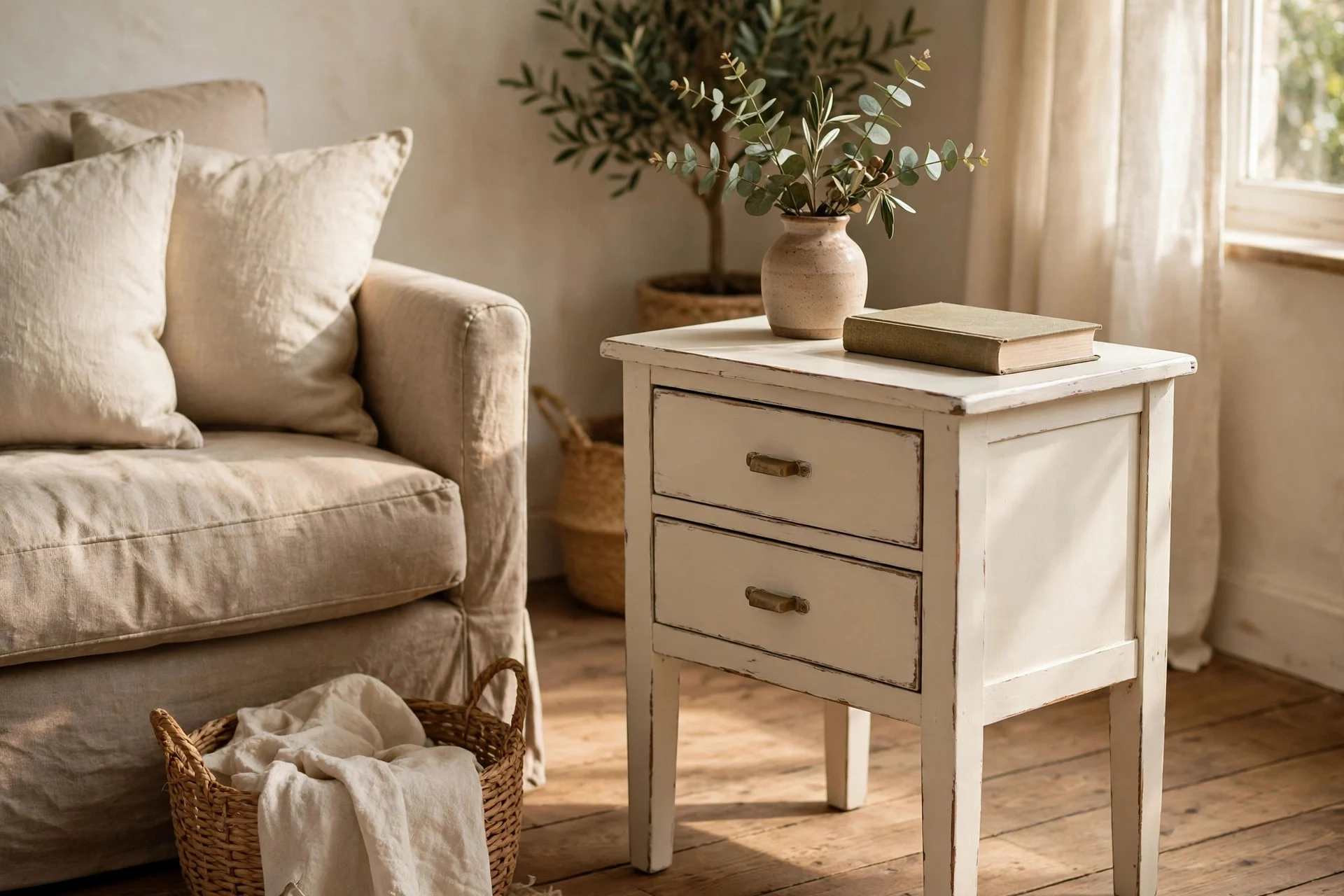
The side table by our sofa was scratched, dark, and honestly a bit ugly, and I was about to throw it out. A tin of chalk paint, a brush, and one afternoon turned it into the piece people ask about first. The soft, chalky finish hides scratches and makes old wood look handmade.
Clean the piece, sand it lightly so the paint sticks, and wipe off the dust. Paint two thin coats, let each one dry fully, and finish with a clear wax or varnish. I skipped the sanding on my first try and the paint peeled off in strips within a month, so do not skip it like I did.
Try this: start with the smallest piece you own, like a stool or a side table. If you like the result, work your way up to bigger pieces one at a time.
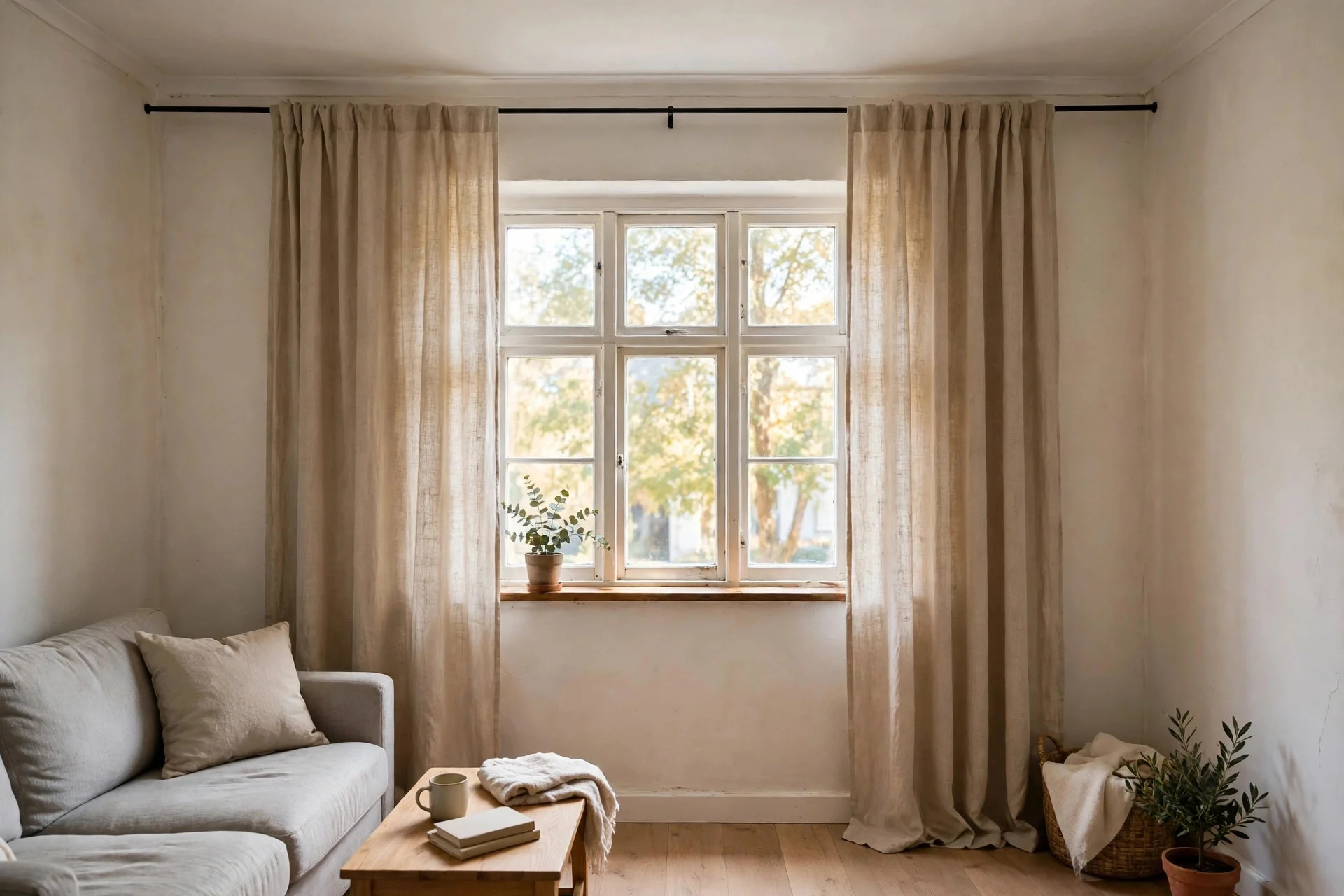
12. Hang Your Curtains High and Wide
Curtains hung at the wrong height can make a room feel squat, and I lived with that mistake for years. The day I moved the rod up near the ceiling and out past the window frame, the window looked twice as tall and the whole room felt airier.
Fix the rod about four to six inches above the window frame, and let it stick out six inches on each side so the curtains hang over the wall, not over the glass. Choose a light fabric that lets some daylight through, and let the curtains just brush the floor instead of pooling on it. I hung mine too short at first and they looked like they had shrunk in the wash.
Try this: move your existing rod up and wider this weekend, even before you buy new curtains. You will see the difference before you spend a penny.
13. Style the Coffee Table with Secondhand Books
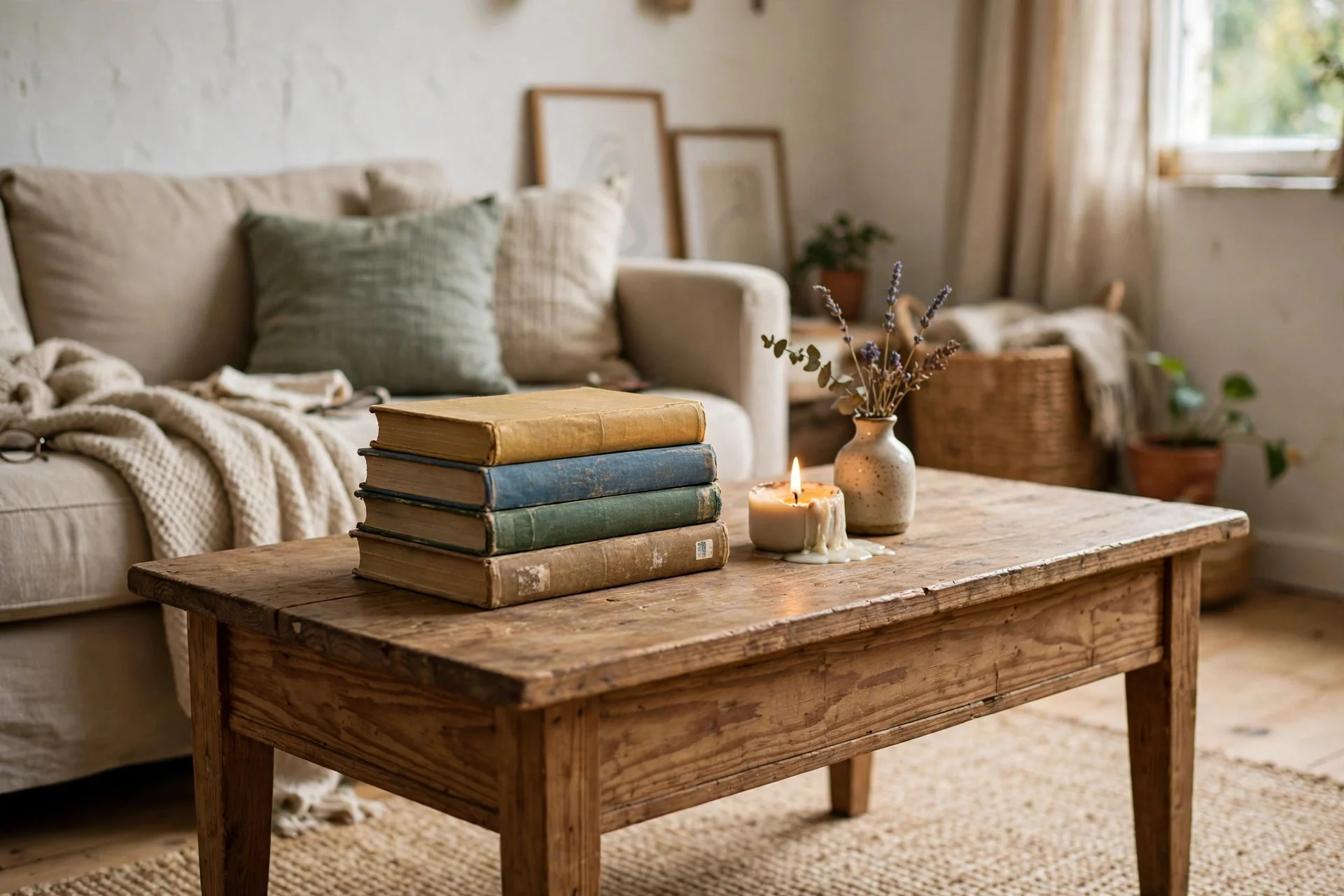
A bare coffee table looks unfinished, but a stack of secondhand books makes it look styled in about two minutes. I pick up hardbacks at charity shops for a pound each, choosing covers in colours I like, and stack three with the biggest at the bottom. A small candle on top finishes it.
Keep the stack low so it does not block the telly or the person across from you, and leave half the table empty so there is still room for cups. Mix the books with one small object, like a candle or a shell. I once stacked books right to the edge and knocked the whole pile over reaching for the remote, so keep them centred.
Try this: buy three secondhand hardbacks in colours that suit your room and stack them tonight. Add one small object on top and leave the rest of the table clear.
14. Paint Your Own Simple Abstract Art
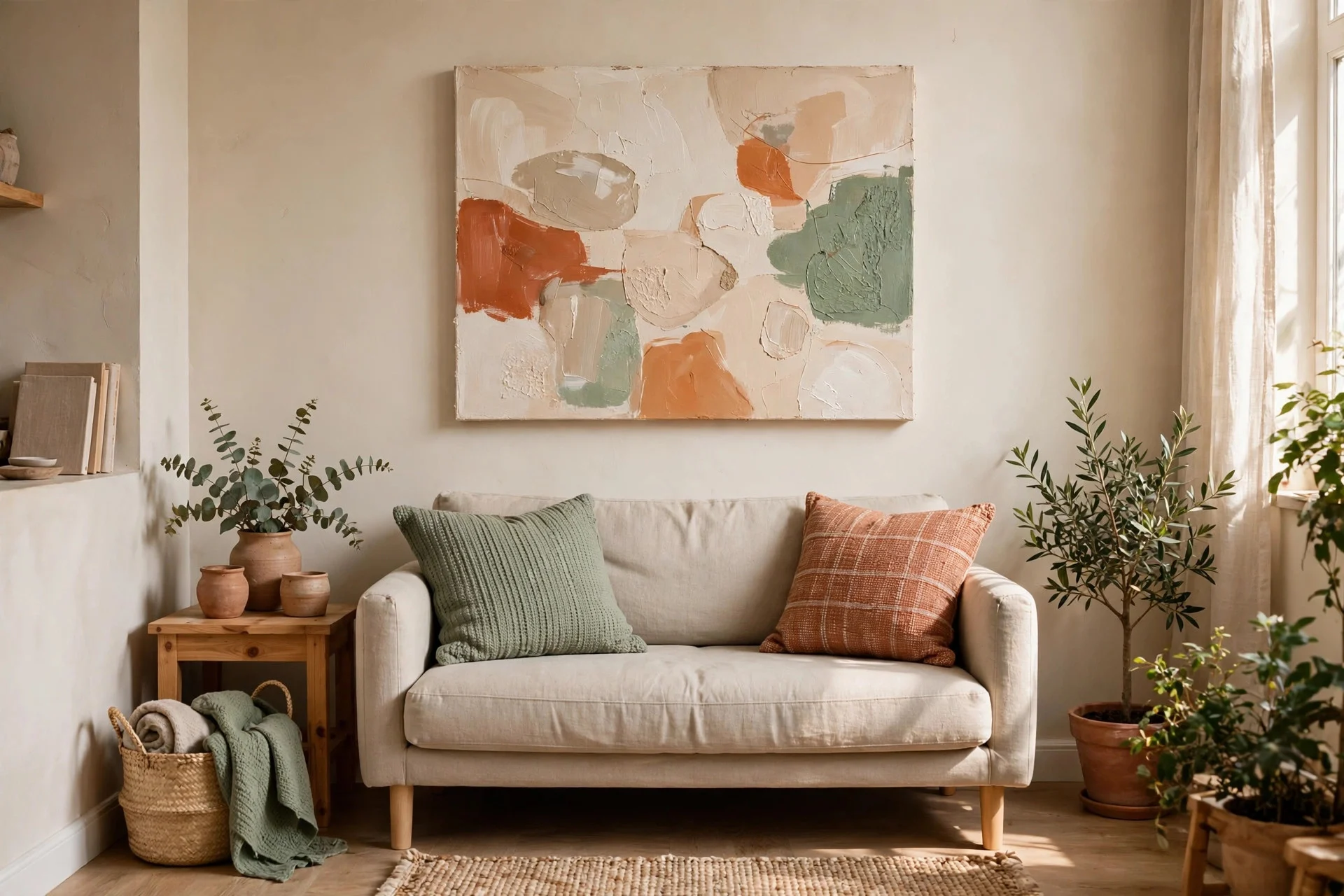
Big art costs big money, but a canvas, three tester pots, and a free afternoon cost almost nothing. I painted soft blobs and arcs in beige, terracotta, and sage, and it hangs above our sofa looking far more expensive than it was.
Pick three colours already in your room and one big brush so you cannot fuss over details. Paint big, simple shapes with plenty of empty space between them, then step back and stop before you overwork it. I ruined my first canvas by adding just one more stripe, so now I stop when it looks almost finished and let it dry before I judge it.
Try this: buy one small canvas and three tester pots this week. Paint for twenty minutes, then hang it up and live with it for a day before you decide if it needs more.
15. Layer a Small Rug Over a Bigger One
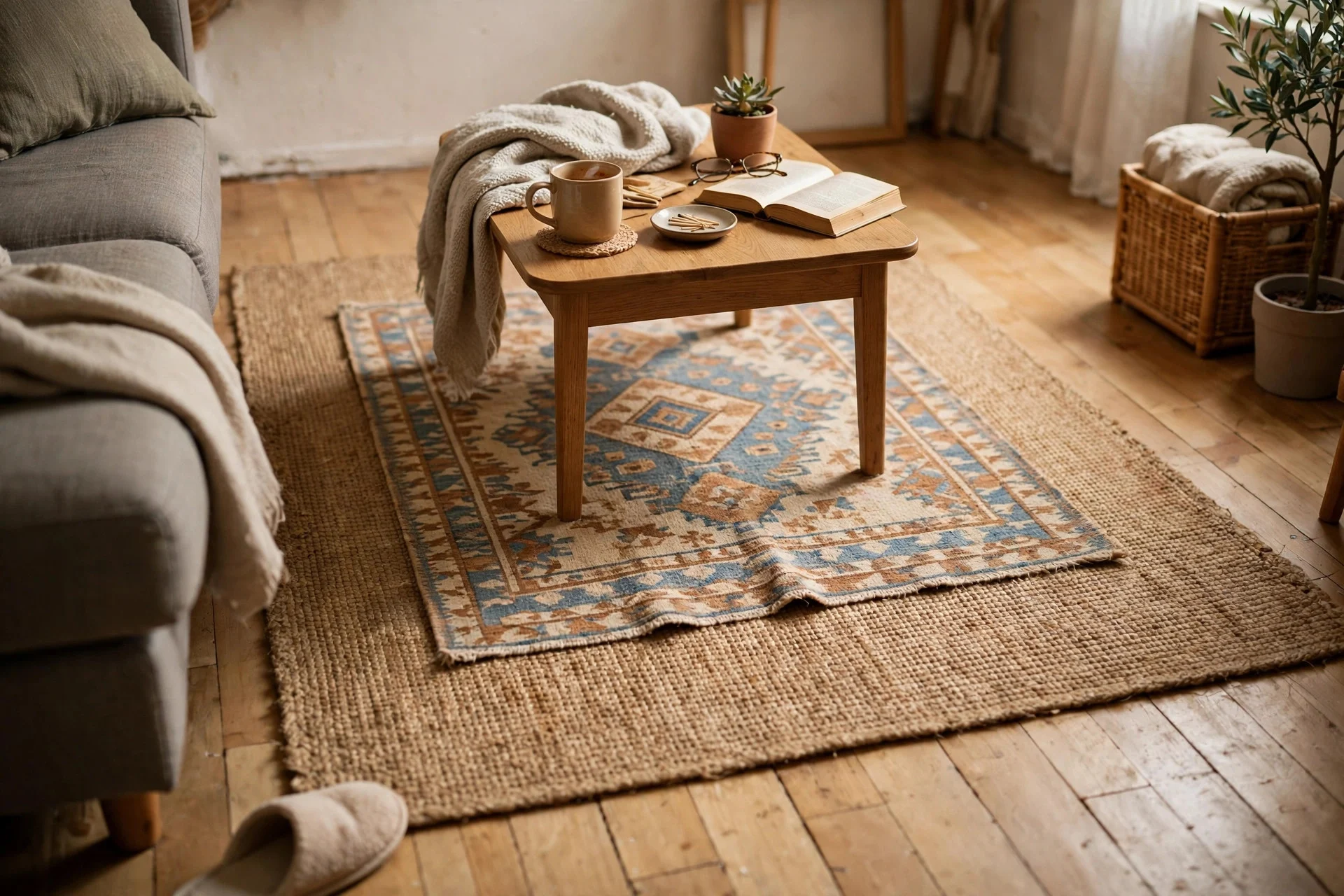
Our living room floor was bare wood with one sad, small rug floating in the middle, and it made the whole room feel cold. Layering a small patterned rug over a big plain jute rug fixed it for less than the cost of one large rug.
Start with a large, cheap, plain rug that covers most of the seating area, then add a smaller patterned rug on top, angled slightly so it does not line up perfectly. Use a rug grip underneath if the top one slides. I bought two patterned rugs first and they fought each other, so one plain and one patterned is the rule that works.
Try this: lay your existing rug down first, then add a smaller one you already own on top at a slight angle. If it feels right, you have saved the price of a big rug.
16. Open Up One Kitchen Shelf
Our kitchen felt dark and cramped until I took the door off one wall cupboard and turned it into an open shelf. Suddenly the mugs and plates we actually use were on show, the kitchen felt bigger, and I stopped losing things at the back of a cupboard.
Keep only the pretty, everyday things on show: a row of mugs, a few plates, and one small plant. Store the chipped mugs and the mismatched plastic boxes behind a closed door where nobody sees them. I put everything on the open shelf at first and it looked like a jumble sale, so now I follow one rule: if I would not serve a guest from it, it stays hidden.
Try this: clear one shelf this weekend and put back only the five prettiest things you own. Live with it for a week before you open up a second shelf.
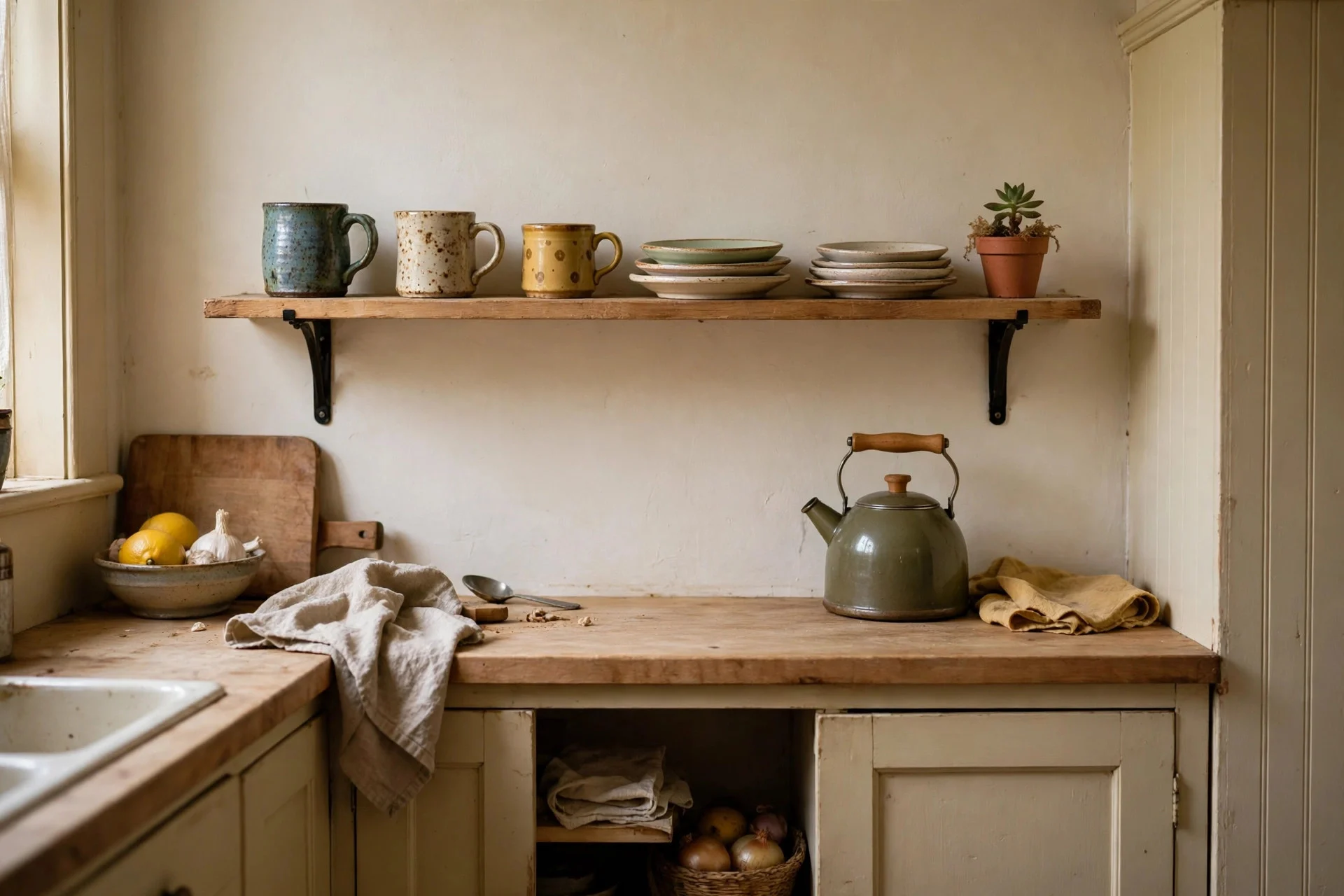
17. Give Your Entryway a Hook Rail and a Bench
Our hallway used to be a pile of coats on a chair and shoes everywhere, and guests had to step over it all. A simple wooden hook rail and a small bench changed that in one afternoon: coats go on the hooks, shoes tuck under the bench, and the hallway finally looks like a room instead of a dumping ground.
Fix the rail at a height everyone in the house can reach, and screw it into the wall studs or solid plugs so it holds heavy winter coats. Put a small bench or even a sturdy stool underneath, with a tray or a basket for shoes. Measure for the shortest person in the house, not the tallest.
Try this: fit a hook rail and put one basket under it for shoes this weekend. Clear everything else out of the hallway and see how calm the entrance feels.
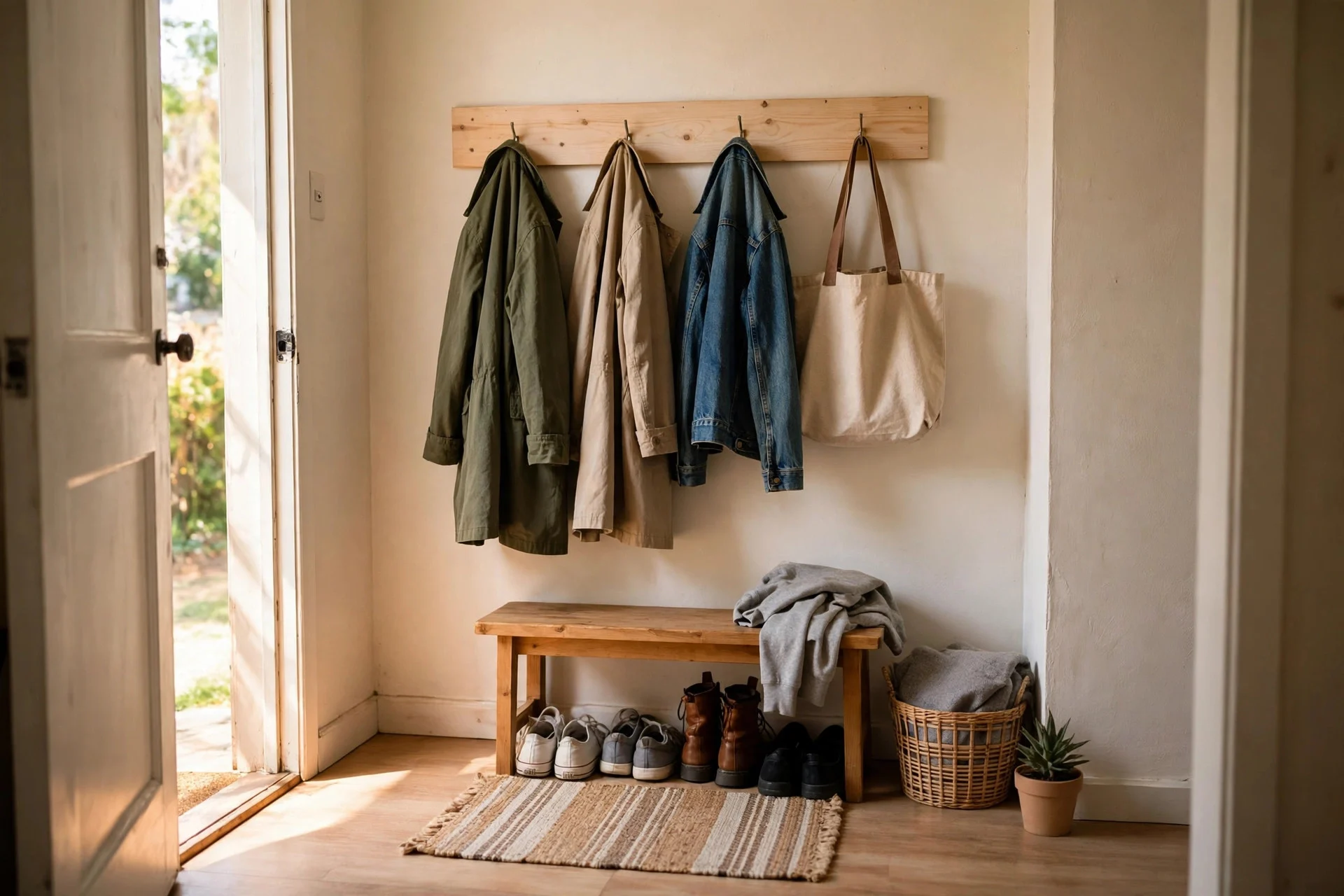
18. Refresh the Bed with White Bedding and a Throw
A bed takes up half a small bedroom, so it sets the mood of the whole room, and plain white bedding is the cheapest reset I know. I swapped our busy patterned set for a plain white one, added a mustard throw across the foot, and the room looked like a hotel for the price of one new set.
Wash the new bedding first so it softens up, then make the bed properly: fitted sheet tucked in, duvet shaken flat, pillows plumped and standing up. Fold the throw across the bottom third. I mix plain white with one coloured throw so it feels more lived in.
Try this: put plain white bedding on tonight and fold a throw you already own across the foot. Make the bed tomorrow morning and notice how the whole room changes.
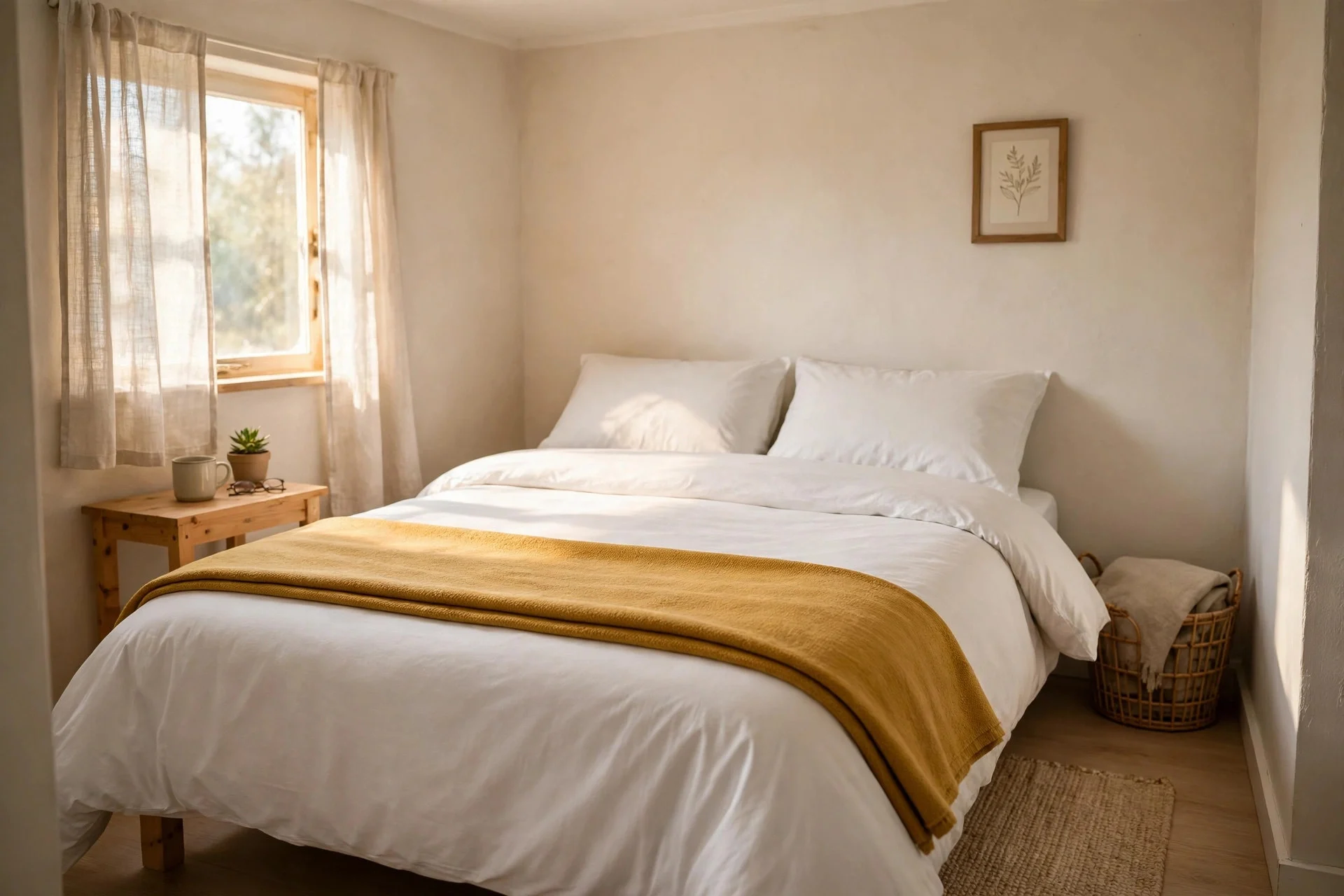
19. Give the Bathroom a Ten-Minute Refresh
The bathroom is the smallest room in most homes, so tiny changes show up fast. I swapped our grey towels for fresh white ones, hung a simple patterned shower curtain, and put a small wooden tray on the sink with the soap and a tiny plant.
Start by clearing the sink completely, then put back only what you use every day, on a tray so it looks tidy instead of scattered. Hang matching towels, even if they are just the cheap ones, and pick a shower curtain in one colour from your towels. I left half-empty bottles on the sink for months, and clearing them made more difference than any new towel did.
Try this: clear the sink, bin the empty bottles, and put your daily things on one small tray. That one tray makes the whole bathroom look cared for.
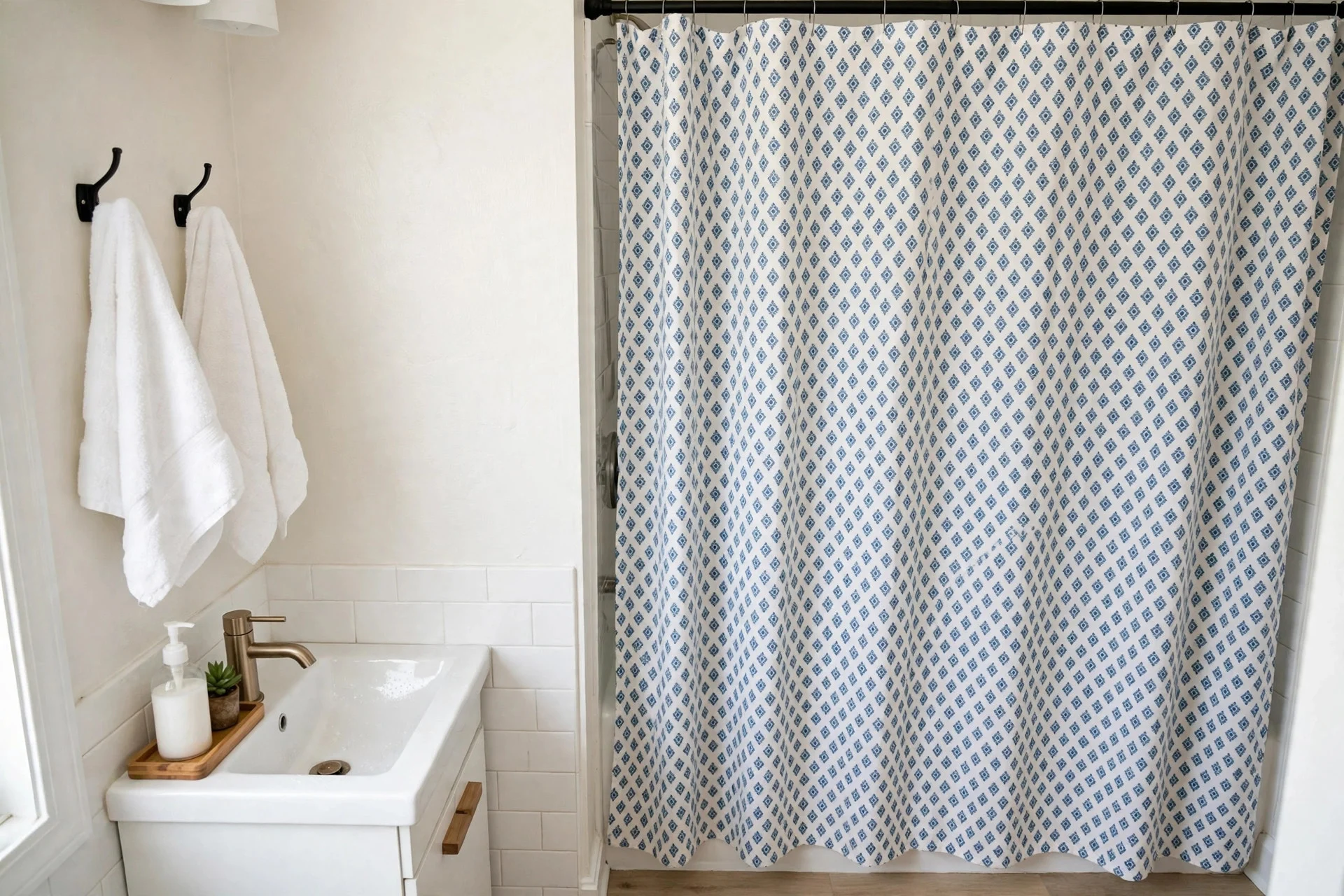
20. Rotate the Decor You Already Own
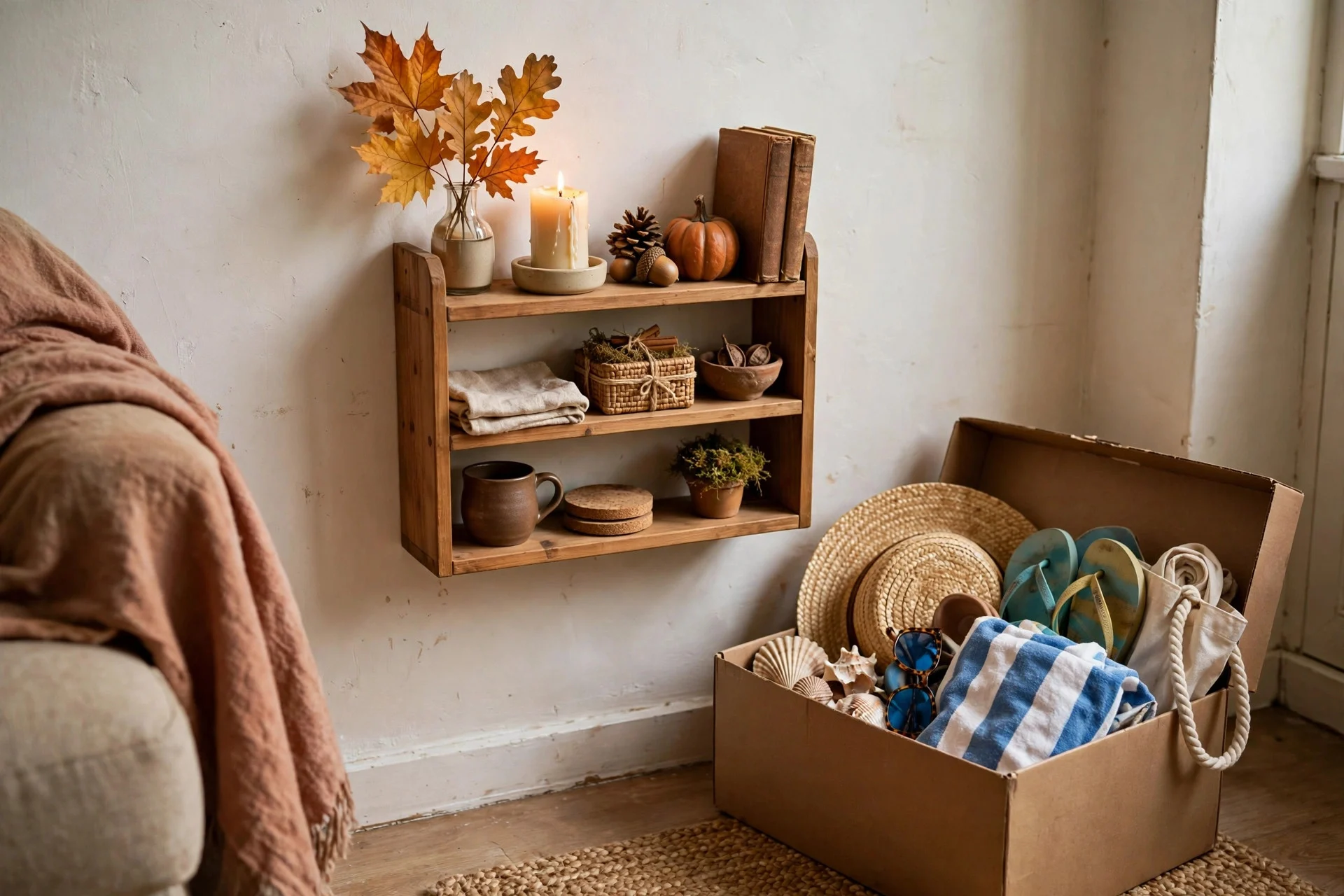
Buying new decor every season gets expensive, and honestly, I got bored of the same vase in the same spot long before I got bored of the vase itself. Now I keep a box of seasonal bits in a cupboard and rotate them through the year.
Pack the out-of-season things in one labelled box so you can find them, and swap just three or four items at a time instead of redoing the whole room. Move a picture to another wall, swap a cushion cover from the bedroom to the sofa, and put the summer vase away for a few months. Small swaps work better than redoing everything at once.
Try this: pick three things to move to a different room this week. A lamp, a picture, and a vase in new spots can make the whole house feel fresh for free.
21. Pick One Statement Piece Per Room
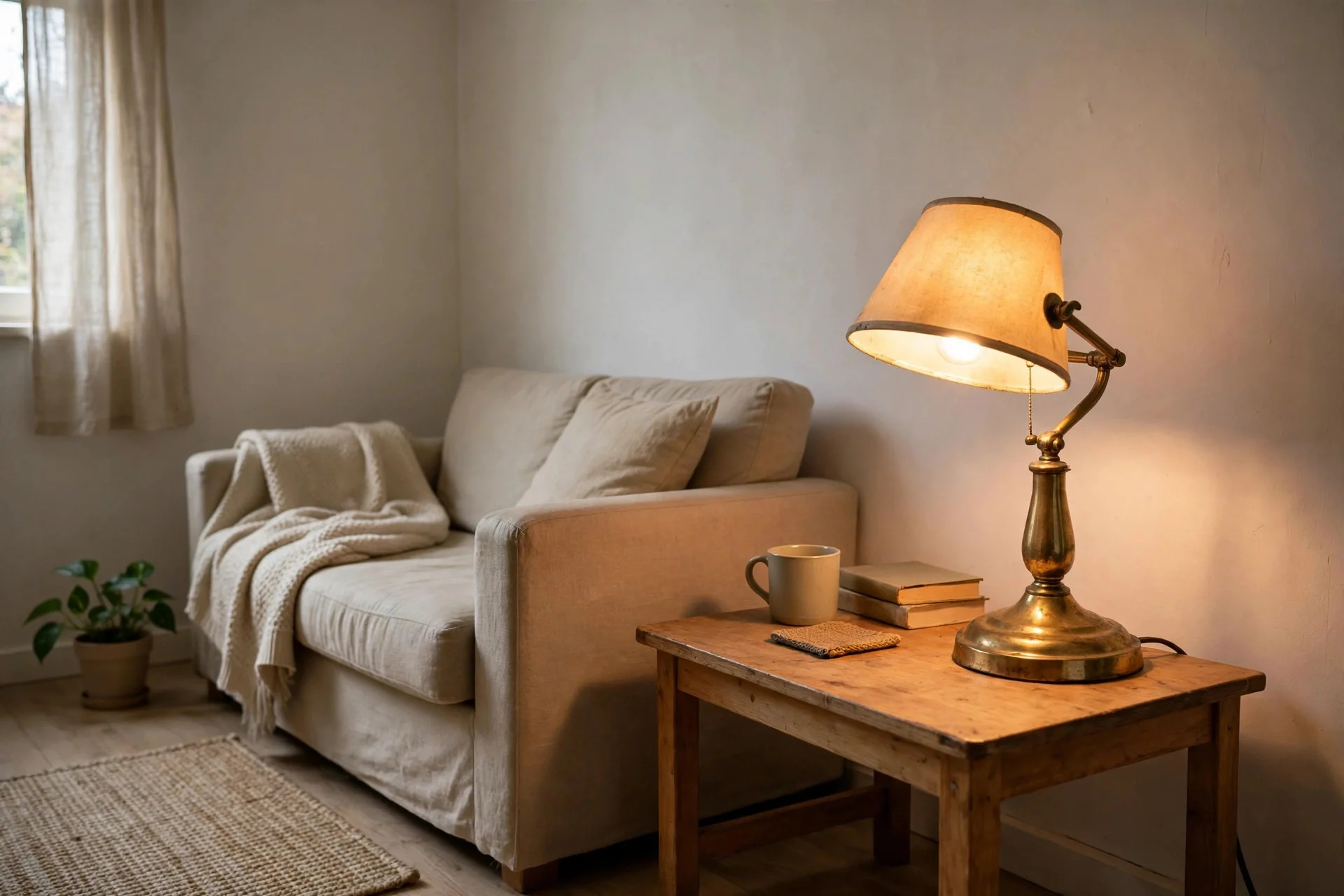
Small rooms look cluttered fast when every corner tries to shout, so I follow one rule now: one statement piece per room, and everything else stays quiet. In our living room it is a thrifted brass lamp that glows in the corner; in the bedroom it is a bold cushion.
Choose the piece you love most in each room, even if it is just a lamp, a vase, or a picture, and give it space to breathe. Move the other showy things to another room or into the rotation box, and keep the colours around it simple. I used to crowd three bold things onto one shelf, and none of them stood out.
Try this: walk into each room and name its one statement piece out loud. If you cannot pick one, the room probably has too many — take one thing away and see.
Frequently Asked Questions
How can I decorate a small home on a really tight budget?
Start with the free ideas first: rearrange the furniture, rotate what you own, and declutter one surface. Then spend small amounts where they show most, like paint, cushion covers, or a thrifted mirror, and buy secondhand before you buy new.
What is the cheapest way to make a small room look bigger?
Light and space do the work. Hang a mirror opposite a window, hang curtains high and wide, keep the floor clear, and use light colours on the biggest surfaces. A room with clear walkways always feels bigger than one packed with furniture.
Where should I buy budget home decor?
Charity shops, car boot sales, and secondhand apps are my first stop for frames, lamps, books, and baskets. For new things, look at discount shops and end-of-line sales, and buy paint tester pots before you commit to a full tin.
How do I keep budget decor from looking cheap?
Stick to a small colour palette, repeat one material like wood or wicker, and leave some empty space on every shelf. One good statement piece and a tidy, uncluttered surface will make budget finds look deliberate instead of random.
Final Thoughts
A small home on a tight budget does not need to wait for a bigger pay cheque or a bigger flat. I have changed rooms with a tin of paint, a charity-shop mirror, and an afternoon of moving furniture, and each time the room felt more like mine. Pick the idea that feels easiest, try it this weekend, and let the rest follow one small change at a time.