
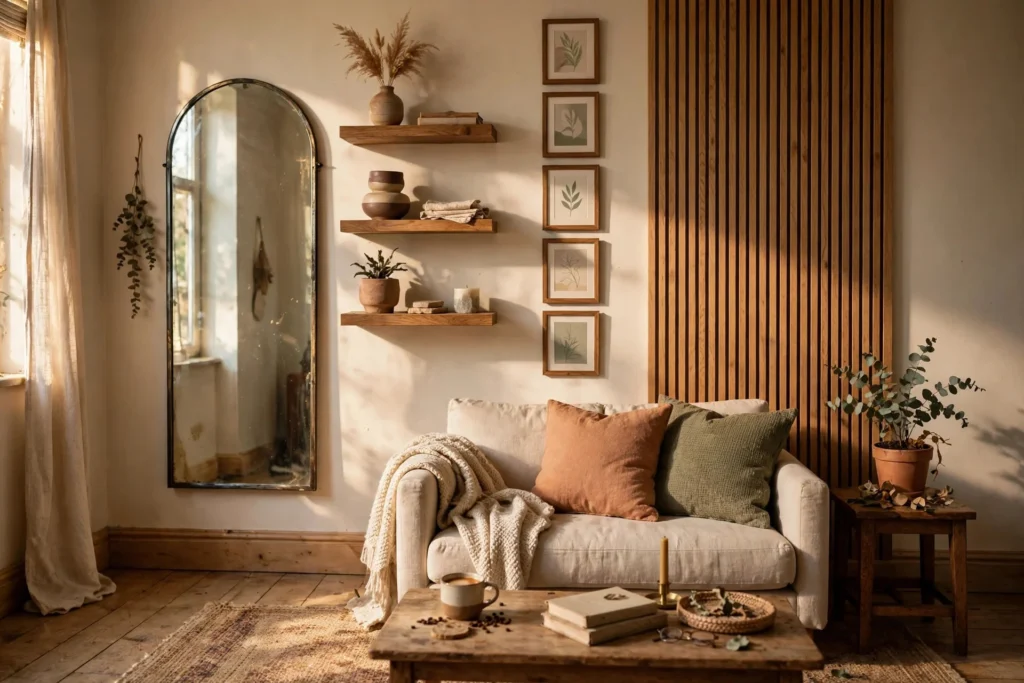
My first flat had one good wall and about four square metres of floor I could actually use, so I learned fast that small space wall decor ideas are not about filling every blank spot — they are about choosing the right thing and letting the wall do the work. When the floor is full, the walls are the only room you have left, and going vertical changed how big my place felt almost overnight.
I have tried most of the tricks in this list in my own home, in rentals where I could not drill much and in corners that got almost no daylight. Some worked straight away, a few needed a second go, and one or two I would do differently now. Everything here is renter-friendly where it matters, cheap where it can be, and picked for walls that are short on width but tall on possibility.
1. Small Space Wall Decor Ideas That Start with One Big Piece
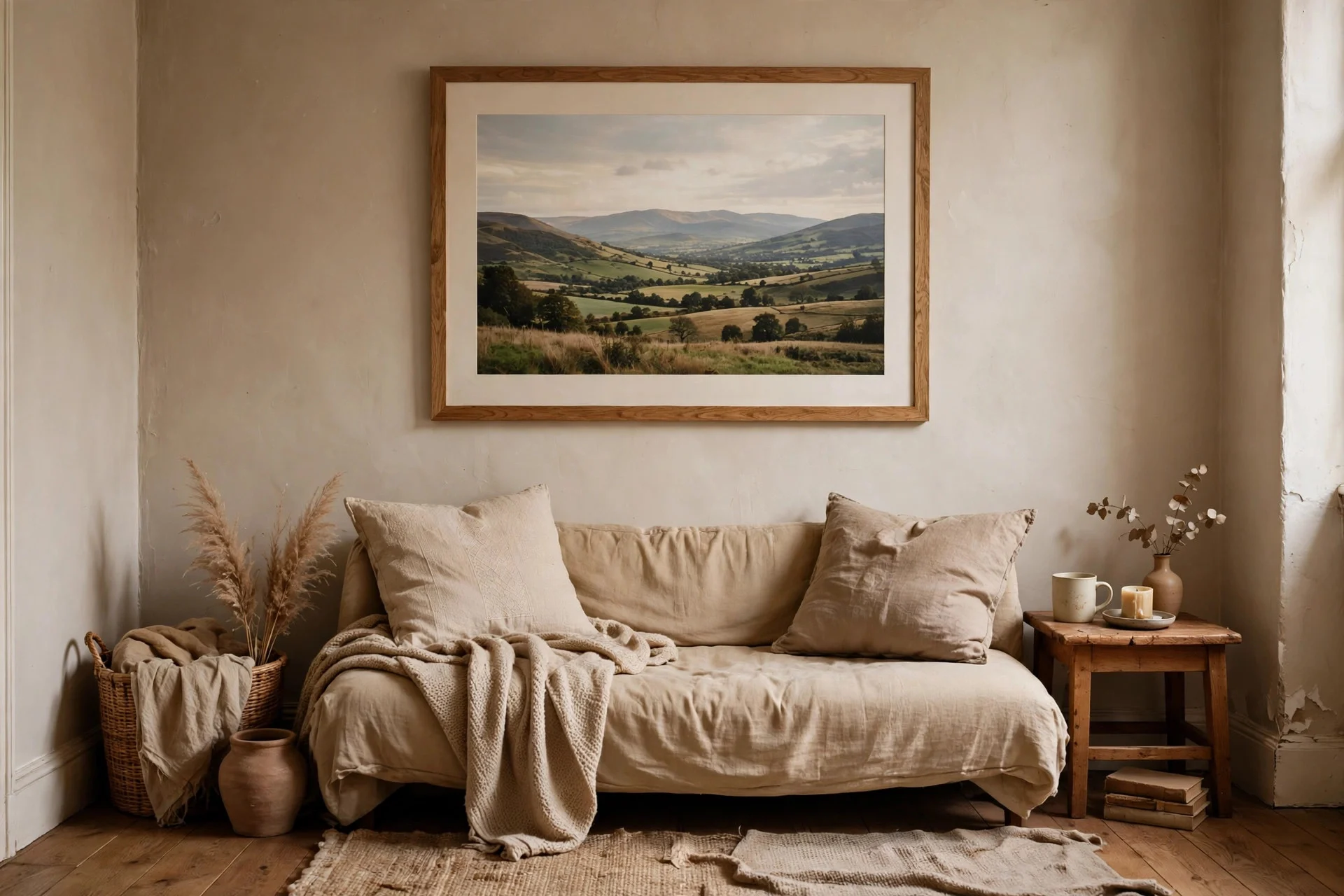
When a wall is small, one large piece of art does more than six small frames ever will. One oversized print gives your eye a single place to land, and that calm focal point makes the room feel settled, not busy. I tried this in my hallway first, where a big landscape print replaced a clutter of little frames, and the hallway suddenly felt twice as wide.
Pick something you love looking at, in colours already in your room, and hang it at eye level — the centre about 145 cm from the floor. Leave breathing room around it and resist the urge to add bits beside it. One strong piece, hung with care, beats a crowded wall every single time.
Try this: ask a friend to hold the frame up, or tape a paper template to the wall, and live with the outline for a day before drilling.
2. Tall Floating Shelves That Use Every Inch Upward
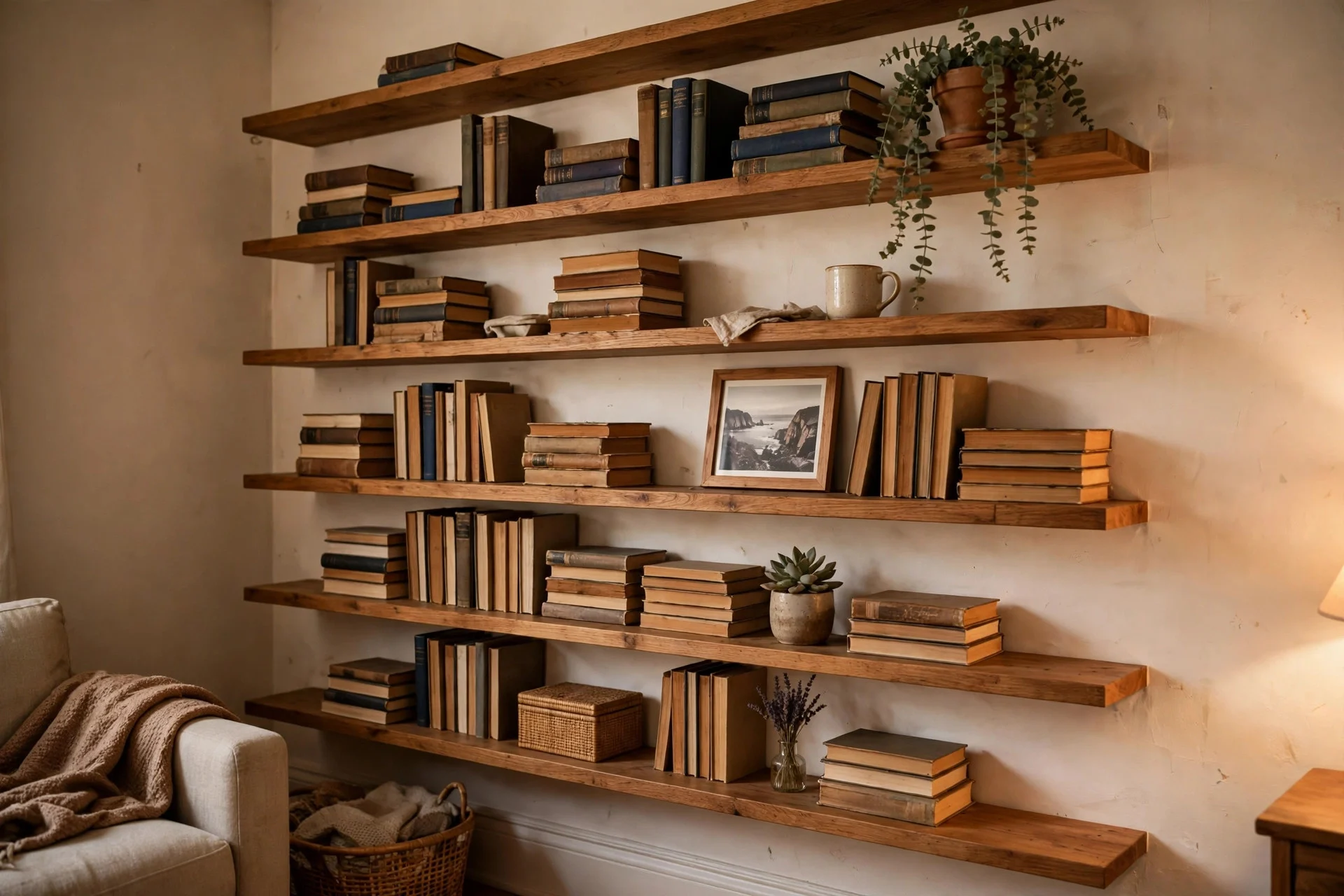
Floating shelves are the quiet heroes of a small home because they give you display space without stealing a single centimetre of floor. I put two long shelves above my desk, one high and one at arm’s reach, and suddenly books, a plant and a framed photo had homes that were not the kitchen table. The trick is going tall: stack two or three shelves up the wall and keep the lowest one clear of clutter.
Start with the top shelf, where you keep the prettiest, least-used things, and work down to everyday items at hand height. Mix heights and leave a gap or two empty — a shelf packed edge to edge just looks like a cupboard with no doors.
Try this: style one shelf at a time, step back to the doorway, and take away one thing from each shelf before you call it done.
3. A Slim Gallery Wall That Climbs Instead of Spreading
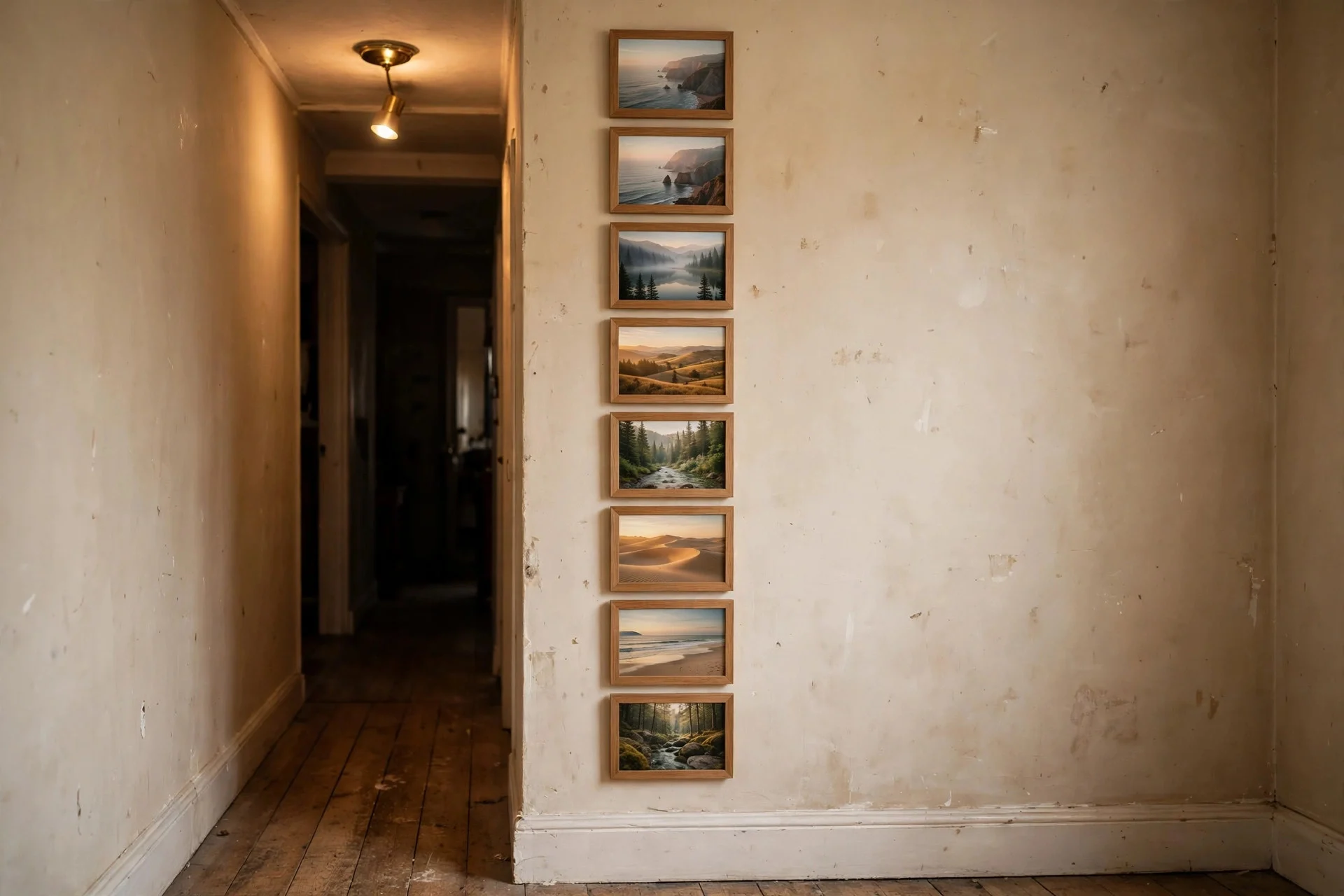
A gallery wall does not need to sprawl sideways. In a narrow hallway or beside a door, a slim column of frames climbing upward looks intentional and smart, and it draws the eye up the wall instead of across a room that has no width to spare. I built mine in a stairwell with six frames in one vertical line, and it turned a plain passage into the part of the house guests always comment on.
Keep the frames the same colour and roughly the same width so the column reads as one tidy shape. Space them evenly, about five centimetres apart, and mix photos with one or two simple prints so it feels collected rather than random.
Try this: lay the frames on the floor in a column first, snap a photo, and only start hanging once the line looks straight on your screen.
4. Vertical Mirrors That Open Up a Tight Room
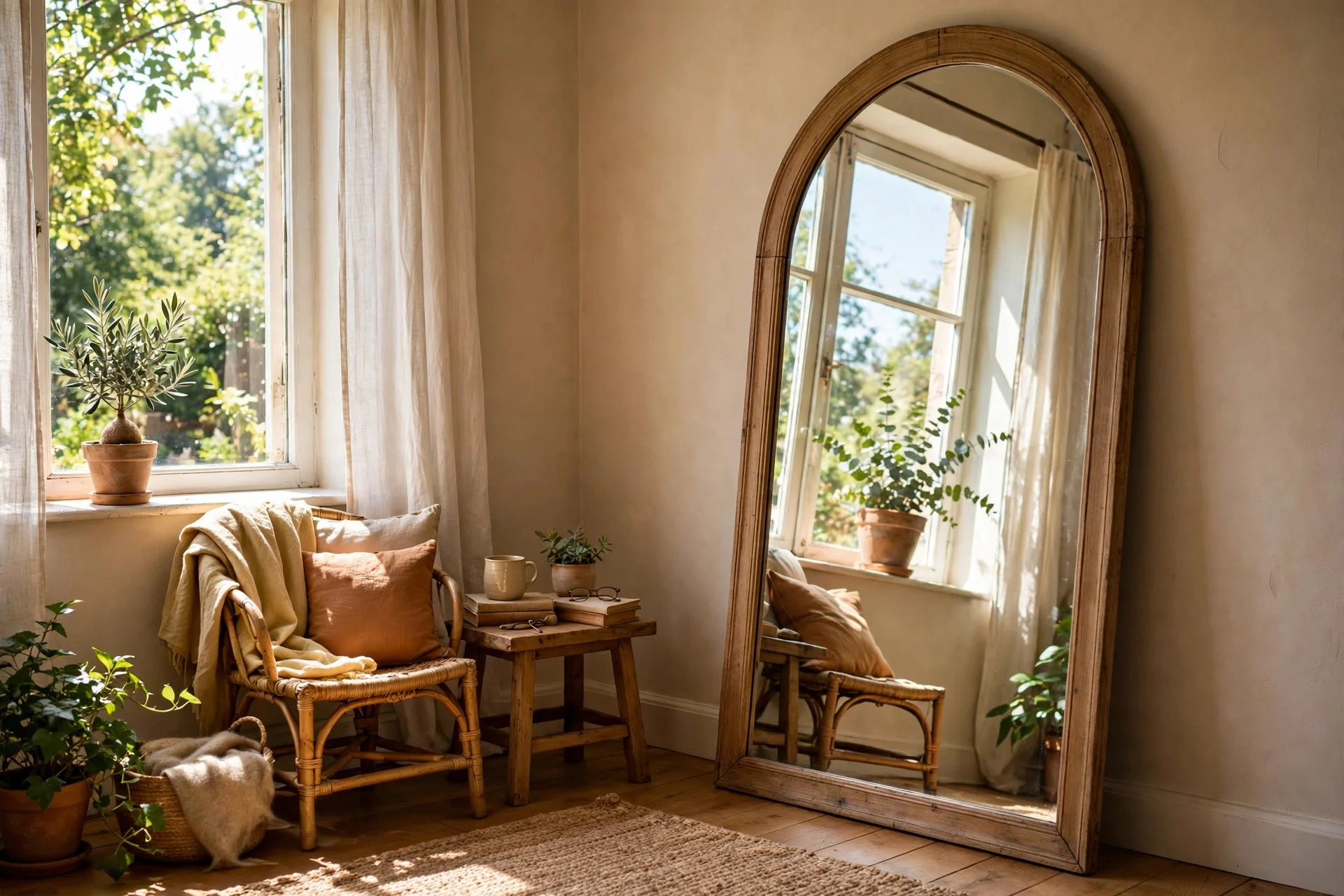
A tall mirror is the oldest small-room trick there is, and it still works because it does two jobs at once: it bounces light around and it doubles whatever is in front of it. I leaned a full-length mirror against the wall opposite my window, and the dark corner behind the sofa lit up like someone had switched a lamp on. It is the one change visitors notice first, every time.
Lean it rather than hang it if you rent — a heavy mirror in a slim frame is stable on a flat floor and easy to move. Angle it slightly so it reflects a window or a plant, not a blank wall or the mess on the counter.
Try this: prop the mirror in place with books under one edge until the reflection shows your brightest window, then mark the spot lightly in pencil.
5. Narrow Ledge Shelves for Books and Tiny Plants
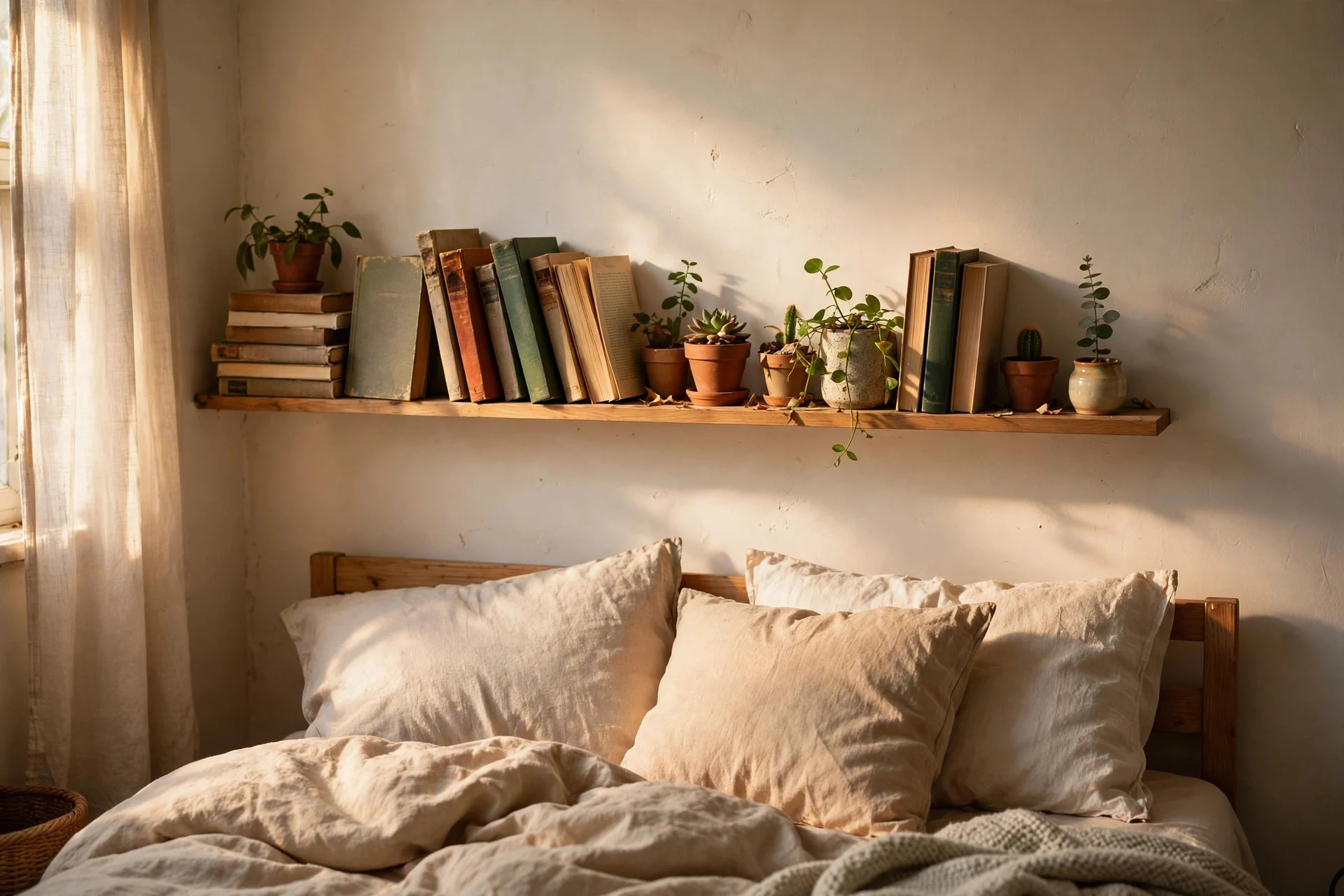
Picture ledges are only a few centimetres deep, which is exactly why they suit small rooms — they hold books, prints and small pots without jutting out into your walking space. I ran one along the wall above my bed and it became my reading shelf, my photo shelf and my plant shelf all at once, and I still never bump my head on it in the morning.
Lean book spines forward so the covers face the room, and tuck a trailing plant at one end so the green softens the straight line. Keep the ledge shallow and the objects light; a ledge is for display, not for storing your heaviest hardbacks.
Try this: put the tallest book at one end and the smallest plant at the other, so the ledge reads like a gentle slope instead of a flat line.
6. A Pegboard Wall That Works Hard in a Small Kitchen
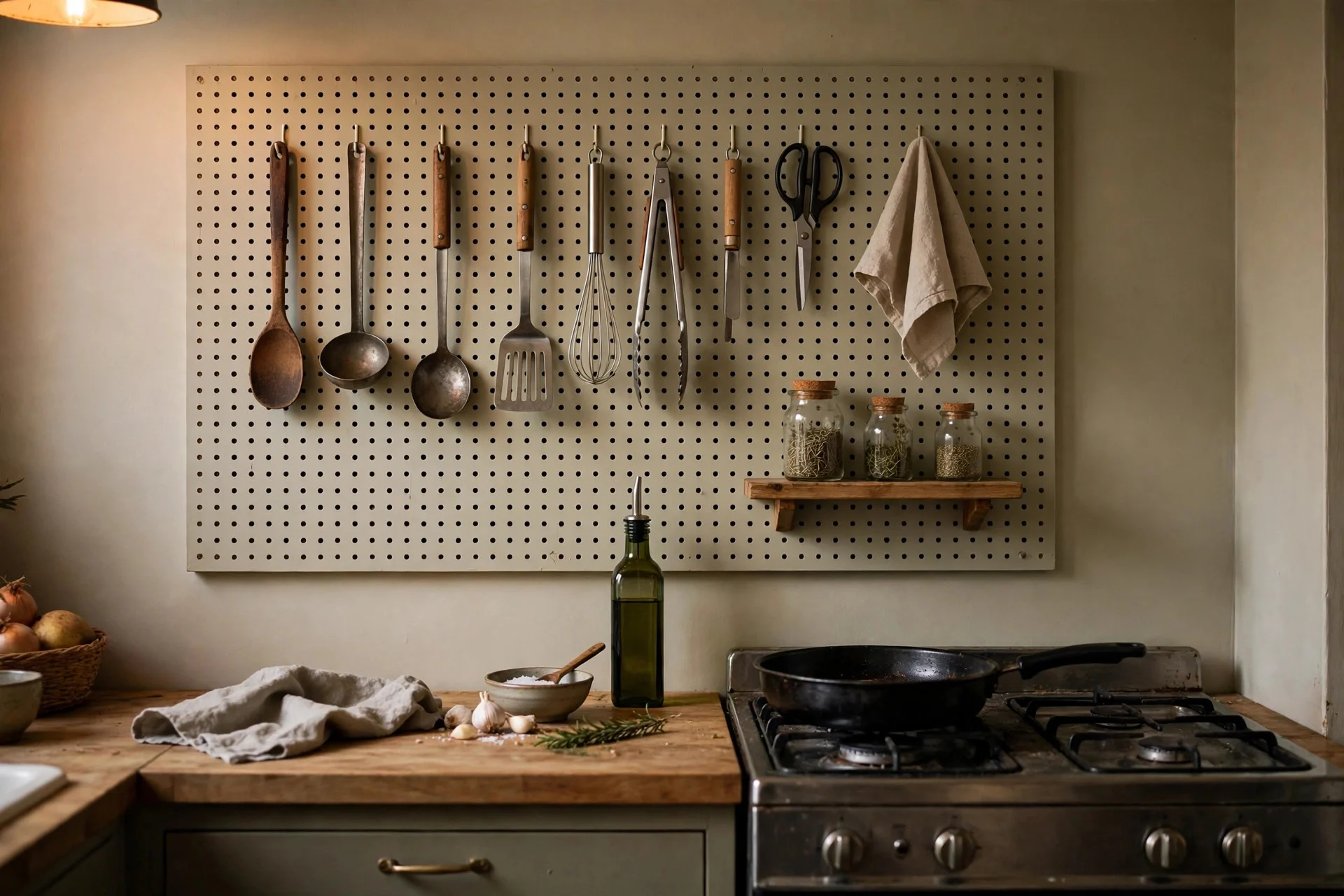
A pegboard turns a dead patch of kitchen wall into storage that looks good enough to show off. I screwed one up beside my cooker after years of digging through a drawer for the right pan, and now my most-used utensils, a couple of small shelves and a bunch of dried herbs all hang within reach. It freed a whole drawer and, honestly, it made cooking feel easier.
Paint the board the same colour as the wall so it blends in, then add hooks, a tiny shelf and a couple of baskets. Hang only what you reach for weekly — the odd gadget you use twice a year can stay in a cupboard where it belongs.
Try this: trace your most-used tools on paper first, then place the hooks to match those outlines so everything has one obvious home.
7. Tall Plants on Wall Brackets to Pull the Eye Up
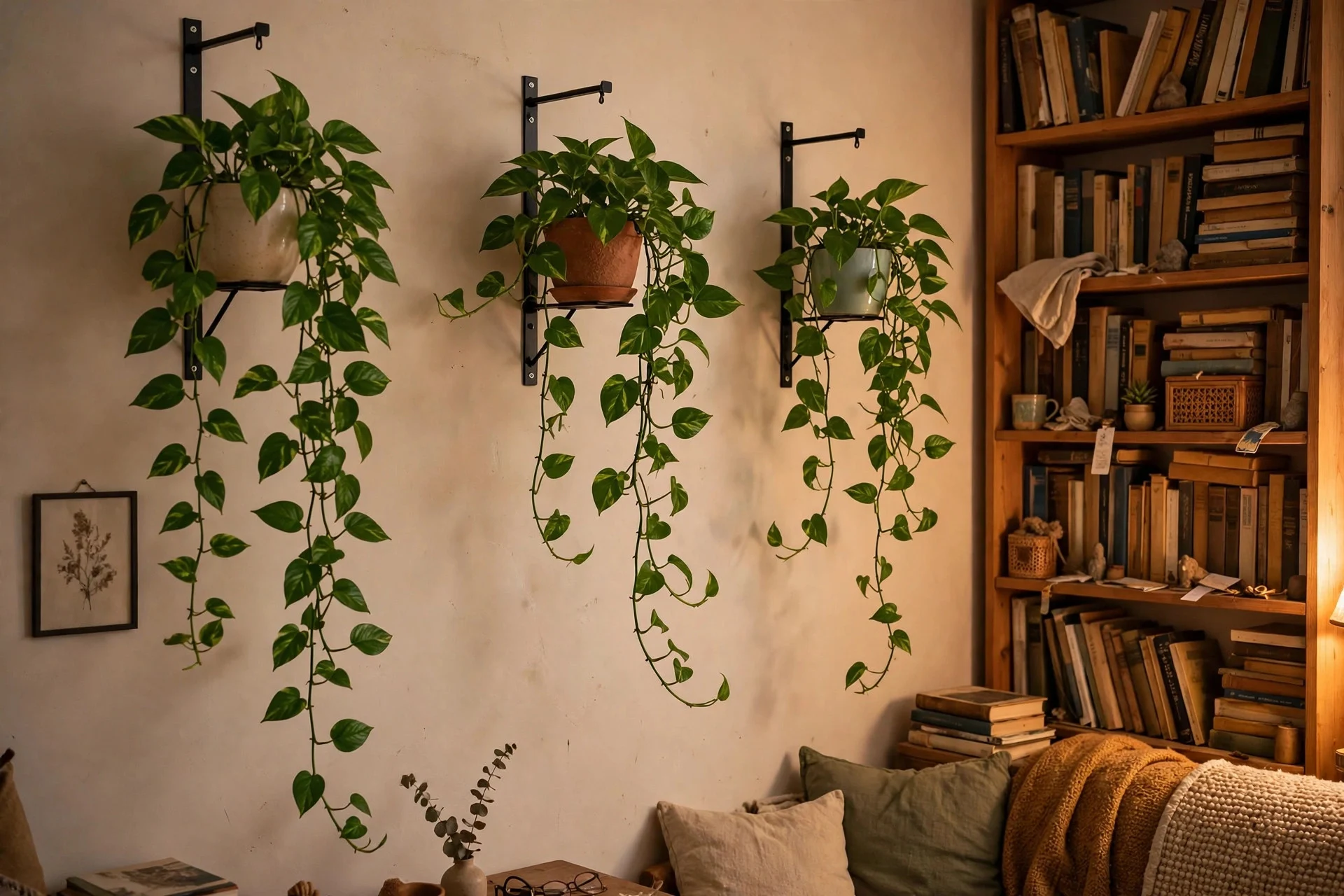
Plants on the floor eat space a small room cannot spare, but plants on wall brackets do the opposite — they pull your eye upward and make the ceiling feel higher. I fixed two simple brackets high on the wall beside my bookshelf, and the trailing leaves now soften a corner that used to look bare and a bit sad. The room feels taller, and the floor stays clear for actual living.
Choose trailing plants like pothos or spider plants, which forgive a missed watering and look good spilling down. Hang them where they get some daylight but not harsh midday sun, and keep a small watering can nearby so the job stays easy.
Try this: start with one bracket and one plant, live with it for two weeks, and only add a second one once you know the spot gets enough light.
8. Woven Wall Hangings That Add Warmth Without Bulk
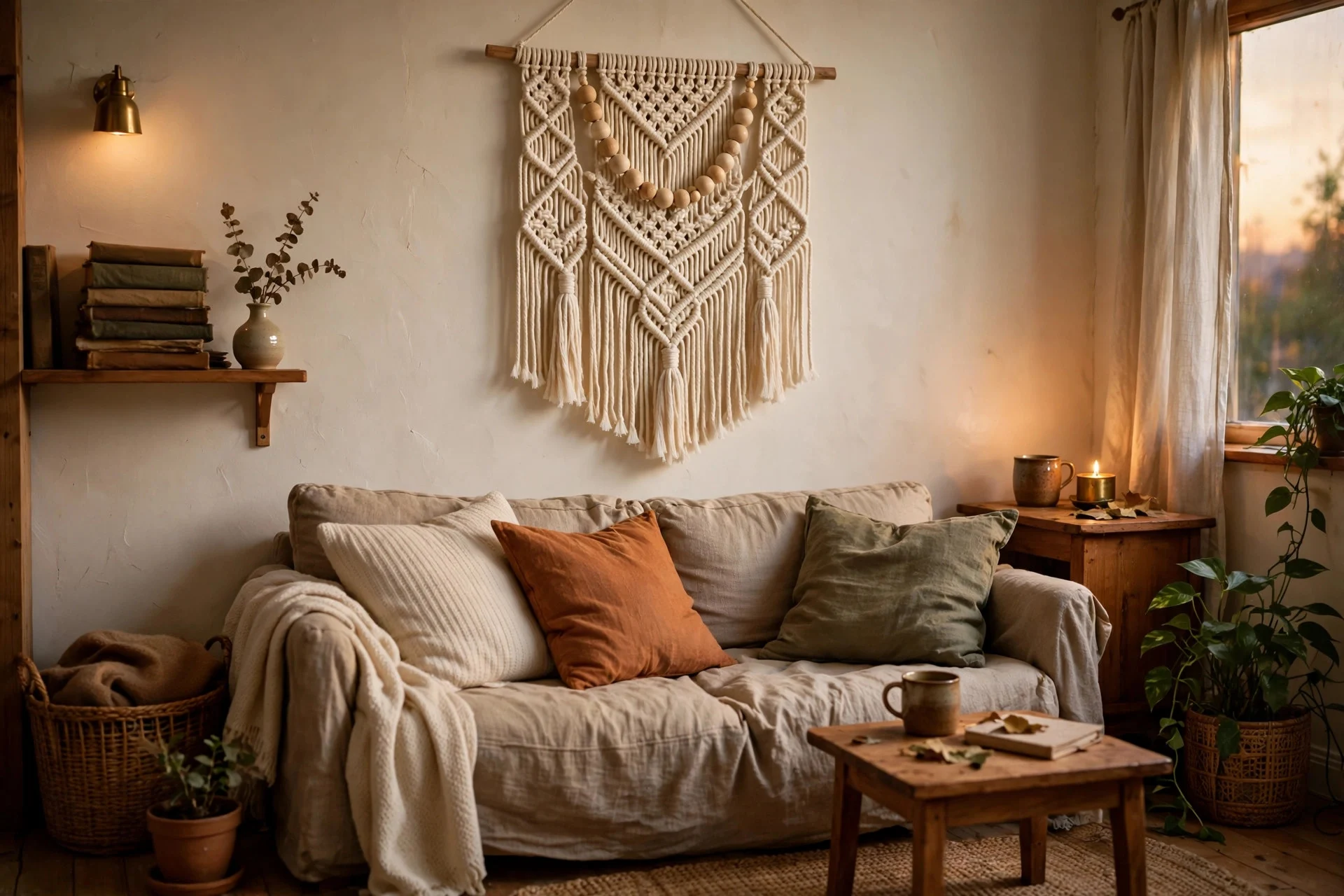
A woven wall hanging adds texture and warmth to a small room without taking up any depth at all, which is a rare thing. Mine hangs above the sofa — a simple cream macramé piece with wooden beads — and it softens the hard edges of the room in a way a flat print never did. It is the cosiest thing on that wall, and it weighs almost nothing.
Pick a size that suits the wall: too small and it looks lost, too big and it swallows the sofa. Hang it a hand’s width above the furniture and keep the colours calm so it warms the room rather than shouting at it.
Try this: hold the hanging up at different heights with a bit of string first, and choose the spot where its bottom edge sits just above the sofa cushions.
9. A Skinny Ladder Shelf Leaned Against the Wall
A leaning ladder shelf is the friendliest storage a small room can have: it needs no drilling, it takes up almost no floor, and it gets narrower as it goes up, so it never crowds the room. I keep mine in the bathroom with rolled towels on the lower rungs and a candle and a small plant up top, and it holds more than the cabinet it replaced.
Put the heaviest things low, where the shelf is widest and most stable, and keep the top rungs light and pretty. A slim ladder in pale wood suits most rooms, and it moves easily when you rearrange — no holes to fill, no regrets.
Try this: before you buy, mark the ladder’s footprint on the floor with tape and walk past it for a day to check it never blocks your path.
10. Vertical Picture Rails for Rotating Art and Photos
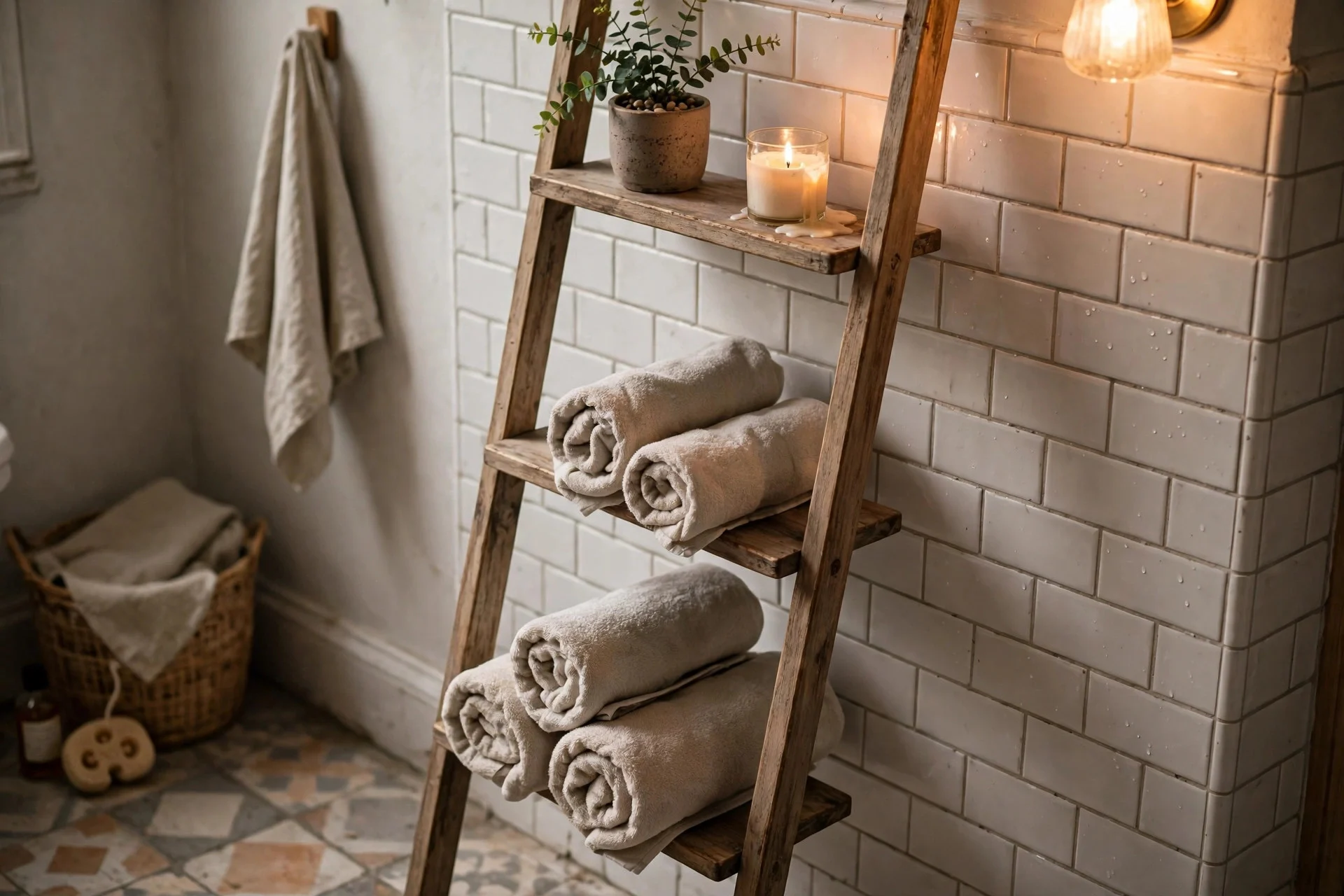
Picture rails are a quiet bit of genius for small homes: a long slim rail lets you swap prints and photos in seconds, with no new holes every time your taste changes. I ran two rails up the wall in my office — one high, one low — and now the art above my desk changes with the seasons. It cost very little and it stopped me buying frames I did not need.
Lean a mix of sizes along each rail, overlapping them slightly so it feels layered rather than lined up like soldiers. Keep one or two favourites at eye level and let the smaller pieces fill in around them.
Try this: start with three pieces on the lower rail and one tall piece on the upper rail, then add slowly over a month instead of filling both rails in one go.
11. Wall-Mounted Baskets That Store and Decorate at Once
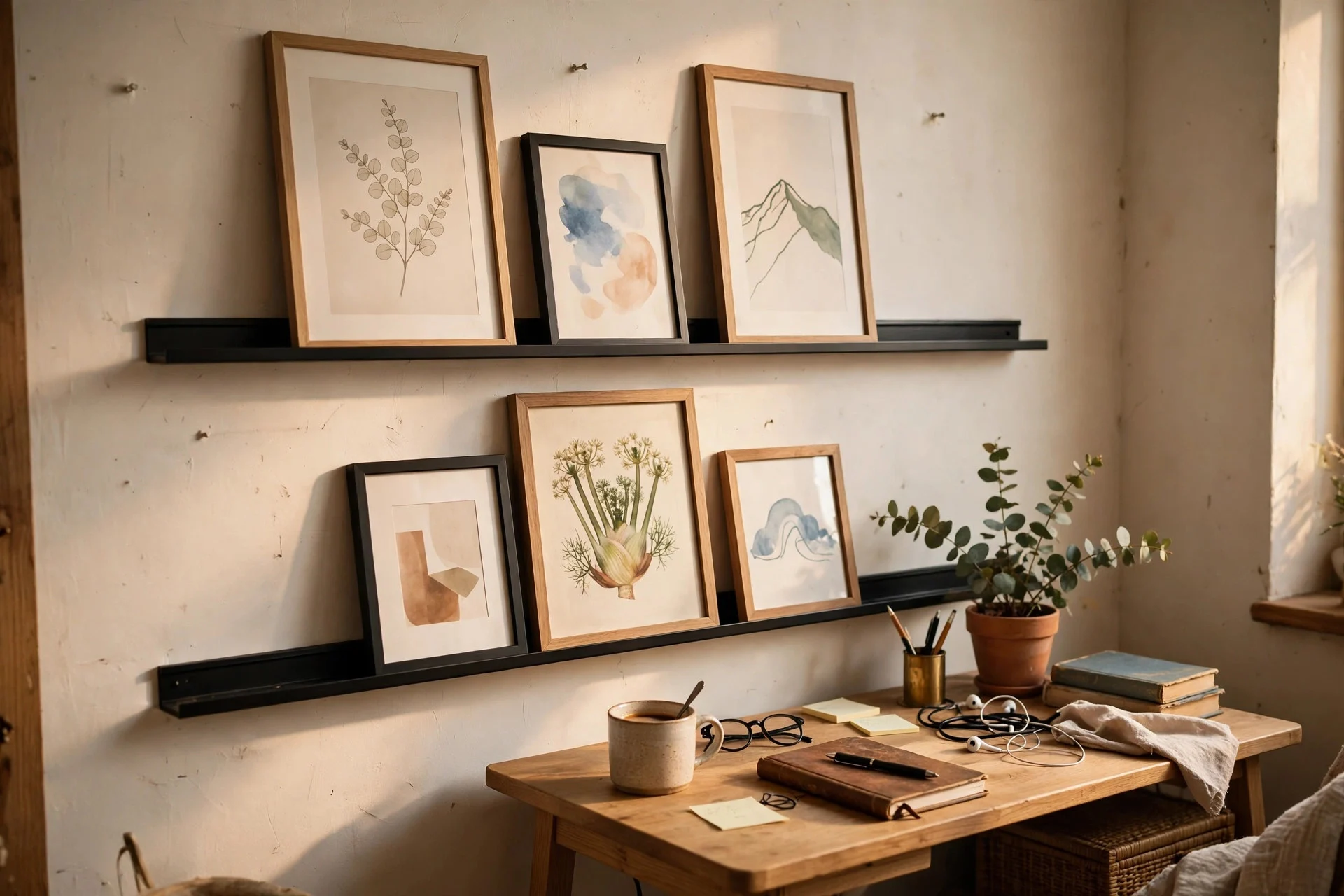
Baskets on the wall sound odd until you see how good they look — a cluster of flat woven baskets adds pattern, texture and a handmade feel, and the deeper ones quietly store scarves, hats and dog leads by the front door. I hung three by my entryway after the hall table kept collecting clutter, and the mess finally had a place that was not the floor.
Mix sizes and weaves but keep the colours in one family so the group reads as a set. Hang the deepest basket at hand height for everyday bits, and the flatter, prettier ones higher up where they are mostly for show.
Try this: arrange the baskets on the floor first, take a photo from the doorway, and hang them in that exact shape so the cluster feels balanced.
12. A Tall Narrow Clock as the Room’s Quiet Anchor
A tall, narrow clock gives a small room a calm focal point without the noise of a busy gallery wall. Mine is a simple dark-framed piece on the kitchen wall, and it anchors the whole side of the room — everything else on that wall, a hook and a small print, just falls into place around it. It is useful too, which is more than most wall decor can say.
Hang it where you can actually read it from where you sit or cook, and keep the wall around it fairly clear so the clock gets to be the star. A slim shape suits a narrow wall; a wide round clock would fight for space the wall does not have.
Try this: cut a paper clock shape to size and tape it up for a weekend, checking from your usual seat that you can read it without craning your neck.
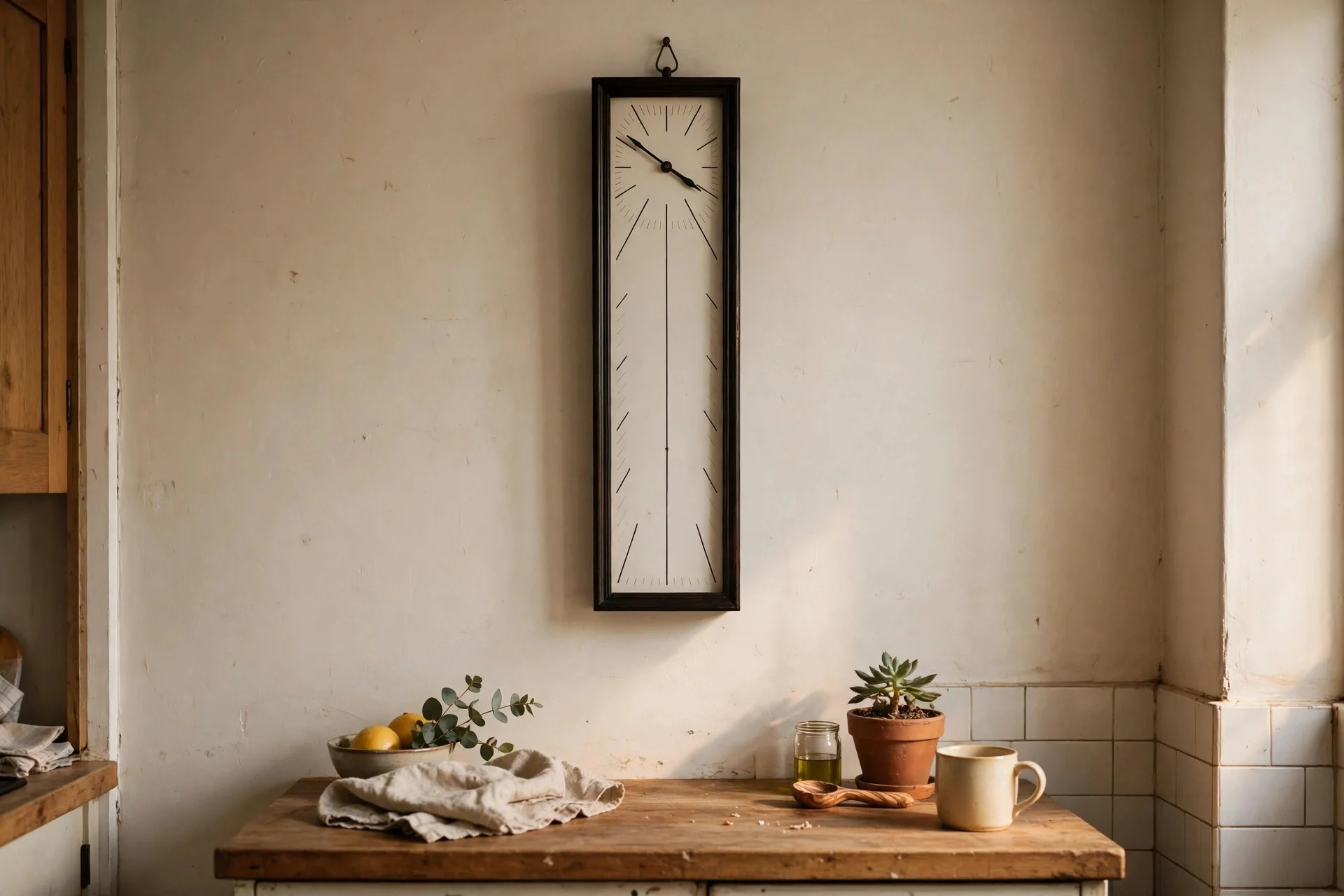
13. Hanging Planters in a Row Down One Slim Wall
A row of hanging planters turns a plain slim wall into a green column that grows upward instead of outward. I strung three small planters down the wall beside my kitchen window, each at a different height, and the herbs now live where I cook instead of crowding the sill. The wall feels alive, and the windowsill is free for the washing-up bowl, which is where it always ends up anyway.
Use light pots and strong hooks, and keep the spacing even so the row reads as one neat line. Herbs are the obvious pick for a kitchen wall, but trailing plants work just as well in a living room or bedroom.
Try this: hang the empty pots first and water a test jug over the sink to check drips, then plant them once you know nothing leaks onto the floor.
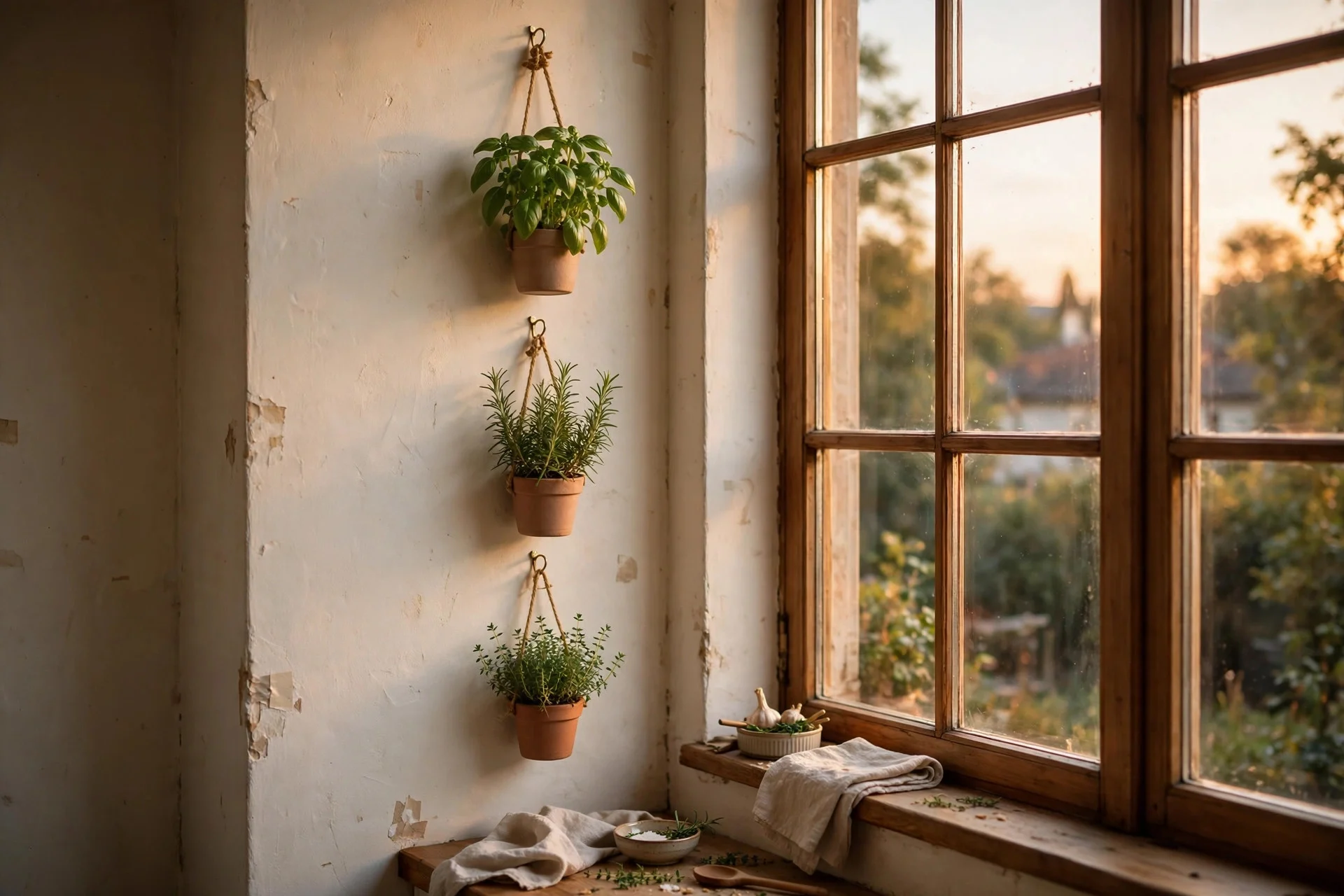
14. Vertical Stripes of Wood Slats Behind the Sofa
Vertical wood slats are the fastest way I know to make a short wall feel taller — the lines pull your eye straight to the ceiling. I put a narrow panel of slim oak slats behind my sofa, just wide enough to frame it, and the seating area suddenly felt like a proper zone instead of furniture pushed against a wall. It cost less than a new sofa and changed the room more.
Keep the panel narrow, about the width of the sofa, and stop it a few centimetres short of the ceiling so it reads as a feature, not a fence. Pale wood keeps a small room bright; dark wood can close it in if the panel gets too wide.
Try this: tape the panel’s edges on the wall first and sit on the sofa to check the slats frame you instead of looming over you.
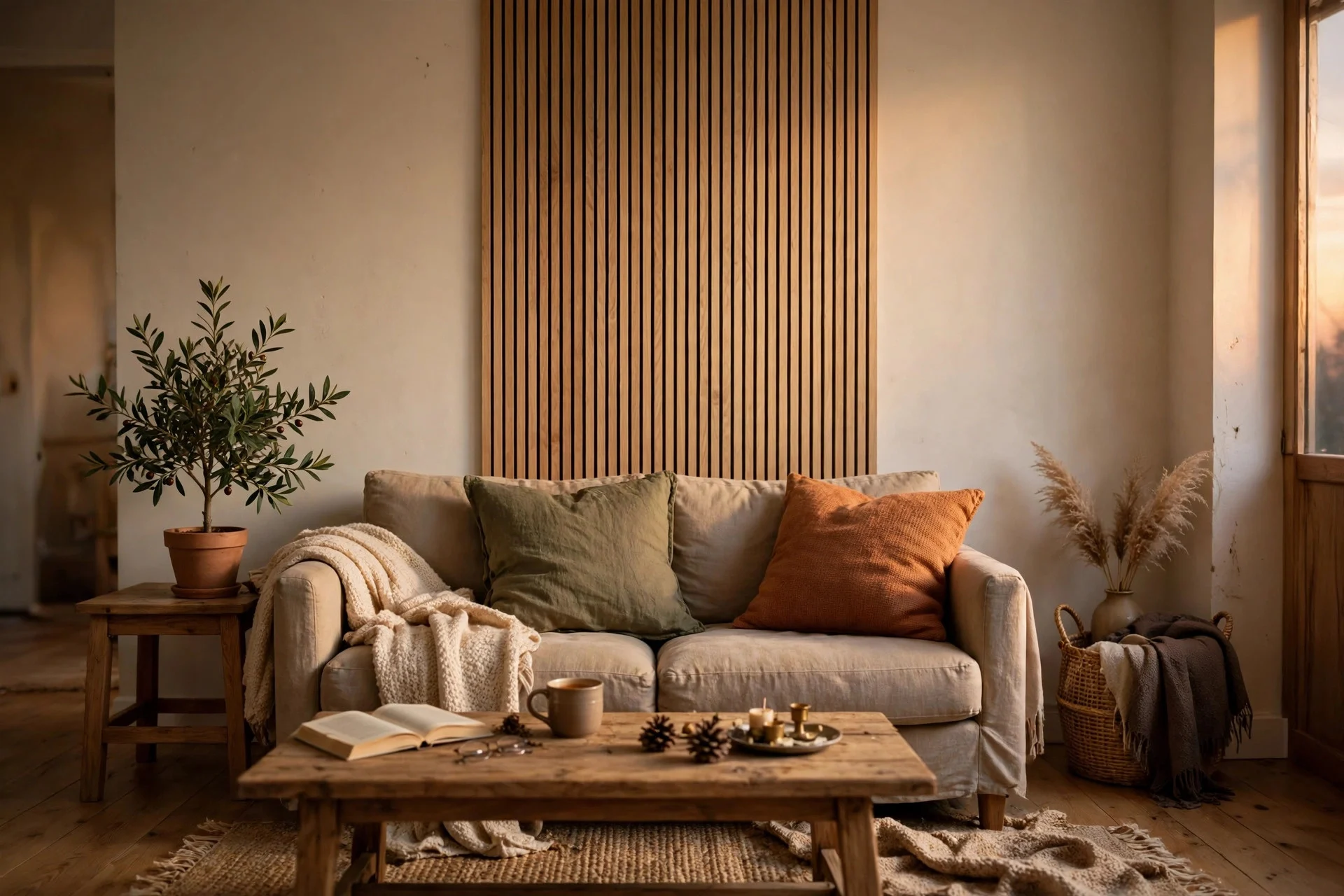
15. A Small Wall Desk That Folds Away When You’re Done
A fold-down wall desk is a small home’s best compromise: a real work surface when you need it, a flat panel on the wall when you do not. I fitted one in my bedroom corner; on work days it holds my laptop and notebook, and on Sundays it folds up and the room is a bedroom again. It beats a permanent desk eating floor space all week for a few hours of use.
Mount it at proper desk height, about 73 cm, and add a slim shelf above for the bits you use daily. Keep the surface clear when you fold it away — a desk that will not close because of clutter is just a shelf with a door.
Try this: sit in your chair and mime typing before fixing the height — a desk even a few centimetres off will ache by lunchtime.
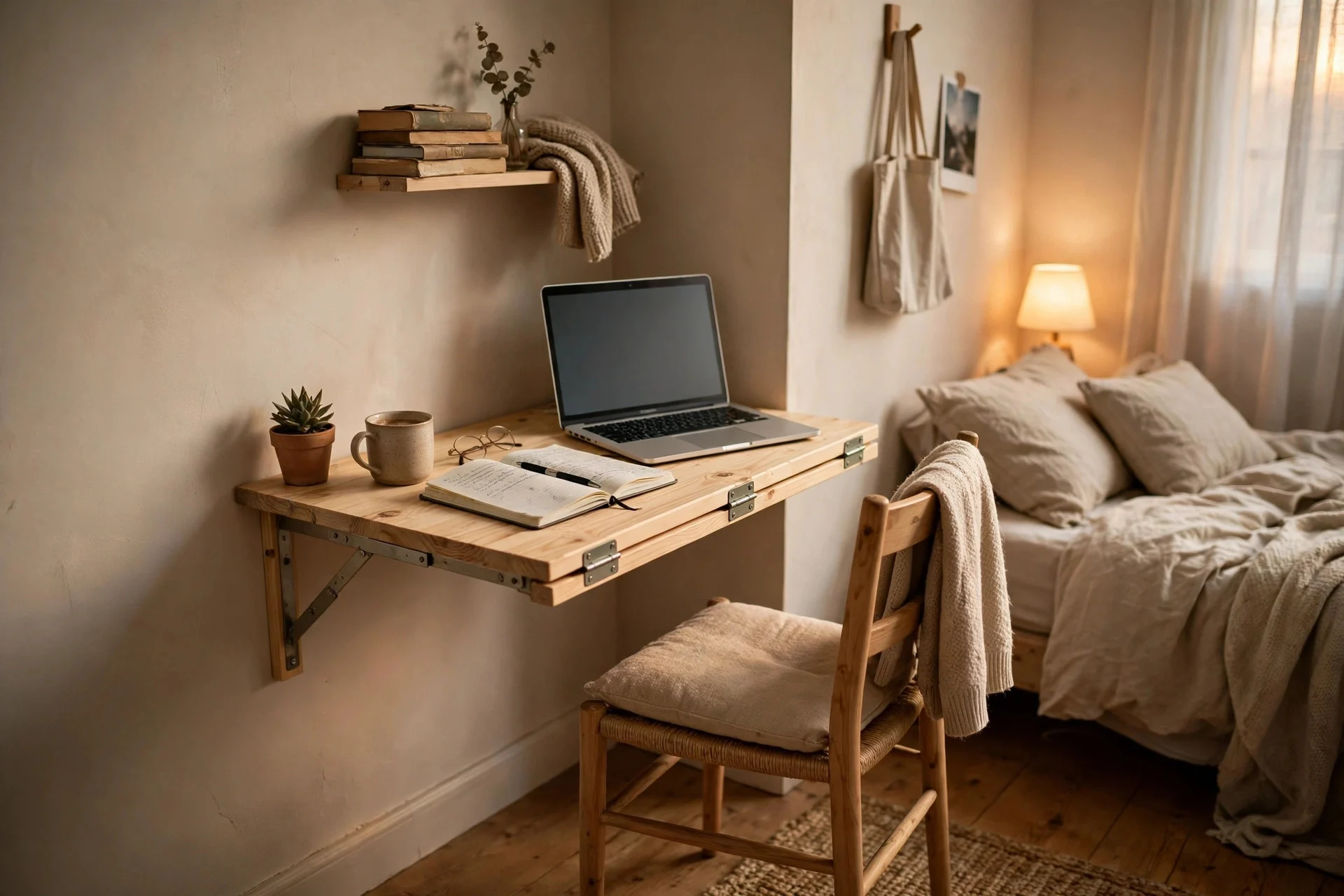
16. Layered Wall Lights That Make a Small Room Glow
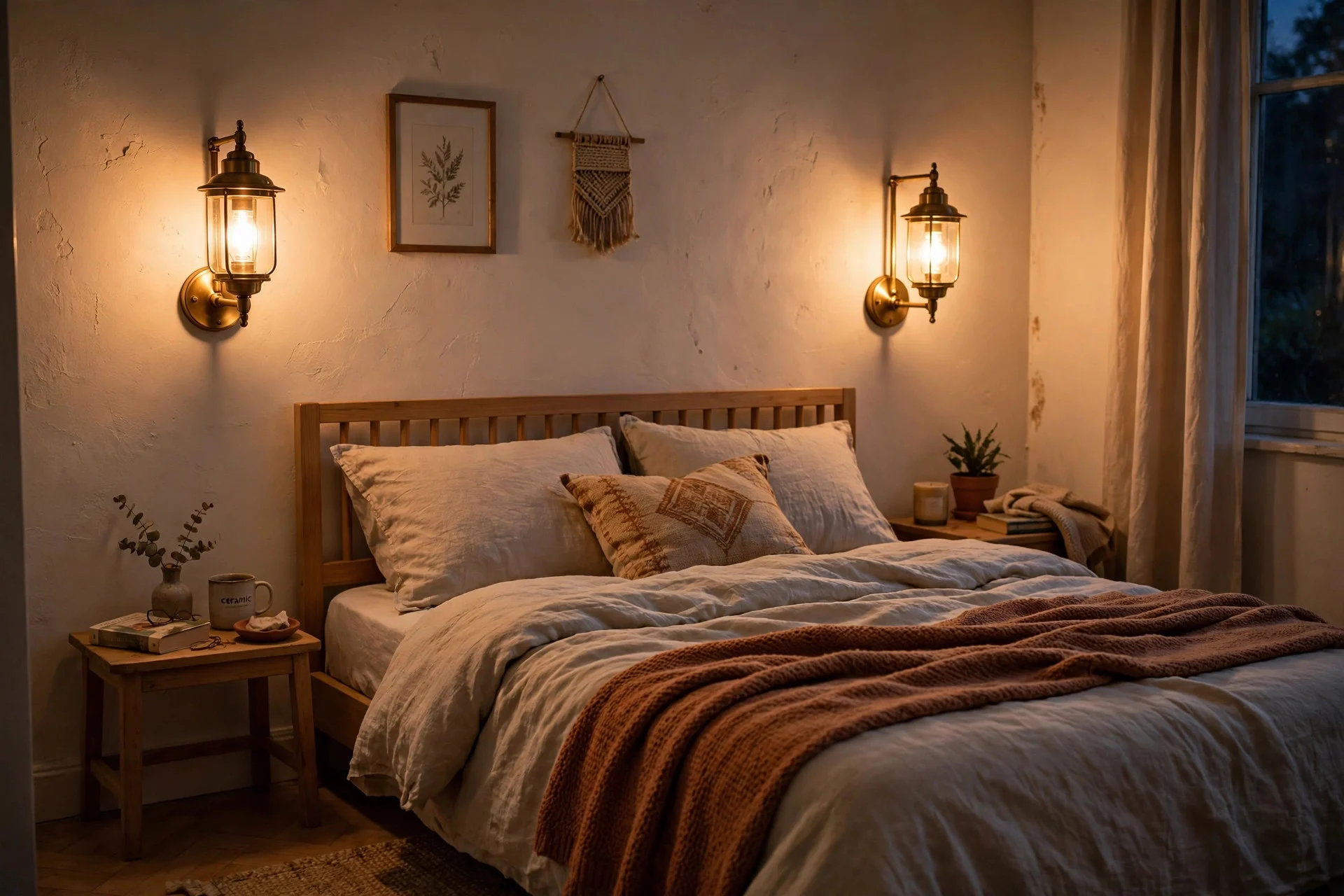
Wall lights are the last piece of the puzzle, because in a small room the lighting is the decor — slim sconces or tiny picture lights make the wall itself glow, and the room feels warm and finished after dark. I added two small brass sconces either side of my bed and have not switched the big ceiling light on in the evening since. The room feels softer, taller, and honestly a bit posh.
Place lights at eye level or just above, and choose warm bulbs so the glow feels like candlelight rather than an office. If you rent, plug-in sconces with a cord cover give you the same look with no electrician and no holes in the plaster.
Try this: test the bulb colour at night before you commit, since a cool white bulb will undo all the warmth your wall decor worked so hard to build.
Frequently Asked Questions
How do I decorate a small wall without making the room feel crowded?
Pick one idea per wall and give it space. A single large piece, a slim column of frames or one tall mirror will do more than a wall full of small bits, because your eye gets one calm place to rest.
What is the best wall decor for a rental?
Leaning mirrors, ladder shelves, picture rails and command-hook hangings are all renter-friendly. They need few or no holes, they move easily, and they come down cleanly when you leave.
Should wall decor in a small room go up high or stay at eye level?
Both, but with a purpose. Keep your main piece at eye level, then use the height above it for shelves, plants or art that pulls the eye upward and makes the ceiling feel taller.
How many pieces of wall decor does a small room need?
Usually one feature per wall is plenty. If a wall already has a shelf or a mirror, let that be the feature and leave the next wall plain — empty space is part of what makes a small room feel bigger.
Final Thoughts
Small walls are not a problem to solve, they are a nudge to choose well. Start with the one idea that fixes your biggest frustration — the dark corner, the cluttered floor, the bare wall behind the sofa — and live with it for a week before you add anything else. The rooms that feel biggest are rarely the ones with the most on their walls; they are the ones where every piece earned its place.