
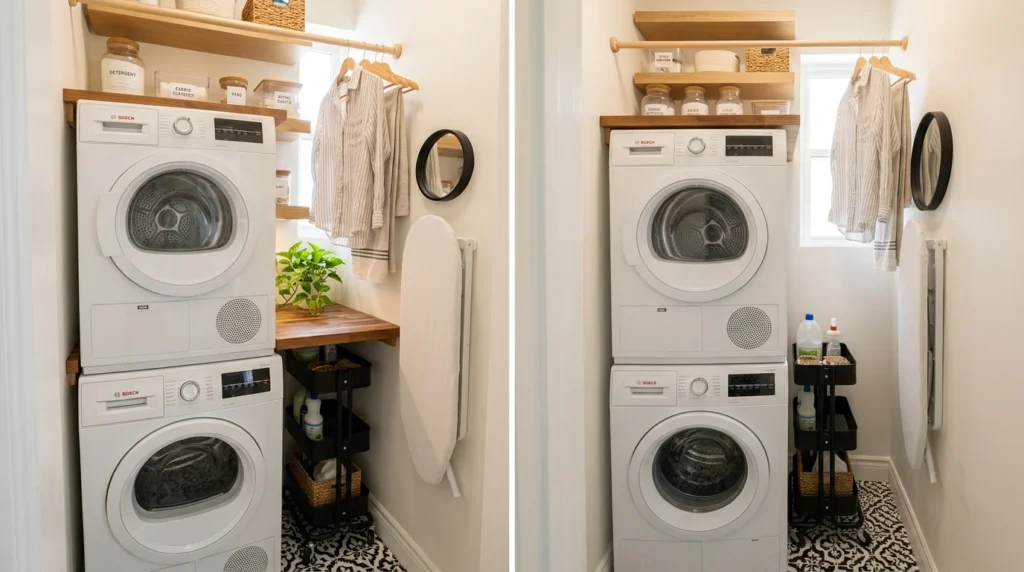
My laundry room is barely bigger than a closet, technically it might actually qualify as one, tucked into a narrow nook off the hallway with just enough space for a stacked washer and dryer and about eighteen inches of walking room in front of them. For the first year I lived here, that’s all it was, a functional but completely unstyled utility space I walked past without a second thought. It wasn’t until I started genuinely dreading doing laundry, not because of the task itself but because the space felt so cramped and disorganized, that I finally decided to see how much I could actually improve a room that small.
If your own laundry room is working with similarly tight square footage, here are 17 ideas, each explained in detail, based on what I actually implemented in my own narrow space and what I’ve seen work well in other small laundry rooms along the way.
1. Stack Your Washer and Dryer
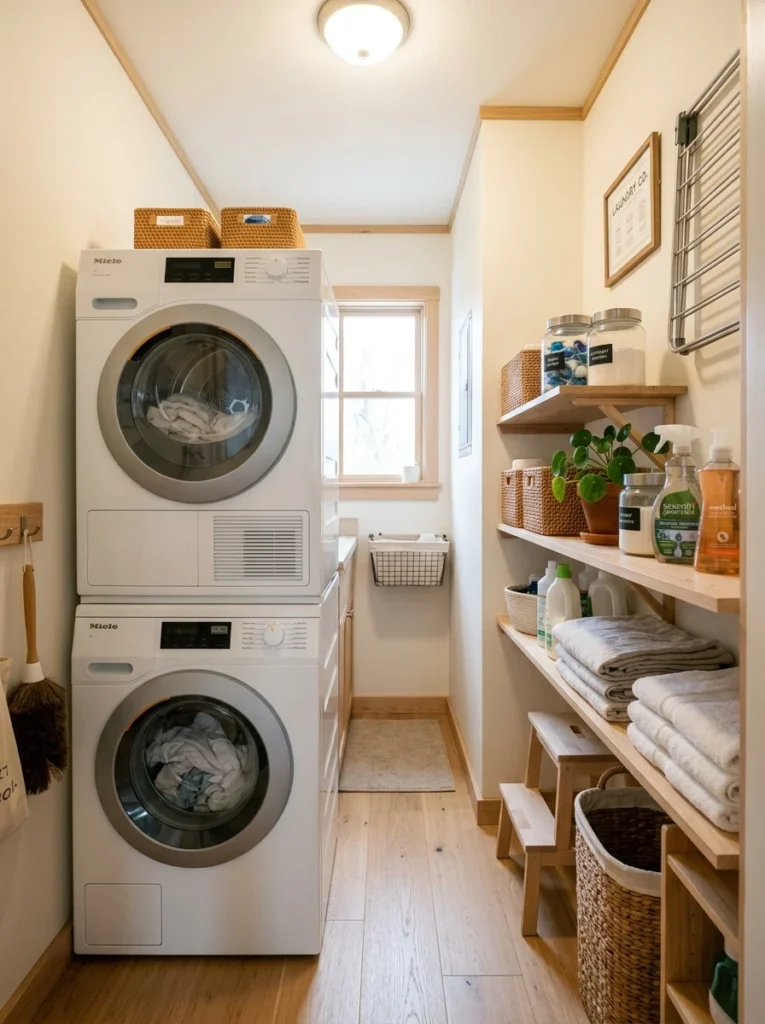
If you haven’t already, switching from side-by-side machines to a stacked configuration is often the single biggest space-saving change available in a small laundry room, and it’s exactly what made my own narrow nook functional in the first place. A stacked pair typically needs only the footprint of a single machine rather than two side by side, freeing up several feet of floor space that can then be used for storage, a folding surface, or simply more comfortable walking room. Not all washers and dryers are designed to be stacked, so I’d recommend checking your specific models’ compatibility or purchasing a matched stackable set if you’re starting from scratch, along with the proper stacking kit that securely bridges the two machines. This configuration does mean the dryer’s lint trap and controls sit higher up, which is worth considering if you have mobility concerns or simply prefer not to reach overhead regularly. For most small laundry rooms, though, the square footage gained from stacking rather than placing machines side by side is dramatic enough that it’s usually worth any minor accessibility tradeoff.
2. Install a Countertop Over the Machines
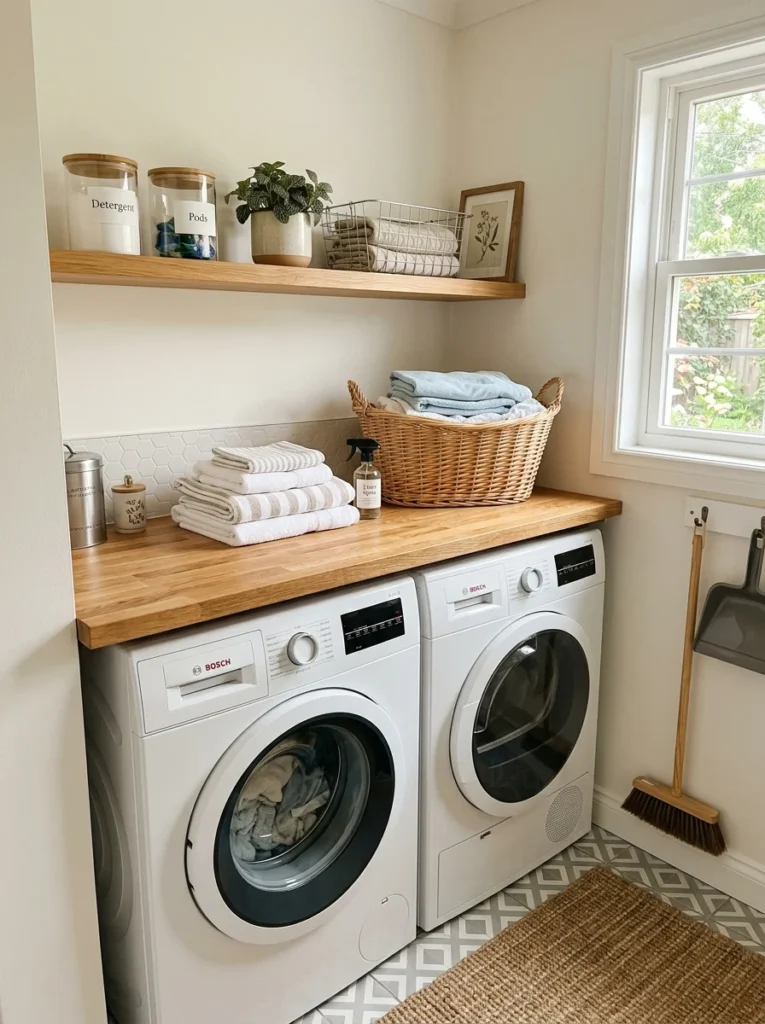
Adding a simple countertop that spans the top of a stacked washer and dryer, or bridges two side-by-side machines, instantly creates usable folding and sorting space in a room that might not otherwise have room for a dedicated table or counter. I had a basic butcher block countertop cut to fit snugly above my stacked machines, and it’s become the single most useful addition in the entire room, giving me somewhere to actually fold laundry instead of piling it on my bed or the floor. This works particularly well with stacked configurations, since the countertop sits at a comfortable working height once it clears the top of the dryer, though it can also be installed as a floating shelf-style counter above side-by-side machines with enough clearance built in. I’d recommend choosing a durable, moisture-resistant material, quartz, laminate, or a properly sealed butcher block, since laundry rooms deal with humidity and occasional water exposure that some materials handle better than others. Even a simple, unfinished plywood counter, painted or sealed appropriately, can achieve the same functional benefit on a tighter budget if a stone or hardwood surface isn’t feasible.
3. Use Vertical Wall Space for Storage
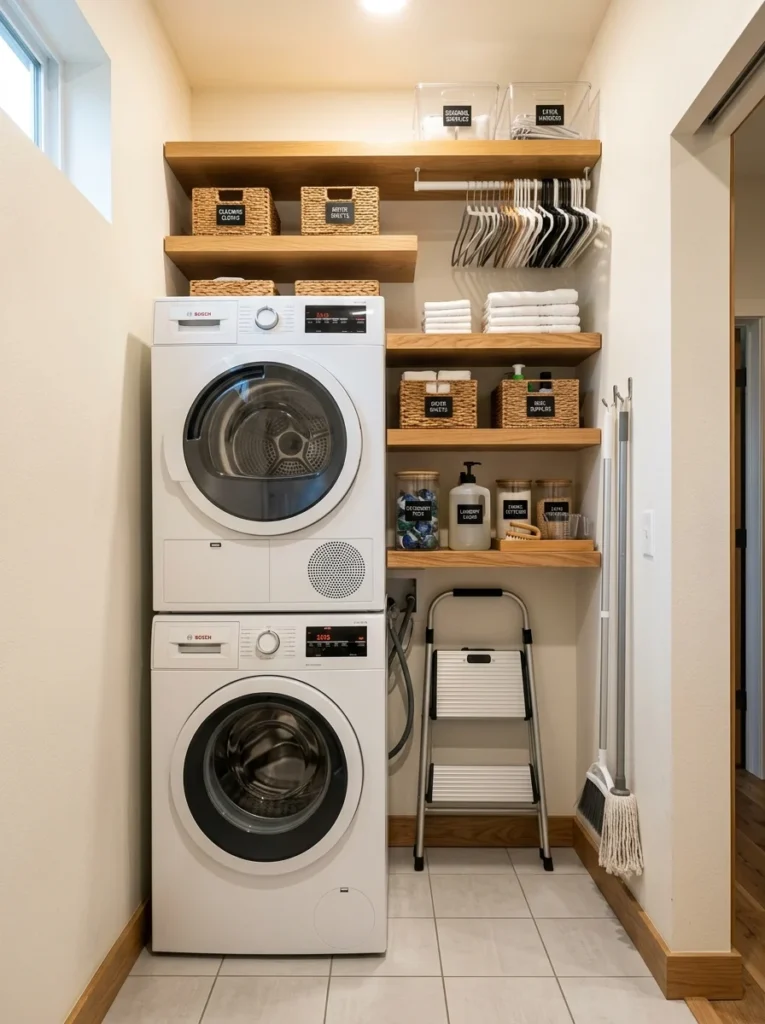
In a room too small for traditional cabinets or a closet, the walls themselves become your best remaining storage opportunity, and I installed floating shelves stretching nearly to the ceiling above my machines specifically because floor space simply wasn’t available for anything else. Vertical storage takes advantage of space that would otherwise go completely unused, particularly above the washer and dryer where most small laundry rooms have several feet of empty wall extending up toward the ceiling. I keep detergent, dryer sheets, and stain treatment products on the lower, more accessible shelves, while less frequently used items, spare filters, extra hangers, seasonal items, live higher up where I don’t need daily access. This approach requires a step stool for the highest shelves in my case, which is a reasonable tradeoff for the significant additional storage capacity gained in a room with essentially no other available space. If your walls can’t support heavier shelving, even a series of simple hooks or a slim pegboard section can provide meaningful storage without requiring the structural support that deeper shelves typically need.
4. Choose a Slim Rolling Cart
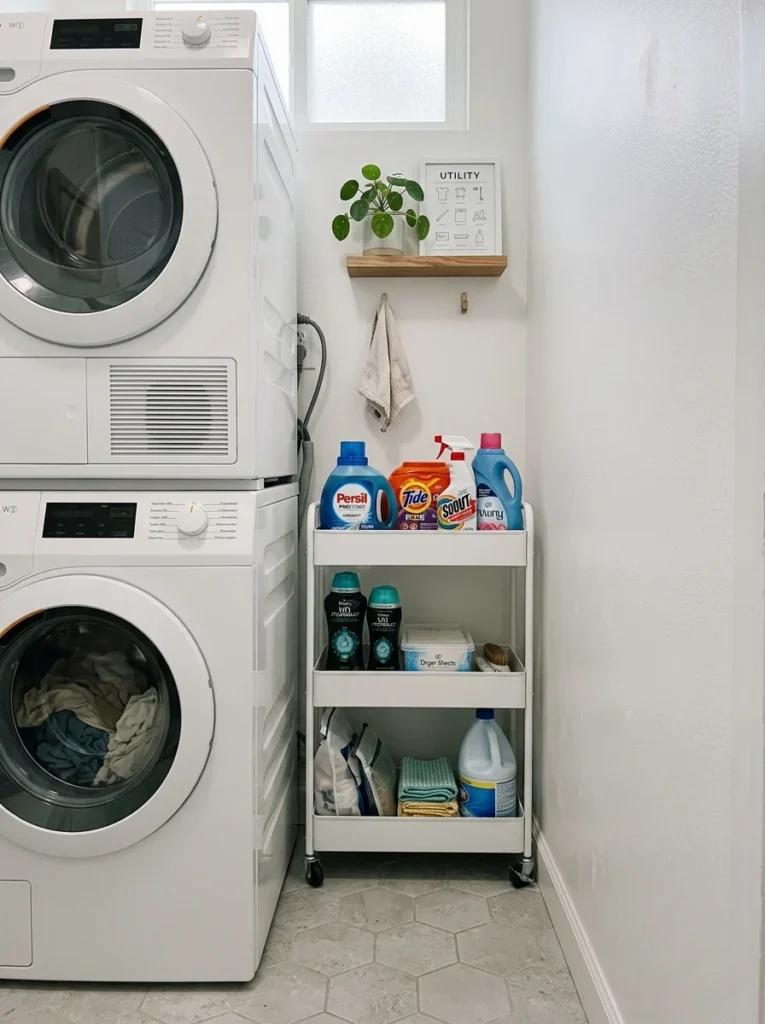
A narrow rolling cart, sized to fit into the gap between your washer and dryer or an adjacent wall, provides mobile storage that can be pulled out when needed and tucked away completely out of sight the rest of the time. I keep mine in the roughly four-inch gap beside my dryer, stocked with detergent pods, a stain stick, and a small sewing kit, and being able to roll it out for easy access during laundry tasks then push it back into that otherwise wasted sliver of space has been surprisingly useful. This idea works particularly well in laundry rooms with awkward, narrow gaps that aren’t wide enough for standard shelving or cabinets but are just wide enough for a slim, purpose-built cart. I’d recommend measuring that gap carefully before purchasing, since these slim carts come in various widths, and even a half-inch miscalculation can mean the difference between it sliding in easily or not fitting at all. The wheels also add genuine convenience, letting you bring supplies closer to wherever you’re actually working rather than reaching awkwardly into a fixed, stationary storage spot.
5. Install a Fold-Down Ironing Board
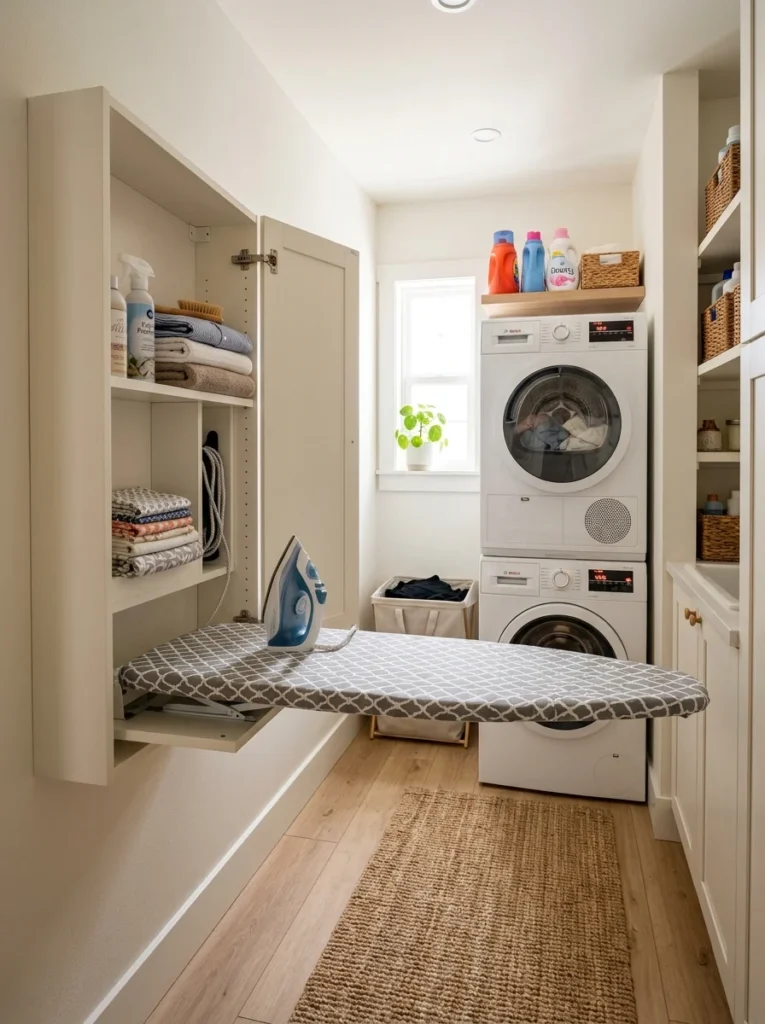
Rather than dedicating floor space to a standalone ironing board that has to be set up and broken down every time, a wall-mounted, fold-down ironing board tucks flat against the wall when not in use and swings out only when actually needed. I installed mine in a cabinet-style unit that looks like a simple built-in cabinet door until you open it to reveal the full ironing board and a small storage compartment for the iron itself. This is one of those upgrades that made a disproportionately large difference in how often I actually iron things, since removing the friction of setting up a bulky standalone board means I’m far more likely to just quickly iron something rather than putting it off. Installation typically involves mounting the unit between wall studs, similar to a recessed medicine cabinet, so this works best planned during a renovation or at least with access to open wall space rather than as a simple surface-mount addition to an already finished wall. For anyone who irons only occasionally, a slimmer wall-mounted hook designed to hold a standard ironing board vertically against the wall achieves a similar space-saving effect with a considerably simpler installation process.
6. Add a Hanging Rod for Air-Drying
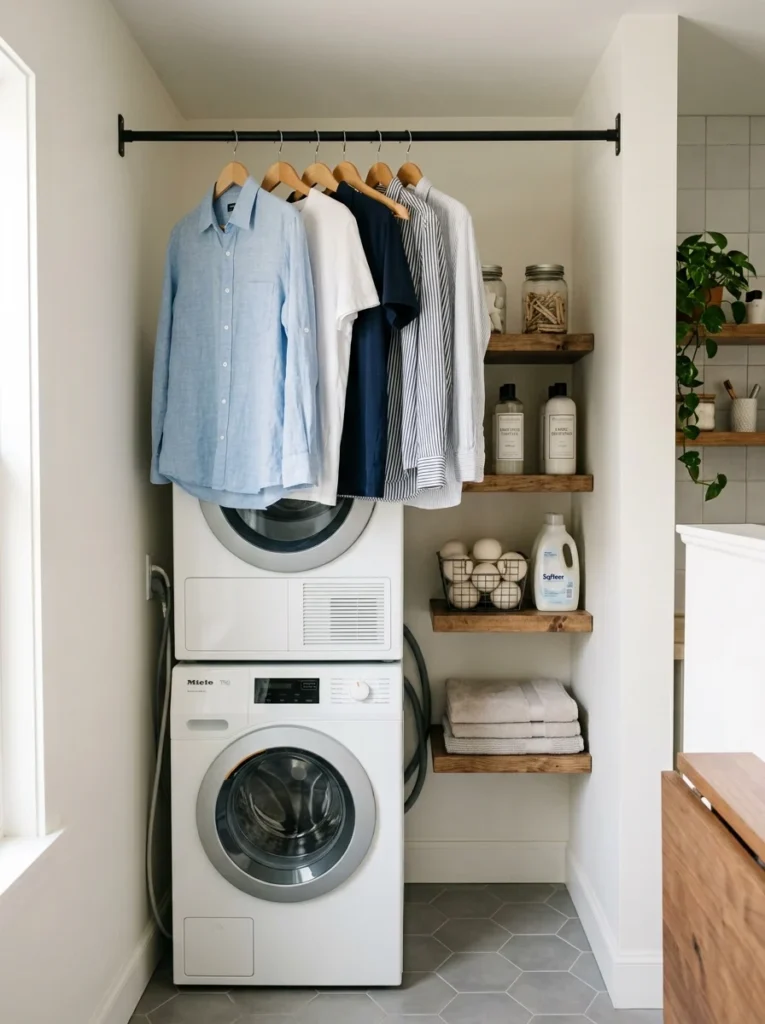
A simple tension rod or a wall-mounted rod installed above head height provides somewhere to hang clothes directly from the dryer or items that need to air dry, without requiring a bulky standalone drying rack that would otherwise eat up precious floor space in a small room. I mounted mine directly above my washer and dryer, high enough that I don’t bump my head, but easily reachable for hanging a few items straight from the wash. This solves a genuine problem specific to small laundry rooms, since a full folding drying rack, while useful, often can’t be permanently set up in a space this tight without blocking the room’s already limited walking area. For rooms with enough width, a retractable rod that pulls out from a wall-mounted housing and pushes back in when not needed offers even more flexibility, giving you drying space exactly when you need it without any permanent visual footprint the rest of the time. I’d recommend positioning this rod carefully in relation to your light fixture and any cabinet doors, since a rod hung with wet, heavy clothing needs enough clearance that it isn’t constantly interfering with other parts of the room’s daily function.
7. Use Clear, Labeled Storage Containers
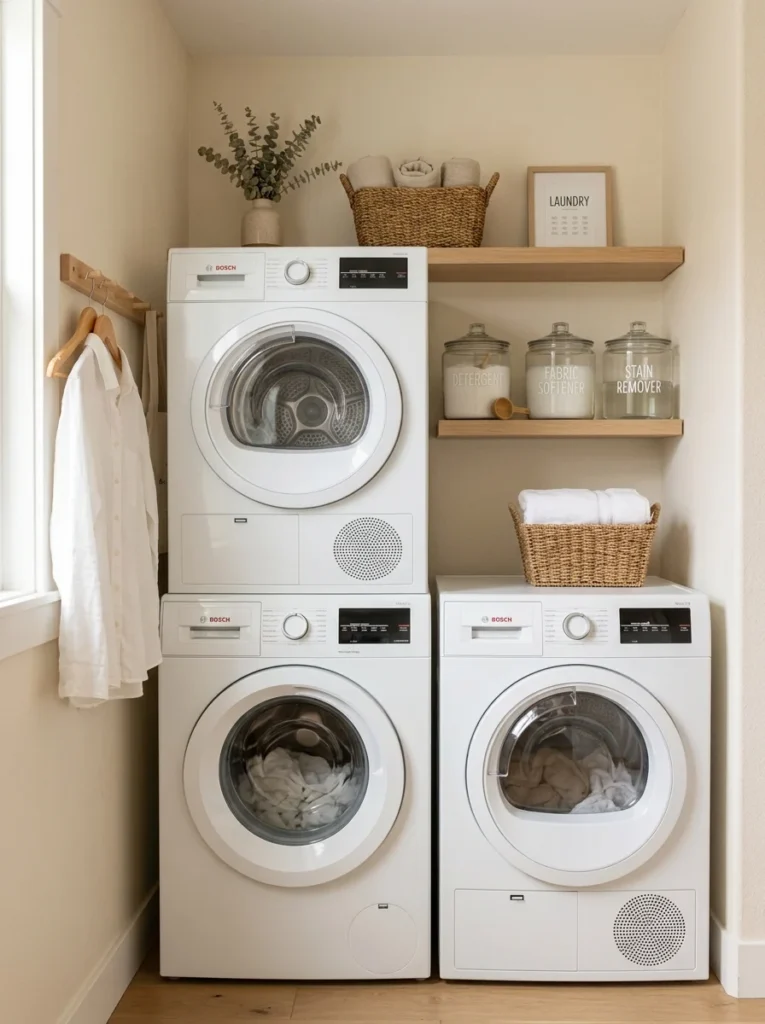
Switching from a mismatched assortment of half-used detergent boxes and bottles to matching, clear, labeled containers made an outsized difference in how organized and visually calm my small laundry room feels, even though the actual storage capacity didn’t change at all. I decanted detergent, fabric softener, and stain remover into simple glass or acrylic containers with clean labels, and the uniform look genuinely makes the shelves feel curated rather than cluttered, which matters even more in a small space where every visible surface has an outsized visual impact. Clear containers also let you see at a glance when you’re running low on something, which is a small practical benefit beyond the purely aesthetic improvement. I’d recommend choosing containers sized specifically to your available shelf depth and height, since generic large containers can end up wasting valuable vertical space that could otherwise hold an additional shelf or two. This is a relatively low-cost project overall, and it’s one of the easiest ways to make a genuinely tiny laundry room feel considerably more put-together without any structural changes to the room itself.
8. Install a Pull-Out Hamper System
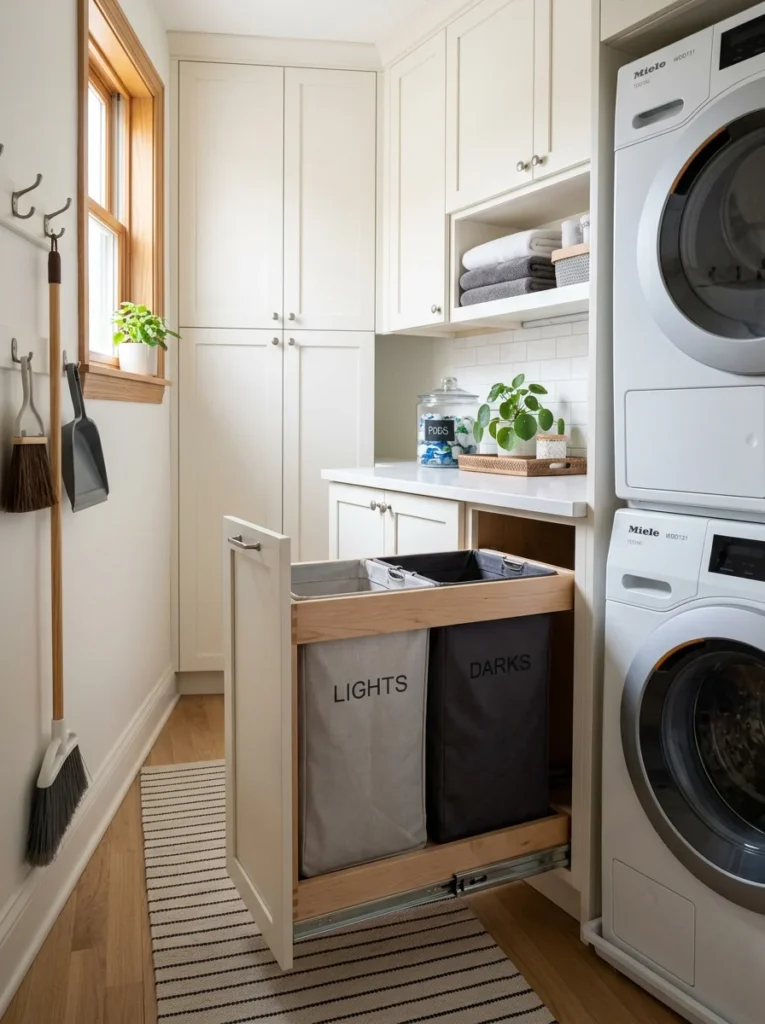
Rather than a freestanding hamper taking up floor space, a pull-out hamper built into a base cabinet or a narrow gap beside your machines keeps dirty laundry contained and out of sight until it’s actually time to wash it. I built a simple slide-out frame holding two fabric bins, one for lights and one for darks, into the narrow space beside my dryer, and having laundry pre-sorted before it even reaches the washer has genuinely saved time on wash day. This works particularly well if you have even a few inches of unused space somewhere in the room, since the hamper frame itself can be relatively slim while still holding a meaningful volume of laundry within the pull-out bins. For rooms without any spare gap space at all, a hamper that slides directly beneath a raised washer and dryer pedestal, if your machines are elevated on stands, can achieve a similar space-saving effect by using vertical clearance that would otherwise go completely unused. I’d recommend choosing bins with sturdy handles or an easily removable design, since you’ll want to be able to lift the sorted laundry directly to the washer without having to transfer it into a separate basket first.
9. Choose Light, Reflective Colors
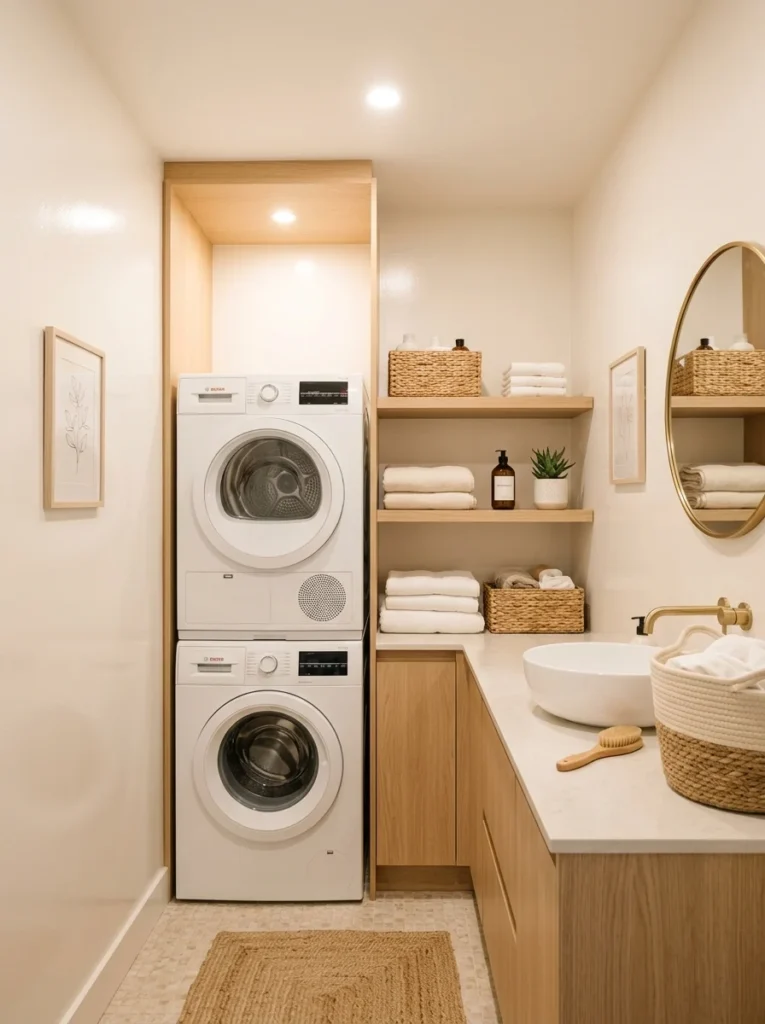
In a room as small as mine, painting the walls a bright white rather than any darker color made a genuinely noticeable difference in how spacious the room feels, since light colors reflect available light rather than absorbing it the way darker tones do. I also chose a glossy rather than matte paint finish specifically for the laundry room, since the slight sheen bounces additional light around the space, an effect that matters more in small, often windowless rooms like laundry closets than it would in a larger room with ample natural light. Beyond wall color, I’d recommend applying the same principle to any cabinetry or shelving installed in the room, choosing white or light wood tones rather than dark finishes that can make an already tight space feel even more closed in. This doesn’t mean the room needs to be entirely white and sterile looking, even a single light, bright accent color used sparingly can add personality without sacrificing that overall sense of openness that pale, reflective tones provide in a genuinely small footprint.
10. Add a Mirror to Create Depth
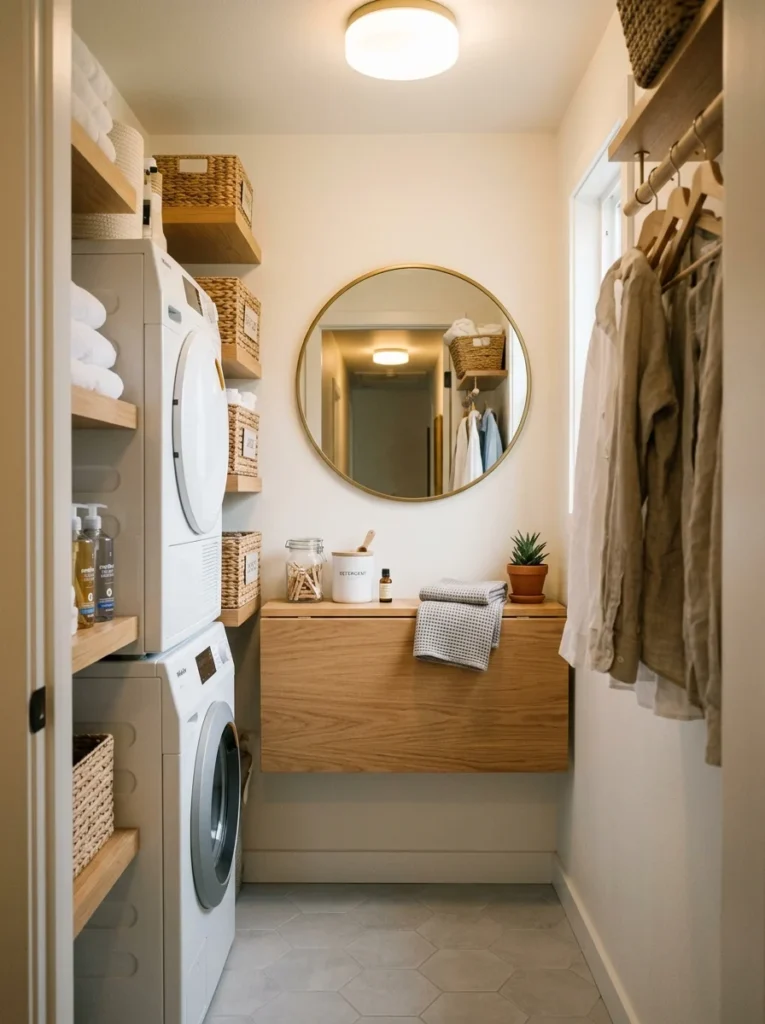
Similar to the light color strategy, a mirror mounted somewhere in a small laundry room, even a relatively modest sized one, adds the illusion of additional depth and space by reflecting whatever light and room detail exists on the opposite wall. I hung a simple round mirror above my folding counter, and beyond the practical benefit of being able to check my appearance before heading out, it genuinely makes the narrow room feel less like a closet and more like an actual finished space. This works particularly well positioned to reflect a light source, whether that’s a window or an overhead fixture, maximizing the light-bouncing effect rather than just reflecting a blank wall. I’d recommend choosing a mirror with a frame that complements your other hardware finishes in the room, tying it visually into the same coordinated look that matters in any well-designed space, regardless of how small the room actually is. Even in a room with essentially no natural light at all, a well-placed mirror reflecting your artificial lighting can still meaningfully improve how open and airy the space feels compared to leaving that same wall completely blank.
11. Use a Fold-Out or Wall-Mounted Table
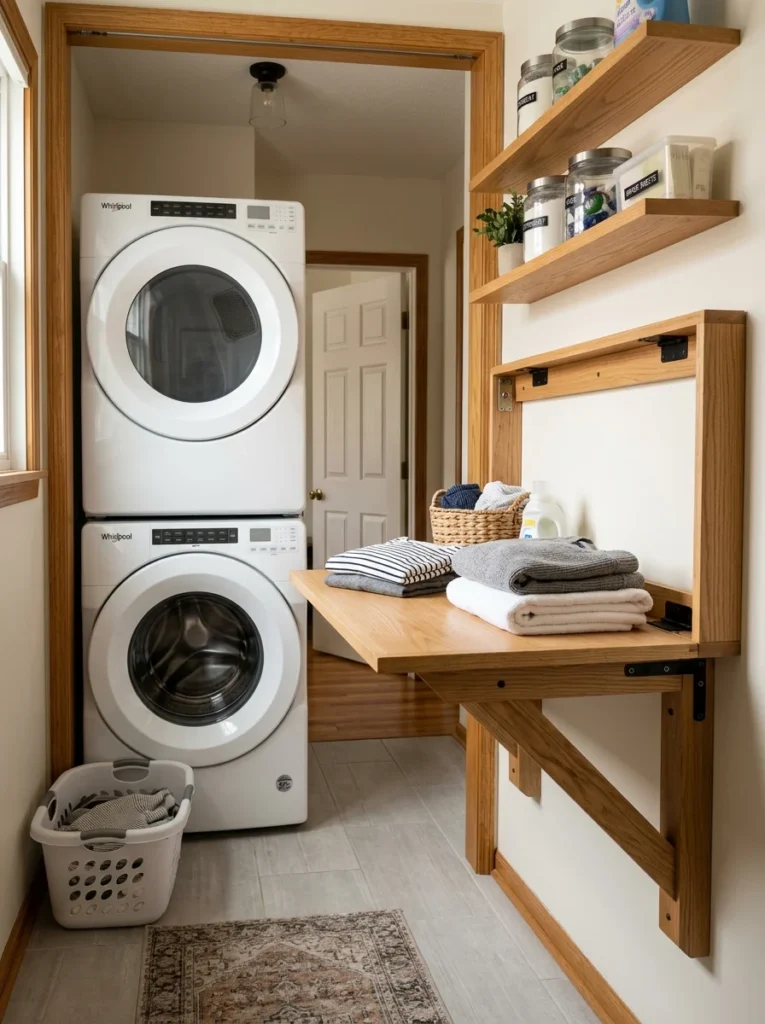
For folding laundry in a room too narrow for a permanent counter, a fold-down table mounted directly to the wall provides that same flat working surface but collapses completely flat when not actively in use, reclaiming the floor space the rest of the time. A friend with an even narrower laundry closet than mine installed exactly this, a simple hinged wood table that folds up against the wall and locks into place, giving her a full folding surface only when she actually needs it. This is a particularly good solution for laundry rooms so tight that even a slim fixed countertop would meaningfully obstruct the walking path between the door and the machines. I’d recommend choosing sturdy hinges and a secure locking mechanism, since a wobbly fold-down table quickly becomes more frustrating than useful if it can’t reliably support a stack of folded laundry without sagging or swinging loose. This idea pairs particularly well with the vertical wall storage mentioned earlier, since the folded-up table and the shelving above it can share the same general wall space without one interfering with the other’s function.
12. Add Under-Cabinet Lighting
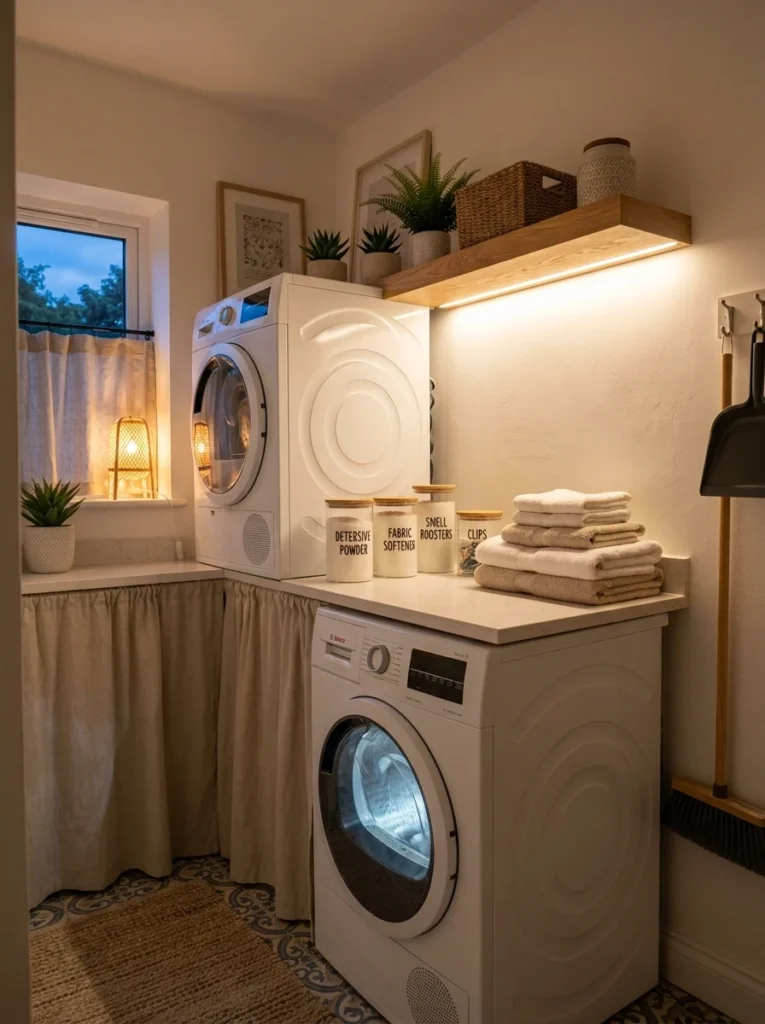
If your small laundry room includes any upper cabinets or shelving, installing simple LED strip lighting underneath illuminates your counter or folding surface directly, which matters considerably in rooms that often lack strong overhead lighting or any natural light at all. I added a battery-powered LED strip beneath my upper shelf, and the improved visibility while folding and sorting laundry made a genuine difference, especially for tasks like checking pockets or spotting stains that are easy to miss under dim, indirect overhead lighting alone. This is a relatively simple, low-cost addition, particularly with battery-powered or plug-in options that don’t require any actual electrical wiring work, making it accessible even for renters who can’t modify the room’s existing wiring. Warm-toned LED strips tend to feel more inviting than harsh, cool-toned options, consistent with lighting advice for almost any room in the home, though task-focused spaces like a laundry counter can sometimes benefit from a slightly brighter, cooler tone specifically to make fine details like stains genuinely easier to spot. This small addition genuinely punches above its cost and installation effort in terms of how much it improves the room’s daily usability.
13. Install a Utility Sink With Storage Beneath
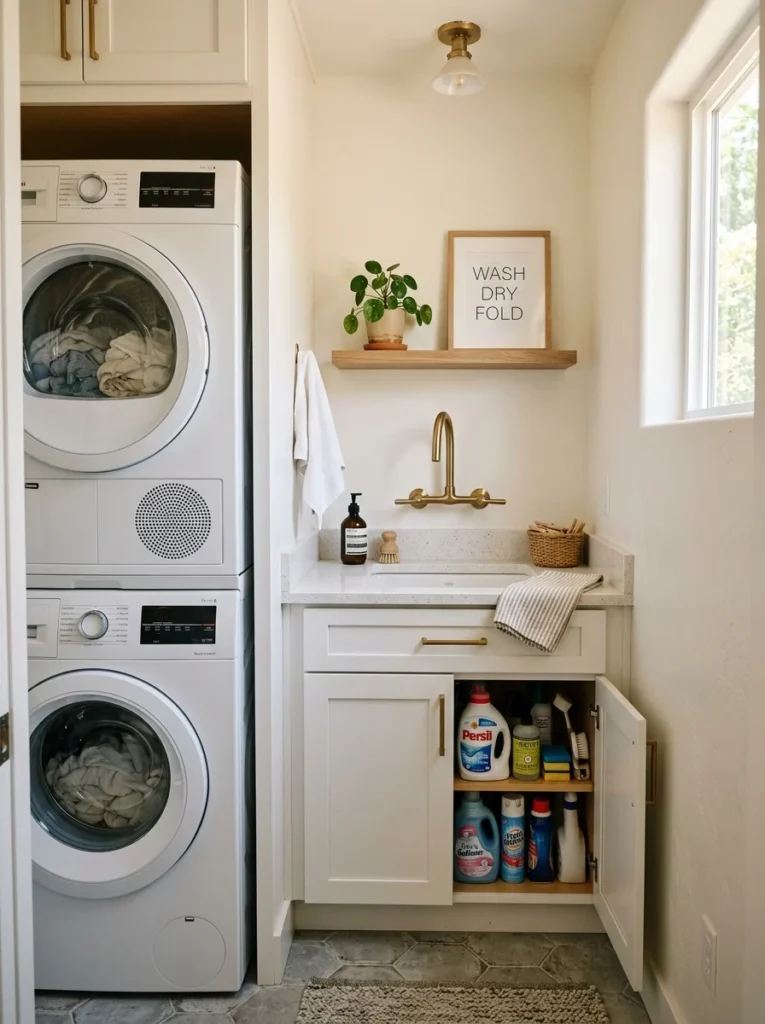
If your laundry room has plumbing access and enough space, even in a genuinely small footprint, a compact utility sink with a cabinet base beneath it adds both a functional washing spot for hand-washables or stain pre-treatment and additional enclosed storage that a simple open shelf can’t provide. I added a narrow utility sink along one wall of my laundry room, and beyond its intended function, the cabinet underneath now holds cleaning supplies that I specifically didn’t want visible on open shelving. This requires existing or newly installed plumbing, which adds cost and complexity compared to most other ideas on this list, making it more realistic as part of a larger renovation rather than a simple weekend addition to an already finished room. For genuinely tiny laundry closets without room for a full sink and cabinet combination, some manufacturers make narrow, wall-mounted utility sinks specifically designed for tight spaces, sacrificing some counter depth and cabinet storage in exchange for a considerably smaller overall footprint. If pre-treating stains or hand-washing delicate items is a regular part of your laundry routine, this functional addition tends to justify its cost and complexity more than it would for someone who rarely needs that specific capability.
14. Use the Back of the Door
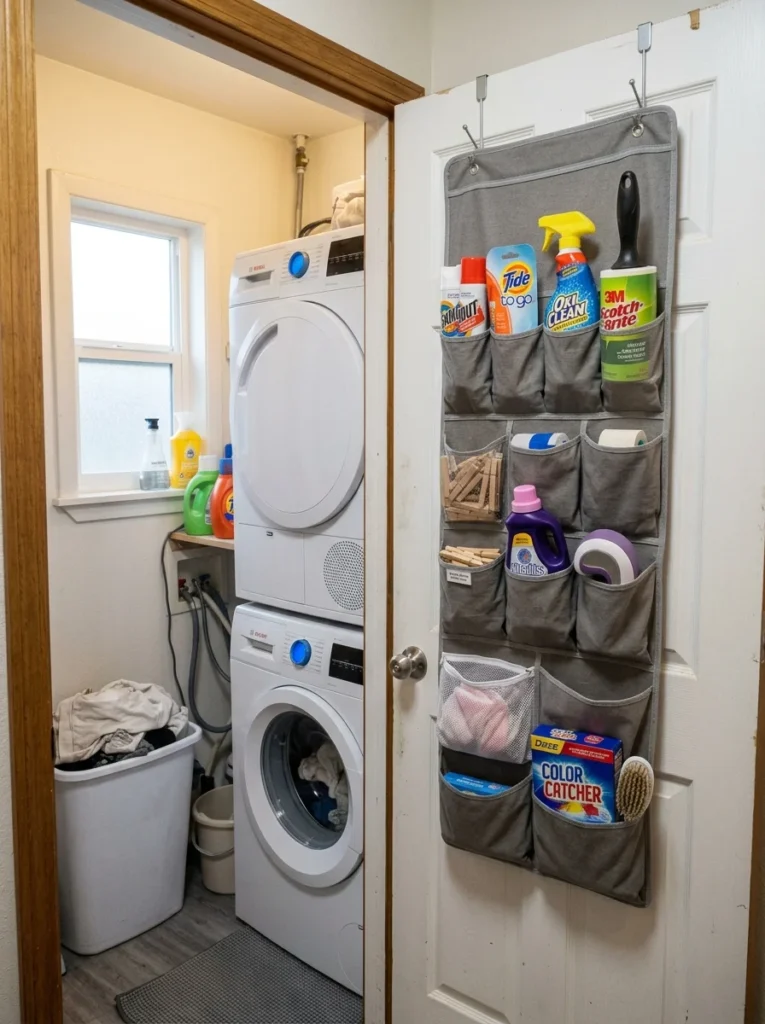
The inside of your laundry room door, an area that goes completely unused in most homes, can hold an over-the-door organizer for cleaning supplies, dryer sheets, and other small items, taking advantage of space that would otherwise contribute nothing to the room’s overall storage capacity. I installed a simple fabric over-the-door organizer with several pockets, and it now holds stain sticks, a lint roller, and spare clothespins, items I use often enough to want easily accessible but that don’t need dedicated shelf space. This is one of the lowest-cost, lowest-effort ideas on this entire list, typically requiring no tools at all since most over-the-door organizers simply hang over the top of a standard door. I’d recommend keeping items in the door organizer relatively lightweight, since anything too heavy can cause the organizer to sag or shift, potentially interfering with the door’s ability to close properly over time. This idea works particularly well as a complement to the other storage solutions on this list, filling in that one specific, often-overlooked spot rather than serving as your laundry room’s primary storage strategy on its own.
15. Choose a Patterned Floor for Visual Interest
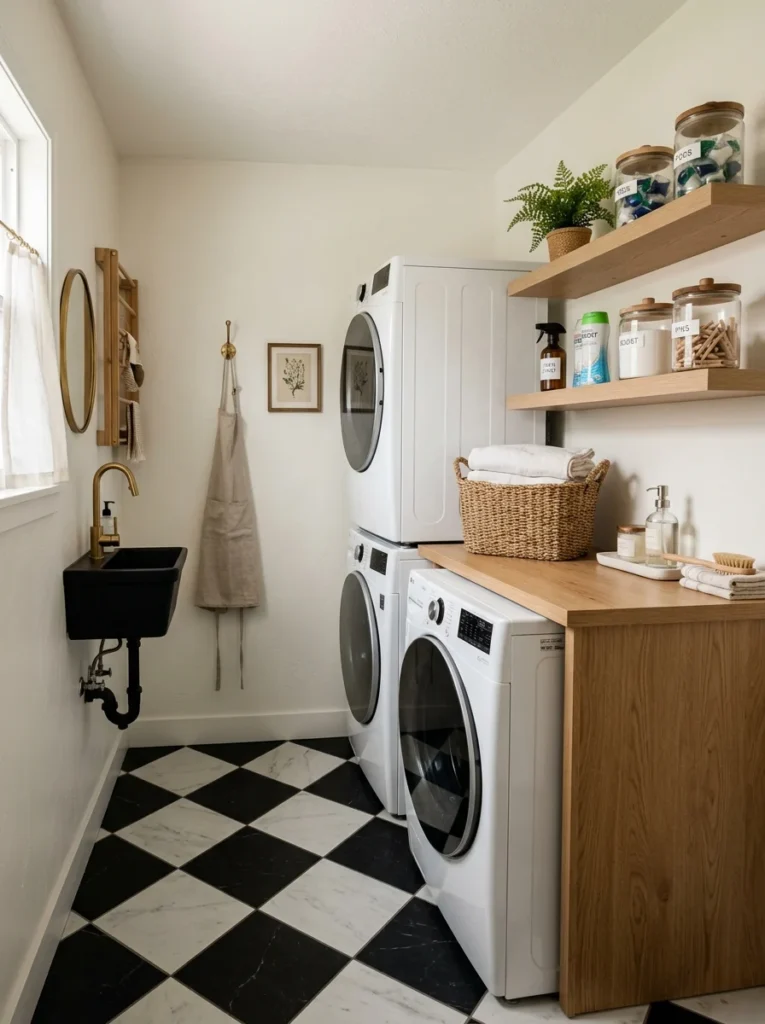
Since a small laundry room often has very little wall space visible above the machines and any installed shelving, the floor becomes a surprisingly significant opportunity for adding personality and visual interest to the room. I chose a black and white checkered pattern for my laundry room floor specifically because the bold pattern draws attention downward, making the room feel more intentionally designed rather than like a purely overlooked utility space. Peel-and-stick vinyl tiles designed to mimic more expensive patterned tile are a particularly good option for a laundry room specifically, since they’re moisture resistant, relatively inexpensive, and can be installed over most existing flooring without a major renovation project. This is one of the more overlooked opportunities in small laundry room design, since most people focus their limited decorating energy on shelving and storage while leaving the floor as an afterthought, when in reality it’s one of the larger uncluttered surfaces in the entire room. A bold floor pattern also has the practical benefit of hiding minor dirt and lint between cleanings considerably better than a plain, solid-colored floor would in a room that inevitably deals with a fair amount of stray fabric debris.
16. Add a Small Plant for Life and Color
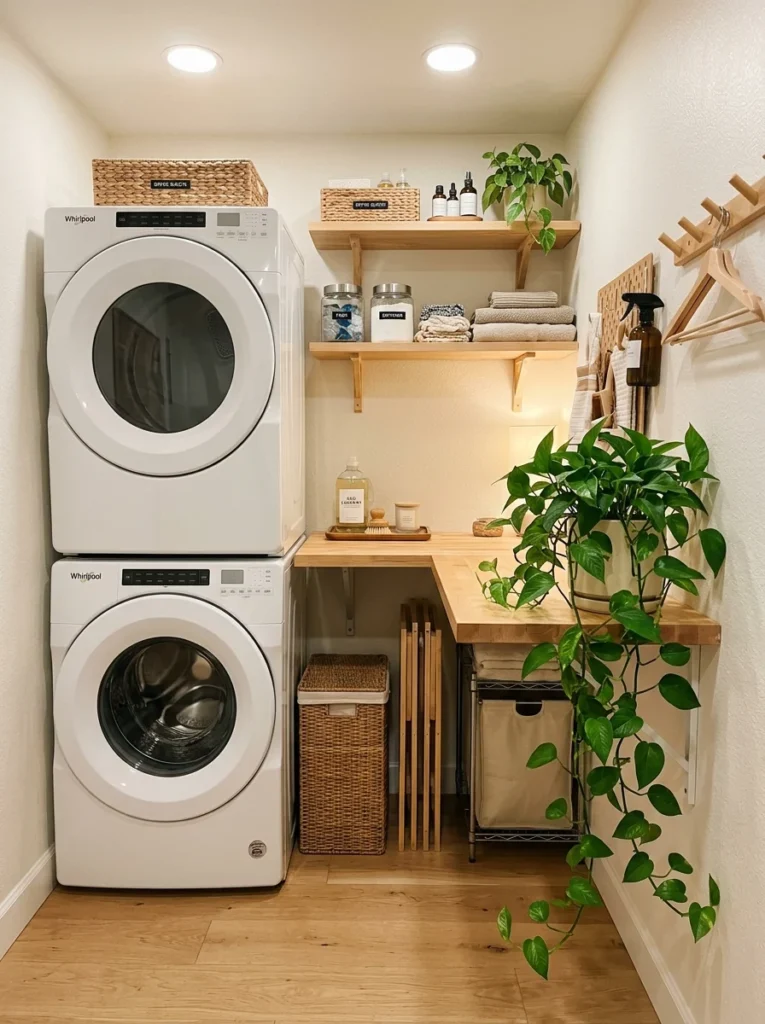
Even in a windowless laundry closet, a low-light tolerant plant, a pothos or a small ZZ plant, adds a touch of life and color that purely functional storage and machinery simply can’t provide on their own. I keep a small trailing pothos on the corner of my folding counter, and it’s a small detail that genuinely makes the room feel less purely utilitarian every time I walk in to start a load of laundry. For laundry rooms with absolutely no natural light whatsoever, even artificial plants have become realistic enough in appearance that they can achieve a similar visual softening effect without the ongoing care that a real plant, however low-maintenance, still requires. This is a minor addition in terms of cost and effort, but it’s consistent with a broader principle I’ve found true across every room in my house, that a small amount of greenery does an outsized amount of work in making a space feel considered and cared for rather than purely functional and forgotten.
17. Keep a Strict “Nothing on the Floor” Rule
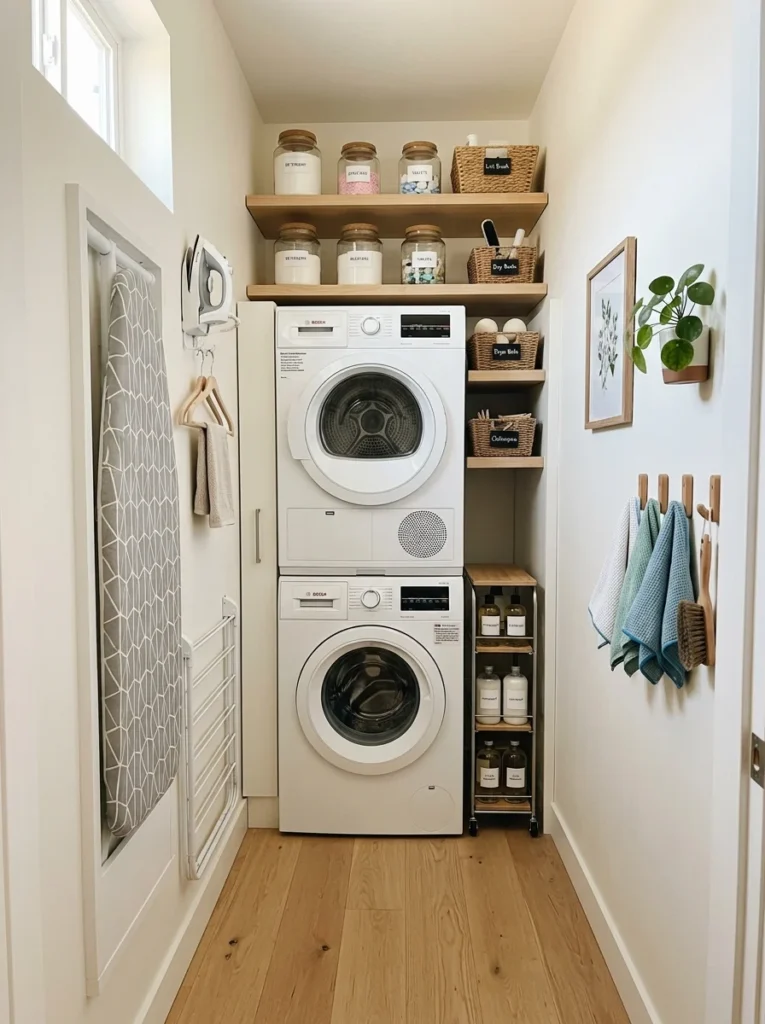
The final piece of advice isn’t a purchase or an installation but a habit, and it’s honestly the one that’s made the most consistent difference in how my small laundry room actually functions day to day. I keep a strict rule that nothing gets set down on the floor, not a stray sock, not a bottle of detergent waiting to be put away, not a laundry basket left sitting mid-task, since in a room this narrow, even a single item on the floor meaningfully impacts how easy it is to move around and get the actual laundry done. This required actually having a designated spot for everything first, which is really what most of the other ideas on this list are about, but once those storage solutions were in place, maintaining this habit became the thing that keeps the room from slowly sliding back into the cluttered, cramped feeling it had before I started this whole project. In a room this small, even minor clutter has an outsized negative impact compared to the same amount of mess in a larger space, simply because there’s so much less room to work around it, which makes this discipline more important here than almost anywhere else in the house.
Final Thoughts
Looking back at that first year of dreading laundry day in my cramped, unstyled nook of a laundry room, it’s genuinely surprising how much more pleasant the same small task became once the space itself was working with me instead of against me. Between all 17 of these ideas, the underlying theme is really about maximizing every available inch, vertical wall space, the back of the door, even the narrow gaps between machines, rather than accepting that a small laundry room has to feel cramped and purely functional.
If your own laundry room is working with similarly tight quarters, I’d suggest starting with whichever single change addresses your biggest daily frustration, a folding surface if you’re currently using your bed, better storage if supplies are cluttering every surface, rather than trying to tackle the whole room at once. That’s essentially how mine came together too, one solved frustration at a time, until a room I used to walk past without a second thought became one I genuinely don’t mind spending time in.
My name is James William, and I write about practical, real-world home decor ideas that don’t require a full renovation budget to make a genuine difference in how a room feels and functions.