
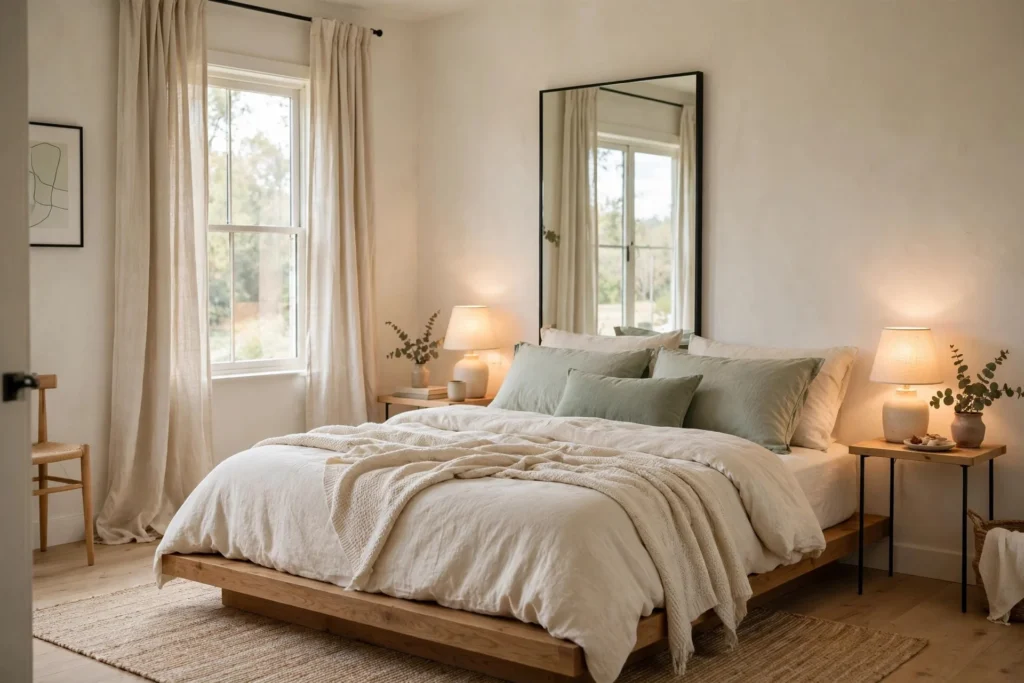
A small master bedroom can still feel like the best room in the house, and it does not need a bigger floor plan to get there. These small master bedroom decor ideas are all about working smarter with the space you have: pale walls that bounce light, furniture that earns its footprint, storage that hides in plain sight, and a few cozy touches that make the room feel like a retreat instead of a squeeze. I have lived in a bedroom barely bigger than the bed itself, so every idea below comes from real trial and error, not a showroom.
The biggest lesson I learned is that a small bedroom is not a problem to solve, it is a room that rewards good choices fast. One wrong piece of furniture can swallow the whole floor, but one right choice, a low bed, a big mirror, a floating shelf, can open the room up in an afternoon. The other thing I learned is that cozy and smart are not opposites: a room that hides its clutter and warms its light feels bigger, not busier, and every trick below does both jobs at once. You do not need to buy everything at once. Start with the change that bugs you most, live with it for a week, and let the room tell you what it needs next. That slow pace keeps the budget low and the room feeling like yours.
1. Paint It Light: Small Master Bedroom Decor Ideas That Start With Pale Walls
A small master bedroom feels twice as big when the walls stop fighting the light. Pale colours like warm white, soft cream and light greige bounce daylight around the room instead of soaking it up, and that alone can make a tight room feel open. I painted my own bedroom a warm white after years of living with a beige that looked muddy in winter light, and the change was instant. The mistake I made first was picking a cold, bright white that felt like a hospital ward, so go warm, not stark. Paint the ceiling the same pale shade too, so the eye never hits a hard line where the wall ends.
Try this: test three warm white swatches on the wall and pick the one that still looks soft at night under lamplight.
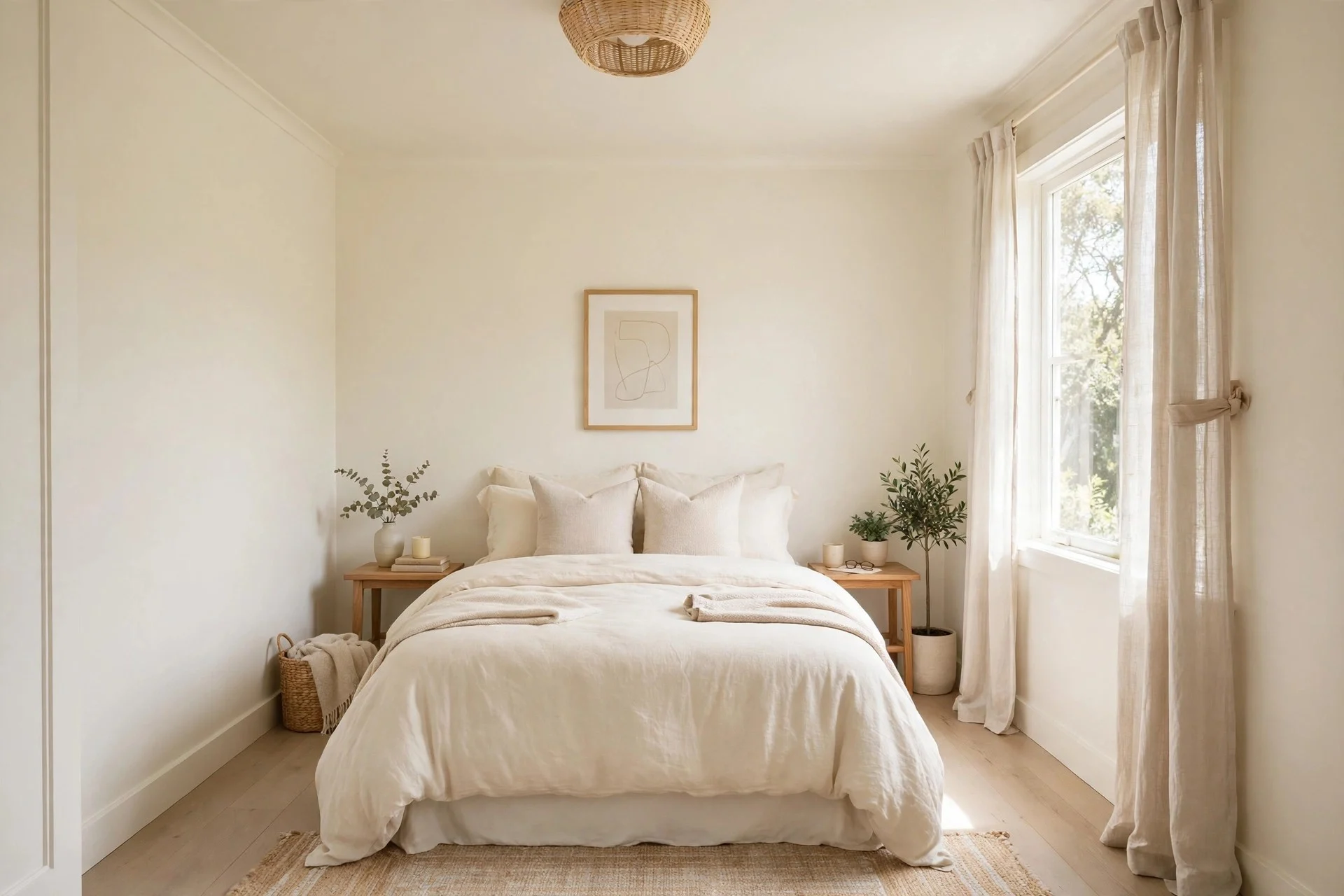
2. Choose a Low Bed Frame to Make the Ceiling Feel Higher
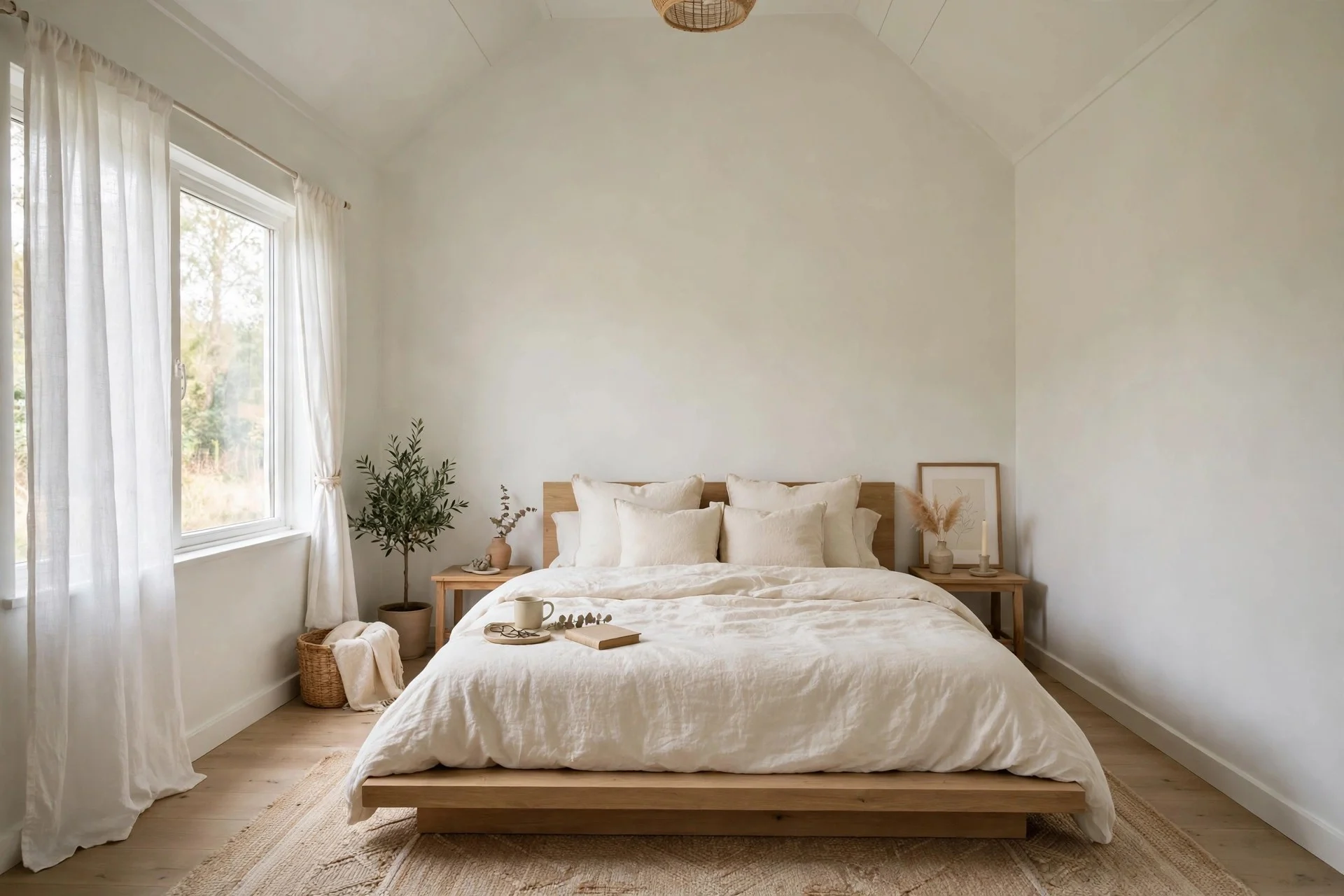
A tall, chunky bed frame eats up a small room from the floor to the eye, while a low frame gives the ceiling back. When the bed sits close to the floor, the wall above it looks taller, the room feels airier, and the whole space reads calmer. I swapped a tall sleigh bed for a simple low platform frame, and my bedroom suddenly felt like it had grown a foot taller overnight. Pick a frame with slim legs or a flat platform base, and keep the headboard low too, so nothing towers over the room. A low bed also makes the bedding the star, so spend a little more on sheets you love.
Try this: choose a platform bed no higher than about 35 cm from floor to mattress top for a small room.
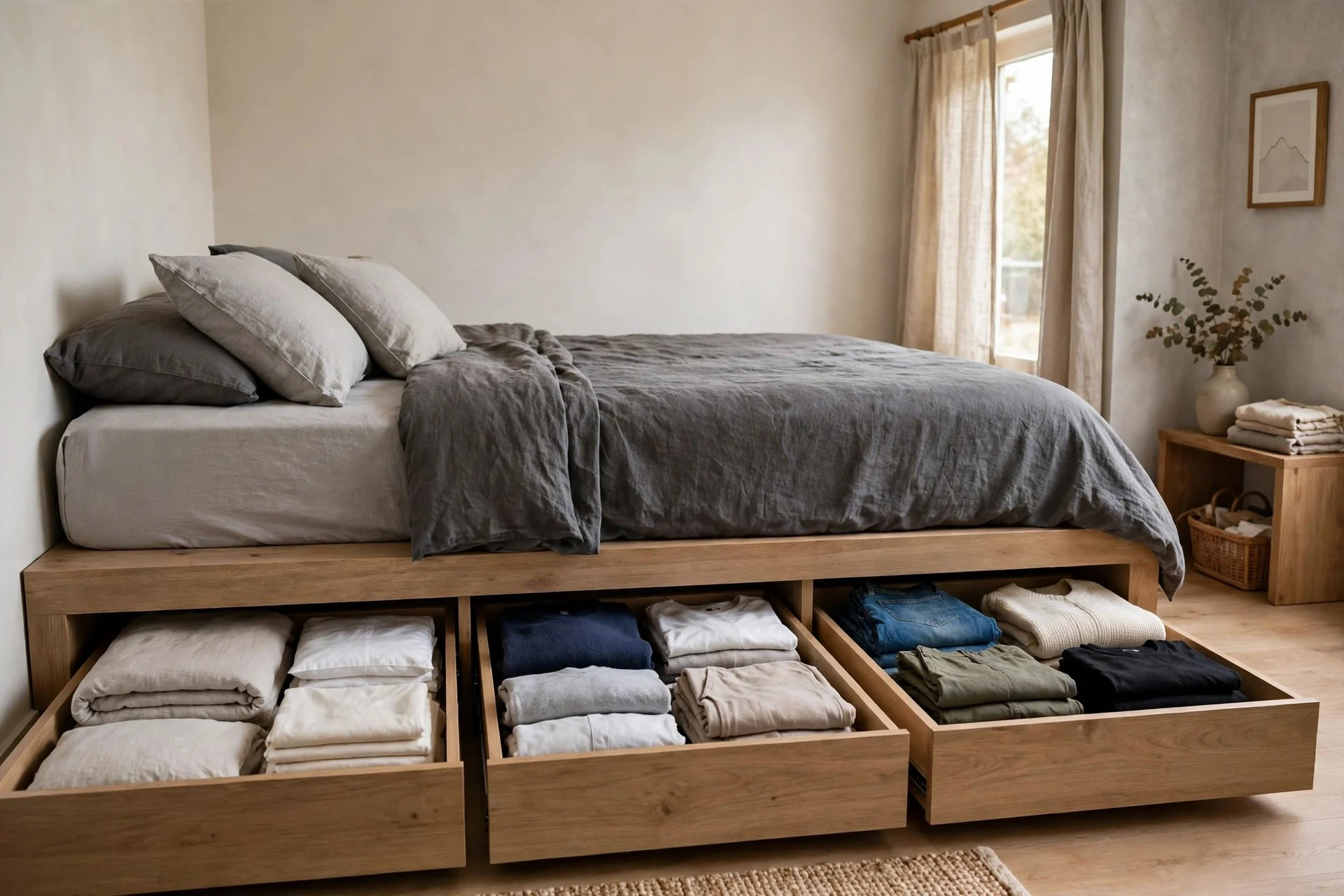
3. Slide Storage Under the Bed and Hide the Clutter
The space under the bed is the biggest storage spot in a small bedroom, and most people waste it. A bed with built-in drawers, or a set of flat rolling boxes under a platform frame, can swallow out-of-season clothes, spare bedding and shoes without a single extra piece of furniture. I used to stack spare blankets on a chair that slowly became a permanent mountain, and moving them into flat under-bed boxes cleared the floor in ten minutes. The trick is to keep the boxes labelled and the lids flat, so nothing snags on the frame when you pull them out. Dust them every month and the space stays clean.
Try this: measure the gap under your bed first, then buy flat boxes that slide in and out without lifting the mattress.
4. Hang a Big Mirror Opposite the Window to Double the Light
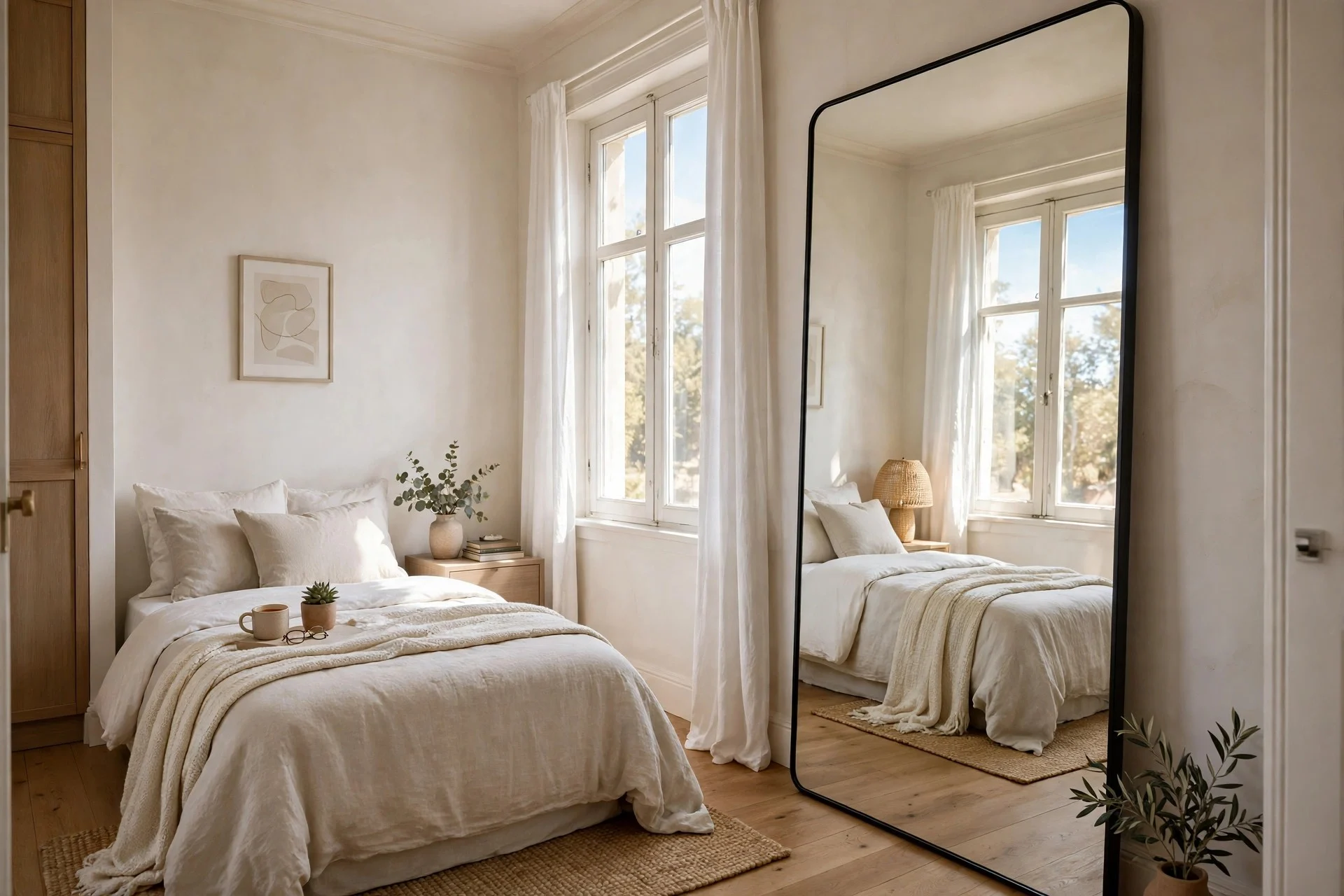
A big mirror is the oldest trick in the book, and in a small bedroom it earns its keep twice over. Hung opposite the window, it catches daylight and throws it back across the room, so the far corner stops looking dark and the whole space feels wider. I leaned a tall mirror against the wall opposite my window, and the room looked like it had gained a second window overnight. Pick one large mirror instead of a cluster of small ones, and keep the frame slim and simple so the glass does the work. A tall arched mirror or a plain rectangle both look smart. Just keep it clean, because smudges show fast in bright light.
Try this: place the mirror where it reflects the window or the bed, never the cluttered side of the room.
5. Swap Bulky Nightstands for Floating Shelves
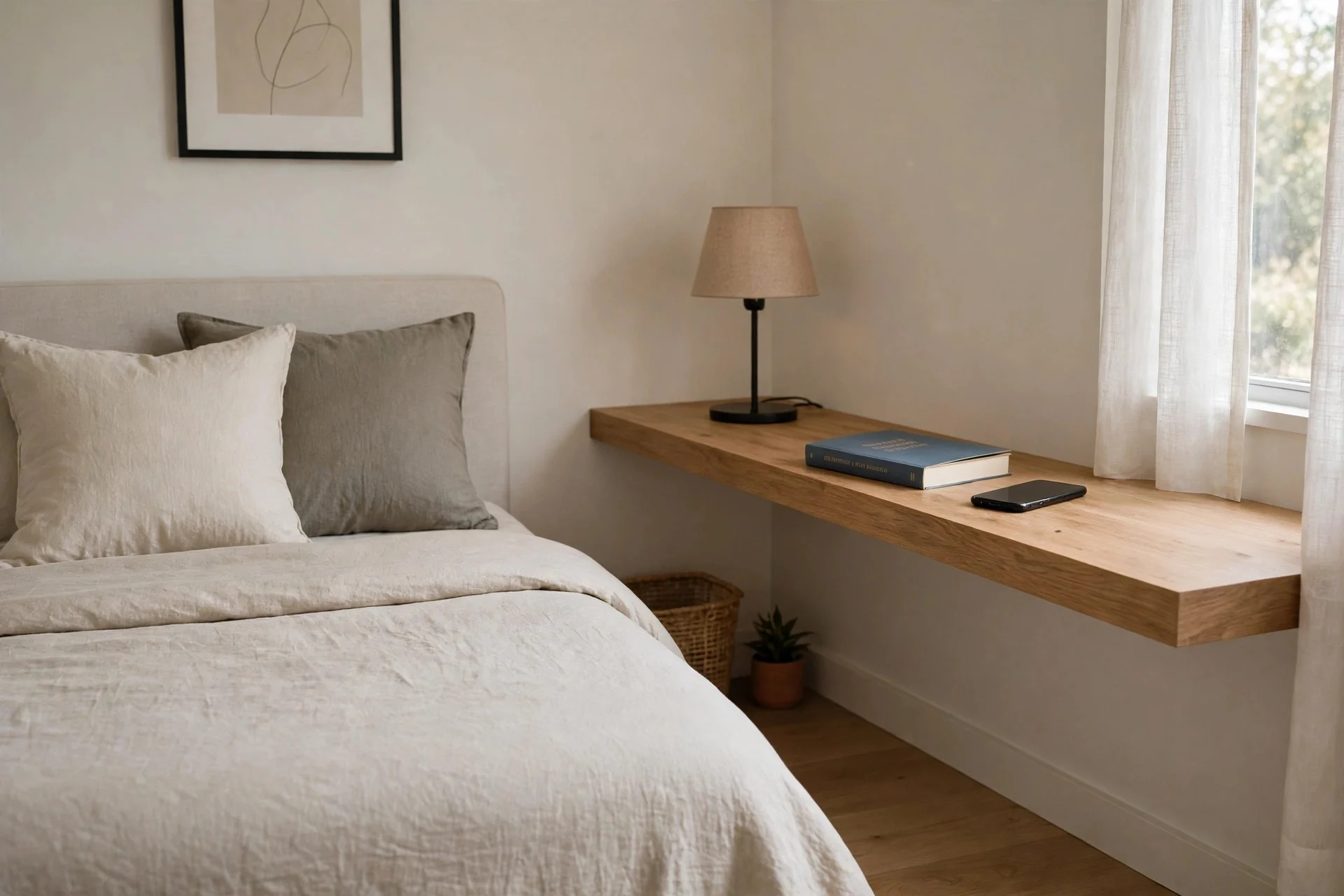
Big nightstands with drawers and doors swallow floor space a small bedroom cannot spare, and most of what lives inside them is stuff you never touch. A floating shelf beside the bed holds a lamp, a book and a phone, and it leaves the floor underneath completely clear, which makes the room look wider at a glance. I swapped one chunky nightstand for a simple oak shelf, and maine ye try kiya expecting to miss the drawer, but I never did, because the shelf held everything I actually used at night. Fit the shelf at mattress height so you can reach it without sitting up, and add a small wall light above it to free the surface entirely.
Try this: mount the shelf level with the top of the mattress so your phone and book sit right at hand.
6. Hang Curtains High and Wide to Stretch the Walls
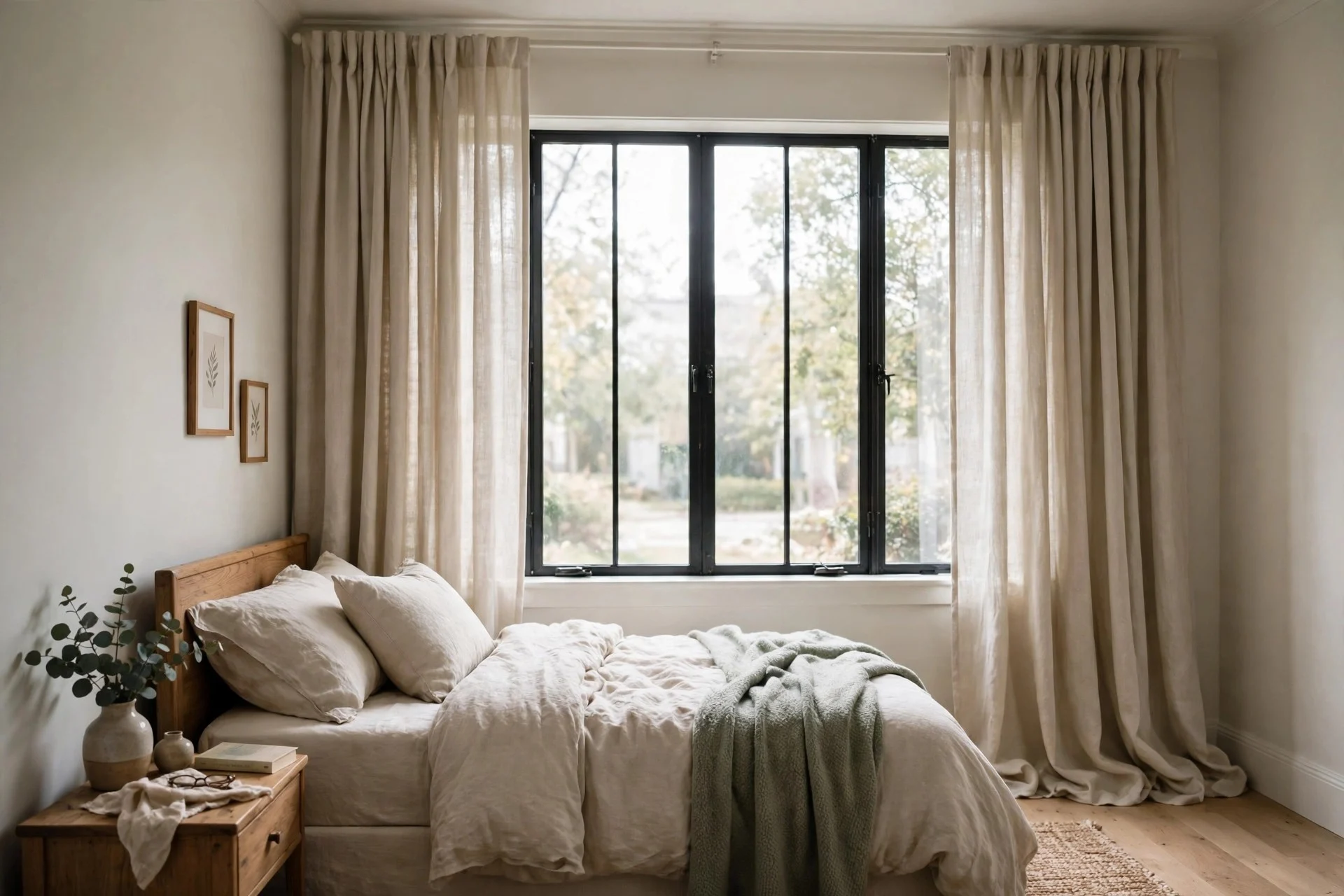
Curtains hung the wrong way shrink a room, and hung the right way they make it feel taller and wider at the same time. Mount the rod close to the ceiling, not just above the window frame, and extend it well past the sides so the panels hang over the wall when open. The window then looks bigger, the wall looks taller, and the room gets more light. I hung mine too low the first time, and the window looked small and squat until I moved the rod up by about thirty centimetres and the whole wall changed. Linen-look curtains in a soft neutral are affordable and fall beautifully. Let them just kiss the floor for a tailored finish.
Try this: hang the rod 10 to 15 cm below the ceiling and extend it 15 cm past each side of the window.
7. Go Vertical With Tall, Slim Storage Up the Wall
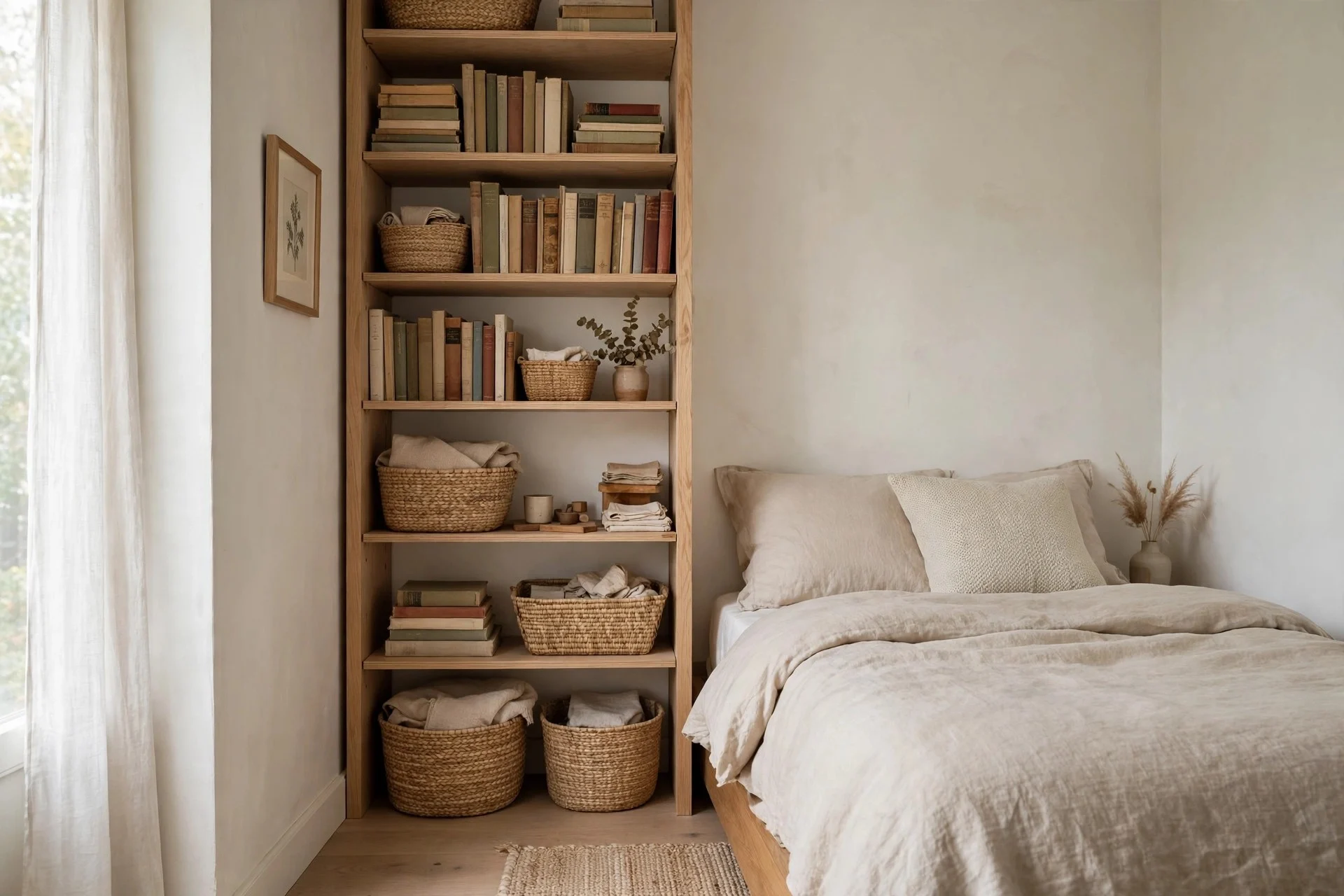
When the floor is full, the walls are the only space left, and tall slim storage uses it without crowding the room. A narrow bookcase, a tall wardrobe that reaches the ceiling, or a stack of floating shelves draws the eye upward, which makes the room feel taller than it is. I fitted a slim tower shelf in the gap between the bed and the wall, a spot I had written off as useless, and it now holds books, baskets and a small plant. The mistake to avoid is deep storage, because a deep unit eats floor space just like furniture does. Keep it shallow, no more than 30 cm deep, and let the top shelves hold the things you rarely need.
Try this: use baskets on the upper shelves so clutter hides behind a neat, matching row.
8. Pick Slim Furniture With Legs You Can See Under
Heavy furniture that sits flat on the floor makes a small bedroom look packed, because the eye stops at every solid block. Pieces with slim legs, a dressing table, a chair, a chest of drawers, let you see the floor underneath, and that little strip of visible floor tricks the eye into thinking there is more space. I replaced a solid storage bench with a simple wooden chair on tapered legs, and the corner suddenly looked lighter, even though the chair takes up the same footprint. Look for furniture raised at least 10 cm off the ground, and keep the legs slim and simple. The same rule works for the bed, the dresser and any chair in the room.
Try this: when shopping, check the legs first — if you can see floor beneath the piece, it will suit a small room.
9. Use One Multi-Use Piece Instead of Three
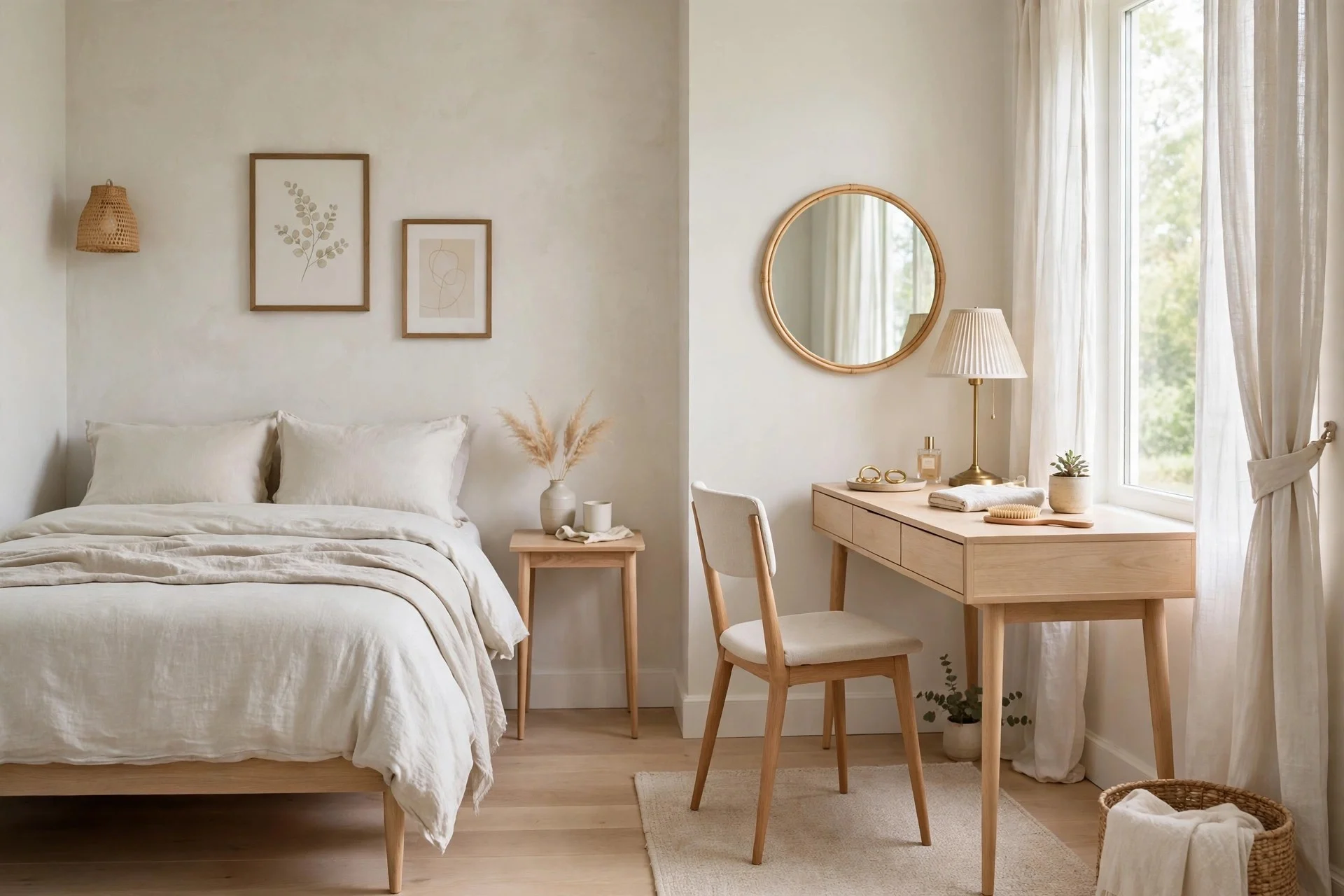
In a small bedroom, every piece of furniture has to earn its place twice, or it is wasting space. An ottoman that stores blankets and doubles as a seat, a bench at the foot of the bed that holds spare bedding inside, or a nightstand with a drawer and a charging shelf can replace two or three separate pieces. I bought a storage ottoman thinking it was just a pretty extra, and it ended up holding all my winter blankets while giving me somewhere to sit and put my shoes on. The mistake I made first was buying a pretty bench with no storage, which just became another surface for clutter. Before you buy anything new, ask what two jobs it can do.
Try this: pick a storage ottoman or bench with a lift-up lid and move one whole category of clutter inside it.
10. Layer Soft Lighting Instead of One Harsh Ceiling Light
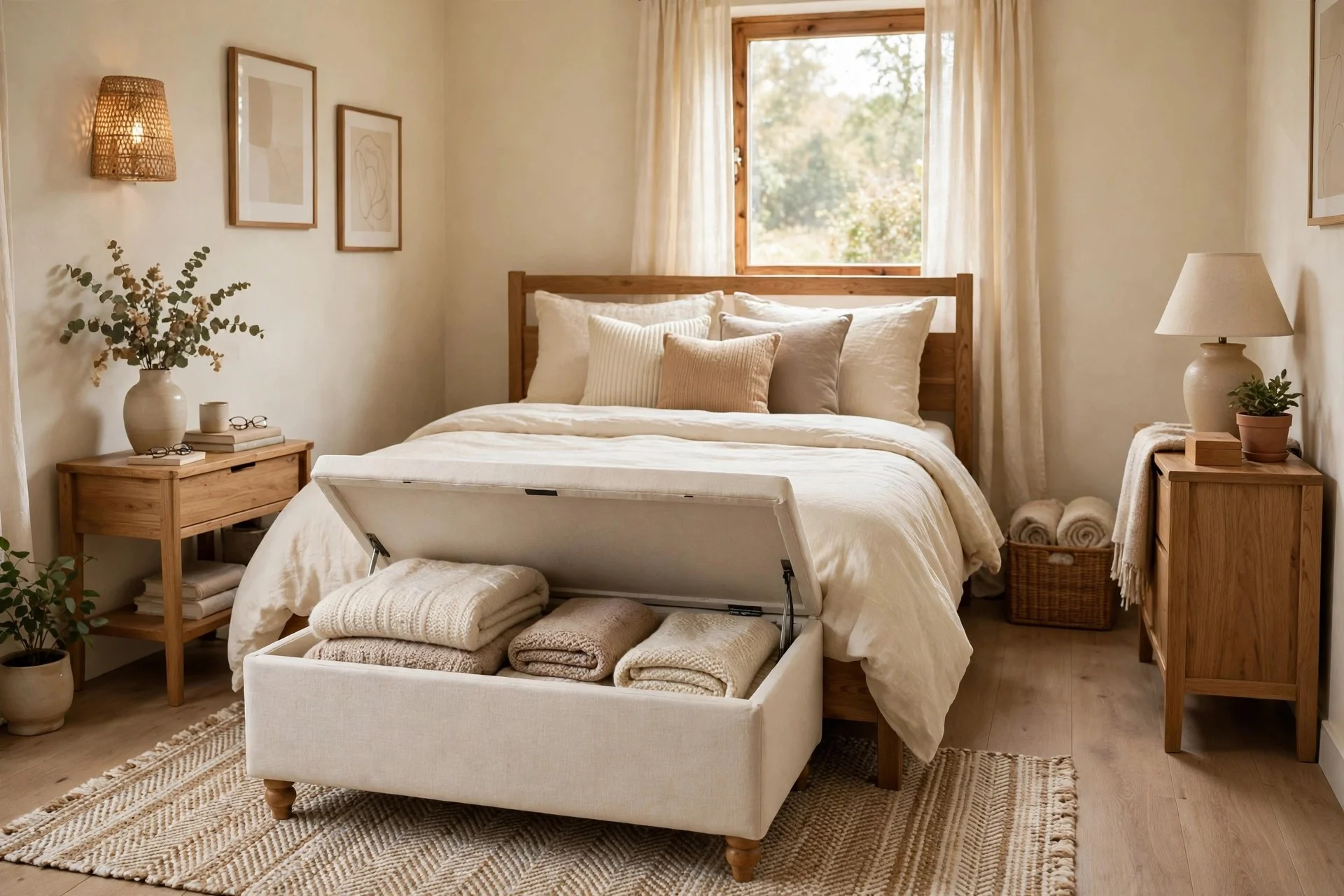
Nothing kills a small bedroom faster than a single harsh ceiling light. It flattens the room, shows every corner at once, and makes the space feel like a box. Layered light does the opposite: a warm bedside lamp, a small wall light, and a soft glow by the mirror make the room feel deep and cozy, with dark corners that read as calm instead of cramped. I lived with a bare ceiling bulb for a year, wondering why the room felt cold at night, and the fix was just two warm 2700K lamps. Add a dimmer if you can, even a plug-in one, so the light can drop low in the evening and the room feels like a retreat.
Try this: swap every bedroom bulb to warm 2700K tonight and see how different the room feels before buying anything else.
11. Keep One Calm Colour Palette So the Room Feels Bigger
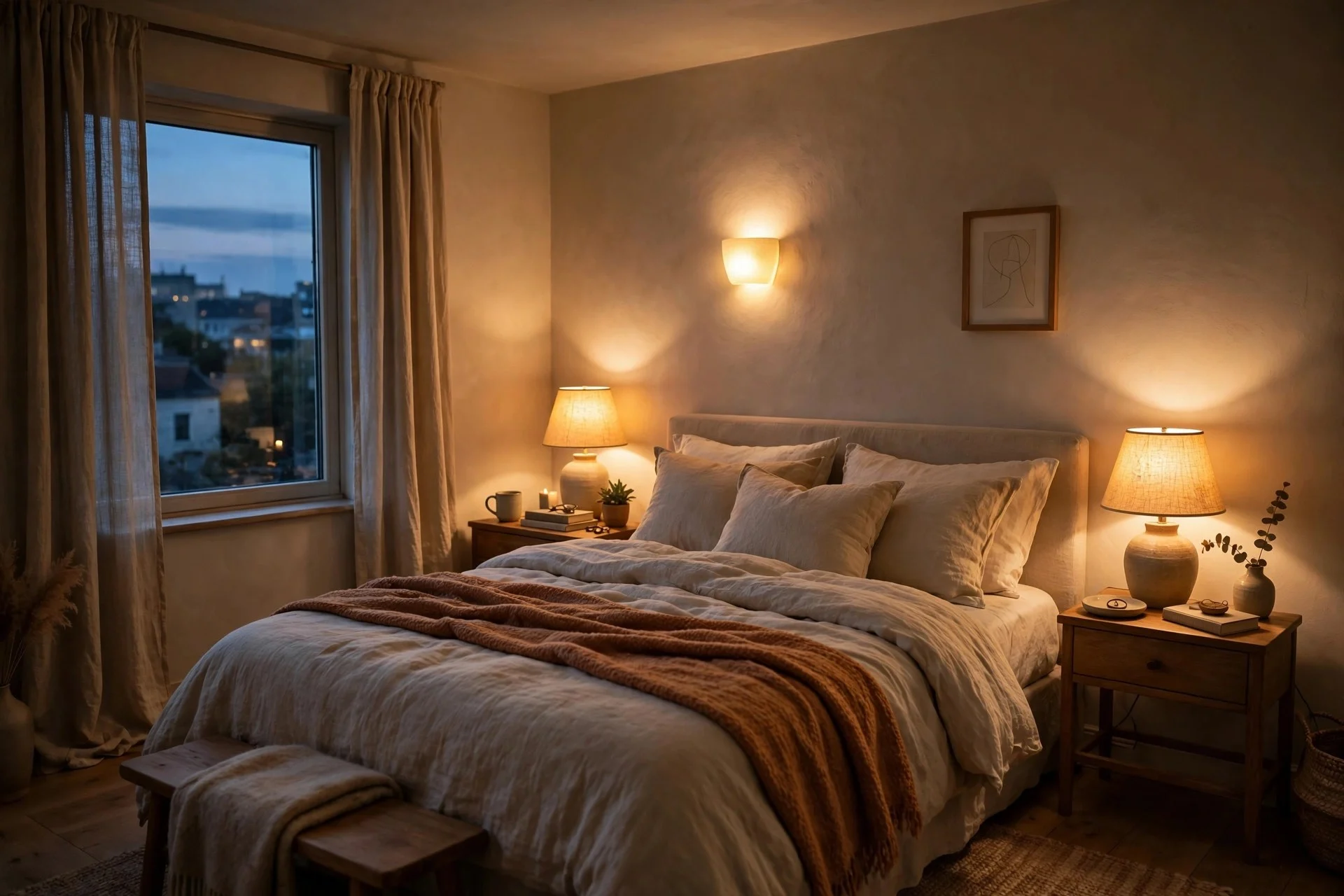
A small room with five different colours competing for attention looks busy and cramped, because the eye keeps jumping from one thing to the next. One calm palette, say warm white, soft sage and natural wood, with one gentle accent, lets the eye glide across the room, and that smooth sweep makes the space feel larger. I used to mix a navy throw, a mustard cushion and a patterned rug in my small bedroom, and the room felt like a jumble sale. When I settled on cream, sage and oak, the same room suddenly looked calm and twice as tidy. Keep the bedding, curtains and rug inside the same family of tones, and let texture, not colour, do the interesting work.
Try this: pull three items from the room that do not match the palette and see how much calmer it looks without them.
12. Add a Fold-Away Desk That Disappears When You Don’t Need It
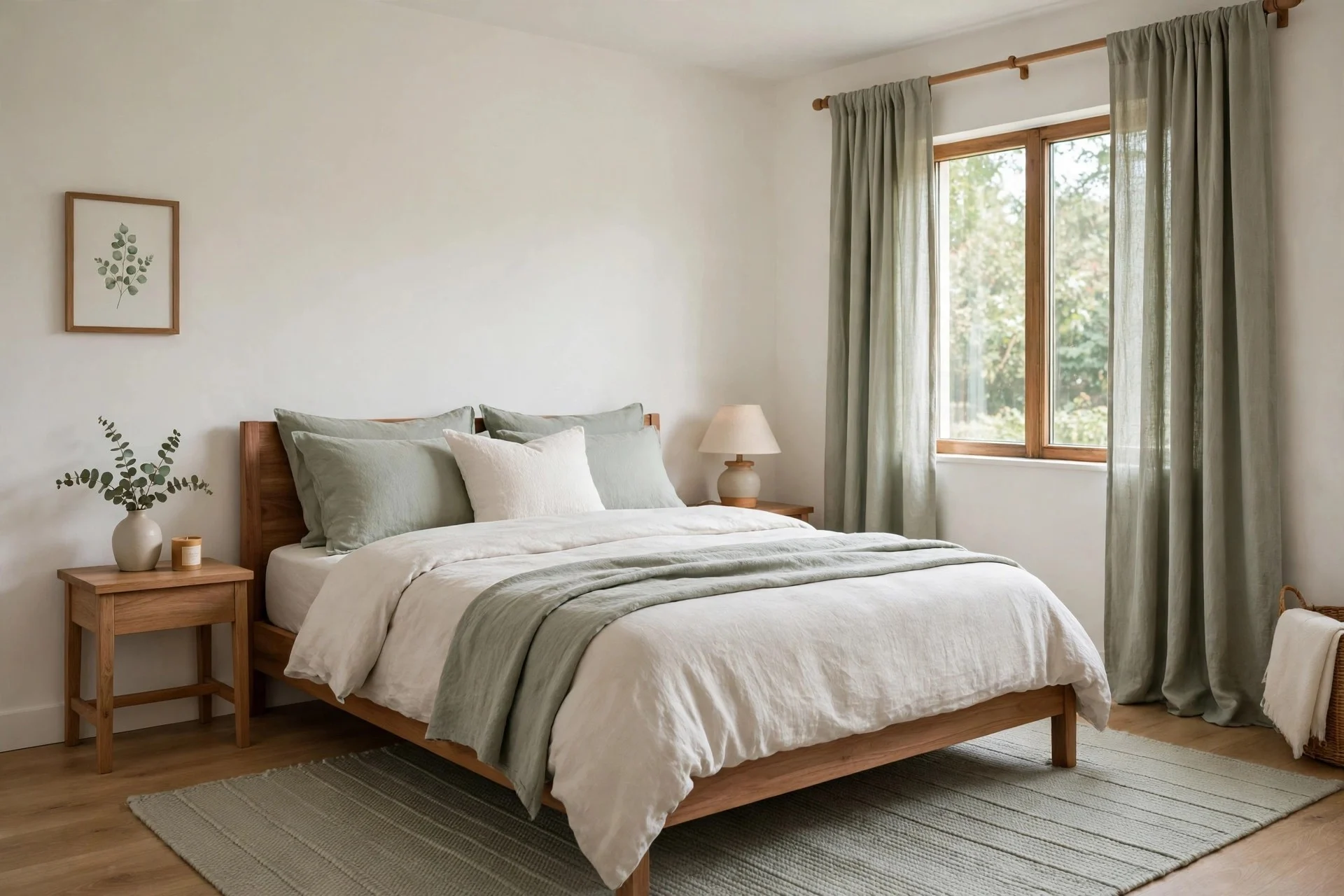
A full desk in a small bedroom is a luxury few rooms can afford, but a fold-away desk gives you a workspace without stealing the floor. A wall-mounted drop-leaf desk folds flat against the wall when you are done, a slim console can tuck behind the door, and a small shelf with a stool works just as well for an hour of laptop work. I fitted a drop-leaf desk beside the window and used it every morning for emails, then folded it away before bed, and the room went back to being a bedroom. The mistake is leaving a chair pulled out and papers spread everywhere, because a permanent desk setup makes the room feel like an office. Fold it away, every single time.
Try this: mount a drop-leaf desk at elbow height beside the window and keep a folding stool tucked under the bed.
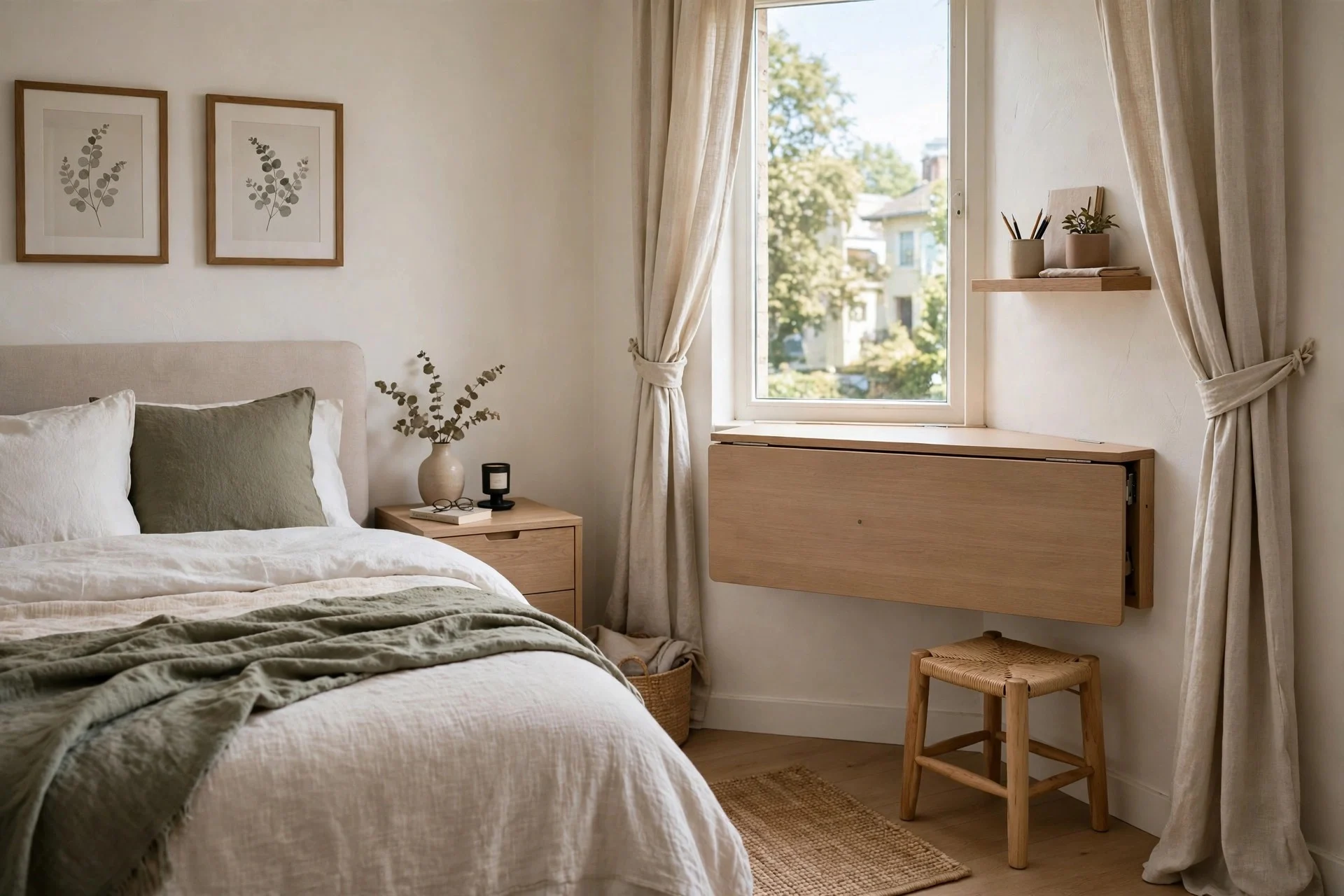
13. Tuck Hidden Storage Into Every Corner
Small bedrooms stay tidy only when everything has a hiding place, and the best hiding places are the ones you never notice. Baskets under a floating shelf, a slim box on top of the wardrobe, a tray inside the drawer, and hooks behind the door can hold the daily clutter that usually ends up on the floor. I put three matching baskets on the top of my wardrobe for scarves, chargers and spare cables, and the dresser finally stayed clear for more than a day. The trick is to make the storage part of the decor, so baskets match the bedding and boxes match the wood, instead of looking like an afterthought. Label the inside, not the outside, so the room still looks calm.
Try this: add one matching basket per zone — bedside, wardrobe top, and behind the door — and clear the surfaces tonight.
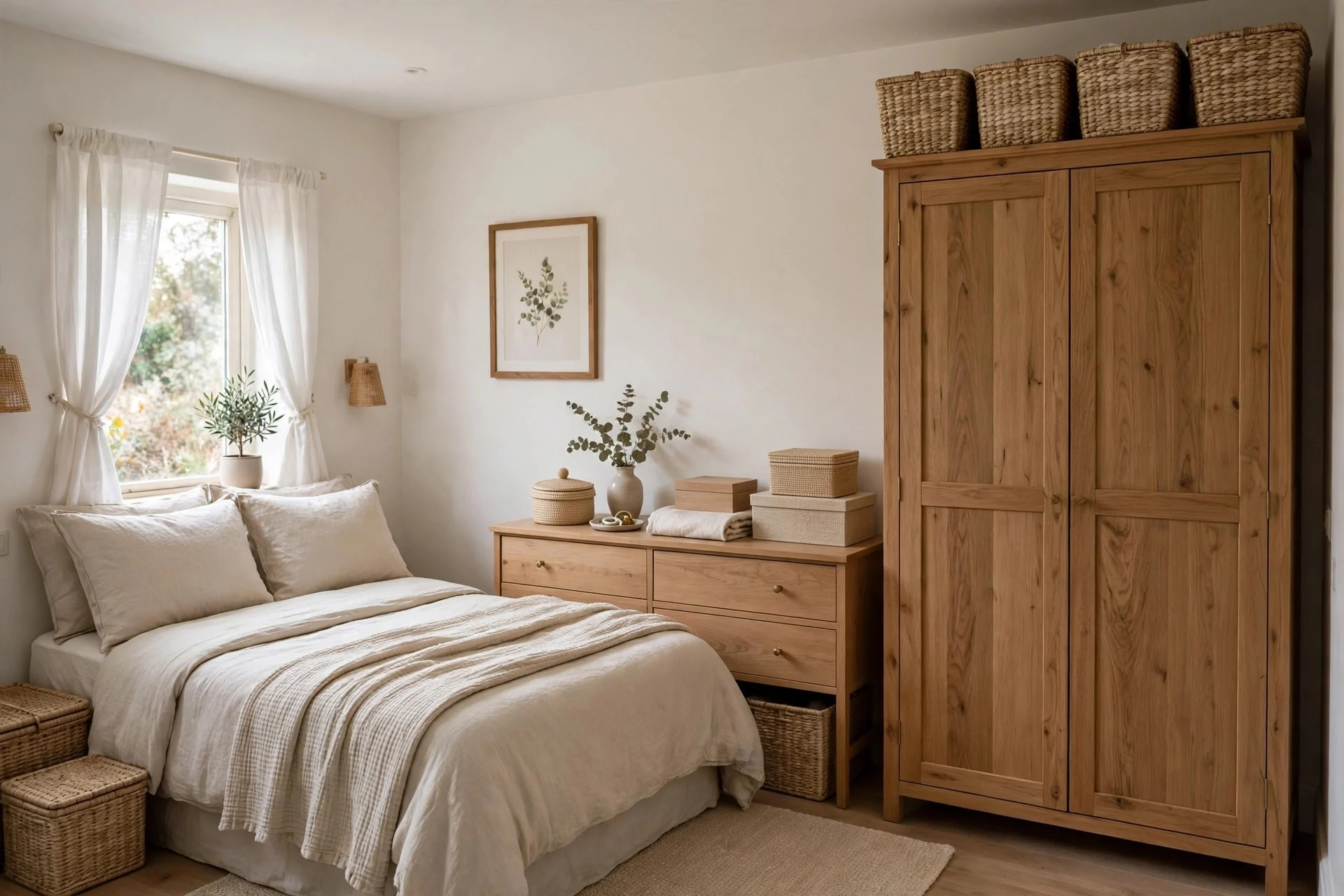
14. Style One Cozy Corner, Not a Crowded Room
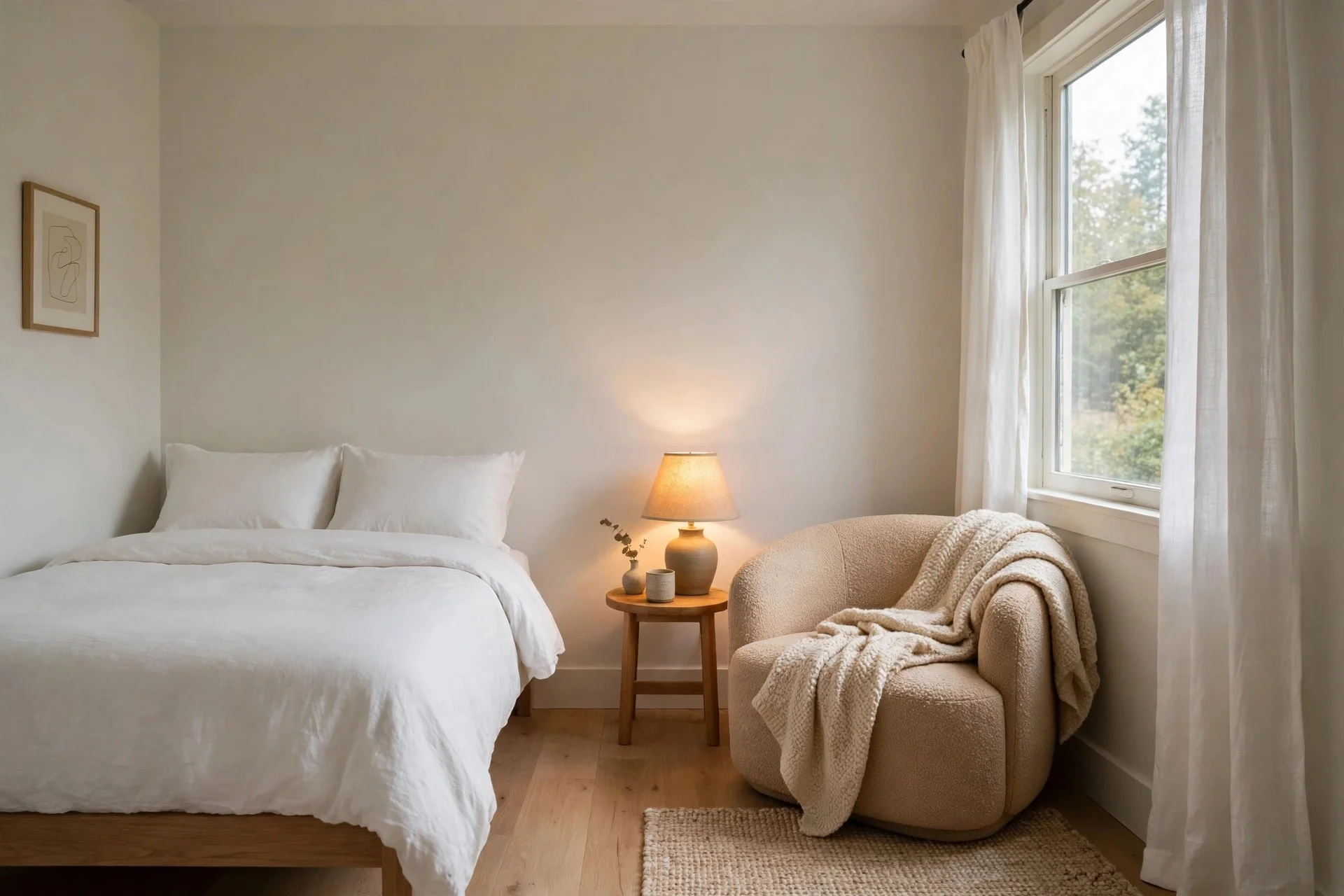
The fastest way to make a small bedroom feel cozy is to style one corner properly and leave the rest alone. A small chair or a floor cushion, a soft throw, a warm lamp and a tiny side table create a spot that invites you to sit with a book or a cup of tea, and that single finished corner makes the whole room feel cared for. I used to scatter cushions, candles and frames across every surface, and the room just looked crowded. When I cleared everything and built one proper corner, the room finally felt cozy instead of cluttered. Keep the rest of the surfaces mostly clear, and let that one corner carry all the warmth.
Try this: build your cozy corner with a chair, a throw and a lamp, then clear every other surface back to just three items.
How can I make a small master bedroom look bigger?
Start with pale walls and a low bed, because those two changes open the room up more than anything else. Hang a big mirror opposite the window to bounce light across the room, hang the curtains high and wide so the window looks taller, and keep the furniture slim with legs you can see under. Clear the floor as much as you can, because clutter makes any room feel smaller. I also found that one calm colour palette and matching lamps calm the eye, which makes the room feel wider than it is. Light colours help, but good lighting and clear surfaces matter even more.
What size bed is best for a small master bedroom?
A queen bed suits most small master bedrooms, but only if you leave at least 60 cm of clear space on the sides and at the foot so you can move around without squeezing past the furniture. If a queen leaves you no room to walk, a full or double bed is the smarter choice, and a low platform frame will make either size feel lighter in the room. Measure the room before you buy, and lay painter’s tape on the floor to mark the bed outline so you can walk around it first. A bed that is too big for the room is the most common mistake, and the hardest one to live with.
Where should I put storage in a small master bedroom?
Use the spots that are already there: under the bed, on top of the wardrobe, behind the door, and up the wall with tall slim shelves. Under-bed drawers or flat boxes hold out-of-season clothes and spare bedding without any extra furniture, and a storage ottoman at the foot of the bed hides blankets while doubling as a seat. Keep daily items at arm’s reach on a floating shelf, and push the things you rarely need to the highest shelves. The rule is simple: if something has no hiding place, it will end up on the floor, so give everything a home before you buy more of it.
What colours make a small bedroom feel cozy?
Warm, soft colours make a small bedroom feel cozy without making it feel dark: warm white, soft cream, light greige, pale sage and dusty blush all work, and they look even better with natural wood and soft textures like linen, wool and cotton. Keep one calm palette across the bedding, curtains and rug, and add warmth with a knitted throw, a velvet cushion, or warm 2700K lamplight. Avoid bright, sharp colours in a small bedroom, because they fight the calm feeling you want at night. If you want a deeper colour, use it on one small thing, like a cushion or a throw, rather than a whole wall.
Final Thoughts
A small master bedroom does not need more space, it needs smarter choices. Pale walls, a low bed, a big mirror, storage that hides, and one calm palette can turn a tight room into a place that feels open and cozy at the same time. Every idea in this list costs little and works fast, and none of them ask you to knock down a wall. Start with the change that bothers you most, whether that is the lighting, the clutter, or the bed itself, and let the room grow calmer one fix at a time.
The room you sleep in sets the tone for your whole day, so it is worth the effort to get it right. Do one thing this weekend, live with it for a week, and then do the next. That slow pace is the real secret: every piece earns its place, the clutter never comes back, and the room ends up feeling like it was designed for you, because it was, by you, one honest choice at a time.