
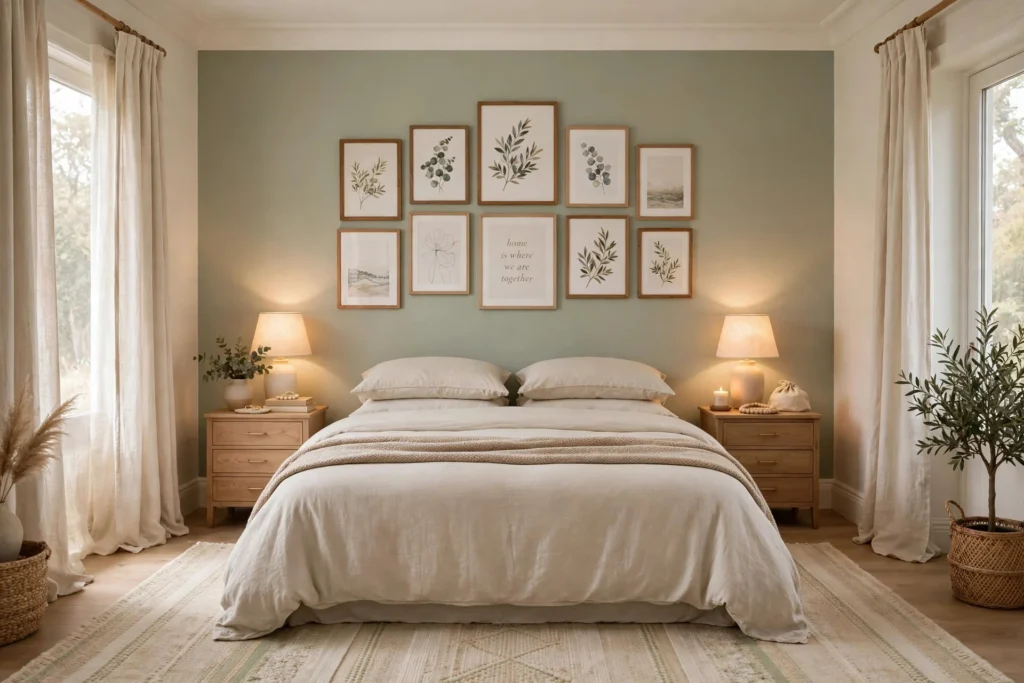
Sharing a bedroom sounds simple until two people with different tastes have to agree on every single thing in it. One of you loves dark walls, the other wants everything white. One needs total darkness to sleep, the other reads until midnight. These bedroom decor ideas for couples are built for exactly that situation: a room that feels like both of you, not a compromise that pleases nobody. The secret is not giving up what you love, it is finding the shared ground first and then giving each person a small corner of their own.
I learned this the hard way in our own bedroom, where my side looked like a library and my partner’s side looked like a hotel lobby, and the middle looked like a border neither of us wanted to cross. The room only started working when we sat down and picked three colours together, agreed on the big pieces as a pair, and stopped fighting over the small stuff. That is the whole point of this list. We also agreed on one rule that still holds: nothing big comes into the room unless we both say yes, and nothing small gets moved without a quick word first. Every idea below is something real couples actually do, with steps you can finish in a weekend and a human warning from my own trial and error, so your shared bedroom feels calm, fair, and like home to both of you.
1. Agree on a Shared Colour Palette First: Bedroom Decor Ideas for Couples That Start With Colour
Before you buy a single cushion, sit down together and pick three colours you both like: one main neutral, one soft middle tone, and one accent you both enjoy. This shared palette becomes the rule for every later choice, so the room never drifts into two separate styles. Look at paint swatches in daylight, not under shop lights, and hold them against your bedding. I made the mistake of picking colours alone and bringing home a sage green my partner hated on sight. Picking together takes an hour and saves months of quiet resentment. Write the three colours down and keep the note in your phone for every shopping trip.
Try this: each pick your top three colours, then keep only the ones that appear on both lists and build from there.

2. Give Each Partner Their Own Nightstand
Two nightstands, one each, is the simplest fairness rule in a shared bedroom, and it ends more small arguments than any other change. Each person gets their own drawer, their own lamp, and their own clutter, so nobody has to negotiate for space every night. Matching nightstands keep the room looking calm, but the contents inside can be completely different. One side can hold books and glasses, the other a phone charger and hand cream. I tried sharing one big nightstand once, and within a week it was a crowded mess that neither of us owned. Two small ones cost little and give each person a little territory that is truly theirs.
Try this: buy matching nightstands at the same height as the mattress so both sides look balanced from the bed.
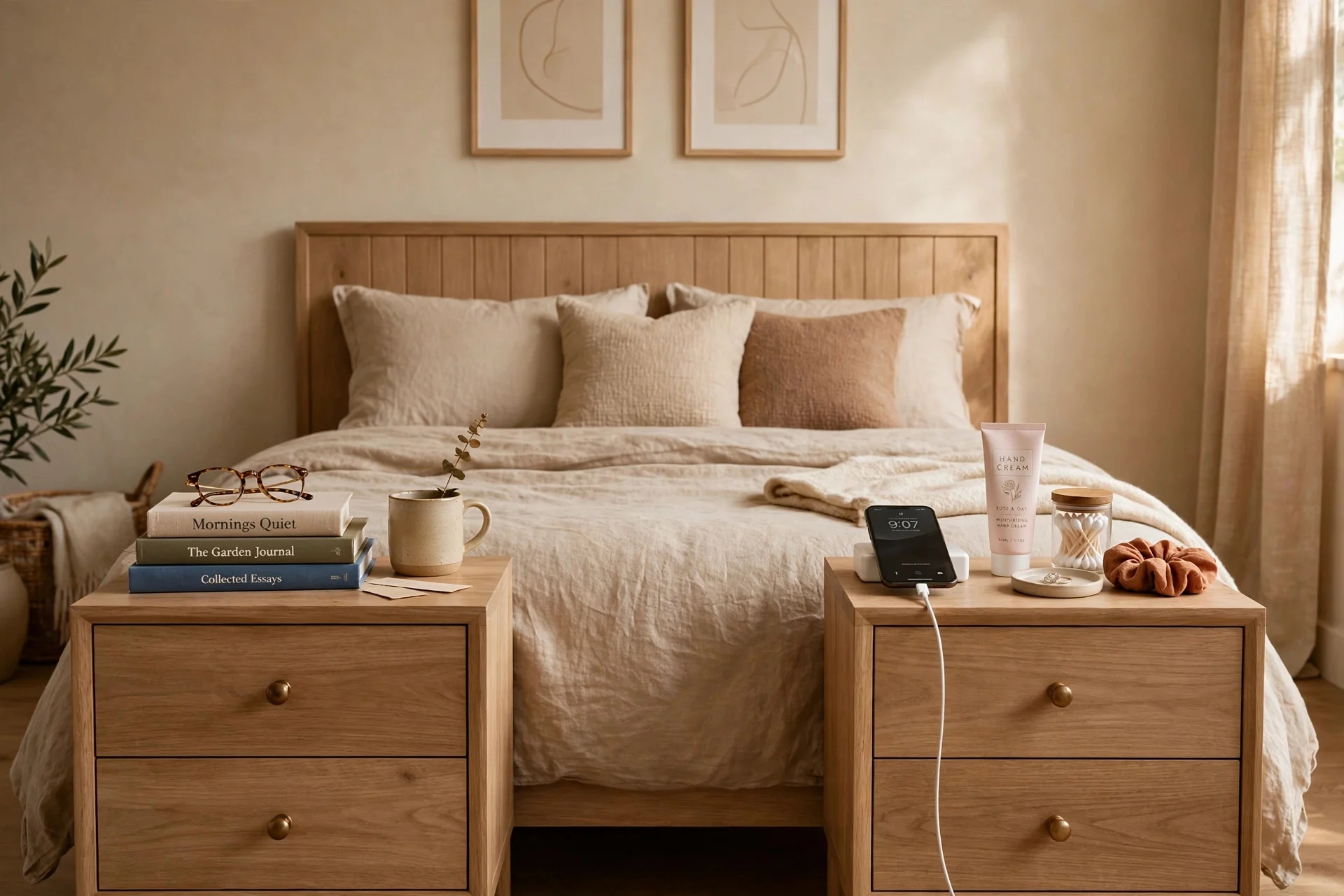
3. Choose Two Matching Lamps With a Style You Both Like
Matching lamps are the easiest way to make a shared bedroom look like one room instead of two halves pushed together. Sit down and agree on one style you both can live with, whether that is simple ceramic, warm wood, or slim black metal. Warm bulbs matter more than the lamp shape, because cool white light makes a bedroom feel like an office at night. I once bought a lamp I loved and my partner quietly hated, and it sat there glaring at us both for a year. Agreeing together takes ten minutes. Place the lamps at the same height on both nightstands so the light feels even when you are both reading in bed.
Try this: test warm 2700K bulbs in both lamps tonight and see how much softer the whole room feels.

4. Pick Matching Bedding You Both Actually Like
The bed is the one thing you both use every single night, so the bedding has to please both of you, not just one. Shop for it together and touch the fabric before you buy, because one person may love crisp cotton while the other wants soft linen. Plain colours in your shared palette are the safest bet, with texture doing the work instead of a loud pattern one of you hates. I bought a busy floral set once without asking, and it lasted exactly one wash before it went into the spare room. A plain duvet with two different pillow styles, one firm and one soft, keeps both sleepers happy. Wash the set twice before judging it, because good cotton softens fast.
Try this: let each person pick their own pillow firmness, but agree on the duvet colour together.

5. Split the Bed Into His-and-Hers Sides Without Making It Look Split
Every couple has a side of the bed, and the room works better when you stop pretending otherwise. The trick is to give each side its own small comforts while keeping the bed looking like one piece. Two separate light duvets under one shared cover, two pillows at different heights, and a folded throw each can do it without anyone noticing. I tried the two-duvet trick after years of blanket stealing, and it ended the nightly tug of war in one night. Nobody sees the split under a neat top cover, but both sleepers stay warm. Keep the top layer one colour so the bed still reads as a single, calm piece of furniture.
Try this: try two light single duvets under one shared cover for a week and see who sleeps better.
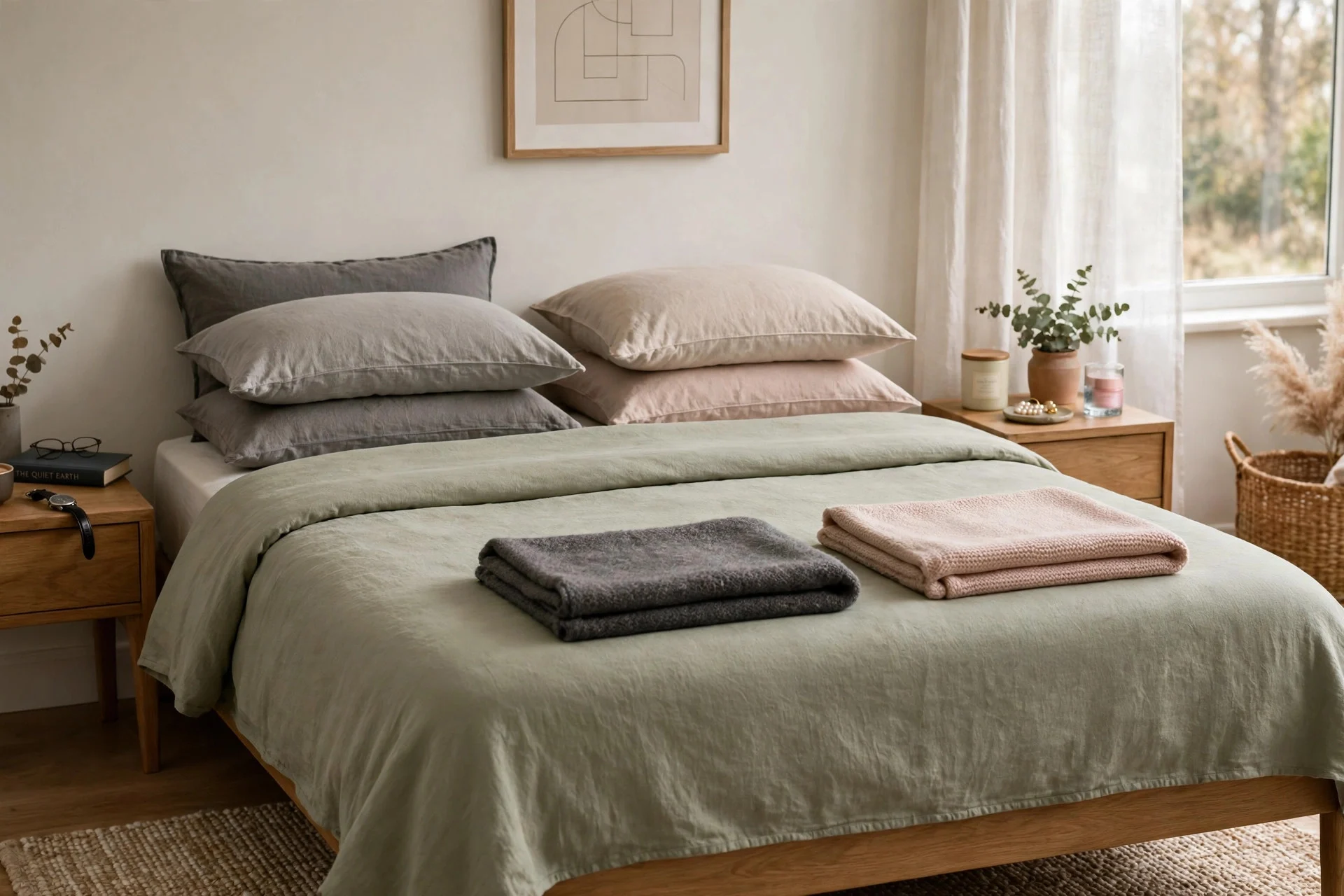
6. Build a Joint Gallery Wall With Both Your Memories
A gallery wall is where a shared bedroom stops looking like a showroom and starts looking like your life together. Pick photos and prints that matter to both of you: a holiday snap, a wedding photo, a concert ticket, a silly picture that makes you both laugh. Mix them with one or two plain art prints so the wall looks styled, not random. I made the mistake of hanging only my own photos first, and my partner walked past that wall for a month without really seeing it. Once we chose the pictures together, the wall became the first thing guests asked about. Keep the frames matching in one finish, black or light wood, so different photos still look like one collection.
Try this: lay all the frames on the floor first and arrange them there before you put a single nail in the wall.

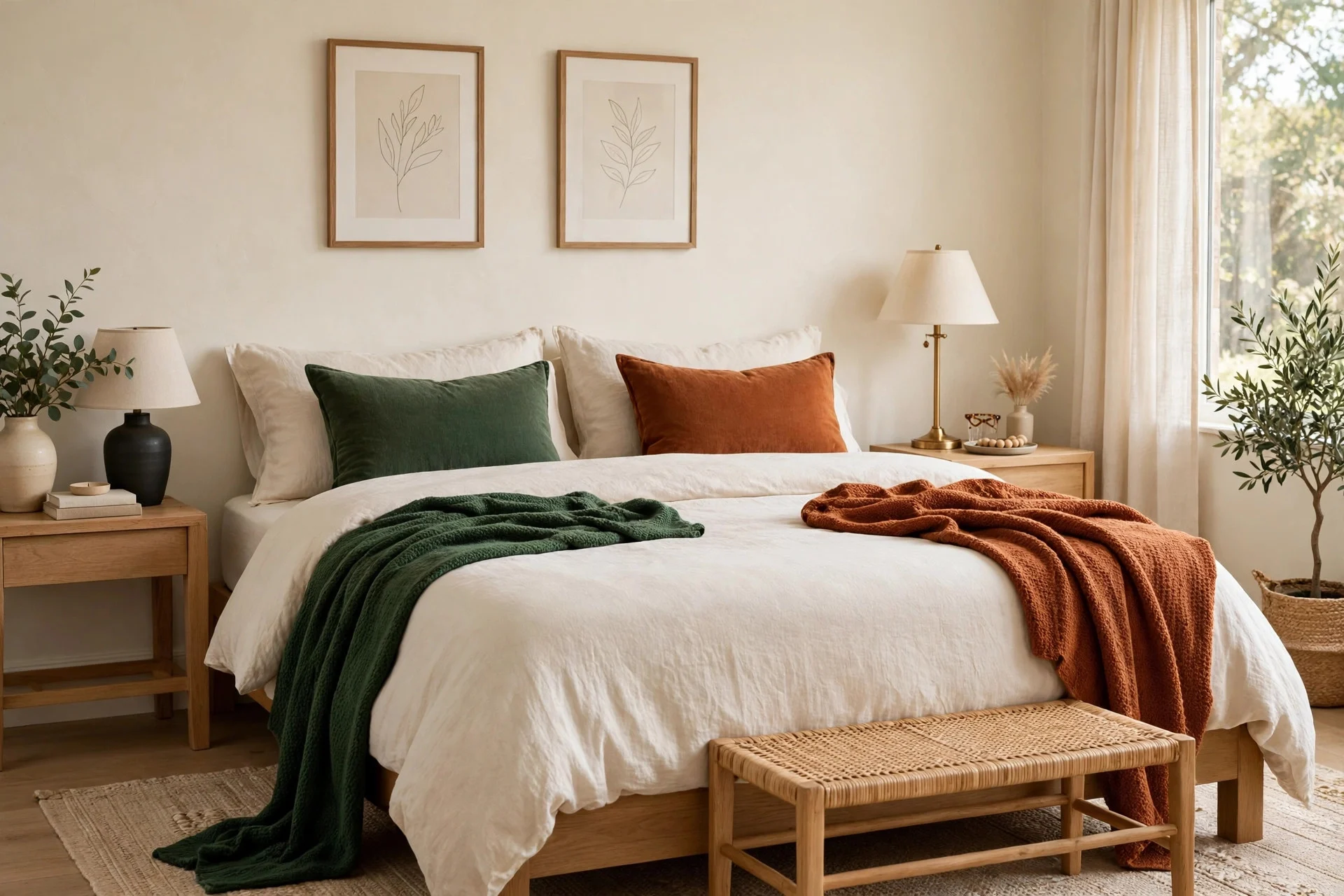
7. Use a Neutral Base, Then Give Each of You One Accent Colour
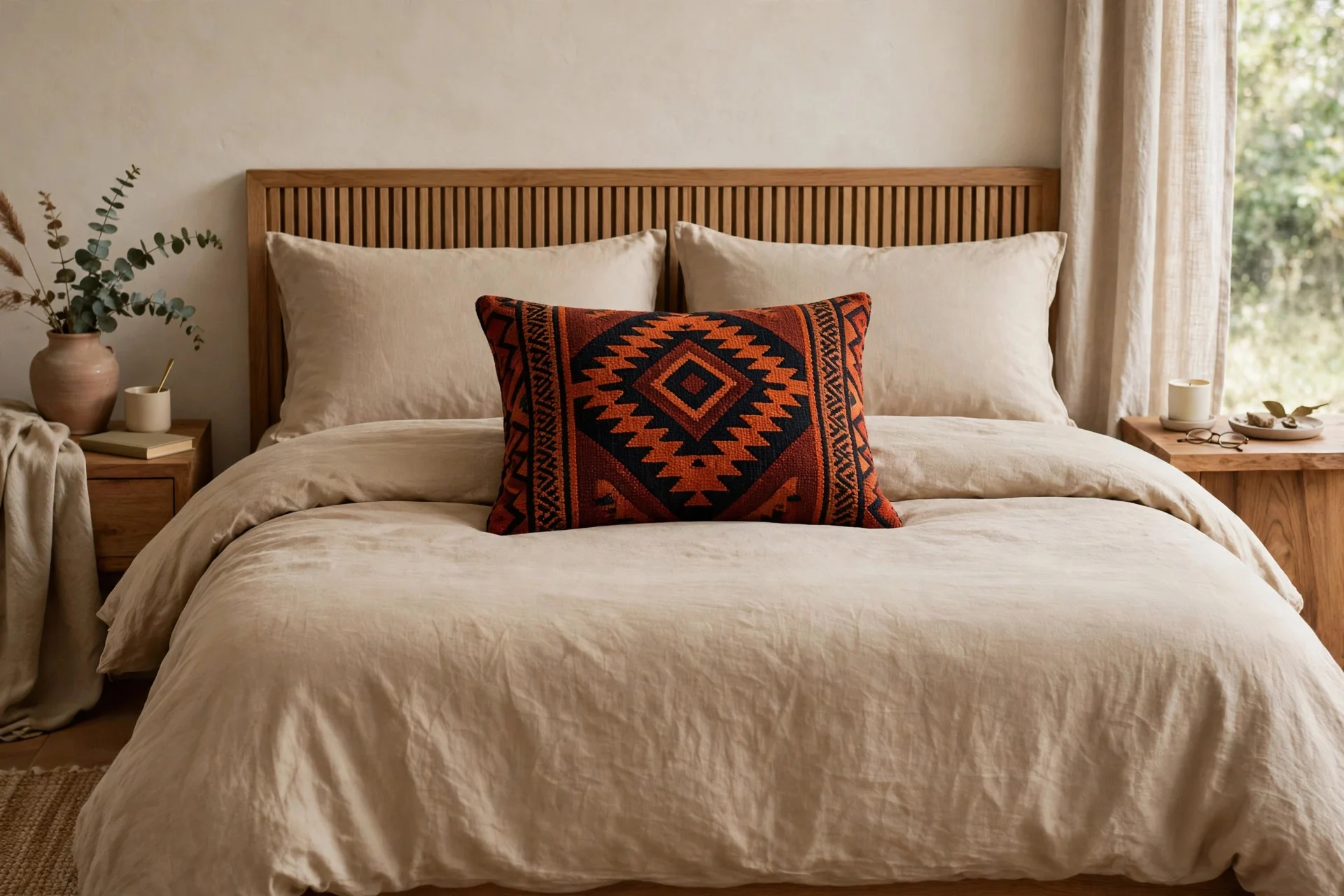
A neutral base is the peace treaty of couple bedrooms: cream walls, pale bedding, and light wood let both people relax. Then give each partner one accent colour of their own, used in small touches on their side of the room. One side gets a deep green cushion and throw, the other a warm rust one, and the room still looks calm because the base holds it together. I tried giving the whole room my favourite colour once, and my partner felt like a guest in it within a week. Two small accents, one each, cost almost nothing and make both people feel the room is theirs. Keep the accents to cushions, throws, and one small object each.
Try this: swap just the cushion and throw on each side of the bed to test your two accent colours first.
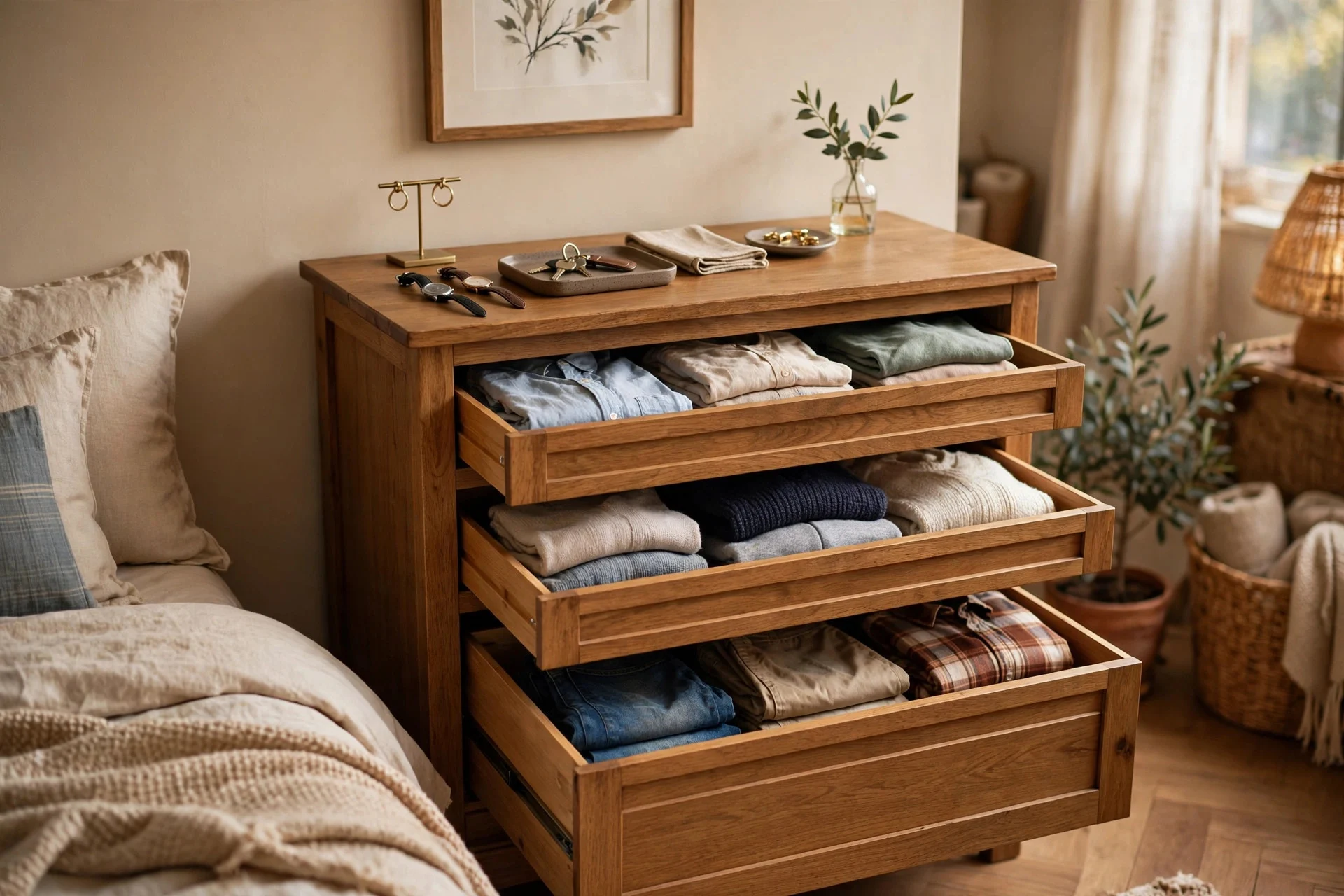
8. Share One Dresser, Split the Drawers Fairly
One dresser can work for two people, but only if the split is fair and written down in your heads before you move in. Give each person the same number of drawers, top drawers for daily things and bottom drawers for the rest, and agree that nobody borrows space from the other side. A small tray on top for shared things, like keys and watches, keeps the surface tidy. I once took three drawers to my partner’s two without thinking, and the grumbling lasted longer than the unpacking. Count the drawers out loud when you sort them, and it feels fair from day one. Label the inside of each drawer if you need to, because clear lines stop quiet arguments.
Try this: empty the dresser together and deal the drawers out like cards, one each in turn, until they are split evenly.
9. Create Two Closet Zones So Nobody Steals the Rail
Closet space is where good intentions go to die, so split it before the clothes move in. Give each person their own rail, their own shelves, and their own section, even if one side is a little bigger because one of you owns more clothes. A simple divider, a different colour of hanger for each person, or a small shelf unit down the middle makes the border clear. I learned this after my shirts slowly migrated across the whole rail while my partner’s side shrank to one sad corner. Measuring the rail and marking the middle with tape takes five minutes and ends the creep for good. Leave a little spare space on each side for new things.
Try this: use different coloured hangers for each person so the split stays obvious even when the closet is full.

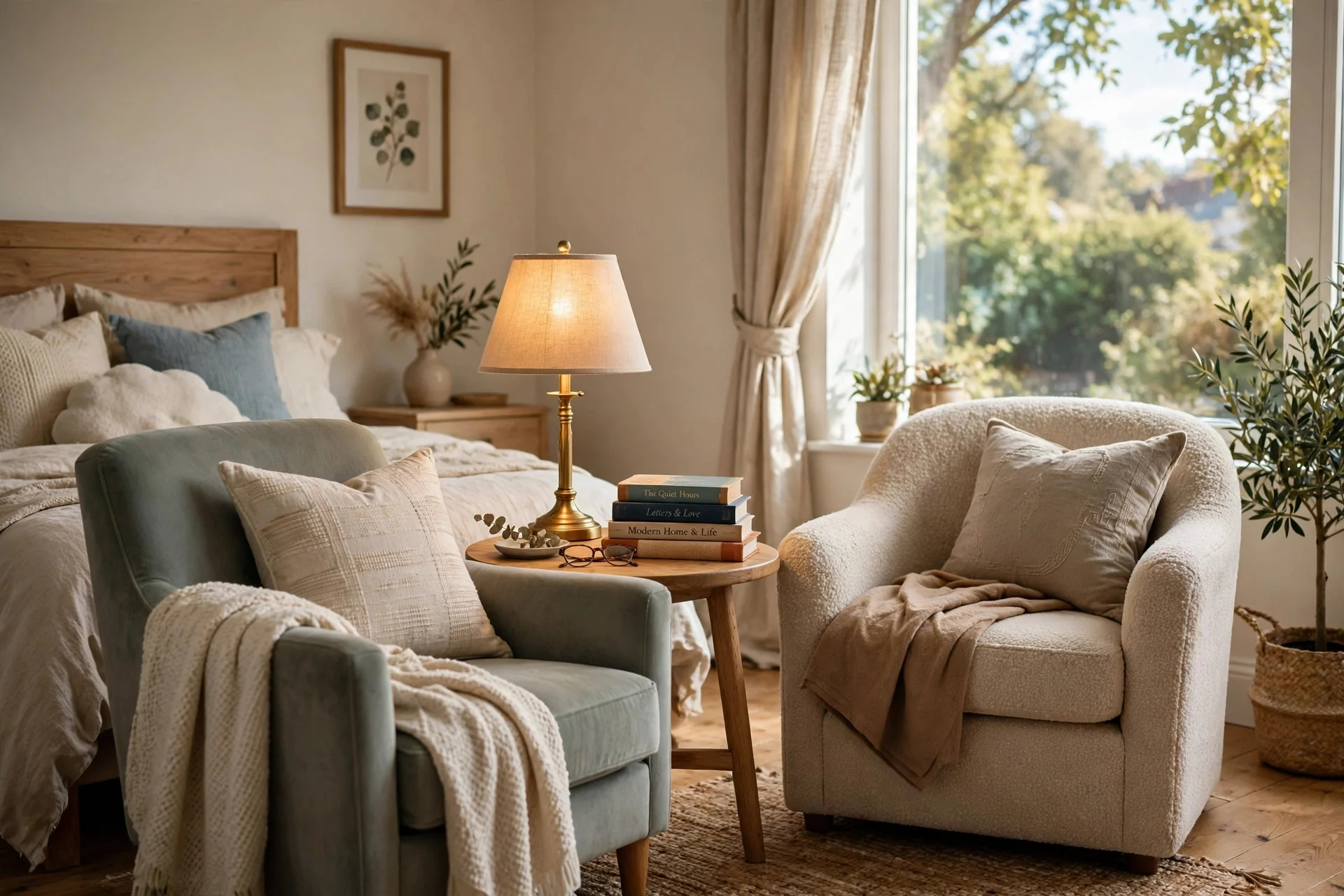
10. Set Up a Shared Reading Corner for Two
A reading corner for two turns an empty bedroom corner into the best seat in the house. Two comfortable chairs, or one wide loveseat, with a small table between them and a good lamp above, gives you both a place to wind down without screens. Add a soft throw each and a small stack of books you are both reading, and the corner invites you to sit there every evening. I set ours up in a corner that used to hold a pile of laundry, and now it is where we have our morning coffee together. Keep it simple: two seats, one table, one lamp, and nothing that needs dusting every day. The corner works because it is shared, not because it is fancy.
Try this: put the reading corner near the window so you both get daylight for reading in the morning.
11. Hang One Piece of Art You Both Chose Together
Art is the fastest argument in decorating, so pick one big piece together instead of filling the wall with small frames neither of you loves. Browse prints side by side, each of you saving the ones you like, and look for the overlap. A large landscape, a soft abstract, or a black-and-white photo usually pleases both people, and the size matters more than the subject. I once hung a print I loved above our bed, and my partner stared at it every morning like it owed him money. We replaced it with one we chose together, and the room felt calmer the same day. Hang it so the centre sits at eye level and spans about two-thirds of the bed width.
Try this: each save five prints you like, then compare lists and buy only the one that appears on both.

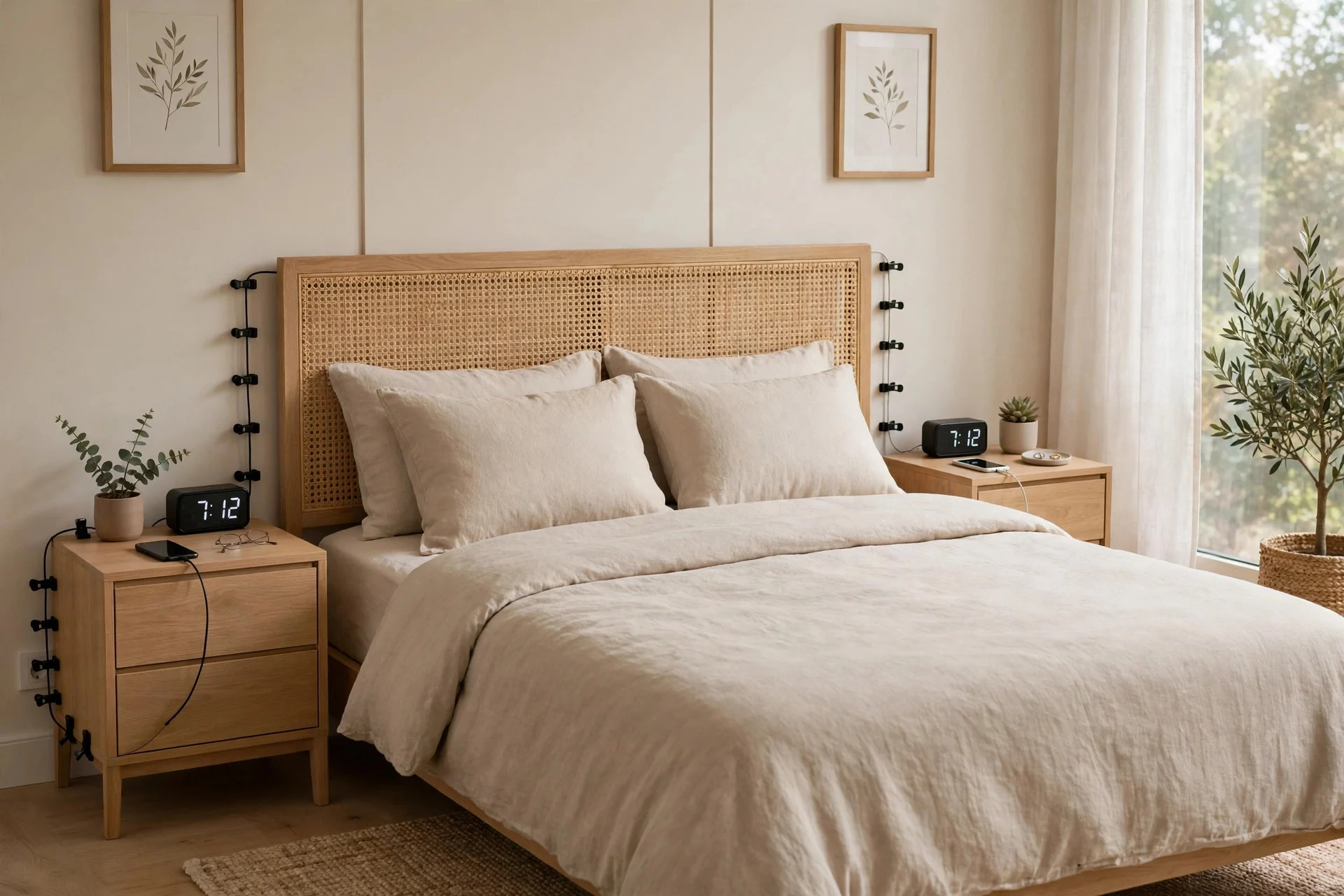
12. Add Two Charging Spots and Two Alarm Clocks to End Cable Wars
Nothing ruins a calm bedroom like a tangle of chargers fighting over one socket. Give each side of the bed its own charging spot, with a small power strip tucked behind each nightstand and a cable short enough to reach the bed without trailing across the floor. Two alarm clocks, or two phone stands, mean nobody has to reach across the other person in the dark. I spent months tripping over a charger cable that crossed the whole bed, and the fix was a ten-minute job with two short cables and a strip each. Keep the cables clipped to the back of the nightstand so the top stays clear, and the room looks tidy even with two phones charging every night.
Try this: buy two short charging cables, one per side, and clip each one to its own nightstand tonight.
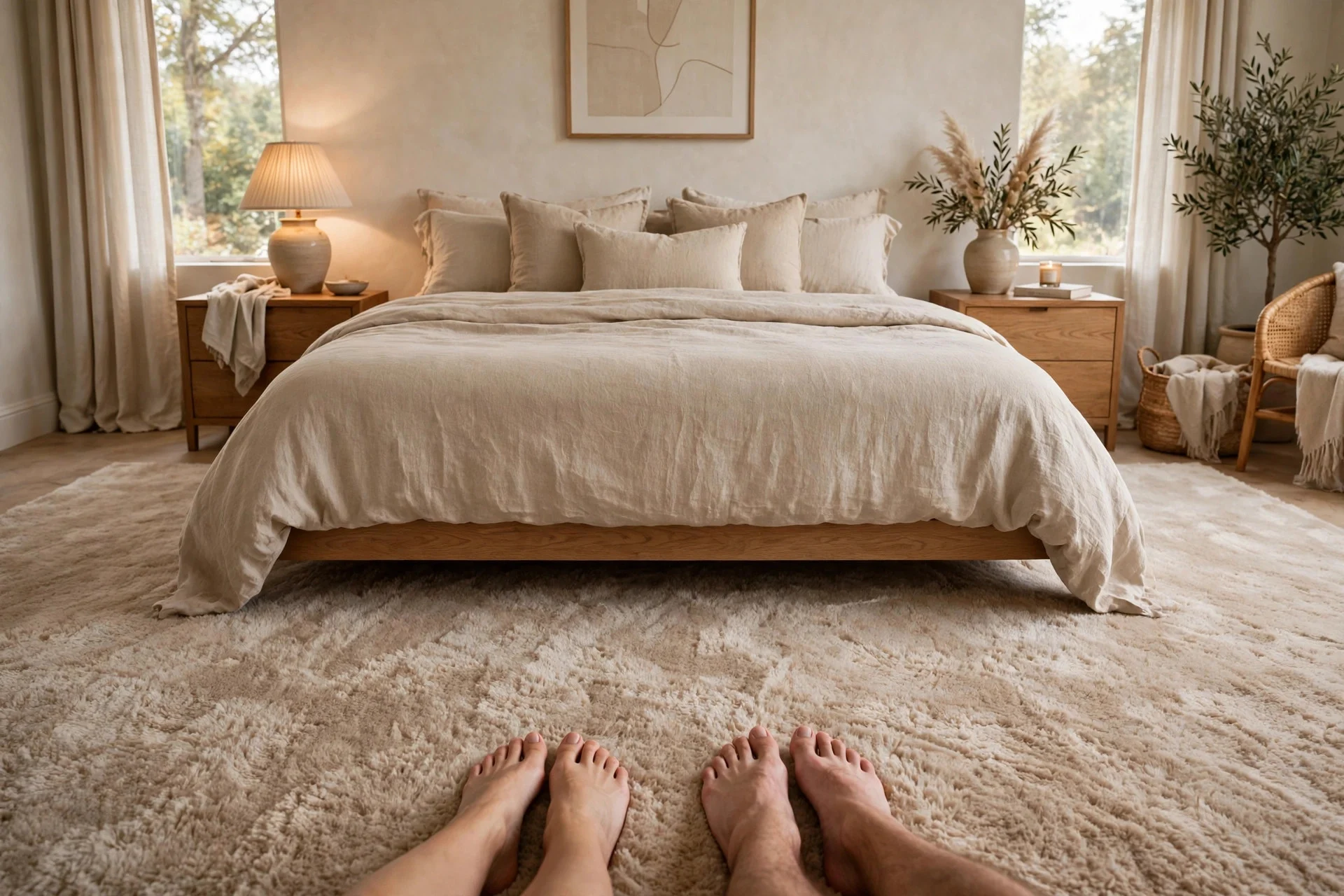
13. Lay One Big Rug You Both Agreed On
A rug is a big purchase, so it is worth agreeing on it together before you spend the money. A large rug that extends past both sides of the bed grounds the room and gives you both soft footing in the morning. Pick a pattern you both like in your shared palette, and lay painter’s tape on the floor to mark the size before you buy, because rugs always look smaller in the shop. I bought a rug alone once, brought it home, and watched my partner’s face fall before I had even unrolled it. Choosing together took one extra trip and saved us from living with a rug one of us hated. A flat-weave rug in a muted pattern is easy to clean and suits most shared rooms.
Try this: tape the rug size on the floor and live with the outline for two days before you order it.
14. Compromise on Patterns: One Bold, One Quiet
Pattern is where couples usually clash, because one person loves bold prints and the other wants everything plain. The fix is simple: one bold pattern and one quiet one, never two loud ones fighting. A bold cushion on one side and a plain throw on the other, or patterned curtains with solid bedding, keeps the room lively without looking noisy. I made the mistake of pairing striped bedding with a checked throw, and the bed looked like a picnic blanket gone wrong. One pattern gets to be the star, the other one stays calm and lets it shine. Agree on which pattern leads before you buy, and keep the colours inside your shared palette.
Try this: hold the bold and quiet fabrics side by side in daylight and check they share at least one colour.
15. Style a Shared Vanity or Dresser Top Together
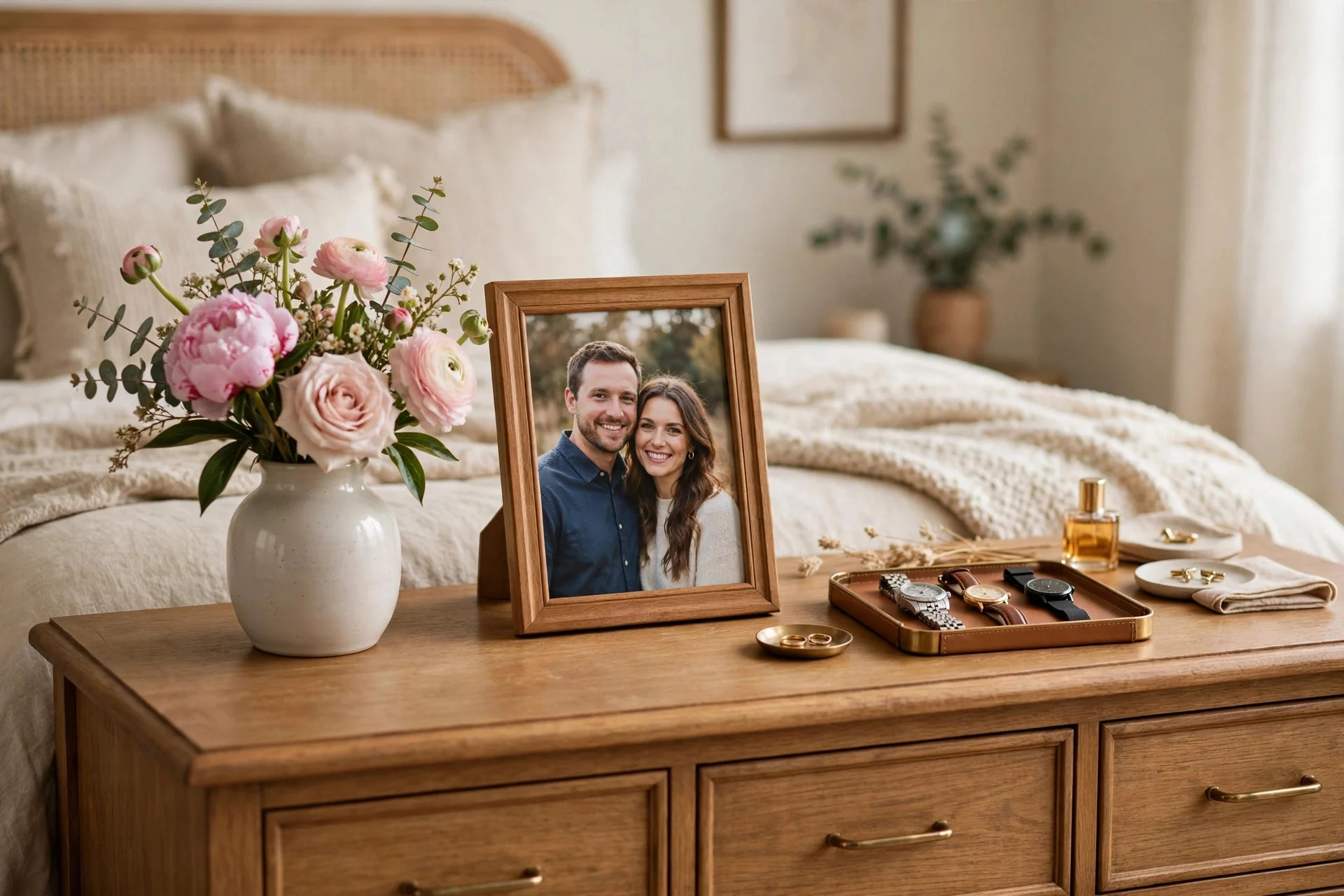
The top of a dresser or vanity is shared ground, so style it together and keep it to a few pieces you both like. One vase with fresh flowers, one framed photo of you both, and one small tray for watches and jewellery is enough. The rule is simple: nothing lands on the surface unless you both agree it belongs there, and anything that does not fit goes in a drawer. I used to pile my own bottles and bits on our dresser until my partner stopped using it altogether, and the room felt divided. Clearing it together and choosing three shared pieces brought the surface back to life. Dust it once a week together, because a clear surface stays clear only if someone keeps it that way.
Try this: clear the whole dresser top tonight, then put back only three things you both chose together.
16. Give the Bed a Headboard That Suits You Both
A headboard sets the mood of the whole bedroom, so it is worth choosing one you both like. An upholstered headboard in a soft neutral, a simple wooden one, or a tall linen panel all work, and the key is height: it should clear the pillows and give the bed a finished look. Shop together and sit against a few in the store, because one of you may want soft padding to lean on while the other wants a hard back for reading. I bought a tall velvet headboard alone once, and it looked grand but my partner found it too soft to lean against with a book. A medium-height padded headboard in a neutral fabric pleased us both, and it suited the bed perfectly.
Try this: choose a headboard at least 120 cm tall so it clears the pillows and frames the bed properly.

17. Keep One Shelf Each for Your Own Things
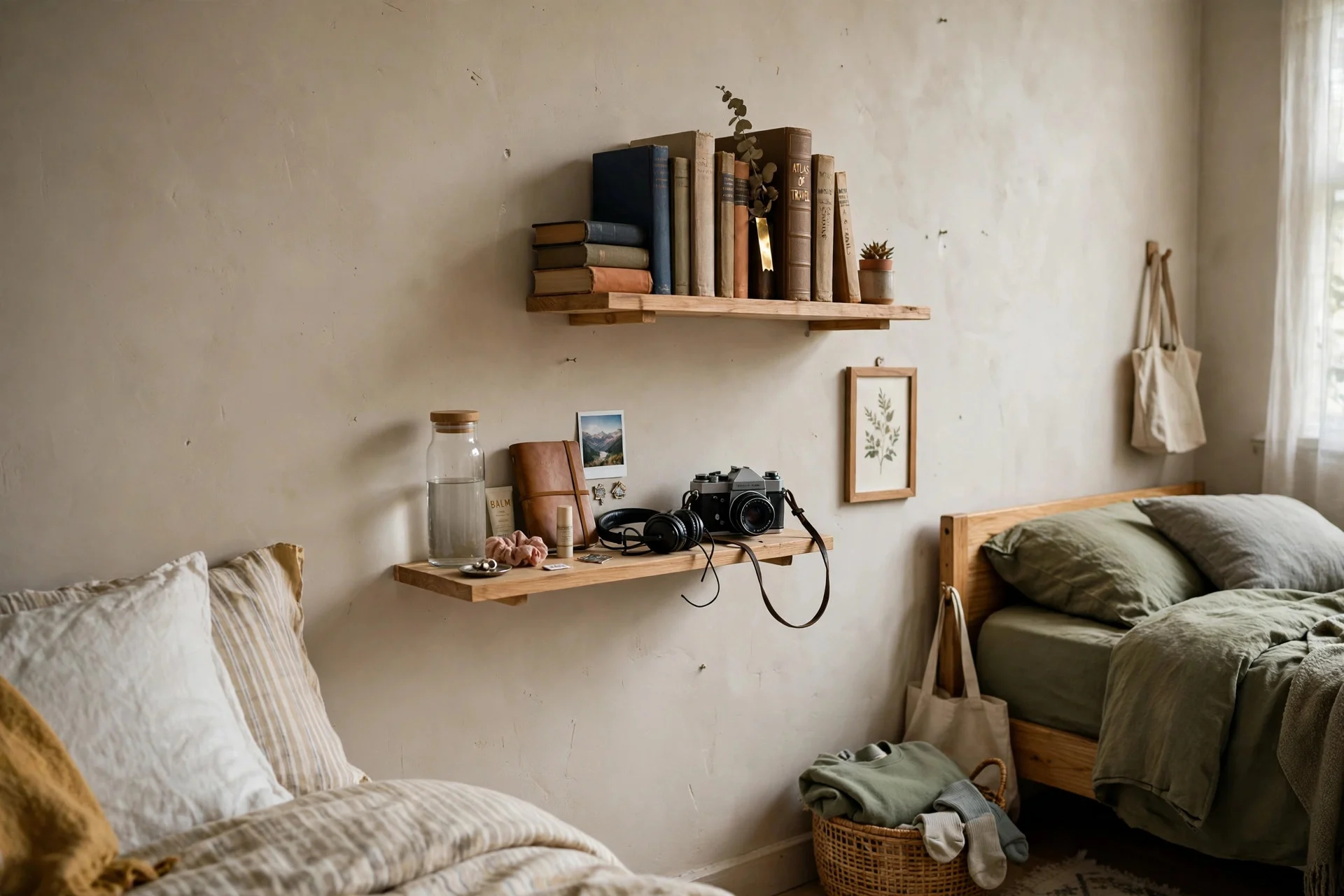
Even in a shared room, each person needs one small place that is fully theirs. Give each partner one shelf, one basket, or one corner of the dresser where the other person never tidies, moves, or judges what is there. Books, a camera, a jewellery box, a stack of magazines, whatever it is, it stays. I used to tidy my partner’s shelf without asking, and it caused more friction than any big decorating choice ever did. One shelf each is a small price for peace, and it keeps the rest of the room tidy because personal clutter has a home. Label it in your heads, not on the wall, and respect the border like it is a real one.
Try this: pick your shelf today and agree that the other person never tidies it without asking first.
18. Choose Curtains Together and Hang Them High
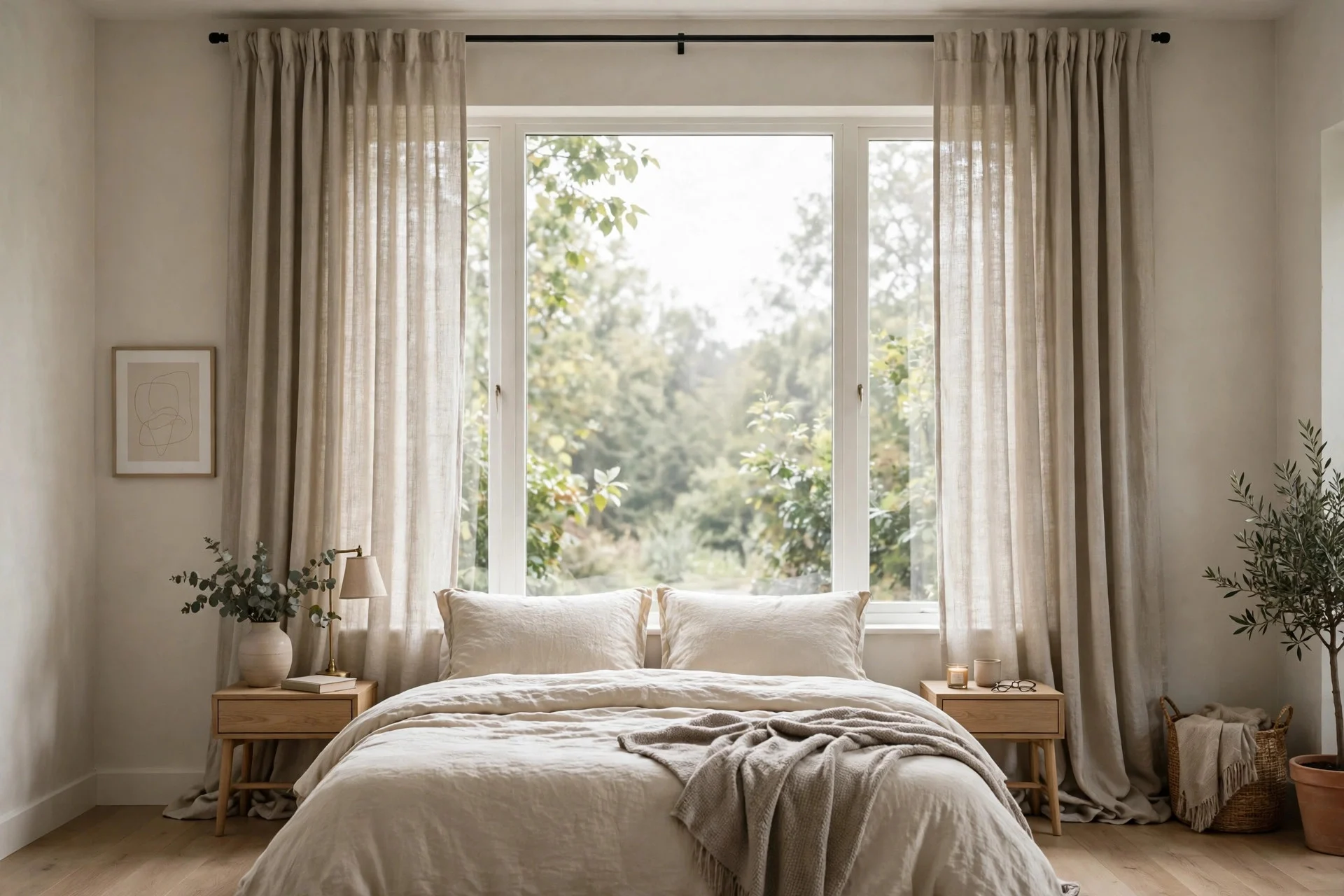
Curtains change the whole wall, so they are worth choosing together and hanging properly. Mount the rod close to the ceiling and extend it past the window sides, so the panels frame the window instead of covering it, and the room feels taller. One of you may want blackout for sleep while the other wants sheer light in the morning, so layer them: a sheer panel inside and a blackout curtain outside, and both of you get what you need. I hung ours too low the first time, and the window looked small and squat until we moved the rod up. Linen-look curtains in your shared neutral are affordable, fall nicely, and suit almost any couple’s taste without a fight.
Try this: hang the rod 10 to 15 cm below the ceiling and let the curtains just kiss the floor.
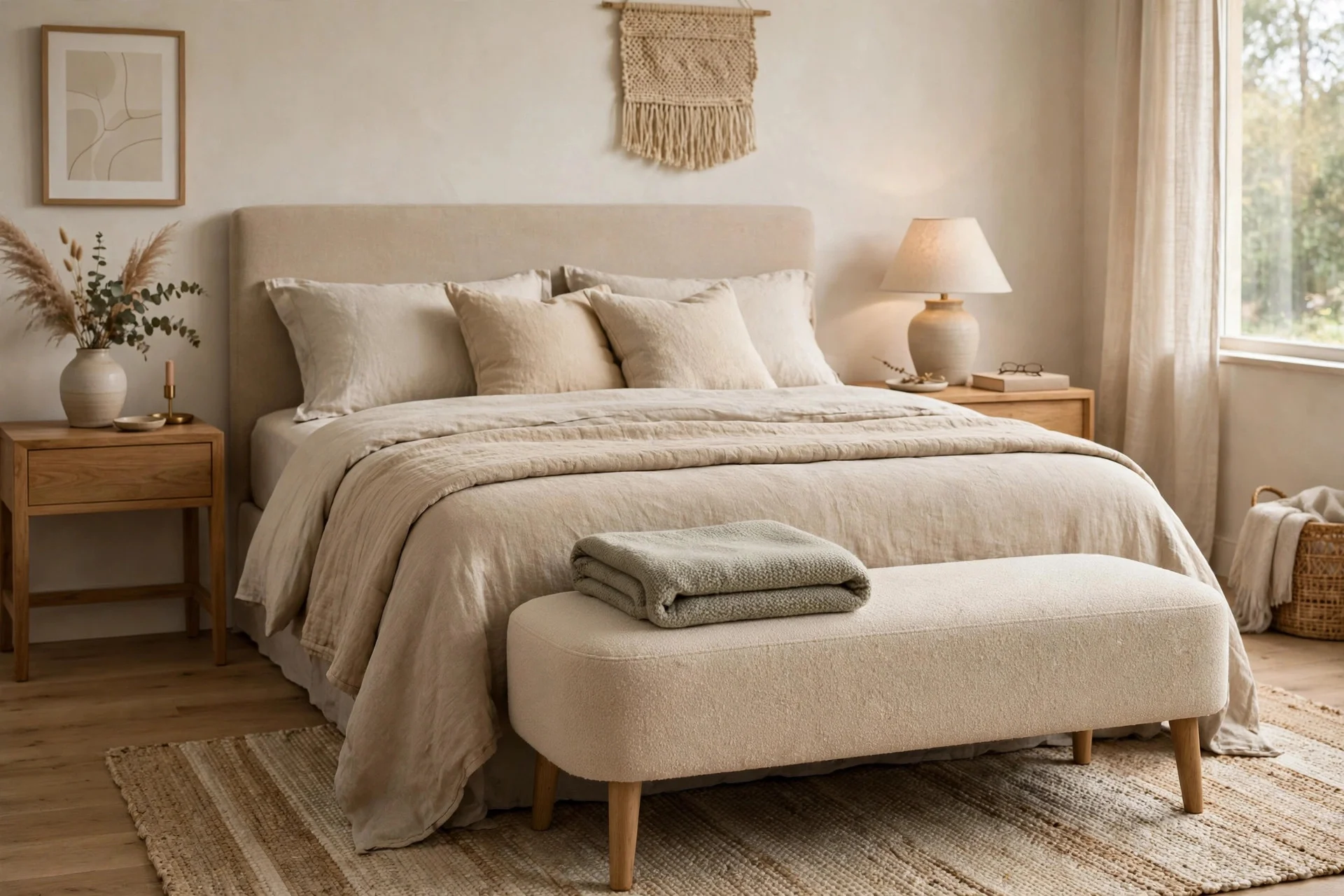
19. Add a Bench at the Foot of the Bed for Shared Mornings
A bench at the foot of the bed is one of those pieces you do not miss until you live with one, and then you wonder how you managed without it. It gives you both somewhere to sit while you put your shoes on, somewhere to lay out tomorrow’s clothes, and it finishes the bed like a full stop. Pick one with hidden storage inside, so it holds spare blankets and out-of-season bedding while it looks good. I bought a plain bench second-hand and threw a folded throw over it, and it looks far more expensive than it was. Keep it slightly narrower than the bed so it looks neat, and agree on the colour together so it matches your shared palette.
Try this: pick a bench with hidden storage so it earns its place by holding spare blankets and bedding.
20. Create a Calm Night Routine Corner With Soft Light
A shared bedroom works best when the last half hour of the day feels calm for both people, not just one. Set up a small night routine corner: a soft lamp on a low dimmer, a carafe of water, a book each, and phones parked on their chargers instead of in your hands. Dim the lamp, put the screens away, and let the room slow down together. I used to scroll in bed while my partner tried to sleep, and the blue light kept us both awake longer than either of us wanted. A simple rule, lights low and phones down after ten, changed our sleep in a week. Keep the corner simple and warm, because the habit matters more than the furniture.
Try this: agree on a lights-low time tonight and stick to it for one week to see how you both sleep.

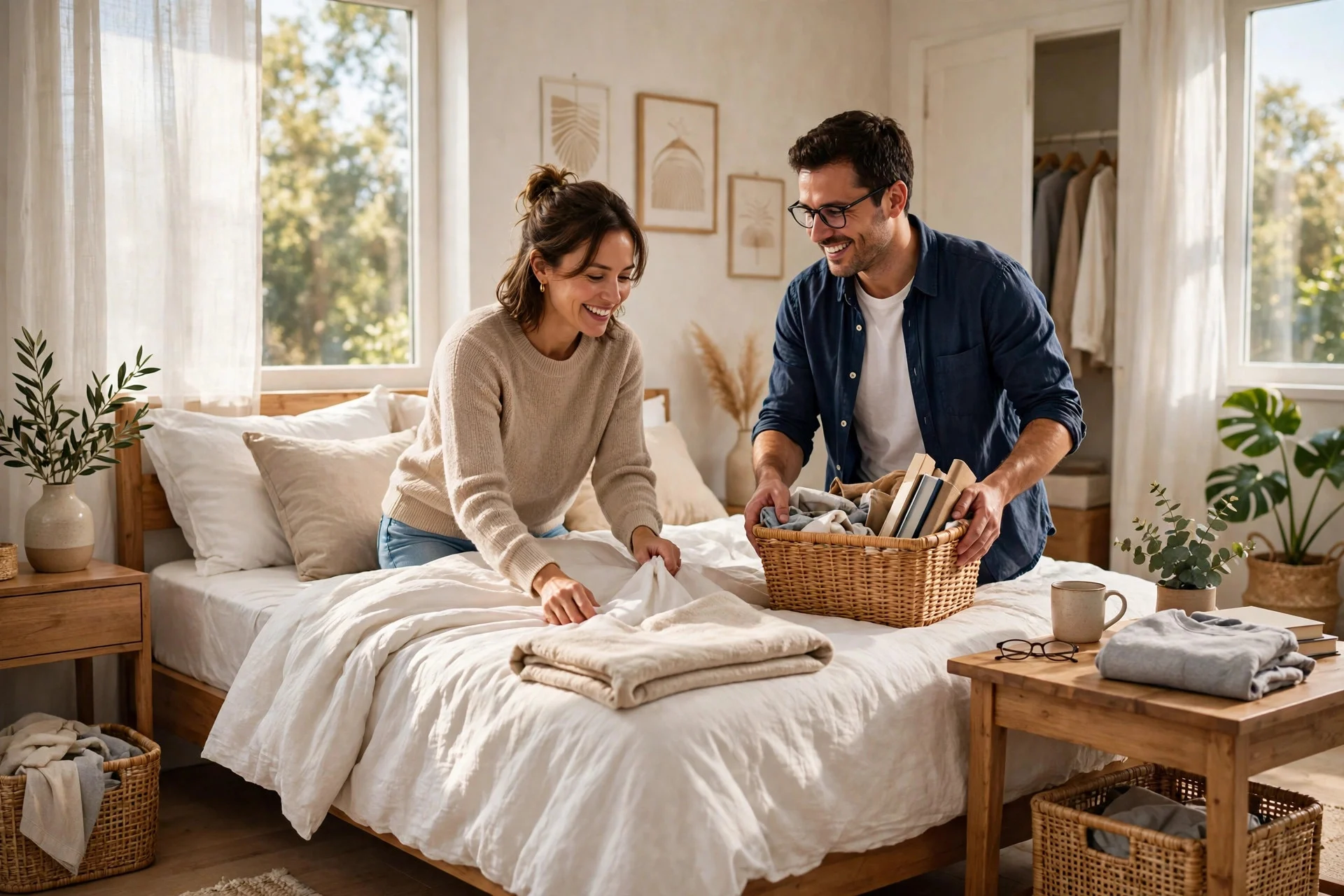
21. Do a Monthly Reset Together to Keep the Room Shared
A shared bedroom only stays shared if you both keep looking after it, so put a monthly reset on the calendar and do it together. Spend half an hour clearing surfaces, swapping the bedding, dusting the shelves, and checking what has crept onto the wrong side of the room. Talk about what is working and what is not, and change one small thing each month, whether that is a cushion, a photo, or a lamp position. I used to do all the tidying alone, and I quietly resented it until we made the reset a shared job. Doing it together takes less time, feels fair, and keeps the room feeling like it belongs to both of you, month after month.
Try this: pick the first Sunday of every month for your reset and put it on the calendar together tonight.
How do couples agree on bedroom decor when tastes differ?
Start with the big shared choices and leave the small ones personal. Agree together on the wall colour, the bed, the rug, and the curtains, because those set the mood of the whole room. Then give each person one accent colour, one shelf, and one nightstand to style their own way. When you disagree on a piece, look for the overlap instead of arguing over the difference: each of you picks five options, and you buy the one that appears on both lists. That simple rule has settled more decorating arguments in our house than any amount of talking ever did.
What colours work best for a shared bedroom?
Soft neutrals work best as the base: warm white, cream, greige, soft grey, and pale wood tones suit almost everyone and make the room feel calm at night. Add one deeper colour you both like, such as sage green, navy, or warm terracotta, in small touches like cushions and throws. Avoid bright, sharp colours on big surfaces, because they fight the calm feeling you want before sleep. If one of you loves a bold colour, use it on one accent wall or one side of the bed, so it adds life without taking over the room.
How can couples share a small bedroom without arguing over space?
Split the space clearly before you move in, and write the split down in your heads. Each person gets their own nightstand, their own drawers, their own closet zone, and their own charging spot, so nobody has to negotiate for room every day. Keep the furniture low and the surfaces clear, because clutter makes a small room feel smaller and raises tempers fast. A big mirror opposite the window and curtains hung high make the room feel wider, and a monthly reset together keeps the balance fair as things change.
Should couples have matching nightstands and lamps?
Matching nightstands and lamps are not a rule, but they make a shared bedroom look calm and balanced, which helps both people relax. Matching pieces on both sides of the bed frame it neatly and stop the room from looking like two separate halves. The contents can be completely different: one side can hold books and glasses, the other a phone and hand cream. If you hate matching sets, pick pieces at the same height and in the same wood or metal finish, and the room will still feel balanced without looking like a furniture showroom.
Final Thoughts
A shared bedroom is not about one person winning and the other giving in. It is about building a room where both of you feel at home the moment you walk in, with big choices you made together and small corners that are each your own. Pick the palette together, split the space fairly, agree on the bed and the rug, and let the small personal touches do the rest. The room will not be perfect, and it does not need to be, because a bedroom that holds two real lives will always look better than a showroom that holds none.
Start with the cheapest shared change, which for most couples is the colour palette and the lamps. Sit down tonight, pick your three colours, and swap the bulbs to warm light. Live with those two changes for a week before you buy anything else, and let the room tell you what it needs next. That slow, shared pace is the real secret of a bedroom that works for two people: every piece earns its place, and the room ends up feeling like it grew that way, together.