

My first flat was a single room above a bakery, barely big enough for a bed and a kettle, and I spent the first month bumping into my own furniture. The smell of fresh bread drifted up every morning, which was lovely, but the room itself felt like a corridor I happened to sleep in. That tiny flat taught me more about decorating than any showroom ever has, because every choice had to earn its place. These small space decor ideas come from that flat and every small home I have styled since, and they work because they treat a small room as a home to enjoy, not a problem to hide.
Instead of a random list of tricks, we will walk through a small home the way you actually live in it. We start at the front door, drift through the living room, squeeze into the kitchen, rest in the bedroom, and finish with the bathroom and the storage corners nobody photographs. Each idea stands on its own, so you can steal one today and come back for the rest later, and most of them cost very little or nothing at all.
1. Small Space Decor Ideas That Start with Your Walls
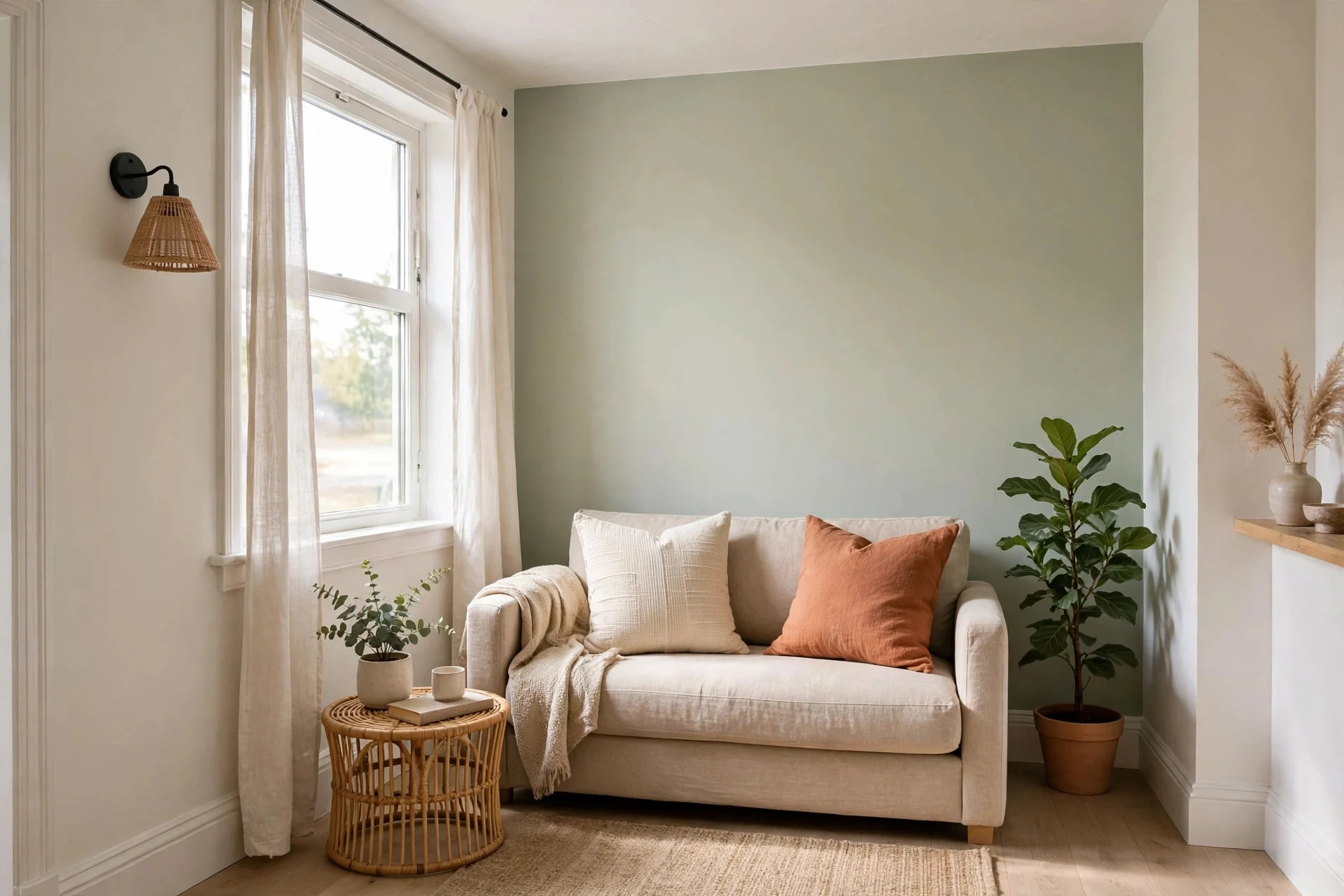
Paint is the cheapest way to change how big a room feels, and I learned that the hard way when I painted my first flat a moody dark green and instantly regretted it. The room shrank around me like a coat two sizes too small. Start by painting the walls one soft, light colour — warm white, pale sage, or a dusty blue — and keep the ceiling the same shade so the edges blur. Then add one wall of gentle contrast, maybe behind the sofa, so the room has a focal point. Step back, live with it for a week, and notice how much lighter the whole place feels before you buy anything else.
Try this: paint a large piece of card in your chosen colour and tape it to the wall for three days, checking it in morning and evening light before committing.
2. A Slim Console Table That Earns Its Keep at the Door
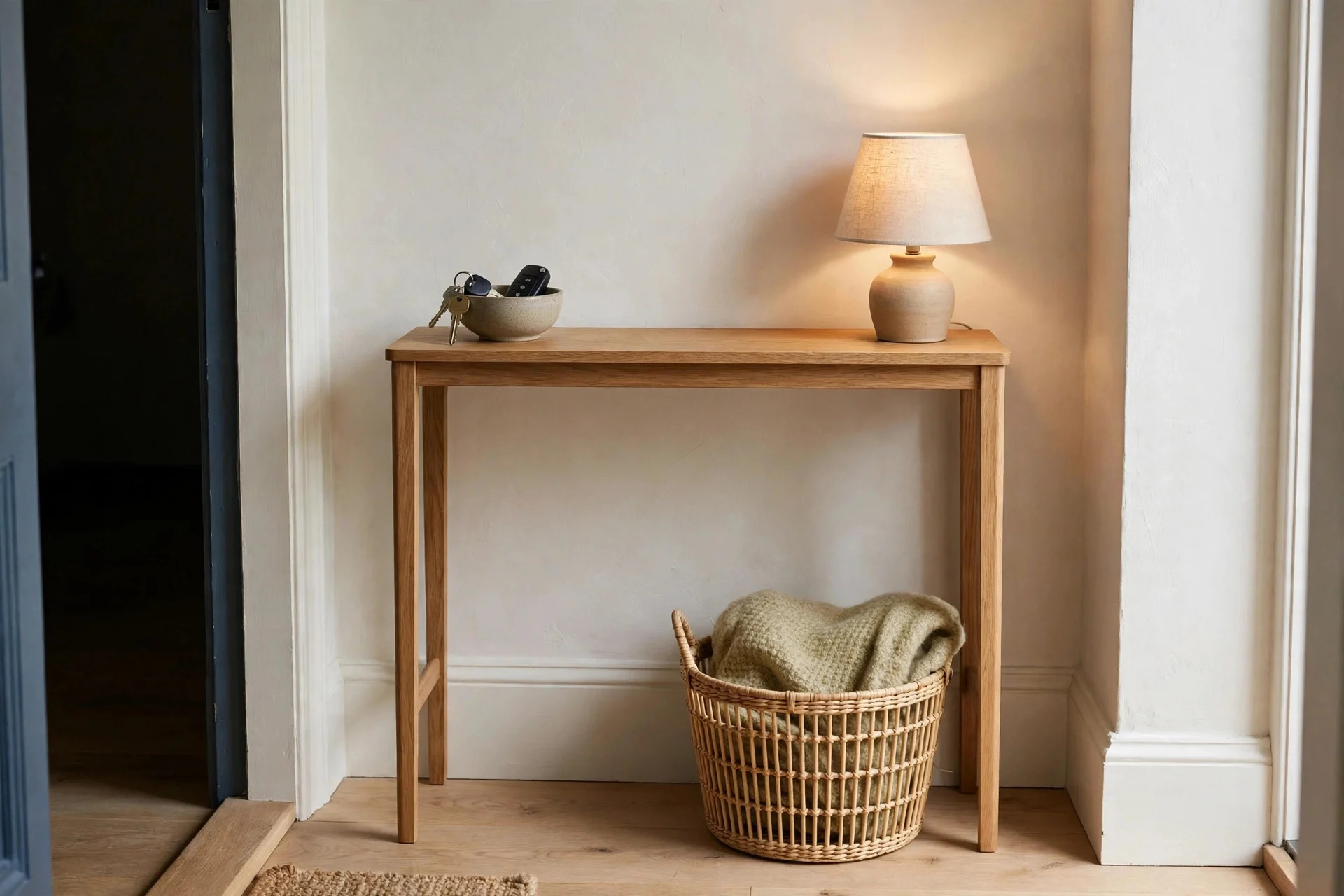
A hallway console sounds like a luxury until you live without one and your keys end up in the fruit bowl every single day. I tried that for a month and lost my keys twice, once inside a shoe. Pick a table no deeper than twenty-five centimetres, so it hugs the wall instead of blocking the path, and give it three jobs: a bowl for keys, a small lamp for warm light, and a drawer or basket underneath for the bits you grab on the way out. Suddenly the doorway feels intentional, like the home is greeting you instead of tripping you. It is the smallest piece of furniture with the biggest daily payoff.
Try this: measure your hallway width first — if less than ninety centimetres remains after the table, go slimmer or skip it.
3. Hooks and a Tray: The Entry That Cleans Itself Up
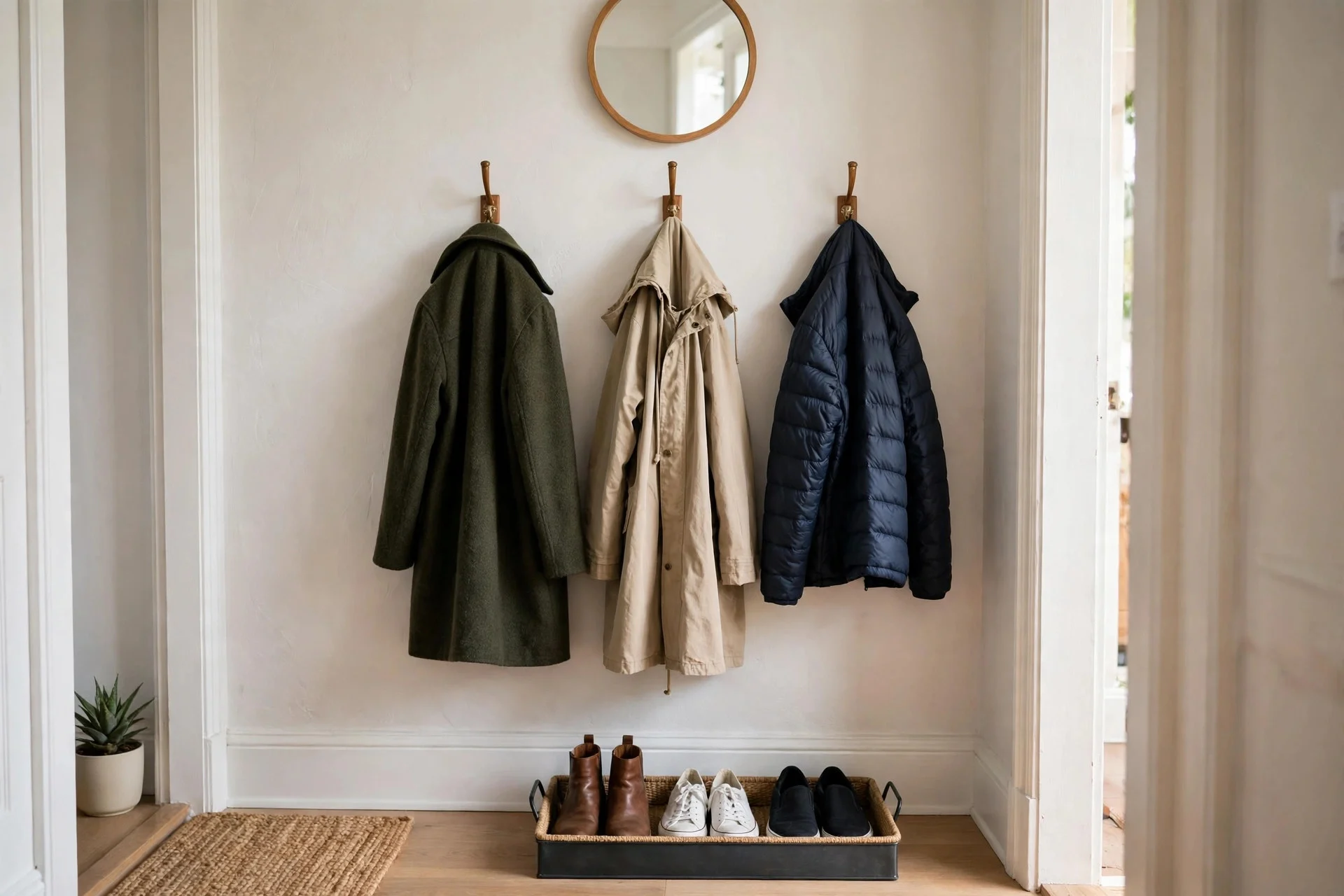
Coats on chairs, shoes by the door, bags on the floor — my entry used to look like a lost-property office. The fix was embarrassingly simple: three sturdy wall hooks at different heights and one shallow tray for shoes. Hang the hooks where hands naturally reach, put the tray right under them, and add a tiny mirror above so you can check yourself on the way out. The trick is giving every arriving item a home before it hits the floor. I tried this once in a rental where I could not drill, and command hooks held perfectly for two years. Your future self, coming home tired, will thank you.
Try this: assign one hook per person and one tray per pair of daily shoes — extras live in a cupboard, not the hallway.
4. One Big Mirror by the Front Door
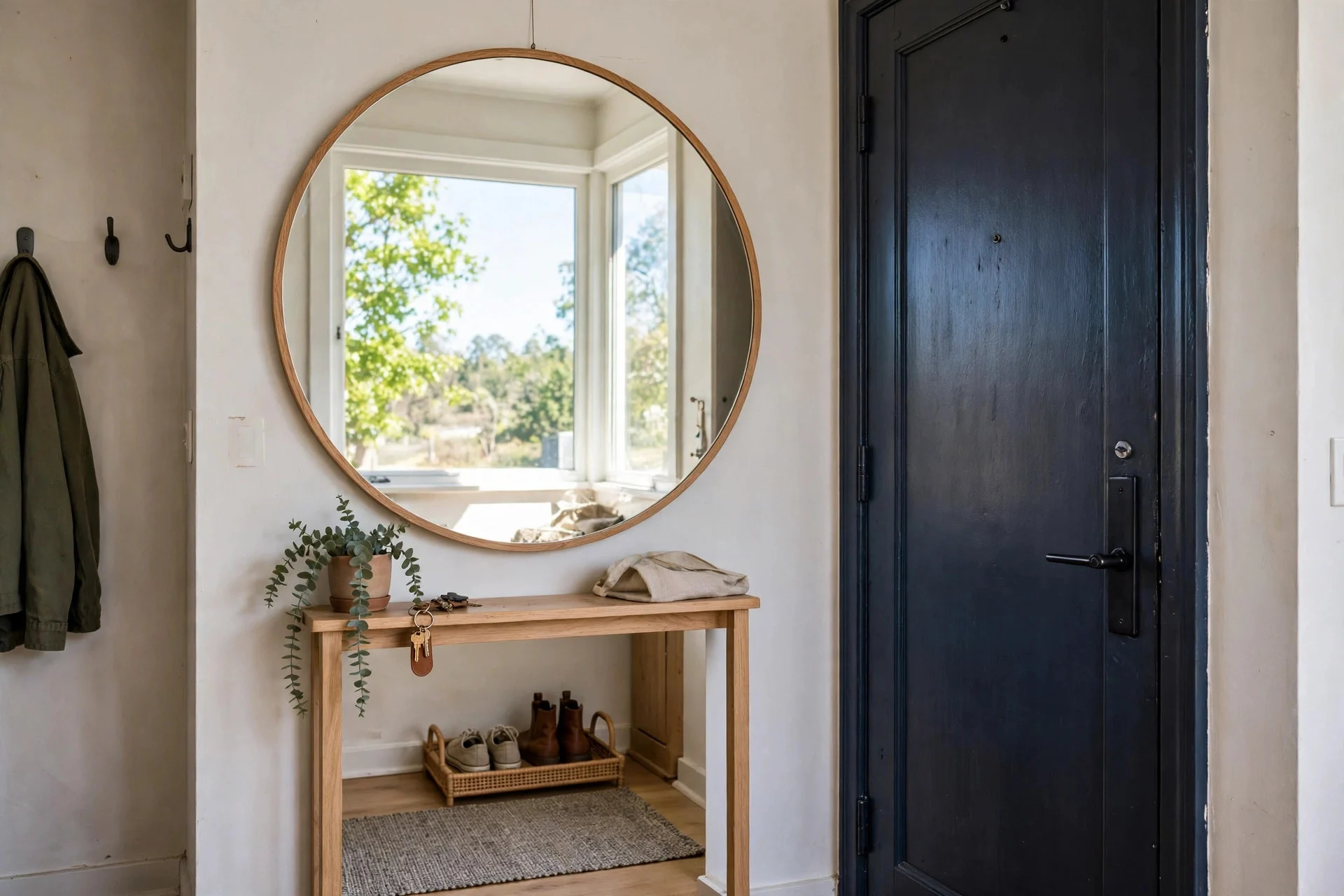
A mirror near the door does two jobs at once: it bounces light deep into a dark hallway and it doubles how wide the space looks. Mine hung opposite a small window, and on sunny mornings the whole entry glowed like a different flat. Choose the biggest mirror your wall can hold, hang it at eye level, and angle it so it reflects a window or a pretty corner, never a blank wall or a pile of clutter. A slim wooden or black metal frame keeps it feeling like decor rather than a gym. I once hung a mirror facing the front door itself and all I saw was the street, so check the reflection before you drill.
Try this: hold the mirror in place and check the reflection from the doorway before marking any holes.
5. A Sofa That Fits the Room, Not the Showroom
The sofa I bought for my first flat was beautiful in the shop and enormous at home — it ate half the room and left no space for a coffee table. I sold it within six months and learned to measure first, dream second. In a small living room, pick a two-seater or a compact loveseat with slim arms and a low back, and leave at least sixty centimetres of walking space around it. Sit on it in the shop, stretch your legs, and picture the room with it in place. A sofa that fits leaves room for everything else, and the room finally feels like it belongs to you, not the furniture.
Try this: tape the sofa’s outline on the floor with painter’s tape and live around it for a day before you buy.
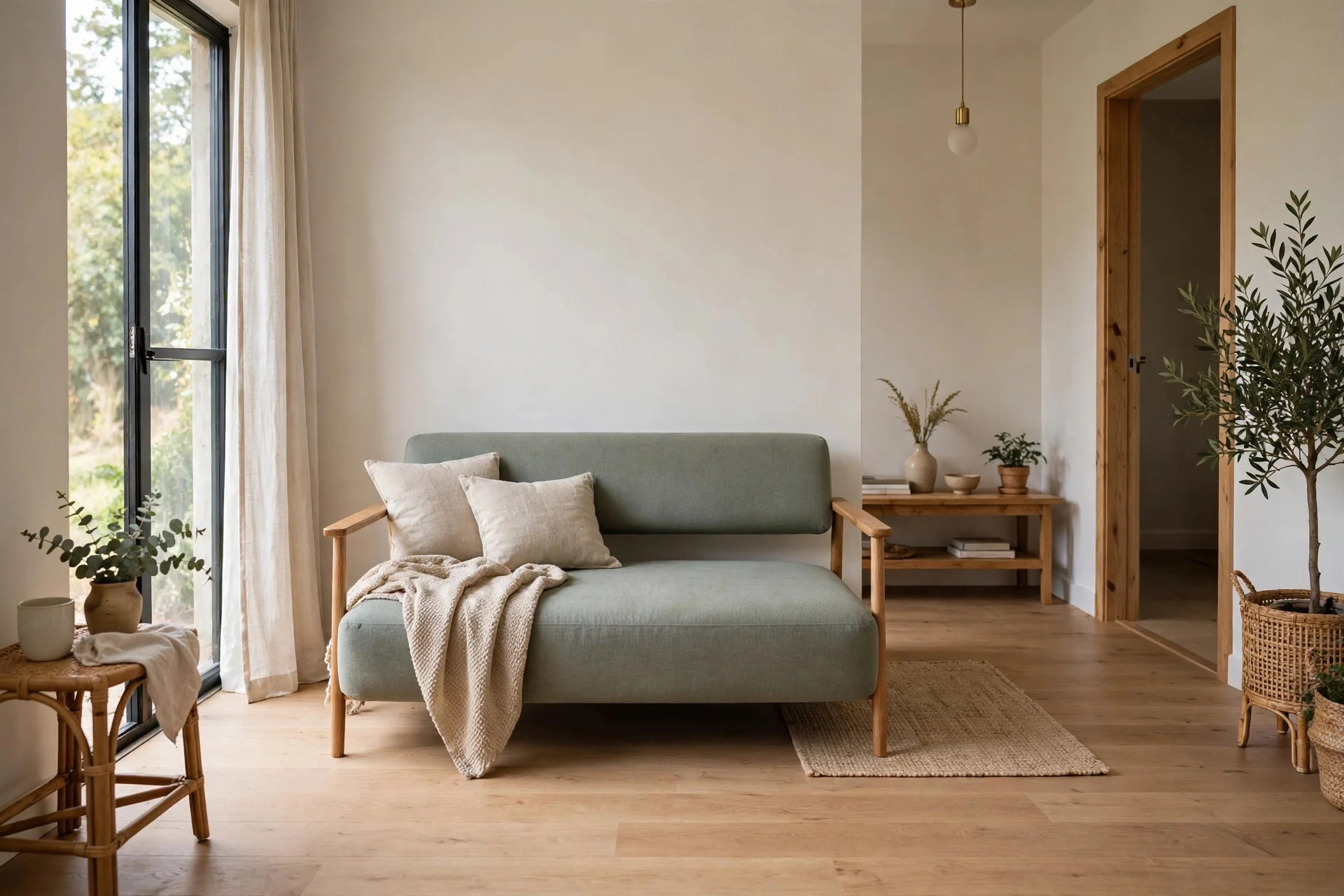
6. Leggy Furniture That Lets the Floor Breathe
Furniture that sits flat on the floor looks like a solid block, and in a small room those blocks pile up fast. Switch to pieces with visible legs — a sofa on slim wooden legs, a side table on tapered ones, a chair you can see underneath — and suddenly you can see the floor continuing beneath them. That little gap tricks the eye into reading the room as bigger, and it makes cleaning easier too, which I discovered the first time I tried to rescue a sock from under a skirted armchair. Pick mid-century style legs in pale wood for warmth, keep the legs slim, and let the breathing room do the decorating for you.
Try this: swap one bulky piece for a leggy version first — a side table is the cheapest test.
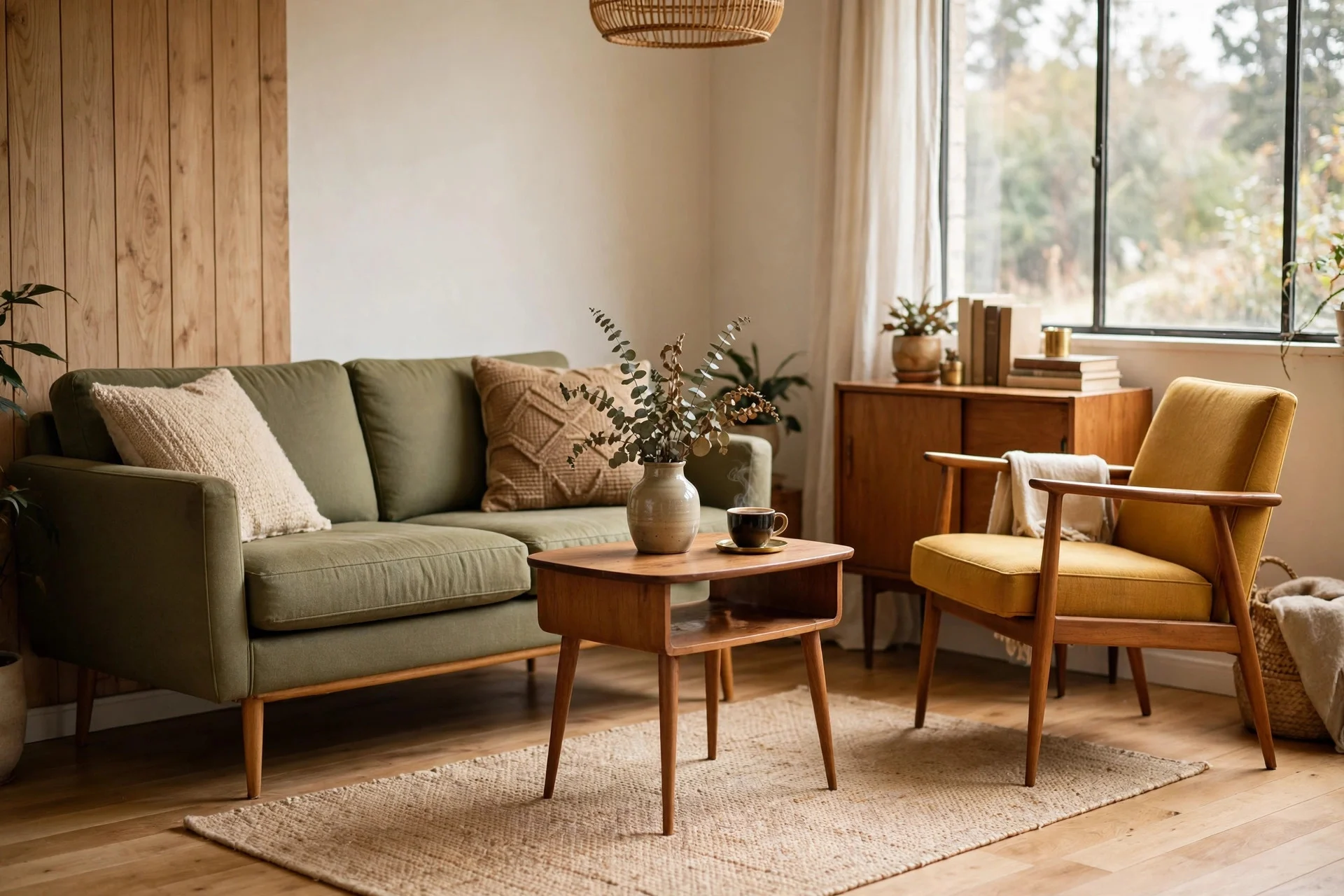
7. A Rug That Defines the Living Zone
In a studio or an open-plan flat, the living area can blur into the kitchen and the hallway until the whole place feels like one long corridor. A rug fixes that in an afternoon. I laid one down in my first flat and the room suddenly had a centre, a place where the sofa belonged and the coffee went. Choose a rug big enough that the front legs of the sofa and chairs sit on it, pick a low pile so doors and chairs glide over it, and keep the pattern calm if the room is already busy. The rug draws a quiet border around your living zone, and your eye reads the rest of the room as separate, generous space.
Try this: use newspaper sheets taped together to test the rug size on the floor before ordering.
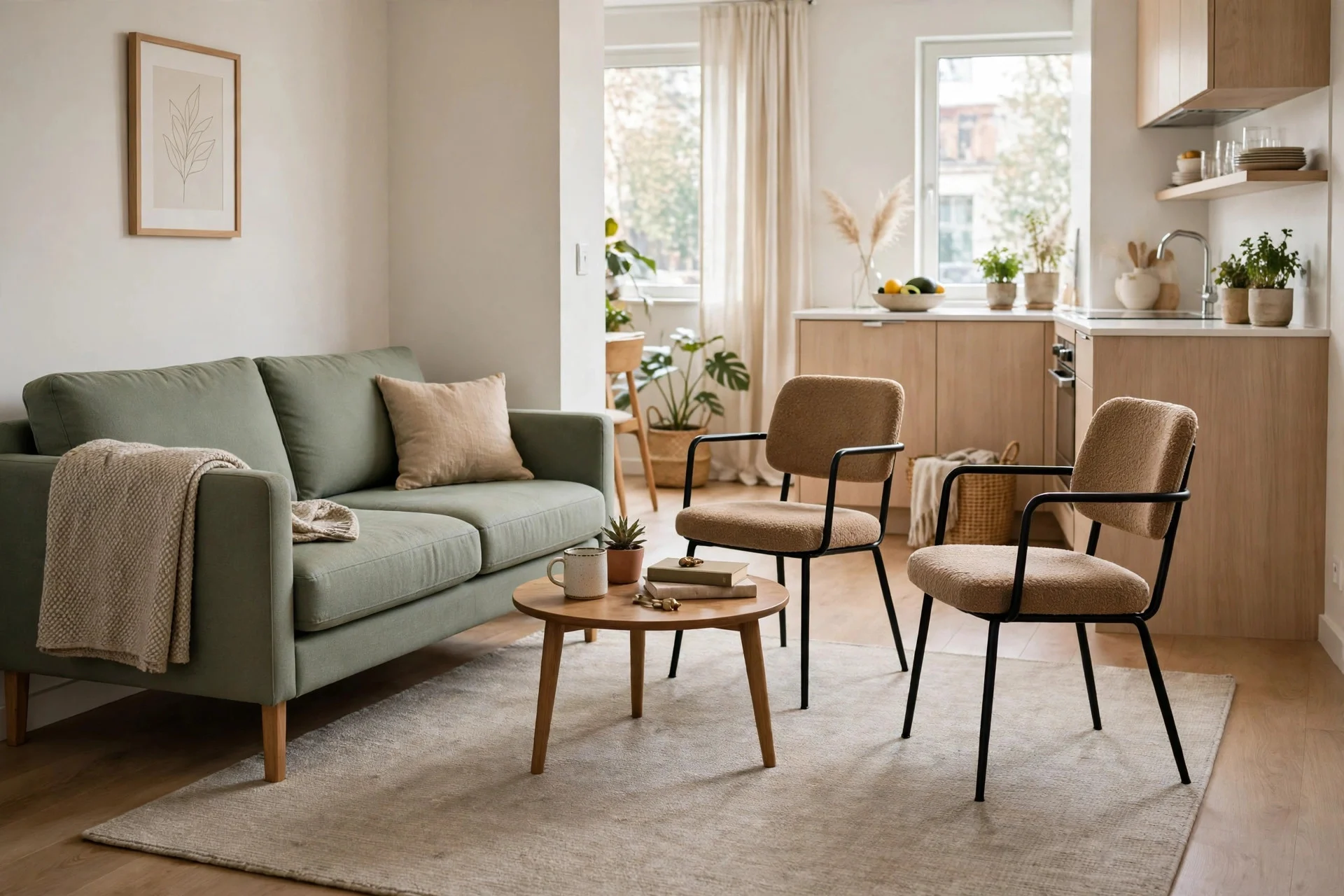
8. Light Colours on the Walls, Warmth in the Textiles
An all-white room can feel like a waiting room, and I made that mistake once — white walls, white sofa, white rug, and a flat that felt like nobody lived there. The fix was not repainting, it was layering warmth through fabric. Keep the big surfaces light so the room stays bright, then bring in colour and texture with cushions, a throw, and curtains in one warm palette. Mix a chunky knit with smooth linen and a soft velvet cushion, and the room turns cosy without losing an inch of light. Your textiles are the cheapest way to change the mood each season, and they fold away when you want a fresh start.
Try this: pick three cushion covers in the same colour family but different textures and rotate them seasonally.
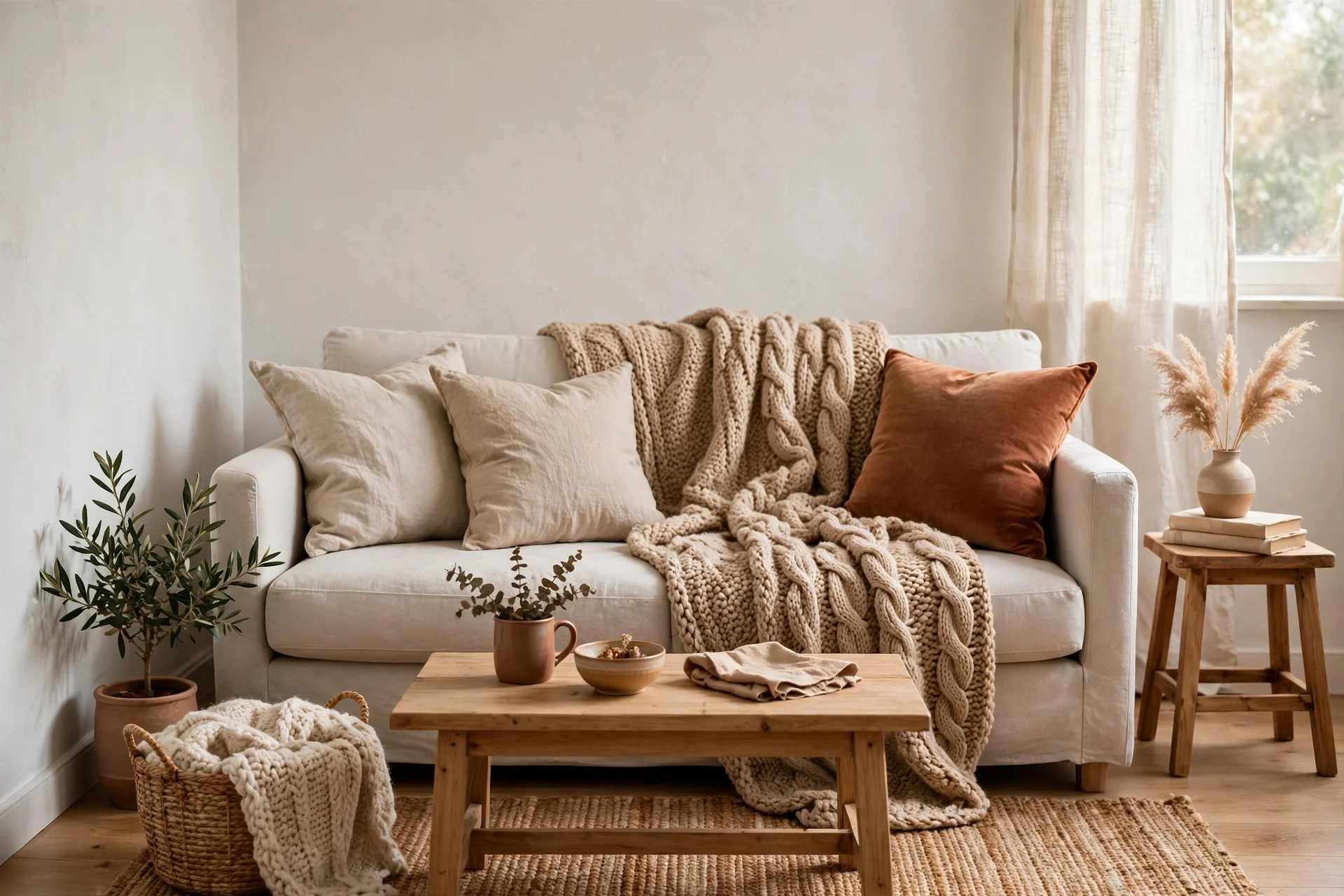
9. Floor-to-Ceiling Curtains That Fake Height
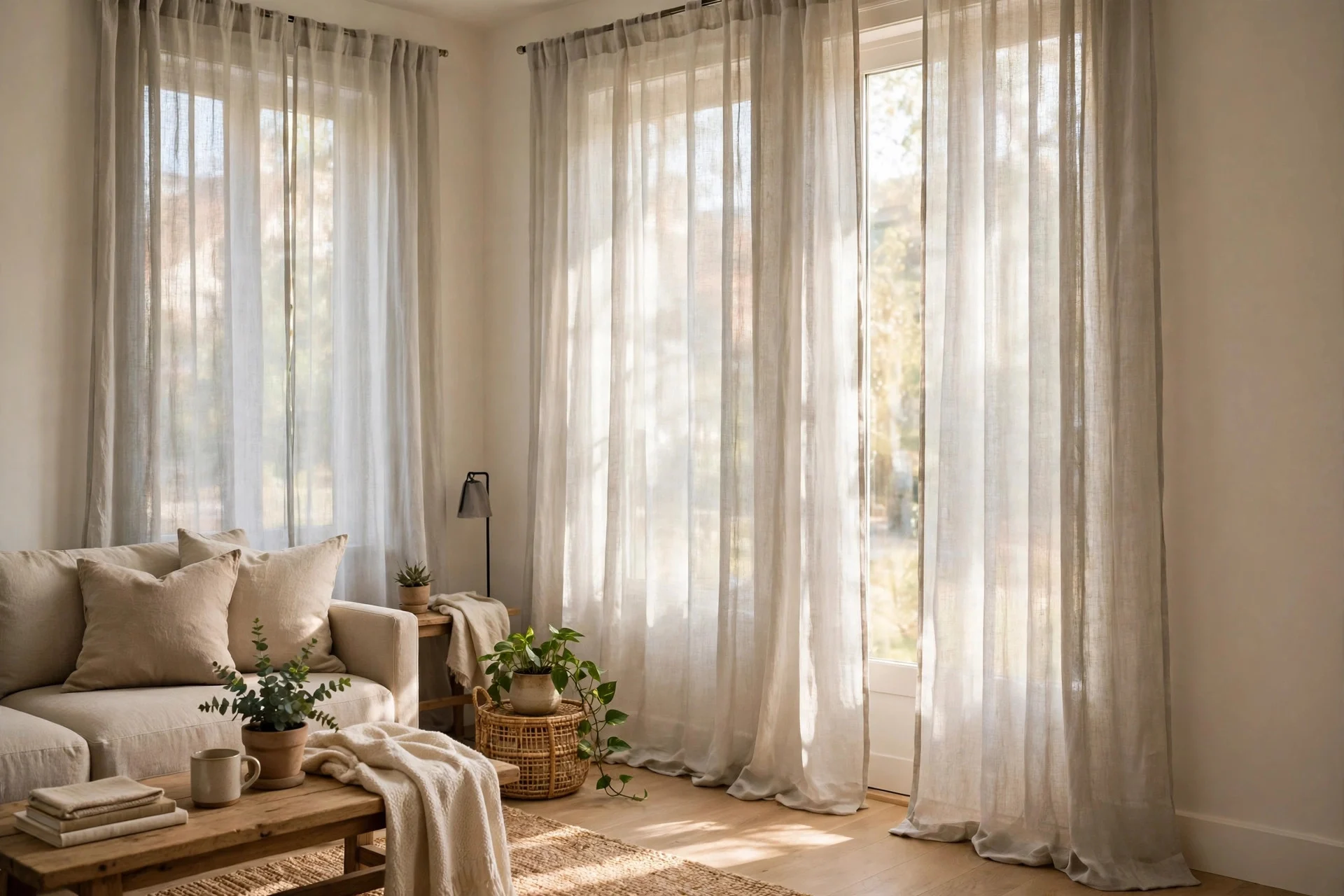
Short curtains chopped my first flat in half visually, ending right at the window sill like a bad haircut. Hanging the rod as close to the ceiling as possible and letting the fabric fall to the floor changed everything — the windows looked taller, the ceiling looked higher, and the whole room stretched upward. Mount the rod fifteen to twenty centimetres above the frame, extend it past the sides so the panels stack on the wall, and choose a light fabric that filters the sun rather than blocking it. I tried this once and my landlord thought I had raised the ceiling. The room simply feels grander, and all it cost was a longer curtain.
Try this: hang the rod first, then measure from rod to floor — never trust the packet size alone.
10. A Round Coffee Table for Tight Corners
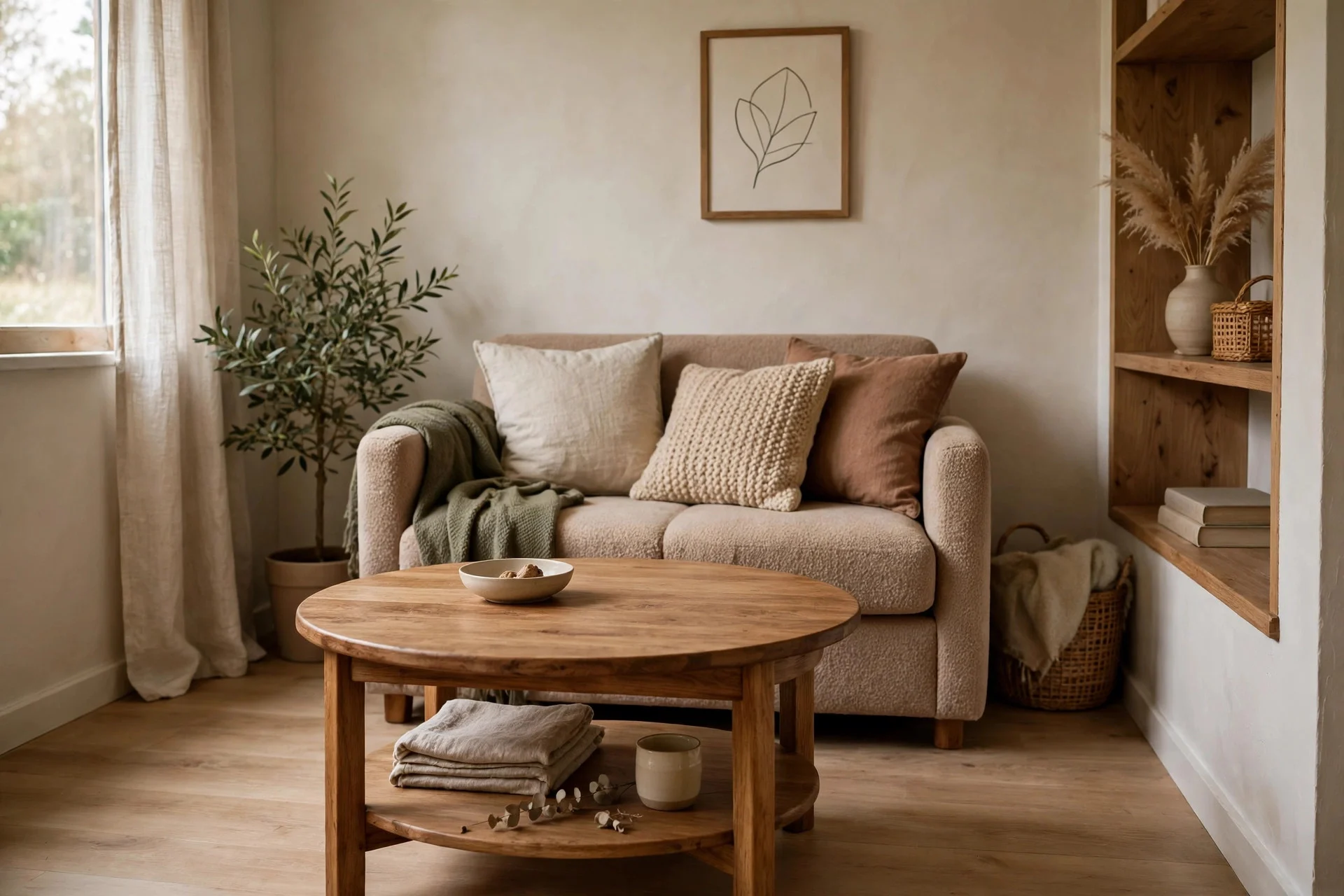
Sharp table corners and small rooms are a painful combination, and my shins still remember the rectangular coffee table in my first flat. A round table solves it: no corners to bruise, no edges blocking the walkway, and everyone around the sofa can reach it without shuffling. Pick a table about two-thirds the length of your sofa, with a lower shelf for books and remotes, and choose a light top — pale wood or glass — so it does not loom in the middle of the room. I switched to a round one and the daily shin-bruise count dropped to zero. It is a small change that makes the whole living room easier to move through.
Try this: if you already own a square table, try turning it forty-five degrees for a week to test the flow.
11. Wall-Mounted Shelves Instead of a Bulky Bookcase
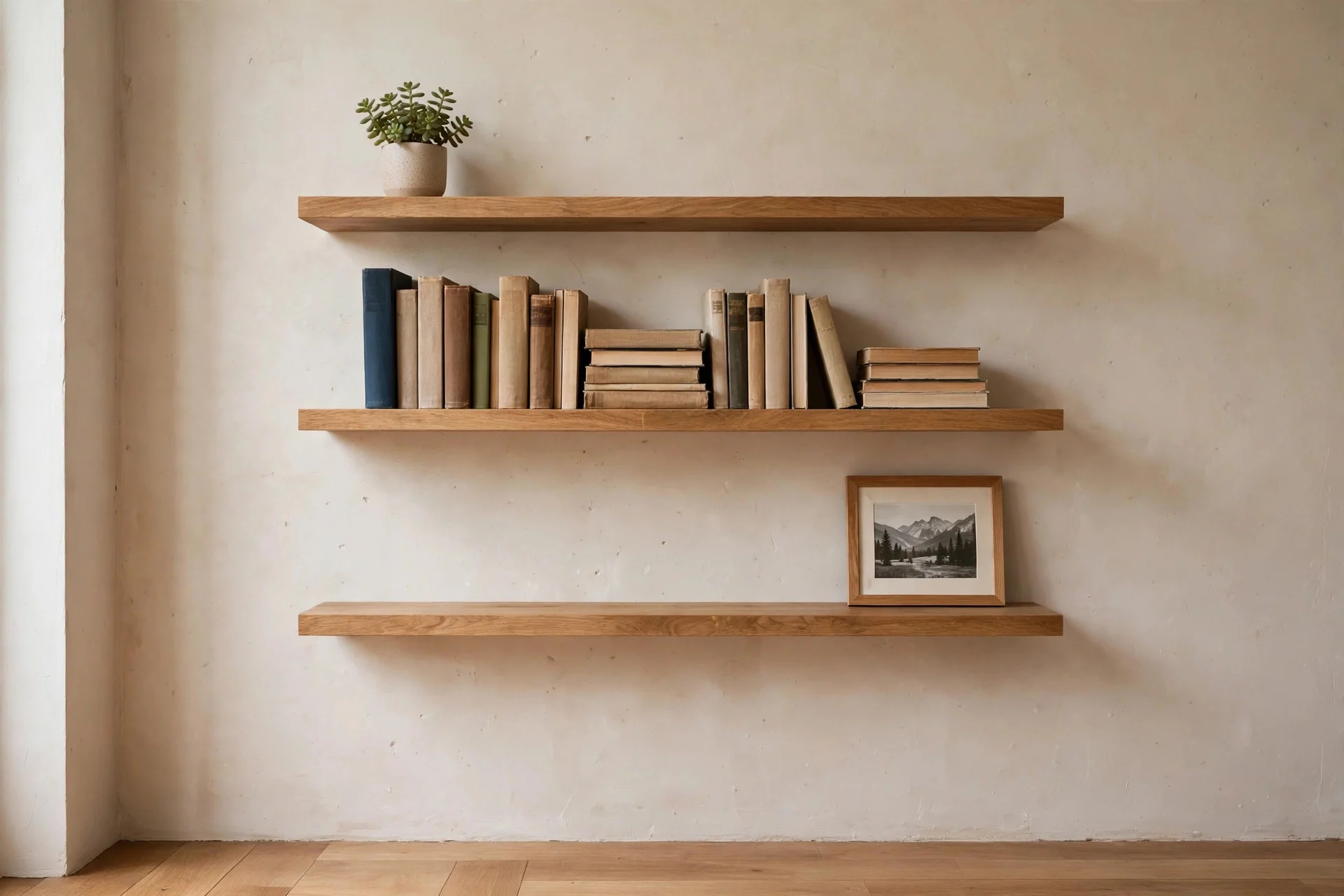
A bookcase is a wall of furniture, and in a small room it eats floor space you cannot spare. I replaced mine with three floating shelves and the room exhaled — the floor stayed clear, the books stayed visible, and the wall finally had a job. Mount the shelves at eye level where you can actually reach the books, keep the heaviest items on the lowest shelf, and leave some breathing space between objects so it reads as styling rather than storage overflow. Mix books with one plant and one framed photo per shelf, and the wall becomes a display. Don’t make the mistake I made and overload the top shelf, because a sagging shelf is worse than no shelf.
Try this: load shelves with books you actually reread — the rest belong in a box or the library.
12. A Fold-Down Desk That Disappears After Work
Working from a tiny flat means your office is also your living room, and I spent months eating dinner next to my laptop because the desk never went away. A fold-down wall desk changed that completely: it folds up for work, folds flat when the day ends, and the room goes back to being a home. Mount it at a comfortable height near a window for natural light, add a small wall shelf above for notebooks, and keep a chair that slides underneath or hangs on a hook. When the desk is folded away, the room feels twice as big and your evening actually starts. It is the best boundary I have found between work and rest.
Try this: test the folded height with your laptop open — you need elbow room, not just a flat surface.

13. Open Shelving That Makes a Tiny Kitchen Feel Airy
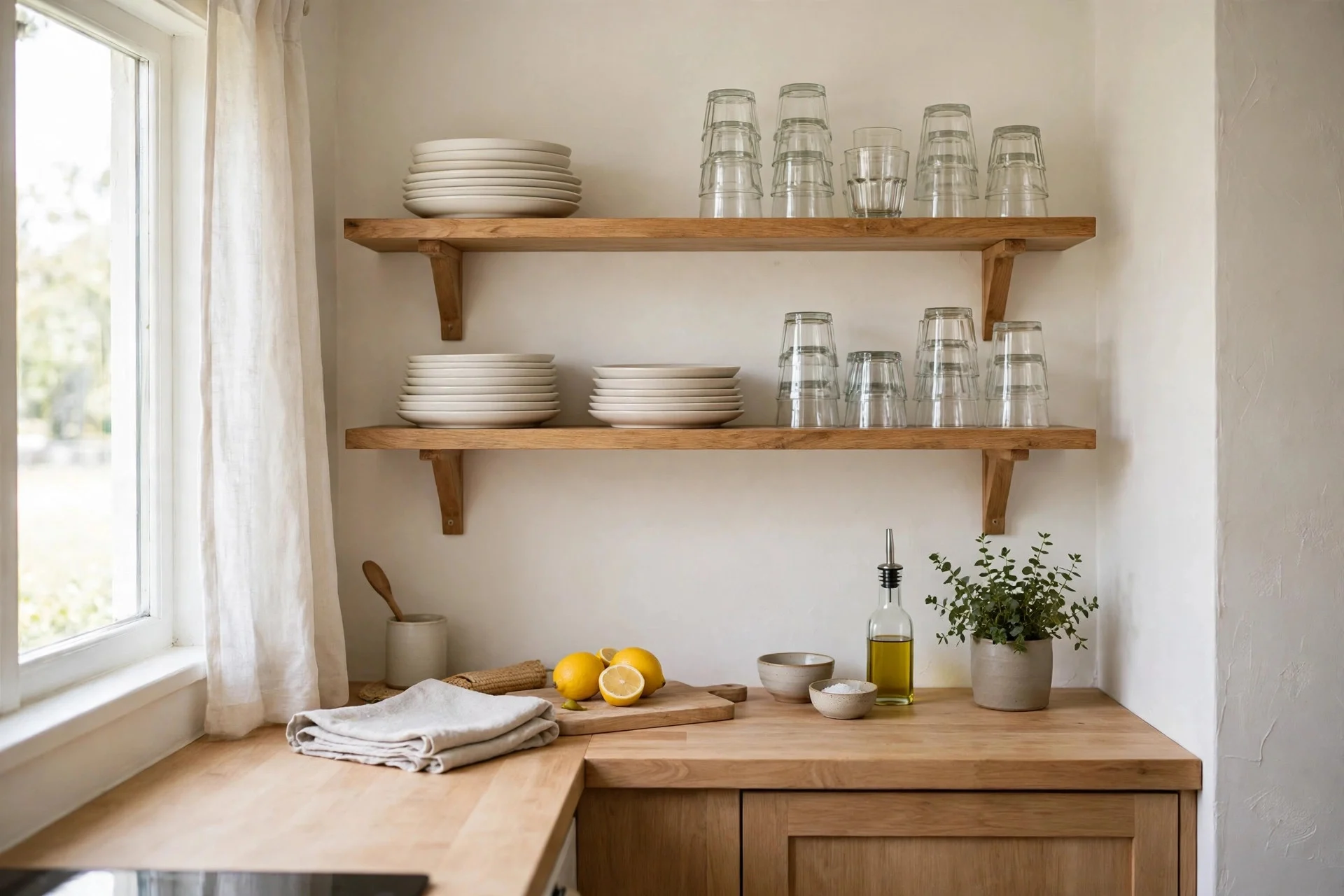
Wall cabinets can make a tiny kitchen feel like a cupboard with a cooker in it, and mine used to close in on me every time I reached for a plate. Swapping the upper cabinets on one wall for two open shelves opened the room up instantly — light reached the worktop, and the kitchen finally felt like a room, not a corridor. Keep everyday plates and glasses on the shelves, stack them neatly by colour, and store the rarely used items in the lower cupboards instead. I tried this once and worried about dust, but a quick weekly wipe is all it takes. The shelves turn your dishes into decor and the whole kitchen breathes again.
Try this: remove one cabinet door first and live with the open look for a week before committing.
14. A Rolling Cart for Extra Counter Space
Counter space is the scarcest thing in a small kitchen, and mine had barely enough room for a chopping board, let alone a coffee machine. A slim rolling cart gave me an extra worktop I could wheel where I needed it and tuck away when dinner was done. Choose a cart with a solid top, two shelves below, and lockable wheels, then load the top with the things you use daily and the shelves with oils, spices, or cookbooks. When friends come over, it becomes a drinks station; when they leave, it slides back beside the fridge. I once tried a fixed island instead and it blocked the whole kitchen, so wheels are the whole point.
Try this: measure your narrowest gap — the cart must pass through it with room to spare.

15. Magnetic Strips and Hooks Inside Cabinet Doors
The inside of a cabinet door is free real estate, and I ignored mine for years while my drawers overflowed with knives, lids, and measuring cups. A magnetic knife strip on the wall and small hooks inside the doors changed the whole kitchen: knives came off the counter, measuring cups hung in a neat row, and the drawer finally closed without a fight. Mount the strip away from the hob, keep blades facing the wall, and use the door hooks for lids and small tools you grab constantly. It costs almost nothing and takes twenty minutes, and I still smile every time I open a door and everything is exactly where it should be.
Try this: start with one cabinet door — hooks for lids only — and add more once you feel the difference.

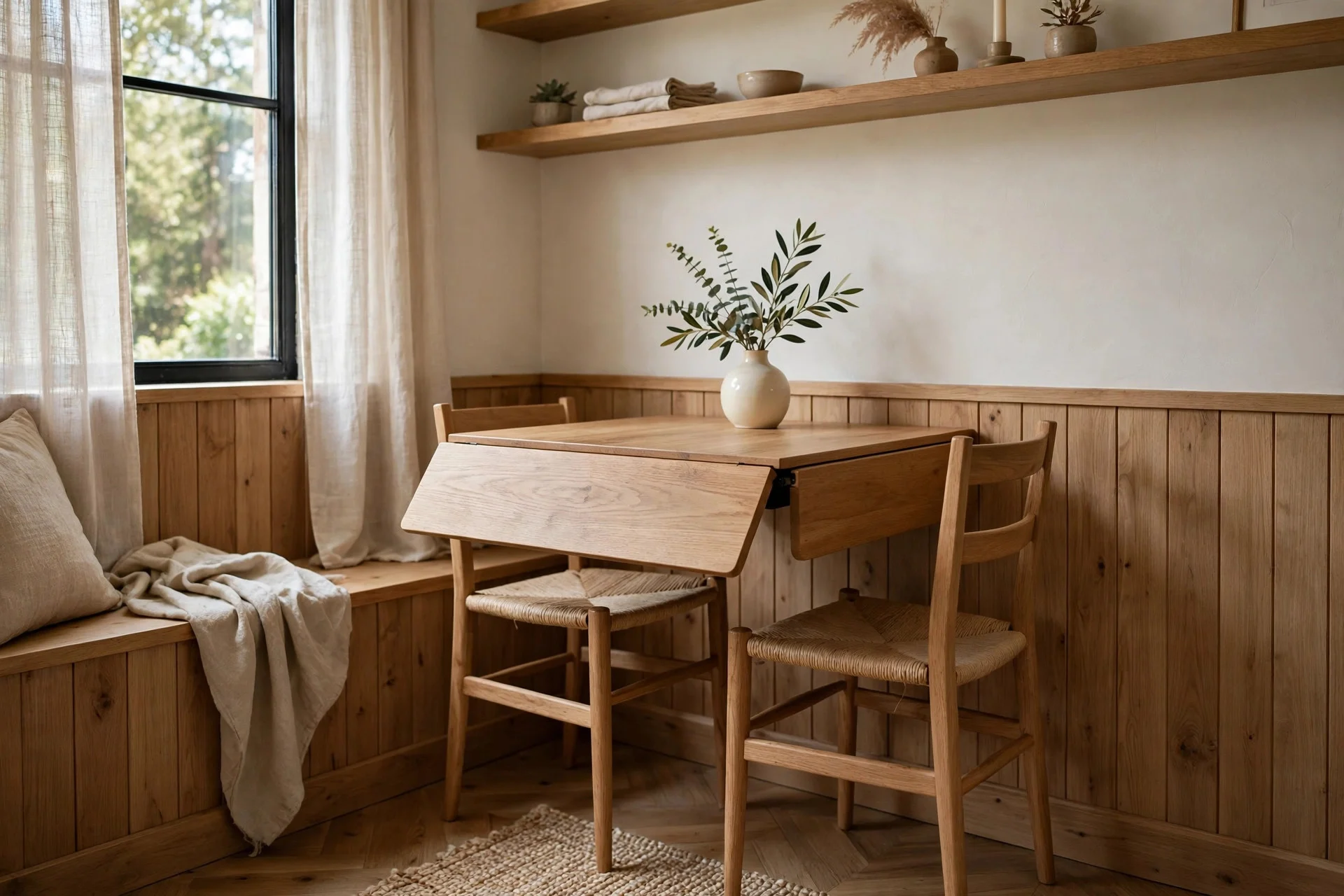
16. A Slim Dining Table That Doubles as a Workspace
A dining table in a small flat has to work twice as hard as anywhere else, and mine spent its mornings as my office and its evenings as my dinner table. Pick a slim table, no wider than seventy-five centimetres, with a drop leaf or a fold-down side so it grows for guests and shrinks for weekdays. Pair it with chairs that tuck fully underneath or stack in a corner, and keep a simple centrepiece — a small vase, a candle — that lifts off in seconds when the laptop comes out. I tried a big farmhouse table once and it swallowed the whole kitchen, so slim and flexible wins every time in a small home.
Try this: eat at the table for a week before deciding its size — comfort beats looks here.
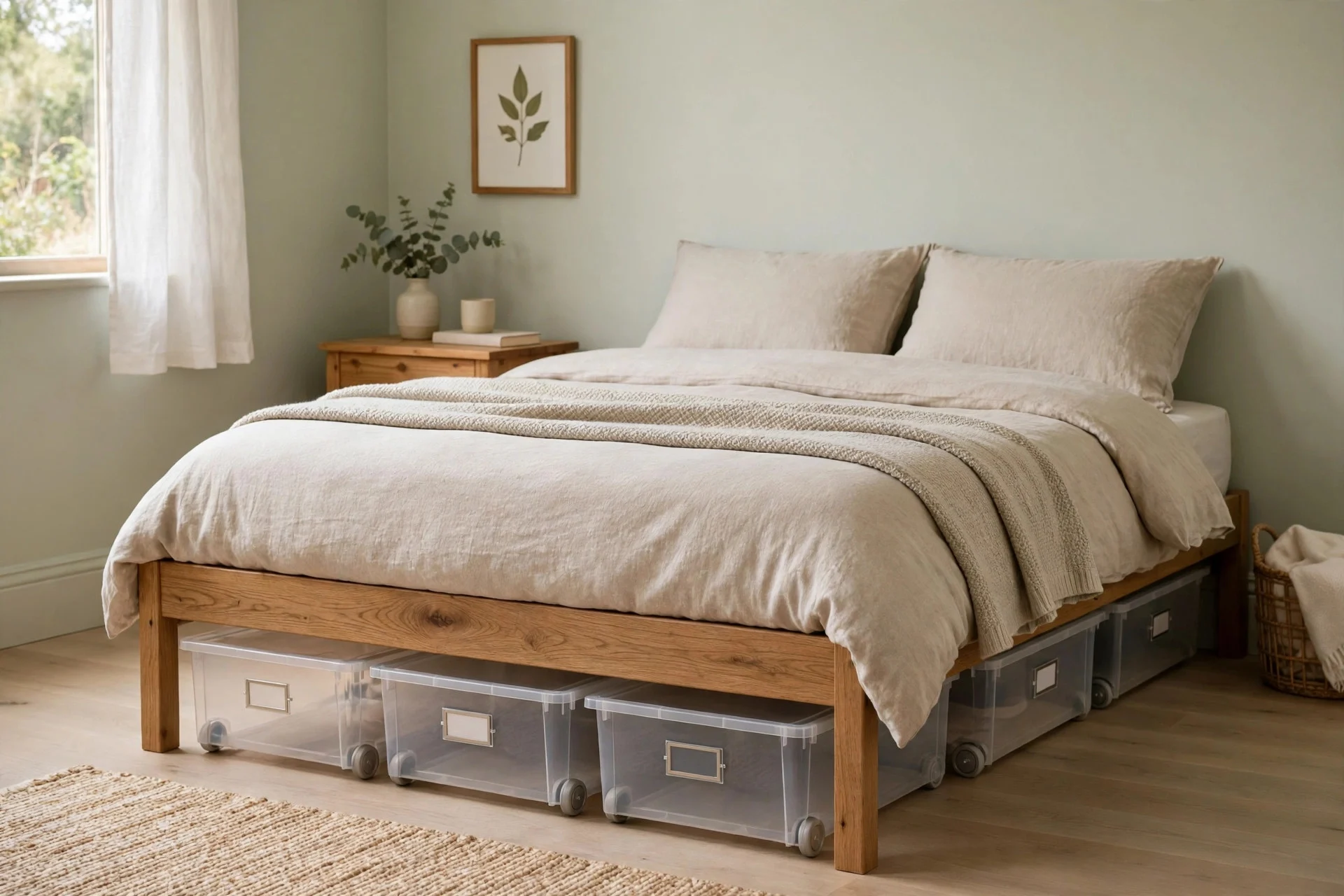
17. Under-Bed Storage Boxes You Actually Use
The space under the bed is the biggest empty cupboard in a small home, and mine sat unused for a year while my wardrobe burst at the seams. Flat storage boxes on wheels changed that: out-of-season clothes went underneath, spare bedding too, and the wardrobe finally closed. Choose shallow boxes that slide easily, label each one clearly, and keep a simple rule — if you have not opened a box in a year, its contents leave the house. I tried this once with unlabelled boxes and spent an hour hunting for a winter jumper in July, so labels matter more than pretty boxes. It is free space you already own.
Try this: vacuum-seal bulky winter clothes first — they take half the space and stay fresh.
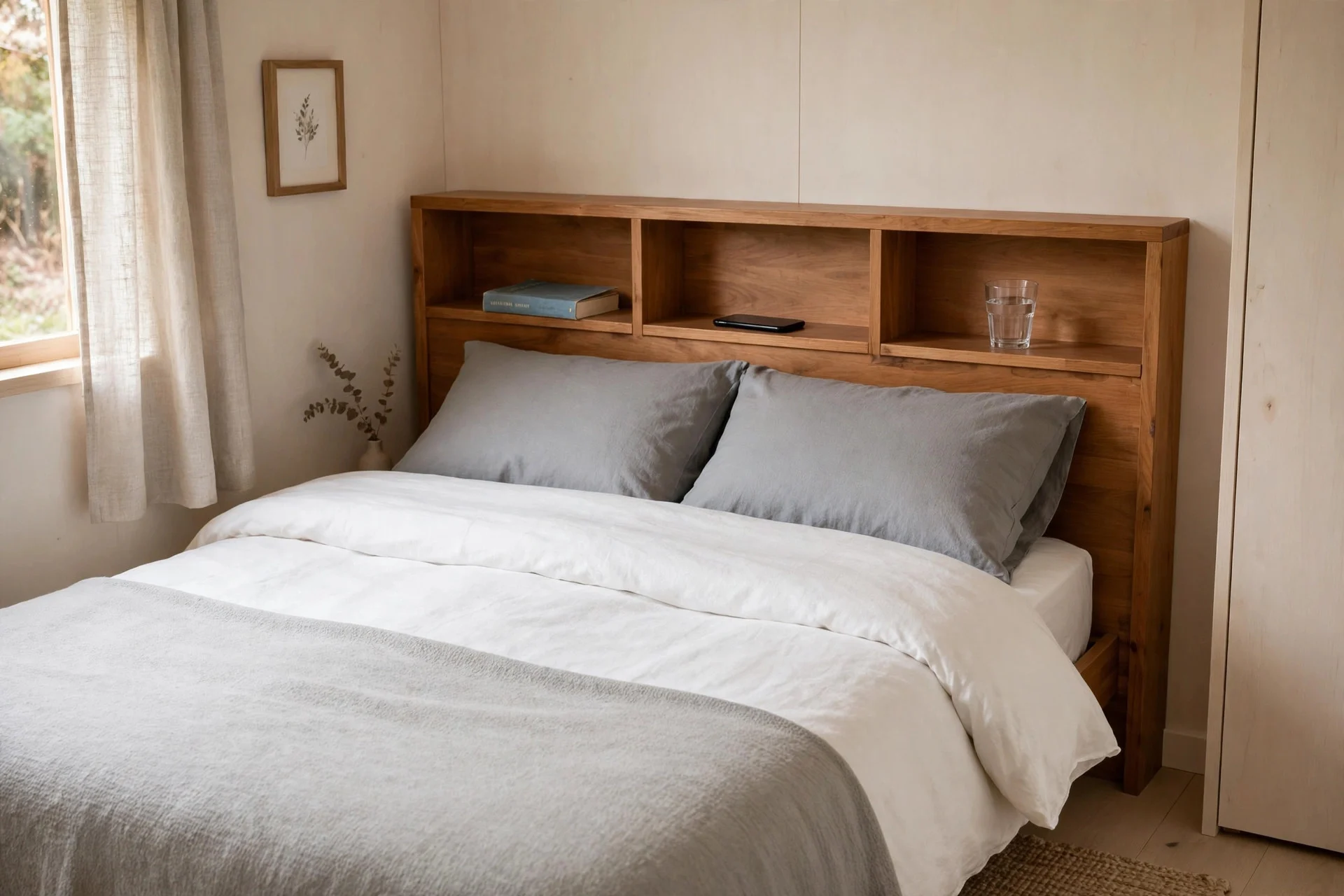
18. A Headboard with Built-In Shelves
A bedside table takes up floor space a small bedroom cannot spare, and mine used to crowd the bed against the wall. A headboard with built-in shelves solved it: my book, my phone, and a glass of water all live within arm’s reach, and the floor stays completely clear. Choose a headboard with a shallow ledge or two small cubbies, keep it the same width as the bed, and add a soft cushion or a padded panel so leaning back is comfortable. I tried a tall bookshelf headboard once and it loomed over me like a wardrobe, so shallow is better. It is storage disguised as furniture, and the bedroom feels calmer for it.
Try this: keep only tonight’s essentials on the shelf — everything else belongs in a drawer.
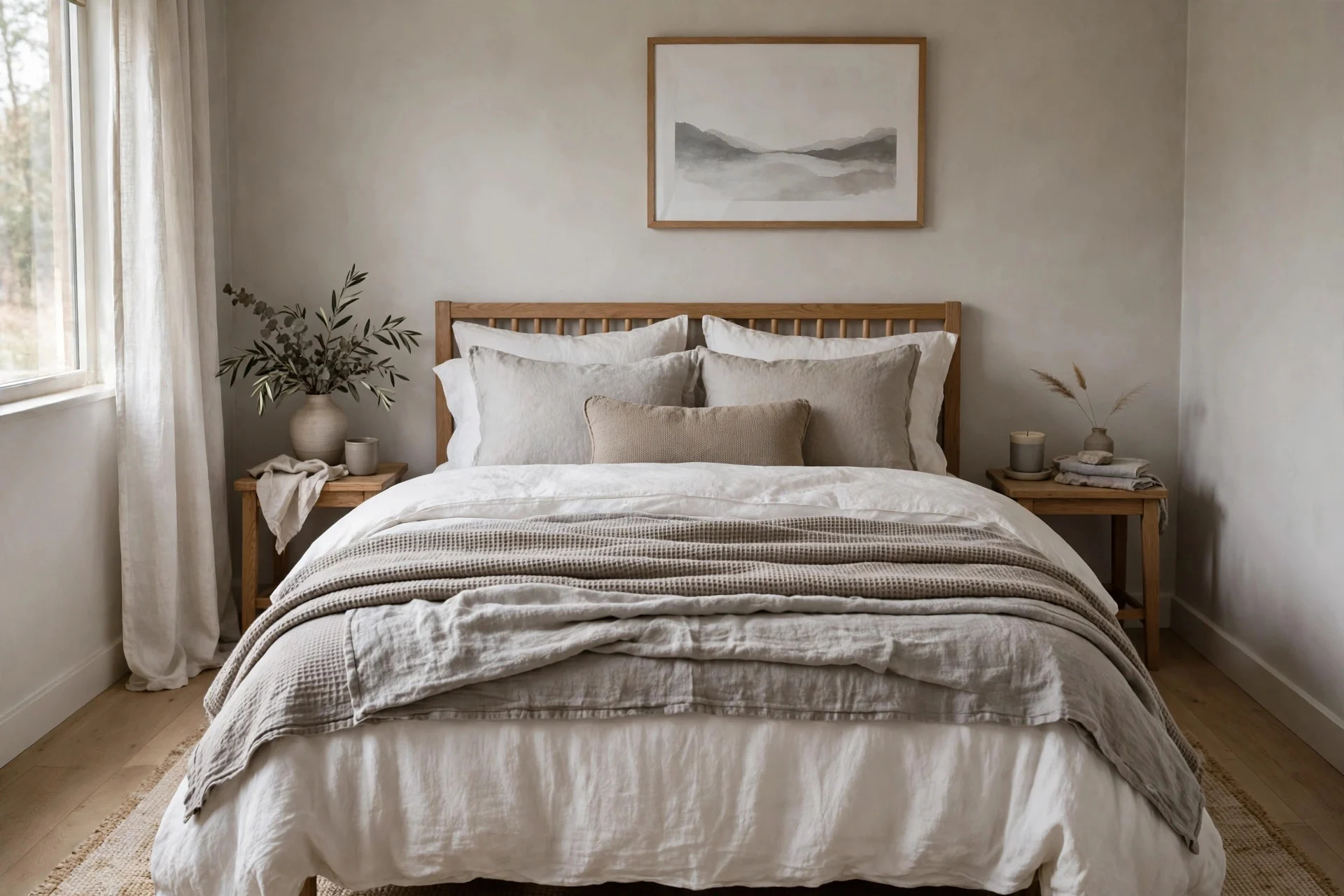
19. Layered Bedding in One Calm Palette
A small bedroom feels chaotic when the bedding fights with itself, and mine once had a patterned duvet, striped sheets, and a bright throw that argued all night. Switching to one calm palette — soft white, warm grey, or pale sage — made the bed look bigger and the room feel quieter, like a hotel room I actually wanted to sleep in. Layer a light duvet, a folded throw across the foot, and two pillows in slightly different textures, and the bed becomes the calm centre of the room. I tried this once before guests arrived and they asked if I had redecorated; all I had changed was the bedding.
Try this: pick your palette from one cushion or artwork you love, then match the bedding to it.
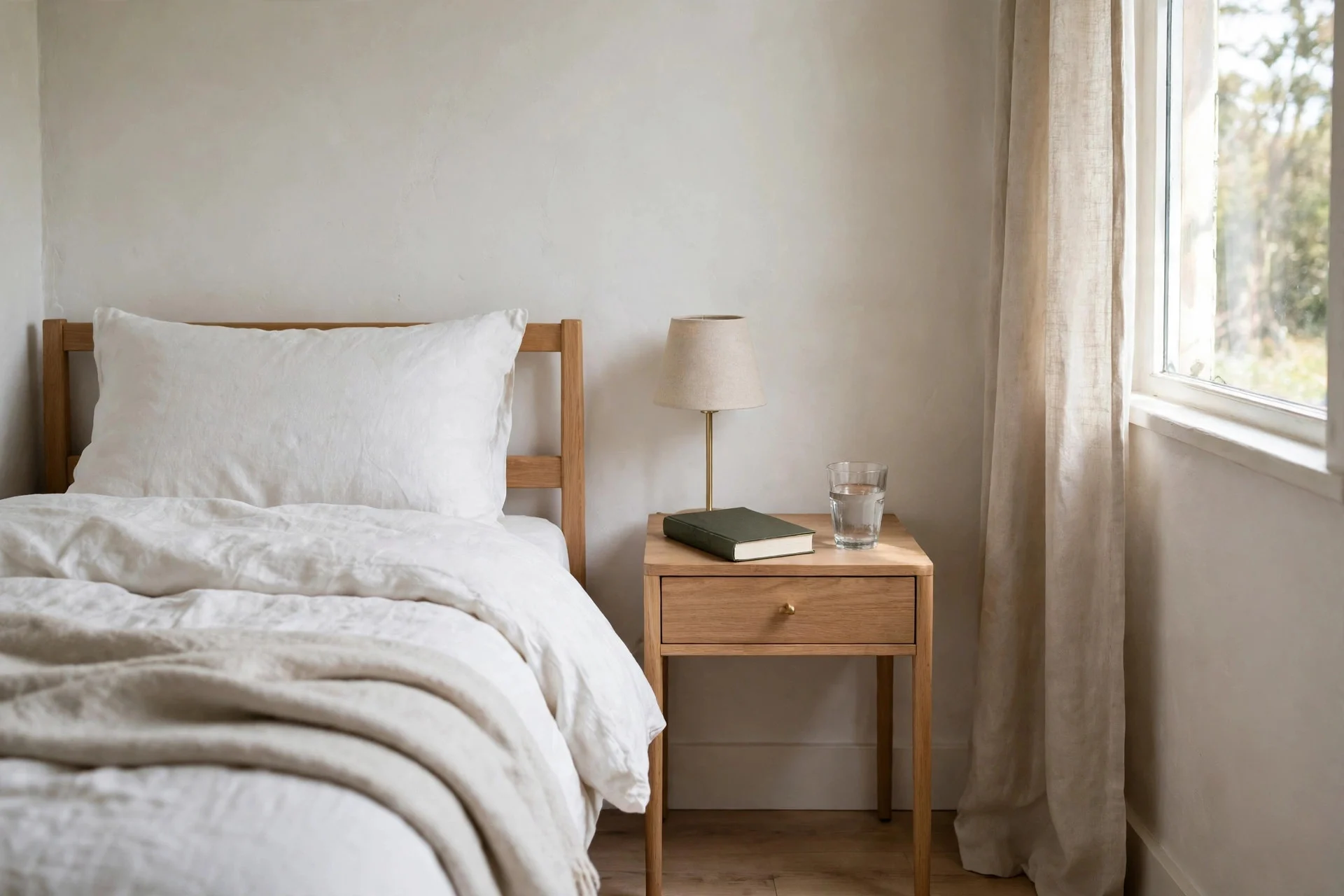
20. A Small Nightstand with a Drawer, Not a Pile
The top of my nightstand used to be a landslide of books, chargers, glasses, and half-finished cups of tea, and clearing it every morning felt like a second job. The fix was a small nightstand with one drawer and a single rule: the surface holds only a lamp, a book, and a glass of water, while everything else lives in the drawer. Pick a piece no wider than forty centimetres, with a drawer deep enough for chargers and clutter, and keep a tiny tray inside for the bits that wander. I tried this once and the drawer became a junk drawer within a month, so I empty it every Sunday now. A clear nightstand makes the whole bedroom feel tidy.
Try this: set a Sunday two-minute timer to empty the drawer — it never gets out of hand that way.
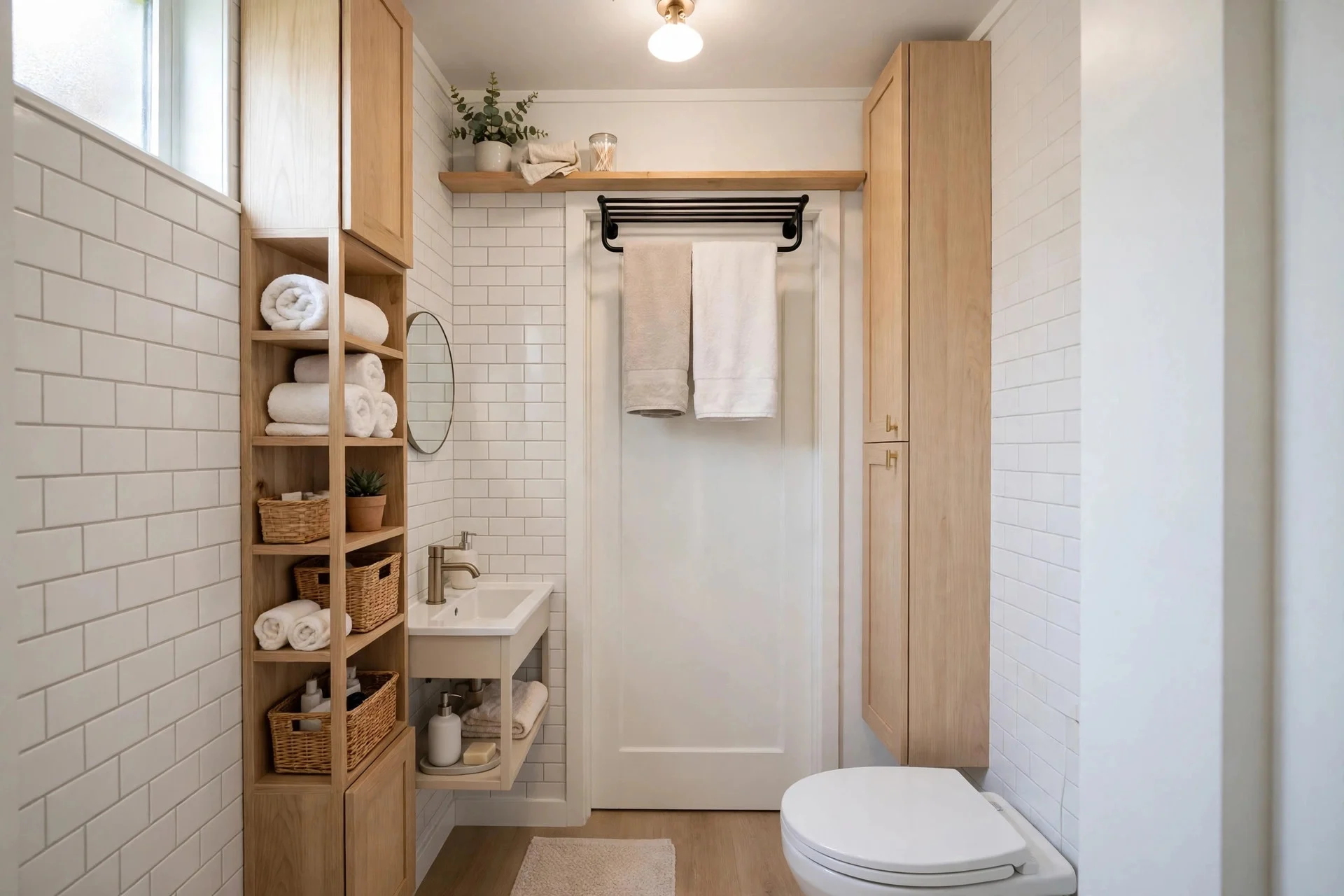
21. Vertical Storage in the Bathroom: Over the Door and Up the Wall
Bathrooms in small homes have almost no floor space, and mine had a sink, a toilet, and a damp towel on the floor — that was the whole inventory. Going vertical saved it: an over-door rack for towels, a narrow shelf above the door for spare loo rolls, and a slim cabinet on the wall for everything else. Keep daily items at eye level, spares up high, and nothing at all on the floor except a bath mat. I tried a freestanding shelf once and it blocked the door swing, so wall-mounted wins every time. The bathroom finally feels like a room you can move in, not a cupboard you squeeze into.
Try this: hang the over-door rack on the inside of the door so towels dry out of sight.
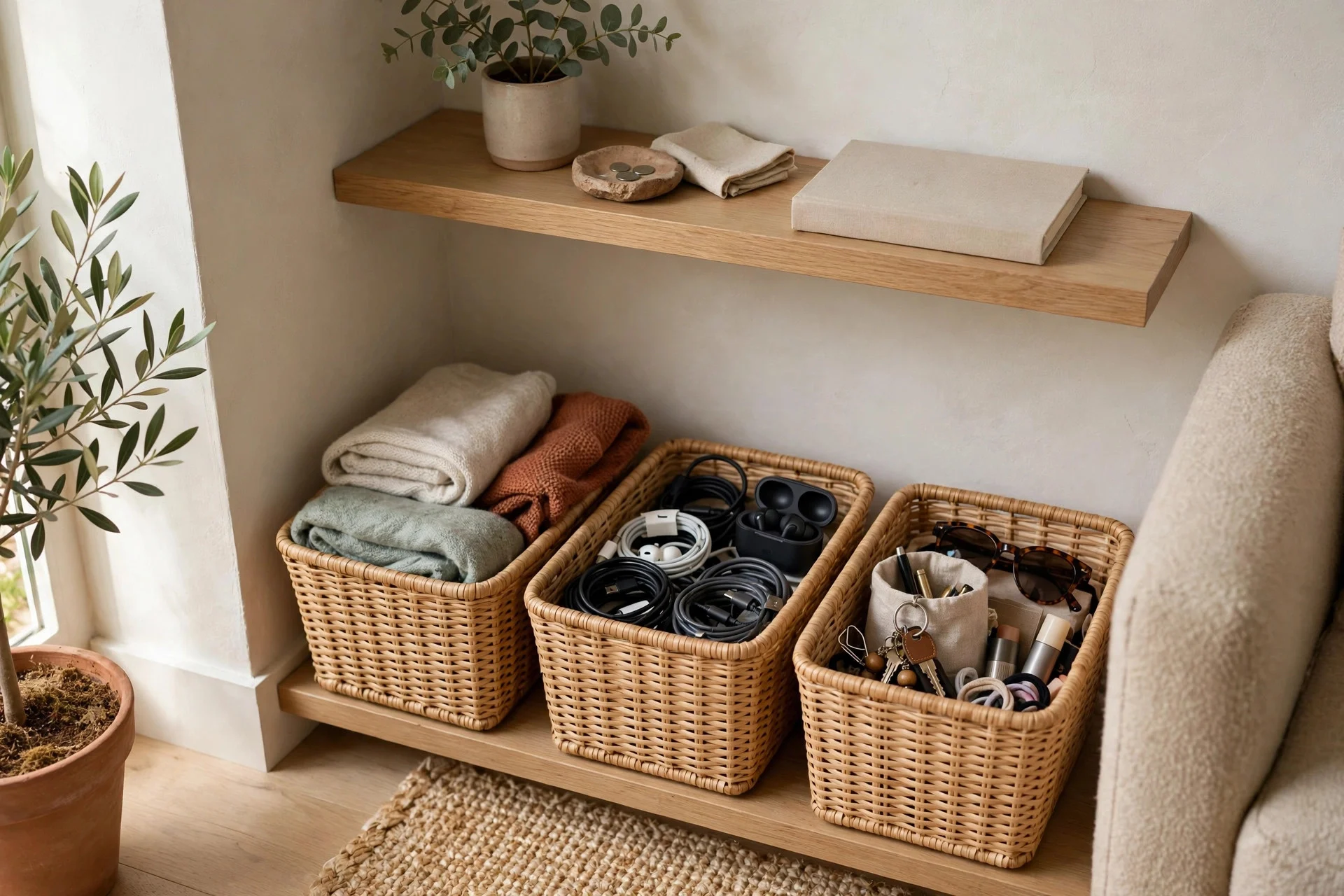
22. A Basket System for Every Corner
Every small home has corners where clutter gathers — the hallway corner, the bit by the sofa, the top of the stairs — and mine collected scarves, chargers, and mystery cables. A basket system tamed all of them: one basket per corner, one job per basket, and a weekly five-minute tidy to keep them honest. Choose baskets in the same natural material so they look intentional rather than random, label the ones in cupboards, and keep the prettiest ones on display. I tried this once with mismatched plastic boxes and the room looked like a storage unit, so matching baskets matter. The clutter is still there, but now it has a home and the room looks calm.
Try this: give each basket a name — “scarves”, “cables”, “dog things” — and stick to it for a month.
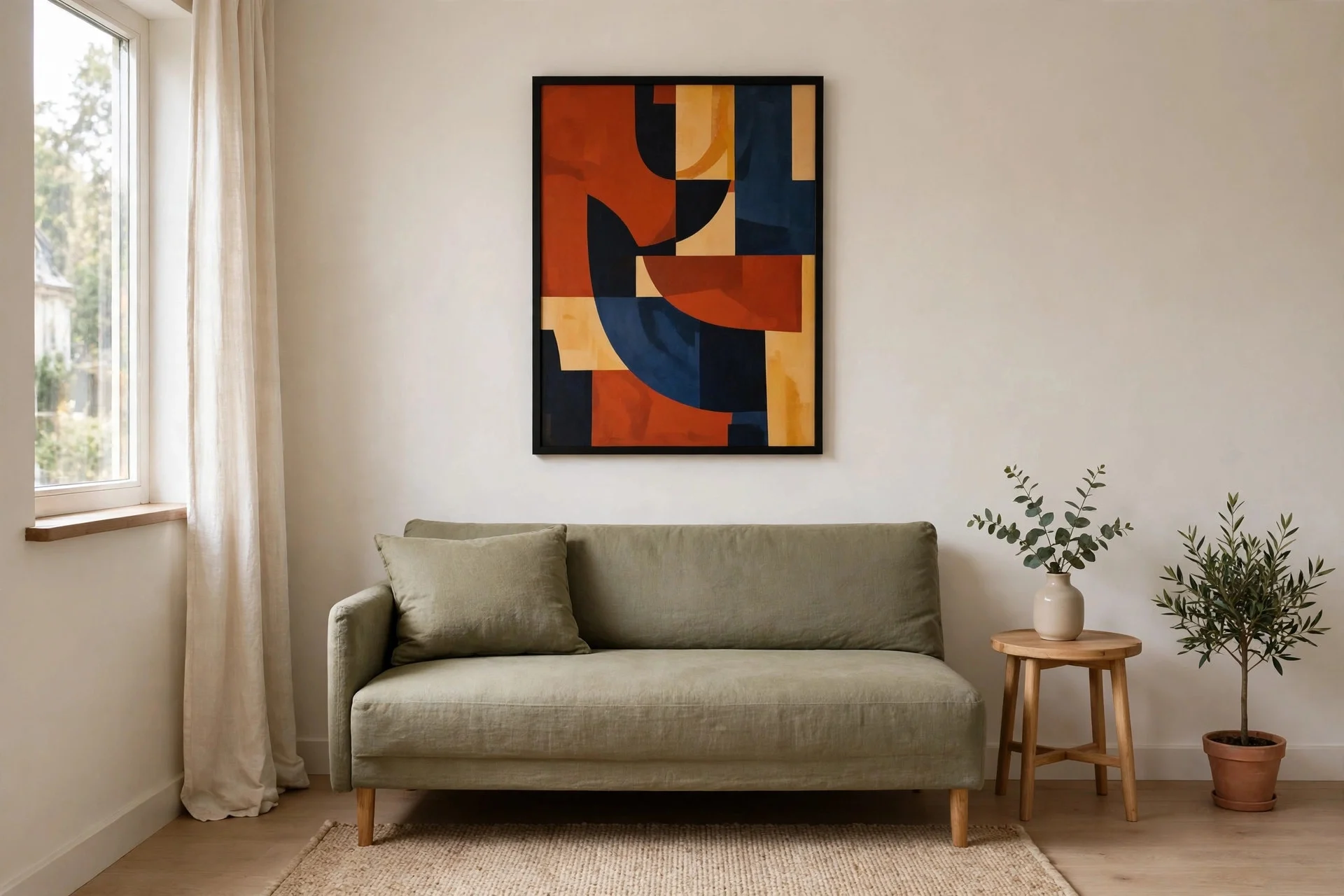
23. One Statement Piece per Room — and Nothing More
The temptation in a small home is to fill every empty surface, and I did exactly that in my first flat until the rooms felt like a crowded market stall. The rule that saved me is one statement piece per room: a bold artwork in the living room, a striking lamp in the bedroom, a colourful vase in the kitchen, and nothing else competing for attention. Pick the piece you love most, give it space to breathe, and let the rest of the room stay quiet around it. I tried this once after a clear-out and guests kept asking where I had bought the painting — it had been there all along, just buried under clutter. Less really is more here.
Try this: remove everything from one shelf, add back only your favourite piece, and live with the empty space for a week.
Frequently Asked Questions
How do I decorate a small space without making it feel cluttered?
Choose fewer, better pieces and give each one a clear job. Keep the big surfaces light, leave some empty space on every shelf, and follow the one-statement-piece rule so the eye has somewhere calm to rest. If a room feels crowded, remove one thing before adding anything new.
What colours make a small room look bigger?
Soft, light colours reflect the most light, so warm white, pale sage, light grey, and dusty blue all help a room feel larger. Keep the ceiling the same colour as the walls to blur the edges, then add warmth through textiles and wood rather than dark paint.
Can I use dark colours in a small space?
Yes, but use them as an accent rather than the main colour. One dark feature wall, a deep green sofa, or dark cushions can add depth and character without shrinking the room, as long as the rest of the space stays light and the lighting is good.
How do I create zones in a studio flat?
Use a rug to mark the living area, a bookshelf or curtain to suggest a bedroom corner, and different lighting for each zone — a floor lamp by the sofa, a pendant over the table. The zones do not need walls, just clear visual signals that tell you where one part of the home ends and the next begins.
Final Thoughts
A small home is not a compromise, it is a chance to choose carefully and live with only what you love. Start at your front door, pick one idea from this walk-through, and try it this weekend — the mirror, the rug, or the basket by the sofa. Small changes add up fast in a small space, and before long the flat that once felt cramped will feel like it was designed just for you.