
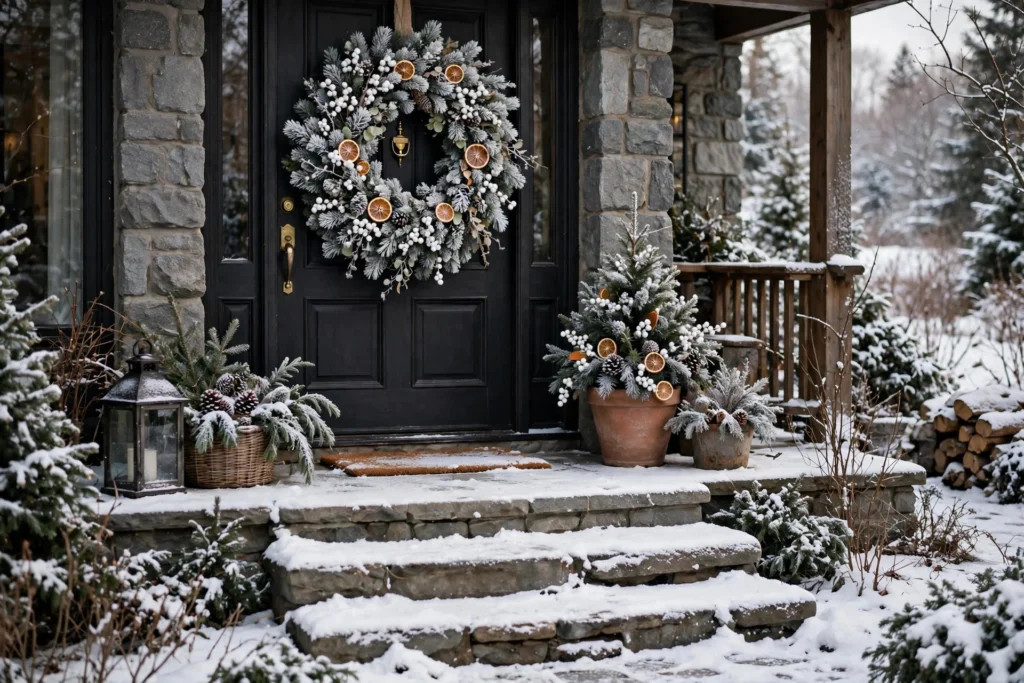
There is something about coming home on a cold January evening and seeing a full, frosty wreath on the front door. It makes the whole house feel warm before you even step inside. I have tried plenty of winter wreath ideas over the years, from plain pine rings I put together in an afternoon to fuller ones I built up slowly with bits from the garden, and the ones that last are always the simplest. A good winter wreath does not need to shout. It just needs to look like it belongs on your door in the cold months.
I put the 17 ideas below together from wreaths I have actually hung on my own front door. Some take twenty minutes, some take an afternoon, and all of them will last through the coldest weeks if you hang them right. Pick one that suits your door and your street, and keep the rest for next winter.
1. Classic Frosted Pine Wreath: Winter Wreath Ideas
A frosted pine wreath is where I always start, because it looks right on almost any door and it never dates. I use a plain pine wreath as the base and work in extra sprigs of pine until it feels full on both sides, with no thin patch at the top. Then I dust the tips lightly with a can of snow spray, holding it back so the white sits on the needles instead of coating them flat. A simple loop of natural twine holds it on the door, and I hang it from an over-door hook so I do not have to drill anything. I once bought one that was too small and spent all winter wishing it filled the door, so now I measure first and go one size up.
Try this: Spray the snow in short bursts from a foot away and let each layer dry. Thick coats flake off the first time the door slams.
2. Eucalyptus and Silver Dollar Wreath
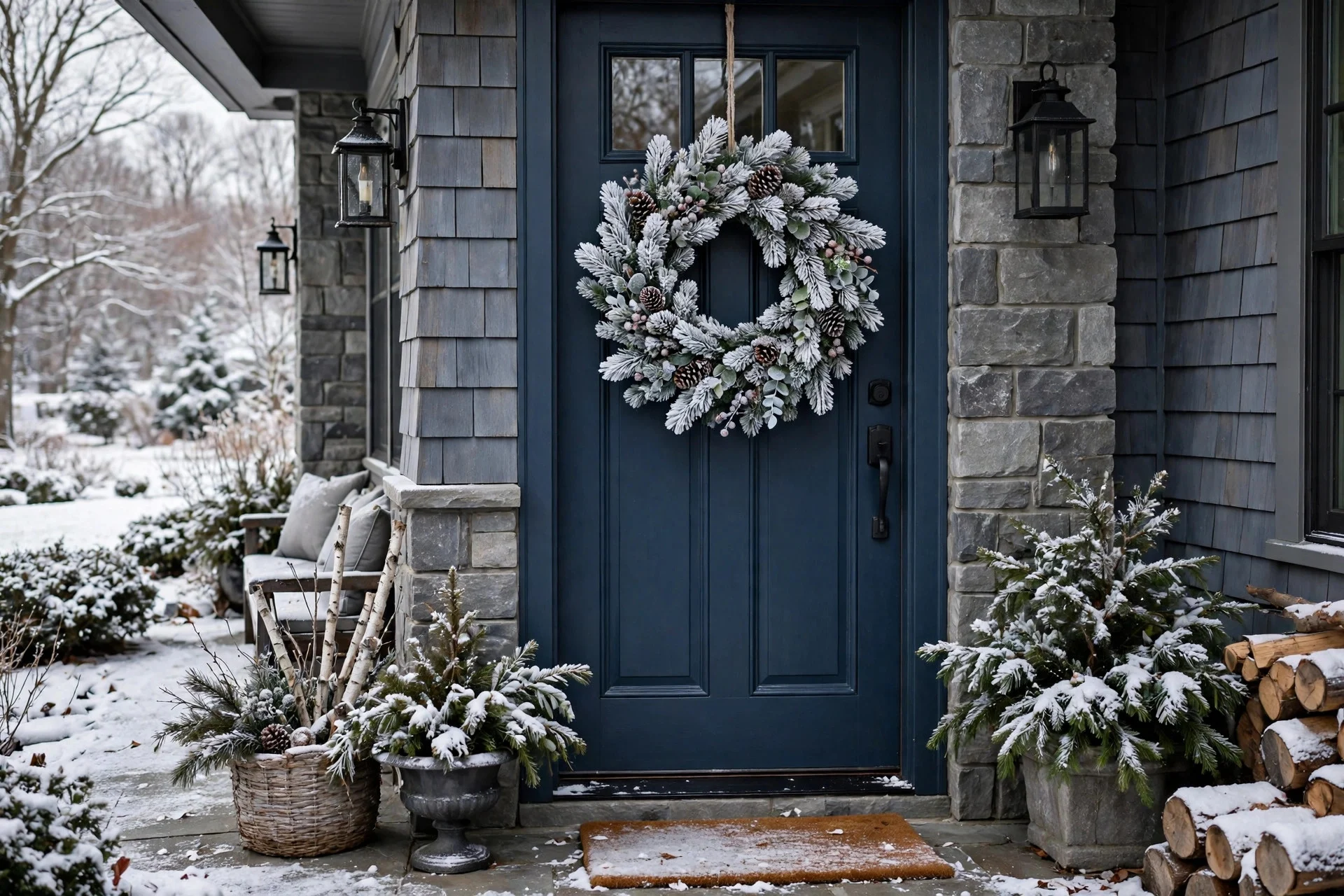
Eucalyptus makes a calm, silvery wreath that suits a modern door far better than a heavy pine one. I start with a plain grapevine or wire ring and wire on small bunches of silver dollar eucalyptus, overlapping each bunch so the round leaves lie flat like scales. A few sprigs of seeded eucalyptus tucked in between give it a softer edge. I keep the whole thing one colour, with no berries and no ribbon, because the pale green-grey leaves do the work on their own. It dries slowly over the season and keeps its shape, and the faint fresh smell when you walk past the door is a bonus I did not expect the first year I made one.
Try this: Hang it on the inside of the door if your porch gets driving rain. Eucalyptus holds up well, but it fades faster when it stays soaked.
3. Dried Orange and Cinnamon Wreath
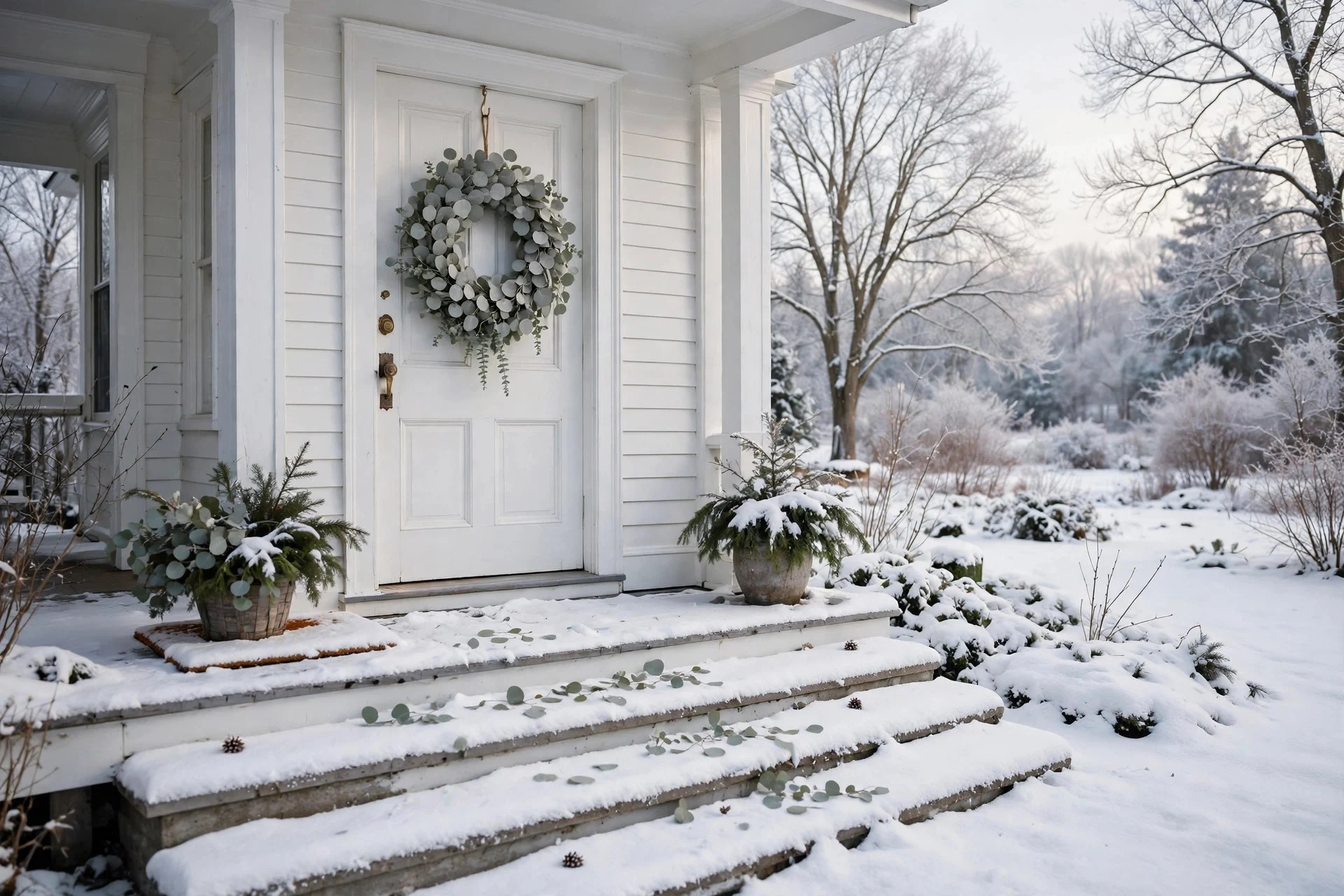
Dried orange slices and cinnamon sticks give a winter wreath a warm, homemade feel without needing any bright colour. I dry thin orange slices in a low oven until the edges curl and the centres turn a deep amber, then let them cool fully before I touch them. I wire three or four slices onto a pine base in a loose cluster on one side, tucking cinnamon sticks behind them so the slices sit proud of the greenery. A loop of brown twine finishes it. I made the mistake once of gluing the slices on while they were still warm, and they slid off by morning, so now I wait until they are cold and dry before I wire anything in place.
Try this: Dry a few extra orange slices and keep them in a jar. You can swap in a fresh one if a slice cracks in the cold.
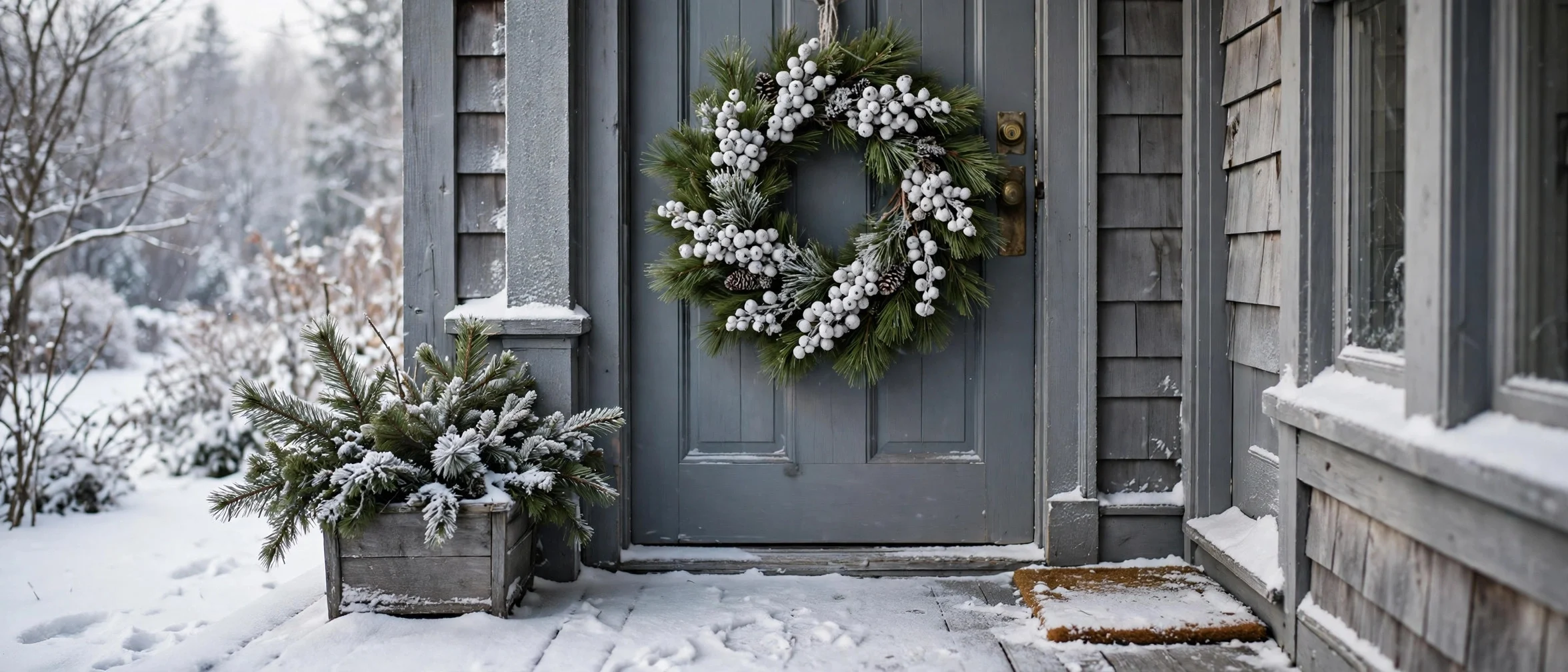
4. Snowy White Berry Wreath
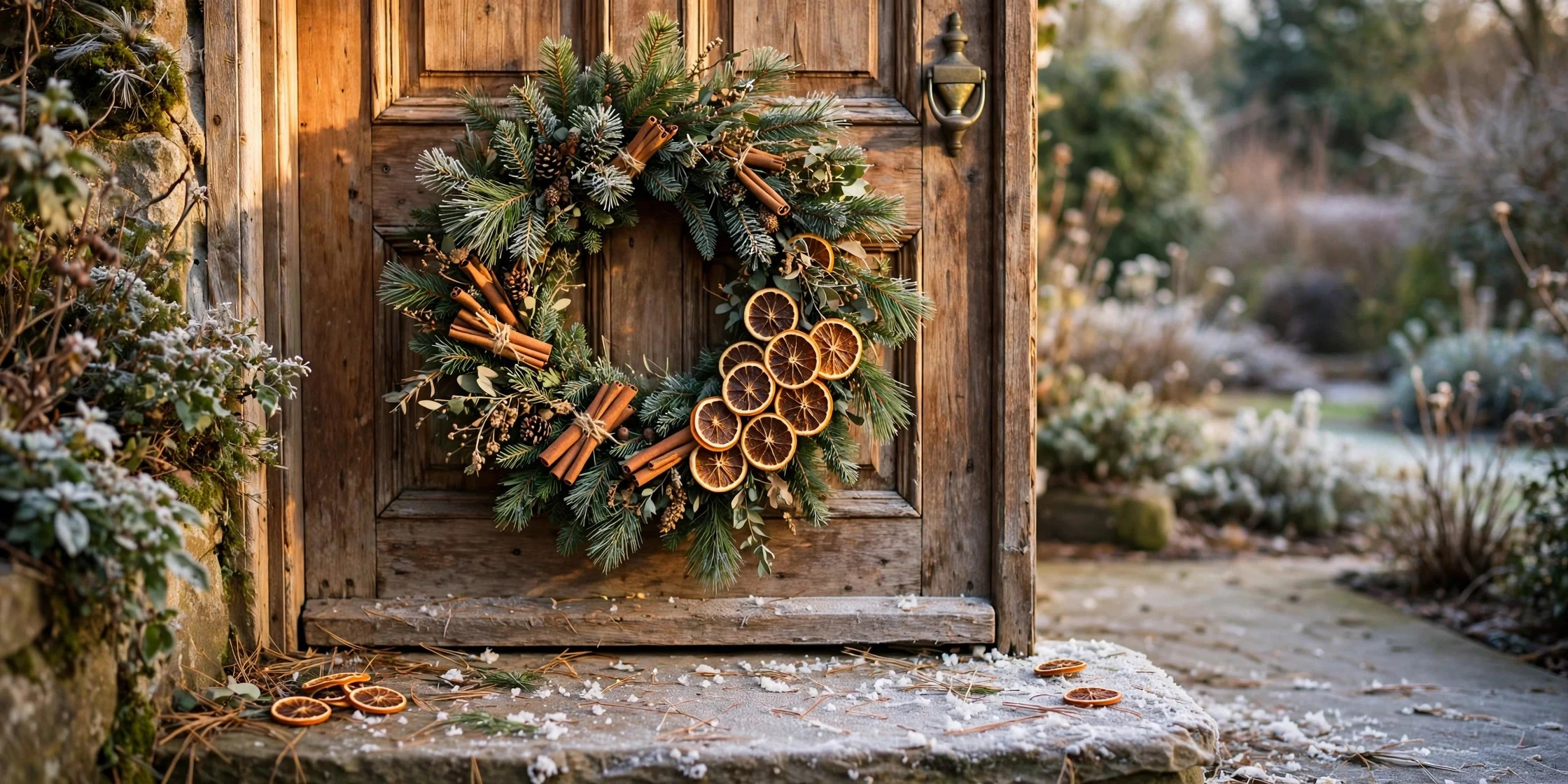
White berries on dark green pine look like the first snow has settled on a hedge, and this is the wreath I hang when I want something quiet and pretty. I push short stems of white berries into a full pine wreath, spacing them in small groups of three so they read as clusters instead of dots scattered everywhere. A light dusting of snow spray over the top ties the berries and the pine together. I keep the berries off the very bottom of the ring, where rain drips down and knocks them loose. My first one shed berries all over the porch, and I learned to wire the stems in rather than just pushing them into the pine.
Try this: Use frosted white berries rather than plain ones. The frosted coating catches the porch light and they look real from the street.
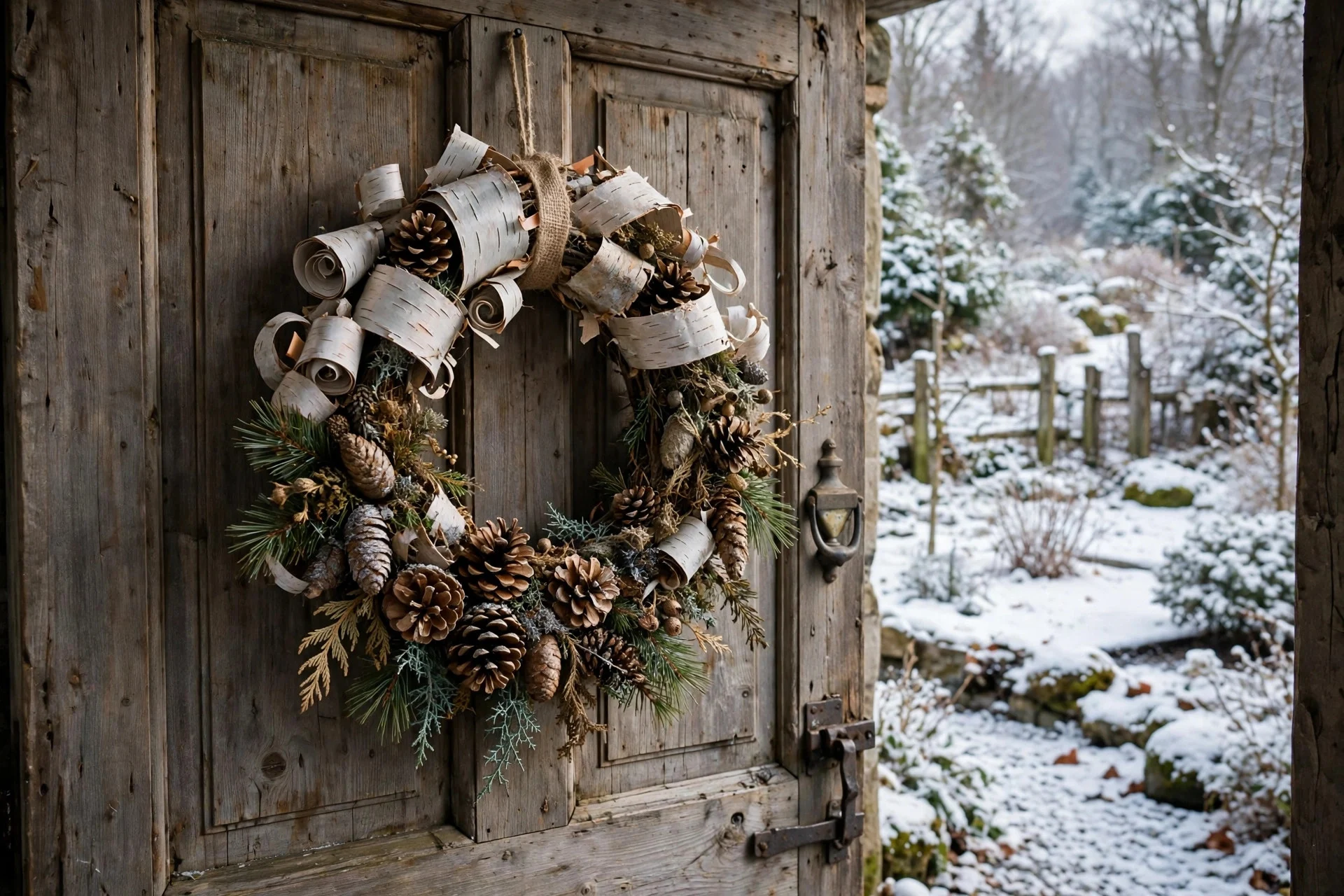
5. Pinecone and Birch Wreath
Pinecones and birch bark make a wreath that feels like a walk in the woods, and it costs almost nothing if you gather the pieces yourself. I wire pinecones of different sizes onto a grapevine base, turning each one so it faces outward instead of lying flat, and tuck curled strips of birch bark between them for pale contrast. A few small pine sprigs fill the gaps and stop the ring looking bare. I check every pinecone for sap before I start, because one sticky cone can mark a painted door. I learned that the hard way on a white door, and now I let gathered cones dry indoors for a week before I use them.
Try this: Dust the pinecones lightly with white paint using a dry brush. It looks like frost and takes two minutes.
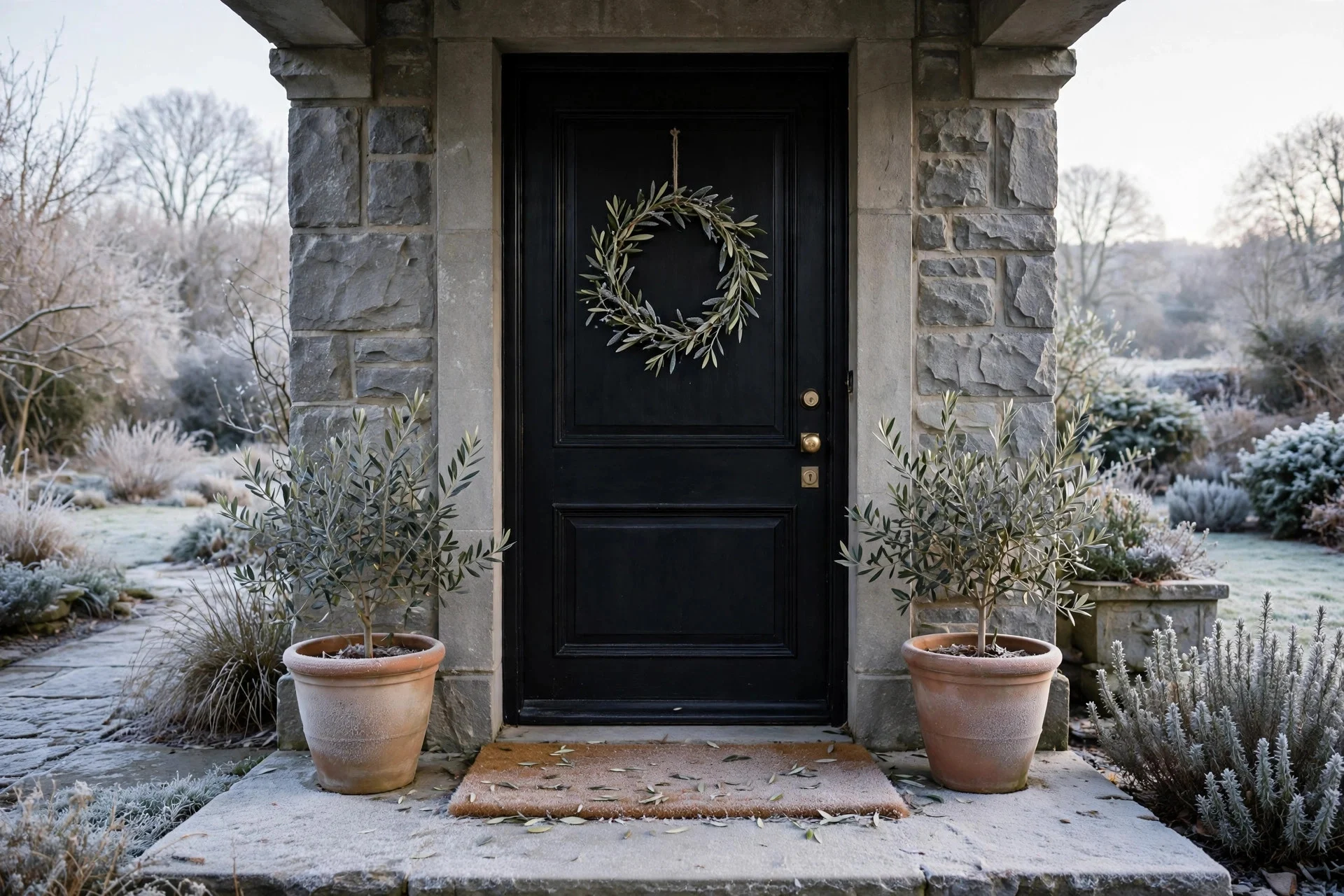
6. Olive Branch Winter Wreath
An olive branch wreath is simple, slim, and a good pick if your door is narrow or your porch is small. I wire long olive branches around a thin wire ring, letting the narrow grey-green leaves point outward in the same direction so the ring has a neat, flowing look. I add nothing else at first, then step back and tuck in two or three small sprigs of pine at the bottom if it feels too plain. The leaves dry to a soft grey-green and keep their shape for months. I once crowded mine with berries and ribbon and it lost the calm look that made me choose olive in the first place, so now I leave it almost bare.
Try this: Tie the branches on with green floral wire in the same direction. Wiring against the leaf flow makes the ring look ruffled.
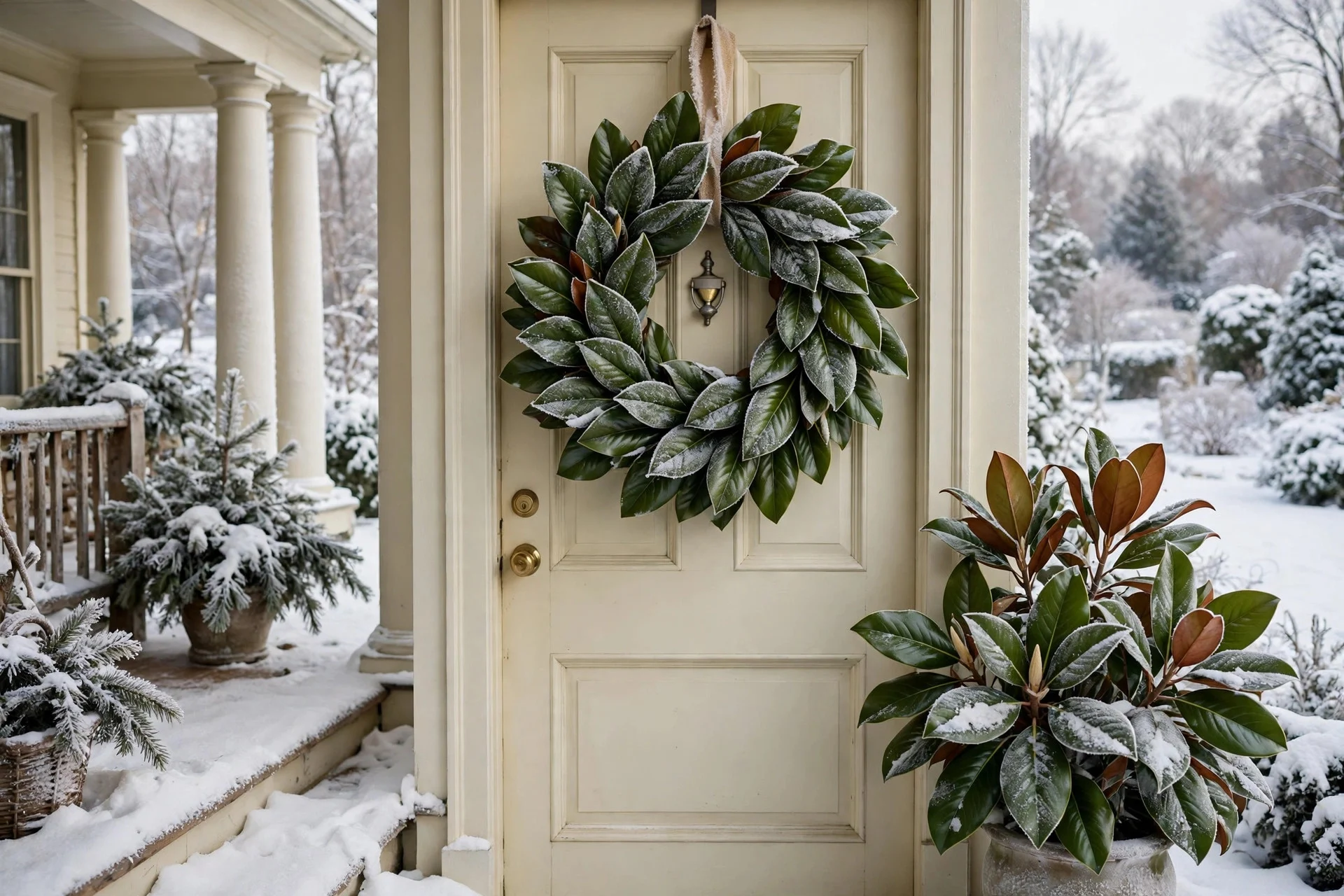
7. Frosted Magnolia Leaf Wreath
Magnolia leaves are big and glossy, so a magnolia wreath fills a door fast and looks smart with very little added. I layer the leaves around a foam or straw ring, overlapping each one like roof tiles so only the tips show, and I turn a few leaves over to show their soft brown undersides for contrast. A light spray of frost on the outer edges gives it a winter feel without hiding the shine of the leaves. I wire each leaf in at the stem, because glue alone lets them droop in cold damp weather. My first magnolia wreath went limp after a week of rain, and wiring every leaf fixed that for good.
Try this: Mix in a few dried magnolia seed pods at the bottom. They add shape and they are free if you have a magnolia tree nearby.
8. Cedar and Juniper Wreath
Cedar and juniper make a soft, feathery wreath that smells wonderful every time the door opens. I build it on a wire frame, wiring on short cedar branches first to make a full base, then tucking juniper sprigs with their little blue berries through the gaps. The two greens together give a mix of flat sprays and fine needles that looks natural and full. I keep it out of direct wind if I can, because cedar dries out faster than pine. I water-misted mine the first winter and the needles went brown in patches, so now I just hang it in a sheltered spot and leave it alone.
Try this: Add juniper berries in small clusters at the top and bottom only. Spreading them evenly makes the wreath look spotty.
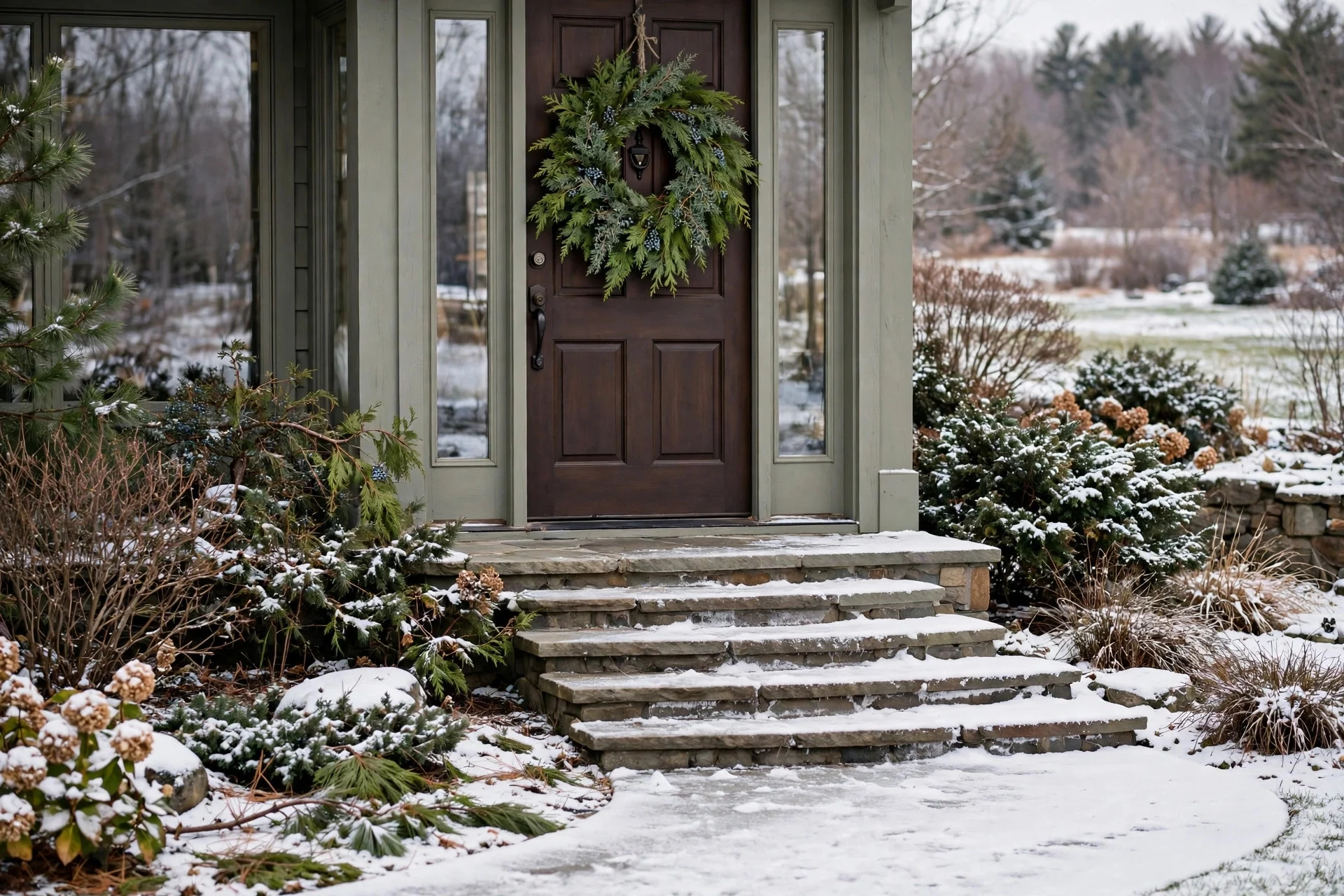
9. Minimalist Hoop Wreath With Pine Sprigs
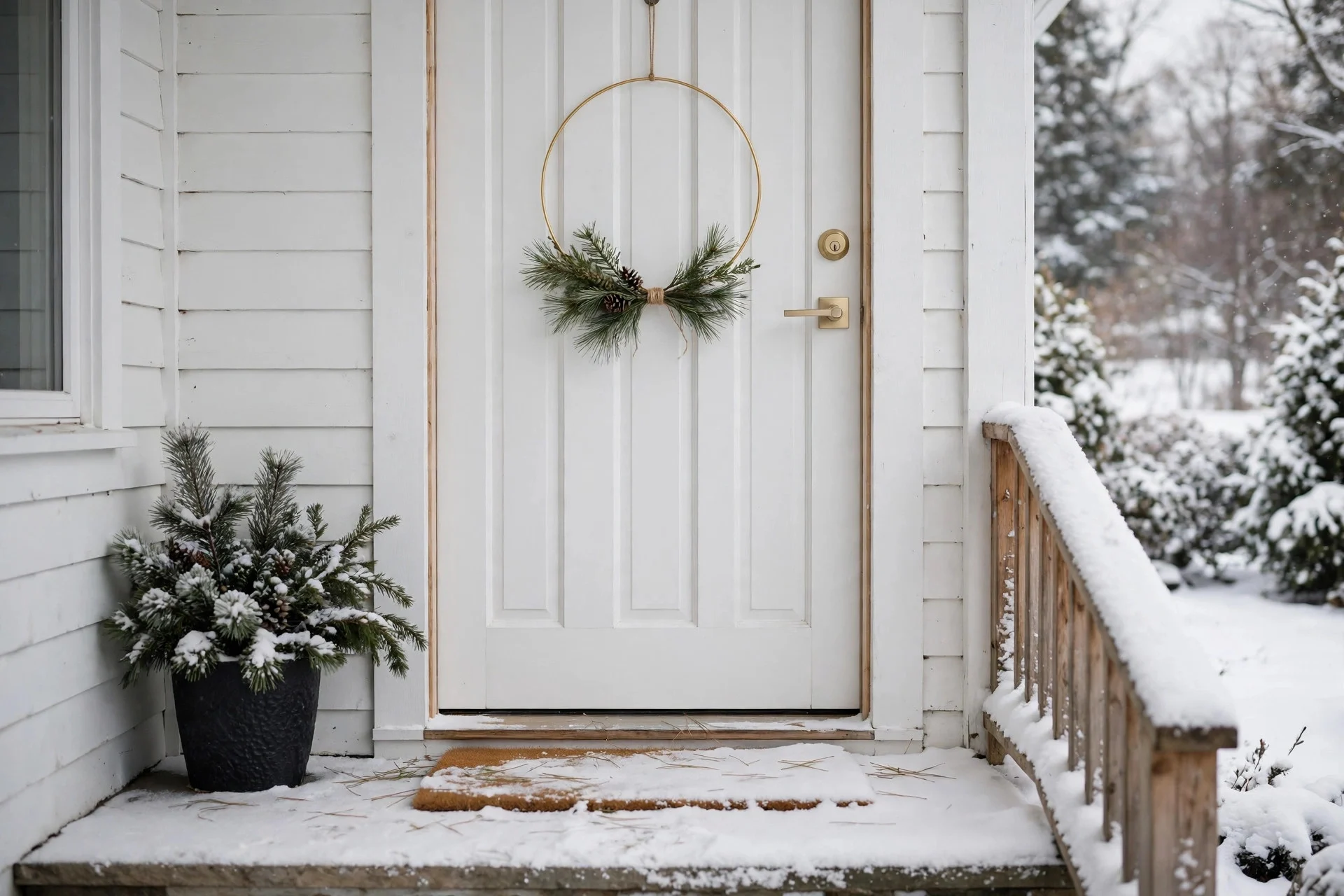
A thin metal hoop with just a few pine sprigs is the easiest wreath on this list, and it suits a plain door that does not need much dressing up. I take a gold or black metal ring, wire a small bunch of pine and eucalyptus to the bottom third, and let the top two-thirds stay bare so the shape of the hoop shows. A short length of ribbon or twine at the top holds it on the hook. The trick is to keep the greenery small and tight, because a big loose bunch on a thin hoop looks like it is sliding off. I tied mine too loosely the first time and found it hanging sideways by lunchtime.
Try this: Add one frosted pinecone to the greenery bunch. A single accent looks intentional, while three or four start to crowd a slim hoop.
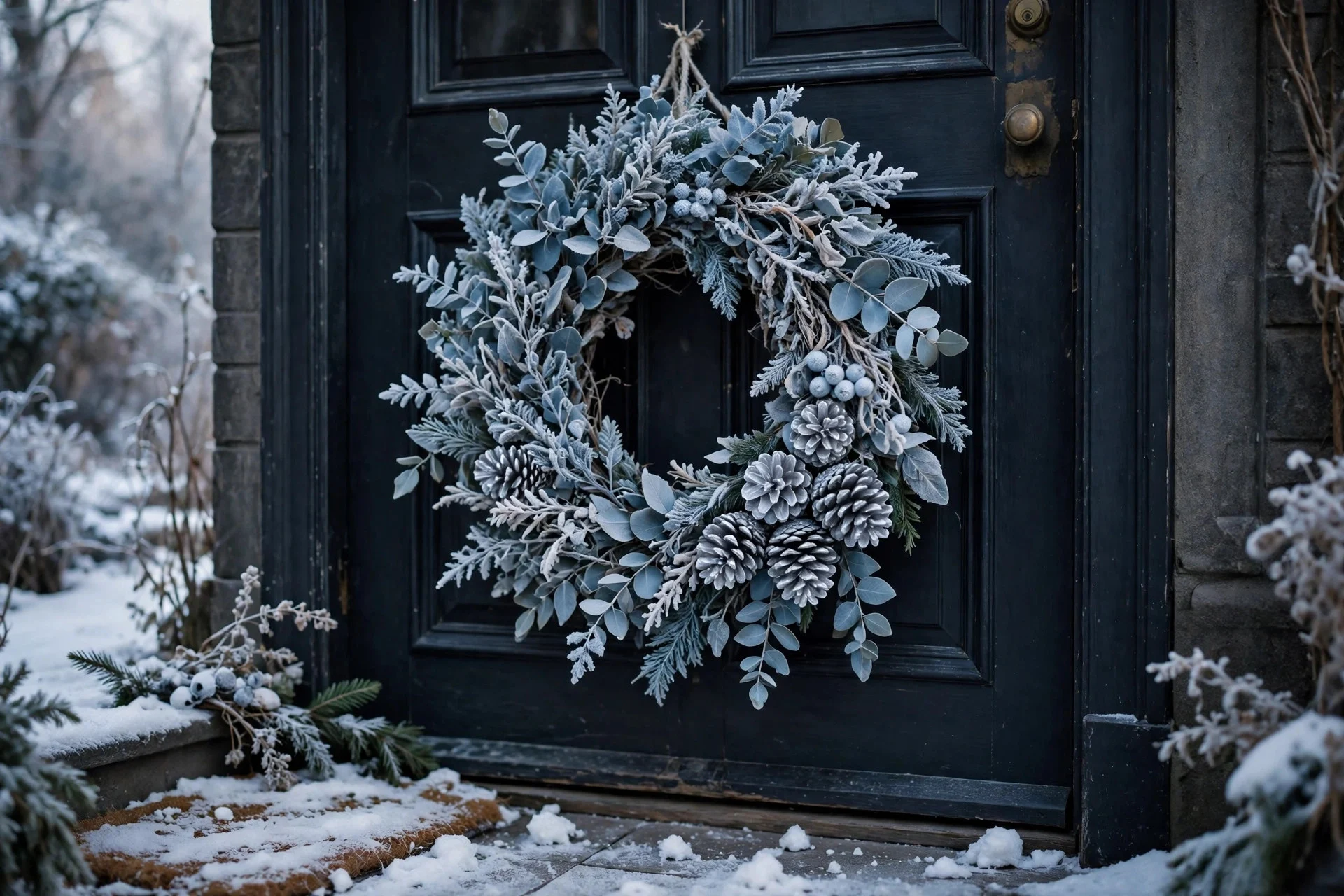
10. Blue and White Icy Wreath
A blue and white wreath looks like a cold, clear winter morning, and it stands out nicely on a dark door. I start with a frosted pine base and tuck in dusty blue eucalyptus and a few pale blue-grey berries, keeping the blue soft instead of bright so it reads as icy rather than loud. Silver-painted pinecones add a cool shine without any glitter. I keep the arrangement uneven, with more blue on one side, because a perfectly even ring looks stiff from the street. My first attempt had the blue spread in a neat circle and it looked more like a pattern than a wreath, so now I cluster the colour and let the frosted pine show through.
Try this: Use a pale blue-grey ribbon for the hanging loop. A matching loop ties the colours together better than a plain hook.
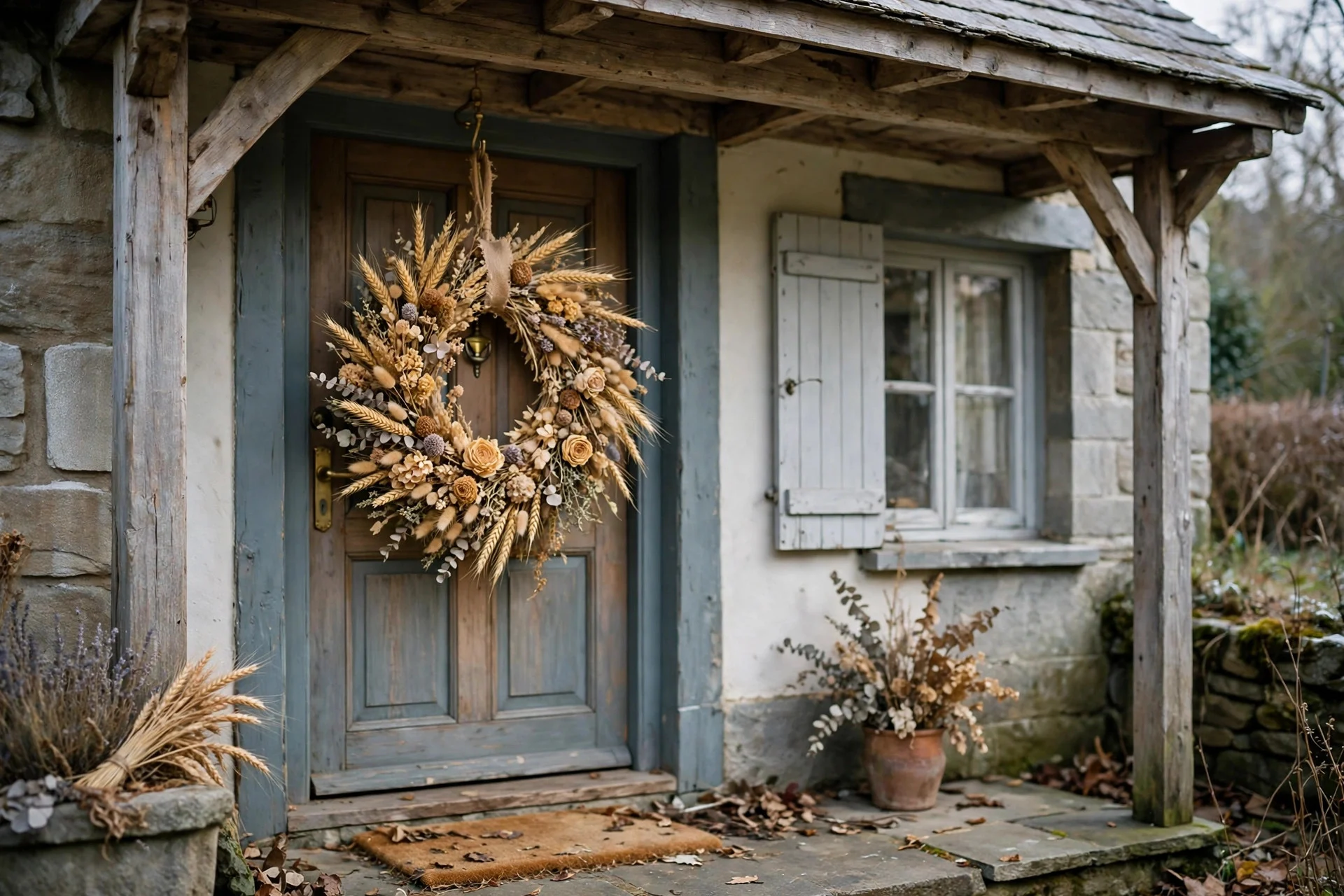
11. Dried Flower and Wheat Wreath
Dried flowers and wheat make a warm, golden wreath that suits a cottage door and lasts all winter indoors or on a covered porch. I wire short bunches of dried wheat, strawflower, and lavender onto a straw ring, working around the circle in the same direction so the stems lie flat. A few dried seed heads tucked between the bunches stop the ring looking too neat. I keep this one under cover, because rain turns dried flowers brown and soggy in a day. I hung my first one on an open porch and lost half the flowers in one storm, so now it only goes where the roof keeps the rain off.
Try this: Spray the finished wreath lightly with hairspray. It holds the seed heads in place and stops them shedding on the porch.
12. Woodland Moss and Fern Wreath
A moss and fern wreath brings a soft woodland feel to the front door, and it is one of the nicest to make if you like working with your hands. I cover a foam ring in sheet moss, pinning it down until no foam shows, then press in small dried ferns, lichen-covered twigs, and a few tiny pinecones. The greens and browns together look calm and natural, like the floor of a winter wood. I hang it on a covered porch, because open rain washes the moss loose. I learned that after my first moss wreath thinned out in a week, and a sheltered spot keeps it full for the whole season.
Try this: Pin the moss on with long floral pins pushed in at an angle. Straight pins work loose when the moss dries and shrinks.
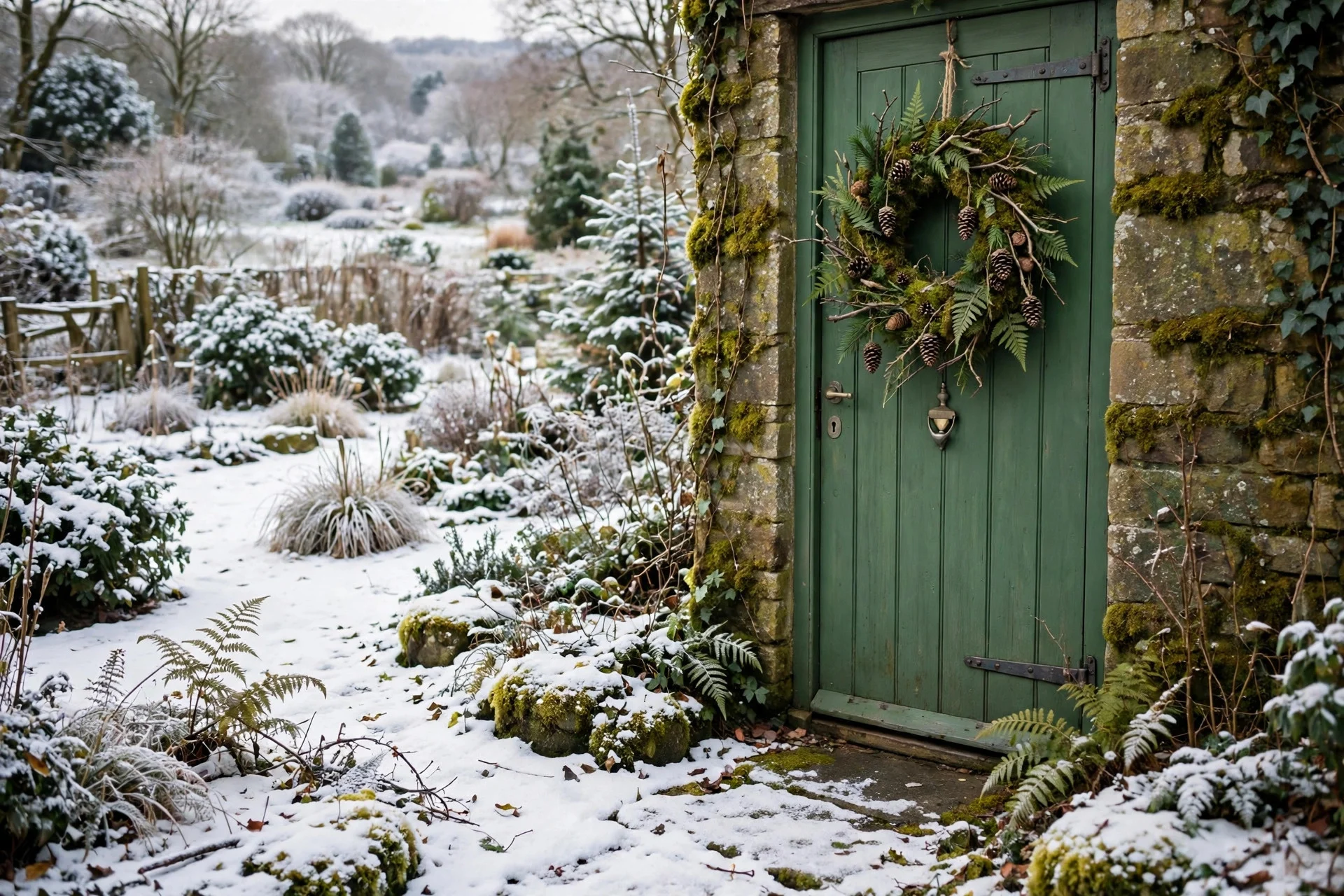
13. White Hydrangea Winter Wreath
White hydrangeas make a soft, full wreath that looks lovely against a dark door in winter. I use dried or good-quality faux hydrangea heads and push them into a foam ring close together, so the ring reads as one big cloud of white instead of separate flowers. A few pine sprigs tucked underneath give it a green edge and stop the white looking flat. I keep the heads tight at the start, because dried hydrangeas shrink a little as they settle and gaps appear. My first one had a bare patch by February, and now I pack the heads in until I cannot see the ring at all.
Try this: Dust the hydrangea heads with a very light coat of white spray paint. It freshens faded heads and makes the whole wreath look snowy.
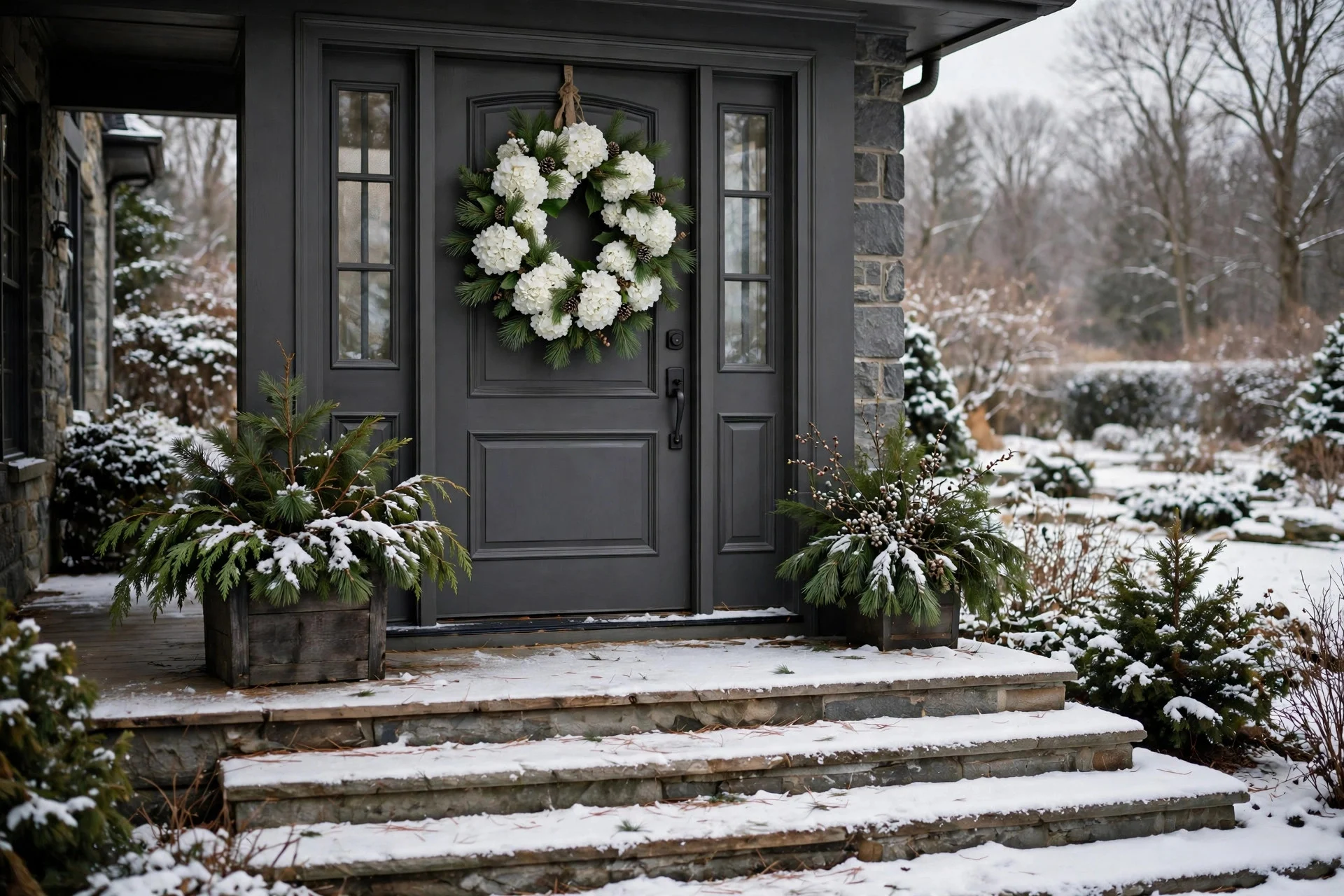
14. Pine and Cotton Boll Wreath
Cotton bolls on pine look like soft snow caught in the branches, and this wreath takes only a few minutes to put together. I start with a plain pine wreath and push short cotton stems into it in small groups, letting the white puffs sit on top of the needles instead of sinking into them. A few bare twigs add height and stop the cotton looking too neat. I wire the cotton stems in rather than just pushing them, because cotton is light and a gust of wind can pull it straight out. I lost half the bolls off my first one in one windy night, and wiring them in has kept every boll in place since.
Try this: Keep the cotton away from the bottom edge where it brushes the door. It picks up dirt fast and turns grey by January.
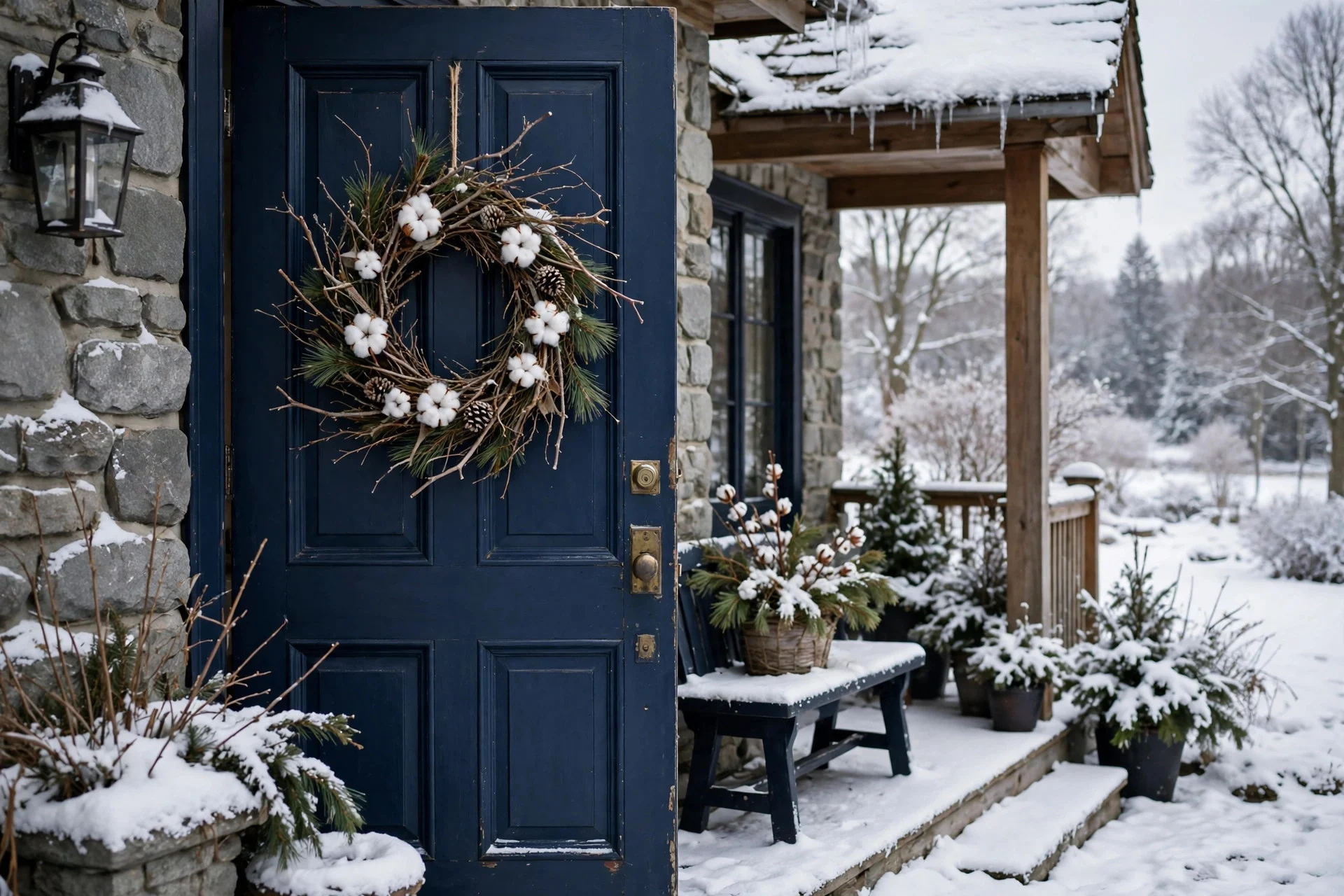
15. Grapevine Wreath With Frosted Greenery
A grapevine base with frosted greenery is a good pick if you like a wreath that looks a bit wild and natural. I start with a bare grapevine ring and leave some of the twisted vine showing, then wire in loose bunches of frosted pine, cedar, and a few white berries, working in one direction around the ring. The gaps where the vine shows through are part of the look, so I do not try to fill every space. I hang it with a wide ribbon loop, because a thin wire hook can slip through the loose vine. I used a thin hook the first year and found the wreath on the porch floor one morning, so now the loop goes right through the thickest part of the vine.
Try this: Tuck in a few dried seed pods or small pinecones where the vine is thinnest. They fill the gap without hiding the vine.
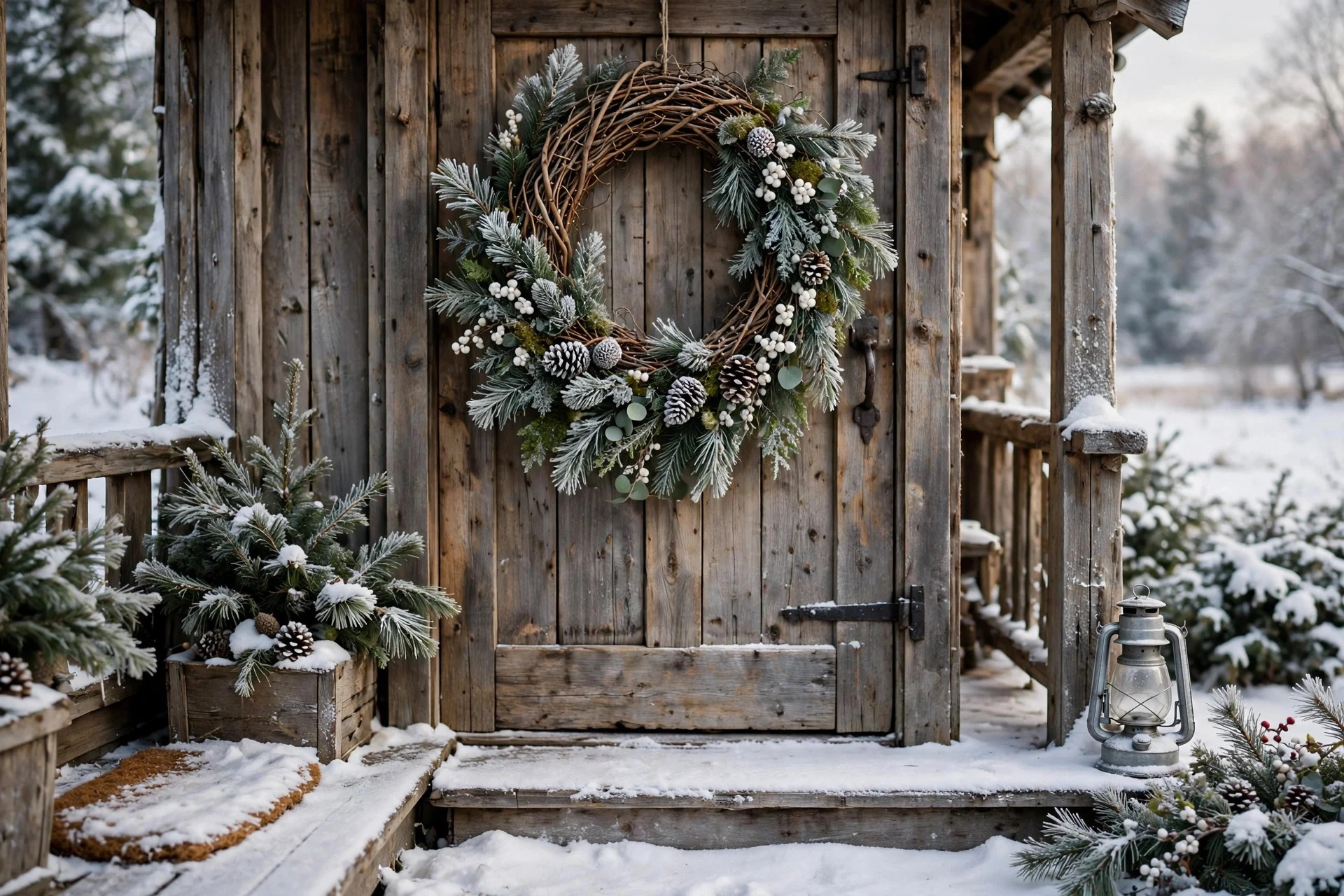
16. Dried Lavender and Pine Wreath
Dried lavender and pine is a quiet, pretty mix, and the scent when you brush past the door is the best part. I wire small bunches of dried lavender onto a pine base in a loose ring, keeping the purple stems short so they do not stick out too far, then tuck in a few pine sprigs to soften the edges. The purple against the dark green looks gentle rather than bright, and it suits a pale door well. I keep the lavender dry at all times, because wet lavender goes dark and loses its scent. I left my first one out in the rain and the purple turned brown within a week, so now it hangs on a covered porch.
Try this: Use lavender bunches of the same length all the way round. Mixed lengths make the ring look untidy from the street.

17. Warm Fairy Light Winter Wreath
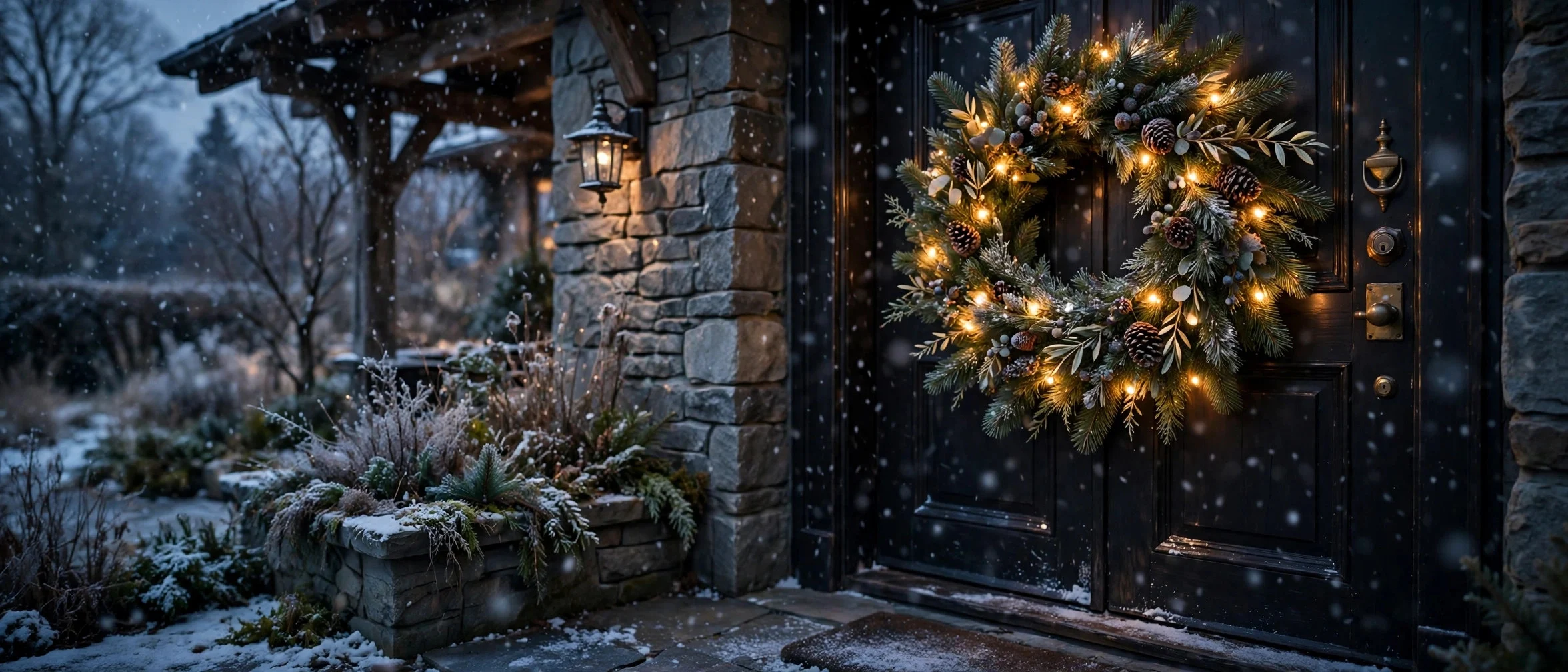
A wreath with warm fairy lights is the one I love most on dark winter evenings, because it glows without needing anything else on the porch. I wrap a short string of battery fairy lights through a full pine wreath, tucking the wire deep into the branches so only the tiny lights show. The battery pack hides behind the wreath at the back, taped to the door hook where it stays dry. I set the lights on a timer so they come on at dusk and switch off before bed, which saves me remembering every night. I once used a long string and the wreath looked tangled, so now I use the shortest string that reaches around once.
Try this: Choose warm white lights, not cool white. Warm light looks like candlelight in the pine, while cool white can look harsh and cold.
Frequently Asked Questions
How long will a winter wreath last on the front door?
A fresh pine wreath usually lasts four to six weeks in cold weather, and a dried or faux one will last the whole winter. Keep fresh wreaths out of direct sun and wind, and they hold their needles much longer.
How do I hang a wreath without damaging my door?
Use an over-door wreath hanger or a suction hook made for front doors. Both hold well and leave no holes, and you can move the wreath up or down until it sits at eye level.
Can I leave a winter wreath outside in snow and rain?
Pine, cedar, and faux wreaths handle snow and rain well, but dried flowers, moss, and lavender need a covered porch. Check the forecast and bring delicate wreaths inside during heavy storms.
What size wreath should I buy for my front door?
A wreath between 24 and 30 inches across suits most standard front doors. Measure your door first, and go one size up if you are unsure, since a small wreath can look lost on a wide door.
Final Thoughts
A winter wreath does not need to be fancy or costly to make your front door feel welcoming. Pick one idea from this list that suits your door, hang it at eye level, and let it carry you through the cold months. I change mine every winter, and each year I keep the one I loved most and try one new idea beside it. That slow swap is how a front door starts to feel like yours, and I hope one of these 17 wreaths finds its way onto your door this winter.