

Here’s a secret professional decorators know: you don’t need to redecorate for winter. You just need to swap about a dozen small things — the pillow covers, the candle scent, the doormat — and the whole house reads as seasonal without a single big purchase.
These 13 swaps each take under 20 minutes and most cost less than $25. They’re designed to layer over your everyday decor, so nothing you already own needs to go into storage. Think of it as a winter filter laid over your existing style.
1. Swap Throw Pillow Covers for Winter Textures
This is the single highest-impact swap in the house. Pull off your summer pillow covers and replace them with chunky knits, faux fur, or nubby bouclé in cream, rust, or forest green. The sofa looks — and feels — completely different.
Covers (not whole pillows) are the move: they’re cheaper, store flat, and you can change them seasonally in minutes. Buy 18×18-inch covers for standard 20-inch inserts — the tighter fit looks plumper and more expensive.
Store off-season covers in a labeled zip bag with a dryer sheet — they stay fresh and take up almost no space. Vacuum-seal bags compress a full set of winter covers to the size of a paperback.
Try this: Swap just three covers per seating area; leave your everyday solids in place for balance.

2. Trade Your Doormat for a Layered Winter One
Your entry sets the winter tone before anyone walks inside. Layer a larger plaid or buffalo-check outdoor rug under your existing doormat — the double layer looks intentional and traps more snow and grit.
A 24×36-inch base rug under a standard 18×30-inch mat gives a proper border. Coir mats with a deep weave scrape boots clean; just brush them out weekly so salt doesn’t build up.
In snowy climates, add a shallow plastic tray under the coir mat to catch meltwater before it reaches the porch boards. Empty it after storms; standing water refreezes into a skating rink by morning.
Try this: Shake both mats weekly so the salt and slush don’t stain the porch.

3. Switch Candle Scents to Winter Woods
Your home’s scent is invisible decor. Pack away citrus and ocean scents until spring and bring in cedarwood, balsam fir, smoked amber, or clove. One signature scent through the main rooms ties everything together.
Place candles where air circulates — near (not on) heat vents — so the fragrance travels. Trim wicks to a quarter inch each time for a cleaner, longer burn. One candle per 200 square feet is plenty.
Soy candles burn about 30% longer than paraffin, so the slightly higher price pays off across a whole winter. Keep a dedicated wick trimmer by your most-used candle — trimmed wicks mean less soot on walls and ceilings.
Try this: Burn a new candle for two hours on first use so the wax melts to the edge and never tunnels.

4. Replace Lightweight Throws With Heavy Blankets
A linen or cotton throw says summer; a wool or chunky-knit throw in a deep tone says winter. Drape one over each armchair back and fold one across the sofa arm — that’s it, the room feels warmer.
Look for throws around 50×60 inches so they actually cover someone. Wool blends stay warm without the itch of pure wool. Tuck the folded edge under the cushion so it looks styled, not tossed.
Wool-blend throws survive the wash better than pure wool and cost half as much. Wash cold and lay flat to dry; the dryer is what kills most throws. A fabric shaver ($10) revives a pilled throw in minutes.
Try this: Keep one throw in a basket by the sofa for guests — it doubles as decor and hospitality.

5. Swap Bright Art Prints for Moody Ones
You don’t need to repaint — just swap two or three framed prints for darker, moodier ones. Landscapes in deep greens and browns, still-life florals, or black-and-white photography all suit winter light.
Use the same frames you own; print new art at a local copy shop for a few dollars. Keep the swaps in the living room and hallway where they have the most eyes on them. Ten minutes, done.
Thrift stores are goldmines for solid wood frames at $2–3 each — repaint them matte black for a cohesive winter gallery. Keep a small stash of adhesive hanging strips so swaps never damage the walls.
Try this: Look for public-domain vintage prints online — moody, free, and high-resolution.

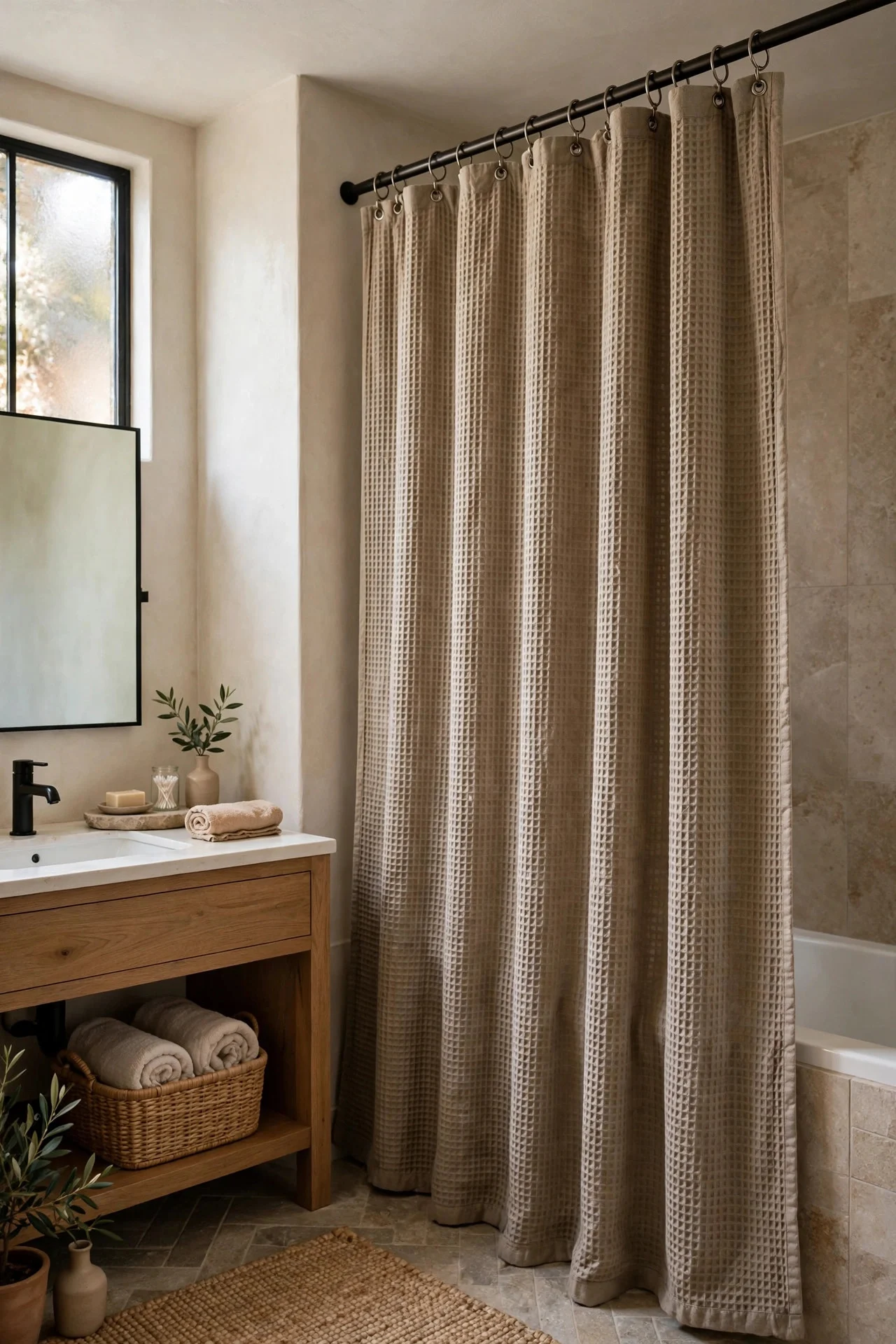
6. Change Your Shower Curtain to a Heavier Fabric
A thin plastic liner feels cold and looks cheap in winter. Swap it for a heavy cotton or waffle-weave shower curtain in a warm white or stone tone — it hangs better, hides the liner, and softens the whole bathroom.
Keep a washable liner behind it so the fabric stays dry. Use metal hooks or rings for a finished look, and hang the rod an inch higher than summer for a little extra drama. Machine-wash the fabric curtain monthly.
A curved shower rod ($25–35) adds up to 6 inches of elbow room and lets a heavier curtain hang without touching you. It installs with the same brackets as a straight rod — fifteen minutes, one screwdriver.
Try this: Let the fabric curtain hang a few inches off the floor inside the tub edge to stop mildew at the hem.
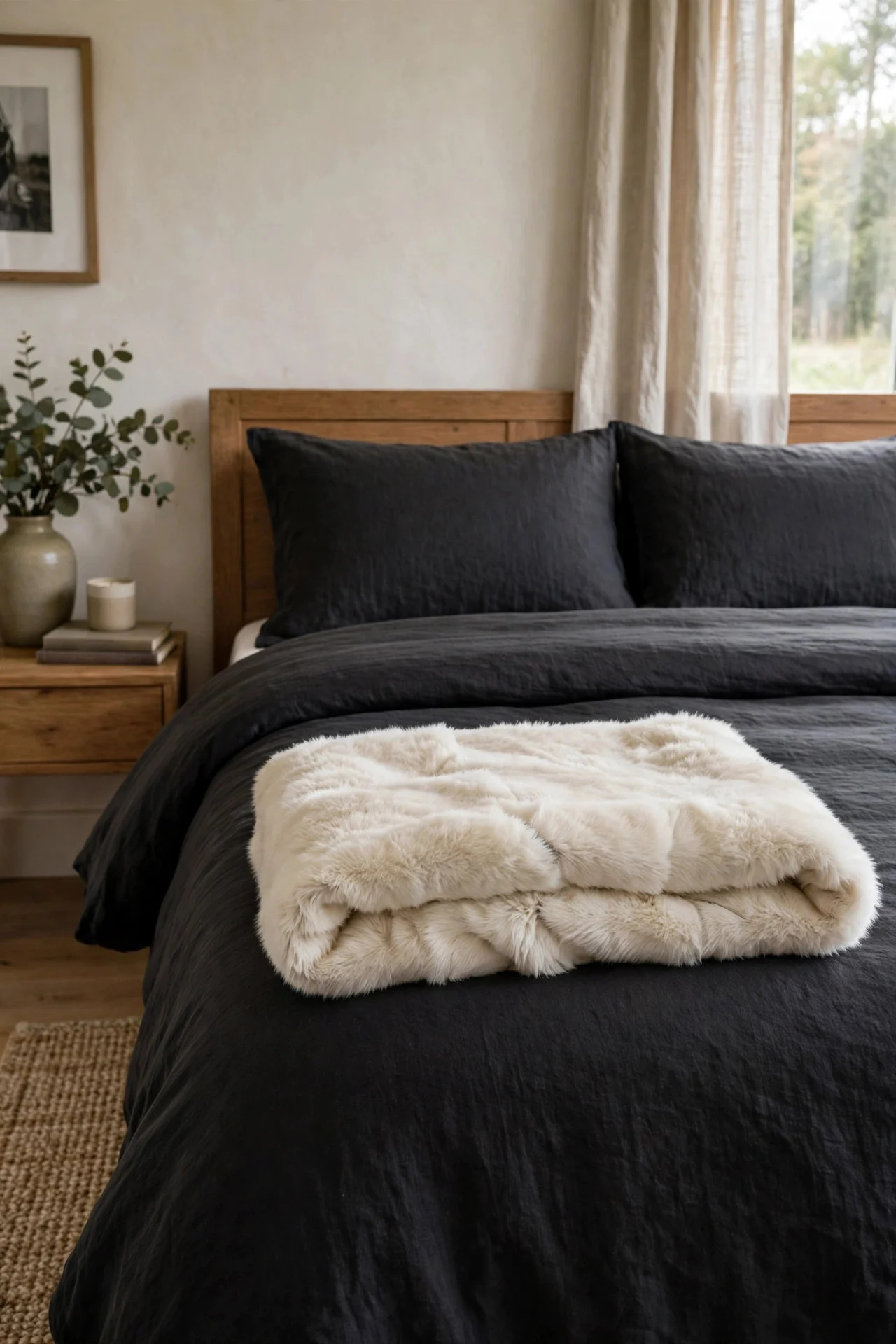
7. Layer a Faux Fur Throw at the Foot of the Bed
One faux fur throw folded across the foot of the bed transforms a bedroom into a winter retreat. It adds a soft sheen that catches lamplight beautifully and costs far less than new bedding.
Choose a throw in cream or pale gray — it brightens dark bedding and blends with most colors. Fold it in thirds lengthwise so it reads as a neat runner, not a rumpled blanket. Wash it inside-out on cold to keep it soft.
Faux fur sheds less if you wash it inside a pillowcase on cold. Shake it outside after drying to restore the loft. Keep it off dark clothing — light fur transfers to everything in the first few weeks.
Try this: Drape it diagonally across one corner for a styled, editorial look instead of straight across.
8. Swap Glass Vases for Matte Ceramic Ones
Clear glass reads light and summery. Matte ceramic in earthy tones — rust, oatmeal, deep green — feels grounded and wintery. Swap the vases on your shelves and mantel and the whole display shifts season.
Fill them with dried branches, wheat stalks, or pampas grass instead of fresh flowers — nothing to water, and they last all winter. A trio of graduated heights (8, 10, and 12 inches) looks deliberate.
Thrifted ceramic vases cost a few dollars and one coat of matte spray paint unifies mismatched shapes. Stick to one finish — all matte — so the collection looks curated rather than accidental.
Try this: Group vases in odd numbers on a tray so the arrangement looks collected, not scattered.

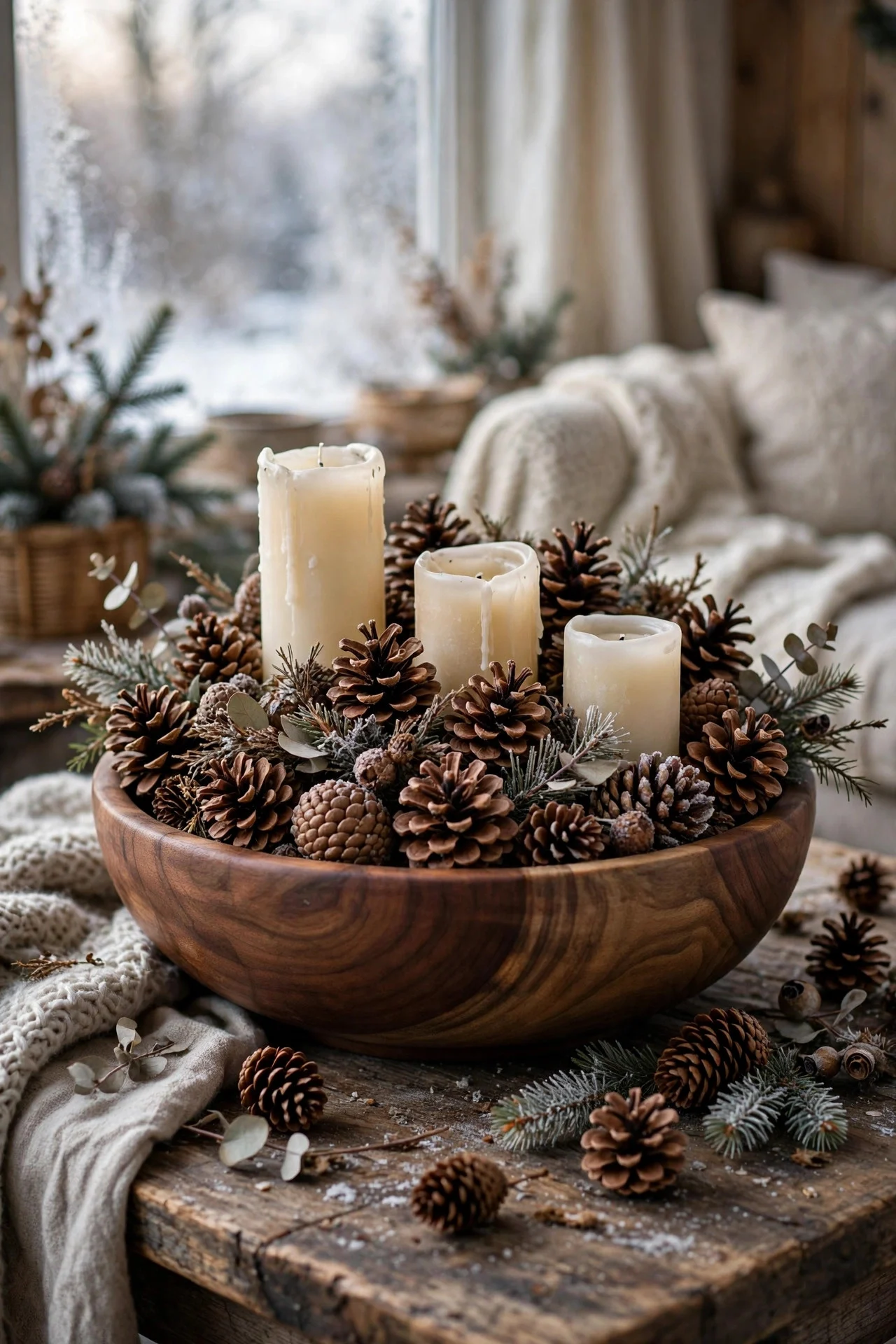
9. Put Away the Tray; Bring Out the Wooden Bowl
Summer coffee tables hold breezy glass trays. Winter wants something weightier: a turned wooden bowl or low wooden vessel filled with pinecones, dried orange slices, or unscented pillar candles.
The bowl becomes your seasonal centerpiece with zero arranging skill required. Choose one about 12 inches wide so it anchors the table without blocking sight lines. Wipe with a dry cloth; never soak it.
Rotate the bowl’s contents monthly: pinecones in December, dried orange slices in January, bare branches in February. The bowl stays, the season shifts. Store off-season fillers in a paper bag in the closet.
Try this: Fill the bowl with pinecones you collect yourself — free, and they smell faintly of the woods.
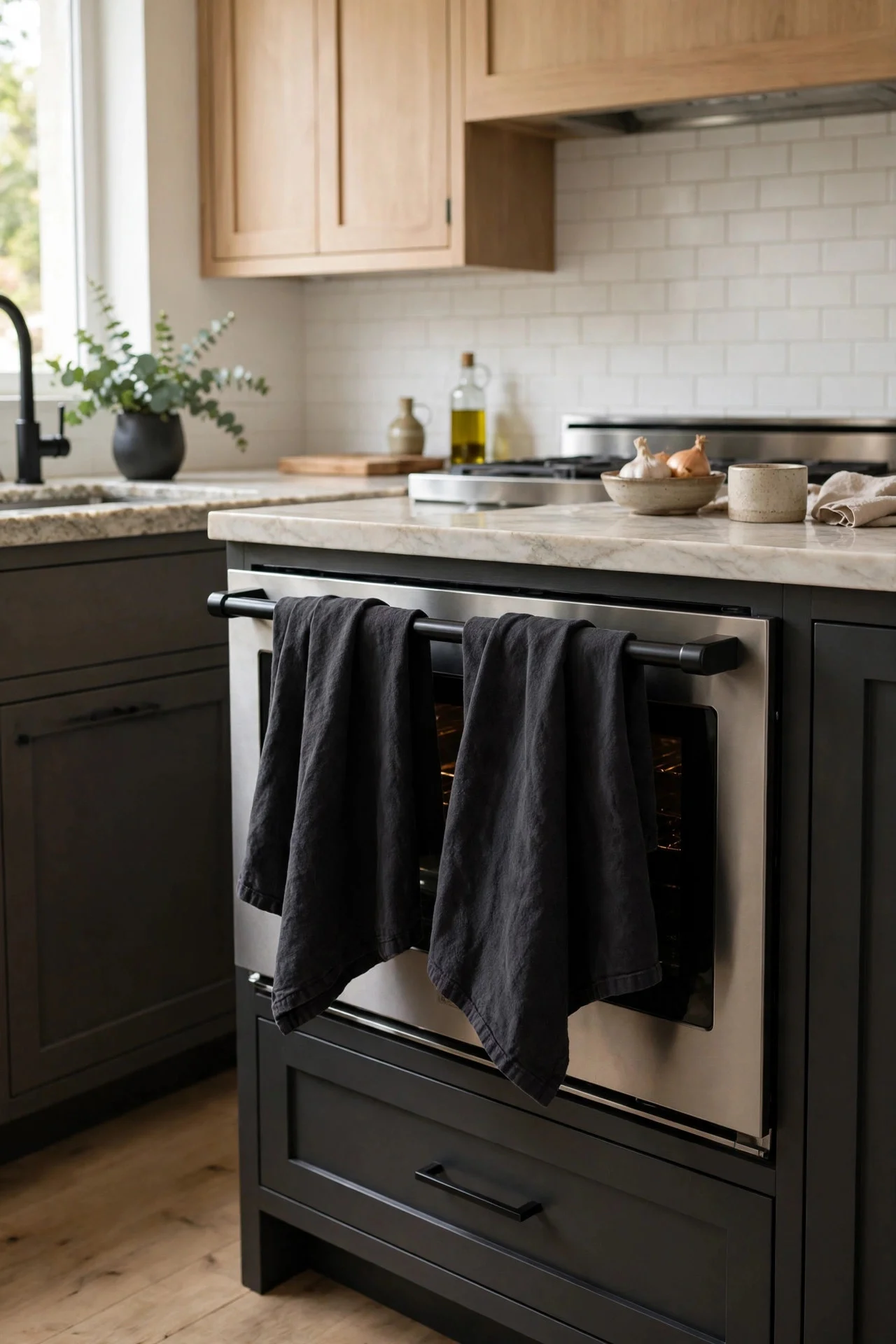
10. Swap Bright Kitchen Linens for Dark Ones
Your kitchen towels and oven mitts are visible decor — they’re out all day. Trade light patterns for deep solids: charcoal, forest, or rust. The kitchen instantly looks more serious and seasonal.
Cotton twill towels survive heavy washing and dry faster than terry. Hang one folded over the oven handle and keep a second near the sink. Replace them the moment they look dingy; winter grime shows fast.
Dark towels show lint, so keep a lint roller in the kitchen drawer during winter. Wash new dark towels separately twice before mixing them with light laundry — the first washes release the most dye.
Try this: Buy towels in sets of four so you always have a fresh one while others are in the wash.
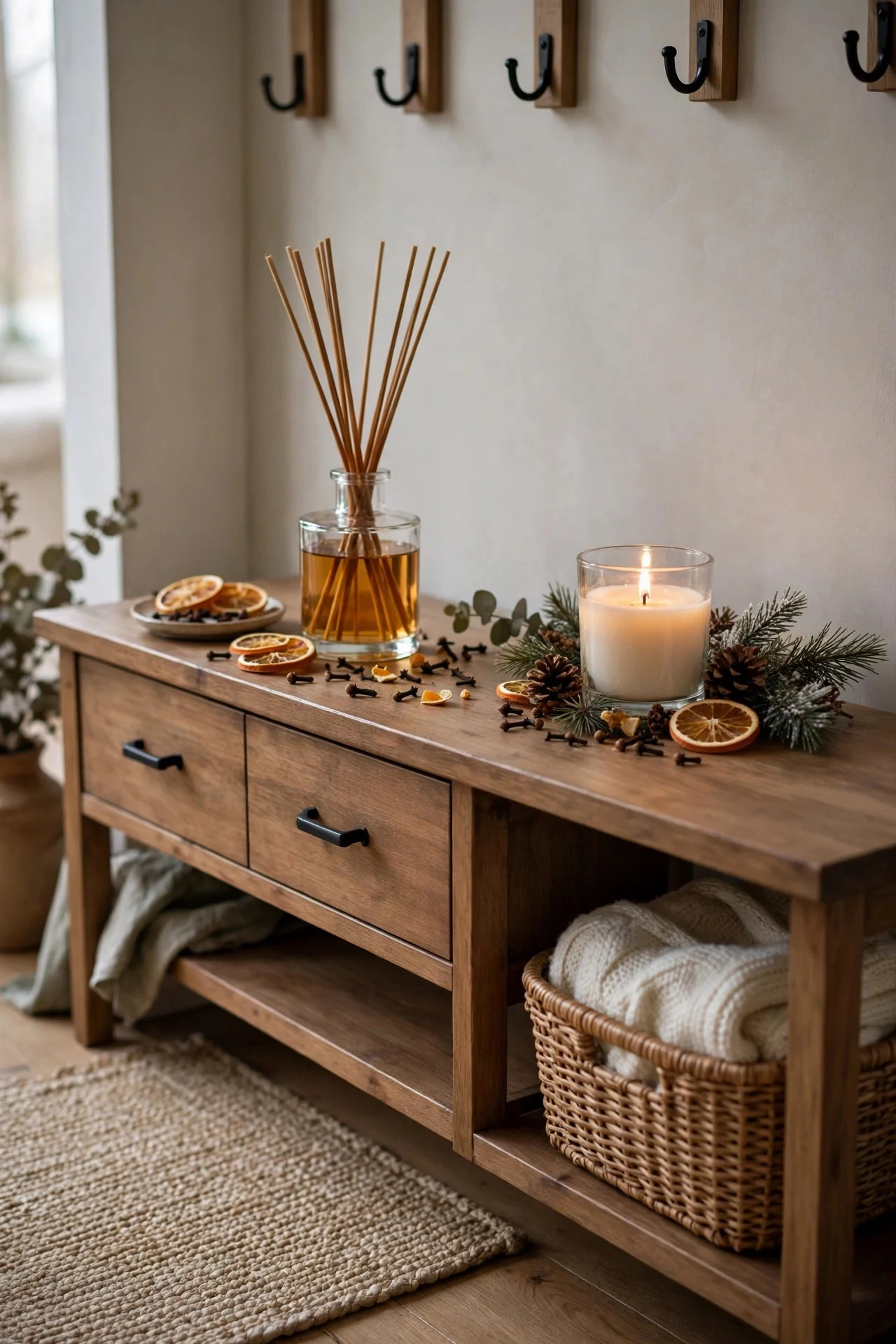
11. Trade Your Summer Diffuser Scent for Clove and Orange
If you use a reed diffuser, winter is the time to refill it with clove, sweet orange, or cinnamon. It’s the scent equivalent of a warm sweater — familiar, comforting, and unmistakably seasonal.
Flip the reeds every one to two weeks to refresh the throw. Place the diffuser in the entryway so the first thing guests smell is winter warmth. Keep it away from direct heat so the oil doesn’t evaporate too fast.
Essential oils evaporate faster near heat, so keep the diffuser away from radiators and sunny windows. A 100ml diffuser covers about 200 square feet; larger open plans need two, one at each end.
Try this: Make your own refill with a neutral carrier oil and essential oils — pennies per ounce.
12. Switch Sheer Curtains to Lined Panels
Sheers let in light but leak warmth. For winter, swap them for lined cotton or velvet panels in a warm neutral — the room feels insulated and the light turns golden instead of gray.
You don’t need custom drapes: ready-made lined panels from a home store work fine. Hang them as close to the ceiling as possible and let them kiss the floor. The lining also blocks streetlight glare at night.
Thermal interlining (sold by the yard at fabric stores) can be clipped inside existing curtains as a cheaper alternative to new lined panels. It adds real insulation — you’ll feel the difference on the first cold night.
Try this: Leave one sheer up behind the panels for daytime privacy without losing light.

13. Replace Your Welcome Sign With a Winter Wreath
The front door deserves one clean swap: take down the everyday sign or summery wreath and hang a simple winter wreath — evergreen, dried eucalyptus, or a plain grapevine with a linen bow. That’s your whole seasonal statement.
Measure your door width and choose a wreath about two-thirds of it (usually 24–28 inches). Hang it with an over-door hook so there’s no hardware to patch in spring. Shake it off after storms.
A battery-operated fairy light woven through the wreath ($8 for a 20-LED strand) makes it glow after dark without any wiring. Set it on a timer so it lights at dusk automatically.
Try this: Spray an inexpensive wreath with a light dusting of fake snow from a craft store — it looks like the real thing.

Frequently Asked Questions
How do I make my home feel like winter without Christmas decorations?
Focus on texture, scent, and warmth instead of holiday symbols: chunky knits, wood tones, winter candle scents, heavier curtains, and dried botanicals. The season reads through materials, not ornaments.
What’s the fastest winter decor swap I can do?
Throw pillow covers. Changing three or four covers per seating area takes fifteen minutes and completely changes the room’s look. Candles and a seasonal diffuser scent are the fastest two-room upgrade after that.
How much should I budget for seasonal winter swaps?
Most of these swaps cost $15–25 each, so a full-house refresh runs about $150–200. Reusable items like pillow covers and curtains pay for themselves over several winters — buy quality once and reuse.
When should I put out winter decor?
Mid-November is the sweet spot for most of these swaps — after fall decor comes down, before the holidays take over. Textile and scent swaps can go up even earlier since they read as general winter, not Christmas.
Final Thoughts
Winter decorating doesn’t require a shopping spree — it requires a swap box. Keep your seasonal covers, throws, candles, and wreath together in one labeled bin, and each November you’ll refresh the whole house in an afternoon. Small changes, big warmth.