
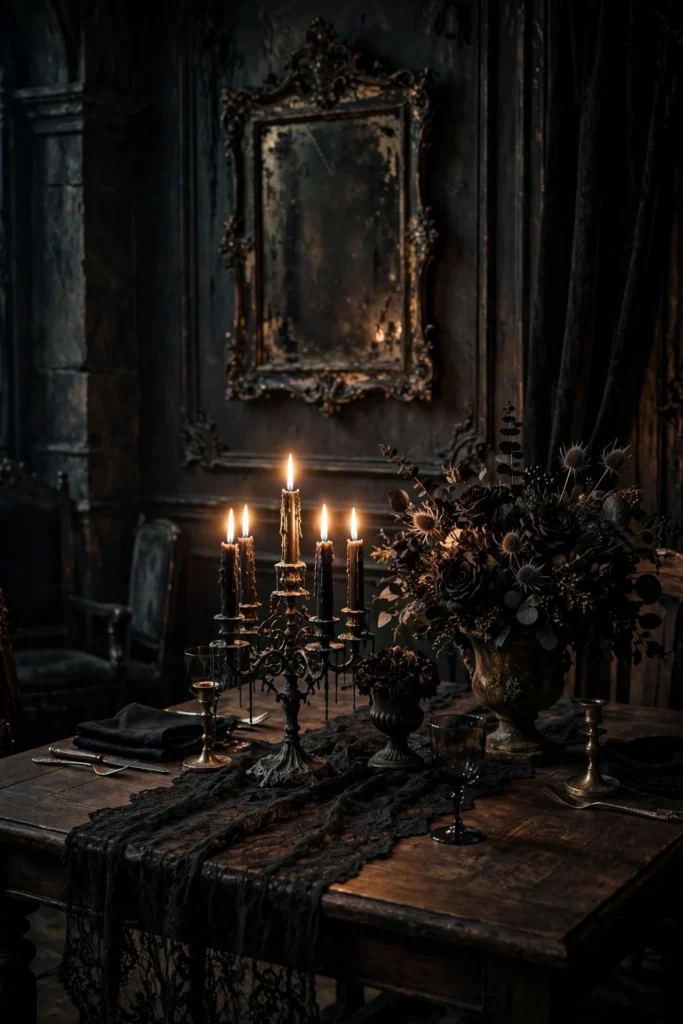
Gothic Halloween decor has nothing to do with rubber bats and plastic skeletons. The real version — the one you see in designer homes and moody October dinner parties — borrows from Victorian parlors: black lace, aged silver, candlelight, dark florals, and textures that feel collected over decades rather than bought in a weekend.
This guide is all about dark, moody, and elegant. Fifteen ideas that bring genuine gothic romance into your home, most of them pieces you’ll keep long after the trick-or-treaters go home. Think less haunted house, more candlelit manor.
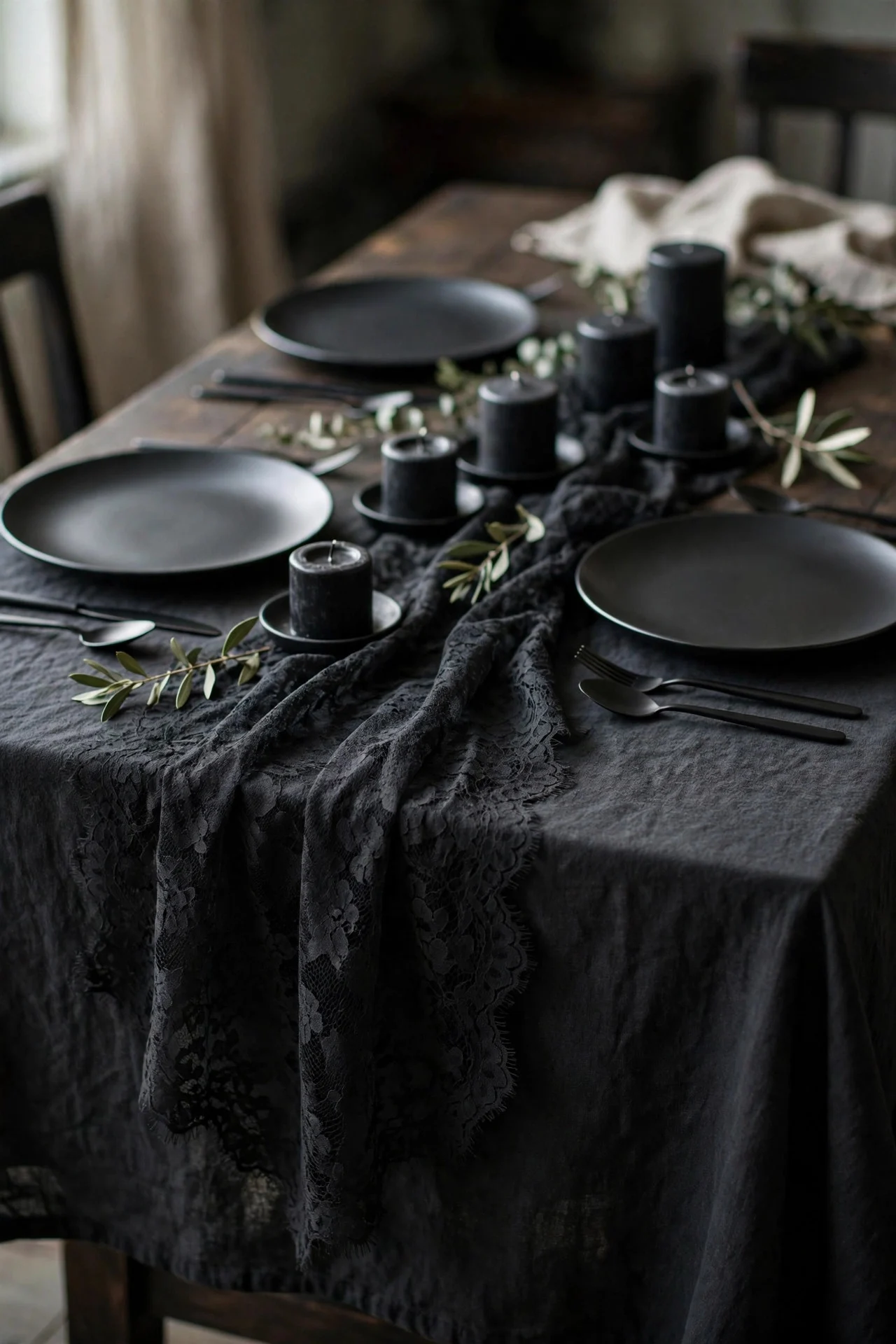
1. A Black Lace Table Runner
Lay black lace over a dark charcoal or deep plum tablecloth and your dining table instantly turns gothic. The lace doesn’t need to be vintage — craft stores sell it by the yard for about $4 — but letting the edges drape unevenly over the table sides sells the old-world feel.
Keep everything else simple underneath: matte black plates, one low candle cluster, maybe a single dark bloom in a small vase. The lace is the star; too many props will fight it.
Try this: Layer two lace runners crossing at the center for a fuller, more deliberate look.
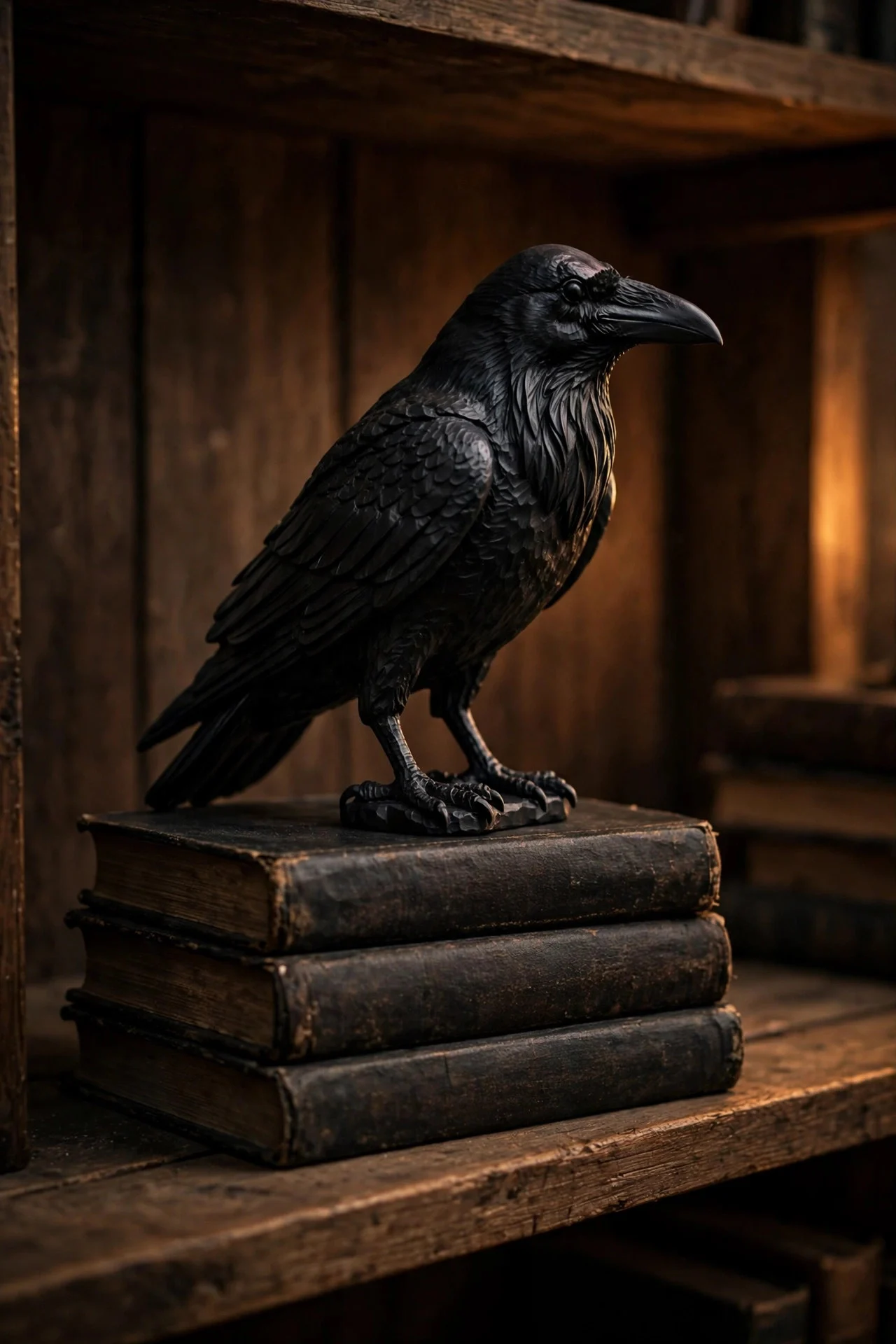
2. Ravens Perched on Book Stacks
A matte-black raven or crow statue does more for a gothic shelf than any skull. Perch one on a stack of old hardcover books — the kind with dark cloth bindings — and it looks like a collected curiosity, not seasonal decor.
Position it at eye level or slightly above, head turned to one side, as if it’s watching the room. One is enough; a flock of them tips back into kitsch. Thrift stores and craft shops carry them for $8–$15.
Try this: Pair the raven with an old brass key or pocket watch for a cabinet-of-curiosities vignette.
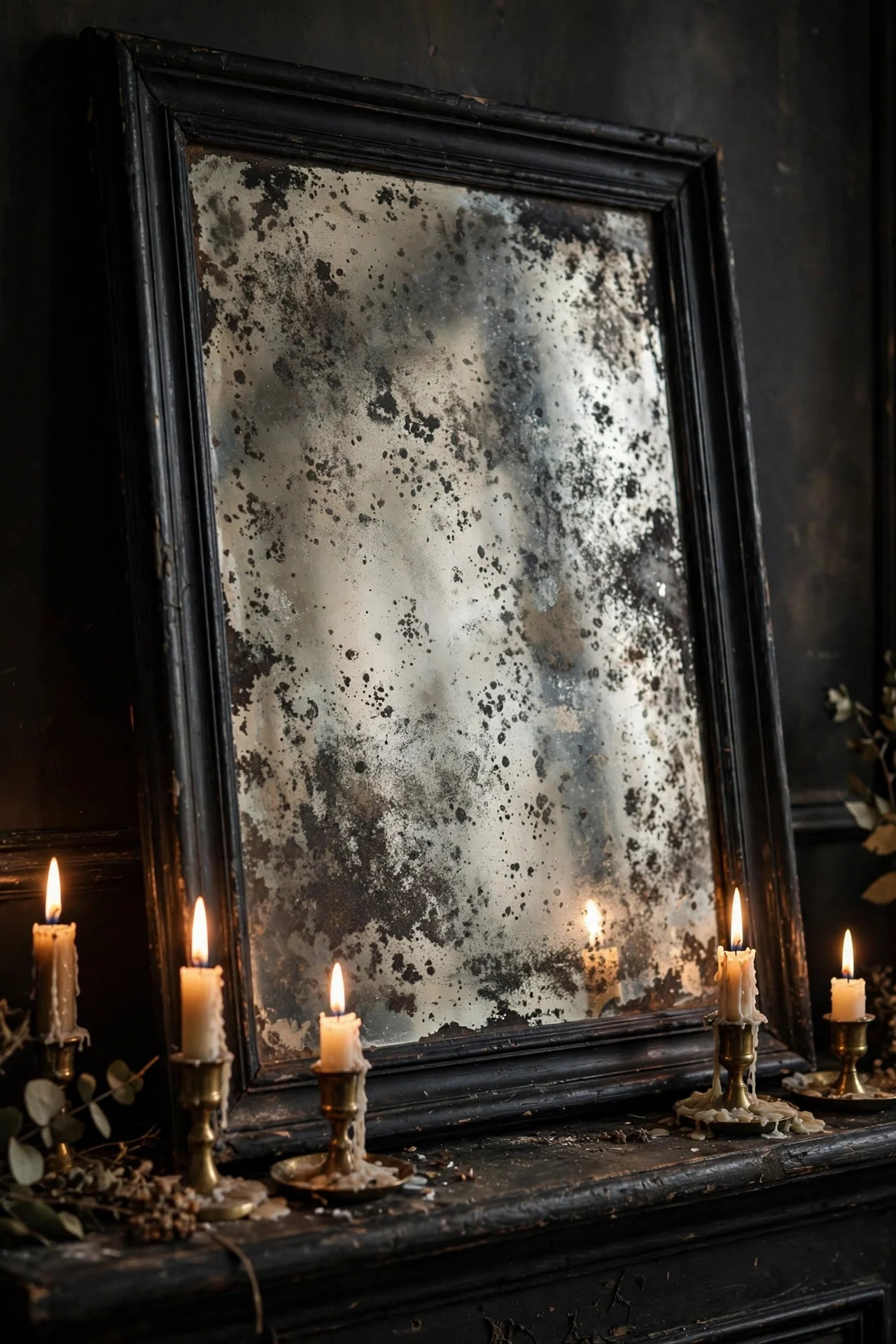
3. An Aged Mercury-Glass Mirror
An antique-style mirror with a foxed, mercury-glass finish reflects candlelight in the most haunting way. The mottled, cloudy glass feels old and slightly mysterious — perfect propped on a mantel or leaned against a wall in the entryway.
You don’t need a real antique. Spray the back of a cheap mirror with a vinegar-water mix before applying mirror-effect spray paint, and it ages convincingly in about twenty minutes. Frame it in black or distressed gold.
Try this: Lean a tall mirror on the floor behind a candle cluster — the doubled flames look incredible.
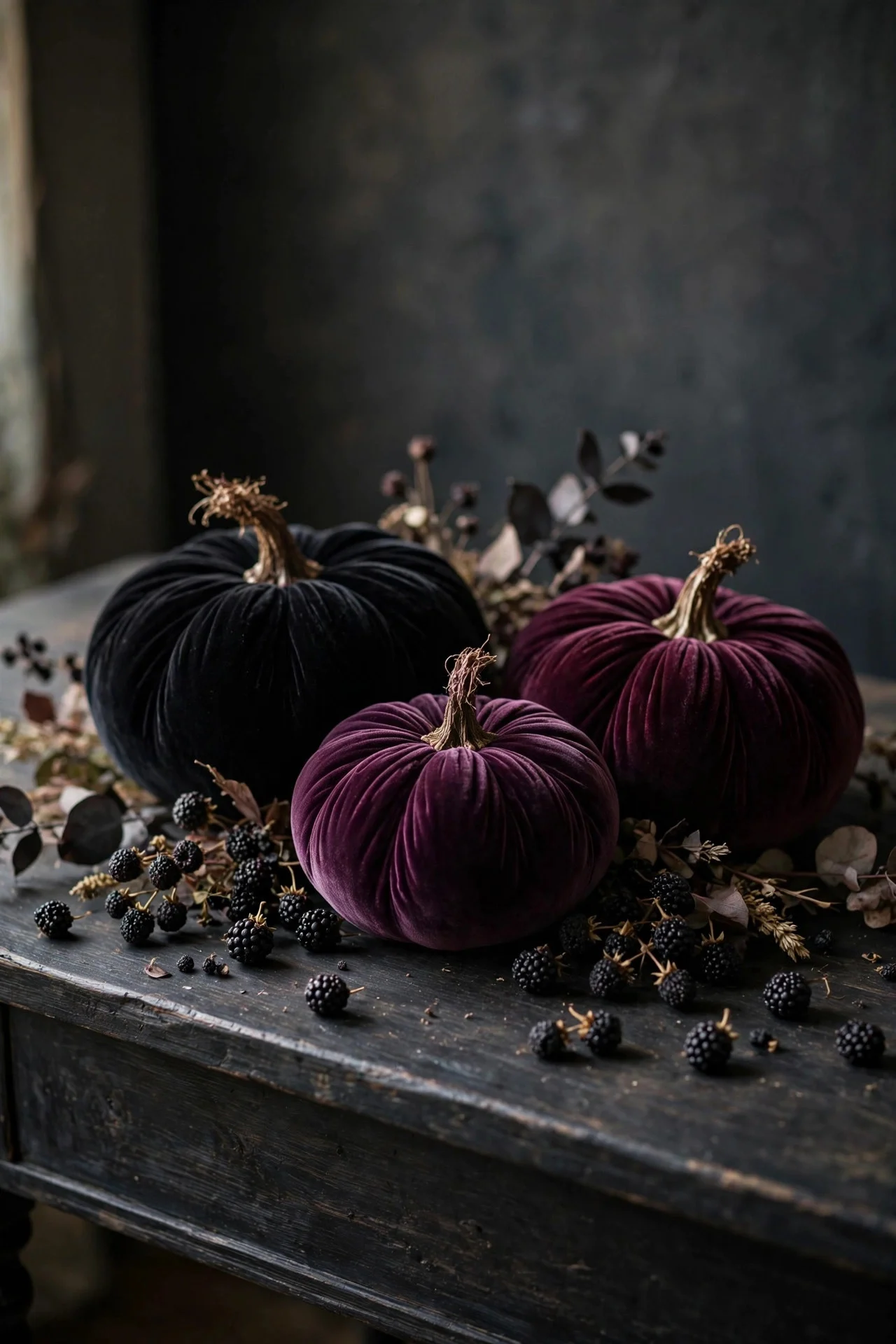
4. Black and Plum Velvet Pumpkins
Velvet pumpkins in black, aubergine, and deep plum are the gothic answer to orange. The fabric absorbs light instead of reflecting it, which gives them a soft, shadowy presence on a dark table or mantel.
Group three to five in graduated sizes and tuck in dried blackberries or dark eucalyptus between them. They cost $6–$12 each at craft stores, or you can wrap foam pumpkins in velvet remnants yourself.
Try this: Add one metallic bronze pumpkin to the cluster — a single warm glint against the dark velvets.
5. Iron Candelabra With Black Tapers
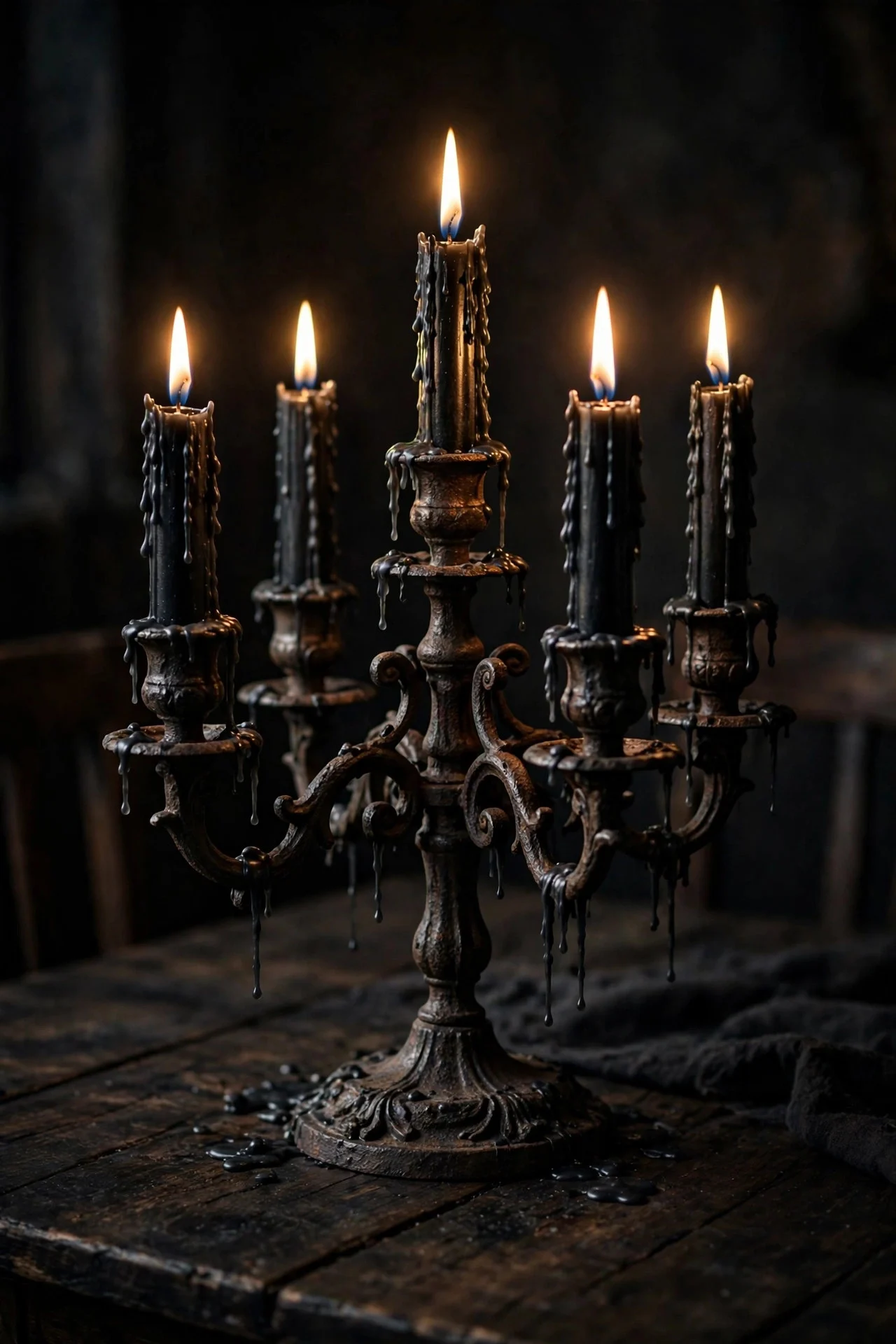
Nothing anchors a gothic room like a heavy iron candelabra dripping with wax. Choose one with curved arms and a distressed finish, fill it with black or deep oxblood tapers of varying heights, and let it burn — the wax drips are the whole point.
Set it on the dining table as the centerpiece or on a sideboard flanked by dark florals. Real flames matter here; the flicker against a dark wall is what makes the room feel alive. Expect to pay $20–$40 for a good one at a home goods store.
Try this: Let one candle burn much shorter than the rest — asymmetry reads as authentic, not staged.
6. Sheer Black Drapes in a Doorway
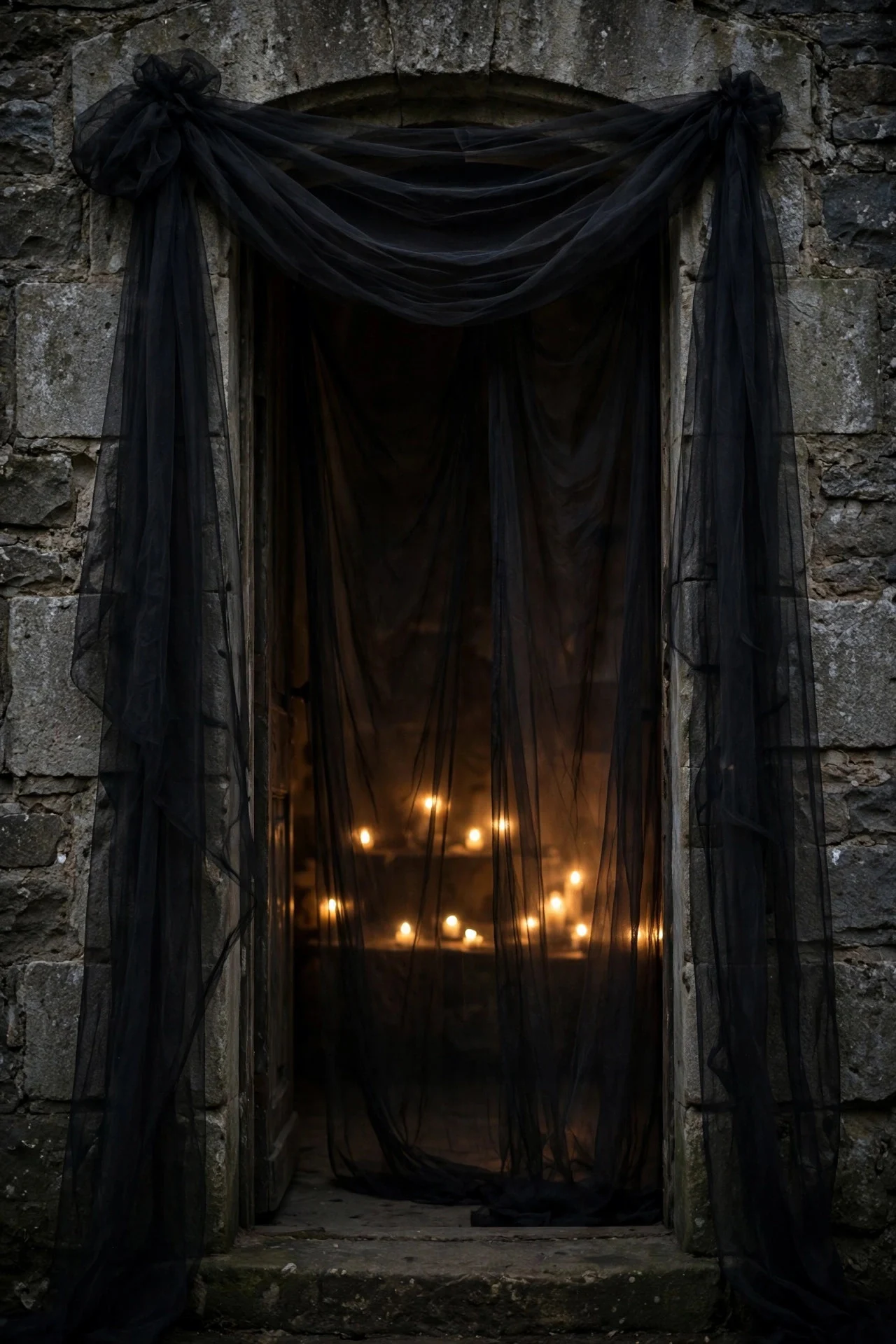
Hang panels of sheer black fabric in an open doorway and you’ve created a gothic archway for about $12. Gather the fabric at the top corners with ribbon or rope tiebacks so it billows inward like heavy curtains in an old manor.
It works best in a doorway people actually walk through — brushing past the sheer fabric feels theatrical in the best way. Take it down November 1st and the room goes back to normal.
Try this: Backlight the doorway with a single candle or lamp behind the fabric for a shadowy glow.
7. A Haunted Portrait Gallery Wall
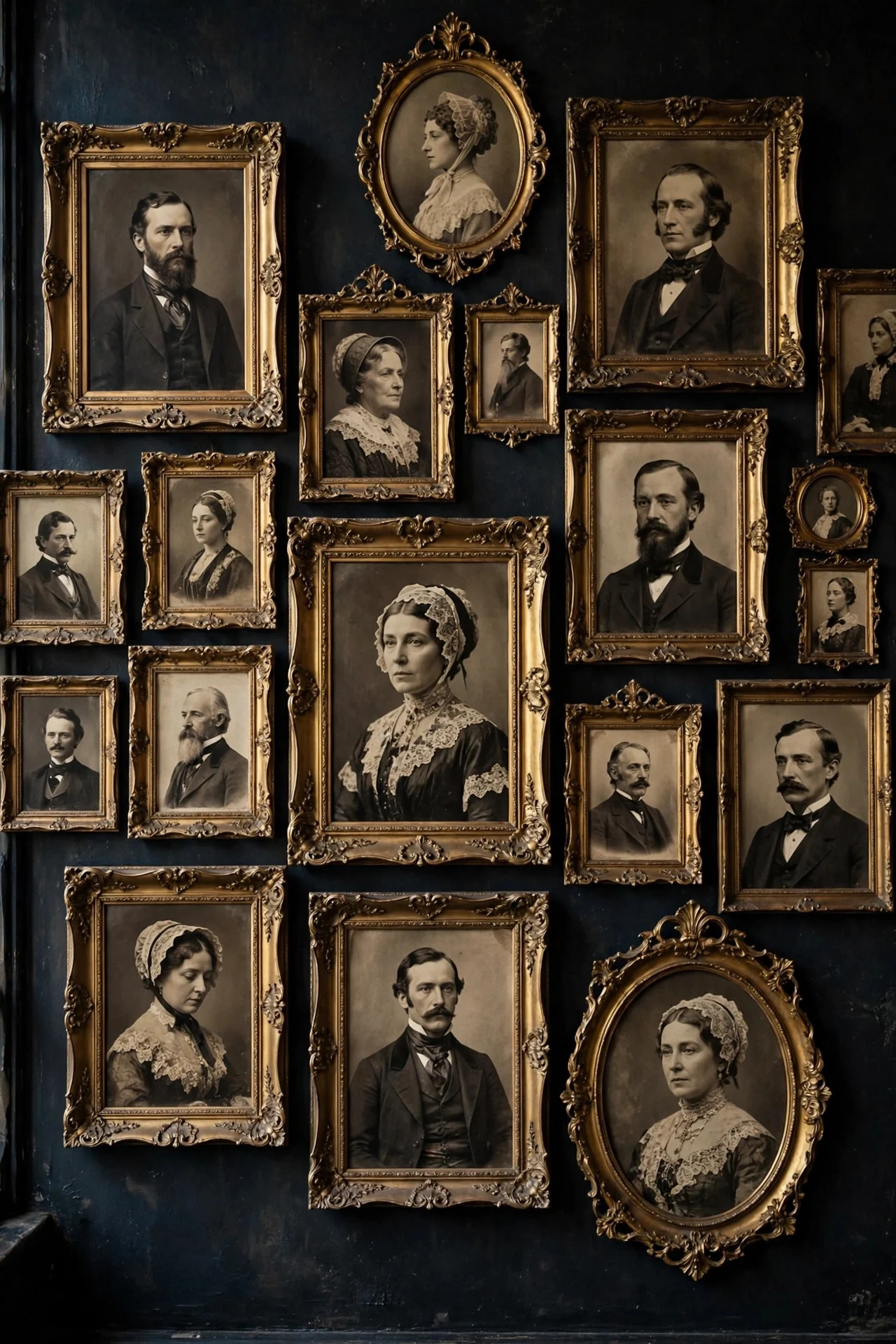
Thrift a handful of ornate gold frames and fill them with moody prints: dark landscapes, vintage botanical engravings, stern-looking antique portraits. Hung salon-style on one wall, it reads as a haunted manor gallery.
Print public-domain Victorian portraits at home in sepia or black and white — free from museum archives online — and the whole wall costs less than $30 including thrifted frames. Keep the lighting dim so the faces stay mysterious.
Try this: Hang one portrait slightly crooked on purpose — guests always notice and love it.
8. A Dark Floral Urn Arrangement
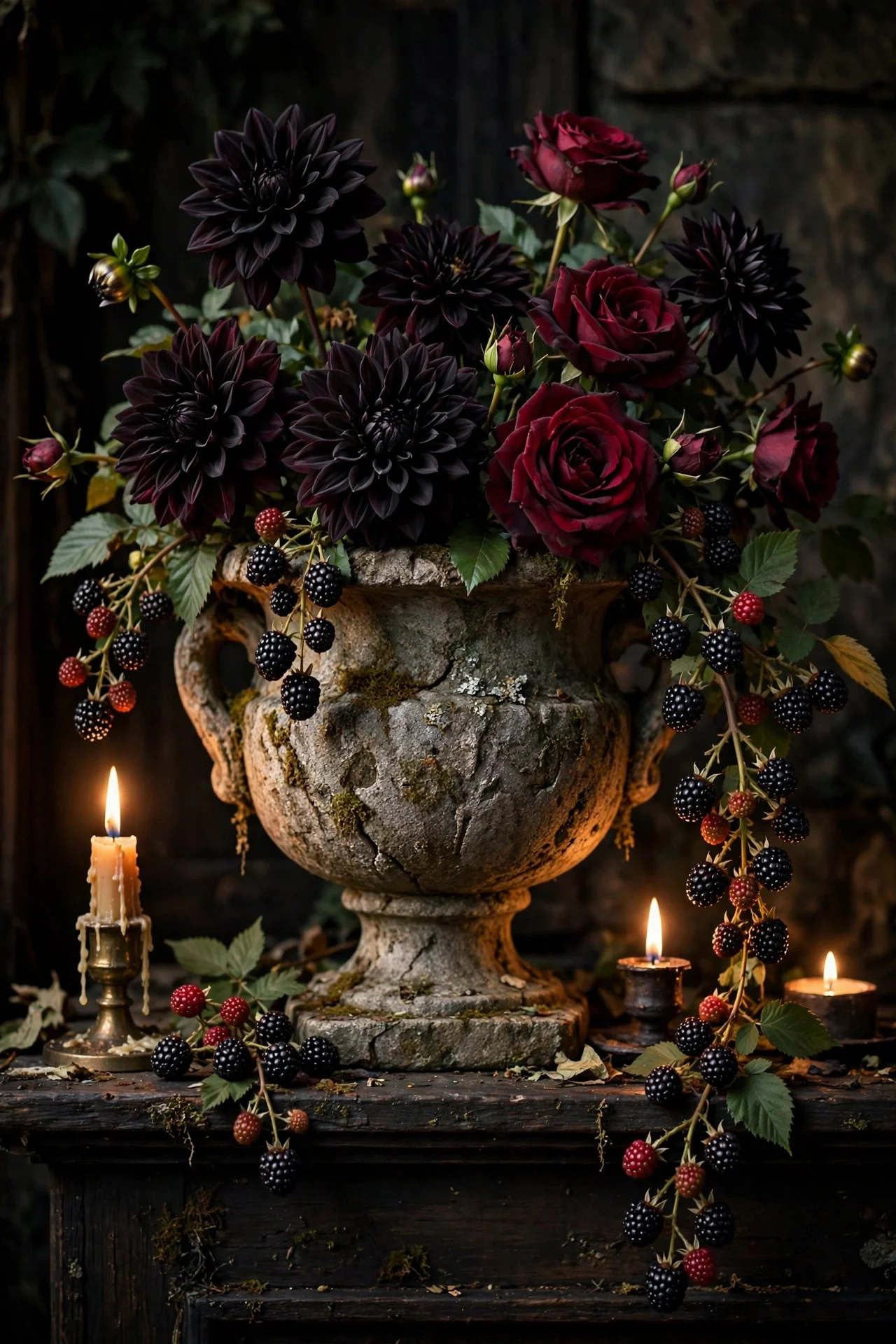
Fill a stone or cast-iron urn with the darkest flowers you can find: black dahlias, deep burgundy roses, dried lunaria, and trailing blackberries. The arrangement should look slightly wild, like it grew in a forgotten garden.
Set the urn on a mantel, console, or dining table where candlelight can hit it from the side — dark blooms come alive in low light. A grocery-store run in deep reds plus foraged branches gets you there for under $20.
Try this: Spray dried hydrangeas with black floral paint for affordable dark filler.
9. A Pewter Skull Centerpiece
One skull, done right, is all a gothic table needs. Choose pewter, aged silver, or carved stone — materials with weight and patina — and set it on a stack of leather-bound books at the center of the table. Grapefruit size is the sweet spot.
Skip the plastic Halloween-store versions entirely; the material is what separates elegant from cheap. Surround it with low candles and dark greenery so it feels like a still life, not a prop.
Try this: Set a small sprig of dried lavender across the skull’s forehead — the contrast is quietly beautiful.

10. A Dark Velvet Throw Over the Armchair
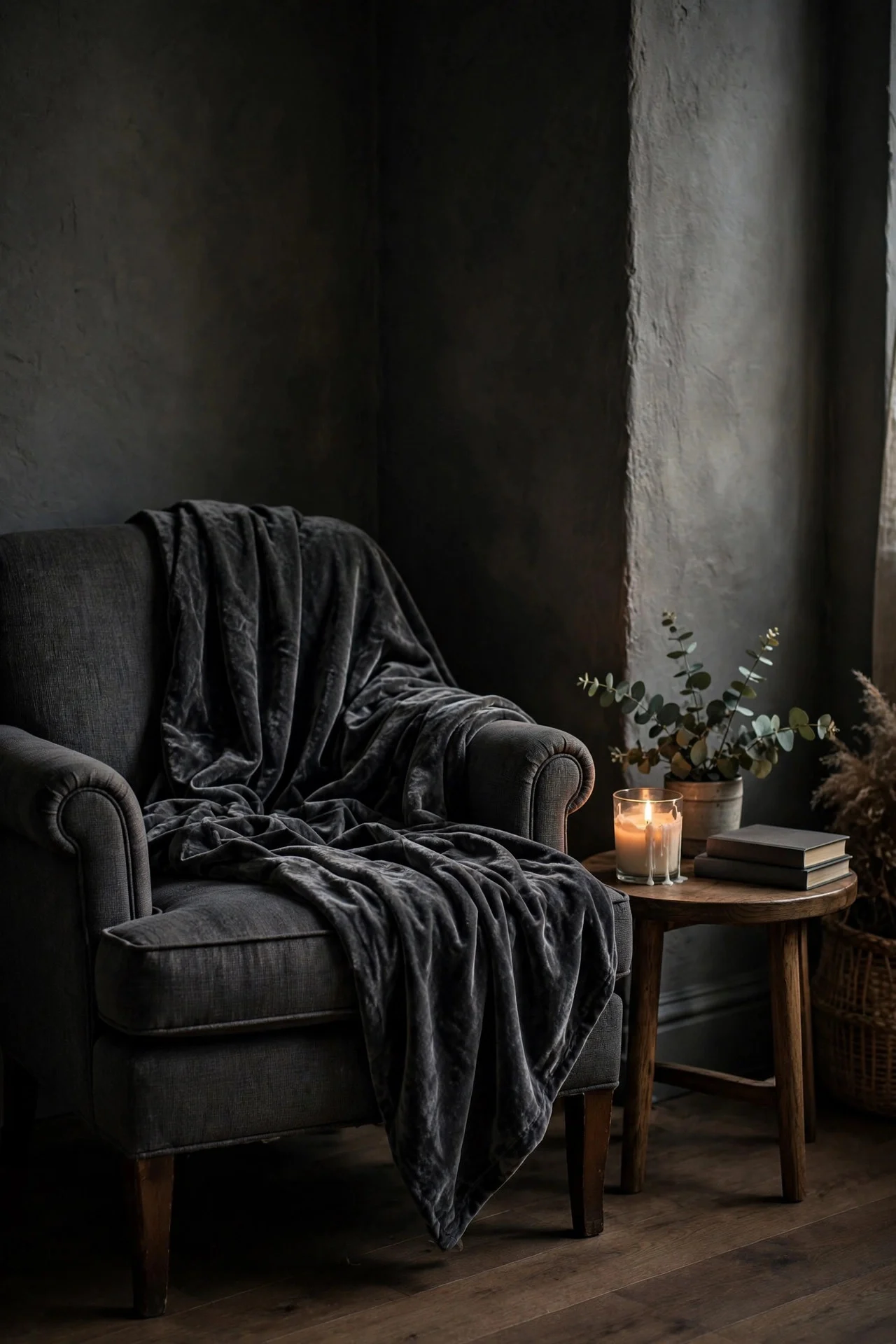
Drape a velvet throw in charcoal, oxblood, or midnight blue over the back of an armchair and the whole corner of the room shifts gothic. Velvet catches light unevenly, which gives even a modern chair an old-manor richness.
Don’t fold it neatly — a loose, casual drape looks collected, not decorated. One throw, about $25 at most home stores, can carry an entire reading nook through October and straight into winter.
Try this: Pair it with a single black pillow in a different texture, like leather or linen.
11. Old Book Page Garland
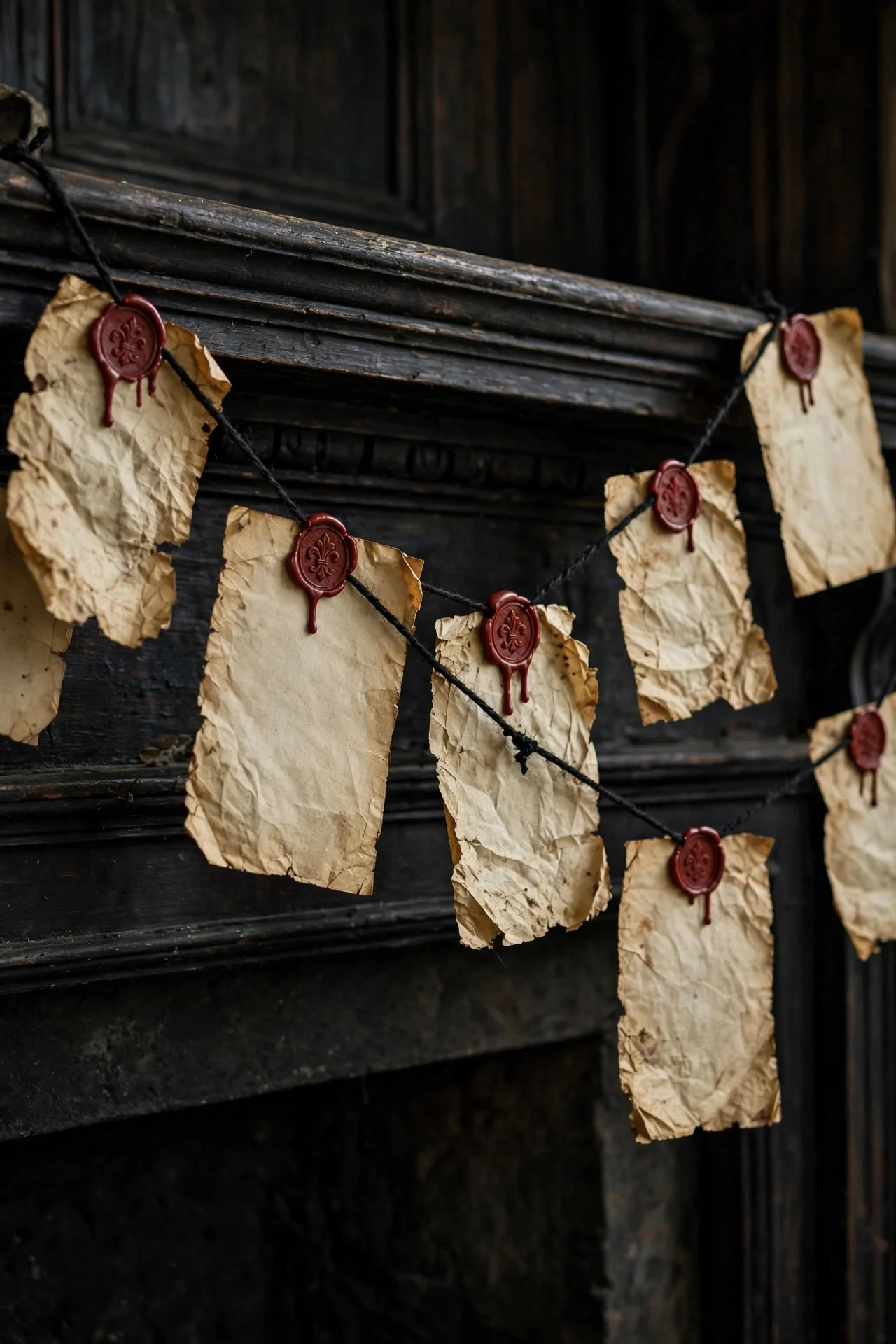
String pages from a damaged old book — thrift stores sell them for a dollar — into a garland with black twine, and seal each page with a red wax stamp for a spellbook feel. It hangs beautifully across a mantel or bookshelf.
Choose pages with interesting typography: old poetry, Latin text, anything with an engraved illustration. The yellowed paper against dark walls looks authentically ancient, because it is.
Try this: Burn the page edges very lightly before stringing for a scorched, forbidden-tome look.
12. Victorian Apothecary Bottles
Collect amber and cobalt glass bottles — antique shops sell them for $2–$5 each — and label them with aged paper tags in spidery handwriting: “Laudanum,” “Nightshade,” “Mandrake Root.” Grouped on a dark tray, they look straight out of a Victorian dispensary.
Vary the bottle heights and shapes for a natural, collected-over-time feel. A few dried herbs or a black candle among them completes the shelf. These stay out year-round in the right home.
Try this: Write labels with a fountain pen or calligraphy marker — the ink texture matters.

13. A Chandelier Wrapped in Black Netting
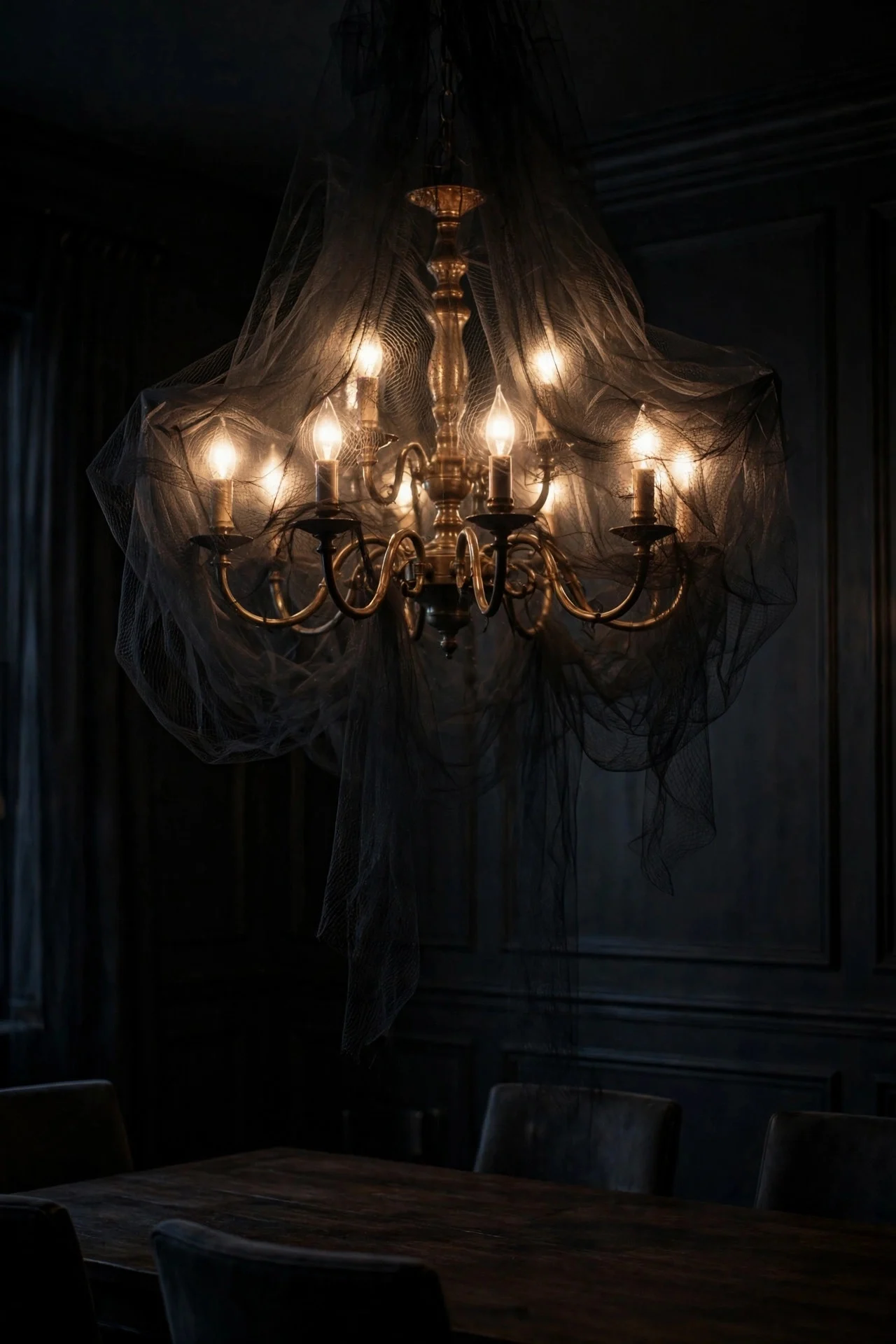
Drape black tulle or fine netting loosely over your existing chandelier and it transforms into something from a haunted ballroom. Let the fabric hang in soft folds between the arms, catching on nothing — gravity does the styling.
Add a few of the darkest faux blooms tucked into the folds if you like, but keep it minimal. Five yards of black tulle costs about $8 and the whole thing takes ten minutes to hang, ten to remove.
Try this: Use dimmer, warmer bulbs in the chandelier during October — the netting diffuses them into a smoky glow.
14. A Black Rose and Thistle Wreath
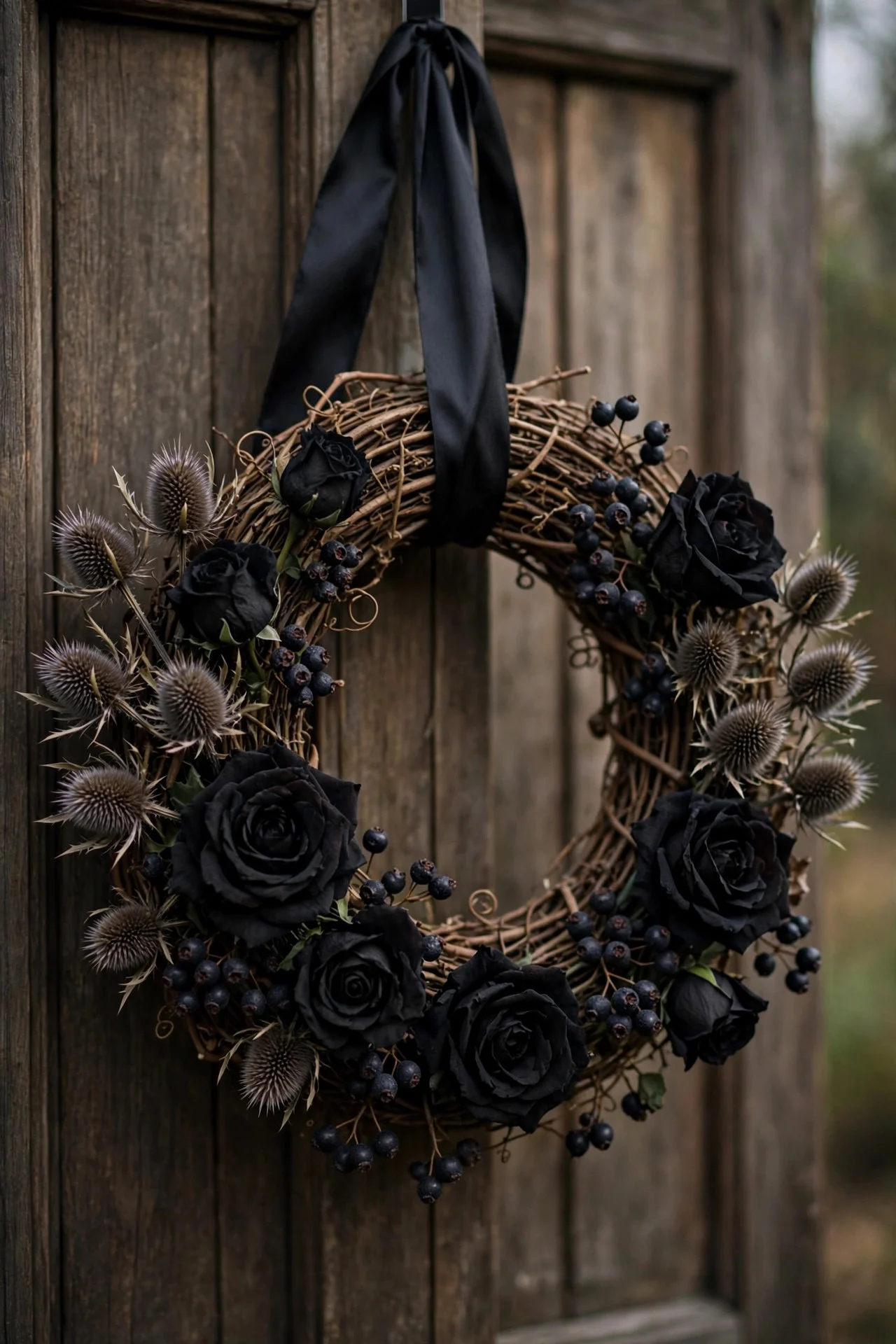
Forget orange wreaths: a door wreath of black roses, dried thistles, and dark berries on a grapevine base says gothic Halloween with real sophistication. The texture mix — velvety petals, spiky thistles, glossy berries — is what makes it interesting up close.
Build it on a 16-inch grapevine form with a hot glue gun, or buy one ready-made for $25–$35. Hang it with a wide black satin ribbon instead of a hook for a softer, more deliberate look.
Try this: Tuck in a few sprigs of dried lavender for a whisper of purple and a beautiful scent.
15. Ribbon-Tied Dried Bouquet in a Dark Vase
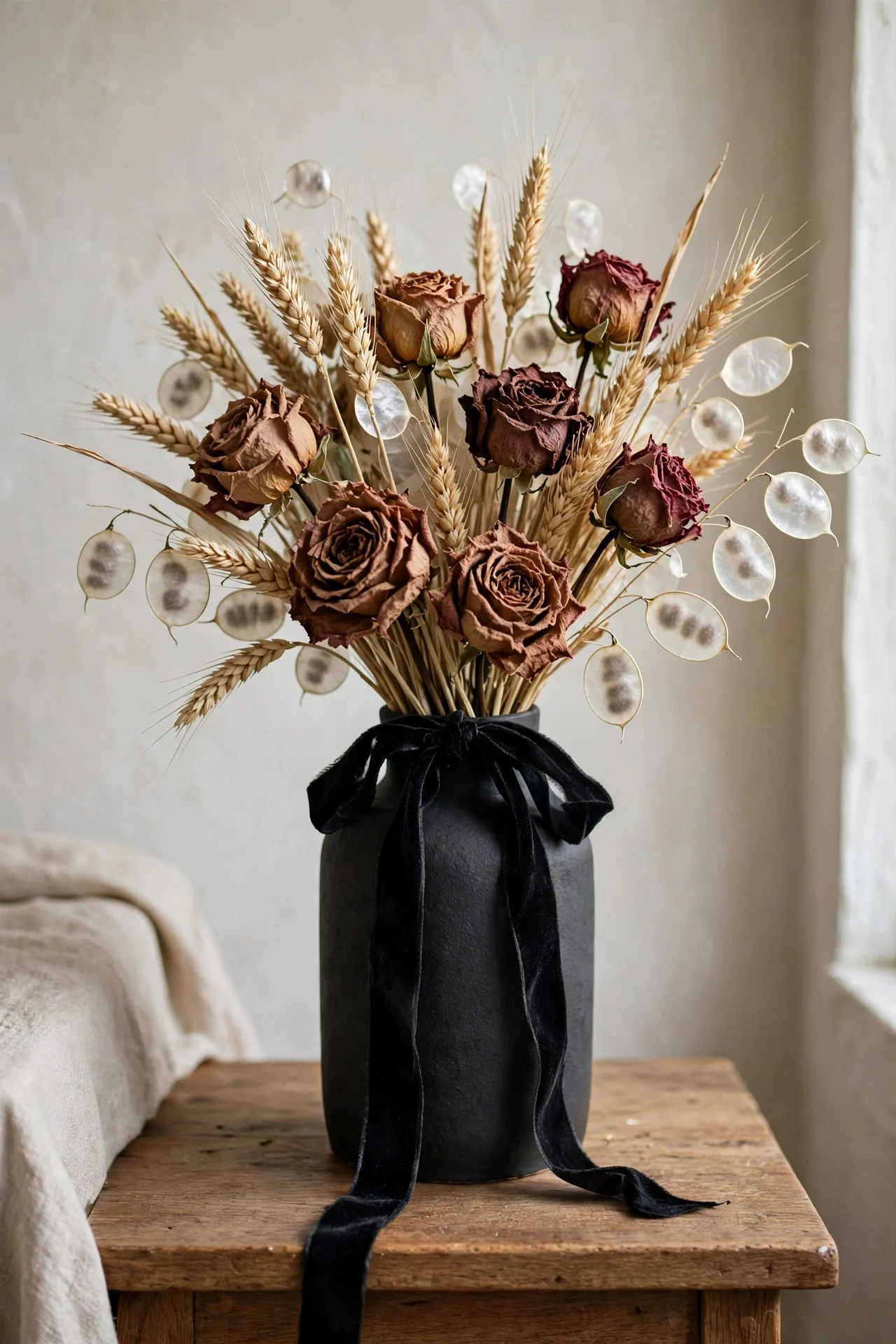
Gather dried roses, wheat, lunaria, and bleached ruscus into a loose bouquet and tie it with a wide black velvet ribbon, letting the ends trail. Set it in a matte black or charcoal ceramic vase on a nightstand or side table.
The dried materials last for years with zero maintenance, and the black ribbon is the single detail that tips it from “fall arrangement” into “gothic.” Total cost: about $15 if you buy the stems, free if you forage.
Try this: Let the ribbon ends hang a full twelve inches — long tails look dramatic, short ones look fussy.
Frequently Asked Questions
What is gothic Halloween decor?
Gothic Halloween decor draws on Victorian and old-manor aesthetics: black lace, aged mirrors, dark florals, candlelight, antique textures, and deep colors like oxblood, plum, and charcoal. It’s moody and romantic rather than scary — think candlelit parlor, not haunted house.
How do I make gothic decor look elegant instead of cheap?
Material choice is everything. Velvet, lace, iron, pewter, aged glass, and dried botanicals read as elegant; plastic, glitter, and neon orange don’t. Keep the palette to two or three dark tones, invest in one or two quality anchor pieces, and let candlelight do the rest.
Can gothic Halloween decor stay up after October?
Most of it, yes. Velvet throws, dark florals, aged mirrors, and iron candelabras work straight through winter. Just remove the explicitly Halloween pieces — skulls, ravens, potion bottles — on November 1st and the rest reads as moody autumn decor.
What’s the best color palette for gothic Halloween?
Build around black and charcoal, then add depth with oxblood, deep plum, aubergine, and antique gold or brass. A single pale accent — ivory candles, cream lace — keeps the look from going flat. Avoid bright orange entirely; burnt sienna is the warmest you should go.
Final Thoughts
Gothic Halloween is the most forgiving style there is — dim lighting hides every flaw, and dark colors always look intentional. Start with candlelight and one strong anchor piece, whether that’s a candelabra, a raven, or a wall of moody portraits. The rest is just atmosphere, and atmosphere is free.