
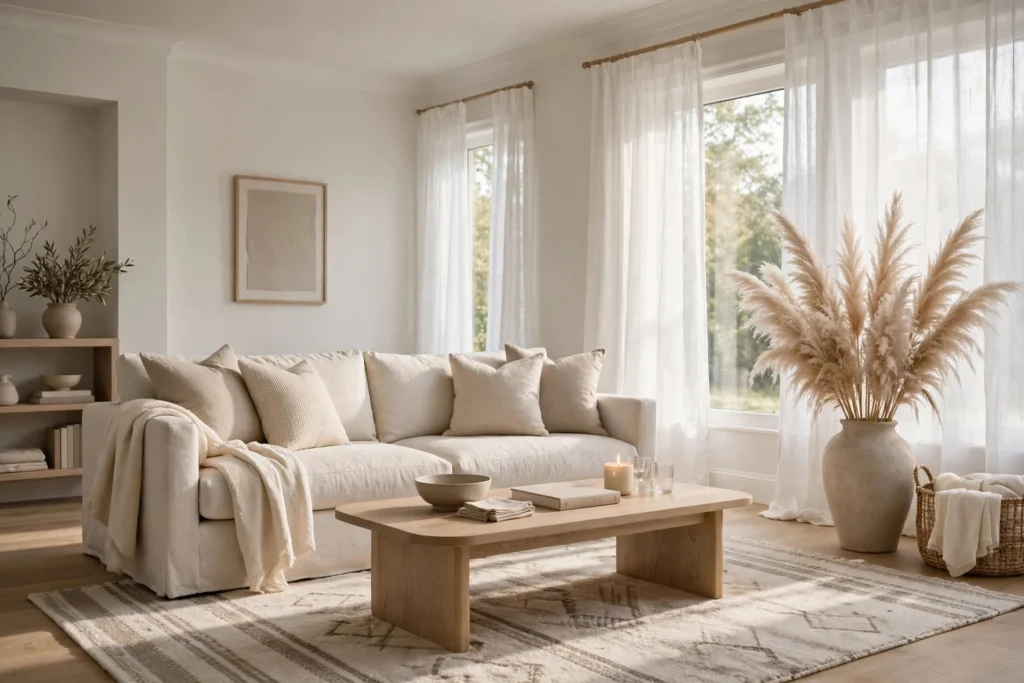
A neutral living room never really goes out of style, and that is exactly why I keep coming back to it. These neutral living room decor ideas work because they start with calm colours and let texture, light, and a few well-chosen pieces do the talking. You do not need a big budget or a full makeover — most of these changes take an afternoon, and some cost almost nothing.
I have put together 18 ideas that I have either tried in my own home or helped friends pull off in theirs. Some are quick swaps, like new cushion covers, and some are slower choices, like picking the right rug. Take the ones that fit your room and your budget, and leave the rest. A good neutral room should feel calm when you walk in, not stiff or showroom-perfect.
1. Neutral Living Room Decor Ideas Begin With Warm White Walls
The wall colour sets the mood for everything else, so start here before you buy a single cushion. A warm white with a hint of cream or soft yellow keeps the room bright without that cold, blue-grey feeling that makes a space look unfinished. I painted my own living room a warm white two years ago, and the whole room felt softer that same evening.
Pick up three sample pots and paint big swatches on different walls, then watch them at morning, noon, and night. A shade that looks perfect at noon can turn pink or grey under a lamp. Once you find the one that stays warm all day, paint the whole room and let it dry fully before you judge it.
Try this: paint one test wall first and live with it for two days before you commit to the whole room.
2. Layer Creams, Beiges, and Greiges
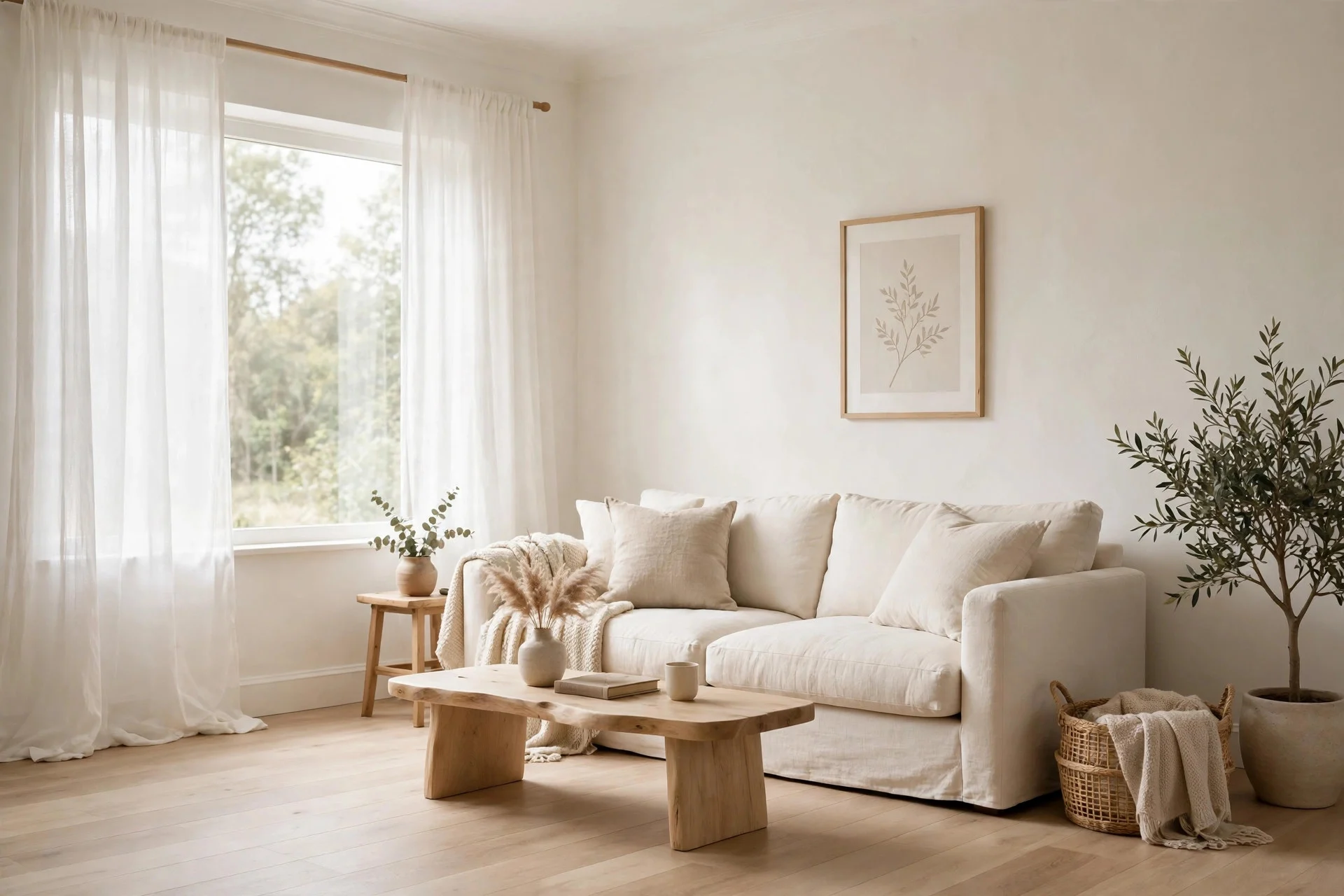
A neutral room falls flat when everything is the exact same shade of beige, so layer three or four close colours instead. Cream walls, a beige sofa, greige curtains, and a warm taupe rug give the eye somewhere to rest without adding any loud colour. The trick is keeping the tones warm — cool greys next to warm creams can make the whole room look muddy.
I learned this the hard way when I bought a grey rug for a cream room and it clashed for months before I admitted it. Gather fabric swatches and hold them together in daylight before you buy. If they look like they belong to the same family, they will work in the room.
Try this: lay your cushion, curtain, and rug swatches side by side in daylight and keep only the ones that feel like family.
3. Add a Soft Linen Sofa in Natural Tones
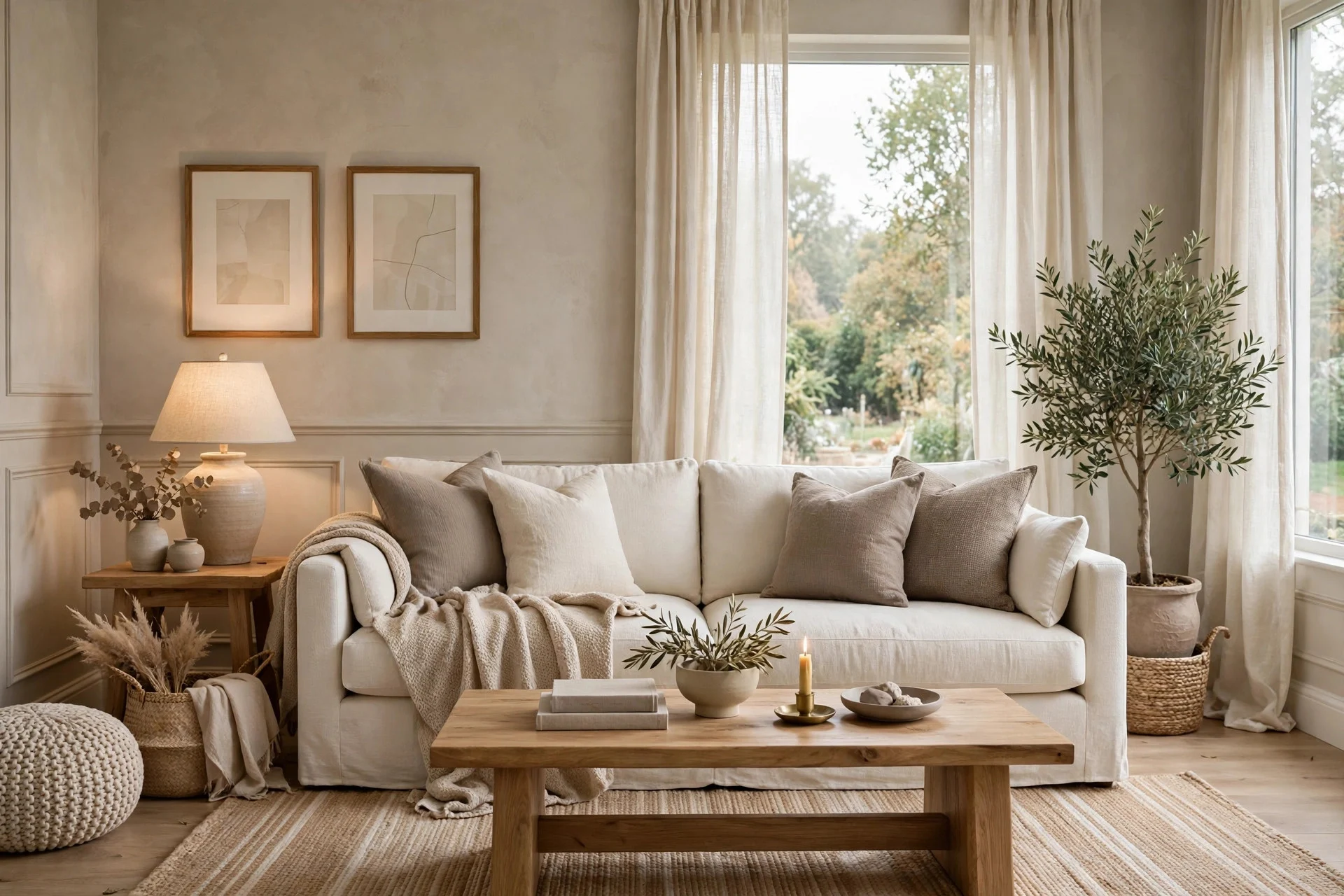
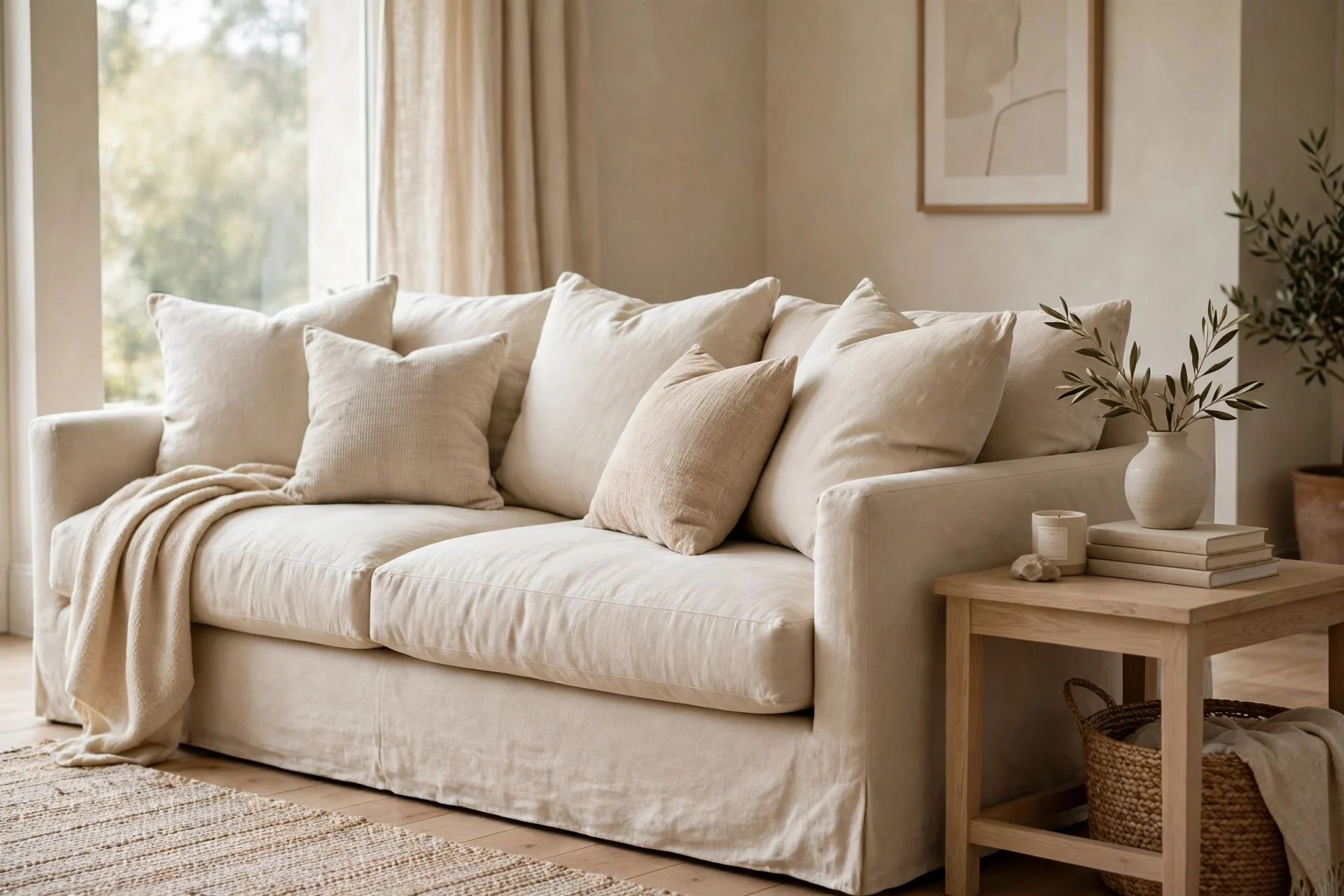
Your sofa is the biggest piece in the room, so it sets the tone more than anything else. A soft linen sofa in natural cream or oatmeal looks relaxed and expensive at the same time, and it works with almost any style you pair it with later. Linen also ages well — it softens with use instead of looking tired, unlike the shiny fabric sofa I owned years ago.
Choose a slipcover if you can, especially if you have kids or pets, because you can wash it and the sofa looks new again. Keep the shape simple and let cushions and throws add the personality. A plain, well-made sofa will outlast three trendy ones.
Try this: sit on the sofa for ten minutes in the shop — if the cushions sag or the back feels stiff, walk away.
4. Ground the Room With a Warm Rug
A rug is what pulls scattered furniture into one room, and in a neutral space it adds the warmth the walls cannot. Pick a warm ivory, taupe, or soft jute tone, and go bigger than you think you need — the front legs of the sofa and chairs should sit on it. A rug that is too small makes even a big room look cramped, as I learned twice.
Layer a thin flat-weave rug under a softer wool one if you want extra texture without extra colour. Vacuum the rug in both directions once a week and it will keep its soft look for years. If you have pets, pick a low-pile rug you can clean without a fight.
Try this: tape out the rug size on the floor with painter’s tape before you order, and check the sofa legs land on it.
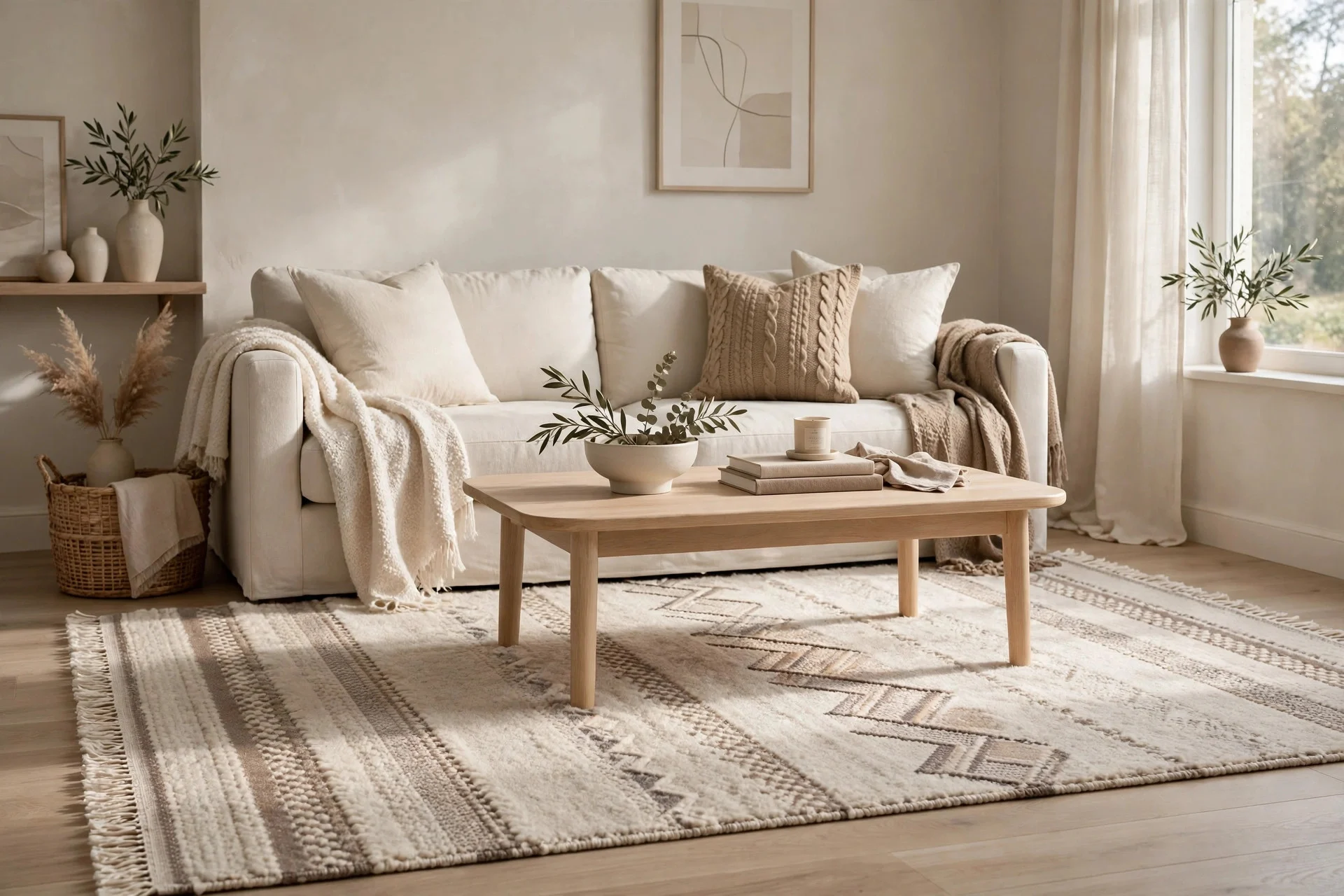
5. Mix Wood Tones for Quiet Warmth
Neutral rooms can feel cold when everything is painted white, and wood is the easiest way to warm them up. Mix two or three wood tones — pale oak, mid-tone walnut, and a honey finish — instead of matching everything exactly. The mix looks collected over time, like the room grew slowly, instead of arriving in one delivery.
Start with the big pieces: a light wood coffee table and a darker side table, then add smaller wooden pieces like a tray or a frame. Keep the finishes matte or satin, because high gloss can look harsh against soft neutrals. I swapped a shiny dark table for a pale oak one and the room felt lighter overnight.
Try this: repeat each wood tone at least twice in the room so the mix looks planned, not random.
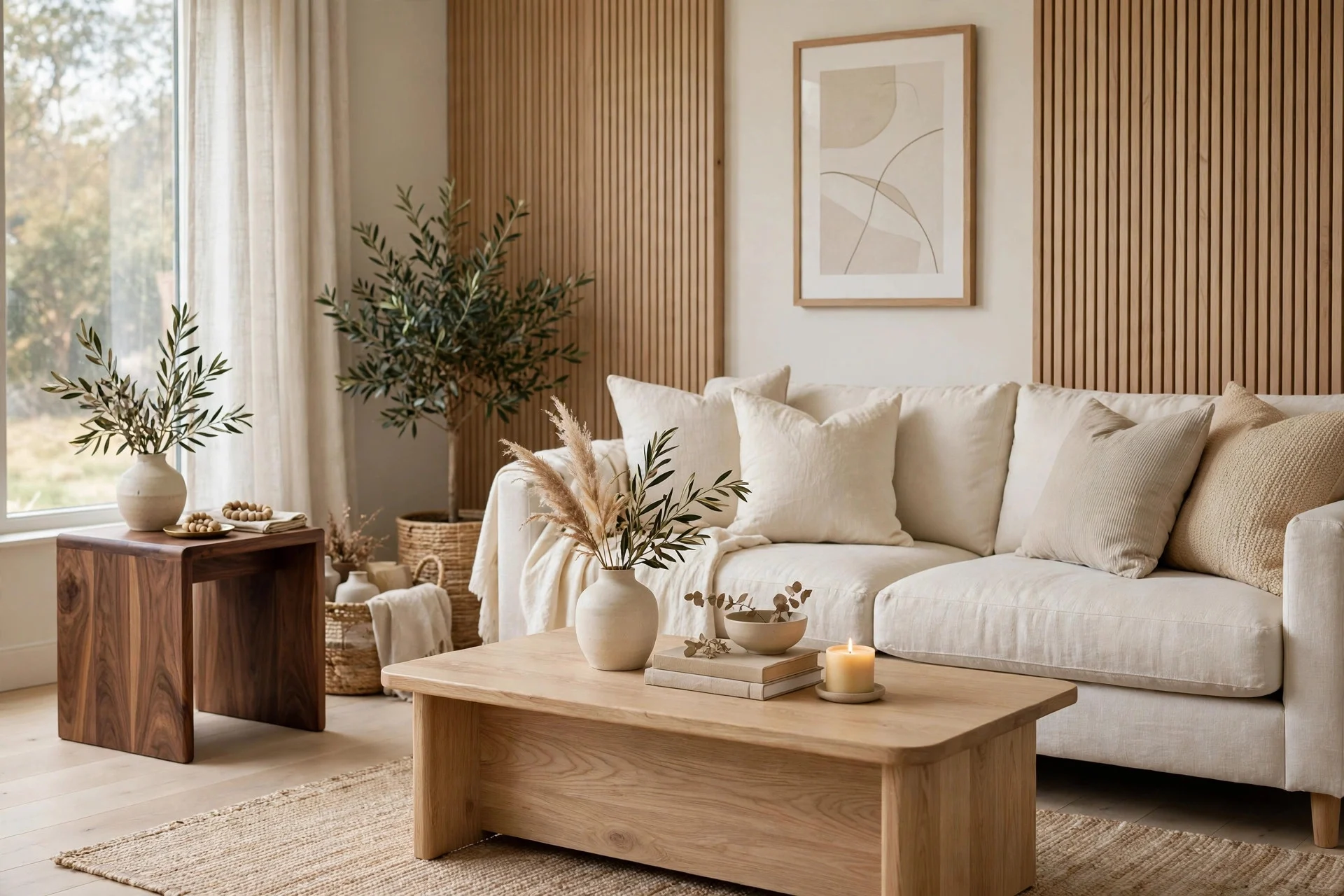
6. Bring in Texture With Throws and Cushions
Texture is the secret weapon of a neutral room, because it gives you interest without colour. A chunky knit throw, a boucle cushion, a linen pillow, and a smooth velvet one can sit on the same sofa and each one adds something different. Touch matters here — run your hand over a cushion before you buy it, because a scratchy fabric will never get used.
Stick to three textures at most so the sofa does not look like a fabric shop, and keep the colours within your cream-and-beige family. I fold one throw over the arm and drape another over the back, then change them with the seasons. It takes two minutes and the room feels new.
Try this: mix one chunky, one smooth, and one soft texture on the sofa — three is enough.
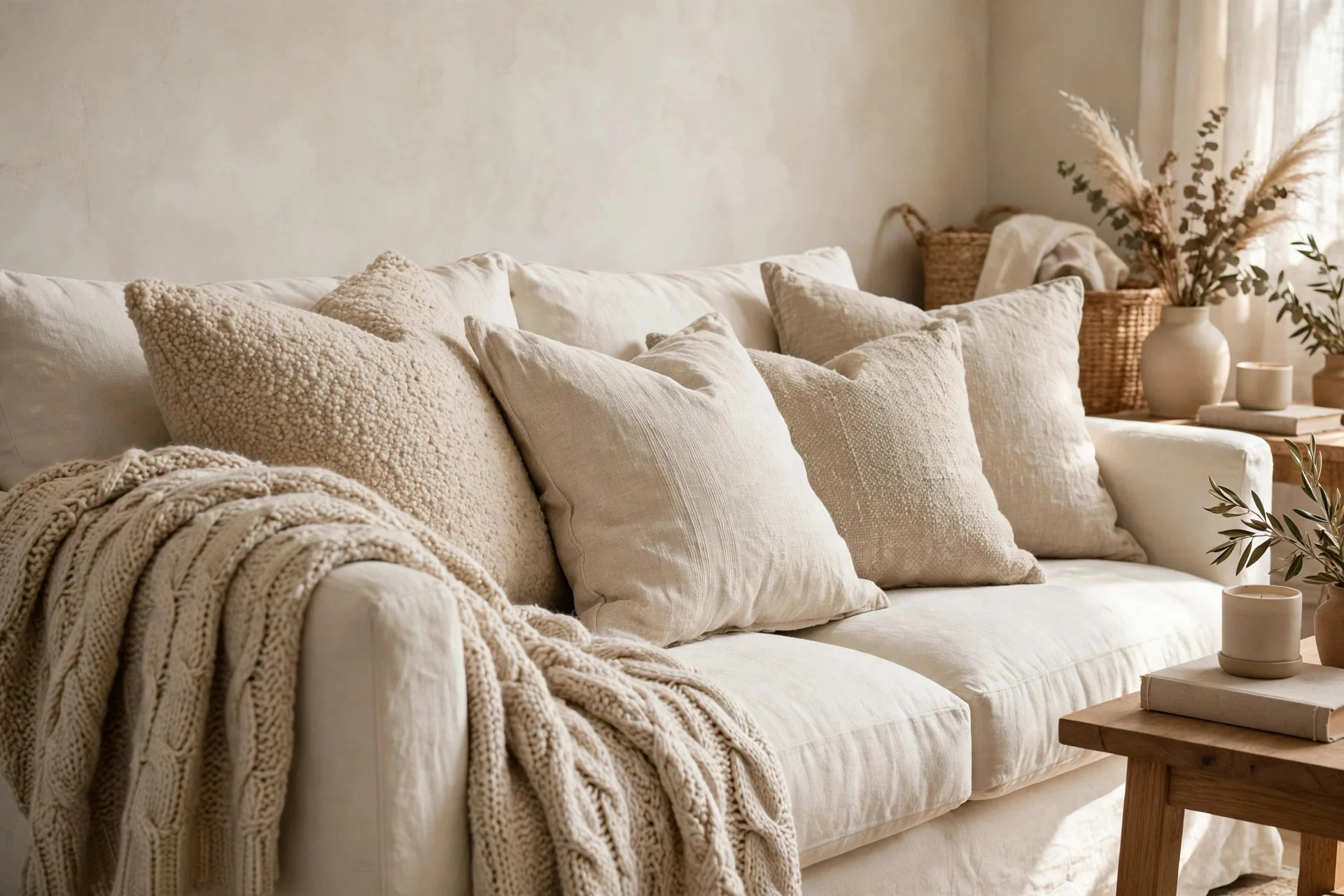
7. Use Black Accents Sparingly for Definition
A neutral room without any dark accents can look washed out, like a photo with the contrast turned down. A few black touches — thin picture frames, a floor lamp, drawer handles, or a clock — give the eye a place to land and make the creams look creamier. The key word is sparingly: three or four small black pieces are plenty.
I once added black to a room piece by piece until it looked like a chessboard, so now I count. Pick your black accents first, spread them around the room, and stop while it still feels light. Matte black works best, because it reads as soft and quiet rather than shiny and loud.
Try this: add one black accent per corner of the room, then step back and check the balance.
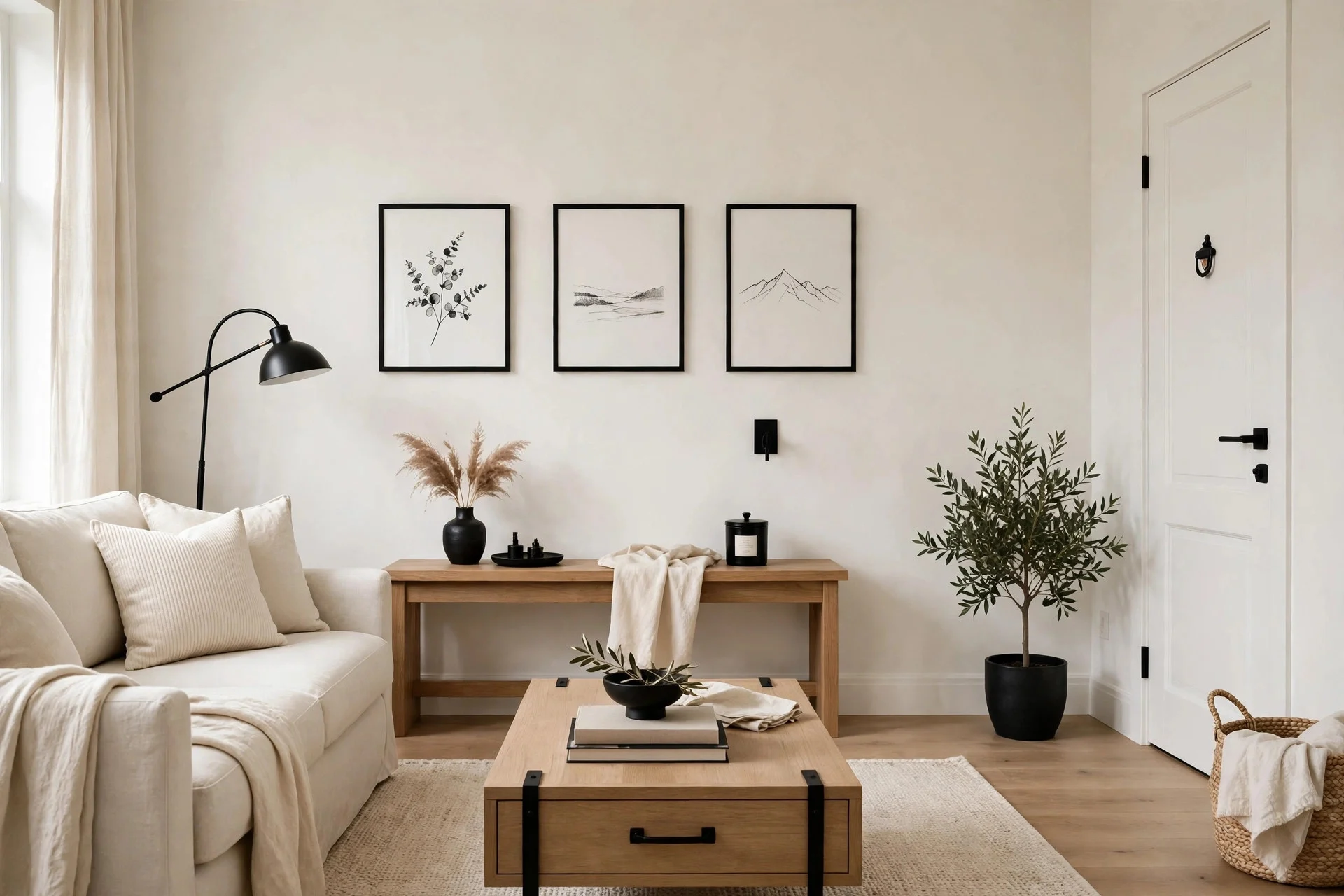
8. Let Natural Light Do the Heavy Lifting
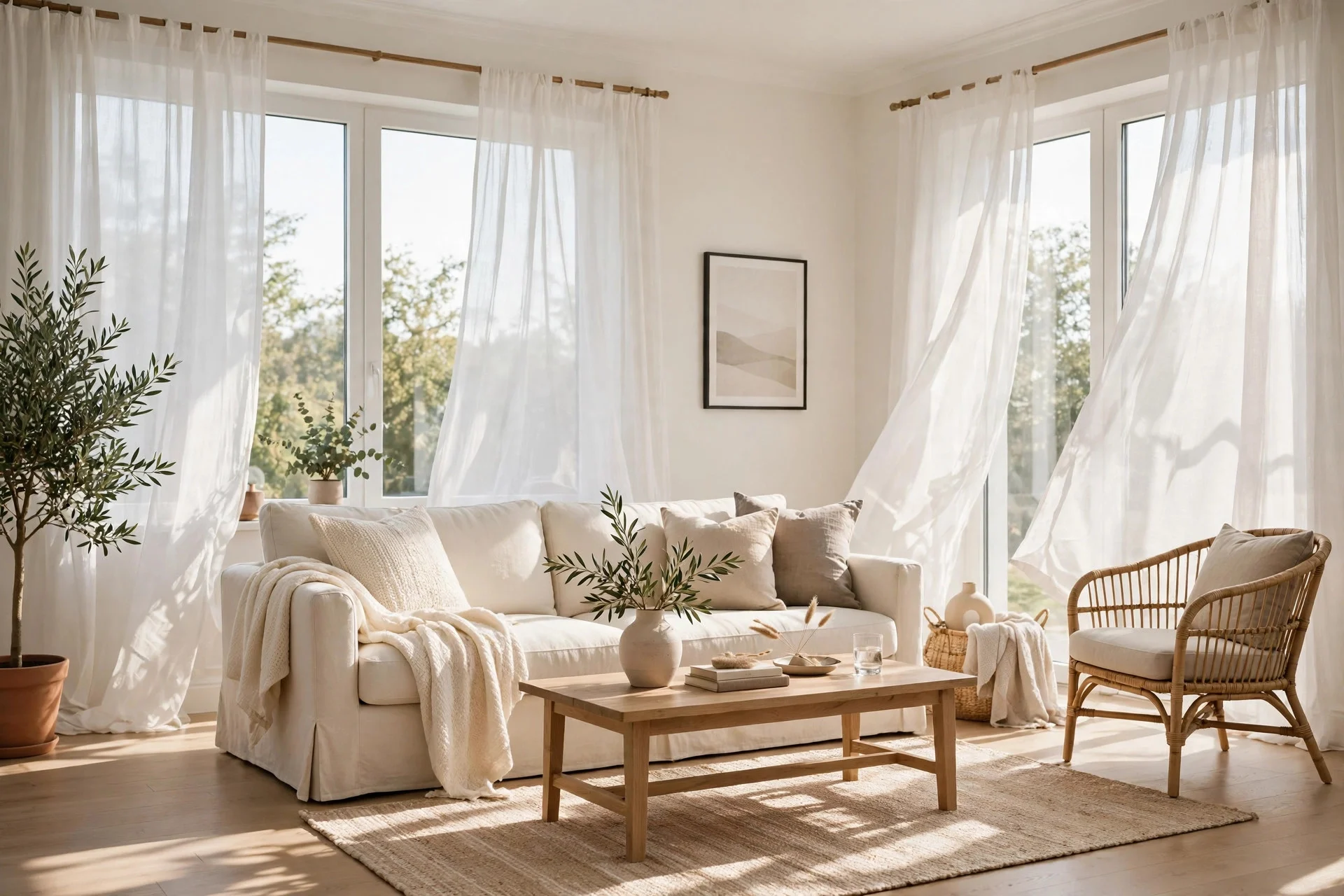
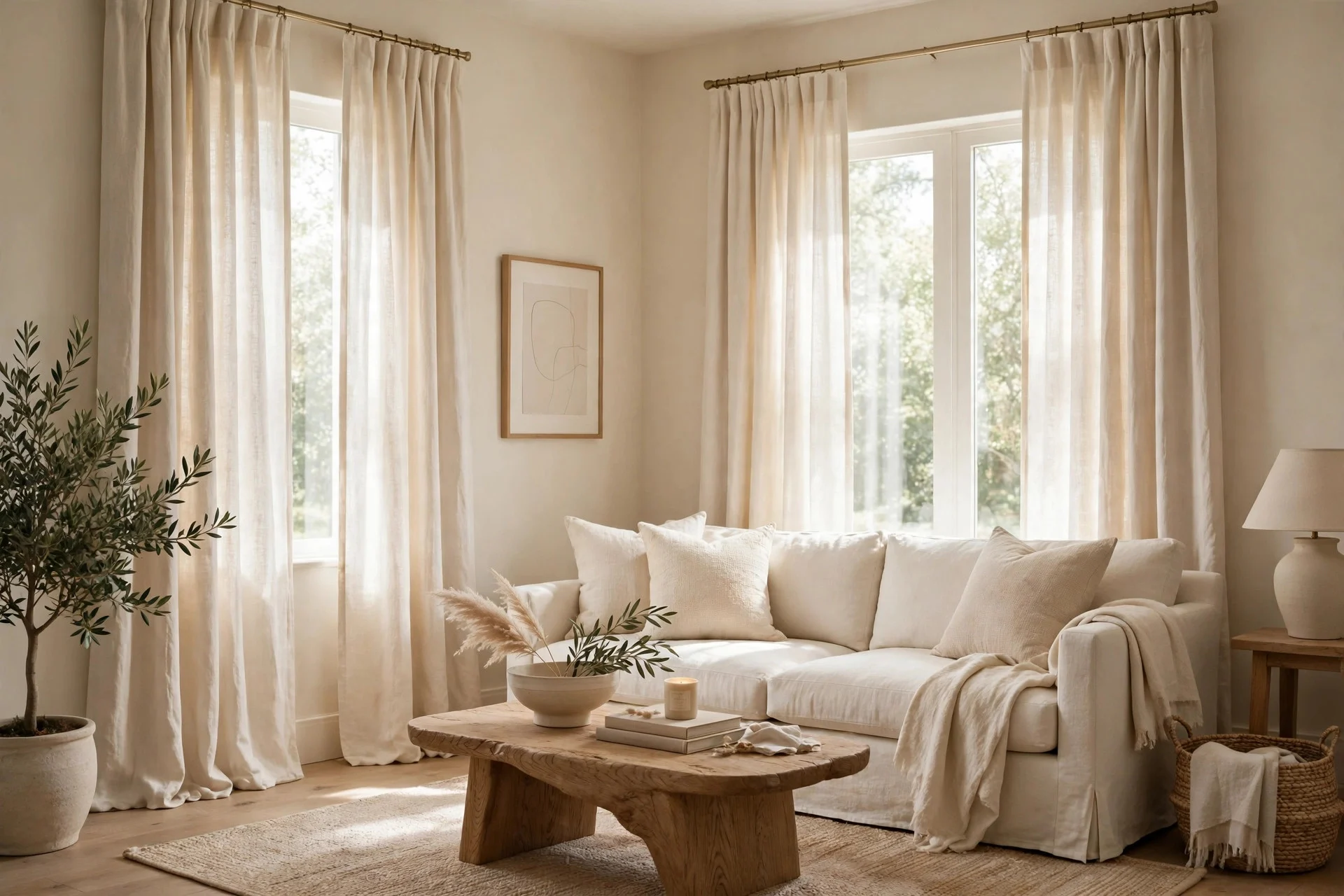
Neutral colours look their best in real daylight, so give your windows room to work. Keep the glass clean, pull heavy furniture away from the windows, and use sheer or light linen curtains that filter the sun instead of blocking it. My living room faces east, and on a clear morning the whole room glows — no lamp can copy that.
If a window faces a brick wall or a fence, place a mirror across from it to bounce the light back into the room. Avoid dark curtains in a neutral room, because they swallow the light you worked so hard to get. Even a small change, like raising the curtain rod, makes the window feel taller.
Try this: wash the windows inside and out, then hang the curtains higher and wider than the frame.
9. Style a Simple Coffee Table Vignette
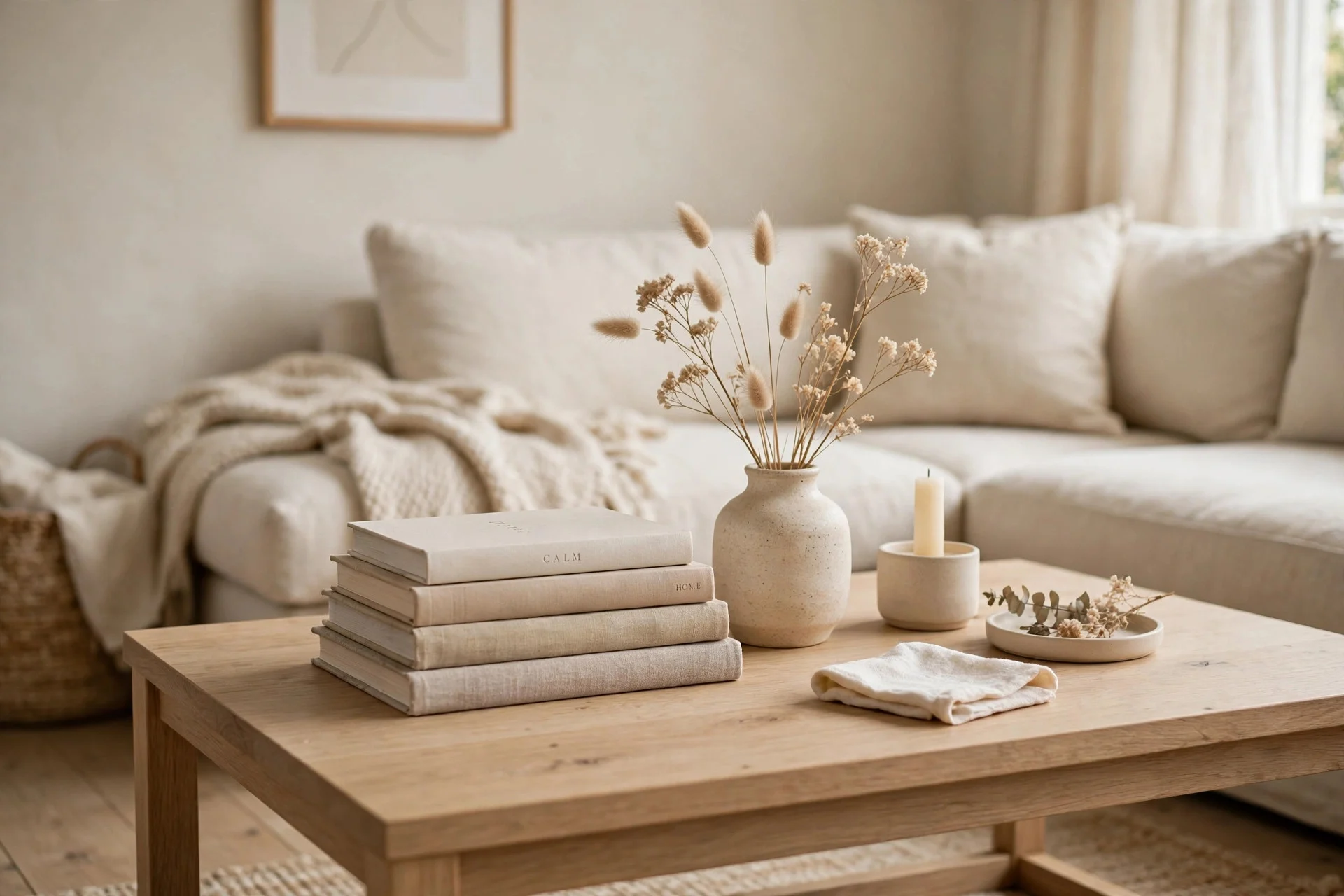
A coffee table is where a neutral room can show a little personality without losing its calm. Keep it simple: a stack of two or three books, a small vase with dried stems, and a candle is enough. Odd numbers look more natural than even ones, and leaving some empty space on the table matters just as much as what you put on it.
I used to crowd my coffee table with everything I liked, and it just looked messy. Now I follow a simple rule — three objects, different heights, one tray to hold them together. Swap one piece each season and the table feels fresh without a shopping trip.
Try this: group your three pieces on a tray, then remove one thing — the table will look better with the space.
10. Add Greenery Without Going Overboard
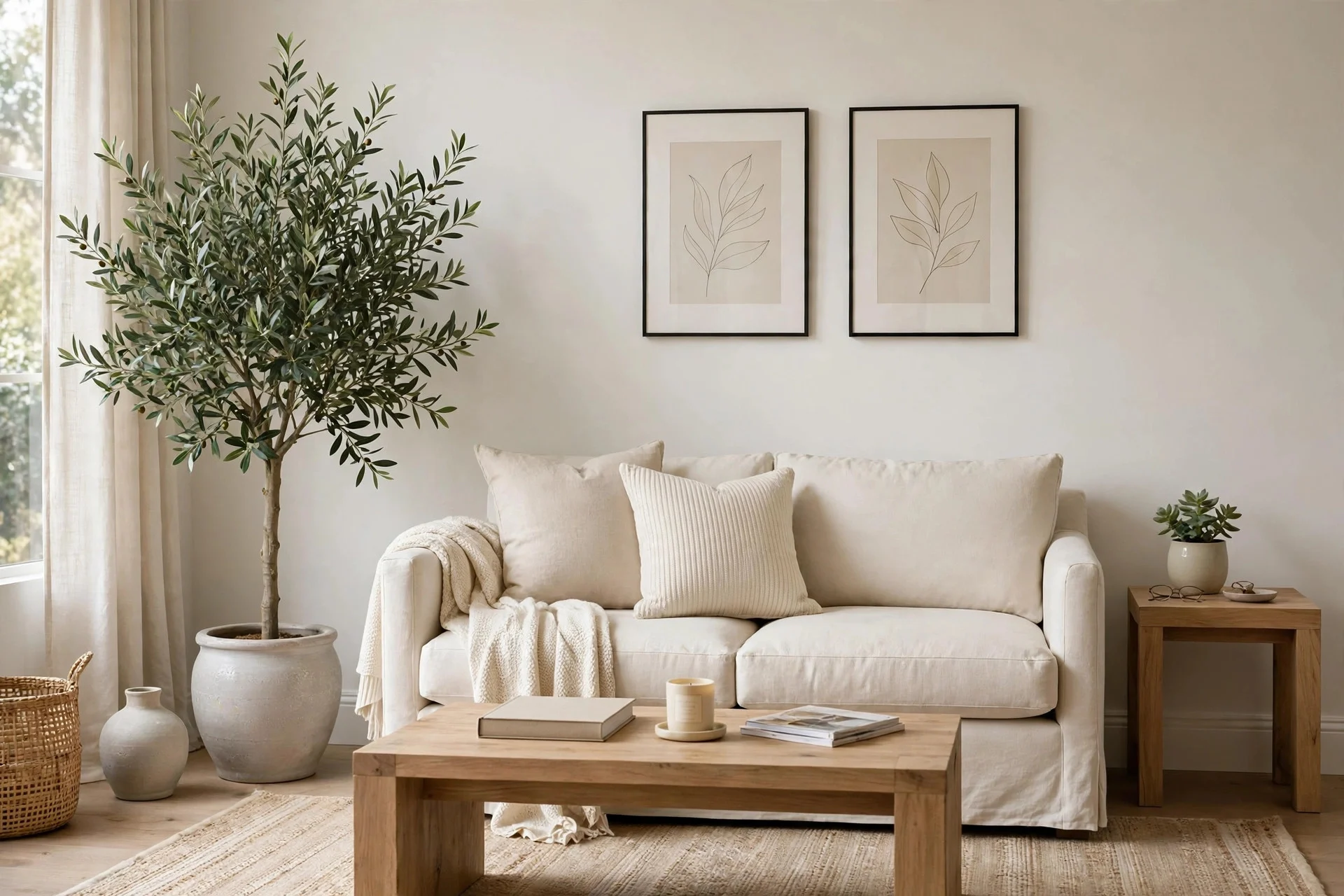
A little green is the best friend a neutral room can have, because it adds life without adding a colour scheme. One olive tree in a ceramic pot, or a small plant on a side table, is all you need. The green reads as fresh and natural against cream and beige, and it stops the room from feeling like a paint chart.
I killed three plants before I learned to pick ones that suit my light, so start with something forgiving like a snake plant or a faux olive branch if your room is dark. Keep the pots neutral too — stone, clay, or woven baskets — so the plant is the only green in the room.
Try this: start with one plant, live with it for a month, and only add a second if the room still feels flat.
11. Hang One Large Calm Artwork
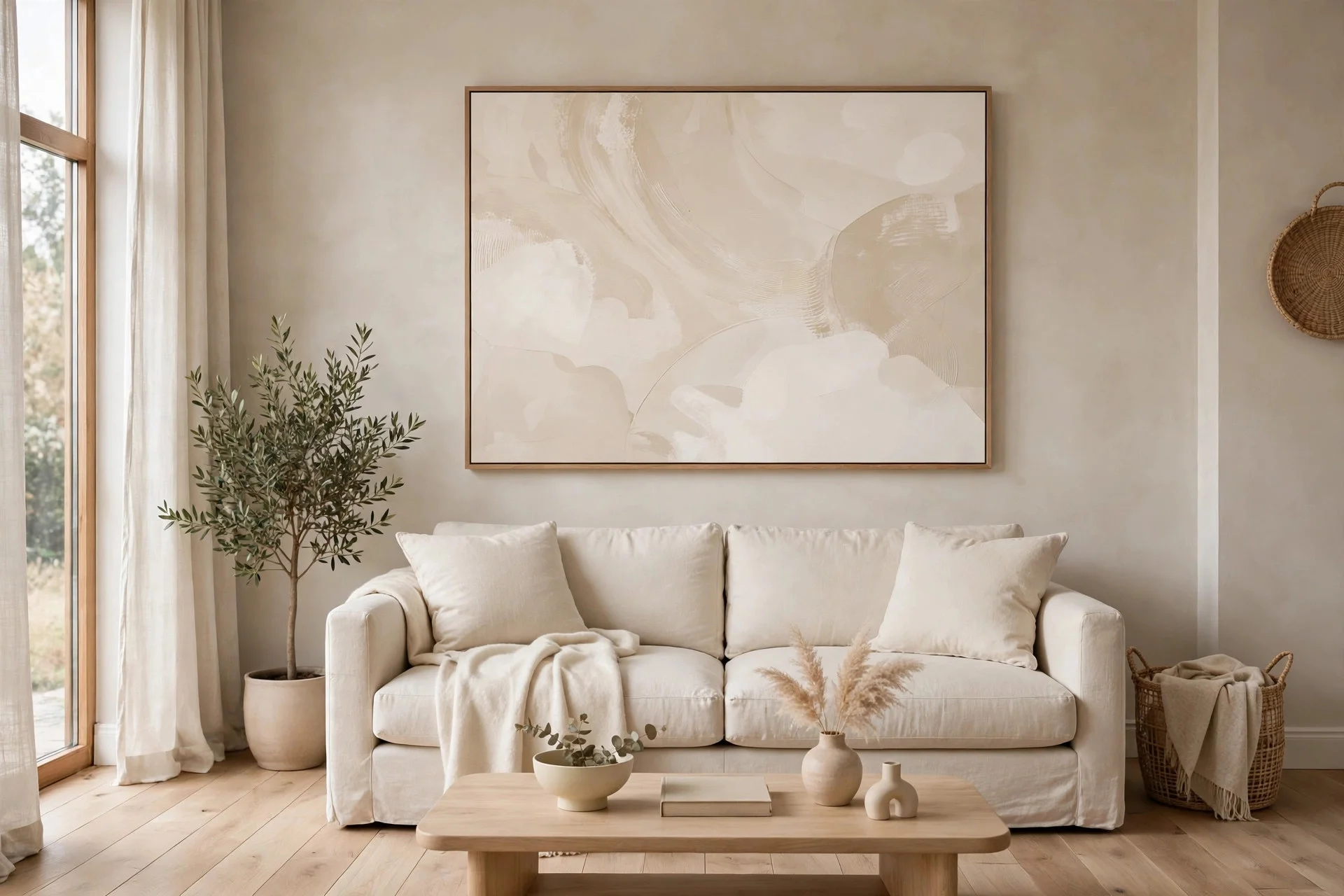
One large artwork beats a wall of small frames in a neutral room, because it gives the wall a clear focal point and keeps the calm feeling. Pick something quiet — a soft abstract in beige and cream, a pale landscape, or a simple line drawing — and hang it where your eye lands first when you walk in. Big art also makes a small room feel bigger.
Hang it at eye level, about 145 cm from the floor to the centre, and leave space around it so it can breathe. I once hung a painting too high and it looked like it was trying to escape. A thin wood or black frame keeps it simple and lets the art do the talking.
Try this: cut a paper template the size of the artwork and tape it up first to check the height.
12. Choose Curtains That Blend, Not Shout
Curtains take up a lot of wall space, so in a neutral room they should blend in rather than stand out. Warm ivory or soft linen curtains that match the wall colour make the windows feel taller and the room feel bigger. Heavy patterned curtains fight with everything else in a calm room, and they make the space feel smaller too.
Hang the rod close to the ceiling and let the curtains fall to the floor, pooling just slightly if you like that look. I bought curtains that were too short once and the room looked unfinished for a year before I fixed it. Linen blends or cotton-linen mixes hang nicely and are easy to wash.
Try this: hold a curtain swatch against the wall in daylight — if you can barely see the edge, it is right.
13. Layer Lighting at Three Levels
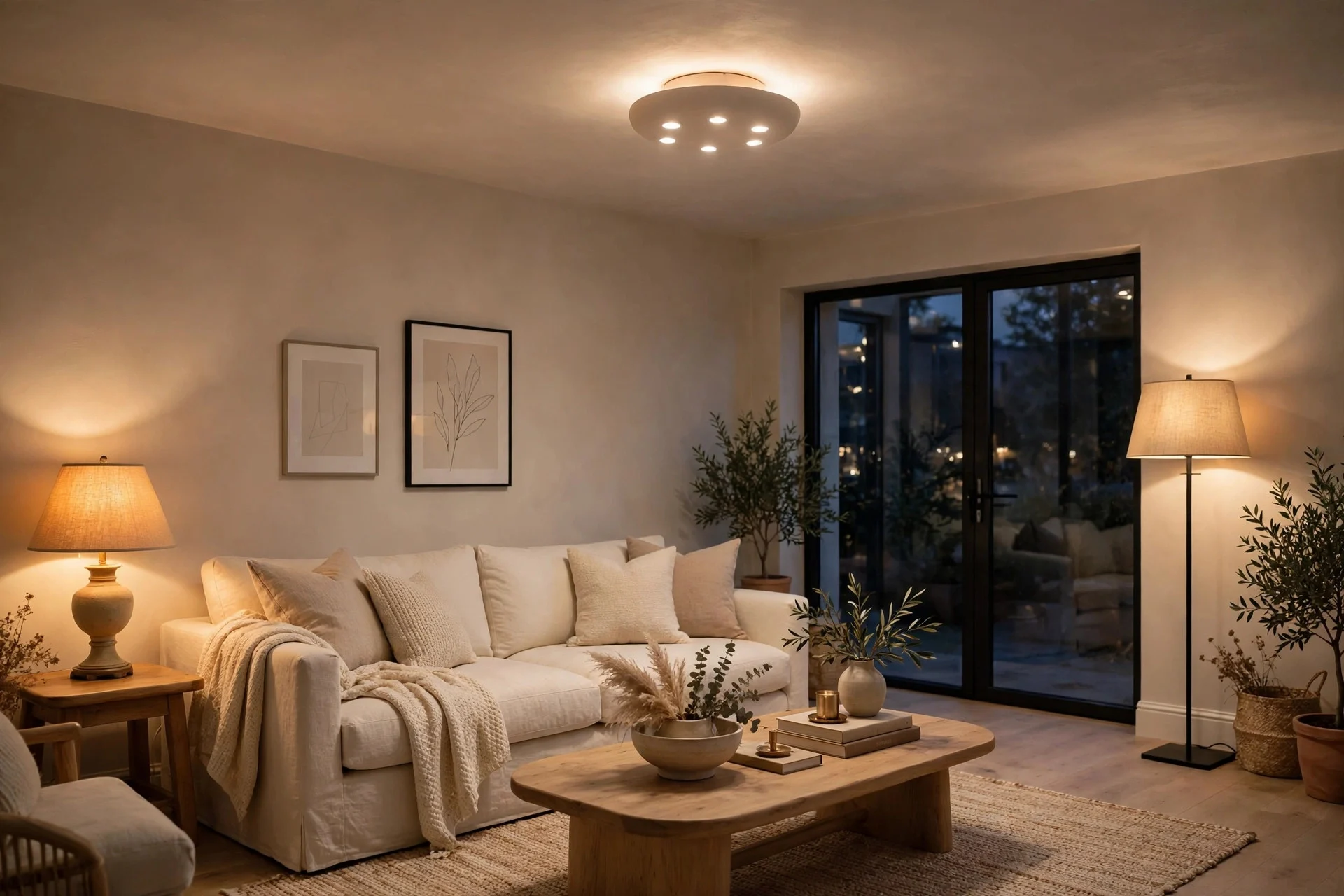
One ceiling light makes a neutral room look flat, especially in the evening, so layer light at three levels instead. A soft overhead light, a table lamp, and a floor lamp each do a different job, and together they make the room feel warm and lived in. Warm bulbs matter more than fancy fittings — I swapped cool white bulbs for warm ones and the whole room changed.
Put the lamps on dimmers if you can, or at least use warm 2700K bulbs, and place one lamp near your reading chair and one near the sofa. Candles add a fourth layer on dark evenings. The goal is a soft glow, not a bright office, so keep the light low and warm.
Try this: switch every bulb to warm 2700K, then turn on only the lamps after dark for a week.
14. Keep Shelves Styled and Spacious
Open shelves in a neutral room look best when they are half empty, because the empty space is part of the style. A few books, one vase, and a small framed print per shelf is plenty, and the gaps let each piece stand out. I used to fill every shelf to the edge, and the room felt cluttered even though everything was beige.
Group things in threes, vary the heights, and leave at least one shelf mostly bare. Step back after styling and remove one thing from each shelf — it almost always looks better. Dust the shelves weekly, because dust shows fast on light wood and pale ceramics.
Try this: style one shelf, take a photo, and remove the piece your eye keeps landing on.

15. Mix Metals in Soft Finishes
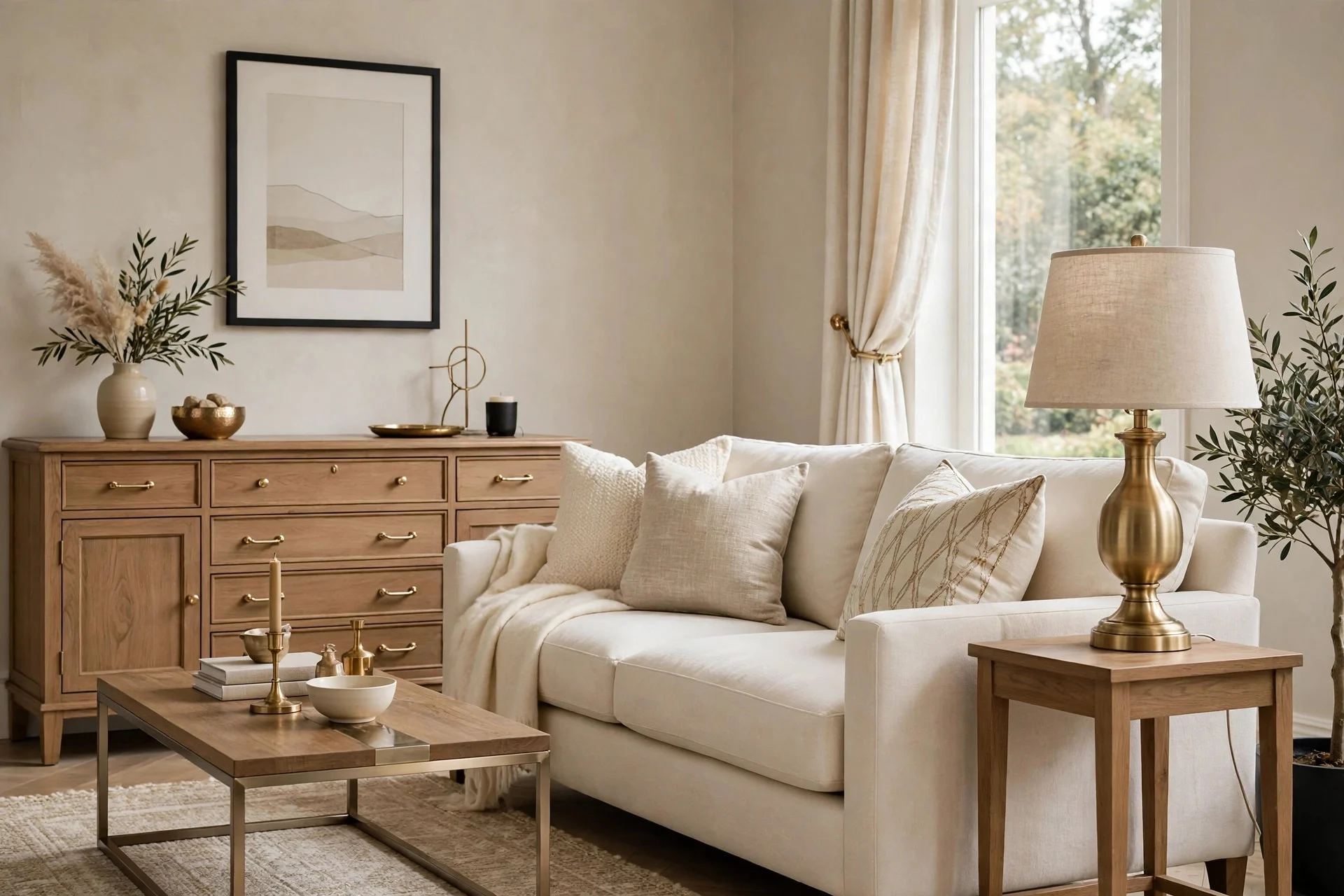
Metals add a quiet shine to a neutral room, and mixing them gently keeps the look from feeling too matched. Brushed brass, warm nickel, and matte black can live together if you keep the finishes soft and repeat each one at least twice. A brass lamp, a nickel picture frame, and black handles sound odd together, but in a real room they just look collected.
Avoid shiny chrome in a warm neutral room, because it reads as cold and sharp against soft fabrics. I learned this after buying a chrome lamp that never looked right until I swapped it for brushed brass. Keep metal pieces small — lamps, frames, and handles — and let wood and fabric do most of the work.
Try this: pick two metal finishes, use each one twice, and keep a third one out of the room.
16. Add a Touch of Pattern in Muted Tones
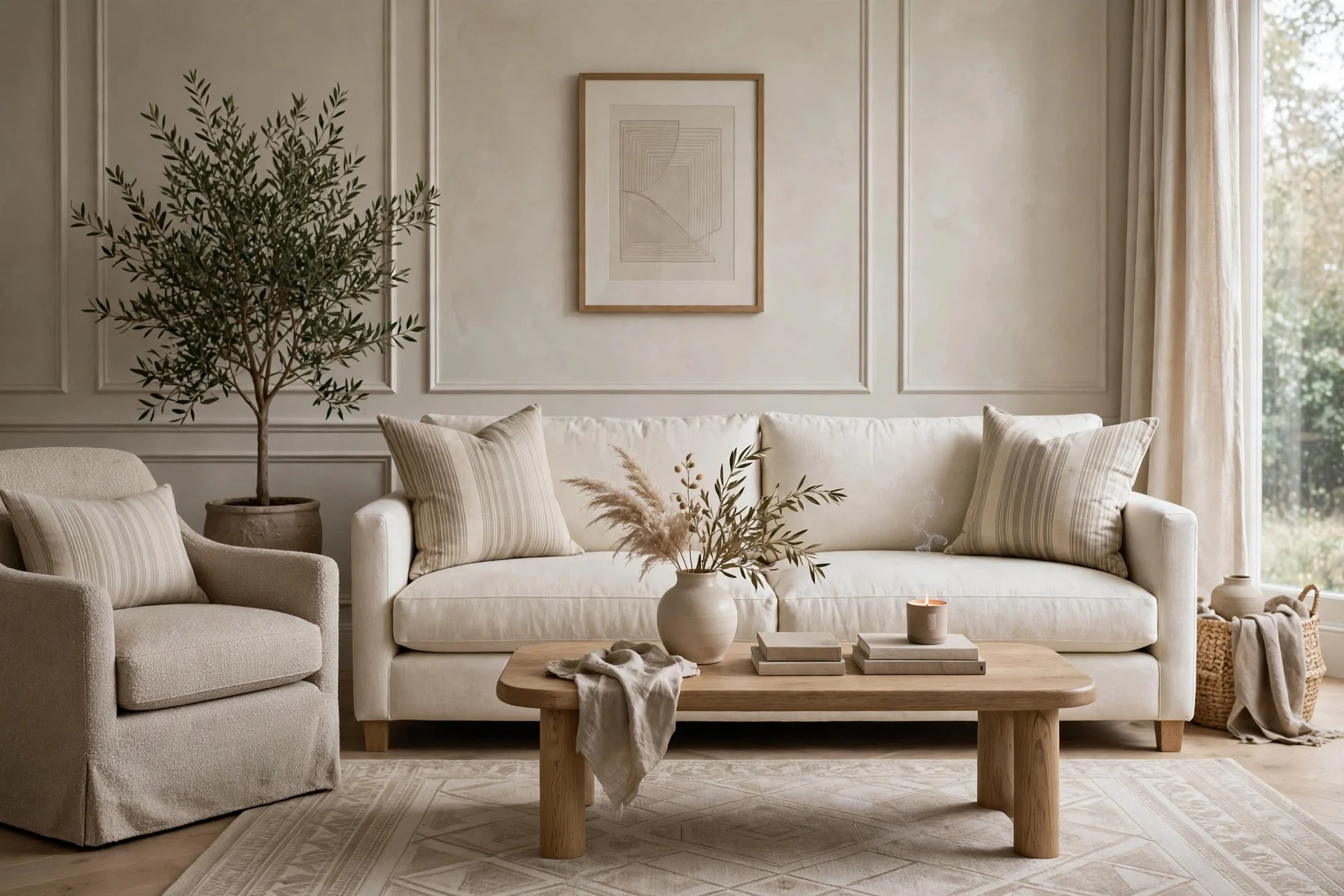
A neutral room does not have to be plain, and a little pattern in muted tones keeps it from feeling boring. Faint stripes on a cushion, a soft geometric rug, or a subtle check on a throw all add movement without breaking the calm. The pattern should be quiet enough that you notice it second, after the colour and texture.
Keep the pattern to one or two pieces and make sure the colours stay inside your cream, beige, and taupe family. I bought a bold patterned cushion once and it shouted over everything else in the room until I moved it to another chair. Small-scale patterns are safer than large ones in a calm space.
Try this: add one patterned cushion, live with it for a week, and only add a second if it still feels quiet.
17. Create a Cozy Reading Corner
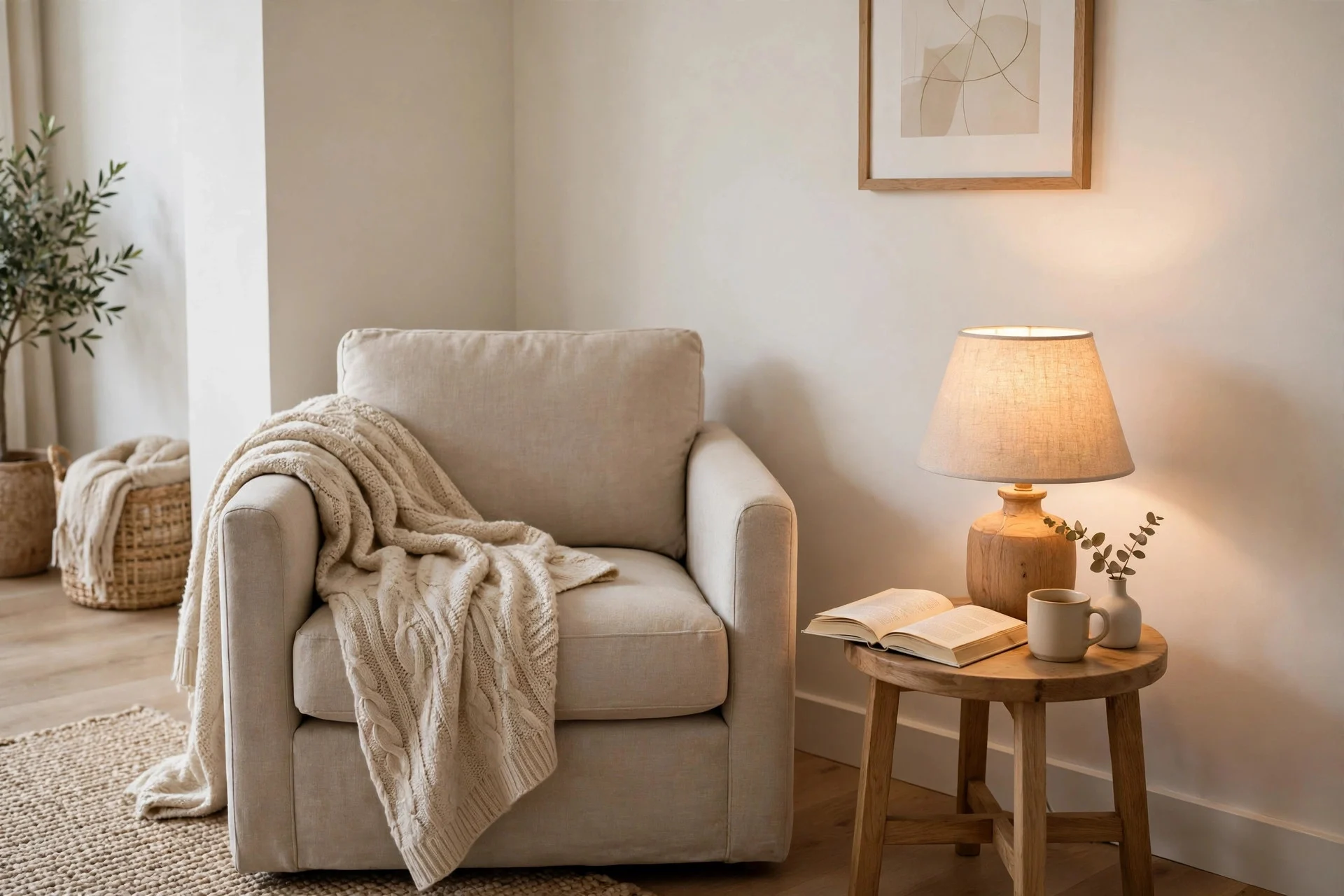
Every living room needs one spot that is just for sitting down with a book, and a neutral room is the perfect place for it. A comfortable armchair in beige or oatmeal, a small wooden side table, and a warm lamp make a corner that invites you to stay. Add a soft throw and a cushion, and the chair becomes the best seat in the house.
Pick a corner near a window if you can, because natural light makes reading easier and the spot feels special. I put my reading chair in a dark corner first and nobody ever sat in it. Move the chair, add the lamp, and keep a book on the table so the corner always looks ready.
Try this: sit in the chair with a book for five minutes — if your feet dangle or the light is wrong, move it.
18. Finish With Personal Pieces That Mean Something
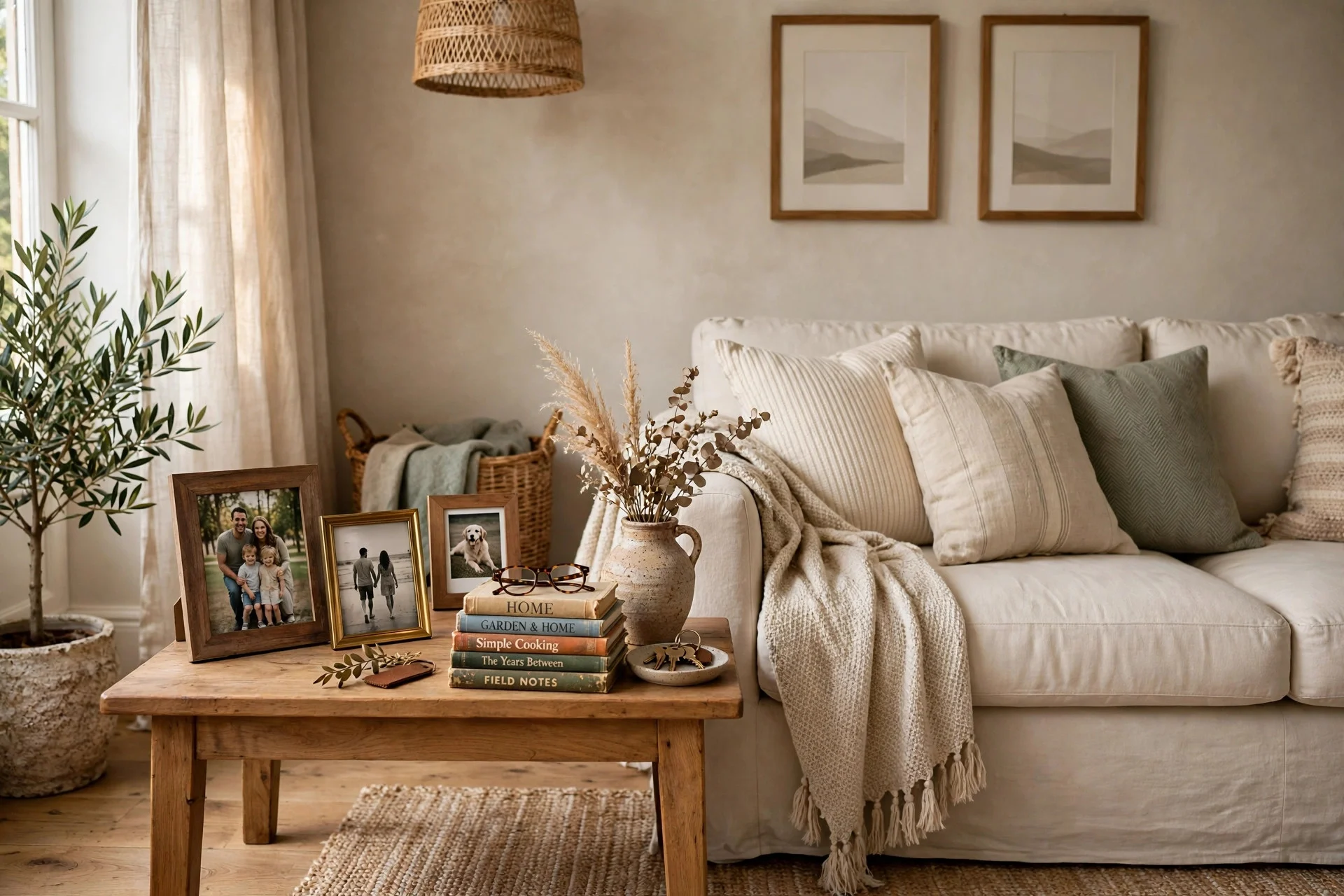
A neutral room can look like a furniture showroom if everything in it is new, so finish it with pieces that actually mean something to you. A framed family photo, a handmade vase, a book you love, or a souvenir from a trip gives the room a story that no shop can sell. These are the pieces guests ask about, and they are what make the room feel like yours.
Keep it to three or four personal pieces and give each one a proper place, instead of scattering them everywhere. I keep my grandmother’s ceramic bowl on the side table, and it grounds the whole room for me. A neutral room with a few real memories in it feels calm and warm, not empty.
Try this: pick your three favourite personal pieces, place them where you can see them daily, and put the rest away.
How do I keep a neutral living room from looking boring?
Layer texture instead of colour. Mix chunky knits, linen, boucle, and smooth wood, add a warm rug, and bring in one green plant. A few black accents and one muted pattern also give the eye something to notice, while the colour palette stays calm.
What is the best wall colour for a neutral living room?
A warm white is the safest choice, because it stays bright in daylight and soft under lamps. Test three samples on different walls and watch them through the day. Avoid stark whites with a blue tint, since they can make a room feel cold and unfinished.
Can I use black in a neutral living room?
Yes, in small doses. Thin black frames, a floor lamp, or dark handles add definition and make the creams look richer. Keep it to three or four small pieces spread around the room, and choose matte finishes so the black feels soft rather than harsh.
How do I pick a rug for a neutral living room?
Go bigger than you think and pick a warm tone like ivory, taupe, or soft jute. The front legs of the sofa and chairs should sit on the rug. Tape the size out on the floor before you order, and choose a low-pile rug if you have kids or pets.
Final Thoughts
A neutral living room works best when it feels calm but still lived in, and that balance comes from small choices rather than one big purchase. Warm walls, layered textures, mixed woods, and a few pieces that mean something to you will take you further than a whole room of matching furniture ever will.
Start with the idea that fixes your biggest problem — the wall colour, the rug, or the lighting — and build from there. Your room does not need to be finished in a weekend. The best neutral rooms grow slowly, one honest choice at a time, and they still look good years later.