
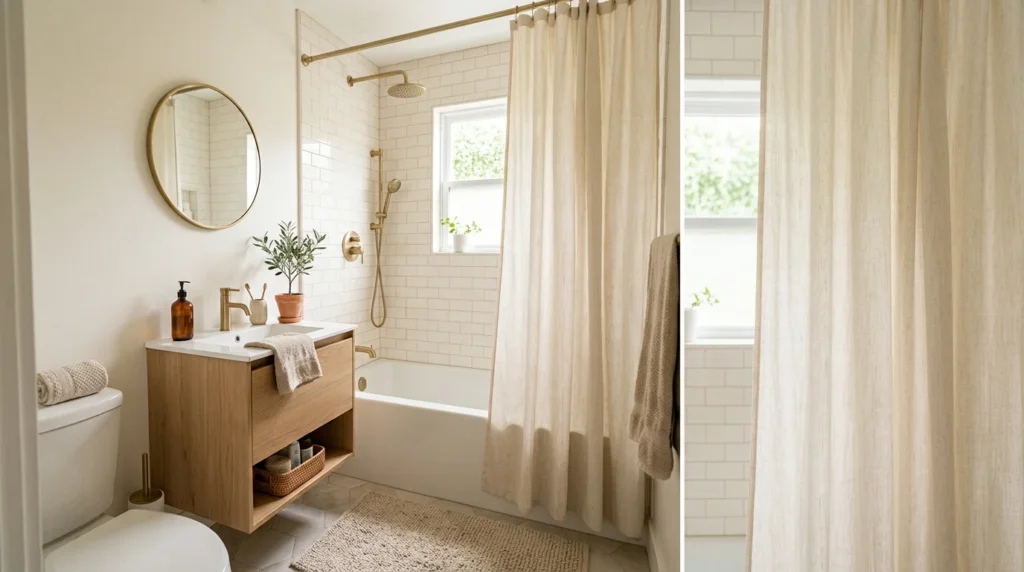
My first apartment had a bathroom so small that the shower curtain essentially defined the entire room, since it was the single largest visible surface in a space barely big enough to turn around in comfortably. I didn’t think much about it initially, just grabbed a plain white curtain from the first store I visited, and it wasn’t until a friend commented that my bathroom felt “a little sad” that I actually considered how much visual weight that one curtain was carrying in such a compact space. That comment sent me down a genuine research path, and by the time I found a combination that actually worked, I understood something I hadn’t before, that in a small bathroom, the shower curtain isn’t a minor accessory, it’s practically the room’s main design statement.
If your own small bathroom’s shower curtain has been similarly overlooked, here are 24 ideas, each explained in detail, based on what I learned furnishing that first tiny apartment bathroom and what I’ve observed working well in other compact bathrooms since.
1. Choose a Curtain in a Lighter Color to Open Up the Space
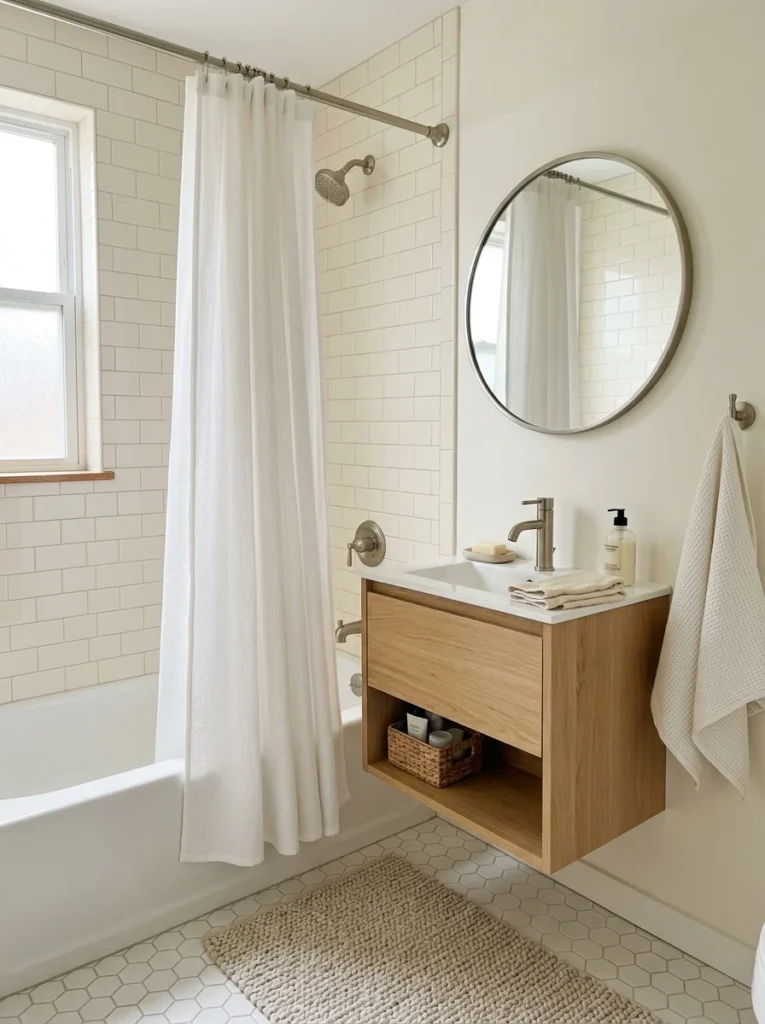
In a genuinely small bathroom, a lighter-colored shower curtain, whether pure white, soft cream, or a pale neutral, reflects available light rather than absorbing it, helping the room feel more open and airy than the same space would with a darker, more visually heavy curtain choice. I switched from an initial darker patterned curtain to a simple soft white linen-look option, and the difference in how spacious my tiny bathroom felt was immediately noticeable, even though the room’s actual physical dimensions obviously hadn’t changed at all. This principle applies particularly strongly in bathrooms without much natural light of their own, where a darker curtain can compound that existing dimness rather than helping compensate for it the way a lighter option genuinely can. I’d recommend this specifically as your starting consideration in any small bathroom, since color and light reflection matter more in a compact space than almost any other single styling decision you might make regarding the curtain itself.
2. Use a Curtain With Vertical Stripes
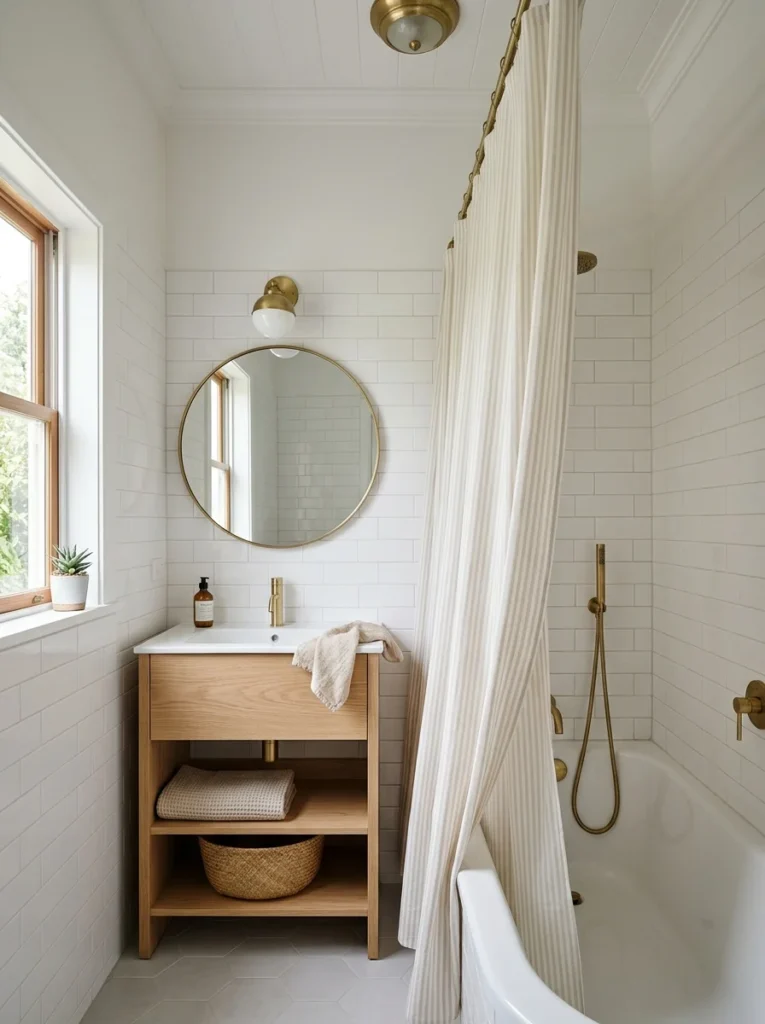
A shower curtain featuring vertical stripes creates an optical illusion that draws the eye upward, making ceilings appear taller and the overall room feel more spacious than a horizontally patterned or solid curtain might achieve in that same compact footprint. I tried this specifically in a second small bathroom I later styled, choosing a subtle cream and white vertical stripe, and the effect on perceived ceiling height was genuinely more noticeable than I expected from what seemed like a fairly simple, understated pattern choice. This works particularly well in bathrooms with lower ceilings specifically, where that added sense of height matters more than it might in an already reasonably tall room, making this idea especially worth considering for older homes or converted spaces where ceiling height sometimes runs lower than more modern construction. I’d recommend keeping the stripe pattern relatively subtle and tonal, similar shades of the same general color family, rather than a bold, high-contrast stripe, since a more dramatic pattern can start to feel visually busy in a room where every surface is already in fairly close proximity to every other surface.
3. Hang the Curtain Rod Higher Than the Standard Height
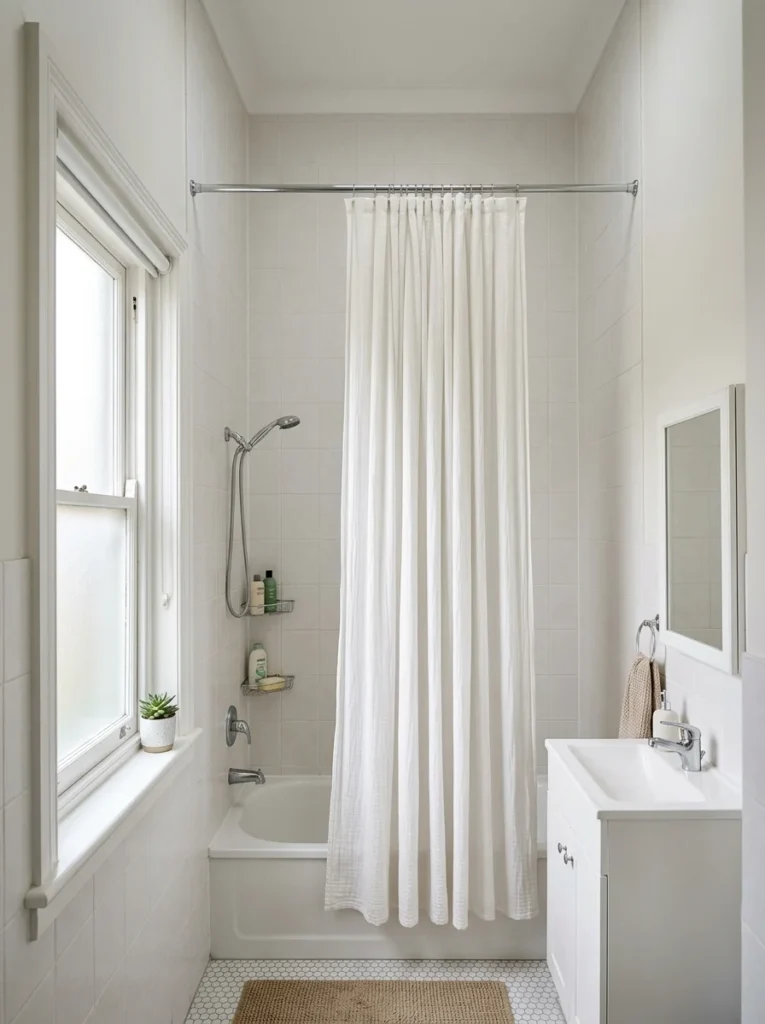
Similar to the height principle that applies to window curtains in a living room, mounting your shower curtain rod several inches higher than the shower or tub’s actual top edge, rather than directly at that standard height, creates additional vertical space and makes the whole bathroom feel taller and less cramped. I raised my own curtain rod by about six inches above where it had originally been installed, and that adjustment alone changed how the entire small bathroom felt, without requiring any additional curtain fabric purchase beyond simply choosing a slightly longer curtain to accommodate the new height. This does require purchasing a curtain a few inches longer than what your shower’s actual dimensions technically require, and I’d recommend measuring the new intended rod height carefully before ordering a curtain, ensuring the extra length is sufficient to still reach comfortably to or near the tub or shower floor once installed at that new, elevated position. This adjustment costs relatively little beyond a slightly longer curtain, making it one of the highest-impact, most affordable changes available for any small bathroom shower area.
4. Choose a Curtain With a Bold, Confident Pattern as a Focal Point
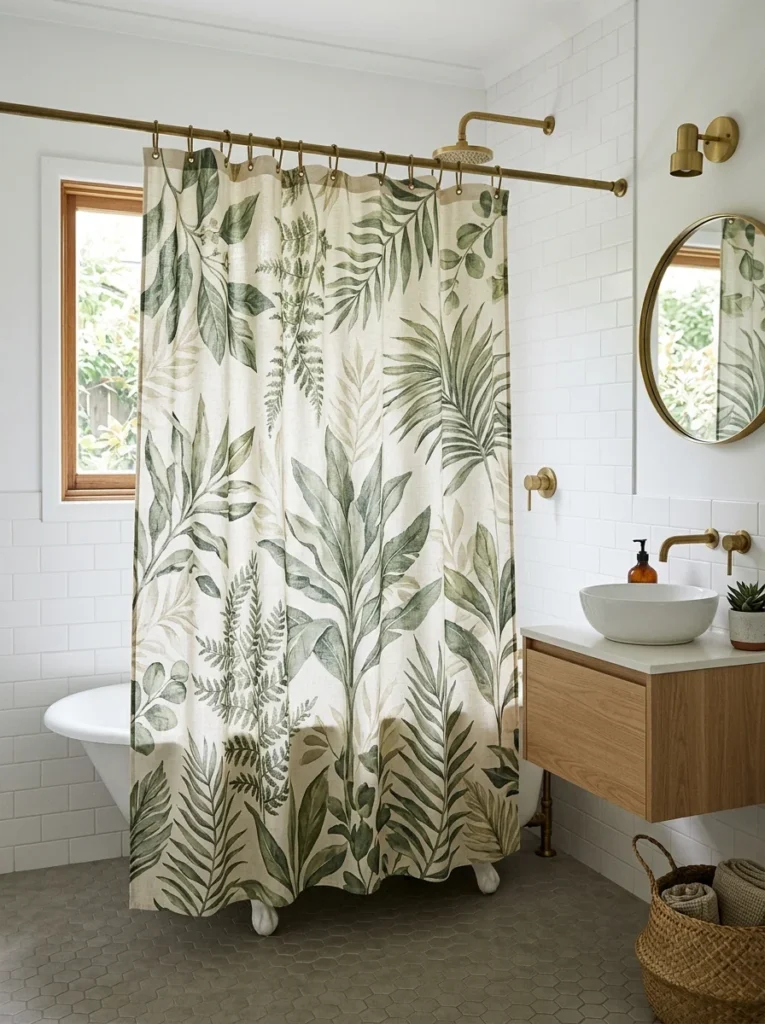
Rather than defaulting to a plain, safe solid color specifically because the room is small, a genuinely bold, confident pattern can actually work beautifully in a compact bathroom, since the room’s limited scale means you’re really only committing to a relatively small amount of total fabric compared to what a bold pattern might require covering in a larger space. A friend used a striking botanical print in her small powder room’s shower-tub combination, and rather than feeling overwhelming in that compact space, the bold pattern reads as a genuinely confident, intentional design statement precisely because it’s the room’s clear singular focal point without much competition from other large surfaces. This works particularly well if the rest of your small bathroom stays relatively simple and neutral, letting the curtain’s pattern serve as the room’s main visual interest rather than competing with an equally bold tile choice or wall color elsewhere in the same compact space. I’d recommend this specifically for anyone genuinely drawn to a bold pattern but nervous about committing to it at a larger scale, since a small bathroom’s shower curtain represents a relatively low-risk, contained opportunity to experiment with that boldness.
5. Layer a Sheer Liner With a Decorative Outer Curtain
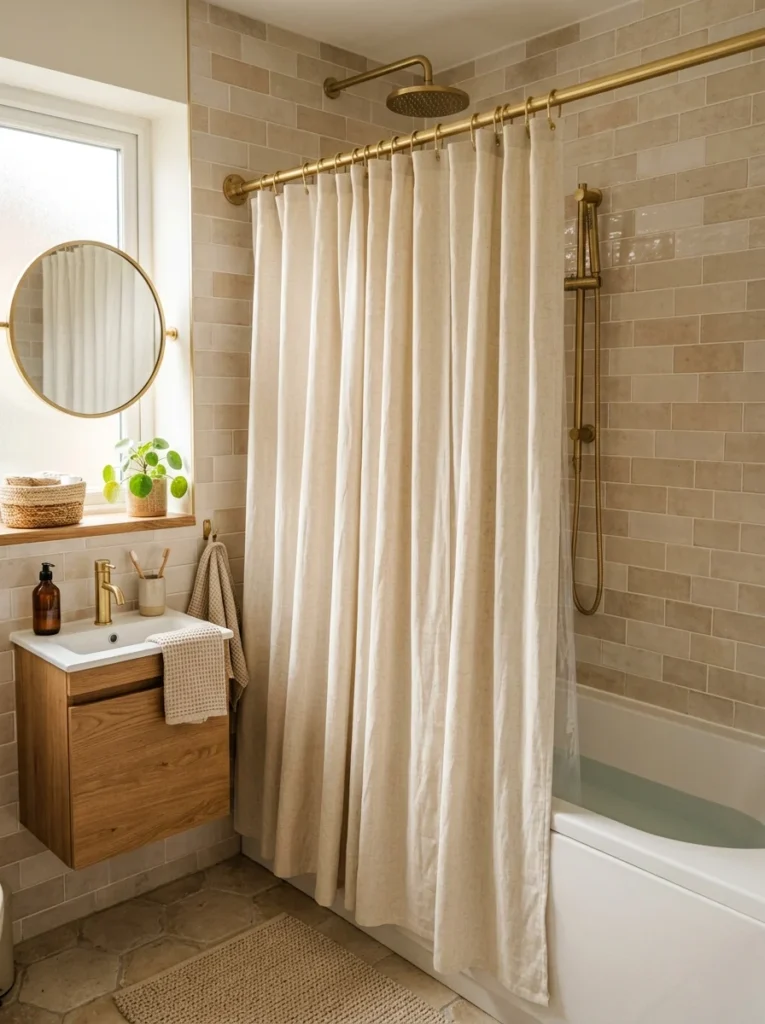
Rather than a single functional curtain serving both the practical waterproofing role and the decorative visual role simultaneously, layering a simple waterproof liner on the inside with a more decorative, non-waterproof fabric curtain hung on the outside lets you choose your visible fabric based purely on style and texture without worrying about waterproofing performance compromising that aesthetic choice. I switched to this layered approach specifically because I wanted a genuinely nice linen-look outer curtain, a material that doesn’t handle constant water exposure particularly well on its own, paired with a simple, nearly invisible clear liner handling the actual water-blocking function behind it. This does mean purchasing and maintaining two separate pieces rather than one all-in-one curtain, adding modestly to both the initial cost and the ongoing laundering routine, but the resulting improvement in how the visible outer fabric actually looks and drapes, compared to a purely functional vinyl or polyester all-in-one curtain, genuinely justifies that extra step for anyone prioritizing the room’s overall aesthetic. I’d recommend this specifically if you’ve been frustrated by the more limited, purely functional look of standard all-in-one shower curtains and are willing to take on that small amount of additional maintenance for a meaningfully improved visual result.
6. Choose a Curtain Length That Just Clears the Floor
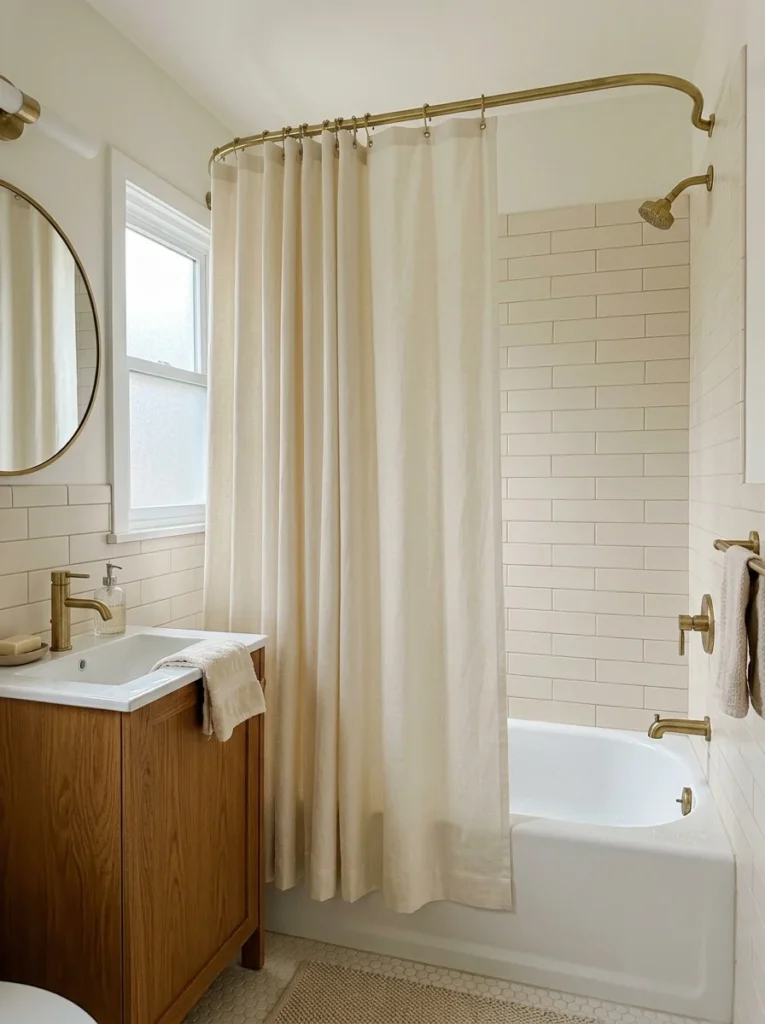
Getting your curtain’s length correct matters considerably in a small bathroom, where a curtain that’s noticeably too short leaves an awkward gap that draws attention to the room’s compact proportions, while one that’s excessively long and pools messily on the floor creates both a visual and practical problem, particularly given how frequently the fabric gets wet during actual use. I measured my own shower space carefully before ordering a replacement curtain, choosing a length that hangs just above the tub’s floor level, close enough to prevent any obvious visual gap but without excess fabric bunching wetly against the floor after each shower. This precise measurement matters more in a genuinely small bathroom than it might in a more spacious one, since every visible detail carries proportionally more visual weight in a compact space where there’s simply less overall room for minor imperfections to go unnoticed. I’d recommend measuring from your newly determined rod height, factoring in any adjustment discussed in the earlier height idea, all the way down to your tub or shower floor, then choosing a curtain length that closely matches that specific measurement rather than assuming a standard, generic length will work correctly for your particular setup.
7. Use a Curved Shower Rod for Added Space
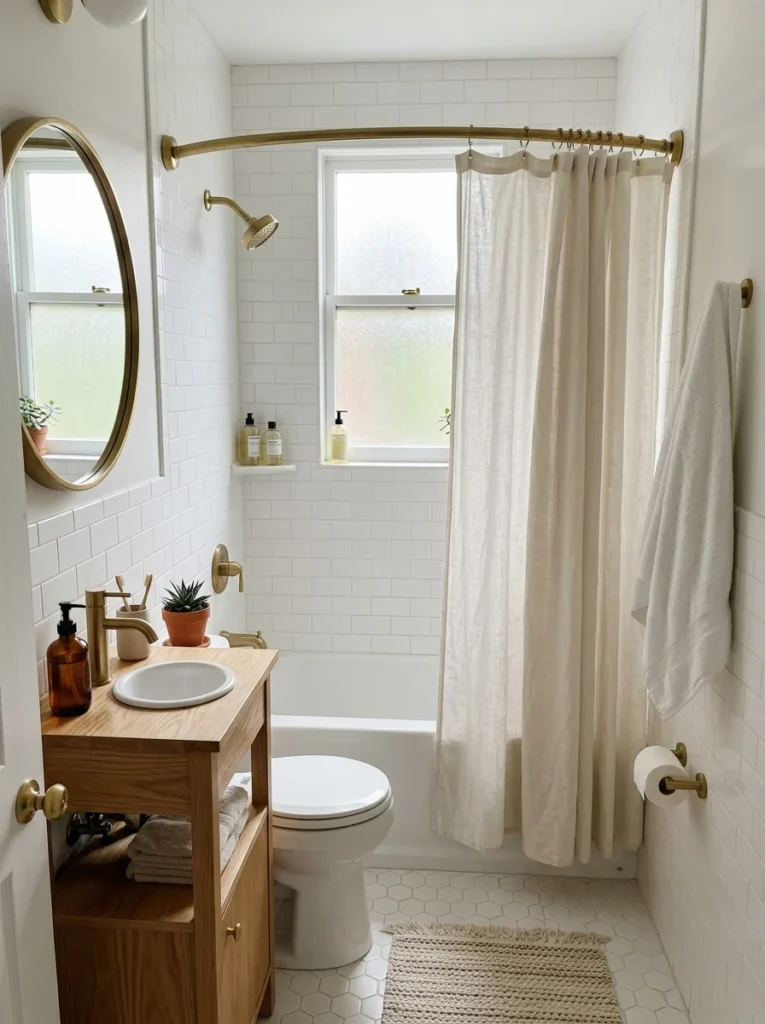
A curved rather than straight shower curtain rod bows outward from the wall, effectively adding several inches of additional interior shower space while the curtain itself still closes to roughly the same footprint against the wall when not in use. I installed one of these in my small apartment bathroom specifically for this reason, and the additional elbow room while actually showering made a genuinely noticeable difference in how cramped the daily experience of using that small shower felt, all without any actual structural changes to the room itself. This is a relatively simple, affordable upgrade, typically just requiring swapping your existing straight rod for a curved version using the same wall mounting points, making it one of the easiest, lowest-cost improvements on this entire list for anyone dealing with a genuinely tight shower footprint. I’d recommend measuring your available wall space carefully before purchasing, since curved rods do extend further into the room when installed compared to a straight rod, and you’ll want to confirm that additional outward curve doesn’t create any new clearance problems with your bathroom door swing or other nearby fixtures.
8. Choose Lightweight, Quick-Drying Fabric
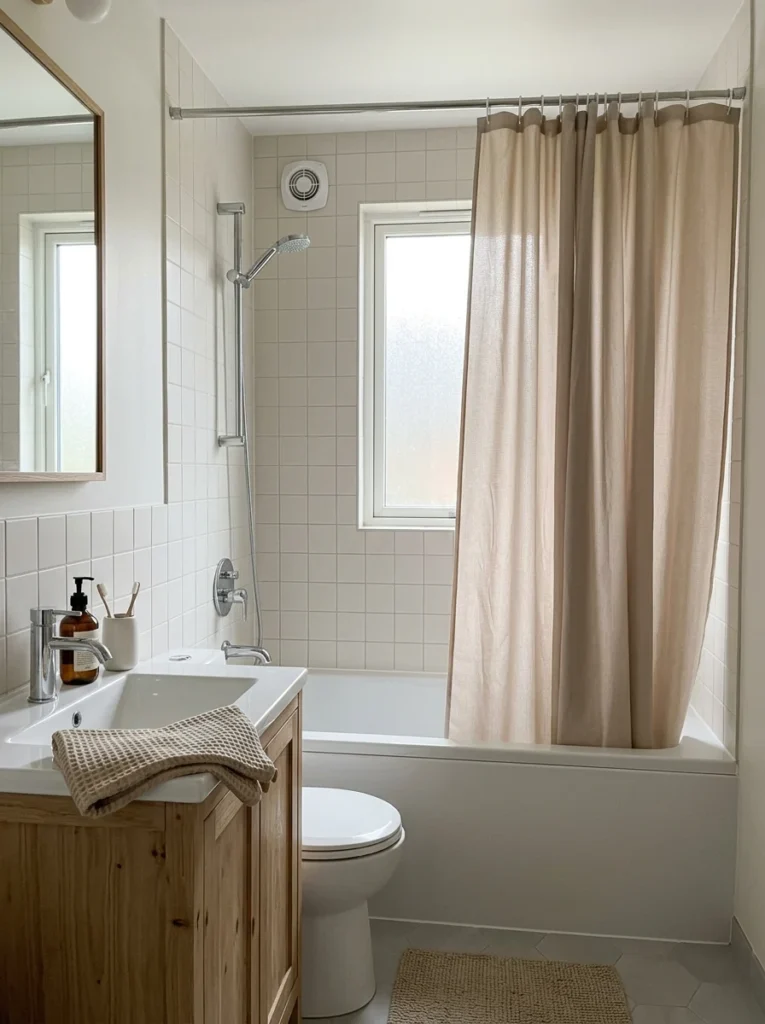
In a small bathroom specifically, where ventilation is sometimes more limited than in a larger space with more airflow, choosing a lightweight, quick-drying curtain fabric, rather than a heavier material that retains moisture longer, helps prevent the mildew and musty odor concerns that can develop more readily in a compact, less ventilated bathroom environment. I switched away from a heavier fabric curtain I’d initially chosen purely for its aesthetic appeal, moving to a lighter-weight, quick-drying polyester blend after noticing it retained dampness noticeably longer than I wanted in my particularly small, poorly ventilated first apartment bathroom. This is a practical consideration worth weighing alongside pure aesthetic preference, since even the most beautiful curtain fabric becomes a genuine maintenance headache if it consistently retains moisture and requires more frequent washing or replacement due to mildew development. I’d recommend this specifically for smaller bathrooms without a window or exhaust fan providing strong ventilation, while a larger, better-ventilated bathroom might reasonably prioritize a heavier, more luxurious fabric without facing the same quick-drying practical necessity.
9. Add a Valance for a More Finished, Custom Look
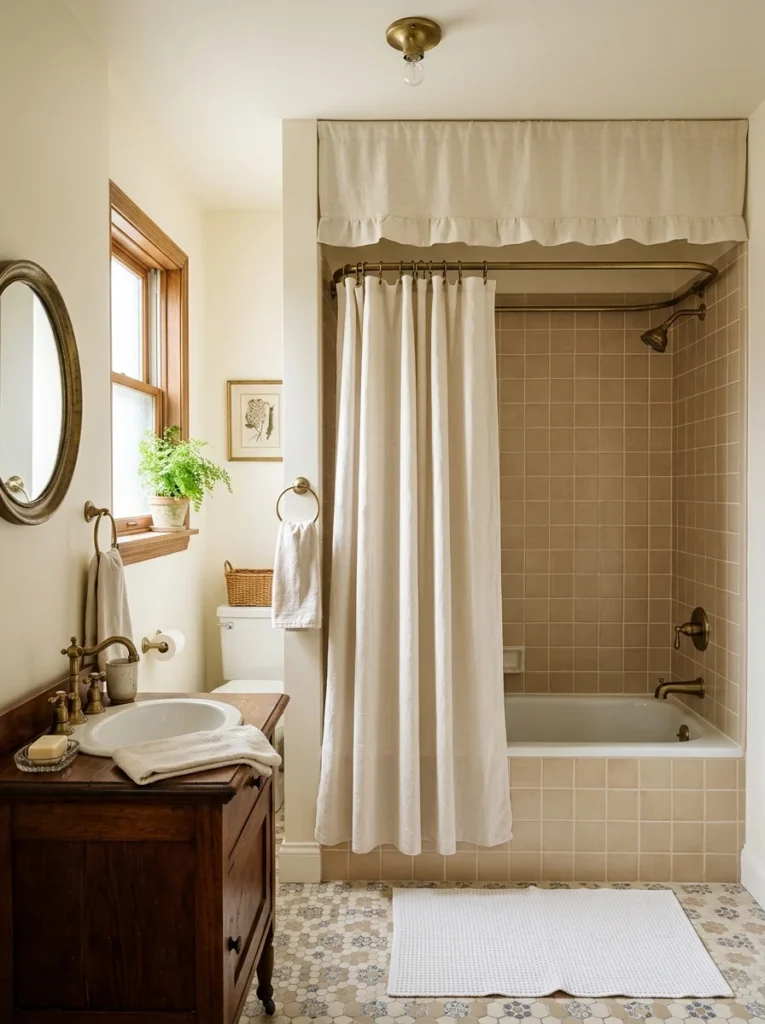
A coordinating valance installed above your main shower curtain adds a more finished, custom appearance reminiscent of a fully designed window treatment, elevating what might otherwise read as a purely utilitarian curtain into something that feels genuinely considered and styled. A friend added a simple fabric valance in a complementary pattern above her small bathroom’s plain white shower curtain, and that additional layer genuinely changed the whole shower area’s visual presence, making it feel more like an intentional design feature rather than a purely functional necessity. This does add another layer of installation and potential moisture exposure to manage, and I’d recommend choosing a valance fabric and mounting position that stays reasonably clear of direct water splash during actual shower use, positioning it toward the very top of the curtain rod area where it’s less likely to get wet during regular daily use. This idea works particularly well in a small bathroom aiming for a more traditional or formal overall aesthetic, though it can feel slightly fussy or overdone in a bathroom going for a more minimalist, streamlined modern look.
10. Choose a Curtain That Coordinates With Your Bath Mat and Towels
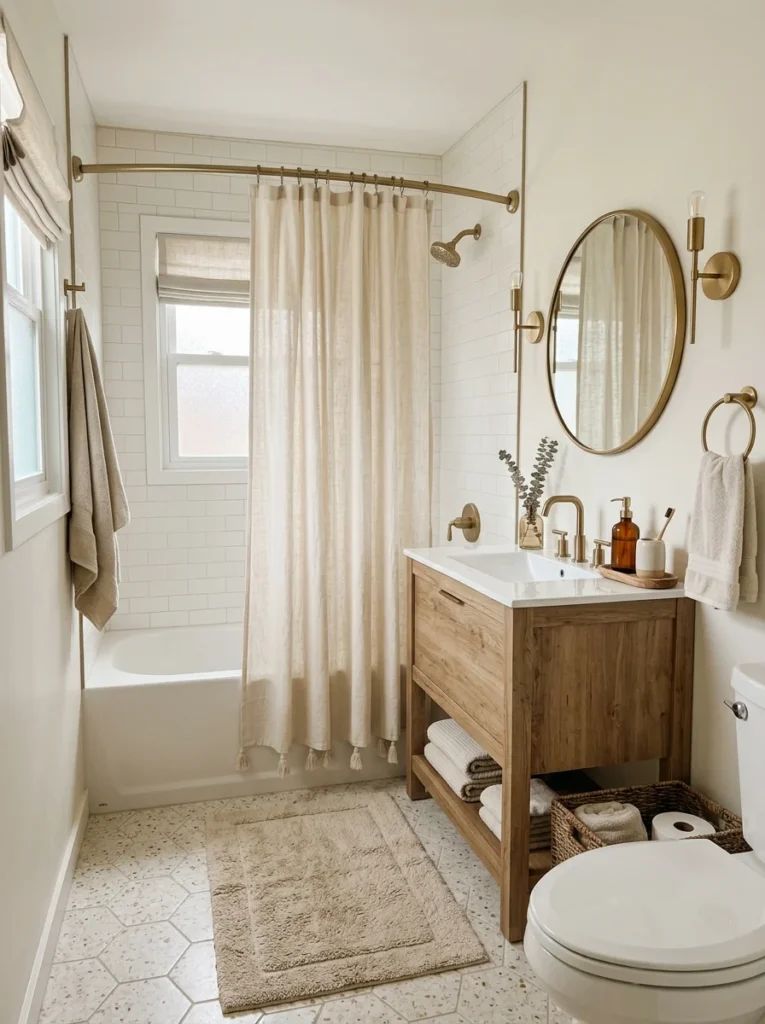
Rather than selecting your shower curtain as a completely isolated decision, choosing a color or pattern that coordinates with your bath mat, hand towels, and other visible bathroom textiles creates a cohesive overall look throughout a small bathroom where every element carries proportionally more visual weight given the room’s limited overall size. I made sure my replacement curtain’s cream tone matched reasonably well with my existing bath mat and towel colors, rather than treating each textile purchase as a completely separate decision made without regard to how they’d all look together in that same compact space. This doesn’t require an exact color match, which can actually look overly matchy in a smaller space where that level of coordination might read as slightly try-hard rather than naturally put together, but a general tonal relationship between your various bathroom textiles genuinely contributes to an overall sense that the room was thoughtfully considered rather than assembled from unrelated, individually purchased pieces. I’d recommend keeping a small fabric swatch or photo of your existing towels and bath mat on hand while shopping for a new curtain specifically, making this coordination decision easier than trying to remember exact colors from memory alone while browsing in a store or online.
11. Use a Curtain With a Subtle Textured Weave
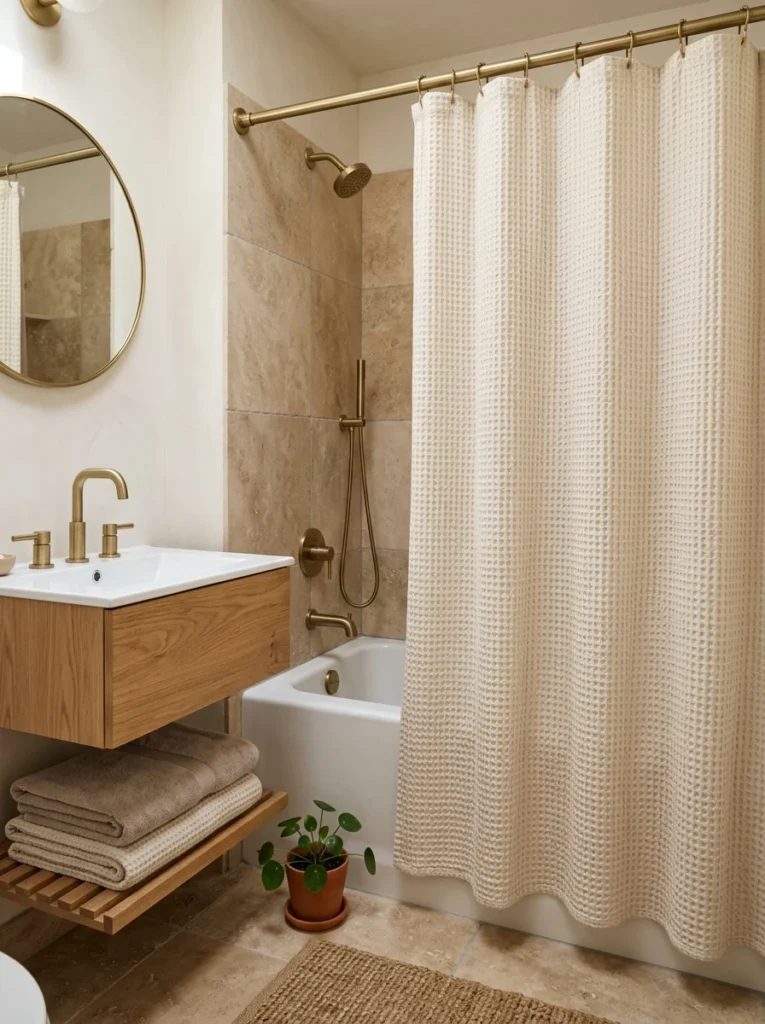
Rather than relying purely on color or pattern for visual interest, a shower curtain with a subtle textured weave, waffle knit, linen-look, or a slight ribbed texture, adds tactile and visual depth without necessarily requiring bold color or pattern choices that might feel overwhelming in a genuinely small space. I chose exactly this direction for my own eventual curtain solution, a soft waffle-weave cotton blend in a simple cream tone, and the subtle texture adds a considerably more elevated, hotel-like quality compared to a completely flat, smooth fabric in that same neutral color. This approach works particularly well for anyone wanting to avoid the potential visual busyness of a bold pattern in a compact space while still achieving more visual interest than a completely plain, flat solid color curtain would provide on its own. I’d recommend viewing textured fabric options in person if at all possible before purchasing, since texture, unlike color or pattern, is genuinely difficult to fully assess from online photos alone, and the tactile quality that makes this option appealing is exactly the aspect that photos struggle to accurately convey.
12. Add Curtain Rings in a Coordinating Finish
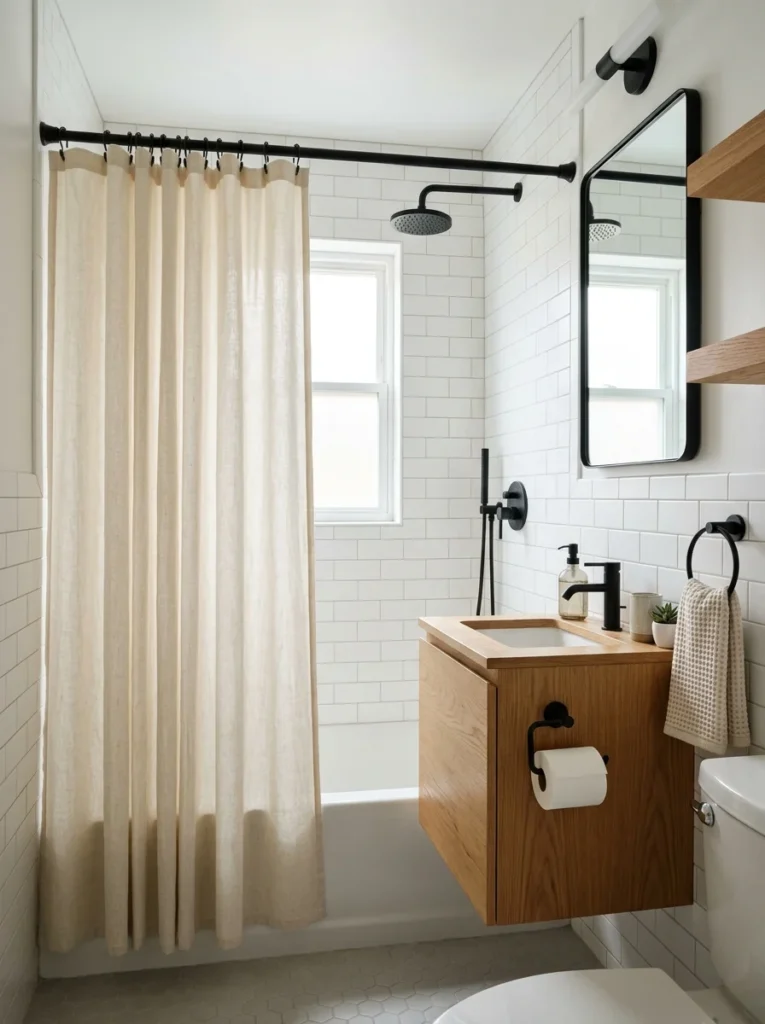
The metal curtain rings connecting your curtain to the rod are a small but genuinely visible detail, and choosing a finish that coordinates with your bathroom’s other hardware, faucet, towel bar, cabinet pulls, ties this often-overlooked element into the room’s broader hardware consistency rather than leaving it as a mismatched afterthought. I switched from generic clear plastic rings to simple matte black metal ones specifically to match my other black bathroom hardware, and that small swap genuinely elevated the curtain’s overall presentation more than its modest cost and effort might suggest. This is one of the most affordable upgrades on this entire list, typically costing just a few dollars for a full set of replacement rings, making it a particularly good starting point for anyone wanting to meaningfully improve their existing curtain setup without purchasing an entirely new curtain. I’d recommend this specifically as a quick, low-cost first step if you’re not ready to invest in a completely new curtain but still want to notice a genuine improvement in how your existing bathroom setup looks and coordinates overall.
13. Choose a Curtain With a Weighted Hem
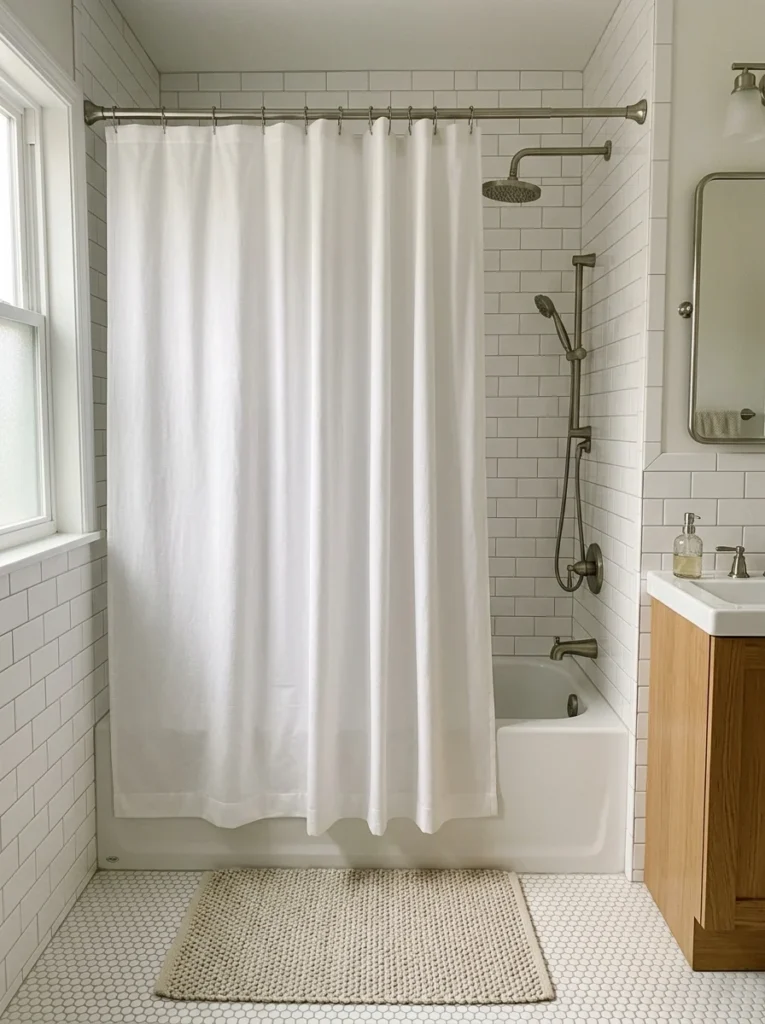
A shower curtain with a weighted hem, either sewn-in magnets or small weights along the bottom edge, helps the fabric hang properly and stay in place during actual shower use, preventing the curtain from billowing inward and clinging uncomfortably against you while showering, a particularly noticeable annoyance in a small shower with limited space to begin with. I specifically sought out this feature when replacing my own curtain, since my original lightweight option would billow inward constantly in my compact shower, and the weighted hem version I switched to genuinely solved that recurring frustration during actual daily use. This feature matters more in a small shower specifically than it might in a larger one, since the confined space means a billowing curtain has less room to move before it’s actually touching you during use, making this a particularly relevant practical consideration for anyone dealing with a genuinely compact shower footprint. I’d recommend checking product descriptions specifically for this weighted hem feature when shopping, since it’s not always obviously visible in photos alone but makes a meaningful practical difference in daily comfort and usability.
14. Extend the Curtain Rod Slightly Beyond the Shower Opening
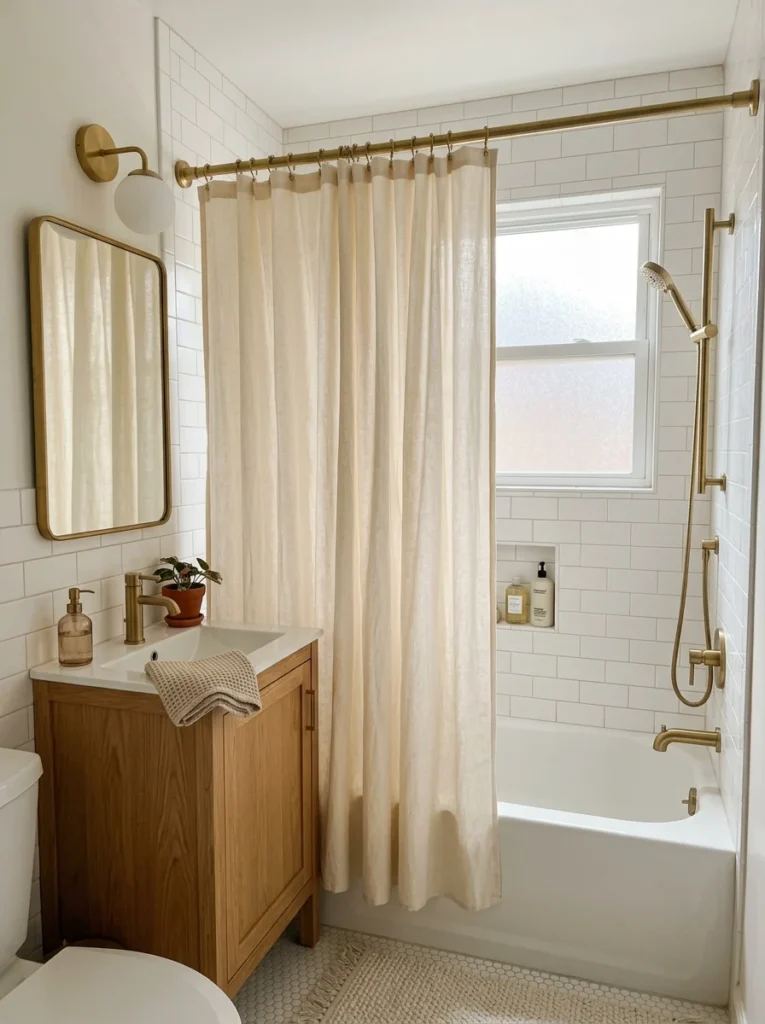
Similar to the principle applied to window curtains, extending your shower rod a few inches beyond your actual shower or tub’s opening on each side, rather than mounting it flush with the opening’s exact width, allows the curtain to hang with a bit more fabric fullness and creates a slightly more finished, less tightly stretched appearance once installed. I extended my own rod by about three inches on each side compared to the original installation, and the curtain now hangs with a softer, gentler drape rather than appearing stretched taut across the exact minimum required width. This works particularly well combined with a curved rod extension already mentioned earlier, since both adjustments work together to create additional interior space and a more generously draped, less severely functional appearance overall. I’d recommend checking your specific bathroom’s available wall space on either side of your shower opening before extending the rod, ensuring this small width increase doesn’t create any clearance conflicts with an adjacent vanity, toilet, or other fixture positioned close to your shower’s actual opening.
15. Choose a Curtain With a Water-Resistant But Fabric Feel
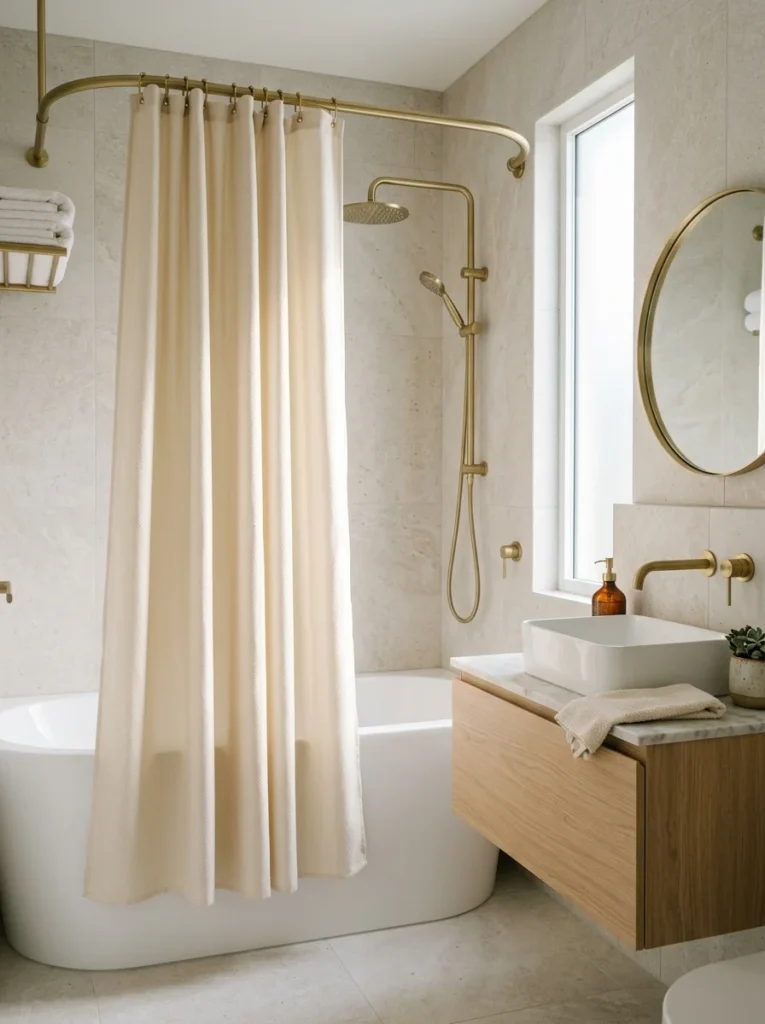
Modern shower curtain materials have improved considerably in recent years, with many polyester and technical fabric blends now offering a soft, fabric-like hand feel while still maintaining genuine water resistance, eliminating the need to choose between the classic all-in-one vinyl curtain’s practicality and a genuine fabric curtain’s more elevated appearance and texture. I found a polyester blend specifically marketed for this dual quality, and it’s held up remarkably well to daily shower use while still looking and feeling considerably more like genuine cotton or linen fabric compared to the stiffer, more obviously synthetic curtains I remember from years past. This represents a genuine improvement over the layered liner-plus-decorative-curtain approach mentioned earlier, since you’re getting both functions in a single piece without the added laundering complexity of maintaining two separate layers. I’d recommend reading product reviews specifically mentioning long-term durability and any water-resistance degradation over time before purchasing, since this improved technology still varies considerably in quality between different manufacturers and specific products despite the general category having improved significantly overall in recent years.
16. Use Color to Visually Extend Your Wall Tile
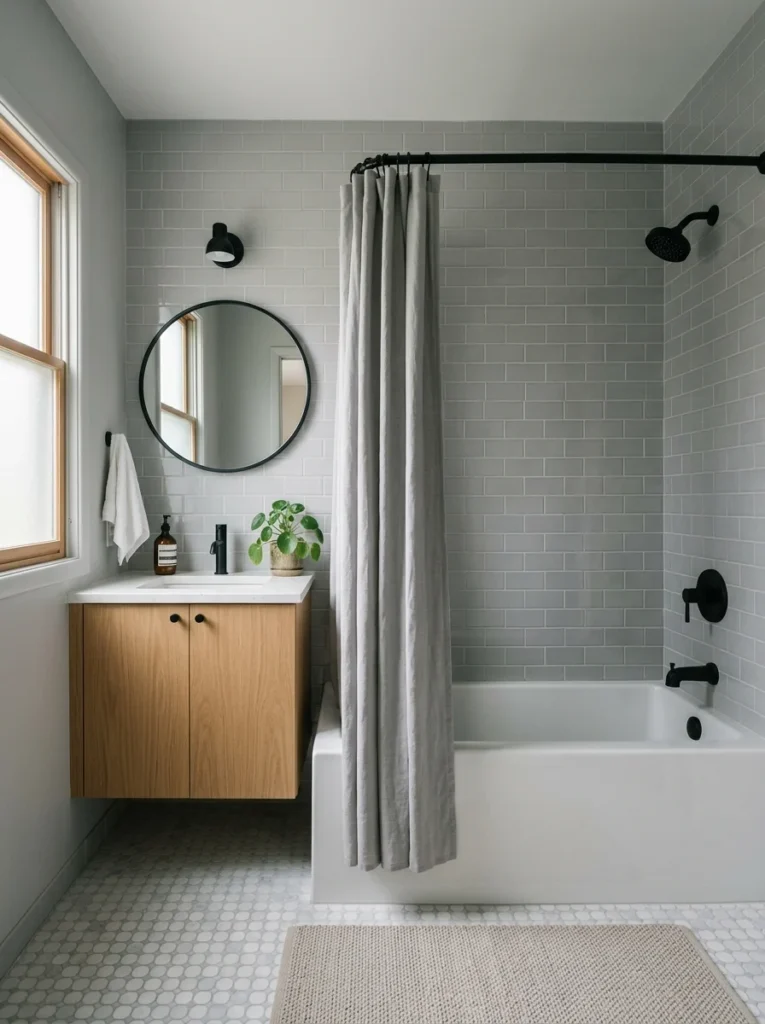
If your small bathroom’s existing tile is a specific color you’re happy with, choosing a shower curtain in that same or a very closely related tone creates visual continuity that makes the shower area feel like a seamless extension of the surrounding walls rather than a visually separate, competing element within an already compact space. I did a version of this in a later small bathroom project, choosing a curtain in nearly the exact same soft grey as my existing subway tile, and the resulting continuity genuinely made the whole room feel larger, since the eye doesn’t register an obvious visual break between the tiled walls and the curtain covering the shower opening. This works particularly well in bathrooms where you’re happy with your existing tile and want the curtain to blend in and support that established look, rather than serving as a bold, separate design statement competing for attention against the tile itself. I’d recommend bringing an actual tile sample or a precise photo with you while shopping for a curtain specifically to achieve this close color matching, since achieving genuine continuity requires the two colors to align quite closely rather than merely being in the same very general color family.
17. Incorporate a Double Curtain for Added Fullness
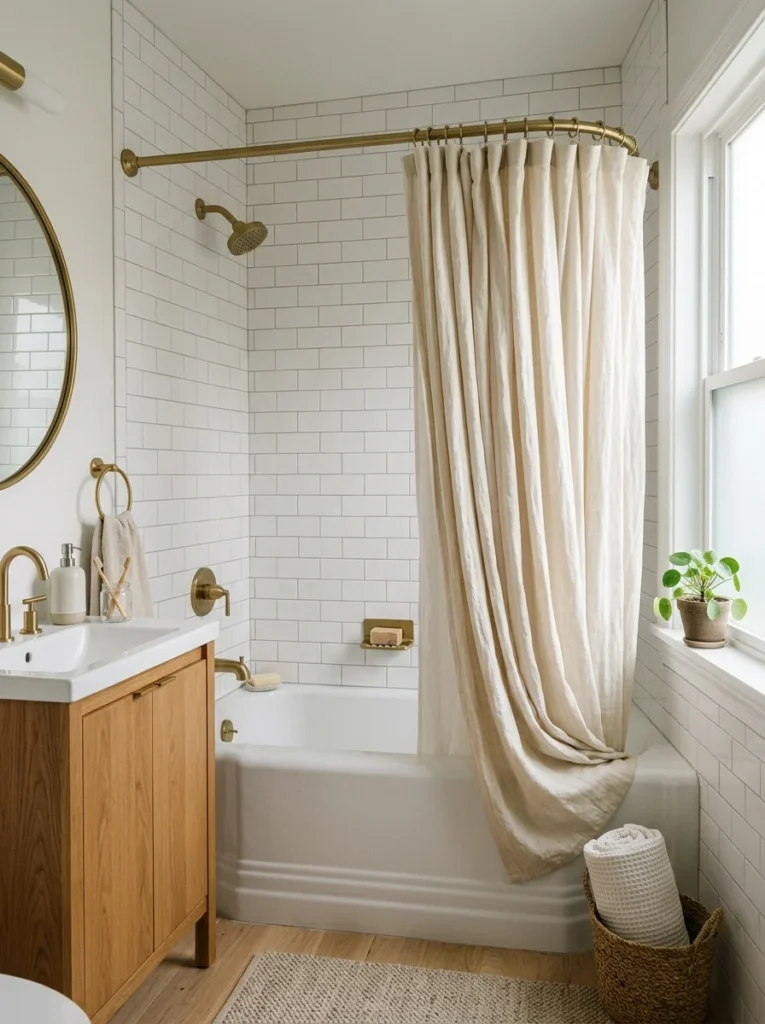
Rather than a single curtain panel, using two curtain panels, essentially doubling the fabric hung across your shower rod, creates a fuller, more luxurious drape with more visible fabric folds, similar to how a fuller, more gathered curtain reads as more elevated than a single flat panel would across a window. A friend used this approach in her small bathroom specifically, doubling up two matching sheer panels rather than a single curtain, and the resulting fuller, softer drape genuinely elevated the shower area’s overall appearance compared to how a single flat panel had looked previously in that same space. This requires purchasing two curtains rather than one, adding to the overall cost, and I’d recommend ensuring your chosen rod and rings can accommodate the additional fabric weight and bulk of a doubled curtain setup before committing to this approach, since a rod not properly rated for that additional weight could sag or fail prematurely under the increased load. This idea works particularly well with lighter, sheerer fabrics specifically, since doubling a heavier fabric can result in an overly bulky, difficult-to-manage curtain that becomes more cumbersome than elegant in daily practical use.
18. Choose a Curtain With Grommet-Top Styling for Clean Lines
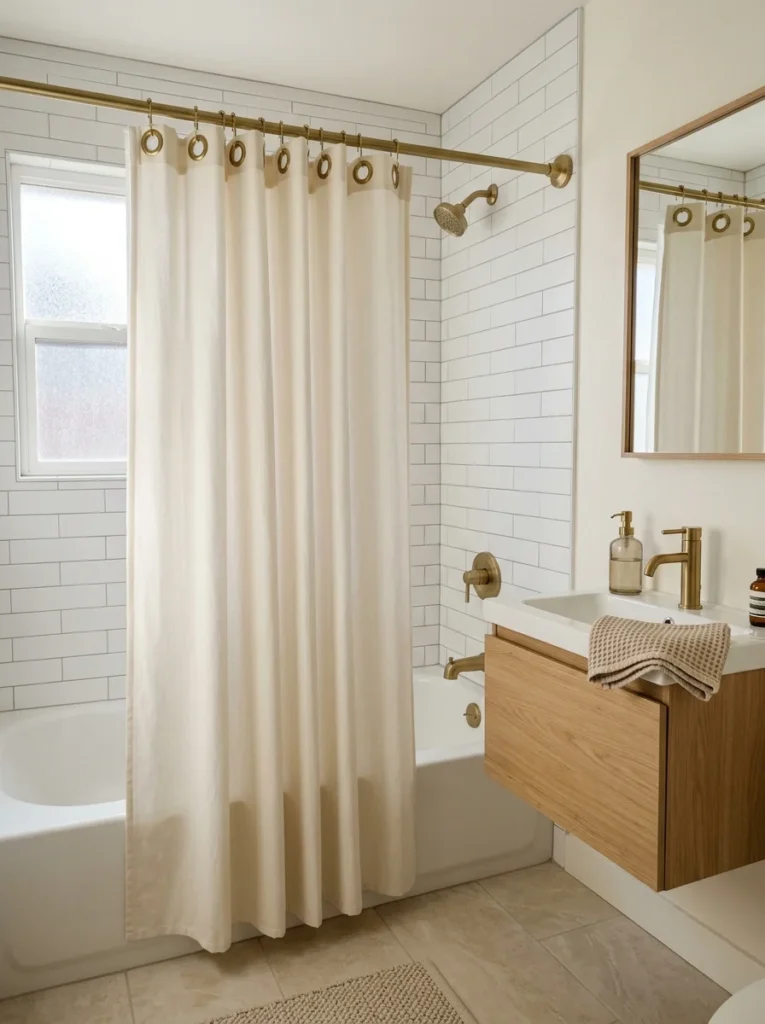
Similar to the styling principle that applies to window curtains, a grommet-top shower curtain, with metal rings sewn directly into the fabric rather than requiring separate clip-on rings, creates clean, consistent folds and a more streamlined, modern appearance compared to curtains using traditional button-hole or clip-on ring attachments. I switched to this style specifically for its cleaner overall look, and the evenly spaced, consistent folds that naturally result from grommet-top construction genuinely read as more polished and intentional compared to my previous curtain’s somewhat randomly bunched, clip-attached fabric. This style also tends to open and close more smoothly along the rod, since the metal grommets glide with less friction than fabric loops or plastic clips, a small but genuinely noticeable practical improvement in daily use beyond the purely visual benefit. I’d recommend choosing a grommet finish that coordinates with your other bathroom hardware, similar to the coordinating ring finish idea mentioned earlier, ensuring this particular styling choice integrates well with your bathroom’s broader hardware consistency rather than introducing a mismatched new metal tone.
19. Add a Small Decorative Hook or Tieback for Daytime Styling
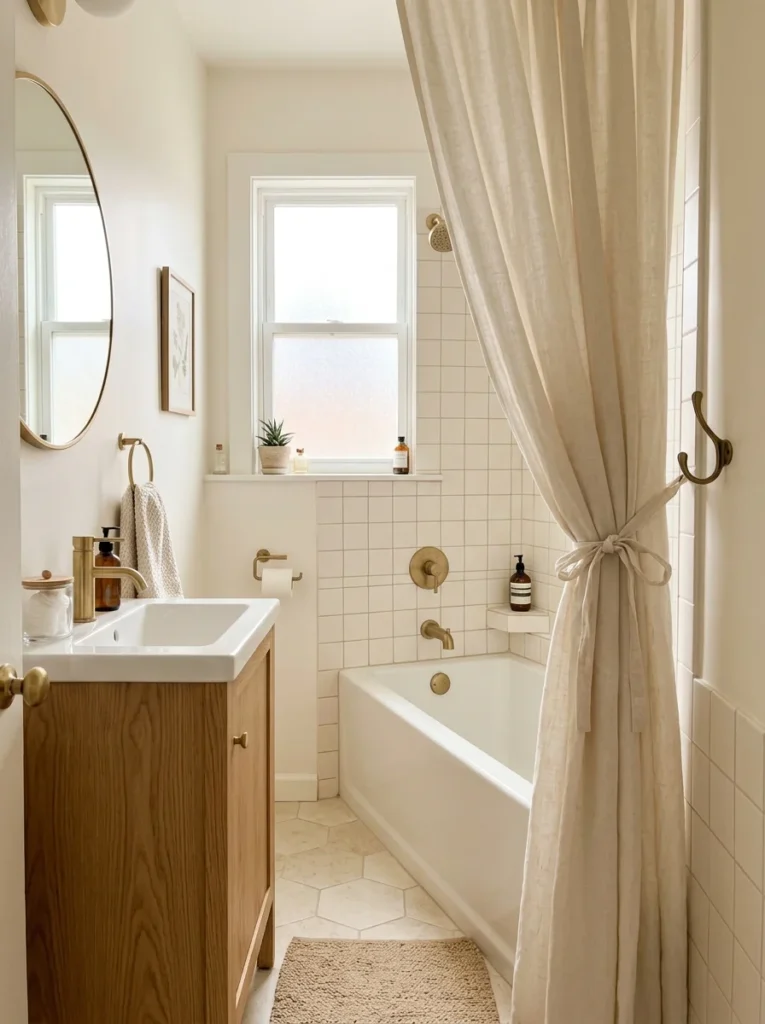
When your shower isn’t actively in use, tying back your curtain with a simple decorative hook or fabric tie, rather than leaving it hanging fully closed across the entire shower opening at all times, opens up the visual space and can make a small bathroom feel considerably more open during the majority of the day when the shower itself isn’t actively being used. I installed a small decorative hook on the adjacent wall specifically for this purpose, tying my curtain back during the day and only closing it fully when actually showering, and that daily habit genuinely makes my small bathroom feel more open and spacious most of the time compared to a curtain left permanently closed across the entire shower opening regardless of whether it’s actually in use. This requires remembering to actually tie the curtain back consistently, which admittedly becomes a habit that takes some conscious effort to maintain initially, but the visual payoff in a genuinely small bathroom makes that small daily habit worth developing for anyone motivated to maximize their compact space’s perceived openness. I’d recommend choosing a hook or tie finish that coordinates with your other bathroom hardware, maintaining that same consistency principle that applies throughout every other hardware choice discussed elsewhere on this list.
20. Use a Patterned Curtain to Distract From an Outdated Tub or Tile
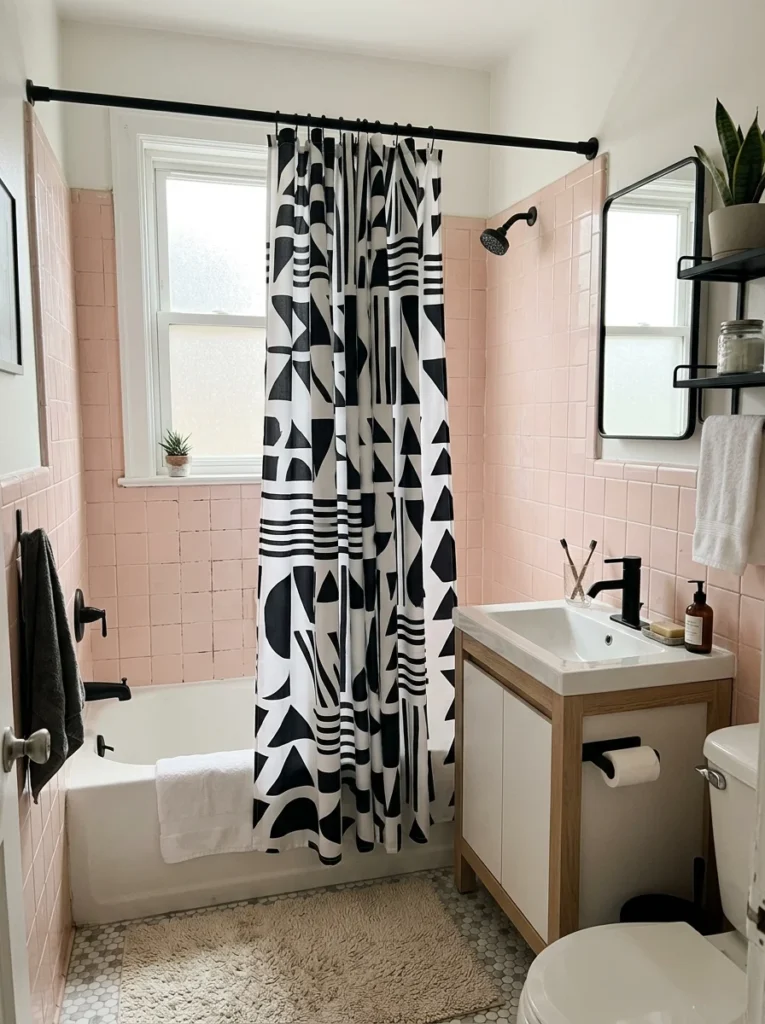
If your small bathroom includes an older, outdated tub or tile that you’re not planning to renovate immediately, a bold, eye-catching shower curtain can genuinely help draw visual attention away from those less desirable existing elements, functioning almost like a strategic distraction that shifts the room’s overall focal point toward something you’ve actually chosen and like. A friend used this exact strategy in a rental apartment with dated pink tile she had no ability to change, choosing a bold, graphic black and white curtain that genuinely became the room’s dominant visual element, with guests consistently commenting on the striking curtain rather than the dated surrounding tile she couldn’t control. This is a particularly useful strategy specifically for renters or anyone unable to undertake a full bathroom renovation in the near term, offering a genuinely effective, low-cost way to meaningfully change the room’s overall feeling despite being unable to address the more permanent, underlying fixtures and finishes. I’d recommend choosing your boldest, most attention-grabbing pattern specifically for this strategic purpose, since a subtler, more understated curtain choice won’t provide the same effective visual distraction from whatever existing element you’re specifically trying to draw attention away from.
21. Consider a Solid Glass or Acrylic Panel Instead
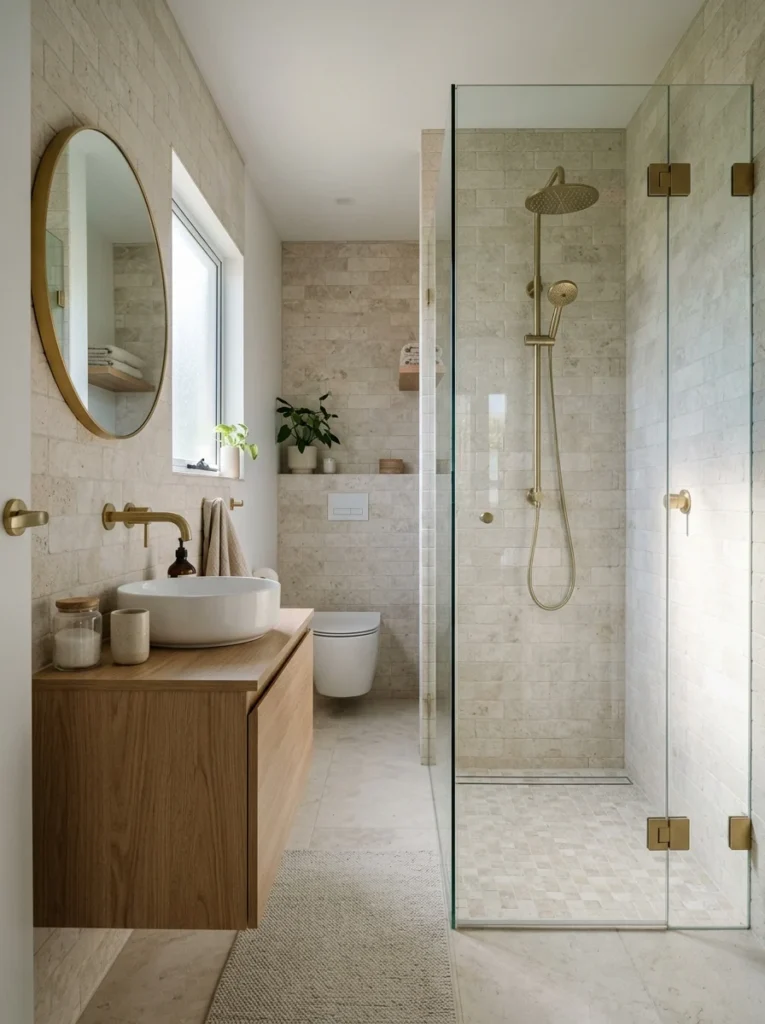
For a genuinely different approach entirely, replacing a fabric curtain with a fixed or sliding solid glass or acrylic shower panel eliminates the fabric curtain consideration altogether, offering a clean, permanent, low-maintenance alternative that some homeowners specifically prefer over any fabric option, however well-chosen. A friend made this switch during a small bathroom renovation, and while it represents a considerably larger investment and installation project compared to simply purchasing a new curtain, she’s mentioned genuinely appreciating never having to think about curtain mildew, replacement, or styling considerations again once the glass panel was installed. This requires professional installation and represents a meaningfully larger cost than any fabric curtain option on this entire list, making it more realistic as part of a planned bathroom renovation rather than a simple, standalone weekend upgrade. I’d recommend this specifically for anyone already planning a fuller bathroom renovation and genuinely tired of the ongoing curtain maintenance and periodic replacement cycle that fabric options inevitably require, even the highest-quality, most carefully chosen curtain among all the ideas discussed elsewhere on this list.
22. Choose Ombre or Gradient Patterns for Subtle Visual Interest
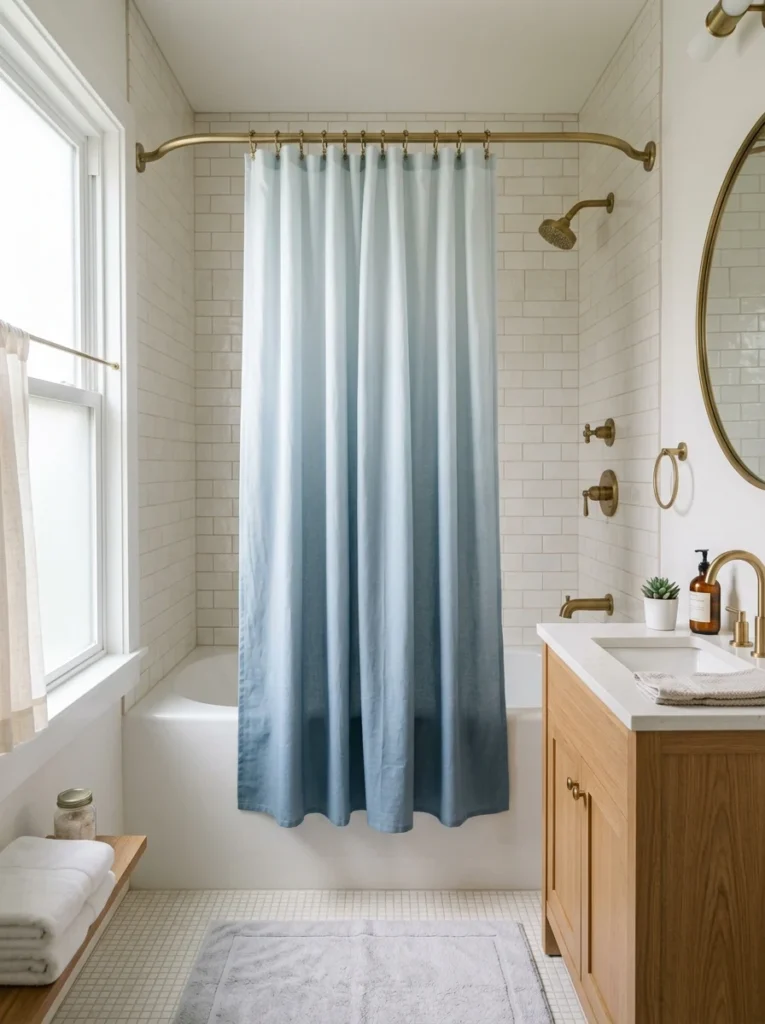
An ombre or gradient-patterned shower curtain, transitioning gradually from a lighter shade at the top to a slightly deeper tone toward the bottom, or the reverse, adds subtle visual interest and movement without the potential overwhelm that a busier, more graphic pattern might bring to a genuinely small, compact bathroom space. A friend chose a soft blue ombre curtain for her small bathroom specifically for this reason, and the gentle color gradient reads as considerably more sophisticated and calming compared to either a completely flat solid color or a busier, more attention-grabbing pattern that might have felt overwhelming in that particular small space. This style tends to work particularly well in bathrooms aiming for a serene, spa-like overall atmosphere, since the gentle, flowing color transition reinforces that calm, relaxed mood better than a more graphic, high-contrast pattern typically achieves. I’d recommend this specifically for anyone drawn to the idea of adding color and visual interest to their small bathroom’s curtain without wanting the boldness or potential visual busyness that a more graphic pattern choice might bring to that same compact space.
23. Match Curtain Rod Finish to Your Faucet
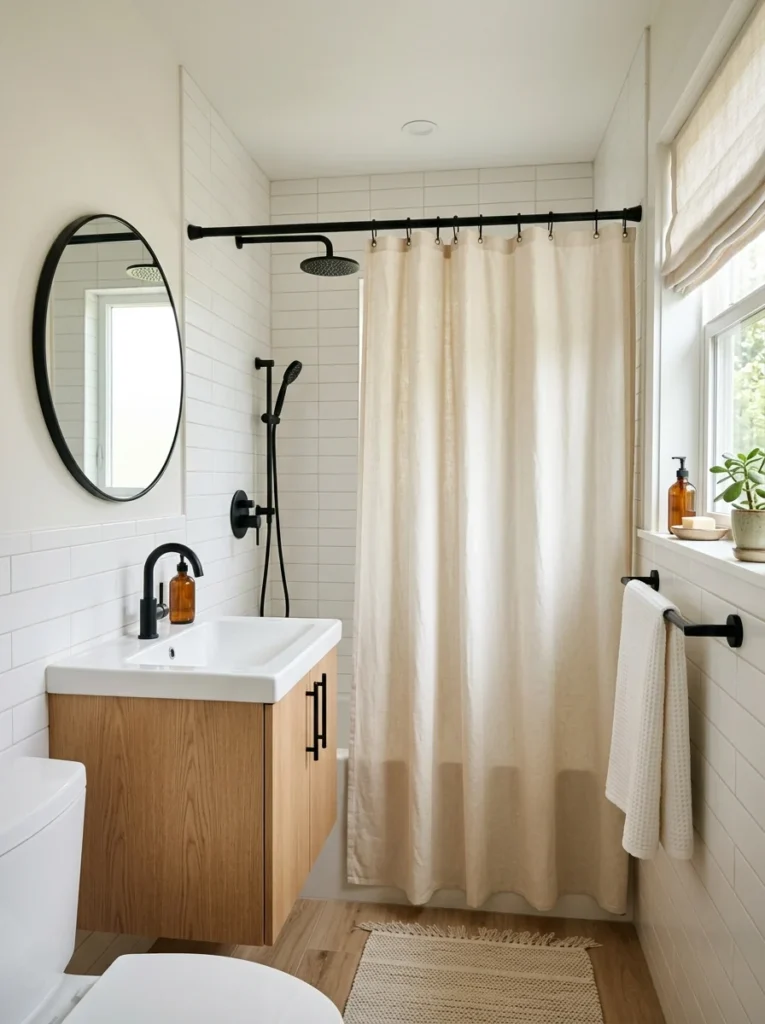
Beyond just the curtain and its rings, the actual rod itself should ideally coordinate with your bathroom’s other metal fixtures, particularly your faucet, since the rod represents a genuinely visible piece of hardware spanning the full width of your shower area, impossible to overlook regardless of how carefully you’ve chosen every other element on this list. I made sure my chosen rod’s matte black finish matched my faucet and other hardware exactly, rather than treating this specific piece of hardware as separate from that broader coordination effort I’d applied to my rings, hooks, and other bathroom metal accents. This is a detail that’s genuinely easy to overlook when focused primarily on the curtain fabric itself, but a mismatched rod finish becomes surprisingly noticeable once you’re specifically looking for it, undermining an otherwise carefully coordinated small bathroom’s overall polished appearance. I’d recommend checking your rod’s specific finish carefully before purchasing, comparing it directly against your faucet and other hardware rather than assuming a generically labeled finish, like “chrome” or “brushed nickel,” will automatically match exactly across different manufacturers, since these finish names don’t always correspond to genuinely identical actual appearances between different specific products.
24. Refresh Seasonally Without Overspending
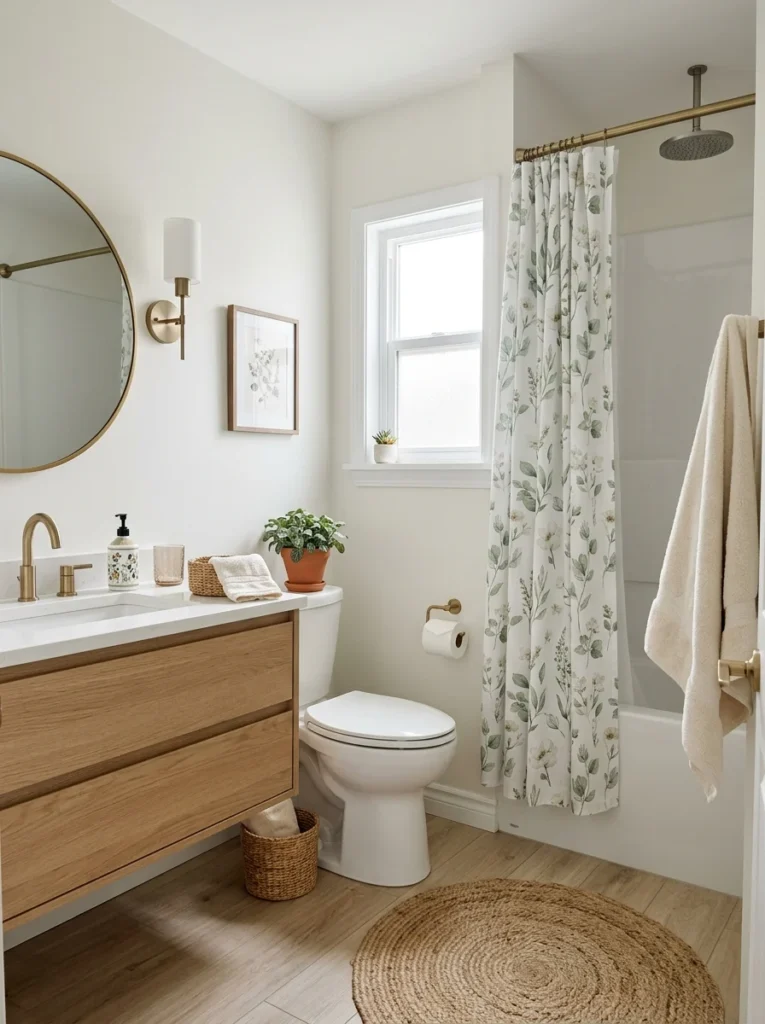
The final piece of advice is recognizing that a shower curtain represents one of the most affordable, easiest-to-change elements in your entire bathroom, making it a genuinely low-cost, low-commitment way to refresh your small bathroom’s overall look periodically without the expense or disruption of any actual renovation work. I keep two curtains in rotation for my own small bathroom, swapping between a warmer-toned option for colder months and a lighter, fresher pattern for spring and summer, treating the curtain almost like a piece of easily changeable, affordable seasonal decor rather than a single, permanent fixture chosen once and never reconsidered. This approach lets you experiment with different colors, patterns, and styles over time without the larger financial commitment that changing your actual tile, fixtures, or other more permanent bathroom elements would require, making the curtain a genuinely good outlet for anyone who enjoys periodically refreshing their space but has a more limited renovation budget to work with. I’d recommend this specifically as an ongoing strategy for keeping your small bathroom feeling current and intentional over time, rather than a single, one-time decision made and then never revisited again for years afterward.
Final Thoughts
Looking back at that first small apartment bathroom, where a plain, thoughtlessly chosen white curtain sat as the room’s most visually dominant element without any real consideration on my part, it’s genuinely surprising how much thought this single, relatively affordable item actually deserves in a compact space where it carries so much visual weight. Between all 24 of these ideas, the underlying theme is really that in a small bathroom specifically, the shower curtain functions less like a minor accessory and more like the room’s primary design statement, deserving the same careful consideration that a larger room’s more obvious focal points typically receive without much debate.
If your own small bathroom’s curtain has been similarly overlooked, I’d suggest starting with the lighter color and proper height adjustments covered in the first few ideas before considering any bolder pattern or material choices, since those foundational decisions genuinely affect how spacious the entire room feels regardless of whichever specific curtain style you ultimately choose. From there, layer in the smaller coordinating details, rings, hooks, rod finish, gradually building toward the same kind of considered, cohesive small bathroom that finally replaced my own thoughtlessly chosen first apartment curtain all those years ago.