
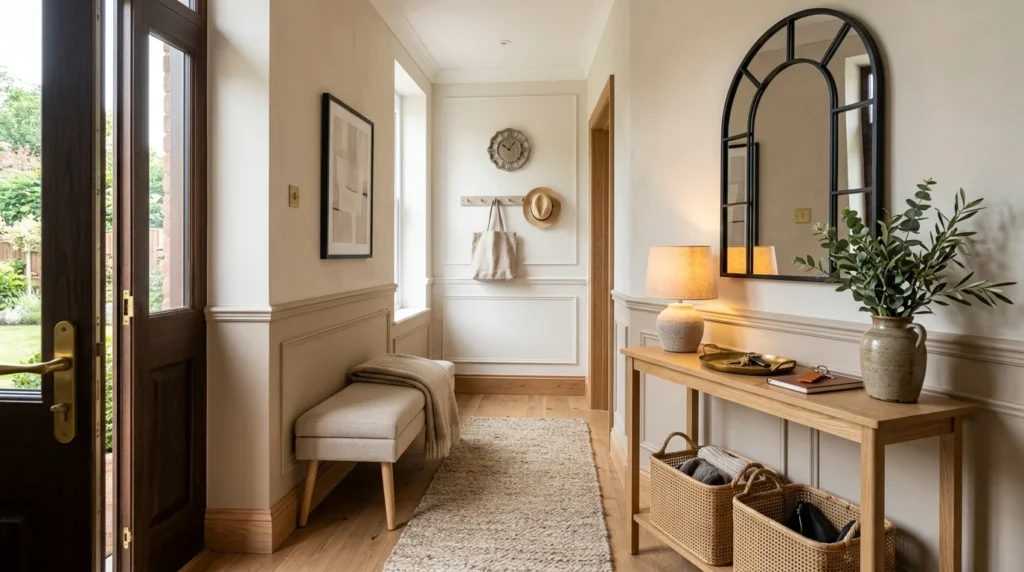
For the longest time, my entryway consisted of exactly one thing, a hook by the door where my keys occasionally landed if I remembered to actually use it rather than just tossing them onto the nearest flat surface. It wasn’t a designed space so much as a gap between the front door and the rest of my home, something I walked through dozens of times a day without ever really seeing it. The shift happened gradually, starting with a small console table I picked up almost on impulse, and it wasn’t until that one piece was in place that I realized how much a genuinely styled entryway changes the entire experience of coming home, turning that brief transitional moment into something that actually feels considered rather than simply functional.
If your own entryway is still living in that same undecorated, purely functional state, here are 18 ideas, each explained in detail, based on how my own entry gradually came together and what I’ve observed working beautifully in other entryways since.
1. Anchor the Space With a Console Table
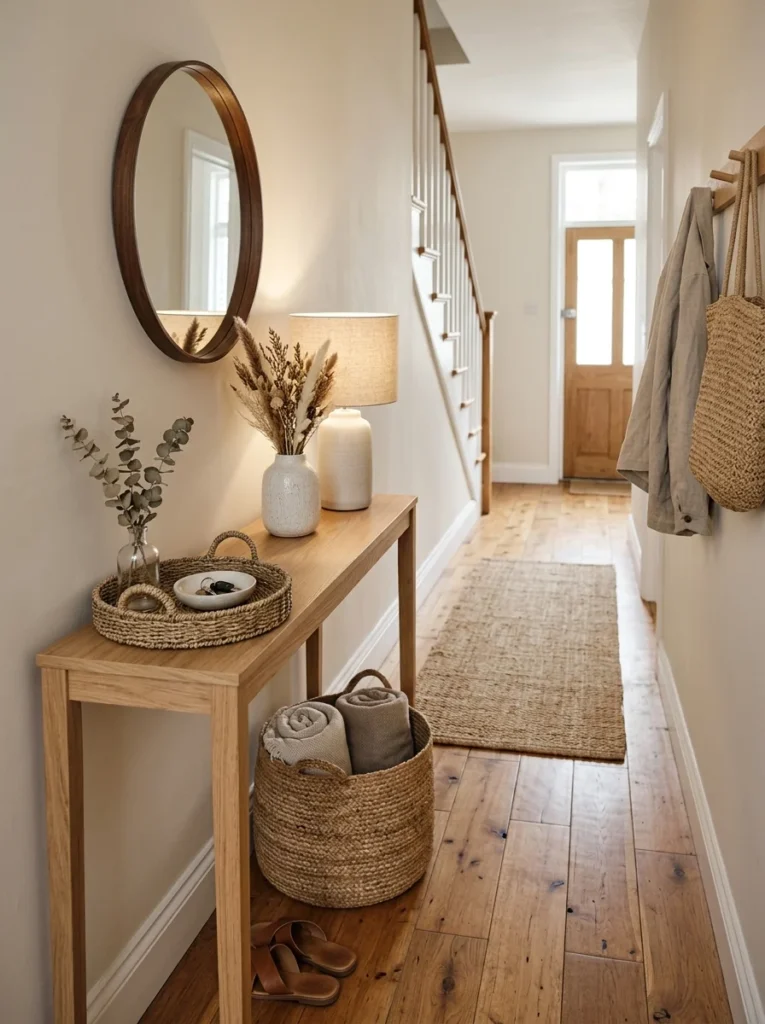
A console table remains the single most transformative addition available for most entryways, providing both a genuine surface for keys, mail, and daily essentials and a foundation for whatever additional styling you build on top of it. I chose a narrow wood console specifically sized to fit my hallway’s limited depth without protruding into the main walking path, and that one piece alone gave my previously undefined entry a genuine sense of purpose and structure that it had been missing entirely. I’d recommend measuring your available space carefully before purchasing, prioritizing a genuinely narrow profile for tighter entryways, since a console too deep for the available space becomes an obstacle rather than a functional, welcoming addition to the room. This piece essentially serves as the entryway’s equivalent of a coffee table in a living room, the central surface that most of your other styling decisions will build around and relate to, making it worth choosing thoughtfully as your genuine starting point before adding any additional decorative elements.
2. Add a Mirror Above the Console
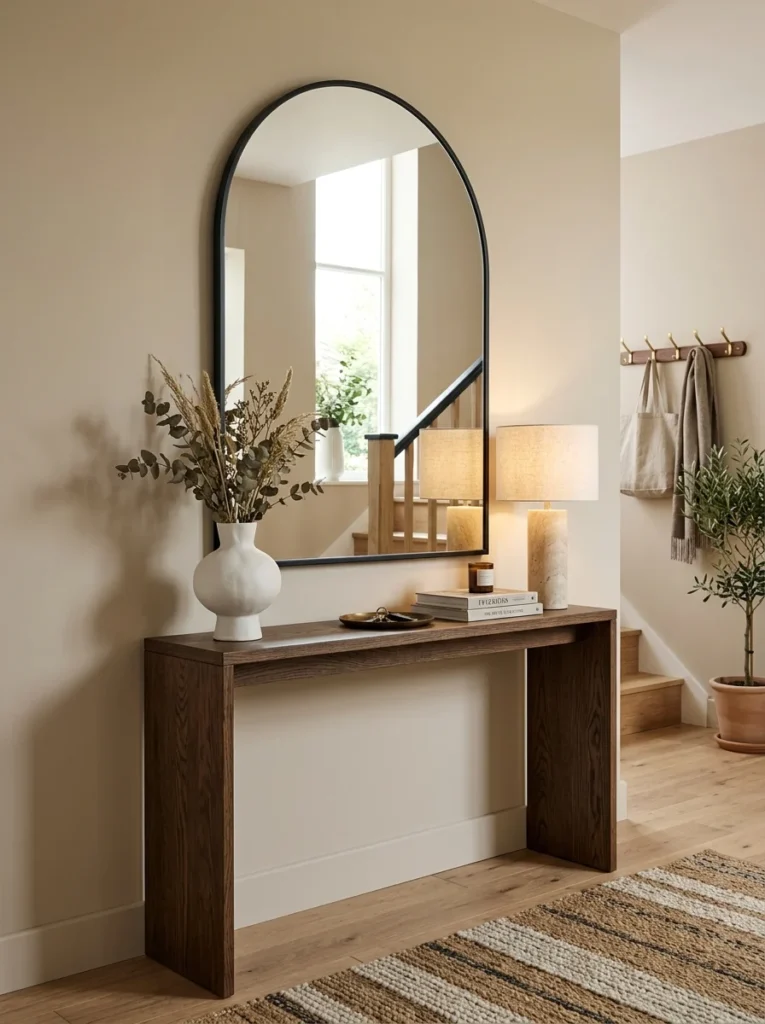
Positioned directly above your console table, a mirror serves the practical function of a last-look check before heading out the door while also bouncing available light back into what’s often a naturally darker, more enclosed space compared to rooms with more direct window exposure. I hung a simple arched mirror with a thin black frame above my own console, and beyond its obvious practical use, it genuinely makes my narrow entryway feel less closed in, reflecting light from my front door’s sidelight window back across the space. I’d recommend choosing a mirror sized proportionally to your console table beneath it, generally similar in width or slightly narrower, rather than one that overwhelms the smaller table below it or one so small it looks lost above a more substantial console. This pairing of console and mirror is genuinely one of the most classic, reliable entryway combinations for good reason, addressing both practical daily function and meaningful visual improvement in one relatively straightforward styling decision.
3. Incorporate a Bench for Practical Seating
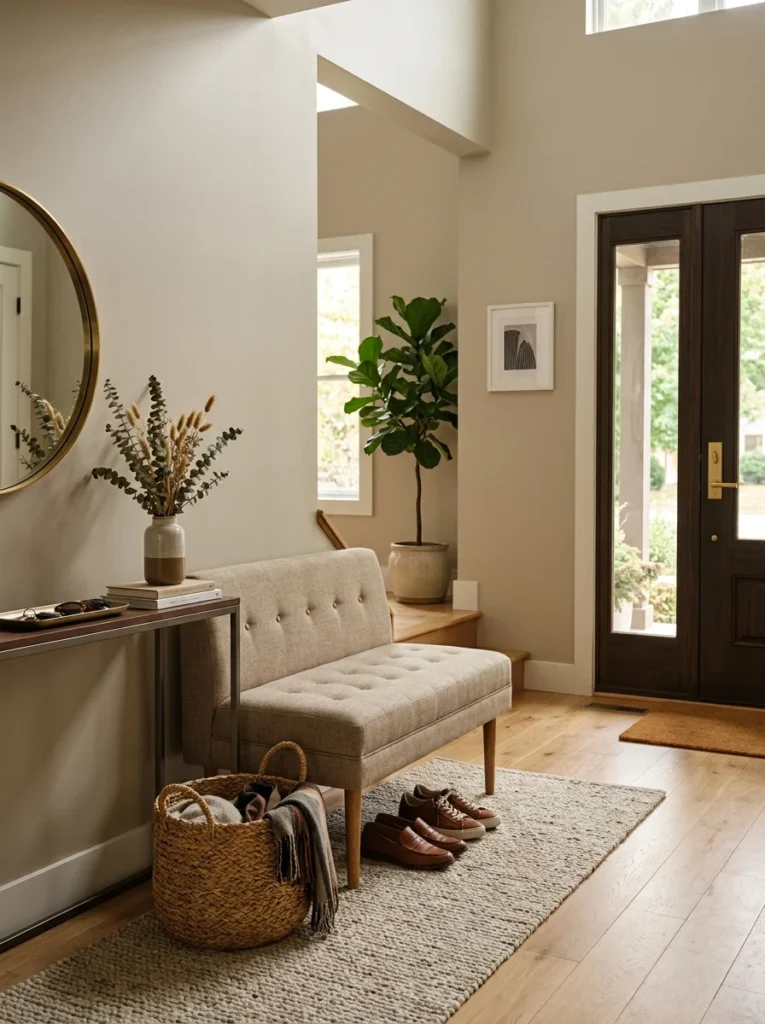
A small bench, whether positioned beside your console or as a standalone piece near the door, provides somewhere to actually sit while putting on or removing shoes, a genuinely practical function that most people don’t realize they’re missing until they finally have it. I added a simple upholstered bench along the wall opposite my console, and it’s become one of the most actually used pieces of furniture in my entire home, solving the small daily frustration of balancing on one foot while wrangling boots that I’d simply lived with for years without really noticing. I’d recommend choosing a bench with a durable, easily cleaned fabric or a solid wood seat rather than something more delicate, given how much daily wear and occasional moisture exposure this piece will realistically face positioned right beside your entry point. This addition works particularly well in households with kids, where a designated spot for the genuinely chaotic process of putting on shoes each morning meaningfully reduces the daily friction of getting everyone out the door on time.
4. Add Storage Baskets Beneath the Console
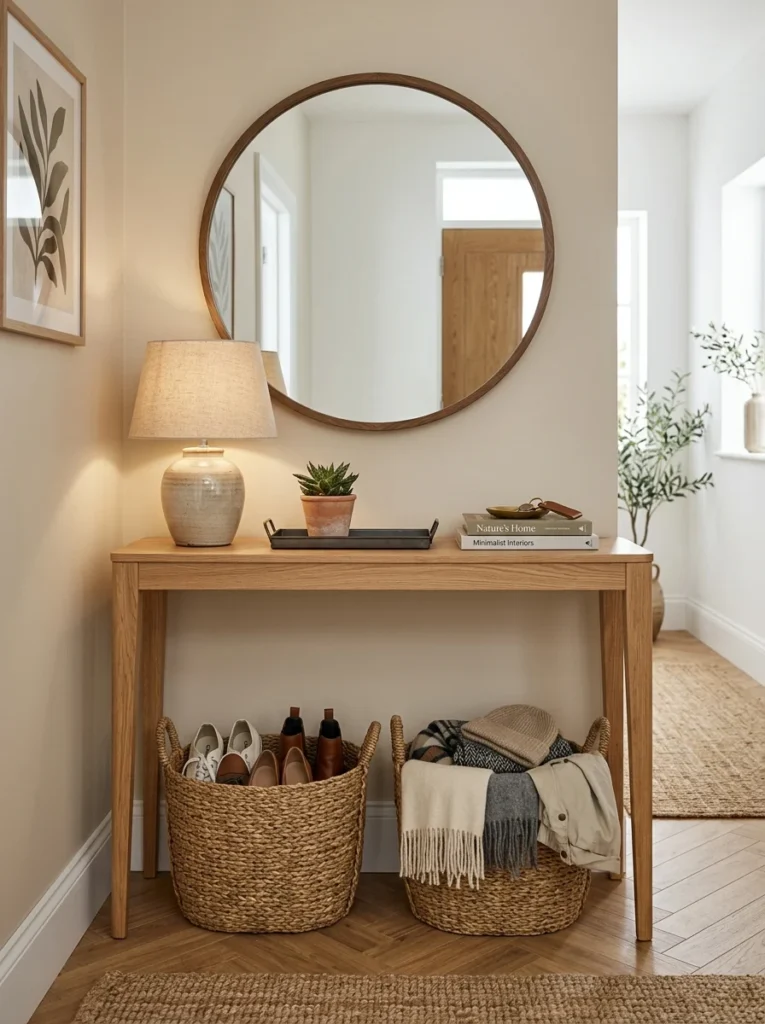
Open baskets tucked beneath your console table provide genuinely useful storage for shoes, scarves, or dog leashes without requiring closed cabinetry, keeping frequently used items accessible while still looking considerably more intentional than the same items simply scattered loosely across your entryway floor. I keep two woven baskets beneath my own console, one for shoes and one for miscellaneous outdoor gear, and having that designated spot has genuinely reduced how often things end up abandoned in a random pile near the door instead. I’d recommend choosing baskets sized to fit your console’s specific under-table clearance, measuring carefully before purchasing, since baskets that are even slightly too tall won’t tuck away properly and will instead protrude awkwardly rather than sitting neatly beneath the table’s surface. This idea works particularly well in entryways without a coat closet or other more substantial storage, giving you a genuinely functional catch-all solution that still contributes positively to the space’s overall styled appearance rather than detracting from it.
5. Hang a Row of Coordinated Hooks
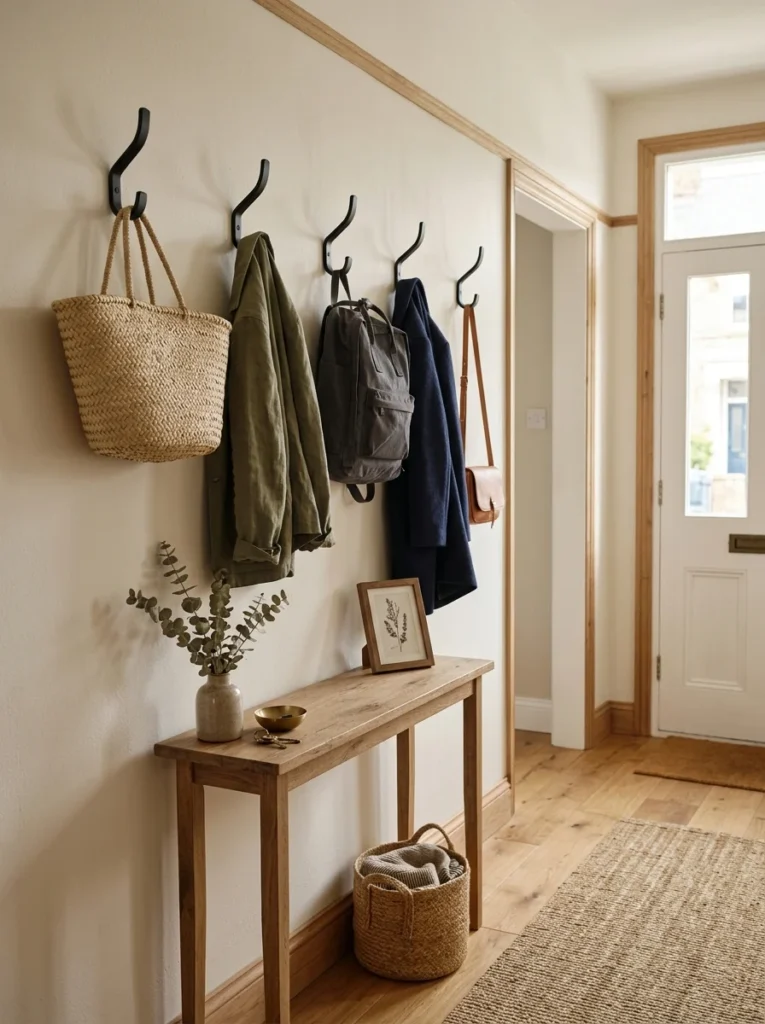
A row of matching hooks, whether simple single hooks or a mounted rail with multiple hanging points, gives every household member a designated spot for coats, bags, and daily outerwear, reducing the likelihood of items ending up draped over furniture elsewhere throughout the home instead. I installed a simple row of five black metal hooks at varying heights specifically to accommodate both adult and kid-sized coats, and that small planning consideration has genuinely made it easier to get everyone into the habit of actually using them rather than dropping things onto the nearest available surface. I’d recommend choosing a hook finish that matches your other entryway hardware, your console’s drawer pulls, your mirror frame, maintaining that same consistency principle that benefits any well-considered space throughout a home. This is one of the more purely functional additions on this list, but choosing genuinely well-designed hooks rather than the cheapest available option means this practical necessity also contributes positively to the entryway’s overall visual presentation rather than existing as a purely utilitarian afterthought.
6. Add a Table Lamp for Warm Evening Light
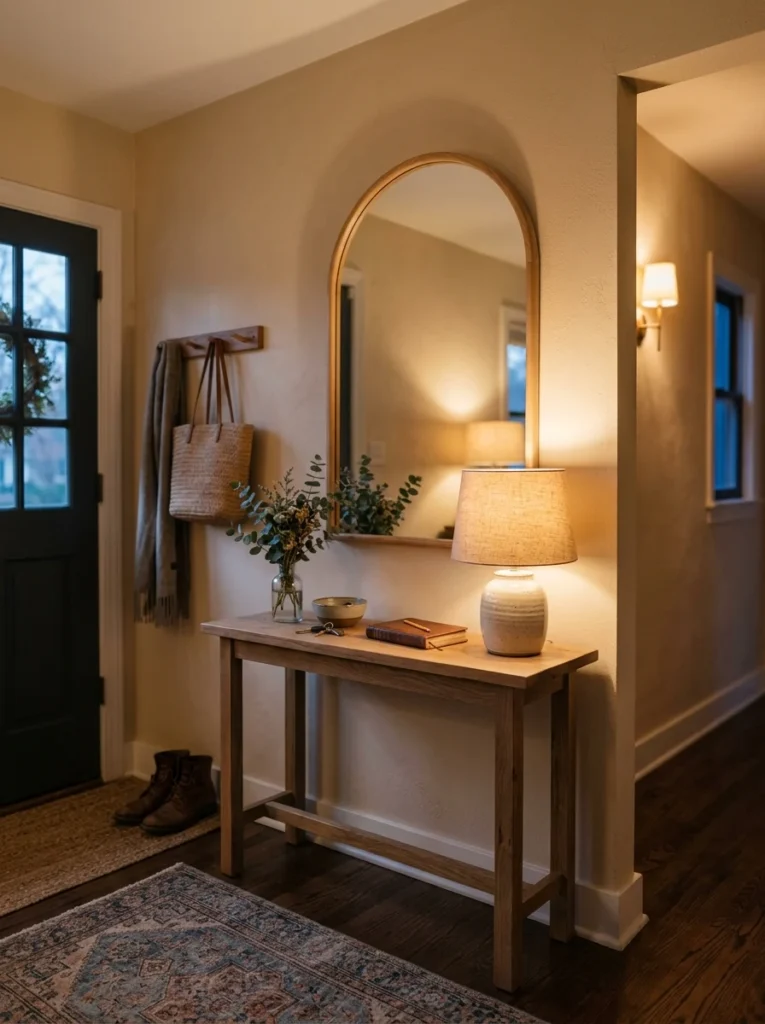
Rather than relying purely on an overhead fixture, a table lamp positioned on your console adds warm, ambient lighting specifically at the height where it matters most for a welcoming evening arrival home, supplementing whatever overhead lighting your entryway might already have. I keep a simple ceramic lamp with a warm linen shade on my own console, and switching it on before I leave in the evening means I return home to a softly lit, genuinely welcoming entry rather than a dark space I have to fumble through before reaching an overhead switch. I’d recommend connecting this lamp to a smart plug or simple timer specifically for this purpose, ensuring it’s already on and welcoming by the time you actually arrive home rather than requiring you to remember to switch it on each morning before leaving. This small addition genuinely changes the emotional experience of coming home after dark, and it’s a detail that guests specifically tend to notice and comment on, even though its actual cost and installation effort remain relatively minimal compared to some of the room’s other potential additions.
7. Display a Curated Tray for Daily Essentials
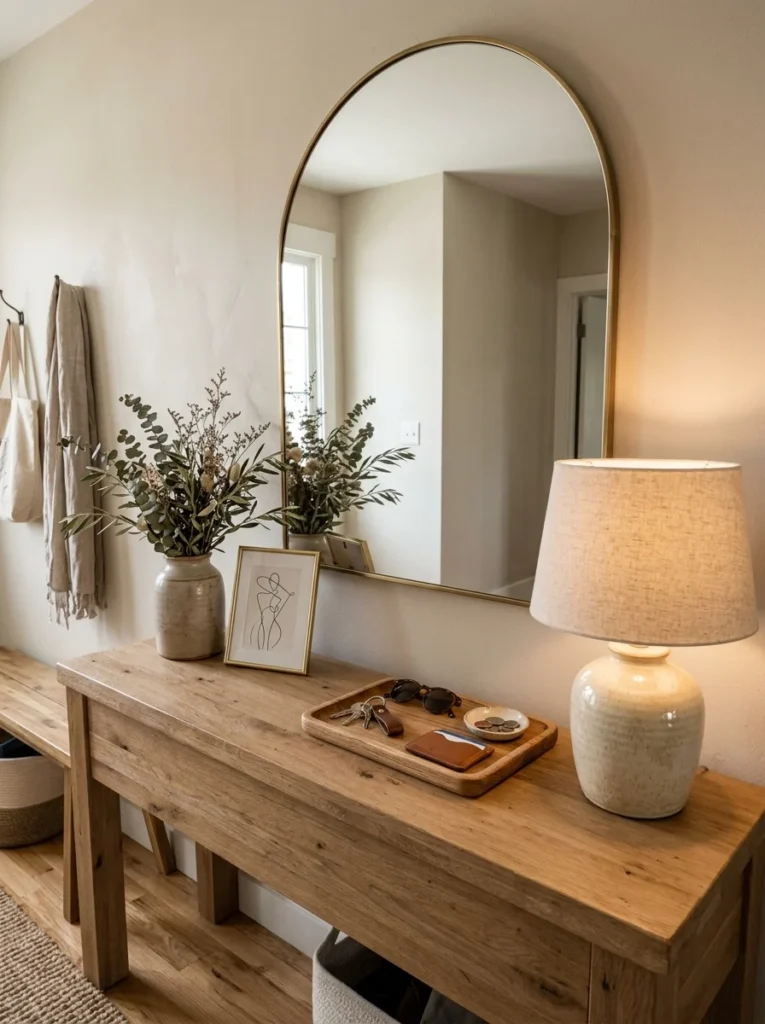
A small decorative tray on your console, specifically designated for keys, sunglasses, and other daily grab-and-go items, keeps those essentials contained and easy to locate rather than scattered loosely across the table’s entire surface or, worse, misplaced elsewhere throughout the house. I keep a simple wood tray specifically for this purpose, and having that one defined spot has genuinely reduced how often I frantically search for my keys before heading out the door, since I know exactly where they’ll be as long as I actually use the tray consistently. I’d recommend choosing a tray material and finish that coordinates with your console’s other styling elements, treating this genuinely functional item with the same intentionality you’d apply to any other visible decorative choice in the space. This idea mirrors the same organizational principle that works well in a coffee table or dining table context, giving small daily-use items a designated, visually cohesive home rather than letting them scatter randomly across whatever surface happens to be nearest the door.
8. Add Fresh or Faux Greenery for Life
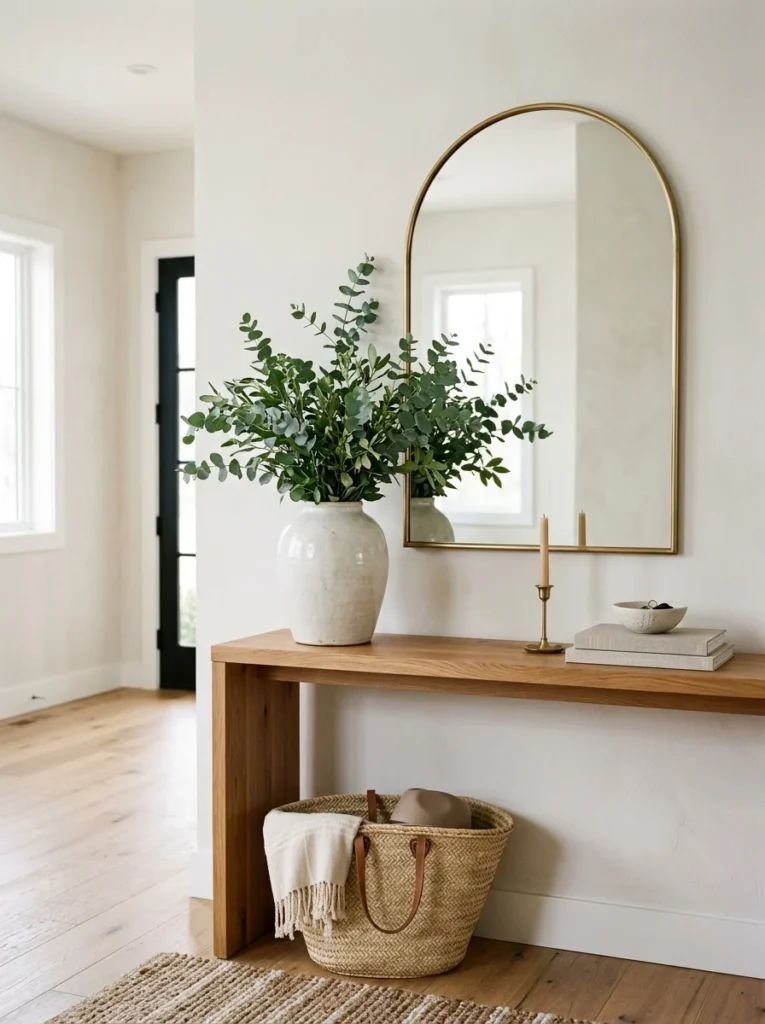
A vase of fresh flowers or a well-chosen faux plant on your console brings genuine color and life to what might otherwise be an entirely hard-surfaced, somewhat sterile transitional space, softening the overall entry with something organic rather than purely functional or decorative in a static sense. I keep a simple vase with whatever seasonal greenery is available, refreshing it every week or so, and that small ritual of bringing something living into the entryway genuinely improves how the whole space feels every time I walk past it. For entryways without much natural light, which describes many entry spaces given their typically interior positioning within a home’s overall layout, a high-quality faux plant achieves a similar visual effect without requiring the light conditions that a genuine living plant would need to actually thrive over time. I’d recommend choosing a plant or floral arrangement scaled appropriately to your console’s size, since an oversized arrangement can overwhelm a smaller table while an undersized one might get visually lost against a larger console surface.
9. Incorporate a Piece of Meaningful Art
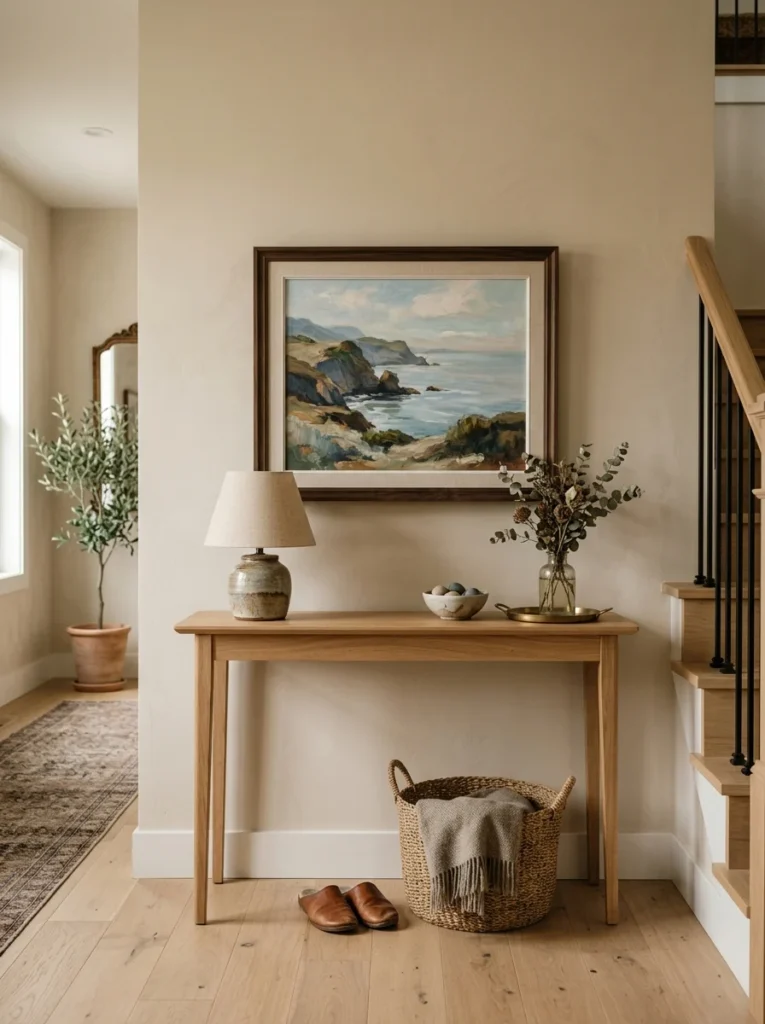
Rather than purely generic, purchased decor, hanging a piece of art with genuine personal significance, something collected while traveling, a piece from a local artist, even a meaningful family photograph, gives your entryway authentic character that immediately communicates something real about your household to anyone stepping through the door for the first time. I hung a small painting I picked up from an artist at a local market specifically in my entryway, and it’s become something I genuinely notice and appreciate every single day, unlike some of the more purely decorative choices I’ve made elsewhere in my home that I’ve admittedly stopped consciously registering over time. I’d recommend positioning this piece at a height and location where it’s genuinely visible upon entering, rather than tucked into a spot easily overlooked, since the entryway’s specific function as your home’s first impression means art displayed here carries particular weight in shaping how visitors perceive your home’s overall character from the very first moment. This is also a good opportunity to rotate in different pieces over time, keeping the space feeling current and connected to whatever you’re currently drawn to rather than static and unchanging for years at a stretch.
10. Add a Small Umbrella Stand
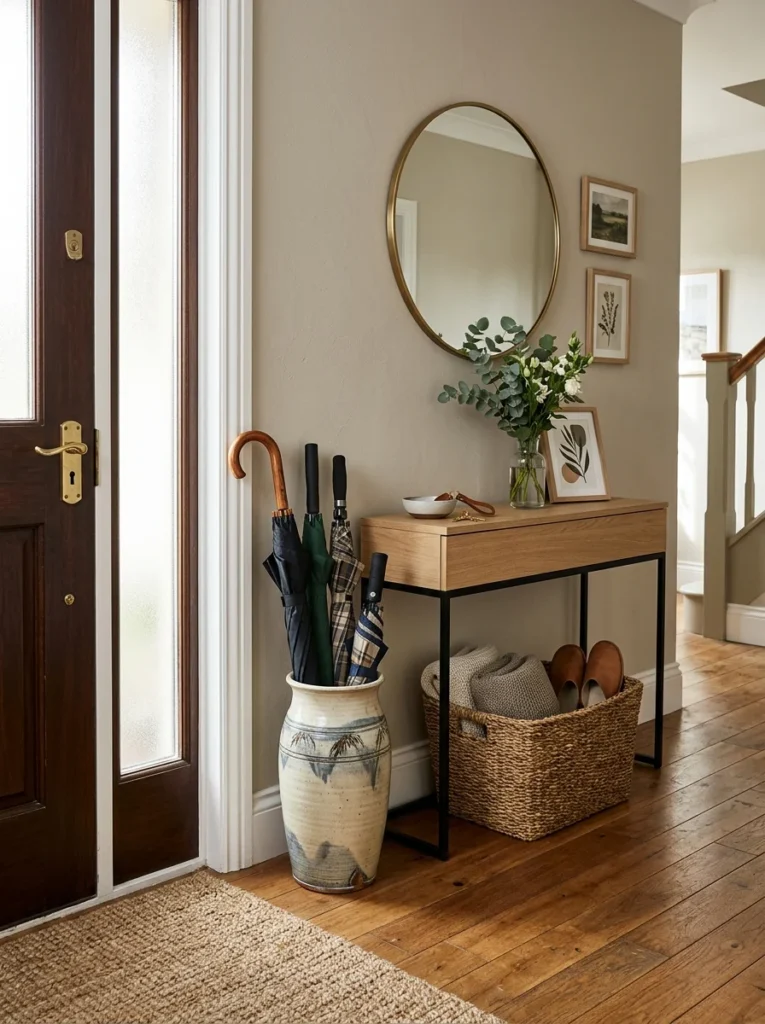
A dedicated umbrella stand, whether a genuine ceramic or metal stand designed specifically for this purpose or a repurposed vintage vessel serving the same function, keeps wet umbrellas contained and off your floor while adding a small but genuinely useful sculptural element to your entryway’s overall composition. I use a simple ceramic stand specifically for this purpose, positioned in the corner near my door, and having that designated spot has genuinely reduced the number of times a dripping umbrella has ended up propped awkwardly against my wall or console, leaving water marks I’d then need to clean up afterward. I’d recommend choosing a stand material that can handle regular water exposure without concern, ceramic, metal, or a properly sealed wood, rather than a more delicate material that might not hold up well to this specific, genuinely wet daily function. This is a particularly practical addition for households in climates with regular rain, addressing a genuine daily frustration that many entryways simply don’t have any dedicated solution for at all.
11. Use a Bold Wallpaper for a Memorable First Impression
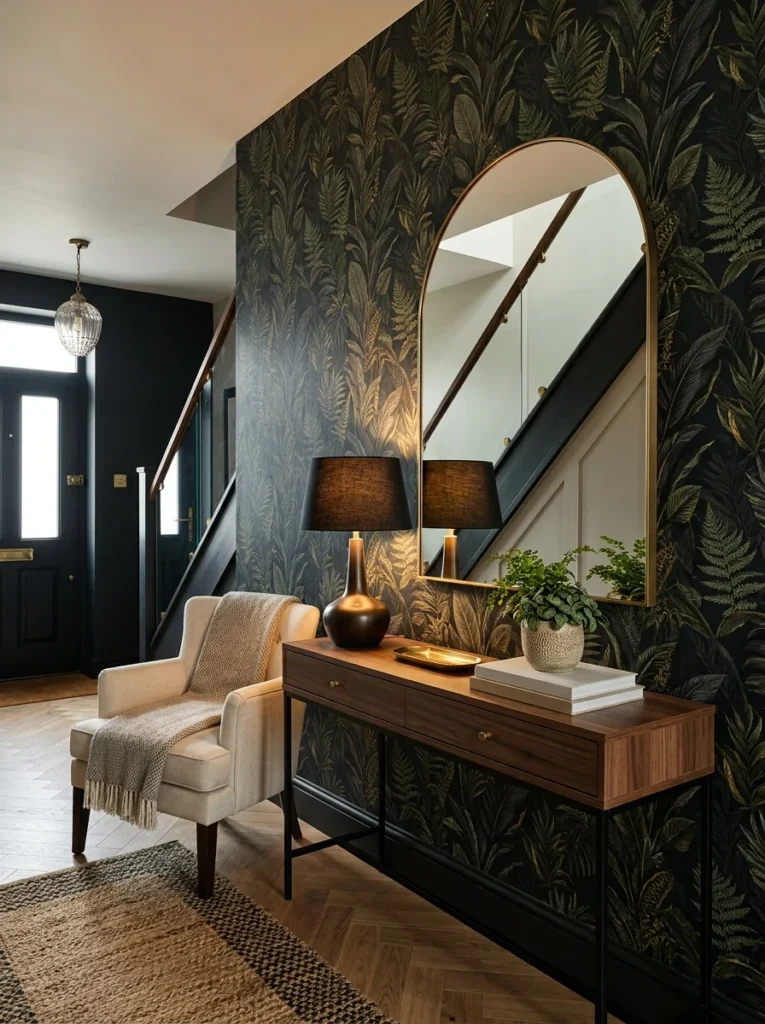
Since your entryway represents the very first interior space any guest experiences, a bold, distinctive wallpaper choice creates a memorable, confident first impression that sets an immediate tone for how the rest of your home will be perceived, similar to the strategic boldness discussed for entryway runners but applied here to the walls themselves. A friend wallpapered her entryway in a dramatic dark botanical print, and that bold choice genuinely makes an immediate impression the moment guests step through her door, functioning almost like a genuine design statement piece before visitors have even had a chance to see any other room in her home. This is a particularly good opportunity specifically to experiment with a bolder pattern or color than you might feel entirely comfortable committing to in a larger, more prominently used room, since an entryway represents a relatively contained space where even a dramatic choice remains a reasonably affordable, lower-risk project. I’d recommend peel-and-stick wallpaper specifically for this application if you’re at all uncertain about committing permanently, since the reversibility gives you room to change direction later without significant cost or effort if your taste eventually shifts.
12. Add a Runner or Area Rug for Warmth and Definition
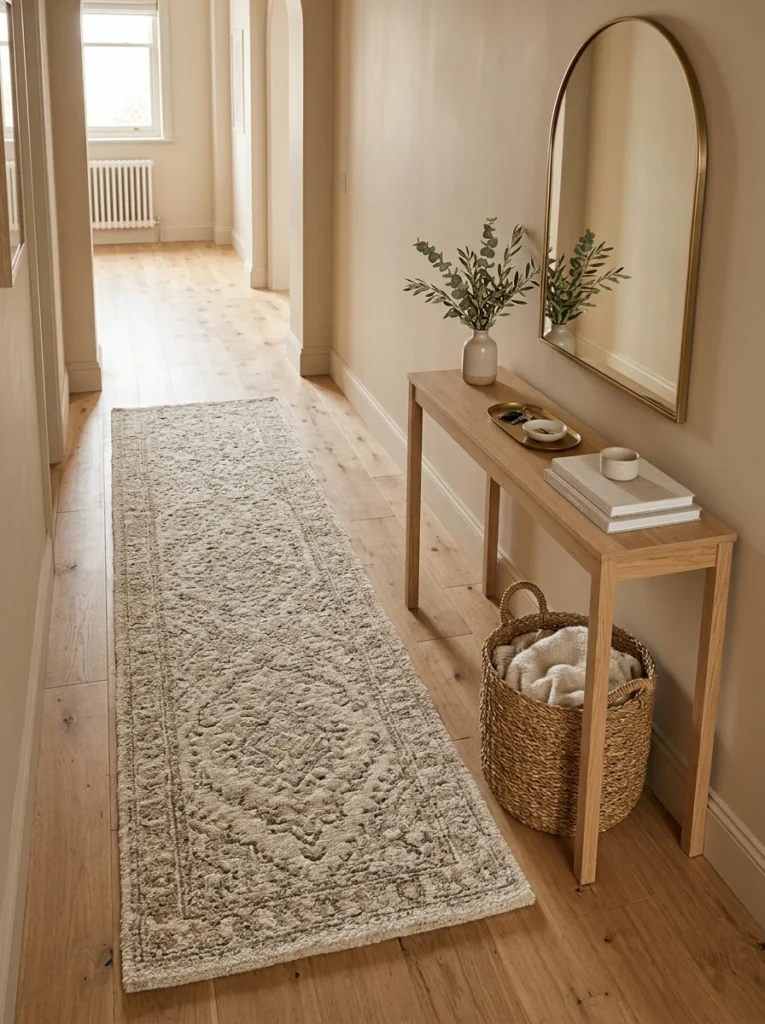
Beyond a dedicated runner explored in more detail elsewhere, simply ensuring your entryway includes some kind of rug, whether a long runner or a smaller area rug depending on your space’s specific shape, adds warmth and visual definition that bare, hard flooring alone typically lacks in this often naturally cooler, harder-surfaced transitional space. My own entryway rug does double duty here, both protecting my hardwood floor from daily wear and adding genuine color and texture that anchors the rest of my console and wall decor into one cohesive overall composition rather than existing as separate, disconnected elements floating above bare floor. I’d recommend choosing your rug’s color and pattern specifically in relation to your console, art, and any other entryway decor you’re incorporating, ensuring this foundational floor element ties into rather than competes against everything else you’ve already chosen for the space. This addition genuinely changes both the tactile experience of walking through your entry barefoot or in socks and the overall visual warmth of the space compared to leaving hard flooring entirely exposed and undressed.
13. Display a Welcoming Scent
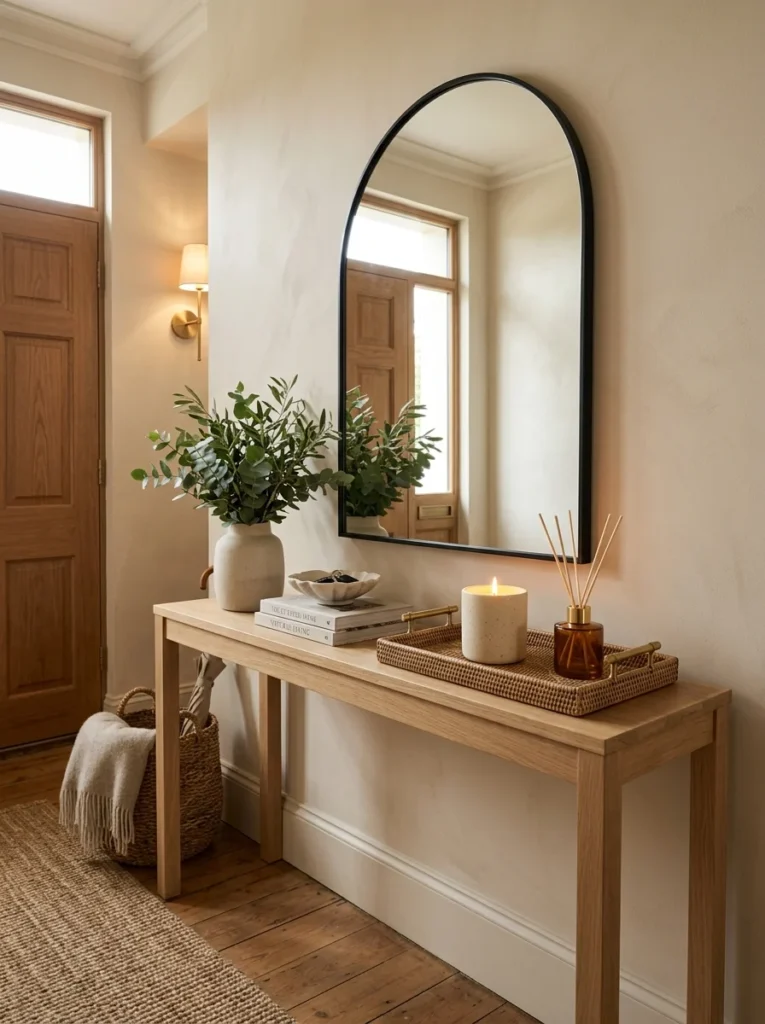
A candle or reed diffuser positioned on your console introduces a sensory element to your entryway that purely visual decor choices can’t achieve on their own, creating a specific scent association that becomes genuinely tied to the experience of both arriving home and welcoming guests through your door. I keep a simple candle with a warm, subtle scent on my console specifically for this purpose, lighting it before guests arrive or simply enjoying the diffuser’s more passive scent the rest of the time, and there’s something about that specific consistent smell that’s become genuinely associated with the experience of walking into my home. I’d recommend choosing a scent that’s pleasant but not overpowering, since an entryway scent that’s too strong can feel overwhelming to guests immediately upon entering rather than creating the subtle, welcoming impression you’re actually going for with this particular addition. This detail is easy to overlook when focused primarily on visual styling, but it genuinely contributes to your entryway’s overall welcoming quality in a way that’s felt rather than consciously noticed by most visitors.
14. Incorporate a Small Bowl for Guest Items
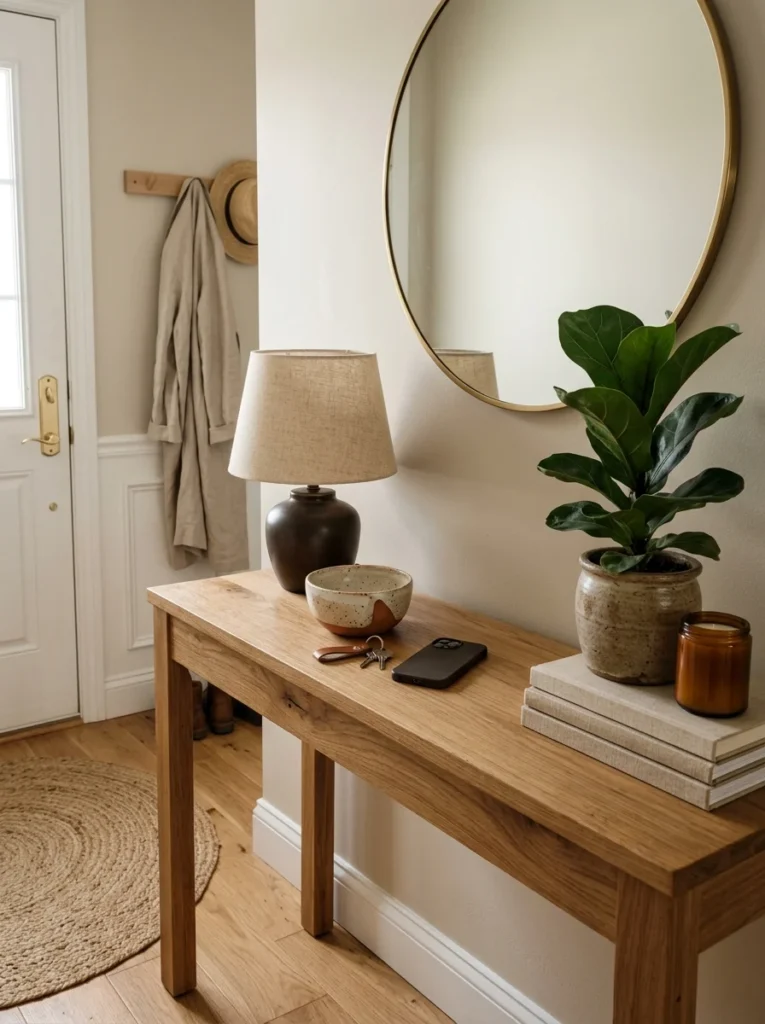
Beyond your own daily essentials tray, a small additional dish or bowl specifically positioned near your door for guests, a spot to drop keys or a phone while visiting, extends that same organizational courtesy to anyone entering your home rather than reserving that convenience purely for household members. A friend keeps a simple ceramic dish specifically thought of as the “guest spot,” and she’s mentioned that visitors genuinely seem to appreciate having an obvious, designated place to set down their things upon arrival rather than awkwardly holding onto items or setting them down somewhere less obvious throughout the process of actually greeting everyone and getting settled. I’d recommend positioning this specifically near where guests would naturally pause upon entering, rather than tucked away in a spot that isn’t immediately obvious, since the whole point of this small addition is providing an intuitive, easily noticed spot rather than something guests need to be specifically directed toward each time they visit.
15. Add Seasonal Decor That Rotates Throughout the Year
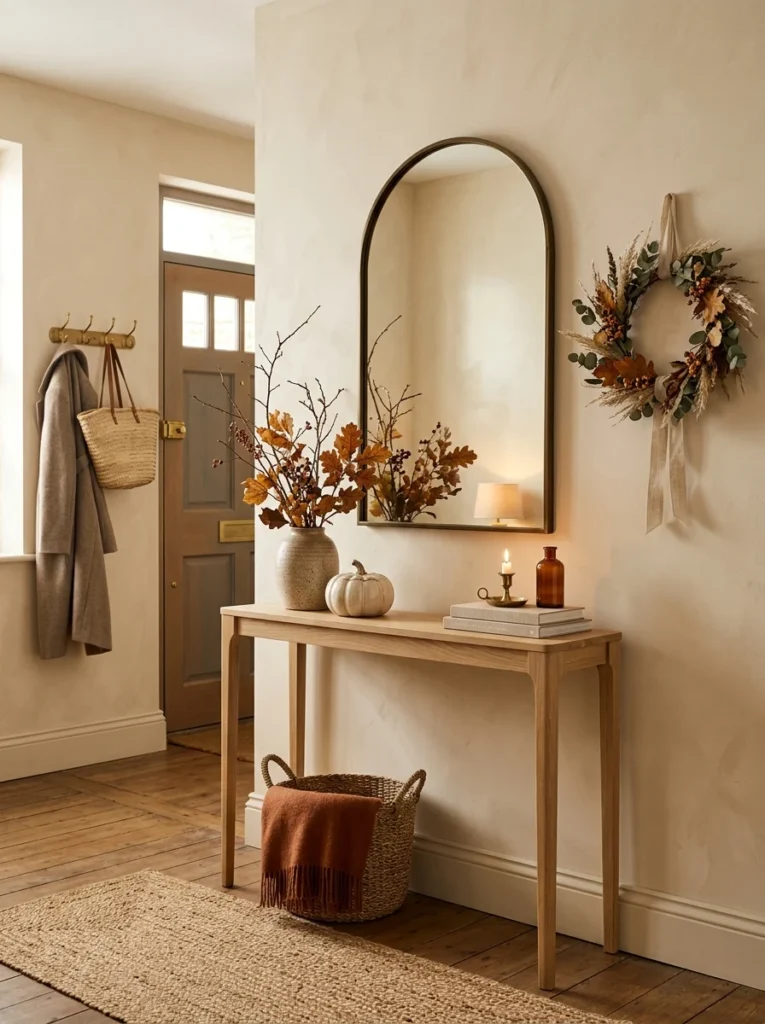
Rather than a completely static entryway styling that never changes, incorporating a small rotating seasonal element, a wreath on the door, a seasonal branch or bloom in your entryway vase, a few small seasonal accents on your console, keeps the space feeling current and connected to the time of year rather than frozen in whatever arrangement you first established. I keep a small collection of seasonal items specifically for this purpose, swapping in dried autumn leaves or a small pumpkin in fall, simple evergreen branches in winter, making the actual rotation quick and low-effort rather than requiring an elaborate new purchase or project each time the season changes. I’d recommend keeping this seasonal rotation focused on just one or two small elements rather than completely overhauling your entire entryway each season, since a subtle seasonal refresh maintains your established overall look while still keeping the space feeling intentional and connected to the current moment rather than static and unchanging year-round.
16. Choose Hardware Finishes That Coordinate Throughout
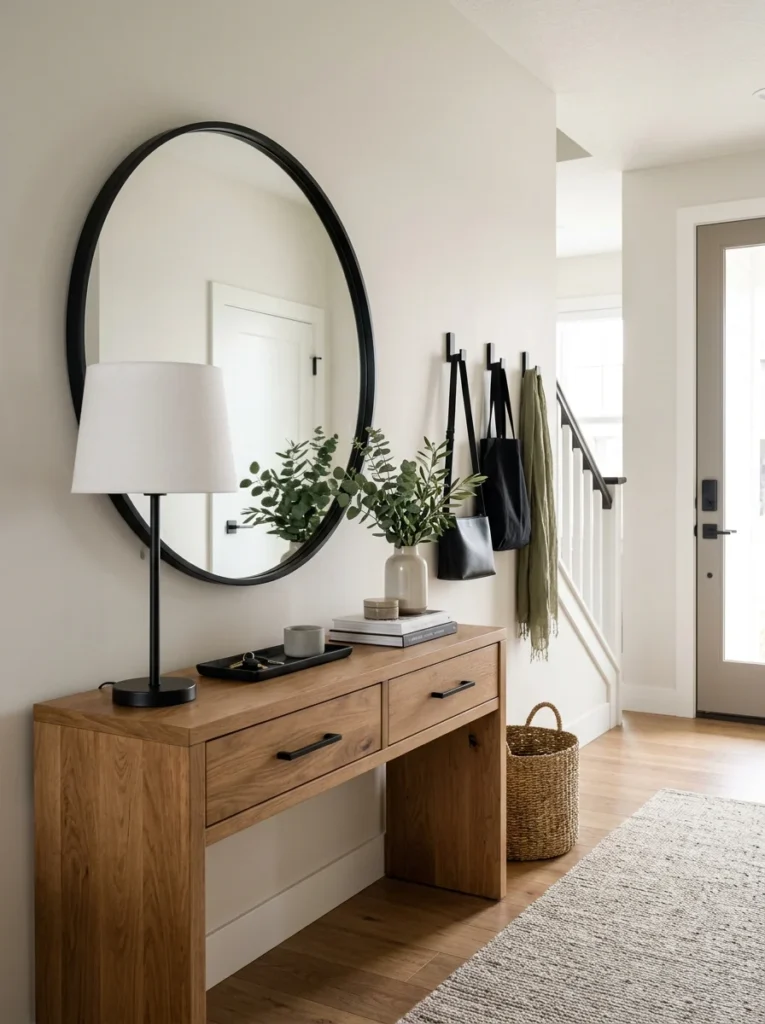
Just as with any other room in your home, ensuring your entryway’s various metal finishes, your console’s drawer pulls, your mirror frame, your hooks, your lamp base, coordinate consistently rather than mixing several unrelated metal tones creates a considerably more polished, cohesive overall appearance despite these being relatively small individual details easy to overlook in isolation. I chose matte black consistently throughout my own entryway’s hardware, and that consistency genuinely ties together what could otherwise read as several separately purchased, unrelated items into one cohesive, intentional-feeling space. I’d recommend deciding on this coordinating finish relatively early in your entryway styling process, ideally before purchasing individual pieces, so subsequent choices can be made specifically to match or intentionally coordinate with that established decision rather than trying to reconcile several already-purchased, mismatched pieces after the fact. This detail matters more in an entryway specifically than it might in a larger, more visually complex room, since the space’s typically smaller overall scale means each individual hardware choice carries proportionally more visual weight and noticeable presence.
17. Add a Small Piece of Furniture With Storage for Keys and Mail
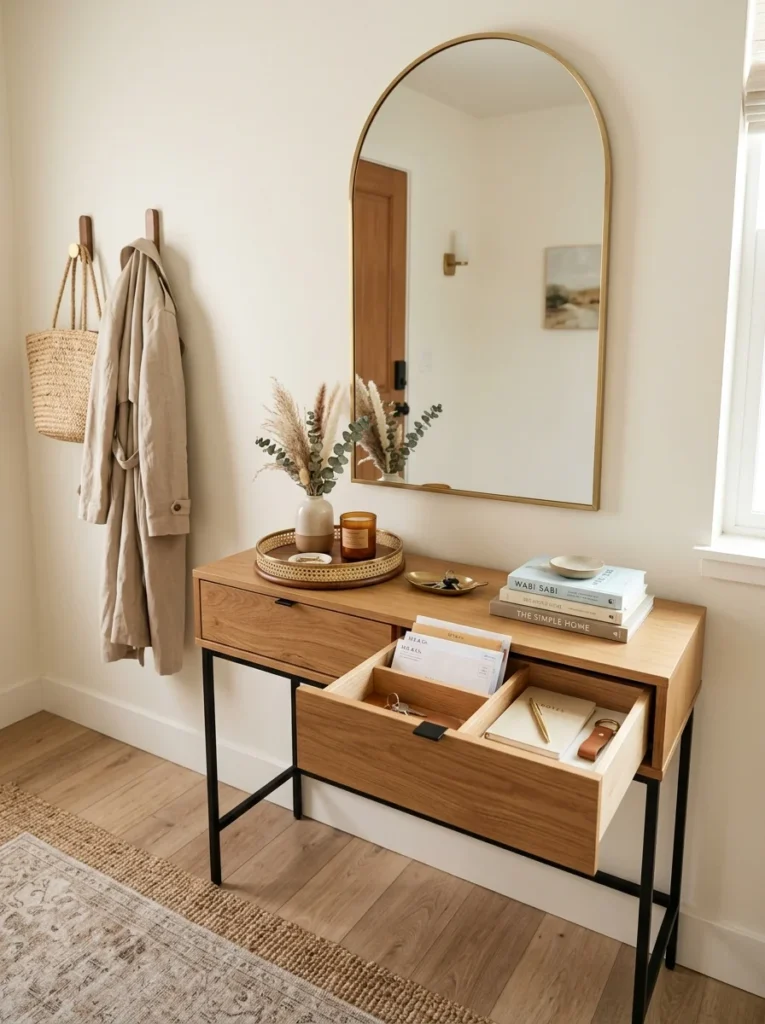
Beyond a simple tray, a small piece of furniture specifically designed with built-in storage, a drawer for mail, a cubby for keys, addresses the genuine daily clutter that tends to accumulate near any front door without a dedicated solution, keeping those items contained within the furniture itself rather than scattered loosely across your console’s visible surface. I chose a console with a single shallow drawer specifically for this purpose, storing loose mail and miscellaneous small items that don’t need to be visible or immediately accessible the way my keys tray items do, keeping the console’s actual visible surface considerably tidier as a result. I’d recommend this specifically for households that generate genuine daily mail or paperwork clutter near their entryway, since a piece with dedicated hidden storage addresses that recurring frustration considerably more effectively than open surface storage alone, which tends to gradually accumulate visible clutter over time without this kind of designated, enclosed containment.
18. Keep the Space Editing Itself Over Time
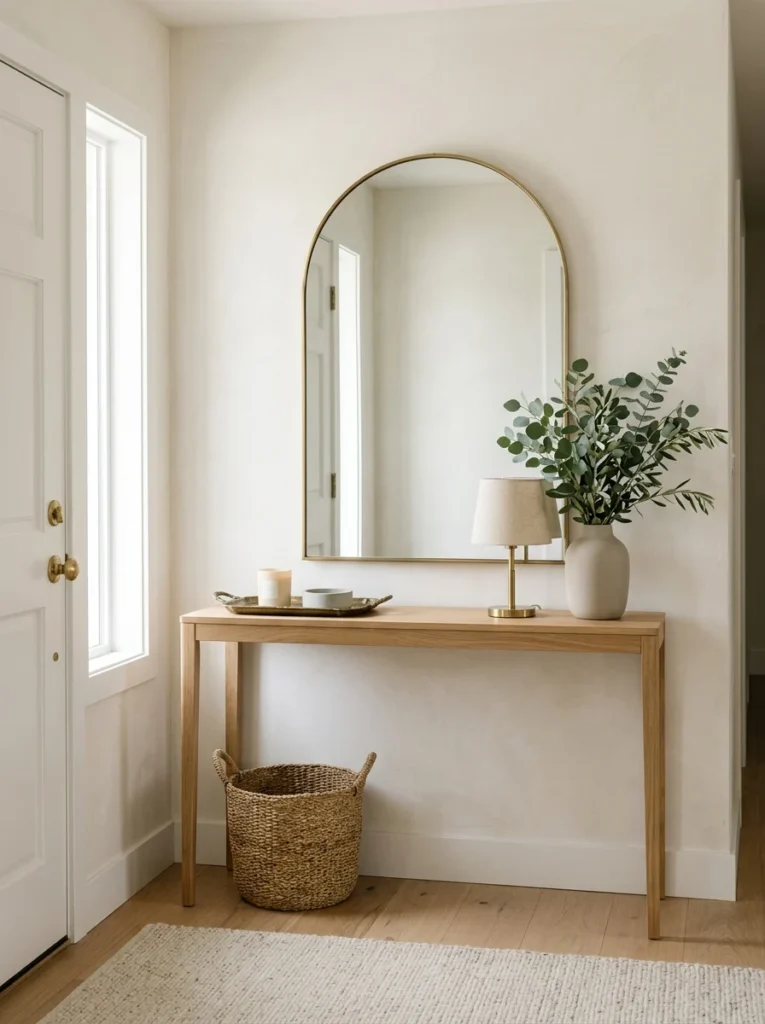
The final piece of advice applies to an entryway just as it does to any other curated space throughout a home, treating your entry’s styling as an ongoing, evolving project rather than a single, permanent arrangement, periodically stepping back and honestly assessing whether everything currently present still earns its place in this particular high-traffic, frequently seen transitional space. I do a quick edit of my own entryway every couple of months, removing anything that’s accumulated without much purpose, a stray piece of mail that’s overstayed its welcome, an item that’s drifted there simply because there was available surface space rather than because it genuinely belongs. This ongoing maintenance matters more in an entryway specifically than in some other rooms, given how frequently this particular space is actually seen, both by household members multiple times daily and by every single guest who visits, making its overall tidiness and intentionality considerably more consequential than the same level of clutter might be in a less frequently viewed corner of your home. I’d recommend building this same periodic reassessment into your regular routine, treating even this smaller transitional space with the same ongoing attention you’d naturally give to any other prominently featured room throughout your home.
Final Thoughts
Looking back at that single, often-ignored hook that constituted my entire entryway styling for longer than I’d like to admit, it’s genuinely remarkable how much a gradually assembled collection of thoughtful additions eventually transformed that brief daily transition into a space I actually enjoy passing through rather than simply walking past without noticing at all. Between all 18 of these ideas, the underlying theme is really that an entryway, despite its typically small footprint and purely transitional function, deserves the same intentional design consideration given to any other room in your home, since it’s simultaneously your family’s daily arrival point and every single guest’s genuine first impression of your entire home.
If your own entryway is still in that same underdecorated, purely functional state mine was in for years, I’d suggest starting with a console table and mirror before adding anything else on this list, since that foundational pairing genuinely does the most work toward transforming the space’s overall feeling and function. From there, layer in storage, lighting, and personal touches gradually, the same way my own entry slowly came together, until that brief daily transition through your front door starts to feel like a genuine, welcoming part of your home rather than simply a gap you pass through on your way somewhere else.